Category: Articles

  • The Importance of Staying Hydrated

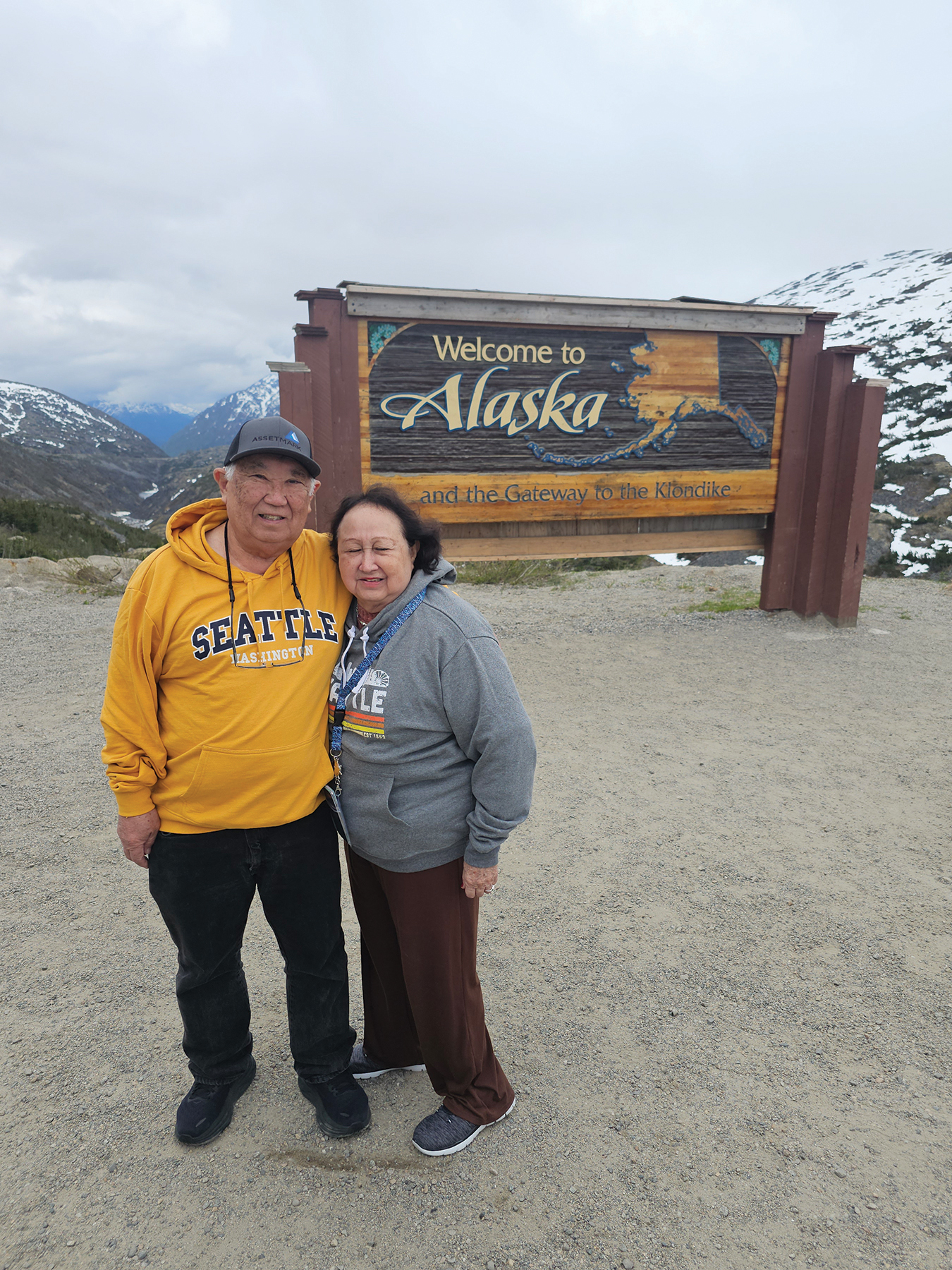
    An Alaska cruise can be one of the most memorable trips of your life. The breathtaking scenery, fresh mountain air and cooler temperatures often make travelers feel comfortable and refreshed. However, one health concern that many passengers overlook is dehydration.

    Because Alaska is cooler than tropical destinations, many people simply do not feel thirsty. As a result, they may drink far less water than their bodies need. Unfortunately, dehydration can develop gradually and become serious before you realize it.

    My wife, Darlee, and I learned this lesson firsthand. On the final day of our Alaska cruise, Darlee became ill with vomiting and diarrhea. She was unable to eat breakfast, lunch or dinner, and more importantly, was unable to keep fluids down. Our flight home was delayed for four hours, requiring us to remain at the airport much longer than expected. During that time, it became increasingly difficult for Darlee to replace the fluids she had lost.

    While we were at the airport, Darlee became so weak and dehydrated that we called emergency medical technicians. She was transported by ambulance to the emergency room, where she remained hospitalized for four days and required three bags of intravenous fluids. Multiple blood tests, EKGs and MRI studies revealed no underlying medical problems. The physicians concluded that severe dehydration had placed significant stress on both her kidneys and her heart.

    As we age, our bodies naturally contain less water and our sense of thirst becomes less reliable. Older adults can become dehydrated much more quickly than younger individuals. When vomiting or diarrhea occurs, life-threatening risks increase dramatically.

    During your Alaska cruise, make a conscious effort to drink water throughout the day, even when you do not feel thirsty. Carry a refillable water bottle, limit excessive alcohol consumption and increase your fluid intake if you become ill. Staying hydrated is a simple step that can help ensure your Alaska adventure remains enjoyable, safe and memorable.

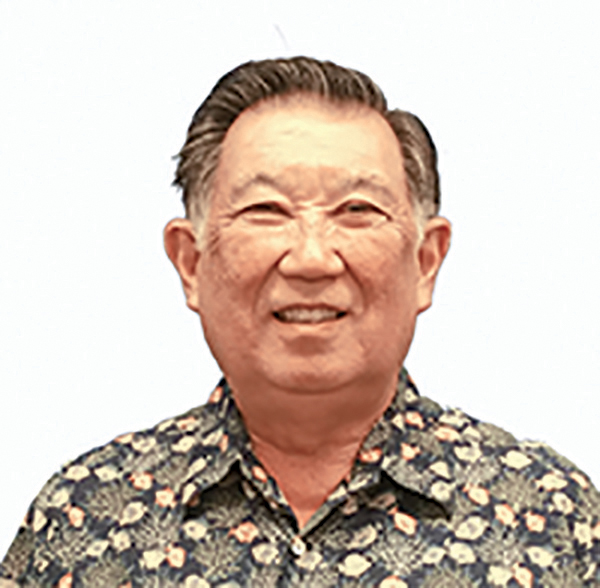
    EDWARD MOTOSUE is a 1967 graduate of ‘Iolani High School. In 1971, he earned a bachelor’s degree in biology from the University of Hawai‘i. In 1978, he earned a master’s degree from Pepperdine University. He is the Vice President of Financial Benefits Insurance, Inc. (FBI). Ed’s mission is to help educate our kūpuna. Our kūpuna deserve to live healthier productive lives and find peace of mind.

    If you have a story to share, email the editor: debra@generations808.com.

    An Alaska cruise can be one of the most memorable trips of your life. The breathtaking scenery, fresh mountain air and cooler temperatures often make travelers feel comfortable and refreshed. However, one health concern that many passengers overlook is dehydration. Because Alaska is cooler than tropical destinations, many people simply do not feel thirsty. As…

  • Beate Lipko’s German Potato Salad

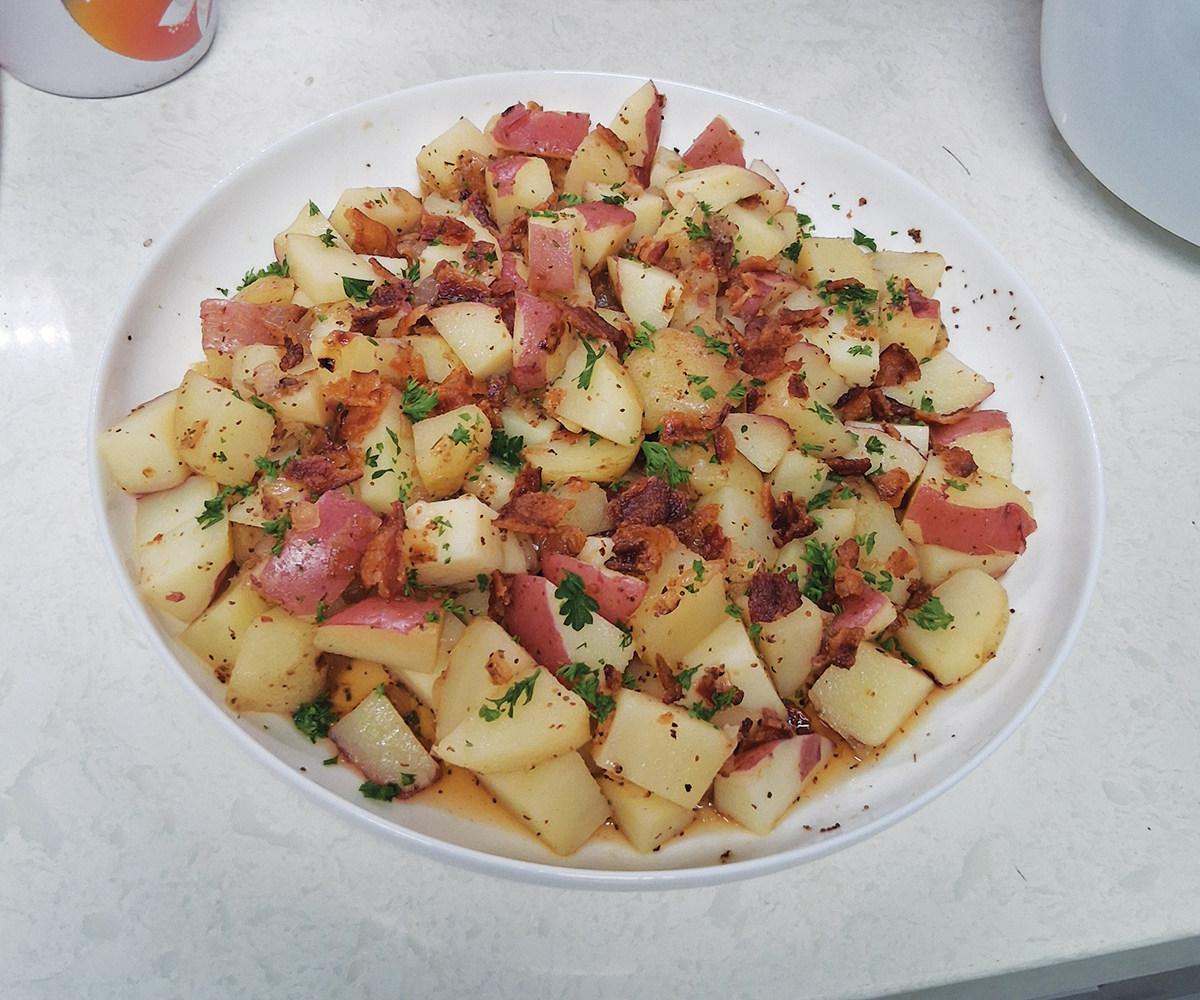
    When looking for a German recipe, I asked Beate Lipko, AKA Aunty Crystal, my brother’s high school/baseball friend’s mom. She is kindly sharing with us her German Potato Salad recipe. I am a sucker for potatoes and who doesn’t love bacon! So this was one I was happy to make and it turned out yummy! OMG! I may start making this for parties. It was simple and easy, but super tasty!

    Ingredients
    6 cups peeled potatoes (cut in half if large)
    12 bacon slices
    1 medium onion, chopped
    ½ cup white or apple cider vinegar
    ¼ cup water
    4 tbsp. granulated sugar, to taste
    1 tsp. salt
    ¼ tsp. black pepper, freshly ground
    1½ tsp. celery seeds
    1 tbsp. Dijon or spicy brown mustard (optional)
    2–3 tbsp. fresh parsley, chopped

    Directions

    1. Add potatoes to a large pot and cover with at least 1 inch of water. Generously salt the water with about 1 tbsp. of salt and boil for about 10 minutes or until the potatoes can easily be pierced with a fork. Drain well and slice potatoes into thick discs or chunks. Set aside. We prefer Yukon gold or red potatoes, but Russet potatoes will also work. I ended up using a combination of red and gold potatoes and kept some of the skin on.
    2. Cook bacon in a large skillet over medium-high heat until crispy. Remove from pan, crumble and set aside, reserving at least 2 tbsp. of the bacon grease.
    3. Cook the onions in the bacon grease over medium heat until softened and starting to brown, about 5 to 8 minutes.
    4. Add vinegar, water, sugar, salt, pepper, celery seeds and mustard. Bring to a boil.
    5. Add potatoes, parsley and half of the crumbled bacon. Toss to coat the potatoes and evenly heat everything through, then transfer to a serving dish.
    6. Sprinkle with remaining crumbled bacon and chopped parsley. Serve warm.

    Prep and cooking time: 45 minutes

    Serves: 6 with a main entrée item

    Do you have a favorite recipe and story to share? For consideration, include a photo and mail them to Generations Recipe, PO Box 4213, Honolulu, HI 96812, or email them to Cynthia@generations808.com.

    When looking for a German recipe, I asked Beate Lipko, AKA Aunty Crystal, my brother’s high school/baseball friend’s mom. She is kindly sharing with us her German Potato Salad recipe. I am a sucker for potatoes and who doesn’t love bacon! So this was one I was happy to make and it turned out yummy!…

  • Celebrating the German Culture

    Since more than 1,500 years ago, Kānaka Maoli (Native Hawaiians) have welcomed immigrants from every corner of the globe, cultivating and perpetuating a tapestry of diverse cultures. In the 11th article in this ongoing series on the many cultures that comprise Hawai‘i, we will focus on the Germans, their arrival to the Hawaiian Islands, their traditions and celebrations. Today, people of German descent make up 5.8% of Hawai‘i’s population.

    Arrival in Hawai‘i

    In 1778, three German sailors and one Swiss painter aboard Captain Cook’s ships were the first Europeans to land in the Hawaiian archipelago, on the shores of Kaua‘i. Kaua‘i’s German population grew to such an extent that Līhu‘e was nicknamed “German Town” at one point in time. From the first landfall, German and Hawaiian culture became intertwined. German firms flourished in Chinatown, Lutheran churches dotted the landscape and while many Germans also toiled in the sugarcane fields, they also eventually held positions of power, overseeing other migrant workers.

    King Kalākaua had an especially strong relationship with the German people. He appointed the Royal Hawaiian Band’s most influential bandmaster, Prussian-born Heinrich (Henry/ Henri) Berger. He arranged the Hawaiian Kingdom’s national anthem, “Hawai‘i Pono‘ī,” deriving it from the Prussian anthem, “Hefl Dir im Siegerkranz.” Berger befriended future Queen Lili‘uokalani — who named him “The Father of Hawaiian Music” — arranging and performing the songs she wrote.

    Culture and Traditions

    German culture in Hawai‘i primarily manifests itself in food and drink. Baumkuchen, a traditional many-layered cake cooked on a stick, is a beloved pastry here. It is speculated that King Kalākaua was the first Hawaiian to have baumkuchen when he visited Berlin in 1881.

    The largest and most known cultural celebration is Oktoberfest, which takes place at various venues throughout the Hawaiian Islands during September and October. Local restaurants, bars and other venues annually host Oktoberfest, featuring a plethora of festival beers, bratwurst and Masskrugstemmen — stein-hoisting competitions.

    Celebrations

    On O‘ahu, Helping Hands Hawai‘i hosts its annual Oktoberfest fundraiser event to support local community programs, with other local breweries also hosting their own celebrations. The Honolulu Museum of Art hosts the annual FilmFreude Honolulu every spring, a film festival showcasing the latest in German cinema. On Hawai‘i, Oktoberfest is organized by the Rotary Club of Hilo Bay. Celebrations are also held on Maui and Kaua‘i.

    For more information, visit German Club Hawaii’s website (germanclubhawaii.org) as well as Generations Magazine’s Facebook page (facebook.com/genmag808) and website calendar (generations808.com/calendar) for community events and opportunities.

    The next article in this series will feature the influences of Jewish culture in Hawai‘i.

    Since more than 1,500 years ago, Kānaka Maoli (Native Hawaiians) have welcomed immigrants from every corner of the globe, cultivating and perpetuating a tapestry of diverse cultures. In the 11th article in this ongoing series on the many cultures that comprise Hawai‘i, we will focus on the Germans, their arrival to the Hawaiian Islands, their…

  • One Story at a Time

    Many people believe family history begins with old photographs, genealogy charts or lists of names and dates.

    While those things are important, I teach kūpuna that family history truly begins with something much simpler: your own story — preserving family history through personal memory.

    If we fail to tell our personal stories, the links between generations slowly disappear. Grandchildren may know where they came from, but they may never know who their ancestors truly were — their struggles, traditions or dreams.

    I often compare family history to making a lei. Each memory is like a flower added one piece at a time. Alone, each memory may seem small, but together they create something beautiful and lasting. When stories are left untold, empty spaces are left behind for future generations.

    One of the most important lessons I share is that you do not need to be a professional writer. A simple notebook, loose paper or recorded conversation can become a treasured family history.

    Start with small moments: What was your childhood home like? What foods remind you of family gatherings? Who taught you important lessons? What traditions made your family unique?

    Often, as kūpuna begin talking about their lives, forgotten memories naturally return. I have seen this many times while helping elders write their personal histories. One memory unlocks another, almost like opening old drawers and rediscovering treasures tucked away for years.

    I also encourage families to talk story about loved ones who have passed on. Celebrating a heavenly birthday or remembering someone on an anniversary — whether it marks a loss, a milestone or a past relationship — can gently reopen important connections.

    Memories are closely tied to our senses. Talking about favorite meals, familiar music or what an old neighborhood looked like can help awaken details long forgotten.

    Sometimes one of the best ways to help memories return is to revisit meaningful places. Taking a senior family member on a drive through an old neighborhood, stopping at a former school, church or family home can spark stories that have been resting quietly for years.

    Today there are wonderful tools available to help preserve memories. Websites such as FamilySearch (familysearch.org/en/united-states) offer free ways to record stories, upload photographs and preserve audio memories for future generations. This can be especially helpful for kūpuna who find writing difficult but enjoy speaking about their memories and life experiences.

    But technology is only a tool. The real gift is the willingness to share.

    The important thing is not to wait for the perfect time or perfect words. Simply begin.

    Vicki Boswell is the Founder and President of Hōkūlani Children’s Theatre of Moloka‘i and a dedicated advocate for life skill development among kūpuna. Drawing from her lifelong experience with hearing loss, she teaches practical, multisensory communication strategies that strengthen connection and reduce isolation. Vicki holds a BA in educational psychology and an MSW with a child and family emphasis. She loves working with children and kūpuna, helping them build confidence, express themselves and stay meaningfully connected within their communities. If you have a story to share, email the editor: debra@generations808.com.

    Many people believe family history begins with old photographs, genealogy charts or lists of names and dates. While those things are important, I teach kūpuna that family history truly begins with something much simpler: your own story — preserving family history through personal memory. If we fail to tell our personal stories, the links between…

  • Volunteering Made Me a Better Person

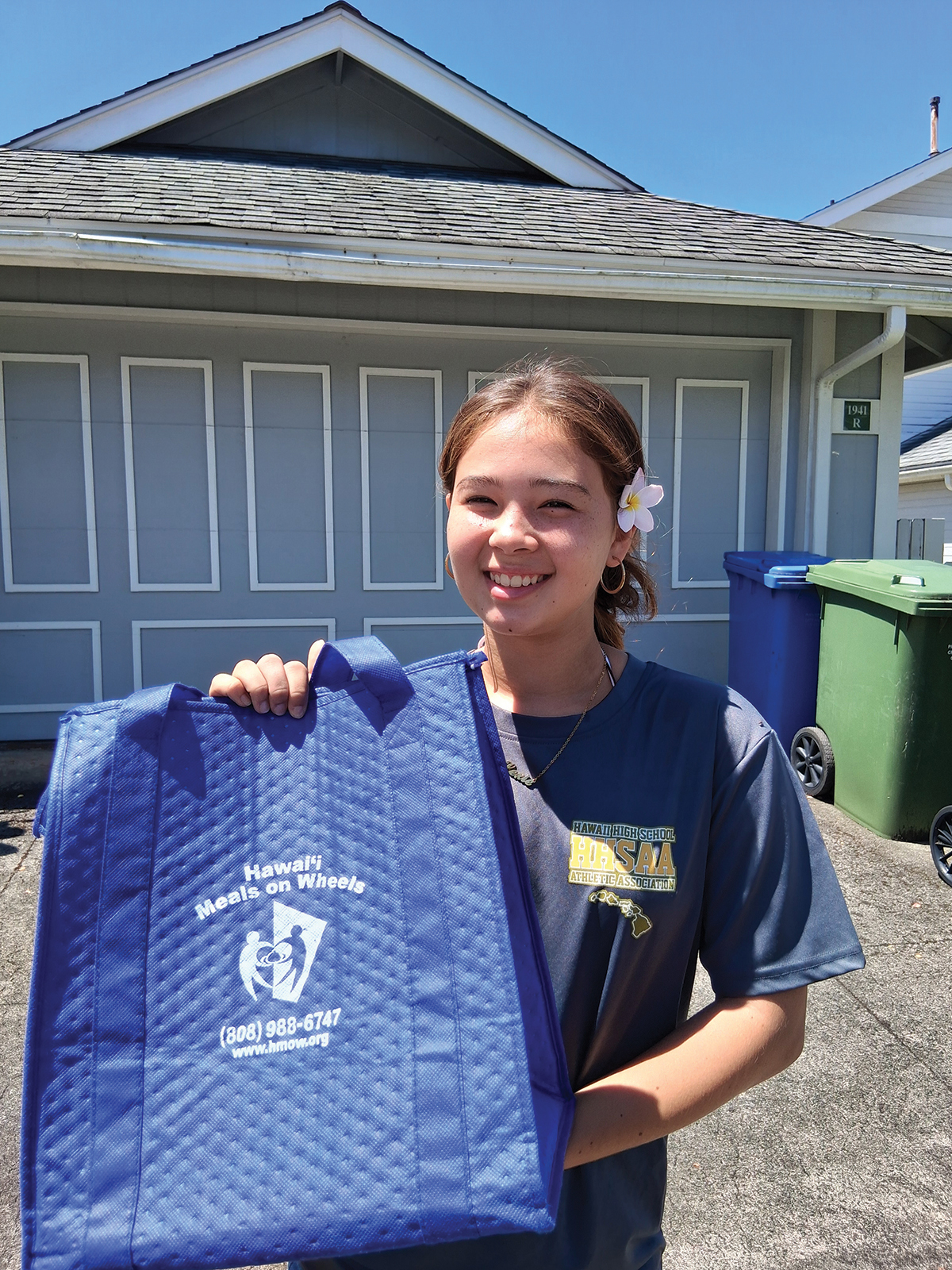
    When my family started volunteering for Hawai‘i Meals on Wheels on Thanksgiving in 2023, I honestly didn’t want to do it. My mom signed us up, and my dad and I just went along with it. I was 12 years old and I remember thinking, “Why am I being forced to do this?” I wanted to hang out with my friends or watch my iPad. I’m now 15 and I’m really glad she made me do it.

    Delivering meals to kūpuna showed me how different life can be for other people. Some don’t have family nearby, some can’t cook anymore and some can’t even drive to get groceries. I never really thought about these things. My favorite part is seeing them smile when I bring them their food. They also talk to me and ask me questions like how old I am, where I go to school and even if I play sports. Talking with them has helped me be able to talk to strangers and new people, which is something I have to learn to do. This experience made me learn to not only help others, but it is helping me grow, too.

    I’ve started volunteering at my school office and library this summer. My mom signed me up because she said she needed more time to work instead of driving me all over the place. It turned out to be a lot of fun. I met new people, learned how to speak to staff, did office work and helped out the librarians. I am also collecting service points to go toward a service cord, a braided honor cord worn at graduation to recognize community service,
    when I graduate from Moanalua High School. This is helping me get more volunteer hours that will look good on college applications and scholarships.

    My mom always tells me that it’s better to give than to receive, but I mean… getting money is still pretty nice, not gonna lie! Next year, I will still volunteer, but I also want to get my first job. I love shopping and going out with my friends, and apparently I need to start paying for those things myself. Plus, I want to start saving for my future, maybe even for a house someday.

    Even though I didn’t want to volunteer in the beginning, I’m really glad my mom made me do it. It turned out that this changed the way I see other people — and myself.

    Lexie Arnold is a 10th grader at Moanalua High School and the daughter of GM Publisher Cynthia Arnold. She loves to dance and play softball, hang out with her friends and volunteer for organizations on the island.

    If you have a story to share, email the editor:
    debra@generations808.com.

    When my family started volunteering for Hawai‘i Meals on Wheels on Thanksgiving in 2023, I honestly didn’t want to do it. My mom signed us up, and my dad and I just went along with it. I was 12 years old and I remember thinking, “Why am I being forced to do this?” I wanted…

  • A Wake-Up Call for Congress

    This year’s Social Security Trustees report sends a clear message: Congress needs to act. The latest projections show Social Security’s Trust Fund reserves are expected to be depleted by 2034. That means without Congressional action, Social Security will have about 80% of the money it needs to make full payments. Congress needs to act to fill the 20% gap and they have plenty of tools in their toolbox to do it.

    Some special interests in Washington will seize on this report to push proposals that would cut Social Security by reducing payments, raising the retirement age or otherwise shifting the burden onto hardworking Americans. We are fighting against this.

    At AARP we hear every day from older Americans across the country who are struggling to make ends meet, like Victoria in Hawai‘i, who told us she depends on Social Security to pay her mortgage and bills. “Without it, my financial security would be shattered,” she said.

    She’s not alone. A recent AARP Financial Security Trends Survey found that six in 10 Americans 50 and over worry about whether they will have enough to stay financially secure in retirement. Nearly seven in 10 say prices are rising faster than their income. Almost half report higher healthcare costs than just a year ago.

    At the same time, many are entering retirement without enough savings — 42% of adults 0-plus who are not yet retired have less than $50,000 set aside. This is why Social Security
    remains a lifeline. It helps people cover basic needs like housing, groceries, utilities and healthcare. Even with that support, a majority of older Americans say today’s average benefit (around $2,000 a month) is not enough.

    For millions of Americans — including 302,577 here in Hawai‘i — Social Security is an essential part of their plan for financial security in retirement. It is earned through a lifetime of hard work. Social Security is not a bonus or a handout and it must be protected.

    The good news is Social Security isn’t going broke. This is absolutely something Congress can fix in a way that protects the money we’ve earned, without cuts. Lawmakers have time to act and there are many ways to strengthen Social Security and close the projected funding gap. You can join our fight to maintain your earned Social Security benefits. Go to action.aarp.org/protectsocialsecurity to learn more.

    AARP HAWAI‘I (nonprofit)
    1001 Bishop St., Ste. 625, Honolulu, HI 96813
    866-295-7282 | hiaarp@aarp.org
    aarp.org/hi | facebook.com/aarphawaii

    This year’s Social Security Trustees report sends a clear message: Congress needs to act. The latest projections show Social Security’s Trust Fund reserves are expected to be depleted by 2034. That means without Congressional action, Social Security will have about 80% of the money it needs to make full payments. Congress needs to act to…

  • Centering Mind, Body & Spirit With Tai Chi

    Centuries ago in China, tai chi was a form of martial arts. It was practiced as an internal force, not brute strength. Certain hand movements and footwork were taught as techniques of tai chi. Techniques of pushing hands were an important part of tai chi and this technique was to maintain combat efficiency. Currently, tai chi is a sports activity in some parts of China, enjoyed by many athletes.

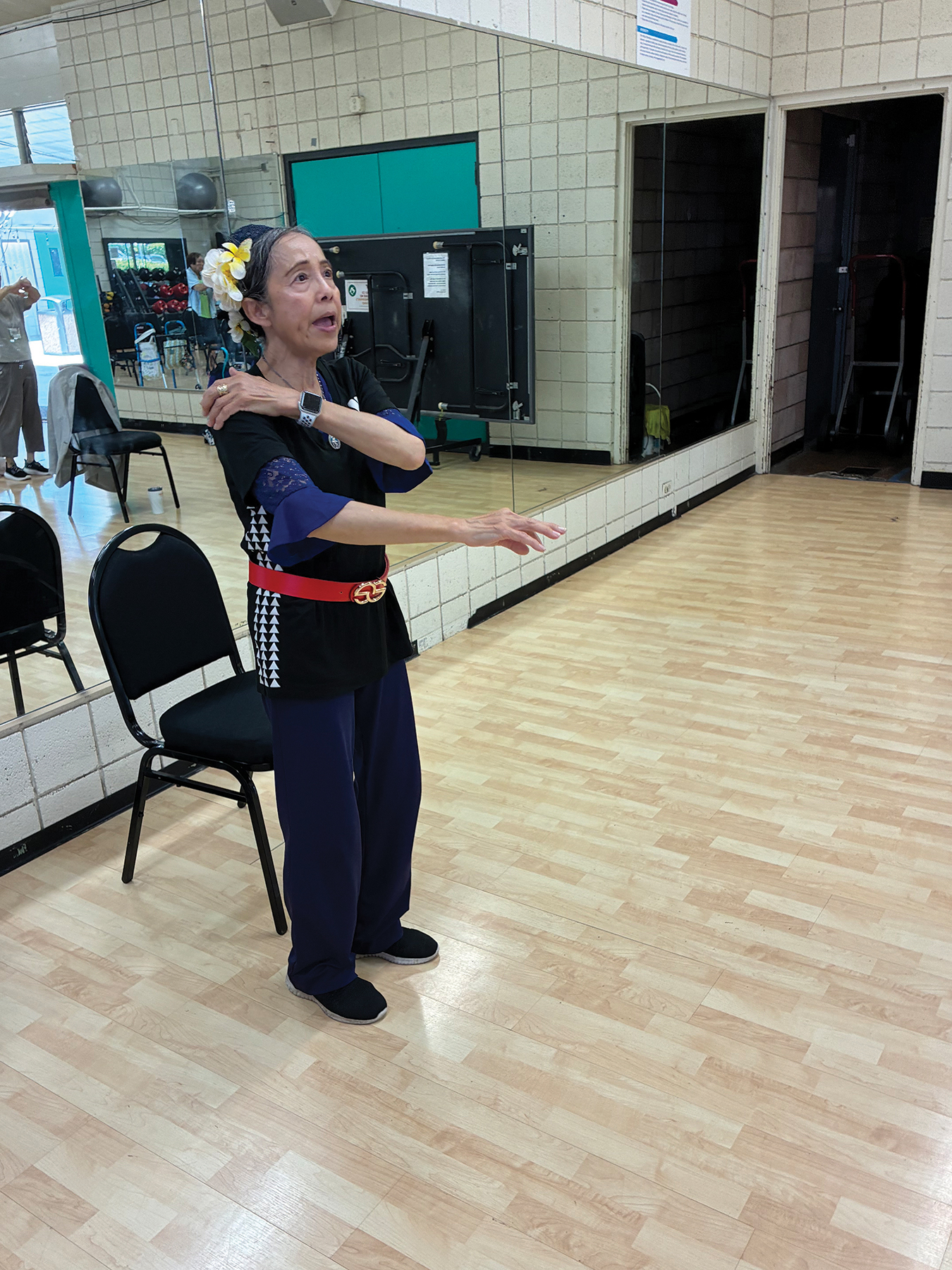
    “Tai chi has made a great, positive impact on my life,” says Elizabeth Thu Hai Pham, the current tai chi instructor at the YMCA Kaimuki Wai‘alae Branch. “I teach kūpuna tai chi, mainly the prevention of falling and the hand movements and footwork if the kūpuna should find himself or herself in a situation of unexpectedly falling. Tai chi consists of slow movements, and consequently, it is easy for a kūpuna to learn. Because it is slow, kūpuna gradually become graceful and acquire balance in everyday life.”

    Elizabeth was born in Vietnam. In the final days of the Vietnam War in 1975, she fled, leaving her family possessions behind. She traveled to New Jersey, where her brother-in-law resided.

    In America, she cried to God, “‘Why me?’ My father was weak. He didn’t have enough to eat. But I learned whatever happens makes us stronger. Every Saturday, Vietnamese refugees came to our small apartment for a bowl of soup from my grandmother. Our family didn’t have enough to eat, but when you have little, I was taught to share what little you have with someone who has nothing.”

    Tai Chi Master Dr. Paul Lam taught her not only the tai chi forms, but also her strengths and weaknesses, because “by learning such conditions, you look within yourself,” Elizabeth says. “You learn about yourself, how to focus, how to breathe properly and how to move your energy deliberately without rushing, with calmness of the mind, now called ‘mindfulness.’ My master said I must honor myself.” Dr. Lam is recognized throughout the world as a Tai Chi Grand Master.

    Elizabeth, who I will now call “sensei” (Japanese for teacher or highly respected person), has been awarded a tai chi certificate for her completion of training in tai chi education and skills. She is certified to teach the remedy for arthritis and the prevention of falling of all levels, more particularly for kūpuna. Pham Sensei says, “Myself and the kūpuna who attend my classes are in a support group. There is no denying that, in their own way, the kūpuna support me and I do my best to support them. We honor, respect and practice tai chi for the benefit of our health, to reduce arthritis and to prevent falling.”

    Pham Sensei continues by saying, “Proper breathing has an important connection with the brain. Unless you can relax and have peace of mind, it adversely affects the waves in your brain, which results in poor health.”

    She also emphasizes drinking water: “Our body requires water, because our blood needs water. I encourage everyone to drink at least 17 fluid ounces of water each day.”

    Pham Sensei rises at 3am daily, does her tai chi exercises and attends church where she prays for everyone and finds spiritual peace. In the early morning she has time to think, she says. As her Tai Chi Master recommended, she enjoys her life the best she can, particularly since her early years had been a time of suffering.

    Her enduring advice for everyone, not only kūpuna, is to be slow and gentle in all aspects of life. Practice tai chi every day to maintain your health, peace of mind and happiness.

    “Tai chi has made a great difference in my life, good health, clear thinking, lots of friends and happiness,” Pham Sensei says. “If you practice tai chi every day, slow and gentle, a certain spirituality will emerge in your life.”

    Centuries ago in China, tai chi was a form of martial arts. It was practiced as an internal force, not brute strength. Certain hand movements and footwork were taught as techniques of tai chi. Techniques of pushing hands were an important part of tai chi and this technique was to maintain combat efficiency. Currently, tai…

  • Older Americans Month Awardees Honored

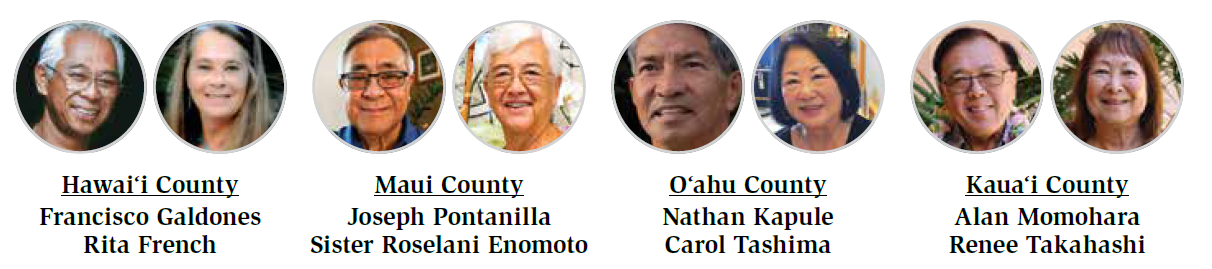
    Every May, National Older Americans Month (established in 1963 by President John F. Kennedy) celebrates the profound volunteer contributions of our country’s senior citizens. Here in Hawai‘i, we deeply value our kūpuna, whose wisdom and aloha spirit shape our communities. During Older Americans Month, each Hawai‘i county honors its special senior citizens with Outstanding Older American Awards, crowning a male and female champion who go on to represent their island at the state level. This year’s national theme, Champion Your Health, emphasized wellness, prevention and the active role older adults play in society.

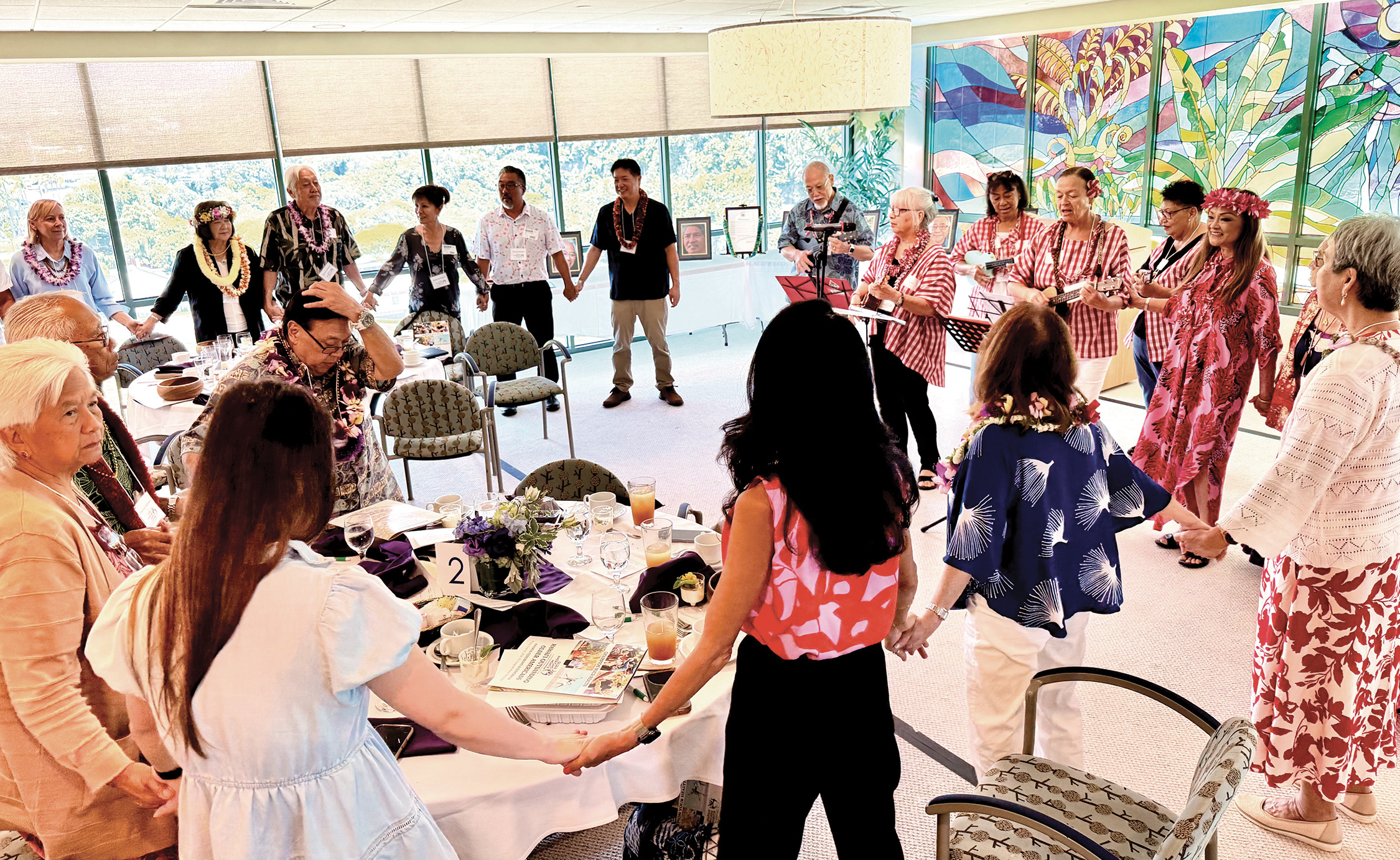
    Hawai‘i’s four county Area Agencies on Aging received nominations from the public for Outstanding Older Americans, recognizing two kūpuna from each county for their invaluable lifelong volunteer contributions and community service. Communities across our state honored their kūpuna throughout the month: Maui and Hawai‘i County hosted their celebrations on May 9, Honolulu County held its event on May 15 and Kaua‘i County concluded the month’s festivities with a gathering on May 29. Following these county celebrations, the state gathered for the Governor’s Hawai‘i Statewide Older Americans Month Recognition Ceremony on June 12 at 15 Craigside in Honolulu.

    The Roots of Our Community

    Our kūpuna are the roots that ground our island communities. Every year, Hawai‘i’s Outstanding Older Americans Month events highlight their strength. Through a lifetime of selfless kōkua (help) and deep aloha, awardees remind us that the most beautiful legacy we can leave is a community uplifted.

    The chicken-skin stories of our honorees reveal our immense good fortune and privilege to be inspired by these service-above-self leaders. By honoring these individuals who volunteer their time sharing their talents, we become aware of the value of giving. May we always draw from their strength and carry their legacy forward.

    Mahalo palena ‘ole (boundless gratitude) to our venerable ku¯puna — living treasures whose wisdom and grace continue to guide Hawai‘i toward a brighter tomorrow

    Every May, National Older Americans Month (established in 1963 by President John F. Kennedy) celebrates the profound volunteer contributions of our country’s senior citizens. Here in Hawai‘i, we deeply value our kūpuna, whose wisdom and aloha spirit shape our communities. During Older Americans Month, each Hawai‘i county honors its special senior citizens with Outstanding Older…

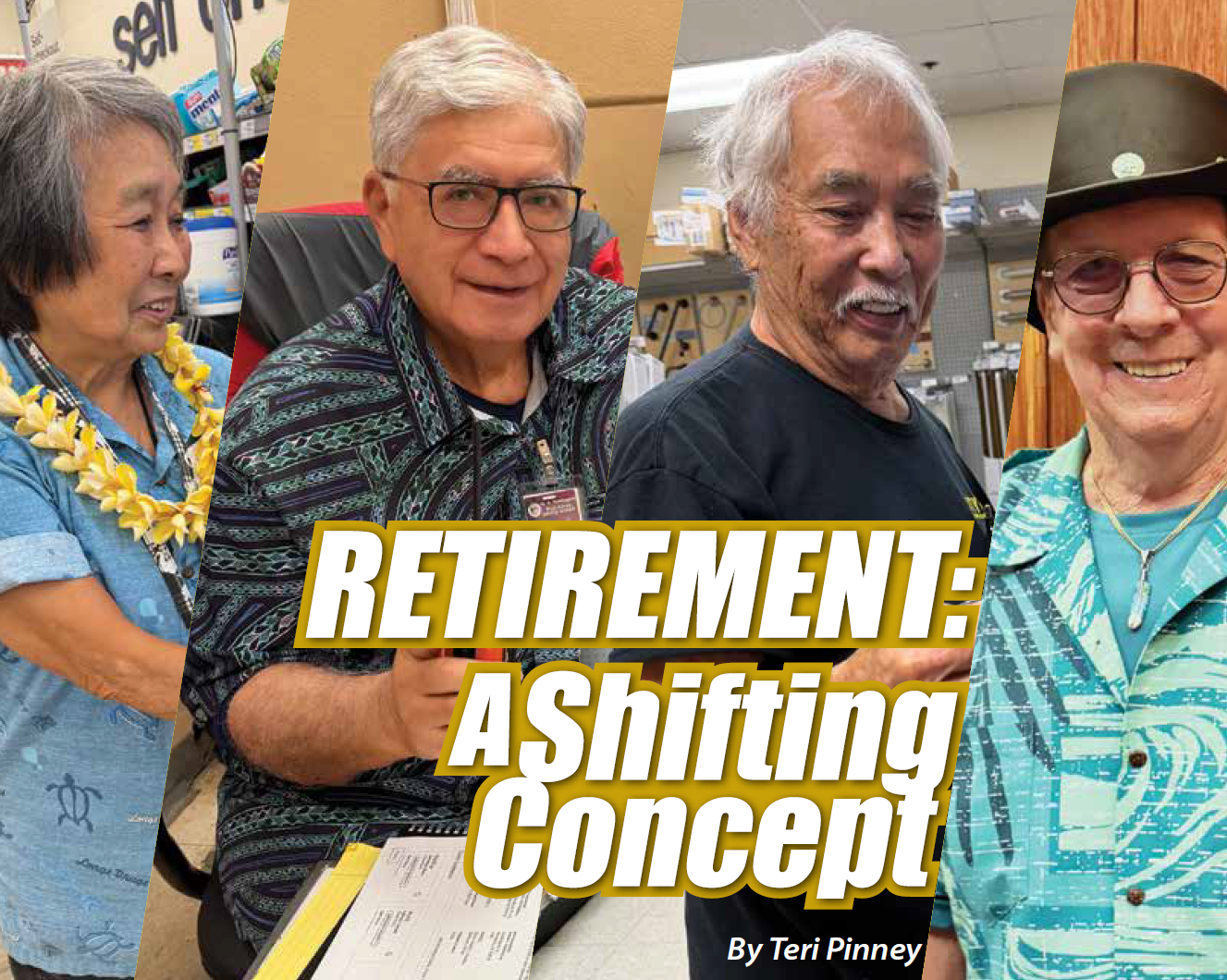
  • Retirement: A Shifting Concept

    Retirement: A Shifting Concept

    Across Hawai‘i, kūpuna are continuing to work — or returning to work — well beyond what previous generations considered retirement age. Their roles span a wide range of occupations, from educators and healthcare professionals to retail workers and security personnel. For many, retirement no longer means stepping away from work entirely. Instead, it has become a more flexible stage of life — one that allows for continued contribution, engagement and purpose.

    Hawai‘i’s population is aging at a pace that is reshaping both its workforce and its economy. Today, nearly one in five residents in the state is age 65 or older. Projections indicate that this share will continue to rise steadily over the next decade as life expectancy increases and younger populations grow more slowly.

    At the same time, older adults in Hawai‘i are remaining in the workforce at notably high rates. Approximately 28% of Hawai‘i residents age 65 and older are still employed — well above the national average of about 22%. In fact, Hawai‘i consistently ranks among the top states in the nation for workforce participation among seniors.

    Several factors drive this shift. Hawai‘i has one of the highest costs of living in the country, prompting many older adults to continue earning income beyond traditional retirement age.

    At the same time, longer life expectancy and better overall health mean that many kūpuna are both willing and able to remain active in the workforce. Employers are increasingly recognizing the value of experienced, reliable workers who bring stability, institutional knowledge and strong work ethics.

    This is more than a passing trend. It reflects a fundamental shift in how work and retirement intersect in modern life — where retirement is no longer a fixed endpoint, but a flexible stage shaped by financial realities, personal fulfillment and the desire to remain engaged in the community.

    A Second Chapter

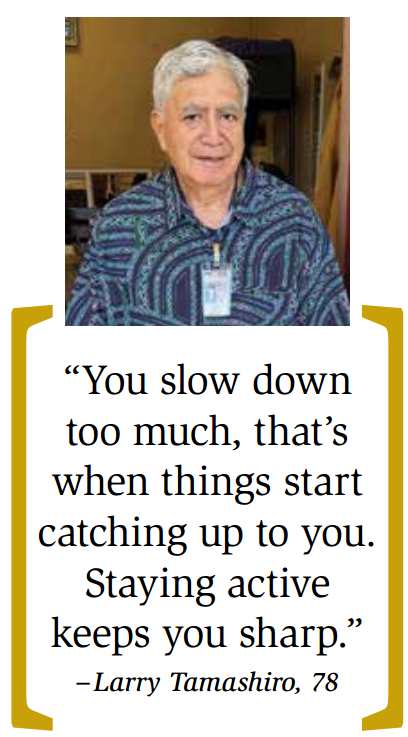
    On a large campus just after sunrise, 78-year-old Larry Tamashiro, a retired Honolulu Police Department homicide detective sergeant, directs a team of security personnel, overseeing safety operations with the same steady authority and presence that defined his years in law enforcement.

    “I thought I was done when I retired,” Larry says. “But this work I do — it matters. You’re protecting students. You’re helping create a safe place for them to learn.”

    His law enforcement background brings a level of experience that cannot be quickly taught. He’s seen a lot over the years. From managing campus protocols to responding to incidents, Larry’s presence offers reassurance to staff, students and parents alike.

    “You learn how to stay calm; how to read situations,” says Larry. “That doesn’t go away just because you retire.”

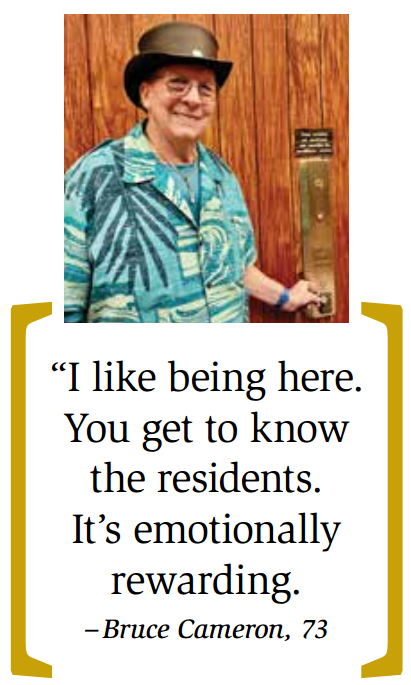
    In a condominium lobby, Bruce Cameron, 73, stands at his post — greeting residents by name, managing deliveries and keeping a watchful eye on the steady flow of visitors. A quiet but constant presence, he has become part of the daily rhythm of the building, offering both familiarity and reassurance to those who pass through.

    “You get to know the residents,” he says. “I’m helping people as young as 5 to as old as 100. “I like being here. It’s emotionally rewarding.”

    But his role extends well beyond opening doors. Bruce is often the first to notice when something is out of place, the person to whom residents will turn for help and the consistent presence who brings a sense of order to the day. For him, the work provides structure, connection and a continued sense of purpose.

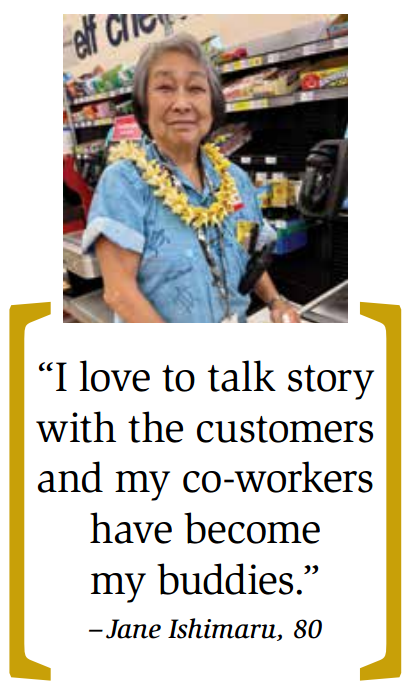
    At an East O‘ahu drug store, 80-year-old cashier Jane Ishimaru provides a unwavering and familiar presence. She greets customers, assists at the self-service registers, helps shoppers locate items, restocks shelves and steps in to check out purchases when needed. She continues to work in part to help pay for a substantial mortgage, a responsibility that keeps her financially engaged.

    “But it also keeps me active and I enjoy it,” she says. She encourages others her age to consider staying in the workforce, noting that even parttime work can bring both purpose and stability.

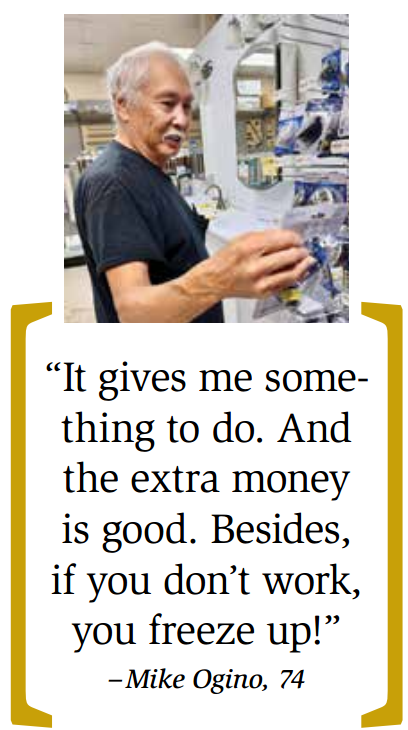
    Mike Ogino, age 74, a custodian at a busy home supply retail store, says, “It gives me something to do. And the extra money is good. Besides, if you don’t work, you freeze up!”

    These individual stories reflect a broader reality. For many older adults, work is not simply about supplementing retirement income or Social Security — it is about remaining connected, contributing in meaningful ways and continuing to show up where they are needed most.

    While their roles differ, a common thread runs through each of their stories. These are not jobs taken on out of necessity alone. They reflect a desire to remain engaged, to contribute and to continue being a useful part of something larger than themselves.

    Rethinking Retirement

    For much of the 20th century, retirement followed a predictable path. Individuals stepped away from the workforce in their early to mid-60s, supported by pensions, personal savings and Social Security. Retirement offered leisure — travel, hobbies, time with family. It marked a clear transition — a well-earned chapter defined by rest and reward. But that model was built for a different time.

    For many, retirement is no longer a fixed destination but a shifting concept. Financial realities, longer life expectancy and changing priorities have altered what it means to step away from work. In Hawai‘i, where the cost of living is among the highest in the nation, many seniors find that full retirement is not practical. Many discover that they do not want to fully disengage. Nowhere is this shift more visible than in the education industry.

    Back to School

    In workplaces across the islands, the line between “retired” and “working” has blurred. Nowhere is that more evident than in Hawai‘i’s schools, where kūpuna continue to show up day after day because the work still matters to them. Across the state, schools have become one of the most common and appealing places for older adults to continue working or to re-enter the workforce after retirement. Classrooms, campuses and training programs offer something many other industries cannot: a sense of purpose that feels immediate and tangible.

    Whether working a few days a week as a substitute teacher or maintaining a full-time teaching role, many seniors find that education allows them to contribute in meaningful ways without the pressures often found in other professions. Substitute teaching has become a natural entry point. It offers flexibility, familiar routines and the opportunity to remain engaged without long-term commitments. For retired professionals — from former teachers to military personnel, business leaders and public servants — the classroom provides a space where life experience translates into real world value for students. Schools, in turn, benefit from dependable individuals who bring maturity, patience and a stable presence.

    Some do choose to remain in education full time. Veteran teachers continue well into later stages of their careers, often serving as anchors within their schools. Their experiences become a resource for students and younger educators navigating the early years of teaching. Mentorship, both formal and informal, is a quiet but powerful contribution of these seasoned professionals.

    At the post-secondary level, the pattern continues. Community colleges and universities
    frequently rely on adjunct instructors and lecturers — many of whom are retired or semi-retired professionals. These individuals bring real-world experience into the classroom, bridging theory with practice. In fields such as business, healthcare and education, their insights can resonate strongly with students preparing to enter the workforce.

    There are practical reasons why education has emerged as such a strong post-retirement pathway. The structure of the academic calendar, opportunities for part-time work and the ability to scale involvement up or down all make the field accessible. Just as important, however, is the cultural aspect. Teaching has long been viewed as a profession grounded in service, mentorship and community — values that align closely with what many older adults seek in this stage of life.

    The demand for substitute teachers has increased over the past decade, driven by teacher shortages, rising enrollment pressures and the need for classroom continuity. Older adults have stepped into that gap. Substitute teachers who are retired professionals bring a unique level of classroom management. Their life experience has prepared them to handle unexpected situations.

    Many retired educators return to the classroom not out of necessity, but because they miss it.

    “There’s something about teaching that stays with you,” one long-time substitute shares. “You don’t forget what it feels like to help someone understand something for the first time.”

    For others, working in education represents a new chapter entirely. Individuals who spent careers in business, military service or public administration are finding second careers bringing real-world experience directly into learning environments.

    In this way, education has become more than a workplace for kūpuna. It has become a bridge between generations.

    Why Continue to Work?

    Research increasingly points to health as a key component of why older adults continue to work.

    Studies suggest that remaining active — both mentally and physically — can contribute to overall well-being in later life. Continued engagement through work has been associated with lower rates of depression, improved cognitive function and a stronger sense of identity. Older adults who maintain regular routines and social interaction often report higher levels of life satisfaction. Work, even on a part-time basis, can provide both.

    In Hawai‘i, where community and connection are deeply rooted in culture, these benefits are particularly meaningful. For many kūpuna, work is not simply about staying busy—it is about remaining an essential thread in the tapestry of daily life.

     Hawai‘i’s high cost of living: This issue remains a driving force behind why many ku¯puna continue to work. Housing costs can be especially burdensome, while food, healthcare and transportation expenses continue to climb. For those on fixed incomes, even careful budgeting may fall short. Social Security alone is rarely sufficient. As a result, continued employment becomes less about choice and more about maintaining financial stability and independence as expenses increase.

     Financial security: Not all workers have had access to pensions or long-term retirement savings. Continued employment provides stability and peace of mind. Full-time roles often include additional medical coverage, life and disability insurance, paid time off and access to wellness/employee assistance programs that support overall well-being.

     Supporting family: Kūpuna often contribute to multigenerational households. Many kūpuna provide financial back-up and everyday stability for children and grandchildren. Their continued income can ease household burdens, strengthen family resilience and help bridge gaps that might otherwise strain the entire family unit. In many cases, their presence also allows younger family members to pursue work or education with greater flexibility, knowing support at home is steady and dependable.

     Purpose and routine: Work provides structure and a sense of purpose. For many, it offers a reason to get up in the morning and stay engaged. Bruce puts it simply: “You don’t just sit around. You stay moving. You stay part of things.” That daily rhythm brings a sense of normalcy and momentum, reinforcing both physical activity and mental sharpness. It also creates a continued connection to the outside world — something that becomes more valuable, not less, with time.

     Social connection: Workplaces provide daily interaction and connection — something that becomes increasingly important with age. Jane says, “I love to talk story with the customers and my co-workers have become my buddies.” These relationships add a sense of camaraderie and belonging that extends well beyond the job itself.

     Staying active: Remaining mentally and physically active is another key motivator. Larry reflects: “You slow down too much, that’s when things start catching up to you. Staying active keeps you sharp.” The routine of showing up, moving through tasks and engaging with others helps maintain both physical mobility and cognitive strength. It’s not about pushing limits. It’s about keeping the engine running. That steady level of activity can make the difference between simply getting by and continuing to feel capable and independent.

     Because they can: Many kūpuna continue working simply because they are able to do so. They’re physically capable, mentally sharp and still willing to contribute. Today’s older adults are healthier, more active and living longer than previous generations. Stepping away isn’t always necessary or desirable — it’s a choice, not a requirement. As long as they have the ability, many see no reason to step aside when they still have something to offer.

    The Value of Experience

    Doubts about kūpuna’s declining ability or resistance to change are at odds with reality, as older employees increasingly demonstrate adaptability. Employers are increasingly recognizing the advantages of older workers. Seniors bring reliability and a strong work ethic. They possess deep institutional knowledge and time-honed judgement that only seasoned workers can bring. They often require less supervision. Intuition and initiative are prevalent, as well as a high level of professionalism developed over decades.

    In roles like Bruce’s, consistency builds trust. In positions like Larry’s, experience can be critical in high-stakes situations. For Jane and Mike, it’s about staying engaged and the social fulfillment that comes from being part of the daily rhythm of human contact.

    Seniors also tend to have lower turnover rates, often serving as mentors to younger employees.

    Challenges and Adjustments

    Age discrimination remains one of the most persistent and often unspoken barriers facing older workers, particularly when it comes to hiring and advancement. Despite their contributions, working later in life comes with challenges. Physical demands may require adjustments. Employers may need to provide flexible schedules or modified duties. And technology continues to evolve, requiring ongoing learning and adaptation.

    In many cases, even small accommodations — ergonomic workspaces or adjusted hours — can make a significant difference in sustaining long-term participation. Navigating new systems or workplace expectations can be frustrating, but many seniors persist with determination and a willingness to learn. These adjustments are not signs of limitation, but practical steps that allow experienced workers to continue contributing effectively.

    Although the assumption that age equates to decline has proven to be a false one, there are still lingering stereotypes about older workers. These stereotypes will continue to be challenged as more kūpuna remain active in the workforce. However, age bias remains one of the most persistent barriers facing older employees, particularly when it comes to hiring and advancement.

    Looking Ahead

    As Hawai‘i’s population continues to age, the presence of ku¯puna in the workforce is expected to grow. What was once considered the exception is quickly becoming the norm. Organizations such as AARP Hawai‘i and the University of Hawai‘i Center on Aging are actively studying this shift.

    For employers, it signals the need to rethink long-standing workforce models. Those who
    adapt will benefit. Rather than asking how long older adults should remain in the workforce, the better question may be how to fully leverage what they bring. In many cases, experience and consistency are exactly what are needed. As this demographic grows, so does the opportunity to redefine a productive, multigenerational workforce.

    Economic Contributions

    The continued participation of older adults in Hawai‘i’s workforce carries broader economic implications. Working kūpuna contribute to consumer spending, tax revenues and overall economic stability. Their earnings circulate through local economies, supporting the communities in which they live. Their presence helps address workforce shortages and dependable staffing. In Hawai‘i, where geographic isolation and workforce limitations present unique challenges, the contributions of older workers are particularly significant. Across Hawai‘i, the image of retirement is evolving.

    In office buildings, classrooms, storefronts and community spaces, older adults continue to show up — not because they must, but because they can and because they want to. Their presence challenges long-held assumptions about aging. It also offers something increasingly valuable in today’s fast-changing world: stability, perspective and lived experience.

    Retired, Rewired, Rehired

    In a society that often moves quickly toward what is new, kūpuna in the workforce serve as a reminder that experience still matters — and that some of the most valuable contributions come well into the later chapters of a career.

    Kūpuna are redefining what it means to retire. They are not stepping away from life’s responsibilities or contributions. Instead, they are adapting — finding new roles, continuing old ones and remaining active members of their communities.

    Bruce continues to stand at his post, greeting residents by name. Larry walks the school’s campus, ensuring safety and order among the student population. Jane moves between the self-service registers, helping customers and keeping the front-end running smoothly. Mike, the retail store custodian, takes ownership of his work — keeping the floors spotless, the aisles clear and the store ready for the next wave of customers, carrying out each task with care, consistency and a quiet determination to do the job right every time.

    Different roles, different settings — but the same steady and intrepid presence. They show up, they contribute and they keep things moving. In a time when retirement once meant stepping aside, they offer a different picture — one where experience still matters, work still has value and purpose doesn’t fade with age.

    For this writer, a 76-year-old woman balancing a full-time job alongside part-time magazine feature writing, retirement was never a finish line — it was a shift in direction.

    The work looks different, but the drive remains the same. Purpose doesn’t taper off with age and neither does the willingness to contribute.

    Across Hawai‘i, kūpuna are continuing to work — or returning to work — well beyond what previous generations considered retirement age. Their roles span a wide range of occupations, from educators and healthcare professionals to retail workers and security personnel. For many, retirement no longer means stepping away from work entirely. Instead, it has become…

  • Why Medicare Costs Increase

    You get a lab test done only to find out that the cost has increased from previous years. As confusing as the Medicare program is, it is equally perplexing as to why costs continue to increase.

    Medicare is funded by payroll and income taxes, Medicare premiums and congressional funds. Based on the accumulated funds and factors like inflation, the provisions of the Social Security Act determine Medicare premiums and cost of services. If taxes and congressional funds are not enough and inflation is trending upwards, Medicare premiums will increase as a result.

    In addition, over 10,000 people turn 65 every day in the US, which means that more people rely on Medicare to cover their healthcare needs. More beneficiaries lead to increased spending on physician-administered drugs. Healthcare services costs increase to keep up with demand.

    You can reduce your healthcare costs by reviewing your Medicare plans and comparing them to other plans. If you only have Original Medicare (Parts A and B), see if you can benefit from Medigap or a Medicare Advantage Plan.

    COPELAND INSURANCE GROUP
    1360 South Beretania St., Ste. #209, Honolulu, HI 96814
    O: 808-591-4877 | F: 808-354-0512
    josie@copelandgroupusa.com
    PlanEnroll: planenroll.com/?purl=Josie-Banasihan
    copelandgroupusa.com

    You get a lab test done only to find out that the cost has increased from previous years. As confusing as the Medicare program is, it is equally perplexing as to why costs continue to increase. Medicare is funded by payroll and income taxes, Medicare premiums and congressional funds. Based on the accumulated funds and…

  • Advance Directives Are Limited

    The death of a parent can profoundly affect sibling relationships. Research suggests that a parent’s death removes a central emotional link between siblings, reactivates unresolved childhood rivalries and intensifies longstanding family tensions. Differences in grieving styles, disagreements over final arrangements and the distribution of parental property can further strain relationships. End-of-life healthcare decision-making may become another arena in which these earlier conflicts resurface.

    Although advance directives are intended to clarify a parent’s wishes, they do not always function as expected in real-world medical settings. When a patient is admitted to an ICU and determined to be near death, the instructions contained in an advance directive may not guide care as clearly as families anticipate. In practice, health care professionals often turn to family members and ask them to decide whether life-sustaining treatments should continue or be withdrawn. In addition, these decisions that are typically framed as urgent place families under extraordinary emotional pressure and can intensify sibling conflict. Being asked to make a life-ordeath decision for a loved one frequently results in profound and enduring guilt — an emotional burden that can shape individual grief and alter long-term family relationships.

    YIM & YEMPUKU, LLLC – Estate Planning Attorneys
    2054 S. Beretania St., Honolulu, HI 96826
    808-524-0251 | yimandyempukulaw.com

    The death of a parent can profoundly affect sibling relationships. Research suggests that a parent’s death removes a central emotional link between siblings, reactivates unresolved childhood rivalries and intensifies longstanding family tensions. Differences in grieving styles, disagreements over final arrangements and the distribution of parental property can further strain relationships. End-of-life healthcare decision-making may become…

  • Retirement Dreams, Travel Realities

    One of the most rewarding aspects of retirement is the opportunity to reclaim your time and invest it in pursuits that bring joy, fulfillment and personal growth. For many retirees, travel is not just a leisure activity but a long-held aspiration and a central part of their vision for this next chapter of life. If traveling in retirement is on your to-do list, the following considerations can help you evaluate your options and build a strategy that supports your desire to explore the world on your financial terms.

     Be strategic about timing. When it comes to retirement travel, timing matters. Many retirees choose to embark on their most ambitious trips during the early years of retirement, when physical and mental health are often at their peak. These initial years may involve longer or more frequent journeys, which can result in higher travel expenses. If this aligns with your personal goals, consider front-loading your travel budget to accommodate a more active lifestyle early on in retirement. Adjusting your financial plan to reflect this pattern can help you enjoy your adventures while maintaining long-term financial stability.

     Define your travel style and preferences. Understanding your travel preferences is key to estimating costs and planning effectively. Are you envisioning short road trips to nearby destinations, extended RV road trips or regular international travel? Each approach comes with its own financial implications. For example, domestic travel by car may be relatively affordable, while overseas trips can involve higher costs for airfare, lodging and insurance. By clarifying the type and frequency of travel you envision, you can tailor your retirement plan to reflect realistic spending expectations and avoid surprises.

     Look for ways to reduce travel expenses. Travel doesn’t have to break the bank. There are many ways to reduce costs without sacrificing enjoyment. Consider renting a home or apartment if you plan to stay in one location for an extended period, which can be more economical than staying in hotels. Take advantage of your flexibility as a retiree by traveling during off-peak seasons, when prices for flights and accommodations are often lower. With a little research and planning, you can stretch your travel dollars further and make each trip more affordable without sacrificing the experience.

     Review your insurance coverage. Insurance is an often-overlooked aspect of travel planning, but it can be crucial, especially in retirement. Travel insurance can provide peace of mind by covering unexpected events such as illness, trip cancellations or lost luggage. It’s also important to understand the limitations of your health insurance coverage. Medicare, for example, does not provide coverage outside the United States and even domestic travel may require supplemental insurance depending on your provider. Reviewing your insurance needs before you travel ensures you’re adequately protected wherever your journey takes you.

    Retirement is a time to embrace new adventures and travel can be one of the most fulfilling ways to do so. Consider connecting with a financial advisor to create a well-crafted financial strategy that supports your lifestyle and brings your retirement vision to life without compromising your long-term goals.

    MICHAEL W. K. YEE, CFP,® CFS,® CLTC, CRPC®
    1585 Kapiolani Blvd., Ste. 1100, Honolulu, HI 96814
    808-952-1240 | michael.w.yee@ampf.com
    ameripriseadvisors.com/michael.w.yee
    Michael W. K. Yee, CFP®, CFS®, CLTC®, CRPCTM, is a Private Wealth Advisor/Financial Advisor with Ameriprise Financial Services LLC in Honolulu, Hawai‘i. He specializes in fee-based financial planning and asset management strategies and has been in practice for 42 years.

    Certified Financial Planner Board of Standards Center for Financial Planning, Inc. owns and licenses the certification marks CFP®, CERTIFIED FINANCIAL PLANNER ®, and CFP® (with plaque design) in the United States to Certified Financial Planner Board of Standards, Inc., which authorizes individuals who successfully complete the organization’s initial and ongoing certification requirements to use the certification marks.

    Ameriprise Financial Inc. and its affiliates do not offer tax or legal advice. Consumers should consult with their tax advisor or attorney regarding their specific situation. Ameriprise Financial cannot guarantee future financial results. Investment products are not insured by the FDIC, NCUA or any federal agency, are not deposits or obligations of or guaranteed by any financial institution, and involve investment risks including possible loss of principal and fluctuation in value. Securities offered by Ameriprise Financial Services, LLC. Member FINRA and SIPC. ©2026 Ameriprise Financial, Inc. All rights reserved.

    One of the most rewarding aspects of retirement is the opportunity to reclaim your time and invest it in pursuits that bring joy, fulfillment and personal growth. For many retirees, travel is not just a leisure activity but a long-held aspiration and a central part of their vision for this next chapter of life. If…