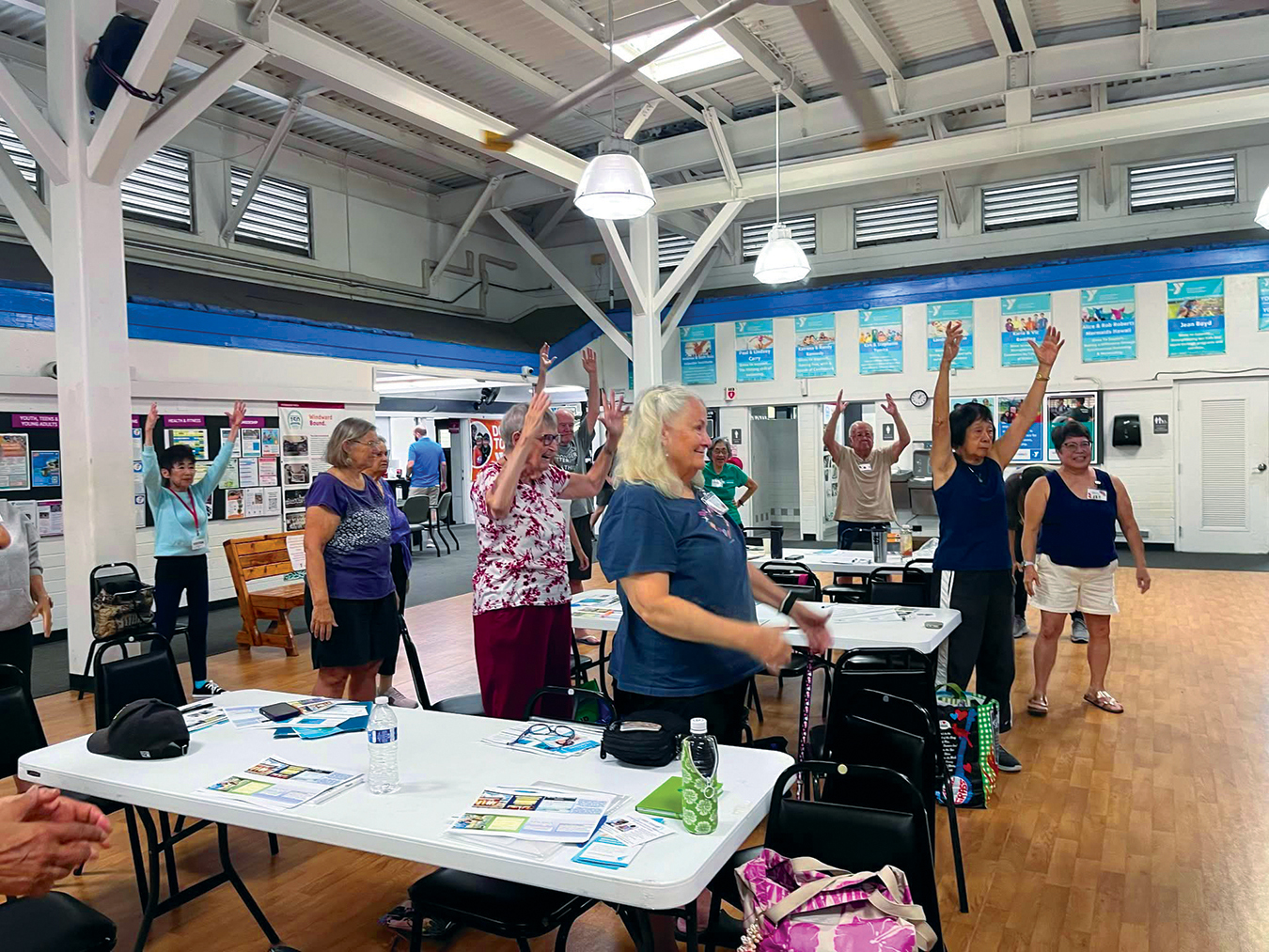
At first glance, the Filipino Community Center looks Filipino enough — Spanish-inspired architecture, an engraved golden sun over the entrance, a glittering mosaic portrait of Consuelo Zobel Alger, after whom the central courtyard is named. The history of the building is evident in its grander pieces, yes, but taking a closer look reveals pieces of the past in the form of plaques and carefully preserved curios, all telling of Filipino history in Hawai‘i. For October’s Filipino American History Month (FAHM), we look to the Filipino Community Center as a guiding light and gathering place for people from all walks of life — not just Filipinos. In order to get to where we are, though, we must first look back to where we come from.
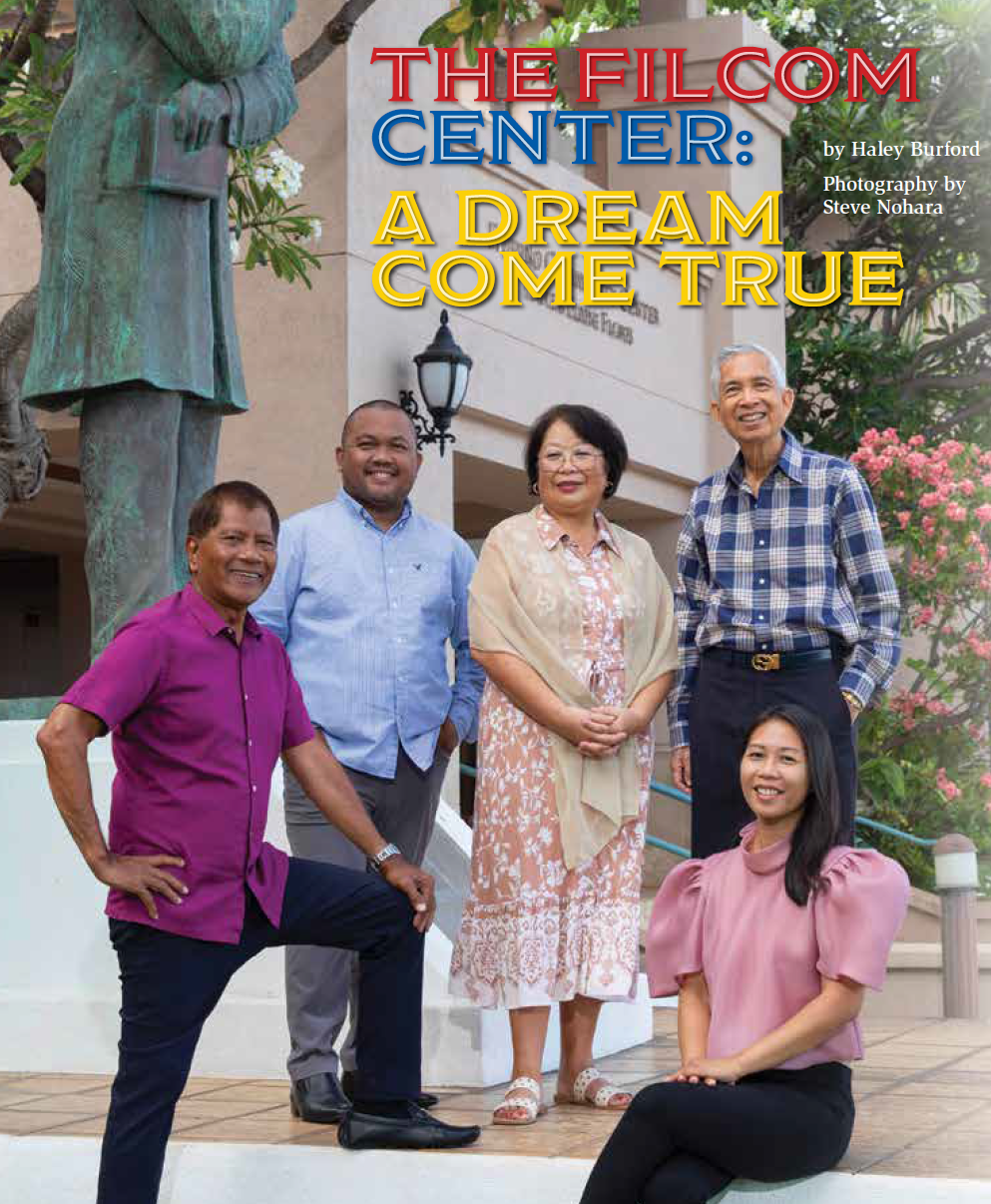
Clockwise (L–R): Roland Casamina, CEO, House of Finance; Hugh Madula, Programs & Events Coordinator; Rose Cruz Churma, Architect; Eddie Flores Jr., L&L Co-Founder; Su Lazo, 2nd Vice Chair, Executive Committee
A Constellation of Civilizations
Over 4,000 years ago, immigrants from southern China were the first to inhabit the Philippine Islands, also spreading throughout areas in Southeast Asia such as Malaysia and Indonesia. The Philippines boasts a profoundly rich cultural catalogue, though written records fall short in capturing the nuances of this history. Until Spanish arrival in the 16th century, the people inhabiting the islands did not see the archipelago as one unified entity.
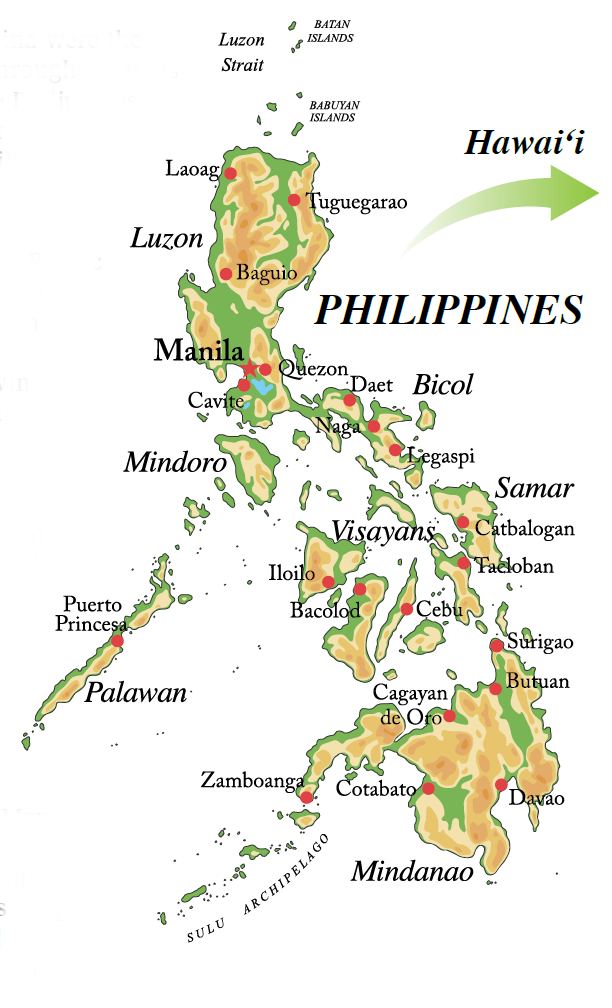
The Philippines, like Hawai‘i, is an archipelago in the Pacific Ocean, with islands numbering over 7,000. Before the Philippines was the Philippines, the islands were comprised of ancient kingdoms throughout Luzon, Mindanao and the Visayas regions. Each kingdom’s tribes had their own ways of life, following datus (leaders/protectors) and living in barangays (“boat” in Tagalog, the language originating from central Luzon).
The Fight for Freedom
Sailing for the Spanish crown, Portuguese explorer Ferdinand Magellan arrived in the Visayas region in 1521. Through his arrival, Spain forced its access to the kingdoms, naming and unifying the islands as the Philippines after King Phillip II. Native populations were displaced and Spanish rule lasted through the 19th century.
At the very end of the 1800s, the young men of an economically robust elite native class were sent to Manila and Europe for a liberal education, becoming known as ilustrados. Establishing the Propaganda Movement, they called for equality and systemic reforms, the most famous being Jose Rizal, a Filipino revolutionary who inspired the people. The Philippine Revolution began in 1896 as people fought for emancipation from Spain’s 333-year colonial rule and the right to self-governance. The 1898 Treaty of Paris transferred “ownership” of the archipelago from Spain to the US.
Through 48 years of American colonization, two World Wars took place. Japanese imperial forces invaded the shores of northern Luzon after the bombing of Pearl Harbor in 1941. Manila was occupied just a couple of weeks later, and imperialist forces committed grave atrocities such as the Manila Massacre (that occurred all over the archipelago) and Bataan Death March.
The people persevered. The Hukbalahap (Huks for short) were a communist guerrilla movement conceived by peasant farmers in central Luzon. The women of the Huk resistance were especially indispensable to the movement. Enduring abuse from Japanese forces, Filipina women organized guerrilla units, worked as spies and fought tooth and nail in combat. Filipino revolutionaries never lost their grit — staying determined and fighting for independence from the US in the Philippine-American War, remaining under US imperial rule through July 4, 1946, when the US formally recognized Philippine independence.
Post-independence, the Philippines focused on rebuilding and struggled to restimulate its economy. After Ferdinand Marcos Sr. was exiled for corruption and dictatorship, the Philippines worked hard to restore democratic processes — a significant milestone in this process was the passing of the 1987 Constitution of the Philippines. Today, the people of the Philippines are still striving to address poverty and corruption. But freedom, hard-won, can never be taken away.
An Ocean Apart
Across the Pacific, migrant Filipinos would begin another legacy. Filipinos known as “Manila men” settled in the Kingdom of Hawai‘i in the mid-1800s, working as cooks and musicians in the Royal Hawaiian Band (RHB). They were some of the first of many sakadas, or Filipino overseas workers. In the early to mid-1900s, an estimated 125,000 sakadas immigrated to Hawai‘i from northern and central Philippines, working on sugar plantations. As time went on, more sakadas brought their families with them, strengthening the local Filipino community.
One Manila man, Jose Sabas Libornio, an understated hero in Hawaiian history, headed the RHB during the overthrow of the Hawaiian Kingdom in 1893. As a loyal friend to Queen Lili‘uokalani, Libornio was one of few RHB members to refuse allegiance to the US government. Ellen Prendergast, a Native Hawaiian composer, was inspired by Libornio’s and others’ loyalty to the queen and wrote “Mele ‘Ai Pōhaku,” a mele for hula. Libornio turned the lyrics into a musical composition, creating “Kaulana Nā Pua,” a song of resistance to imperial rule and colonialism.
Filipinos were exploited, enduring grueling labor and inadequate pay. A series of strikes across the Hawaiian Islands culminated in the Hanapēpē Massacre that took place on Sept. 9, 1924, where 16 Filipino laborers and four police officers were killed. These events of Filipino resistance and bloodshed remain as scars on the body of the Filipino fight for freedom.
Filipino Excellence
In the 1970s, tourism and militarism were gaining ground in Hawai‘i because of its increasing desirability as a travel destination and the Vietnam War. As a result, Filipinos were being displaced. An example is the Ota Camp in Waipahu. The people organized against this and fought eviction. The People Power Movement in the Philippines, the robust Filipino participation in the labor unions in Hawai‘i illustrate that ordinary people, when working together, can accomplish extraordinary things. Today, people of Filipino descent make up the second largest ethnic group and the largest Asian group in Hawai‘i — roughly ¼ of the overall population.
Enter the nonprofit Filipino Community Center Inc., established in 1992, with its constitution and by-laws filed with the state prior to the completion of the building in 2002. Finally, the Filipino Community Center (FilCom Center/FCC) opened its doors in 2002 and has become integral to Filipino/ local cultural vitality as a gathering place and culmination of Filipino passion, hard work, kindness and strength.
But in order to ascend to this level, it had to be built from the ground up.
An Impossible Dream
According to Rose Cruz Churma, one of the key figures in building the center, the dream had been in the making for decades. In 1992, the Filipino Chamber of Commerce Hawai‘i (FCCH) was ready to make the center a reality, but had no idea where to start. Rose was recruited in 1993 by local businessman Eddie Flores Jr., who was already putting together the first ever Filipino Fiesta. Concurrently, another businessman, Roland Casamina, asked Eddie to help with what would be called the “FilCom Center project.” While most saw the development of the center as integral to uniting Filipinos and the community, Eddie took a simpler approach: Many other cultures had festivals at Kapi‘olani Park. “Why not us?”
Most people know Eddie as the co-founder of L&L Hawaiian Barbecue, but he also played a foundational part in building the center. Half Chinese and half Filipino, he was born in Hong Kong and moved to Hawai‘i with his family when he was young. As someone of mixed heritage who knew little Tagalog, when Eddie moved to Hawai‘i, he was anxious that the community wouldn’t accept him. In 1991, he decided to take a leap and join the FCCH. He was immediately welcomed to the group, kickstarting what would become decades of community advocacy and activism through his life.
When it came time to take on the project, Eddie shone with tenacity and wit. Described by Rose as having “Filipino creativity and Chinese pragmatism,” Eddie was the one who suggested that the center lease tenant spaces so that the building accrues income. “Without what I envisioned, we’d be in trouble.” To this day, this decision specifically is one that the folks at the center are especially grateful for.
Rose specialized in architecture and design. From the beginning, she was wary of this nonprofit project and what it entailed. In “FilCom Center: A Reflective History,” published on the eve of the center’s grand opening, Rose writes, “[W]hat would evolve as the FilCom Center consisted of an enthusiastic group of dreamers with very little resources, no land, no organization, no plan of action … My initial reaction was to stay away .” Though she swore off involvement with the project, Eddie, Roland and then-FCCHpresident Lito Alcantra eventually convinced her to join. She noted how Eddie and Roland especially complemented each other as business partners — Eddie’s passion for the project manifested in his drive to ensure financial sustainability for the center, and Roland’s in how he represented the typical Filipino immigrant.
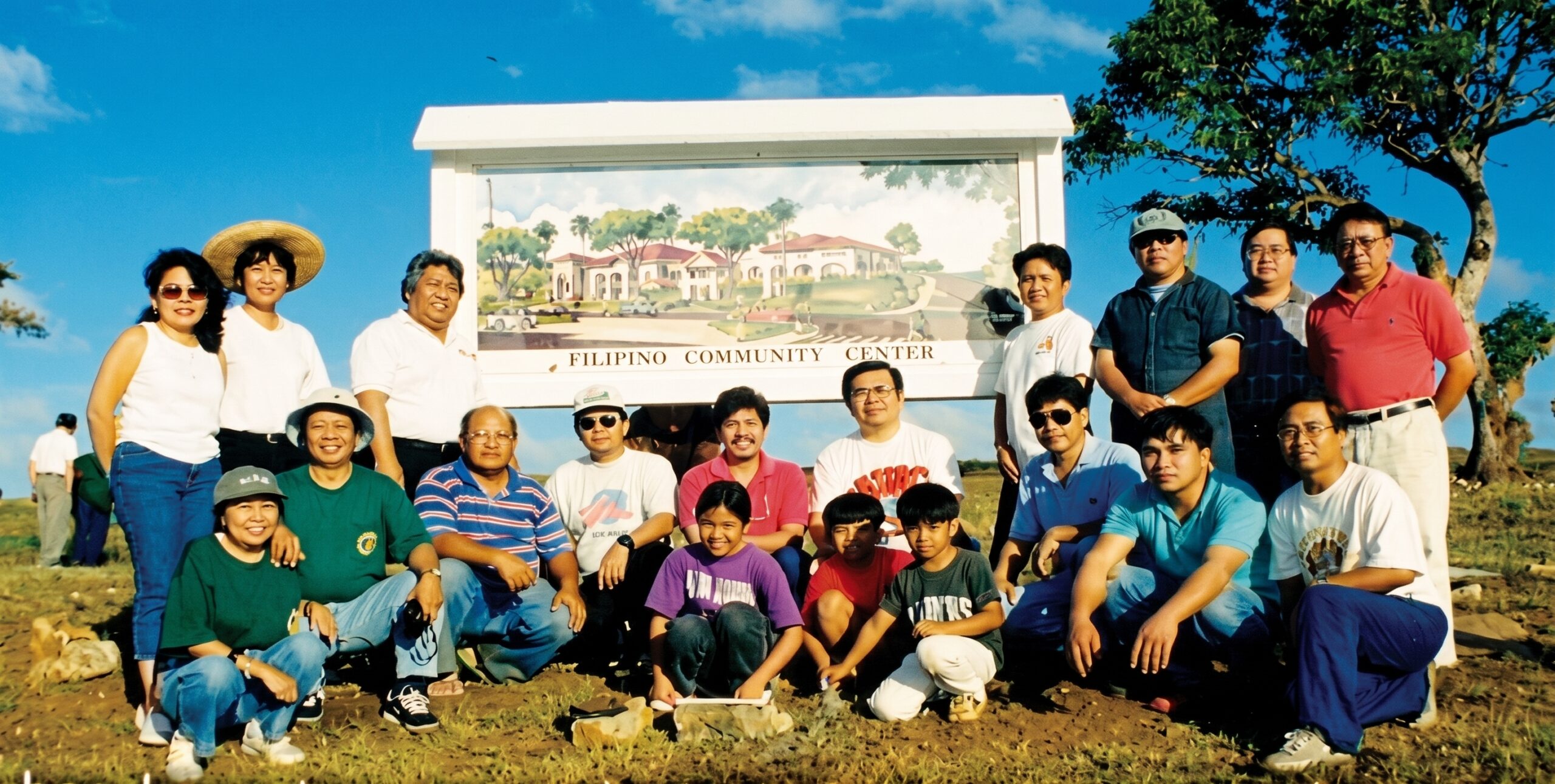
Roland was born in the Philippines and immigrated to Hawai‘i in 1968, facing racial discrimination growing up. As a result, he was ashamed of being Filipino until early adulthood, when he got a job as the youngest manager at a bank, in part, because of his ability to speak Ilocano. Thus began his career in finance, eventually establishing his own company called “House of Finance.” But, he still wanted to do more for the community, taking on the project before recruiting Eddie.
Roland’s concern has always been that Filipino people as a group are often content in being employees instead of starting their own businesses. He remembers that, after graduating from high school, his peers were relieved to “‘finally be done.’ For me,” says Roland, “graduating high school was just the beginning — a stepping stone.” He wanted to retain that drive when working on the project. Though both Eddie and Roland were motivated, Roland divulges that it felt like “the blind leading the blind,” especially in the project’s early years.
By 1996, the executive committee working on the FilCom Center project hosted a planning workshop. The Waipahu Sugar Mill had closed its doors the previous year and 2 acres were designated for the center. Roland recalls, “We went to the boardroom and saw the map and it was all drawn out.” Roland and Eddie kept straight faces above the table, but underneath, Roland started kicking Eddie’s leg. “And one of the things I’m really proud of is, here’s a guy, he’s half Chinese, half Filipino, born and raised in Hong Kong, and here he is identifying as a true Filipino.” In the face of this major accomplishment (and throughout the entire project), Roland bragged about Eddie: “I talked about him in front of all the Filipinos and they were all so proud of Eddie.” In conversation, Roland turns to Eddie after explaining and says, “I’m proud of you, Eddie,” to which Eddie responds, “Hey, don’t say that. Tears in my eyes now. I’m proud of you, too, brother.”
Seeing It Through
The project did not progress without its hiccups. A few times, funding was paused or almost completely halted due to federal requirements. But, in 2000, groundbreaking took place. Still, more obstacles arose as the committee realized their lack of funding. They were hoping for a grant from the Harry & Jeanette Weinberg Foundation. Chuck McLemore, the committee’s fundraising consultant, told them that the most they should expect was about $1.5 million, but in February of 2001, they received a call from grant director Gailene Wong who said they could ask for double. Rose, Eddie and Roland remember this moment fondly, keeping their composure until they reached the parking garage, where “all hell broke loose. Eddie did his version of the ‘funky chicken katsu’ and Roland was jumping up and down and doing strange cheers,” Rose writes.
The Filipino Community Center officially opened its doors on June 11, 2002. “How could the Filipino community of Hawai‘i pull off something like this?” Rose asks. It was the leadership, political involvement, the social acclimatizing but, most importantly, the volunteers. “We knew that to make this happen we had to draw all — Filipino or not, immigrant and local, young and old.”
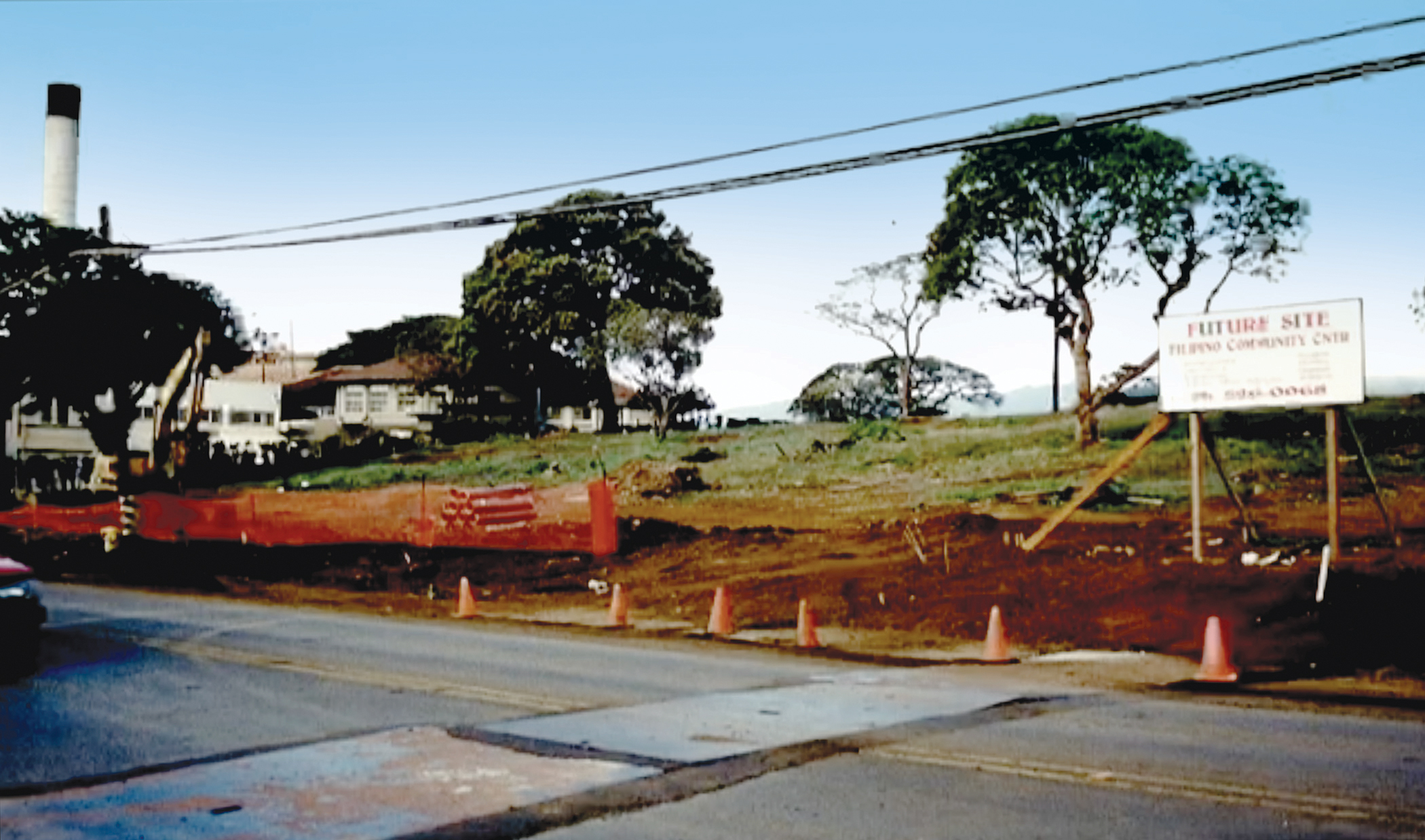
The Filipino Community Center in Waipahu is, according to Eddie, the largest community center in the US and outside of the Philippines. Eddie says, “We spent 10 years on this. That’s hard work. I was actually in line for FCCH president and I said I couldn’t do it. When we first went to the center site, it was just a sugarcane field.” When the center finally opened, it was a sunny day. “I had tears in my eyes,” says Eddie. Roland adds, “Every time I walk into the center, I have goosebumps. I can’t believe that what Eddie and I and everyone else dreamed of really happened.” They both agree that if asked to undertake the project today, they wouldn’t be able to do it. “It was really an impossible dream. Everything came into place.”
Eddie and Roland both believe that whatever they give or put into a project will be returned to them 10 times over. Through all of their hard work, both Roland and Eddie end their retelling with a word of gratitude to the community — Filipino, non-Filipino, federal, state and local. What started as a decades-lingering daydream now stands as both a gathering place for all and a monument to the love and hard work that went into its development, for those who came before and for all who will come after.
At the FilCom Center
The three-story center is overseen by a board of directors. Edmund Aczon has been chairman of the board since 2011, but, he jokes, “I’m the janitor and the doorkeeper.” As chairman, a lot of his work involves maintaining the center and receiving guests. Before FilCom, he worked for former Sen. Daniel K. Inouye, ensuring the senator was an advocate for the Filipino people. Edmund organizes meetings and meets with members of the board. Su Lazo has been with the board since 2024 and is also second vice chair of the executive committee. “It’s a labor of love,” she says.
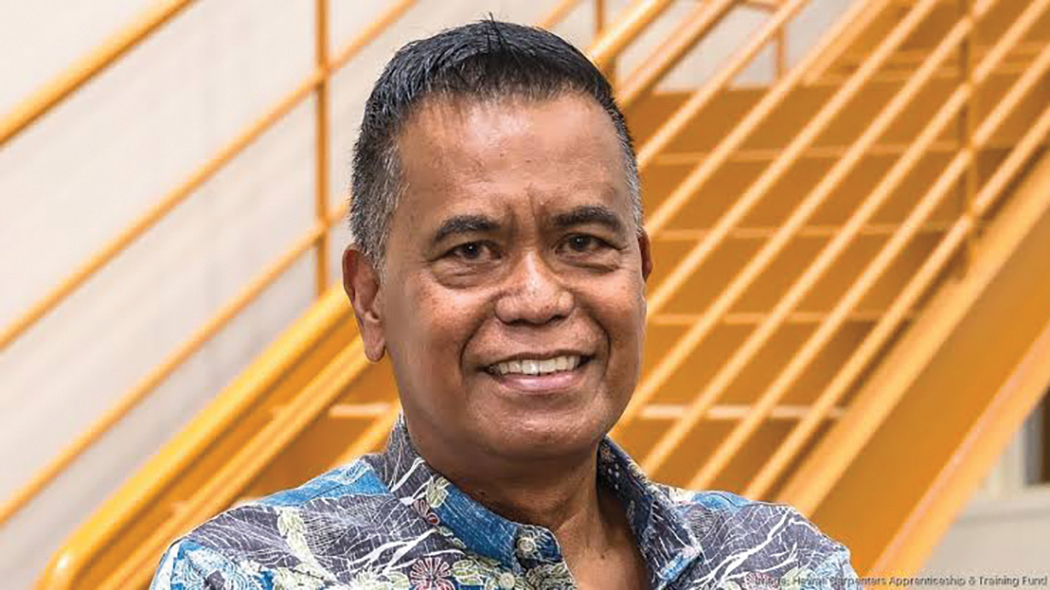
Edmund Aczon’s leadership is
paramount to the continued
success of the center.
The center structures itself and its programs around six foundational pillars. Kultura (cultural preservation) celebrates Filipino traditions through the arts, music, dance and intergenerational storytelling. The events under this pillar are FilCom Sundays, Banda Kawayan and History Fest. Kapaligiran (environmental stewardship) focuses efforts on protecting nature through community-based projects and sustainable practices. The center holds hydroponics/herb-planting workshops and hosts clean-up days. Kalusugan (health and wellness) promotes holistic well-being for all ages. The program under this pillar is called “FilCom Cares.” Kinabukasan (economic empowerment) offers educational opportunities for financial literacy, mentorship and general learning. The center offers immigration/naturalization services and NCLEX-exam review. Kababayan (community building) unites the Filipino diaspora via civic initiatives and community events. The main events for this pillar are Filipino Fiesta, Pasko sa FilCom and Bayanihan Gala. Finally, Kabataan (youth development) is concerned with building the next generation through leadership training and creative workshops. The main program that falls under this pillar is Fil4Kids. Registration/participation in almost all of these programs is free.
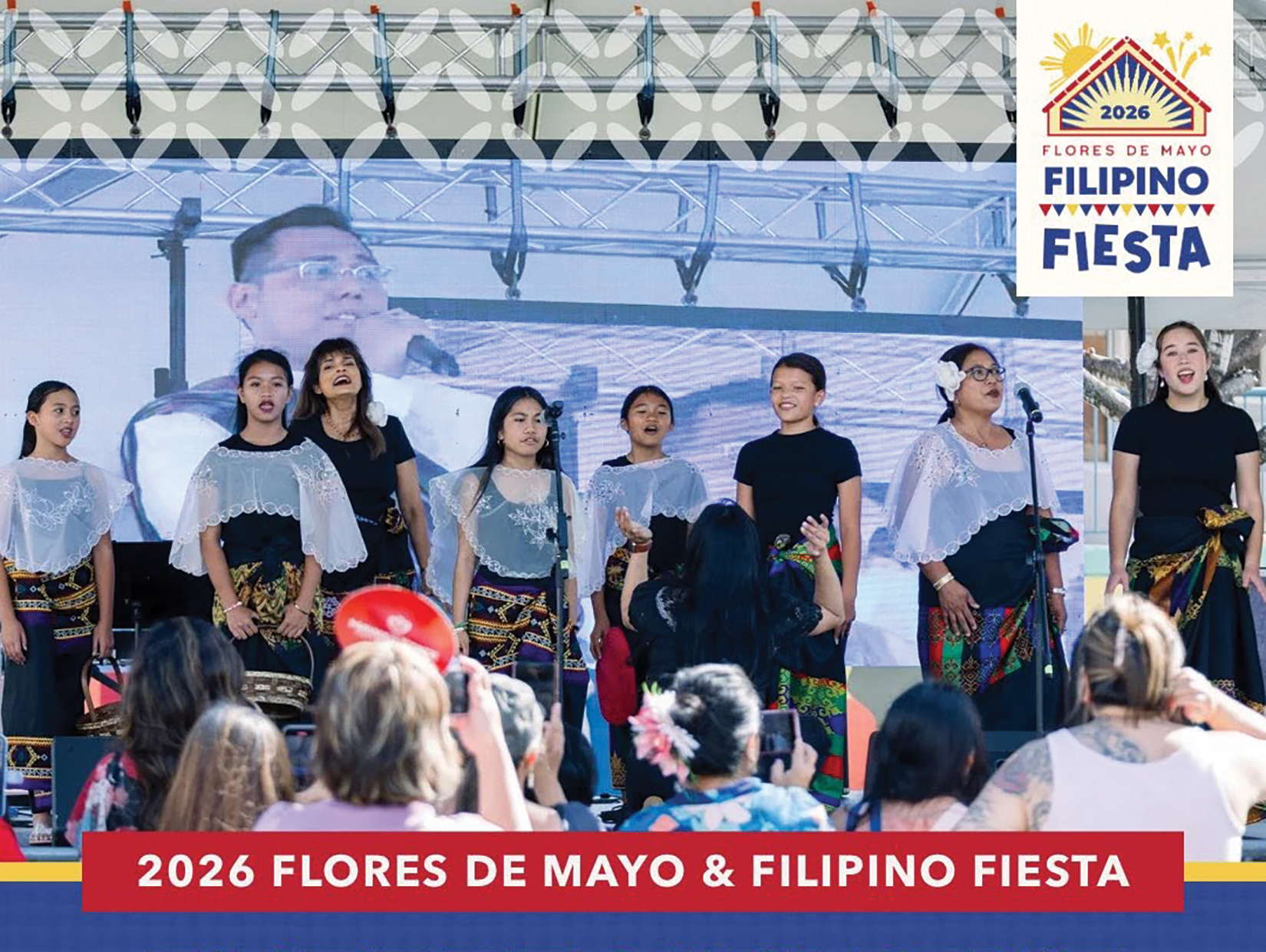
One of the events, if not the largest, that take place at the FilCom Center is the annual Flores de Mayo & Filipino Fiesta (usually shortened to Filipino Fiesta), which happens on the first Saturday of May and is chaired by Su. Fiesta has something for every generation, ranging from tinikling and other traditional arts workshops to a balut-eating contest, cultural storytelling, karaoke and more. Already planning for the next event, Su shares her excitement and gratitude for the people who help make fiesta happen every year. A lot of her work is also modernizing fiesta operations and processes, work she accomplishes with the help of her committee and community partners.
Along with the FCCH, Su says that the Filipino Jaycees of Honolulu is a pillar organization as they consistently collaborate with the center, expressing pride in her ability to bridge gaps across expertise and age. “The work that I do is making sure we continue to build that trust with the older generation while also giving those opportunities for young folks to develop their skills, because they’re going to lead one day.” She is also grateful for Eddie and Roland’s guidance. “I want to make sure he and Roland are honored. They built the Filipino Community Center, right?”
Going all the way back to the early ’90s, the first Filipino Fiesta was planned and executed by Eddie. “It’s my baby,” he says, “from day one.” What started as just fiesta and Flores de Mayo became the annual flagship project of the center. According to Su, fiesta represents a microcosm of the Center that takes place in just one day.
“Fiesta is a platform for cultural preservation and education as much as an economic opportunity for local organizations and performers to share their resources and talent. And, at the root of it all, fiesta is a multigenerational gathering of our community,” she says.
In turn, Eddie and Roland express their admiration for Su: “She is the young generation and is very dedicated. I’ve never seen anyone do such a great job.”
Eddie still mentors the fiesta planning committee and helps fundraise. He’s “really proud of the group. Young people are a little different, but I see them as the future of the Filipinos.”
The Power is With the People
Those involved with the FilCom Center, past and present, continue advocating for the Filipino people. Roland and Eddie support scholarships for Filipino students at their alma maters and the Shidler College of Business. They wish to see more rising Filipino leaders and role models. Eddie says, “We don’t have many Filipino role models, so it’s important for us to be in the mainstream,” to which Roland adds, “I want Filipino students to feel that it’s common to see that a guy that looks like me can become successful.”
Hugh Madula is the center’s programs and events coordinator. When he’s not setting up for the next celebration, he’s curating a small room of his personal collection of Filipino artifacts and literature. He stresses how important it is that young Filipinos know their history and take pride in being Filipino. ”Without my accent, without my history, I don’t know who I am. Who else is gonna share these things? I want more people to come see, and hopefully one day I’ll have a bigger room. That’s my goal: for more Filipinos to know where we come from.”
No longer with the center, Rose now works with the Filipino-American Historical Society of Hawai‘i and the Filipino Association of University Women (FAUW), seeking to document and preserve Filipino American history: oral histories, digitizing historical documents, hosting workshops and publishing Filipino writing. With FAUW, she seeks writers to publish their creative work. “It’s in the arts that we can best tell our story, because it reaches the heart,” she says. “If it’s just didactic, it’s hard to remember. But if it touches the heart, it’s easier to do so.”
She is also writing a piece on Eddie for his nomination to the Manong/Manang annual tribute in San Francisco, an annual event when Filipino elders are celebrated for their community work and achievements.
Su also talks about the Filipino curriculum project that aims to teach K through 12 classrooms about Filipino history in Hawai‘i. As the second largest ethnic group in the islands, Su and others feel it is imperative to teach the youth about how Filipino and Hawaiian communities have been interlinked since the first wave of immigrants.
A Gathering Place
During October, Filipino American History Month, various celebrations will take place. Many events on O‘ahu will take place at the FilCom Center beginning on Oct. 4, including dance workshops, history exhibits and food showcases. See the schedule of their events at filcom.org. The FilCom Center is also celebrating its 25th anniversary next year.
“Filipinos own the center,” says Eddie. Roland adds, “If you’re Filipino or Filipino at heart, if you’re from Hawai‘i, you’re part of the community.” Edmund says, “Community involvement is key.” The FilCom Center encapsulates the spirit of the Filipino people.
This story is told with the hope that all readers come away knowing more, with a heightened sense of curiosity and appreciation for Filipino history and heritage, a desire to learn more and an anticipation of what can be done to pass this aloha and sense of community (bayanihan) from one person to the next. Everything starts with a dream. Through careful attention, hard work and togetherness, impossible dreams come to life.
Year-round Programs:
- Zumba
Mondays, 6:30pm – 7:30pm - Ballroom Dance
Tuesdays, 6:30pm – 7:30pm - Traditional Dance
Wednesdays, 5:30pm – 6:30pm - Escrima: Filipino Martial Arts
Every last Saturday of the month, (Please call for specific times: 808-680-0451) Periodically Scheduled Classes & Workshops: - Language
- Immigration
- Filipino cuisine cooking
- Financial literacy
- HiNAMI Nursing Examination Class
(From July to November. One of FilCom’s signature programs for more than 20 years, is a volunteer-led board preparation course provided by Hawaii Nursing Advocates & Mentors Inc. to help nursing graduates, especially foreign=educated nurses, pass their licensing exams.)

THE WAY BACK HOME by Haley Burford
I wrote this issue’s feature and, coincidentally, was also a kid at Fil4Kids for a couple of years. I was nervous at first to take on this feature because I have difficulty writing about things close to me, but after speaking with Rose, Su, Edmund, Roland and Eddie, my nerves calmed almost immediately after meeting each of them. The way they spoke about their work with the Filipino Community Center (FilCom Center) inspired me and reminded me of my time there. I want to express my sincere gratitude to them for sharing their knowledge and passion with me.
I related to Eddie when he spoke about the fears of not being accepted because of his mixed heritage. My experience growing up in Hawai‘i, which I’m sure many others can relate to, included anxiety and confusion — not really knowing where I fit in — too nervous to assert myself into one culture or another. Sometimes, even people who I considered family would ostracize me for being “only” half Filipino. When I would spend summers at the FilCom Center, though, I never felt that anxiety and confusion. For young me, this was quite rare, so I treasured it.
Everyone I interviewed either invited me to lunch or to join their volunteer committees. The readiness with which they wished to share these spaces with me reminded me of some of my own relatives and friends, always inviting and always companionable. When I interviewed Edmund, he invited me to the board of directors luncheon at the center later that week. It was my first time back at the center since I was a child, so it meant a lot to me to be back in that space. At the luncheon, the same thing happened! Everyone I spoke to was happy to hear about my interest in volunteering and being more integrated with the community, inviting me to concerts and meetings after speaking with me for a few minutes. It felt a bit like whiplash, but gratitude and awe quickly overpowered that feeling.
I took the opportunity to write this feature quite seriously. I mean, I take every feature opportunity seriously, but the FilCom Center holds some of my most precious childhood memories, and I knew that if I was going to write this story that I had to go back to that headspace and sit with it. Going back to the center after over a decade was strange — I noticed things that child-me never noticed. I read each plaque, went up to see the historical exhibit, saw Hugh’s curated room, took in the afternoon quiet and thought about how much had changed over the years.
I definitely have changed; the center, though, is just as I remember it. For some reason, this realization brought me peace. I’m worlds apart from the kid I was, and I’ll keep changing, but the center has been here, and I hope you’ll join me in helping to make sure it stays that way for the rest of our lives.