Category: Column

  • Sharing Personal Wisdom and Values

    Most of us recognize the importance of establishing a legal will to document and ensure that our material goods are passed on to the persons and/or causes of our choice. But how many of us have written comparable documents to ensure that our values and beliefs, our parting thoughts and wishes, also are documented and passed on to those we love?

    The tradition of ethical wills provides guidance for writing such documents. Sometimes called legacy letters, ethical wills provide a way to transmit one’s life lessons, feelings, and final thoughts to future generations. There is no format or right way to write one. It might contain family history and stories; expressions of blessings and love or perhaps forgiveness; articulation of cultural and spiritual values, traditions, and beliefs; validation of pride in children and grandchildren and hopes for their future well-being; expressions of gratitude and requests for ways one would like to be remembered — all the cherished intangibles, the knowledge and wisdom accumulated over a lifetime, to be preserved and shared with those most dear. Your ethical will might be of far greater value to your descendants than your legal will.

    How do you write an ethical will? Again, there is no one right way to do it. You might start by thinking of the most important events in your life and experiences or persons of greatest significance. Why did the events or people hold such import? When have you felt most happy, content, worthy? Can you see common elements or patterns in these memories? What are the life lessons that you want to share and underscore to those you love?

    The process of writing an ethical will or legacy letter is similar to writing a life review. The act of identifying, documenting, and reflecting on the most important elements of a lifetime helps to put things in perspective and find meaning in one’s existence. Both have the potential to foster and promote personal growth. The ethical will differs from a life review in that it goes beyond reflection and review; its primary purpose is to share the outcome of that review with those who matter.

    One of my favorite examples of an ethical will was presented as a lecture, given by Randy Pausch, a professor at Carnegie Mellon University who died of pancreatic cancer at the age of 47. He shared his life lessons with his students in the moving, witty, and profound “The Last Lecture: Really Achieving Your Childhood Dreams,” which is available on YouTube: www.bit.ly/LectureVideo.

    One need not be at the end of life to write an ethical will. It is just as relevant to review and evaluate one’s life at times of major transitions and share those reflections with those closely impacted by that transition. An excellent example of such a legacy letter was written by Barack Obama, “A Letter to My Daughters,” penned at the start of his presidency, January 18, 2009, available online: www.bit.ly/LifeLegacies.


    CENTER ON AGING — University of Hawai‘i at Mānoa
    2430 Campus Road, Gartley Hall, 201B, Honolulu HI 96822
    808-956-6124 | map3@hawaii.edu
    www.hawaii.edu/aging/

     

    Most of us recognize the importance of establishing a legal will to document and ensure that our material goods are passed on to the persons and/or causes of our choice. But how many of us have written comparable documents to ensure that our values and beliefs, our parting thoughts and wishes, also are documented and…

  • Keep that “Spring” in your Step!

    As a Medicare educator and radio host, it’s my passion to keep up with changes that impact Medicare beneficiaries. My radio listening audience is well into their 60s and 70s and octogenarians listen, too. Some are ’69 and ’70 graduates of Roosevelt, Kalani, Kaimuki, and McKinley high schools. Each year, they sponsor “Battle of the Bands” reunion dances with live music. The dancing goes on for hours.

    Put a spring in your step!The energy and enthusiasm always bring me to my feet. I am younger but can hardly keep up on the dance floor. One or two dances and I have to sit back and watch all the fun.

    If you have ever shared that feeling, then it is worth checking out if your Medicare plan covers an exercise program or movement class that will help you hold your own on the dance floor.

    Call your doctor and schedule your free Medicare annual wellness visit. Ask if you can start an exercise program. Then rejuvenate and put a “spring” back in your step!


    MEDICARE MOMENT WITH MARTHA
    A radio program with Martha Khlopin
    KHNR-690AM: Sat., 2 pm–2:30 pm, Sun., 9:30 am–10 am
    808-230-3379 | getmartha@aol.com

    To learn more about free Medicare wellness visits, go to:
    www.medicare.gov/coverage/preventive-visit-and-yearly-wellness-exams.html

    As a Medicare educator and radio host, it’s my passion to keep up with changes that impact Medicare beneficiaries. My radio listening audience is well into their 60s and 70s and octogenarians listen, too. Some are ’69 and ’70 graduates of Roosevelt, Kalani, Kaimuki, and McKinley high schools. Each year, they sponsor “Battle of the Bands”…

  • Mom Had ‘A Good Death’

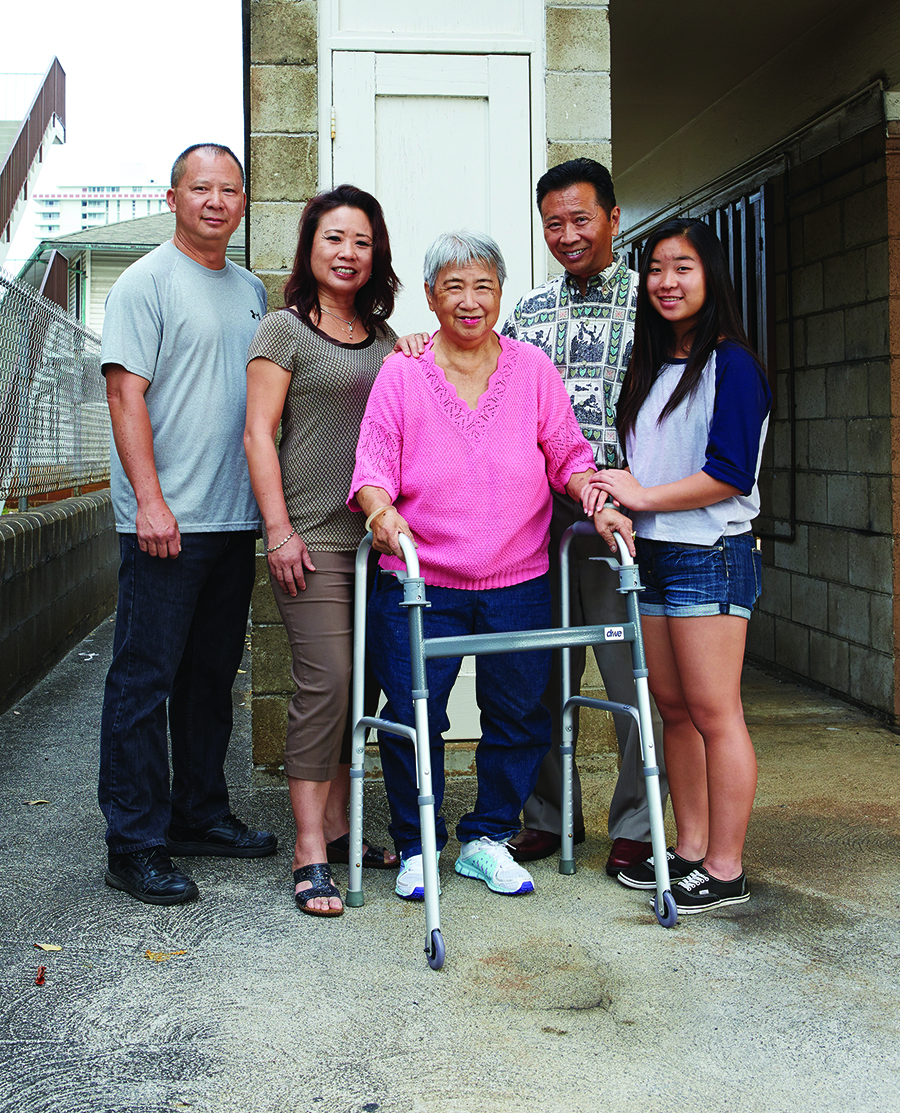
    Alice Yee, Michael Yee’s mother, passed away on July 25, surrounded by caring family members.
    Alice Yee, Michael Yee’s mother, passed away on July 25, surrounded by caring family members.

    On a Sunday morning this past July, Alice Hu Chew Yee, 81, asked her family to gather by her hospital bed, where she expressed her love to each member, listened to her favorite music played by her son and son-in-law, and helped to plan her own funeral, right down to flower arrangements.

    The next day, doctors put her on a morphine drip to eliminate any discomfort. She passed away Tuesday, July 25, at peace that her family was ready for her departure.

    It was “a good death,” says Alice’s son Michael Yee. “Mom had deep faith and embraced dying the same as living, no fear, only love. Because of this, we could embrace it together.”

    In addition to Michael, Alice left behind two sons Malcolm and Milton, daughter, Tammy, and their spouses and four grandchildren. Alice also had lived independently for decades before moving in last year with Tammy, who shared primary caregiving duties with Michael’s family. In the months leading up to her death, Alice developed fluid in her lungs and suffered complications from a weak heart.

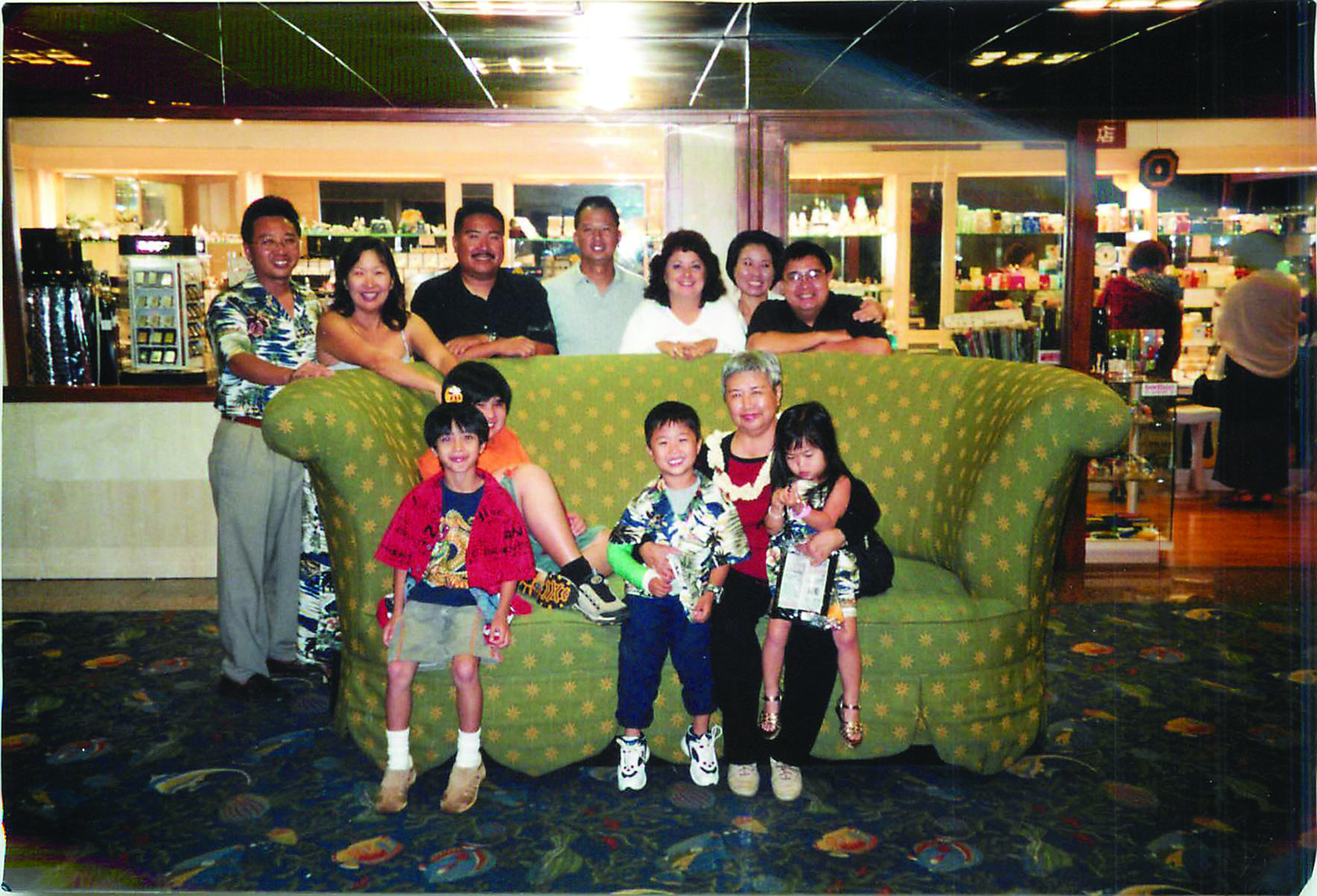
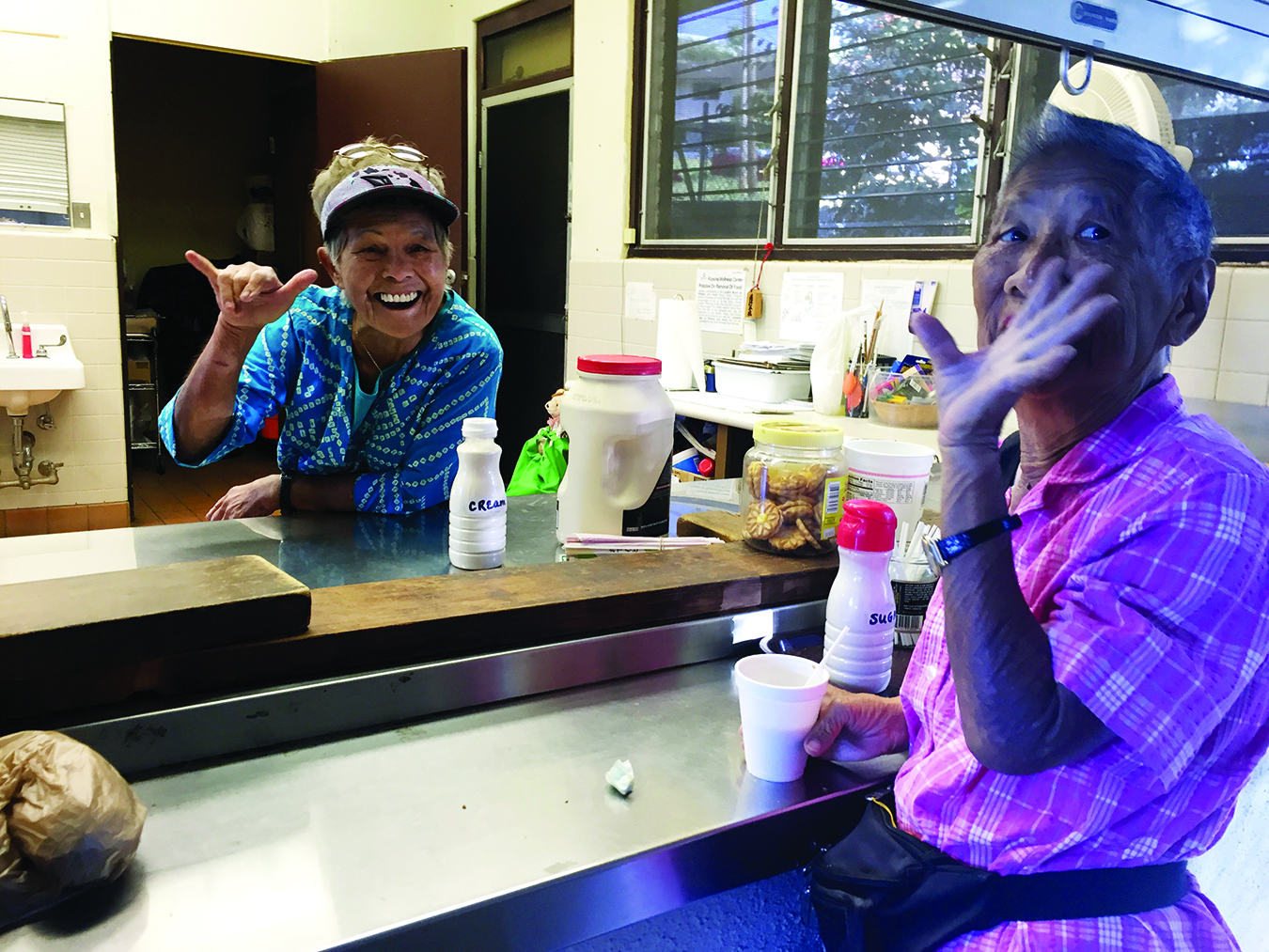
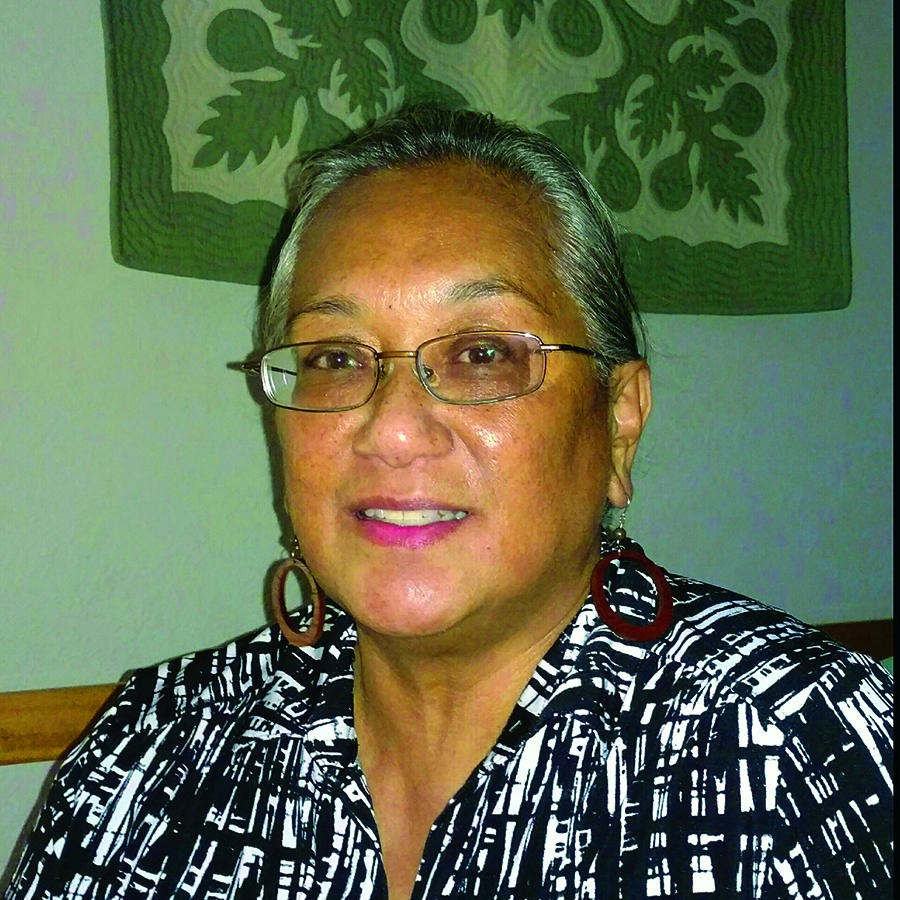
    PHOTOGRAPHS OF LORRI MISAKI’S, MICHAEL YEE’S & PAMELA AH-NEE’S FAMILIES

    Even in her final hours at the hospital, however, Alice taught valuable lessons.

    “Mom gave people something to shoot for — I know now what a good death looks and feels like,” says Michael, an Ameriprise financial advisor who specializes in retirement and end-of-life planning.

    Michael shares three lessons reinforced by his mother’s passing:

    • “Retirement isn’t just about travel and the grandkids.” There will come a time when most of us will need care by families and/or professionals.
    • Many families in Hawai‘i are not ready for health issues such as dementia or long-term care. When planning for retirement, consider long-term care planning and estate planning. Take a holistic approach.
    • Be proactive (not reactive) about retirement and end-of-life situations. Talk to family members about “not just the good times,” but the “hard times and crisis.” Put everyone on the same page.

    Generations Magazine first featured Michael Yee’s family in the June-July 2015 issue where he shared his caregiving experience. To read the original story, visit online at www.generations808.com/june-july-2015/.

    On a Sunday morning this past July, Alice Hu Chew Yee, 81, asked her family to gather by her hospital bed, where she expressed her love to each member, listened to her favorite music played by her son and son-in-law, and helped to plan her own funeral, right down to flower arrangements. The next day,…

  • Benefits of Volunteering for Seniors

    Volunteering — an activity that is voluntary, unpaid, structured by an organization and directed toward a community concern — is as beneficial for the older adult who engages in it as it is for those on the receiving end.

    While fewer older adults volunteer compared to those who are younger, persons age 65 and over who do volunteer spend more time on it. Approximately 35 percent of older adults in the U.S. volunteer an average of 71.5 hours per year. The value of their work is not trivial, estimated at $44.3 billion per year.

    The Impact of Volunteering. Older adults who volunteer reap many benefits. They experience higher levels of well-being, including better self-reported health. They have less depression and an enhanced ability to engage in daily activities. While more research is needed, some suggest that volunteering is associated with improved brain health and decline in mortality.

    As the number of volunteering hours increases, so do the positive effects of volunteering, but only up to a point. Research indicates the optimal amount of time to volunteer is around 100 hours per year, or two to three hours per week. Even modest levels of engagement in volunteer activities are beneficial.

    Why does it work? Volunteering provides greater health benefits compared to other types of social activities. What makes this role especially valuable is a combination of qualities and motivations specific to the role. Young adults tend to volunteer to acquire skills and to advance their careers. Older adults are more likely to volunteer to help others, stay active and replace lost roles, such as being a spouse.

    The factor of “mattering” also comes into play when others rely on the volunteer who contributes to society.1

    Promoting successful volunteer programs. Despite the abundant benefits, approximately 30 percent of older adults drop out of a given volunteer role after one year. What’s a health and/or social service organization to do? Various volunteer management practices have proven to be effective:2 appropriate supervision and communication, liability coverage, careful screening and matching volunteers to particular jobs, annual measurement of volunteer impact, training and professional development for volunteers, training paid staff in working with volunteers, ensuring that volunteers gain a sense of accomplishment by engaging in meaningful tasks and recognizing volunteers for their contributions.


    CENTER ON AGING — University of Hawai‘i at Mānoa
    2430 Campus Road, Gartley Hall, 201B, Honolulu HI 96822

    808-956-6124  |  map3@hawaii.edu
    www.hawaii.edu/aging/
    1 Morrow-Howell 2010
    2 Hager and Brudney 2004; McKee & McKee 2012

    Volunteering — an activity that is voluntary, unpaid, structured by an organization and directed toward a community concern — is as beneficial for the older adult who engages in it as it is for those on the receiving end. While fewer older adults volunteer compared to those who are younger, persons age 65 and over who do volunteer spend…

  • The Search for Ancestors

    I’ve been researching my ancestors for about 20 years. On my Hawaiian side, I’ve gone back five generations, and three generations on my Filipino side. I get so excited when I connect the dots in my family tree and discover a new family member, because I now have a name and story to share with my grandchildren.

    I’ve been blessed with three granddaughters and two grandsons. Analea, 13, loves to draw and has her own blog. Olena, 11, loves to cook and listen to my stories. Hoku, 4, who loves to talk and show me how to use her iPad, is the sole survivor of triplets. My grandsons (her brothers) Nahoa and Koa, lived a few hours.

    I tell my grandkids stories about their ancestors, including Uncle Travis, my son who passed away at age 23 and loved to draw. They want to one day own some of his drawings. When we visit Hilo, I make an effort to take them to the gravesites of their ancestors. Before my father passed away in HPP, Kea‘au, I took the girls to visit him and took pictures of each of their hands holding their great-grandfather.

    The author’s grandchildren Olena, 11, Analea, 13, and Hoku, 4.
    The author’s grandchildren Olena, 11, Analea, 13, and Hoku, 4.

    A few years ago, I started a private family blog that only my husband and children can access. There, I share ancestors’ pictures and stories, journal entries from my youth, family traditions, photos of treasured items from my parents, and letters from my late grandparents. When my grandchildren are older, I will open this blog to them so they can learn about our family.

    In February, I attended a genealogical convention in Utah, where I purchased four DNA kits for my family and am hoping to learn more about my family. I want my children and their future families to know where they came from and lessons that can help them in their lives. I want them to know they are connected to a rich heritage.


    GENEALOGY RESOURCES

    I’ve been researching my ancestors for about 20 years. On my Hawaiian side, I’ve gone back five generations, and three generations on my Filipino side. I get so excited when I connect the dots in my family tree and discover a new family member, because I now have a name and story to share with…

  • The Best is Yet to Be

    by Pastor Russ Higa

    On a frosty winter’s morning, my fellow seminarian, Cal Chinen, picked me up in his old beige Volvo. We drove across the Columbia River from Portland, Oregon, to Washougal, a small town at the foothills of the Cascade Mountains in Washington State. We were responding to a senior citizen’s request to do some yard-work. We drove deep into the snow-covered forest and finally arrived at her cabin.

    Busily, we chopped branches and started a bon- fire to burn the brush. As we worked, we saw bunny rabbits hopping across the snow and a deer checking us out to see what we were doing. For a local boy who had never seen snow, it was surreal — a winter wonderland.

    After three hours of labor, the woman of the house called us in for lunch. The warmth from the fireplace felt amazing after being in the freezing cold. As I enjoyed the soup and sandwich, I admired the cabin’s beautiful woodwork.

    The woman told us about her husband, who, in his younger years, built this cabin for her. Now in their sunset years, they were enjoying life in the cozy cabin built with his own hands. On the beam above the kitchen counter, her husband had lovingly carved the words “Grow old with me. The best is yet to be!” Although it has been 39 years since I sat in that cabin, I still remember the woman’s glowing face as she spoke of her hus-band and spending their golden years together.

    Yes, our later years can be a time of great blessing, but as we know all too well, it can be a time of loss. The loss of productivity, health, well-being, independence, and sadly, the loss of cherished loved ones. But all is not lost. Many have found comfort and peace of mind through spiritual nourishment. Developing supportive relationships in a spiritual fellowship can do wonders for the soul. A woman in her later years began attend-ing our church just a few months after losing her husband. Every Sunday, she tells me how blessed she feels being part of a loving church family. So, in your sunset years, consider developing the spiritual dimensions of your life. You will be glad you did. “The best is yet to be!”

    STREAMS OF LIFE FELLOWSHIP

    Manoa District Park
    2721 Ka‘aipu Ave, Honolulu HI 96822
    808-554-4513  |  www.streamsoflife.org
    Services: Sundays, 10 am
    Alternative site: Manoa Elementary School Cafeteria 3155 Manoa Rd., Honolulu, HI 96822

    On a frosty winter’s morning, my fellow seminarian, Cal Chinen, picked me up in his old beige Volvo. We drove across the Columbia River from Portland, Oregon, to Washougal, a small town at the foothills of the Cascade Mountains in Washington State. We were responding to a senior citizen’s request to do some yardwork.

  • Success! The 2016 Aging in Place Workshop

    OctNov2016 - successaipworkshop_image1

    OctNov2016 - successaipworkshop_image4

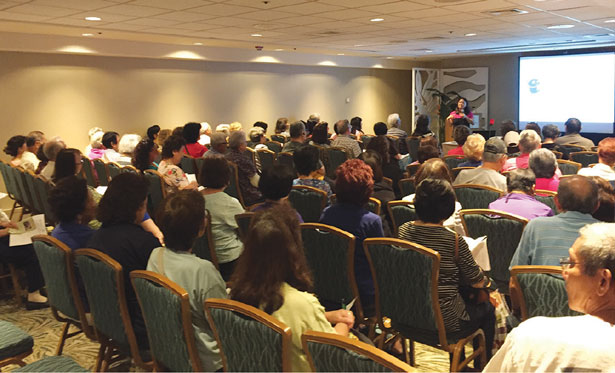
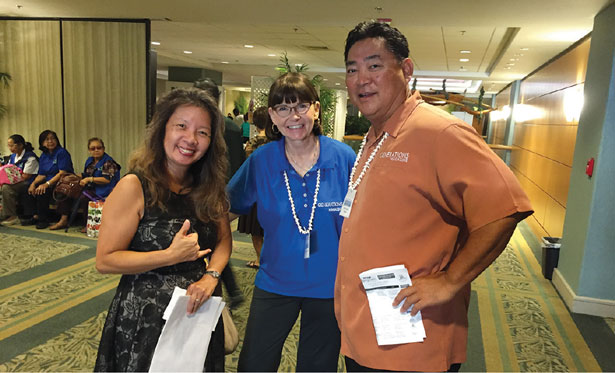
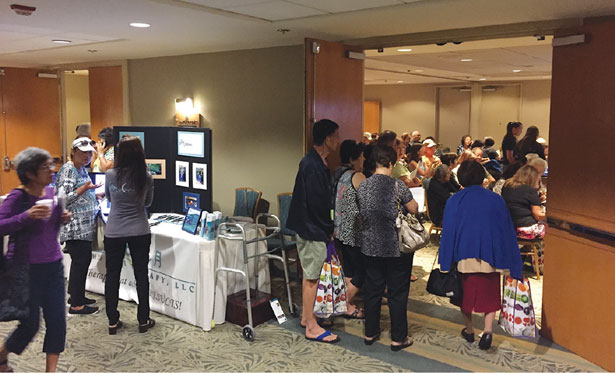
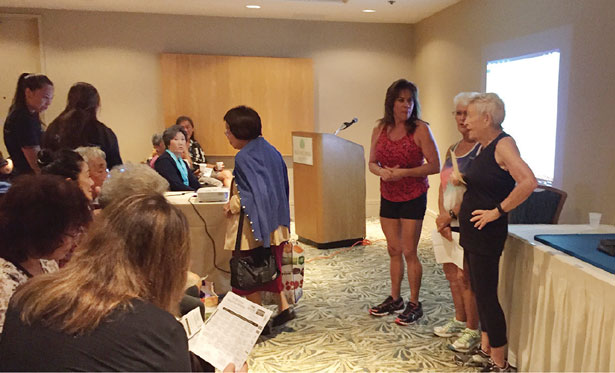
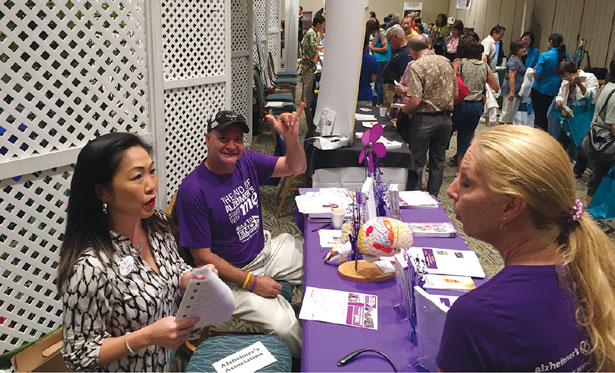
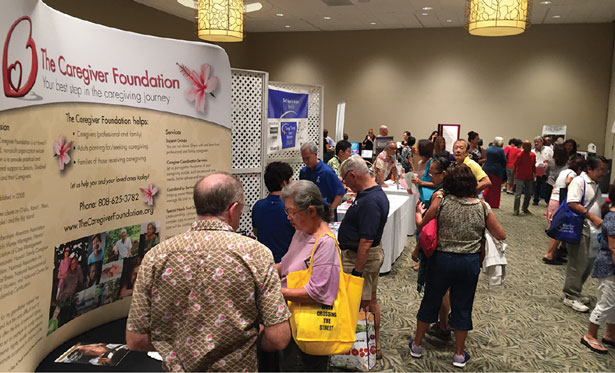
    Abundance was definitely the word of the day! Vendors. Seniors. Caregivers. It was booth to booth, chair to chair, shoulder to shoulder. This year garnered the biggest turnout in years — and that means seniors want to know “what’s next” as they age. Being informed and prepared is the wisest decision. Presented by Generations Magazine and KITV4, and sponsored by many organizations and businesses supporting health and aging, the AIP senior workshop is an annual “must-attend” free event.

    OctNov2016 - successaipworkshop_image3

    OctNov2016 - successaipworkshop_image5

    OctNov2016 - successaipworkshop_image6
    OctNov2016 - successaipworkshop_image2

    Success! The 2016 Aging in Place Workshop by Generations Magazine Staff from the DecJan 2017 issue of Generations Magazine, Hawai‘i’s Resource for Life

  • Veterans: Understanding Moral Injury

    OctNov2016 - veteransunderstanding_image1When veterans return from war, we offer them a handshake and a generic “thank you for your service.”
    But there is much more we can do to help those who have lived through the hellish experience of combat to reintegrate into communities — the majority of which are comprised of members who have never even been close to the front lines.

    In generations past, soldiers were left to work out for themselves how to fit back into society, and most kept their nightmares and worries to themselves.

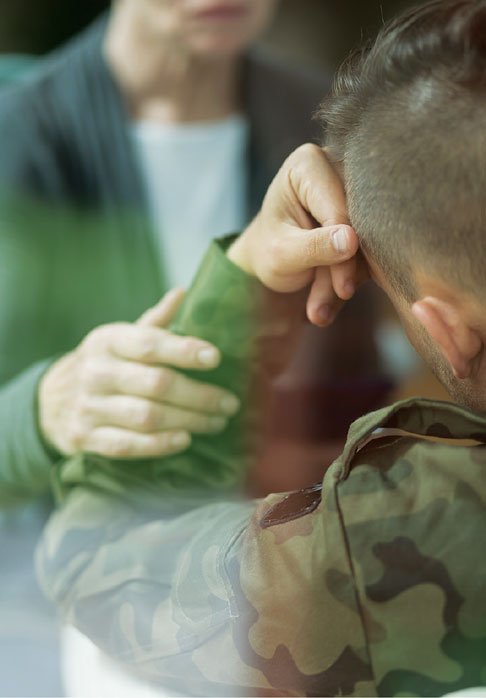
    More recently, we have come to understand post-traumatic stress disorder (PTSD). Extremely traumatic experiences like being ambushed or failing to save fellow troops can leave one overcome with physiological symptoms, such as hypervigilance, memory or concentration problems, insomnia, panic attacks and flashbacks. Recognition of the problem and therapies to address the symptoms are becoming more mainstream.

    Like progress in cancer research, advances in the study of PTSD offer tremendous hope to those who suffer and to society as a whole. This understanding of the effects of war gave rise in 2009 to a new term —“moral injury.” We send bodies and souls into battle; however, fixing the body does not by itself bring a survivor back to wholeness.

    Moral injury, as defined by the Veterans Health Administration, “is disruption in an individual’s confidence and expectations about his or her own moral behavior or others’ capacity to behave in a just and ethical manner.” Moral injury involves the brain’s sense of conscience and agency; in contrast, PTSD affects the brain’s reflex to fear and trauma.

    Dr. Rita Nakashima Brock, a theologian who heads the Soul Repair Center at Brite Divinity School, explained that “moral injury can result in agony from inner judgment against oneself, anger, survivor guilt, isolation, despair and/or loss of will to live.”

    Just as there are ways to heal the physical symptoms of PTSD, there are ways to redeem the moral landscape.

    Key to this work are groups in which soldiers feel free to tell their stories without facing judgment and without having people mouth pat answers.

    Families, support groups, churches and temples that offer deep listening in safe, long-term settings can help rebuild a veteran’s ability to feel valued in society. Listening groups trained to assist in this soul repair work are being formed across the United States.

    Our communities of faith can open their doors to such groups, but we can do even more by up-dating our rituals of lamentation, forgiveness, penance and absolution in contemporary, and creative ways.

    Opportunities for veterans to make amends and a difference in other people’s lives may replace their sense of shame with one of pride.

    By pointing to examples of faithfulness and compassion, we can offer certainty that those who have seen the worst in war are not cut off from life’s goodness. In this way, our actions as people of faith can bring our troops all the way home.


    WINDWARD UNITED CHURCH OF CHRIST
    Rev. Jayne Ryan Kuroiwa
    
808-254-3802  |  windwardpastor@hawaii.rr.com
www.windwarducc.org

    Veterans: Understanding Moral Injury by Rev. Jayne Ryan Kuroiwa from the Oct-Nov 2016 issue of Generations Magazine, Hawai‘i’s Resource for Life

  • 41st Annual Senior Softball Tournament

    OctNov2016 - 41stannualsrsoftball_image1


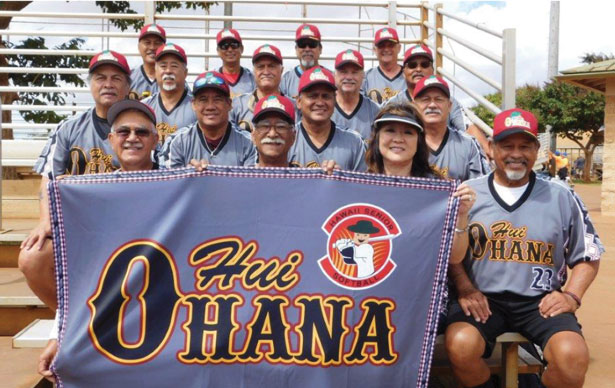
    More than 1,000 players aged 60 and over, representing 63 teams from all islands, faced off in friendly but spirited competition at the Annual Hawaii State Senior Softball Tournament on Kaua‘i on Aug. 2. Kaua‘i teams welcomed their opponents at Hanapepe Stadium, Ele‘ele Field and Kaumakani Ball Parks.

    At the opening ceremony, players thanked Pat Baniaga, who served as league coordinator for the Kaua‘i Senior Citizen Softball League for the past 14 years, and as director for the 41st annual tournament. He is passing the mantle to Jeffrey Kimoto, who recently moved to Hawai‘i from Northern California.

    “It is time for some new blood and ideas to allow growth, and more success for the Kaua‘i senior softball program,” Baniaga said.

    The Shaka Boyz of Hui Ohana, and managers Les Lunasco and Sonny Miller put up some great hitting, and strategic defense to capture a win at ‘Ele‘ele Field.


    CITY & COUNTY OF HONOLULU DEPARTMENT OF PARKS AND RECREATION
    Garrett Iwai, Recreation Specialist
    808-768-3030  |  giwai1@honolulu.gov

    41st Annual Senior Softball Tournament by Garrett Iwai, Recreation Specialist from the Oct-Nov 2016 issue of Generations Magazine, Hawai‘i’s Resource for Life

  • Substitute Parents

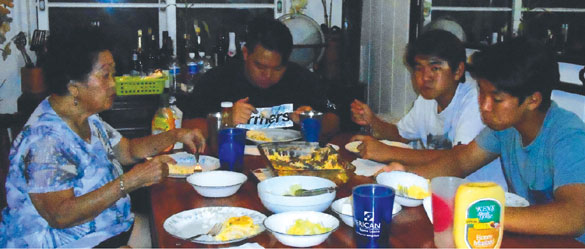
    Grandparenting is sometimes being a substitute parent. For instance, when our son, Dan, and his wife, Julie, went on a trip, we took care of their three sons for several days.

    Since the oldest is already a sophomore at the University of Hawai‘i and the younger two are still attending Mid-Pacific Institute, they can be home by themselves, so our responsibilities are quite limited. We begin grandparenting late in the afternoon, sometimes picking up the younger two boys after school or baseball practice.

    OctNov2016 - substituteparents_image1

    We also prepare dinner for them. The boys love their grandma’s cooking! She normally asks them what they would like to eat and without hesitation, they ask for their favorites — spaghetti, meatloaf, pork or chicken tofu, or her tasty chicken divan. They devour every dish to their heart’s content. During dinner, we talk about the boys’ schooling, baseball and other interests.

    After dinner, Grandpa washes the dishes so that the boys can do their homework. Since it was the beginning of the school year, the younger boys said they needed to buy additional school supplies, so Grandpa drove them to a nearby Longs to get what they needed. When they got there, Grandpa got a basket for them and after they were finished getting what they needed, he told them to give him the basket. He got in the check-out line, paid and handed over one big sack of school supplies!

    Grandparenting can be such an easy, throughly rewarding and simply delightful experience! n

    To send Shirley and Les a note or grandparenting tips of your own, go to www.generations808.com and click on “Comments” at the bottom of the article.

    Substitute Parents by Shirley and Les Ihara, Grandparents from the Oct-Nov 2016 issue of Generations Magazine, Hawai‘i’s Resource for Life

  • At Your Service…Vietnam Vets

    OctNov2016 - atyourservice_image1May 22 to 28, 2017, is a very special commemorative event for all Vietnam vets. By a 2012 presidential proclamation and at the request of the national project director for the 50th Anniversary of the Vietnam War Commemoration, key Vietnam veteran volunteers joined a state planning committee. Hawai‘i was asked to host not only local events, but also the United States National Vietnam War Commemoration Symposium, Memorial and Celebration, with participation by American dignitaries and military representatives from all of the countries that supported U.S war efforts in Vietnam. Last year, Gov. David Ige issued a letter of support.

    OctNov2016 - atyourservice_image2I am a Tet Offensive survivor and a member of this planning committee. Seven planning commitee members and one advisory board member belong to Vietnam Veterans of America (VVA), O’ahu Chapter 858. One of my responsibilities is to notify all Vietnam veterans about this weeklong event, May 22 through May 28, 2017, when we will all finally be “welcomed home.”
    Core events in Honolulu are a great parade in Waikīkī, a concert, a reception, a taste of Hawai‘i night or a lū‘au, a POW/MIA/Gold Star family dinner or lū‘au, and a memorial ceremony at Cemetery of the Pacific at Punchbowl.

    Maybe you are thinking as I did when I joined this committee — What! Are you kidding? Too little too late! But then I thought, Hmmmm! Better late than never! Please join us May 22 through 28.

    If I lived on O‘ahu, I would register this way:

    • Go to www.vietnam50years.org/contact

    • Type in this message: “I AM ONLY GOING TO PARTICIPATE IN THE PARADE AND THE PUNCHBOWL CEREMONY WHICH ARE FREE. PLEASE ADVISE ON HOW TO REGISTER.”

    • DO NOT sign up or pay for anything else.

    • Then register on this website: www.dod.hawaii.gov/ovs/50th-anniversary-vietnam/

    If I were not on O‘ahu, I would search online for an air/hotel/car rental package that fits my budget, then follow the steps above to register.

    If you want to march with VVA Chapter 858 in the parade in Waikīkī, please contact me.


    Rona Adams, president, VVA O‘ahu Chapter 858
    ronaadams@hawaii.rr.com  |  808-524-6231

    At Your Service…Vietnam Vets by Capt. Rona Adams, RN, US Army Nurse Corps, Vietnam from the Oct-Nov 2016 issue of Generations Magazine, Hawai‘i’s Resource for Life

  • When You Gotta Walk – Walk

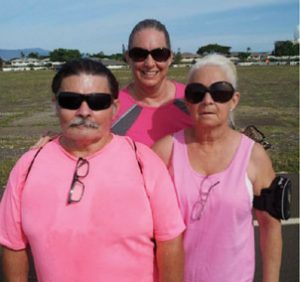
    OctNov2016 - whenyougottawalk_image1I met Sharon and Randy Reynolds, both in their 60s, on a Saturday afternoon at a Starbucks in Ewa Beach. They are avid walkers with their daughter, Kimberly, and they participate in several charity walks throughout the year, including the 2014 Making Strides (against breast cancer) of Hawai‘i (see photo).

    How important is exercise to you? What do you do?

    For Sharon and Randy, walking is much more than a simple form of exercise.

    “We walk a lot,” said Randy. “But it’s more for the charity part than the walking part,” said Sharon. They are former members of the Lions Club and have participated in charity walks since 1994.

    They also spend a lot of time walking because “if we want to go anywhere, we have to walk,” said Sharon. They also use The Bus. But since they live about a half-mile from the nearest bus stop, even taking The Bus requires a bit of exercise.

    “It’s not set out to be ‘we are going out for a walk,’ because that’s boring,” said Sharon. “if we are doing it because we have to, then it becomes a chore.”

    “It becomes work,” Randy chimed in.

    “If you are going for enjoyment, then it is a different story,” Randy concluded.

    What do you eat so you can walk better?

    “We eat fresh vegetables and salads,” they both said in agreement.


    When You Gotta Walk by Stephanie Kim, Generations Magazine Intern from the DecJan 2017 issue of Generations Magazine, Hawai‘i’s Resource for Life