
Category: Articles

  • Our Story

    I have had the great fortune to be able to go on a cruise this summer with my family and visited many different places in Europe.

    We barely heard any English spoken on this trip and while the languages are varied, I’ve noticed more commonalities than differences among the people we’ve had the privilege of meeting during our travels.

    These commonalities include (1) the love of family as I hear universal laughter coming from parents and children, (2) enjoying freedom other countries may not yet enjoy, including the freedom of speech, to vote, to drive and (3) a desire to tell one’s story.

    Fittingly, the person’s name assigned to help us during our cruise in the Mediterranean is Story. We visited museums in Paris, the incredible ruins in Pompeii, and the young democracy in Tunisia. In each place, I noticed that the people have a desire to tell one’s story, through pictures, writing,\ and oral history.

    Estate planning, to me, is much more than leaving cash to someone. Cash is so quickly gone. It is one’s legacy that continues on.

    I believe that this legacy, your story, is just as important as the legal estate plan leaving assets by way of will or trust and have created what I’ve coined “My Heartfelt Will.” Please consider taking the time and giving yourself permission to write your story.

    I encourage you to consider writing your legacy down, the memories and experiences that continue to shape your lives. Are you considering making your estate plan this summer?


    Stephen B. Yim, Attorney at Law | 2054 S. Beretania St., Hon. | (808) 524-0251 | stephenyimestateplanning.com

    I have had the great fortune to be able to go on a cruise this summer with my family and visited many different places in Europe. We barely heard any English spoken on this trip and while the languages are varied, I’ve noticed more commonalities than differences among the people we’ve had the privilege of…

  • Sharing an Experience

    Around 10:00 pm, September 8, 2011, the right hand of a 58 year-old woman felt tingly as she was on her laptop. She went to bed, couldn’t sleep, and moved to the sofa. At about 2:00 am, she woke up…cheek, chest, numb — all the way down to her toes. Her husband took her to ER.

    The MRI showed a blood clot on the left side of her brain, affecting the right side of her body. She was told she had a stroke. Why? She was active, coached tennis, ate right, had no family history or other symptoms like sagging face, slurred words, or blurred vision. No one, not even the doctors explained how she could have had a stroke. More importantly, no one gave her any instructions on what to do. Three days later, a nurse told her she could go home — she didn’t know what to expect.

    By chance, the woman saw her nephew, a physical therapist. “Aunty, keep doing everything the same as you did before,” he advised. One simple sentence made the biggest difference in her life. She kept forcing her fingers, arms, and legs to move. She even kept working; walking without assistance in a week, hitting tennis balls in four weeks, and driving in six weeks. Self-motivation with her own therapy, no medical assistance, helped her recover—that woman was me! My PT Angel was Shaw Okawara.

    I shared my experience with the Hawai’I Neurotrauma Registry, a voluntary registry for persons with brain, stroke, and spinal cord injury.

    If you’ve had this type of injury, please consider taking the online survey at www.svy.mk/1a5Ya5m (be sure to click the “submit” button through several pages, read the content through until you get to filling in your information). You may also call (808) 692-1375 for information. By sharing your experience, it’ll help others.

    Around 10:00 pm, September 8, 2011, the right hand of a 58 year-old woman felt tingly as she was on her laptop. She went to bed, couldn’t sleep, and moved to the sofa. At about 2:00 am, she woke up…cheek, chest, numb — all the way down to her toes. Her husband took her to…

  • Clarke v. Rameker and Your IRA

    In Clark v. Rameker, decided on June 12, 2014, the U.S. Supreme Court boldly went where it has seldom gone before. It waded into the estate planning world and decided that the creditor protection rules that generally apply to IRAs do not apply to inherited IRAs.

    The Federal law that governs retirement plans, known as ERISA, provides protections against creditors trying to raid your IRA in order satisfy their claims against you. The Clark case answered the question of whether those same protections apply to the unspent balance of your IRA that you leave to your spouse or children after your death. The answer is a resounding “no.”

    This case is important for those of us who want to include protective measures in our estate plans to prevent a beneficiary’s ex-spouse or creditor from enjoying what was intended for the beneficiary. The good news is that there is a tried and true means of providing these kinds of protections despite the outcome in Clark.

    Stand Alone Retirement Plan Trusts (SARPTs) are particularly attractive to those who have substantial (more than $250,000) in qualified retirement plan assets. Instead of naming your loved ones as beneficiaries of your IRAs, you name an irrevocable trust that divides into separate trusts for each of your beneficiaries upon your death. Each trust receives the annual distribution that the beneficiary otherwise would have received. The trustee then has the discretion to either distribute the money to each beneficiary, or to withhold the distribution of any beneficiary or beneficiaries who are in legal hot water.

    The upsides of this strategy are that they provide creditor protection for retirement plan assets, and they also enable beneficiaries to “stretch out” distributions, so they pay income tax on those distributions in small increments, keeping the remaining assets growing for them on an income tax-deferred basis.

    The downside is that if an IRA distribution is not distributed to the beneficiary in the year of receipt by the trustee, the trust (instead of the beneficiary) will pay the income tax on the distribution, and the tax rates for trusts are almost always higher than the tax rates for individuals. However, this is the one time that the beneficiary may appreciate seeing 40% of the distribution go to the IRS, because the alternative might be for 100% of it to go to a creditor or ex-spouse.

    SARPTs can be helpful for the families of many IRA owners, and they are worth discussing with your trusted advisors.


    Scott Makuakane, Counselor at Law
    Focusing exclusively on estate planning and trust law.
    Watch Scott’s TV show, Malama Kupuna
    Sundays at 8:30 p.m. on KWHE, Oceanic channel 11
    www.est8planning.com
    O‘ahu: 808-587-8227 | maku@est8planning.com

    In Clark v. Rameker, decided on June 12, 2014, the U.S. Supreme Court boldly went where it has seldom gone before. It waded into the estate planning world and decided that the creditor protection rules that generally apply to IRAs do not apply to inherited IRAs. The Federal law that governs retirement plans, known as…

  • Water Works Wonders for Back Pain


    Generations Magazine- Water Works Wonders for Back Pain- Image 01
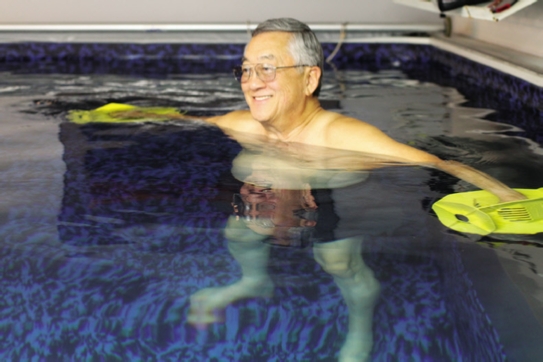
    Retired Chief Justice Ronald T. Y. Moon performing back stabilization exercises following a compression fracture to the Lumbar Spine.


    Many will experience some kind of lower back pain at some point in their lives. If a back injury has short-circuited your daily activities or regular workout routine, aqua therapy might be a good alternative during the healing period. Water exercises for back pain are diverse and should be tailored to the individual and specific condition.

    For a more effective workout:

    1. Choose a heated pool with multi depths: Warm water of 90 – 94 degrees assists in healing, relaxes spastic muscles, relieves pain and increases blood circulation. The more deeply immersed in water you are, the less you weigh. In chest-deep water, buoyancy decreases the amount of shock transmitted through your spine, in deep water there is no impact, therefore no shock to your body.
    2. Warm up: Water exercise should start with a warm up for 5 –10 minutes. One of the easiest warm ups is walking (forward, backward, sidestepping and marching).
      Water Resistance Exercises: The pool is a great place to work on low back and core strengthening. Standing hip and arm exercises, while maintaining proper spinal alignment, will help to improve low back stability. Deep-water exercises help to improve abdominal strength and overall endurance. Training tools are available, paddles, webbed gloves, dumbbells, noodles and flotation belts.
    3. Cool down: The cool down will assist your body in its repair process and help with post-exercise soreness. Static stretches holding for 20 – 30 seconds, with deep breathing will help to prevent increased low back pain and muscle tightness.
      __________________________________

    Moon Physical Therapy, LLC
    320 Ward Avenue, Suite 107, Honolulu, HI 96814
    Aquatic Therapy, Land-based Therapy and
    Cardiopulmonary Rehab Programs
    808-597-1005 | www.moonpt.com

              Many will experience some kind of lower back pain at some point in their lives. If a back injury has short-circuited your daily activities or regular workout routine, aqua therapy might be a good alternative during the healing period. Water exercises for back pain are diverse and should be tailored…

  • Behind the White Picket Fence: The Memoir of Sharon L. Hicks

    9781458206190_COVER.inddAn award-winning memoir, “How Do You Grab a Naked Lady?” A life about family and acceptance, a daughter’s lifelong search for normalcy is overshadowed by the antics of her mentally ill mother.

    Sharon L. Hick speaks of her childhood life raised between two conflicts of opposing forces: mother vs. father, normalcy vs. lunacy. Her father an idealist and role model, mother an irrational, charming, seductive, and unpredictable bipolar, who parades naked in public.

    Not the role model Sharon needed. She tries to escape the pressures of, mustn’t becoming her mother as she enters adulthood, distancing herself from her uncontrollable mother, only to learn she can’t escape. The only choice — dad’s dream of the white picket fence, a beautiful home and enough financial security so his daughter would never need to work. Sharon searched for the white picket fence with a squeaky clean husband, turned out empty, having two failed marriages and numerous men, Sharon questioned her Dad’s dream of the white picket fence and discovered the answer in the most unlikely source — her Mother.

    With self-discovery, strong bonds, societal expectations, and a fascia of the American Dream, her touching honesty exposed the realisms of mental illness with humor.

    Bestsellers like Running with Scissors, Sharon memoir sets apart the emphasis on the rippling effect of a dysfunctional upbringing through adulthood and a reality of mental illness behind the white picket fence.

    Winner of Southern California Writers’ Conference Outstanding Non-Fiction Award 2012, tell-all memoir with full of interesting twists and turns.

    About the author

    Sharon L. Hicks is a retired executive living in Honolulu, Hawai‘i. She is the daughter of businessman and community leader Harold E. Hicks. This is her first book, inspired by her mother.


    How Do You Grab a Naked Lady? By Sharon L. Hicks
    Available at www.amazon.com and www.barnesandnoble.com
    www.sharonlhicks.com | 808-282-4944

    An award-winning memoir, “How Do You Grab a Naked Lady?” A life about family and acceptance, a daughter’s lifelong search for normalcy is overshadowed by the antics of her mentally ill mother. Sharon L. Hick speaks of her childhood life raised between two conflicts of opposing forces: mother vs. father, normalcy vs. lunacy. Her father…

  • Welcome to the Generations808.com

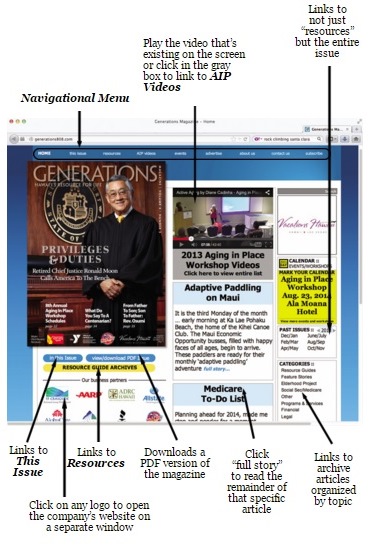
    Main navigation menu: Use these topics to navigate to the various pages in our site. As you run the cursor over the word, it’ll become bold. These topics will always exist on every page. Throughout the homepage, there are also various other buttons that’ll take you to any one of these topics.

    Home is the main page.

    This Issue will take you to the current issue’s table of contents with live\ links to individual articles.

    Resources will take you to resource guide archives.

    AIP Videos show a list of the Aging In Place Workshop speakers.

    Events: contains the events calendar.

    Advertising contains all of our advertising and marketing information.

    About Us is just a little background.

    Contact Us via mail, phone or email.

    Subscribe provides a subscription form so you can enjoy Generations Magazine delivered to your door every other month.


    Generations Magazine- Welcome to the Generations808.com- Image 02

    Main navigation menu: Use these topics to navigate to the various pages in our site. As you run the cursor over the word, it’ll become bold. These topics will always exist on every page. Throughout the homepage, there are also various other buttons that’ll take you to any one of these topics. Home is the…

  • ‘Olelo’s “Senior Sunrise” Mornings

    Generations - Aug/Sep 2014 - Olelo Senior Sunrise Movements - Image 01
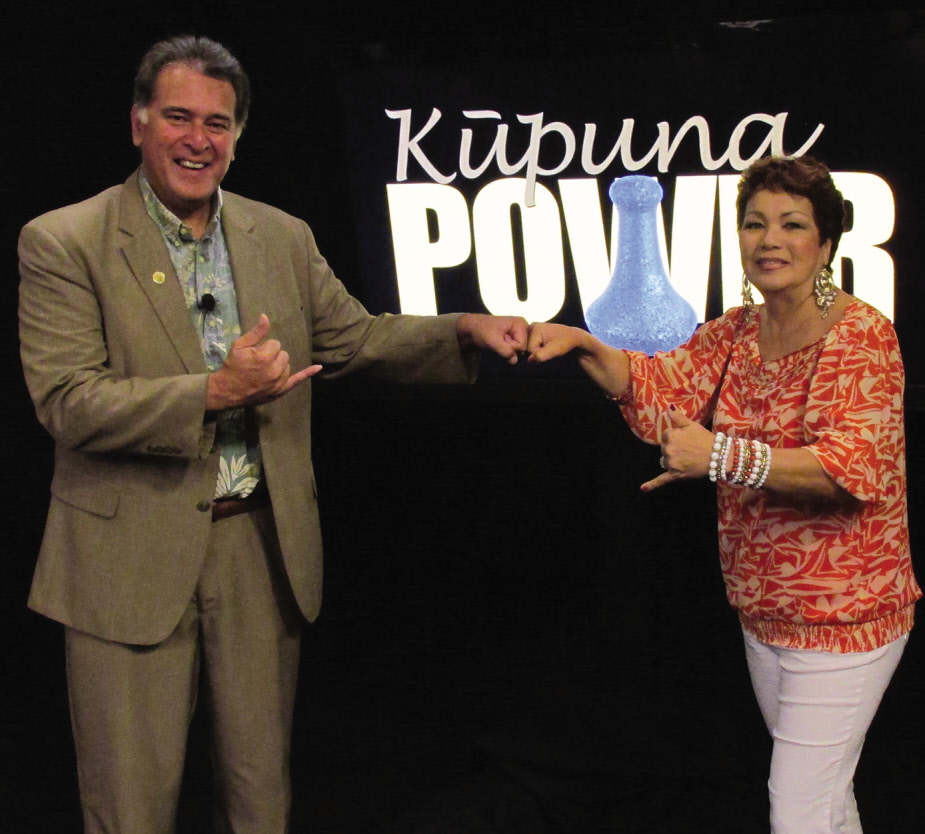
    Senator Brickwood Galuteria and Melveen Leed

    Since March of this year, ‘Ōlelo Community Media has featured one hour of daily programming each Monday through Friday from 8 am – 9 am especially for, and by, senior citizens in our community.

    These “Senior Sunrise” mornings on Channel 53 are centered around “Kupuna Power,” a weekly magazine-format half-hour program created in partnership with Senator Brickwood Galuteria, the Executive Office on Aging and AARP Hawai‘i. The “Kupuna Power” show, produced and hosted by Galuteria, airs each Monday at 8 a.m. and will repeat at that same time on Thursdays.

    ‘Ōlelo believes senior-focused programming is acutely needed because of Hawai‘i’s aging community: In 2012, those 60 years and over accounted for 21.6 percent of the total population, according to the Executive Office on Aging. By 2020, the Hawai‘i Department of Business, Economic Development and Tourism estimates senior population growth will be 26.1 percent.

    ‘Ōlelo is developing other original senior programming and working with several strong community producers to create more shows for kupuna; these include a variety of short segments of interest including the “I Remember When” flashback, “Everyday Tai Chi” and “Kau Kau Moment,” a light-hearted cooking show featuring Janice Terukina Morimoto, a local actress and comedian now based in Korea who stars in a series of island-style cooking shorts.

    The senior-focused programming each weekday morning is available on ‘Ōlelo Channel 53 on both Oceanic Time Warner and Hawaiian Telecom cable on O‘ahu. It can also be viewed via live stream at www.olelo.org. Happy viewing!

    Since March of this year, ‘Ōlelo Community Media has featured one hour of daily programming each Monday through Friday from 8 am – 9 am especially for, and by, senior citizens in our community. These “Senior Sunrise” mornings on Channel 53 are centered around “Kupuna Power,” a weekly magazine-format half-hour program created in partnership with…

  • But, I Have Never Been to Vegas!

    Generations Magazine- But, I Have Never Been to Vegas!- Image 01In Hawaii, that’s considered heresy. Some call Vegas the 9th island. I’m not a gambler. I’m not much for crowds and bright lights. Mrs. Matthews says we need to go there for “the shows.”

    The fact, she entertains me every day. Why would I want anything else? Okay, okay — I know there are some fantastic shows there. And it was home for the “Rat Pack” for many years, Dean, Frank, and Sammy … what’s not to like?

    I should go to Las Vegas just so I can join in the party chatter, which usually starts “I lost everything when I drew to an inside straight.”

    The ideal Vegas vacation would be to have room service, crab legs and prime rib served by Cher. She would sing a couple of songs and then Wayne Newton would come in to pick up the plates. Couple songs from him and we head to the in-room sauna. Relaxing night and then 18 holes on one of the fine golf courses in the desert. Then — fly back to paradise.

    I understand the attraction of Las Vegas for our Hawaii residents. You can fly there, stay in a hotel and eat three meals a day almost cheaper than you can live here in your own home. And we don’t have gambling here, right? Right.

    An old friend says, his 401[k] plan is to take whatever he’s got in the bank, go to Vegas and spin the roulette wheel — betting everything on black. Double or nothing, baby! Where’s my suitcase?


    The Elderhood Project airs on KHON2 Friday morning news at 5:45 a.m. and Thursday news at 5 p.m.

    In Hawaii, that’s considered heresy. Some call Vegas the 9th island. I’m not a gambler. I’m not much for crowds and bright lights. Mrs. Matthews says we need to go there for “the shows.” The fact, she entertains me every day. Why would I want anything else? Okay, okay — I know there are some…

  • Housing Assistance Program

    The “Golden Years” are sometimes anything but for seniors living on a fixed income and in need of a place to live. Unexpected circumstances and daily challenges can lead to housing instability and place a senior at risk of becoming homeless.

    Catholic Charities Hawai‘i’s Housing Assistance Program* (HAP) helps seniors (age 60 and older) who live on O‘ahu avoid housing crisis and prepare for the future. HAP Housing Specialists offer housing counseling for seniors, providing information about rental housing options, eligibility requirements, how to apply and how to maintain wait list status. HAP also maintains the O‘ahu Housing Guide for the C&C Elderly Affairs Division: www.elderlyaffairs.com/site/449/publications.aspx#HG.

    Here is some basic information for seniors seeking affordable rental options:

    • What is affordable housing? Affordable housing is privately developed housing, usually built with government funds and operated by different housing management companies. Rents vary, with many projects having a limited number of units for very low income seniors who may pay as little as 30% of their income and remaining units for low income to moderate income seniors, with rents ranging around $440 to $950 (utilities\ not always included). Age eligibility for private affordable housing varies, 55 – 62 years old. Disabled, nonelderly may qualify at some projects.
    • What is public housing? The Hawai‘i Public Housing Authority is the State entity that manages public housing, including public senior housing. These projects are for low-income elderly and disabled individuals and rent is based on 30% of income. Age eligibility for public senior housing is 62 years old or disabled.
    • Eligibility factors: Meeting the age eligibility is just the first step. All affordable/public projects have income limits and some projects have asset limits or minimum income requirements. Barriers for some projects could include credit history, criminal history, rental history, pets, personal vehicles, or inability to pay initial deposit.
    • Wait lists: Most affordable and all public senior housing have wait lists. Wait lists vary from a few months to several years. With different management companies involved, the procedures to follow vary to stay on different wait lists and it’s possible your application can be removed without your knowledge because a step was missed — and you would have to start from scratch.

    The HAP Housing Specialists are experts who can help you navigate a complex and competitive rental housing market. A housing counseling session can help identify projects that are best suited for you, give you opportunity to view the projects virtually (via computer), get assistance and advice to apply and maintain your wait list status. For seniors interested in market-based rentals, Housing Specialist can identify and explain search options to help navigate the rental market.

    *The Housing Assistance Program is funded through the Older Americans Act, as administered by the Elderly Affairs Division, C&C of Honolulu.


    Catholic Charities Hawai‘i Housing Assistance Program
    808-527-4777 | www.catholiccharitieshawaii.org

    The “Golden Years” are sometimes anything but for seniors living on a fixed income and in need of a place to live. Unexpected circumstances and daily challenges can lead to housing instability and place a senior at risk of becoming homeless. Catholic Charities Hawai‘i’s Housing Assistance Program* (HAP) helps seniors (age 60 and older) who…

  • Financial Security & Health for Voters 50+

    Hawaii had the lowest voter turnout among all states in 2012 — less than half (44.5%) of voters casting ballots. Voters age 50-plus went to the polls in greater numbers than any other age group. In 2014 election, 50-plus voters could once again play a deciding role. So, what issues are on the minds of Hawaii’s mature voters?

    On the federal side, protecting Social Security is a high priority, especially for residents who feel financially unprepared for retirement. In Hawaii, Social Security makes up 50% or more of income for over half of Hawaii residents age 65 and older, and more than a quarter of older residents rely on Social Security as their only source of income.

    When “entitlement reform” and Social Security have become bargaining chips in Washington, D.C., voters agree there should be a separate debate about the future of the program — that focuses on its major role in providing financial security in retirement and strengthening the system for future generations.

    Another is Medicare, which provides guaranteed affordable health coverage for more than 217,000 beneficiaries in Hawaii alone. The program faces a number of challenges in the coming years due to rising health care costs and changing demographics. AARP believes stabilizing the system for future generations and keeping promises to seniors with responsible, commonsense solutions will improve care and reduce costs. For example, better use of information technology could promote care coordination, reduce medical errors and ensure patients are getting the care they need.

    In state issues, voters are interested in candidates’ views supporting family caregivers. They want to know candidates support laws that call for hospitals to recognize and train family caregivers when loved ones are hospitalized. In light of legislation, broadening the state’s Kupuna Care program to include Medicaid recipients, voters want to know if candidates would expand access to services provided at home and in the community — including residents not eligible for Medicaid.

    The months leading to November 4 election, AARP Hawaii sponsors a series of federal and state issues forums to help residents make informed decisions as they vote. Sessions will include briefing on the future of Social Security and updates on AARP’s priority state legislative issues related to caregiving and long-term care. Learn more about at aarp.org/hi.

    AARP informs its members and the general public about candidates’ position on issues so they can choose candidates that best represent their views and values. Over 28 years, non-partisan voter education has been part of AARP’s mission to help Americans. AARP does not endorse candidates, have a political action committee, or make contributions to political campaigns or candidates. Visit aarp.org/yourvote.


    AARP Hawai‘i state office:
    808-545-6024 | Toll-Free: 866-295-7282
    www.aarp.org/hi | facebook.com/AARPHawaii
    twitter.com/AARPHawaii

    Hawaii had the lowest voter turnout among all states in 2012 — less than half (44.5%) of voters casting ballots. Voters age 50-plus went to the polls in greater numbers than any other age group. In 2014 election, 50-plus voters could once again play a deciding role. So, what issues are on the minds of…

  • Medicare and The Working Individual

    Take your family for ice cream and you’ll find a variety of flavors. Same with Social Security, most people think of retirement, but that’s like limiting yourself to vanilla. Social Security has a variety of benefits. Know them all online at www.socialsecurity.gov.

    Retirement — by far is our most popular flavor. Most people need about 10 years of work (40 credits) to qualify for retirement benefits. You can retire as early as age 62 (generally, benefits are permanently reduced) or wait until full retirement age (currently age 66, but gradually increasing to age 67) for a larger benefit payment. Put off retirement and earn even more. To learn more, read When To Start Receiving Retirement Benefits, available at www.socialsecurity.gov/pubs.

    Disability — if you become disabled and unable to work, you may qualify for Social Security disability benefits. The number of credits needed depends on how old you are when you become disabled. Learn more at www.socialsecurity.gov/disability.

    Survivors — your family may be eligible for survivor benefits. In most cases, you need to have worked about 10 years for your surviving family members to qualify for survivor benefits. Learn more at www.socialsecurity.gov/survivorplan.

    Supplemental Security Income (SSI)— this needs-based program pays benefits to aged, blind, and disabled people with low income and few resources. Find out more at www.socialsecurity.gov/ssi.

    Variety of benefits, indeed … all online.


    Questions, online applications, or to make an appointment to visit a Social Security office, contact:
    1-800-772-1213 (toll free) | 1-800-325-0778 (TTY)
    www.socialsecurity.gov

    SSA Logo Pantone 289-185

    Take your family for ice cream and you’ll find a variety of flavors. Same with Social Security, most people think of retirement, but that’s like limiting yourself to vanilla. Social Security has a variety of benefits. Know them all online at www.socialsecurity.gov. Retirement — by far is our most popular flavor. Most people need about…

  • Cataracts

    Generations Magazine- Cataracts- Image 01


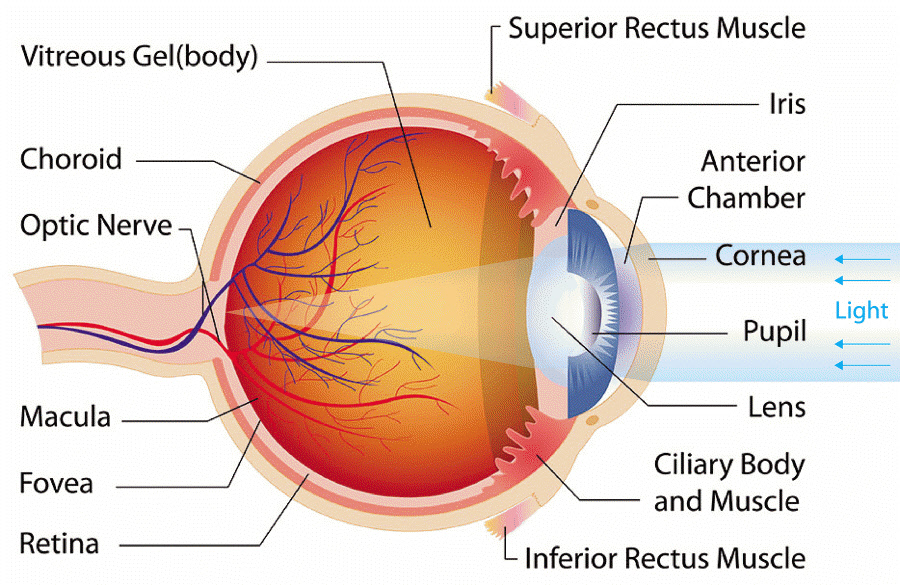
    Cataract is clouding of the lens in the eye that affects vision. It is extremely common among seniors. In a normal eye, light passes through the transparent lens to the retina. Once it reaches the retina, light is changed into nerve signals that are sent to the brain. The lens must be clear for the retina to receive a sharp image. If the lens is cloudy from a cataract, the image seen will be blurred.

    The risk for cataract increases as a person gets older. Diabetes also puts a person at increased risk for cataracts. Prolonged exposure to sunlight, smoking, and alcohol increases a person’s risk.

    What are the symptoms of cataract?

    • Cloudy or blurry vision
    • Colors seem faded
    • Glare
    • Poor night vision
    • Double vision

    Frequent prescription changes in eyeglasses or contact lenses

    How are cataracts detected?

    Cataract is detected through a comprehensive eye exam that includes:

    1. Visual acuity test. This eye chart test measures how well a person can see at various distances.
    2. Dilated eye exam. Eye care professionals use special magnifying lens to examine the retina and optic nerve for signs of damage and other eye problems.

    How are cataracts treated?

    The symptoms of early cataract may be improved with new eyeglasses, brighter lighting, antiglare sunglasses, or magnifying lenses. If these measures do not help, surgery is the only effective treatment. A cataract needs to be removed when vision loss interferes with everyday activities, such as driving, reading, or watching television. Surgery involves removing the cloudy lens and replacing it with an artificial lens. Cataract removal is one of the most common surgeries performed in the United States. It also is one of the safest and effective. In about 90% of cases, people who have had cataract surgery report better vision afterward.

    What can a person do to prevent cataracts?

    Wearing sunglasses and a hat with a brim to block ultraviolet sunlight may help to delay cataract. Stopping smoking is beneficial at any age. Good nutrition such as eating fruits and vegetables rich in antioxidants will help reduce the risk of age-related cataract. Seniors need to have a comprehensive dilated eye exam at least once every two years.

          Cataract is clouding of the lens in the eye that affects vision. It is extremely common among seniors. In a normal eye, light passes through the transparent lens to the retina. Once it reaches the retina, light is changed into nerve signals that are sent to the brain. The lens must be…