Category: Living Life

  • Local-Style Kalo Chowder

    I “invented” this kalo (taro) chowder during the COVID shutdown, a time when we were trying to support the local farmers who were struggling to move their produce. My daughter knows a farmer who gave us a lot of his kalo. At one point, we had so much, I had to find a creative way to use it all!

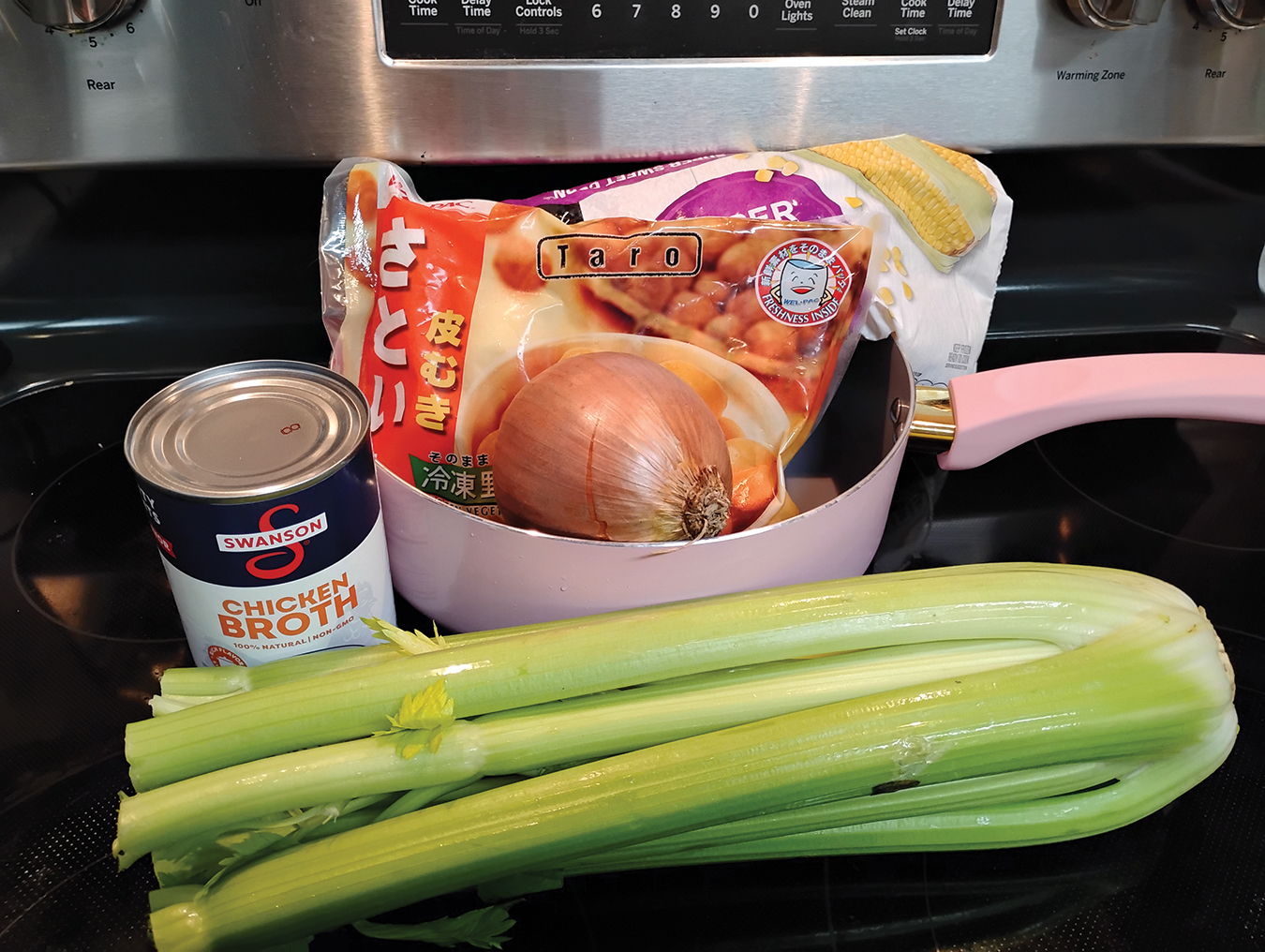
    I found a corn-potato chowder recipe and substituted kalo in place of the potato. All the veggies can be locally sourced at your local farmers’ market. Get two raw kalo (taro) roots about the size of your fist. Pressure cook them for 45 minutes, then peel off the skin when the kalo is cool enough to handle. Or, you can find kalo in supermarkets in the frozen food section packaged in 12-ounce bags (pictured above), already cooked, cleaned and ready to use.

    I experimented using different amounts of salt and spices… a little of this and a little of that. I think this final recipe is the best. It’s a great chowder for those cold Hawai‘i winter days!

    Ingredients
    1 small/med. yellow onion (chopped fine)
    1 celery stalk (chopped)
    1 clove garlic (diced)
    ½ Tbsp. olive oil
    ½ tsp. table salt or Hawaiian salt
    ½ tsp. ground thyme
    ¼ tsp. coarse ground pepper
    2 cups chicken broth
    2 cups corn, fresh or canned
    1-1/2 cups kalo root (chopped in small cubes)
    3/4 cup milk
    2 Tbsp. corn starch

    Directions
    In in a large soup pot, sauté the onion and celery in the olive oil. Stir in the garlic but don’t brown it. Add the spices and stir constantly while adding the broth. Bring to a slow simmer, then add the corn and kalo cubes. Simmer for 20 minutes. Mix cornstarch and milk until smooth, then add it to the corn and kalo pot. Continue simmering for 20 minutes or until thickened. Prep and cooking time: under one hour.
    Serves: 4


    Do you have a favorite recipe and story to share? For consideration in the next issue, include a photo and mail them to Generations Recipe, PO Box 4213, Honolulu, HI96812, or email them to Cynthia@generations808.com.

    KALO CHOWDER RECIPE NOTE: Make it vegan by using vegetable broth instead of chicken broth and almond milk instead of milk.

    I “invented” this kalo (taro) chowder during the COVID shutdown, a time when we were trying to support the local farmers who were struggling to move their produce. My daughter knows a farmer who gave us a lot of his kalo. At one point, we had so much, I had to find a creative way…

  • Celebrating the Hawaiian Culture

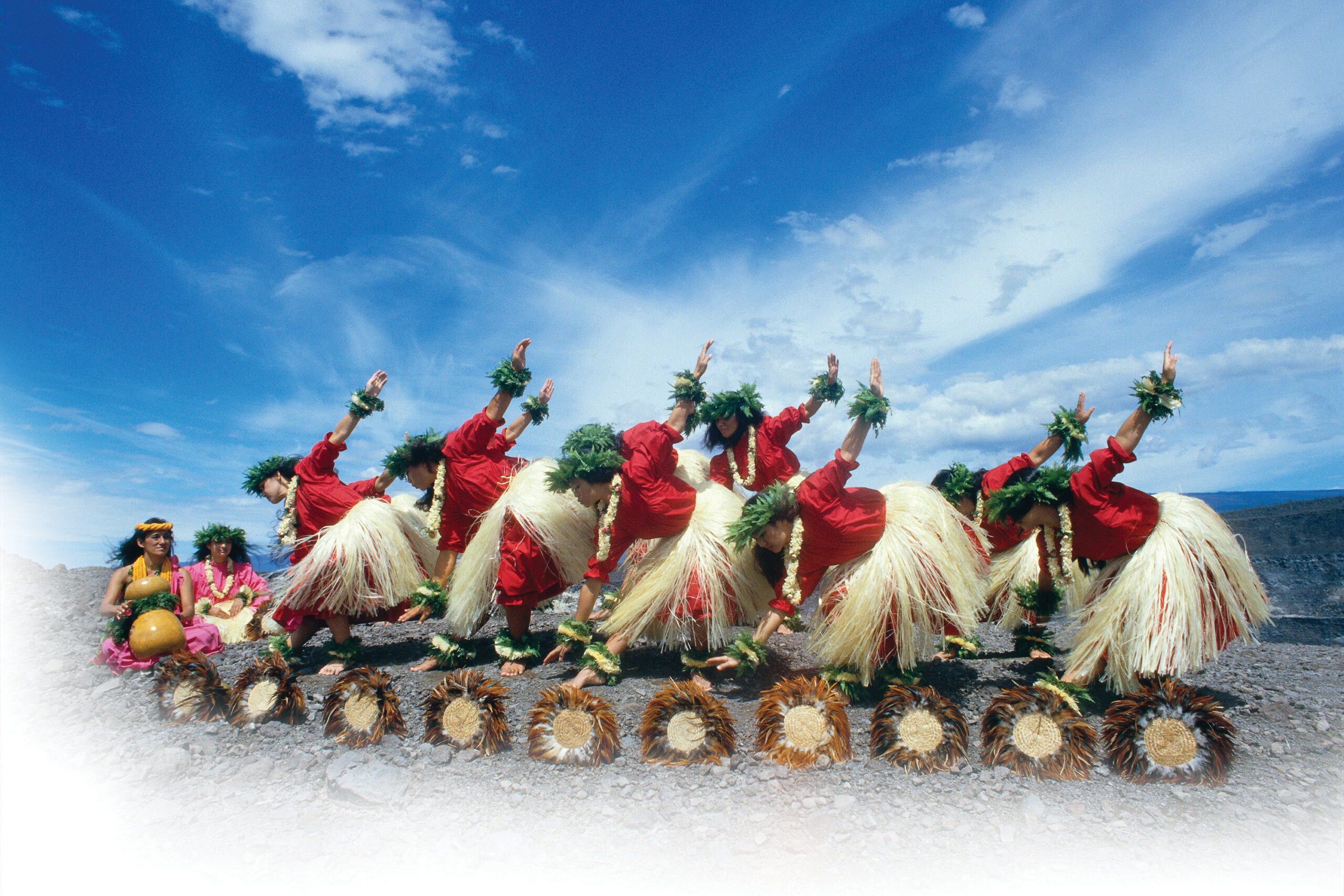
    Kānaka Maoli (Native Hawaiians) have welcomed immigrants from every corner of the globe for over 1,500 years, cultivating and perpetuating a tapestry of diverse cultures. In this second article in our series about the many cultures that comprise Hawai‘i, we will focus on how the Kānaka Maoli got here and from where, their culture and one event that epitomizes the Hawaiian culture, the Merrie Monarch Festival.

    The Early Hawaiians

    Sailing on wa‘a kaulua (double-hulled canoes), Polynesians primarily from the Marquesas Islands in the South Pacific navigated 2,000 miles, landing upon the shores of Hawai‘i over 1,500 years ago. The population was well-established when, about 800 years ago, Polynesians from the Society Islands arrived. Contact with southern Polynesia then ceased for about 400 years and a distinctive Hawaiian culture developed.

    Culture and Tradition

    Kānaka Maoli worshipped akua (gods) such as Pele and Haumea and passed down historical mo‘olelo (stories). Mo‘olelo were told through mele (song), oli (chant) and hula (dance). Mo‘olelo are insights about how the world came to be, and how relationships between people and ‘āina (the land) should be honored. These traditions hold strong today. In the early to mid-20th century, Kānaka Maoli adopted the ‘ukulele and guitar from Portuguese, Spanish and Mexican settlers, creating their own unique musical styles and instruments — the ki¯ hō‘alu (slack-key guitar) and kīkākila (steel guitar). Kānaka Maoli communicate with the world through oli, stressing the significance of voice/community. Hula, originating in Hawai‘i, derives from Polynesian dance forms. The two forms of hula today are kahiko (traditional) and ‘auana (contemporary).

    The Merrie Monarch Festival

    The Merrie Monarch Festival (MMF), a weeklong celebration held every year in Hilo on Hawai‘i Island, honors the legacy of the Merrie Monarch, King David Kalākaua — his love for his people and his vision for perpetuation of all things Hawaiian.

    The MMF was conceived in 1963 after the collapse of the sugar industry. George Na‘ope, Gene Wilhelm and Helene Hale organized the first MMF in 1964. This first incarnation included a King Kalākaua beard look-alike contest, a relay race and a ball. In 1968, when festival popularity was declining, Dottie Thompson became executive director and focused the MMF around hula. Three years later, Dottie and George hosted a hula competition. Events included Miss Aloha Hula, group hula kahiko and group hula ‘auana. Today, the Merrie Monarch Festival is internationally renowned for its historical and cultural significance. In 2025, it takes place from April 20 to 26.

    Visit MMF’s website at merriemonarch.com as well as Generations Magazine’s FaceBook page (facebook.com/genmag808) and website calendar (generations808.com/calendar) for community events and opportunities.


    The next article in this series will feature the influences of Japanese culture in the Aloha State.

    Kānaka Maoli (Native Hawaiians) have welcomed immigrants from every corner of the globe for over 1,500 years, cultivating and perpetuating a tapestry of diverse cultures. In this second article in our series about the many cultures that comprise Hawai‘i, we will focus on how the Kānaka Maoli got here and from where, their culture and…

  • How to Give Wisely

    Donating to charities can be a profoundly impactful and rewarding experience, but not all charities use donated funds responsibly. So here are three quick and easy tips to ensure your future contributions make a meaningful impact:

    Vet the charity: Quickly research the charities you plan to donate to. What is the charity’s BBB rating and community reputation? Does it have the necessary government registration with state authorities? If you plan to use the donation for a tax deduction, ensure the charity you’re considering qualifies; they usually need to be a 501(c)(3) organization.

    Ask questions: Ask the charity about its intended use of donations. How much of the funds collected are going to the intended recipients and how much does the charity or fundraising organization keep for itself?

    Watch for look-alikes: Impostors commonly mimic well-known charities. Carefully check URLs, logos and spelling, and educate yourself on the other telltale signs of an impostor scam.

    Maximizing the impact of your charitable giving can be quick and easy. Guard against impostors. Ask questions. Do your research.

    BETTER BUSINESS BUREAU GREAT WEST + PACIFIC (nonprofit)
    800-460-0910 | info@thebbb.org | thebbb.org
    Ad or company clarification: bbb.org
    Report a scam: bbb.org/scamtracker
    File a complaint: bbb.org/file-a-complaint

    Donating to charities can be a profoundly impactful and rewarding experience, but not all charities use donated funds responsibly. So here are three quick and easy tips to ensure your future contributions make a meaningful impact: ◆ Vet the charity: Quickly research the charities you plan to donate to. What is the charity’s BBB rating…

  • Use S.O.R.T. Approach for Decluttering

    Decluttering can bring a sense of peace, especially for seniors seeking to simplify their lives. The S.O.R.T method — Sell, Offer, Retain, Toss — provides an easy, step-by-step approach. Starting with less-used areas like storage rooms and guestrooms helps maintain momentum and make visible progress.

    Step 1: Sell

    Items like vintage pieces or furniture can be sold locally. Platforms such as Craigslist, Facebook Marketplace or consignment stores allow seniors to pass items to others without needing to ship them, which reduces environmental impact.

    Step 2: Offer

    Friends, family or community members may appreciate items with sentimental or practical value. Passing items on is a meaningful way to preserve memories and share family traditions.

    Step 3: Retain

    Keeping only the essentials or items with true sentimental value helps create a home focused on functionality and joy.

    Step 4: Toss

    Some items simply need to go! The City and County of Honolulu provides disposal options through Opala.org, including monthly bulky item pickup. O‘ahu’s Waimanalo Gulch Landfill and similar sites on other islands handle larger items, although fees may apply.

    Donation Resources

    • Helping Hands Hawai‘i: This organization accepts a variety of gently used household goods, benefiting programs for local families.
    • Goodwill Hawaii and Salvation Army: Both organizations have locations across the islands and accept many items, from clothing to small furniture.
    • Local Churches: Many churches hold thrift sales to support community projects. Donating items to these sales aids their charitable work and supports those in need.

    Decluttering with S.O.R.T. not only creates a more organized and safer living environment for seniors, but also supports Hawai‘i’s community through donations and recycling. With a step-by-step approach, seniors can enjoy a cleaner, more serene and secure home that fosters clarity, calm and peace of mind.

    LETS MOVE, LLC
    808-492-5214 | info@letsmovehawaii.com
    letsmovehawaii.com

    Decluttering can bring a sense of peace, especially for seniors seeking to simplify their lives. The S.O.R.T method — Sell, Offer, Retain, Toss — provides an easy, step-by-step approach. Starting with less-used areas like storage rooms and guestrooms helps maintain momentum and make visible progress. Step 1: Sell Items like vintage pieces or furniture can…

  • The Heart of Chinese Culture & Cuisine

    China is the top rice-producing country in the world; it accounts for more than 144 million metric tons of the grain annually or 28% of the global output. The per-capita consumption of rice there is estimated to be a whopping 220 pounds per year, compared to 27 pounds for the average American and 100 pounds for Kama’aina (the most in the United States).

    The Cantonese word “fan” means “meal” as well as “rice,” underscoring its importance. Here are three other tidbits that reveal the cultural and historical significance of rice to the Chinese people.

    Nian Gao

    Nian gao (gau), a steamed or baked Chinese New Year treat, is made of three basic ingredients — glutinous rice flour, brown sugar and water. Nian means “year,” and gao means “cake.” A homonym for gao is defined as “tall” or “high.” Thus, there’s a metaphorical association: Eating nian gao comes with the hope of personal growth, career promotions and financial success in the new year. Another translation for nian is “sticky;” the cake’s gummy texture and round shape symbolize familial harmony and unity.

    One tradition related to nian gao concerns the Kitchen God, who watches over every Chinese household. At the end of every year, it is his duty to review each family’s conduct and report to the Jade Emperor, ruler of Heaven. Before New Year’s Day, families place nian gao on their home altars, next to images of the Kitchen God. They believe that when he eats that sticky, sugary offering, he will say only sweet things about them or his lips will be sealed, preventing him from divulging anything negative.

    Rice-Fish Farming

    Rice-fish farming is not unique to China, but scholars believe that’s where it began some 1,700 years ago to optimize land use by cultivating two types of food at the same time.

    This sustainable, symbiotic ecological practice yields numerous benefits. The movement of fish through flooded fields increases the water’s oxygen level. Fish excrement adds nutrients to the soil, so fertilizer is not necessary (in particular nitrogen-based products, which release greenhouse gases). In return, rice fields provide fish with a cool, shady environment; protection from predatory birds; and plenty of food, including weeds, worms, plankton, insects and decaying leaves. This diet not only keeps the fish well fed, it reduces the risk of disease and the need for pesticides and herbicides.

    About 1.5 million hectares (3.7 million acres) are being used for rice-fish farming in China, primarily in mountainous southeastern and southwestern regions, which are far from coastal fishing areas and have few bodies of water suitable for conventional aquaculture. Because of the steep terrain, rice can be grown only in small terraces, resulting in limited harvests. Concurrently farming fish in those terraces generates additional income.

    The Great Wall of China

    Hailed as one of the Seven Wonders of the World, the Great Wall of China spans 13,170 miles across the country’s northern border; that’s more than half of the 24,901-mile circumference of the equator. It was designated a UNESCO World Heritage Site in 1987 as “an outstanding example of the superb military architecture, technology and art of ancient China.” And literally holding a large part of it together is rice.

    Construction on the wall began around 220 BC by order of Qin Shi Huang, who unified seven warring kingdoms to establish the Qin dynasty and become the first emperor of China. His vision was to connect previous bulwarks and build new sections to create a massive barrier winding over plains, deserts, grasslands, mountains and plateaus to stave off invasions from the north. Work on the wall — which also includes barracks, bastions and watchtowers — continued until the Ming dynasty (1368–1644).

    The most extensive and best-preserved segment of the wall — stretching 5,500 miles in Badaling, 43 miles northwest of Beijing — was erected during the Ming empire. This is the section that’s seen and photographed by more than 10 million visitors annually.

    It has stood the test of time thanks to a mortar of glutinous rice paste and calcium hydroxide powder, which scientists call one of the greatest innovations of that period. Amylopectin, a type of complex carbohydrate that makes glutinous rice sticky, made the ancient mortar as strong, durable and water-resistant as concrete. This adhesive’s seal has remained so tight over 500-plus years, weeds reputedly have not grown between the Great Wall’s bricks and stone blocks.

    The Hawai‘i Book of Rice Volume Two ($22.95, hardcover and spiral-bound) is available at bookstores and other retail outlets throughout the islands. It can also be purchased on amazon.com and Watermark Publishing’s website, bookshawaii.net. Watermark provides free shipping to all Hawai‘i addresses and to the mainland US for orders over $50. For more information, peruse bookshawaii.net or call 808-587-7766 or toll-free 866-900-BOOK from the neighbor islands.

    China is the top rice-producing country in the world; it accounts for more than 144 million metric tons of the grain annually or 28% of the global output. The per-capita consumption of rice there is estimated to be a whopping 220 pounds per year, compared to 27 pounds for the average American and 100 pounds…

  • Kūpuna Movie Mornings at Hawaii Theatre

    In May 2024, Hawaii Theatre Center launched a partnership with the Hawai‘i LGBT Legacy Foundation to host Kūpuna Movie Mornings, a monthly “pay what you can” film series created to provide seniors, the LGBT community and cinema lovers in general the opportunity to socialize and watch a classic movie in a safe, welcoming environment at little to no cost.

    The movies are chosen by our patrons, who fill out ballots at every screening. “Some Like It Hot,” “Vertigo,” “Casablanca,” The Rocky Horror Picture Show” and “The Wizard of Oz” are a few of the films we’ve shown based on audience input.

    Kūpuna Movie Mornings are usually held on the second Tuesday of the month. The lobby opens at 10:30 am. Complimentary, sponsored coffee and pastries are provided so attendees have a chance to enjoy a snack and talk story time before the 11:30 am showtime.

    Despite the name, Kupuna Movie Mornings attract film lovers of all ages. At our most recent show, the youngest attendee was 23; the oldest, 94.

    We would love for you to join us for our next Kūpuna Movie Morning! Please visit our website (below) and click on the “Join Our Mailing List” link to learn about future shows.

    HAWAII THEATRE CENTER (nonprofit)
    1130 Bethel St., Honolulu, HI 96813
    808-528-0506 | info@hawaiitheatre.com
    hawaiitheatre.com

    In May 2024, Hawaii Theatre Center launched a partnership with the Hawai‘i LGBT Legacy Foundation to host Kūpuna Movie Mornings, a monthly “pay what you can” film series created to provide seniors, the LGBT community and cinema lovers in general the opportunity to socialize and watch a classic movie in a safe, welcoming environment at…

  • Popo’s Almond Cookies

    While delicious at any time of year, Chinese almond cookies are often made and shared during the Lunar New Year celebration. Symbolism plays an important role in the foods enjoyed during Chinese holidays; these round cookies are thought to resemble coins and signify wealth. Popo (grandma) made her Chinese almond cookies during other special occasions, as well, including Christmas. She passed them out to her friends and family and everyone enjoyed them. Third and fourth generation members of the family carry on her tradition to this day.

    Ingredients
    1-1/2 cup Crisco
    1 cup sugar
    1 egg
    1-1/2 tsp. almond extract
    3 cups all-purpose flour
    1/2 tsp. salt
    1 tsp. baking soda
    1 tsp. red food coloring for decorating tops of cookies

    Optional:
    3–4 tsp. yellow food coloring added to the Crisco mixture

    Directions
    Cream Crisco, sugar, egg and yellow food coloring together in a bowl. Then add the flour, almond extract, salt and baking soda to the Crisco mixture by hand.

    Roll dough into 1-inch balls, place on cookie sheet, then press with a cup to flatten.

    Using a chopstick, dot the center of each cookie with red food coloring.

    Bake at 350 degrees for 15 to 20 minutes.

    Prep time: 15 minutes
    Makes: about 40 cookies

    Do you have a favorite recipe and story to share? For consideration in the next issue, include a photo and mail them to Generations Recipe, PO Box 4213, Honolulu, HI 96812, or email them to Cynthia@generations808.com.

    COOKIE RECIPE NOTE: While recipes made with Crisco are usually very crispy, butter may be substituted, yielding a soft inside with a crisp exterior. Placing a slivered almond into the center of each cookie instead of a dot of red food coloring is another popular option.

    While delicious at any time of year, Chinese almond cookies are often made and shared during the Lunar New Year celebration. Symbolism plays an important role in the foods enjoyed during Chinese holidays; these round cookies are thought to resemble coins and signify wealth. Popo (grandma) made her Chinese almond cookies during other special occasions,…

  • Celebrating Chinese Influence in Hawai‘i

    People from all over the globe have made their homes in Hawai‘i. The first to migrate and settle here were the Polynesians from the Marquesas Islands and Tahiti about 1,500 years ago. Since then, Hawai‘i has continuously welcomed immigrants from every corner of the globe, cultivating and perpetuating a tapestry of diverse cultures.

    In this first issue of the new year, Generations Magazine will begin to explore the myriad of cultures that make up our island ‘ohana, binding us together with a single strong thread of aloha.

    This issue will focus on Hawai‘i’s Chinese population, and their cultural festivals and food.

    From China to Hawai‘i

    The first documented arrival of Chinese people to Hawai‘i was in the 1700s when Chinese sailors arrived with Capt. James Cook in 1789 and several more on two fur trading ships in 1789. Though the ships and their sailors came and went, Chinese people were already settled and living in Hawai‘i throughout the 1700s. From 1792 through the mid-1800s, Hawai‘i became an exporter of sandalwood to China, earning the name “Tan Heung Shan” or “Fragrant Sandalwood Hills.” Then in 1852, the first Chinese from Cantonese-speaking Southern China immigrated to Hawai‘i to work on sugar plantations. Upon their work contracts expiring, many decided to stay in Hawai‘i, pursuing education and opening businesses in areas like Chinatown. Over the course of 50 years, in 1900 the Chinese population in Hawai‘i grew to over 25,000.

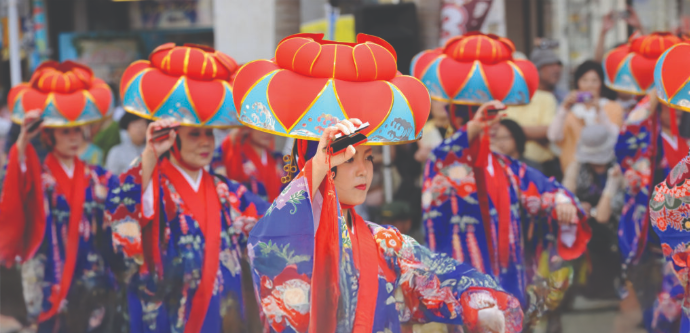
    Overall, the Chinese in Hawai’i constitute about 4.7% of the state’s population. This number does not include people of mixed Chinese and Hawaiian descent — if the Chinese-Hawaiians are included, they make up about one-third of Hawai‘i’s population. Without a doubt, Chinese people in the Hawaiian Islands have made and continue to make their mark on broader Hawaiian local culture. Rich with vibrant color, an accomplished history and cherished cultural heritage, the presence and influence of the Chinese culture in Hawai‘i continues with integrity and enthusiasm.

    Festivals and Traditions

    For Chinese families all over the world, several festivals and celebrations occur every year without fail. These festivals are for the most part largely known, even in non-Chinese circles. These celebrations include the Lunar New Year (or Chinese New Year), Ching Ming/Qingming Festival and the Mid-Autumn Festival and celebrations.

    Lunar New Year

    Of these three major festivals, Lunar New Year is arguably the most well-known. As the event follows a lunisolar calendar, Lunar New Year occurs on the second new moon after the winter solstice. Usually, this means late January or early February. The celebration ushers in the coming of spring and new beginnings.

    Certain traditions are honored during this celebration, too. Lai see, red envelopes containing cash, are given to younger folks for good luck and to ward off evil spirits. Gao, sweet rice cakes made from rice flour and brown sugar, are usually brought by families or given as gifts and eaten with others during Lunar New Year celebrations. These rice cakes symbolize growth and progress for the coming year. Fai chun are traditional decorative red banners hung in doorways or on walls with written phrases communicating prosperity and good luck.

    Whether it’s giving (or receiving) lai see, picking up gao in Chinatown or hanging up fai chun with family, Lunar New Year gives everyone a cause for celebration.

    This year, Lunar New Year will take place on Wednesday, Jan. 29. The Cantonese greeting “gong hei fat choy” at this time of year means “wishing you prosperity.”

    Narcissus Queen Pageant

    Although Hawai‘i celebrates these three main festivals with gusto, there is one Chinese festival unique to the islands: the Narcissus Queen Pageant in Chinatown. According to the Chinese Chamber of Commerce, a plan was devised to revitalize trade and the public image of Chinese people in Hawai‘i.

    As the narcissus flower symbolizes fortune and rebirth, the Narcissus Festival originally was connected to Lunar New Year celebrations, but has since grown into a spring-season-long celebration showcasing banquets, fashion shows, community celebrations and more. The event culminates with the selected queen and her court touring mainland China as cultural ambassadors from Hawai‘i, demonstrating their intelligence, poise and pride.

    The pageant will be held on Saturday, Jan. 4.

    Ching Ming Festival

    The Ching Ming Festival occurs during the third lunar month (usually in early April). During Ching Ming (Tomb-Sweeping Day), Chinese families visit the graves of loved ones, cleaning their spaces and making ritual offerings to honor their ancestors. The Chinese Chamber of Commerce of Hawai‘i will host an event on March 30 at Manoa Chinese Cemetery entitled “Significance of Ching Ming” sharing the history of Ching Ming and burial and funeral customs. This year, Ching Ming is set for Friday, Apr. 4.

    Mid-Autumn Festival

    The Mid-Autumn Festival, an event celebrating a plentiful harvest, is held on the 15th day of the eighth lunar month. Families and friends munch on mooncakes, float lanterns and give dollars to the dancing lions under the watch of a full moon. Local nonprofit Chinatown808 will host a festival celebration at the Chinese Cultural Plaza on Oct. 6.

    Check out chinesechamber.com for more information, as well as Generations Magazine’s Facebook page (facebook.com/genmag808) and calendar (generations808.com/calendar).

    The next article in this series will feature Hawaiian culture, highlighting the world-famous Merrie Monarch Festival.

    People from all over the globe have made their homes in Hawai‘i. The first to migrate and settle here were the Polynesians from the Marquesas Islands and Tahiti about 1,500 years ago. Since then, Hawai‘i has continuously welcomed immigrants from every corner of the globe, cultivating and perpetuating a tapestry of diverse cultures. In this…

  • Should Seniors Purchase Travel Insurance?

    As we age, the desire to explore new destinations and enjoy life’s adventures often grows stronger. For kūpuna in Hawai‘i, traveling overseas offers the opportunity to experience different cultures, visit loved ones or simply relax in a new environment. While planning these trips, it’s crucial to consider potential risks and ensure you’re adequately protected. One of the most important steps you can take is purchasing travel insurance, which can safeguard you against unexpected trip cancellations.

    Travel plans can change unexpectedly due to a variety of reasons, including personal health issues, family emergencies or unforeseen global events like natural disasters or pandemics. Without travel insurance, a canceled trip could result in significant financial loss, as airlines, hotels and tour operators may not provide full refunds.

    Travel insurance often includes trip cancellation coverage, which reimburses you for prepaid, nonrefundable expenses if you need to cancel your trip for a qualified reason. This can include anything from a sudden illness to severe weather conditions, giving you the flexibility to cancel your trip without the stress of financial loss.

    Travel insurance is especially important for seniors, since Medicare doesn’t cover medical expenses abroad. If you fall ill or have an accident while traveling overseas, you could be responsible for the full cost of your medical treatment. A simple medical consultation in Asia or on a cruise could set you back several hundred dollars. If you require hospitalization or emergency surgery, expenses could run into thousands or tens of thousands of dollars. Travel insurance with comprehensive medical coverage ensures these costs are covered.

    When selecting travel insurance, it’s important to choose a policy that meets your specific needs. Consider factors such as your age, health condition and the destination you’re traveling to. Many insurance providers offer plans tailored to seniors, with additional coverage options that address the unique needs of older travelers.

    Read the policy details, paying attention to coverage limits, exclusions and any requirements for pre-existing conditions. It’s also a good idea to compare policies from different providers to find the best coverage at a reasonable price.

    Traveling overseas can be a rewarding and enriching experience, especially for kūpuna who have the time and freedom to explore the world. However, it’s essential to be prepared for the unexpected. Travel insurance can protect you from potential financial burdens related to medical emergencies and trip cancellations, allowing you to travel with confidence and peace of mind.

    FINANCIAL BENEFITS INSURANCE, INC.
    Hawaii National Bank Building
    1311 Kapiolani Blvd., Ste. 504, Honolulu, HI 96814
    808-792-5194 | tmotosue@fbihi.com
    fbihi.com

    As we age, the desire to explore new destinations and enjoy life’s adventures often grows stronger. For kūpuna in Hawai‘i, traveling overseas offers the opportunity to experience different cultures, visit loved ones or simply relax in a new environment. While planning these trips, it’s crucial to consider potential risks and ensure you’re adequately protected. One…

  • Beware of Scams While Shopping Online

    Holiday shopping has shifted dramatically from in-person to online in recent years. Although this change gives us new opportunities for finding unique gifts while supporting small businesses — it also comes with risks.

    With 33.2 million small businesses now able to showcase their products online, you have infinite options at your fingertips. However, the rise of e-commerce has also attracted fraudsters who create fake websites in order to steal your money and personal information.

    To shop safely online while supporting local businesses, follow these tips:

    • Do your homework. Look for a physical address and phone number on the website. If you can’t find this information, it’s best to shop elsewhere.
    • Check for customer reviews on independent sites like BBB.org and Google. Be wary of businesses with no reviews or those sounding repetitive.
    • Use a safe payment type. Pay with a credit card; avoid using pre-paid cards, payment apps or crypto.

    Keep your guard up when shopping online and utilize these steps to help protect yourself while supporting legitimate small businesses for a happy holiday season for all!

    BETTER BUSINESS BUREAU GREAT WEST + PACIFIC (nonprofit)
    800-460-0910 | info@thebbb.org | thebbb.org
    Ad or company clarification: bbb.org
    Report a scam: bbb.org/scamtracker
    File a complaint: bbb.org/file-a-complaint

    Holiday shopping has shifted dramatically from in-person to online in recent years. Although this change gives us new opportunities for finding unique gifts while supporting small businesses — it also comes with risks. With 33.2 million small businesses now able to showcase their products online, you have infinite options at your fingertips. However, the rise…

  • A Labor of Love: Sweet & Sour Chicken

    This is one of my Grandma Goya’s recipes and one that my dad requests for Father’s Day or his birthday — it’s one of his favorite meals. My family loves eating this dish, as well. It is a labor of love because it takes a long time to make, but it sure is worth the time and effort.

    Chicken Ingredients:
    2 lbs. boneless chicken pieces
    1 cup potato starch
    1 tsp. seasoned salt
    1 tsp. garlic salt
    2 eggs, beaten
    3 Tbsp. vegetable oil for frying

    Sweet & Sour Sauce Ingredients:
    ½ cup Japanese rice vinegar
    ¾ cup white sugar
    ¼ cup water
    3 Tbsp. ketchup
    ½ tsp. salt
    2 tsp. shoyu
    ¼ cup pineapple juice

    Directions:
    Prepare the chicken: Put chicken in a bag with potato starch and seasonings. Dip pieces in egg mixture. Fry in vegetable oil until golden brown.

    Create the sauce: Combine sweet and sour ingredients and cook in a sauce pan until the sugar is dissolved.

    Lay cooked chicken in a 9-by-13-inch baking pan. Pour sauce over the chicken. Bake uncovered at 350 degrees for 40 to 50 minutes. When sauce thickens and becomes like a glaze, turn the chicken to baste it with sauce.

    Prep time: 90 minutes | Serves: 4

    Do you have a favorite recipe and story to share? For consideration in the next issue, include a photo and mail them to Generations Recipe, PO Box 4213, Honolulu, HI 96812, or email them to Cynthia@generations808.com.

    This is one of my Grandma Goya’s recipes and one that my dad requests for Father’s Day or his birthday — it’s one of his favorite meals. My family loves eating this dish, as well. It is a labor of love because it takes a long time to make, but it sure is worth the…

  • Hilo’s Lyman Museum is Superb!

    I’m not the first to fall in love with Mauna Kea. Sarah Lyman — a missionary who came to Hawai‘i from New England in 1832 — wrote in her journal about the beauty of Mauna Kea when the clouds and rains cleared. You can hear readings of several journal entries in one of the exhibits at the Lyman Museum, not far from the old Hilo waterfront.

    The museum has two major galleries. The entrance to the Earth Heritage Gallery on the first floor is a lava tube. Following the yellow footprints on the floor takes you around the gallery, beginning with the formation of the Hawaiian Islands, followed by the arrival of life by wind, waves and wings, and then you journey through the habitats from mauka (mountain) to makai (sea).

    The upstairs Island Heritage Gallery is also self-guided and starts with the arrival of the first Polynesian settlers. It is rich with exhibit cases displaying Hawaiian cultural items like stonework, kapa, feather work and drums.

    There are exhibits about European explorers, whalers, missionaries, plantations, the monarchy and statehood, and some contemporary oral history recordings. My favorite spot was the music nook, which has recordings from different eras.

    Accessibility and cost

    Wheelchairs, walking frames and mobility scooters are all allowed, but strollers aren’t. Just carry that mo‘opuna in your arms!

    A staff member or docent will happily transport you in a freight elevator if you can’t do stairs. Being taken in that elevator to the restrooms in the basement gets you the added bonus of seeing the archivist at work!

    All the entrance fees are less than $10. As a kama‘āina senior, I paid just $3 and spent a wonderful two hours there.

    This museum is top-notch — the Smithsonian has accredited Lyman’s gem collection in the top 10 in the nation. And, honestly, I found it far less daunting than the Bishop in Honolulu, but with the same amount of scholarship behind it.

    Tip: Call ahead to make a reservation to visit so that you don’t arrive at the same time as a tour group or a school field trip.

    LYMAN MUSEUM AND MISSION HOUSE
    276 Haili St., Hilo, HI 96720
    808-935-5021 | lymanmuseum.org

    I’m not the first to fall in love with Mauna Kea. Sarah Lyman — a missionary who came to Hawai‘i from New England in 1832 — wrote in her journal about the beauty of Mauna Kea when the clouds and rains cleared. You can hear readings of several journal entries in one of the exhibits…