
Forty years ago, the Watergate scandal outraged Americans and diminished the public’s trust in government. Demonstrations were held nationwide demanding that a more honest, open government be held accountable to the public, thussparring the good government movement.
“Good government” is used to describe the ideal corruption-free government that is transparent, responsive to the public rather than private interests, robust with citizen participation, and where public officials are held accountable for their actions.
Common Cause Hawaii has been a leading ‘good government’ voice advocating for improved process-related measures that affect our democracy. For the last 40, it has advocated for campaign finance reform, voting modernization, and stronger transparency and ethics in the Legislature. It considers process-related issues and improvements as universal issues that impact all of our social and economic policies.
Today, one good government issue provokes the public with as much force as Watergate did: the 2010 U.S. Supreme Court’s decision on Citizens United, which opened the floodgates of special interest money from corporations, unions and wealthy individuals into “Super PACs” (political action committees that do not coordinate their efforts with candidates) seeking to influence our elections.
As a result of Citizens United, Mainland corporate spending on national campaigns ran into the billions in 2012. Locally, the 2012 elections data reflected that 16 Super PACs spent $4,801,069.06 on Hawai’i campaigns. The 315 Hawai’i candidates who ran for State and County offices spent $13,404,231.01. The 16 Super PACs managed to spend 26 percent of the entire pool of money spent on Hawai’i elections. According to the Campaign Spending Commission, Hawai’i also attracted a significant amount of “outside” money from Mainland donors: 24 of the 61 registered non-candidate committees received 100 percent of their funding from outside sources.
Citizens United reminded Americans how fragile our democracy is, and the strides we must take to strengthen it.
Communities across the country are advancing resolutions through their city councils and state legislatures that declare support for a constitutional amendment to overturn Citizens United, challenge corporate power, and eliminate unlimited campaign spending.
As part of our effort to limit special interest money’s influence in politics, in 2012, Common Cause Hawaii introduced two state legislative resolutions (HCR 5 and HR 5) and one Honolulu County resolution (Resolution 12-207), all of which passed. In the 2013 legislative session, Common Cause Hawaii successfully advocated for HB1147 (now Act 112), which would require Super PACs to list their top three donors in political ads.
Our work extends beyond legislative activities. We are currently coaching high school students on key good government issues: money in politics, transparency and ethics. Additionally, we are planning a series of workshops to involve mobileapplication (apps) developers in creating apps to share Campaign Spending data in attractive and convenient ways.
With the prevalence of social media, a new wave of citizens are in tune with how special interest money influences public policy, and can quickly raise awareness to questionable issues and actions. Through our advocacy and outreach, we develop new activist leaders and equip them to make informed decisions and participate meaningfully in the law-making and electoral process.
Together, we can present a unified voice demanding higher standards for government ethics and transparency, and firmly say: money has no place in politics.
 A couple years ago, University of Hawai‘i journalism professor Bev Keever had her students undertake a very basic reporting exercise: request misconduct reports filed with the Legislature by Hawai‘i’s four county police agencies.
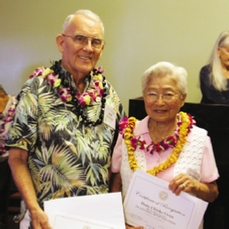
 As part of Older Americans Month in May, the Hawai’I State Executive Office on Aging and the Policy Advisory Board for Elder Affairs joined the Area Agencies on Aging and Gov. Abercrombie in recognizing eight outstanding senior citizen volunteers from each of the four counties. The 2013 honorees are: Dr. Lucy Miller and William Neil Rapozo, Sr. Of Kauai County; Betty Chieko Goya and John McGuire of Honolulu County; and Diane Logsdon and Richard Endsley of Maui County; Shirley Ito and Peter Hoffmann of Hawai’i County. These outstanding kupuna represent the thousands of seniors who contribute to the wellness and quality of life of their communities.




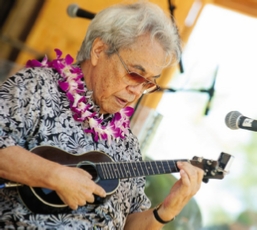
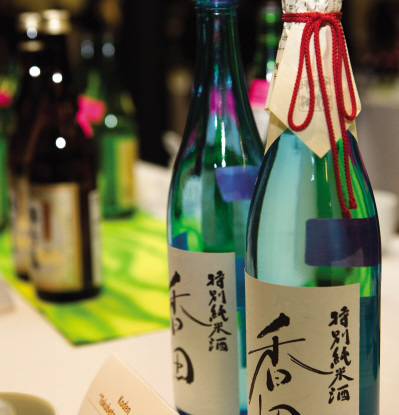 “The Joy of Sake”
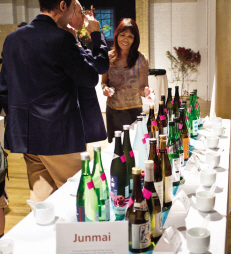 This event was founded in Honolulu in 2001 as a way to give sake enthusiasts an opportunity to experience and appreciate premium sakes from breweries all over Japan. The event will feature “competition sakes” from the U.S. National Sake Appraisal — each recently bottled and cold-stored to ensure maximum flavor.
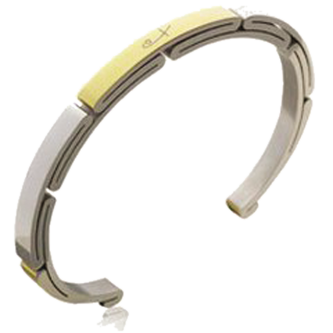 It was September 8, 2011 that I had a stroke … some say it was “mild” and some say it was a “nerve stroke” while I say, “It happened, now move on!” Every day since then, I test myself on doing things with my right side. Within two weeks I got rid of the walker but was very careful getting around. Driving and bouncing a tennis ball took two months. Walking down a flight of stairs without using the handrail or wall took nine months — that’s when I bought a Shuzi bracelet and walked down 12 steps with no problem (at the bottom of the stairs, I turned around to look up in amazement). I did more “self-tests” like balancing on my right leg for 40 seconds instead of the 3 seconds before Shuzi and walking on stepping stones on the side of our house with ease. There are so many products out there that claim a lot of things, but this one I believe made a HUGE difference to my “balance” in life.
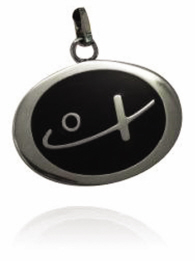 This is what I know: Shuzi (pronounced Shoo-zee) has been an international company since 2004. The jewelry utilizes a proprietary “Nano Vibrational Technology” Chip from the United States which is programmed to resonate with your cells’ natural frequencies. The chip sends out a pulse that balances the body’s bio-field and blood cells become much rounder and stronger promoting better blood flow, which means more oxygen through the body.
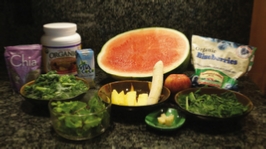 Summer brings in the time of year when melons are in season. Watermelon, honeydew and cantaloupe are rich in vitimins, minerals and antioxidants such as beta-carotene, lycopene, potassium, magnesium vitamin A and C. Adding them to a green smoothie makes for a tasty drink and a great way to get a lot of healthy nutrients into your body at one time.
 Ingredients