Category: Living Life

  • From the Top

    Generations Magazine- From the Top - Image 01If your goal is to age in place, don’t let your roof age with you. Consider getting a roof inspection to determine its structural integrity and lifespan. Regular inspections — approximately every three years — can detect problems or issues before they have a chance to cause major damage.
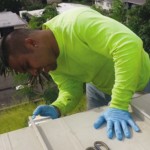
    Generations Magazine- From the Top - Image 02Do not attempt to climb a ladder or inspect the roof yourself. Hire a licensed, professional roofer who can examine your roof’s structure, checking it for hazards such as:
    • Leaks that can cause mold to grow and lead to major health problems, especially for asthmatics and people with allergies. Mold is often devastating for furniture, carpets and curtains. Precious books, photos, artwork, video and audiotapes can also be ruined by the fungus.
    • Gradual breakdown of rafters and flashing can provide an inviting environment for pests, such as rats, centipedes, roaches and ground termites.Generations Magazine- From the Top - Image 03
    • An old roof provides little protection against the most unwanted visitor of all — a hurricane. Even Hawai‘’ seasonal tropical storms can generate destructive winds, especially in neighborhoods on high ridges.

    What’s a homeowner to do?

    • Know your roof’ history and keep track of replacement and repair dates so you’l know when it’ nearing the end of its lifecycle.Generations Magazine- From the Top - Image 04
    • Notice signs of deterioration, such as pieces of shingle in the yard or granulated finish from shingles in the drain spout.
    • Keep gutters clean and hire help to trim back overhanging vegetation regularly. Maintenance is critical to a roof’ health

    Murakami Roofing | www.murakamiroofing.com
    808-348-8270 | murakamiroofing@gmail.com

    If your goal is to age in place, don’t let your roof age with you. Consider getting a roof inspection to determine its structural integrity and lifespan. Regular inspections — approximately every three years — can detect problems or issues before they have a chance to cause major damage. Do not attempt to climb a…

  • Chef Michi: Hawai’i-Infused Buttermilk Buckwheat Pancakes

    Generations Magazine- Hawai’i-Infused Buttermilk Buckwheat Pancakes - Image 01

    There’s nothing like a lazy weekend morning to enjoy a family breakfast together. This take on pancakes is healthier in many aspects, but the flavors will overcome any fear of “healthy” eating.

    Ingredients:

    • 2 cups of lowfat buttermilk, divided
    • 1 cup buckwheat flour
    • 1 cup all-purpose flour
    • 1-1/2 tsp. baking powder
    • 1/2 tsp. salt
    • 1/4 tsp. baking soda
    • 2 eggs, lightly beaten
    • 2 Tbsp. canola oil
    • 2 bananas, thinly sliced
    • Cooking spray for pan or griddle
    • Sweetened, shredded coconut
    • 1/2 cup macadamia nut, chopped
    • Syrup (maple or coconut)

    Directions:

    Combine the dry ingredients in a bowl and set aside. In another bowl, whisk together the buttermilk, eggs, canola oil and 1 Tbsp. of syrup. Stir the dry ingredients into the buttermilk mixture and add half of the sliced banana. Heat pan or griddle on medium heat, prepare with cooking spray and pour 2 – 3 tablespoons of batter per pancake onto the heated surface. Cook for 2 minutes or until batter starts to bubble, then flip and cook another two minutes.

    To serve, top each stack of pancakes with sliced banana, coconut and chopped macadamia nut. Then let everyone drizzle on their own syrup and enjoy!

    Serves: 6 | Time: 30 minutes


    Chef Michi
    808-286-6484 | cookingfreshforyou@gmail.com
    www.cookingfreshforyou.com

    There’s nothing like a lazy weekend morning to enjoy a family breakfast together. This take on pancakes is healthier in many aspects, but the flavors will overcome any fear of “healthy” eating. Ingredients: 2 cups of lowfat buttermilk, divided 1 cup buckwheat flour 1 cup all-purpose flour 1-1/2 tsp. baking powder 1/2 tsp. salt 1/4…

  • UH Press Presents: I RESPECTFULLY DISSENT: A BIOGRAPHY OF EDWARD H. NAKAMURA

    Generations Magazine- UH Press Presents - Image 01Tom Coffman’s portrait of Supreme Court justice Edward Nakamura is both an insightful biography and an engrossing political history of Hawai‘i. The Nisei life-story may sound familiar: born to immigrant parents, graduated from McKinley High, veteran of the 442nd Regimental Combat Team, attended University of Hawai‘i under the GI Bill, active during Statehood years; but it is strewn with surprise, resulting from Nakamura’s unshakable creed and unique angle of vision.

    By working from the political gains of the ILWU, Justice Nakamura played a central role — unpublicized — in devising arguably the most progressive program of legislation in an American state: universal health care, temporary disability insurance, collective bargaining rights for public workers — all of which forever changed the Hawai‘i worker’s landscape.

    Vaulted from relative anonymity onto the Hawai‘I Supreme Court, Nakamura was acclaimed for his powerful intellect, his writing, and, most of all, his iron will and integrity. In retirement, he became a dissenting moral force. He fought mismanagement in the State Retirement System, helped to block a highly controversial Supreme Court appointment, and agitated for separating the high court from the Bishop Estate. Nakamura in many ways acted as the public conscience and he left an inspiring legacy of far-reaching social legislation.

    The book won the 2013 Ka Palapala Po‘okela Award of Excellence in nonfiction, presented by the Hawai‘i Book Publishers Association. (University of Hawai‘i Press, paperback, $14.99)

    Tom Coffman’s portrait of Supreme Court justice Edward Nakamura is both an insightful biography and an engrossing political history of Hawai‘i. The Nisei life-story may sound familiar: born to immigrant parents, graduated from McKinley High, veteran of the 442nd Regimental Combat Team, attended University of Hawai‘i under the GI Bill, active during Statehood years; but…

  • Tips for Senior Skin Care

    Skin is our body’s largest organ, and it’s exposed to all the elements of our environment and lifestyles. As we age, our skin becomes dryer and thinner, which can lead to skin breakdown, especially with an immobilized person.

    Skin breakdown occurs when there is unrelieved pressure to an area on the body. This pressure impedes the circulation to the skin and causes an ulcer to form. Other factors that can contribute to skin breakdown are poor hydration, poor nutrition and maceration caused by prolonged exposure to wetness.

    Many families with an elderly person at home may rely on a home care agency to provide appropriate care. But here are 5 tips to keep seniors as comfortable as possible throughout the day, whether or not you have a caregiver’s helping hand:

    • Turn and reposition the person at least every 2 hours. Massage pressure points with each turn.
    • If they are incontinent, change the diaper when soiled to prevent maceration of the skin.
    • Clean skin well and use barrier creams with each diaper change.
    • Check all areas of the body daily for early signs of skin breakdown. Early signs include discoloration and redness that doesn’t go away with massage or pressure relief.
    • Offer plenty of fluids and meals with protein.

    Caregivers are trained to observe their clients for skin issues and to report changes to the family and to their agency’s nursing supervisor. The supervisor should assist the family in determining the best plan of action for future care.


    HiHealthCare, 745 Fort Street, Honolulu, HI 96813 | 808-534-7815 | info@hihealthcarehawaii.com | hihealthcarehawaii.com

    Skin is our body’s largest organ, and it’s exposed to all the elements of our environment and lifestyles. As we age, our skin becomes dryer and thinner, which can lead to skin breakdown, especially with an immobilized person. Skin breakdown occurs when there is unrelieved pressure to an area on the body. This pressure impedes…

  • New Memoir: The Society of Seven

    For five decades — from their early years in Hong Kong as the Fabulous Echoes to standing-room-only performances in clubs and concert halls around the world — the saga of the Society of Seven has been one of the most enduring success stories in show business. Now the band’s colorful history has been captured with the release of The Society of Seven: Last of the Great Show Bands, authored by the group’s longtime manager, Frances Kirk. In her lively 362-page memoir, Kirk recounts the wild ride of a revolving cast of world-class entertainers, who overcame personal tragedy to build a legacy in the roughand-tumble world of showbiz.

    Generations Magazine - New Memoir: The Society of Seven - Image 01“Simply put,” entertainment writer Wayne Harada notes in the book’s foreword, “the SOS wouldn’t have been able to succeed without Frances, and vice versa.” In the book, Kirk recounts their journey through many shining moments, including performances on The Ed Sullivan Show, headlining for more than 40 years at the Outrigger Waikiki hotel and a series of regional hit records. It is a legacy that lives on, as the Society of Seven continues to perform today.

    Intertwined with the band’s history is Kirk’s own life story. A savvy businesswoman born and raised in Hong Kong, she joined the family business, Diamond Music Company, in 1960 when her father fell gravely ill. She established the company’s recording department and concert promotion arm, building the company into a major player in the Asian entertainment industry.

    Legacy Isle Publishing. Softcover, $19.95, available at bookstores. Call 866-900-BOOK or visit www.legacyislepublishing.net.

    For five decades — from their early years in Hong Kong as the Fabulous Echoes to standing-room-only performances in clubs and concert halls around the world — the saga of the Society of Seven has been one of the most enduring success stories in show business. Now the band’s colorful history has been captured with…

  • Playing Hard

    Each year, more than a dozen teams play in the softball Hinohara Cup Tournament in Japan. The tournament is named after Dr. Hinohara who is 102 years old and still goes to work every day. He believes in an active lifestyle, as well as working in an occupation for which you are passionate. With that passion, work becomes play.

    In 2010, Hawai‘i was invited to participate in the tournament for the first time. Thirteen of Hawai‘i’s top senior softball players swept the competition, winning the Tokyo All Japan Cup, the Hinohara Cup, the Meya Makule Cup and the Grand Trophy. Although the team was invited back to play in 2011 and 2012, the To¯hoku earthquake and tsunami made it unfavorable to accept the invitation.

    Generations Magazine - Playing Hard - Image 01
    2013 Hawaii Dream Team (top row, lt.–rt.): Robert
    Oshiro, Gary Yamaguchi, Robert Kunimitsu, Gordon
    Okuhara, James Koishigawa, Gerard Takiguchi, and
    Bobby Chinen. Kneeling (lt.–rt.): Coach Wayne Shibata,
    Clinton Tanimoto, Jeffery Kamiya and Melvin Aoki.

    In 2013, 22 teams from Japan, Taiwan and Hawai‘i participated in the Hinohara Cup Tournament. Taiwan and Hawai‘i are the only outside teams that are invited to play annually. The first day of the tournament was rained out. On the second day, the Dream Team won its first game but lost the second and was thereby eliminated. However, the nine-day whirlwind trip through Japan was an experience of a lifetime, and the team thanks Bobby Chinen Tours for the excellent escort services.

    The team looks forward to the 2015 tournament. It will visit Hokkaido and travel to Akita to play the local team, then travel to Tokyo to play in the Hinohara Cup again.

    Each year, more than a dozen teams play in the softball Hinohara Cup Tournament in Japan. The tournament is named after Dr. Hinohara who is 102 years old and still goes to work every day. He believes in an active lifestyle, as well as working in an occupation for which you are passionate. With that…

  • Braised Chicken Thighs With Tomatoes & Olives

    Featuring olive oil and herbs, this one-dish dinner cooks for less than a half an hour, yet has the satisfying, melded flavor of a long-simmered stew.

    Ingredients:

    • 1 Tbsp. olive oil
    • 8 chicken thighs (about 3 lbs.), with skin on
    • Salt and fresh ground pepper
    • 1 medium onion, chopped
    • 4-5 garlic cloves, sliced paper thin
    • 2 tsp. fresh rosemary, chopped (or 1 tsp. dry)
    • 1 14-oz. can of diced tomatoes
    • 3/4 cup black olives, sliced in half
    • 3/4 cup low-sodium chicken stock
    • 2 Tbsp. tomato paste
    • Fresh basil or green onion, thinly sliced

    Directions:

    Generations Magazine - Braised Chicken Thighs With Tomatoes & Olives - Image 01In a large pan with a lid, heat the olive oil on medium heat. Season both sides of the chicken with salt and pepper, and brown well on both sides. Remove chicken from the pan. Drain off some of the oil, leaving about 1 tablespoon.

    Add the onion, garlic and rosemary and stir for about 3 minutes, then add the chicken stock. Bring to a boil and scrap off any brown bits from the bottom of the pan. Let the liquid reduce by half. Add the tomatoes, olives and tomato paste and stir to blend. Add the chicken, skin side up, cover and simmer gently for 25 minutes.

    Before serving, top with fresh basil or green onion.
    Serves: 4 | Time: About 35 minutes


    For more of Chef Michi’s fresh recipes, visit www.cookingfreshforyou.com | 808-286-6484 | cookingfreshforyou@gmail.com Also, visit her Cooking FRESH locations: 909 Kapahulu Ave. Queens POB I – 1329 Lusitana St., Queens POB II – 550 S. Beretania St. Lunch Truck – UH Manoa on East West Road by Kennedy Theatre.

    Featuring olive oil and herbs, this one-dish dinner cooks for less than a half an hour, yet has the satisfying, melded flavor of a long-simmered stew. Ingredients: 1 Tbsp. olive oil 8 chicken thighs (about 3 lbs.), with skin on Salt and fresh ground pepper 1 medium onion, chopped 4-5 garlic cloves, sliced paper thin…

  • One-Mile Project; One Planet Community

    My passion for kupuna has grown tremendously over the past months since I first enrolled in ‘Iolani School’s “One Mile Project” class. This semester elective course is a new offering in the state-of-the-art Sullivan Center for Innovation and Leadership. The course was geared toward giving students a greater appreciation for older adults in our community (within a one-mile radius of our Moili‘ili/Kapahulu campus).

    Generations Magazine - One-Mile Project; One Planet Community - Image 01
    ‘Iolani students, Lindsay Teruya (lt.) and Taylor Hamai (rt.) with a senior participant, George Miyamoto.

    Although I would love to say that I have always been this excited to help older adults, my feelings weren’t always this strong. During our first One Mile gathering, we were given an exercise to express our thoughts on kupuna. There were many negative words thrown out such as “old, slow and grumpy.” These downbeat impressions, however, slowly changed to thoughtful and respectful ideas as my class worked with nearby organizations, such as the University of Hawai‘i Center on Aging, Moili‘ili Community Center, Palolo Chinese Home, Nu‘uanu Hale, AARP and the Project Dana. With these partners, we completed walkability audits, proposed solutions to the problems in our streets, conducted interviews, learned vocabulary terms, took excursions to a Good Life Expo and nursing homes, interviewed a caretaker, conducted an empathy challenge, and reached out to a hospice patient. Thanks to these activities, we gained a better understanding of the elderly and made connections to our own lives. With a newfound love of older adults, my class has spent the past couple months putting together a project proposal that we recently presented to 60 school and community leaders in a special January 10 event.

    Our proposed “One Mile, One Planet Community Center” hopes to:

    • provide services to the elderly & our community
    • educate for the future
    • provide a new experience for all generations

    As our vision statement reads, “This Center will bring independent older adults and ‘Iolani students together through intergenerational programs that promote active aging, sharing of knowledge and service to the community.”

    We hope to improve the daily life and satisfaction of the elderly in our community. We want to work together as a school to create a thriving, age-friendly city. As thousands of Baby Boomers approach retirement each day, we hope to instill the importance of caring for our kupuna. We want to stress healthy living, so that future elderly generations may live independently and freely. It is our mission to reach out and better prepare our parents and grandparents for the upcoming stages of their lives while offering students the unique opportunity to learn from, work with, and serve our kupuna.

    Although the One Mile, One Planet Community Center is hypothetical at this point, we are confident that our project proposal can serve as a starting point for ‘Iolani and its students to be a part of helping older adults maintain active, independent, healthy lives.

    Generations Magazine - One-Mile Project; One Planet Community - Image 02
    The Sullivan Center for Innovation and
    Leadership at ‘Iolani School.
    David Franzen, photographer for Iolani. Courtesy of WSP.


    My passion for kupuna has grown tremendously over the past months since I first enrolled in ‘Iolani School’s “One Mile Project” class. This semester elective course is a new offering in the state-of-the-art Sullivan Center for Innovation and Leadership. The course was geared toward giving students a greater appreciation for older adults in our community…

  • Caregiver Legislation On The Table

    Family members, partners and close friends are an important source of support for older people who need help taking care of themselves at home. In Hawai‘i, these caregivers provide most of the care for loved ones who need help with activities such as bathing, dressing and transportation. Many caregivers also perform complex tasks such as providing wound care, managing medications and operating medical equipment.

    But despite the importance of caregivers in the day-to-day care of our ku¯puna, they are often left out of discussions involving a patient’s care while in the hospital. And when loved ones are discharged from the hospital, caregivers often receive little or no instruction on how to help prevent readmission.

    To address this issue, AARP Hawaii is urging passage of a bill in the 2014 state Legislature that would allow patients to designate a caregiver as part of their medical record — or that hospitals voluntarily adopt this practice. The bill requires hospitals to notify and meet with the designated caregiver to discuss the patient’s plan of care prior to discharge or transfer to another facility. It also requires hospitals to instruct caregivers in how to care for loved ones after they are discharged.

    “This bill will have the two-pronged effect of supporting family caregivers and keeping health care costs in check,” says Steve Tam, AARP Hawaii director of advocacy. “It enables caregiv- ers to support their loved ones at home and in the community, and discourages costly and unnecessary hospital readmissions.”

    The federal Centers for Medicare & Medicaid Services (CMS) estimates that $17 billion in Medicare funding is spent each year on unnecessary hospital readmissions. The bill is intended to reduce readmissions by engaging caregivers more intentionally in the care of their loved ones. It also comes as hospitals across the country are seeking to avoid admission penalties under the federal Affordable Care Act.

    In Hawai‘i, family caregivers already play a critical role in the care of our elderly and disabled populations. On any given day an estimated 247,000 residents provide unpaid care valued at a staggering $1.9 billion annually, according to 2009 data. Caregivers are often members of the individual’s immediate family, but friends and other community members also serve as caregivers.

    AARP is dedicated to helping Hawai‘i’s caregivers by providing the tools, information and support they need to care for their loved ones and themselves. For information on the status of this legislation, or to get involved as an advocacy volunteer, contact Steve Tam at 808-545-6005.

    For information on resources for caregivers available online, visit the AARP Caregiving Resource Center at www.aarp.org/caregiving.


    AARP Hawai‘i state office: 808-545-6024 | Toll-Free: 866-295-7282 | aarp.org/hi | facebook.com/AARPHawaii twitter.com/AARPHawaii

    Family members, partners and close friends are an important source of support for older people who need help taking care of themselves at home. In Hawai‘i, these caregivers provide most of the care for loved ones who need help with activities such as bathing, dressing and transportation. Many caregivers also perform complex tasks such as…

  • All-in-One Services Help Seniors Stay Home

    It is no secret that the number of individuals over the age of 60 is increasing exponentially. Without massive changes to operations, there will be no way to effectively meet the needs of seniors in the future. This we know. What may not be so evident are the strides forward that the Hawai‘i State Executive Office on Aging and the Area Agencies on Aging (AAA) in Hawai‘i are making in “getting ahead” of the population boom.

    About 18 months ago, the Maui County Office on Aging (MCOA) implemented a new assessment protocol that each AAA in Hawai‘i will eventually use. (Kaua‘i began the use of the new tool a year ago). And let me warn you, it is a long assessment. So, why implement an assessment that could be construed as cumbersome and downright bothersome for frail seniors?

    The answer lies in what seniors and family caregivers end up receiving from the assessment. Imagine a senior who needs assistance in order to remain safely at home. Maybe the senior and family identify a few services that would allow him/her continued independence. Rather than having to call numerous agencies and participate in separate assessments, the AAA can conduct one assessment that provides a comprehensive view of how to help keep that senior at home.

    I like to think of the assessment as a traffic light. MCOA used to only determine the red and the green lights. We could easily identify when seniors were in the “red” and required immediate in-home assistance. We could also determine functions for which the senior required no assistance — the “green” areas. The new assessment process allows us now to identify the “yellow” at-risk areas as well. These are the areas that do not yet require intervention but that could eventually undermine the senior’s desire to remain independent at home.

    By identifying the at-risk areas, MCOA can assist families in taking a proactive approach. We no longer simply authorize necessary services, but we help the individual and family plan to avert the need for services in the future.

    So, yes, we spend a few hours getting to know the senior and family caregiver. But the time is well spent. We identify not only needs, but also areas of strength and potential areas of risk. Seniors receive a comprehensive support plan designed to meet current needs, improve function when possible, and prevent further decline.

    This proactive approach, combined with evidence-based health promotion activities, is critical to the future success of the aging network. We know the amount of funding we receive will not keep pace with the aging population. Therefore, we must engage in coordinated planning efforts that maximize health and independence in a preemptive manner and be able to meet the needs of at-risk seniors for years to come.


    Maui County Office On Aging
    J. Walter Cameron Center
    95 Mahalani Street, Rm. 20, Wailuku
    808-270-7774 | F: 808-270-7935
    Toll Free in Hawai‘i 808-643-2372 | www.co.maui.hi.us

    It is no secret that the number of individuals over the age of 60 is increasing exponentially. Without massive changes to operations, there will be no way to effectively meet the needs of seniors in the future. This we know. What may not be so evident are the strides forward that the Hawai‘i State Executive…

  • Frank, as Always: Big-Band Musical Baggage

    Generations Magazine - Go For Broke Monument, Los Angeles - Image 01When Generations invited me to write an article about my high school days, one of the first memories that came to mind was of riding in the backseat of my dad’s 1959 Chevy Impala every morning, heading to school and listening to his favorite radio program.

    In the 50s, there was this DJ named Hal Lewis (aka J. Akuhead Pupule) but I really wasn’t “tuned in” to his show, however, he amused my dad and constantly made him laugh out loud. Aku broadcasted from the “Tree House” at the International Market Place in the early 1960s and played big-band music and stand up singers like Frank Sinatra, Vic Damone, Dean Martin, The Lennon Sisters, The McGuire Sisters, etc. I’ve come to realize now that what I listened to back then affected me for the rest of my life. (Keep that in mind … your kid is being shaped while sitting in the back seat of your car. I have people come up to me and say they listen to my radio show now because their mom and dad used to listen to me in the morning, too.)

    When not with dad, I would listen to this other guy named Elvis Presley on KPOI. So the music that came from dad’s radio each morning was something I had to endure. And to see my dad moving his shoulders to the music, it was kinda goofy! But oddly enough, sitting back there all those years, I started to appreciate the big-band sound and recognize the songs and the people who sang them — Tony Bennett and Nat King Cole. But I had no idea as to the weight of this music and what it meant to my father’s generation — The Greatest Generation.

    It wasn’t until much later that I realized I was a product of the generation who grew up in the U.S. during the deprivation of the Great Depression, and then went on to fight in World War II. I’m a WWII baby. A baby boomer!

    The Greatest Generation dealt with segregation, detention, internment, prejudice and so much more. Yet, many national figures and heroes came out of those trying times. Martin Luther King, for example, came from the Greatest Generation and he spoke eloquently from the depths of disparity, rising up and changing our country and the world forever. And the 442nd Regimental Combat Team and 100th Infantry Battalion local boys who gave more than most … these men were not going to let anything get in their way in achieving their best.

    The Greatest Generation went for it!

    And when I think back on riding in my dad’s car, I feel like I was on the end of a very long shooting star, streaking across the midnight sky. I really had no idea what my parents had gone through but I knew that everything was changing.

    All I’m saying is we must always holomua, keep moving and look forward, but never forget what was laid down before us.


    Join the conversation with Frank B. Shaner on Facebook and experience his art online at www.frankbshaner.com.

    Generations Magazine - Go For Broke Monument, Los Angeles - Image 02
    “The Greatest Generation” … Go for Broke!
    Oil on canvas, 24” x 18”

    When Generations invited me to write an article about my high school days, one of the first memories that came to mind was of riding in the backseat of my dad’s 1959 Chevy Impala every morning, heading to school and listening to his favorite radio program. In the 50s, there was this DJ named Hal…

  • Important Notice: Your Medicare Plan Not Offered in 2014?

    Every year, a few weeks before Halloween, I get dozens of calls from Medicare beneficiaries with questions about Medicare’s Annual Enrollment Period, which begins October 15 and ends December 7. It is the time when Medicare beneficiaries can decide to keep their existing health plan or select a new plan that becomes effective January 1 of the following year. I provide tips to help callers review their options. This year, in addition to those calls, my voicemail overflowed with seniors who received an unexpected letter from about their Medicare health coverage. The notice explained that their Medicare plan would not be offered in 2014 and was ending December 31, 2013. As a result, they would need to take action and select a new plan by December 31, 2013, or their coverage would revert to Original Medicare only.

    SO HERE ARE MY TOP FIVE TIPS:

    Tip 1: You qualify for a special enrollment period from October 15 to February 28, 2013. So now is the time to consider your options. If you don’t take action by December 31, you’ll have Original Medicare coverage only, and will lose prescription drug coverage unless you join a separate Medicare prescription drug plan.

    Tip 2: Decide to join another Medicare Advantage health plan because your plan has notified you that your existing plan will no longer be offered. If you wait until after February 28 to join a new plan with prescription drug coverage, you may have to pay a late-enrollment penalty.

    Tip 3: Call Medicare 24 hours, 7 days a week at 1-800-MEDICARE for help.

    Tip 4: Refer to the 2014 Medicare & You Handbook for detailed information.

    Tip 5: For help comparing plans: Call Hawai‘i’s State Health Insurance Assistance Program, Sage PLUS at 1-888-875-9229. All counseling is free.


    Martha Khlopin hosts the popular weekly radio program “Medicare Moment with Martha — The World of Medicare” sponsored by AlohaCare. It airs on KHNR-690AM on Saturdays from 11–11:30 a.m. and on KGU-99.5FM on Sundays from 10–10:30 a.m. For info, call (808) 973-0754, mkhlopin@alohacare.org.

    Every year, a few weeks before Halloween, I get dozens of calls from Medicare beneficiaries with questions about Medicare’s Annual Enrollment Period, which begins October 15 and ends December 7. It is the time when Medicare beneficiaries can decide to keep their existing health plan or select a new plan that becomes effective January 1…