Category: Living Life

  • The U.S. Army Museum: Veteran Volunteers

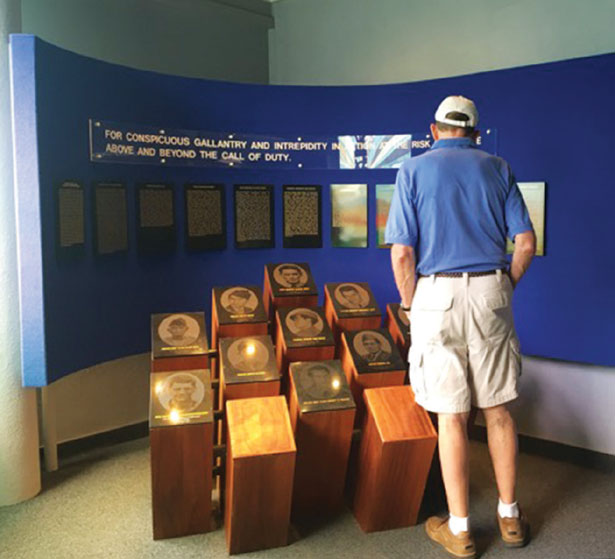
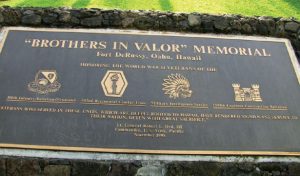
    OctNov2016 - theusarmymuseum_image1The U.S. Army Museum of Hawaii in Waikīkī was once a battery built to protect the state from invading forces. Today, it is home to stories of military past, including exhibits of the Vietnam War, Korean War, World War II and more. But more than that, the museum is a great place for senior veterans to volunteer — a majority of the volunteers are retired veterans.
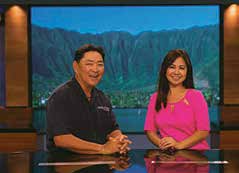
    “Veterans are really great at talking to people,” said Ian Frazier, historian and museum specialist. “A lot of our visitors hail from all over the world .  This is the only contact they have with veterans from WWII, Korean… Vietnam [wars].”

    Museum staff are usually selective about who they have as volunteers because they represent our country and the U.S. Army. But Ian said the one thing that shines about veteran volunteers is the way they communicate.

    OctNov2016 - theusarmymuseum_image2The museum is always looking for additional volunteers, and you don’t have to be a veteran to be considered.
    The museum, operated by the U.S. Army Garrison-Hawaii, averages 400 visitors per day from all over the world. The museum receives funding through the U.S. Army and the Hawaii Army 
Museum Society. Most of the staff are volunteers.

    Admission to the museum is free. However, donations are always welcome. The museum also offers audio tours for a small fee of $5 or $2.50 
for society members. You may also view some military exhibits on the museum’s website.


    U.S. ARMY MUSEUM of HAWAII
    2161 Kalia Road, Honolulu HI 96815
    Hours of operation:
Tuesday – Saturday, 9 am – 4:15 pm
    Sunday, Monday and all federal holidays — CLOSED
    808-438-2821  |  www.tinyurl.com/ArmyMuseumHI

    The U.S. Army Museum: Veteran Volunteers by Stephanie Kim, Generations Magazine Intern from the Oct-Nov 2016 issue of Generations Magazine, Hawai‘i’s Resource for Life

  • Voices of Aloha Chorus is 100!

    OctNov2016 - voicesofaloha_image1
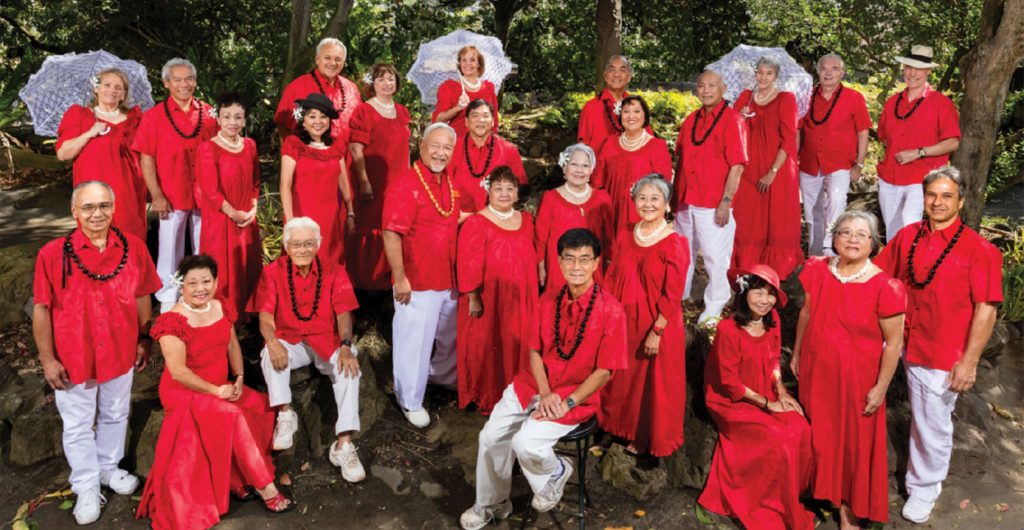
    The Voices of Aloha Chorus is a non-audition group for people of all ages who love to sing. This year, they have been singing joyfully for 100 years.


    We are 21st-century descendants of the Gleemen of Honolulu, the oldest men’s chorus west of the Rockies, and celebrating 100 years! The chorus began when the Apollo Club and Honolulu Choral Society joined voices in 1916. Among notable members were Sen. Daniel Akaka, Gov. Lawrence Judd, Charles K.L. Davis and Charles E. King.

    Shigeru Hotoke, WWII veteran and Kailua High music teacher, assumed directorship of the Gleemen in 1984, and in 1992, he produced a Chrismas concert with the Kailua Madrigal alumnae and a mixed choir, Mele Nani Singers, under director and opera singer Gerald Ting. This was the beginning of Gleemen Plus of Honolulu.

    In 2007, after 20 years of successful concert ministry on the mainland, I assumed the role of director. In 2013, the Leadership Board changed our name to the Voices of Aloha to better reflect our origins and mission. Since 1916, the chorus has always been a civic, community-minded choral group, open to all who love music and can carry their part, whether they read music or not. We are a non-audition chorus, and accept vocalists of all ages and professions/trades. Voices of Aloha regularly performs for senior clubs, care homes and retirement centers. Our popular annual spring and Christmas concerts draw crowds of up to 800. The future looks bright!

    If you love to sing, rehearsals are Tuesday nights from 7 to 9 pm at Community of Christ Church Annex in Makiki. To join, book a concert, or donate, please call us and sing joyfully!


    VOICES OF ALOHA
    Christmas Concert Dec. 4, McKinley HS Auditorium, 4pm
    Mark Yasuhara, director  |  808-228-5068  |  emynent100@yahoo.com

    Voices of Aloha Chorus is 100! by Mark Yasuhara, Director, Voices of Aloha Chorus from the Oct-Nov 2016 issue of Generations Magazine, Hawai‘i’s Resource for Life

  • Aloha Chapter Teaches Leadership

    OctNov2016 - alohachapter_image1
    Volunteers, friends, family and Troop 616 all worked hard to complete this project.


    An Eagle Scout project is the culmination of the Boy Scouting program that gives a scout an opportunity to demonstrate leadership, utilize communication skills and help their community. For me, as a scout and as a Native Hawaiian, Lunalilo Home represents not only a staple for the longevity of Hawai‘i’s elderly, but a historic institution that is deeply rooted in the care and support of the Native Hawaiian community. It is for these reasons and more that I chose Lunalilo Home as the beneficiary of my Eagle Scout project. The project consisted mainly of creating a 15-by-16-foot cement patio for use by the senior day care operation at Lunalilo Home. The staff, especially Jill Martinez, director of day care activities, was extremely helpful in outlining what would best serve the senior patients. I also found immense support from local companies and institutions that happily donated materials, funds and volunteer manpower to my project. Overall, I think this Eagle Scout project has demonstrated the amazing generosity and cooperation that exists in our local community. This support can only be described as the aloha spirit.


    To find out more about Lunalilo Home in Hawai‘i Kai, visit www.lunalilo.org. For scouting in Hawai‘i, visit www.alohacouncilbsa.org and/or www.mauibsa.org

    Aloha Chapter Teaches Leadership by Christian Tamashiro, Eagle Scout from the Oct-Nov 2016 issue of Generations Magazine, Hawai‘i’s Resource for Life

  • Picture Bride: A Historical Novel

    OctNov2016 - picturebride_image1Picture Bride is a remarkably engaging read, and from a historical sense, a body of research that brings to the forefront something that has escaped attention — Japanese-American culture. Everyone in Hawai‘i should read it!

    The immigration experience of Issei Japanese workers at the turn of the century has been documented, as well as the valor of their Nisei descendants, the 100th Infantry Battalion, 442nd Regimental Combat Team, 552nd Artillery Battalion and 232nd Combat Engineer Company.

    Author Mike Malaghan’s wife, Tomoko, helped him interpret Japanese cultural values of the first immigrants —attributes that later made them American patriots integral to the U.S. and Allied war against the Nazi’s in Europe and the Japanese Imperial Army in Asia.

    The protagonist, Haru, narrowly escapes sexual servitude in Amakusa, Japan, before becoming “picture bride” to a Buddhist priest, ministering to workers at Parker Ranch in Waimea on Hawai‘i Island. Mild and polite, but intelligent and strategic, Haru delicately navigates her community through plantation strikes and government opposition to Japanese language schools.

    She supports her family with her passion for American freedom, noble aspects of Buddhism, and Japanese respect for knowledge and mastery. Her three sons honor her legacy as Nisei soldiers.


    The book is available at:
    – Local bookstores ($19.95 for softcover, prices may vary)
    www.Amazon.com (Kindle version is $8.99)
    – Legacy Isle Publishing (an imprint of Watermark Publishing):
       
www.bookshawaii.net
       
808-587-7766  |  toll-free: 866-900-BOOK

    Picture Bride: A Historical Novel by Generations Magazine Staff from the Oct-Nov 2016 issue of Generations Magazine, Hawai‘i’s Resource for Life

  • Bindi: A Therapy Dog for Veterans

    OctNov2016 - bindi_image1
    Bindi and Rona marched with Vietnam Veterans of America on July 4th. Photo by George Barlet, VFW.

    Meet my nine-year-old American Champion Italian Greyhound, Blanerne Utoroonga, called “Bindi,” a therapy dog who visits wounded warriors at Tripler Army Medical Center (TAMC) in the Red Cross Human Animal Bond (HAB) program. She passed the AKC Canine Good Citizen® (CGC) test, a temperament evaluation by a military veterinarian, and evaluation by a senior HAB handler and her dog. She proudly wears her HAB bandana with patches and Bindi Adams ID card when working at TAMC. She’s a smart cookie, and fully certified to help patients with medical, mental and social problems.

    Patients love Bindi. She’s a cuddler and her sleek fur is smooth to the touch. She has sad eyes that bring out the best in people and she’s a very good listener. She politely accepts healthy snacks — but secretly prefers chicken nuggets.

    Bindi also belongs to Tails of Aloha (TOA), an all-volunteer, animal-assisted therapy organization that offers comfort and de-stressing in schools, hospitals and libraries. To volunteer with your pet, visit the websites below.


    RED CROSS HAB PROGRAM  |  www.redcross.org
    TAILS OF ALOHA  |  www.tailsofaloha.com

    Bindi: A Therapy Dog for Veterans by Rona Adams, RN, Vietnam Veteran, U.S. Army Nurse Corps from the Oct-Nov 2016 issue of Generations Magazine, Hawai‘i’s Resource for Life

  • Summer Tips for Senior Travelers

    Generations Magazine - August-September 2016 - Summer-Travel-Tips_image1


    1. Arrive at the airport three hours before departure during the busy summer months. If you’re 75 or older, you do not have to take your shoes off at the security checkpoint. If you need assistance, ask for a wheelchair when you make your reservation. When you arrive at the airport, tell the skycap that you ordered a wheelchair. Be sure to read all the latest airline rules when you buy your ticket.

    2. For free drinking water, just pack an empty bottle in your carry-on and fill it from a water fountain on the secure side of the checkpoint.

    3. Bring snacks: trail mix, chips, dried fruit or candy. All foods must be wrapped or in some kind of container that can be opened for inspection.

    4. Bring a washable travel pillow and light travel blanket if your airline does not provide them. In your carry-on, pack a hooded jacket or scarf and a light travel blanket to keep your head, neck and legs warm during or between flights.

    5. Bring reading material, games or movies to watch on your iPad. When you buy your ticket, ask how to use the airplane’s WiFi system.


    VACATIONS HAWAII
    1585 Kapiolani Blvd., #900, Honolulu HI 96814

    Kevin Kaneshiro, Sales and Promotions Manager 
808-591-4777 | www.BoydVacationsHawaii.com
    For further traveling information, visit 
www.tsa.gov/travel/special-procedures

    Summer Tips for Senior Travelers by Kevin Kaneshiro, Vacations Hawai‘i from the August-September 2016 issue of Generations Magazine, Hawai‘i’s Resource for Life

  • Grandparents Educating Grandchildren

    Grandparents hold important positions as educators here in Hawai‘i as an increasing number of them pitch in to provide pertinent learning for their grandchildren not necessarily taught at school. Grandparents may not hold special degrees, but plenty of on-the-job experiences make them experts in keeping the family together and on the right track.

    Generations Magazine - August-September 2016 - Educating-Grandchildren_image1
    Thanaphon Schmidt, Grandma and Pamela Lee, passing on a joy of reading.

    We talked with Pamela Lee and Sam Kim at Sylvan Learning Center, Kahala, who say they are seeing more grandparents enrolling their grandchildren in Sylvan programs to help them catch up, maintain their grades and get ahead in school.

    Sylvan Learning programs offer support help to students in all areas, including reading, writing, math, homework help, study skills and test preparation. STEM (science, technology, engineering and math) programs have also been added to the many curriculum choices.

    On national achievement tests, Hawai‘i public school students score below average in most categories, including language and STEM skills. Our state educators are trying to fix that, but in all likelihood, not before your grandchildren graduate from high school.

    For 30 years, Sylvan Learning Center has provided generations of Honolulu students — all ages and grade levels — with supplemental education. This year, Sylvan is also providing free afterschool classes to about 400 children across the islands, which are administered by Boys and Girls Clubs and funded by a federal grant.

    Generations Magazine - August-September 2016 - Educating-Grandchildren_image2
    Kiley Tanimura, Mikela Agno and Grandma — looking 
forward to learning.

    “Parents are really burdened with multiple jobs while maintaining a home that may house three or four generations,” said Kim. “Grandparents who grew up in Hawai‘i got an excellent public education, so they can see when their grandchildren need help. The easiest way to help is to supplement their schooling.”

    Sylvan Learning tests students to identify missing skills. If a student feels confused by math, testing will show which math skills are lacking and close the gap by helping the student master them. Filling in these gaps and catching up gives the child confidence to tackle math homework, and learning becomes fun again.

    “Supporting your grandchild’s education is the best way to stay involved,” said Lee. “Students with family members supporting and encouraging them at home just do better in school overall.

    Generations Magazine - August-September 2016 - Educating-Grandchildren_image3
    Seth Heller, Aia Heller and Grandma on the road to 
academic success.

    “Grandparents bring us their mo‘opuna and we teach them exactly what they need to learn in order to succeed in school.”

    Educators recommend that when the opportunity arises, seniors get involved in their grandchildren’s education.

    It is a gift that will keep giving and an opportunity for you to know that you had a hand in your grandchildren’s 
future success.


    SYLVAN LEARNING SYSTEMS
    4211 Waialae Avenue, Ste. 30, Honolulu HI 96816
    808-735-8811  |  www.sylvanlearning.com/kahala

    Grandparents Educating Grandchildren by Generations Magazine Staff from the August-September 2016 issue of Generations Magazine, Hawai‘i’s Resource for Life

  • Uncle Roberto: Love Life and Live It!

    Generations Magazine - August-September 2016 - Uncle-Roberto_image1Persons with the will to endure and turn adversity to success inspire us. Meet Uncle Roberto Deuriarte from Maui. From his soft voice and amiable manner, you would never guess his story. He comes from a fine family in Mexico City. In second grade, polio nearly killed him. He missed two years of school and never regained feeling in his right leg. “I learned early that you can endure a lot more than you think you can,” Uncle said with a smile. In his teens, surgery to stimulate his bad leg was tortuously painful. “Running marathons is nothing, compared to that,” he said.

    Generations Magazine - August-September 2016 - Uncle-Roberto_image2
    (L–R) Kenny Moore, Olympic marathoner and biographer of Bill Bowerman, founder of Nike Inc.; Roberto; and Dr. Jack Scaff, Honolulu Marathon founder.

    After college in Mexico, Roberto won a scholarship to study architecture at Stanford, which required that he first work in Honolulu for six weeks. Later, he returned to Hawai‘i and helped Dr. Jack Scaff, famous cardiologist and organizer of the Honolulu Marathon, prepare folks for long-distance running, according to the book Your First Marathon. “I was a great motivator, said Deuriarte. “They watched me run and said, ‘If he can make it from Aloha Tower to Kapi‘olani Park, so can I.’”

    In 1980, Roberto finished his first of three Iron Man Triathlons and ran the Honolulu Marathon. He and Dr. Duncan MacDonald (now coaching at Punahou School) were featured on the cover of Northern California Running Review. MacDonald passed mile 24 on his way to victory and touched hands with Roberto, still headed out at mile six, with five more hours to go. The article said,“… Deuriarte was paying the same athletic dues as MacDonald, and both of their times made them champions.”

    Generations Magazine - August-September 2016 - Uncle-Roberto_image4A
    Since then, Roberto finished 36 marathons, a 169-mile bike race and the Waikīkī Rough Water Swim. He represented Mexico at the 2008 Paralympic Games. He is a heavy equipment operator, carpenter, mechanic, pilot and land crew for Hawai‘iloa and Hōkūle‘a. He’s also a fabulous cook, a fan of beer and Bob Dylan music, and faithful to the love of his life, Maui artist Emily Ball. If you ever need a lift, a few minutes of Roberto’s optimism will get you back on track!

    Uncle Roberto: Love Life and Live It! by Katherine Kama‘ema‘e Smith from the August-September 2016 issue of Generations Magazine, Hawai‘i’s Resource for Life

  • It’s Just Aging Book Engages Youth

    Generations Magazine - August-September 2016 - Its-Just-Aging-Book_image1To build a stronger community, younger generations need to understand demographic changes, think critically about the aging and take action. Honolulu’s Age-Friendly City Initiative embraces an intergenerational approach to implementing programs and other supports for an aging population. A key first step is to reduce “ageism,” or negative attitudes toward aging that children may develop.

    A new intergenerational children’s book was authored by two ‘Iolani High School students, Eliah Takushi and Carly Tan, and Plaza Assisted Living Administrator Colby Takeda. They published the book as part of an ‘Iolani High School class called the “One Mile Project.” In this semester-long class, students learn about aging issues, and then develop and implement projects that benefit elders in their surrounding community. Takushi and Tan decided to write an intergenerational children’s book to teach young children about age-related changes and help them understand that these changes are normal — that kūpuna still are valuable members of our society.

    Generations Magazine - August-September 2016 - Its-Just-Aging-Book_image2
    Colby Takeda, Carly Tan, Eliah Takushi and Dr. Christy Nishita celebrate the publication of It’s Just Aging.

    It’s Just Aging: A Story About Growing Up is about a grandma and granddaughter who go to the grocery store and bake banana bread together. Along the way, they encounter older adults with different physical and sensory limitations. The grandma helps the daughter see that “it’s just aging” and people can still have a good quality of life. While writing and developing the book, the high school students read their draft stories to ‘Iolani kindergarten and first grade classes, collected feedback from the children and revised the story. Takeda, administrator at the Plaza Assisted Living in Waikīkī, provided valuable connections to illustrator Jamie Meckel Tablason and Mutual Publishing.

    It’s just Aging is one step in a larger movement to make Honolulu an “age-friendly” city by improving people’s understanding and perceptions of aging and older adults. Our youth need to understand their stake in creating a better future for themselves. When our entire community embraces aging issues, quality of life improves for all generations. Efforts to become more “age-friendly” are timely because Hawai‘i is aging more rapidly than the rest of the United States, and leads the nation in healthy life expectancy. Honolulu’s Age-Friendly City initiative is supported by Honolulu’s Mayor, Kirk Caldwell and AARP Hawaii.

    Find out more about Honolulu’s Age-Friendly City Movement at www.kupunatokeiki.com or www.hawaii.edu/aging, or contact Christy Nishita, Ph.D. at cnishita@hawaii.edu.

    It’s Just Aging: A Story About Growing Up 
by Takushi, Tan and Takeda, ISBN 0984445868, Mutual Publishing Company, is available at local retailers and online outlets for $12.95. Publication was underwritten by Plaza Assisted Living Hawai‘i; book sales support Project Dana, a local Honolulu nonprofit that assists kūpuna.


    UH CENTER ON AGING
    1960 East West Rd., Bio Medical Sciences T-705B, 
Honolulu HI 96822
    808-956-5001  |  www.hawaii.edu/aging
uhcoa@hawaii.edu

    It’s Just Aging Book Engages Youth by Christy Nishita, PhD, Center on Aging, University of Hawaii, Interim Director and Researcher from the August-September 2016 issue of Generations Magazine, Hawai‘i’s Resource for Life

  • Mediterranean Roasted Veggie & Garbanzo Salad

    Generations Magazine - August-September 2016 - Roasted-Veggie-Garbanzo-Salad_image1Ingredients

    2 large carrots, sliced on the diagonal
    2 red bell peppers, halved, sliced
    4 small eggplants, sliced thin on the diagonal
    2 red onions, sliced thin
    2 tomatoes, diced
    2 cans low-sodium garbanzos, drained, rinsed
    1/2 cup balsamic vinaigrette dressing
    1 bunch fresh sweet basil
    2 Tbsp. Italian parsley, chopped
    1/2 cup feta cheese
    extra virgin olive oil
    cooking spray

    Directions

    Preheat oven to 425°. In a large bowl, toss cut veggies with a drizzle of olive oil. Lay the veggies on two baking sheets prepared with cooking spray. Bake for 20 minutes until veggies are cooked but still crunchy. Put back into the large bowl and toss gently with the garbanzos and dressing, then place onto a large platter. Stack basil leaves. Roll them and slice them into thin strips with a sharp knife. Sprinkle basil and parsley over the veggies and top with feta cheese.

    Serves: 6 | Time: 1 hour to prep


    CHEF MICHI’S COOKING FRESH
    cookingfreshforyou@gmail.com
    Queens POB III – 550 S. Beretania St.
Honolulu Community College – 874 Dillingham Blvd.
    Cooking FRESH Food Truck:  Corner of Pahoakalani & Cartwright

    Mediterranean Roasted Veggie and Garbanzo Salad by Chef Michi from the August-September 2016 issue of Generations Magazine, Hawai‘i’s Resource for Life

  • Men’s Sheds Movement Comes to Hawai‘i

    Generations Magazine - August-September 2016 - Mens-Sheds_image1
    Rotary Club of Honolulu Sunset steering committee organizing Hawai‘i’s first Men’s Sheds (L– R): Jerome Taniyama, Jonathan Okabe, Doug Kam-Young, Glenn Sears, Win Schoneman and David Talbert

    Men’s Sheds began in Australia 10 years ago. The nonprofit is a communal version of the old-fashioned backyard shed where a man could tinker with his tools. Thousands of Men’s Sheds in Australia, New Zealand, the UK, Ireland and Finland belong to the international association, but every group is unique. Its members decide what they want to do: woodwork, metalwork, gardening, bicycle repair, cooking or bookbinding. The thing that all sheds provide is a safe, comfortable place for older men to congregate, talk and work shoulder-to-shoulder.

    It might appear that a shed is just a place to work, but it is much more. Older men tend not to socialize, are reluctant to do anything new and often ignore their health. When hearing and memory start to go, it is easy to just tune out. Friends from work are not as available; old buddies move away or pass on. The Men’s Sheds is 
a way to reverse the slide into isolation.

    Generations Magazine - August-September 2016 - Mens-Sheds_image2
    Mens Sheds Honolulu members (L– R): Jonathan Okabe, Jerry Tanyama, Doug Kam-Young, Glenn Sears, Jim Hoban and Leon Bower

    We opened the first Men’s Sheds in Honolulu and are looking for a few good (old) men. We gather on Thursdays from 10am until 4pm. Hours and days will expand with membership. “If this sounds like something fun for you or for a friend, give Glenn a call for details. Come by, take a look, have a cup of coffee and talk story.


    HAWAI‘I MEN’S SHEDS ASSOCIATION
    Glenn Sears | 808-373-6140


    Men’s Sheds Movement Comes to Hawai‘i by Glenn Sears from the August-September 2016 issue of Generations Magazine, Hawai‘i’s Resource for Life

  • Aloha Festivals’ 70th Year — “Hāli‘a Aloha!”

    Generations Magazine - August-September 2016 - Aloha-Festival_image2


    Aloha Festivals enters its 70th year as a premier cultural celebration of Hawaiian music, dance, cuisine and art. “Hāli‘a” means cherished memory that suddenly floods mind and heart. So it was in 1946, when the Jaycees Oldtimers began “Aloha Week” to renew rich cultural traditions preserved for a century by Hawaiian musicians, kumu hula and old families.

    “We’ve come a long way,” said Debbie Nakānelua-Richards, Aloha Festivals board of directors co-chair. “Hāli‘a Aloha is truly one year not to be missed.” The event is for everyone, keiki to kūpuna, and takes place at various O‘ahu locations from Sept. 3 to 24. All public events are free. Support for Aloha Festivals comes from the Hawai‘i Tourism Authority, private and corporate sponsors, and sales of Aloha Festivals ribbons and merchandise at all events.


    Generations Magazine - August-September 2016 - Aloha-Festival_image1

    Royal Court Investiture & Opening Ceremony

    Sept. 3, Saturday, 3:30 pm –5:30 pm
    Royal Hawaiian Hotel & Royal Hawaiian Center, Royal Grove

    Imua! The Aloha Festivals Royal Court will be introduced on the grounds of Helumoa, which was originally the home of Princess Bernice Pauahi Bishop. At the ceremony, the king, queen, prince and princess take their place on the royal court. The ali‘i court members receive their royal cloaks, helmets, feather head lei and other symbols of their reign. Traditional hula and chants make this a special event in the heart of Waikīkī.

    Pearlridge Keiki Ho‘olaule‘a

    Sept. 10, Saturday, 10 am – 3 pm, Pearlridge Center

    Pearlridge Center will celebrate Aloha Festivals with a full day of free activities, demonstrations, arts, crafts and stage performances.

    64Th Annual Waikīkī Ho‘olaule‘a

    Sept. 17, Saturday, 7 pm –10 pm, Kalākaua Avenue

    The Annual Waikīkī Ho‘olaule‘a is Hawai‘i’s largest block party. Thousands of people will take to the streets along Kalākaua Avenue for food, fun and entertainment. There’ll be performances of various genres of Hawaiian music and hula hālau. Hawaiian crafts, flower lei and many varieties of island cuisine will be featured throughout the event.

    70th ANNUAL FLORAL PARADE

    Sept. 24, Saturday, 9 am – Noon
    From Ala Moana Park through Kalākaua 
Avenue to Kapiolani Park

    Kalākaua Avenue comes alive with a colorful procession of female and male pa‘u horseback riders, and floats covered with Hawaiian flowers, Hawaiian music, hula hālau and local marching bands add to the fun.

    Watch the parade live on www.Channel808.com and www.olelo.org


    ALOHA FESTIVALS

    808-923-2030 | Facebook.com/AlohaFestivals
    Twitter: @AlohaFstvls  |  Instagram: @alohafestivals
    www.alohafestivals.com

    Aloha Festivals’ 70th Year — “Hāli‘a Aloha!” by Generations Magazine Staff from the August-September 2016 issue of Generations Magazine, Hawai‘i’s Resource for Life