Category: Living Life

  • Laughter is the Best Medicine

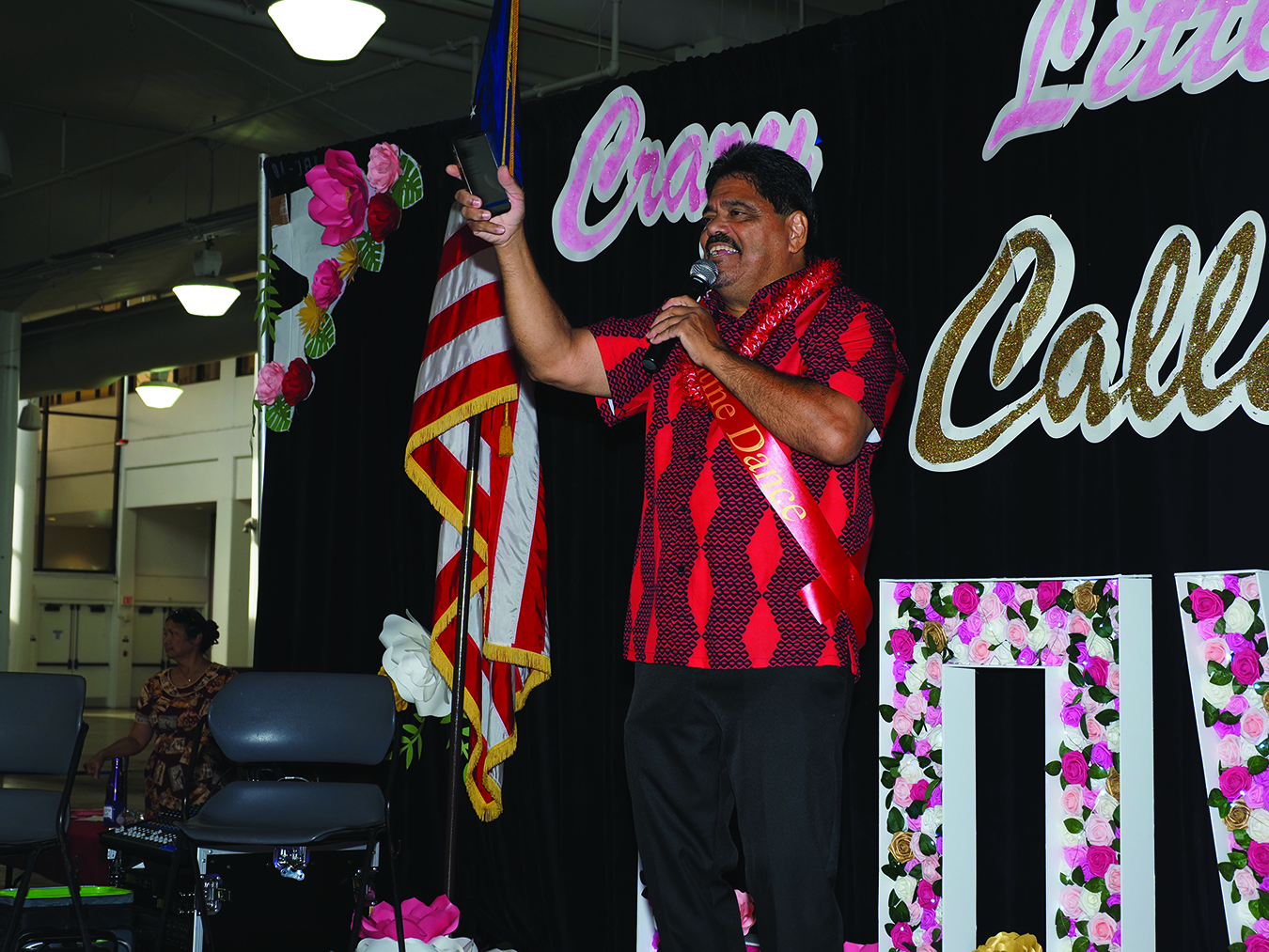
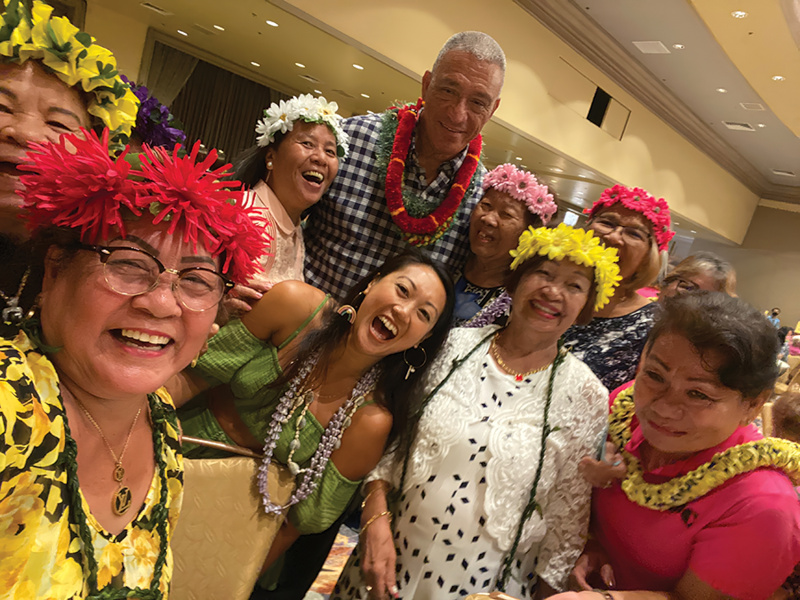
    Jenna Pascual taught Laughter Yoga to over 400 attendeesat the MEO 50th Annual Kupuna Event at the
Grand Wailea on July 30.
    Jenna Pascual taught Laughter Yoga to over 400 attendees at the MEO 50th Annual Kupuna Event at the Grand Wailea on July 30.

    Many forms of yoga have been developed over the centuries by serious practitioners who strive for the benefits of mind-body balance. Popular styles of yoga include Ashtanga, Hatha, Iyengar and many more. But if the thought of mindful meditation in a somber setting is not your cup of chai tea, there is good news for you.

    Laughter Yoga, a relatively new, alternative form of yoga that incorporates laughter with movement and breathing exercises, aims to cultivate joy, spark creativity, reduce stress and even boost your immune system, says Jenna Pascual, a Certified Laughter Yoga Leader and Life Coach on Maui. She started her Laughter Yoga career teaching at senior community centers in San Francisco before being hired to teach the technique at companies like Google, LinkedIn and Salesforce. She now offers a variety of laughter sessions on Maui and is willing to travel off-island, and host virtual sessions, as well.

    The practice designed by Dr. Madan Kataria in India in 1995 combines playful exercises and deep breathing to promote wellness, happiness and lots of laughter. Proving that laughter really is contagious, the practice has spread rapidly around the world, with about 5,000 laughter yoga clubs worldwide — roughly 200 of those in the US.

    “It’s called laughter yoga because of the deep belly, yogic breathing that takes place when we laugh,” says Jenna. “It helps people live happier, healthier lives.”

    The practice involves prolonged, voluntary laughter. This type of yoga is based on the idea that you can “trick” your body. Studies show that laughter can be faked; the human body does not recognize the difference between “real” and “simulated” laughter. Both provide similar physiological and psychological benefits.

    So laughter really is the best medicine, whether sparked by a joke or induced voluntarily using Laughter Yoga. More giggles and guffaws are just what the doctor ordered, according to the Mayo Clinic. Sustained laughter for 10 to 15 minutes a day can produce a range of health benefits. Laughter increases your heart rate and oxygen levels, which both improve the functioning of blood vessels and blood circulation. Laughing can help relieve pain, may help reduce blood pressure, and may also help protect you against a heart attack and other cardiovascular problems. Laughter can also help improve your self-esteem, lessen your stress, depression and anxiety and may make you feel happier.

    No yoga mats or poses are needed. Breathing exercises are used to prepare the lungs for laughter, followed by a series of laughter exercises that combine acting and visualization techniques. Laughter exercises are interspersed with breathing exercises. Sessions may start with gentle warmup techniques that include finger exercises
    to stimulate acupressure points, which activates organs. Ho, ho, ha, ha, ha! Warmups may also include imaginary bubble popping movement and laughter, and rollercoaster laughing.

    If those don’t break down inhibitions and make you feel good, nothing will! Go ahead! Feel better by laughing along with Jenna.

    “He who laughs, lasts!” — Mary Pettibone Poole


    JENNA PASCUAL
    Certified Laughter Yoga Leader & Life Coach
    jennapascual@gmail.com
    jennapascual.com
    instagram.com/jennapascual
    facebook.com/laughwithjenna

    Many forms of yoga have been developed over the centuries by serious practitioners who strive for the benefits of mind-body balance. Popular styles of yoga include Ashtanga, Hatha, Iyengar and many more. But if the thought of mindful meditation in a somber setting is not your cup of chai tea, there is good news for…

  • Hawai‘i’s King of Tropical Music

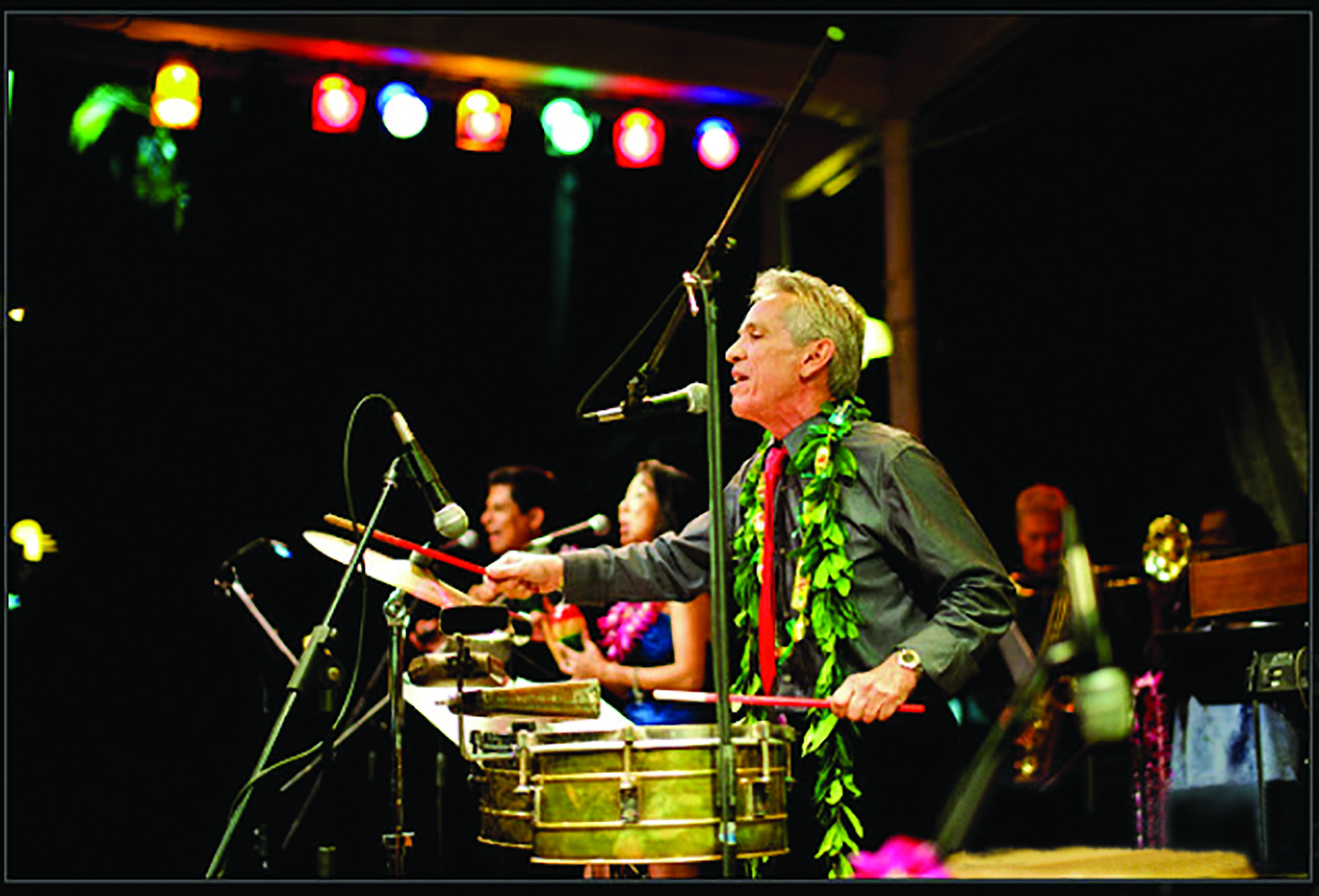
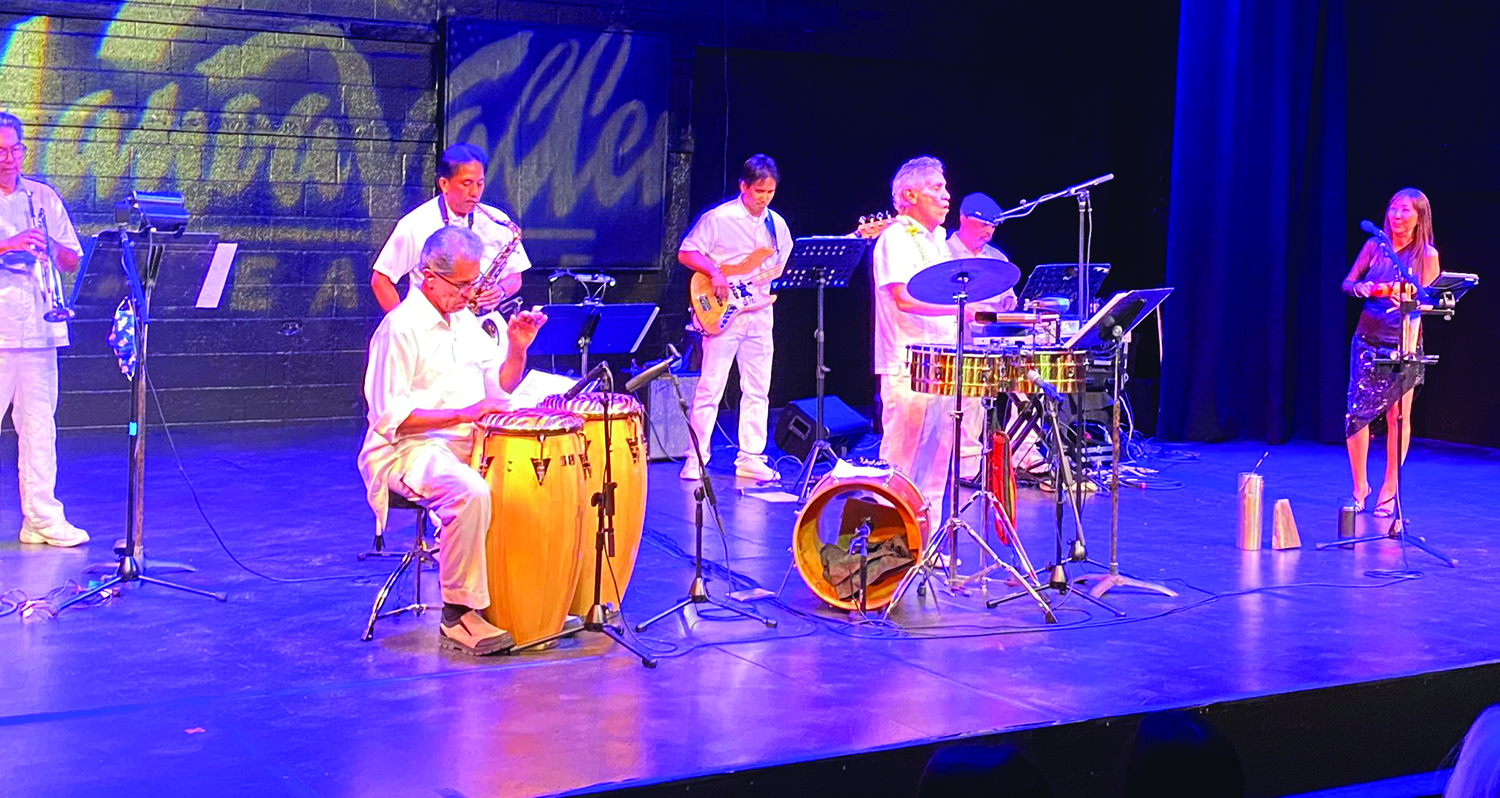
    At 71, Rolando Sanchez has the energy of a man half his age. Scratch that. He has the energy of a man a quarter of his age. If you’ve been in Hawai‘i for any length of time, you’re familiar with the charismatic percussionist/singer/band leader Rolando Sanchez, known for his high-energy shows that established Latin dance music in the islands that has continued for over 40 years.

    Born in Masaya, Nicaragua, on Oct. 6, 1951, Rolando spent only a few of his childhood years in Central America. The political instability of the country was at question and his parents wanted a better life for their children, so they moved to the Bay Area in 1966, where he attended school and developed his musical talents.

    He fondly recalls gathering his mother’s pots and pans and beating them with a wooden spoon — his very first drum kit that would propel him as a percussionist.

    While growing up, his talent matured and he joined a variety of local San Francisco bands, which led to a stint as opening act for B.B. King. While on tour, Sanchez found his way to Hawai‘i where he eventually settled in 1984. One of the first things he did after arriving in Honolulu was enroll in a six-week course at the University of Hawai‘i at Mānoa to learn aspects of music other than percussion, which he knew well. But unfortunately, his music career would have to wait. Bills had to be paid, so he took a job with a pedicab company  and peddled tourists around Waikīkī. It was on those pedicab rides that he was able to discover the hottest nightclubs where the tourists wanted to go. That gave him knowledge about the club scene — but he had no band to accompany him.

    Coincidentally, it was also during pedicab rides that he discovered some very accomplished street performers in Waikīkī. He found two excellent musicians and his trio was born.

    A regular gig at Anna Bananas became so popular that Rolando knew he needed to move to Waikīkī clubs in order to grow and add a little “sauce” to Hawai‘i’s music scene. He told the band they needed to “clean up,” wear matching outfits and make a good showing. It worked. The trio and subsequent band, Rolando Sanchez and Salsa Hawaii, was off to the races, with gigs at The Row Bar, Compadres, Black Orchid, Trappers, Gussie L’Amours and Nick’s Fishmarket — some venues now only long-forgotten memories.

    Reviewers Wayne Harada and John Berger made the crowds even bigger in a town where lively, upbeat and danceable salsa was practically unheard of. But Rolando established himself as el rey de la musica tropical en Hawaii (the king of tropical music in Hawai‘i) when he brought contemporary Latin salsa to mainstream Honolulu nightclub audiences in the late ’80s.

    Rolando’s enthusiasm and determination to bring Hispanic music to the forefront led him in 1989 to establish an annual Latin Music Festival to celebrate Hispanic Heritage Month. What started as a modest festival at The Row Bar turned into a major event on Kalakaua Avenue.

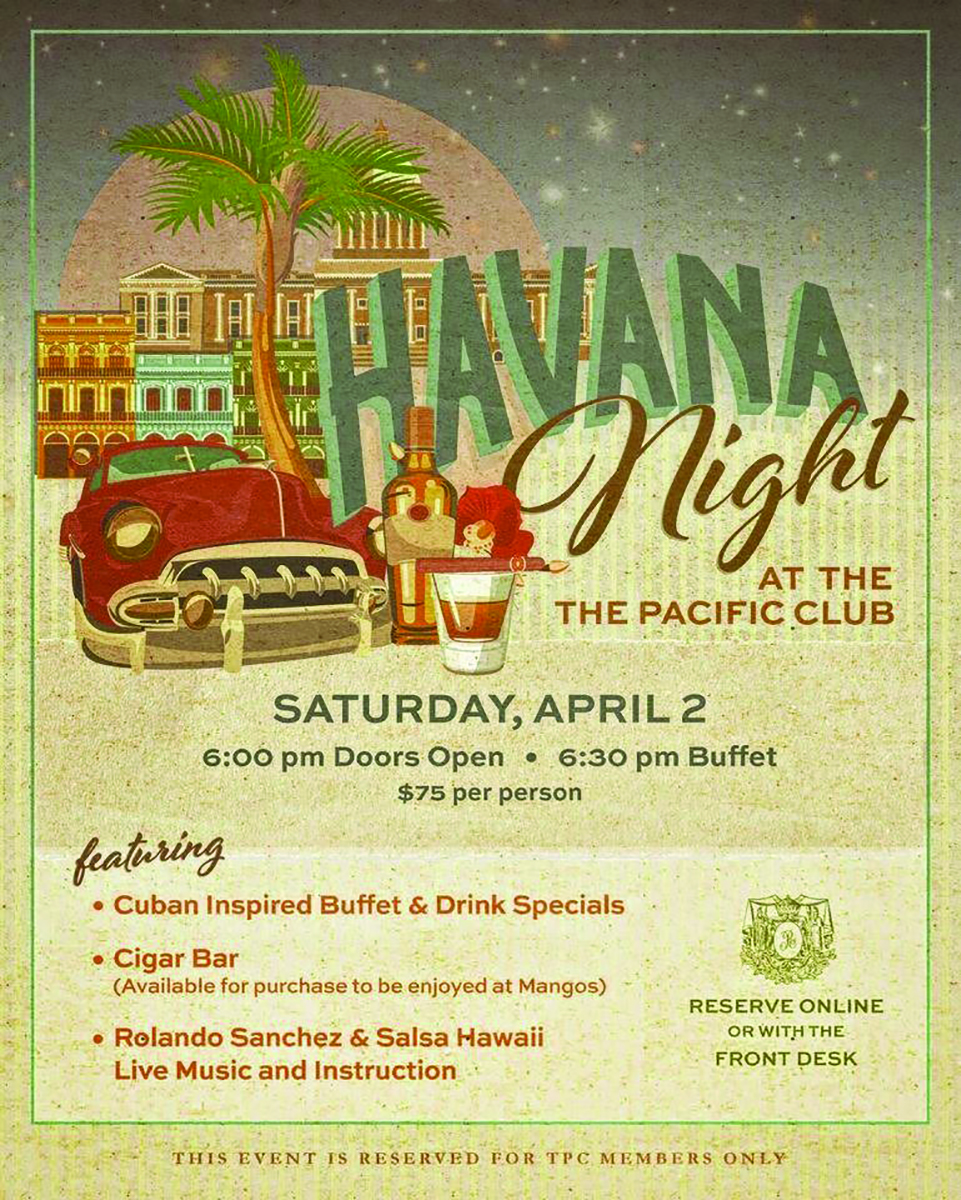
    The enthusiasm   continues to this day and he still plays at major events. A recent fundraiser at the Pacific Club sold out. More shows are in the pipeline for 2023, but his focus right now is on a new record that he plans to release in the coming months.

    Up next are more concerts and special events, along with his regular Sunday afternoon radio show on KNDI Radio 1270AM. Sadly, the nightclub scene has been floundering in recent years, the pandemic notwithstanding. Rolando says there are some clubs operating, but hiring DJs is more economical than hiring bands. His main focus in 2023 will be a return to the studio to record a new single featuring three of the female vocalists who have been with the band through the years: Lin Brown, Judi Palrmeira and Jules Kam.

    When asked if today’s younger generation is into salsa, Sanchez emphatically says “Yes! They are just as enthusiastic about the music as their parents and grandparents were 40 years ago.” He says he’s excited to see Latin music flourishing in Hawai‘i and proud that he’s been an integral part of it.


    ROLANDO SANCHEZ — SALSA HAWAII RSC Music Hawaii
    808-342-0911 | sanchezr015@hawaii.rr.com
    rolandosanchez-salsahawaii.com
    For a calendar of upcoming events: 
    rolandosanchez-salsahawaii.com/p/rolandos-calendar.html
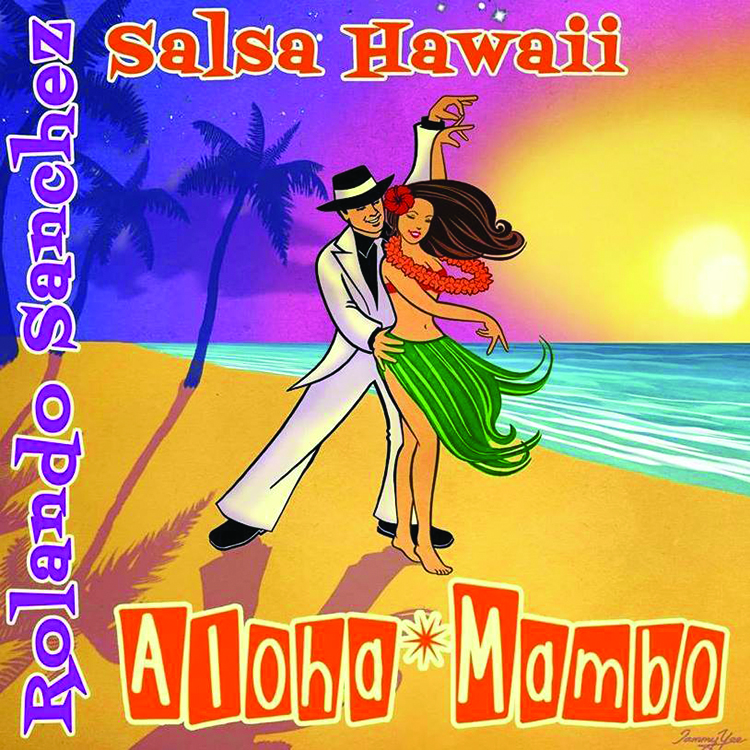
    Music by Rolando Sanchez & Salsa Hawaii is available at music.apple.com and music.amazon.com. Or search for “Rolando Sanchez” online.

    At 71, Rolando Sanchez has the energy of a man half his age. Scratch that. He has the energy of a man a quarter of his age. If you’ve been in Hawai‘i for any length of time, you’re familiar with the charismatic percussionist/singer/band leader Rolando Sanchez, known for his high-energy shows that established Latin dance…

  • The Book Sisters

    It’s not your ordinary book club. This all-women book club has a long history, having begun around 1980, says Ginny Meade, who joined in mid-’81. “It’s an amazing group of women from all walks of life. It all started because of our love of books and reading.”

    When Ginny joined, she said, an artist, an attorney and a writer were the “ring leaders.” One by one, new members drifted in by the invitation of other members, including several doctors.

    “I had put off joining because I thought everybody else was smarter than me,” said Ginny. Unduly insecure about her membership in the group, Ginny became the club’s “faithful scribe,” sending out email invitations for each meeting.
    As a Kaimukī community leader, it was a natural evolution. And early on, she realized that she had a deep connection with this eclectic group.

    This intrepid group of accomplished women possesses important commonalities: a voracious intellectual appetite and a willingness to tackle the tough topics. At the end of the day, that was enough to sustain the group for over 40 years.

    There were rules that determined who could join the Women’s Literary Society of Greater Honolulu (WLSOGH) was growing at such a pace that it would soon overflow the host’s home.

    “We were uppity back then,” Ginny laughs. “So we made rules. First, you were allowed to invite a guest only once a month. The group would decide whether or not to accept the guest, giving the invitee the option to join if they liked us, too.”

    The meetings had a “semi-formal” structure. The person who suggested reading the book was usually the one to lead the discussion, posing discussion questions about the book.

    “The interesting thing is that the discussions weren’t strictly about the book,” says Ginny. “They became more about our feelings that arose from reading it. Most often, our discussions became really wide-ranging and comprehensive, reaching far beyond the contents of the book.”

    The group would also invite authors to their meetings, including the likes of former Honolulu Advertiser Publisher Thurston Twigg-Smith, author of “Hawaiian Sovereignty. Do the Facts Matter?” Authors from near and far were also invited, some traveling from the mainland to appear at this meeting of discerning women.

    But their appetites were not for the written word and intellectual discourse alone. The dining table was covered with culinary delights of all kinds, wine and fizzy beverages. The ambiance opened opinions, loosened lips and sparked creativity.

    Pūpū evolved into dinner, for a time, themed to the book. A book by Dostoevsky prompted the host to offer borscht. A  meeting discussing “A Brief History of Time” featured Chinese food, as they ascertained “that is what geeks eat.”

    Well really, sustenance was necessary; the club’s book list was not for the faint of heart. More often than not, they would “go deep.”

    Titles on the 2022 list include “The Chancellor: The Remarkable Odyssey of Angela Merkel” and “Confessions of an Economic Hit Man.” “They’re all across the board. That’s how we roll.”

    “We didn’t always agree on the books and we didn’t mince words,” says Ginny. “One meeting started with the opening comment, ‘I hated this book!’ It went on to be one of the longest meetings and most deeply discussed books we ever read.  So we realized we didn’t need to agree for a meeting to be successful.”

    This discovery lead them to “The Molly Principle.” First, calculate how many years you have left. Then calculate how many books you want to read. Then, if you pick up a book and you don’t like it, it’s ok to put it back down. Members could invoke The Molly Principle at any meeting, excusing them from reading or discussing the book of the month. They could still attend the meeting. The group has recently switched their focus to books about World War II and South Africa.

    The book list is always decided at the annual retreat. The book nomination and voting ritual was a serious, long-weekend affair, often accompanied by music, partying, hot-tubbing, beach walking, tap dancing and consumption of a cold creamy, blender cocktail with an X-rated name. That’s when the tap dancing ensues…

    But it is not all about unbridled drinking, dancing and merriment. A retreat that included a hike on Molokai inspired Ginny to pursue a degree in horticulture. “It has been quite a life-changer for most of us,” Ginny says about the group.

    Originally, many joined the club because it was simply “time to get back to reading” after families were raised and careers ended. Although their initial intention was to indulge in food for thought with like-minded ladies, by drilling even deeper than the topics offered in their books, the club facilitated lifelong bonds.

    “There’s about 40 of us who are still involved,” said Ginny. About half are local and the rest are on the mainland — most, former islanders.

    “It’s hard to put a label on what our book club was ever about,” says Ginny. “It’s a bit of everything. When we began, we were all in our 40s. Now we are in our 80s. We have become grandmas and widows and have seen a lot of change.”

    “But for as long as I can remember, we began our meetings by chatting about what each person has been doing in the last month,” says Ginny. “Eventually, someone says, ‘Lets get to the book.’”

    “Through the years, we became a close group of dear friends and confidants that has not only endured, but grown stronger and deeper. When life hands us tragedies and challenges, we are always and faithfully there to support each other. So that’s the most valuable aspect of this club — total support among 40 women over 40 years.”

    “It’s way beyond what’s between the covers of a book,” Ginny says. “We’re not just analyzing a book; we are analyzing everything in life.”

    It’s not your ordinary book club. This all-women book club has a long history, having begun around 1980, says Ginny Meade, who joined in mid-’81. “It’s an amazing group of women from all walks of life. It all started because of our love of books and reading.”

  • Paddling Her Own Canoe

    Kīhei resident Franny Durham unknowingly serves as an inspiration to those around her through her indomitable spirit, positive attitude and boundless energy.

    When asked about her secret to her physical health and spiritual well-being, she replied, “Moderation is the key.”

    “When I was very young, my father told me that longevity runs in our family, so I learned to take care of my body at a young age because I wanted to live to be very old,” she laughed.

    Genetics may have given her an edge; she is of Okinawan and Japanese descent. She is confident her dad would still be alive if not for a fall that injured his spinal cord when he was in his mid-80s. “Til the day he died, he did pushups and took several walks a day. I know he would have lived at least another 15 years.”

    There are no magic ingredients in her recipe for longevity — only common sense. “I try to eat healthy, but I’m not rigid about diet. I believe in moderation. We eat fruits and vegetables, but we also love meat and everything else. But we don’t go overboard! We are not overweight. We stay active. There needs to be balance or you will sink.”

    Her husband of almost 30 years is 76, “but looks like he‘s 56,” says Frannie. He kite surfs and rides his Harley for exercise and recreation.

    Franny was in her 40s when she began taking hula lessons. Although she no longer belongs to a hālau, she occasionally performs at special events. Sometimes she dances on Mondays at the Coffee Attic in Wailuku. “That helps to keep you in shape and it’s very fun,” she says.

    “But it really comes down to my love of paddling,” says Franny about sustaining an active lifestyle. The long-time ocean canoe paddler started the sport later in life — and it changed her life.

    When she moved to Maui from O‘ahu in the early ’90s, she was invited to paddle with the Wailea Canoe Club (WCC). She went, and although the paddler who invited her did not show, she coincidentally ran into someone she knew from O‘ahu. The two of them needed a crew, so they struck up a conversation with a couple of young men running along the beach. They were boxers who were cross training. “‘Do you want to try it?’ my friend said. Three of us had never paddled before. So we went out. My friend steered us. I stroked the boat. We went out about a mile and then the wind came up. We had to paddle like hell back to shore! I fell in love with it immediately and have kept going ever since.”

    Now at age 70, she paddles six times a week with the WCC and the Hawaiian Outrigger Canoe Voyaging Society (HOCVS) in Kīhei.

    “With HOCVS, I have done long-distance paddling. We’ve paddled around Molokai, Maui and Lāna‘i. I also did a tribal  journey from Neah Bay to Lummi in Washington. It’s been great.”

    Along with her own paddling regime, she also coaches, teaching others, encouraging improvement and always endeavoring to bring out the best in her students. She says she has met many great people along the way.

    “I believe in leading a good life, treating people well and being considerate of others.”

    An extension of those long-held beliefs also brought her to caregiving.

    “I got into caregiving because I had a landlord at the time whose elderly mother needed help. I also have a son with a bit of a disability. I mentioned to someone that I was interested in learning more about it. She had a friend who taught caregiving at Maui Community College (now the University of Hawai‘i Maui College). “As it turns out, I got the last spot in the last caregiving class that was funded by a grant. Everything was paid for. It was meant to be. It was a blessing. I enjoyed it, then started caregiving after I got certified at graduation.”

    That was 13 years ago, and Franny has been a caregiver ever since. The agency that hired Franny sent her out on a variety of caregiving assignments. She retired from the agency at 67, but retained one private client who she still cares for. He is a few years younger than Franny and a quadriplegic.

    “He is somewhat independent but still needs a lot of help. And I can’t not help him.”

    But, Franny observes, “There is a lack of caregivers. In Hawai‘i, so many elders age in place, so they need someone to come into their home.” But based on her own past experience, a lot of agencies do not pay a living wage. “It’s a sad situation, because when you are a caregiver you are responsible for this person’s well-being — their life. There is so much involved.”

    Franny is also seamstress, making and giving away stylish masks for adults, and cartoon-and character-themed masks for keiki and teens during the height of the pandemic “so they would want to wear them.” Of course, she made paddling-themed masks. She was also commissioned by a local doctor who gave the masks to her patients, and also sent them to Germany and the Hopi Reservation. “I felt so good about that.”

    “When I moved to Maui, that is when everything really started for me. All of the important things that happened in my life were just meant to be. It all just dropped into my lap. Now I’m busier than I have ever been before I retired.”

    But Franny is not just drifting along in life. Recognizing the opportunities presented to you is a skill. Living in alignment with your purpose is an art. She is a paddler of her own boat. An unstoppable force by land and sea, Franny continues to serve as as a courageous caregiver, and an inspiration to her peers and students through her good will, strength and perseverance.

    Kīhei resident Franny Durham unknowingly serves as an inspiration to those around her through her indomitable spirit, positive attitude and boundless energy. When asked about her secret to her physical health and spiritual well-being, she replied, “Moderation is the key.”

  • The Brotherhood of Senior Softball

    Seniors take their sports seriously, but with perspective gained over years of competition, the element of fun has become paramount for most players. Although they have a passion for playing, winning isn’t everything. Camaraderie, reunion and ‘ohana, fitness and fun are the most important elements of a senior’s game plan.

    Baseball may be America’s pastime, but softball is the the No. 1 sport among seniors in Hawai‘i. There are a lot of fields and a lot of leagues. Each league has eight to 20 teams. There can be 20-plus players on a team roster. It can be played year-round, it doesn’t cost much to play and costs nothing to watch.

    Kūpuna softball has been played on O‘ahu for the past 46 years. The goal is to keep kūpuna healthy and active through an activity they enjoy.

    The seniors league runs year-round and is mainly played at the Patsy Mink Central O‘ahu Regional Park (CORP) in Waipahu. There is also a seniors league in Kohala, Manoa, Ala Wai and others that play on different days of the week at other fields. There is a league of some kind just about every day of the week. Over 400 seniors participate in leagues throughout the islands.

    Makua Ali‘i Softball League

    Fetuosasae “Fetu” Sua, 64, and Randy Madeiros, 69, have played together on teams and leagues in the past. Now, Fetu is the catcher and outfielder for Bad Company and Randy is the captain and pitcher for the Hawaiians.

    “I play on a Friday league for 50-and-over players,” says Randy, who has been playing softball since age 20 and in the senior league for 11 years. “I also play on a Saturday league at Kapi‘olani, which is an 18-and-over league. I’m the old guy out there in that league. I also play in a co-ed league on Sunday in Kailua. I play a lot.”

    Fetuosasae “Fetu” Sua, 64, and Randy Madeiros, 69, are looking forward to the 46th Annual Hawai‘i State Senior Tournament. PC: Jeffery Kimoto
    Fetuosasae “Fetu” Sua (left), 64, and Randy Madeiros, 69, are looking forward to the 46th Annual Hawai‘i State Senior Tournament. PC: Jeffery Kimoto

    But the name of the slow-pitch softball league he enjoys on Wednesdays is the Makua Ali‘i Softball League. There are 22 teams in the league on O‘ahu that play all year long. Three other islands participate in the statewide league in addition to O‘ahu: Kaua‘i, Maui and the Big Island. Each island has its own competition. Winning teams  on each island meet up at the annual tournament.

    Players must be 60 and over to participate in the league. Age brackets are 60 to 65, 65 to 70 and 70-plus. The older you are, the more age brackets you can play in. If you are a very competitive senior, you can play in a younger age group. But the younger players can’t play in an older age group.

    Each team is also allowed one 55 to 59 year old on the field. “The young whippersnappers want to hit it out of the ballpark — but consistency is the key,” says Randy, who was 58 when he joined the league as the “young guy.”

    “A player 55 to 59 years old is considered to be a young puppy,” says Randy. “There are many 70 and over players. We have a few players in their 80s. A retired fireman on the Firehouse team is still in the league at 87. Valued senior players are consistent and maybe place the ball over the second or third baseman’s head instead of trying to hit out of the park… just out of his reach.”

    “There are guys over 70 who will play on the 60 to 65 team because they are competitive,” says Fetu. “They may be 72 but they hit like they are 67,” Fetu laughs. “But age takes its toll after a while.” Fetu is in his third year in the Makua Ali‘i Senior Softball League.

    The Competition

    “The Makua Ali‘i Softball League can be a real competitive league,” says Fetu. “Although I want to compete at the highest level, I also want to have fun. And anyway, any team on any given day can be the worst or can be the best. It depends on who shows up to play. As for me, I get good respect when I step into the batter’s box. I am a pretty big individual.”

    “We’re not getting paid for this… it’s about bragging rights,” Fetu adds. “You are really lucky if you get a trophy, too.”

    Hawaiian team members include (L–R) Jacob Thomas, 59, shortstop; Warren Ho‘ohuli, second base/catcher; and John Iokia, 68, first base/third base. PC: Jeffery Kimoto
    Hawaiian team members include (L–R) Jacob Thomas, 59, shortstop; Warren Ho‘ohuli, second base/catcher; and John Iokia, 68, first base/third base. PC: Jeffery Kimoto

    ‘Ohana & Exercise

    “After a game, we talk about the game… the best hit you had, how fast you ran, great catches,” says Fetu. “The next thing you know, we are having a barbecue and a few beers and talking story until midnight.”

    “At this age, instead of sitting around in a rocking chair, it is really good exercise,” says Fetu. “We may not run as fast but we do try to run.”

    “The brotherhood of softball definitely requires some physical activity!” adds Randy. “At our ages, that’s a good thing.”

    For Love of the Game

    The competition level within each team depends on the team’s philosophy.

    “But the bottom line is, it’s all for fun,” says Randy. “When we unite together and play the game we love, it’s awesome! I look forward to Wednesdays. Yes, it’s mainly a fun thing, but then again, we don’t show up on Wednesdays to lose! We have fun and we try to win. I look forward to participating every week and being part of the brotherhood of softball — players my age — and having a fun time.”

    “Competing is important, but so is just having  fun,” says Fetu. “We just want to go out there and have a good game. We may win or lose, but we wish everybody the best — for nobody to get hurt and go home safely to their families.”

    The statewide tournament will be held Tuesday through Friday, Aug. 2 to 5, at CORP on O‘ahu. More than 60 teams may be participating.

    How to Get On a Team

    There are no tryouts for the Makua Ali‘i Softball League. If you fit the age requirement, let the individual team know you have been watching and let them know you want to play ball.


    SENIOR SOFTBALL USA HAWAI‘I
    Jeffrey Kimoto, Director
    808-212-5953 | JeffreyKimoto@gmail.com
    www.oahuseniorsoftball.org
    https://oahuseniorsoftball.org/docs/schedule.pdf
    * The C&C of Honolulu is starting a 60+ senior league on Thursdays.

    Seniors take their sports seriously, but with perspective gained over years of competition, the element of fun has become paramount for most players. Although they have a passion for playing, winning isn’t everything. Camaraderie, reunion and ‘ohana, fitness and fun are the most important elements of a senior’s game plan.

  • Clean Your Closet Like There’s No Tomorrow

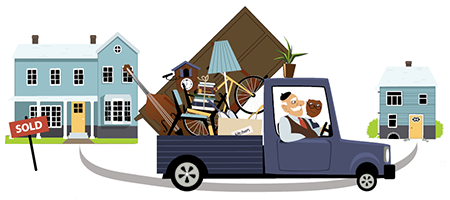
    A happy senior couple moving boxes into or out of the back of their car. They are moving house, perhaps downsizing. They are looking at the camera, smiling.It’s shocking! How did I accumulate all this stuff? An embarrassment of riches may be a first-world problem — having too much of too many good things — but it is a reality for many of us, even those who don’t qualify as full-fledged hoarders. But even simple clutter has its own risks; for starters, the chronic and repeated stress caused by frantic and frustrated searching, and the risk of falling over precious possessions left in precarious places. In addition, clutter is distracting, saps time and energy, diminishes productivity and steals attention from more worthy endeavors. Overabundance can suck the pleasure right out of all this privilege.

    The reasons why we clutter are numerous, some rooted deep in the limbic system of the brain. What would happen if we ran out? And who hasn’t indulged in retail therapy to offset a bad day? It’s actually kind of patriotic to support our economy, right? Another good rationale is holding onto the past. Out of guilt or sentiment, you can collect trunks of useless gifts, for example. And if you don’t have a use for them, chances are very good that no one else will, either. But I think that if I dispose of something, I will need it, so there it sits, collecting dust and causing guilt.

    Whatever the reason for our lifelong accumulation of treasures, sadly, the burden of clutter doesn’t even end when we die. If you have ever been left with a loved one’s home full of belonging, you may realize the impact that a cluttered home can have on others after we are gone. The process of disposing of an estate at an already stressful time can be costly and time-consuming.

    Donation box with clothes isolated on whiteNo, Ingrid, you can’t take it with you.

    From the country that brought us an adult playground filled with budget-friendly, flat-packed DIY furniture comes a methodology that also exemplifies the sleek, stoic and sparse sensibilities of the Swedish lifestyle and hallmarks of Scandinavian minimalism.

    Döstädning (pronounced duo-stad-ning), or Swedish death cleaning, is a decluttering and organization method stemming from the Swedish words “dö” (death) and “städning,” (cleaning). As the name denotes, death cleaning is designed to help its practitioners prepare for death. But it isn’t as morbid as it sounds. It is simply a way to make the downsizing process efficient and uplifting rather than overwhelming and depressing.

    Döstädning is not about everyday dusting or mopping — it is about a permanent state of organization that makes your everyday life run more smoothly in the present, with an eye toward the future. The practical and pragmatic exercise involves getting rid of all the stuff you don’t need anymore so that no one else will be burdened with the task after you are gone. As it has often been described, it is meant to help you “clean your closet like there’s no tomorrow.”

    And no, you don’t have to be Swedish to do it. The task of clearing out unnecessary belongings can be undertaken at any stage of life. But the goal is to do it well before others must do it for you… Unburdened by baggage (emotional and actual), you may find yourself less stressed and more focused once you’re living in a clean,  organized space.

    So let go of what doesn’t matter. Dig deeper into what is important. By “cleaning up your act,” you will be doing yourself a favor as well as those who will survive you. And getting rid of items  can serve as a reminder that things don’t last forever, including us.

    A large cardboard box filled with Yard Sale or Tag Sale items to be sold at a discount in order to make room and make some money at the same time. Yard Sales are an important part of our economyHow Do You Start the Cleanse?

    There have been many recent books written on the subject. Just search the internet for “Swedish death cleaning” and you will come upon many books that capture this bit of Scandinavian wisdom, encouraging readers to embrace minimalism, put things in order and possibly even broach sensitive conversations. Some of them have step-by-step instructions in addition to a description of the philosophy behind the methodology. If you want to get going immediately, here is a starter from “The Gentle Art of Swedish Death Cleaning.” and “Swedish Death Cleaning: A Beginner’s Guide (with Tips & Things to Know).”

    Approach the project with this in mind: Which items will be of any value to others after you die?

    STEP 1: Once you have evaluated your intent and mindset, begin the process. Reach out to friends and family and gently inform them of what you are doing, assuring them that you are simply decluttering your home. Explain the philosophy behind this method — that this cleaning strategy is ultimately about decreasing their stress. Discuss which belongings they would be interested in preserving. Affirm that your feelings will not be hurt if they do not want a particular item.

    STEP 2: Deal with items with high sentimental value last as to avoid getting lost in reminiscence. Put these aside for later. Start with items that you cannot see — belongings stored in attics, closets and drawers that are generally of little sentimental value and easier to part with. Move on to bigger items, such as furniture, collectibles and books. Donate or sell everything that your friends and family members do not want.

    photo of a Box of memoriesSTEP 3: Next, organize your closets, clothes and shoes. Now is the time to get rid of all the things you have been holding on to “just in case.” The rule is, if you have not worn it within the last year, donate or sell it. Just like other possessions, if a certain clothing item has sentimental value to you, ask a loved one if it is something they would like to keep. If their answer is no, donate or sell it. Take comfort knowing that your favorite dress will “spark joy” for its new owner. Neatly organize your remaining clothes.

    STEP 4: Lastly, sort through sentimental items — photographs, heirlooms and letters. Again, discuss with loved ones which items they would like to keep; create a box for the rest. This box will contain those belongings  that are special to you but insignificant to others. Leave instructions stating what should be done with the box — even if that means throwing it away.

    Remember, if any of the items you are keeping have significant value, leave instructions for whoever will clear out your home. Remember, Swedish death cleaning is meant to be an invaluable gift that you can give your loved ones that simplifies their lives, as well as yours.


    It’s shocking! How did I accumulate all this stuff? An embarrassment of riches may be a first-world problem — having too much of too many good things — but it is a reality for many of us, even those who don’t qualify as full-fledged hoarders. But even simple clutter has its own risks; for starters,…

  • Is It Worth Switching to an Electric Car?

    Considering the rising costs of gasoline, is the initial price tag of an electric vehicle (EV) worth the extra money? EVs also impact the environmental less and offer other potential benefits, but what about hidden costs?

    If you are thinking about getting a new car, you have likely considered buying an EV. Whether or not to invest in an electric vehicle is a personal decision and one not to be made lightly, considering the cost of a car these days.

    An increasing number of them will be hitting the roads as the auto industry transforms from producing primarily internal combustion engine (ICE) vehicles to electric models. Zero-emission vehicles will account for 70 percent of new passenger vehicles globally by 2040.

    ICE engines generally cost less upfront, people are familiar with the operating systems, and refueling is fast and easy to access. On the other hand, EVs are better for the environment, cheaper to charge than fuel with gasoline and less expensive to maintain. But what are the real numbers?

    Maintenance: The US Department of Energy commissioned research that examined the maintenance costs of EVs versus gas-powered vehicles. After accounting for all aspects of service, the study found that light-duty gas vehicles cost 10.1 cents per mile to maintain, whereas similar battery electric vehicles could be serviced for 6.1 cents per mile. That is a difference of $8,000 if each car travels 200,000 miles, the average expected lifetime of a gas-fueled car. But EVs are made to last an average of 300,000 miles, putting the cost savings at $12,000.

    Fuel: Energy costs for gasoline, and especially electricity, vary from state to state. Currently, there is no gas tax for electric cars, although some states add a tax to EVs to replicate it. Since 2019, a special registration fee of $50 is assessed for plug-in EVs in Hawai‘i. According to AAA, the  average fuel cost for an EV is between 4 and 5 cents per mile. If gas is $3 a gallon and your ICE car gets 35 miles per gallon, then it costs 8.6 cents per mile to operate, or nearly double the EV fuel cost. As we have seen this summer, gas prices have risen much higher than that at over $5 per gallon, making the cost for a gas-powered vehicle over 14 cents per mile.

    Hidden costs associated with driving EVs

    • The cost of a home charger. It is always cheapest to charge your car at home. Level 1 home chargers cost between $300 and $600. It can take up to 20 hours to charge your car. A faster Level 2 charger runs $500 to $700. Add $1,200 to $2,000 for the installation charge.

    • Commercial charging. If you want to take your EV on road trips, if you travel more than about 100 miles from home or you forget to charge it, costs will rise significantly. Commercial charges cost three to four times that of residential rates; some charge a one-time fee to use them.

    • The EV tax. Some states currently charge an EV tax to make up for the losses of taxable gas vehicles. Currently, Hawai‘i does not assess this tax.

    • Deadhead miles. These are hours you may spend driving around, searching for a charger. The “EV Stations Hawaii” app utilizes the Hawai‘i State Energy Office’s database of publicly available EV charging stations, which is also available online at www.electricvehicle.hawaii.gov.

    Subsidies: Most EVs and plugin hybrids are eligible for up to a $7,500 federal subsidy on the purchase price. The amount you get will depend on factors like battery capacity. Unfortunately, most Teslas are no longer eligible for the credit. Once the company sold 200,000 vehicles, the credit phased out. The Build Back Better Act, if passed into law, would include significant refundable tax credits that include Teslas. Currently, Hawai‘i does not offer state tax credits or rebates.

    EV Fun Factor: Driving one can be thrilling; they can accelerate amazingly fast. They are also at the forefront of the self-driving car movement.

    Are EVs Really All That Green?

    The short answer is yes. But just because EVs have no exhaust emissions does not mean that there are no associated environmental impacts.

    Power plants that rely that rely on coal to generate electricity emit carbon pollution. Energy generated by renewable resources such as wind and solar have an extremely small carbon footprint.

    Cobalt and lithium are required in lithium-ion cells. Cobalt is mined largely in the Democratic Republic of Congo, where a large proportion of mines are unregulated. The mining produces waste that can leach into the environment. The smelting process can emit harmful air pollution. Lithium mining uses groundwater, reducing the amount available for farmers and herders in mining areas in Argentina, Bolivia and Chile.

    Spent batteries are difficult to reuse and recycle. While 99 percent of lead-acid batteries are recycled in the US, only 5 percent of lithium-ion batteries are recycled. Some 12 million tons of lithium-ion batteries are projected to retire between now and 2030.

    The Choice is Yours: Maybe you are convinced that EVs are the way to go. Or will you just sit back and hold onto the old SUV in your garage another year, watching as more and more EVs roll out? Before you make up your mind, take these variables and a plethora of others into account.


    CSA (Society of Certified Senior Advisors)
    1-800-653-1875 | www.csa.us
    Blog posting provided by Society of Certified Senior Advisors, Apr 13, 2022

    Considering the rising costs of gasoline, is the initial price tag of an electric vehicle (EV) worth the extra money? EVs also impact the environmental less and offer other potential benefits, but what about hidden costs?

  • The Rarified Air of Acceptance

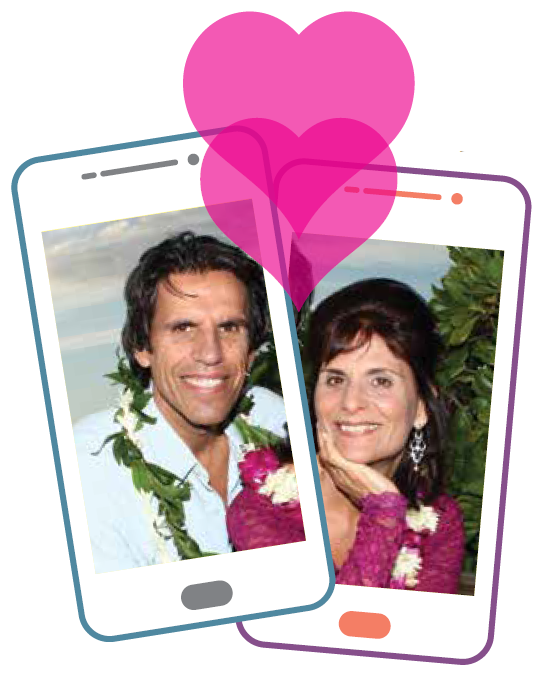
    Kathleen and Susan were finally able to marry in 2019. Love won.
    Kathleen and Susan were finally able to marry in 2019. Love won.

    Our friends, old and new, are sweetly awed when we tell them our love story. We met in college in the mid-’70s. We fell in love. We knew beyond a doubt that we were meant to be together. Yet, as fate would have it, we met at the wrong place and the wrong time for our relationship to flourish. As time has told, those feelings between Kathleen and I (Susan) have now endured for decades. But it was a long road to gain respect, visibility and equality.

    The Stonewall Rebellion of 1969 marked the beginning of the gay rights movement’s bloody, sacred, defiant crusade of “enough is enough.” In the summer of 1991, West Hollywood’s City Council passed a resolution in support of same-sex marriage, becoming the first city in the US to publicly affirm why marriage matters for all Americans. But many incremental steps taken by waves of activists had to happen in our country before “love won” in the 21st century. It wasn’t until 2015 that the US Supreme Court Justices affirmed a constitutional right to marriage equality for same-sex couples.

    It would be an understatement to say that the passage of the landmark Marriage Equality Act was a cosmic transformation in the lives of bisexual and transgendered peoples, gay men and lesbians, including myself.

    Pre-MEA: Struggling to Belong

    Before the MEA became law, only Jude, my best, straight high school friend, would ask me about the status of my long-term, same-sex relationship. I’d ask her about Jim; she’d ask me about my then-partner “Bette.”

    Susan Miller and Kathleen O’Bryan first met in college in the mid-’70s.
    Susan Miller and Kathleen O’Bryan first met in college in the mid-’70s.

    Being “closeted” was filled with a constant, intense fear of “being outed”— found out. I feared the consequences, even in the diverse, ultraliberal, state of Hawai‘i. In a place that culturally revered the sacredness of mahu — those who embody both male and female spirit — gay men were routinely assaulted outside gay bars by straight men. Even here in paradise, homophobia reigned.

    And even though Hawai‘i offered legal protection against employment discrimination, other equal protections under the law were limited.

    In the late 1980s, “Bette” and I were raising her daughter, “Annie,” together in Honolulu. Every day was a social and emotional struggle to fit in. I had a job with a leading nonprofit committed to strengthening community by empowering young people, improving health and well-being and inspiring community. I worked fulltime in its at-risk youth drug prevention program, an innovative, cooperative partnership with middle schools, offered during school hours. Weekend group outings were also offered to kids in struggling family settings who were at risk for failure at school.

    After passing the probationary period, I was offered vacation, sick leave, and healthcare and dental benefits. All my coworkers’ families also enjoyed family benefit coverage. So filling out the paperwork for my new permanent position, I claimed “Bette” and “Annie” as my dependents, neither of whom had health or dental benefits.

    My supervisor, Tony, was my exact same age — born on the same day and year. We became good friends. So it was difficult for him to explain to me, sheepishly and apologetically, that the nonprofit’s administration had declined coverage for my dependents because we weren’t married.

    What may have been equally hurtful, if not more so, was that while my coworkers shared openly about their kids and spouses, there was never a mention about me, my feelings and my invisible family. They all knew I was gay; a lesbian with a family. But at workplace potlucks or before office meetings, nobody asked me, “How’s da family?” The void was filled by a deafening, awkward silence. I was there — but not there.

    It was back in the 1990s and domestic partnership and civil unions had yet to be recognized by the state. Eventually, benefits were extended to families of state employees, but it was still optional for private sector businesses. Even so, we persevered through decades of being a despised, oppressed minority because of who we are and who we love. Lawful marriage was beyond unthinkable.

    Freedom for All Americans

    When the freedom to marry became the law of our land, we were liberated. No longer immoral outcasts, we belonged, for real, in mainstream America. Before Kathleen and I got married, we were domestic partners, and because I was employed in the University of Hawai‘i system, my state employment benefits were extended to her.

    But it wasn’t until the federal right to marry was recognized in 2015 that the straight world became aware of the LGBTQ persons around them who were breathing their same air — and had loved ones and families and interesting and fascinating lives! The right to be married not only liberated LGBTQ people, but straight people, too.

    Kathleen now has rights to my federal employment entitlements. We don’t need wills or probate courts for either of us to keep our jointly owned belongings. Neither her family nor my family have rights to what we own together. But that wasn’t always so.

    The MEA extended close to 1,000 rights and benefits to LGBQT married couples — rights we didn’t even know we were missing until 1991, when University of Hawai‘i law students began to research all the benefits and entitlements enjoyed by opposite-sex married couples. The same-sex marriage battle in Hawai‘i lasted 23 years, and in the process, helped transform LGBTQ rights in the rest of America.

    I was among those in the same-sex marriage battlefield in Hawai‘i in the 1990s. We were the first state to mount a legal challenge that went to both the state and federal Supreme Courts. But it was New York that became the first state to grant same-sex couples the legal right to marry in 2015.

    A Well-Deserved Golden Age

    The first miracle for Kathleen and I was that we reunited in Hawai‘i in a future that accepted our love for each other.

    The second miracle was one we never dared to believe would happen in our lifetime. Forty years after we met, we could legally marry. We waited, we pondered and we talked before joining millions of LGBTQ couples who are now legally married.

    Although we had to endure 35 years of living apart before coming back to each other, we finally married and settled happily in Upcountry Maui. Now in our 70s, we live as newlyweds. We’re growing and discovering each and every day during our marriage journey.

    We’ve ignited a change in society and society has changed. Winning the freedom to marry, nationwide, we all rose together.

    Marriage equality gave us a new dignity. With societal shifts to more respected public identities came a plethora of socioeconomic benefits and legal protections codified in law — more social stability in our communities — a positive outcome.

    And while successful marriages in the heterosexual population are in decline, the number of same-sex married couples has increased. Looking back from whence we came, we’re living an American dream. And there’s no going back to those suffocating closeted lives — we’ve done too much and come so far.

    Our love moved all of us from objects of ridicule and scorn to dignity, now breathing the rarified air of acceptance — outside the closet forever, with our whole lives ahead of us.


    Our friends, old and new, are sweetly awed when we tell them our love story. We met in college in the mid-’70s. We fell in love. We knew beyond a doubt that we were meant to be together. Yet, as fate would have it, we met at the wrong place and the wrong time for…

  • Get Out and Explore!

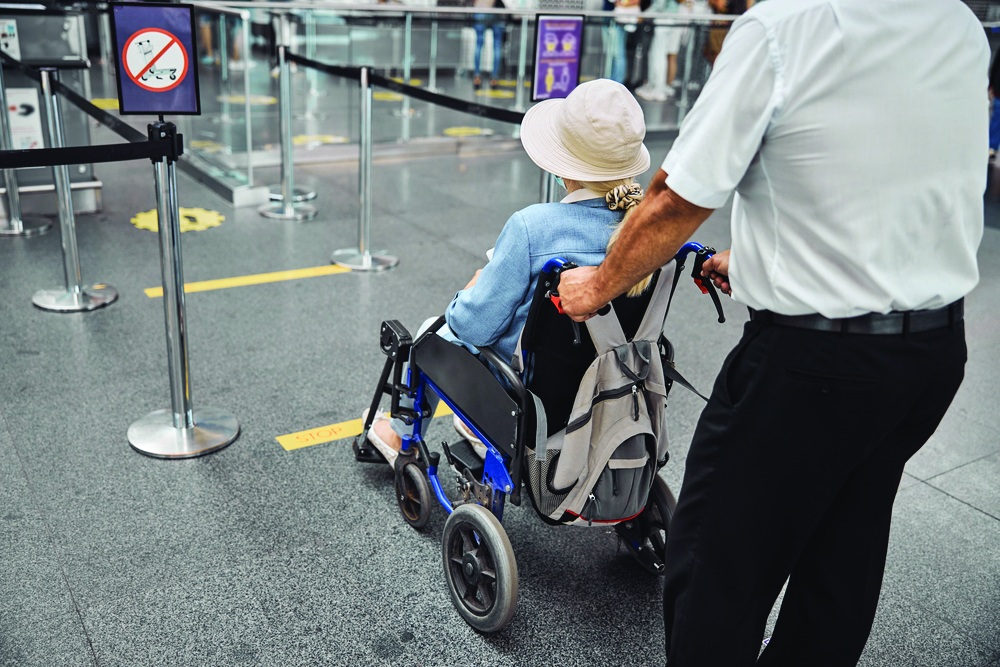
    Naturalist John Muir once said, “The mountains are calling and I must go.” The yearning to bask in the glory of nature is the same for those who can get up and walk as it is for someone who gets around by wheelchair.

    However, most of those places are much more accessible to those who are able-bodied. Parks, beaches and hiking trails present many barriers and challenges for someone who can’t get around easily. But being surrounded by nature has been proven to have immense health benefits, so we should help ensure that these wonders of the world are accessible to all.

    Increasing the number of wider, smoother trails, bringing bathrooms closer to the trail and destination, and having better signage and visibility are ways we can help make the world more accessible. Even with these improvements, just getting to these destinations can still be incredibly difficult.

    The degree of flexibility paratransit services provide their customers may vary considerably. Therefore, if you don’t have your own means of wheelchair-accessible transportation, you may be left out of these activities. But a wheelchair-accessible van available for your on-demand use can be life-changing. Find out more and get out and explore!


    SODERHOLM MOBILITY INC.
    2044 Dillingham Blvd., Honolulu, HI 96819
    808-834-1417 | www.SoderholmMobility.com
    Info@SoderholmBus.com
    Soderholm Sales and Leasing Inc.
    PO Box 19010, Honolulu, HI 96817

    Naturalist John Muir once said, “The mountains are calling and I must go.” The yearning to bask in the glory of nature is the same for those who can get up and walk as it is for someone who gets around by wheelchair.

  • The Genteel Sport of Lawn Bowling

    Photo of man lawn bowlingWhile the sport of pickleball has swept across Hawai‘i, there’s another game that has been enjoyed by seniors for a much longer time but often goes unnoticed. Lawn bowling is a genteel sport particularly liked by seniors because it demands little physicality.

    In Hawai‘i, the only organized lawn bowling club is on O‘ahu at Ala Moana Regional Park. A lawn bowling “green” was incorporated into the original design of the park in 1937. The first club was established in 1939 and the game has been played at that location ever since.

    Lawn bowling is similar to bocce ball (also called “Italian lawn bowling”), with a few differences. Lawn bowling players roll a “bowl” (not a ball) at a marker ball (the jack) on the other side of the playing green. There are more rule details, but basically, you try to roll your bowls as close to the jack as possible.

    The game can be played in singles, doubles, triples formats or with four players on each side. Games generally last one to two hours. The bowls come in different sizes to match players’ hand sizes. Each bowl weighs about 3.5 pounds. Unlike a round bocce ball, the lawn bowl is not spherical, but weighted on one side so that it “hooks” to the right or left after it is thrown.

    Expert players use that hook to finesse their way closest to the jack in order to score points.

    At Honolulu Lawn Bowls Club, games are generally played on Saturday mornings with occasional games on weekdays.

    As for exercise, lawn bowling is considered to be a low-impact, therapeutic exercise that can improve fitness, coordination and confidence. It’s particularly appealing to seniors because of its ease of play, although an increasing number of young people are taking up the sport.

    If you’re interested in joining a team or just want to give it a try, contact the club.


    HONOLULU LAWN BOWLING CLUB (501(c) 3 nonprofit)
    802-465-2695 | facebook.com/honolululawnbowls
    www.honolululawnbowls.com
    The bowling green is located just west of McCoy Pavilion on the west end of Ala Moana Regional Park.

    While the sport of pickleball has swept across Hawai‘i, there’s another game that has been enjoyed by seniors for a much longer time but often goes unnoticed. Lawn bowling is a genteel sport particularly liked by seniors because it demands little physicality.

  • A Window of Opportunity

    In the early hours of a chilly October morning, Rick donned his bomber jacket and hat, and stealthily snuck into the carport, his trusty shaving kit in hand. He quietly pushed his golf cart down the long gravel driveway before starting it, as to not wake his wife. The former Korean War pilot navigated back roads to the bank, where he withdrew $1,000. He tucked half of it into the lining of his hat for safe keeping. His family had said they were not going on their annual trip from Michigan to their winter home in Florida this year, so with quiet determination, he was leaving for warmer climes that very day, by himself, via golf cart. His “great escape” ended when the police spotted him and gave him a ride home.

    What is most remarkable about this story is that Herbert “Rick” Maurice Key was 87 at the time of his attempted trek. He had lung cancer that had spread to his brain, causing dementia. He was receiving in-home hospice care and was not expected to live much longer.

    “I had gotten calls for months saying, ‘Dad has gotten really bad. You better come quickly,’” says Denise, one of Rick and Wilma’s six children. “I was told that Dad was not eating and was not able to walk… ‘he can’t do anything.’ He was also seeing people and things no one else could see.”

    But on the morning Denise arrived from Hawai‘i, her father had showered, shaved and dressed himself. He was excitedly awaiting his middle daughter’s visit so they could have breakfast together and talk story.

    “We sat, ate breakfast and had a nice conversation,” says Denise. “He was quite coherent. Then he said, ‘Why are all those people going out the bedroom window?’ “When he would see things like that, I believe the veil between worlds had begun to fade for him.”

    The tapestry of moments of lucidity intertwined with times of total incapacity can be confusing to those with a loved one with end-stage dementia. The contradictory behaviors give family caregivers and professionals alike the mistaken impression that the senior is either hopelessly helpless or completely capable.

    “During the time I was there, we had profound conversations,” says Denise. “Age had softened his rough edges, which had melted into acceptance, opening the door to discussions that were previously impossible. My father was never one to share his emotions, like a lot of men of his generation.” Communication was deflective and abstract. “My father would take the truth and make a joke out of it. I left two months before he died, so I experienced firsthand the phenomenal things father was able to examine in his moments of clarity and the incredible physical abilities he had near the end of his life. I don’t understand it.”

    That may be because paradoxical lucidity in dementia is a clinically significant, but understudied phenomenon. It has been widely observed that even as confusion and memory loss escalate during the end stages of dementia, there’s often a welcome reprieve that occurs. Paradoxical lucidity signifies a sudden, short-term regaining of clarity near the end of a dementia sufferers life. For family members, it is a welcomed reprieve and a gift to be cherished. Although it is not indicative of health improvement, this temporary clarity presents a precious opportunity to reconnect. It offers the opportunity for meaningful reminiscing, and sharing of feelings and thoughts. But the same mysterious force that opens the door for poignant conversation can also enable the dementia sufferer to try to accomplish the incredibly dangerous, like Rick’s escape attempt.

    “Join them in their world during the different states of consciousness they experience,” Denise advises. “But enjoy these tiny windows of connection that close too quickly — savor those last sparks of connectedness.”

    For more information about this phenomenon, read “‘Awakenings’ in Advanced Dementia Patients Hint at Untapped Brain Reserves” (https://bit.ly/paradoxicallucidity).


    In the early hours of a chilly October morning, Rick donned his bomber jacket and hat, and stealthily snuck into the carport, his trusty shaving kit in hand. He quietly pushed his golf cart down the long gravel driveway before starting it, as to not wake his wife. The former Korean War pilot navigated back…

  • Home is Where the Heart Is

    Throughout our lives, we can call a variety of places home. For me, one of those places was my grandmother’s house. I’ve been going  in and out of her house since I was a baby. I knew every inch of my grandmother’s house, like which rooms had the best hiding spots or which drawers held my grandma’s fancy scarves.

    Despite living in Waipahu, I attended the schools in Pearl City, which was where my grandmother’s home was. Every morning, my sister and I would be dropped off at my grandma’s and be driven to school by one of my grandparents. We’d often play board games together, like cribbage or Chinese checkers, while awaiting the ride to school. In my intermediate and high school years, I walked to and from school from my grandmother’s house with my sister and cousins. After school, there would always be popsicles in the freezer and my grandma would be waiting for  us while enjoying one of her 1,000-piece puzzles. If we were lucky, her homemade cucumber kimchi was waiting for us, too.

    Then in November 2014, my grandmother was diagnosed with Parkinson’s disease. Parkinson’s disease is a  neurodegenerative disorder that affects a person’s motor skills and the production of dopamine in the brain. The initial years following her diagnosis were relatively normal. But after my grandfather passed away, my grandmother lived alone and her Parkinson’s slowly got worse. After several incidents of my grandma falling while alone at home, my family decided to get caregivers to help watch over her during the day. However, as her Parkinson’s progressed, it became clear that my grandmother needed 24-hour care. Keeping up her home was becoming a stressor for her and my family, as well.

    After many discussions with my grandmother, the decision was made to move her into a care home. So, last October, my grandmother and I said goodbye to the house that she had lived in for 56 years. For the last time, she sat outside and looked out at her neighborhood like she had done everyday. It was sad to see her being driven away from the place that I had always thought she’d be. It was strange to think about another family playing in the yard and using the scarf drawer for something else.

    My grandmother hadn’t outwardly expressed any sadness about the move, but sometimes due to her Parkinson’s-related dementia, she still forgets that she cannot go back to her old home. It’s hard to remind her why, but in the end, it was her decision, because she trusted the family to do what was best for her.

    While there is something so sad about losing a place you called home, truly, it was my grandmother who made that house special. My grandmother is still around to make more memories and to carry that home with her wherever she lives. In a way, we never lost that place we called home because it’s really true, that home is where the heart is.


    Throughout our lives, we can call a variety of places home. For me, one of those places was my grandmother’s house. I’ve been going  in and out of her house since I was a baby. I knew every inch of my grandmother’s house, like which rooms had the best hiding spots or which drawers held…