Category: Living Life

  • Get Out and Explore!

    Naturalist John Muir once said, “The mountains are calling and I must go.” The yearning to bask in the glory of nature is the same for those who can get up and walk as it is for someone who gets around by wheelchair.

    However, most of those places are much more accessible to those who are able-bodied. Parks, beaches and hiking trails present many barriers and challenges for someone who can’t get around easily. But being surrounded by nature has been proven to have immense health benefits, so we should help ensure that these wonders of the world are accessible to all.

    Increasing the number of wider, smoother trails, bringing bathrooms closer to the trail and destination, and having better signage and visibility are ways we can help make the world more accessible. Even with these improvements, just getting to these destinations can still be incredibly difficult.

    The degree of flexibility paratransit services provide their customers may vary considerably. Therefore, if you don’t have your own means of wheelchair-accessible transportation, you may be left out of these activities. But a wheelchair-accessible van available for your on-demand use can be life-changing. Find out more and get out and explore!


    SODERHOLM MOBILITY INC.
    2044 Dillingham Blvd., Honolulu, HI 96819
    808-834-1417 | www.SoderholmMobility.com
    Info@SoderholmBus.com
    Soderholm Sales and Leasing Inc.
    PO Box 19010, Honolulu, HI 96817

    Naturalist John Muir once said, “The mountains are calling and I must go.” The yearning to bask in the glory of nature is the same for those who can get up and walk as it is for someone who gets around by wheelchair.

  • The Genteel Sport of Lawn Bowling

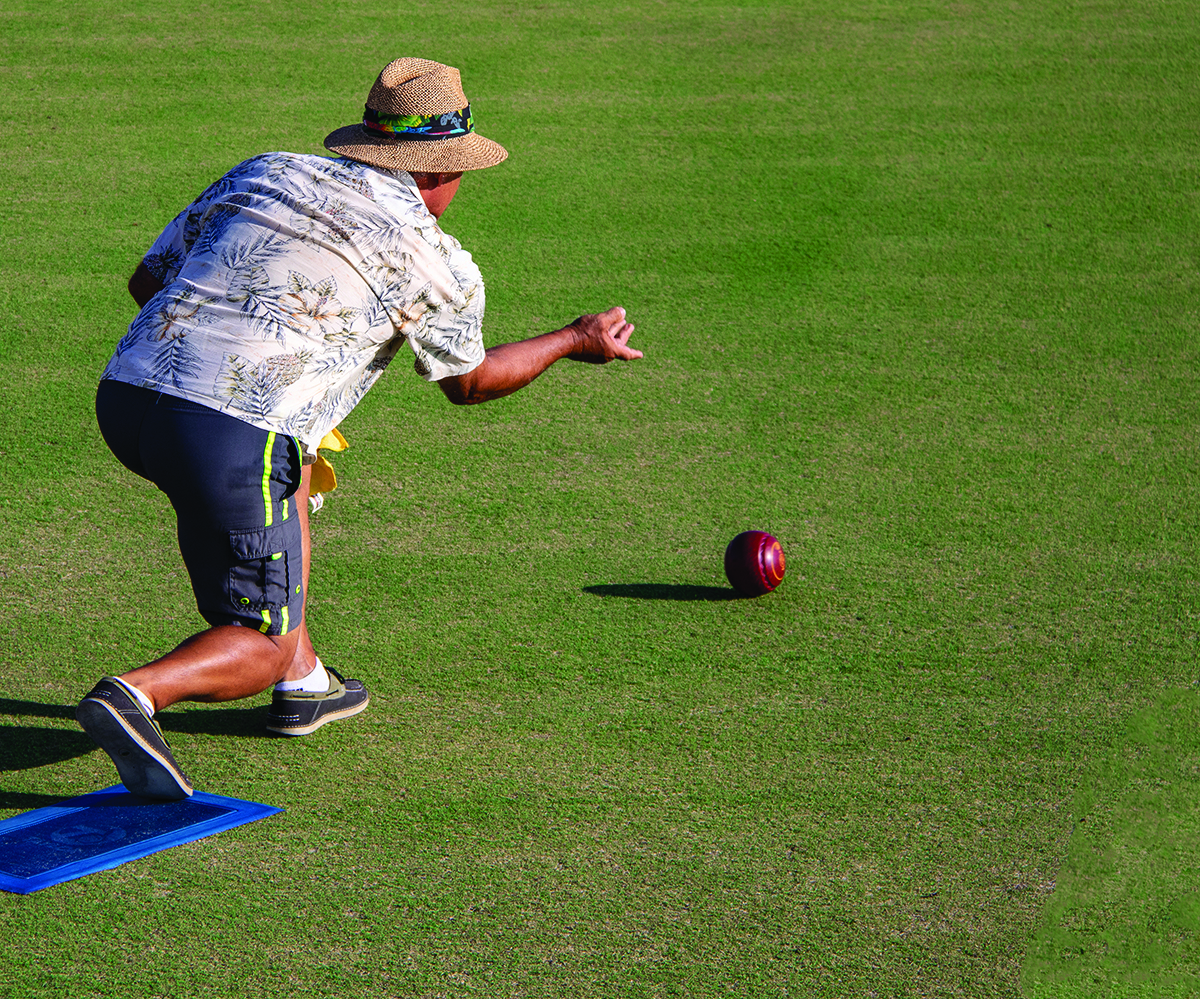
    Photo of man lawn bowlingWhile the sport of pickleball has swept across Hawai‘i, there’s another game that has been enjoyed by seniors for a much longer time but often goes unnoticed. Lawn bowling is a genteel sport particularly liked by seniors because it demands little physicality.

    In Hawai‘i, the only organized lawn bowling club is on O‘ahu at Ala Moana Regional Park. A lawn bowling “green” was incorporated into the original design of the park in 1937. The first club was established in 1939 and the game has been played at that location ever since.

    Lawn bowling is similar to bocce ball (also called “Italian lawn bowling”), with a few differences. Lawn bowling players roll a “bowl” (not a ball) at a marker ball (the jack) on the other side of the playing green. There are more rule details, but basically, you try to roll your bowls as close to the jack as possible.

    The game can be played in singles, doubles, triples formats or with four players on each side. Games generally last one to two hours. The bowls come in different sizes to match players’ hand sizes. Each bowl weighs about 3.5 pounds. Unlike a round bocce ball, the lawn bowl is not spherical, but weighted on one side so that it “hooks” to the right or left after it is thrown.

    Expert players use that hook to finesse their way closest to the jack in order to score points.

    At Honolulu Lawn Bowls Club, games are generally played on Saturday mornings with occasional games on weekdays.

    As for exercise, lawn bowling is considered to be a low-impact, therapeutic exercise that can improve fitness, coordination and confidence. It’s particularly appealing to seniors because of its ease of play, although an increasing number of young people are taking up the sport.

    If you’re interested in joining a team or just want to give it a try, contact the club.


    HONOLULU LAWN BOWLING CLUB (501(c) 3 nonprofit)
    802-465-2695 | facebook.com/honolululawnbowls
    www.honolululawnbowls.com
    The bowling green is located just west of McCoy Pavilion on the west end of Ala Moana Regional Park.

    While the sport of pickleball has swept across Hawai‘i, there’s another game that has been enjoyed by seniors for a much longer time but often goes unnoticed. Lawn bowling is a genteel sport particularly liked by seniors because it demands little physicality.

  • A Window of Opportunity

    In the early hours of a chilly October morning, Rick donned his bomber jacket and hat, and stealthily snuck into the carport, his trusty shaving kit in hand. He quietly pushed his golf cart down the long gravel driveway before starting it, as to not wake his wife. The former Korean War pilot navigated back roads to the bank, where he withdrew $1,000. He tucked half of it into the lining of his hat for safe keeping. His family had said they were not going on their annual trip from Michigan to their winter home in Florida this year, so with quiet determination, he was leaving for warmer climes that very day, by himself, via golf cart. His “great escape” ended when the police spotted him and gave him a ride home.

    What is most remarkable about this story is that Herbert “Rick” Maurice Key was 87 at the time of his attempted trek. He had lung cancer that had spread to his brain, causing dementia. He was receiving in-home hospice care and was not expected to live much longer.

    “I had gotten calls for months saying, ‘Dad has gotten really bad. You better come quickly,’” says Denise, one of Rick and Wilma’s six children. “I was told that Dad was not eating and was not able to walk… ‘he can’t do anything.’ He was also seeing people and things no one else could see.”

    But on the morning Denise arrived from Hawai‘i, her father had showered, shaved and dressed himself. He was excitedly awaiting his middle daughter’s visit so they could have breakfast together and talk story.

    “We sat, ate breakfast and had a nice conversation,” says Denise. “He was quite coherent. Then he said, ‘Why are all those people going out the bedroom window?’ “When he would see things like that, I believe the veil between worlds had begun to fade for him.”

    The tapestry of moments of lucidity intertwined with times of total incapacity can be confusing to those with a loved one with end-stage dementia. The contradictory behaviors give family caregivers and professionals alike the mistaken impression that the senior is either hopelessly helpless or completely capable.

    “During the time I was there, we had profound conversations,” says Denise. “Age had softened his rough edges, which had melted into acceptance, opening the door to discussions that were previously impossible. My father was never one to share his emotions, like a lot of men of his generation.” Communication was deflective and abstract. “My father would take the truth and make a joke out of it. I left two months before he died, so I experienced firsthand the phenomenal things father was able to examine in his moments of clarity and the incredible physical abilities he had near the end of his life. I don’t understand it.”

    That may be because paradoxical lucidity in dementia is a clinically significant, but understudied phenomenon. It has been widely observed that even as confusion and memory loss escalate during the end stages of dementia, there’s often a welcome reprieve that occurs. Paradoxical lucidity signifies a sudden, short-term regaining of clarity near the end of a dementia sufferers life. For family members, it is a welcomed reprieve and a gift to be cherished. Although it is not indicative of health improvement, this temporary clarity presents a precious opportunity to reconnect. It offers the opportunity for meaningful reminiscing, and sharing of feelings and thoughts. But the same mysterious force that opens the door for poignant conversation can also enable the dementia sufferer to try to accomplish the incredibly dangerous, like Rick’s escape attempt.

    “Join them in their world during the different states of consciousness they experience,” Denise advises. “But enjoy these tiny windows of connection that close too quickly — savor those last sparks of connectedness.”

    For more information about this phenomenon, read “‘Awakenings’ in Advanced Dementia Patients Hint at Untapped Brain Reserves” (https://bit.ly/paradoxicallucidity).


    In the early hours of a chilly October morning, Rick donned his bomber jacket and hat, and stealthily snuck into the carport, his trusty shaving kit in hand. He quietly pushed his golf cart down the long gravel driveway before starting it, as to not wake his wife. The former Korean War pilot navigated back…

  • Home is Where the Heart Is

    Throughout our lives, we can call a variety of places home. For me, one of those places was my grandmother’s house. I’ve been going  in and out of her house since I was a baby. I knew every inch of my grandmother’s house, like which rooms had the best hiding spots or which drawers held my grandma’s fancy scarves.

    Despite living in Waipahu, I attended the schools in Pearl City, which was where my grandmother’s home was. Every morning, my sister and I would be dropped off at my grandma’s and be driven to school by one of my grandparents. We’d often play board games together, like cribbage or Chinese checkers, while awaiting the ride to school. In my intermediate and high school years, I walked to and from school from my grandmother’s house with my sister and cousins. After school, there would always be popsicles in the freezer and my grandma would be waiting for  us while enjoying one of her 1,000-piece puzzles. If we were lucky, her homemade cucumber kimchi was waiting for us, too.

    Then in November 2014, my grandmother was diagnosed with Parkinson’s disease. Parkinson’s disease is a  neurodegenerative disorder that affects a person’s motor skills and the production of dopamine in the brain. The initial years following her diagnosis were relatively normal. But after my grandfather passed away, my grandmother lived alone and her Parkinson’s slowly got worse. After several incidents of my grandma falling while alone at home, my family decided to get caregivers to help watch over her during the day. However, as her Parkinson’s progressed, it became clear that my grandmother needed 24-hour care. Keeping up her home was becoming a stressor for her and my family, as well.

    After many discussions with my grandmother, the decision was made to move her into a care home. So, last October, my grandmother and I said goodbye to the house that she had lived in for 56 years. For the last time, she sat outside and looked out at her neighborhood like she had done everyday. It was sad to see her being driven away from the place that I had always thought she’d be. It was strange to think about another family playing in the yard and using the scarf drawer for something else.

    My grandmother hadn’t outwardly expressed any sadness about the move, but sometimes due to her Parkinson’s-related dementia, she still forgets that she cannot go back to her old home. It’s hard to remind her why, but in the end, it was her decision, because she trusted the family to do what was best for her.

    While there is something so sad about losing a place you called home, truly, it was my grandmother who made that house special. My grandmother is still around to make more memories and to carry that home with her wherever she lives. In a way, we never lost that place we called home because it’s really true, that home is where the heart is.


    Throughout our lives, we can call a variety of places home. For me, one of those places was my grandmother’s house. I’ve been going  in and out of her house since I was a baby. I knew every inch of my grandmother’s house, like which rooms had the best hiding spots or which drawers held…

  • A Medical Marijuana Odyssey

    Elton Goo was surfing in Peru when the government closed its borders to fight COVID-19 in March 2020. As an avid surfer, being temporarily stranded in one of the best countries in the world to score some “epic surf” might not have been such a bad thing, but unfortunately, Elton, who was diagnosed in 2016 with terminal lung cancer at age 55, was running out of his medication. He had no way to attain more. He ended up taking the medication every other day, but it ran out. “My health was fading,” said Elton.

    In lieu of his regular medication, Elton was able to attain some CBD, an oil derived from the cannabis plant, which he had been taking along with his prescribed cancer medication since 2016.
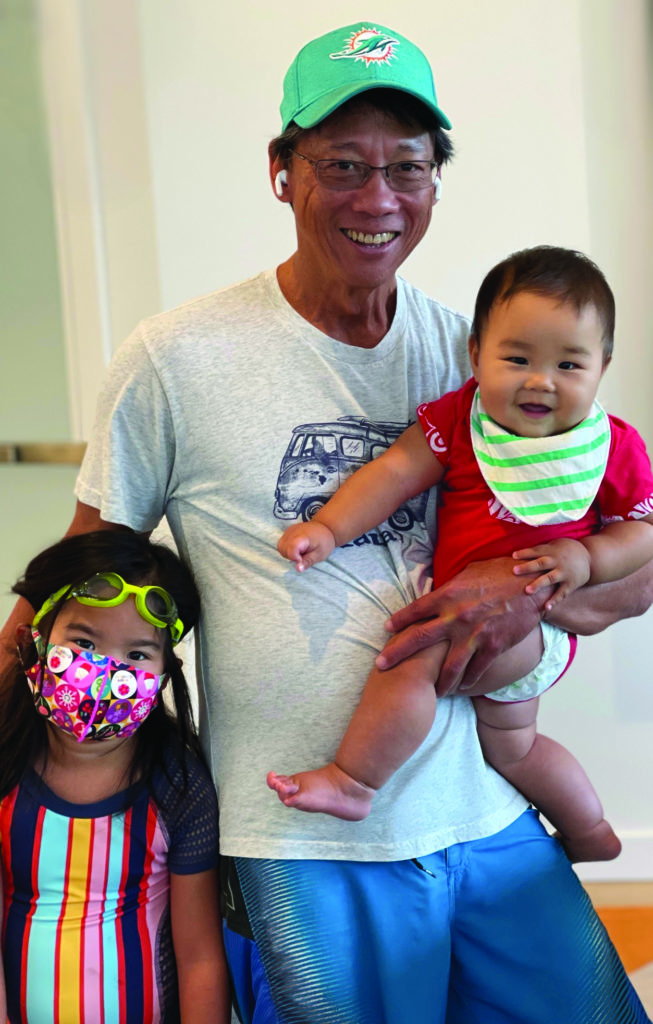
    With the genetics of longevity on his side, along with a healthy and active lifestyle, Elton’s initial diagnosis came as a shock. But in November 2020, Elton found out that he was cancer-free — a miracle, he says. Elton credits his recovery to God and a medicinal marijuana product called “Rick Simpson Oil” (RSO), a concentrated cannabis oil with a very high THC content. It is a full-spectrum, whole-plant extract that retains all components of the cannabis plant, including cannabinoids, terpenes and flavonoids.

    The results of RSO use are promising, according to a “Healthline” article, but “large human studies are needed before cannabis becomes a recommended cancer treatment… If you want to try using RSO for cancer, it’s best to keep up with any other treatments recommended by your doctor.”

    Since his diagnosis in 2016, Elton had been on a mission to surf the world and live each day as if it were his last. At age 60 and cancer-free, his mission continues. An avid sports fan, he travels extensively, seeking new surf spots and attending sporting events of all kinds. “The last three times after returning from my travels, I received a notice from Hawai‘i Department of Health that I might have come in contact with a COVID-positive person,” says Elton, who is fully vaccinated. “But each time, my COVID test came back negative.”

    “There were many times during my travels when I found myself coughing,” says Elton. “Each time, I would grab my syringe of RSO and go to bed. The following morning, I would always feel fine.” A syringe facilitates accurate  measurement for oral consumption of RSO, an easy-to-use concentrate.

    In January, Oregon State University published research results showing that two cannabis compounds — cannabigerolic acid (CBGA) and cannabidiolic acid (CBDA) — have the ability to prevent the COVID-19 virus from entering human cells. The compounds bound to spike proteins on the virus and blocked a step the pathogen uses to infect people.

    Elton has had many personal encounters with terminal patients who have recovered from cancer using RSO. “But don’t go rushing out to buy marijuana to smoke,” he says. Applying heat to the key compounds changes their makeup, and then they are not effective. Eating it metabolized the compounds, also making them ineffective. Both these methods of consumption produce a high, which Elton found to be unpleasant. “To work as a medicine, the dosage is strong. I was stoned out of my mind for months.” The medication he now uses as a preventative treatment comes in suppository form, with no psychotropic effects.

    O‘ahu residents with medical marijuana cards can contact Jason Hanley, the owner of CARE Waialua, a patient-based cannabis farm on O‘ahu that gives those with a Hawaii 329 or cannabis cards a place to get medical marijuana. Call 808-224-0510 or visit www.instagram.com/care_waialua for additional information.

    “God may have given us the tools to combat the two ‘Big Cs’— cancer and COVID,” says Elton. “We must proceed with an open mind and support further study of the therapeutic properties and potential of this unorthodox treatment.”



    Elton Goo was surfing in Peru when the government closed its borders to fight COVID-19 in March 2020. As an avid surfer, being temporarily stranded in one of the best countries in the world to score some “epic surf” might not have been such a bad thing, but unfortunately, Elton, who was diagnosed in 2016…

  • Improving Retirement Security in Hawai‘i

    Retirement insecurity is one of the most serious challenges facing the country today. Most at risk are private sector workers whose employers do not offer a workplace retirement savings plan. However, the Hawai‘i State Legislature has initiated action on this critical issue.

    In the regular session of 2021, the Senate adopted Senate Resolution 76 (SR76), Senate Draft 1. Introduced by Sen. Brian Taniguchi, SR76 requested the creation of a Retirement Savings Program Task Force to address the state’s  retirement savings crisis and explore options for helping workers save for their retirement.

    The task force comprised of business and nonprofit stakeholders, and public officials and legislators has been meeting since August 2021 to study the issue of retirement insecurity and to look at how the state can help our residents save more for their future.

    We received testimony and insights from local and national experts, as well as from small business owners and financial institutions in Hawai‘i. Our findings culmina {Play}ted and a formal Report and Recommendations document was submitted to the Legislature on Dec. 10, 2021. This is very exciting for all small business employees and employers who care about their employees and want to give them an opportunity for retirement security.


    HALE HAU‘OLI HAWAI‘I (501(c) 3 nonprofit)
    98-1247 Kaahumanu St., Ste. 207, Aiea, HI 96701
    808-292-4665 | Kwyatt01@aol.com
    www.halehauolihawaii.org

    Retirement insecurity is one of the most serious challenges facing the country today. Most at risk are private sector workers whose employers do not offer a workplace retirement savings plan. However, the Hawai‘i State Legislature has initiated action on this critical issue.

  • Spring Cleaning for Your Wallet

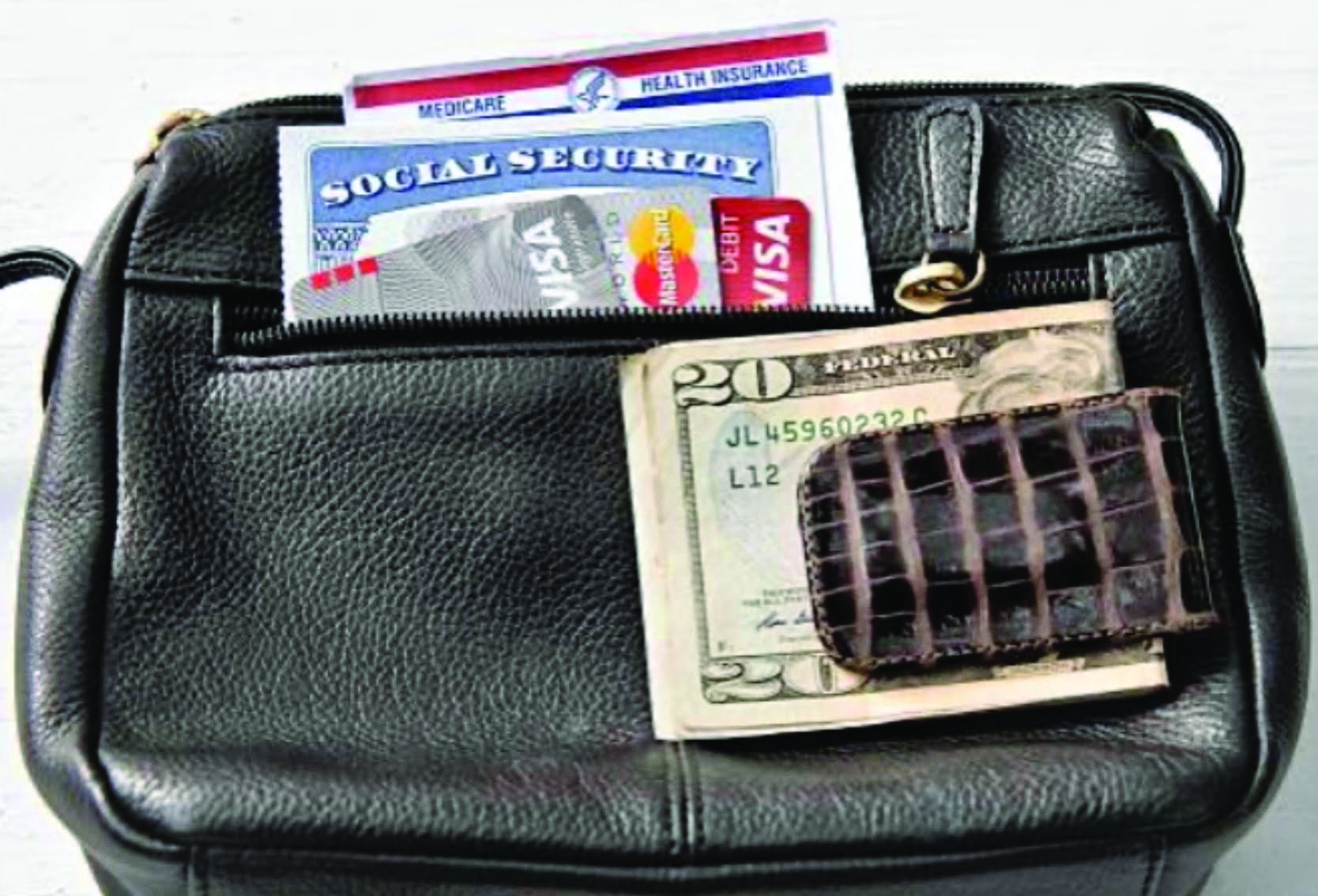
    It’s time to begin your spring cleaning! This year, don’t forget to include your wallet, the home of your critical medical and insurance cards.

    Do you know which cards you should carry or dispose of?

    If you are retired, you can begin by disposing of your work insurance card. Your coverage ended when you retired.

    Also, that Original Medicare card that displays your social security number is obsolete. Call the Social Security Administration at 1-800-772-1213 if you need a replacement Medicare card.

    If you recently qualified for Medicare or changed plans, put your new member identification card in your wallet or swap it for the old one.

    Providing the proper insurance card saves time, money and makes accessing healthcare services easier.

    Healthcare providers count on you to provide them with your current insurance card so you can receive healthcare and the provider can file a claim for their services.

    Having the correct card enables quicker processing and helps avoid billing errors, and treatment scheduling delays.

    Take a moment to get more organized and clean out your wallet today.


    GET2INSURANCE.COM FAMILY OFFICE
    1003 Bishop St., Ste. 2700, Honolulu, HI 96813
    (800) 226-3660 | martha@get2insurance.com
    www.Get2insurance.com

    It’s time to begin your spring cleaning! This year, don’t forget to include your wallet, the home of your critical medical and insurance cards. Do you know which cards you should carry or dispose of?

  • How Will I Know When It’s Time to Move?

    As we age, we’re faced with the dilemma of where and how we will live during the next phase of our lives. One of the most frequently asked questions is, “How do I know when it’s time to move?” Here are some questions that may help you to self-discover when it’s right for you:

    Too many stairs? Do you feel that the stairs have become too difficult/dangerous to navigate?
    Is your home too large? Do you need all that space now that the kids are out on their own?
    Are you living alone and concerned about security? Do you feel safe in your own home or would feel better living with others?
    Is your home/yard too much work? Have housework — and especially yardwork — become too difficult to keep up with?
    Are you too tired to cook and clean? Do you have the energy or desire?
    Would you like to make your own decisions about your next move? Or are you going to burden your loved ones with this important decision?

    If you answered “yes” to even one of these questions, it may be time to start looking at the options available to you. It’s never too early to start planning for your future.


    THE COMPLETE SOLUTION™
    Powered by The Ihara Team of Keller Williams Honolulu RB-21303
    1347 Kapiolani Blvd., Ste. 300, Honolulu, HI 96814
    Dan Ihara (RA), CAPS, CLHMS, SRES RS-65892
    808-256-7873
    Julie Ihara (RA), SRES RS- 67440
    808-754-2225 | ihara@iharateam.com
    www.iharateamhawaii.kw.com

    As we age, we’re faced with the dilemma of where and how we will live during the next phase of our lives. One of the most frequently asked questions is, “How do I know when it’s time to move?” Here are some questions that may help you to self-discover when it’s right for you…

  • New Year, New Goals for Mind & Body

    Happy New Year! The beginning of the year often means a fresh start and new goals for many aspects of our lives. Today, we’ll focus on our health and fitness, and the mind-body connection that can contribute to a healthier new you.

    Exercise is one of the best gifts we can give our bodies. It helps keep bones and muscles strong and joints flexible.  exercise reduces the risk of certain ailments, lowers the chance of falling, improves incontinence and increases energy levels.

    Remember to check with your doctor and keep  him or her informed about any changes to your movement routines, or if you’re starting a new exercise program.

    ■ Before and after exercise. Begin with deep breaths, shoulder rolls and gentle stretches. After your workout, cool down with a slower walk and more stretches. Stay hydrated; drink lots of water.
    ■ Enjoy the outdoors. Exercise can be any type of movement, such as walking or dancing the hula. Go for a swim. Work in the garden. Take the stairs instead of the elevator. Join friends for yoga or tai chi. Even if you’re vaccinated for COVID-19, practice safe social distancing in public, and wear a mask or face covering as directed.
    ■ Lifestyle coaching. A personal coach can take an active role in your health and help create a plan for reaching your goals. You can also ask friends and family to check in with you on your health goals, and send messages of encouragement to keep you motivated.
    ■ Step it up. Check out everybodywalk.org to start a walking program. Share an audiobook or podcast with your walking partner and chat about the latest story developments during rest breaks.
    ■ Emotional well-being. There are digital apps, such as myStrength (www.mystrength.com) and Calm (www.calm.com), to help your emotional well-being and resilience. MyStrength offers a personalized program that helps improve your mindfulness and change behaviors. Calm is a top app for meditation and sleep to help lower stress and reduce anxiety.
    ■ Recognize signs of depression. Know when to get help. Grief, stress, abuse, physical challenges, pain and loneliness can trigger depression. If you’re concerned about your mind and mood, talk to a behavioral health expert to help you adjust to changing life circumstances and improve your outlook.


    KAISER FOUNDATION HEALTH PLAN, INC.
    711 Kapiolani Blvd., Honolulu, HI 96813
    808-432-5915 (TTY 711) | www.kp.org
    Other healthcare links:
    www.kp.org/selfcare
    www.kp.org/seniorhealth
    This article contains health and wellness or prevention information.

    Happy New Year! The beginning of the year often means a fresh start and new goals for many aspects of our lives. Today, we’ll focus on our health and fitness, and the mind-body connection that can contribute to a healthier new you.

  • Our Spiritual Home

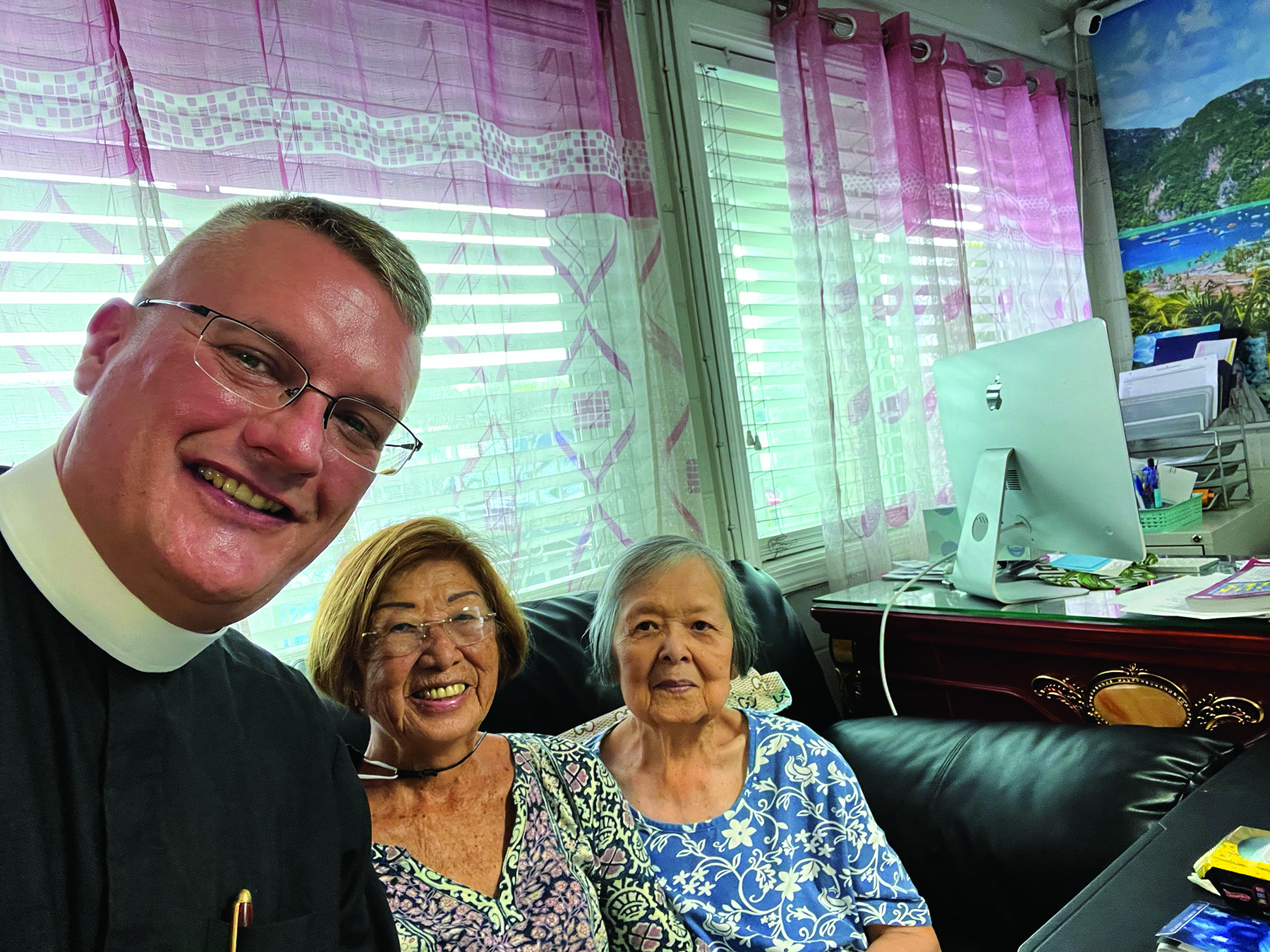
    photo of Rev. Christopher Bridges with parishioners Edean Iwanaga and Lorraine Yap
    (L–R) Rev. Christopher Bridges with parishioners Edean Iwanaga and Lorraine Yap

    During the height of the COVID-19 pandemic, members of Epiphany Episcopal Church in Kaimuki served as a testament to faith and dedication as they continued to attend services in person — when we were allowed to do so. It renewed me as a minister each and every Sunday.

    Even before the vaccine became available, some members of the congregation who were more vulnerable due to age or illness attended church — despite the risks. They simply put on their masks, safely sat six feet apart, washed their hands, then folded them to worship God together, following the guidance of the Centers for Disease Control and Prevention.

    Now that the vaccine is widely available, all the members of the church have demonstrated their love for their community by getting vaccinated,  protecting themselves while helping the islands combat the virus.

    Many studies indicate that religious practices substantially contribute to physical and mental health. All I have to do is look at my members who are in the 70-to-90-year-old age range who have been coming to church regularly. One of our members who lived to be 103 years old came to worship nearly every Sunday. Some of our elder members have attended since they were children.

    Many of those who have gone on to be with Jesus in Heaven lived full lives as elders. They knew that coming to a place of worship — going to a sacred place to worship and committing to something beyond themselves — builds a bridge into their personal lives. Worshiping God in fellowship with other members of the congregation and sharing the ups and downs of life helps give them the ability to deal with the stress in their daily lives. I have been a witness to countless stories that back up this observation.

    These grey-haired elders are an example of what St. Paul the Apostle called “mature faith — understanding the wisdom of God.” They rediscovered a secret that many have forgotten: Having faith and being a part of a sacred place of worship is important to well-being.

    “I exhort the elders among you to tend the flock of God,” St. Peter  said. So to all the elders out there, keep tending the flock at your church. The Bible says, when elders gather, God’s wisdom becomes known. So I would like more elders to gather with me at Epiphany to share that wisdom. But churches are not just a gathering place for the senior citizens. Ultimately, the connection with God is strengthened through church attendance by people of all ages.

    During the height of the COVID-19 pandemic, members of Epiphany Episcopal Church in Kaimuki served as a testament to faith and dedication as they continued to attend services in person — when we were allowed to do so. It renewed me as a minister each and every Sunday.

  • Living in Harmony With Nature

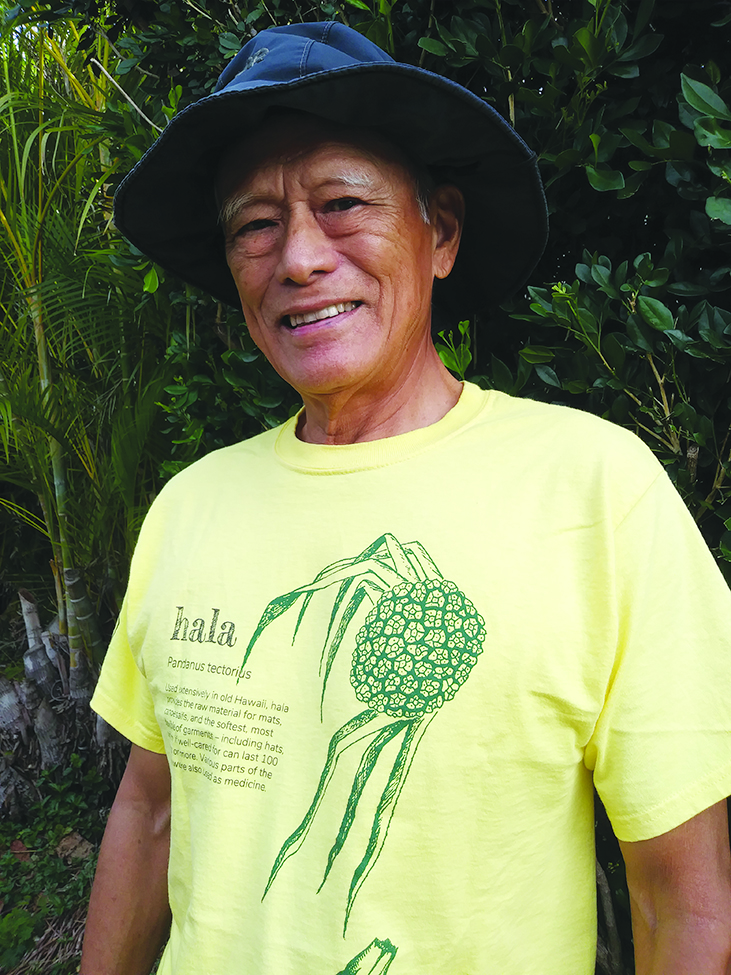
    Lot Lau is putting his lifelong love of trees to good use. At age 81, he is a member of a Citizen Forester group whose efforts are aimed at helping to save the planet — one tree at a time.

    “When I was young, I thought of trees only for climbing to get the fruit,” he recounts. “I preferred the Samoan palm variety. They bear coconuts much lower to the ground and are tall, stately, durable and strong. They sway gently in the breeze like a hula dancer. They give of themselves to benefit others.”

    The Citizen Forester (CF) program works through the Smart Trees Pacific (www.smarttreespacific.org) nonprofit, offering community members of all ages information about the benefits of trees in our urban forests. CFs learn how to identify common species and how to collect measurements and assessments for a software application that reveals the ecological services of our trees. After completing training, CF teams inventory the trees in our public parks and streets.

    There are more than 300 trained volunteers on O‘ahu and Kaua‘i. One group takes care of 74 trees along a quarter-mile stretch of a walking path at Diamond Head State Park. CFs like Lot care for the tree wells in Kaimuki.

    “As a Citizen Forester, I am able to do more to reduce my carbon footprint,” says Lot. “I’m contributing to the effort to increase the canopy of trees in Kaimuki, to help make Kaimuki look greener, feel cooler, and capture carbon and hold water. I am reinforced by the dedicated program participants who serve as my role models.”

    Lot says he has also been influenced by Lao Tzu, who wrote the main book of Taoism, the Tao Te Ching. Taoism holds that humans and animals should live in balance with the Tao — the universe. The Taoist ideal is one who changes themselves, becoming a good example to others. So changing oneself makes the world better.

    “I have also learned there are various forms of the expression ‘do unto others’,” says Lot. “I believe that there is a connectedness between all forms of life. So, it is about living in harmony with nature. Current climate change effects demonstrate how harm to one is harm to another. So at the most basic level of self-interest and survival, trees are obviously very important to us humans.”

    “But humans will never know much about our universe — that’s why religion is called a “faith.” For me, attending church reminds me how to how to treat others,” says Lot, “serving as a guide along right paths in a Christian tradition.”

    Lot has chosen his path wisely — following God, Lao Tzu and his fellow CFs. And like his Samoan coconut trees, he strives to remain durable and strong — giving of himself to benefit others — bending instead of snapping under duress.

    “But we are no longer in harmony with nature,”  says Lot. “We have forgotten our connectedness. We are way behind the curve in response to climate change that could be mitigated by more and healthier trees, so I do what I can to help.”


    Smart Trees Pacific
    smarttreespacific.org

    Lot Lau is putting his lifelong love of trees to good use. At age 81, he is a member of a Citizen Forester group whose efforts are aimed at helping to save the planet — one tree at a time. “When I was young, I thought of trees only for climbing to get the fruit,”…

  • Rev Up Your Mother-Daughter Relationship!

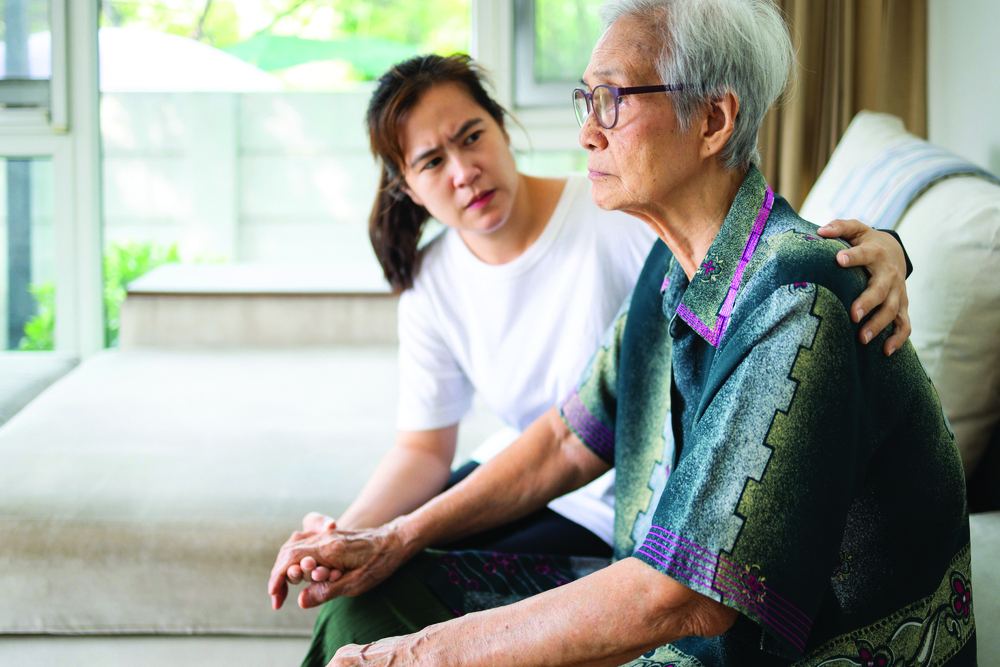
    Mother and adult daughter sitting on sofa and having serious conversationAs an adult daughter, do you  ever feel like a little girl when conversations with your mother end in misfires, teary rants or silence? You’re not alone — it happens this way for 43.5 percent of us. However, there’s hope. By using ASK Presetting, you can stop walking on eggshells.

    ASK Presetting is a precise communication method that involves pre-framing and rehearsing questions, comments, words and tones to avoid emotional collateral damage. When presetting tough topics with your mother, for example, appeal to her sweet side; don’t make her feel wrong.

    Using this method, you can head off hurtful words in as little as seven minutes and stop feeling verbally attacked. Start by sprinkling your conversations with these two-word phrases: “I feel,” “I’m open,” “I’m confused,” and “Tell me more,” when your mother’s (or father’s and siblings’) words cause anxiety.

    If you’re discussing tough and tender topics, but she keeps pinpointing your mistakes, you can calmly express yourself using this method without squabbling. And you won’t require years of therapy, either. Instead, you’ll be communicated with her respectfully and with love.


    ANNETTE PANG-LIFE COACH VILLAGE, LLC
    2383 Beckwith St., Honolulu, HI 96822
    808-372-3478 | ap@annettepang.com
    www.annettepang.com

    As an adult daughter, do you  ever feel like a little girl when conversations with your mother end in misfires, teary rants or silence? You’re not alone — it happens this way for 43.5 percent of us. However, there’s hope. By using ASK Presetting, you can stop walking on eggshells.