Category: Health

  • Aquatic Physical Therapy for Chronic Pain

    If you are one of the 100 million Americans who experience chronic pain, know that physical therapy can be a safer alternative to potentially addictive medications. Physical therapy plays a vital role in helping to manage and overcome chronic pain through proper strengthening and flexibility exercises, manual therapies, posture and body mechanics instruction.

    Patients who have experienced extended periods of pain are often caught in a vicious cycle, where they move less because it’s painful, which leads to decreased strength, endurance, mobility and overall confidence. Their posture, muscle imbalances and emotional state all become worse.

    Physical therapists understand that, to overcome chronic pain, you must break the pain cycle and one of the best ways, is to move! But how can you exercise if every time you move, it’s painful? The answer is Aquatic Physical Therapy.

    When the water is at chest level, 80 percent of the body’s weight is reduced, which allows patients to strengthen in a comfortable environment where the body can heal faster. The warmth of the water relieves pain and increases relaxation — important aspects of controlling chronic pain. Aquatic therapy also provides psychological benefits improving feelings of self-worth and reducing stress and anxiety. If pain is limiting your mobility don’t give up, try aquatic therapy because freedom from pain is possible.


    Moon Physical Therapy, LLC
    320 Ward Ave., Ste. 107, Honolulu HI 96814
    Aquatic, Land-based and Manual Therapy and
    Cardiopulmonary Rehab Programs
    808-597-1005 | www.moonpt.com
    Like me on Facebook: Moon Physical Therapy, LLC

    If you are one of the 100 million Americans who experience chronic pain, know that physical therapy can be a safer alternative to potentially addictive medications. Physical therapy plays a vital role in helping to manage and overcome chronic pain through proper strengthening and flexibility exercises, manual therapies, posture and body mechanics instruction.

  • Skip Costly Equipment: Use the Mighty Can

    Not everyone has spare cash to spend on expensive physical therapy equipment to use at home, so why not learn how to utilize household items to get the same results? Specialized equipment, although beneficial if used correctly, is not necessary to live a life without pain. Creativity can often duplicate or at least mimic the results of expensive therapy equipment.

    For example, proper squatting while holding onto the kitchen sink or a door frame is more effective than almost all exercise equipment. Similarly, rather than dumbbells or machines, cans or exercise bands are excellent replacements. Not only does the right exercise determine the level of benefit, but the technique of each exercise is equally important to achieve immediate alleviation.

    Just like with car maintenance, the body will not work correctly if not kept healthy. Even if only one cog is out of place it causes a chain reaction of inefficiency and problems. That is because, with any injury, the body will naturally compensate, causing unconscious bad habits that result in aches and pains that do not go away. Any bad habit will take hard work to fix, so that’s why motivation is the key to physical therapy. A little bit of hard work is well worth it to prevent suffering.

    Since nothing needs to be purchased for successful physical therapy, the universal factor among successful individuals is the motivation to put in hard work.


    PRIME PHYSICAL THERAPY
    600 Queen St. C-2, Honolulu HI 96813
    808-286-0194 | www.primepthawaii.com

    Not everyone has spare cash to spend on expensive physical therapy equipment to use at home, so why not learn how to utilize household items to get the same results?

  • Stepping Down Pain Free

    Knee pain while descending stairs is often due to the force on your kneecap (patella), which studies show is 3.5 X your body weight. If you weigh 140lbs, the force on your patella can be as much as 490lbs! That is a lot of stress on your knee, and the pain will be magnified if you have weak muscles or degeneration of the cartilage in the joint.

    Strengthening the hip and knee, specifically the larger gluteal and quadricep muscles, will help absorb the force that travels through the knee. Stretching tight muscles at the side and back of the thigh, as well as the calf, can help prevent tracking problems of the patella.

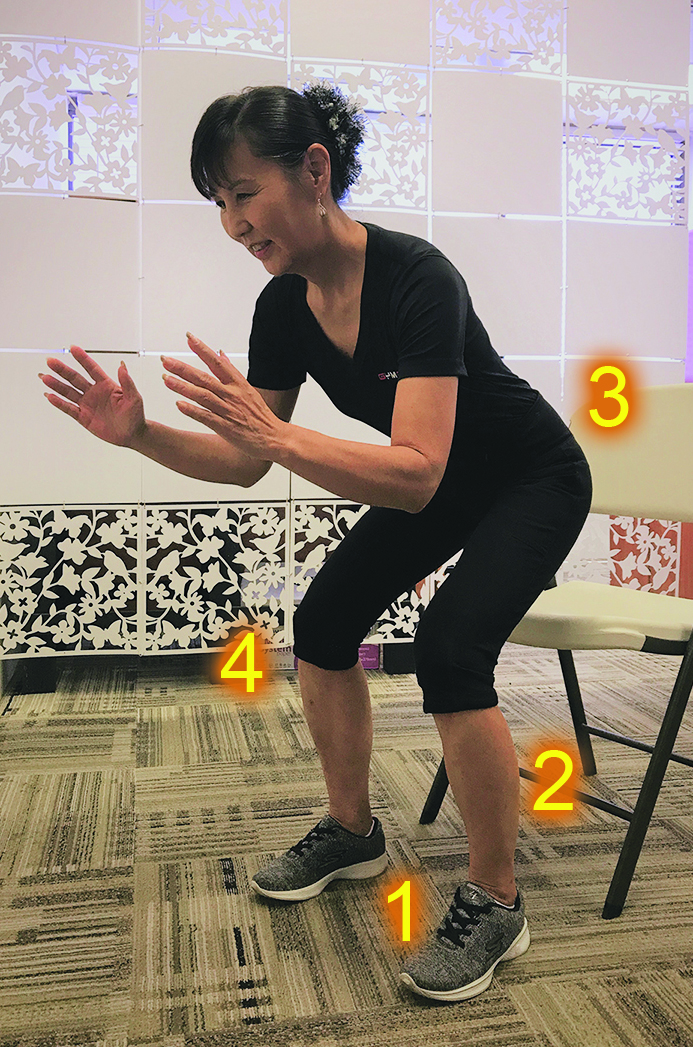
    This exercise will help reduce pain when going down stairs, as it uses the proper mechanics to build the correct muscles. Begin by standing tall on a step or platform sideways, holding onto a stable object.

    1. Slowly lower one leg over the outer edge and squat down, touching your toe to the ground.
    2. Keep upright, knee aligned over your first and second toe.
    3. Sit your bottom back when squatting, with more weight on the heel of the bent leg. Return to standing tall.

    Moon Physical Therapy, LLC
    320 Ward Ave., Ste. 107, Honolulu HI 96814

    Aquatic, Land-based and Manual Therapy and
    Cardiopulmonary Rehab Programs

    808-597-1005 | www.moonpt.com
    Like me on Facebook: Moon Physical Therapy, LLC

    Knee pain while descending stairs is often due to the force on your kneecap (patella), which studies show is 3.5 X your body weight. If you weigh 140lbs, the force on your patella can be as much as 490lbs! That is a lot of stress on your knee, and the pain will be magnified if…

  • New Guidelines for High Blood Pressure

    Let us start with this little fact: almost half of all adults in the United States are affected by hypertension. Recently published revised guidelines for the detection of high blood pressure mean that 46 percent of all Americans 18 years and older are now considered to have hypertension (otherwise known as high blood pressure). This is a staggering statistic, equating to about 103 million adults in the United States.

    What are the new guidelines?

    The new guidelines from the American College of Cardiology and the American Heart Association define hypertension as blood pressure readings greater than or equal to 130/80. Prior to this change, the standard definition of hypertension was anything equal to or greater than 140/90. With these new, stricter guidelines millions more adults are now considered hypertensive.

    What is hypertension?

    Imagine your heart as a pump. The heart pumps blood to the rest of the body through pipes called arteries, which — like rubber tubes — can expand and contract. The pressure of blood filling the arteries is what we measure and call blood pressure. If the force of this pressure in the pipes or arteries is too high, that is what we call hypertension or high blood pressure. With the new guidelines, anything equal to or greater than 130/80 is now considered hypertension.

    In a perfect world, the top number should be less than 120. This is called the systolic pressure and it is the pressure measured when the blood is filling the artery and it expands. The bottom number is called the diastolic pressure and, optimally, this number should be less than 80. It is the pressure of the artery when the heart is at rest — in other words, when the heart is not pumping blood.

    Why are these numbers important?

    Your doctor and healthcare providers measure these numbers regularly because hypertension is known as the “silent killer.” Unlike when you have a visible injury, cold or cut, you may not realize anything is wrong unless you get checked regularly by your primary care provider. As the blood pressure in your body increases and stays elevated over time, your risk for complications such as a stroke or heart attack increase significantly.

    If you want to avoid any complications from this chronic epidemic, please talk with your healthcare provider and see him or her regularly to help prevent, manage and treat hypertension.


    HOUSE CALL MEDICAL PRACTICE LLC

    808-726-5062 | Housecallmed@gmail.com
    www.housecallmedhawaii.com

    Let us start with this little fact: almost half of all adults in the United States are affected by hypertension. Recently published revised guidelines for the detection of high blood pressure mean that 46 percent of all Americans 18 years and older are now considered to have hypertension (otherwise known as high blood pressure).

  • Biking for Seniors

    As we age, exercise becomes more and more important — not only for our bodies, but for our minds as well. But fitness doesn’t always have to happen from inside the local gym. You can get on a path to a fit and healthy lifestyle by incorporating cycling into your daily routine. Instead of driving the short distance to the store or park, try biking there instead! This can sometimes be quicker and more convenient for you — and certainly better for your body, your wallet, and the planet.

    It’s important to start small, but for most people getting back on the bicycle is really just like riding a bike — you never forget! Bicycling reminds us of the freedom of our childhood, where we could expand and explore our world all from two wheels. Bicycles can be used for the same thing in our older years! Look for a bicycle with a step-through frame and upright seating position for comfort and stability. And don’t forget your helmet! Start on multi-use bike paths, which are physically separated from motorized traffic, or quiet residential roads. Consider joining up with a group of friends to ride or meet new friends at an organized group ride in your area!

    If you haven’t been on the saddle for years (or decades), or never learned how to ride a bicycle, the Hawaii Bicycling League (HBL) offers free Adult Learn to Ride workshops that can get you rolling safely, at any age (bikes, helmets, and friendly instructors all are provided)!

    HBL is a local non-profit founded in 1975, with the mission to enable more people to ride bicycles for health, recreation, and transportation, through advocacy, education, and events.

    If a two-wheeled ride isn’t your cup of tea, check out HBL’s Senior Cycling Program! Kupuna 50 years of age (and up) get to rediscover their youth with HBL’s recumbent tricycles on Oahu’s car-free bike paths. The adult three-wheelers are great for those that have poor balance or bad joints, or those that don’t know how to bike. Senior Rides are scheduled five times a month at the Pearl Harbor Bike Path and Magic Island multi-use paths and are for all levels of riders. Recumbent trikes, along with all the bells and whistles, are provided free of charge through this fun program designed to get you outdoors and healthy!

    However you decide to get your roll on, the Hawaii Bicycling League has you covered. Whether you are an adult looking to learn how to ride a bike for the first time or are someone ready to regain comfort and confidence with cycling on the roads of Hawai‘i, HBL will get you there.


    HAWAII BICYCLING LEAGUE
    3442 Waialae Ave., Suite 1, Honolulu HI 96816

    808-735-5756 bicycle@hbl.org www.hbl.org

    As we age, exercise becomes more and more important — not only for our bodies, but for our minds as well. But fitness doesn’t always have to happen from inside the local gym. You can get on a path to a fit and healthy lifestyle by incorporating cycling into your daily routine.

  • Yoga Just for Kūpuna

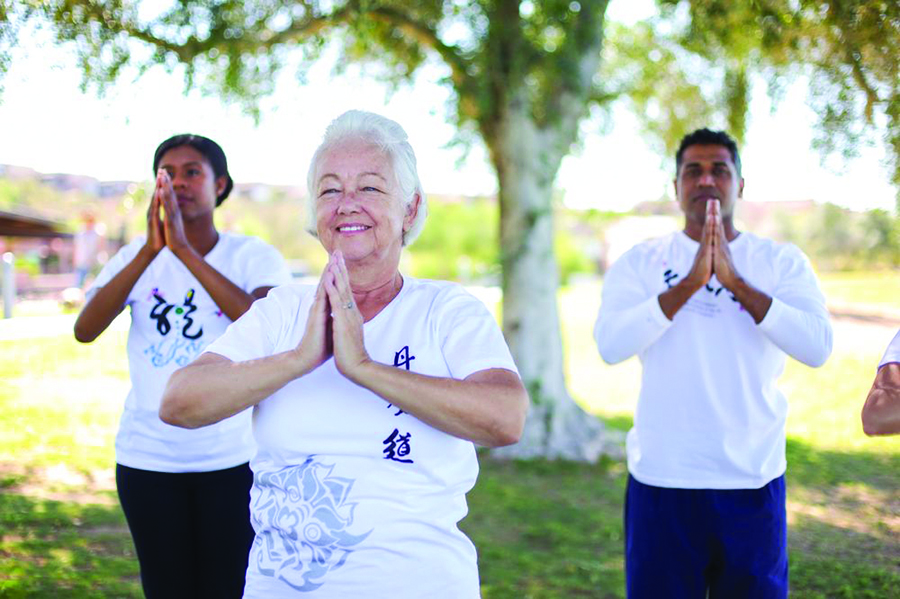
    At the YMCA of Honolulu, our programs and services are tailored to meet all ages, abilities and goals — and so are our yoga classes! All health and fitness facility Y Branches offer a range of yoga classes for kūpuna, from ones that will bring on a light sweat to others that will give you a soothing stretch while seated on a chair.

    As a sanctuary for those getting stronger and doing their best to keep healthy, we at the YMCA encourage our seniors to explore yoga, as it:

    • Strengthens bones and protects joints
    • Builds balance and flexibility
    • Sharpens the mind and improves mood
    • Minimizes hypertension
    • Improves the respiratory system
    • Encourages calm and mindfulness

    When practiced with our experienced yoga instructors on a regular basis, you can be sure you’ll enjoy many of these benefits!

    Feeling unsure about trying it out? We understand. Here are a few tips that will help you enjoy your first senior yoga class at the Y!

    • Talk to our yoga instructor before class. Let them know if it’s your first time (or your first few times) and what conditions you may be challenged with that could make you feel dizzy or cause pain. Ask them any questions you may have about the class.
    • Talk to your fellow students. We have a large kūpuna population who enjoy working out at each of our Y’s and who love yoga! Most of these members regularly attend their classes and are eager to meet and help you! You can also ask them how yoga has helped them in their lives — to encourage you to keep coming!
    • Use a wall, use the props. When you go to a yoga class, there will be yoga props available, such as blocks, straps, and pads for your knees. Use everything you can to feel comfortable and make the class manageable — especially during your first few times. For standing and balancing poses, use a wall to prop yourself up to ensure you feel stable while trying the poses out.

    YMCA of Honolulu

    www.ymcahonolulu.org/

    Contact your closest Y Branch for membership, discount opportunities and other activity schedules and information.


    SENIOR YOGA CLASSES

    Kaimuki-Waialae: 808-737-5544

    Hatha Yoga                             M / 2:15 pm
    Senior Stretch Yoga                W / 10:30 am

    Kalihi: 808-848-2494

    Gentle Yoga                            M, W, F / 12:10 pm
    Tu, Th / 10:15am
    Yin/Yang Yoga                        Tu, Th / 4:30 pm
    with Back Care

    Leeward: 808-671-6495

    Gentle Yoga                            M / 8 am
    Stretch & Relax                       Tu, Th / 8 am
    M / 7:30 pm
    Iyengar base Yoga                  W / 8 am

    Mililani: 808-625-1040

    Senior Yoga                             M, W / 7 am
    Hatha Yoga                              W / 9:45 am
    F / 10 am
    Su / 9:05 am
    Chair Yoga                              Tu / 12:15 pm
    F / 11:15 am
    Stretch and Relax                   M, W / 5:30 pm
    Hatha Yoga                             M / 6:45 pm
    Yin Yoga                                  F / 6:45 pm

    Nu‘uanu: 808-536-3556

    Gentle Yoga                            Tu / 10 am
    Hatha Yoga                             Th / 10:05 am

    Windward: 808-261-0808

    Sunrise Stretch                        M, F / 6:30 am
    W / 6:15 am
    Sunrise Yoga                           Tu, Th / 6:30 am
    Gentle Yoga                             M, F / 11:30 am
    Senior Chair Stretch                Tu / 11:45 am
    Basic Yoga                               W / 12:15 pm
    Hatha Yoga                              Sa / 9:15 am

    At the YMCA of Honolulu, our programs and services are tailored to meet all ages, abilities and goals — and so are our yoga classes! All health and fitness facility Y Branches offer a range of yoga classes for kūpuna, from ones that will bring on a light sweat to others that will give you a soothing…

  • How to Climb Stairs Pain Free

    In our younger years we didn’t think twice about sprinting up and down steps. As we age, however, climbing a flight of stairs can often seem like scaling a mountainside due to limited mobility and pain. According to Harvard Health Publishing, the force on each knee is 2 – 3 times your body weight when you go up and down stairs. So, if knee or back pain has you avoiding stairs, follow these simple steps to regain your independence and freedom of movement.

    Stand tall (A)   and tighten your core muscles to protect your spine, place one hand on the rail to maintain balance and set your entire foot on the step (B). As you step up, apply more weight through your heel rather than your toes and engage your buttock muscles as you straighten your leg to move up on the step. Try to avoid leaning forward and pulling yourself up using the hand-rail, instead keep the knee aligned with your toes (C) and focus on the larger muscles of the hip (hamstrings and gluteals) to take the pressure off the knee joint.

    Following these simple tips may not immediately resolve your pain, but with practice and strengthening your core and lower extremity muscles as you use correct mechanics, you will allow your body to adapt so that you can enjoy taking the stairs every day.


    Moon Physical Therapy, LLC
    320 Ward Ave., Ste. 107, Honolulu HI 96814
    Aquatic, Land-based and Manual Therapy and
    Cardiopulmonary Rehab Programs
    808-597-1005 | www.moonpt.com
    Like me on Facebook: Moon Physical Therapy, LLC

    In our younger years we didn’t think twice about sprinting up and down steps. As we age, however, climbing a flight of stairs can often seem like scaling a mountainside due to limited mobility and pain. According to Harvard Health Publishing, the force on each knee is 2 – 3 times your body weight when you go…

  • Tips for Healthy Kidneys

    March is National Kidney Month. Did you know that the risk for developing kidney disease in Hawai‘i is 30 percent higher than the mainland? One of the reasons we have a higher risk in Hawai‘i is due to our ethnicities, including Native Hawaiian, Filipino, Pacific Islander, etc. Here are tips on how to keep your kidneys healthy.

    Limit salt. According to the American Heart Association, the daily recommendation for salt intake is 2,400 milligrams of sodium. That’s only 1¼ teaspoon of salt for your whole day. This can really add up, especially when eating out. By limiting dining out and choosing low-sodium or no-added-salt foods, you can lower your salt intake and help control blood pressure. Controlling blood pressure is needed to prevent hypertension, which can lead to kidney disease.

    Stay hydrated. Make sure water is your primary beverage throughout the day. Most people can drink about eight cups of water throughout the day to stay hydrated, but some people require more or less. If you have questions about how much water you should be drinking, ask your doctor or a registered dietitian. For more information on kidney-care, come join our annual event:

    Walk on the Wild Side
    Saturday, March 10, 2018, in Chinatown

    There will be Kidney Early Detection Screening (including checking for diabetes, hypertension and kidney disease), a Health Fair, Scavenger Hunt, History-Mystery Walk, children’s activities and an arts-and-culture fair. Come and join the fun! Visit kidneyhi.org for more details.


    National Kidney Foundation of Hawaii

    808-593-1515  | www.kidney.org

    March is National Kidney Month. Did you know that the risk for developing kidney disease in Hawai‘i is 30 percent higher than the mainland? One of the reasons we have a higher risk in Hawai‘i is due to our ethnicities, including Native Hawaiian, Filipino, Pacific Islander, etc. Here are tips on how to keep your…

  • Aloha Everyone

    My contributions to Generations Magazine will end with this article. In past articles that I have written, I had the pleasure of sharing information about a very special water, transformed by electricity, that has been given the status of “medicinal water” in Japan. The Japanese have been utilizing a technology to transform ordinary tap water into ionized, micro-clustered, concentrated alkaline and acidic waters for decades. It started in the animal husbandry and agriculture sector, eventually moving into mainstream applications for human consumption and use.

    My articles in past issues of Generations Magazine have quoted and highlighted numerous doctors, medical and research professionals as to the benefits of consuming and using electrically charged ionized water.

    The human body is approximately 75 percent water. The body loses an average of three quarts of water per day through urination, exhalation and perspiration. It is absolutely critical that this water be replaced. Proper hydration is key to the normal functioning of body activities. Ionized, micro-clustered water is molecularly smaller than other waters which allows it to absorb up to six times faster and more efficiently into the cells of the body allowing for optimum hydration.

    Recent medical studies have exposed the role of inflammation, both low-level and acute, as a key contributor to degenerative health issues. Inflammation, documented through medical research, is oftentimes a direct result of abnormal fermentation in the colon that cause an increase in free radical production. This discovery narrows the window on the root cause of health issues in the human body. The high negative electrical charge of properly ionized water is instrumental in the neutralization of positively charged free radicals in the body.

    So why would you not want to try and drink ionized, micro-clustered, alkaline water? Many of you have asked me over the past year about where you can buy this kind of water. There is an inherent problem with this kind of water that renders it unsuitable for sale in a retail setting.

    The most common process of ionizing water requires the water to pass over electrodes that convert the electrical charge of the source water from positive to negative. Negatively charged water, or ionized water, has powerful health properties. This negative electrical charge is very fragile. The problem is that within the span of one to three days on average, the negative electrical charge, also known as antioxidant potential of the water, reverts back to its positive or oxidative charge.

    What this means is that you have to drink the ionized water within a short window of time to get the maximum health benefits.

    The most common belief that most people have is that “water is water.” There is ample documented research that speaks otherwise. If you truly want to explore a natural simple protocol that may change your health profile, drink ionized, micro-clustered, alkaline water.


    Enagic USA INDEPENDENT DISTRIBUTOR

    Alan Matsushima
    808-384-7354  |  trader_808@yahoo.com

    Woody Kobayashi
    808-223-2613  |  woody18k@msn.com

    he Japanese have been utilizing a technology to transform ordinary tap water into ionized, micro-clustered, concentrated alkaline and acidic waters for decades. It started in the animal husbandry and agriculture sector, eventually moving into mainstream applications for human consumption and use.

  • SHINGLES: What You Need to Know

    There is a painful ailment that affects millions of people: shingles.

    What is shingles?

    Shingles is a blistering rash that is caused by a virus called herpes zoster. It effects approximately one million people in America every year. The herpes zoster virus, what we call shingles, is actually the same virus as the chicken pox you may have experienced as a child. When patients develop chicken pox, caused by a virus called Varicella-zoster, it lies dormant in your body for the rest of your life. Then, later in life, it may reactivate into another form we call shingles.

    The reactivation of the virus that lays dormant in your body is caused by many risk factors. Commonly as you age, especially after the ages of 50-60 years old, your chances of incidence increased dramatically. Although, there are also many patients younger than 50 who also develop shingles. Typically, patients who are immunocompromised, have had a recent cold or are highly stressed in their daily lives, are at increased risk for an incidence of shingles.

    What are some signs and symptoms?

    Some of the signs and symptoms of shingles include a red rash that quickly evolves into groups of vesicles or blisters. Many patients may experience a burning or tingling sensation prior to onset of the rash that could last days or even weeks before eruption of lesions. Other patients may also experience signs and symptoms of a cold, such as fever, fatigue, chills and headache. The rash can also be very painful for many patients and cause complications that may last even after the rash has resolved.

    Usually, the rash from the shingles is only on one side of the body, and this unilateral distribution is a classic presentation that helps doctors to diagnose patients. The rash can appear on your head, face, neck, torso, arms or legs, but typically, the rash appears on the torso for many patients. After eruption of the rash and blisters, the vesicles may rupture and crust over in about seven to 10 days.

    How’s it treated and prevented?

    If you suspect you may have shingles, please see your healthcare provider right away! The prompt and proper diagnosis of the disease is crucial when providing treatment for shingles. If caught early, within 72 hours, doctors can prescribe medications that may help to hasten and help decrease the severity of the virus. These medications can equally help to also prevent complications from shingles, which may include losing your vision and hearing, meningitis and other neurologic complications. Your healthcare provider also can help to give you medications that may help to reduce the pain and burning sensations that can be very debilitating for many patients.

    One of the best ways to prevent an outbreak from occurring is for older adults and patients who are at high risk, to receive their shingles vaccine. Although this vaccine does not prevent the disease 100 percent, it will significantly reduce your risk, and if you do have an incidence of shingles, it can help to reduce the severity of the virus.


    HOUSE CALL MEDICAL PRACTICE

    808-726-5062 housecallmed@gmail.com
    housecallmedhawaii.com

    Shingles is a blistering rash that is caused by a virus called herpes zoster. It effects approximately one million people in America every year. The herpes zoster virus, what we call shingles, is actually the same virus as the chicken pox you may have experienced as a child.

  • 5 Healthy Valentine’s Day Ideas

    There is no better gift that you can give your loved one than taking care of your health and staying fit. Living well means that you will be able to enjoy your time together for decades to come. Rather than the old routine of chocolates or dining out, why not try something more active and fun, something new to explore. Here are five ideas:

    1. Hiking/Nature walk. Go for a walk on the beach, or hike with your special someone. The peace and quiet with natural scenery not only is romantic, but you’ll burn calories and increase endorphin levels.
    2. Dancing. Music puts everyone in a good mood. Whether it is salsa, ballroom dancing or watching your favorite local band, try something new with each other, and get your heart pumping.
    3. Bike riding. Plan a route with amazing views, and get out in the fresh air together.
    4. Try a new sport. Step out of your comfort zone and try something new like bowling or tennis. Burn calories as you laugh!
    5. Schedule a couple’s massage. This may not seem like an active date, but a massage helps to relieve muscle tension and pain, reduce stress and improve overall health.

    Make this Valentine’s Day a day to remember and bond with the one you love over a new experience while you improve your health.


    Moon Physical Therapy, LLC
    320 Ward Ave., Ste. 107, Honolulu HI 96814

    Aquatic, Land-based and Manual Therapy and
    Cardiopulmonary Rehab Programs

    808-597-1005 | moonpt.com
    Like me on Facebook: Moon Physical Therapy, LLC

    There is no better gift that you can give your loved one than taking care of your health and staying fit. Living well means that you will be able to enjoy your time together for decades to come.

  • Go with Your Gut

    The World Health Organization (WHO) has identified mental wellness issues — stress, depression and anxiety — as the leading causes of a “global health burden.” Could it be that, for the past century, we’ve had the mistaken notion that these problems are all in our head, when in reality they are largely in our gut?

    Did you know that we have two brains? You undoubtedly know about the brain in your head. And while you might not know much about the “second brain” in your gut, you’ve probably “felt” it before. We feel “butterflies” in our stomach when we fall in love or when we’re nervous. We have a “gut feeling” about decisions that we’re wrestling with. Our stomach “growls” when we’re hungry, and we feel “sick to our stomach” when we’re stressed out. Many of us also know that when our gut feels off we simply don’t feel our best.

    Our two brains also “talk” to each other through a complex network of nerves, cells and biochemicals. Only within the last few years have scientists and health experts begun learning the importance of microbiome balance in regulating not just our gastrointestinal functions, but also our mood, mental focus and emotional well-being.

    The discovery of the gut-brain axis and the explosion of research around the microbiome — the 100 trillion bacteria that live in our gastrointestinal tract — is causing a fundamental shift in how we think about (and improve) both mental wellness and physical health. For example, some recent scientific research demonstrates that gut bacteria influence everything from neurotransmitters (depression/anxiety), gut integrity (regularity), immune function (colds/flu/allergies), inflammation (pain, heart health, dementia), and even gene expression (related to a variety of degenerative diseases, including Alzheimer’s and even cancer).

    Unfortunately, so much of today’s modern lifestyle can disrupt the microbiome and lead to imbalances across the gut-brain axis, causing us to feel fatigued, depressed and stressed. Research has shown that the microbiome can become disrupted by the aging process, but it may also show that we can use nutrients (specific combinations of probiotics, prebiotics and phytobiotics) to rebalance the microbiome and optimize gut-brain axis function for improved mood, reduced depression, lessened anxiety, and enhanced stress resilience.

    Many people have long known that gut health is important for overall wellness, and now modern science and innovative companies are backing up why feeding the gut with the right foods can help each of us feel happier and healthier.


    AMARE GLOBALl
    Lori Makiya, Wellness Partner
    808-285-9620  |  amaretogether@gmail.com
    www.lovingyourgut.com

    Visit online to learn more about how to optimize the mind-gut connection and for information on Amare Global’s FREE information sessions with Dr. Shawn Talbott in Honolulu on Saturday, February 9, 2019. Contact Lori Makiya (above) for registration and location details.

    Editor’s note: Before trying any dietary supplements, we encourage you to
    do research and consult your doctor before taking them.

    The World Health Organization (WHO) has identified mental wellness issues — stress, depression and anxiety — as the leading causes of a “global health burden.” Could it be that, for the past century, we’ve had the mistaken notion that these problems are all in our head, when in reality they are largely in our gut?