I have learned a lot about setting goals from interacting with my smartwatch! The S.M.A.R.T. approach to setting goals has been around far longer than smartwatches, but the watches demonstrate perfectly the basic S.M.A.R.T. concepts originally created in 1981 by George T. Doran as a management tool but relevant for any type of goal.
You can use the S.M.A.R.T. approach just as well with lo-tech pen and paper, but here is how my computerized watch helps me to set goals specifically for physical activity:
Specific: Clearly state the goal you want to achieve. Previous vague promises to myself to increase physical activity did not work. My watch defines specific goals for each day: 30 minutes of exercise, one minute per hour of standing, and 300 calories worth of movement. Plus it reports my number of steps for the day!
Measurable: Each day my watch measures and tells me what I’ve achieved in each category of activity, e.g., number of minutes I’ve spent exercising and standing and number of calories burned in general movement, using three rings to show my progress. For example, if I’ve exercised for 30 minutes, the watch alerts me with slight pressure to my wrist, a faint chime, and the quick flash of a swirling green celebratory ring. It then provides a brief message, e.g., “You’ve reached your exercise goal, Peggy! Good work!” Personalized feedback and positive reinforcement help!
Attainable: The watch was calibrated to set initial goals based on my size and age. At first, my movement goal was 230 calories/day. I consistently achieved that, so the watch upped it to 300 calories, attainable but with a bit more challenge.
Realistic: I have to admit, I don’t always make my goals. However, my watch doesn’t berate me when I slip up. Next day, it encourages me by reminding me I completed a weekly goal, or that I still have time to meet today’s.
Time-related: Everything stops at midnight, when all three progress rings in whatever stage of completion melt away, and I am back to square one. I can refer to my weekly or monthly log, which helps me see the patterns of my activity, providing more feedback to help me adjust my exercise habits.
Before deciding on your own fitness goals, discuss them with your healthcare provider first. Happy goal-setting!
CENTER ON AGING — University of Hawai‘i at Mānoa
2430 Campus Road, Gartley Hall, 201B, Honolulu HI 96822
I have learned a lot about setting goals from interacting with my smartwatch! The S.M.A.R.T. approach to setting goals has been around far longer than smartwatches, but the watches demonstrate perfectly the basic S.M.A.R.T. concepts originally created in 1981 by George T. Doran as a management tool but relevant for any type of goal.
If you are 50, 60, 70 or 80 today and need — or want — to continue to work, there is an exciting, fast-rising world emerging; a world filled with new ways of working and earning your way in Hawai‘i!
FREELANCING is the first viable work choice we will consider. If ever there was an opportunity for qualified, older workers, freelancing is it! Age is not a barrier; current market-driven qualifications determine eligibility. Freelancers include independent contractors, moonlighters, temps, and diversified workers who have multiple skills needed by multiple employers. And, no, freelancing is not free. You charge by the hour or by the project.
Before investigating selling your work or service by the hour, day or project as a freelancer, ask yourself: which of the following reasons to continue to work matter to you:
✦ I can’t imagine NOT working later in life as life expectancy is rising exponentially and continuing to work just makes common sense.
✦ I am having a great deal of difficulty finding a “job” at this stage of life, but I need a continued income stream and can’t afford to quit earning.
✦ I believe that continuing to work, in some capacity, adds a health and social benefit to my well-being.
✦ I look forward to the work and life balance that freelancing offers.
Ideas to Explore
Get yourself schooled in what freelancing is and what it can do for your career. Read what Daniel Pink, an author, futurist and expert, wrote in his book Free Agent Nation about free agency vs. jobs.
Spend a few minutes each day reading additional information that will help you to get comfortable with freelancing as a worthwhile career choice. Learn more through Forbes magazine, The Economist and Hawaii Business magazine.
Check out your skills against advertised opportunities and remember that learning new skills is everyone’s challenge as the world changes. AARP, local community colleges, the public libraries, adult schools (such as the McKinley Community School for Adults on O‘ahu) offer a full range of skills development. They are a step away from your phone.
Contact Carleen via her website and receive a free pdf book called New Ways to Work, co-written with Phyllis Horner.
If you are 50, 60, 70 or 80 today and need — or want — to continue to work, there is an exciting, fast-rising world emerging; a world filled with new ways of working and earning your way in Hawai‘i!
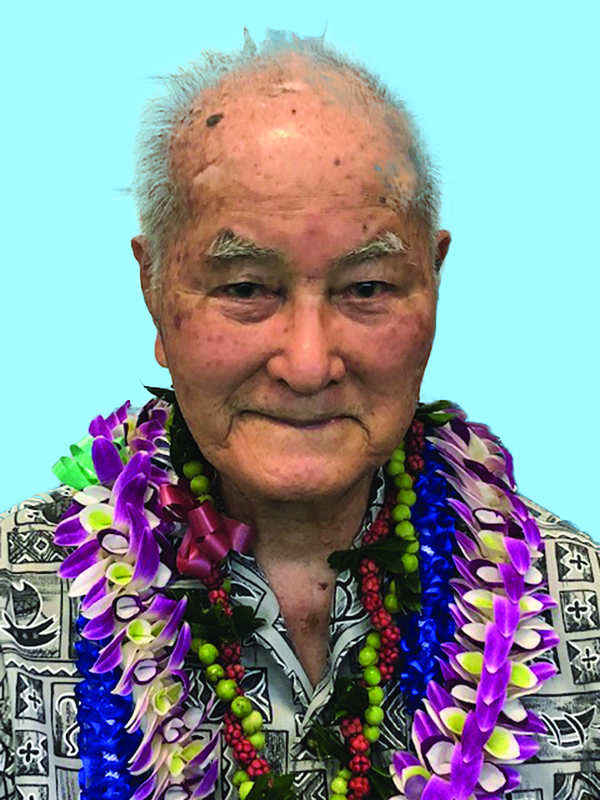
Born in October 1918 in Kapa‘a, Hidenobu Hiyane remembers growing up on Kaua‘i and graduating from McKinley High School in 1937. He served with the 100th Battalion as a radio operator, and was very lucky while serving in Europe and France: An officer using the radio was shot in the head and killed while standing next to him, and a mortar shell that fell next to him didn’t explode.
Hidenobu remembers going to Chicago on the GI Bill to learn more about the radio at a technical school. While there, he met and married a Waipahu woman, both returning home to be with her dying mother. Two daughters were born in Hawai‘i, and he has three grandsons living in California. Hidenobu worked for the Army as an Electronic Maintenance/Radio Operator for 30 years and repaired donated electrical items at the Salvation Army for 12.
Besides being very lucky, he does not take any medication nor wear glasses. He said that for many years he has cut and blended aloe leaves with water and drinks it every day. He also eats leaves from a moringa tree in a variety of dishes.
To keep his mind sharp, Hidenobu does Word Search puzzles and listens on his ham radio, deciphering Morse code from all over the world. His memory amazes me, as he said he left the Army on April 13, 1945, the day after Franklin D. Roosevelt died.
Born in October 1918 in Kapa‘a, Hidenobu Hiyane remembers growing up on Kaua‘i and graduating from McKinley High School in 1937. He served with the 100th Battalion as a radio operator, and was very lucky while serving in Europe and France: An officer using the radio was shot in the head and killed while standing…
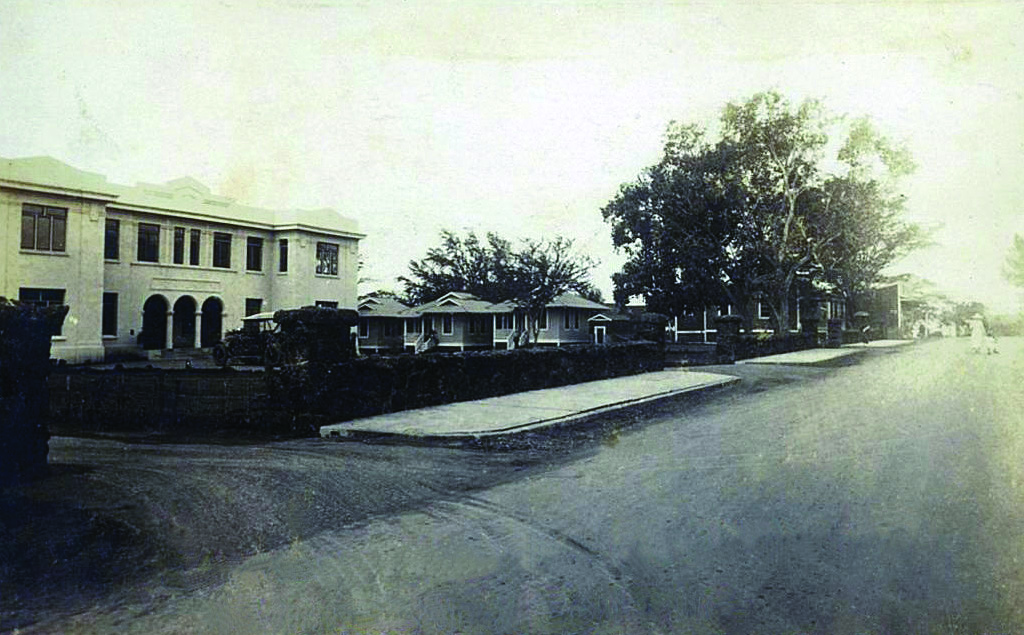
In September 2018, Kuakini Medical Center celebrated the 100th anniversary of its move from Liliha Street to its present location on Kuakini. Established in 1900, the medical facility has seen many changes during its 118 years of existence.
The Japanese Benevolent Society opened The Japanese Charity Hospital in Kapalama in July 1900. It was a two-story wooden building with 38 beds, where free medical care was provided to Japanese immigrant sugar workers. In 1902, the hospital moved to a larger site on Liliha Street and soon began providing care for more than just the destitute and sick.
On September 27, 1918, the hospital moved 37 patients by car and ambulance to a 16-building campus on Kuakini Street (pictured). At that time, with 120 beds and a staff of 15 physicians, it was the second-largest hospital in Hawai‘i.
That hospital is now known as Kuakini Medical Center — a licensed and accredited medical/surgical facility with services such as ambulatory care, emergency services, oncology and cardiovascular services, an orthopedic and spine center, sleep center, and renowned biomedical research programs.
With a history of 118 years of caring, Kuakini is committed to maintaining the legacy of its founders by providing safe and high-quality care to the people of Hawai‘i and improving the health status of the community.
In September 2018, Kuakini Medical Center celebrated the 100th anniversary of its move from Liliha Street to its present location on Kuakini. Established in 1900, the medical facility has seen many changes during its 118 years of existence. The Japanese Benevolent Society opened The Japanese Charity Hospital in Kapalama in July 1900. It was a…
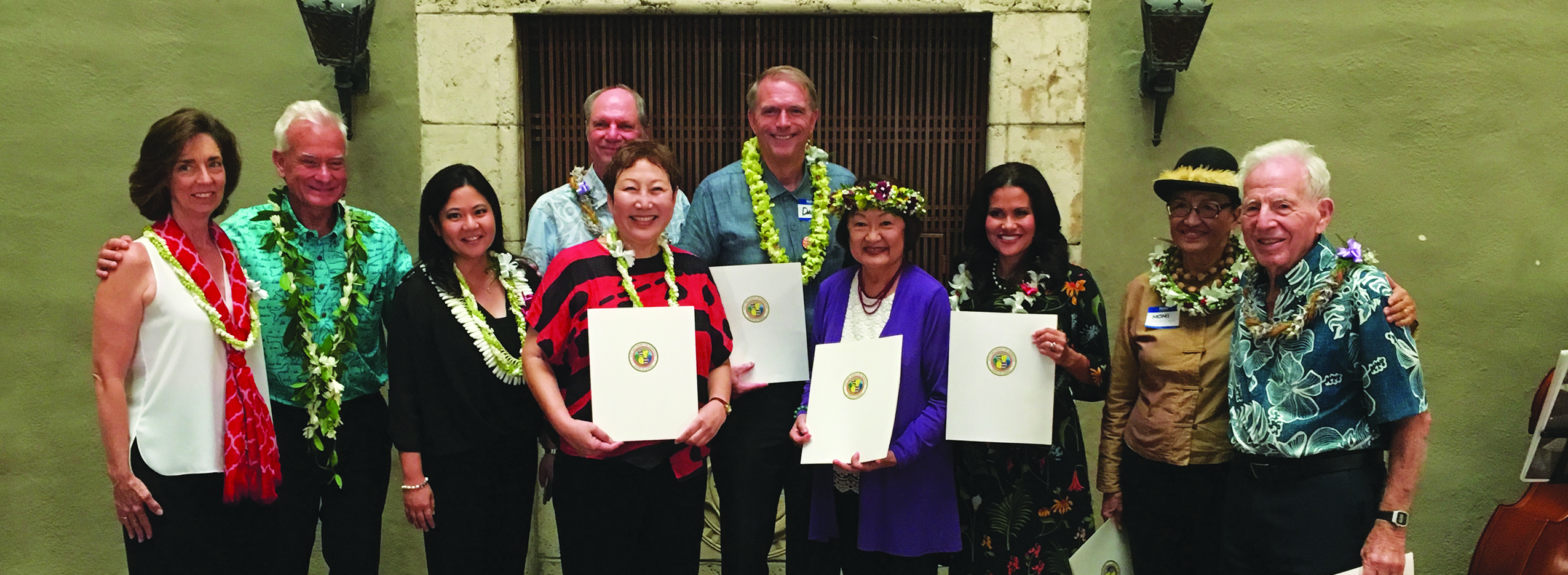
(L–R): Pam Witty-Oakland, Mayor Kirk Caldwell, Christy Nishita, Frank Streed (back row), Barbara Kim Stanton, Dave Underriner (back row), Councilmember Ann Kobayashi, Councilmember Kymberly Pine, Momi Cazimero, Tom DinellHealth Services
The Age-Friendly Honolulu Initiative has a vision to create a livable city that is inclusive to persons of all ages and abilities. For our kūpuna, the initiative strives to maximize opportunities for active aging, independence and community engagement. Since 2014, the Age-Friendly Honolulu Initiative, supported by Mayor Caldwell and AARP Hawaii, has involved hundreds of individuals from the public and private sector in the planning and implementation process.
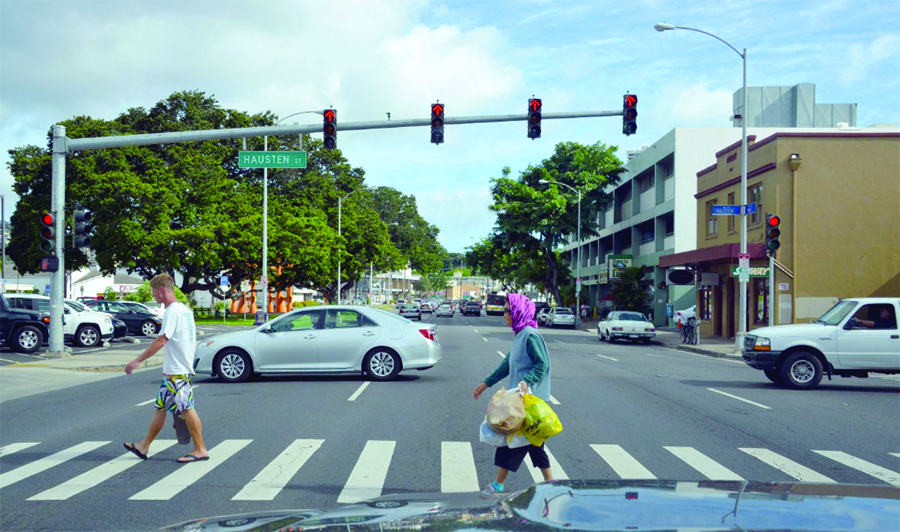
Pedestrian Safety
On October 11, 2018, the Age-Friendly Honolulu
Initiative celebrated a milestone event, Mayor Caldwell’s signing of Bill 54 (2018), Relating to Age-Friendly Honolulu. The passage of this ordinance signifies a commitment by the City and County of Honolulu to be “age-friendly.” The celebration event also recognized all those involved over the past several years and highlighted successes thus far including the development of a Pedestrian Crossing Survey App, the work of Dementia Friends Hawaii, and the launch of the Kind2Kūpuna Business Program.
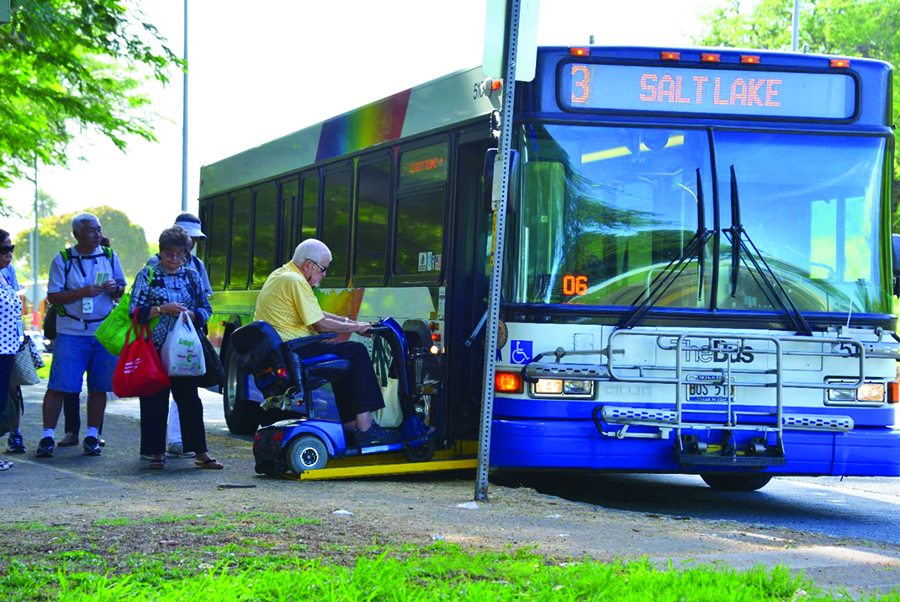
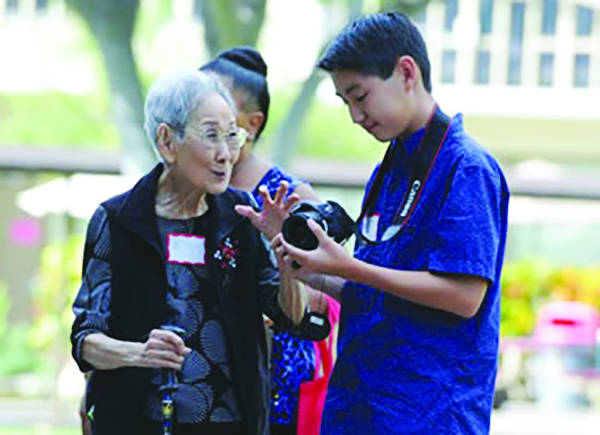
Transit AccessibilitySocial Involvement
In the months ahead, the Age-Friendly Honolulu Initiative will proceed with implementation of the ordinance. The ordinance requires “all city departments to encourage and incorporate age-friendly city features in the planning, budgeting, design, construction, implementation, operation, and evaluation of city programs, services, facilities, and projects.” In addition, the Age-Friendly Honolulu Initiative will also establish an advisory board, train city department staff on age-friendly principles, and evaluate
The Age-Friendly Honolulu Initiative has a vision to create a livable city that is inclusive to persons of all ages and abilities. For our kūpuna, the initiative strives to maximize opportunities for active aging, independence and community engagement. Since 2014, the Age-Friendly Honolulu Initiative, supported by Mayor Caldwell and AARP Hawaii, has involved hundreds of…
What I’ve learned is about just that: What I’ve learned these past 16+ years since I entered this field called “aging.” I was 42 years old and didn’t know a whole lot about retirement planning, Social Security or health issues, let alone caregiving and Alzheimer’s. Most people in that age range don’t think about this stuff; however, it is important to think ahead to when we get older and/or about our parents own aging and health issues.
As 58-year-olds we begin to have our own health issues. For example, many people over the age of 55 are taking some kind of medication to address high blood pressure and/or cholesterol as those problems are quite common among baby boomers. However, I am working hard to stay off the meds and stay active with playing softball, golf and many other sports-related activities.
I’ve learned that most women and wives will outlive their spouses
So guys, be nice to your wives as they will be pushing your wheelchair and driving you to the doctor’s office. You will wake up one morning and say to your wife, “Honey, I made 80 years old! Can I have my favorite breakfast of eggs, Portuguese sausage and rice?” Your wife will say, “No. Your doctors said you need to eat oatmeal and fruit.” Guess what you will eat!
I’ve learned stress kills and causes such diseases as cancer, and other problems
Stress can lead to heart attacks and strokes. Why do you think most of the Medicare Advantage health plans come with “Free” YMCA, 24 Hour Fitness or Silver Sneakers memberships? They don’t want you in the hospital and nor should you want that for yourself. Stress from work, your children or caregiving duties causes many of our chronic diseases, so exercise 30-40 minutes a day by walking, jogging, swimming. Play sports — there are a number of senior softball, golf and bowling clubs — even archery, tennis and pickleball leagues.
I’ve learned that pedestrian safety can’t be taken lightly
As one of the first volunteer speakers on the topic, I know that all of us have to take pedestrian safety seriously. If you are a pedestrian, you need to be diligent when
walking our streets, whether you are downtown or in your neighborhood. If a car is coming toward you, you need to look that driver in the eye and make eye contact and do not enter the crosswalk until you know they see you. Living their busy lives, drivers are rushing around to work, picking up their kids and/or on their phones. Just because you are in a crosswalk you are not totally safe as there are no concrete walls protecting you.
What I’ve learned is about just that: What I’ve learned these past 16+ years since I entered this field called “aging.” I was 42 years old and didn’t know a whole lot about retirement planning, Social Security or health issues, let alone caregiving and Alzheimer’s. Most people in that age range don’t think about this…
From a very young age, Carole Kai showed a flair for the dramatic — sometimes pulling a bedsheet off the clothesline and holding it tightly across her shoulders while flying around the backyard like a superhero. Other times, she showed a more businesslike approach — like the time she hosted a boxing match in her backyard and sold tickets to neighborhood kids for 5 cents apiece.
Carole enjoys sharing stories like these when asked where her entrepreneurial spirit came from. She credits that to her mother. Throughout her life, Carole says, her constant motivation was to live the life her mother couldn’t. “I just wanted to make her happy,” she explains.
“My mother was a wonderful person. She really had dreams. But in those days…” Carole pauses to compose herself, and then begins describing Ethel Shimizu — a pretty teenager who became a single parent who worked at a barber shop for 50 years. “I remember she was always hanging up towels. So when I earned my first paycheck, the first thing I did was buy her a washing machine and dryer,” Carole says with a smile. “And then I didn’t have to hang up towels either.”
Growing up in Kaka‘ako, Carole was sometimes teased for being “different.” In those days (the late ’40s and early ’50s), most of the kids in the neighborhood had a dad who went to work and a mom who stayed at home. But Carole’s father had left the family when she was young. She says her mother seemed to work all the time. And her brother and sister were a lot older than she was. So Carole was often left home alone — which was another thing that made her different from most other kids.
Making a difference
More than being different from others, though, Carole has made a difference for others, awarding the Carole Kai Scholarship to deserving students at McKinley High School, and humbly accepting many honors herself, like these, for her role in promoting health and fitness, music and entertainment, and community service:
“Carole Kai Day,” proclaimed by Gov. David Ige
“Aloha Is” Award for Community Service, at the
Nā Hōkū Hanohano Awards
Distinguished Alumni Award, presented by the
University of Hawai‘i
Franklin Delano Roosevelt Award for Distinguished Community Service, awarded by the March of Dimes
Communication and Leadership Award, from
Hawaii’s Toastmasters District 49
2018 American Patriot Award, from the Honolulu Council of the Navy League
The Ihe Award, from the Hawaii Army Museum Society
Mana O Ke Koa “Spirit of the Warrior” Community Service Award, from the U.S. Army, Pacific (USARPAC)
And Carole is especially proud of the achievements that have made a lasting difference in the lives of people in the community:
the Great Aloha Run, which has given more than $14 million to charitable causes, will celebrate its 35th year in 2019
“Hawaii Stars” is celebrating its 25th anniversary in 2018
the Carole Kai International Bed Race gave away more than $2 million to charities in its 20 years
But while it might seem that Carole Kai has led a charmed life, the little girl from Kaka‘ako with big eyes and even bigger dreams who grew up to be one of Hawai‘i’s biggest stars, has faced her share of adversity. When Carole’s father left the family, he left them with the stigma of abandonment. Her grandparents shunned Carole and her siblings. And her mother had to give up her own dreams in order to raise her three children.
Carole has few memories of her father. “One story I remember about my father was when I asked him why my name has an E in it,” Carole says. “Other girls I knew that had my same name spelled it C-A-R-O-L. But my name ends with an E. And my dad told me, “Don’t you know? The E is for energy!” Fluttering her eyelashes, Carole adds, “I guess I was an energetic little girl.”
E is for energy
Carole is one of those people who is filled with energy — constantly setting and achieving new goals. And she’s also one of those people who can fill up a room with energy — inspiring others to achieve their own personal goals by entering the Great Aloha Run and “Hawaii Stars.”
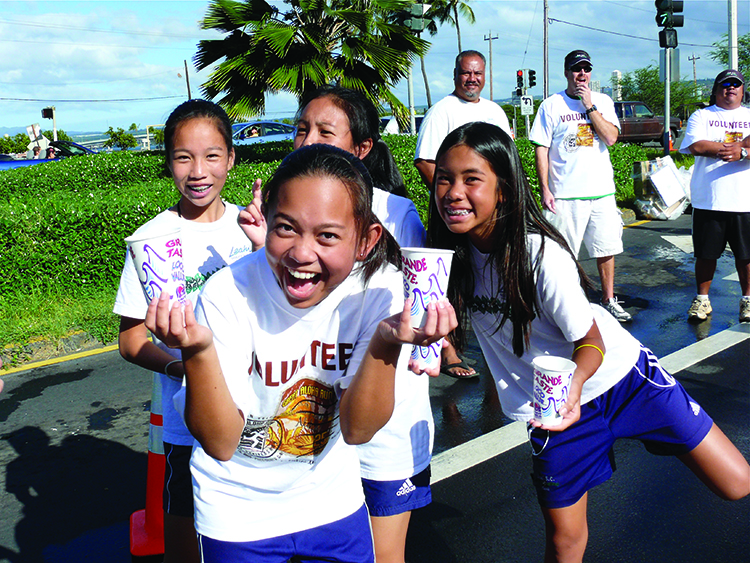
As co-founder and president of the Great Aloha Run, Carole leads a team of thousands of volunteers and dozens of businesses that give back to the community and support tens of thousands of participants in the annual charity run.
As co-star and executive producer of “Hawaii Stars,” Carole leads the sales efforts for the local TV show that is “making stars shine” and joins co-star Kimo Kahoano in welcoming people to showcase their talents onstage and on TV.
And the common element in all of this is the energetic Carole Kai Onouye.
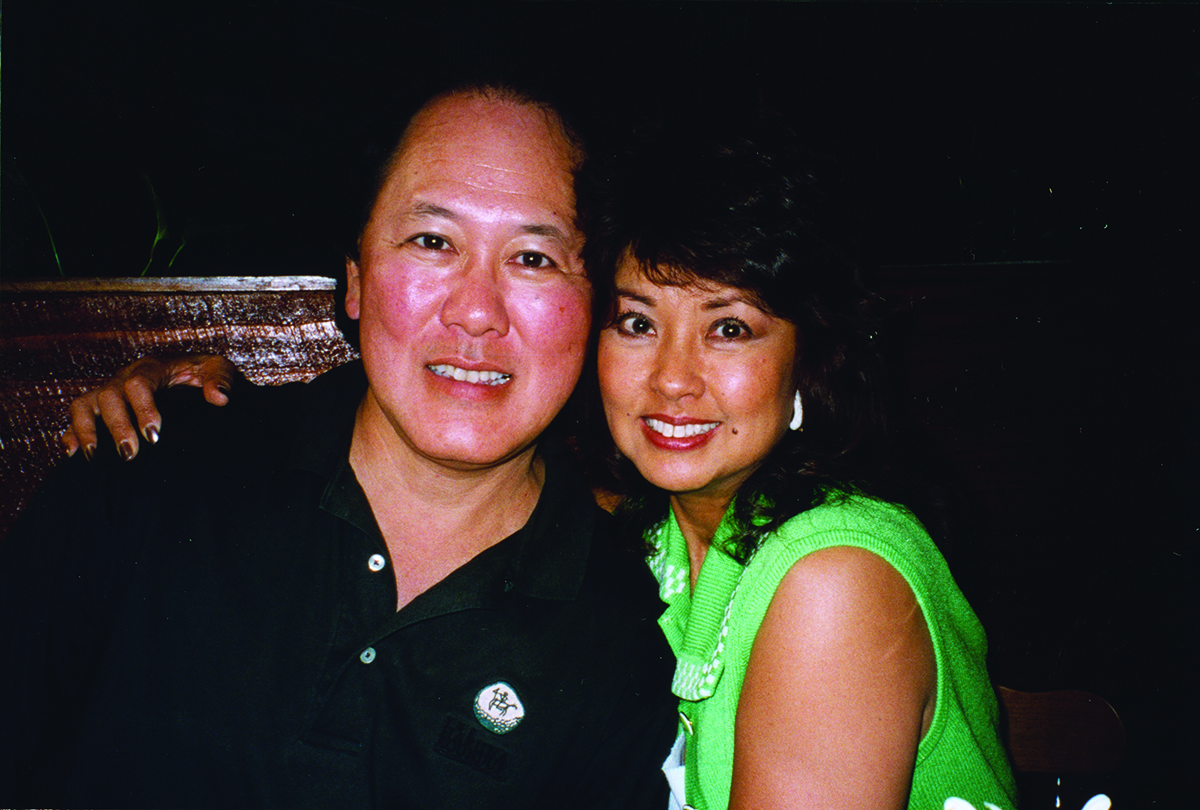
Today, at the age of 74, Carole continues to keep busy, working daily in the Great Aloha Run office in Iwilei and traveling (most recently to Peru) with husband Eddie Onouye, who’s a successful businessman and entrepreneur, and Carole’s high school sweetheart.
Carole and high school sweetheart Eddie celebrating an anniversary at Lake Como, Italy.
“Eddie was my first love,” Carole says, slowly, as she shares another one of her favorite stories. “He was my first boyfriend. And I was so in love.” Eddie was the same age as Carole and was making plans to go away to college after graduating from Farrington High School. “On his graduation night, he took me to a special place. I honestly thought he was going to propose to me,” Carole says softly, dipping her head to one side. Then she adds quickly, “But he dumped me.”
Twenty-five years later, in 1987, Carole Kai and Eddie Onouye were married.
Throughout those 25 years, between 1962 and 1987, their separate journeys took Carole and Eddie away from the islands and apart from one another, and ultimately gave them experiences and life lessons that made them who they are today.
Eddie studied engineering in college, volunteered for the draft and served in the Army, and became a successful, self-made businessman.
Life lessons
After Eddie left Hawai‘i, Carole focused her energies on music, which she had always loved. Her first job, at The House of Music near Ala Moana Centerstage, didn’t last long. Carole enjoys telling the story of telling a customer, “I’m sorry, the store is really underhanded,” when she really meant to say it was understaffed. “I got fired,” Carole says quickly. Decades later, that young teenager would find herself hosting a TV show and singing competition on that nearby Centerstage.
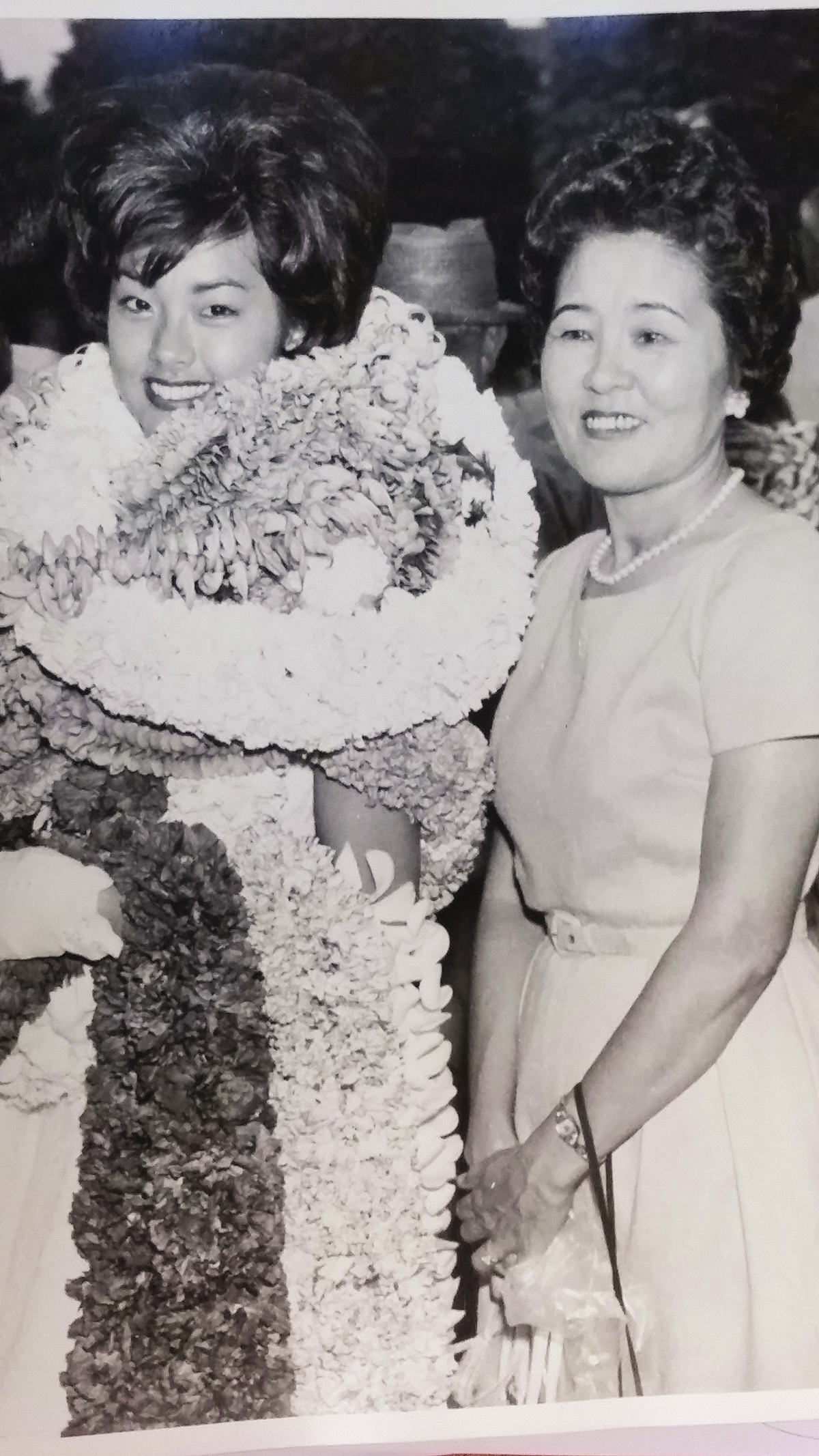
Carole with her mom, Ethel, on graduation day, McKinley High School, Class of 1962.
Carole’s mother Ethel encouraged her daughter’s talent, paying for piano lessons and dance classes. “She always told me, ‘Whatever you want to do, you can do it. And I’m there for you,’” says Carole, adding, “I had no fear of failure.” So, from a very early age, Carole believed that she could be and do anything she put her mind to. And for her, that was a career in music.
After graduating from McKinley High School, Carole earned a degree in music from the University of Hawai‘i at Mānoa. But she didn’t become a concert pianist as her mother had wished. “I wasn’t into practicing eight hours a day, all day, like some of the students in the music department,” Carole adds. “I’d rather be around people.”
Carole is truly a “people person” and enjoyed surrounding herself with crowds of people — entertaining audiences in Waikīkī and Japan and Las Vegas/Reno/Tahoe throughout the ’60s and ’70s. And she was happy to have her mother stay with her during her stints in Vegas. “I was doing things that she would have liked to do herself,” Carole says. “My mom also had dreams of being an entertainer.”
Carole Kai’s first professional gig was singing and playing the piano at the Tropicana Hotel as the opening act for Guy Lombardo. She later opened for Jerry Lewis, Roger Williams, Shecky Greene, George Carlin, and Don Rickles, and spent time with another girl from Hawai‘i, Elaine Okamura and her husband Wayne Newton.
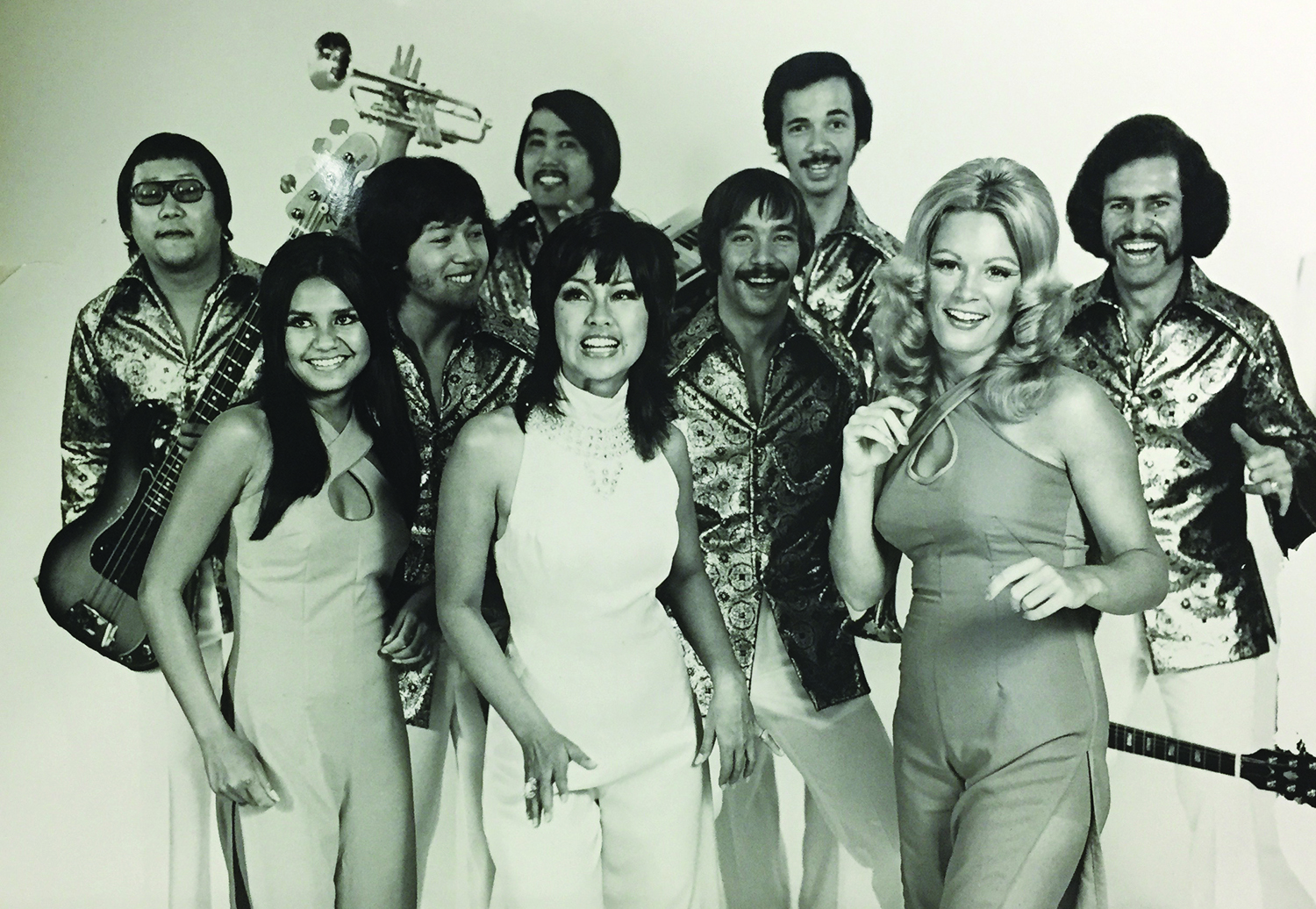
Carole performed at the Hilton Hawaiian Village’s Garden Bar (1968 to mid ‘70s) with the Fabulous Krush and singers Sonya Mendez and Debbie Simpson
Voted the “Most Talented” student at Washington Intermediate and McKinley High School, Carole was also named the “Most Promising Newcomer of the Year” in Las Vegas. And when she returned to Hawai‘i, she opened for Don Ho and later staged her own Vegas-style show.
In the late ’90s, Carole joined forces with powerhouse singers Loyal Garner, Melveen Leed, and Nohelani Cypriano to perform and record as The Local Divas. That musical match-up was quite a way for Carole to end her professional musical career. But she has continued to shine onstage, on television, and in the community.
Throughout it all, the exuberant Carole Kai never let celebrity go to her head. Instead, she used that platform to “do good” for other people. “My mother was always working,” she says. “So she never had time to give back to the community. And that’s what drives me to do it now.”
“My mother always told me, ‘You cannot keep taking out of the well, because the well will become dry. So you have to always give back,’” Carole adds. And she’s lived by those words to this day.
Giving back, with aloha
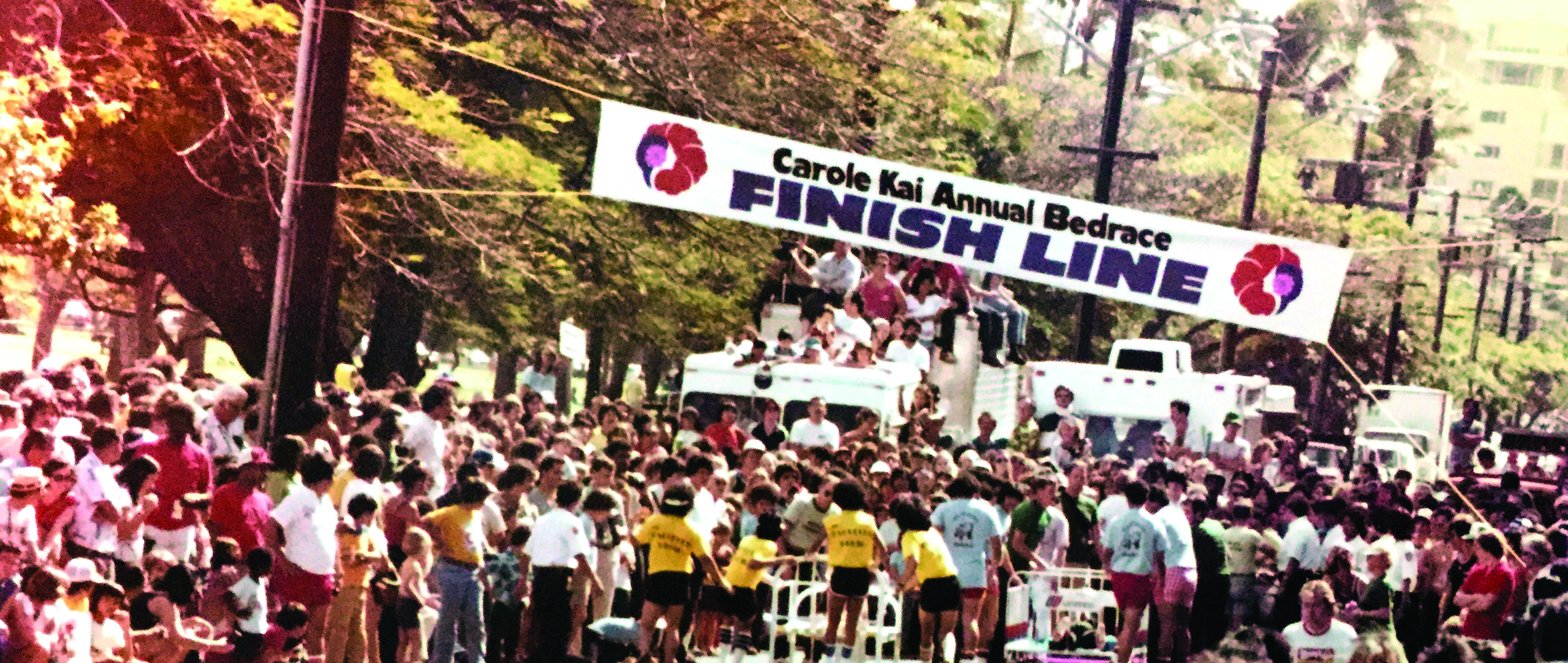
The Carole Kai International Bed Race was a popular event that raised over $2.5 million for charity from 1974–1994.
Through the Carole Kai International Bed Race, Carole invited the community to share in a fun event that raised millions of dollars for dozens of charities between 1974 and 1994. That included $2 million raised for the Variety School, a school for children, teens, and young adults with learning differences. The Bed Race was a huge success, but Carole would make an even greater impact with her next venture.
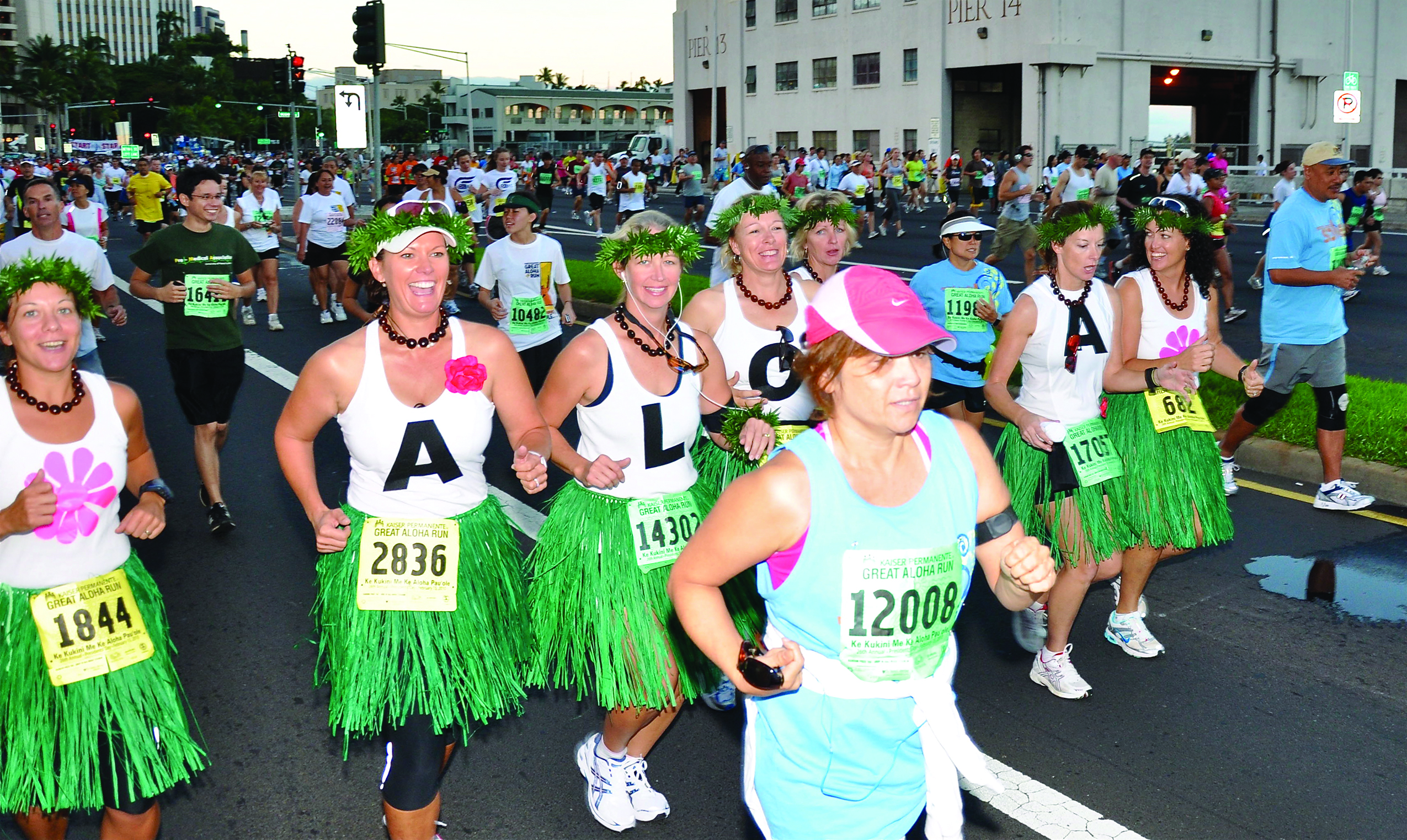
In 1985, Carole launched a great new idea. The Great Aloha Run brought together nearly 12,000 participants who made their way along an 8.15-mile path from Aloha Tower to Aloha Stadium, making it the largest first-time running event in the world.
The event’s instant success was a credit to its co-founders: Carole Kai Onouye and Dr. Jack Scaff, a renowned cardiologist known as the Father of the Honolulu Marathon.
To date, the Great Aloha Run and Carole Kai Charities have:
generated over $14 million in charitable giving
benefited over 150 nonprofit health and human service organizations, the military, and community groups, and
distributed 95 percent of its charitable donations within the State of Hawai‘i.
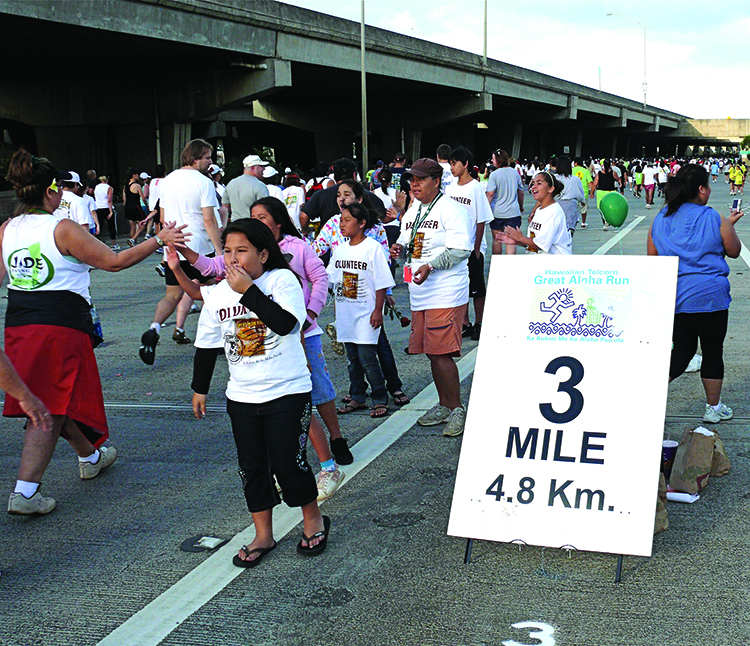
In 2019, the Great Aloha Run will celebrate its 35th year. That’s a major milestone for Hawai‘i’s largest participatory race — with more than 20,000 runners, joggers and walkers; over 4,000 volunteers; dozens of sponsors and donors; and only two full-time staff members.
“And we could not do the race without the input and guidance of our board members; Larry Okinaga, Randy Hiraki, Jean Hagi, Robin Campaniano, Ali Nikkhoo, Emi Anamizu, Stanford Carr and Mike McCartney,” says Carole.
Walking the walk, running the run
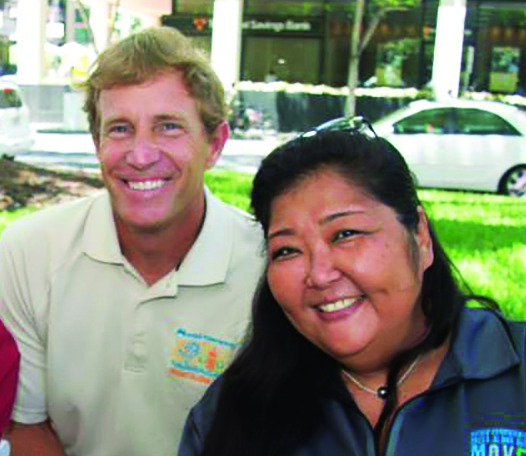
Carole Kai Charities, which “runs” the Great Aloha Run is a nonprofit organization whose sole mission is to raise funds for charities in the State of Hawai‘i. And the two people who “run” the office, Claire Nakamura Rochon and Brent Imonen, are a perfect complement to each other in skill set, mindset, and personality.
Claire works to maximize charitable giving by minimizing expenses, while Brent manages event operations and marketing, bringing new ideas to enhance the experience for participants.
“We solely exist to give money to charities,” says Claire, listing a few of the expenses vital to operating a safe and profitable event: from T-shirts and buses to barricades and port-a-potties, and from renting the Blaisdell Center and Aloha Stadium to lining the roadways with special duty officers. But Claire is always happy to say, “Our biggest expense is the charities. Once we pay all our bills, the rest goes to charities.”
The dynamic duo
Claire Rochon and Brent Imonen.
Claire Nakamura Rochon is a perfect fit as the Administrative Event Coordinator for GAR (the Great Aloha Run). She participated in the event herself (as a walker in high school). She worked at the Variety School (a beneficiary of both the Bed Race and GAR) and served as an administrative liaison for the events. And she volunteered for GAR before being hired to run its day-to-day operations. That’s the ideal resume, built over 30 years. And that makes for a perfect fit.
Today, Claire’s personal goals align with her professional ones — to ensure that both the Great Aloha Run and the giving can continue.
As Race Director for the Great Aloha Run, Brent Imonen is a perfect fit for his role, too. The former professional triathlete and competitive swimmer also volunteered for the event and participated in GAR as an elite runner, completing the 8.15-mile run in under 41 minutes. And before Brent worked as the GAR race director, he managed field marketing programs for sports drinks and other products at events that included the Great Aloha Run and Expo. He continues to work with community events like the Duke’s Oceanfest and Honolulu Ekiden & Music Festival. Along with his experience, Brent brings a for-profit mindset and creative ideas in event marketing.
When he’s asked about his vision for the future of the charity run, Brent points to the past. “In the early ’80s, when GAR first started, there was no internet, no social media, and there were fewer community events for people to choose from,” he says. So, for the Great Aloha Run to continue its success well into the future, Brent adds, “We need to be able to provide ‘that experience’ that people want to have and want to share. We all believe in the mission. But my perspective is a little out of the box. I think part of what I’m here to do, is to help transform GAR for the next 35 years. That’s the piece I add.”
Brent, Claire, and Carole enjoy working with community partners, sponsors, and volunteers year-round. And during the few months that the office quiets down and the office computers would otherwise sit idle, they invite seniors to attend free computer classes (taught by volunteers, of course) to learn to use technology and continue to enrich their lives.
Personal goals
This time of year — the end of one year and the beginning of another — is the perfect time to take the time to contemplate the accomplishments we each have made, while setting new goals that we can achieve, big or small.
If you’re like many people, participating in the Great Aloha Run is a major personal goal and may be one of the healthiest things you’ll do this year. And for some, it’s actually one of the healthiest things they’ll do all year.
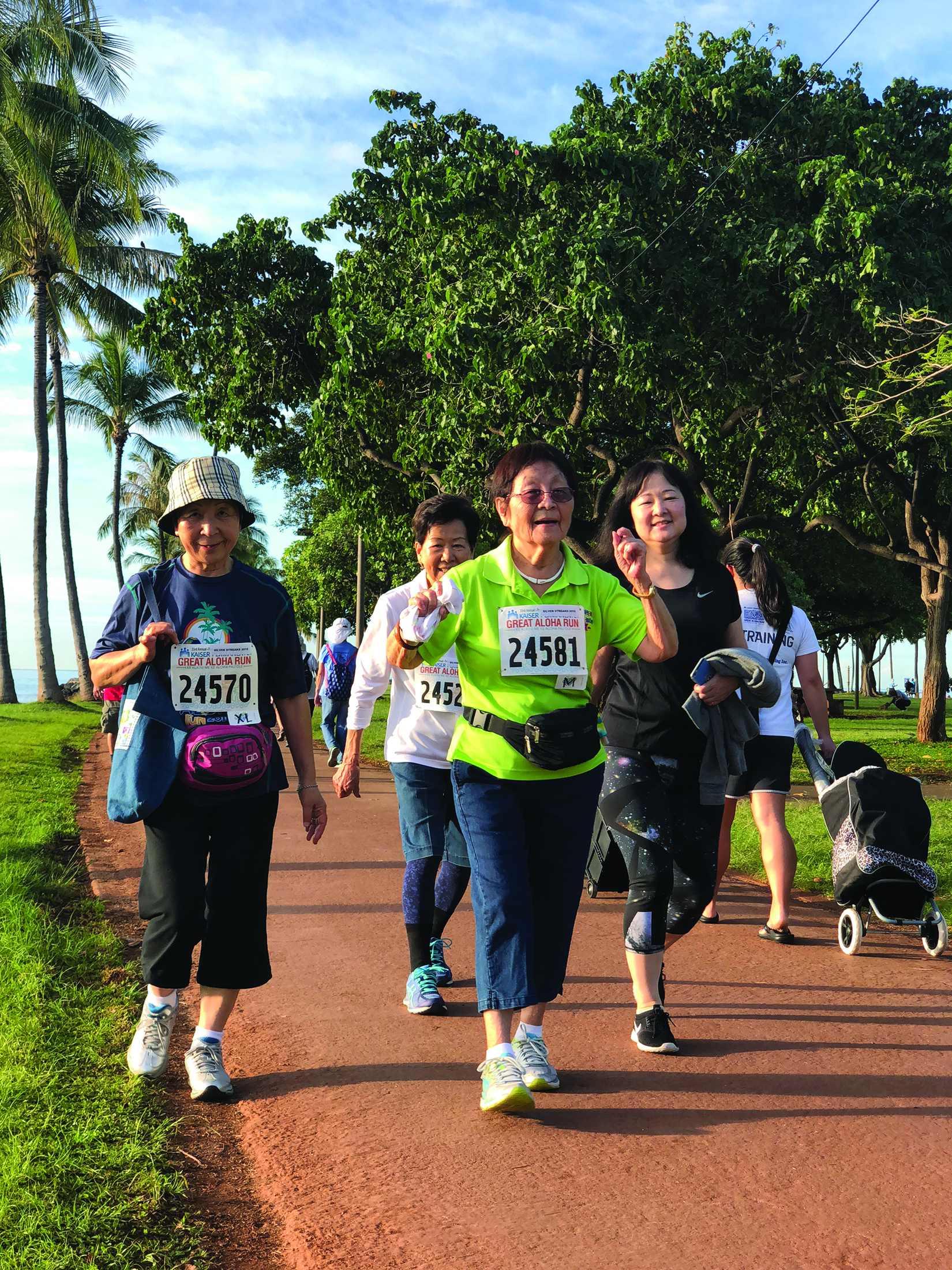
A good way to start working toward that goal is to participate in this year’s Silver Streaks Sunrise Walk for Seniors. Preparing for that event can lead to health benefits for you, and a good, fun time for all.
If you set the goal of participating in the upcoming Great Aloha Run or Silver Streaks Sunrise Walk, consider training with a friend, and work to keep one another motivated. Visualize your goal becoming a reality. Imagine the feeling of being encouraged and sharing the aloha spirit with others around you as you cross the finish line.
And for those who may not wish to run or walk, you can also volunteer to help at the events and share your aloha with others throughout the community.
It’s never too late to set new personal goals, or work toward ones you may have set for yourself many years ago — like Carole Kai Onouye, who’s living up to the personal goal she set as a little girl: just to make her mother happy.
By sharing her aloha with other people in the community, Carole is like a backyard superhero with a bedsheet cape.
Silver Streaks Sunrise Walk
The Silver Streaks Sunrise Walk for Seniors is a fun, healthy walking event planned especially for seniors age 55+ on a 2-plus mile course around Ala Moana Park. (The flat, traffic-free route will begin near McCoy Pavilion.)
The Hawaii Recreation & Parks Society, which produces the event in conjunction with the Great Aloha Run, offers participants lots of encouragement along the course, refreshments, entertainment, door prizes, and an official Silver Streaks T-shirt when they reach the finish line. Participants will also receive FREE entry into the Great Aloha Run Sports Health & Fitness Expo on Saturday, Feb. 16, 2019. (That’s one week after the Silver Streaks Sunrise Walk.)
Great Aloha Run
The Hawai‘i Pacific Health Great Aloha Run (GAR) is held each year on Presidents Day and is viewed differently by different people. It’s a competitive race for elite runners, a fun run for fitness fans, a healthy walk for groups and individual weekend warriors, and an annual event for local military groups. It’s promoted as having a place for everyone who wants to participate, with a warmly inclusive philosophy reflected in the Hawaiian phrase, “Ke kukini me ke aloha pau‘ole” — the race with compassionate love.
Many people benefit from participating in regularly scheduled In Training Workshops throughout the year. And thousands of people of all ages attend the annual Great Aloha Run Sports Health & Fitness Expo where they gain new information and helpful tips to improve their health and fitness. To learn more about the Great Aloha Run, the Silver Streaks Sunrise Walk for Seniors, and the Great Aloha Run Sports Health & Fitness Expo, visit the website at: www.greataloharun.com.
2019 Silver Streaks Sunrise Walk
For the first time ever, the 30th Silver Streaks Sunrise Walk for Seniors will be held in conjunction with the Keiki Great Aloha Run. Both events will take place on the same 2-mile course, on the same day.
DATE:
Saturday, February 9, 2019
TIME:
6:45am walk numbers distributed
7:15am warm-up
7:30am walk begins
LOCATION:
Meet at McCoy Pavilion, Ala Moana Bch. Pk.
ENTRY DONATION:
$15 by January 31, $20 on or after February 1 (shirt size guaranteed for entries postmarked by Jan. 23)
From a very young age, Carole Kai showed a flair for the dramatic — sometimes pulling a bedsheet off the clothesline and holding it tightly across her shoulders while flying around the backyard like a superhero. Other times, she showed a more businesslike approach — like the time she hosted a boxing match in her backyard and sold tickets…
From a very young age, Carole Kai showed a flair for the dramatic — sometimes pulling a bedsheet off the clothesline and holding it tightly across her shoulders while flying around the backyard like a superhero. Other times, she showed a more businesslike approach — like the time she hosted a boxing match in her…
Former first lady Rosalynn Carter was a caregiver herself and she believed that family caregiving is a cycle of life that touches everyone. In this issue, four people, each at a different point on the cycle, share their care stories from the heart, offering words of wisdom and points of caution. As you read, consider…
If I were to open a crime college, a place to learn the fine art of thievery, one class that would assuredly be on the curriculum would be Advance Fee Frauds, commonly known as sweepstakes and lottery frauds. This con involves the victim being told the lie that money is coming their way (usually from lottery winnings, insurance refunds or inheritance) but a fee/tax/processing charge has to be paid first to receive it. This one scheme is responsible for more money being stolen in Hawai‘i than any other crime.
According to the Better Business Bureau, nearly 500,000 people have reported this fraud to various enforcement agencies in North America from 2015 to 2017. In that time, funds lost totaled $344,414,685. However, studies have shown only 1 in 25 cases are even reported to the police.
These scams tend to originate outside of the U.S., mainly in countries such as Jamaica and Costa Rica. Losses to fraud in Jamaica in 2015 (those that had been discovered) amounted to over $38 million. Money that resulted from these scams has been used to buy guns and drugs within Jamaica. In fact, so much money is being made in Jamaica from this scam, that organized crime has dramatically increased, resulting in deadly gang wars between rival fraud groups spilling out onto the streets. As a result of these problems, a State of Emergency has been declared for Jamaica.
Countries such as Jamaica and Costa Rica both have large English-speaking populations, which is effective when speaking to potential victims. They claim they are from somewhere within the U.S., giving a false sense of security to victims, and slowly convince them they are not being scammed.
Costa Ricans tend to use Voice Over Internet Protocol (VOIP), also known as internet phones, which give them the ability to change their area code. They often claim to be from a government agency to give potential victims a false sense of security when providing payment for taxes, fees, transportation, and/or security, for their “winnings.”
Operations in Canada, Israel, Spain, and the Philippines have been linked to these sweepstakes/lottery scams, too. They tend to “spoof” phone numbers, resulting in area codes that appear to come from within the U.S. — Las Vegas or Washington D.C. area codes are often used.
The takeaway from all this is people need to realize that there is no “free lunch” and they are not lucky enough to get something for nothing. As I explained in the Oct/Nov 2017 and Dec/Jan 2018 issues (online at www.generations808.com under “Wisdoms”), a person in Hawai‘i has a ZERO percent chance of winning the lottery. Too many people have fallen victim to this scam and have fueled crime and violence all over the world.
If I were to open a crime college, a place to learn the fine art of thievery, one class that would assuredly be on the curriculum would be Advance Fee Frauds, commonly known as sweepstakes and lottery frauds. This con involves the victim being told the lie that money is coming their way (usually from…
It is not just families who disagree about the interpretation of legal documents. There seems to be tension among estate planning attorneys in regard to recommending that clients write down their heartfelt intentions to accompany those documents. Many lawyers believe that it is the form that is most important — that the written legal language will communicate their client’s heartfelt wishes. Others believe that, no matter how carefully written, the form alone cannot transfer intention.
This is particularly true of discretionary trusts. Although the Trust provides the legal power for the Trustee to act, it usually does not state the maker’s underlying reasoning or intention of how the client would like to see their assets spent.
In his book Borrowed Narratives, Harold Smith tells us that making the personal statement in story form is better remembered and more persuasive than a sterile legal document. He further states that putting one’s thoughts in writing slows it down for the reader so that they can better understand the maker’s meaning.
Please make sure, when you are working with your estate planning attorney, that your underlying intentions for making the trust are clearly defined. This can make all the difference.
It is not just families who disagree about the interpretation of legal documents. There seems to be tension among estate planning attorneys in regard to recommending that clients write down their heartfelt intentions to accompany those documents. Many lawyers believe that it is the form that is most important — that the written legal language will communicate…
Many parents, in addition to planning for their own future, care deeply about helping their children find their financial footing as they enter adulthood. Having spent decades building up their nest eggs for retirement, they recognize the power of long-term financial planning and hope their children will capture the same benefits by starting to invest while they are young. Convincing someone just starting off in their careers to set aside money for retirement — which to them, may seem like light years away — can be a tough sell. But, initiating the conversation in a respectful and educated manner may eventually compel them to make it a priority. If you’re a parent looking for guidance in this area, consider the following discussion pointers.
First, recognize the challenges young professionals may face
Those starting their career often face two challenges in establishing their nest egg. The first is feeling that they have all the time in the world to save for retirement. The second challenge is that young adults are balancing numerous priorities with their newfound financial independence. Acknowledge and be realistic about these hurdles, even as you make the case for setting aside money for retirement.
Then, outline the key reasons for making retirement savings a priority
Retirement may come sooner and last longer than they may think. The average American can spend any time between a few years to over 40 years in retirement. And while some retirees choose to continue earning a paycheck, the majority are relying on their savings to cover expenses. This means the costs to live the way you want in your later years — traveling, pursuing your hobbies, engaging with family — can easily surpass one million dollars.
They will likely balance financial priorities throughout their lives. Learning how to manage priorities and save for multiple goals at the same time is a valuable skill. Deciding to be thoughtful about saving, investing and spending money today can help young professionals set a strong financial foundation as their income grows.
Young professionals have a huge advantage in saving: time. A modest amount saved over several decades has the potential to grow into a significant sum due to the power of compound interest. Consider sharing the following example: Imagine if you saved $100 per month beginning at age 25, which is the equivalent of a little more than $3 per day. If the money was invested, earning an average annual return of seven percent, the savings would amount to nearly $367,000 by age 70. Now, suppose you waited until age 35 to start your retirement fund. If you invested $200 a month, still earning seven percent per year, your savings would grow to about $355,000. That’s still impressive, but it required you saving twice as much money per month than if you began ten years earlier.
They control their own destiny, but they can learn from your successes and mistakes with money. As adults, your children are ultimately responsible for saving for their retirement. But, chances are, they could stand to benefit from the wisdom you’ve gained from decades of saving and investing. Opening up about your experiences — both smart money moves and missteps you’ve made over the years — may help them capture opportunities and avoid mistakes as they work to build their nest eggs.
If you or your child would like assistance crafting a retirement saving strategy, reach out to a financial advisor. Together you can find a way to balance the items most important to you.
Many parents, in addition to planning for their own future, care deeply about helping their children find their financial footing as they enter adulthood. Having spent decades building up their nest eggs for retirement, they recognize the power of long-term financial planning and hope their children will capture the same benefits by starting to invest…

 You can use the S.M.A.R.T. approach just as well with lo-tech pen and paper, but here is how my computerized watch helps me to set goals specifically for physical activity:








 These scams tend to originate outside of the U.S., mainly in countries such as Jamaica and Costa Rica. Losses to fraud in Jamaica in 2015 (those that had been discovered) amounted to over $38 million. Money that resulted from these scams has been used to buy guns and drugs within Jamaica. In fact, so much money is being made in Jamaica from this scam, that organized crime has dramatically increased, resulting in deadly gang wars between rival fraud groups spilling out onto the streets. As a result of these problems, a State of Emergency has been declared for Jamaica.