Category: Date

  • How to Figure Your Payment Date

    Social Security benefits are paid each month. Generally, new retirees receive their benefits on either the second, third, or fourth Wednesday of each month, depending on the day in the month the retiree was born. In general, here’s how we assign payment dates:
    There are exceptions. For example, children and spouses who receive benefits based on someone else’s work record will be paid on the same day
    as the primary beneficiary.

    For others, we may issue your payments on the 3rd of each month. Among other reasons, we use that payment date if:

    ✓ you filed for benefits before May 1, 1997;
    ✓ you also receive a Supplemental Security
    Income (SSI) payment; or
    ✓ your Medicare premiums are paid for by the state where you live.

    Those receiving SSI payments due to disability, age, or blindness are paid on the 1st of each month.

    If your payment date falls on a federal holiday or weekend, expect to receive that month’s payment on the weekday immediately prior.

    An easy-to-read schedule can be found at
    www.ssa.gov/pubs/EN-05-10031-2018.pdf


    For questions, online applications or to make an appointment to visit a SSA office, call from 7am–5pm, Mon–Fri: 800-772-1213 (toll free) | www.socialsecurity.gov

    Social Security benefits are paid each month. Generally, new retirees receive their benefits on either the second, third, or fourth Wednesday of each month, depending on the day in the month the retiree was born.

  • Volunteering Across the Generations

    Volunteering is a popular antidote to feelings of isolation that can occur as we age. Here are two programs that enable seniors to share their time and skills with younger generations.

    Encore: Gen2Gen

    Child and Family Service (CFS) has served the needs of vulnerable populations in Hawai‘i since 1899. In partnership with a national nonprofit, Encore, CFS offers many ways for volunteers aged 50+to support that important work.

    Volunteer coordinator, Encore Fellow Kevin Henry, can find a place for you no matter if you have only a few hours a month or if you feel you don’t have any special skills. Doing inventory at a donation center or mentoring about financial literacy are just two examples.

    Foster Grandparent Program

    If you are aged 55+and can work a minimum of 15 hours a week, you can apply to be a Foster Grandparent volunteer with the Dept. of Human Services. There are certain health and other requirements.

    As a Foster Grandparent volunteer, you’re a role model, a mentor, and a friend. Serving at educational institutions, you help set a child on the path toward a successful future.


    CHILD AND FAMILY SERVICE
    Volunteer Engagement Manager: Kevin Henry
    808-342-2516 | khenry@cfs-hawaii.org
    FOSTER GRANDPARENT PROGRAM
    808-832-5169 | www.bit.ly/DHS_FosterGrandparent

    Volunteering is a popular antidote to feelings of isolation that can occur as we age. Here are two programs that enable seniors to share their time and skills with younger generations.

  • Medicare News!

    According to Kathryn Coleman, Director at the Centers for Medicare and Medicaid (CMS), a final rule issued in April 2018 has redefined the “primarily health related” supplement benefit definition. As a result, CMS expects Medicare Advantage plan sponsors to begin offering services for enrollees needing assistance with Activities of Daily Living (ADL) or Instrumental Activities of Daily Living (IADL). Plans are not required to provide any of the services and restrictions may apply, but it is a first step toward utilization of Medicare insurance for long-term services. That’s great news for caregivers of Medicare beneficiaries on limited incomes who did not make provision for non-medical care as they age. The list below details possible options resulting from CMS’s new ruling. This list is not exhaustive.

    • In-home support for individuals with disabilities and/or medical conditions needing help with ADLs and IADLs
    • Respite care for caregivers from a personal care attendant or short-term institutional care
    • Stand-alone memory fitness benefit
    • Non-Medicare-covered home and bathroom safety devices and modifications to prevent injuries
    • Transportation to/from doctor visits, the pharmacy or physical therapy with a health aide
    • Over-the-counter items not covered by Medicare or prescription drug plans

    Whether Medicare Advantage plans implement any of these services in 2019, or beyond, there will be a growing interest and high demand for long-term services and support as Medicare enrollees age.


    MEDICARE MOMENT WITH MARTHA
    A radio program with Martha Khlopin
    KHNR-690AM: Sundays 9:30am–10am
    808-230-3379 | getmartha@aol.com

    According to Kathryn Coleman, Director at the Centers for Medicare and Medicaid (CMS), a final rule issued in April 2018 has redefined the “primarily health related” supplement benefit definition. As a result, CMS expects Medicare Advantage plan sponsors to begin offering services for enrollees needing assistance with Activities of Daily Living (ADL) or Instrumental Activities…

  • Keeping Seniors Happy, Healthy & Strong

    When a senior member of your family is in need of 24/7 care, it is fortunate that Hawai‘i has many professional, caring and dedicated homes and facilities to welcome them. What every family wants to know is: “Will my mom or dad be happy living in someone else’s home, eat right, and stay mentally and physically strong?” It may be even more important to you that your 80-, 90- or even 100-year-old family member lives in a facility that can assist them to improve their daily life.

    Placing your loved one in a residential care home takes a lot of research. On your visit to the care facility, observe these few things:

    • Are the staff and residents happy and engaged with each other?
    • What is the routine of their daily life: eating, sleeping, exercising, etc.?
    • Is the facility clean, safe from trip hazards, open, and welcoming?
    • Does the facility encourage participation in activities, like handicrafts, created around the residents?
    • Do residents’ bedrooms have a TV so they don’t have to watch it with others?

    Many facilities may have “respite” care to see how they would like living there. Let them make the decision for their happy, healthy and strong life.


    AIEA HEIGHTS & WAIALAE SENIOR LIVING I & II
    99-1657 Aiea Heights Drive | 2945 Kalei Road
    808-488-5521 | 808-941-6940
    www.aieaheightsseniorliving.com

    When a senior member of your family is in need of 24/7 care, it is fortunate that Hawai‘i has many professional, caring and dedicated homes and facilities to welcome them. What every family wants to know is: “Will my mom or dad be happy living in someone else’s home, eat right, and stay mentally and…

  • From a Patient’s Point of View

    People living with dementia (PLWD) have challenges with verbal communication: language comprehension, speech production, and vocabulary. But they are not unconscious to what is going on around them. Even as the brain declines, emotional intelligence is preserved. PLWD take in data visually rather than auditorily and react to what they think is happening. As caregivers we must remember that PLWD are really doing the best they can with the abilities they have left.

    Try not to expect them to be the way they used to be. Accept them for who they are now and who they’re becoming. Promote independence by encouraging participation in meaningful activities. We all want to feel “of use” in this crazy world and PLWD are no different.

    The feelings they may find hard to express are captured in this poem, inspired by a dementia patient.


    MEMORY FRIENDS
    Respite, Education & Consultation
    Mapuana Taamu, Certified PAC Trainer
    808-469-5330
    mfriends808@gmail.com

    People living with dementia (PLWD) have challenges with verbal communication: language comprehension, speech production, and vocabulary. But they are not unconscious to what is going on around them. Even as the brain declines, emotional intelligence is preserved. PLWD take in data visually rather than auditorily and react to what they think is happening. As caregivers…

  • Being a Better Caregiver

    Home healthcare providers are often asked what makes a better caregiver. The answer is that, while many factors come to mind, an interest in learning is high on the list, and essential to a caregiver’s progress.

    For example, an important role caregivers have is recognizing when an individual’s health condition is changing. Those who can reflect and learn from these changes often develop into better caregivers.

    Caregiving for a family member can be challenging enough. But whether this occurs suddenly or as a gradual decline in health, caregivers can learn more and better themselves starting with some basic tips:

    1. Be healthy. Simply put, the healthier you are both mentally and physically, the better able you’ll be to pursue and provide care. This means eating healthy, staying active, and getting enough rest. When done consistently, caregivers have the energy to care for others and learn to avoid burn out.
    2. Get help. Sometimes, caregivers come across situations that are confusing or new to them. Perhaps their loved one is responding differently with their care routine. That observation could mean a condition needs more help from a medical provider. While asking for help can feel awkward for some, it’s a great way for caregivers to learn and make connections with what they see.
    3. Take courses. Look for free or low-cost courses in your area. There are many online courses that teach everything from caregiving techniques to self-care strategies that can be a part of your caregiving library. Many hospitals, home care agencies, hospice providers, caregiver support groups, and assisted living facilities also offer help in the way of seminars and workshops.
    4. Observe others. Sharing time with a more experienced caregiver is a great way to learn hands-on skills or another way of doing something. Since each person is different with their own set of circumstances, it helps to learn from others in a similar situation and share experiences.
    5. Support groups. Support groups can be a life force for caregivers. They provide mental, emotional, spiritual, social, and educational support needed for caregivers to continue doing what they’re doing and avoid burnout. Some support groups also provide respite and other resources to relieve a caregiver, allowing them to better reflect and process what is happening to them.
    6. Get rest. The busier you are the more important and vital rest becomes in a caregiver’s life. There is no other substitute for it and no one else can do it for you. Good caregivers make a plan for down time, to recharge themselves, and learn to protect that time from being encroached upon by others.

    In healthcare, caregivers are always learning, adjusting their knowledge and skills, and adapting to new information. This occurs even when a caregiver becomes the one being cared for, and experiences things from a new perspective. By continuing an interest in learning new things and being flexible, a caregiver can better themselves and the quality of life for others.


    ATTENTION PLUS CARE HOME HEALTHCARE
    Accredited by The Joint Commission
    1580 Makaloa St., Ste. 1060, Honolulu HI 96814
    808-739-2811 | www.attentionplus.com
    AGING IN HAWAII EDUCATIONAL OUTREACH PROGRAM by Attention Plus Care — a program providing resources for seniors and their families, covering different aging topics each month. For caregiver training and upcoming topics, call 808-440-9356.

    Home healthcare providers are often asked what makes a better caregiver. The answer is that, while many factors come to mind, an interest in learning is high on the list, and essential to a caregiver’s progress. For example, an important role caregivers have is recognizing when an individual’s health condition is changing. Those who can…

  • Healthy Aging and Hearing Loss

    As we age, our hearing often loses its edge. Clinical research suggests that hearing loss can have a negative effect on some key measures of healthy aging as cognitive, physical and social functioning decline. A study by the National Institute on Aging indicates that people with untreated hearing loss are significantly more at risk of developing Alzheimer’s and dementia.

    Hearing loss gradually sneaks up on us. Over time, we adjust and adapt, but even a mild hearing loss can be a source of misunderstanding and failed communication, leading to stress, fatigue and self-imposed isolation.

    Modern hearing devices are virtually invisible, comfortable and easy to use. As a result, those with hearing loss are no longer prevented from enjoying the activities that make life more enjoyable, like dining out with friends at their favorite restaurant or being present with family.

    The first step in correcting a hearing problem is to have the amount and type of loss measured by a hearing specialist.

    A professionally fitted hearing aid may be the key to enjoying a better tomorrow!


    OHANA HEARING CARE
    1296 S Beretania St., #102, Honolulu HI 96814
    808-593-2137 | www.ohanahearingcare.com

    As we age, our hearing often loses its edge. Clinical research suggests that hearing loss can have a negative effect on some key measures of healthy aging as cognitive, physical and social functioning decline. A study by the National Institute on Aging indicates that people with untreated hearing loss are significantly more at risk of…

  • Improve Your Health with Tai Chi

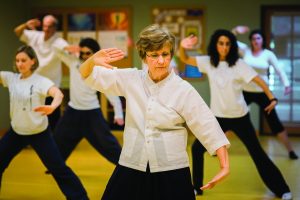
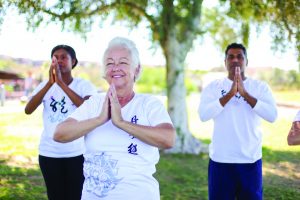
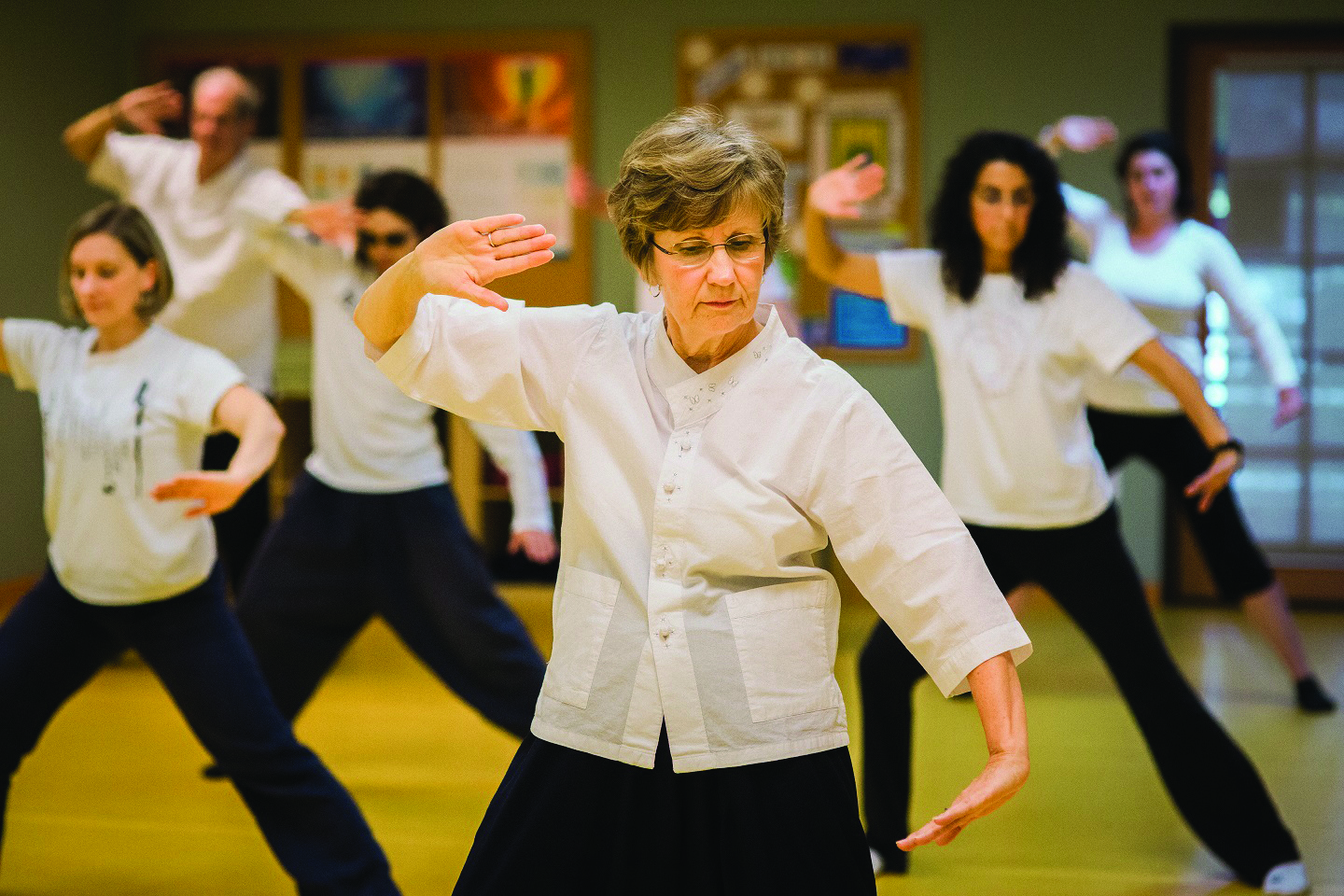
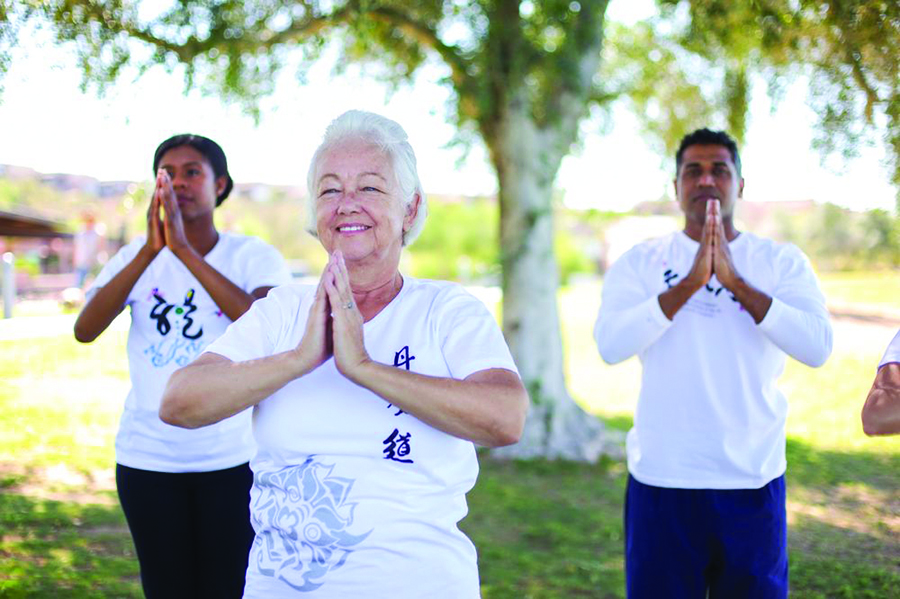
    Tai Chi, often referred to as “moving meditation,” is an ancient Chinese practice characterized by slow, flowing, low-impact movements and deep breathing. It offers wonderful benefits for any age group and is an incredibly effective and helpful practice for older adults. Potential benefits include:

    • improved balance and fall prevention
    • relief for arthritis symptoms
    • improved blood pressure and circulation
    • increased relaxation and stress relief

    Tai Chi also taps into the principle of Mindfulness — being able to calmly focus on a single idea, movement, thought, or problem.

    The Tai Chi for Health program at the Nā Kūpuna Makamae Senior Center in Honolulu, taught by certified instructor Randal Lau, provides a safe exercise designed specifically to meet the challenges of aging. It is open to all fitness levels and abilities, and is a great way to relax, enjoy yourself and improve your health and overall well-being! The class runs Tue. 10–11am and Fri. 11am–12pm.

    Weekly kūpuna activities at the Senior Center in the historic pumping station on Ala Moana Blvd. include: Gentle Yoga & Sound Bath, Hula, Qi Gong, Hawaiian Language, Lauhala Weaving, Pua Culture/Lei-Making Class, Hanafuda, Tech Savvy Seniors, Kūpuna Podcasting, and a monthly Farmers Market.


    NĀ KŪPUNA MAKAMAE SENIOR CENTER
    A Project of Pacific Gateway Center
    653 Ala Moana Blvd., Honolulu HI 96813
    808-774-7047 | M-F 9am-5pm
    www.NaKupunaMakamae.org

    Tai Chi, often referred to as “moving meditation,” is an ancient Chinese practice characterized by slow, flowing, low-impact movements and deep breathing. It offers wonderful benefits for any age group and is an incredibly effective and helpful practice for older adults.

  • SQUAT – The One Exercise You Should Learn

    Just think of the tasks you do every day that should involve a squat: getting on/off a chair or toilet or picking up something from the floor.

    A “modified squat” is one of the most beneficial exercises to learn. It strengthens the lower body and core and reduces the strain on the knees when done right.

    Unfortunately, most people never learn the PROPER way to squat (a squat is NOT the same as a knee bend). To start:

    • POSITION feet hip distance apart, toes ideally pointing forward
    • SET yourself by pressing the big toe into the ground, push your knees slightly out and keep the knees in line with the ankles and the toes — try to maintain the normal curves in your neck and back and keep your shoulders in line with your hips
    • BEGIN with a “hip hinge” or bow (DO NOT start with your knees) — PUSH your butt back as if sitting on a chair — KEEP your weight and pressure on the big toes and heels
    • KNEES STAY BEHIND THE TOES squatting down —
      On the way UP, squeeze in your stomach and butt muscles and drive through the heels as you stand

    Do 10–12 squats, 3–5 times a day, and soon you’ll be feeling stronger and more steady on your feet.


    GYMGUYZ Urban Honolulu
    808-638-2525 | www.gymguyz.com

    A “modified squat” is one of the most beneficial exercises to learn. It strengthens the lower body and core and reduces the strain on the knees when done right. Unfortunately, most people never learn the PROPER way to squat.

  • Rehab for Breast Cancer Recovery

    October is National Physical Therapy Month and National Breast Cancer Awareness Month. Physical therapy may not be the first healthcare field that comes to mind when someone is undergoing cancer treatment, but physical therapists can play an integral role in promoting a speedy recovery and in assisting a return to previous levels of activity following surgery and radiation/chemotherapy treatments.

    Overhead reaching and elevating the arms forward, back and sideways are often affected as one recovers from lymph node resection, chest wall radiation, or breast reconstruction. Early intervention with manual therapy, such as scar tissue and trigger point release, passive range of motion, and joint mobilization help to reduce pain and tightness, and can improve upper extremity mobility and function. Desensitization techniques, such as vibration or rubbing with a textured cloth can help to treat nerve hypersensitivity. Physical therapy can address additional side effects, such as fatigue, bone and joint pain, osteoporosis, headaches and weakness. Along with building strength and increasing endurance with an individualized program prescribed by a physical therapist, socialization and the release of endorphins that occur with exercise can also help to improve the psychological aspect associated with the diagnosis of cancer.

    It’s never too late to begin rehab services for cancer recovery. If you have difficulty performing daily tasks, seek out a physical therapist to help restore healthy movement, comfort and function.


    MOON PHYSICAL THERAPY, LLC
    320 Ward Ave., Ste. 107, Honolulu HI 96814
    95-1057 Ainamakua Dr. F-11, Mililani HI 96789
    808-597-1005 | www.moonpt.com

    October is National Physical Therapy Month and National Breast Cancer Awareness Month. Physical therapy may not be the first healthcare field that comes to mind when someone is undergoing cancer treatment, but physical therapists can play an integral role in promoting a speedy recovery and in assisting a return to previous levels of activity following…

  • An Innovative Way to Keep in Touch

    As hearing loss progresses, it often becomes more difficult to understand what is being said over the telephone. While texting on a mobile phone is one solution, the loss of manual dexterity as we age can make that very frustrating. It’s disheartening not to be able to communicate easily with loved ones and friends.This challenge has led to the development of technology that brings together captioning and a telephone. This has become known as the “captioned telephone.”

    A captioned telephone enables a conversation to be conducted using a built-in screen to display the written words as they are spoken. It can restore your confidence in communicating over the phone, so you can connect with the people you care about, just like you used to. The equipment is simple to use and is available for free in the State of Hawai‘i if the applicant meets certain eligibility requirements.

    If you have a friend or loved one who has hearing loss and has difficulty understanding on the telephone, encourage them to check out this innovative solution and help them reconnect!


    HAWAII CAPTEL®
    877-805-5845 (toll-free) | info@captel.com
    www.hawaiicaptel.com

    As hearing loss progresses, it often becomes more difficult to understand what is being said over the telephone. While texting on a mobile phone is one solution, the loss of manual dexterity as we age can make that very frustrating. It’s disheartening not to be able to communicate easily with loved ones and friends.

  • When a ‘Friend’ is Not a Friend

    One of the trending online fraud schemes involves being contacted by either friends or relatives via email or through social networking services like Facebook about receiving large amounts of money through investments, a class action lawsuit, or even a random contest drawing.

    However, these “friends” or “relatives” are NOT who they claim to be, but online fraudsters impersonating the subject’s real friends and relatives. They try to convince the subject that the scheme, whatever it may be, is legitimate and, once doing so, then introduce them to another party to assist the subject in obtaining the funds. Again, this person is just another fraudster in the scam and may even be the same person who claims to be the subject’s friend/relative!

    The best thing to do in these situations is not respond at all. If it becomes a nuisance, block the sender or unfriend that “friend.”


    THE DEPARTMENT OF THE PROSECUTING ATTORNEY
    1060 Richards St., Honolulu HI 96813
    808-768-7400  |  Office hrs: Mon – Fri, 7:45 am – 4:30 pm
    www.honoluluprosecutor.org/contact-us/

    One of the trending online fraud schemes involves being contacted by either friends or relatives via email or through social networking services like Facebook about receiving large amounts of money through investments, a class action lawsuit, or even a random contest drawing. However, these “friends” or “relatives” are NOT who they claim to be.