While AI has the potential to greatly benefit seniors (see the Sept.–Oct. issue), it also presents certain risks:
◆ PRIVACY CONCERNS Data Security: AI systems often collect and store personal data, which can lead to privacy breaches. Seniors may be particularly vulnerable to data theft or misuse. Surveillance: Increased use of AI in monitoring systems (home security cameras) can lead to concerns about loss of personal privacy.
◆ DEPENDENCE ON TECHNOLOGY Over-reliance: Seniors may become overly dependent on AI technologies, which could diminish their ability to perform daily tasks tasks independently if the technology fails or is unavailable. Skill erosion:Relying on AI for cognitive tasks like remembering appointments may lead to a decline in memory and problem-solving skills.
◆ ACCESSIBILITY ISSUES Digital divide: Not all seniors are comfortable with or have access to technology. This can create disparities in who benefits from AI. Complexity: Some AI systems may be too complex for seniors to use effectively, leading to frustration and disengagement.
◆ BIAS AND INACCURACY Algorithmic bias: AI systems can reflect biases present in their training data, leading to inaccurate or unfair outcomes. For example, health recommendations may not be suitable for all demographics, including seniors. Misinformation: AI-driven platforms may inadvertently provide incorrect information, which could lead to poor decision-making.
◆ SOCIAL ISOLATION Reduced human interaction: While AI can provide companionship, it may replace direct interactions with family/friends, causing isolation. Emotional disconnect: AI lacks the genuine empathy and emotional understanding that are important to seniors seeking human contact.
◆ HEALTH RISKS Miscommunication: AI systems may misinterpret a senior’s needs or conditions, leading to unfit or missed care. Inadequate support: If seniors rely solely on AI for health management, they may neglect to seek necessary human medical advice or intervention.
◆ FINANCIAL EXPLOITATION Cost of technology: The financial burden of acquiring and maintaining AI technologies can be a concern for seniors on fixed incomes. Scams and fraud: Seniors may be targeted by scams that exploit AI technologies (phishing attacks/fraudulent services that appear legitimate).
HOW SCAMMERS USE AI TO TARGET SENIORS
◆ PHISHING ATTACKS Automated phishing: AI can generate convincing emails or messages that mimic legitimate organizations, tricking seniors into providing personal information, such as passwords or financial details. Voice phishing (vishing): AI-generated voice calls can impersonate trusted entities to extract sensitive information from seniors.
◆ DEEPFAKE TECHNOLOGY Impersonation: Scammers can use deepfake technology to create realistic videos or audio recordings of trusted individuals such as family members, making the scam more believable. Fake news and misinformation: AI can generate false news stories or social media posts that manipulate seniors into making hasty decisions.
◆ CHATBOTS & VIRTUAL ASSISTANTS Fraudulent chatbots: Scammers can deploy AI chatbots that engage seniors in conversation, providing false information or persuading them to share personal details or make payments. Social engineering: AI can analyze social media profiles to craft personalized messages that persuade seniors to fall for a scam.
◆ TARGETED ADVERTISING Data mining: Scammers use AI to analyze data from social media and online activities to target seniors with tailored ads for products/services. Manipulative marketing: AI can create marketing messages that exploit seniors’ fears or desires, making them buy or invest impulsively.
◆ INVESTMENT SCAMS Automated trading bots: Scammers may use AI-driven trading platforms to lure seniors into fraudulent investment schemes. Fake investment opportunities: AI can generate convincing promotional materials for fake/non-existent investment opportunities.
◆ SOCIAL MEDIA SCAMS Fake profiles: Scammers can create fake profiles using AI-generated images and information to befriend seniors on social media, eventually leading to requests for money or personal information. Romance scams: AI can help scammers craft romantic messages that appeal to seniors, building trust before asking for financial assistance.
◆ RANSOMWARE & MALWARE Automated attacks: AI can automate the distribution of ransomware or malware, targeting devices to lock seniors out or steal information. Phishing links: AI can generate convincing links that lead to malicious websites designed to harvest personal information or install harmful software.
REDUCING YOUR RISKS
◆ EDUCATION Learn about common scams: Familiarize themselves with common scams that target seniors. Understand AI technology: Gain a basic understanding of how AI works.
◆ BE CAUTIOUS WITH INFORMATION Limit sharing: Avoid sharing personal information unless absolutely necessary. Verify requests: Always verify requests for personal information by contacting the organization.
◆ USE TRUSTED SOURCES Stick to reputable platforms: Use trusted websites/applications for online activities. Check reviews: Before engaging with new services or products, ensure they are legitimate.
◆ ENABLE SECURITY FEATURES Strong passwords: Change them regularly. Consider using a password manager. Two-factor authentication: Enable two-factor authentication (2FA) for an added layer of security.
◆ BE SKEPTICAL Question unexpected messages: Be cautious of unsolicited emails, phone calls or messages. Look for red flags: Watch for poor grammar and requests for money or information.
◆ USE TECHNOLOGY WISELY Privacy settings: Adjust privacy settings to limit personal information shared publicly. Educate on AI tools: Learn how to use AI tools safely and learn their privacy policies.
◆ STAY CONNECTED Communicate: Talk with family/friends about online activities and suspicious interactions. Join community groups: Participate in local community groups or workshops focused on technology and online safety for seniors.
◆ REPORT SUSPICIOUS ACTIVITY Report scams: If they encounter a potential scam, seniors should report it to local authorities, consumer protection agencies or organizations like the Federal Trade Commission (FTC). Seek help: If they feel uncertain about a situation, they should seek help from trusted family members or friends before taking any action.
Staying informed, cautious and connected can help reduce your risk of being scammed. Empowering yourself with knowledge and resources is key to navigating the digital landscape safely.
CHRIS DUQUE, Hawai‘i’s premier “cyber cop,” is a retired Honolulu Police Department detective and nationally recognized expert on a variety of computer crimes. Email him at aikea808@gmail.com with your security questions.
While AI has the potential to greatly benefit seniors (see the Sept.–Oct. issue), it also presents certain risks: ◆ PRIVACY CONCERNSData Security: AI systems often collect and store personal data, which can lead to privacy breaches. Seniors may be particularly vulnerable to data theft or misuse.Surveillance: Increased use of AI in monitoring systems (home security…
Sept. 2, 2025, marked 80 years since World War II ended. I was recently interviewed by Alasdair Baverstock with CGTN TV in order to share the WWII experience in Hawai‘i and recognize this anniversary. The documentary can be found by searching the internet for “Rise from Ashes: Pearl Harbor: A turning point of WWII” or at tinyurl.com/RiseFromAshesPearlHarbor. Most of the interviewees agreed war should be avoided. So how can we take action to promote peace?
Local filmmaker Steve Sue’s mission is to take action for peace by sharing aloha and values through his nonprofit, ID8. “Shaka, A Story of Aloha,” his first film produced by ID8, won the 2024 Audience Choice Award for Best Documentary at the Hawai‘i International Film Festival. It explores the shaka’s origins, meaning and how it relates to creating and preserving paradise. Steve and Hawai‘i State Legislators helped the shaka become the first official hand gesture in the US.
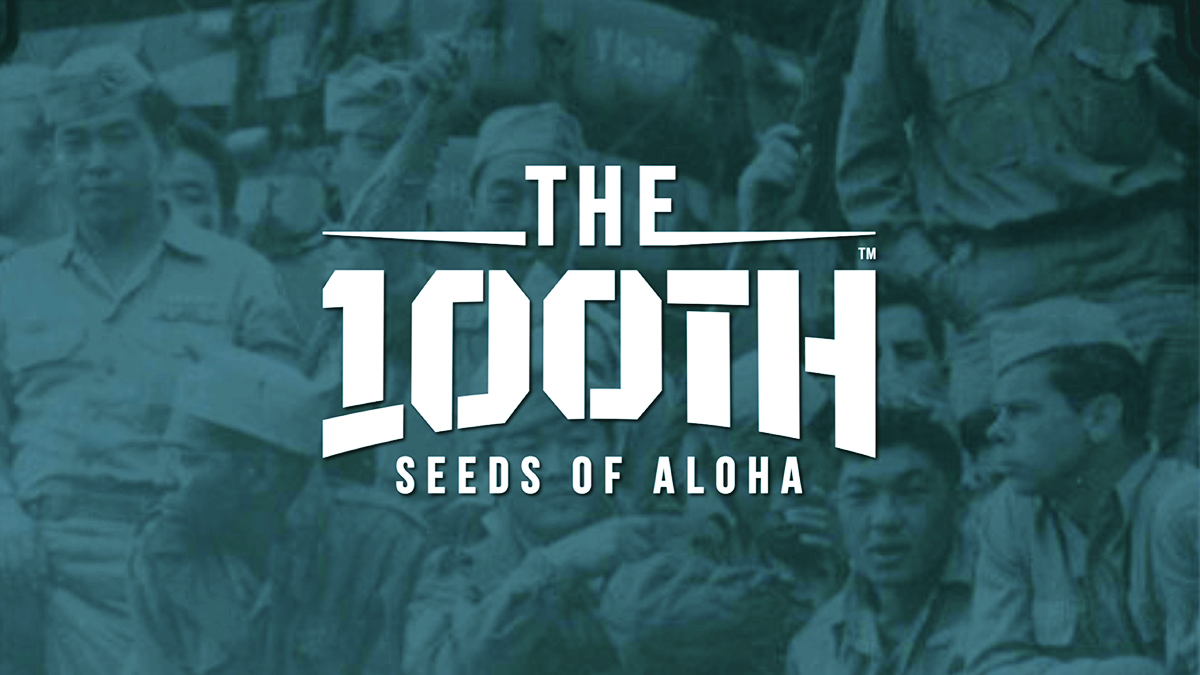
Steve’s second film, “The 100TH, Seeds of Aloha,” reveals the story of the 100th Infantry Battalion, the 442nd RCT and the 522nd FAB. The film goes beyond the battlefield to explore how Americans of Japanese ancestry rose above clouds of discrimination to redefine heroism and valor. The combined 100th and 442nd was one of the most decorated in WWII, achieving military excellence while sharing the aloha spirit. Post war, under the GI Bill, they became educated leaders, proving Americans come in all colors. President Harry Truman issued Executive Order 9981 in 1948, which desegregated the military, a significant civil rights event.
Steve is passionate about making the world a better place, drawing no compensation for his film work. His generosity inspired the 100th Infantry Battalion Veterans–Club 100 to donate $25,000. His dedication also inspired me to make a personal donation, and to invest my time and funds to fly to Italy, France and Germany to aid in the film’s production by interviewing villagers I met on prior trips.
The film is targeted to be shown in 2026 to honor the 250th anniversary of our country.
Sept. 2, 2025, marked 80 years since World War II ended. I was recently interviewed by Alasdair Baverstock with CGTN TV in order to share the WWII experience in Hawai‘i and recognize this anniversary. The documentary can be found by searching the internet for “Rise from Ashes: Pearl Harbor: A turning point of WWII” or…
As the holidays approach, we may wonder how we will handle the festivities and get-togethers without our loved ones who have passed away. It will be different each year. But what matters is how we take care of ourselves. Thich Nhat Hanh, spiritual leader and peace activist, once said, “Do whatever works and change it when it no longer works.”
So how do we take care of ourselves during the holidays? Maybe we spend time in nature, taking walks in botanical gardens and parks. Maybe we respond to holiday invitations by saying, “Let me check my calendar and get back to you,” as you evaluate how to spend your time. Maybe we plan which tasks we want or do not want to do during the holidays. Maybe we practice breathing exercises, meditate, journal, sing, hum, garden, etc.
Then, how do we honor our loved ones during the holiday season? Maybe we prepare a favorite dish that our loved ones enjoyed. Maybe we wear their favorite hat or shirt. Maybe we exchange poignant and/or funny stories about our departed loved ones. Maybe we donate our time and/or gifts to charity work. Maybe we revise or create new holiday rituals for the family to enjoy.
Finding joy during difficult times can provide comfort and a sense of balance. And embracing joy helps foster resilience. Life is multifaceted and beauty can still exist amid sorrow.
As the holidays approach, we may wonder how we will handle the festivities and get-togethers without our loved ones who have passed away. It will be different each year. But what matters is how we take care of ourselves. Thich Nhat Hanh, spiritual leader and peace activist, once said, “Do whatever works and change it…
The One Big Beautiful Bill (OBBB) that was signed into law this summer is big; it’s complicated and hard to explain in a short article. But know this: Most of the changes don’t take effect until 2027, so there should be time to learn how it may affect you and figure out how those who need coverage can still get coverage.
Medicare is federal health insurance for those 65 and older and Medicaid is a joint state and federal program for those of all ages with limited income and resources. In Hawai‘i, Medicaid is known as QUEST. Know also that AARP is fighting to protect Medicare and fight harmful changes to Medicaid. Articles at aarp.org go into detail about the bill and what AARP is doing.
The bill has some impact on Medicare. It limits coverage to specific legal immigrant categories and drops coverage for those who don’t qualify. It weakens some aspects of Medicare drug price negotiations by expanding the orphan drug exemption, reducing the number of medications eligible for price negotiations. The bill could also trigger automatic Medicare spending cuts of up to 4% unless waived by Congress.
Republicans and Democrats are saying different things about the OBBB, which is likely increasing confusion about it.
Republicans say the new law will reduce Medicaid fraud and waste and Democrats say it creates unnecessary paperwork that will result in people losing coverage. Democrats also say it is a threat to rural hospitals and clinics.
The nonpartisan Congressional Budget Office estimates some 10 million people may lose their Medicaid coverage over the next 10 years. The bill is also estimated to cut roughly $911 billion from Medicaid through 2034.
The key phrase is “next 10 years.” The biggest changes don’t happen until 2027, after the 2026 mid-term elections.
States need to start planning for the changes and are awaiting guidance from the federal government. So, despite the passage of the bill, it’s still largely unknown what people need to do to keep their coverage. It is likely that different states will implement the changes in different ways, adding complication.
One good thing in the OBBB that AARP supported is a new $6,000 tax deduction taking effect in the 2025 tax year for those 65 and older whose modified adjusted gross income is less than $175,000. The details are complicated, so go to AARP’s website to find articles about it and you’ll hear more about it next year as tax season approaches.
The One Big Beautiful Bill (OBBB) that was signed into law this summer is big; it’s complicated and hard to explain in a short article. But know this: Most of the changes don’t take effect until 2027, so there should be time to learn how it may affect you and figure out how those who…
Aging well means more than just living longer. It means staying connected, supported and empowered in our communities. Whether it’s access to affordable housing, healthcare or caregiving services, kūpuna face unique challenges that require thoughtful solutions.
The Kūpuna Caucus is a group of state legislators focused on creating and advancing policies that improve the quality of life for Hawai‘i’s aging population. The caucus meets monthly on the first Friday of the month at 2pm. Meetings are held virtually via Zoom and are open to community members. During these sessions, lawmakers provide updates on bills related to housing, healthcare, caregiving and other kūpuna issues. The caucus also hosts guest speakers, including doctors, health experts and social service providers who share insights and answer questions. Members coordinate with community organizations to address ongoing challenges. All meetings are livestreamed and recorded on the Kūpuna Caucus YouTube channel (youtube.com/@kupunacaucus).
These efforts align with the Hawai‘i State Plan on Aging 2023–2027, a strategic framework developed by the Executive Office on Aging that focuses on improving long-term care services, supporting caregivers and promoting programs such as the Kūpuna Care Program, which helps seniors live safely and independently in their homes and communities.
During the 2025 legislative session, the Kūpuna Caucus advanced bills to support kūpuna:
HB 703 –Kūpuna Rent Supplement Program Extension extends the rent supplement program through June 30, 2028. It provides rental assistance to income-eligible kūpuna, ensuring statewide support for affordable housing.
HB 705 –Medi-Medi Project establishes a pilot program to coordinate benefits between Medicare and Medicaid. It streamlines enrollment and improves access to healthcare services and subsidies by reducing administrative barriers.
Additional actions supported by the caucus include funding for long-term care ombudsman specialists, expansion of health insurance assistance programs and pilot projects addressing homelessness among kūpuna.
Staying connected with the Kūpuna Caucus ensures kūpuna voices continue to be heard and their needs prioritized in Hawai‘i’s policymaking. Seniors can stay informed and play an active role in shaping the policies that affect their lives by participating in meetings and following legislative updates:
Aging well means more than just living longer. It means staying connected, supported and empowered in our communities. Whether it’s access to affordable housing, healthcare or caregiving services, kūpuna face unique challenges that require thoughtful solutions. The Kūpuna Caucus is a group of state legislators focused on creating and advancing policies that improve the quality…
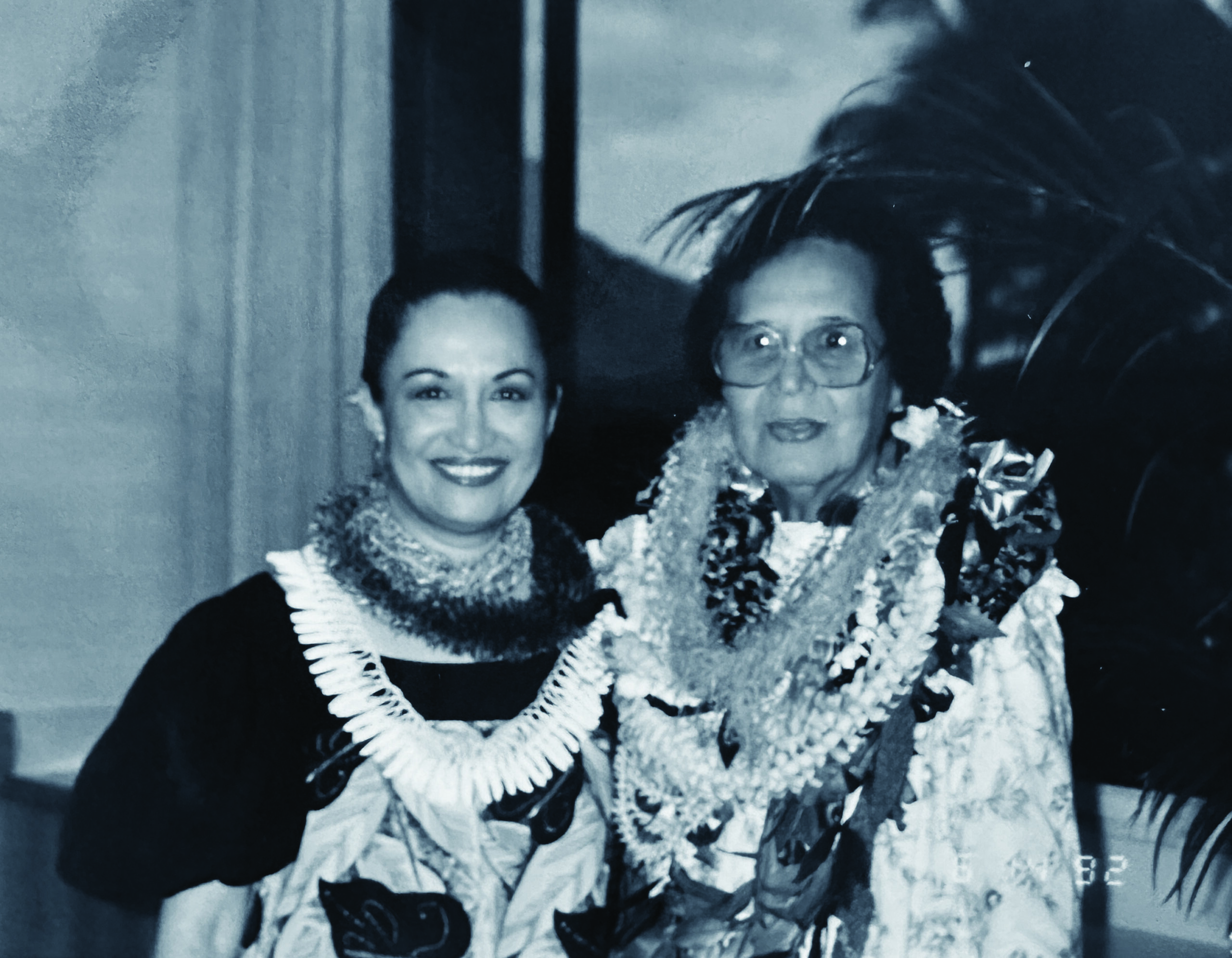
In an open circle, a Hawaiian woman wearing a lei holds a resting baby, her hand protecting the child and inviting the viewer to join in the gift of comfort and healing. Behind the woman are the faces of a man and child, her hair cascading around them. This iconic image—the logo of the Kapi‘olani Medical Center (KMC)—was designed by Momi Cazimero to recognize the hospital’s expansion of services to the entire ‘ohana. Among her many achievements, Momi, now-retired, has created and participated in art exhibitions, served on boards and organizations and is credited with establishing Graphic House, the first woman-owned graphic design firm in Hawai‘i, in 1972. While Momi’s many accomplishments are common knowledge in the graphic arts world, if you ask her, she’ll shine the spotlight not on herself, but on the precious people throughout her life who inspired her to become the woman she is today.
To Elevate Hawai‘i
While working as a graphic designer, Momi’s mission was to “elevate the images and icons of Hawai‘i and Hawaiians,” a feat she achieved through her years of dedication. “It began when I became conscious of the fact that the only thing that had a Hawaiian face on it was the Hawai‘i Visitors Bureau poster,” she says. “The motivation was to bring Hawaiian culture into a contemporary setting, so we’re not always looking for things in a museum.” One significant way in which she accomplished this lies in her designs—for example, for KMC and the Year of the Hawaiian in 2018.
A 1987 issue of Ka Wai Ola O OHA by the Office of Hawaiian Affairs states that the goal of the program called the “Year of the Hawaiian” sought to “Celebrate the Hawaiian, instill pride in being Hawaiian, identify Hawaiian values, lokahi (unity), raise the consciousness and awareness of the Hawaiian core of our society,” enacting an islands-wide series of events and activities focusing on the values, history and culture of the Hawaiian people. “So,” says Momi, “I created something that would represent Papa—Earth Mother—and Wakea—Sky Father. It’s their union that creates the Hawaiian Islands.”
A previous logo depicted a woman literally giving birth to the islands. “In graphic design, we change the literal to the conceptual.” Momi’s iconic design instead alludes to the vast, intricate layers of Hawaiian history and culture, the formation of the islands, and the unity of Papa and Wakea—all with graceful simplicity.
The logo for KMC also reflects the shift from literal to conceptual. Upon explaining her thinking behind the design, Momi emphasizes the hand in the circle. “It’s what you hold—what you give—it’s all associated with the hand. To me, the hand could not break the circle because it brings the viewer in.”
As a graphic designer, Momi stresses the importance of communicating everything in a design: “You must capture who and what it represents—graphic design interprets reality into an image.”
Loving One’s Life
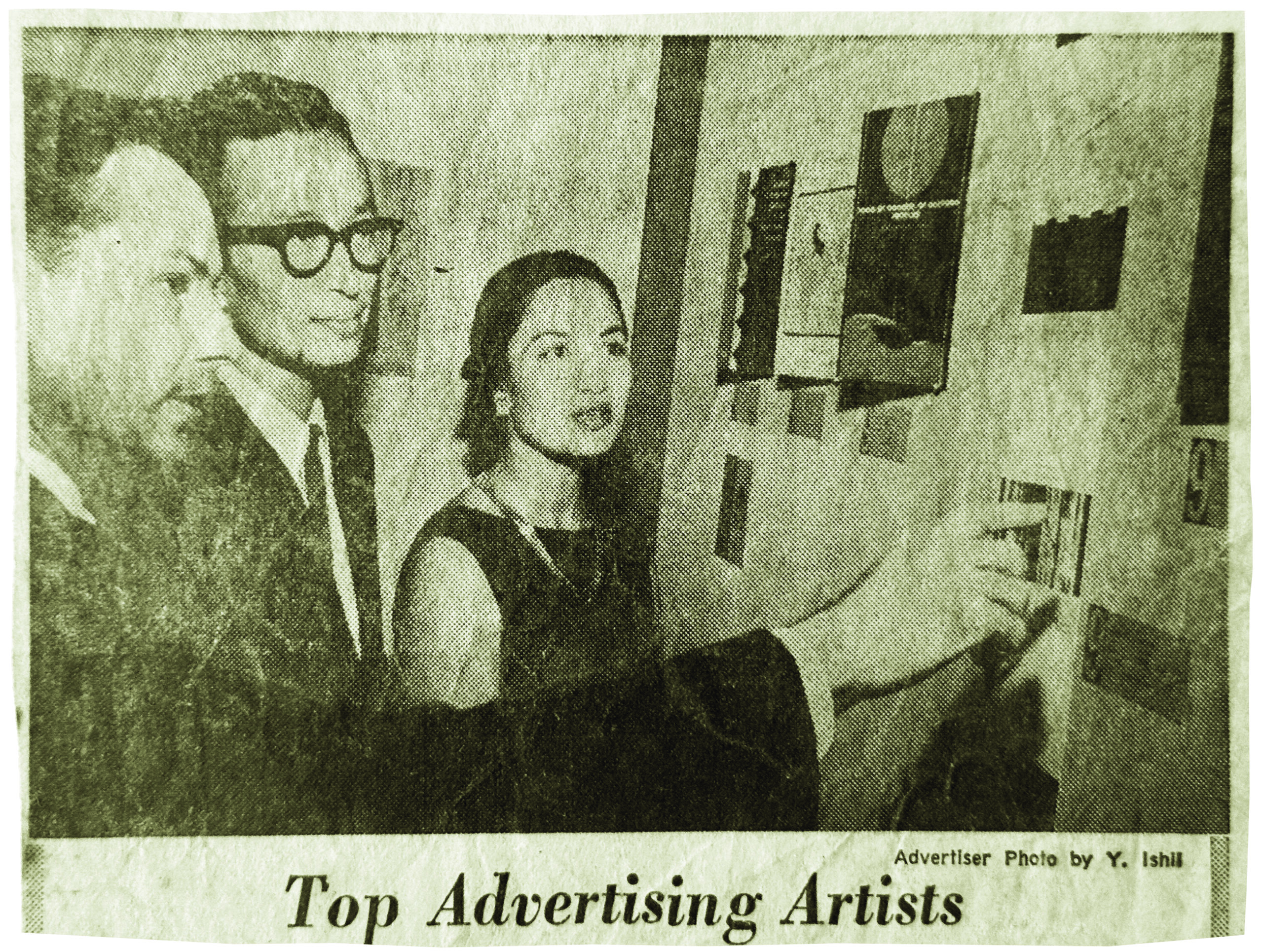
For nine years, Momi worked with Tom Lee of Tom Lee Design, who actually launched graphic design as a business in Hawai‘i. “He and I were responsible for starting and fortifying an organization that advocated for graphic designers. We wanted to create art exhibits to elevate the people’s consciousness of graphic design and the way you do that is by doing something publicly.”
After Tom’s passing and Momi had her own business, she remembers when a group of artists got together and decided to make the showings “more Hawai‘i.” They were going to have an award and name it the Pele Award.
Reviewing a design with a colleague, Momi (right) worked with Tom Lee (center) until his passing.
“If you know anything about the Big Island, you know how we feel about Pele,” she says. Momi suggested they change the name, but the group was adamant simply because “‘it was easier to say.’ They were taking the name of a Hawaiian goddess who represents volcanology. They still had to respect the Hawaiian culture. But they went ahead and did it, and I boycotted them.” Momi’s steadfastness affixes her as a figure of Hawaiian pride, leadership and intelligence.
When Tom died of cancer, the Cancer Society called Momi and asked if she could create an exhibit at Ala Moana Center. “So I did. The theme that a friend of mine came up with was ‘Love Your Life.’ I designed the logo and talked to different artists to illustrate their love of life in a pictorial image.” In remembering her dear mentor, Momi also realized something about herself through this exhibit: she wasn’t done yet. “I said to myself, ‘I know what I’m going to do to keep from disappearing. I’m going to do community service.’” Through serving on various boards, committees and organizations, she maintained her public presence, honoring those who came before her and working for those who will come after.
These days, 92-year-old Momi is retired, but still keeps busy with her own creative projects, and recalls her career and loved ones fondly in telling her story. “This morning, I was watching something on TV about The Joy Luck Club,” she says, “and they were talking about how important it is to interpret their culture. The way to lift people up is to give them an opportunity to identify with success. As a Hawaiian, this matters to me because there was an absence of things Hawaiian. Every culture thrives on its understanding and appreciation and relationship to itself. That’s where understanding comes from.” With words from the heart about her creative vision, and the love she has for her art and beloved people throughout her life, Momi Cazimero has paved the way for herself and the many she undoubtedly has inspired to be their best selves.
With all of these acclamations, commendations and encouragement cutting a path to the vanguard, she takes us on a journey down memory lane—back to where it all began.
If You Like, You Can
Momi grew up in rural Pepe‘ekeo on Hawai‘i Island with her grandparents. She was very close with her grandfather, especially. “He was so very positive and supportive, and he spoiled me.” She recalls going to work with him sometimes when he was a highway overseer and remembers fondly when, as she was falling asleep on drives home, he would purposely drive over a certain bump near her favorite bakery to sneakily wake her up— “Tūtū Man, stop!”—so she could ask him to get a slice of her favorite coconut pie. “’Til today, I love it,” she says, “And he did it on purpose all the time. That’s the kind of relationship we had.”
After her grandfather passed away, Momi moved in with her mother, father and siblings per the advice of her Aunty Esther. Instead of the happy, warm days with her grandfather, Momi went to a home environment where she was made to think less of herself because she was a girl. “You can imagine, when I moved into that home, having been raised as the baby,” Momi adds, “how I felt. Before, I even fell asleep on my grandfather.” Laughing, she says, “Okay, I must tell you. He would put me to sleep, and he was a big man. Naturally, when he would put me to sleep, I would roll over on the bed into his side and my head was buried under his arm. My grandmother, I was told, would tear up when she carried me, because my head smelled like his armpit. I was constantly at his side and loved being with him.” When her home environment felt oppressive and she felt hopeless, Momi often turned to memories of her grandfather to keep her going.
The words that Momi’s grandfather spoke to her have maintained their impact many years later. As she grew up speaking pidgin, she mentions how saying “I like” meant “I want.” She says, “It almost suggested that it was something I wanted to do. And whenever it implied that, he would always say, ‘If you like, you can.’ Think of that—the encouragement of it.” Later, when he had already passed and Momi was attending Kamehameha Schools, she still felt his presence. “When I was having a stressful time, I would sit on the edge of my bed and say, ‘Tūtū Man, come get me.’ I always leaned on him. When he didn’t come, I would say to myself, ‘If it was really bad, he would come for me.’ This carried me through everything.” In her senior year of high school, she had a serious discussion with herself: “‘You are always depending on your Tūtū Man.’ I wasn’t going to do that anymore, because I had to do it on my own.” The love and motivation Momi’s grandfather shared with her taught her that nothing is impossible, which propelled her to pursue—and achieve—her dream of becoming an educated and resilient woman.
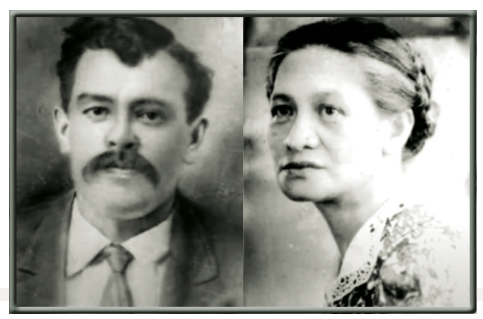
“Tūtū Man” John Waihee and “Tūtū Lady” Annie raised Momi from infancy to nine years of age.
Never Stop at the Minimum
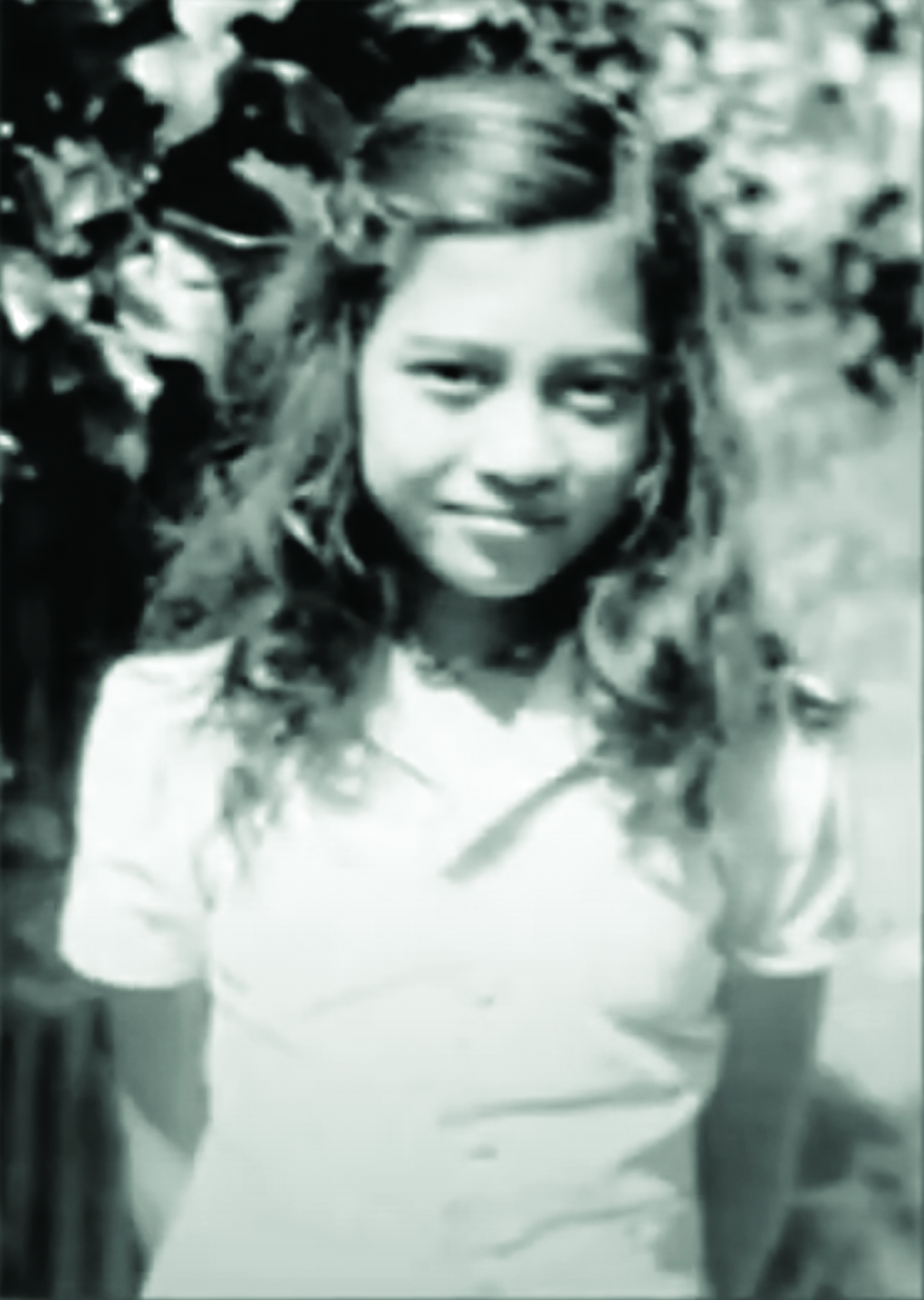
Towards the end of her senior year of high school, Momi had a meeting with the principal at the time, Dr. Frederick, whose mentorship reminded her of her fourth grade art teacher. Momi says that her desire to become an artist came from this teacher, whose words made a difference. “But,” she states, “I was not studious. In my beginning years, I did not want to go to school, because going to school meant walking miles, barefoot on a stony road. But, it led me to where I am today.”
Praised by her teacher, Momi, unknowingly talented, was developing into an artist.
In the fourth grade, one of her assignments for art class was to draw “the most unusual thing.” One day, on her way to Japanese school, Momi saw an oddly shaped hibiscus plant. “I always looked at that with fascination, because it was so different. That was my subject.” When the teacher was reviewing the classes’ projects, she said that she was saving Momi’s for last. “I thought I was going to be insulted,” Momi adds, “I held my breath.” She finally reached Momi’s piece and her teacher said, “Momi drew this hibiscus and it’s nice. But she did not stop at the minimum.”
After class, when she went to pick up her assignment, Momi’s teacher drew her aside and told her things that Momi carries in her heart to this day: “‘You’re a very good artist. I respect the fact that you had the initiative to do as much as you did. ʻNever stop at the minimum.’ That became a statement that I live with for the rest of my life. In the time that she’s giving me this confidence, what I’m resting on is what my grandfather always said, ‘If you like, you can.’ Here was a teacher who gave me something else to aspire to.” Momi makes note of the fact that these are words that carried her through very bitter years in her upbringing. “The reason I say what pulled me through is because of the things I faced along the way.” With the beautiful and profound statements that these key figures in her life gave to her, it becomes evident how Momi turned the adversity she dealt with into a force that made her unstoppable.
I Wanted You to Grow
Looking back to her childhood, Momi reminisces on her relationship with her Aunty Esther. She mentions how, during the time she was living with her parents, she figured out that the reason her aunt did not face the treatment Momi received was because she had a profession and a college education. At this point, Momi adds, “You know where this story is going already,” referring to this realization being integral to her wanting to create a career for herself. Going against her father’s limiting views of women as bound to the home, Momi decided to work hard and pay for her own schooling. “I’m determined,” she says, and she knew that because she went against her father that she could never go back home —“So, I had to be like Aunty Esther. I had to get a college education.”
Her Aunty Esther was the person who encouraged Momi to take the test to get into Kamehameha Schools, which she passed. Though this was a cause for celebration, it only brought strife to her parents, specifically her father. He insulted her intelligence and dismissed her acceptance into the school, asserting that he wasn’t going to contribute a penny to her education. So, Momi, with the support of her mother and aunt, applied and earned a working scholarship and worked her way through school. After successfully completing her high school education at Kamehameha Schools, Momi spent a brief time in college on the path to teaching art, but decided she didn’t want to do that. “That gets to be a long story, but I’m going to cut to the chase. I wanted to do art, not teach art.” So, she transferred to learning the arts at the University of Hawai‘i at Mānoa. “My mother was distraught. ‘You know, artists starve.’ That’s all she could say to me. She talked to my aunt, who never ever changed my mind. If anybody could have, she could have. But she didn’t say a word to me.” Momi is who she is today because her aunt believed in her.
Momi aspired to be like her aunt, Esther Waihee McClellan, an independent and educated woman.
Years later, Momi found out that her aunt felt responsible for the mistreatment she received in her youth because she is the one who recommended that Momi be raised with her siblings. Like with her grandfather, she and her aunt were very close: “This aunt was also like my surrogate mom. She helped to raise me. When I was in seventh grade, going through college or in my marriage, she was the one I consulted all the time.” The pair were so close that her aunt’s son, Momi’s cousin, even asked if Momi was his older sister. As her aunt got older, she was diagnosed with Alzheimer’s disease. Following the diagnosis, Momi found that her Aunty Esther had become more forthcoming. “She was a typical teacher—always said the right thing, always did the right thing, but here she was. The things she said ranged from funny to serious.” Significantly, one day, Momi was visiting her Aunty Esther and she asked if she was the one who decided that Momi should leave her grandparents’ home all those years ago. Her aunt said yes. “I asked, ‘Why?’ and she said, ‘I wanted you to grow up knowing your siblings.’ When she said this, Momi wanted to say something to her aunt, but she felt she couldn’t, because she didn’t want to cry in front of her. “I felt I had to be strong, but I should have told her what a blessing it was that she made that decision, because I’m sure it haunted her.”
For someone who endured such hardship in her home life to say that it was instead a blessing shows the depths of Momi’s maturity and grace throughout her life, as well as the love and appreciation she feels for her aunt. “I love my Aunty Esther because of who she was and what she was to me. I always wanted to be like her—she motivated me to go to college.”
Never Let the Least of Them Diminish the Best in You
Momi had to work her way through college, too, with a part-time job at Sears. In her senior year of university, she began working for a Swedish artist. “One of the things she loved to do was entertain people in different art fields. My job was to clean up,” says Momi, “and I was never a good cook, so I served food, waited on tables and cleaned the house.”
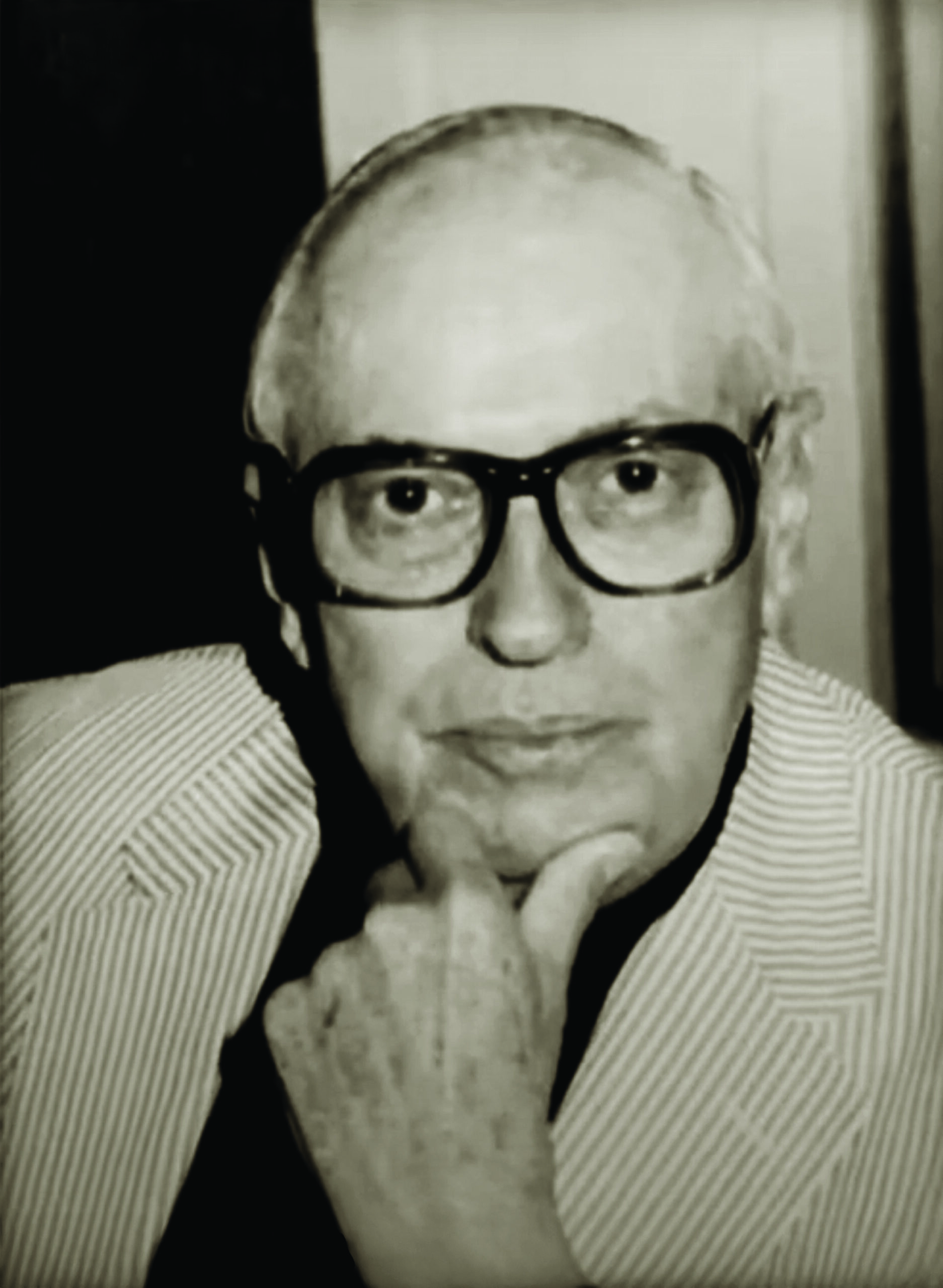
One night, the artist says to Momi, “I want you to join us for dinner. I have a professor; his name is Kenneth Kingery. He’ll be joining us tonight and I think you’re going to enjoy him.” “Did I ever!” After that dinner, Professor Kingery invited Momi to his office and the teacher-student pair grew close from there. He is the person who introduced Momi to the world of graphic design and, Momi adds, “how it was changing the landscape of commercial art.”
The encouragement and belief of Professor Kenneth Kingery made an indelible impression on Momi Cazimero, a budding designer.
At the time, there was an ongoing transition from commercial art to graphic art, where instead of the artist being responsible for only an art piece for a design, graphic artists had to take into account typesets, fonts and colors in addition to being responsible for the art or logo.
Momi relays a story very significant to her development as a budding graphic artist and as a person that took place in her senior year of college. Professor Kingery had assigned her as the school yearbook editor, so she had to design and work with the production crew who printed the yearbook. “That year, I chose to use Chinese calligraphy in the design. I had created all these different designs and colors, and took the bus to discuss what I would be needing. One day, I get there, and the manager looks at it, and he takes it to a light table. He slaps the table, hollers and—this man had the loudest voice you ever heard—calls the other guys over. Those days, only men worked in a print shop.” Momi remembers how all the men gathered around the light table and ridiculed her and her work, laughing all the while. “‘Look at this thing she brings me,’ he said. I wanted to dig a hole in the concrete and go through it. My heart was just torn. I went to college to develop a profession so that I would have a respectful position, but now I was thinking that I didn’t want to be a graphic designer.”
Momi remained courteous in the moment and on the bus ride back to Professor Kingery’s office, but when she arrived, he could tell something was wrong. As soon as he asked, Momi burst into tears and told him all that had happened at the print shop. All Professor Kingery said at that moment was, “You come with me right now.” They drove back to the print shop. “This man spoke in a quiet tone; he was very reserved,” Momi recalls. But, once they arrived, the professor pointed to the manager and said he needed to talk with all of them. Momi remembers verbatim what he said to the men at the light table: “She’s a student at the University of Hawai‘i. You’re grown men, supposedly with a profession. But I don’t think you demonstrated that—not to this student.”
On their way out, he spoke directly to the manager in her defense: “One day, she will amount to more than you ever will.” This moment set a benchmark for Momi. “I was not a confident person, but I had enough people giving me some backbone; my grandfather, for example. Professor Kingery told this man, who was a plant manager, that I would amount to more. You don’t think I had to live up to that? On the way back to the car, he said to me, ‘Never let the least of them diminish the best in you.’ That stays with me—it comforts me and drives me. Every single one of these markers in my life, they both comfort and they drive. And that’s how I got to where I am today.”
Amy Tan, renowned author of The Joy Luck Club, writes, “We dream to give ourselves hope. To stop dreaming—well, that’s like saying you can never change your fate.” Through times when hope was almost lost, Momi designed her fate, never forgetting the people who encouraged her to dream. Momi and her story remind us to choose to love and dream, time and time again.
To Elevate Hawai‘i While working as a graphic designer, Momi’s mission was to “elevate the images and icons of Hawai‘i and Hawaiians,” a feat she achieved through her years of dedication. “It began when I became conscious of the fact that the only thing that had a Hawaiian face on it was the Hawai‘i Visitors…
Parents have their own unique perspective on how to raise their children, and what values and lessons to instill. They also have personal beliefs about how their children should manage money.
Most parents would prefer that an inheritance serve to enrich and support their child’s life rather than replace the need to work or find purpose. However, these personal intentions often do not fit neatly into the legal documents designed to distribute assets.
A trust primarily focuses on appointing a trustee, naming beneficiaries and outlining the trustee’s powers and responsibilities. It rarely captures the parent’s hopes, values or deep understanding of their child, which should be the very foundation of any thoughtful estate plan.
Your estate planner may provide a document in which you can detail your meaningful guidance—beyond the legal framework—for your child’s guardians and trustees. In this document, you can communicate your wishes, values and insights—how you envision your child using inherited assets to develop a fulfilled, purposeful and meaningful life. It may also include a place to record important information, such as your child’s medical needs, routines and the significant people in their life. Ask your representative about this additional option.
Parents have their own unique perspective on how to raise their children, and what values and lessons to instill. They also have personal beliefs about how their children should manage money. Most parents would prefer that an inheritance serve to enrich and support their child’s life rather than replace the need to work or find…
Most people think of a last will and testament as the cornerstone of an estate plan. For most of us, however, it’s a lousy cornerstone. Your will is often simply a safety net that helps make sure your overall estate plan is going to work as it was designed.
Your will is like the spare tire in the trunk of your car. Hopefully, you will never need to use it because your assets are either in your revocable living trust or you have used other means to direct your assets to your beneficiaries so that the assets will avoid probate. But if you experience a flat along your journey, your family will be awfully glad you had the spare. Having a will provides added assurance that your wishes are going to be carried out.
A more formal name for a will is “last will and testament.” The “last” part refers to the fact that you can sign as many wills as you like during your lifetime, but only the last one you signed before your death counts. A document called a “codicil” can amend one or more provisions of your will without completely replacing it. In the age of computers, codicils are still valid, but more often, we just do a whole new will. Why use two or more documents with conflicting provisions when you can simplify and use only one?
Most people think of a last will and testament as the cornerstone of an estate plan. For most of us, however, it’s a lousy cornerstone. Your will is often simply a safety net that helps make sure your overall estate plan is going to work as it was designed. Your will is like the spare…
Social Security remains a critical component of most Americans’ retirement plans and questions persist around its long-term solvency. While the number of Social Security beneficiaries is expected to continuously grow over the next decade, payments into the program via payroll taxes are likely to slow. This dynamic is creating anxiety for many about whether they can rely on Social Security to help fund their retirement. It can be beneficial to explore the role that Social Security may have in your retirement and how to best prepare if there are meaningful changes to the program.
◆ The future of Social Security. If you have been following financial news, you may have heard industry pundits commenting on the solvency of Social Security and its ability to pay full benefits over time. Indeed, Social Security is currently paying out more than it is taking in, which many view as problematic. In May of this year, the Social Security and Medicare Trustees released their annual report, which predicts that by 2033, assets of the program will be depleted. It is expected that in 2033, the Social Security’s Old-Age and Survivors Insurance (OASI) fund will only take in 79% of tax revenue needed for benefit payments. As a result, payments under the program could be reduced by 21%.1 It’s widely expected that Congress may act to shore up the program before this happens, however there are no guarantees. Planning ahead can help shield your retirement income should Social Security be unable to fully meet its obligations.
◆ Determine the role Social Security has in your retirement plan. It is important to understand where Social Security fits into your retirement plan. For many retirees, Social Security benefits provide key supplemental income because the program alone will not provide enough income to cover all essential and desired lifestyle expenses. Additionally, each individual’s benefits will vary depending on their lifetime earnings and the age at which they begin taking distributions. If future payments are adjusted lower to make up for the deficit of flows coming into the fund when you retire, it may be wise to plan on utilizing other means for retirement income. Take some time to determine your desired lifestyle during retirement and the associated costs, so you can craft a Social Security plan that aligns with your retirement goals.
◆ Work with a financial advisor to adapt your retirement plan. A financial advisor can help determine the optimal payment plan for Social Security in your retirement. The age at which you begin taking distributions and where these distributions fit into the whole of your retirement plan is unique to you. An advisor can assist you in evaluating the variables that may impact the time at which you begin collecting benefits such as your health and life expectancy. With careful financial planning you can consider a variety of income producing investments that may contribute to your retirement security.
How Social Security programs morph and change in future is largely outside of your control, but it is important to plan for what you can. It is never too soon to work with a financial advisor to plot various scenarios for retirement based on factors that are unique to you. Ultimately, knowing you’re prepared can help you feel more confident about retirement.
Michael W. K. Yee, CFP®, CFS®, CLTC, CRPC®, is a Private Wealth Advisor with Ameriprise Financial Services, LLC. in Honolulu, Hawai‘i. He specializes in fee-based financial planning and asset management strategies and has been in practice for 41 years. Certified Financial Planner Board of Standards, Inc. (CFP Board) owns the CFP® certification mark, the CERTIFIED FINANCIAL PLANNER™ certification mark, and the CFP® certification mark (with plaque design) logo in the United States, which it authorizes use of by individuals who successfully complete CFP Board’s initial and ongoing certification requirements. 1Ameriprise Financial: “Did You Know…” May 8, 2024. Compiled by Russell T. Price, Chief Economist Investment products are not insured by the FDIC, NCUA or any federal agency, are not deposits or obligations of, or guaranteed by any financial institution, and involve investment risks including possible loss of principal and fluctuation in value. Securities offered by Ameriprise Financial Services, LLC. Member FINRA and SIPC.
Social Security remains a critical component of most Americans’ retirement plans and questions persist around its long-term solvency. While the number of Social Security beneficiaries is expected to continuously grow over the next decade, payments into the program via payroll taxes are likely to slow. This dynamic is creating anxiety for many about whether they…
Medicare covers many medically necessary services for both inpatient and outpatient surgical procedures, but the cost may vary depending on many factors.
For outpatient surgery, the costs of ambulatory surgical center and hospital outpatient surgery may be different. Ambulatory centers usually have lower overhead costs than hospital-based outpatient surgery. For inpatient services, Medicare covers 80% of the Medicare-approved amount for doctors’ services you get while you are in a hospital and you pay the remaining 20% after meeting the deductibles. Currently, the Medicare Part A deductible is $1,676 and Part B is $257.
Other factors that may affect cost include other insurance you may have aside from Medicare (Medicare Advantage or a Medigap plan), how much the provider charges or if the provider accepts Medicare assignment (the provider agrees to accept the Medicare-approved amount as full payment for covered services) and the type of facility.
Outpatient costs can be found by looking up the procedure name, CPT code or Health Care Common Procedure Coding System code at medicare.gov/procedure-price-look-up. Get the code for a specific service from your healthcare provider for more accurate pricing.
Medicare covers many medically necessary services for both inpatient and outpatient surgical procedures, but the cost may vary depending on many factors. For outpatient surgery, the costs of ambulatory surgical center and hospital outpatient surgery may be different. Ambulatory centers usually have lower overhead costs than hospital-based outpatient surgery. For inpatient services, Medicare covers 80%…
In classrooms across the State of Hawai‘i, a quiet yet powerful force is shaping the academic and emotional well-being of students: senior volunteers. Kupuna in the Classroom volunteers are stepping up to provide essential services that help bridge educational and emotional gaps many students face. They provide the kind of one-on-one attention and support that overburdened teachers often can’t consistently offer.
Kupuna in the Classroom is also known as the Foster Grandparent Program.
Kupuna in the Classroom volunteers are assigned to three to five students and focus on the specific needs of students. The one-on-one time they dedicate to students enables them to develop meaningful and productive relationships. This intergenerational model is good for the soul and helps kūpuna to stay active, use their cognitive skills and enhance their lives.
To become a Kupuna in the Classroom (foster grandparent), an individual must be at least 55 years of age, commit to volunteering a minimum of 15 hours per week, and meet income and other program requirements.
To volunteer as a foster grandparent, apply for services or for more information about this program, call the Foster Grandparent Program office on O‘ahu at 808-832-5169.
In classrooms across the State of Hawai‘i, a quiet yet powerful force is shaping the academic and emotional well-being of students: senior volunteers. Kupuna in the Classroom volunteers are stepping up to provide essential services that help bridge educational and emotional gaps many students face. They provide the kind of one-on-one attention and support that…
These questions are asked by every caregiver everywhere! Family caregivers frequently begin their journey with no experience and little or no training, which, understandably, leaves the caregiver feeling overwhelmed by their new responsibilities. There are 60,000 family caregivers caring for someone living with Alzheimer’s, so they bear the brunt of the disease in Hawai‘i.
Caregivers don’t know what to expect as their loved one’s dementia progresses, so they don’t know what questions to ask in order to prepare themselves for what lies ahead. With no experience and no education, the caregiver will most likely experience stress, uncertainty, fear, frustration and a myriad of other emotions.
The most effective ways to help ensure the highest quality of care for those with dementia are through caregiver education and making sure all the resources available to caregivers are easily accessible. Learning about the disease and knowing what to expect can help caregivers feel more in control and better able to cope and plan. Knowing where to turn to for help is crucial to help caregivers navigate their caregiving journey.
There are many organizations that offer quality caregiver education at no cost to the caregiver, including the Alzheimer’s Association, The Caregiver Foundation, Project Dāna, AARP, the Hawaii Parkinson Association and Hale Hau‘oli Hawai‘i. Virtual workshops are advertised on websites.
“To be forewarned is to be forearmed” makes sense for providing the public with information about Alzheimer’s disease and related dementias. Receiving education and training for caregiving, learning practical caregiving approaches and using local caregiving resources are important strategies. Armed with the resources needed to continue to provide safe, effective care for their loved one, and knowledge that there is help in the community to assist them, caregivers can be successful in their caregiving journeys, and their loved ones can remain in their communities.
In addition, “The Dementia Public Awareness Campaign” bill passed through the legislature a few years ago and will be rolling out soon.
These questions are asked by every caregiver everywhere! Family caregivers frequently begin their journey with no experience and little or no training, which, understandably, leaves the caregiver feeling overwhelmed by their new responsibilities. There are 60,000 family caregivers caring for someone living with Alzheimer’s, so they bear the brunt of the disease in Hawai‘i. Caregivers…