Category: Articles

  • Managing Aging Parents’ Finances

    Making financial decisions takes time, attention and energy at any age. In the case of elderly adults, it may become increasingly difficult to manage finances, particularly if their health is declining or they’re experiencing a cognitive issue. If you’re providing support to aging parents—or plan to in the future—here are some tips on how to handle the situation and prepare for what’s to come.

    Don’t wait to start talking about money.

    It may be uncomfortable to ask your parents to discuss their finances with you, but it’s essential that you are familiar with their intentions for future care and the plans they have in place. When you broach the subject, emphasize that you are looking for only a high-level overview so that you can have more peace of mind about your parents being well cared for. This initial conversation can help set the groundwork for future discussions.
    Create a contact list.

    If your parents experience a sudden change in health that affects their ability to manage their affairs, it’s important to have a game plan. If you anticipate paying bills, making insurance claims and handling other financial tasks, ask your parents for a contact list for the professionals they work with and where their accounts are held. You may need to be an authorized user or power of attorney to be allowed access to certain accounts. Consult a lawyer to talk through what permissions may be necessary for you to step in if the need arises.

    Build a support network.

    Talk with siblings or other trusted family members about what your parent’s possible care plan could look like. While this conversation can be tough to initiate, it’s often easier to bring everyone together while your parents are still in good mental and physical health. Discuss who can realistically provide support: in what way and at what cost. Proactively deciding who can drive your parents to appointments, manage financial affairs, care for their home and handle other tasks can help avoid a strain down the road.

    Anticipate future lifestyle changes and challenges.

    Even if they aren’t yet needed, explore options and costs at various assisted living and memory care services. Check your parents’ insurance policies to see if and how services might be covered. You may want to explore whether their home or yours could be modified to provide additional space or comforts, such as wheelchair access. Knowing what choices exist and how your parents feel about each one can help you make future decisions with more confidence.

    Know your rights at work.

    The Federal Family and Medical Leave Act of 1993 (FMLA) allows covered employees up to 12 weeks of unpaid leave to provide care for a family member with a serious health condition. Consult your employer’s human resources department to learn about their policies for employees who are caring for a parent and how to initiate a claim. Many employers have access to resources and support groups to help you manage home and at work duties.

    Maintain momentum on your own financial goals.

    It’s prudent to look at your finances to see how much support you could provide your parents, if needed, without jeopardizing your retirement and future health care needs. Your financial advisor and lawyer can help you take the steps necessary to feel more confident.


    MICHAEL W. K. YEE, CFP,® CFS,® CLTC, CRPC®
    1585 Kapiolani Blvd., Ste. 1100, Honolulu, HI 96814
    808-952-1240 | michael.w.yee@ampf.com
    ameripriseadvisors.com/michael.w.yee
    Michael W. K. Yee, CFP®, CFS®, CLTC®, CRPCTM, is a Private Wealth Advisor/
    Financial Advisor with Ameriprise Financial Services, LLC in Honolulu, Hawaii.
    He specializes in fee-based financial planning and asset management strategies
    and has been in practice for 41 years.
    1U.S. Department of Labor: The Family and Medical Leave Act of 1993
    (https://www.dol.gov/agencies/whd/laws-and-regulations/laws/fmla)
    Investment products are not insured by the FDIC, NCUA or any federal agency, are
    not deposits or obligations of, or guaranteed by any financial institution, and in-
    volve investment risks including possible loss of principal and fluctuation in value.
    Ameriprise Financial, Inc. and its affiliates do not offer tax or legal advice. Consum-
    ers should consult with their tax advisor or attorney regarding their specific situation.
    Ameriprise Financial cannot guarantee future financial results.
    Securities offered by Ameriprise Financial Services, LLC. Member FINRA and SIPC.
    ©2025 Ameriprise Financial, Inc. All rights reserved.

    Making financial decisions takes time, attention and energy at any age. In the case of elderly adults, it may become increasingly difficult to manage finances, particularly if their health is declining or they’re experiencing a cognitive issue. If you’re providing support to aging parents—or plan to in the future—here are some tips on how to…

  • Helping to Protect Sea Turtles

    Under the cover of a moonlit sky, a familiar hawksbill sea turtle, Orion, hauls herself up the beach with slow, powerful strokes. Now in her fifth nesting season, she begins meticulously carving into the sand, preparing a nest chamber to hold the next generation of hatchlings. One day, they too will repeat this prehistoric cycle.

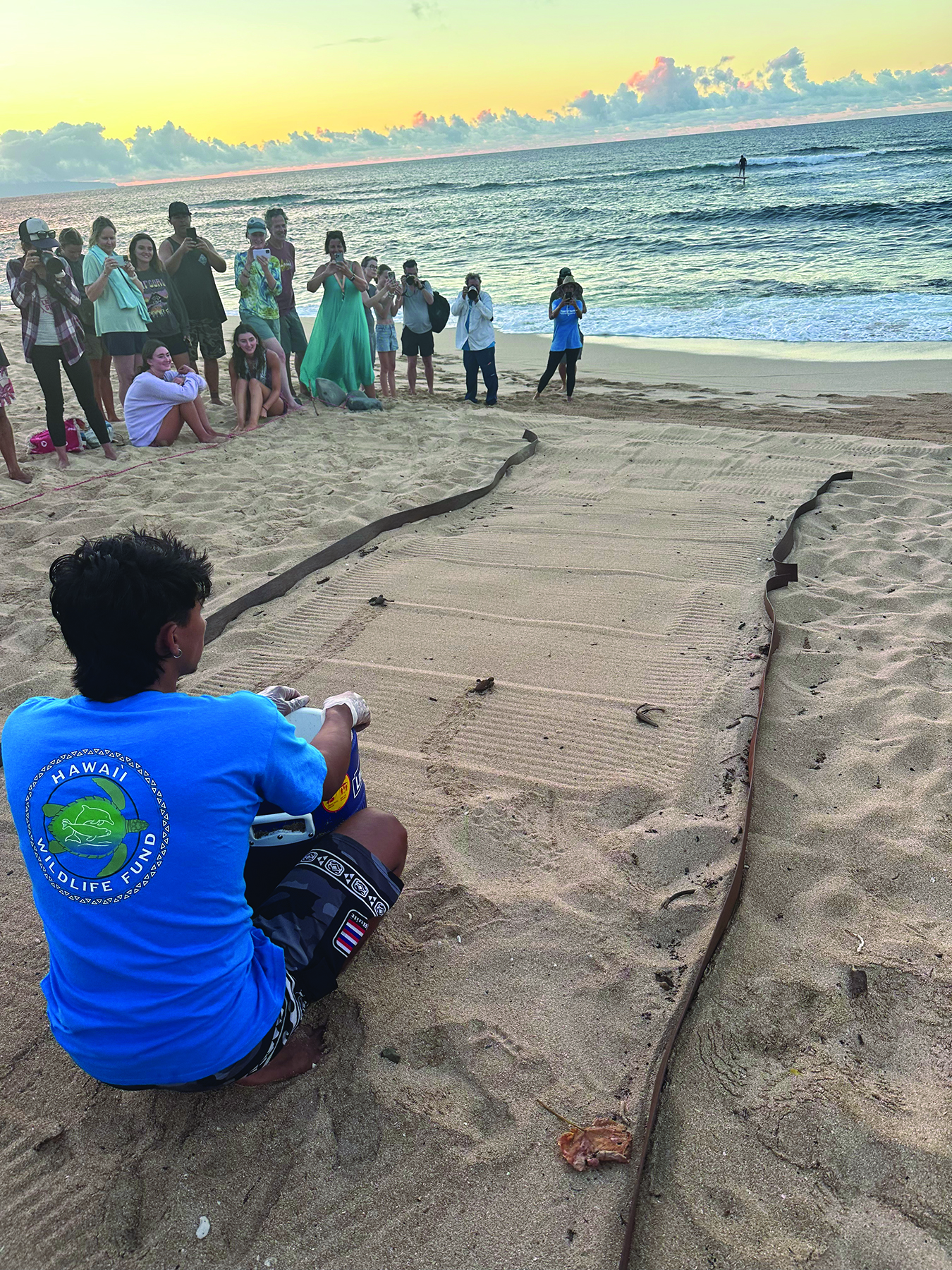
    For nearly three decades, Hawai‘i Wildlife Fund (HWF) has been protecting nesting sea turtles, including the endangered hawksbill, helping to ensure the continuation of this cycle into an uncertain future. As a community-driven nonprofit organization, HWF is dedicated to the conservation of Hawai‘i’s coastal and marine species through research, education, marine debris removal and habitat restoration. On Maui, HWF leads several programs with a strong focus on safeguarding hatchlings and nesting sea turtles, including Dawn Patrol, Night Patrol and Nest Watch.

    Dawn Patrol staff and volunteers go out early looking for sea turtle tracks or an indication of a nest that has been laid. The Night Patrol looks for, guards and monitors nesting females. Nest Watch occurs day and night, watching over the nests to keep hatchlings safe from disturbance.

    However, the path to stronger sea turtle conservation on Maui has not been without its hardships. In 1993 and 1996, two hawksbill turtles searching for suitable nesting sites at Kealia Beach were tragically drawn off course by artificial lights from the nearby road. Both turtles, laden with eggs, were subsequently struck and killed by passing cars. Though heartbreaking and all too familiar, this incident marked a turning point for sea turtle conservation on Maui. In response, HWF and partnered agencies launched the Sea Turtle Recovery Project to address the many challenges sea turtles face through monitoring, researching, and the protection of nesting hawksbill and green turtles.

    Since then, with tireless support from our community, HWF has monitored 154 nests and protected 13,047 hatchlings as they made their way to the ocean. Each nesting season brings stories of resilience and survival, serving as a powerful reminder of the importance of this work. Nonetheless, every step forward is only possible through the dedication of our community. Every volunteer, from students to kūpuna, plays a vital role in our efforts. Join us in helping ensure that turtles like Orion—and even her hatchlings, who may now be finding their way back—continue to return and nest on the beaches of Maui for generations. Learn more or get involved on Maui via wildhawaii.org/get-involved/volunteer.


    HAWAI‘I WILDLIFE FUND (nonprofit)
    PO Box 790637, Paia, HI 96779
    719-332-0218 | alex@wildhawaii.org
    wildhawaii.org

    Under the cover of a moonlit sky, a familiar hawksbill sea turtle, Orion, hauls herself up the beach with slow, powerful strokes. Now in her fifth nesting season, she begins meticulously carving into the sand, preparing a nest chamber to hold the next generation of hatchlings. One day, they too will repeat this prehistoric cycle.…

  • Akamai Seniors: a Nonprofit for Seniors

    I’m honored to share the heart of Akamai Seniors, a nonprofit 501(c)(3) organization dedicated to serving Hawai‘i’s older adults. Our mission is simple: to help you find peace of mind and live healthy, productive lives, ensuring you get more out of life while spreading the aloha spirit in the communities we serve.

    We’re educators and a community outreach resource focusing on vital areas. Billions in benefits often go unclaimed because applications are complex. We step in to help. Our team provides crucial Medicare education, assisting with enrollment and ensuring you utilize the plan that best fits your needs. We also specialize in the Low-Income Subsidy (Extra Help) program. Half of all seniors qualify for this program that significantly lowers prescription drug costs and covers premiums.

    Beyond finances, we champion your overall well-being. Our Senior Wellness Program offers education on everything from fall prevention, nutrition and Alzheimer’s disease to combating social isolation. We also empower you with financial education, covering wills and trusts, Social Security and protection against scams.

    Akamai Seniors is your resource for aging and healthy living. We love our seniors and are always striving to best serve your needs. We believe every kupuna deserves to thrive!


    AKAMAI SENIORS (nonprofit)
    1311 Kapiolani Blvd., Ste. 508, Honolulu, HI 96814
    808-460-4940 | edward@akamaiseniors.org
    Akamaiseniors.org

    I’m honored to share the heart of Akamai Seniors, a nonprofit 501(c)(3) organization dedicated to serving Hawai‘i’s older adults. Our mission is simple: to help you find peace of mind and live healthy, productive lives, ensuring you get more out of life while spreading the aloha spirit in the communities we serve. We’re educators and…

  • From Keiki to Kūpuna

    Since 2019, Aloha Diaper Bank has supported Hawai‘i’s families by providing diapers and baby essentials to those in need. While our primary mission is keeping keiki healthy, we also gratefully accept donations of adult diapers, which are shared with kūpuna at our Windward Mall location and distributed to neighbor islands where the need is great.

    Kūpuna are more than recipients—they are an essential part of our organization. Many volunteer their time to wrap and inventory diapers and assist families visiting our site. Their involvement keeps them active, provides meaningful engagement, and allows them to share wisdom and experiences.

    Many kūpuna also care for their mo‘opuna (grandchildren), and we are honored to support them in that role. From keiki to kūpuna, every diaper donation impacts generations.

    We also host kūpuna-centered activities that foster connection and joy. Weekly hanafuda card games and monthly ‘ukulele classes with Joe Ahuna bring people together, encourage social interaction and celebrate lifelong learning.

    Together, we thrive when every generation is cared for with aloha.


    ALOHA DIAPER BANK (nonprofit)
    46-056 Kamehameha Hwy., Ste. 111, Kaneohe, HI 96744
    808-762-0364 | alohadiaperbank.org

    Since 2019, Aloha Diaper Bank has supported Hawai‘i’s families by providing diapers and baby essentials to those in need. While our primary mission is keeping keiki healthy, we also gratefully accept donations of adult diapers, which are shared with kūpuna at our Windward Mall location and distributed to neighbor islands where the need is great.…

  • Prepare for the Journey: As Memory Fades

    If you or a loved one has started to have memory loss, you may ask, “What will happen in the future? What can I do now to prepare?”

    SHARE may be right for you!

    Support, Health, Activities, Resources, Education (SHARE) is an evidence-based program that can help you or your loved one’s care team plan for the future by helping the team better understand the disease process, opening up communication channels, and providing resources that acknowledge individual values and preferences.

    The care team will include an individual at early stage of dementia or memory loss who is able to participate in discussion about their values, preferences and goals for the future. The other member of the care team is a care partner—often a spouse/significant other, adult child, or good friend—someone who is committed to being present with the person at an early stage as they progress on their life journey.

    A certified coach meets with the two-person care team in five sessions. The coach is a trained neutral party who will encourage communication and shares tips, skills and resources. A planning guidebook provided to the care team will serve as a tool to record plans for their future together.

    SHARE—and prepare—for the journey.


    CATHOLIC CHARITIES HAWAI‘I (nonprofit)
    1822 Keeaumoku St., Honolulu, HI 96822
    808-527-4777 | info@catholiccharitieshawaii.org
    catholiccharitieshawaii.org

    If you or a loved one has started to have memory loss, you may ask, “What will happen in the future? What can I do now to prepare?” SHARE may be right for you! Support, Health, Activities, Resources, Education (SHARE) is an evidence-based program that can help you or your loved one’s care team plan…

  • What is Your Gut Trying to Tell You?

    Your gut is often the first to signal when something’s not quite right. While occasional bloating or indigestion may be harmless, certain symptoms should never be ignored. Gastroenterologists flag warning signs that call for further evaluation:

    • Unintentional weight loss
    • Loss of appetite
    • Changes in bowel movements—narrower, more or less frequent, a different color or consistency
    • Blood in the stool—whether bright red, maroon, or black and tarry
    • Chronic or recurrent abdominal pain, especially if it disrupts sleep
    • Low blood counts (measured by your healthcare provider) fatigue or unexplained weakness

    These red flags help your doctor determine when urgent testing is needed, because these symptoms may be early indicators of serious conditions like colorectal cancer, inflammatory bowel disease or malabsorption disorders. And be aware that risk increases with age—especially after 50—or with a family history of GI cancers. But early detection saves lives. So if you have questions about your gut health, start by talking with your primary care provider, who may refer you to a specialist in gastroenterology. Trust your gut. Take action when it speaks.


    KUAKINI HEALTH SYSTEM
    347 N. Kuakini St., Honolulu, HI 96817
    kuakini.org

    Your gut is often the first to signal when something’s not quite right. While occasional bloating or indigestion may be harmless, certain symptoms should never be ignored. Gastroenterologists flag warning signs that call for further evaluation: These red flags help your doctor determine when urgent testing is needed, because these symptoms may be early indicators…

  • 10 Early Signs of Dementia

    Everybody forgets something now and then. As the brain ages, it’s normal to occasionally blank on a name, make a mistake with numbers or misplace your keys or phone. But with typical aging, we can usually recall it later and retrace our steps.

    However, dementia presents differently and it affects more than just memory. These brain changes cause ongoing problems with everyday tasks and represent a noticeable shift from how someone normally functions. It’s important to know the difference between normal lapses and more serious signs that could indicate dementia. Why pay attention to these early signs in yourself or those you love? Because when you know sooner, you can live better.

    By talking to your healthcare provider early, you can learn whether memory changes are due to dementia or another treatable condition. An early diagnosis makes all the difference. While there is no cure for dementia, finding out sooner gives you access to FDA-approved treatments and lifestyle strategies that can slow mental decline and improve quality of life.

    WARNING SIGNS TO WATCH FOR

    Here are 10 early signs that you or someone you love may be experiencing dementia:

    Memory loss that disrupts daily life. This includes asking the same questions repeatedly and depending on memory aids or family members for things previously handled independently.
    Challenges in planning or solving problems. This may involve trouble developing and following a plan or working with numbers.
    Difficulty completing familiar tasks. Examples include trouble driving to familiar locations or remembering the rules of favorite games.
    Confusion with time or place. This includes losing track of dates, seasons or forgetting where they are or how they got there.
    Difficulty with visual perception and spatial relationships. Beyond cataract-related vision changes, this may involve problems with balance, reading, judging distance and determining color and contrast.
    New problems with speaking or writing. Examples include trouble following conversations, stopping or getting lost mid-conversation, or repeating oneself. There may also be difficulty remembering words or using wrong words.
    Misplacing things and being unable to retrace steps. While normal occasionally, it’s concerning if this happens frequently and they can’t retrace their steps.
    Poor judgment and decision-making. This may involve increased poor judgment with money or personal grooming.
    Withdrawal from work or social activities. As they notice thinking changes or difficulty holding a conversation, they may withdraw from work, hobbies and socializing.
    Changes in mood and personality. Becoming confused, depressed, fearful or anxious, or getting easily upset in situations out of their comfort zone are other early warning signs.

    If you notice some of these signs in yourself or a loved one, don’t wait. Schedule an appointment with a healthcare provider for a proper evaluation. Take steps today to protect your brain health. Know sooner and live better.


    HAWAI‘I DEMENTIA INITIATIVE
    Executive Office on Aging, Hawai‘i State Dept. of Health
    250 South Hotel St., Ste. 406, Honolulu, HI 96813-2831
    DOH.Dementia@doh.hawaii.gov | hawaiidementia.org
    For local resources: 808-643-ADRC (808-643-2372)
    Alzheimer’s Association 24/7 Helpline: 1-800-272-3900

    Everybody forgets something now and then. As the brain ages, it’s normal to occasionally blank on a name, make a mistake with numbers or misplace your keys or phone. But with typical aging, we can usually recall it later and retrace our steps. However, dementia presents differently and it affects more than just memory. These…

  • Kūpuna: Don’t Let Cavities Go Untreated!

    It’s easy to think that cavities are something only kids need to worry about. But the truth is, kūpuna can still get cavities, even if they’ve had healthy teeth their whole lives. In fact, aging can bring new dental challenges that make cavities more likely, such as dry mouth from medications or gum recession.

    If left untreated, cavities can lead to pain, infections, difficulty eating and even tooth loss. These issues can affect overall health, nutrition and daily comfort. Oral health is closely tied to overall well-being, especially in our later years.

    The good news? Cavities are preventable with a few simple daily habits. Brush twice a day with fluoride toothpaste to remove plaque. Floss once a day to clean between the teeth where a brush can’t reach. And don’t forget to see your dentist regularly! Routine check-ups can help catch small problems before they become big ones.

    Taking care of your smile is an important part of staying healthy and living well. No matter your age, it’s never too late to give your teeth the care they deserve.


    HAWAII DENTAL SERVICE
    Kahala Howser Pimentel, Wellness & Events Manager
    808-529-9391
    Kahala.Pimentel@HawaiiDentalService.com
    HawaiiDentalService.com

    It’s easy to think that cavities are something only kids need to worry about. But the truth is, kūpuna can still get cavities, even if they’ve had healthy teeth their whole lives. In fact, aging can bring new dental challenges that make cavities more likely, such as dry mouth from medications or gum recession. If…

  • Music Therapy for Continuing Wellness

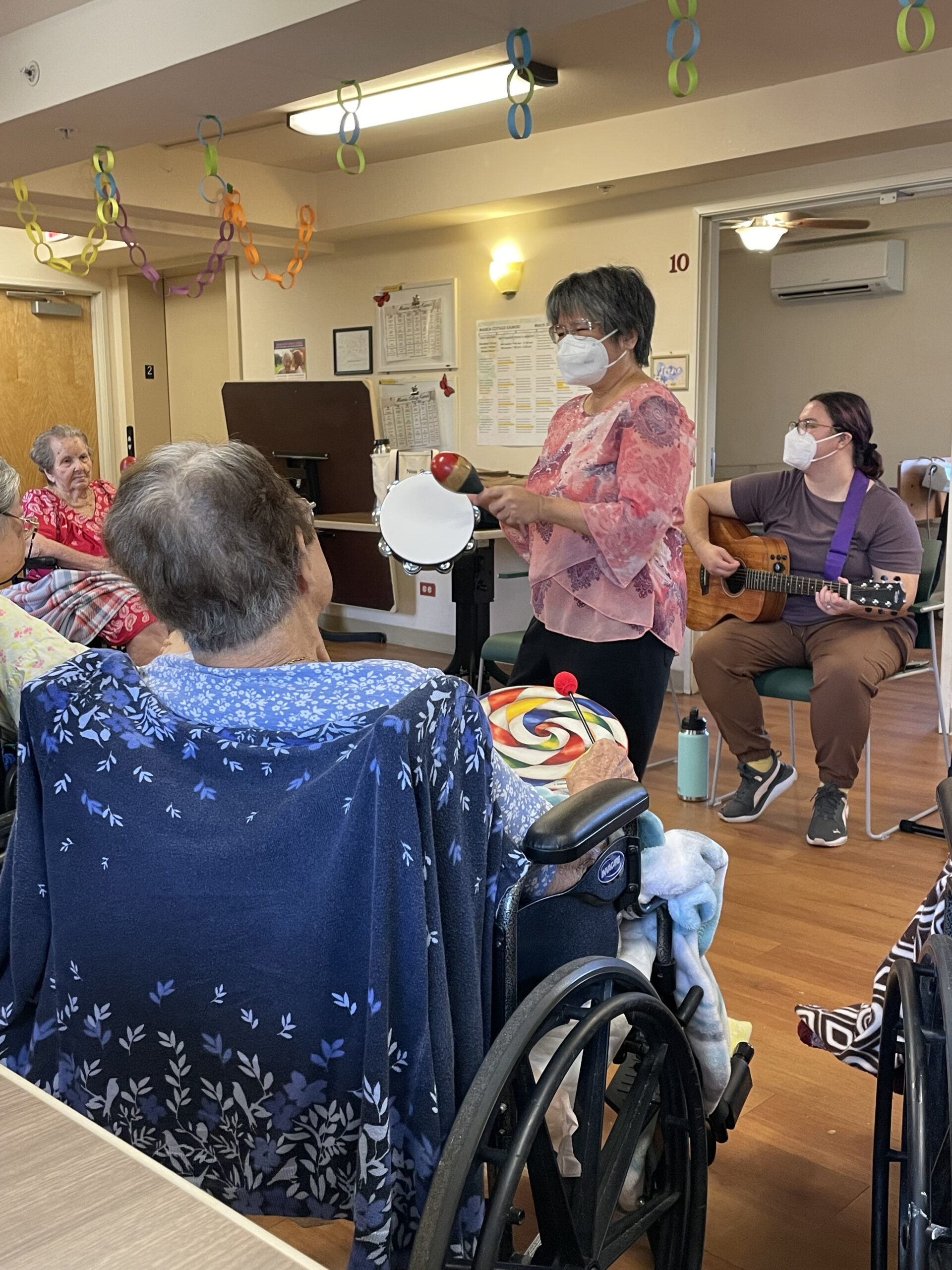
    Sounding Joy Music Therapy, Hawai‘i’s first and only nonprofit music therapy organization, was established in 2002 by board-certified music therapist Keiko Kajiwara to serve diverse local communities that value music as a cultural resource for healing and empowerment. Its mission is to improve well-being and quality of life through music therapy, especially in underserved communities. Services include music therapy for people with disabilities, medical/mental health challenges and those in at-risk circumstances, in collaboration with hospitals, rehabilitation and long-term care centers, senior programs, shelters, schools and other community sites. Public education and advocacy services include research, training and charitable events.

    Music therapy participants engage in singing, movement and improvisation on a variety of instruments. The purpose of this therapy is creative self-expression and community-building, so no prior musical experience is required. Participants’ diverse musical preferences and cultural traditions are embraced in group music-making, honoring the wealth of knowledge and life experience of Sounding Joy’s older adult participants.

    The federal government has recommended music therapy as a mandatory service for senior programs, as it supports active engagement, rehabilitation and palliative care. It is also accessible for those with limited verbal communication.

    Because music stimulates and integrates the functioning of different areas of the brain, it can address a variety of therapeutic goals—motor functioning, memory, communication, emotional expression and socialization. Research demonstrates beneficial music therapy outcomes for a wide range of conditions, including autism, dementia, developmental disabilities, movement disorders, chronic pain and trauma. The program has partnered with the Hawai‘i Parkinson Association and others to offer music therapy to Parkinson’s patients and their caregivers.

    While Sounding Joy works with clients of all ages, the state’s fast-growing population of seniors constitutes the largest age group. But there are less than 12 board-certified music therapists practicing in Hawai‘i. To help make music therapy available to those in need, support Sounding Joy’s Holiday Giving campaign using the donation link below.


    SOUNDING JOY MUSIC THERAPY, INC. (nonprofit)
    Serving people of Hawai‘i since 2002
    1314 South King St., Ste. #963, Honolulu, HI 96814
    808-593-2620 | nguerrero@soundingjoymt.org | soundingjoymt.org
    Donate: tinyurl.com/Donate-SoundingJoyMusic

    Sounding Joy Music Therapy, Hawai‘i’s first and only nonprofit music therapy organization, was established in 2002 by board-certified music therapist Keiko Kajiwara to serve diverse local communities that value music as a cultural resource for healing and empowerment. Its mission is to improve well-being and quality of life through music therapy, especially in underserved communities.…

  • Spinning a Yo-Yo, One Trick at a Time

    You might remember the yo-yo craze of the 1950s—kids rushing to grab the latest models and daring each other to master every spin, loop and flip.

    Amid the frenzy, young Richard Lee of Honolulu discovered a passion that would shape his life. He spent countless hours practicing at the Ben Franklin store in Kaimuki and in local parks, refining his tricks under the watchful eyes of friends and competitors. However, Lee’s family didn’t always understand his obsession with the toy. That lack of support only strengthened his resolve, driving him to mastering the yo-yo.

    By 1951, Richard’s commitment paid off: He claimed his first national championship at the Duncan Yo-Yo Tournament, followed by consecutive victories in 1952 and 1953. Audiences were captivated by his precision and flair, particularly his Flying Trapeze trick, which became the hallmark of his performances.

    Long before it became popular, the yo-yo traveled from the Philippines, where it was called a “come-come” and used for hunting and skillful play. By the time it reached Honolulu, it had evolved into a test of dexterity and style—a challenge he embraced wholeheartedly. For him, mastery wasn’t just about applause or awards; it became a way to give back. He discovered fulfillment in teaching, guiding players as they learned the tricks and discipline that shaped his own journey.

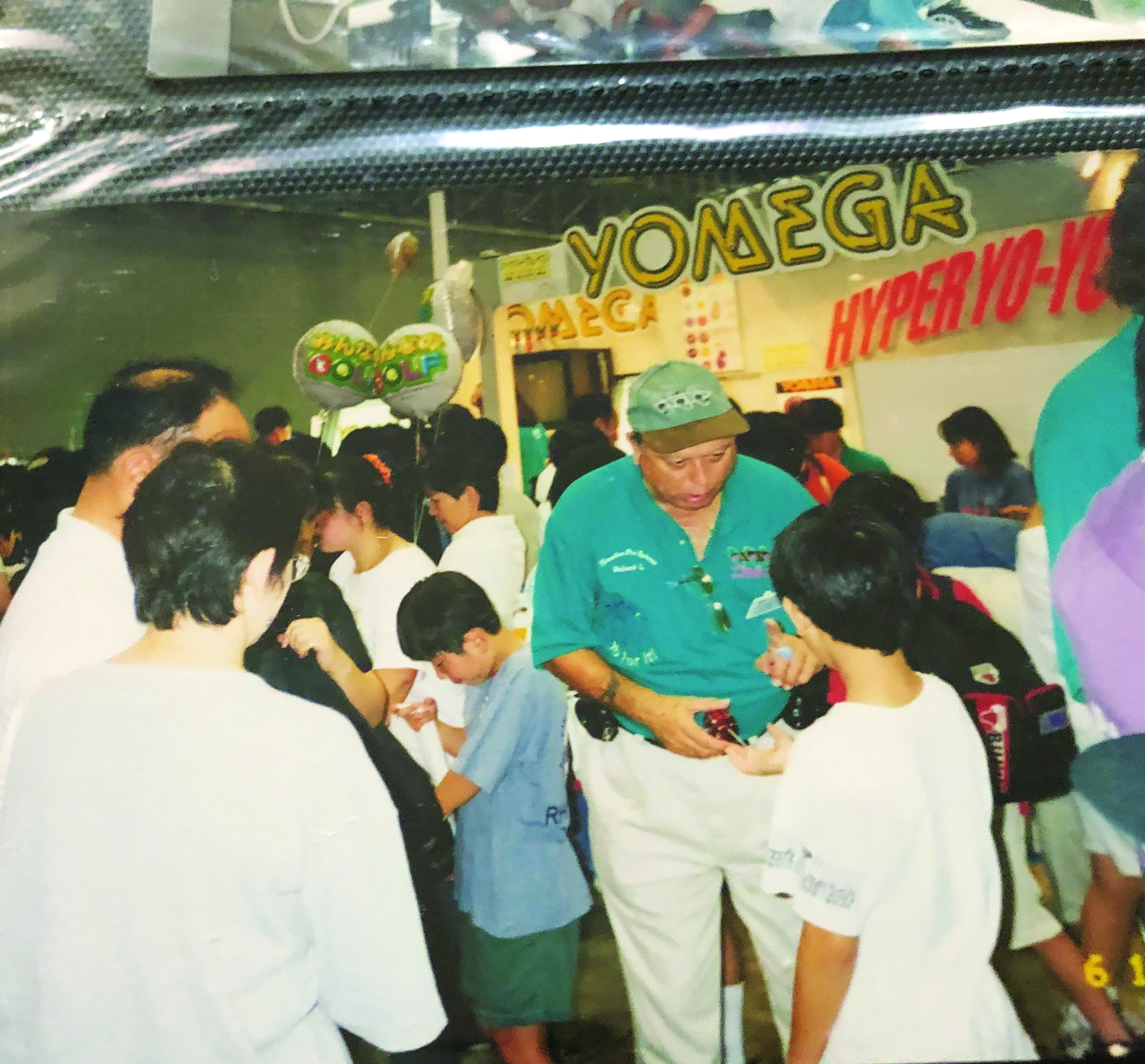
    After his championship years, Richard turned to mentoring the next generation. In the 1980s and 1990s, he performed at community events, including family nights at Nehelani, alongside the students he trained. They demonstrated tricks like Walk the Dog and Rock the Baby, encouraging attendees to try them. Weekends became informal classrooms, where children learned everything from basic spins to advanced flips. Through patience and precision, Lee’s lessons went far beyond the yo-yo, helping kids build confidence, resilience and pride.

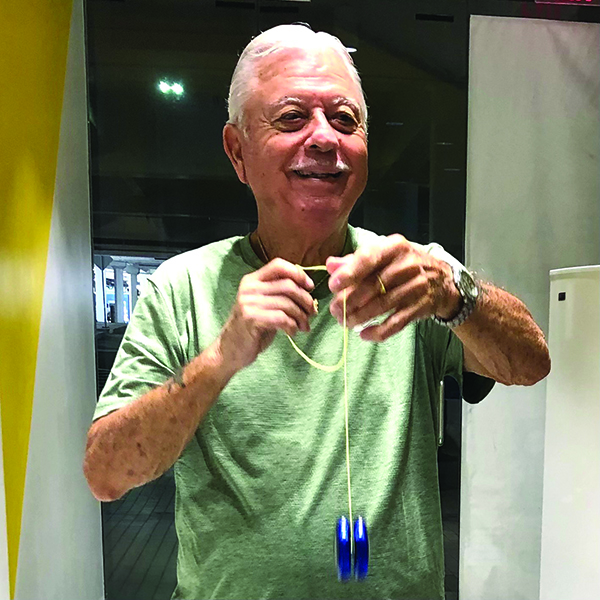
    Richard can still be found demonstrating tricks, mentoring young enthusiasts and keeping the yo-yo alive on weekends at Ala Moana and Kāhala Mall. Known affectionately as “Yo-Yo Man” and “Big Daddy,” his legacy extends beyond trophies—it lives in the hands of every child who learns to loop, flip and spin. Richard Lee’s influence continues to spread across the islands, one yo-yo at a time.

    You might remember the yo-yo craze of the 1950s—kids rushing to grab the latest models and daring each other to master every spin, loop and flip. Amid the frenzy, young Richard Lee of Honolulu discovered a passion that would shape his life. He spent countless hours practicing at the Ben Franklin store in Kaimuki and…

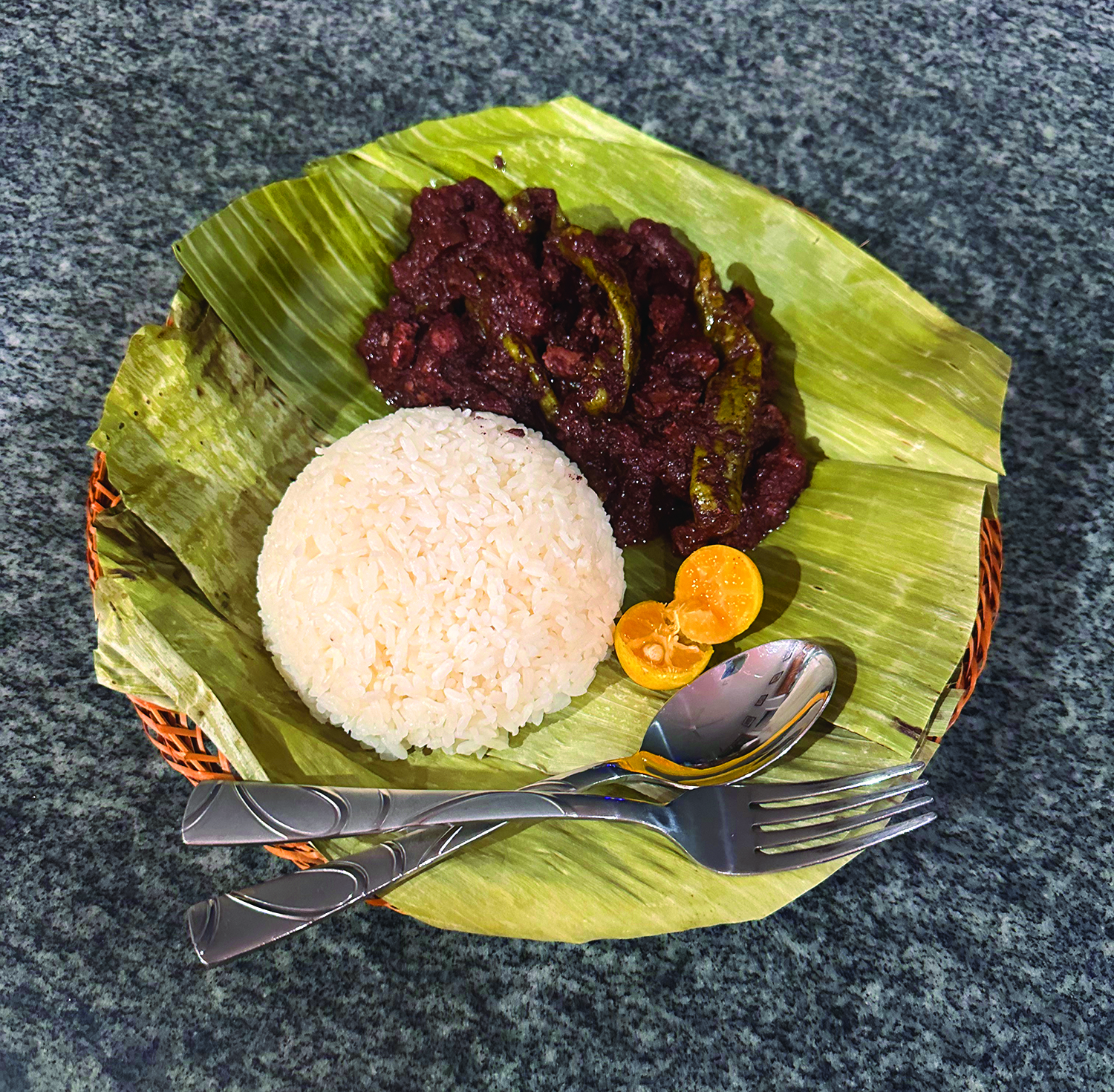
  • Dinuguan (Pork Blood Stew)

    The “blood” in the name of this dish may sound unpleasant to some, but I assure you that dinuguan is well-loved among Hawai‘i locals, who have nicknamed it “chocolate meat.” It’s a traditional dish in Filipino culture, but each region of the Philippines has its own variations when it comes to spices and consistency. The north likes it dry; the south likes it more soupy. I use my own variation of ingredients, including lemongrass for aroma and coconut milk for a Visayan flair. Pork blood may be bought at any Asian store or local market.

    Ingredients:

    3 lbs. pork (belly & lean meat)
    3 stalks lemongrass
    1/4 lb. sweet chili peppers
    1/2 cup shallot onions (s l i ced)
    2 tbsp. fresh garlic (diced)
    1 cup fresh pork blood
    5 cups water
    1/2 cup coconut milk
    2 tbsp. fish sauce (any brand)
    2 tbsp. vinegar (any type)
    5 leaves bay leaf (whol e)
    1 tbsp. peppercorns (crushed)
    1/8 tsp. salt (to ta st e)
    1 calamansi (Philippine lime)

    Prep & cook time: 1 hour
    Serves: 7–10

    Preparation:
    Cut the two types of pork meat (belly and lean) into 3/4-inch cubes and put them in a bowl.

    Crush the whole lemongrass stalks, then fold them in half and tie them into a bundle using one of the lemongrass leaves.

    Dice the fresh garlic (about 2 or 3 cloves), slice the shallots and crush the peppercorns into large granules. (Note: crushed peppercorns are preferred over ground pepper.)

    All the other ingredients may be prepped ahead
    of time or done during cooking.

    Cooking directions:
    1) Use a wok (preferred) or a deep frying pan with a lid. Brown the pork belly on medium heat. No oil is used, so stir the meat constantly to prevent it from sticking to the pan.

    2) After the pork belly has rendered some fat, add the garlic, shallots and lean meat. Stir while cooking the lean meat halfway through—for about one minute.

    3) Add the bay leaves, crushed peppercorn and salt (to taste) and sauté for 2 minutes.

    4) Add 5 cups of water, the fish sauce and lemongrass bundle. Boil for 1 minute. Lower the heat. Cover and simmer the mixture for 25 minutes.

    5) Add the sweet chili peppers. Simmer for about 5 minutes. Add more salt if needed. Remove the bundled lemongrass. Continue to simmer.

    6) Dribble the vinegar evenly. Do not stir. Simmer for 1 minute, then stir to mix all of the ingredients. Pour in the coconut milk and stir again.

    8) Add 1 cup of pork blood, stirring constantly until the blood turns to a chocolate color, indicating the blood had been cooked. Stir and simmer to the desired consistency. Add more vinegar to your taste.

    Serve with a slice of calamansi for squeezing over the dish. Enjoy with steamed rice or puto (steamed rice cake) or simply as a pulutan (appetizer) with your favorite beverage.


    Do you have a favorite recipe and story to share? For consideration, include a photo and mail to Generations Recipe, PO Box 4213, Honolulu, HI 96812, or
    email them to Cynthia@generations808.com.

    The “blood” in the name of this dish may sound unpleasant to some, but I assure you that dinuguan is well-loved among Hawai‘i locals, who have nicknamed it “chocolate meat.” It’s a traditional dish in Filipino culture, but each region of the Philippines has its own variations when it comes to spices and consistency. The…

  • Celebrating the Filipino Culture

    Since more than 1,500 years ago, Kānaka Maoli (Native Hawaiians) have welcomed immigrants from every corner of the globe, cultivating and perpetuating a tapestry of diverse cultures. In the sixth article in this ongoing series on the many cultures that comprise Hawai‘i, we will focus on the Filipino, how the people arrived in the Hawaiian Islands, their culture and celebrations such as the Barrio Fiesta and Flores de Mayo.

    Filipino Arrival in Hawai‘i

    In the mid-1800s, the first few Filipinos (called “Manila men”) settled in Hawai‘i, finding work as cooks and musicians in the Royal Hawaiian Band. These men were some of the first sakadas (overseas migrant workers).

    In the early to mid-1900s, an estimated 125,000 Filipino workers immigrated to Hawai‘i from the Ilocos and Visayas regions of the Philippines. Many of these workers were recruited to work on sugar plantations due to their agricultural knowledge, where they worked long hours under intense heat for little pay. In the beginning, most sakadas were single males, but as time went on, more workers brought their families with them. Today, people of Filipino descent make up the second largest ethnic group in Hawai‘i at 25.1% of the population.

    Culture and Tradition

    The Filipino culture is heavily family-oriented, emphasizing respect for elders, hospitality and bayanihan, or a spirit of communal unity. Filipinos in Hawai‘i often pack and send balikbayan boxes (care packages) full of clothes and snacks for family in the Philippines, and bring pasalubong (souvenir gifts) from Hawai‘i.

    Perhaps the most pervasive feature of Filipino culture in Hawai‘i is the cuisine. Go to any family gathering or graduation party, and more often than not, you’ll see at least one of the following: lumpia, pork or chicken adobo, pancit and halo-halo. And who can forget about ube (purple yam)—in lattes, pastries, ice cream—sweetening up our lives?

    Flores de Mayo & Filipino Fiesta

    The culture is heavily influenced by Catholicism, introduced during Spanish colonization. Filipinos celebrate many Catholic holidays with several events held throughout the Hawaiian Islands. This past May, the 56th annual Barrio Fiesta was held on Maui with cultural performances, food and a pageant. Next May, the Filipino Community (FilCom) Center will host the Flores de Mayo & Filipino Fiesta, the largest celebration of Filipino culture on O‘ahu. Traditionally celebrated as a devotion to the Blessed Virgin Mary, the upcoming celebration will feature a balut eating (fertilized duck egg) contest, a cultural clothing market, tinikling (bamboo dance) and more.

    For more information, see the FilCom Center’s website (filcom.org) as well as Generations Magazine’s Facebook page (facebook.com/genmag808) and calendar (generations808.com/calendar) for community events and opportunities.


    The next article in this series will feature the influences of Samoan culture in Hawai‘i.

    Since more than 1,500 years ago, Kānaka Maoli (Native Hawaiians) have welcomed immigrants from every corner of the globe, cultivating and perpetuating a tapestry of diverse cultures. In the sixth article in this ongoing series on the many cultures that comprise Hawai‘i, we will focus on the Filipino, how the people arrived in the Hawaiian…