Caregiving became a full-time responsibility for Lahaina resident Montella Lopez in her mother’s final years. In the six times her mother was discharged from the hospital, Lopez said she received little or no instruction on how to care for her mother at home.
As Hawai‘i’s population ages and the number of people with chronic conditions increases, pressures on unpaid caregivers mount. Thousands of Hawai‘i caregivers like Lopez are providing complex care for which they are unprepared— such as medication management and wound care.
In response to this urgent need, a group of advocates and elder-support agencies are calling on state lawmakers to approve legislation requiring Hawai‘i’s hospitals to offer family caregiver instruction—at the time of discharge. The Hawai‘I CARE Act Coalition wants all hospitals to recognize and support the critical role of family caregivers to ensure safe hospital-to-home transitions.
This summer, a Legislative Family Caregivers Working Group has held monthly meetings to assess the role of family caregivers in hospital discharge procedures. Working Group members are reviewing proposed CARE Act legislation that features three commonsense provisions:
Allows patients to designate a family caregiver, and put that person’s name in the hospital record.
Notifies the family caregiver prior to the patient’s discharge from the hospital.
Requires hospitals to offer caregiver instruction— at discharge — for medical tasks they need to provide for the patient at home.
Hospitals opposing the proposed legislation say they already follow federally established guidelines for patient discharge. Advocates emphasize that guidelines only require discharge instruction for patients—not family caregivers who may be required to carry out those instructions.
New research on family caregivers in Hawai‘I has created greater urgency for legislative action in support of an estimated 154,000 relatives, partners, friends and neighbors who assist older loved ones at home. According to the AARP Public Policy Institute report, family caregivers statewide provided unpaid care worth $2.1 billion in 2013.
In the past two years 17 other state legislatures passed bills providing for greater involvement and instruction of caregivers at the time of hospital discharge. Hawai’i seems to be falling behind.
It’s time to support our family caregivers who make it possible for their parents and grandparents to live more independently and remain in their homes and communities. Given our rapidly aging population and prohibitive cost of paid eldercare in the islands, Hawai‘i should be leading the way in support for caregivers — not falling behind.
Residents are urged to support the CARE Act in Hawai‘i by signing an online petition at action. www.tinyurl.com/AARPISupportCAREAct.
AARP Hawai‘i state office:
808-545-6006 | Toll-Free: 866-295-7282
www.aarp.org/hi | facebook.com/AARPHawaii
twitter.com/AARPHawaii


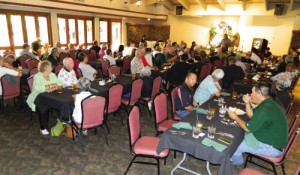 The 2015 season for the Na Koa Football Club started on Aug. 31 and will continue every Monday for 11 more lunches at the Willows Restaurant, starting at 11am. This season, the University of Hawai‘i Rainbow Warriors will play 12 straight games without a week off. There is no bye for Na Koa boosters either. Coach Norm Chow kicked off their first lunch meeting to a round of applause as he announced, “This is the best football team in the three years I have been at UH.” He beamed as he talked about his players’ and coaches’ stats, noting his admiration for each one.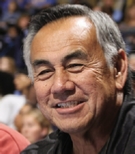
 Thirty-five years ago Japanese families in Hawai‘i saw the anthurium’s shiny hearts, bird of paradise’s crane neck, black berry ears of the “Mickey Mouse” plant and the mass of areca palms, fluttering in the wind. Inspired by the flowers and foliage of their new homeland, these immigrants imported Ikenobo — the soul of ikebana (the art of Japanese flower arrangement) that brought such a profound sense of peace and harmony into their western lives.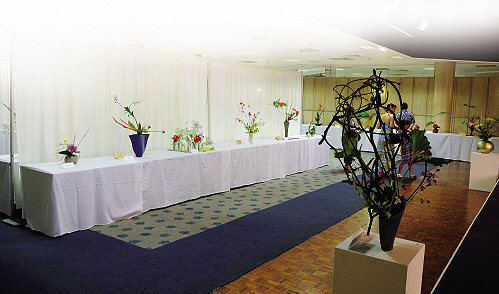
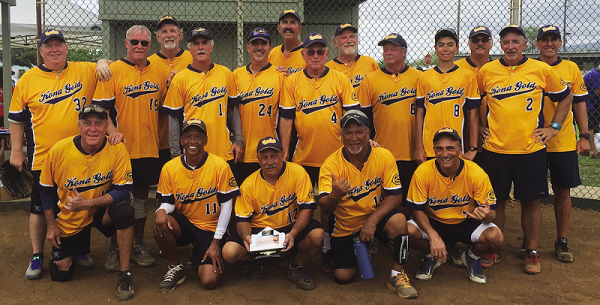
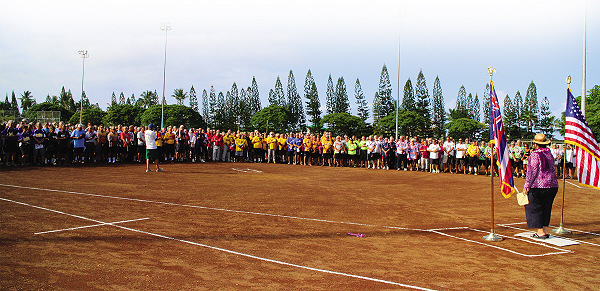
 For Honolulu residents, assisted living and retirement communities used to mean moving away to a quiet suburb. They yearned for a simple life, free from home maintenance, chores, cooking and cleaning, but not seclusion — miles from their church, social clubs, stores, restaurants and civic events.
 The growing demand for assisted living options means that Honolulu companies like The Plaza Assisted Living will be “building more facilities in familiar neighborhoods,” says Colby Takeda, administrator of The Plaza at Waikiki. “Our seniors want to remain active in their community — to stay at the ‘urban core’ of the city they love.”
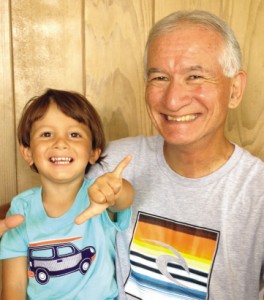 Generations Magazine asked me to share my thoughts about the first six months of my retirement. My feelings have definitely been surreal. I can expend all the time and energy I want to on hobbies and interests I rarely had time for over the past 42 years; more importantly I have time to spend with my grandson, family and friends. If there’s a downside to retirement, it’s the loss of contact with so many great people I encountered along life’s journey. It’s a good feeling when people call or write — they still have you in their thoughts. Keeping in contact with old friends creates a lot of comfort. I know I am very fortunate, having witnessed firsthand over my career, the plight of many of our island’s kupuna, who struggle just to survive.
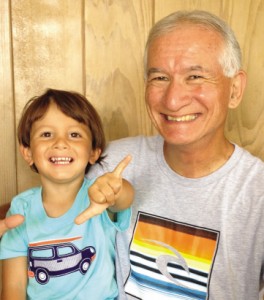 Generations Magazine asked me to share my thoughts about the first six months of my retirement. My feelings have definitely been surreal. I can expend all the time and energy I want to on hobbies and interests I rarely had time for over the past 42 years; more importantly I have time to spend with my grandson, family and friends. If there’s a downside to retirement, it’s the loss of contact with so many great people I encountered along life’s journey. It’s a good feeling when people call or write — they still have you in their thoughts. Keeping in contact with old friends creates a lot of comfort. I know I am very fortunate, having witnessed firsthand over my career, the plight of many of our island’s kupuna, who struggle just to survive.
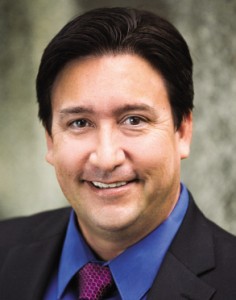 In midlife, documenting the lives of our ancestors and our own memories suddenly becomes important. Even if our kids aren’t interested — we know someday they will be.
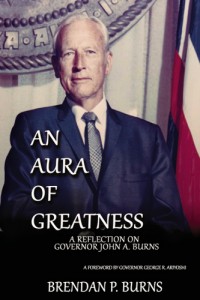 Author Burns said, “I realized that it is time to pass on those lessons from his life to the next generation.” For Burns, an educator and principal of ‘Aina Haina Elementary School, the lessons are about leadership and consensus building, wrapped in detailed and well-