Category: Column

  • The Language of Emotion

    Addendum to the Royal Hawaiian Band feature story

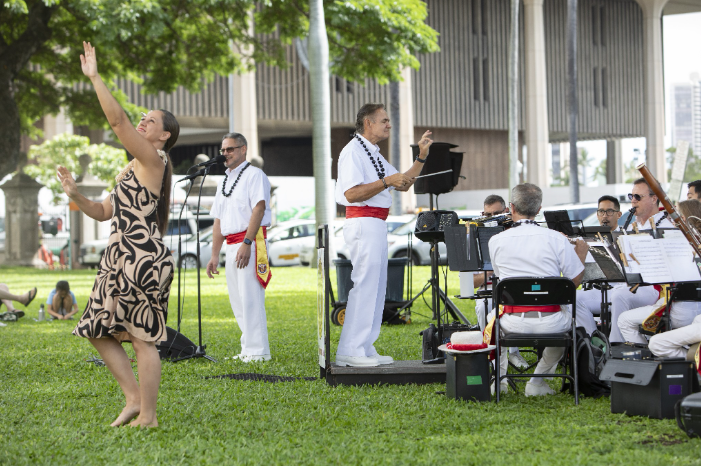
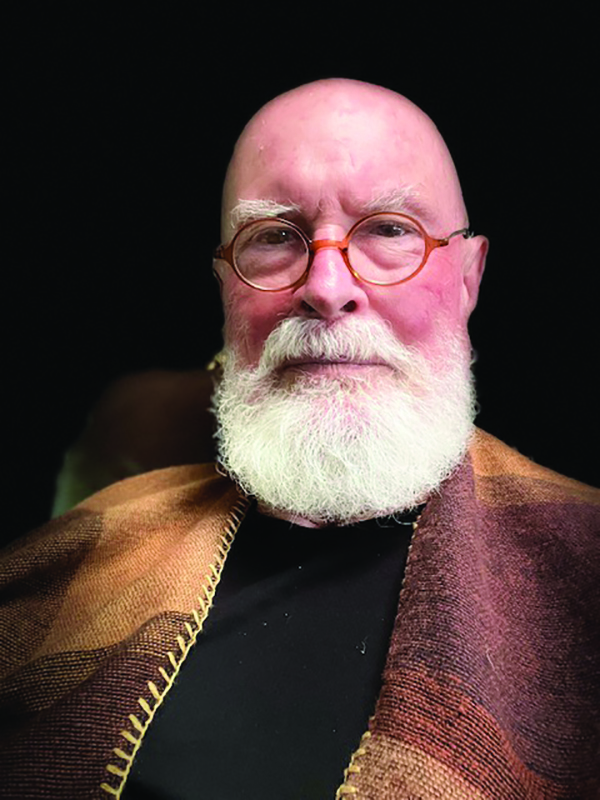
    Many may feel that it’s somehow “too late” and that there is some sort of an expiration date for starting to learn an instrument. Both Royal Hawaiian Bandmaster Clarke Bright and Eric Kop, assistant administrator and principal horn, emphasize that it is never too late to get into music, in whatever form it takes. Eric, for one, has calabash aunties and uncles who never played an instrument in their lives, but are now in retirement attending ‘ukulele classes and singing in various groups for enjoyment. “It’s brought satisfaction for them in ways that they didn’t even realize until they started doing it. Whether you do it as a hobby or as a profession — again, music is an emotional language, so if you’re able to tap into that language, it really connects to so many aspects of living a full life. So, if anybody has any inkling at all, I would say the most important thing is to not be afraid to try.”

    Additionally, for those who have difficulty with playing an instrument, whether due to mobility, being busy or for other reasons, some may feel that simply enjoying music does not involve them at all. But, if music is a language like Eric says, language and conversation require two parties to be complete. Clarke reflects on this sentiment further. “Even if you don’t think you can, at least be part of the listening environment of music, and that will allow you to be able to feel what music can do. Not everyone can create it, but if you can listen to it, you are really part of music, because it doesn’t make sense for us to play music if nobody is there. We can work on our craft in practice rooms — which we all have done — and we can rehearse for ourselves, but when we share that with others, that becomes the revolving door that really makes music something I think seniors, especially, should be a part of. Never shy away from that.”


    Many may feel that it’s somehow “too late” and that there is some sort of an expiration date for starting to learn an instrument. Both Royal Hawaiian Bandmaster Clarke Bright and Eric Kop, assistant administrator and principal horn, emphasize that it is never too late to get into music, in whatever form it takes.

  • Let the Games Begin!

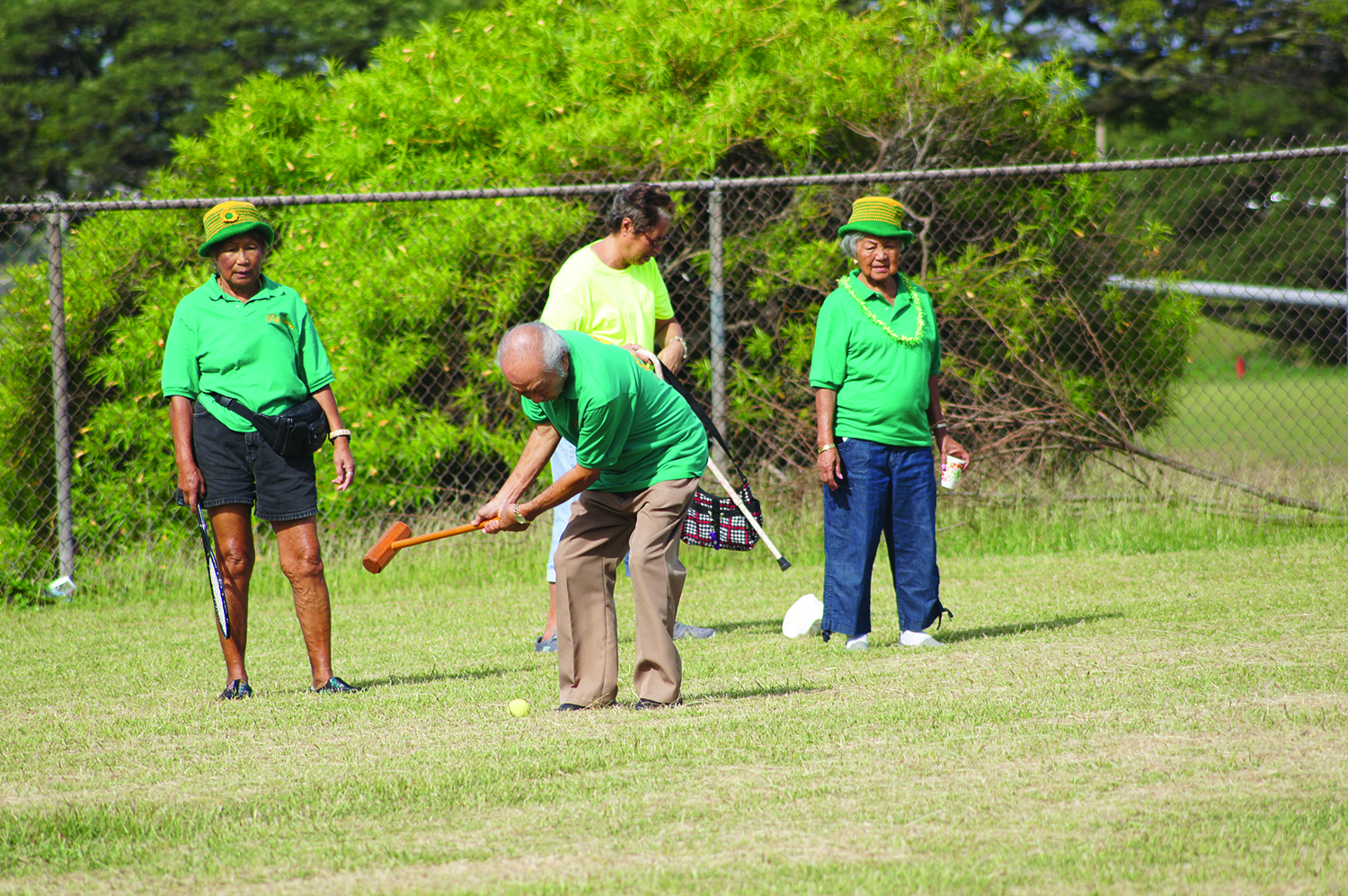
    Competition at the annual Senior Classic Games is pretty brisk between the 32 O‘ahu senior clubs that participate.
    Competition at the annual Senior Classic Games is pretty brisk between the 32 O‘ahu senior clubs that participate.

    Since the creation of the Senior Classic Games in 1980 by Herbert Yasuhara, the City and County of Honolulu Department of Parks and Recreation (DPR) senior clubs have held games in March at the Halawa District Park. The clubs practiced to compete in peg ball, lawn pin ball, nine gates and tunnel vision games. They have two age divisions: 69 and under, and the Masters Division, which is 70 and over. The Masters Division team entries, with approximately 200 to 275 participants, have doubled in the past few years. In addition to exercise, this event enables island-wide social interaction among seniors.

    In 2012, Generations Magazine became a major sponsor of the event by purchasing medals for the winners. The competition is pretty brisk between the 32 senior clubs that come from all parts of O‘ahu. The winners really love getting their medals in front of the whole crowd of participants.

    To join a senior club, individuals age 55-plus can go down to their local Honolulu City and County District Park or community park and inquire with the director.


    CITY & COUNTY OF HONOLULU, DEPT. OF PARKS & REC.
    1000 Ulu‘ōhi‘a St., Ste. 309, Kapolei, HI 96707
    808-768-3030 | ssantiago@honolulu.gov
    honolulu.gov/parks/program/senior-citizen-program

    Since the creation of the Senior Classic Games in 1980 by Herbert Yasuhara, the City and County of Honolulu Department of Parks and Recreation (DPR) senior clubs have held games in March at the Halawa District Park.

  • Love is Here!

    The November/December 2023 “Ask a Kupuna” column posed this question: “Do you have a favorite Valentine’s Day story to share?”

    Marlene wrote, “After a disappointing experience the year before at an upscale downtown restaurant, we decided to never go out to dinner again on a popular occasion. Instead, we had a nice quiet candlelit dinner at home on Valentine’s Day in 2014.

    “We purchased lobster tails and side dishes at our local market and enjoyed a delicious dinner in the comfort, quiet and convenience of our little rental cottage on a cattle ranch in California.”

    Marlene and her husband have returned to Hawai‘i and enjoy all our local foods. They are also looking forward to attending this year’s Annual Senior Valentine’s dance. “See you there.”


    CITY AND COUNTY OF HONOLULU
    DEPT. OF PARKS & RECREATION
    1541 Kalākaua Ave., Honolulu, HI 96813
    808-768-6895 | honolulu.gov/parks
    DPRseniorcitizens@honolulu.gov

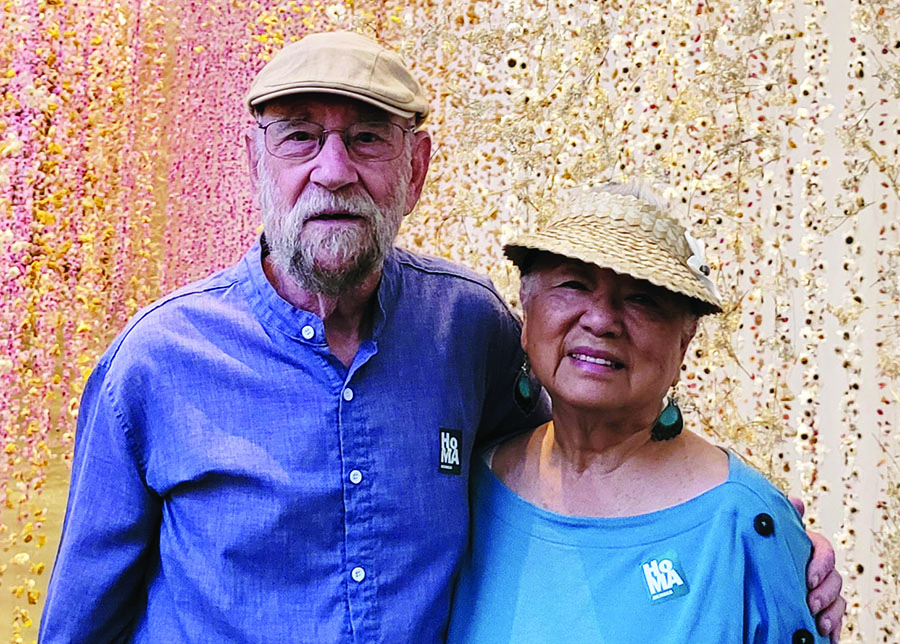
    The November/December 2023 “Ask a Kupuna” column posed this question: “Do you have a favorite Valentine’s Day story to share?” Marlene wrote, “After a disappointing experience the year before at an upscale downtown restaurant, we decided to never go out to dinner again on a popular occasion. Instead, we had a nice quiet candlelit dinner…

  • Senior Dating: It’s All in the Delivery

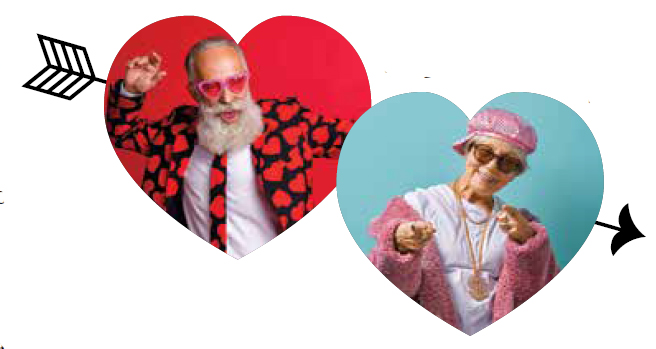
    Valentine’s Day is coming up — a good time to talk about dating as a 70ish, single senior male.

    You were married for 45 years and now you’re alone because your lovely wife passed a while back. You’re wanting companionship and thinking even about dating. Your health is good, you’re active and your cognitive abilities are still relatively intact. You play golf, go for long walks, sip on an occasional glass of wine and love to watch classic movies. So how does one find companionship in the Final Frontier of Life — just someone to hangout with? You’re past the bar scene, so where do you go? Here are my thoughts.

    The best place I think would be Whole Foods. Lots of ladies of means (it is Whole Foods, after all) are filling their carts with all sorts of healthy goodies. So if you see someone who attracts you, just bump her cart with your cart. After that gentle nudge and in a casual way, say, “Oh, I’m terribly sorry.”

    Then, quickly scan her cart items and make a comment: “Oh, I love that kind of quiche. Along with a fresh salad and a glass of crisp white wine, it’s my fav.” And if she responds by saying “Oh, I love that combination, too!” well then, the door has just been opened. You can then respond by saying something to her in a non-creepy way: “Is your name Cholesterol, because you send my blood pressure skyrocketing!” And if she laughs out loud and says that’s the funniest darned pickup line she’s ever heard, boom, you’re in!

    What about this line after a brief conversation with a “bumpee?” “Your company is so delightful, I’m contemplating putting a new battery in my hearing aid.” That’s a keeper. Garans ballbarans, she’ll love it.

    Last one: Again, when delivering your line don’t rush it and don’t be too serious. Be playful and wear your best non-lecherous smile. “My teeth and I no longer sleep together, but you and I definitely should!” Security! Too much? My bad.

    If Whole Foods isn’t your scene, try making the pharmacy at Longs a part of your day. You’re bound to meet a charming woman while she’s waiting for her Warfarin.

    Just remember, while you are shopping for some “chow fun” with these priceless pickup lines, its all in the delivery — because if she calls for security, you’ll be hustled out of the store and asked never to return. It may even go on your permanent record. So don’t be too over-confident in the delivery of your line. Wear a sweet smile. (Make sure your dentures are in.)

    Be adorable, innocent and childlike… like me.

    Valentine’s Day is coming up — a good time to talk about dating as a 70ish, single senior male. You were married for 45 years and now you’re alone because your lovely wife passed a while back. You’re wanting companionship and thinking even about dating. Your health is good, you’re active and your cognitive abilities…

  • Opening a Window of Opportunity

    You think you are young at 40 years old, right? But what if your intended life-long job was terminated and you’re not ready to retire? What do you do when a door closes on you like that?

    All good questions that I had to ask myself back in 1993, when my position with a small company was terminated due to the downward spiral of Hawai‘i’s real estate market. I interviewed with five companies, but it didn’t take long to realize I couldn’t see myself spending the rest of my life working for any of them. Instead, I serviced them as an independent contractor.

    Working with my CPA, I followed his tax requirements to start my own company and also became an LLC (Limited Liability Company). I was quite excited at the prospect of being my own boss.

    I soon had the opportunity to purchase outright the real estate referral company I co-founded that was connected to the franchise company that closed the door on me in 1993. My agents and I have connected clients to realtors throughout Hawai‘i, as well as on the mainland. Because I have held a real estate license since 1985, I am proud to consider this company as my legacy.

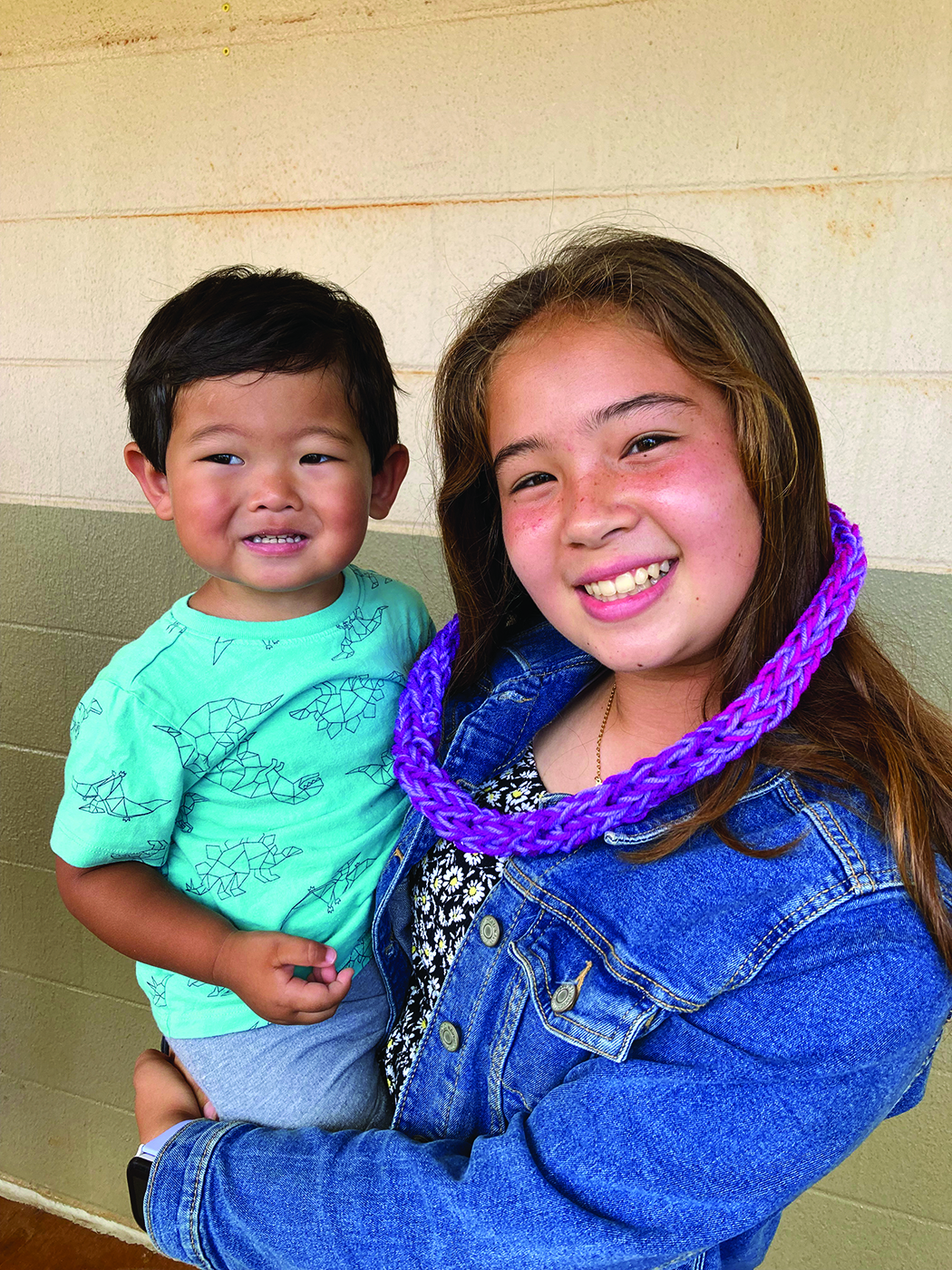
    My grandchildren Tanner and Alexis, give me joy in my life.
    My grandchildren Tanner and Alexis, give me joy in my life.

    However, could I “be more” and do something meaningful? Using my business background, I am currently the executive director of three nonprofit associations. I also do the marketing for a small shopping center just outside of Waikiki, and service small companies who rely on me to consistently produce their newsletters, postcards, calendars or other marketing pieces. I love being helpful.

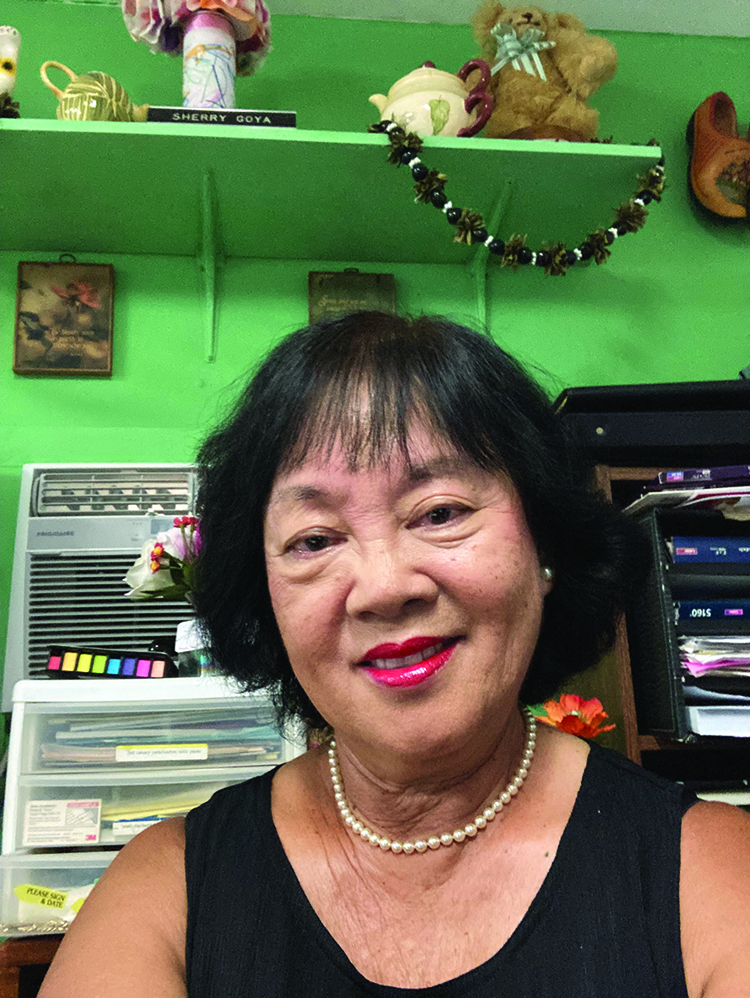
    And this year, I am also very happy to be back with Generations Magazine, where I worked from 2010 to 2020.

    The best part of being your own boss is that you can schedule your own work time, family time and fun time. When I started consulting, my daughters were in preschool and high school and my son was in elementary. I remember when I drove my son to school, he would ask “Mommy, what are you going to do today?” Wow! When I think back, he was the one person who made me account for my day!

    For the past 30 years, I’ve gone all out to mix quality work time with quantity family and fun time. Because of my daughters’ love of tennis, I volunteered as an assistant coach at their school. They, too, became coaches, as well as my husband, making it a real family affair. Nowadays, I have two active grandchildren to have fun with!

    Many people have tough decisions to make when it comes to work. My advice for when a door closes, is to see it as an invitation to open a window of opportunity into a fulfilling life you create on your own terms.

    You think you are young at 40 years old, right? But what if your intended life-long job was terminated and you’re not ready to retire? What do you do when a door closes on you like that?

  • Eh! Nevah Mind Da Kine, Now is NOW

    Well, Generations wanted me to expound on the inevitable and that is…dying. I can safely say that I know something about dying because for many years as a stand-up comedian, I died many times on stage. It’s not a good feeling. However, once I passed through that uncomfortable moment and came out on the other side, I was refreshed and stronger. Hopefully, in your passing you will also feel much more refreshed and stronger. That being said, wouldn’t it be interesting to find out that the knowledge we have about death and dying is all wrong!

    WHAT IF! While on this earth, say we receive a letter every twenty years from God. This letter is God is giving you a review. Every 20, 40, 60 years and so on you  receive a letter that hopefully is going to give you a passing grade. And if you keep that up, eventually you’ll receive your golden ticket to heaven at the age of 80. And if you haven’t taken care of business that the LORD recommended when you reach 80, sorry — you’re going to have to stand in line with a lot of other people. And as for me? I can see one of my letters saying “Hey Frank, this is the Lord’s assistant and the Heavenly Father wants me to pass on his 40 year review to you. There is one aspect of your life the Heavenly Father strongly urges you to pay attention to and that is ‘Learn the words to the songs you’re going to sing on stage!!!!! ALSO PLEASE STAY ON KEY!’ When Heavenly Father hears you go off key he shakes his head, closes his eyes and prays for you. OK? That will make Heavenly Father very happy and we want to keep Heavenly Father very HAPPY or he’s going to come down there and rearrange some furniture. And if you upset Heavenly Father,  we’ll send you to a place where you’ll need a lot of sun block!! Get my drift? Got it? Good!”

    But what really happens when you die, pass over, pass out, pass gas, kaput, game over, no time left, make — die — dead? Many have come back from the other side to tell us. Moe Keale told me that, after he had flatlined, he walked towards a light that turned out to be a 7-11. I know that sounds absurd but that’s what he told me. And as he walked toward the door, his nephew Israel Kamakawiwo‘ole came walking out with a slurpee all happy and smiling. But when he saw Moe, he said “Unko, what you doing hea? It’s not your time, you gotta go back!” So Moe came back to tell the story. He also said that while he was transitioning back, all he heard were harps and ‘ukuleles.

    So this is what I do know: the reality of life is always NOW. The past is a memory which is a thought arising in the present. The future is merely anticipated and is just another thought arising now. What we truly have is this moment. If you stay connected to the present moment and find fulfillment here and now, you will always have a 7-11 heaven. That’s my story and I’m sticking to it.

    Well, Generations wanted me to expound on the inevitable and that is…dying. I can safely say that I know something about dying because for many years as a stand-up comedian, I died many times on stage. It’s not a good feeling.

  • In Celebration of Organ Donor Legacies

    If you could save a life, would you? We are all asked this vital question at the DMV. Checking the box YES to be an organ or tissue donor means we are willing to selflessly pass on the gift of life to those desperately in need.

    On Saturday, April 29, more than 240 people from across the Hawaiian islands came together to honor and celebrate their deceased loved ones who gave the gift of life to patients in critical need of a life-saving organ or restorative tissue. Hosted by Legacy of Life Hawai‘i, the Donor Remembrance Ceremony was held in Kaneohe.

    The all-day, heartwarming event included reflections from an organ donor’s son, Sean Cervone, whose mother tragically passed away suddenly and became an organ donor. Sean Keoni Craig, a double lung and kidney transplant recipient, followed with a powerful Hawaiian chant to his ancestors and a heartfelt message of gratitude for his organ donor. He shared his hopes to one day meet the family of the donor.

    Afterward, Tracy Lodge spoke about her beloved son, Brandon, who became an organ donor after he passed away suddenly after a traffic accident. She recalled fondly how Brandon was cherished for his generous spirit by his friends, family, and the Kailua community where he lived. In a touching moment, she was introduced for the first time to the grateful transplant recipient who received her son’s liver.

    Donor families were invited to create a commemorative lantern in memory of their loved ones. On display in the ballroom were the five panels of the Hawaii Donor Quilt created in a heartfelt tribute to those who gave the gift of life and whose legacies live on in transplant recipients. The event ended with the poignant release of monarch butterflies, symbolizing the renewed hope that their loved ones gave to the many transplant recipients by consenting to organ and tissue donation.

    The need for organ, eye, and tissue donors continues to grow, as it is a pressing issue. There are at present 322 patients in Hawai‘i suffering from end-stage organ failure and waiting for a life-saving kidney, pancreas or liver. More than 114,000 patients in the United States are in the same critical condition. To register as an organ, eye and tissue donor, visit registerme.org and help make a difference.


    LEGACY OF LIFE HAWA‘I (501(c) 3 nonprofit)
    405 N Kuakini St STE 810, Honolulu, HI 96817
    808-599-7630 | info@legacyoflifehawaii.org
    legacyoflifehawaii.org
    Legacy of Life Hawai’i is an organization in Hawai’i federally designated to recover organs and tissue for transplant; encourage organ donation through community outreach and education; and honor and support donor families by working closely with island hospitals to cultivate an understanding in community diversity that life is worth giving.

    If you could save a life, would you? We are all asked this vital question at the DMV. Checking the box YES to be an organ or tissue donor means we are willing to selflessly pass on the gift of life to those desperately in need.

  • My Story: A Life-Changing Health Scare

    I was sitting outside an Ala Moana Hotel meeting room texting on my phone. Suddenly, I looked up. I had no idea where I was.

    I realized I was actually lying on the floor and looking at the walls and ceiling. Sweat seemed to be pouring down my face. I reached up to wiped the perspiration, only to discover it was blood. Soon a physical therapist appeared, asking me to follow his finger with my eyes. He asked me to raise my hands above my head, then to smile. He said I didn’t have a stroke or heart attack.

    As he helped me to the restroom to clean up, fear possessed me. My thoughts raced. I went to the emergency room and spent three nights in the hospital. I had numerous tests.

    I reflected on my life while I waited for the results. I had great parents and a loving family. I got married to a loving wife. We share great children, grandchildren and great grandchildren. Nothing has been more enjoyable than seeing my family grow. I’ve also been lucky to see our family business grow.

    Balancing my family, church responsibilities, and work has not always kept me busy. I walk 4-5 miles every Saturday. At 74 years old, I didn’t feel old. Sure, I take pills for hypertension and cholesterol. I knew I needed to lose 40 pounds. Still, I thought I was in good health. I felt good.

    Sitting in the hospital, I wondered: Do I have a legacy to pass on to my family? Are my affairs in order? How do I make the most of my remaining years? Questions kept arising.

    Happily, my medical tests came back negative. Six months have now passed since my blackout.

    I’ve been trying to make the most of this second chance to change my lifestyle. I walk three times a week. It helps me with my balance. I’ve cut down on carbs — including rice. I eat only one big meal a day. The other two meals are small meals. I eat no junkies, except to keep my wife company during our TV nights.

    I introduced naps into my afternoon routine. My naps normally last between two and three hours. Occasionally I can nap for five hours. Now I realize there is great value in taking this time to refresh myself.

    I’ve slowed down my life, even though some still think I’m working too hard. This is what happens when you love what you do, I suppose. My new business is gratifying; I love going to work. My wife claims that I don’t work but just go to talk stories.

    I hope sharing this one can help inspire you to slow down a bit, too. Life is too short anyway.


    FINANCIAL BENEFITS INSURANCE INC.
    1311 Kapiolani Blvd., Ste. 504, Honolulu, HI 96814
    808-792-5194 | emotosue@fbihi.com
    fbihi.com | FB: Financial Benefits Insurance

    I was sitting outside an Ala Moana Hotel meeting room texting on my phone. Suddenly, I looked up. I had no idea where I was. I realized I was actually lying on the floor and looking at the walls and ceiling. Sweat seemed to be pouring down my face. I reached up to wiped the…

  • The Houseless Are Not Homeless

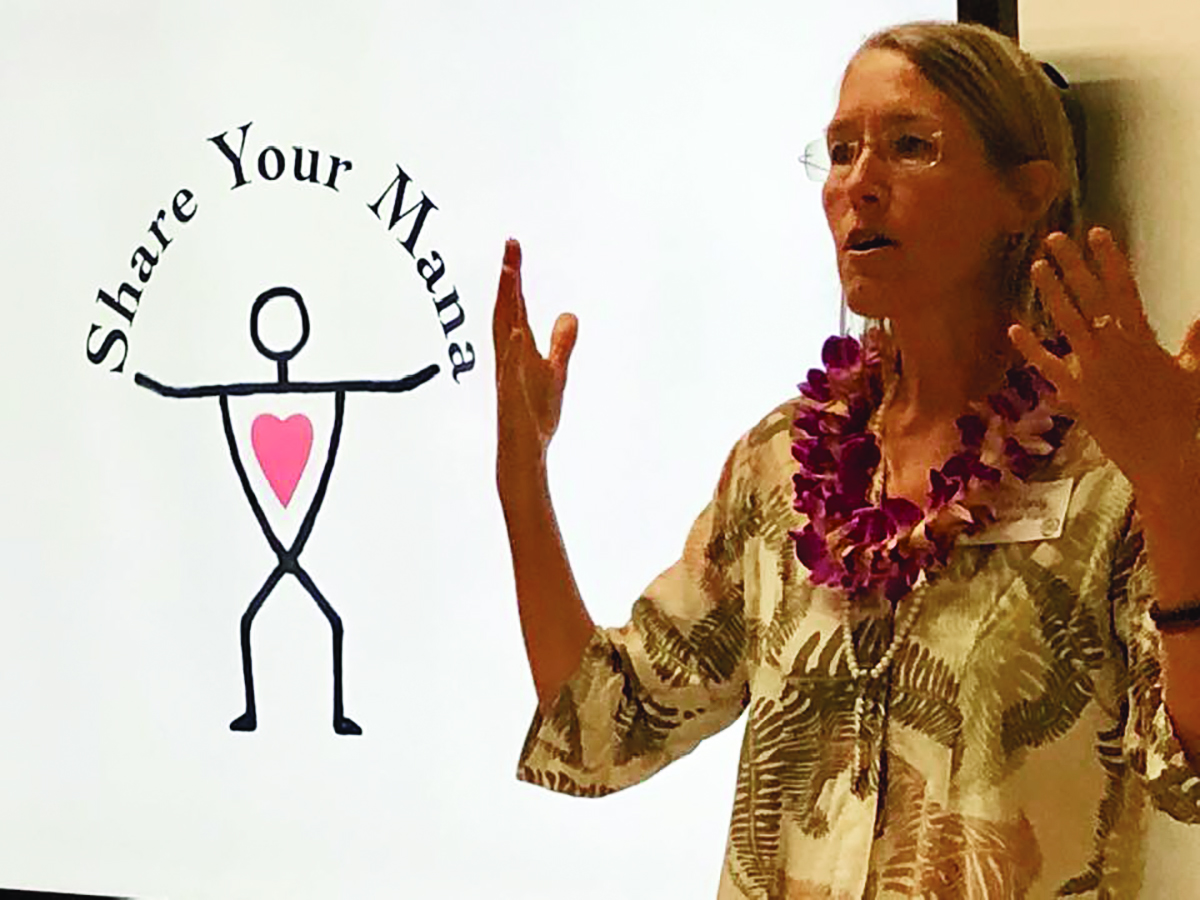
    Lisa Darcy has been an advocate for the houseless anddisabled for decades.
    Lisa Darcy has been an advocate for the houseless and disabled for decades.

    Growing up modestly in a suburb of Chicago, I remember the first time we went camping. I was so excited, because this was a family vacation. My brothers and sisters helped pack the hot dogs and buns, collected our sleeping bags and pillows, and gathered wood for the fire. We were thrilled to eat canned beans! It was an exciting adventure… until the doorbell rang.

    This, of course was not camping, even though that’s what we called it. We had a bathroom, electricity, a phone, safety and privacy.

    Let’s shift the paradigm. Welcome to a tiny sliver of insight that informs our community fabric. I invite you to walk with me into a poorly studied, and wholly misunderstood and often stigmatized crisis.

    Is the term homeless or houseless? The term you chose is an important focal point for lighting a path forward. Determining the nature of these conditions is significant in reimagining community safety for all community members. Understanding the difference in terms allows us to reconsider our approaches and partnerships.

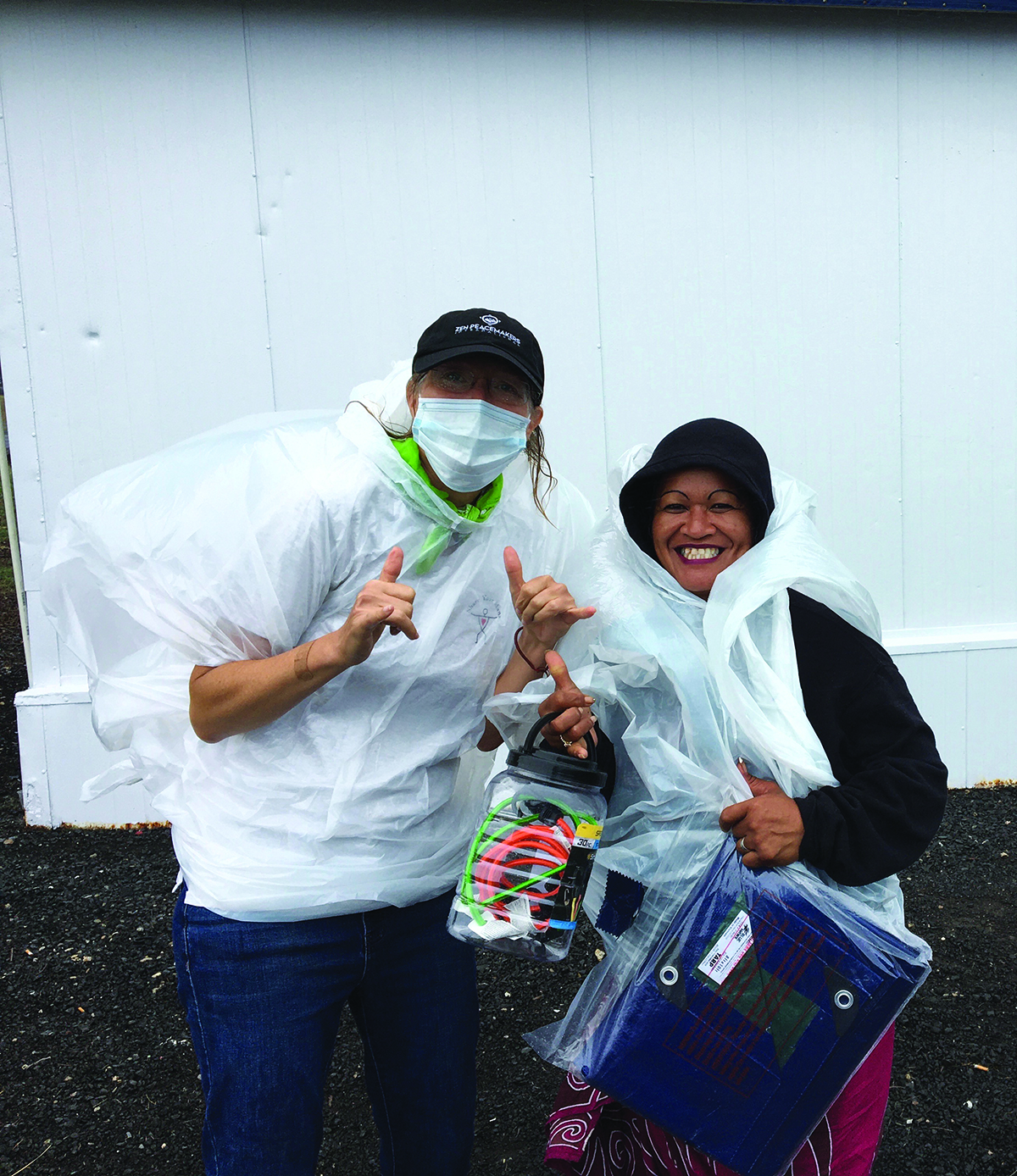
    Share Your Mana Advisory CommitteeMember Jess and Founder Lisa Darcy deliver supplies in February 2021.
    Share Your Mana Advisory Committee
    Member Jess and Founder Lisa Darcy
    deliver supplies in February 2021.

    The term “homeless” is a mainland idea, not a Maui idea. It is an overarching category which can result in harm, no matter how unintentional. The difference has been shared with me over and over from almost all the community members I’ve met. “I am home. Maui is my home. I just don’t have a house,” says Ku‘uipo from her tent. Of Hawaiian descent, she articulates displacement beautifully and with authority.

    To get at core needs, the use of language and current context are critical, because the conditions in which many in Maui County and around the world are living need to be accurately portrayed with honesty, integrity and dignity. There are many terms that have emerged to help explain the levels of needs — unhoused, unsheltered, houseless, homeless and housing-insecure. Regardless of the category or term, I’ve seen how emotionally overwhelming — often paralyzing — these conditions are.

    started Maui-based nonprofit Share Your Mana (SYM) to meet the needs of moments like  these. As an extremely inquisitive and distinctive care provider, I approach every interaction the only way I know how — through the unique lens of those in crisis. It is often quite uncomfortable, messy and painful, and still these raw, genuine interactions always culminate in inspiration.

    SYM is driven by reviewing experiences which serve and by possessing the resolve to evolve through reflections on the failures that hinder success. And to improve how we approach restoring a healthy community balance, we need to create the space to move through whatever emotions follow. I call it, “decompressing emotions.”

    Most of us understand that by the time someone is living unhoused or unsheltered, there must be multiple categories of need that are overstressed. Without an actual, affordable, safe sleeping inventory, when a slow boil of problems spills over, it is easy to slide into crisis.

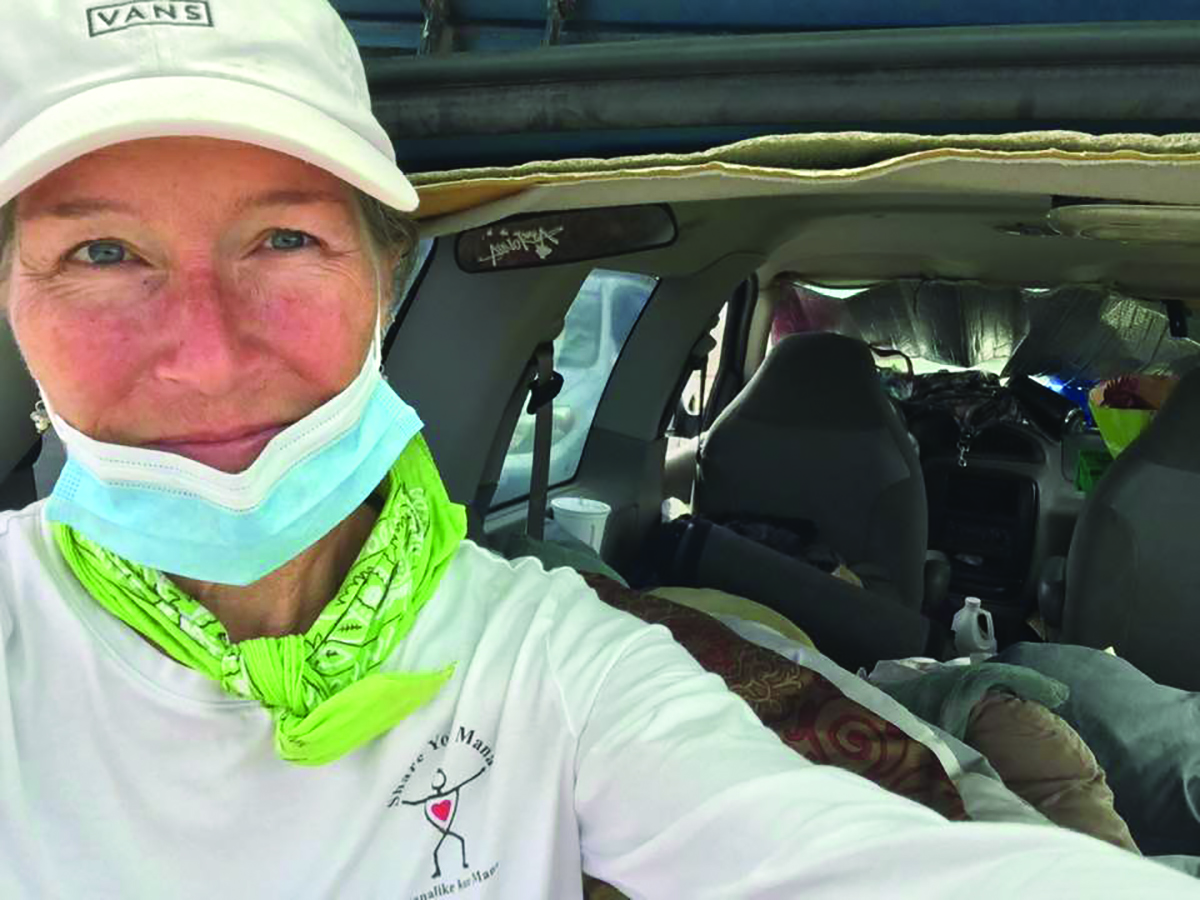
    Imagine leaving to do errands after the doors wereremoved from your home. That is the situation many living in camps and vehicles find themselves in, so Lisa sometimes helps out by serving as a “watch person” so belongings stay safe.
    Imagine leaving to do errands after the doors were removed from your home. That is the situation many living in camps and vehicles find themselves in, so Lisa sometimes helps out by serving as a “watch person” so belongings stay safe.

    There is a common association that those who are living in “subhuman conditions” are dangerous and to be feared. I spent the entire pandemic with hundreds living unhoused, every single day and most nights bringing life-sustaining supplies. I found many grappling with these conditions who also have an amazing ability to manage the negative stereotypes. I have witnessed love and respect alongside deep pain — often, generational pain.

    Healing requires dignity, consistency and the concept that no matter why you are where you are, this community believes every person deserves the components of Maslow’s pyramid — physiological needs, safety, love and belonging, esteem and self-actualization.

    As a child, there was no way I could understand that camping in our living room was much different than the daily experience of the unhoused, unsheltered, houseless, homeless and housing-insecure. There was a toilet nearby, a refrigerator stocked with food and electricity to light my way. And yet, I still recall my fantasy
    — how wonderful it was to “get away.”

    Many live in conditions with no toilet or ability to sleep soundly in clean sheets or even a sleeping bag. These conditions exacerbate the situation, often creating a person who is fearful, guarded and even defiant. When you are unable to keep clean, your self-esteem is ripped away. Then decompensating happens — the person’s mental health deteriorates. For the unsheltered, it is an especially traumatic process because it happens in public, for everyone to see.

    As we go deeper into 2023, housing resources will no doubt continue to tighten. Only one small financial mishap can sometimes lead to housing insecurity and becoming unhoused. This is a frightening thought for most of us… the stuff of nightmares.

    One day, I hope this will not evoke fear, because we have invested in safe sleeping for all residents. My hope for 2023 is that we invest in reframing solutions with safe sleeping in mind, a concept that will uplift talents, abilities and our humanity.

    Then we can all sleep better as we see improved policy and actions that help to raise our community dignity.


    “Share Your Mana has helped me in so many ways,” says Darren, who lived in his non-drivable car during the pandemic. “They never let me down no matter what I needed and I needed a lot. Share Your Mana help me mentally, physically and emotionally and has made me a brand new person. Share Your Mana has made me stronger than I ever was. I have seen Lisa do so much for others, so then I joined her advisory committee, becoming one of the leaders to make a better future for the unhoused community. While on the committee, I’ve seen unhoused people become housed and many housed people become unhoused. The cycle will never stop unless we can put a stop to it, change the cycle and initiate action that helps the unhoused community become stronger with the help of state and county officials who want to make a change for the good of the people.”

    Growing up modestly in a suburb of Chicago, I remember the first time we went camping. I was so excited, because this was a family vacation. My brothers and sisters helped pack the hot dogs and buns, collected our sleeping bags and pillows, and gathered wood for the fire. We were thrilled to eat canned…

  • Overcoming the Distance Between Us

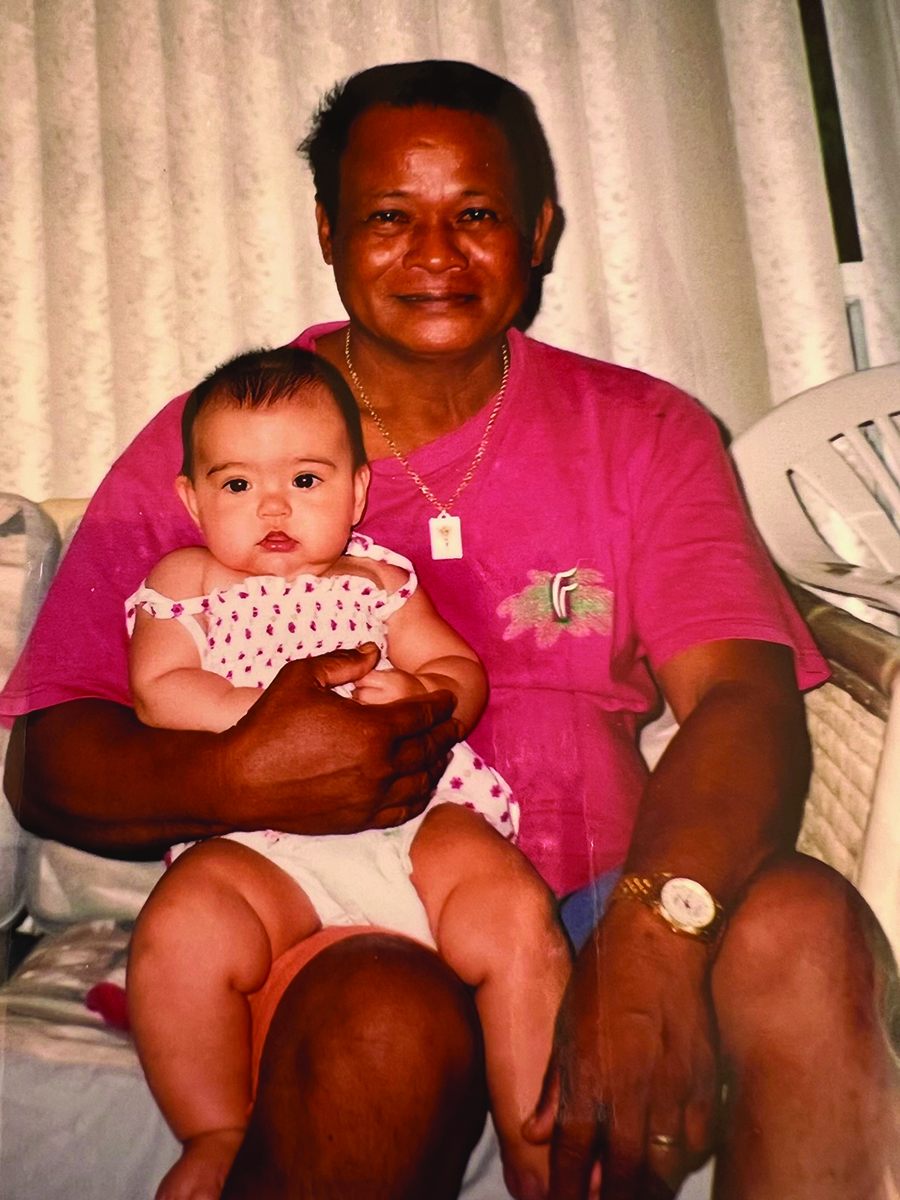
    Overcoming the Distance Between UsWhether the distance spans countries or oceans, living separated from your loved ones is always difficult — especially when the loved ones are our elders — namely, our grandparents. My Lolo and Lola (the Filipino words for grandfather and grandmother) often took care of me and my sisters from the time we were born. But they moved back to the Philippines when I was 12 years old, and I only visited them once in the decade they’ve been gone.

    It’s a normal part of living on a small island to not have your entire family living nearby. Many of us can relate to having grandparents from the Philippines or other countries who either moved back there or never left, while we reside Hawai‘i. Everyone has their own way of dealing with such absence, but I think one sentiment remains true for us all: Love knows no distance and it never can be diminished.

    Just last summer, my Lolo passed away. Coping with his passing has been challenging, not only because of the grief, but because of the way the distance between us altered the loss somehow. His absence existed unwavering both before and after his passing. Thus, I’ve often found myself meditating on this question: How does love triumph over distance or death?

    Loss is inevitable. It is said that grief is love with no place to go. As a consolation, we sometimes turn to those around us, the internet and other distractions to find ways of coping with the anguish that ensues. It can become easy to lose ourselves in feelings of loss, to a point where love becomes overshadowed by grief and sorrow. Remembrances of the past and hope for the future exist on opposite sides of time, and yet, they are our greatest strengths in these moments. Bittersweet memories lend support to the hope for an eventual reunion and the desire to never lose the bond that transcends worldly distance. Therefore, love endures because it, like memories shared, can never be taken from us. As long as we are able to remember warm embraces and handwritten birthday cards, the love woven into the tapestry of our memories serves as an unbreakable tether.

    I still feel my Lolo’s love very near to me. He planted a pomelo tree in our yard when he lived with us. Today, the tree stands stately and tall, unbending and strong — a symbol of his love, which will always be with me, though he is not.

    I write this story as a means of honoring and remembering my Lolo, because my words are the only way I know how to show my love for him now. His love remains — equally abstract and tangible; the bitterness and sweetness of fresh pomelo bear the same significance as me knowing that he is always with me. No matter the distance, love brings us close.

    Whether the distance spans countries or oceans, living separated from your loved ones is always difficult — especially when the loved ones are our elders — namely, our grandparents.

  • Spring Cleaning for Your Computer

    Many of us include the ritual of spring cleaning around this time of year. Spring cleaning is all about tackling the areas you may have neglected during the rest of the year. And nothing is more satisfying than a sparkling clean home, right? But don’t forget about your computer and devices. Backing up data, cleaning up storage, maintenance and changing passwords are things that most of us miss throughout the year. Therefore, you might want to consider adding the following tasks to your official spring cleaning checklist:

     Back Up Your Data: Back up all your important data, such as photos, records, documents and your calendar, contact list and emails, etc. Back up anything you feel is important and irreplaceable. My advice is to back up your data to an external hard drive that has its own power source (AC adapter) or burn your data to CDs/DVDs. USB flash drives are not meant for long-term storage. The other option is storing your data remotely, such as to iCloud or Google Drive.

     Clean Up Your Storage: After backing up your data, start deleting apps, programs and files that you rarely use or are outdated. This alone can speed up your computer. Again, do this after backing up you computer.

     Maintenance: If you are tech savvy, you can purchase utility programs that perform low-level diagnostics on your computer that will check your computer’s hardware and the operating system, and will make recommendations on how to remedy any problems. Depending on the program, it may even resolve those issues for you. My advice is to see a professional service to do the examination and any subsequent fixes if any problems are found. Usually, this can be done by the service department where you purchased your computer. There are also local service providers that can do similar work, but choose reputable vendors.

     Change Passwords: Lastly, change your passwords, not only for logging into your computer and other devices, but also internet services that require a password. You don’t have to change them all at one time, but start with your computer and cellphone passwords. Write them down in a notebook along with the date you  made the changes. Secure the notebook in a safe place.

    Warning: Keeping passwords on your computer, cellphone or other devices is not recommended. Neither is keeping them in your wallet or purse.


    Contact me with questions about online security. Christopher Duque | aikea808@gmail.com

    Many of us include the ritual of spring cleaning around this time of year. Spring cleaning is all about tackling the areas you may have neglected during the rest of the year. And nothing is more satisfying than a sparkling clean home, right? But don’t forget about your computer and devices.

  • Eating Together

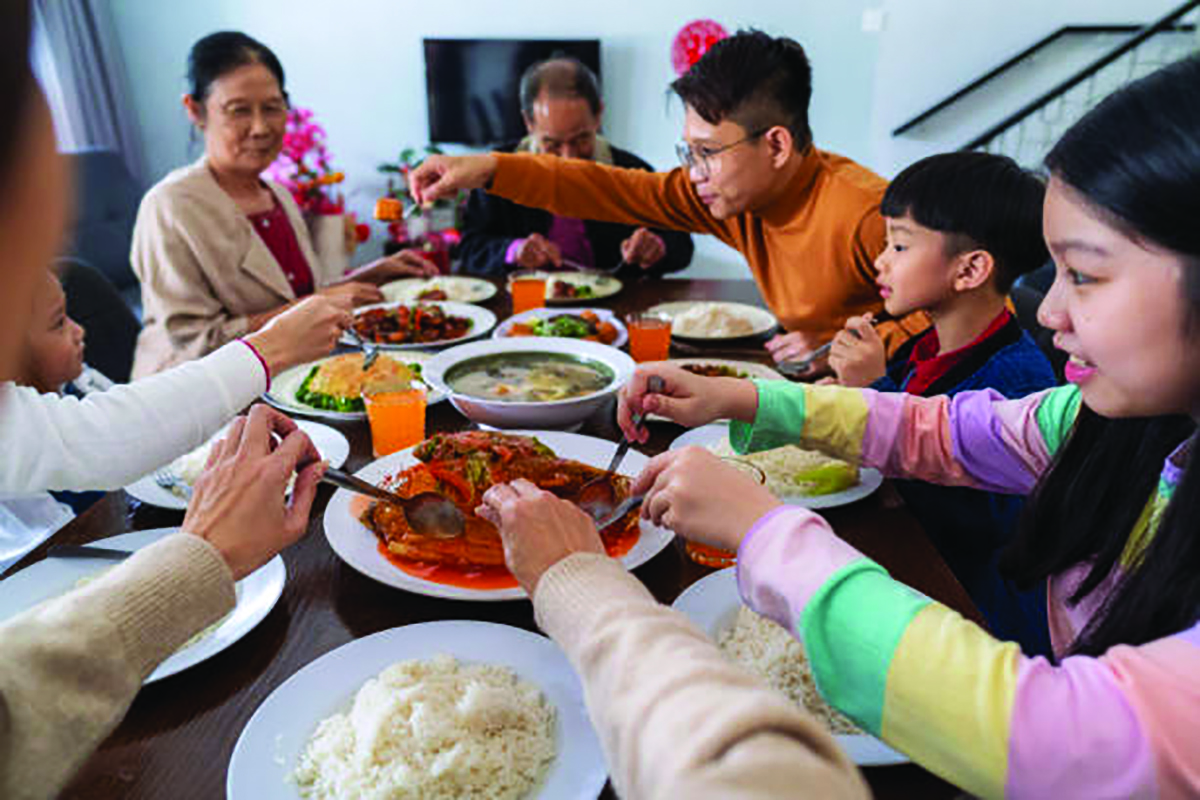
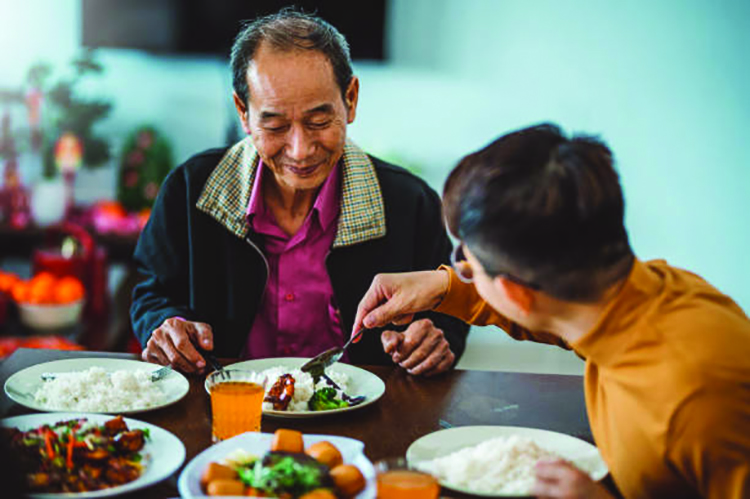
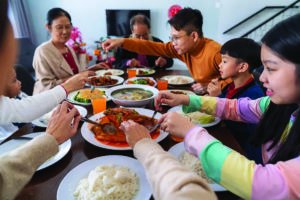
    Here in Hawai‘i, the idea of multiple generations sharing meals together under one roof isn’t reserved for just the holidays. Hawai‘i has the highest percentage of multigenerational households in the country, with nearly 8 percent of households statewide classified as multigenerational — at least three generations living under one roof. This household structure represents one of the most beautiful things about Hawai‘i. It embodies the word ‘ohana and exemplifies the concept of an extended family. The people within it are bound by a genuine sense of mālama, kokua and kuleana. Especially during the holidays, compassion, loyalty and aloha radiate throughout the home.

    While tradition plays a significant role for families living together, the decision can’t be entirely linked to cultural sensibilities. For a lot of families, it’s a necessity due to the state’s high cost of living — the highest in the country. The pandemic has only exacerbated the lack of affordable housing. In order to make rent, many local families have no choice but to pool their incomes just to keep a roof over their heads — and more obstacles abound — obstacles like hunger.

    But food insecurity and hunger don’t affect everyone in the household equally. Keiki and kūpuna are especially vulnerable. In these extraordinarily trying times, as parents often work multiple jobs to provide extra support, kūpuna may try to ensure food security for their grandchildren by foregoing their own needs. Therefore grandparents in multigenerational households can experience hunger at more than twice the rate of those in homes with no grandchildren. Through their own sacrifice, members of a household in Hawai‘i never lose sight of what it means to take care of one another.

    But to help ensure every member of the household has the nourishment they need, Hawai‘i Foodbank offers special nutritional support through programs such as Food 4 Keiki, ‘Ohana Produce Plus, the Senior Food Box Program, and new initiatives like the Seniors Farmers’ Market Nutrition Program.

    Hawai‘i Foodbank works closely with its network of more than 200 food partner agencies to provide food for families affected by the pandemic while continuing to provide assistance to those who were already struggling with hunger.

    No longer associated with a stigma, these free resources provide an akamai strategy for kūpuna and their ‘ohana. It is simply a sign of the times for many seniors and their families.
    FOOD 4 KEIKI

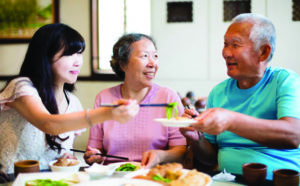
    Hunger deprives our keiki of more than just  food. The fact is, a child’s chance for a bright tomorrow starts with getting enough nutritious food to eat today.

    Ensuring our keiki receive the nutrition they need to excel in school relieves the pressure on kūpuna who sacrificed their own needs. The Food 4 Keiki School Pantry Program serves as a critical food resource for young students, their siblings and their families. The school pantries provide after-school snacks for young students, as well as additional family food bags to take home. Bags are filled with canned proteins, canned meals, dry goods, snacks and more. For pantry times and locations, visit www.hawaiifoodbank.org/keiki.

    For more information on Food 4 Keiki and its programs, or to start one in your area, contact Marielle Terbio, director of community engagement and strategic initiatives, at marielle@hawaiifoodbank.org or 808-954-7869.

    ‘OHANA PRODUCE PLUS

    ‘Ohana Produce Plus is a mass, mobile food distribution program that enables Hawai‘i Foodbank to bring food directly into the communities where it is needed most. ‘Ohana Produce Plus provides hungry keiki, kūpuna, families and individuals greater access to fresh fruits and vegetables plus other supplementary food items.

    For more than 20 years, the program has distributed millions of pounds of fresh produce, assorted dry goods and non-perishable food items to underserved communities — all at no cost to its recipients. Participants in this program include families with low income, individuals with disabilities, the homeless, working poor and more. For many people, ‘Ohana Produce Plus is their only source of fresh fruits and vegetables.

    Go to “Distribution Times and Locations” at www.hawaiifoodbank.org/ohana to find a location near you. It is recommended that potential beneficiaries of this program call in advance to confirm service hours and requirements.
    SENIOR FOOD BOX PROGRAM

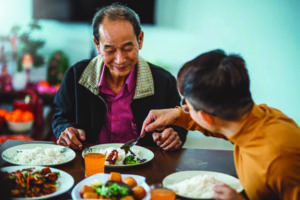
    This program provides a monthly box of quality USDA food to low-income kūpuna in Hawai‘i.

    For participating kūpuna, the Commodity Supplemental Food Program (CSFP) provides more than just food and nourishment. It also helps to combat the poor health conditions often found in kūpuna who are at risk of hunger and experiencing food insecurity. CSFP helps vulnerable kūpuna from having to choose between food and other basic needs. The food in each Senior Food Box can play an important role in combatting the health consequences of senior hunger, and ultimately, can help kūpuna avoid costly hospitalizations and nursing home placements.

    Senior Food Boxes are specifically designed to supplement needed sources of nutrients typically lacking in participants’ diets. Boxes may include cereal, grains, dry beans, rice and a variety of canned fruits and vegetables and shelf-stable foods.

    Participants must be at least 60 years of age. Each applicant must self-declare that their household income is at or below 130 percent of the US Federal Poverty Income Guidelines for the State of Hawai‘i. Applicants must reside in the service area to which they are applying for. Find other eligibility requirements and distribution locations, and download the application at hawaiifoodbank.org/csfp. Mail it to: Hawai‘i Foodbank, 2611 Kilihau St., Honolulu, HI 96819.

    SENIORS FARMERS’ MARKET NUTRITION PROGRAM

    The Seniors Farmers’ Market Nutrition Program (SFMNP) is designed to provide low-income kūpuna with access to locally-grown fruits, vegetables, honey and herbs.

    Every year, Hawai‘i Foodbank partners with the State of Hawai‘i Office of Community Services and the US Department of Agriculture, Food and Nutrition Service to organize the Senior Farmers’ Market Nutrition Program. Hawai‘i’s SFMNP offers eligible seniors $50 worth of coupons (10 coupons valued at $5 each) to obtain eligible foods without charge from participating farmers, farmers’ markets and roadside stands that have been approved to accept SFMNP coupons. Through SFMNP, kūpuna are provided with nutritious foods as well as education to emphasize the relationship of proper nutrition to good health.

    Find other eligibility requirements and locations, and download the application at hawaiifoodbank.org/sfmnp. Mail it to: Hawai‘i Foodbank, 2611 Kilihau St., Honolulu, HI 96819.

    HELP NOURISH EVERY MEMBER OF OUR ‘OHANA

    As we look toward the holiday season and 2023, let’s join together to help families eat together and achieve long-term food security and address the nutritional needs of each generation. Donate today at https://hawaiifoodbank.org/donate. Volunteer at volunteer@hawaiifoodbank.org. Let’s help ensure that no one in the house goes hungry.


    HAWAI‘I FOODBANK, O‘AHU & KAUA‘I
    2611 Kilihau St., Honolulu, HI 96819
    808-836-3600 | hawaiifoodbank.org
    THE FOOD BASKET, HAWAI‘I ISLAND
    40 Holomua St., Hilo, HI 96720
    808-933-6030 | hawaiifoodbasket.org
    MAUI FOOD BANK, MAUI COUNTY
    760 Kolu Street, Wailuku, HI 96793
    808-243-9500 | mauifoodbank.org

    Here in Hawai‘i, the idea of multiple generations sharing meals together under one roof isn’t reserved for just the holidays. Hawai‘i has the highest percentage of multigenerational households in the country, with nearly 8 percent of households statewide classified as multigenerational — at least three generations living under one roof. This household structure represents one…