Category: Date

  • Workers & Social Security

    Do you plan to pay a cleaning person, cook, gardener, babysitter or other household worker at least $2,300 in 2021? This amount includes any cash you pay for your household employee’s transportation, meals and housing. If you will pay at least $2,300 to one person, you have some additional financial responsibilities.

    When you pay at least $2,300 in wages to a household worker, you must do all of the following:

    • Deduct Social Security and Medicare taxes from those wages.
    • Pay these taxes to the Internal Revenue Service.
    • Report the wages to Social Security.

    For every $2,300 in wages, most household employees earn credits toward Social Security benefits and Medicare coverage. Generally, people need 10 years of work to qualify for:

    • Retirement benefits (as early as age 62).
    • Disability benefits for the worker and the worker’s dependents.
    • Survivors benefits for the worker’s family.
    • Medicare benefits.

    You can learn more about reporting household worker income by reading Household Workers at www.ssa.gov/pubs/EN-05-10021.pdf.


    Call SSA at 800-772-1213 (TTY 800-325-0778)
    Mon–Fri, 8:30am–3:30pm.
    Prince Kuhio Federal Building
    RM 1-114 FED BLDG, 300 Ala Moana Blvd, Honolulu, HI 96850

    Or use the SSA Office Locator at www.socialsecurity.gov to find the office closest to you.

    Do you plan to pay a cleaning person, cook, gardener, babysitter or other household worker at least $2,300 in 2021? This amount includes any cash you pay for your household employee’s transportation, meals and housing. If you will pay at least $2,300 to one person, you have some additional financial responsibilities.

  • Medicare: Increased Benefits for Veterans

    Many veterans don’t understand that the Veteran’s Administration (VA) offers a healthcare plan for veterans, reservists and members of the National Guard only.

    This healthcare plan is not available to all veterans, as eligibility and qualifications are required to receive these healthcare services.

    All medical treatment provided by the VA will be at VA facilities only; therefore, the veteran may have to travel long distances to access care.

    They may also have difficulty obtaining a second opinion for certain specialty treatments.

    Therefore, the VA recommends veterans turning 65 or those under 65 that qualified for Social Security Disability for more than two years should sign up for Medicare Part B when they are first eligible to enroll.

    If you didn’t get Part B when you were first  eligible, your monthly premium may go up 10 percent for each 12-month period you could have had Part B, but didn’t sign up.

    In most cases, you’ll have to pay this penalty each time you pay your premiums, for as long as you have Part B.

    Once a veteran qualifies for Medicare Part A and B, he or she has the option to enroll into a Medicare Advantage Plan, sometimes called “Part C” or “MA Plan.” Medicare Advantage Plans include hospital and outpatient services, with or without prescription drug coverage.

    Medicare Advantage Plans provide increased benefits for veterans. Some plans, at a $0 premium in addition to the Part B premium, will include added value enhancements to increase the veteran’s accessibility to care, such as non-VA emergency {Play} rooms and urgent care facilities, at lower costs.

    In 2021, there are Medicare Advantage Plans that may provide benefits for health club membership and dental service. Based on the veteran’s zip code, some plans will provide a reduction for their Medicare Part B premium.

    Finally, veterans with low income may now qualify for Extra Help or Medicaid Plan benefits with little or no out-of-pocket costs. Both programs can help with Medicare prescription drug program costs. Contact a licensed agent for more information on qualification guidelines and for application assistance.

    During these difficult times, healthcare and extra value benefits like these are critical for some seniors in order to help them reduce costs.

    Please contact a licensed agent specializing in Medicare Advantage Plans for more information and assistance.


    COPELAND INSURANCE GROUP
    1360 S. Beretania St., Ste. 209, Honolulu, HI 96814
    Phone: 808-591-4877 | Fax: 808-589-2399
    margaret@copelandgroupusa.com
    www.copelandgroupusa.com

    Many veterans don’t understand that the Veteran’s Administration (VA) offers a healthcare plan for veterans, reservists and members of the National Guard only. This healthcare plan is not available to all veterans, as eligibility and qualifications are required to receive these healthcare services. All medical treatment provided by the VA will be at VA facilities…

  • Help & Hope for Parkinson’s Patients

    In 1817, Dr. James Parkinson was the first person to systematically describe the symptoms of the disease that bears his name. In “An Essay on the Shaking Palsy,” he reported on three of his own patients and three persons whom he saw in the street.

    In honor of his contributions to Parkinson’s diagnosis and symptom treatment, World Parkinson’s Day is held each year on April 11, the doctor’s birthday.

    Although a cure has still not been found, the nonprofit Hawai‘i Parkinson Association (HPA), was established in 1996 to assist Parkinson’s disease (PD) patients and their family members live the best life possible by uniting people, organizations and resources to treat their symptoms.

    HPA RESOURCE CENTER

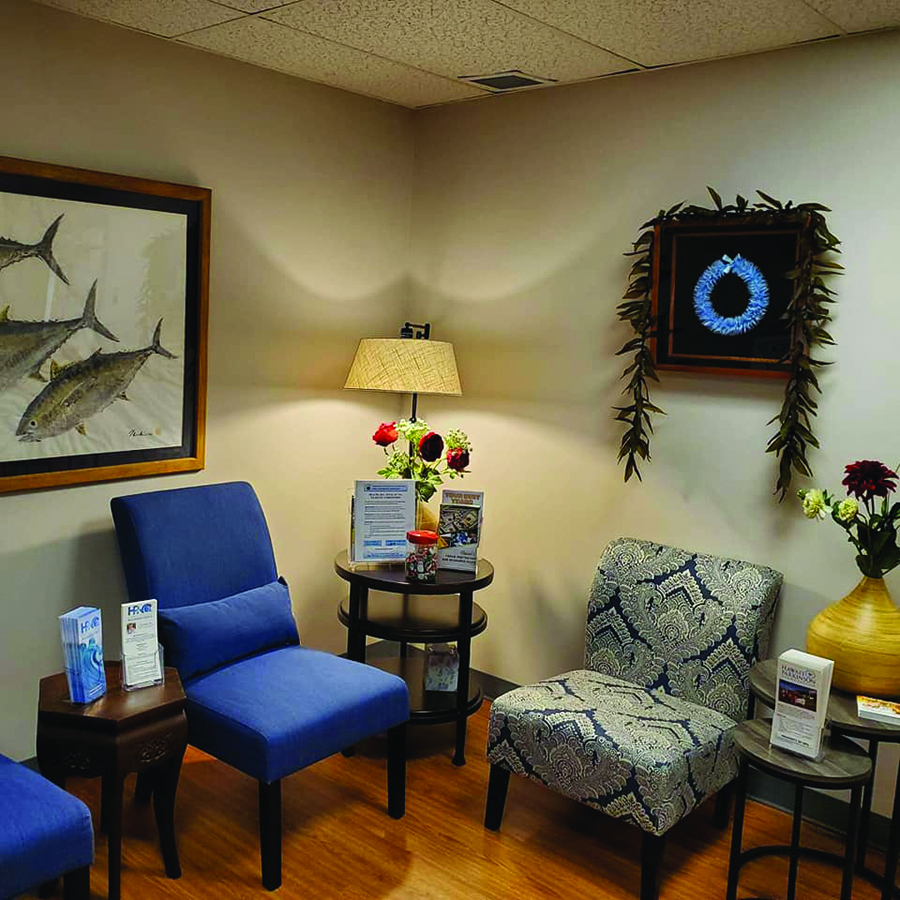
    For education and outreach, HPA recently opened a resource center at St. Francis Healthcare Center on O‘ahu. The center’s goal is to provide the members of the Parkinson community with the most up-to-date information available so they can conduct an informed discussion with their doctor about treating their symptoms.

    Anyone affected by or with an interest in Parkinson’s is welcome to visit the center and find information on physicians, support groups, exercise, medications, clinical drug trials and studies, lending and reference libraries, and general information on Parkinson’s.

    The primary tools used to assist people with Parkinson’s and their families are support groups. A patient has scheduled doctor visits every two to three months. In between visits, they can attend group meetings that provide emotional support and best practices for dealing with Parkinson’s.

    HPA volunteer groups are comprised of people with Parkinson’s, caregivers, family members and healthcare professionals. Volunteers also help educate and support ongoing research in finding the cause and cure. HPA supports the volunteer support group leaders by providing access to resources. Currently, there are approximately 25 HPA-affiliated support groups statewide.

    What is Parkinson’s Disease?

    Parkinson’s is a progressive neurodegenerative condition. It is categorized as a movement disorder because the condition generally includes tremors, slowness, stiffness, walking/balance problems and difficulty with speech/writing. The condition frequently includes non-motor symptoms, such as depression and memory problems.

    Although there is no cure for Parkinson’s, current treatments can help alleviate the symptoms but do not prevent or delay the progression of the disease. Even though there are broad similarities, symptoms and progression are unpredictable and vary from person to person.

    How is Parkinson’s Diagnosed?

    There is no specific test currently available that will generate a definitive Parkinson’s diagnosis. Rather, a diagnosis is based on an aggregation of a patient’s clinical history and both motor and non-motor symptoms observed during an exam by a neurologist. With no conclusive test and the large variation of symptoms among patients, misdiagnosis is not uncommon. Patients should strive to consult a movement disorder specialist (MDS) certified neurologist who has had  specialized training in Parkinson’s diagnosis and treatment.

    What Causes Parkinson’s?

    After a Parkinson’s diagnosis, people often ask how and why they got the disease. For most people, the root cause of Parkinson’s is unknown. However, research has revealed that Parkinson’s is caused by low dopamine levels in the brain. Dopamine helps transmit signals between the areas of the brain that control all purposeful movements, including talking, walking and writing. Low levels occur when the dopamine producing brain cells are dying while the body’s dopamine consumption remains constant.

    Research has indicated that the onset of Parkinson’s primarily has linkages to three environmental events: 1) genetics, 2) traumatic brain injury (TBI) and 3) prolonged exposure to certain pesticides and insecticides.

    It should be noted that these are linkages only, not hard rules. Not everyone who has an identified Parkinson gene will develop the condition. Not everyone who has had a TBI or been exposed to a pesticide will develop Parkinson’s. Research is ongoing worldwide to try and better understand the linkages as a clue to create a cure.

    How is Parkinson’s Treated?

    Treating the whole person is the key to the Parkinson’s patient having the best quality of life possible. This type of treatment requires a multidisciplinary approach of medication, exercise and caring for the general well-being in order to slow and/or mitigate physical symptoms.

    Medications typically work well in the early stages, but as PD progresses, patients typically experience increased drug-related complications, such as motor fluctuations and side effects. Exercise, including physical and occupational therapies, are important for a balanced and healthy lifestyle. Cardio exercise proves to be of greatest benefit, but all exercise is valuable.

    Nutrition, and spiritual and mental health are equally important in the daily treatment for long-term health and well-being of the PD patient.

    National STATs for Parkinson’s

    An estimated 1 million in the US and 8 million people worldwide currently live with PD.

    Parkinson’s affects 1 in 100 Americans over the age of 60. It is reported that there are an estimated 50,000 to 60,000 new cases diagnosed each year. Surveys show that 35 to 42 percent of cases go undiagnosed. With an aging population, better health education and more effective treatments, it is anticipated that the prevalence of Parkinson’s will increase substantially in the next 30 years.

    By 2050, the number of people with Parkinson’s is expected to double.

    The average age of onset is approximately 62 years old; however, 10 to 20 percent of persons with Parkinson’s are diagnosed before the age of 50. The under-50 group is referred to as people with Young-Onset Parkinson’s Disease (YOPD).

    According to a 2019 study, the 1 million Parkinson’s patients in the US cost an estimated $52 billion per year in direct and indirect costs, or an average of $52,000 per person, per year.
    PARKINSON’S IN HAWAI‘I

    Based on a 2018 study, there are approximately 6,800 people aged 45 years and older living with Parkinson’s in Hawai‘i, with another approximately 2,500 undiagnosed.

    To treat these people, there are seven O‘ahu-based neurologist who have the expertise and/or experience to be called Parkinson’s experts: two at Queen’s Medical Center in Honolulu, two at Kuakini Medical Center, one at Hawaii Pacific  Neuroscience, one at the Pacific Health Research and Education Institute (an affiliate of the VA Pacific Islands Health Care System) and one at Kaiser Permanente.

    In Hawai‘i, the economic burden on the local economy is approximately $350 million per year. This onus primarily falls to the insurance companies and families of the patients, as many people with Parkinson’s are retired or disabled.

    To make a contribution, click on “Make a Donation” at www.parkinsonshawaii.org.


    HAWAI‘I PARKINSON ASSOCIATION (501(c) 3 nonprofit)
    808-219-8874 | info@parkinsonshawaii.org
    www.parkinsonshawaii.org
    HPA RESOURCE CENTER
    2228 Liliha St., Ste. 206, Honolulu, HI 96817
    808-762-0600 | resourcectr@parkinsonshawaii.org
    Hours of Operation: Tues 9am–3pm, Wed 8am–4pm, Fri 9am–3pm, and by appointment

    Although a cure has still not been found, the nonprofit Hawai‘i Parkinson Association (HPA), was established in 1996 to assist Parkinson’s disease (PD) patients and their family members live the best life possible by uniting people, organizations and resources to treat their symptoms.

  • How to Wear a Mask With Hearing Aids

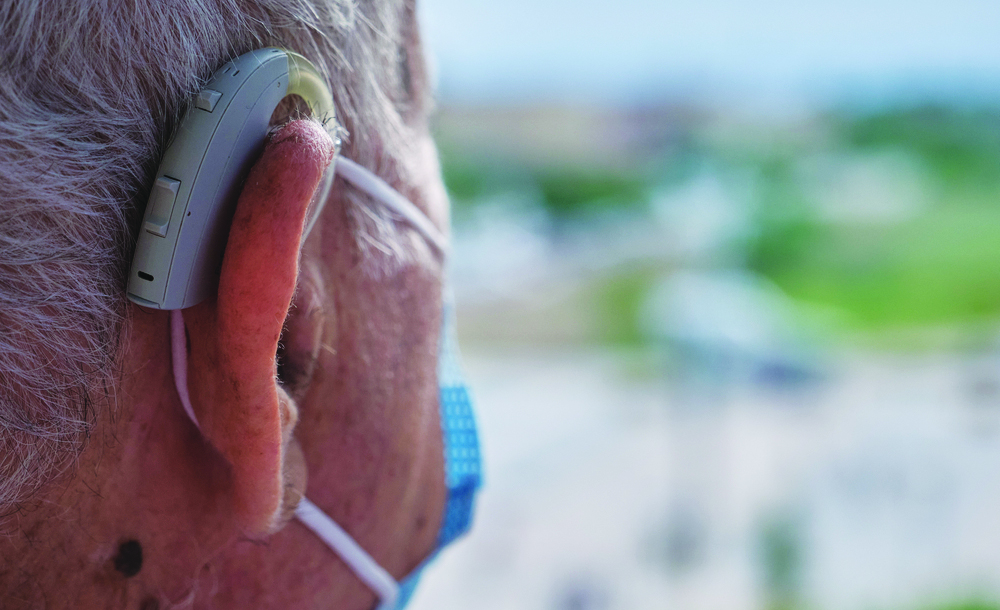
    Elderly man with hearing aid in the ear and surgical mask, close-upHearing aid wearers know the difficulty of getting the elastic bands of their protective face mask tangled up with their hearing aid. Hearing aids can fly out when removing a mask. I have seen many patients with lost and damaged hearing aids due to this problem.

    Here are seven tips that will help protect your hearing aids and stop you from losing them.

    1. Put your hearing aids in first, then the mask.

    2. Practice in the mirror. Work on refining your technique until you can remove your mask and keep your hearing aids in place.

    A man standing back to camera tying a medical gauze mask on dark.Virus preventive methods. plastic that holds a facial mask on the back of the head

    3. Long hair adds to the problem. Pull long hair back in an elastic hair tie or bun.

    4. Don’t secure your mask to your ears. Instead, use button extensions to secure your mask at the back of your head.

    5. Use four-string masks. They also tie behind the head rather than on the ears.

    6. Check your hearing aid during and following the removal of your mask.

    7. Remove your mask in a clear area so if the hearing aid comes out, you can find it easily.


    OHANA HEARING CARE
    1296 S Beretania St., Ste. 102, Honolulu, HI 96814
    808-593-2137 | www.ohanahearingcare.com

    Hearing aid wearers know the difficulty of getting the elastic bands of their protective face mask tangled up with their hearing aid. Hearing aids can fly out when removing a mask. I have seen many patients with lost and damaged hearing aids due to this problem. Here are seven tips that will help protect your…

  • Bad Breath: Is It Poor Oral Hygiene?

    Bad breath

    Chronic bad breath can be embarrassing, but it can also tell you what’s going on with your mouth or body, such as underlying medical conditions, stress, hormonal changes, dry mouth and poor oral hygiene.

    Bad breath can be caused by a few things: bacteria, decaying food, infected gums, smoking and even an empty  stomach.

    Make sure your oral health is in good shape by maintaining a solid routine of brushing at least twice a day, flossing daily and seeing your dentist twice a year. Your dentist can tell right away if your gums or other parts of your mouth are  causing bad breath. It’s important to also gently brush your tongue each day, as bacteria tends to cling to the back of the tongue.

    What you eat and drink also plays a  key role in maintaining good oral health. A healthy diet of fruits and vegetables (and yes, even garlic) helps keep your teeth strong and clean. Limiting sugary foods will help prevent cavities, and drinking lots of water helps flush away food debris and bacteria from the mouth.

    There is no better time than now to schedule an appointment with your dentist to kick bad breath and poor oral health aside so you can live well and smile more.


    HAWAII DENTAL SERVICE
    Kahala Howser, Wellness & Events Manager
    808-521-1431 | khowser@hawaiidentalservice.com
    www.HawaiiDentalService.com

    Chronic bad breath can be embarrassing, but it can also tell you what’s going on with your mouth or body, such as underlying medical conditions, stress, hormonal changes, dry mouth and poor oral hygiene. Bad breath can be caused by a few things: bacteria, decaying food, infected gums, smoking and even an empty  stomach.

  • Care Lessons Learned from COVID-19

    Beginning in March 2020, recreation therapists, activity directors and staff were faced with the daunting task of making their activities safe for their residents. Groups were cancelled; family members, volunteers and outside entertainment were no longer allowed inside of nursing homes. Much more time was devoted to cleaning and social distancing.

    Now it’s been almost a year and the new normal has provided insights that will stick with us even as we (hopefully) get to return to some semblance of pre-pandemic normalcy. Here are some things we’ve learned:\

    Senior woman with caregiver or healthcare worker indoors, using tablet. Coronavirus concept.

    Video Chat Apps Will Stay

    As staff have become experts at using FaceTime, Zoom and Skype, residents will continue to enjoy getting to call their family members and see them face-to-face. For example, one resident was able to connect with family off-island and talked to them even more than he did pre-pandemic. These regularly scheduled calls allow for connections to continue with friends and family near and far, despite the inability to travel.

    Don’t Underestimate Virtual Offerings

    Virtual classes have allowed activity staff to provide kūpuna with more ways to stay engaged and feel part of the community. High school students in California performing jazz via Zoom, a virtual art class with supplies and assistance from staff and getting to see famous symphonies performing free online holiday concerts all offer great possibilities for future programs.

    Compassion is Still No.1

    Lastly, though this is not new, the pandemic has shown the importance of human connection. Staff working in nursing homes have provided the love and attention that family members would normally be able to give, while simultaneously keeping those outside connected and assured that those inside are being well-cared-for. It has been a heart-wrenching balancing act, but for many of us working in this setting, our ability to love and care for kūpuna has increased and the attention to detail we have learned will stick with us even as we overcome and move past COVID-19.


    MANOA COTTAGE KAIMUKI
    748 Olokele Ave., Honolulu, HI 96816
    808-426-7850 | info@manoacottage.com
    www.manoacottage.com

    Beginning in March 2020, recreation therapists, activity directors and staff were faced with the daunting task of making their activities safe for their residents. Groups were cancelled; family members, volunteers and outside entertainment were no longer allowed inside of nursing homes. Much more time was devoted to cleaning and social distancing.

  • Home Cleaning Help for the Elderly

    Photo of Family cleaning house or new apartment together and having fun. Moving and start up, Cleaning House, residence, living, health conceptHome cleaning might be a simple activity for some of us. However, this could be the opposite to our elderly family  members and friends. Even daily upkeep might require tremendous effort on their part. That is why, as ‘ohana, it is our duty to help and share the spirit of aloha. If you are involved in your elderly family’s home’s upkeep, these four tips could save you time, effort and money.

    1. Declutter the fridge.

    This task can be quite overwhelming even for younger people. However, a simple decluttering could save your elderly family member the time and effort to look for their food and snacks inside the fridge. You can even try using organizing trays for soda, condiments and fruits.

    2. Clean your microwave regularly.

    The microwave could be the next best thing since television for our seniors. However, frequent use could lead to a mixed smell of all the foods we heat and eat. A simple kitchen hack to remove smells from your microwave is to heat a mixture of one tablespoon of lemon juice with a half-cup of water in a microwave-safe bowl for three minutes. Let it stand for a minute or two, and voila! Just wipe it clean with a paper towel and your microwave is as good as new!

    3. Throw away expired medication.

    This is very important, as seniors tend to take numerous medications over time. They might mix up old and expired medication with new ones. This is potentially dangerous if not overseen. The good thing is that most drugs can be placed in the household trash with proper handling. You can always call your pharmacist if you have questions about disposal for a particular drug.

    4. Hire a caregiver or make it a family activity.

    Sometimes, we don’t have the time to do everything for our elderly family and friends. That is why we should make it into a family activity so we get to regularly check on them and make them feel cared for. If your schedules are tight, hiring caregivers or a senior-friendly cleaning company may be a great your choice for your family.


    MALAMA NUI HOME CARE LLC
    500 Ala Moana Blvd., Bldg. 7, Honolulu, HI 96813
    808-439-4058 | malamanuillc@gmail.com
    malamanui.com

    Home cleaning might be a simple activity for some of us. However, this could be the opposite to our elderly family  members and friends. Even daily upkeep might require tremendous effort on their part. That is why, as ‘ohana, it is our duty to help and share the spirit of aloha. If you are involved…

  • To Place or Not to Place, That is the Question

    The decision to move to senior living involves a variety of factors based on several circumstances, including finances.

    Professionals across the country have different answers to the question of whether “to place or not to place” a loved one in senior living. Some feel that older adults should stay in their home with paid caregivers. Others think that older adults would receive enhanced care and retain a higher quality of life if they were with others their own age, with more activities and socialization.

    The dilemma of why someone should move into assisted living can be mutually exclusive to making the actual decision in the first place. Family members can have all the reasons in the world their loved one should make a move, but that doesn’t mean they make the decision to place their loved one. Family members must find a balance between safety, finances, and common sense to make the decision that is right for them.

    FOUR STYLES

    One study concluded that there were four distinct decision-making styles when it comes to deciding to place a loved one. These categories included Scramblers, Reluctant Consenters, Wake-Up Callers, and Advance Planners.

    Families who utilize the expertise of a placement agent usually populate the Scramblers and Reluctant Consenters category types.

    ■ Scramblers are usually in a crisis situation resulting from a serious injury or a quick onset of an illness or disease. A sudden fall, stroke, or worsening of a pre-existing condition, along with the added pressure of a pending hospital discharge, can make the family feel the need to quickly find a senior living environment.

    ■ Reluctant Consenters are older adults who are “pushed” to make the decisions due to a noticed decline in their ability to function independently — perhaps because of a health condition. These older adults may not have been victim to an acute onset of issues, but a more constant decline of functioning from conditions like emphysema, heart conditions, dementia, or Alzheimer’s disease The family and the older adult may have noticed the decline for some time before any intervention was discussed.

    ■ Wake-Up Callers are usually victims of a “near-miss” situation. A severe fall may have kept the older adult on the floor  for hours, even without a fracture, for example. He or she may have suffered from dehydration or mild confusion resulting from the fall itself. This group tends to wait until several “wake-up calls” are received before making the final decision to move into senior living. This group is usually the target group for in-home caregiving services.

    ■ Advance Planners are those who have researched long-term care options for many years while they were very healthy. They have strategies for “if ” scenarios and are ready and committed to making the needed changes on the fly.

    MORE CHOOSE GROUP LIVING

    It is essential to know how today’s older adults feel about where they prefer to live as they age. A 2019 Harris Poll  concluded that attitudes have changed regarding senior housing over the years. Back then, an AARP study (2012) revealed that nine out of 10 older adults wanted to stay in their own home as they age. The recent Harris Poll showed that the percentage feeling the same way now about aging in place has dropped significantly.

    Twenty-four percent of those polled reported that they prefer to move into an assisted living community at some point, rather than continue living in their own home. A startling finding was that only 5 percent indicated wanting to live with a family member. The lowest findings (1 percent) preferred a nursing home or the services of an adult daycare center.

    Fifty-eight percent of respondents reported the reason for choosing assisted living was due to the professional care services offered. Other reasons published included not being a burden on families, wanting a familiar, consistent surrounding and the affordability of the care received.

    Understanding the differences in decision-makers and older adults’ preferences is essential. Finances living due to medical reasons require at least eight to 24 hours of supervised or hands-on care daily.

    FINANCES

    At eight hours of private duty services at $25 to $28 per hour, families can expect to pay $200 to $250 per day, or about $6,000 to $7,500 monthly, to maintain a safe and somewhat independent environment at home. The 2019 Genworth Assisted Living Cost study (2019) showed that the average cost of assisted living nationwide was $4,051 per month. In-home caregiving services can cost 33 percent higher in cases that need more hours of supervision.

    While some older adults have long-term care insurance that pays for private-duty caregiving services, many of these  policies have lifetime caps. This means that once the capitation lifetime rate is achieved, the long-term care insurance coverage stops, and actual private pay begins. It’s also true that depending where the older adult lives, care can cost much more than the insurance policy covers from the get-go. A policy may cover as little as a third of costs.

    WHEN TO MOVE

    Understanding the finances behind senior living compared to staying at home is important when comparing dollars; the next dilemma is considering when a move makes sense. The most common reasons to make a move to senior living rather than staying at home with a paid caregiver are:

    • Living alone and needing supervision and hands-on assistance with everyday activities, like showering, getting dressed, personal care and housekeeping.
    • Meal preparation and proper nutrition is crucial to maintain an older adult’s health. When someone has difficulty cooking, preparing, or making healthy choices when it comes to nutrition, it could be a wake-up call.
    • Medication management is vital, especially the more medications an older adult takes. Older adults who are hypertensive, diabetic or have other conditions can have serious health complications if their medications are forgotten or not taken on a timely basis.
    • Loneliness and depression should be taken seriously. The recent death of a spouse can cause loneliness, depression and a need for companionship. Even if a spouse passed away years ago, depression could be caused by regretting plans that never happened. Assisted living holds with it the opportunity for a variety of activities and socialization.
    • Health-related issues are the reasons for a move for Scramblers and Reluctant Consenters. Arthritis, failing eyesight, and a whole host of health-related deficits can make living at home a potential crisis.\

    Referral and placement agents with the CSA® and CPRS credentials are overwhelmingly qualified to help families during their decision-making process. Their knowledge of local community care options makes their expert guidance invaluable. Referral and placement agents work with no cost to family members and are available nationwide. Families, as well as professionals, can find qualified and certified agents at www.CSA.us and www.NPRAlliance.org.

    In conclusion, the question “to place or not to place” is a significant decision for families and older adults to make. In a perfect world, families have time and will include their loved ones on all decision-making. However, life doesn’t always go as planned. Knowing the signs that extended care is needed, as well as the cost, can make the journey of long-term care easier. Getting advice from a qualified placement agent with professional credentials can make the transition into senior living a safer and easier route to take.


    This article has been provided courtesy of the
    SOCIETY OF CERTIFIED SENIOR ADVISORS®
    800-653-1785 | Society@csa.us
    www.csa.us

    The decision to move to senior living involves a variety of factors based on several circumstances, including finances. Professionals across the country have different answers to the question of whether “to place or not to place” a loved one in senior living. Some feel that older adults should stay in their home with paid caregivers.…

  • Chinese American Culture, Identity, Home

    Photo of Darien Hsu Gee
    Darien Hsu Gee

    What does it mean to be Chinese American?

    How are we reflected in the people we love and us in them?

    What obligation do we have to those who share our blood?

    How does a woman claim her life as her own?

    Where is my true home?

    Big Island bestselling novelist Darien Hsu Gee explores the answers to these questions through her poetic memoir and award-winning poetry, which debuted last fall in Allegiance and Other Small Histories.

    In Allegiance, a collection of micro-essays and prose poems, Darien explores her Chinese American identity and themes of belonging. Darien navigates the complexity of family dynamics in search of her identity.

    As a first-generation Chinese American, she portrays a feeling of spiritual homelessness as she charts her itinerant journey through her lyrical narrative of Asian diasporic experiences.

    “Gee is a marvelously direct writer of powerful autobiographical vignettes, each one telling in its quiet ferocity for personal revelation, each a momentary, lyric ascent above everyday confusion,” says fourth-generation Japanese American poet Garrett Hongo.

    Other Small Histories, a collection of poems, was selected as a Poetry Society of America 2019 Chapbook Fellowship winner by Patricia Smith, who called the book “a lush and lyrical chronicle of a walking back, a mesmerizing merge of research, vision and invention that gradually crafts a story of the women in her matriarchal line.” One critic wrote, “These luminous narratives explore complex familial relationships with spare, controlled prose. Gee is an eloquent writer whose voice resonates well past the last page.”

    Darien is the author of six novels, five of which have been translated into 11 languages. Three were written under the name Mia King.

    She holds a BA from Rice University and an MFA from the Rainier Writing Workshop at Pacific Lutheran University. She serves as series editor for the Hali‘a Aloha micro-memoir and hybrid publishing program. She and her family currently live in Waikōloa on the Big Island.


    DARIEN HSU GEE
    www.dariengee.com
    Other Small Histories: Poems: http://bit.ly/PoemsGee
    Allegiance: Micro Essays: http://bit.ly/AllegianceGee
    Hali‘a Aloha Series: http://bit.ly/HaliaAlohaGee

    What does it mean to be Chinese American? How are we reflected in the people we love and us in them? What obligation do we have to those who share our blood? How does a woman claim her life as her own? Where is my true home? Big Island bestselling novelist Darien Hsu Gee explores…

  • Ching Ming Festival Honors Ancestors

    When Douglas D.L. Chong thinks about celebrating Ching Ming as a child, he remembers waking up before dawn to the smells of home cooking. Sitting in traffic en route to the Mānoa Chinese Cemetery, a line of cars backs up all the way to University Avenue. Finally, around 7am, his family would reach their oldest ancestors’ grave sites, arriving there at the same time as about 40 other relatives.

    “There were literally thousands of thousands of Chinese; hundreds of families,” he recalls. Chong is the president of the Hawaii Chinese History Center. “You’d bring all the kids; all the grandchildren. Everybody had to go to these rituals. It was a big thing — the only time the whole clan would get together.”

    “This is where family history, family lore and connections are made,” he says, “but always invoking the spirits of those ancestors, asking them to bless the offspring.”

    A springtime ritual paying homage to family ancestors, the Ching Ming Festival is still celebrated in Hawai‘i each April. A month-long period during which families clean grave markers and pay respects to deceased parents, grandparents, great-grandparents (and so on), it begins with a community gathering. This year, due to the pandemic, the United Chinese Society hosted a private opening ceremony April 4 at the Tomb of the Grand Ancestor in Mānoa.

    Started in the 1850s, the Mānoa Chinese Cemetery sits on the ‘Akāka peak on the east side of former ag lands, surrounded on three sides by the Ko‘olau Mountains. ‘Akāka offers a clear view to the water — the Pacific Ocean — thus adhering to important concepts of feng shui, the practice of aligning oneself with nature.

    “You have to be facing the water in feng shui,” Chong said. “That water is the blood of the Earth dragon — the dragon of the Earth.”

    Opening ceremonies of Ching Ming this year included some of the usual trappings, but gatherings were smaller. Still, Chinese families will gather at the 10 Chinese cemeteries on O‘ahu, or the dozen cemeteries on Big Island and Maui.  Graves will be tidied and cleaned. Before cemetery caretakers were employed, Ching Ming was one of the few times in the year grass and foliage would be manicured, said Michelle Choy, a past president of the Chinese Chamber of Commerce who is active in the Chinese community. She typically attends five or so Ching Ming graveside ceremonies with family and friends; this year, she’ll likely attend only two.

    While each family has its own traditions, the most traditional graveside ceremony is a long one involving symbolic grave decorations and five traditional dishes presented along with drinks and incense. A whole roast pig is presented.

    Sometimes, paper objects — including spirit money — are burned so as to send an ancestor into the afterlife with all the necessary resources. Douglas and Michelle mentioned offering spirit money to ancestors who liked to go to Las Vegas.

    With its focus on filial piety, the ritual begins and ends with firecrackers and includes each relative bowing several times to the ancestor.

    Douglas feels satisfied and pleased watching his grandchildren and children perform Ching Ming rituals, which begin for his family at the site of his grandfather’s grave on a hillside in Mānoa. One of his grandsons is a student at Maryknoll, learning one of the five dialects of the Chinese language Douglas himself speaks.

    “It’s my hope once they are exposed to it, they internalize it to make it a part of themselves,” he said. “My main theme in all of this is not cultural identity. This isn’t my cultural identity; it’s not my culture. It’s my own true self-identity.”

    When Douglas D.L. Chong thinks about celebrating Ching Ming as a child, he remembers waking up before dawn to the smells of home cooking. Sitting in traffic en route to the Mānoa Chinese Cemetery, a line of cars backs up all the way to University Avenue. Finally, around 7am, his family would reach their oldest…

  • How to Be a Positive Communicator

    photo of a happy family

    If you feel some tension in your relationships, you are not alone. So do your part at home to protect loved
    ones’ feelings and emotions.

    Keys to Successful Communication

    • Rotate chores and praise each person for doing a slam dunk job.
    • LOL — Listen out loud to each other and avoid making comments.
    • Use connecting conversations to soothe feelings by cutting out criticism, pushy words and rolling your eyes.
    • Remember, your kūpuna may be confused, so speak slowly, smile and give hand massages.
    • Introduce fun games and interactions. Kūpuna can become feisty competitors during bean bag toss and balloon volleyball.

    Pivot Negativity to Positivity

    –  I can’t pay my bills. (resignation)
    I’ll apply for assistance. (hopeful)
    –  I’m trapped at home! (anger)
    +  So I have more time for fun! (fun)
      I can’t go out and eat. (helpless)
    +  Let’s order takeout! (a good solution)
      Why now? Why me? (victim)
    +  I’m grateful I’m in good health. (appreciation)

    What seem like bitter trials are sometimes blessings in disguise. Practicing an attitude of gratitude can make all the difference.


    ANNETTE PANG-LIFE COACH VILLAGE, LLC
    2383 Beckwith St., Honolulu, HI 96822
    808-372-3478 | ap@annettepang.com
    www.annettepang.com

    If you feel some tension in your relationships, you are not alone. So do your part at home to protect loved ones’ feelings and emotions.

  • Kapu Breakers Help During Pandemic

    Photo of Angela Keen
    Angela Keen

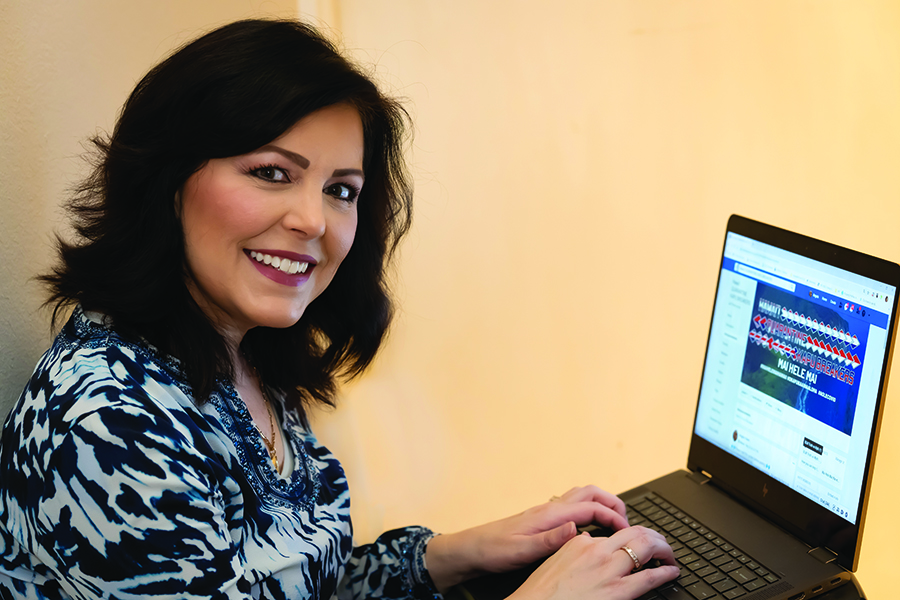
    Former TV news reporter Angela Keen helps track down residents and visitors statewide who are not in compliance with the state’s COVID-19 quarantine rules and mask mandate through the Hawai‘i Quarantine Kapu Breakers, a volunteer, community action group on Facebook.

    Angela joined the leadership team in March 2020. “The group enables me to use my journalism and reporting skills to investigate the people suspected of breaking quarantine,” says Angela. The original founder left the group last May, leaving Angela in charge.

    Angela also has personal reasons for getting involved in the group. “I am a COVID-19 survivor,” says Angela. “I had the virus when the group started. My situation was serious — it took me eight weeks to recover. I felt it was my kuleana to help prevent others from contracting it.”

    About 6,000 active members share tips through the group’s private Facebook page. Angela likens it to a neighborhood watch, aiding law enforcement to help stop the spread of COVID-19.

    “We are a unique group of professionals mixed with a few ku¯ puna,” says Angela. “Many kumu and ku¯ puna in the group are my advisors and mentors — to make sure we do things pono. Many feel our efforts help the ku¯ puna and others at high risk. But most of our members work in the tourism industry.” The group has lead teams in every county and members on all islands.

    Through these tips and information, she builds a digital file and sends it to the Hawai‘i attorney general’s office, where it is reviewed by the AG’s lead special investigator and his team. The quarantine breaker is usually arrested within 48 to 72 hours.

    As of this writing, HQKB has helped to identify more than 74 violators.

    Angela and her group also lobbied for a better statewide mask mandate. The group assists in enforcing it by holding weekend monitoring events. When they see unmasked people, they approach with a mask and a flyer explaining the mandate.

    The group also gets tips on large group gatherings. “For large parities, we ask people to call the non-emergency number of their local police department. Reports on mask or distancing issues at restaurants go to the state Department of Health.”

    Of those identified as kapu breakers, about 70 percent are tourists and 30 percent are locals.

    Angela has currently focused on lobbying, and working with state and county leaders.

    Find the group at www.facebook.com/groups/KapuBreakers. Membership is by referral only; nonmembers can report possible violations by emailing quarantinebreakers@gmail.com.

    Former TV news reporter Angela Keen helps track down residents and visitors statewide who are not in compliance with the state’s COVID-19 quarantine rules and mask mandate through the Hawai‘i Quarantine Kapu Breakers, a volunteer, community action group on Facebook.