Category: Date

  • What Level of Care and Where?

    Cara had to face it — after 7 years, she couldn’t care for Dad at home any more. He needed 24/7 supervision and care and she was worn out. After calls to five facility managers, and getting no answers she collapsed in tears. Cora needed help right now…

    Cara’s story replays every day. Caregivers get beyond the limit of their own strength without even realizing it. Their loved one may not qualify for skilled nursing, but is already well beyond the care limit of assisted living.

    Some seniors are much happier in a small care facility that can provide increased care options when needed.
    Some seniors are much happier in a small care facility that can provide increased care options when needed.

    Hawai‘i has two more levels of care between Assisted and Skilled nursing: Adult Residential Care Homes (ARCH) which offers 24/7 supervision for safety and care for clients under the direction of a facility RN. An additional level of care is provided by Intermediate Care Facilities (ICF), with 24/7 care below the level of skilled nursing, but each client’s care is managed by an independent RN case manager, required by Hawaii State Department of Health. Case managers may cost an extra $500–$800 per month. Long-term care costs top out at skilled nursing facilities (SNF), which cost about $10,000/month in Hawai‘i.

    Some large care facilities offer independent living and all levels of care in different branches of their complex. A change in a person’s care level would mean moving to another section of the property, away from familiar clients, personnel and surroundings. Clients who choose smaller, friendly care homes without options for increased care services may have to move to a different facility when they require more care. When looking for placement in a small care home, one should try to find one that is licensed to provide intermediate care and has an Expanded Care License for skilled nursing care. Avoid the hassle and distress of moving when the inevitable happens.

    Most of all, be looking ahead, and don’t put off transition to a care facility until you are too exhausted to make a good decision. Your loved one and you will be much better off.

    _________________________________

    Kina ‘Ole Estates: Enriched. Dependable. Senior Living
    45-225 William Henry Road, Kaneohe
    808-233-4455 | bslaven@kina-ole.com
    www.kinaolehomes.com

    Cara had to face it — after 7 years, she couldn’t care for Dad at home any more. He needed 24/7 supervision and care and she was worn out. After calls to five facility managers, and getting no answers she collapsed in tears. Cora needed help right now… Cara’s story replays every day. Caregivers get…

  • A Fulfilling Life

    Kameko Miyahira doesn’t look or act like a 100-year-old. She rises every day at 5 am, makes her own breakfast and lunch, exercises, does a little housekeeping, works in the yard and takes a nap. I was so impressed at how Kameko could manage all the steps in her daughter’s Aiea house, where she has lived since 2003, when her husband died at 101 years of age.

    Generations Magazine- fm2015c
    Kameko dancing Kachashi at her 100th birthday party.

    Kameko was born on Maui on Nov. 3, 1914. Her parents moved the family back to Okinawa when she was in fourth grade. She was enrolled in the Japanese school system, where it was a difficult cultural adjustment. At age 17, Kameko returned to Maui, then the next year moved to Honolulu. She met the love of her life, Tokutaro, and raised two children. Kameko is also very proud of her five grandchildren and three greatgranddaughters. What a fulfilling life!

    In her younger years, Kameko worked as a waitress at various restaurants before acquiring a job at the Walker Estate as a personal companion to Mrs. Puna Walker. She worked until 1996, when she retired at the age of 86. The advice Kameko gave me to live as long as her is to “take care of yourself, plus walk slowly and safely.”


    If you know a centenarian, send us a photo and something about him/her. We’ll help you write their story! Contact Sherry Goya: 808-722-8487SGoyaLLC@aol.com


    Kameko Miyahira doesn’t look or act like a 100-year-old. She rises every day at 5 am, makes her own breakfast and lunch, exercises, does a little housekeeping, works in the yard and takes a nap. I was so impressed at how Kameko could manage all the steps in her daughter’s Aiea house, where she has…

  • Five Reasons to Love Your Library Card!

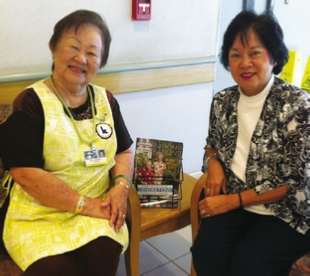
    Loving the library card, Ann and George Fujioka use it to access online and physical resources in the library.
    Loving the library card, Ann and George Fujioka use it to access online and physical resources in the library.

    You may not realize the endless possibilities your library card provides for exploring, enjoyment and lifelong learning at your Hawai‘i State Public Library System (HSPLS). Get a free card, at any one of your 50 public libraries.

    1. Access and Assistance for “Techie” Gadgets. Enter the online world using one of our 800 public computers with Internet access, available by reservation in libraries statewide. You may also borrow a fully functional netbook for a threeweek loan period from 37 of our libraries. Use free Wi-Fi (wireless data access) on your own device at any library during public service hours. Our library staff is available to assist, and can help you set up your device to download e-books, e-audiobooks, and e-magazines from our Over- Drive and OneClickdigital online collections, or create an email or Facebook account to keep in touch with family and friends.

    2. Enhance Your Travels Abroad. Explore places, people and cultures by borrowing travel books and e-books. Take Mango Languages or Powerspeak e-earning website courses to learn handy in-language catch phrases to communicate with the locals. Download reading for the “road” to your hand-held device. You may even apply for your passport at the Hawai‘i State Library’s Federal Document Section on O‘ahu and the Kea‘au Public & School Library on Hawai‘i island.

    3. Get Trusted Info for Health and More. Our librarians can offer confidential, reputable reference information from databases and websites to suit your individual needs. You may also access hundreds of free instructor-led, online courses provided by Gale Courses, ranging from personal finance to digital photography, and health and wellness. We also offer free access to Microsoft IT Academy’s 250 e-Learning courses, including basic WORD, Excel spreadsheets and more.

    4. Find Tax and Legal Forms. Hawai‘i State tax forms are available at your library. Some branches also provide federal tax forms. In partnership with the State Judiciary and Legal Aid Society of Hawai‘i, libraries now offer self-represented litigants frequently used civil (family, consumer and housing law) legal forms on www.lawhelp.org/hi. The website guides users in filling out the forms easily and correctly. Please consult your tax and legal experts for specific questions.

    5. Enjoy Leisure and Family Time. Explore your interests by borrowing popular e-magazines from Zinio. Topics include food, hobbies, sports, business, fashion and entertainment. Rent Korean TV dramas or family friendly DVDs for just $1. Most branches offer weekly preschool storytimes and year-round programs and activities. Celebrate “Heroes” during our seven-week 2015 HSPLS Summer Reading Program, which kicks off May 31. Call or visit us online for information.


    Office of the State Librarian
    Hawai‘i State Public Library System
    808-831-6878 | lds@librarieshawaii.org
    www.librarieshawaii.org

    You may not realize the endless possibilities your library card provides for exploring, enjoyment and lifelong learning at your Hawai‘i State Public Library System (HSPLS). Get a free card, at any one of your 50 public libraries. 1. Access and Assistance for “Techie” Gadgets. Enter the online world using one of our 800 public computers…

  • All-On-4: The Modern Solution

    Generations Magazine- fm2015m-1Many patients today with missing teeth have opted for the All-on-4 treatment as a viable solution to permanently replace missing teeth.

    All-on-4 dental implants offer you many important advantages:

    • A cost effective solution. Your new replacement teeth require only four implants for each jaw. Reducing the number of implants means lowering the cost of tooth replacement.
      Reduced need for bone grafting. The special tilting of two of the implants ensures a secure and stable anchorage for the replaced arch, typically making bone grafting unnecessary.
    • Faster treatment and healing time. Your replacement arch can be attached to your implants immediately. There is no need to wait for healing time between surgery and tooth replacement. Prosthesis options. You can choose fixed (one with highest durability and chewing function, but cannot be removed) or removable (one you can remove for easy cleaning).
    • Scientifically proven and documented. All-on-4 is supported by good clinical outcomes in studies where four implants were proven to support a full replacement arch.
      If you feel that your dentures make chewing difficult and prevent you from enjoying the foods you love, you may want to explore the possibility of implants — in particular, an All-on-4, option.


    Hawaii Center for Cosmetic & Laser Dentistry
    808-526-0670 | www.smilepower.net

    Many patients today with missing teeth have opted for the All-on-4 treatment as a viable solution to permanently replace missing teeth. All-on-4 dental implants offer you many important advantages: A cost effective solution. Your new replacement teeth require only four implants for each jaw. Reducing the number of implants means lowering the cost of tooth…

  • Medicare Enrollment Periods and COBRA

    It is February and if you have not signed up for Medicare Part B during your initial enrollment period and you are not covered by an active employer group health plan, you still may enroll until Mar. 31. Your coverage for Medicare Part B will begin July 1st and you may face a penalty.

    We have individuals that call us each year with a common question: “But I had employer group coverage — COBRA. Don’t I have 8 months to sign up for Part B?” We explain that Medicare enrollment periods apply to COBRA beneficiaries too.

    COBRA beneficiaries who are not currently employed and who delayed enrollment in Medicare Part B, may not qualify for a special enrollment period (SEP) to enroll in Medicare Part B after their COBRA coverage ends. They may, however, qualify for a SEP to enroll in Part D at that time, if the drug coverage they had under COBRA is creditable. Individuals on COBRA do not meet the definition of “current employment.”

    What is COBRA?

    The Consolidated Omnibus Budget Reconciliation Act (COBRA) gives workers and their families who lose their health benefits the right to continue their group health plan for a limited period of time. A worker may choose COBRA under circumstances such as voluntary or involuntary job loss, reduction in the hours worked, transition between jobs, death, divorce, and other life events. Qualified individuals may be required to pay a full premium, up to 102 percent of the cost to the plan.

    In certain instances, where coverage under the plan would otherwise end, COBRA generally requires that group health plans sponsored by employers with 20 or more employees offer employees and their families a temporary extension of health coverage (called continuation coverage).

    Other Special Enrollments (SEP) Available

    Medicare Advantage Disenrollment Period: Jan. 1– Feb. 14. If you’re in a Medicare Advantage Plan, you can leave your plan and switch to Original Medicare. If you choose to switch during this period, you’ll have until Feb. 14 to also join a Medicare Prescription Drug Plan. Your Medicare coverage will begin the first day of the month after the plan receives your enrollment form.

    5-Star Special Enrollment Period. Medicare plans are rated by members, plans, health care providers surveys and data. A 5-star rating is considered excellent. You can switch to a 5-star Medicare Advantage Plan, Medicare Cost Plan, or Medicare Prescription Drug Plan (if one is available in your area) once each year. The SEP runs between Dec. 8 and Nov. 30 every year. Contact Hawaii SHIP for more information.


    Hawaii SHIP (State Health Insurance Assistance Program)
    1-888-875-9229 | 808-586-7299
    help@hawaiiship.org | www.hawaiiship.org
    For 2014 Medicare updates: www.medicare.gov

    It is February and if you have not signed up for Medicare Part B during your initial enrollment period and you are not covered by an active employer group health plan, you still may enroll until Mar. 31. Your coverage for Medicare Part B will begin July 1st and you may face a penalty. We…

  • The Joy of Retirement

    I was tired yesterday and I’m tired today. So I guess I’m re-tired. It’s an old joke, but one that sort of fits my situation.

    At the end of September, I left KHON2 after 27 years. It was time. I will miss my friends at the station, and I will miss having the chance to meet people all over our state who have wonderful, heart-breaking, spirit-lifting stories. But there comes a time when you have to say, “I owe more to my family and my community.” There are many ways to do that.

    I will find ways to volunteer. I will find ways to have fun and share aloha. When you see me at Long’s, be sure to say hello.

    There is something else that happens when you retire. You have more time for your friends. Linda and I went to Maui on a one-day trip to visit my best man and his wife. She and Linda have known each other since grade school. Maui is a beautiful place — we sat on their lanai and looked at the bay and talked for hours … just talked.

    Toward the end of my television career, I found I was caught up in the day-to-day “work,” paying little attention to the joy life has to offer. Now it’s time to rediscover that.

    I hope Generations magazine will continue to offer me and the rest of the contributing authors the opportunity to voice our feelings about retirement and the experiences it has to offer. I also hope you all will continue to take care of each other, which is an important part of what makes life beautiful and worthwhile.

    Peace and Aloha


    KHON2 TV personality and journalist Kirk Matthews, a boomer, who speaks from the heart on issues concerning seniors and soon-to-be seniors. Post your questions or comments to Kirk at his column on Generations808.com.

    I was tired yesterday and I’m tired today. So I guess I’m re-tired. It’s an old joke, but one that sort of fits my situation. At the end of September, I left KHON2 after 27 years. It was time. I will miss my friends at the station, and I will miss having the chance to…

  • Hospice and Palliative Care

    Generations Magazine- fm2015k-1

    Dame Cicely Saunders (founder of the first modern hospice in London in 1968) summed up the hospice philosophy best when she told her patients:“You matter to the last moment of your life, and we will do all we can, not only to help you die peacefully, but to live until you die.” Hospice care is a model for quality compassionate care for people facing a life-limiting illness. It is a team approach to expert medical care, pain management, and emotional and spiritual support tailored to the patient’s needs and wishes.

    Who is eligible for hospice care?

    When the goal of treatment begins to shift from cure to providing comfort, it may be time to consider hospice for persons facing terminal cancer: end-stage heart, lung, kidney or liver disease; severe dementia; severe Parkinson’s disease; or stroke. A physician must certify that the person is in the last stages of a terminal illness.

    Where is hospice care provided?

    Most hospice care is provided in a person’s own home. Hospitals, nursing homes, assisted living, care or foster homes are other possible settings.

    What services are covered under hospice care?

    • Nursing: pain and symptom management
    • Personal care/home health aide
    • Social services
    • Spiritual counseling
    • Volunteers
    • Respite care
    • Bereavement support

    Who pays for hospice?

    Medicare, Medicaid and all medical insurances offer hospice benefit. Durable medical equipment and medications related to the terminal diagnosis are covered. Little or no co-payment is required.

    What is palliative care?

    According to the World Health Organization (WHO), palliative care is an approach that improves the quality of life of patients and their families facing the problem associated with life-threatening illness, through the prevention and relief of suffering by means of early identification and assessment and treatment of pain and other problems, physical, psychosocial and spiritual.

    How is hospice different from palliative care?

    Palliative care is specialized care for persons with life-threatening illness, regardless of life expectancy. Hospice is a type of palliative care that occurs at the very end of a person’s life.

    What is supportive or concurrent care?

    “Supportive” or “concurrent” care is a type of palliative care that encompasses all the extra care provided in addition to regular medical care by a full team of physicians, nurses, social workers, chaplains, and aides who specialize in caring for people facing serious illness. This means that somebody with a serious illness can have all the benefits of comfort care and still receive life prolonging treatments.

    Who pays for Supportive or Concurrent Care?

    Hawaii Medical Service Association (HSMA) offers supportive care services for homebound members who have advanced cancer, advanced heart failure or emphysema. University Health Alliance (UHA) offers concurrent care services to persons with any serious illness. HSMA and UHA have partnered with local hospices to offer this innovative program.

    Dame Cicely Saunders (founder of the first modern hospice in London in 1968) summed up the hospice philosophy best when she told her patients:“You matter to the last moment of your life, and we will do all we can, not only to help you die peacefully, but to live until you die.” Hospice care is…

  • The Winter Medication Blues

    Do you have so many medications that you feel you can’t manage them all? We call this “the medication blues.” Keeping your prescriptions straight, organizing pills or disposing of unused meds, can be truly overwhelming.

    The first step to cure the medication blues is to keep your medications organized. If you have several medications, you or a family member can type out each medication name, why you take it, and the dosage (how much and how often you take it). This list will allow you to clearly see all your medications in one place. Next, buy a pillbox at your local pharmacy. Pick a pillbox that will accommodate the amount of medications and how many times a day you need to take each. Fill your pillbox each week using your medication list as a guide.

    If a medication changes or is discontinued, properly dispose of it. There are several ways to dispose of old medications. The simplest way is to call your pharmacy to find out if it has a medication return or “take-back” program. Not all pharmacies have this program, but many do. If you can’t find a return program, follow this plan:

    Do not throw bottles of pills in the trash or flush them down the toilet. Instead, it is recommended that you strip the prescription label off the bottle, add some liquid to the bottle to dissolve the pills, reapply the lid, tape the lid with duct tape and throw the taped bottle in the trash.

    With these simple actions, you can get your medications organized, ensure you get the treatment you need and soon make the medication blues a thing of the past.


    HiHomeCare, 745 Fort Street, Honolulu, HI
    808-356-HELP (4357) | info@hihealthcarehawaii.com
    hihealthcarehawaii.com

    Do you have so many medications that you feel you can’t manage them all? We call this “the medication blues.” Keeping your prescriptions straight, organizing pills or disposing of unused meds, can be truly overwhelming. The first step to cure the medication blues is to keep your medications organized. If you have several medications, you…

  • The Hawai’i Neurotrauma Registry

    We’ve had lots of positive feedback on our first article about the Hawai‘i Neurotrauma Registry. In the last two years, we’ve given out information on neurotrauma injuries (stroke, traumatic brain injury, spinal cord injury) at 60 events and presentations to approximately 6,500 people.

    There is a lot of information on patients with stroke, spinal cord injury or traumatic brain injury while they are in the hospital or rehabilitation facility.But what happens once they get home? What problems are they having? What kind of help do they need?

    The Hawai‘i Neurotrauma Registry wants to know so the Hawai‘i Department of Health, Developmental Disabilities Division can make appropriate plans and policies.

    We currently have 81 individuals with neurotrauma injuries who have registered. They took more people — especially from the Neighbor Islands — and younger people. The registry is voluntary and open to any resident of Hawai‘i, any age, who has had a neurotrauma injury at any point in his or her lifetime.

    You can fill out the confidential survey online at www.svy.mk/1qybSHZ.Call us (there’s a tollfree number for Neighbor Islands) to receive a copy by mail or to schedule assistance completing the survey. Email us with any questions, as well. With your help, the registry will be a success. Mahalo.


    University of Hawaii at Manoa
    John A. Burns School of Medicine, Pacific Basin RRTC
    677 Ala Moana, Suite 202, Honolulu, HI 96813
    808-692-1375/1372 | 1-866-447-9023
    HawaiiNT@hawaii.edu

    We’ve had lots of positive feedback on our first article about the Hawai‘i Neurotrauma Registry. In the last two years, we’ve given out information on neurotrauma injuries (stroke, traumatic brain injury, spinal cord injury) at 60 events and presentations to approximately 6,500 people. There is a lot of information on patients with stroke, spinal cord…

  • Taking the Pain Out of Physical Therapy

    gain

    The letters “p” and “t” for physical therapy should NOT be confused with “pain” and “torture.” Unfortunately, many people will share their horror stories of how painful their experiences were. The old-school approach of “no pain, no gain” has been scientifically disproven. Stretching a muscle until it hurts will not get good results. Pain is the body’s way of telling the brain that tissue damage is occurring. When you experience pain, your body’s protective mechanisms take over, often inhibiting the strength and mobility of the damaged area. Believing that suffering has to get worse before it can get better may even make your injury worse.

    Ironically, one of the goals of physical therapy is the reduction of pain. Many injuries and postsurgical conditions by their nature are painful, although appropriate physical therapy treatments should be designed to relieve those symptoms and improve function. So just remember, while temporary soreness can be a normal response to therapy sessions involving exercise and manual treatment, a correctly designed program should not make your injury or painful condition worse.


    Moon Physical Therapy, LLC
    320 Ward Avenue, Ste. 107, Honolulu, HI 96814
    Aquatic, Land-based and Manual Therapy and Cardiopulmonary Rehab Programs
    808-597-1005 | www.moonpt.com

    The letters “p” and “t” for physical therapy should NOT be confused with “pain” and “torture.” Unfortunately, many people will share their horror stories of how painful their experiences were. The old-school approach of “no pain, no gain” has been scientifically disproven. Stretching a muscle until it hurts will not get good results. Pain is…

  • Jai Vegetarian Winter Stew

    Generations Magazine- fm2015g-1

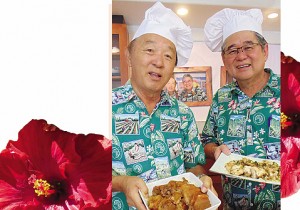
    For a healthy and hearty New Year dish, Jai blends dried and fresh veggies with bean paste. Anyone can make this today using ingredients found in Asian groceries.
    Broth:

    • Ginger root (crushed & chopped 5 in.)
    • 3/4 cup sugar
    • 8 oz. mashed red bean paste (nam yau)
    • 6 oz. mashed yellow bean paste (tau hu mui)
    • 1 dried squid, washed and soaked
    • 12 whole star anise, mashed
    • 1 1/2 cup oyster sauce
    • 2 quarts water (may use chicken broth or hondashi

    Ingredients:

    • 3 Tbsp. oil
    • 1/2 lb. black mushrooms, wash and parboil
    • 1/4 lb. black fungus, wash and parboil
    • 1/2 lb. dried yellow bean curd (foo jook), wash and parboil
    • 1/2 lb. golden lily flower, wash and parboil
    • 1/4 lb. dried oysters (hau see), wash and parboil
    • 1/4 lb. dry bamboo shoot (sun ha), sliced, wash and parboil
    • 1/2 lb. oil tofu in cubes
    • 1 can bamboo shoots, sliced
    • 1 lb. long rice, soak and parboil
    • 1 pkg black moss (fatt choy) add oil to loosen and parboil
    • 1 large celery or Napa cabbage (won bok), cut up

    Directions:

    Heat 3 Tbsp. of oil in a 6-quart pot. Brown ginger, add all broth items in order listed, stir fry 3 to 4 minutes, then add liquid and bring to a boil; adjust seasoning.

    Pre-wash ingredients and parboil all but canned bamboo shoots. Add all but the last three ingredients. Bring to boil; simmer 30 minutes. Add last three ingredients. Stir well and cook 30 more minutes. Serve with white or brown rice.


    Popo’s Kitchen available from the author: 808-734-1063 or Amazon.com

    For a healthy and hearty New Year dish, Jai blends dried and fresh veggies with bean paste. Anyone can make this today using ingredients found in Asian groceries. Broth: Ginger root (crushed & chopped 5 in.) 3/4 cup sugar 8 oz. mashed red bean paste (nam yau) 6 oz. mashed yellow bean paste (tau hu…

  • What is Osteoarthritis?

    Generations Magazine- fm2015l-1Osteoarthritis (OA) is one of the most common forms of arthritis. About 27 million people in America have osteoarthritis. It is a chronic condition in which the material that cushions the joints, called cartilage, breaks down. This causes the bones to rub against each other, causing stiffness, pain and loss of joint movement.

    Common risk factors include increasing age, obesity, previous joint injury, overuse of the joint, weak thigh muscles, and genetics.

    Osteoarthritis symptoms usually develop gradually. At first, there may be soreness or stiffness that seems more like a nuisance than a medical concern.

    Common symptoms include:

    • Sore or stiff joints — particularly the hips, knees, and lower back — after inactivity or overuse.
    • Stiffness after resting that goes away after movement.
    • Pain that is worse after activity or toward the end of the day.

    Osteoarthritis, or OA, may also affect the neck, small finger joints, the base of the thumb, ankle, and big toe. The pain may be moderate and come and go, without affecting the ability to perform daily tasks. Some people’s OA will never progress past this early stage. Others will have their OA get worse. The pain and stiffness of more severe osteoarthritis may make it difficult to walk, climb stairs, sleep, or perform other daily tasks.

    If you have symptoms of osteoarthritis, the doctor will ask questions about your medical history and perform a physical exam and, possibly, take X-rays to confirm the diagnosis.

    There is no cure for osteoarthritis, but there are medications to help relieve pain, when needed. The doctor may recommend physical therapy (PT) or occupational therapy (OT) to help improve strength and function. When pain is severe and frequent or mobility and daily activities become difficult, surgery may be considered.

    Staying physically active and maintaining a healthy weight are the keys to living well with osteoarthritis. Too little movement can lead to stiffness and weak joints. Losing one pound can take four pounds of pressure off your knee joints. Overall fitness improves health in many ways. Strong muscles protect joints. An OA management plan also involves eating a nutritious diet, managing stress and depression, and getting a good balance of rest and activity each day.\

    Generations Magazine- fm2015l-2


    Hawai‘i Pacific Health—Straub Clinic & Hospital
    808-22-3469
    www.hawaiipacifichealth.org/GetAGrip

    Osteoarthritis (OA) is one of the most common forms of arthritis. About 27 million people in America have osteoarthritis. It is a chronic condition in which the material that cushions the joints, called cartilage, breaks down. This causes the bones to rub against each other, causing stiffness, pain and loss of joint movement. Common risk…