Category: Date

  • Getting to Know The Greatest Generation

    Getting to Know The Greatest GenerationOur oldest seniors, members of “The Greatest Generation,” remember Great Depression and World War II. By facing fear and surviving hardship and loss, they grew strong and confident. They don’t flaunt their accomplishments, even though we may call them heroic.

    Popular News Commentator and NBC News Anchor Tom Brokaw coined the name “The Greatest Generation” as the title of his 1998 best seller. If you have never read this classic, check it out at your local library or look it up on Amazon. It’s a collection of profiles and historical commentary about people whose lives and moral fibers were tested by the great upheavals of the early 20th century. Their stories are riveting.

    Getting to Know The Greatest GenerationAs a child in the ’40s, Brokaw recalled, “The grown-ups all seemed to have a sense of purpose … Whatever else was happening in the neighborhood, there was something greater connecting us all, in large ways and small.” In our fast-paced “communication age transpose connectedness is often mistaken for socializing on Facebook. The Greatest Generation shared high ideals — sacrificial commitment to family, community and nation. Personal gain and entertainment were low priorities. Brokaw beautifully describes a generation drawn together by a sense of duty to and responsibility for the common good. Challenges and sacrifices pulled together a nation, and the nation pulled as a team.

    Getting to Know The Greatest GenerationBrokaw actually describes values like respect and fortitude the “right stuff”— the characteristics we see in our Hawai‘i seniors. Our state politics may be liberal, but our way of life is conservative. Families are multigenerational and tight-knit. We nurture relationships. Making a living in Hawai‘i is hard, and cost-of-living is high, so everyone must sacrifice a little of the American dream to “live Hawai‘i.” Everyone in the canoe paddles.

    Getting to Know The Greatest GenerationBrokaw admits he holds a “missionary zeal” for this generation that birthed more than its share of public heroes — Sen. Daniel Inouye, President Dwight D. Eisenhower and Admiral Chester W. Nimitz. But Brokaw also writes about people we never heard of: soldiers who came home and never said much about the war, and men and women who worked civilian jobs that were crucial to the war effort.

    Seniors tell of hard times, when life was unsettled— making “do” with a little rice and fish, nightly blackouts and barbed wire on the beaches. In 1941, four men of the Adams/McCabe family in Kaneohe were killed by a Japanese rocket on Pali Highway, as they drove to work at Pearl Harbor. These civilians are heroes too.

    Getting to Know The Greatest GenerationDuring the month of August, take your grandchildren to visit a kupuna in their ’90s and listen to their stories, like Brokaw did. Or pick up a copy of The Greatest Generation at your local book store or at www.amazon.com/books. If you are in the greatest generation, like my Mom and Dad, don‘t be shy about sharing your story!

    Our oldest seniors, members of “The Greatest Generation,” remember Great Depression and World War II. By facing fear and surviving hardship and loss, they grew strong and confident. They don’t flaunt their accomplishments, even though we may call them heroic. Popular News Commentator and NBC News Anchor Tom Brokaw coined the name “The Greatest Generation”…

  • Senior Golf Summer Pick

    Against the clear sky, Waianae mountains and happy clouds — at our feet, the fairway stretches out to an undulating green reflecting in a mirror lake — it’s the 397-yard, par 4 ninth hole of the “A” nine at the fabulous Hawaii Prince Golf Club in Ewa. Arnold Palmer and Ed Seay designed it to challenge and delight golfers at all levels of play. Now, in retirement, you get to tee off here.

    It’s not a daydream — throw your clubs in the car! Hawaii Prince Golf Club kama‘aina greens fees are $59 every day; but Mondays and Tuesdays, seniors over 60 can make advance tee times and play for just $39. Have lunch or breakfast at the Bird of Paradise while you are there.

    Director of Golf Ted McAneeley told us, “All three nines are fairly open, with many ways to the hole, so everyone can have fun. There is no better instruction than Brian Mogg’s Golf Academy, right here at Hawaii Prince. PGA teaching professionals will sharpen your game or share the basics in private or group lessons.” If golf is on your bucket list, check it off now.

    McAneeley knows sports. He played hockey for the Edmonton Oilers in Canada and the Seibu Ice Hockey Team in Japan. The Seibu Company recruited him in 1986 to open Prince Resort properties in Hawai‘i. After that, he became GM of Hawaii Prince Hotel Waikiki, and later, Mauna Kea and Hapuna Beach resorts. Eventually, Ted found his way back to the Hawaii Prince Golf Club. For all his success, McAneeley is a humble man who lives aloha. At Hawaii Prince Golf Club, he offers seniors and golfers of every age a friendly, world-class golf experience.


    Hawaii Prince Golf Club

    91-1200 Fort Weaver Rd., Ewa Beach, HI 96706

    Teetime: 808-944-4567 | princeresortshawaii.com

    Against the clear sky, Waianae mountains and happy clouds — at our feet, the fairway stretches out to an undulating green reflecting in a mirror lake — it’s the 397-yard, par 4 ninth hole of the “A” nine at the fabulous Hawaii Prince Golf Club in Ewa. Arnold Palmer and Ed Seay designed it to…

  • Barbara J. Service, Citizen at Work


    (L–R) Carlos Brandenburg, regional volunteer director, AARP; Barbara Service, nominee, AARP Hawaii Andrus Award for Community Service; Barbara Kim Stanton, state director, AARP Hawaii; Gerry Silva, state president, AARP Hawaii. Photo courtesy of AARP Hawaii.
    (L–R) Carlos Brandenburg, regional volunteer director, AARP; Barbara Service, nominee, AARP Hawaii Andrus Award for Community Service; Barbara Kim Stanton, state director, AARP Hawaii; Gerry Silva, state president, AARP Hawaii. Photo courtesy of AARP Hawaii.

    Democracy relies on ordinary citizens like us to define needs and find solutions to improve our community. We interviewed Barbara Service, a passionate, yet mild-mannered community volunteer, who has no government post or fancy title, but makes a difference by being a deeply engaged citizen.

    “I worked in child welfare for many years,” says Barbara. “I know how government works, so now I help out on community issues that I think are important. I help advocacy groups prepare testimony and work on community fairs and workshops in my spare time. On the AARP steering committee, I work with others to promote needs, well-being and interests of kupuna in Hawai‘i.”

    Barbara enjoys her work. “Public testimony is such a privilege in Hawai‘i. Our legislators actually listen to every citizen who comes before them. If you lived in California, Sacramento could be a 100-mile trip, and when you get there, the meeting rooms are not open to everyone. We are really very fortunate to have access to government.”

    Barbara comes from a family of volunteers. In 1947, her great aunt Ethel Percy Andrus started the National Retired Teachers’ Association, and in 1960, founded AARP. Since Barbara retired as child welfare supervisor for the State of Hawai‘I Department of Human Services, she has been working “from the community side” through Keiki Caucus and Kupuna Caucus, headed by Hawai‘i State Sen. Suzanne Chun Oakland. The caucuses consist of 30 house and senate members, and 150 advocates from every corner of our community who all try to find solutions to community problems.

    “I thought that after the legislative session was over, our legislators took a vacation, but they are hard at work with their constituents all summer, and that really impresses me,” says Barbara. “In the caucus, anyone can voice an idea or comment. Issues and solutions we work out during the summer are presented to the full legislature in January. It is American democracy in action.”

    Barbara is also a member of Kokua Council, one of Hawai‘i’s oldest advocacy groups. The council invites leading speakers to their public forums at Harris Methodist Church. This summer, Virginia Pressler, M.D., director of health, and Rachael Wong, Department on Human Services Director, will speak and entertain questions. “It’s a wonderful forum and I am eager to hear the fresh perspectives these new Ige appointees bring to our community,” says Barbara.

    Anyone may get involved in community affairs. We have the freedom to discuss, deliberate and debate community solutions — in our neighborhoods, counties and state. With so many needs, it takes plenty of citizens to figure out solution.

      Democracy relies on ordinary citizens like us to define needs and find solutions to improve our community. We interviewed Barbara Service, a passionate, yet mild-mannered community volunteer, who has no government post or fancy title, but makes a difference by being a deeply engaged citizen. “I worked in child welfare for many years,” says…

  • What Legacy Will You Leave?

    You may be surprised to learn that an estimated 70 percent of American adults have not yet made a will or trust, even though these documents are vitally important to all individuals and families. For those who never complete their estate plans, the government will apply a series of laws that may or may not be what is desirable for the families or heirs.

    You may also be surprised to learn that those who check out planned giving as part of the will and trust process often discover opportunities that not only help their favorite charity, but also provide added benefits for themselves and their families. Even those who already have made plans may find that working with a qualified charity can provide additional benefits they never knew were available.

    Years ago, when I was a estate planning lawyer, I discovered that people would approach this subject with foreboding, only to end up feeling good and relieved after completing their plans. Many of them actually enjoyed the process, and the peace of knowing their lives were in order and their families were better off for the planning.

    National Kidney Foundation of Hawaii is offering a free “Wills Guide” packed with helpful information to consider before making an appointment with your attorney. It is our way of encouraging you to take the first step towards leaving your legacy. Should you like a free copy, please call me at 808-589-5976 or send an email requesting the guide to jeff@kidneyhi.org.


    National Kidney Foundation of Hawaii
    808-589-5976 | jeff@kidneyhi.org
    For Planned Giving: www.kidneyhawaii.org
    Main: www.kidneyhi.org | www.kidney.org

    You may be surprised to learn that an estimated 70 percent of American adults have not yet made a will or trust, even though these documents are vitally important to all individuals and families. For those who never complete their estate plans, the government will apply a series of laws that may or may not…

  • Real Property Tax Credits for Homeowners

    Property owners who meet certain eligibility requirements may apply to the City and County of Honolulu for a real property tax credit to reduce their property taxes. Depending on your age, you may qualify for a tax credit equal to the amount of taxes owed for the 2015 and 2016 tax year that exceed 3 or 4 percent of the total of the titleholders’ income. For homeowners 75 or older, the rate is 3 percent. If approved, the tax credit will be applied to the July 1, 2016 –June 30, 2017, tax year.

    What are the eligibility requirements?

    • Homeowner must have a home exemption for the 2015 and the 2016 tax years.
    • Titleholders of the property cannot own other property anywhere.
    • The combined income of all titleholders for the 2014 calendar year does not exceed $60,000.

    How do I apply for this tax credit?

    Applications are available at:

    Applications must be filed by Sept. 30, 2015, and must be filed annually. For further information, please call 808-768-3205.

    *Information subject to change without notice.


    Tax Relief Office
    808-768-3205| bfstreasmailbox@honolulu.gov

    Property owners who meet certain eligibility requirements may apply to the City and County of Honolulu for a real property tax credit to reduce their property taxes. Depending on your age, you may qualify for a tax credit equal to the amount of taxes owed for the 2015 and 2016 tax year that exceed 3…

  • Four Generations Big

    As I was thinking about how many seniors don’t use email or the web, it occurred to me that perhaps they don’t have children or grandchildren who “insist” on training them. So I checked out a couple of places that specialize in teaching seniors computer skills.

    Four Generations Big
    Bilingual System Links, LLC

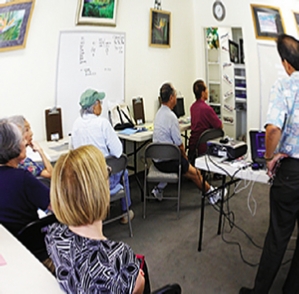
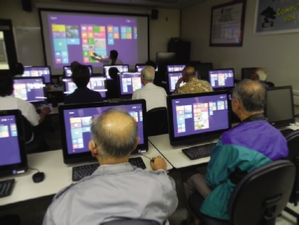
    One is Bilingual System Links LLC, which has classes personalized for seniors 60 and over in both English and Japanese. Students may bring their personal laptop, iPhone, tablet or smartphone. The instructors are very patient, speak clearly and allow students to work at their own pace. Beginners may choose to learn the basics of keyboard typing, Microsoft Word formatting, and how to save and file documents for easy retrieval. They also offer instruction on safe use of Internet/email and computer basics for Mac or PC. Intermediate level students can learn Excel, Powerpoint, Facebook, YouTube and Skype, etc. Classes are small and students learn theories and practice hands-on. Call 808-952-0712 or visit www.BSL808.com.

    The Emeritus College at     HCC

    The Emeritus College at Honolulu Community College offers adults 55-plus a wide range of computer-related courses throughout the year taught by volunteer instructors. Tuition fees are used to cover the costs of the facilities, equipment and maintenance services for the program. Class offerings include the “basics”— Internet, email, Excel, Word, Windows, iPad and other fun workshops. Senior instructors know how to work with their senior students and enjoy the interactions. Joining the Emeritus Senior Club offers member discounts for classes and includes the Open Computer Laboratory. For a course schedule and full details, call 808-845-9296. General information is available online at www.honolulu.hawaii.edu/node/387

    If you’re on the Neighbor Islands, check with your local senior center for classes — you might just find more things to be interested in.

    Whichever classes you decide to take, you will be pleased with the knowledge and care of all instructors. Don’t be afraid of the computer, because it will probably bring you closer to your children, grandchildren and great-grandchildren. Be fearless as you join them in the “computer age!”


    Stories for and about seniors and their caregivers are
    always worth sharing, like a 100 birthday announcement,
    send it to me, Sherry Goya, with a photo.
    808-722-8487 | SGoyaLLC@aol.com

    As I was thinking about how many seniors don’t use email or the web, it occurred to me that perhaps they don’t have children or grandchildren who “insist” on training them. So I checked out a couple of places that specialize in teaching seniors computer skills. One is Bilingual System Links LLC, which has classes…

  • Reflecting on Governor John A. Burns

    1In midlife, documenting the lives of our ancestors and our own memories suddenly becomes important. Even if our kids aren’t interested — we know someday they will be.

    Brendon Burns, 47-year-old grandson of Hawai‘i Gov. John A. Burns, has applied his writing and journaling skills to an earnest and diligent “look back” at the “greatness” that surrounded his grandfather, the second governor of the State of Hawai‘i, from 1962 to 1974. When Brendon’s dad, retired Appellate Court Chief Judge Jim Burns, had a bout of cancer in 2012, he and Brendon took time to recollect the personalities and dynamics of the governor’s era, and rise to power.

    2Author Burns said, “I realized that it is time to pass on those lessons from his life to the next generation.” For Burns, an educator and principal of ‘Aina Haina Elementary School, the lessons are about leadership and consensus building, wrapped in detailed and well-researched historical context that seniors will remember as irrevocable changes in state politics.

    John Burns’ tough childhood prepared him for grassroots politics, lobbying and assuming the risks of huge economic growth in the early years after statehood. Brendon Burns conceived this book for posterity and brings it to us with much aloha and perspiration. An Aura of Greatness: A Reflection on Governor John A. Burnsis available at local bookstores and online at Amazon:www.tinyurl.com/AnAuraOfGreatness.

    In midlife, documenting the lives of our ancestors and our own memories suddenly becomes important. Even if our kids aren’t interested — we know someday they will be. Brendon Burns, 47-year-old grandson of Hawai‘i Gov. John A. Burns, has applied his writing and journaling skills to an earnest and diligent “look back” at the “greatness”…

  • 5 Tips for Senior Sun Safety

    Summer and family fun is right around the corner! More sunshine not only makes the great outdoors more inviting, but increased UV rays and heat also create a few risks.

    Seniors don’t “feel the heat” the way younger people do and might not be aware of the risks of high temperatures. Physiologically, as we age, our bodies lose some natural ability to regulate temperature, making seniors more susceptible to sunburn, eye damage, dehydration, heat exhaustion and more. With some precautionary steps and healthy personal care, everyone can enjoy the summer sun.

    Five ways to play it safe in the sun:

    • Apply sunscreen early and often throughout the day. Try to apply sunscreen an hour before you head outside. The higher the SPF, the more protection there is. Reapply every two hours.
    • Drink plenty of water. Six to eight glasses per day is recommended; more if you’re engaging in physical activity or it’s particularly hot.
    • Stay indoors between 10 am and 2 pm, when the sun is most intense. When outdoors, look for shade, especially during the hottest hours.
    • Some medications cause increased sensitivity to the sun. Ask your doctor if you have any concerns about your medication side effects.
    • Wear the right clothing and eye protection. Lightweight, breathable fabrics are best. Wear wrap-around sunglasses that protect eyes from both UVA and UVB radiation.


    HiHomeCare, 745 Fort Street, Suite 116, Honolulu
    808-356-HELP | info@hihealthcarehawaii.com
    hihealthcarehawaii.com

    Summer and family fun is right around the corner! More sunshine not only makes the great outdoors more inviting, but increased UV rays and heat also create a few risks. Seniors don’t “feel the heat” the way younger people do and might not be aware of the risks of high temperatures. Physiologically, as we age,…

  • Estate Planning for College Students

    I recently received a call from a client who has a daughter attending college on the Mainland. Her daughter had been in a ski-accident and was in the hospital. When the mother called the hospital to find out her daughter’s status, they would not release any information or allow the mother to make any decisions on her daughter’s behalf. You can imagine the mother’s distress, thousands of miles away and helpless.

    This situation is all too common. Once your child reaches age 18, you are no longer entitled to see your child’s medical and financial records or make decisions on their behalf. Therefore, it is important for young adults to appoint trusted individuals to make medical and financial decisions in the event they are unable to do so.

    Few 18-year-olds consider the need for an estate plan, because most have little in the way of property. But if your child were to suddenly lose the ability to make or communicate decisions, they would need a an authorized person to make decisions for them. Your college student will want to consider two important Powers of Attorney:

    An Advance Health Care Directive gives you the ability to act on your child’s behalf with regard to medical decision-making in the event that your child is unable to do so.

    A General Durable Power of Attorney gives you legal authority to act on your child’s behalf regarding financial matters, regardless of whether they are able to make decisions on their own or not. It may be used in matters of both emergency and convenience.


    Stephen B. Yim, Attorney at Law
    2054 S. Beretania St., Honolulu
    808-524-0251 | www.stephenyimestateplanning.com

    I recently received a call from a client who has a daughter attending college on the Mainland. Her daughter had been in a ski-accident and was in the hospital. When the mother called the hospital to find out her daughter’s status, they would not release any information or allow the mother to make any decisions…

  • Asian-Style Mini Turkey Meatloaves

    1

    This recipe works as a quick weekday dinner or as a great pupu ! Adjust the portion size for muffin-size individual portions, tart-sized tantalizing bites or sliders (mini sandwiches made in dinner rolls) by flattening the tart-sized portions before cooking on a baking sheet.

    Ingredients:

    Meatloaf

    • 1-1/2 lbs ground turkey
    • 1/2 cup panko bread crumbs
    • 3/4 cup thinly sliced green onion (all parts)
    • 1/2 cup chopped fresh cilantro (extra for garnish)
    • 1 tablespoon Thai/Vietnamese fish sauce
    • 1 tablespoon soy sauce
    • 1/4 cup sweet chili sauce (such as Mae Ploy)
    • 1 egg plus 1 egg white, lightly beaten
    • Fresh ground pepper

    Asian BBQ Glaze

    • 1/2 cup ketchup
    • 2 tablespoons hoisin sauce
    • 2 tablespoons sweet chili sauce (Mae Ploy)

    Directions:

    Preheat oven to 350 degrees and lightly spray a standard-sized cupcake tin with non-stick cooking spray. Or for pupu size, you’ll need a mini-tart sized tin(s), allowing for 30 pieces per recipe.

    In a medium bowl, combine ingredients for the meatloaf, adding the panko last. Shape meatloaf mixture into eight ball-shaped portions and drop each meatloaf ball into individual cups (there will be empty cups if using a standard 12-cup tin).

    Put mini meatloaves into preheated oven and set a timer for 20 minutes. While meatloaf cooks, combine ingredients for the bbq glaze in a small ramekin/cup.

    After 20 minutes, take tin out of oven and lightly mop the top of each meatloaf with the glaze, then return to the oven for five to seven minutes to let the glaze thicken. Remove from the oven and let rest for five minutes; plate individually or on a serving platter and garnish with fresh cilantro for an attractive finish. Enjoy!

    Servings: 8 individual or 30 pupu –sized portions

    Time: 30 minutes

    This recipe works as a quick weekday dinner or as a great pupu ! Adjust the portion size for muffin-size individual portions, tart-sized tantalizing bites or sliders (mini sandwiches made in dinner rolls) by flattening the tart-sized portions before cooking on a baking sheet. Ingredients: Meatloaf 1-1/2 lbs ground turkey 1/2 cup panko bread crumbs…

  • Transition to Care at Home

    Straub Hospital

    “The case manager was excellent in preparing us for the care that my mother needed. She went beyond the call of duty.”

    “I want you to know how grateful we are and how wonderfully helpful, supportive and resourceful your social worker has been — above and beyond, and a tribute to you and the hospital.”

    These notes of mahalo come from patients and family members who are thankful for quality care they received during what can be a very complex situation hospital discharge and preparing for the tasks of at-home care.

    Hospitals throughout Hawai‘i follow strict guidelines set forth by the Centers for Medicare & Medicaid Services and The Joint Commission, for training caregivers with the goal of ensuring the patient’s safety and well being.

    Last year, Consumer Reports Magazine rated Straub Clinic and Hospital as the safest hospital in Hawai‘i. Specifically noted were a low medical mortality, avoidance of infections and the state’s lowest surgical mortality rate.

    Developing a culture of safety requires constant communication among physicians, nurses and everyone involved in the patient’s treatment team. From the moment a patient enters the hospital, a nurse assesses the patient’s support system, residence and daily activities. A hospital case manager also determines any special transition needs, based on individual diagnosis and recovery.

    If a patient is incapable of or uncomfortable with administering their own necessary at-home care, the case manager will ask if a family member, friend or neighbor would be willing and available to serve as a caregiver.

    If none are identified, the case manager will discuss home care visits or short-term placement in a nursing or rehab facility. The patient’s short-term and long-term options are evaluated based on finances, insurance coverage, available community resources and patient/family preference. Then, appropriate services are arranged to coordinate with the patient’s expected date of discharge.

    At-home care support also includes classes and hands-on medication training set up around the patient and caregiver’s schedule. Written instructions and printed educational materials also are provided for patients and caregivers.

    2Communication continues with a review of all at-home arrangements at the time of discharge, and calls to both patient and caregiver within 48 hours, to answer any questions or concerns and make sure they both understand the importance of critical appointments and medications.

    By communicating and working with patients’ and caregivers’ educational needs from admission through recuperation, we are able to better provide a safe environment for the patient, both at the hospital and at home.


    Straub Clinic & Hospital
    808-522-4000 | info@straubhealth.org
    straubhealth.org

    “The case manager was excellent in preparing us for the care that my mother needed. She went beyond the call of duty.” “I want you to know how grateful we are and how wonderfully helpful, supportive and resourceful your social worker has been — above and beyond, and a tribute to you and the hospital.”…

  • Gifts Anyone Can Afford

    Sometimes I am asked by people how they can help our cause without disturbing their finances. Surprisingly, there are ways to accomplish that goal. Each situation is different, so consulting your tax advisor is a good idea. You may wish to consider these ideas:

    •  Designating a charity as a beneficiary in your will or trust is a simple way to commit to a cause you believe in, without affecting your cash flow during your lifetime. Additionally, it’s easy to revoke this type of gift, if your situation or goals change.

    •  Naming a charity as the beneficiary of an IRA or other retirement plan, financial account, annuity or unneeded life insurance policy is another easy way to help while you continue to benefit from these assets during your lifetime.

    •  If you own low-interest assets like bank Cds, you may donate them to charity and receive a Charitable Gift Annuity with an annual payment to you, often with a higher interest rate.

    •  Real estate you no longer need or wish to sell may be given to a charity without impacting your cash flow. You may also benefit from capital gains tax avoidance, while receiving a tax deduction for the gift.

    •  If you own your home and wish to remain living there, you can transfer your home to a charity, while retaining the right to use the home during your lifetime. You may even enjoy the added benefit of an income tax deduction while you live in your home!


    National Kidney Foundation of Hawaii
    808-589-5976 | jeff@kidneyhi.org
    For Planned Giving: www.kidneyhawaii.org
    Main: www.kidneyhi.org | www.kidney.org

    Sometimes I am asked by people how they can help our cause without disturbing their finances. Surprisingly, there are ways to accomplish that goal. Each situation is different, so consulting your tax advisor is a good idea. You may wish to consider these ideas: •  Designating a charity as a beneficiary in your will or…