Category: Date

  • Put Your Voice Into Your Estate Plan

    Singing has always been a passion of mine — with my brothers, in choirs or in the shower. In choir, when the director handed out new music, I remember looking at the black notes on the white sheets of paper and thinking that the music made no sense, and it’s going to be really boring to sing.

    As our choral group rehearsed and blended in harmony, the melody would always come to life and become a beautiful story in song—even more so as I connected more with the composer of the music, and the meaning and emotion the author intended to convey.

    Everyone’s voice is unique, textured and lovely in its own way. When everyone sings in harmony, it makes the song exponentially more beautiful.

    An estate plan has been regarded “as the sole, authentic voice of a man who is dead.” However, much like that sheet of paper with notes on it during the first day of choir practice, if left as a template legal document, without the maker breathing life (voice) and personal meaning into it, the legal document will remain sterile, sometines rendering it almost meaningless.

    What is at risk in this case is family harmony.

    Family members will apply their own song and lyrics to the document in the absence of the ma-kers’s voice, rather than being able to hear and honor the loved one’s story.

    When you work with your attorney to establish or update your plan, to ensure harmony, please remember to make sure to incorporate your unique, textured and dynamic solo voice.


    Stephen B. Yim, Attorney at Law
    2054 S. Beretania St., Honolulu HI 96826

    808-524-0251  |  www.stephenyimestateplanning.com

    Put Your Voice Into Your Estate Plan by Stephen B. Yim, Attorney at Law from the August-September 2016 issue of Generations Magazine, Hawai‘i’s Resource for Life

  • Men’s Sheds Movement Comes to Hawai‘i

    Generations Magazine - August-September 2016 - Mens-Sheds_image1
    Rotary Club of Honolulu Sunset steering committee organizing Hawai‘i’s first Men’s Sheds (L– R): Jerome Taniyama, Jonathan Okabe, Doug Kam-Young, Glenn Sears, Win Schoneman and David Talbert

    Men’s Sheds began in Australia 10 years ago. The nonprofit is a communal version of the old-fashioned backyard shed where a man could tinker with his tools. Thousands of Men’s Sheds in Australia, New Zealand, the UK, Ireland and Finland belong to the international association, but every group is unique. Its members decide what they want to do: woodwork, metalwork, gardening, bicycle repair, cooking or bookbinding. The thing that all sheds provide is a safe, comfortable place for older men to congregate, talk and work shoulder-to-shoulder.

    It might appear that a shed is just a place to work, but it is much more. Older men tend not to socialize, are reluctant to do anything new and often ignore their health. When hearing and memory start to go, it is easy to just tune out. Friends from work are not as available; old buddies move away or pass on. The Men’s Sheds is 
a way to reverse the slide into isolation.

    Generations Magazine - August-September 2016 - Mens-Sheds_image2
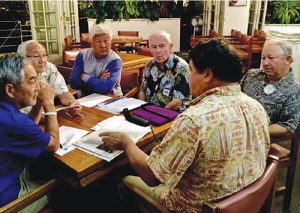
    Mens Sheds Honolulu members (L– R): Jonathan Okabe, Jerry Tanyama, Doug Kam-Young, Glenn Sears, Jim Hoban and Leon Bower

    We opened the first Men’s Sheds in Honolulu and are looking for a few good (old) men. We gather on Thursdays from 10am until 4pm. Hours and days will expand with membership. “If this sounds like something fun for you or for a friend, give Glenn a call for details. Come by, take a look, have a cup of coffee and talk story.


    HAWAI‘I MEN’S SHEDS ASSOCIATION
    Glenn Sears | 808-373-6140


    Men’s Sheds Movement Comes to Hawai‘i by Glenn Sears from the August-September 2016 issue of Generations Magazine, Hawai‘i’s Resource for Life

  • Senior Travel Assistance

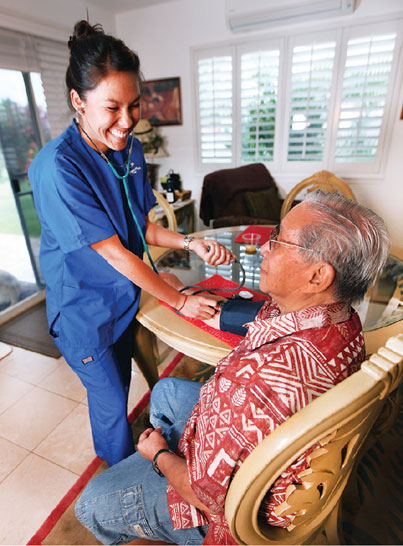
    Generations Magazine - August-September 2016 - Senior-Travel-Assistance_image1Recently, a longtime client of mine was looking more energetic and less arthritic than usual. I asked him what’s new and got the I-know-something grin. After checking his nasal cannula and portable oxygen concentrator, I smiled; his doctor had already given me the scoop on his Las Vegas plans. That was the reason why I was there to help him. He laughed, saying Vegas is his therapy.

    As is often the case, seniors with special needs can benefit from travel assistance. Some need a little help, such as assistance with supplemental oxygen or mobility equipment. For others, it may be more involved, such as finding services for kidney dialysis, labs, or getting an MRI and other imaging done while traveling.

    “Seniors want to stay active and travel longer,” said Client Service Supervisor Kari Wheeling, RN, at Attention Plus Care. More have chronic disease now and should see their doctors about risks and plans for safe travel.

    The U.S. Travel Association recently held a campaign called “Travel Effect” to educate people on the positive impact traveling has on lives. “We encourage seniors to travel when they can, as there are many physical, cognitive and social benefits documented on travel,” added Wheeling. While travel may have its risks, most seniors can take precautions against health emergencies while out and about.

    Consult Your Doctor

    Seniors should consult their doctors before traveling. Getting advice regarding their conditions for safe travel within or outside of the country, and taking the proper steps before, during and after a trip, can help seniors stay active and healthy.

    Bring Your Medication

    Seniors on medication should bring enough for their entire trip and keep it safe. If they are traveling out of the country, their medications may be unavailable or not equivalent to what was prescribed. Seniors should also have all of their doctor’s contact information and a prescription copy.

    Get Medication Certifications

    Seniors using medications that are controlled substances should get a certification from their doctor before traveling. Find out before traveling if your medications are legal where you’re visiting. Your medications should be current, labeled and match your certifications.

    Carry a Medical Alert

    Seniors with medical problems or allergies should consider a medical alert bracelet or medical alert card, which will identify their particular condition. A medical alert can be a lifesaving reference for emergency responders.

    Seniors needing travel assistance should call their airlines about special services for travelers. When buying your ticket, voice your special needs at least 48 hours in advance and get information about accommodations for your travel. Dr. Paul Nussbaum, a professor of neurological surgery at the University of Pittsburgh, said, “Travel is good medicine and promotes brain health and resilience across the life span.”

    For our seniors, traveling to the “Ninth Island” is just what the doctor ordered.


    Attention Plus Care Accredited by The Joint Commission
    1580 Makaloa St., Ste. 1060, Honolulu HI 96814
    808-739-2811  |  www.attentionplus.com

    Available monthly:
    Aging in Hawaii Educational Outreach Program
by Attention Plus Care — a program to provide resources for seniors and their families, instructed by a registered nurse, who covers a different aging topic each month. For more information on Travel Assistance and free community workshops on Aging in Hawai‘i hosted by Attention Plus Care, call 808-440-9356.

    Senior Travel Assistance by Eileen Phillips, RN, Attention Plus Care from the August-September 2016 issue of Generations Magazine, Hawai‘i’s Resource for Life

  • Bus or Rail? How About the Rec Parks?

    This column spotlights aging issues and asks random seniors their opinions. For this issue, we decided to ask about transportation and recreation: which would they use and if they’re still going to a recreational park. If you wish to comment on these questions, please visit this article on www.generations808.com and post a comment.

    Generations Magazine - August-September 2016 - Bus-Or-Rail_image1Alicia Nagasawa, 67

    Bus or Rail?: “At this age, I’d choose the bus,” said Alicia. “I live on University Avenue. I would choose the bus; the bus stop is across from 
my house. It’s convenient. I don’t think I’d use the rail — maybe just to sightsee, you know, the countryside.”

    How about using the recreational parks: “No, we used to a long time ago, every weekend. Now, police chase you out at a certain time,” said 
Alicia. “If I had grandchildren, I’d be at the parks more often. I wouldn’t go there at night though. It’s dangerous now.”

    Generations Magazine - August-September 2016 - Bus-Or-Rail_image2Melvin “Mel” Kellett, 71

    Bus or Rail?: “With the rail, I would have to go down to the station. I’d have to use the bus anyway to get there.”

    How about using the recreational parks: Mel shared that his family holds picnics at Ala Moana Beach Park often and that he “used to run around the park and used the exercise station… Now I hardly go because I’m 71 years old,” said Mel. “My wife and grandchildren still go.”

    Bus or Rail? How About the Rec Parks? by Stephanie Kim, Generations Magazine Intern from the August-September 2016 issue of Generations Magazine, Hawai‘i’s Resource for Life

  • Avoid Luggage Injuries

    Summer travel is at its peak. As a physical therapist, when I am at at the airport, I assess everyone’s posture and body mechanics. Ouch! Not good, people! Neck, shoulder or back injuries are often due to wrestling with heavy, overpacked luggage. Repetitive pulling, pushing, lifting and lugging bags in and out of cars and overhead compartments, and up and down stairs can stress your body and potentially ruin a trip.

    Follow these healthy tips on your vacation

    • Choose luggage that is light when empty
    • Buy luggage with swivel wheels
    • Use luggage with handles on two or three sides

    Generations Magazine - August-September 2016 - Avoid-Luggage-Injuries_image1

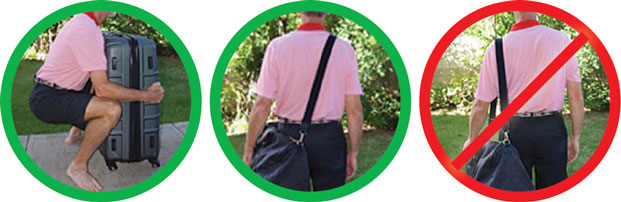
    Stand as close as possible to the luggage with your feet at least shoulder-width apart. A narrow stance causes instability. Pull your abdominal muscles in toward your belly button, and bend at the hips and knees with a straight back. Lift with your leg muscles, which are stronger than your back muscles. Once you lift the luggage, hold it close to your body.

    Do not twist when lifting and carrying. Point your toes and entire body in the direction you are headed. Stop and switch sides often when carrying a duffel or shoulder bag.

    Pack light, keep your core muscles activated, use good body mechanics and enjoy your trip!


    Moon Physical Therapy, LLC
    320 Ward Ave., Ste. 107, Honolulu HI 96814
    Aquatic, Land-based and Manual Therapy and 
Cardiopulmonary Rehab Programs
    808-597-1005 | www.moonpt.com

    Avoid Luggage Injuries by Julie Moon, Physical Therapist from the August-September 2016 issue of Generations Magazine, Hawai‘i’s Resource for Life

  • Drive-By Victims: Homeless Seniors

    Charlie (not his real name) is a 68-year-old veteran who lives with several hundred people under the viaduct near Honolulu International Airport. This large group of homeless people (or as law enforcement calls them, “residentially challenged”) has formed a community. Unfortunately, as in most communities, there are persons who prey on seniors like Charlie.

    One day, Charlie was sitting near his belongings when a camp member approached him, demanding his flashlight. When Charlie refused, the man hit him on the head with enough force to knock him down and create a three-inch gash.

    Charlie was my introduction into the homeless senior victim arena. In 2008, when I was creating the elder abuse team at the Prosecutor’s Office, I imagined my victims to be found in care homes, relatives’ homes, or their own homes. Little did I realize that a large portion of my cases happen where the victims have no homes at all. Throughout the years, I was reminded of this fact over and over again.

    My first murder case involved a homeless senior looking for shelter at a church in Mānoa. Unfortunately, he found another homeless man instead, David Orpin, who beat him to death for “invading” his territory. Another particularly violent case happened (again, near the airport viaduct) when a homeless man rode his bicycle up to a pair of senior women who were using the overpass for shelter. The bicyclist made obscene comments and exposed himself. When the younger woman ran for help, the bicyclist brutally assaulted and raped the 75-year-old.

    Some of my more violent cases occur in places open to the public that most of us just drive by without notice. Our attention is only drawn when homeless encampments mar the scenery, causing many to complain about how the government needs to do something about “them” to remove the homeless from our sight. Unfortunately, removing the homeless from sight will only create an environment that will breed more crimes against our elderly homeless. Now, however, when you see the tents and cardboard box shelters lining the beaches and walkways of Hawai‘i, you will know that they house not only homeless seniors, but the criminals who prey on them.

    Volunteering or donating to nonprofits that assist the homeless are good ways to help people down on their luck and to protect them.


    To report suspected elder abuse, contact the Elder Abuse Unit at
    808-768-7536 | ElderAbuse@honolulu.gov
    www.ElderJusticeHonolulu.com

    Drive-By Victims: Homeless Seniors by Scott Spallina, Senior Deputy Prosecuting Attorney from the August-September 2016 issue of Generations Magazine, Hawai‘i’s Resource for Life

  • Aloha Festivals’ 70th Year — “Hāli‘a Aloha!”

    Generations Magazine - August-September 2016 - Aloha-Festival_image2


    Aloha Festivals enters its 70th year as a premier cultural celebration of Hawaiian music, dance, cuisine and art. “Hāli‘a” means cherished memory that suddenly floods mind and heart. So it was in 1946, when the Jaycees Oldtimers began “Aloha Week” to renew rich cultural traditions preserved for a century by Hawaiian musicians, kumu hula and old families.

    “We’ve come a long way,” said Debbie Nakānelua-Richards, Aloha Festivals board of directors co-chair. “Hāli‘a Aloha is truly one year not to be missed.” The event is for everyone, keiki to kūpuna, and takes place at various O‘ahu locations from Sept. 3 to 24. All public events are free. Support for Aloha Festivals comes from the Hawai‘i Tourism Authority, private and corporate sponsors, and sales of Aloha Festivals ribbons and merchandise at all events.


    Generations Magazine - August-September 2016 - Aloha-Festival_image1

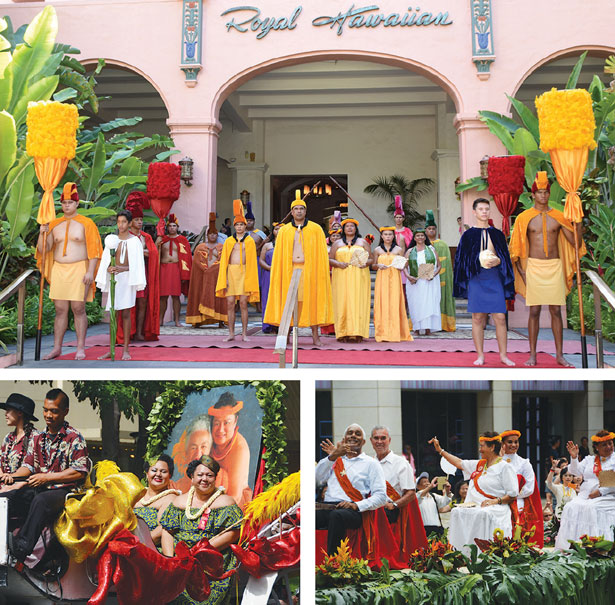
    Royal Court Investiture & Opening Ceremony

    Sept. 3, Saturday, 3:30 pm –5:30 pm
    Royal Hawaiian Hotel & Royal Hawaiian Center, Royal Grove

    Imua! The Aloha Festivals Royal Court will be introduced on the grounds of Helumoa, which was originally the home of Princess Bernice Pauahi Bishop. At the ceremony, the king, queen, prince and princess take their place on the royal court. The ali‘i court members receive their royal cloaks, helmets, feather head lei and other symbols of their reign. Traditional hula and chants make this a special event in the heart of Waikīkī.

    Pearlridge Keiki Ho‘olaule‘a

    Sept. 10, Saturday, 10 am – 3 pm, Pearlridge Center

    Pearlridge Center will celebrate Aloha Festivals with a full day of free activities, demonstrations, arts, crafts and stage performances.

    64Th Annual Waikīkī Ho‘olaule‘a

    Sept. 17, Saturday, 7 pm –10 pm, Kalākaua Avenue

    The Annual Waikīkī Ho‘olaule‘a is Hawai‘i’s largest block party. Thousands of people will take to the streets along Kalākaua Avenue for food, fun and entertainment. There’ll be performances of various genres of Hawaiian music and hula hālau. Hawaiian crafts, flower lei and many varieties of island cuisine will be featured throughout the event.

    70th ANNUAL FLORAL PARADE

    Sept. 24, Saturday, 9 am – Noon
    From Ala Moana Park through Kalākaua 
Avenue to Kapiolani Park

    Kalākaua Avenue comes alive with a colorful procession of female and male pa‘u horseback riders, and floats covered with Hawaiian flowers, Hawaiian music, hula hālau and local marching bands add to the fun.

    Watch the parade live on www.Channel808.com and www.olelo.org


    ALOHA FESTIVALS

    808-923-2030 | Facebook.com/AlohaFestivals
    Twitter: @AlohaFstvls  |  Instagram: @alohafestivals
    www.alohafestivals.com

    Aloha Festivals’ 70th Year — “Hāli‘a Aloha!” by Generations Magazine Staff from the August-September 2016 issue of Generations Magazine, Hawai‘i’s Resource for Life

  • A Love for Hawai‘i

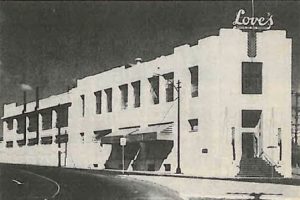
    Generations Magazine - August-September 2016 - A Love For Hawaii_image1Love’s Bakery has been an important part of Hawai‘i’s history for generations — marking its 165th anniversary this year!
    Robert Love, his wife and three sons came to Hawai‘i from Britain and started the Love’s Biscuit & Bread Co. Ltd. in July 1851 on Fort Street Mall.

    In May 1853, the bakery moved to Nu‘uanu Street, then to Iwilei in March 1924. It was in July 1943 that Love’s Bakery moved to Kapahulu Avenue, and in January 1990, they opened a store at 911 Middle St.

    What a long history of providing baked goods to all of Hawai‘i!

    My husband, Clifford, has been working for Love’s for almost 30 years, but Generations’ Editor Katherine Smith has connections with the bakery that go even farther back. Her grandfather, Jack Mailer, immigrated to America from Scotland and worked for Baker Perkins Inc., a company that made heavy industrial machines and equipment. When talking with Katherine, she said that he was a machinist and installer who came to O‘ahu in 1924 to put the baking ovens in Love’s Bakery.

    Jack was in Hawai‘i for two years and brought home to New Jersey his love for the islands, which passed down to Katherine and her family.

    How fortunate for Generations that Katherine has joined our staff! I always knew that she and I had some kind of connection, and we found it. We both have a love for Hawai‘i—and Love’s Bakery.

    A Love for Hawai‘i by Sherry Goya, Generations Magazine Staff from the August-September 2016 issue of Generations Magazine, Hawai‘i’s Resource for Life

  • The Many Joys of Grandparenting

    My wife, Shirley, and I have six children —three boys and three girls — who have made us grandparents 14 times since March 1979. The last was born in September 2004.

    The first 10 were born to my three daughters and their husbands, so I was kind of worried that I may not have a grandson to carry on the Ihara name. But my two youngest sons and their wives answered my prayers and gave us the four youngest grandsons, so I am very happy and thankful.

    We were overjoyed that our first grandchild, Cynthia, grew up to be just like her mother, our oldest daughter, Sherry Goya.

    We learned then that we could “spoil” our grandchildren, but not punish them, love them and enjoy our relationship with them without having parental responsibilities. We learned that as grandparents, we must let our children take responsibility for their children and that we shouldn’t interfere or criticize how they raise them.

    When every grandchild came home for the first time, Grandma Shirley would spend a week or two taking care of him or her. She’d let the new mother rest in bed and do everything for the newborns except breastfeeding. I always went with her, especially to Tacoma, Washington, where our second daughter, Arlene Thomas, had given birth to a daughter and three sons.

    Every grandchild brings us a different and unique personal relationship, because their childhood experiences and personalities vary. We love them all, and are happy and proud to be called “grandpa and grandma.”


    To send Shirley and Les a note or grandparenting tip of your own, share a comment at the bottom of the article.

    The Many Joys of Grandparenting by Shirley and Les Ihara, Grandparents from the August-September 2016 issue of Generations Magazine, Hawai‘i’s Resource for Life

  • Silver Cyclists Show Pedal Power

    Generations Magazine - August-September 2016 - Silver-Cyclists_image1
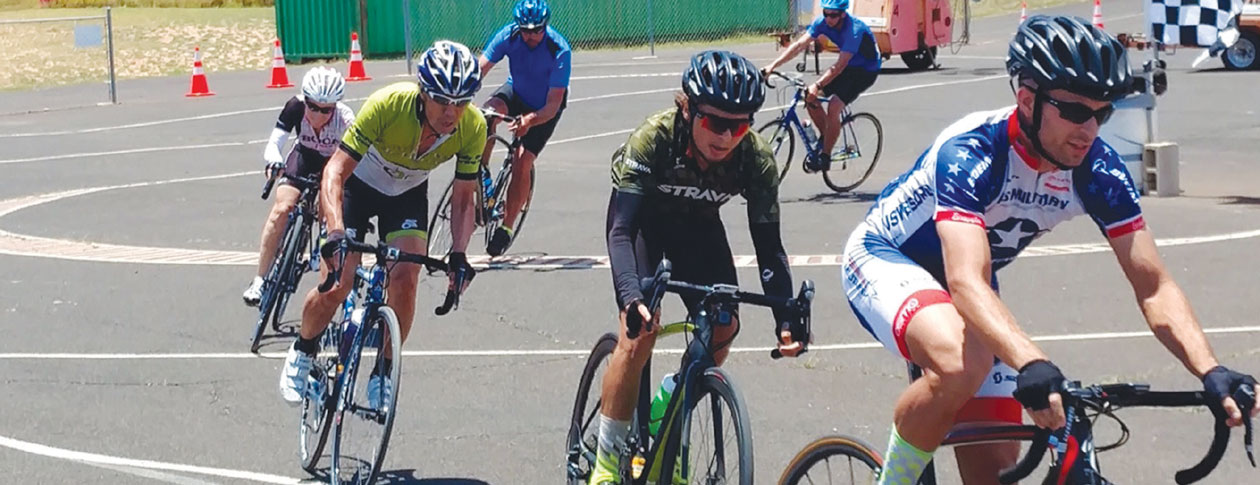
    Barry Masuda (light green and white shirt) powers through a turn at the criterium race on Kaua‘i. Photo by TBW Photo


    At sports events around Hawai‘i, age categories often end at 50-plus or senior masters. For a bicycle race on Kaua‘i, enough older cyclists come out to participate each Memorial Day weekend that 60-plus and 70-plus age groups had to be added.

    “Pedal to the Meadow” is a USA Cycling–sanctioned hill race on the Garden Island that climbs from hot, dry Kekaha to the rim of Waimea Canyon and cool forests of Koke‘e. This challenging course gains 3,800 feet in elevation over 16 miles.

    Generations Magazine - August-September 2016 - Silver-Cyclists_image2
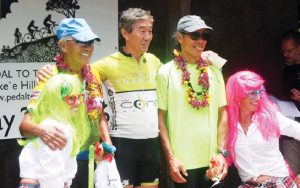
    The Men’s 70-plus “Pedal to the Meadow” race winners (L – R) County of Kaua‘i Lifeguard Roy Yamagata, 73, Honolulu resident Barry Masuda, 71, and Stevan Yee. Photo by Atomman Kimm

    It took Barry Masuda, 71, of Honolulu only one hour and 39 minutes to finish, placing first in 70-plus, and 34th overall in a field with riders as young as 13. The next day, Masuda saddled up again with Cambriamento D’Andaturo Team Core Hawai‘i for the Mana Time Trial and the “Cycle on the Strip” Criterium race.

    These road races are organized by Bicycle Racing Kauai, a not-for-profit hui. Race director Binney Williamson likes the senior divisions. “It’s inspiring. We younger riders hope to stay that fit.”

    According to experts, riding a bike four miles a day cuts heart disease risk in half, is aerobic, but puts minimal strain on joints and muscles. Like all sports, it is good to start out slow. Biking is fun! To learn more about clycling and clubs on your island, visit your local bike shop.


    To learn more about “Pedal to the Meadow,” visit: 
www.PedaltotheMeadow.com and www.
Facebook.com/BicycleRacingKauai


    Silver Cyclists Show Pedal Power by Mary Friend Williamson, “Pedal to the Meadow” Race Coordinator from the August-September 2016 issue of Generations Magazine, Hawai‘i’s Resource for Life

  • National Honors for Kara Yamamoto, MD

    Generations Magazine - August-September 2016 - National-Honors_image1Dr. Yamamoto, a pediatric rheumatologist for over 20 years, has become a leader in her field. She cares for the majority of children diagnosed with Juvenile Arthritis (JA) in the state, who come from all eight islands. JA affects over 1,200 kids and their families in Hawai‘i.

    Through her leadership, financial support and volunteer work, major partnerships and funding have been established, including Camp Mana’olana, a summer camp for kids with JA.

    This May, Dr. Yamamoto was awarded the 2016 Earl Brewer Award for Physician Leadership. This national award is presented each year to a physician who has fostered a reputation for excellence in his or her field. She was also honored at the 2016 JA Conference in Phoenix and Philadelphia.

    Dr. Yamamoto’s support and leadership of local JA programs has brought awareness to families with arthritis and has tapped into media opportunities, including the development of a video focussing on kids with JA that ultimately raised over $250,000 in the fall of 2014.

    “Many seniors serve as the primary caregivers for grandchildren with JA,” said Dr. Yamamoto. “They should be supported for their critical role in helping these children access care, control their condition and stay healthy.”


    ARTHRITIS FOUNDATION HAWAII
    2752 Woodlawn Drive, Ste. 5-204B, Honolulu HI 96822

    Lara Yamada, Executive Director
  |  808-596-2900  |  lhazenfield@arthritis.org
    www.arthritis.org/hawaii

    National Honors for Kara Yamamoto, MD by Lara Yamada, Executive Director, Arthritis Foundation Hawai‘i from the August-September 2016 issue of Generations Magazine, Hawai‘i’s Resource for Life

  • Vacation With Your Important Papers

    Hauling a massive three-ring binder or a file folder with you when you travel is imprac-tical. However, there are times when having 
your estate planning documents at your fingertips can be helpful. If you or someone close to you should experience a health emergency and can’t make decisions, how do you prove who has the authority to step in as “substitute decision maker?” Wouldn’t it be ideal to have immediate access to your advance healthcare directive and possibly other estate planning documents as well? The good news is you can.

    Generations Magazine - August-September 2016 - Vacation-Important-Papers_image1One substitute for that great big binder is a USB, “thumb” or “jump” drive. It is a thumb-sized piece of hardware that plugs into almost any computer (iPads excepted) that will store more electronic documents than you will ever need it to hold. At a bare minimum, you will want store a copy of your advance directive and your HIPAA authorization (the document that gives medical providers your permission to talk to your decision maker), but you might also want other documents, such as your durable power of attorney. The downside to this technology is that it is a piece of non-waterproof hardware that can be lost, or stolen and misused.

    Another solution is to subscribe to a service that gives you online access to your documents. Two companies that provide this service are:

    1) Legal Directives 866-363-4894, www.legaldirectives.com

    2) DocuBank 866-362-8226, www.docubank.com

    Both companies will keep your advance directive and HIPAA authorization on file and give you the ability to look at them online and print them out, or have them faxed by way of an automated system to any location. The way you access the system is by following the instructions on a credit card-sized plastic card that you are issued. This is a great solution while you are in your hometown, as well as well as when you are on the road. The major catch is that you need to have your card with you when you go to the emergency room or otherwise seek treatment.

    Generations Magazine - August-September 2016 - Vacation-Important-Papers_image2Yet another option is Internet technology that allows you to store your estate planning documents in the “cloud” and access them from any computer or laptop (including your iPad) whenever you need to, and from wherever you happen to be at the time. One example is called Cubby (www.cubby.com), but there are others on the market. When you are a Cubby subscriber, you can create a secure link that you (or your kids or your financial planner) can use to access your estate planning documents 24/7. This can be a very helpful solution in a variety of contexts — not just medical emergencies.

    Of course, all of these technologies require access to a computer, a telephone and/or a fax machine, and may require Internet access.

    If your travels take you deep into the jungles of Borneo or to the summit of Mt. Everest, you may need to do things the “old-fashioned” way and carry paper copies in a waterproof container.


    SCOTT MAKUAKANE, Counselor at Law
    Focusing exclusively on estate planning and trust law.

    O‘ahu: 808-587-8227  |  maku@est8planning.com
    www.est8planning.com

    Vacation With Your Important Papers by Scott A. Makuakane, Counselor at Law, Est8Planning Counsel LLLC from the August-September 2016 issue of Generations Magazine, Hawai‘i’s Resource for Life