As we age, our hearing often loses its edge. Clinical research suggests that hearing loss can have a negative effect on some key measures of healthy aging as cognitive, physical and social functioning decline. A study by the National Institute on Aging indicates that people with untreated hearing loss are significantly more at risk of developing Alzheimer’s and dementia.
Hearing loss gradually sneaks up on us. Over time, we adjust and adapt, but even a mild hearing loss can be a source of misunderstanding and failed communication, leading to stress, fatigue and self-imposed isolation.
Modern hearing devices are virtually invisible, comfortable and easy to use. As a result, those with hearing loss are no longer prevented from enjoying the activities that make life more enjoyable, like dining out with friends at their favorite restaurant or being present with family.
The first step in correcting a hearing problem is to have the amount and type of loss measured by a hearing specialist.
A professionally fitted hearing aid may be the key to enjoying a better tomorrow!
As we age, our hearing often loses its edge. Clinical research suggests that hearing loss can have a negative effect on some key measures of healthy aging as cognitive, physical and social functioning decline. A study by the National Institute on Aging indicates that people with untreated hearing loss are significantly more at risk of…
Tai Chi, often referred to as “moving meditation,” is an ancient Chinese practice characterized by slow, flowing, low-impact movements and deep breathing. It offers wonderful benefits for any age group and is an incredibly effective and helpful practice for older adults. Potential benefits include:
improved balance and fall prevention
relief for arthritis symptoms
improved blood pressure and circulation
increased relaxation and stress relief
Tai Chi also taps into the principle of Mindfulness — being able to calmly focus on a single idea, movement, thought, or problem.
The Tai Chi for Health program at the Nā Kūpuna Makamae Senior Center in Honolulu, taught by certified instructor Randal Lau, provides a safe exercise designed specifically to meet the challenges of aging. It is open to all fitness levels and abilities, and is a great way to relax, enjoy yourself and improve your health and overall well-being! The class runs Tue. 10–11am and Fri. 11am–12pm.
Weekly kūpuna activities at the Senior Center in the historic pumping station on Ala Moana Blvd. include: Gentle Yoga & Sound Bath, Hula, Qi Gong, Hawaiian Language, Lauhala Weaving, Pua Culture/Lei-Making Class, Hanafuda, Tech Savvy Seniors, Kūpuna Podcasting, and a monthly Farmers Market.
NĀ KŪPUNA MAKAMAE SENIOR CENTER
A Project of Pacific Gateway Center
653 Ala Moana Blvd., Honolulu HI 96813 808-774-7047 | M-F 9am-5pm www.NaKupunaMakamae.org
Tai Chi, often referred to as “moving meditation,” is an ancient Chinese practice characterized by slow, flowing, low-impact movements and deep breathing. It offers wonderful benefits for any age group and is an incredibly effective and helpful practice for older adults.
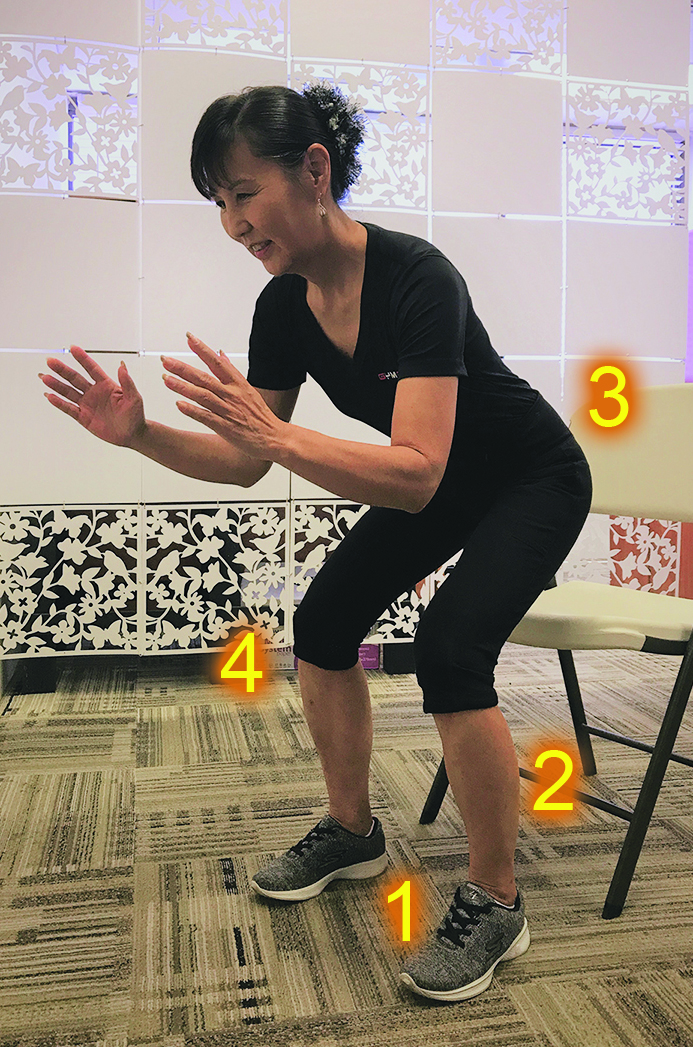
Just think of the tasks you do every day that should involve a squat: getting on/off a chair or toilet or picking up something from the floor.
A “modified squat” is one of the most beneficial exercises to learn. It strengthens the lower body and core and reduces the strain on the knees when done right.
Unfortunately, most people never learn the PROPER way to squat (a squat is NOT the same as a knee bend). To start:
POSITION feet hip distance apart, toes ideally pointing forward
SET yourself by pressing the big toe into the ground, push your knees slightly out and keep the knees in line with the ankles and the toes — try to maintain the normal curves in your neck and back and keep your shoulders in line with your hips
BEGIN with a “hip hinge” or bow (DO NOT start with your knees) — PUSH your butt back as if sitting on a chair — KEEP your weight and pressure on the big toes and heels
KNEES STAY BEHIND THE TOES squatting down —
On the way UP, squeeze in your stomach and butt muscles and drive through the heels as you stand
Do 10–12 squats, 3–5 times a day, and soon you’ll be feeling stronger and more steady on your feet.
A “modified squat” is one of the most beneficial exercises to learn. It strengthens the lower body and core and reduces the strain on the knees when done right. Unfortunately, most people never learn the PROPER way to squat.
October is National Physical Therapy Month and National Breast Cancer Awareness Month. Physical therapy may not be the first healthcare field that comes to mind when someone is undergoing cancer treatment, but physical therapists can play an integral role in promoting a speedy recovery and in assisting a return to previous levels of activity following surgery and radiation/chemotherapy treatments.
Overhead reaching and elevating the arms forward, back and sideways are often affected as one recovers from lymph node resection, chest wall radiation, or breast reconstruction. Early intervention with manual therapy, such as scar tissue and trigger point release, passive range of motion, and joint mobilization help to reduce pain and tightness, and can improve upper extremity mobility and function. Desensitization techniques, such as vibration or rubbing with a textured cloth can help to treat nerve hypersensitivity. Physical therapy can address additional side effects, such as fatigue, bone and joint pain, osteoporosis, headaches and weakness. Along with building strength and increasing endurance with an individualized program prescribed by a physical therapist, socialization and the release of endorphins that occur with exercise can also help to improve the psychological aspect associated with the diagnosis of cancer.
It’s never too late to begin rehab services for cancer recovery. If you have difficulty performing daily tasks, seek out a physical therapist to help restore healthy movement, comfort and function.
MOON PHYSICAL THERAPY, LLC 320 Ward Ave., Ste. 107, Honolulu HI 96814
95-1057 Ainamakua Dr. F-11, Mililani HI 96789 808-597-1005 | www.moonpt.com
October is National Physical Therapy Month and National Breast Cancer Awareness Month. Physical therapy may not be the first healthcare field that comes to mind when someone is undergoing cancer treatment, but physical therapists can play an integral role in promoting a speedy recovery and in assisting a return to previous levels of activity following…
As hearing loss progresses, it often becomes more difficult to understand what is being said over the telephone. While texting on a mobile phone is one solution, the loss of manual dexterity as we age can make that very frustrating. It’s disheartening not to be able to communicate easily with loved ones and friends.This challenge has led to the development of technology that brings together captioning and a telephone. This has become known as the “captioned telephone.”
A captioned telephone enables a conversation to be conducted using a built-in screen to display the written words as they are spoken. It can restore your confidence in communicating over the phone, so you can connect with the people you care about, just like you used to. The equipment is simple to use and is available for free in the State of Hawai‘i if the applicant meets certain eligibility requirements.
If you have a friend or loved one who has hearing loss and has difficulty understanding on the telephone, encourage them to check out this innovative solution and help them reconnect!
As hearing loss progresses, it often becomes more difficult to understand what is being said over the telephone. While texting on a mobile phone is one solution, the loss of manual dexterity as we age can make that very frustrating. It’s disheartening not to be able to communicate easily with loved ones and friends.
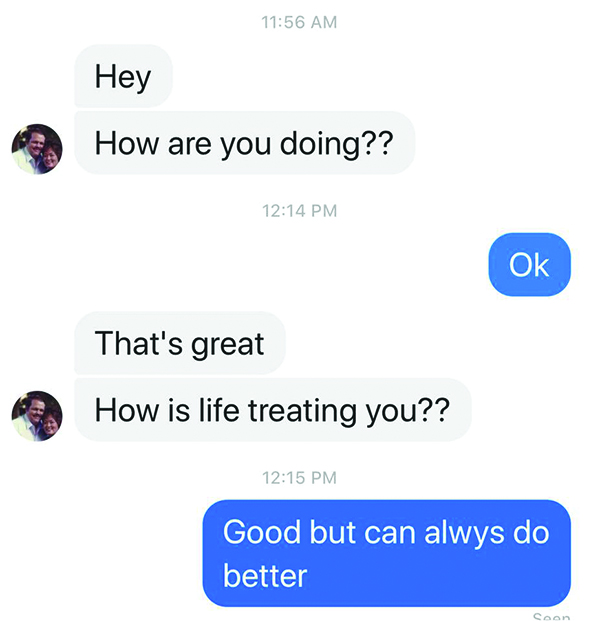
One of the trending online fraud schemes involves being contacted by either friends or relatives via email or through social networking services like Facebook about receiving large amounts of money through investments, a class action lawsuit, or even a random contest drawing.
However, these “friends” or “relatives” are NOT who they claim to be, but online fraudsters impersonating the subject’s real friends and relatives. They try to convince the subject that the scheme, whatever it may be, is legitimate and, once doing so, then introduce them to another party to assist the subject in obtaining the funds. Again, this person is just another fraudster in the scam and may even be the same person who claims to be the subject’s friend/relative!
The best thing to do in these situations is not respond at all. If it becomes a nuisance, block the sender or unfriend that “friend.”
One of the trending online fraud schemes involves being contacted by either friends or relatives via email or through social networking services like Facebook about receiving large amounts of money through investments, a class action lawsuit, or even a random contest drawing. However, these “friends” or “relatives” are NOT who they claim to be.
Family caregivers of older adults undergo fairly predictable stages in their caregiving careers. Each stage brings different challenges and requires different kinds of help for both the care receiver and family caregiver.
Stage 1: The beginning
The initial stage of a major illness represents a significant life transition for both the infirm elder and family caregiver, often requiring considerable
adjustments in life goals, relationships, daily activities, and routines. Family caregivers may lack knowledge of the illness, impeding future planning.
What is needed:
Information on the illness: possible causes, treatment options, expected trajectory
Emotional support: counseling services, support groups, peer counseling programs. Peer caregivers can share solutions to everyday issues and provide encouragement rooted in empathy.
Legal and financial planning: durable powers of attorney for asset management and healthcare decision-making; advance directives and wills; financial arrangements anticipating increased medical costs
Stage 2: Being a caregiver
This stage encompasses most of the caregiving experience and includes provision of home care and possible institutional placement.
What is needed:
Continued education on the illness or condition and its expected trajectory
Formal training: classes in direct-care skills (e.g., safely transferring or bathing)
Home assessments and modifications for safety; guidance in use of relevant assistive devices
Coaching in behavior management techniques to deal with disruptive behaviors.
Guidance on preserving self-identity and quality of life for persons with dementia; training on effective communication techniques
Instruction in both time and stress management; help in setting limits, developing realistic standards, prioritizing goals, avoiding burnout
Counseling to deal with changing family dynamics, disagreements regarding management of the illness, and conflicts over division of caregiving labor and costs
Information on available community resources and payment sources and how to access them
In-home services to help with personal care (e.g., bathing, dressing, grooming); homemaking services (e.g., cleaning, laundry, shopping); home-delivered meals
Guidance in working effectively with home care aides
Exercise or rehabilitation programs for both care receiver and caregiver
Respite care, e.g., adult day care, extended overnight respite programs
Stage 3: Completion of caregiving
During the later stages of an illness, caregivers frequently drop social activities and neglect friendships as they attempt to address the ever-growing needs of their family member. When the elder dies, the caregiver often feels socially isolated.
What is needed:
Emotional support to deal with bereavement and loss
Help in coming to terms with the end of caregiving, an integral part of self-identity for many
Exploring caregiving in other forms, e.g.,
volunteering
Encouragement to re-engage and/or develop new activities to restore balance to a life previously structured by the caregiver role
Family caregivers of older adults undergo fairly predictable stages in their caregiving careers. Each stage brings different challenges and requires different kinds of help for both the care receiver and family caregiver.
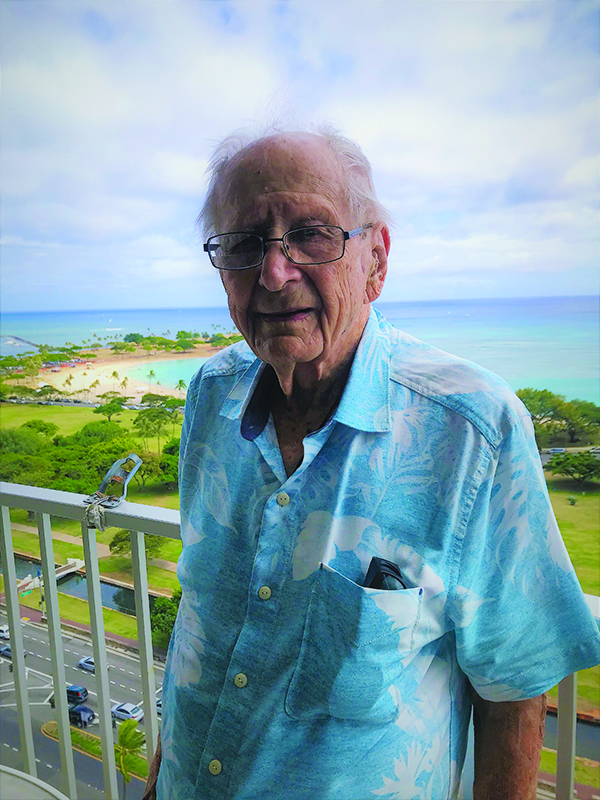
Hawai‘i is fortunate to be the home of many centenarians, and I love writing about them. Most recently, I spent time with Edward Jurkens, who celebrated his 100th birthday on December 23, 2017. We planned to talk at his apartment then go to lunch. On the way there, I thought, “Where should I park so I can drive him somewhere?”
Edward was born and raised in Illinois, met his wife, Frances, in the second grade, married in 1944, had three daughters, and he’s very proud of his three grandsons, three granddaughters, nine great-granddaughters and one great-grandson.
Edward’s memory is so good we chatted about everything, from his college days at Knox College — where he got free tuition as a hurdle and high jump athlete and received his pilot’s license before signing up with the Air Force — to retiring from Hawai‘i’s CINCPAC in July 1968. Since retirement, he has had some fun and not-so-fun jobs, but found his love was in volunteering: for AARP giving driving lessons to seniors for 22 years, 13 years for the Service Core of Retired Executives, and looking after the “petting zoo” at Waikīkī Aquarium. Now, on Mondays, he volunteers at the Pacific Aviation Museum.
He credits his post-retirement longevity to all the walking he did when golfing up through his 90s, walking around Ala Moana and now on the grassy area of his condominium, eating salads, reading a lot, doing Sudoku, and exercising his arms with dumbbells as he watches TV.
For lunch, he walked to and from the restaurant near his condominium, while I scurried to keep up!
Hawai‘i is fortunate to be the home of many centenarians, and I love writing about them. Most recently, I spent time with Edward Jurkens, who celebrated his 100th birthday on December 23, 2017. We planned to talk at his apartment then go to lunch. On the way there, I thought, “Where should I park so…
If your answer is “yes” to either question, then here are three immediate actions that will improve the return on your most important investment — YOU!
Embrace the demands of change
One in 4 of us are over 60 and life expectancy is increasing faster in Hawai‘i than in any other state. And if you live to age 65, add 22–25 years — a long time to sit on a white, sandy beach even if you can afford it and the knees still bend!
Go beyond the past, familiar world of “jobs” and rekindle your excitement by looking at new ways to work; ways packed with opportunities for older workers.
Continue to learn
Combine your anticipated longer lifetime with meeting the fast-evolving new technical demands of work and you will soon see that, from start to finish, a lifetime of learning is a requirement for all generations to embrace.
It’s easy to learn and there are countless, affordable and local opportunities available. Want to know where? Google it! Don’t know how? Ask your teenage child or grandchild for help! Further-
more, most keiki can teach you the first steps to embracing everyday skills.
Know where opportunity favors older workers
The largest percentage of workers over age 55 are earning in new ways beyond the “old” world of jobs. Here are a few of the most obvious ways:
Job sharing: Job sharing, or work sharing, is an arrangement where two people are retained on a part-time or reduced-time basis to perform a job normally fulfilled by one person working full time.
Remote work: When you work from home; you can work for someone here, there or anywhere.
Portfolio work: Balancing a portfolio of talents means using a number of efforts on behalf of many outcomes.
Phasing: Rather than abruptly leaving a full-time position at the end of a lengthy career, why not phase out by reducing your work week and commitment over time?
Freelancing: Freelancing generally means that you will work when an organization needs you.
As to “how” to adjust to your longer working future… ah… that’s a subject for another time. For now, begin your journey by seeking inspiration from a choice that appeals to you.
Need to work? Need to earn? If your answer is “yes” to either question, then here are three immediate actions that will improve the return on your most important investment — YOU!
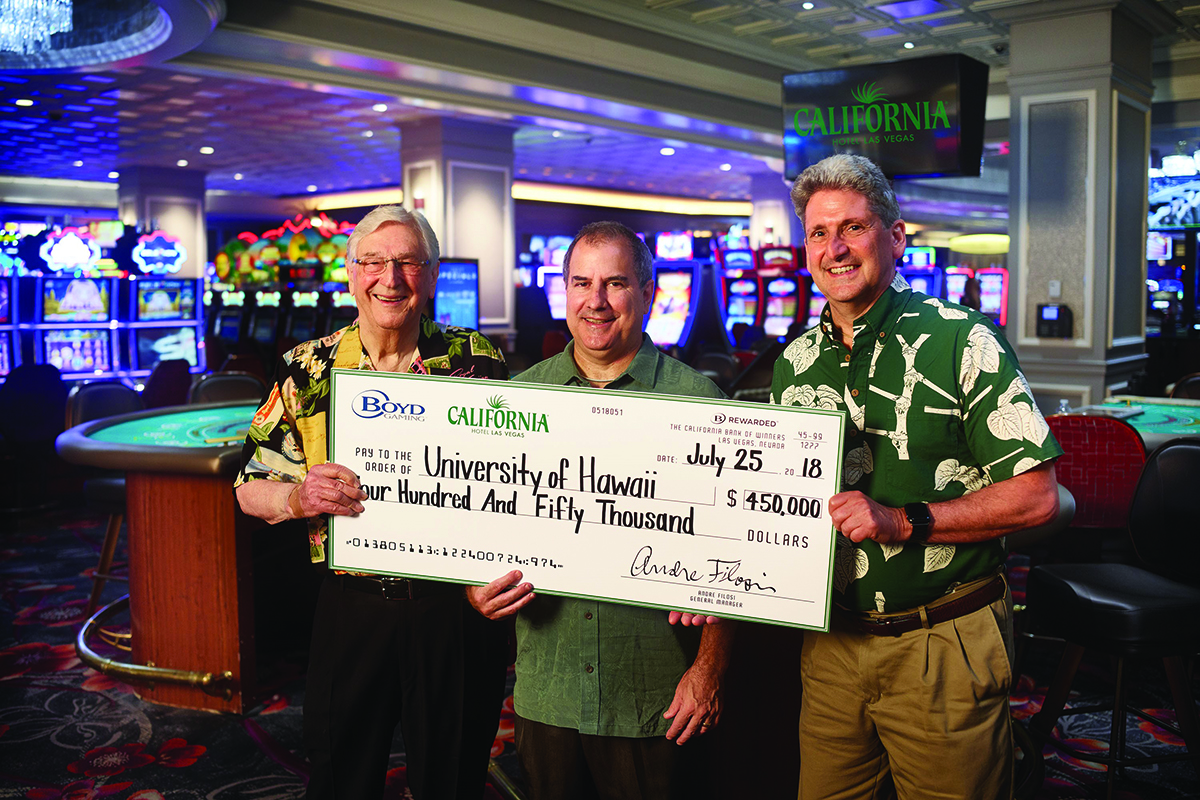
L-R: Bill Boyd, Executive Chairman of Boyd Gaming; David Lassner, University of Hawai‘i at Mānoa President and Interim Chancellor; David Matlin, University of Hawai‘i at Mānoa Athletics Director
If you attend any sports events involving the University of Hawai‘i’s Rainbow Warriors or Wahine, it soon becomes obvious that local kūpuna are among their most avid supporters. From attending home games, to donating to booster clubs, to picking thousands of flowers to make lei for the Women’s Volleyball Team (as seen in S1 Ep5 of GTV), Hawai‘i’s seniors are with the athletes every step of the way.
Another long-time supporter of UH-Mānoa’s athletes is a name many of our readers are very familiar with — the California Hotel in Las Vegas. On July 25, the Cal announced a $450,000 pledge to the Athletics Department for the volleyball court naming rights of the Stan Sheriff Center. A subsequent ceremony was planned for the hometown crowd at a match at the Center itself.
The pledge will be phased over several years, supporting university student athlete success initiatives by providing assistance to student-athletes in the areas of nutrition, cost of tuition, summer school and other preparatory athletic efforts.
That’s definitely something to cheer about!
If you attend any sports events involving the University of Hawai‘i’s Rainbow Warriors or Wahine, it soon becomes obvious that local kūpuna are among their most avid supporters. From attending home games, to donating to booster clubs, to picking thousands of flowers to make lei for the Women’s Volleyball Team, Hawai‘i’s seniors are with the…
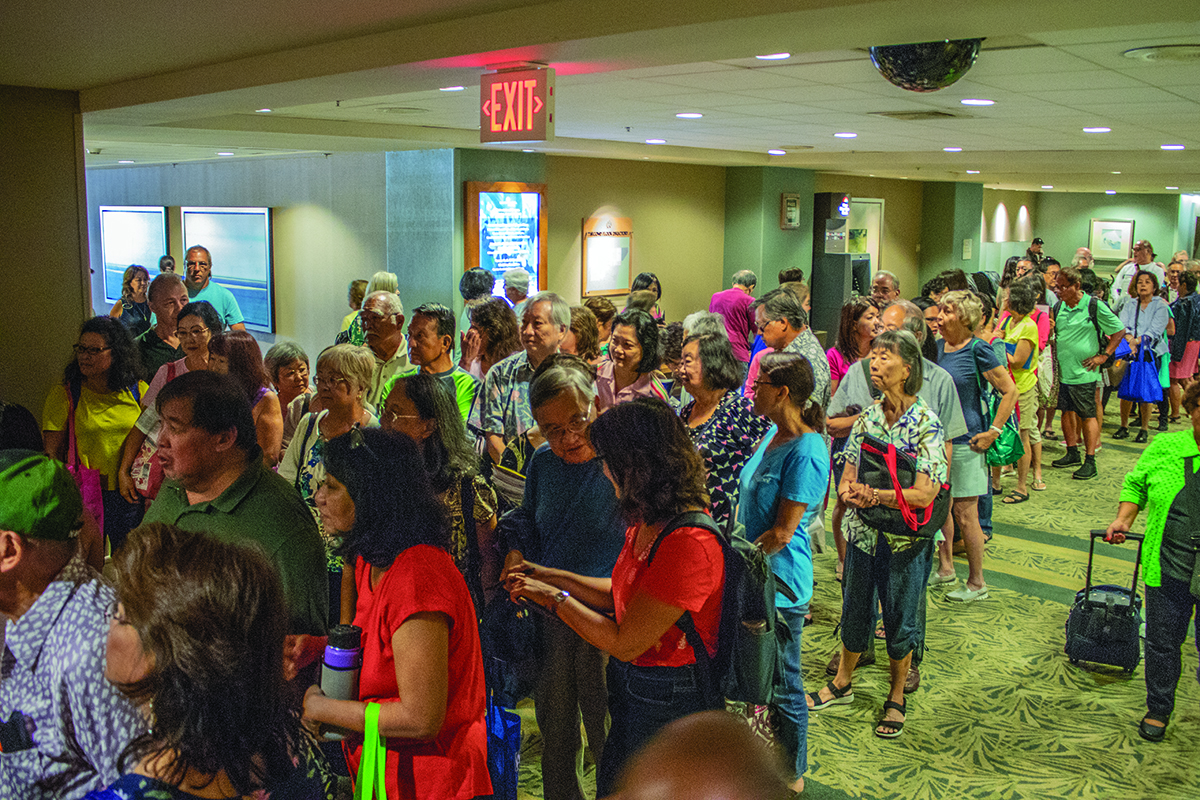
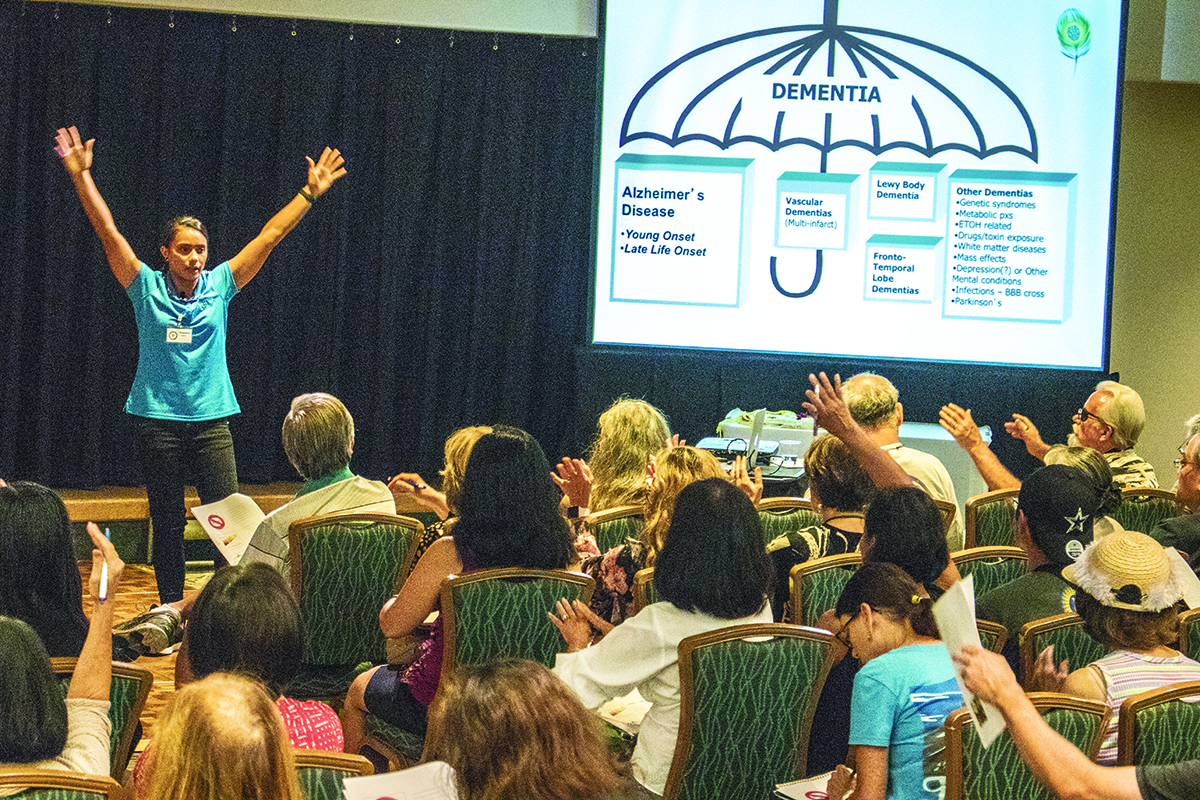
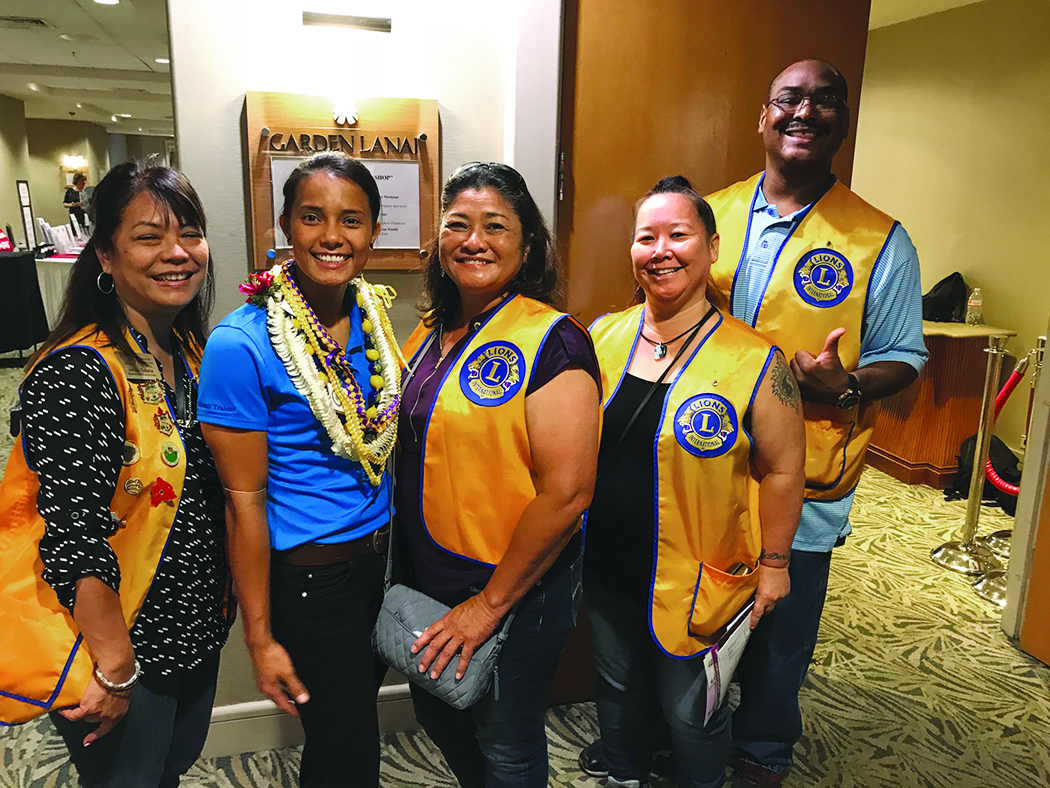
The 12th Aging in Place Workshop held on August 18 at the Ala Moana Hotel brought our readers and their friends and family in contact with Generations Magazine’s partners in a vibrant atmosphere of sharing and learning. More than 60 exhibitors and 20 presenters informed and encouraged attendees in their quest for knowledge about how to successfully navigate this stage of life. Mahalo to the Hawai‘i Lions and Leos of District 50, who welcomed and assisted them!
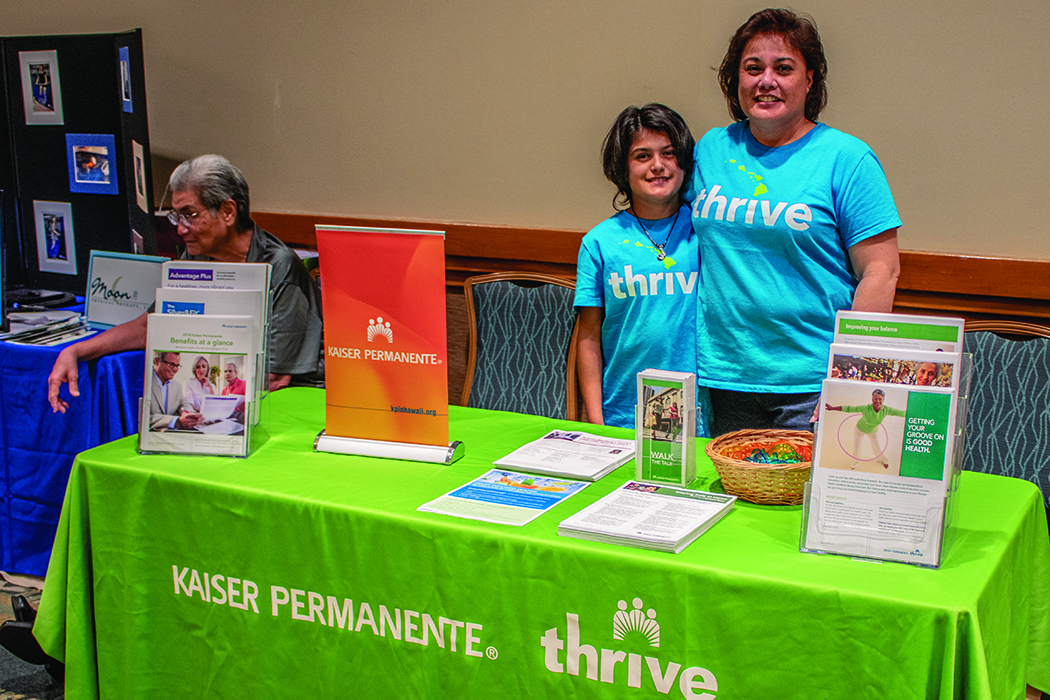
With attendance high, many of the most popular talks drew large crowds, eager to learn more about the topics.Presenters who are experts in their field covered everything from keeping fit to caregiving to retirement planning.Kaiser Permanente’s Brandy Ching and her assistant, Sophia.(L–R) Jackie, Mapuana, Gina, Lisa and Kenny from D50 Hawai’i Lions.Denise Anderson assisted attendees at the Vacations Hawaii exhibit.
The 12th Aging in Place Workshop held on August 18 at the Ala Moana Hotel brought our readers and their friends and family in contact with Generations Magazine’s partners in a vibrant atmosphere of sharing and learning.
“One of my colleagues once said, ‘There are only four kinds of people in the world: those who have been caregivers, those who currently are caregivers, those who will be caregivers, and those who will need caregivers.’”— Rosalynn Carter, 1997
Former first lady Rosalynn was a caregiver herself and she believed that family caregiving is a cycle of life that touches everyone. Here, four people, each at a different point on the cycle, share their care stories from the heart, offering words of wisdom and points of caution. As you read, consider your journey on the Cycle of Caregiving. Where are you? Are you prepared?
LORI & GERALD LEE – Beginning Caregivers
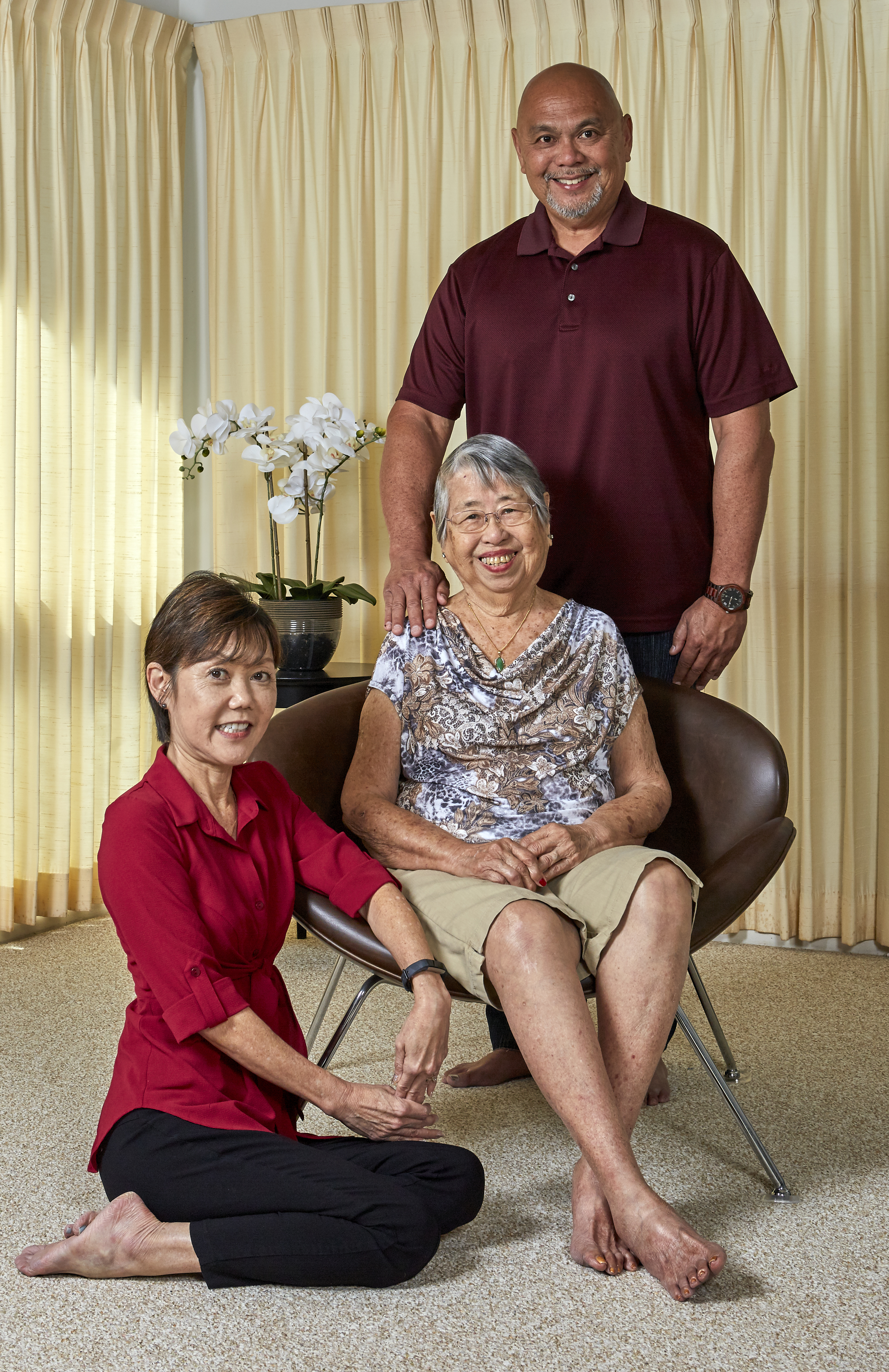
Lori, Pearl and Gerald Lee
I worked as an elementary school teacher for 33 years and recently retired from the Hawai‘i State Department of Education. My husband, Gerald, is still working at Pearl Harbor Environmental Division and plans to retire in a year or two. We have been happily married for 35 years, are empty nesters and have three successful children, Chase, Shelby and Dayne. We love to travel and enjoy new experiences. I planned to have an active retirement volunteering, traveling and, especially, enjoying my favorite hobbies — Zumba and yoga.
A year ago, right after I retired, Dr. Edith Pang called us to report that Pearl “Popo” Lee, Gerald’s mom, was in feeble health. She notified Gerald to say, “Your mom needs someone to care for her, and your mom picked you.” It took us by surprise! Popo was a stay-at-home mother who became a widow seven years ago, and was suffering from diabetes, gout and other physical problems. She has four children: one in San Francisco, one in Japan and two on O‘ahu, Gerald and his sister. We were shocked and unprepared but felt a sense of obligation to help because I was retired, and the other siblings were not able to take her in.
How did you manage the transition?
Popo sold her home in Hawai‘i Kai and moved in with us a year ago. Being responsible for an elder’s health and well-being can be overwhelming. Providing meals on a diabetic and gout diet plan, monitoring her exercise, physical therapy, medications and scheduling her doctor’s appointments and social activities are one aspect; preparing our home — installing grab bars, door handles, nightlights and converting a bath to a shower — is another. Adjusting our lives and schedule so that she retains her dignity, feels contented and stays healthy is a challenge. I am happy to say that Popo’s health has improved since she came to live with us. She did not eat a healthy diet and wasn’t getting enough exercise on her own. Now she has lost weight, increased mobility and her stamina for exercise. Her balance has improved and her sugar levels are good. I think the structure of a daily routine makes her more confident.
Popo enjoys activities with her new friends at Hale Hau’oli in Aiea.
Is Popo still able to socialize now that she lives in your home?
Certainly. She is enrolled in senior day care at Hale Hau‘oli in ‘Aiea. Kathy Wyatt and her staff provide an inclusive “club” that Popo loves, and she has made many new friends. Our family comes to our house to visit her and are learning that Popo and we need to know when they are arriving. They didn’t realize that Popo is not capable of scheduling or attending family functions on her own. When they take Popo out for lunch, they need to arrange it with us, so we may schedule accordingly. These little adjustments are expected when an elder has lived decades in her own home, but it takes energy to set new rules without offending people who assume she is in the same condition as years past.
Where did you find information to train yourself for caregiving?
Actually, my mom trained me by example when she was taking care of her aging parents. I am very fortunate to have had that experience, and I am not afraid of this vital responsibility. To find local resources for Popo, we look online and get advice from neighbors and friends who are caring for their parents. The resources and advertisers in Generations Magazine offer useful information. Every situation is unique, so we are always thinking and trying out new strategies. Caregiving is a work in progress at all times. That is what takes so much energy.
What do you see in the future?
We have barely discussed the future, but if her needs become more than we can handle, we will need to seek professional help such as specialized nursing care.
Any lessons learned that you want to share?
Tell your readers that they cannot anticipate everything. We discovered that TV Parental Controls are essential when Popo accidentally ordered “Baywatch Season 5” and “The Bachelorette Season 2” on my Amazon
account. She knows not to give out her credit card number, but somehow she got on Amazon, where purchases are automatically charged to my card! She doesn’t even know what “Baywatch” is! You just have to laugh.
Being mindful of each other is very important, too. It’s a marathon, not a sprint, and every bit of help counts. Establishing new habits requires conscious patience, such as reminding her to wear fresh clothes every day. Once the routine is working, focus on creating meaningful memories throughout each month. Anticipation of fun events and seeing family and friends brighten every day leading up to the activity too. Your retirement plans might not include some form of caregiving now, but that might be in your future. Don’t get blindsided.
Caregiving is a work in progress at all times. That is what takes so much energy.”
Pat Bemis – Current Caregiver
Pat and Gardner Bemis
I have a master’s degree in Nursing Education and I love teaching, and for 45 years I have enjoyed being a nurse. Strange, but caregiving is a bit different from nursing. It’s 24-hour duty that never ends and most of the time you are making decisions alone. Having nursing skills and medical background is a significant advantage, but managing and providing long-term care is harder.
About eight years ago I experienced unusual fatigue. My thinking at the time was that I was “helping” my husband with chores, finances, driving, and medication management but he was doing his own personal care, so it wasn’t caregiving.
One of my closest friends had to inform me that I was really a caregiver! I had eased into it without even knowing.
How is your caregiving journey going?
I care for my husband at home, and still enjoy being with my tall, handsome physician. The biggest challenge is doing all the thinking for another adult. He looks the same except for a bit slouched in posture and shuffling steps. But he has difficulty making choices and decisions and problem-solving, and it breaks my heart. His short-term memory loss is at times hard to deal with and causes me to ask God for more patience — almost on an hourly basis. However, he can still make correct diagnoses when watching medical shows on TV. The brain is a wonder that continues to baffle me.
My husband and I worked together, so I was one of the first to know when he was diagnosed with Parkinson’s disease before age 40. He was young, handsome, brilliant, with lots of energy — a fun person to do fun things with. I was very optimistic about his prognosis, and saddened at the same time. He was an amazing doctor. We married, and he continued to work for 13 more years. We adopted a baby together to add to our blended family to make four daughters.
Did you have any earlier caregiving experience?
I also assist with the care of my mother on the East Coast. After my dad died in 2002, my mom fell into a funk. Previously assertive, energetic and self-assured, she became lost and didn’t know what to do with herself. My family relied on me to help with medical decisions and had I known the symptoms of dementia 15 years ago, I would have done many things differently for my mom. Her father had Alzheimer’s disease too.
When her behavior started to change, I misread it as her being “a Pill.” Not knowing her brain was failing, I was impatient and argued with her. When what she was saying was not matching what she was doing, I began to mistrust her. It was a tough period for us both. I now realize she knew something wasn’t right but she didn’t know what it was. She was afraid to tell anyone and didn’t know what to do. It took much detective work to figure out that what she was telling her doctor and the truth were not the same. Her physician finally diagnosed her with Alzheimer’s three years ago. Had I known better, I would have gotten her care faster and been more compassionate. When I apologize to her, she says, “I have no idea what you are talking about — so there is no need to apologize.”
Is it difficult being on a care team for a loved one who lives on the mainland?
Yes. I am blessed to have two very supportive younger brothers who are helping. My family is on the East Coast and what I have experienced is that
“everyone who cares can do something.”
A sister-in-law and nieces picked up Mom’s wash weekly and drove her to outside appointments before she went into skilled care. Now, the great-grand kids visit Mom and share her activities, like coloring. My brothers have moved Mom’s belongings several times as she graduated to more intense levels of care. They set up her room the way she likes it. When they visit her, they “face time” with me so I can actually see how Mom looks. I have been the financial contributor as well as her health care proxy. My retirement savings ran out in 2016 and, last year, all her funds were gone and I had to apply for Medicaid for Mom. I am grateful that we have options, but it is very sobering to see your loved one outlive their financial resources.
Pat, what would you have done differently?
My biggest takeaway of caregiving is that I was not prepared. Yes, I had end-of-life discussions with my parents and my husband. But what about the time before the end of life? Both my parents and husband wish to be body donors. That is wonderful, but what about the years of “dependent living” required between now and your ending? I have learned that the journey can be long.
I wish I had stayed employed longer. I miss having an income. For intellectual stimulation, I volunteer, go to yoga twice a week, belong to a sewing group and an art group. I would have gone bonkers long ago if it weren’t for my core group of girlfriends, “The YaYa’s.” They are the best support in the world, not only for me but also for my husband. My joy in life is our granddaughters, who bring unconditional love into our lives and home.
While caring for her husband at home, Pat is also part of her mother’s care team along with her brothers. She regrets misinterpreting her mother’s early signs of dementia.
Any words of wisdom for caregivers?
My biggest concern is who will pay attention to me should I inherit Alzheimer’s. Who will know the difference between my rational and “not normal” behavior? Therefore, my No. 1 job is to take care of myself. If I do that well, then I can carry out my caregiving responsibilities well too. At the end of the day, I believe that I am doing the best I can for those I love and they truly do appreciate it.
I suggest that all caregivers plan for their own future care. Get information from professionals and seek out resources. Last year, I visited almost all the assisted living facilities in Honolulu to see what they offered and if I would be comfortable there. I am proud that I tackled this eye-opening experience. I want to know what will be available for me and not wait for a crisis to figure out where I will live who will care for me. All I am learning will help me make good decisions.
I also suggest getting involved with AARP. They opened my mind to a whole host of ideas, options and information. I am grateful to be a member.
At the end of the day, I believe that I am doing the best I can for those I love and they truly do appreciate it.”
Jody Mishan – Former Caregiver
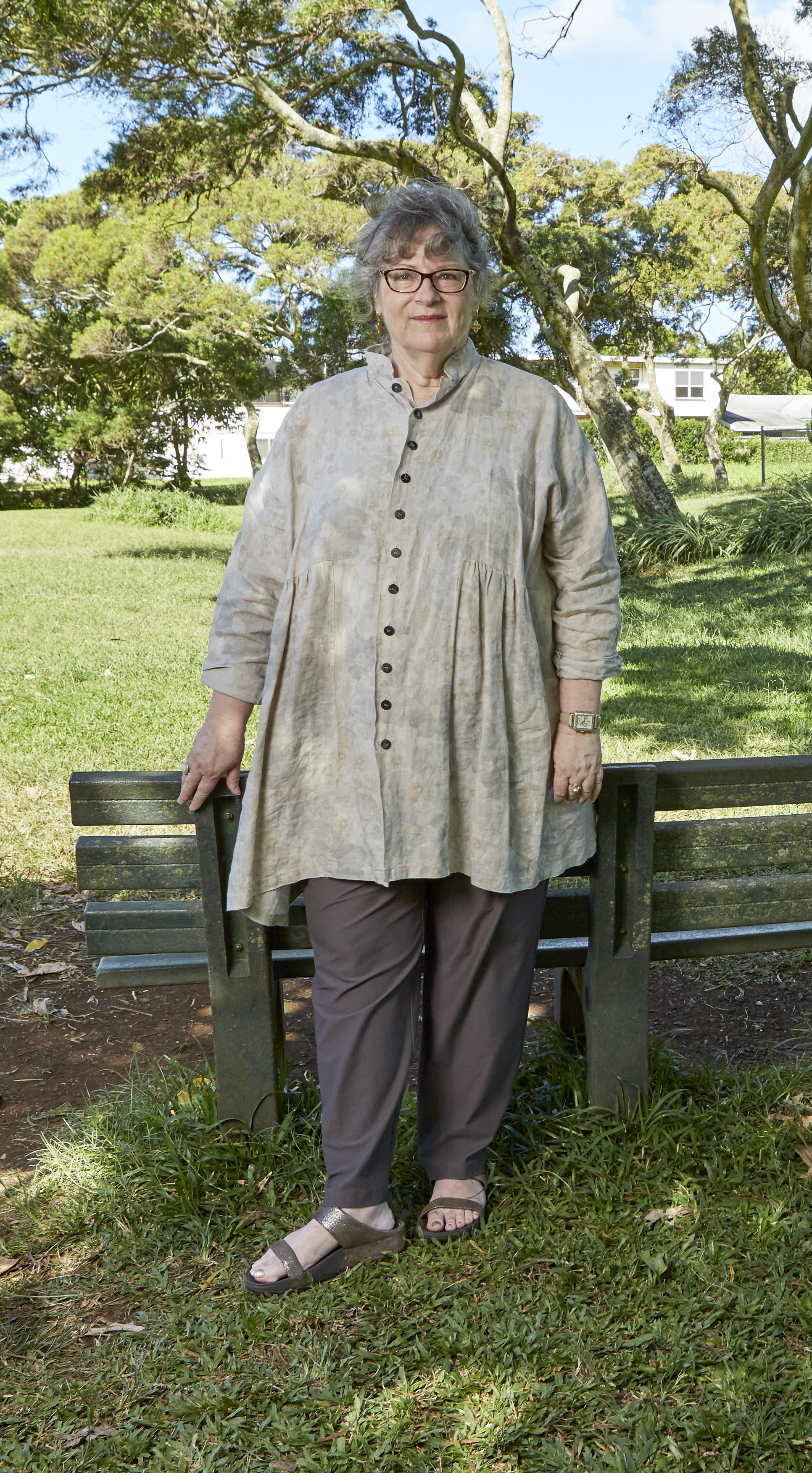
Jody Mishan
I am the daughter of John and Maria Mishan. Without my parents, I wouldn’t be here, so I wish to honor that. Every caregiving journey is unique. Mine deepened the love my father and I shared, shaped my character.
Tell us when that journey began and about your experience of caring for your father.
I cared for my father after he was diagnosed with Alzheimer’s disease from 1999 until his death in late 2006. My father was not defined by dementia, but by a lifetime commitment to family and career. Dad served as a Navy aviator in World War II in the Mediterranean Circle, flying reconnaissance missions on the coast of Africa. He received the Distinguished Flying Cross for his service. Caring for my father was the best and most important thing I will ever do in my life. I witnessed the true hero that he was, remaining a gentleman and expressing love and grace until the end. Caregiving was a gift and a blessing that changed my life.
Discovering the lack of resources available, I started to advocate for improvements in caregiver support. During this time I served as public awareness coordinator for Kōkua Mau: Hawai‘i Hospice & Palliative Care Organization. They truly understood my caregiving journey.
Assisting a vulnerable loved one strengthens your compassion, courage, strength, commitment, loyalty and patience. Caregivers of family members with dementia ride a roller coaster of anger, depression, stress and exhaustion; I learned that compassion is stronger than negative emotions, and patience is a muscle that can be strengthened. Like characters in “The Wizard of Oz,” we don’t know our courage until tested. Our brains and hearts will rise to the occasion.
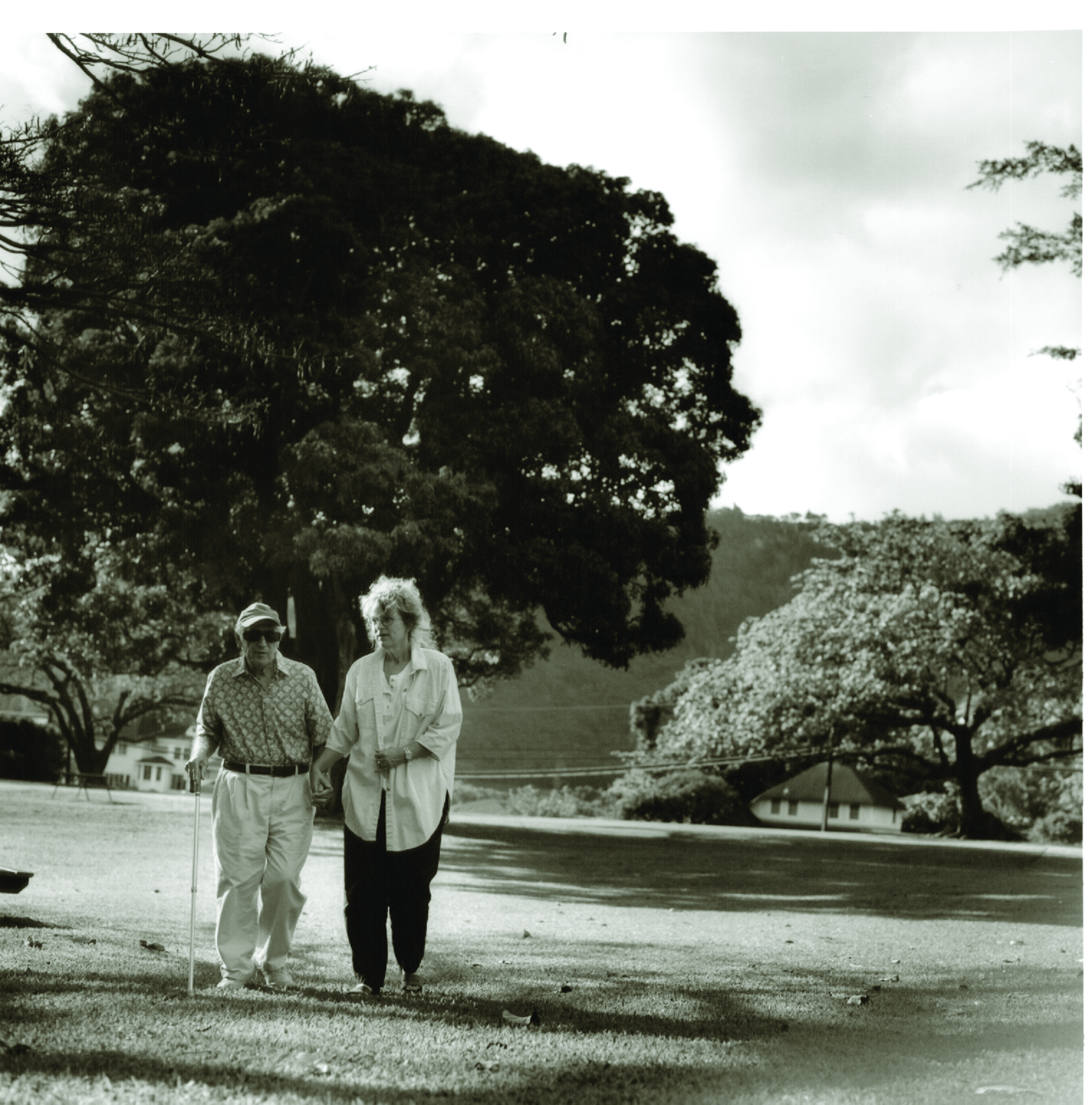
Jody’s father, a Navy aviator in WWII, loved being out in the fresh air, so she incorporated walks in Manoa’s beautiful neighborhood parks into his care routine early on.
Can you share some details of your caregiving?
Early on, Dad was diagnosed with a mix of Alzheimer’s disease and Lewy body dementia, which explained the stiffness he experienced as it progressed. We made the best of the gradual loss of physical and mental ability, developed a good sense of humor, learning to “not sweat the small stuff.” We validated him, made him feel loved and treasured, giving him “moments of joy”— important pillars of dementia care.
In those early stages, Dad enjoyed going places in the car and taking walks in Mānoa where we lived. For the last three years, he was unable to move on his own, in need of total physical care. We were able to afford professional caregivers in the daytime, but I was alone with him at night, setting my alarm to get up to turn him in bed and change him if needed. Sometimes I had day shifts too.
Do you have any tips for new caregivers?
I noted things that worked or did not work on my dementia caregiver’s journey.
Seek resources, help, support, anywhere you can get it. It takes patience and time to identify people and services that actually make a difference.
Be proactive: read books, search online. Join a support group and seek dementia caregiver training.
Practice self-care in your own personal way —
meditation, visualization or exercise. Find anything that brings you joy, even if it’s just 15 minutes with a friend or walking.
If your loved one has memory loss, see a geriatrician or neurologist for an assessment. About 9 percent of conditions causing memory loss can be reversed. An early, accurate diagnosis is essential.
If they are able, take your loved one for walks or shopping to help them remain a part of the community as long as possible.
Photograph by John DeMello
How did you deal with caregiver burnout?
Praying for strength and guidance became a regular habit. I also bonded with other dementia caregivers at an Alzheimer’s Assoc. support group for poetry and journaling led by Frances Kakugawa.
Regularly talking about my feelings with a counselor made a huge difference! I also found compassion, support and understanding from co-workers at Kōkua Mau. The beautiful love that Dad and I shared gave me strength. It made me happy to see him content and smiling, safe and comfortable.
Any regrets or mistakes?
There were times I lost my temper, which is normal for dementia caregivers. I found myself cussing in traffic, getting irritated when he was not treated well in hospital or rehab. It surprised me that I could get so outspoken and not care what others think. But I was fighting for him and his rights, so it made me ornery. My lack of sleep did not help.
Were there any residual effects?
This is a critical question! It takes years to recover from the caregiving burnout, to grieve and process the experience. You have to train yourself not to be vigilant anymore, to sleep through the night, to put yourself first and find joy again. It’s like PTSD in many ways. There should be support groups or counseling for recovering caregivers.
Before becoming a caregiver, I was an audiovisual writer/producer. After his passing, I wrote/produced “The Genius of Aging” public awareness campaign for KGMB TV. I was a coordinator for the first State Plan on Alzheimer’s Disease and Related Dementia for the Executive Office on Aging. Now, I am a consultant for UH Center on Aging’s Hawai‘i Alzheimer’s Disease Initiative.
So caregiving for Dad set me on a new career path working on dementia projects with fantastic healthcare visionaries, service providers, aging advocates and educators. Dementia caregivers are now my tribe — people who really care.
Poetry and journaling are one of the most essential and effective healing activities I discovered on my journey. Visit Frances Kakugawa’s blog.
You have to train yourself not to be vigilant anymore, to sleep through the night, to put yourself first and find joy again. It’s like PTSD in many ways.”
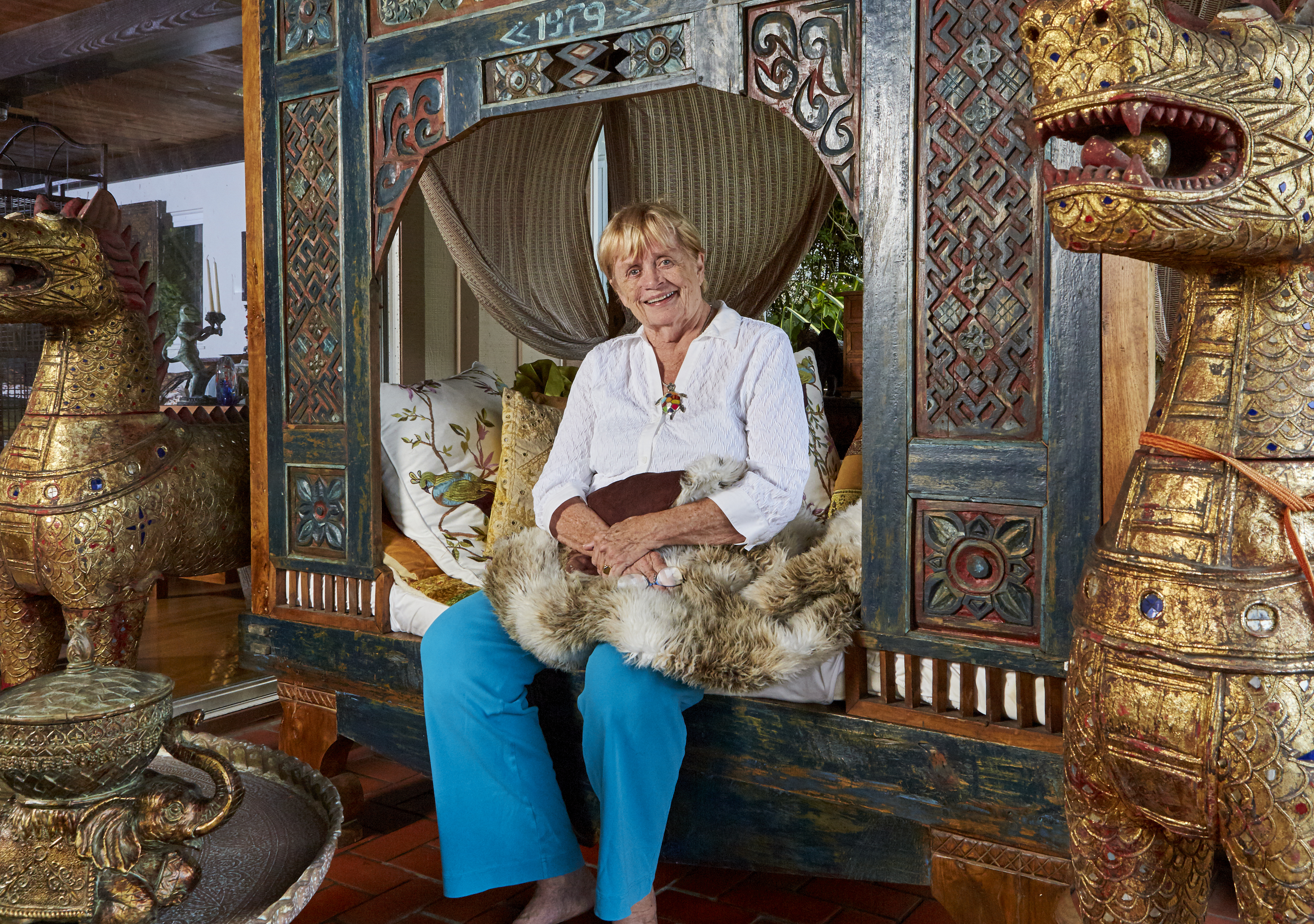
Carleen MacKay – – Future Care Recipient
Carleen MacKay
I was a VP for human resources for high-tech Silicon Valley employees who were making over $100k annually and losing their jobs. In the industry, it is called “out-placement,” a process by which companies assist laid-off employees find new employment. My book, Alternative Ways to Work, helps people manage career change, re-imagine their skills, and stay relevant. Another of my 35 books that seniors love is The Hundred Year Life: juxtapose imagination and facts. I write about what I do best — embrace the future with joy and gusto. To be honest, I have never considered slowing down by choice or by need. But Percy Ihara tells me that 70 percent of people will require some long-term care at the end of life. Yikes! I need to start planning!
You’re so active at 80; do you visualize yourself in long-term care?
So far, I can take care of myself — always have. Long-term care doesn’t sound like too much fun. But I am going to look into local care facilities and options to see what I might be able to afford.
Do you have children?
Yes. I was a single parent, and all three of my children have college educations — two own their own businesses. I live in an ‘ohana unit in one son’s home, and when I told him about this interview, he said, “Oh don’t worry. We’ll take care of you.” But my kids have done less planning ahead than I have. I do not expect them to bear the whole burden of my end-of-life care — either financially, emotionally or physically. I read that injuries due to falls often end independent living and break your bones and spirit. I need to call my local Aging and Disability Resource Center and get a free fall prevention assessment of my apartment right away.
Can you see yourself in the cycle of caregiving?
Sure do. I cared for my mother in her home when she came to the end of her life. I was a businessperson, so I hired a maid for cleaning and later found a care facility where my mother could be treated, cared for and offered socialization with other seniors. However, I never provided hands-on care, and I don’t expect my kids to do that either. I like to work, be involved socially and do fun kinds of exercise to keep healthy. However, time — as it does for one and all — is beginning
to overtake me.
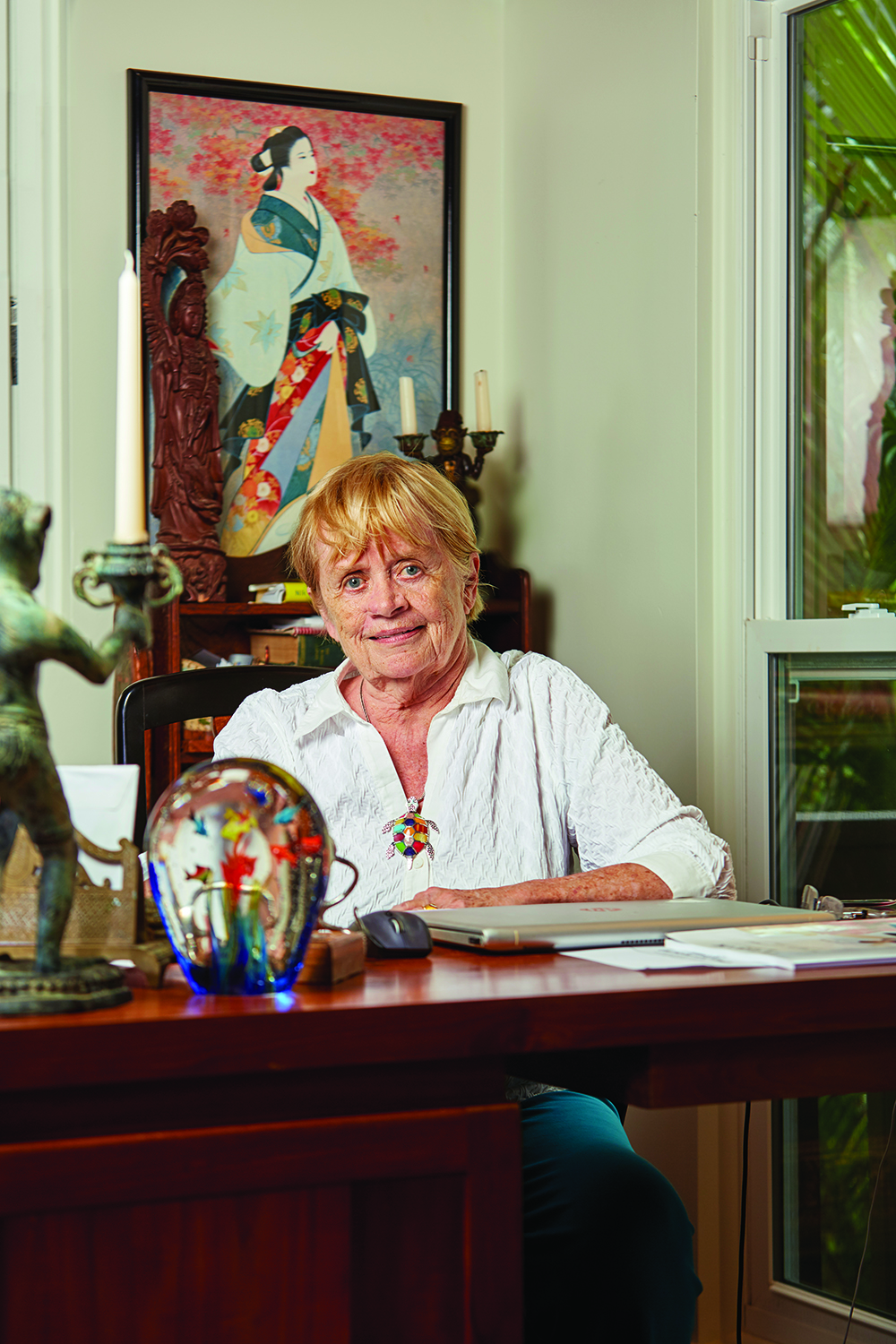
Carleen MacKay at home
Time is a big issue. Healthy seniors fear they will outlive savings and retirement income.
Yes; I am proud that I lived prudently in my early years and that I still bring in a little income. But I’ll be honest; my vision is to “die in the saddle,” writing books and giving lectures on the road. I want to keep active late in life, but I just learned that people over 70 could expect to outlive their body’s ability to perform the tasks of daily living, and the odds against dying in the saddle are very high. In case I die long, I don’t know if my savings will be adequate. I need a Plan B that addresses other options to pay for the kind of care I want. My children need to know what my wishes are, too.
Some of our readers haven’t done much planning either. What’s your next step?
Well, I am just getting into Generations Magazine resources, which are chock full of useful information for aging in place and end-of-life planning. I’m going to get educated and educate my family as soon as possible. I just found out that I am too old to buy long-term care insurance, so I already missed out on one financial option. I also learned that Medicare does not have long-term care benefits, so paying for care is my primary concern.
I think your readers should share this article with all their neighbors, family and friends who plan to work till they drop. Tell them not to wait until 80 to draw up a Plan B. We seniors who work are experts at what we do — and we also have to be experts in planning for long-term care the end of our lives. Better late than never!
I want to keep active late in life, but I just learned that people over 70 could expect to outlive their body’s ability to perform the tasks of daily living.”
Jody, Pat, Lori and Carleen are at different points on the cycle of caregiving. Where are you? What did you learn from their experiences and tips?
Rosalynn Carter and the original members of Last Acts started a significant movement, and they would be surprised to see professionals in geriatrics, long-term care, homecare, financial planning, reverse mortgages, hospice and adult day care and strategies for aging in place struggling to keep up with demand for their services. The number of people over 80, cost of care and waiting lists are all growing. The fact is, family caregivers still provide most eldercare.
The common threads in our four caregiving stories are that long-term care is a team effort that requires careful planning. Generations Magazine resources offer many professional options for care. Talking with your family and other families on the cycle of caregiving will help you find the best plan for you.
Former first lady Rosalynn was a caregiver herself and she believed that family caregiving is a cycle of life that touches everyone. Here, four people, each at a different point on the cycle, share their care stories from the heart, offering words of wisdom and points of caution. As you read, consider your journey on…

 Hearing loss gradually sneaks up on us. Over time, we adjust and adapt, but even a mild hearing loss can be a source of misunderstanding and failed communication, leading to stress, fatigue and self-imposed isolation.
 This challenge has led to the development of technology that brings together captioning and a telephone. This has become known as the “captioned telephone.”