As an estate planning attorney, I spend my time helping my clients stay out of court.
We value privacy, confidentiality and self-determination. Making one’s estate plan is one of our country’s most valued opportunities to exercise personal freedom of choice. The alternative is letting the court decide through guardianship, conservatorship, probate, district, circuit, federal or other administrative forums. The court should, in my opinion, always be the last resort.
It does take time, energy and courage to face our mortality; however, I encourage each and every one of you to take this precious opportunity to exercise this unique privilege afforded by our country to make your own decisions with regard what happens with your assets when you are not here. Here are some differences between making your own estate plan and relying on court:
Good Estate Plan
In Court
Collaborative
Conflict-driven
Relationship preservation
Divisive
Private with dignity
Public
Control
Loss of control
Time-sensitive
Time-consuming
Cost-sensitive
Costly
Emotionally satisfying
Emotionally draining
Value-driven and process-oriented
Procedural-driven
Take the opportunity to carefully determine how you would like to be cared for all the way through the end of your life.
STEPHEN B. YIM, Attorney at Law
2054 S. Beretania St., Honolulu HI 96826 808-524-0251 | stephenyimestateplanning.com
The Hidden Costs of Probate Court by Stephen B. Yim, Attorney at Law from the Oct-Nov 2016 issue of Generations Magazine, Hawai‘i’s Resource for Life
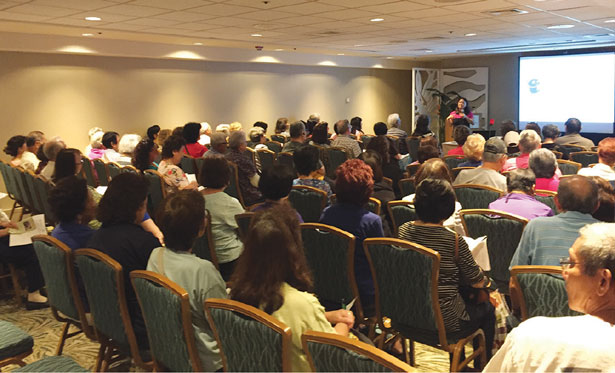
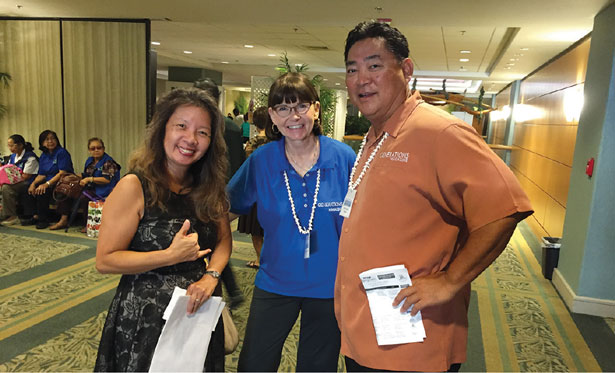
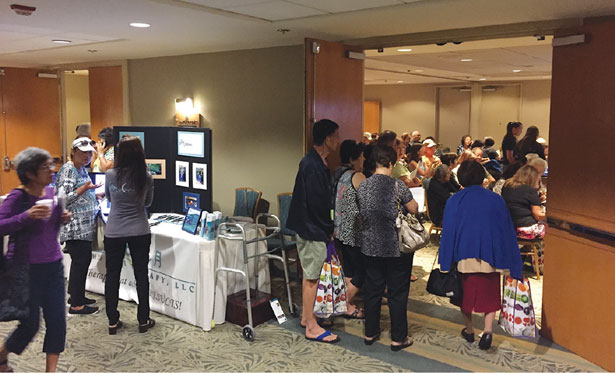
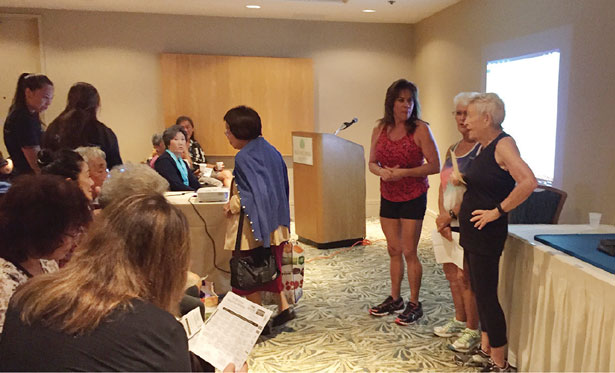
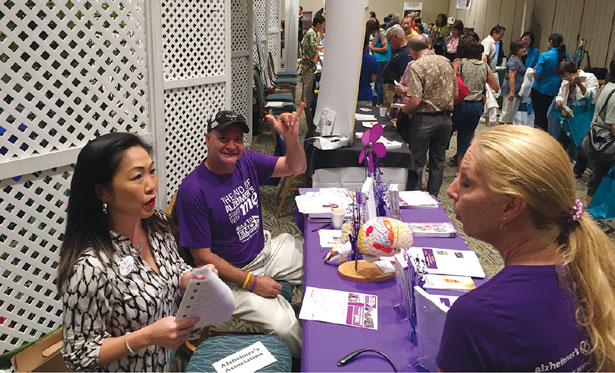
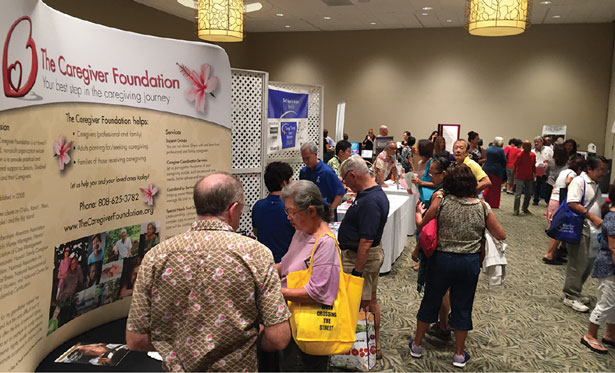
Abundance was definitely the word of the day! Vendors. Seniors. Caregivers. It was booth to booth, chair to chair, shoulder to shoulder. This year garnered the biggest turnout in years — and that means seniors want to know “what’s next” as they age. Being informed and prepared is the wisest decision. Presented by Generations Magazine and KITV4, and sponsored by many organizations and businesses supporting health and aging, the AIP senior workshop is an annual “must-attend” free event.
Success! The 2016 Aging in Place Workshop by Generations Magazine Staff from the DecJan 2017 issue of Generations Magazine, Hawai‘i’s Resource for Life
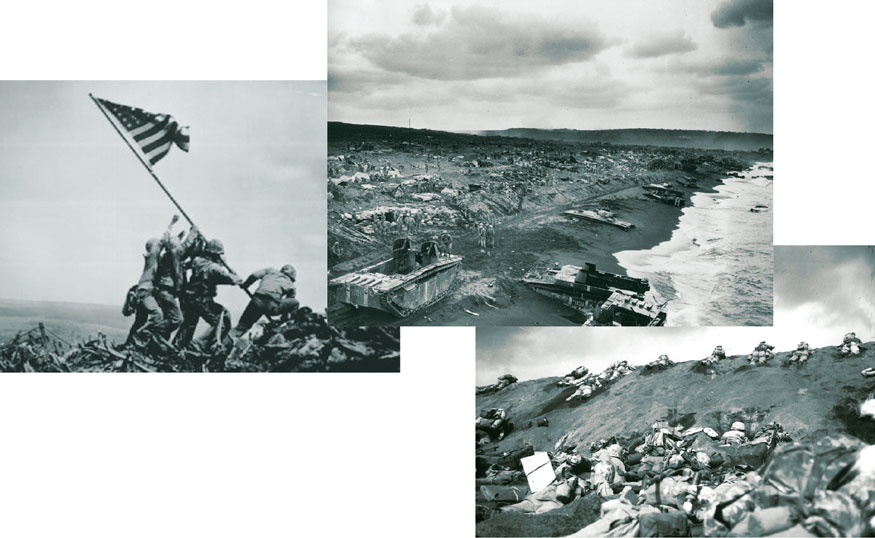
Japanese troops hid within caves in the island of Iwo Jima. U.S. troops had nowhere to hide.
Ten years ago, I began offering high schools and and community groups on Maui a presentation on the Battle of Iwo Jima. I was only 9 in 1945, when my favorite uncle, Jimmy Shanahan, landed with the 5th Marine Division on Iwo Jima. My job was to write him two letters every week. He was wounded in the invasion and lived to tell about it. Recovered from his injuries, he was at sea headed for the Japanese mainland when the war ended.
After Uncle Jimmy died, I received his Purple Heart medal. I knew nothing about Iwo Jima, because he never talked much about it, but I wanted to honor him by burying his award on that island. In 2008 and 2010 I was very fortunate to attend the Reunion of Honor on Iwo Jima with Iwo veterans and other family members.
The U.S. returned the island of Iwo Jima to Japan in1986 and now Iwo veterans and their families may visit only one day a year. Today, only 500 of the 70,000 marines who fought in this battle are living.
I studied all I could find about the battle and my utter ignorance of the details caused me to wonder… If old guys like me know so little, then how much could younger generations know?
When I learned how critical Iwo Jima was to winning the war in the Pacific, I began speaking about ideals and sacrifice — the extreme sacrifices made for the great ideal of living in freedom.
First, we all owe a tremendous debt to The Greatest Generation. When young people today see older veterans marching in parades, they don’t realize that all wars are fought by youths right out of high school. They also may not realize that for every old soldier, there are many young men who never came home.
The second lesson of WWII is to watch out, because history repeats itself. We need to diligently avoid another world war. I explain that young kamikaze suicide bombers were following an extreme ideology of death taught by their spiritual and military leaders. It doesn’t take students long to figure out that young Islamic terrorist suicide bombers today are doing the same thing, encouraged by their spiritual and military leaders. When I speak to an audience, I give them a brief oral quiz — just three questions:
Talks at Rotary clubs and local schools help keep knowledge alive in the hope that our children will avoid another world war.
1. Have you seen the famous flag-raising photo? They all have.
2. How many here are 17, 18 or 19 years old? I explain that 80 percent of the Marines who fought in the Pacific were under the age of 20. They don’t know that.
3. How many people were killed in WWII? First they guess low — 10,000. The highest guess has been 100,000. When I report that 60 million people were killed in WWII, kids and adults alike are shocked — the carnage of WWII is unparalleled in human history.
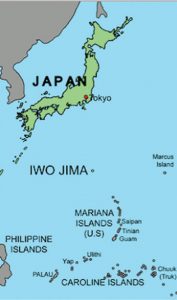
The tiny island of Iwo Jima (now Iwo To) sits halfway between Japan and the Marianas Islands. When the U.S. liberated the Marianas from Japan in the summer of 1944, the Japanese homeland came within range of the B-29 Super Fortress bomber; our fighter planes could only fly half that distance. Iwo Jima became instantly strategic to both the U.S. and Japan. Both sides went “all-in” to control this five-square-mile “sulfur island” and its 550-foot volcanic vent, “Mount Suribachi.”
The battle of Iwo Jima was like no other in history. Japanese forces defended the island from caves within it. Beginning in 1943, Lt. Gen.Tadamichi Kuribayashi turned Iwo Jima into an impenetrable underground fortress — 17 miles of tunnels connecting 1,500 pillboxes, gun emplacements, living quarters and a hospital. Aerial and naval bombing for 73 days never penetrated the stronghold. U.S. Marines landed under cover of artillery fire from battleships, but there was no place to hide or dig in. Casualties mounted to 5,000 after just four days.
The famous flag raising took place on day five, but the battle would rage for another month, claiming the lives of almost 7,000 Marines and wounding another 21,000. Of the 22,000 Japanese troops on the island, 21,800 died. The Marines never saw most the enemy troops they killed.
In March, with the battle still raging, the first P-51 fighters were stationed on Iwo. Two nights later, 350 B-29s fire-bombed Tokyo, destroying 17 square miles of the city and killing more than 100,000 — a greater loss than from either atom bomb. From March until the end of the war, 2,500 B-29’s made emergency landings on Iwo Jima, saving the lives of 27,000 U.S. Air Force personnel. There were 81 Congressional Medals of Honor awarded in the Pacific theater; 27 were awarded on Iwo Jima.
At 81, I have honored Uncle Jimmy through the years by helping to educate Maui school kids and their parents about the sacrifices made at Iwo Jima — so we can all live in freedom.
For more information on WWII presentations and/or questions about Iwo Jima, please contact Harry Smith at 808-268-5848, harry2smith@gmail.com.
Iwo Jima: a Lesson of Ideals and Sacrifice by Harry Smith, WWII Historian from the Oct-Nov 2016 issue of Generations Magazine, Hawai‘i’s Resource for Life
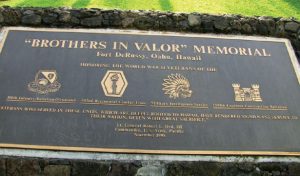
The U.S. Army Museum of Hawaii in Waikīkī was once a battery built to protect the state from invading forces. Today, it is home to stories of military past, including exhibits of the Vietnam War, Korean War, World War II and more. But more than that, the museum is a great place for senior veterans to volunteer — a majority of the volunteers are retired veterans.
“Veterans are really great at talking to people,” said Ian Frazier, historian and museum specialist. “A lot of our visitors hail from all over the world . This is the only contact they have with veterans from WWII, Korean… Vietnam [wars].”
Museum staff are usually selective about who they have as volunteers because they represent our country and the U.S. Army. But Ian said the one thing that shines about veteran volunteers is the way they communicate.
The museum is always looking for additional volunteers, and you don’t have to be a veteran to be considered.
The museum, operated by the U.S. Army Garrison-Hawaii, averages 400 visitors per day from all over the world. The museum receives funding through the U.S. Army and the Hawaii Army Museum Society. Most of the staff are volunteers.
Admission to the museum is free. However, donations are always welcome. The museum also offers audio tours for a small fee of $5 or $2.50 for society members. You may also view some military exhibits on the museum’s website.
U.S. ARMY MUSEUM of HAWAII
2161 Kalia Road, Honolulu HI 96815
Hours of operation: Tuesday – Saturday, 9 am – 4:15 pm
Sunday, Monday and all federal holidays — CLOSED 808-438-2821 | www.tinyurl.com/ArmyMuseumHI
The U.S. Army Museum: Veteran Volunteers by Stephanie Kim, Generations Magazine Intern from the Oct-Nov 2016 issue of Generations Magazine, Hawai‘i’s Resource for Life
I want to share a helpful presentation by Dr. Bob McCauley, naturopathic doctor, master herbalist and certified nutritional consultant. His three books—Confessions of a Body Builder: Rejuvenating the Body with Spirillium, Chlorella, Raw Foods and Ionized Water (2000); Achieving Great Health (2005); and The Miraculous Properties of Ionized Water (2006) — show his passion for natural health.
He has been drinking one to two gallons of alkaline ionized water daily since 1997 and claims that the effects have been dramatic. He considers water a preventative measure to maintain an optimum health profile. Below are some excerpts from his recent presentation, “What Ionized Water Has Done for Me.”
“My stamina has increased by up to 30 percent; recovery time has decreased by a proportional amount. I never get sore joints and my knees have not been any trouble since starting to drink ionized water. I run two to six miles daily.”
“If I feel a sore throat coming on, I drink a few extra glasses of ionized water to keep it at bay. I think 60 to 80 percent of chronic diseases in our society would disappear if people were simply to drink enough water and maintain proper hydration.”
“The clarity of my thought processes has improved because of sufficient brain hydration. Ionized water provides my brain 80 percent of every sip of water I take.”
As the body hydrates, blood oxygen and energy levels increase in tandem. Oxygen (O2) breathed into the body dissolves in blood, lymph and spinal fluid, where it provides energy throughout the body. As O2 is used up, carbon dioxide (CO2) is produced and carried back to the lungs, where it is exhaled. This process allows us to use nutrients, generate energy, kill bacteria and viruses, and ward off cancer cells.
“Ionized water promotes healthy enzymatic cellular processes and rejuvenation,” said Dr. McCauley. “When we drink negatively charged ionized water, the cells in our bodies start to rejuvenate. Reverse aging occurs when the body reverts to a healthy cellular state. If you are 40 years old, you will not become a 20-year-old, but you can have the vitality of a 20-year-old.”
I learned that the effects of ionized water on the human body are profound, yet subtle. Ionizing water does not affect its taste, but some people say it feels different on the tongue and the skin.
After listening to Dr. McCauley, many people want to try alkaline ionized water. He once tried a sip; now he recommends it to his patients and writes books about its positive benefits. That’s how it is when you find something helpful. It happened to me, too!
ENAGIC USA INDEPENDENT DISTRIBUTOR
Alan Matsushima, Health and Wellness Consultant 808-384-7354 | trader_808@yahoo.com
What I Learned From Dr. McCauley by Alan Matsushima, Health and Wellness Consultant from the Oct-Nov 2016 issue of Generations Magazine, Hawai‘i’s Resource for Life
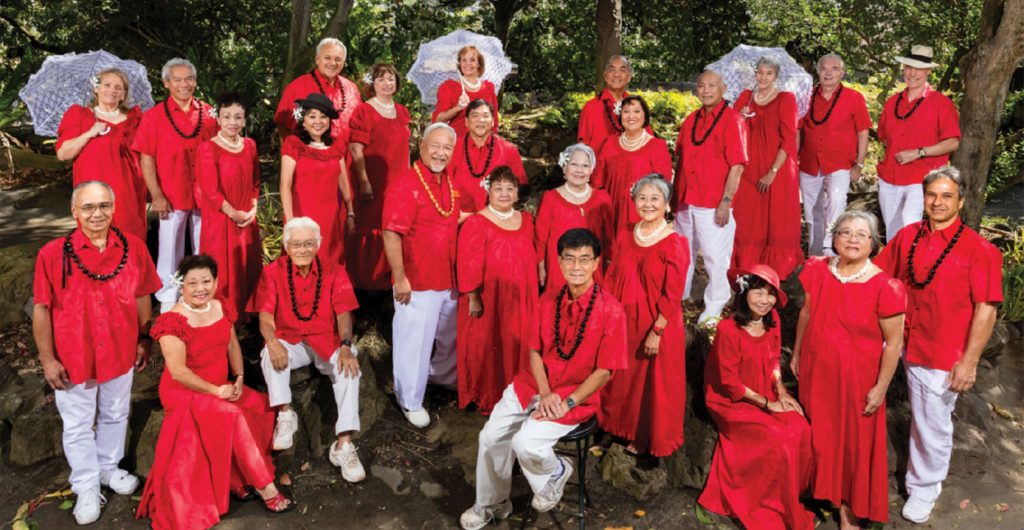
The Voices of Aloha Chorus is a non-audition group for people of all ages who love to sing. This year, they have been singing joyfully for 100 years.
We are 21st-century descendants of the Gleemen of Honolulu, the oldest men’s chorus west of the Rockies, and celebrating 100 years! The chorus began when the Apollo Club and Honolulu Choral Society joined voices in 1916. Among notable members were Sen. Daniel Akaka, Gov. Lawrence Judd, Charles K.L. Davis and Charles E. King.
Shigeru Hotoke, WWII veteran and Kailua High music teacher, assumed directorship of the Gleemen in 1984, and in 1992, he produced a Chrismas concert with the Kailua Madrigal alumnae and a mixed choir, Mele Nani Singers, under director and opera singer Gerald Ting. This was the beginning of Gleemen Plus of Honolulu.
In 2007, after 20 years of successful concert ministry on the mainland, I assumed the role of director. In 2013, the Leadership Board changed our name to the Voices of Aloha to better reflect our origins and mission. Since 1916, the chorus has always been a civic, community-minded choral group, open to all who love music and can carry their part, whether they read music or not. We are a non-audition chorus, and accept vocalists of all ages and professions/trades. Voices of Aloha regularly performs for senior clubs, care homes and retirement centers. Our popular annual spring and Christmas concerts draw crowds of up to 800. The future looks bright!
If you love to sing, rehearsals are Tuesday nights from 7 to 9 pm at Community of Christ Church Annex in Makiki. To join, book a concert, or donate, please call us and sing joyfully!
VOICES OF ALOHA
Christmas Concert Dec. 4, McKinley HS Auditorium, 4pm
Mark Yasuhara, director | 808-228-5068 | emynent100@yahoo.com
Voices of Aloha Chorus is 100! by Mark Yasuhara, Director, Voices of Aloha Chorus from the Oct-Nov 2016 issue of Generations Magazine, Hawai‘i’s Resource for Life
Medicaid is a federally funded insurance program that is administered by the State of Hawai‘i. Persons of all ages can become eligible if they meet certain income and resource requirements. Coverage can vary from total coverage of all services to a little-known program that will cover your Medicare Part B premiums, called the “Specified Low-Income Medicare Beneficiary Program” (SLMB).
If you are eligible for Medicare Part A, you may qualify for SLMB. The Medicaid SLMB program pays your Medicare Part B monthly premiums, which are generally $104.90. You can find your Medicare Part B premium on your annual Social Security Award letter as a deduction from your Social Security Income. If you qualify for SLMB, this deduction will stop, and your monthly Social Security check will increase by $104.90.
Qualification for the SLMB program, like all Medicaid programs, is based on your monthly income and your countable resources. Countable resources can include bank accounts, stocks and the cash value of life insurance policies, as well as other assets.
In 2016, for a single person, resources must be below $7,280 and monthly income must be below $1,367. For a couple, the resource limit is $10,930 and combined monthly income must be below $1,843. If you qualify for Medicaid benefits this program, you could see an annual increase in your income of $1,258.80!
Medicaid Program To the Rescue by Cassandra Stewart, Executive Director, Cardon Outreach from the Oct-Nov 2016 issue of Generations Magazine, Hawai‘i’s Resource for Life
I had the privilege of conversing with the Honorable George Ariyoshi, the longest serving governor of Hawai‘i and a World War II veteran. He told me a moving story about his experience as an American soldier in postwar Japan. He saw a young boy who was working very hard shining shoes. The boy’s dedication prompted Ariyoshi to ask him why he worked so hard. The boy responded that the country and his family were hurting, so he felt that his duty was to do his part to help make things better. Ariyoshi marveled at the boy’s mature attitude, and he realized that Japan would recover quickly if even the children had such a dedication to family and country.
I’m sure that many veterans have moving and life-enhancing stories to tell. We must keep our veterans alive and well so we can benefit from the wisdom they gained from their incredible experiences. But many die unnecessarily and too early due to lack of knowledge about how to stay healthy. Here are a couple of the tips I include in my health programs to keep participants as healthy as possible for as long as possible. In Chapter 4 of my book, The Peace Diet, I outline several anti-aging steps we can do right now.
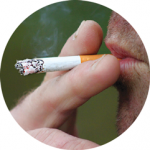
Avoid Tobacco
First, it is important to control our exposure to toxins and pollution by avoiding tobacco and thousands of other potentially toxic everyday substances. It is also important to eat clean, pesticide-free natural foods. Cancer rates have risen dramatically over the years: one in two-and-a-half people will get cancer in the U.S.—up from one in 21 in the 1970s.
Control Blood Sugar
Second, controlling blood sugar is crucial in preventing memory loss and dementia. High blood sugar eventually closes off tiny blood vessels, including those in the brain. Constriction results in a gradual reduction in blood supply to brain cells. Strategies for controlling sugar include eating more complex carbohydrates and natural foods.
Reducing toxin exposure, eating clean and controlling blood sugar will enhance your body’s health, and reduce your body’s inflammation. By adopting healthy habits and implementing all eight health enhancements described in our longevity program, our veterans and all of us can live much longer, and preserve and share the wisdom of our years for the next generations.
WELLNESS CENTER Complimentary & Alternative Medicine
600 Queen St., Ste. C2, Honolulu HI 96813 808-628-8784 | www.drshintani.com
Longevity for All by Terry Shintani, MD, JD, MPH from the Oct-Nov 2016 issue of Generations Magazine, Hawai‘i’s Resource for Life
As a new parent, you were terrified at the thought of allowing anyone to care for your infant out of your presence. Perhaps you would consider as a babysitter a pediatrician, who handed you a certified criminal background check from the FBI, along with three references — with one being from the Pope, but even then you would hesitate until they could memorize the telephone number to poison control.
And as your child grew, your distrust of others never wavered. Did you smell alcohol on that bus driver’s breath? Did your daughter’s prom date leave the house with a full tank of gas? Is that a tattoo you see on your son’s roommate? Is he part of a gang?
Paranoia and distrust can be a good thing. In fact, one might say it is part of being a responsible parent.
Unfortunately, the same attention to safety is often not applied to hiring someone to care for our parents. People often hire caregivers from the internet, making cost the deciding factor. We assume that anyone who is willing to work as a caregiver must be a good person. Who else would want to change adult diapers and constantly monitor someone who is no longer independent? Sadly, this is not always true.
How can you tell whether the person you hire has your loved one’s best interests in mind or their own?
Check their references. It would be nice just to trust someone’s word, but the time spent verifying if they indeed did a good job is invaluable. Do not feel you are embarrassing the prospective caregiver or signaling that you don’t trust them by calling their previous employer. When they provided references, they knew there was a possibility you would check them.
Another priority is to do a criminal background check. Go to the Hawai‘i Criminal Justice Data Center for more information on how to perform a Criminal History Records Check online or in person. You can call them at 808-587-3100.
Also, make sure that the caregiver’s experience is appropriate. If their previous clients could walk, does the caregiver know how to transfer a person in a wheelchair? What about bathing them?
Additionally, write down your expectations for care. This checklist will be helpful when you interview caregivers and can serve as a contract or written agreement. A list of duties that you and the caregiver agree upon also avoids miscommunications that could give you an impression of poor job performance or laziness.
It is said that a drowning man will grab the blade of a sword to save himself. When people find that they need to hire a caregiver, they are often desperate and overwhelmed with the decisions they have to make in caring for their family member. Don’t let these feelings force you to hire just anyone who answers your call for help. Take the time to hire the right person to care for your mom or dad. They did the same for you when you were young.
To report suspected elder abuse, contact the Elder Abuse Unit at 808-768-7536 | ElderAbuse@honolulu.gov
Hiring Strangers as Caregivers by Scott Spallina, Senior Deputy Prosecuting Attorney from the Oct-Nov 2016 issue of Generations Magazine, Hawai‘i’s Resource for Life
Body donation to the John A. Burns School of Medicine (JABSOM) is a highly personal decision with positive and far-ranging effects on our community, which may not be immediately apparent to most people. These benefits are like ripples in a pond, always expanding.
A donation serves future doctors as the best way to learn anatomy during their training. The knowledge imparted to JABSOM medical students through your donation helps provide quality healthcare for our entire community and for generations to come. Every donor is a “silent teacher,” also educating medical and allied medical professionals in Hawai‘i.
Medicine continually evolves, requiring continuing education. Last year, over 600 surgeons attended JABSOM workshops to learn new medical interventions that will directly benefit their patients.
Your donation might also become a “mentor” for allied medical professionals, such as EMT students from Kapi‘olani Community College, who are learning life-saving emergency medicine techniques. Your body may help train Hawai‘i Life Flight teams of advanced nurses and doctors, who transport injured and critically ill patients every day. None of this would be possible without the altruistic gift of body donation.
After our mentors and silent teachers have educated our healthcare students and professionals, we respectfully prepare them for cremation. The cremains are either returned to the family for private rites or held until our annual memorial service, depending on the stated wish of the donor. At our 2016 annual memorial service, we honored 150 donors, and over 500 family and friends attended. Later that afternoon, cremains of those who chose to be scattered at sea were paddled out beyond Magic Island by medical students and the Ānuenue Canoe Club. Family and friends watched the canoes as Celtic Pipes and Drums of Hawai‘i played in the background.
Body donation for medical education and research requires legal forms to be completed and returned to the JABSOM office.
The University of Hawai‘i’s Willed Body Program is the only whole body donation program in the state of Hawai‘i directly benefiting your community. For more information or to obtain a donor form, contact us using the information below.
‘Silent Teachers’ Help Future Doctors by Steven Labrash, CFSP, Director UH Willed Body Program from the Oct-Nov 2016 issue of Generations Magazine, Hawai‘i’s Resource for Life
Volunteers, friends, family and Troop 616 all worked hard to complete this project.
An Eagle Scout project is the culmination of the Boy Scouting program that gives a scout an opportunity to demonstrate leadership, utilize communication skills and help their community. For me, as a scout and as a Native Hawaiian, Lunalilo Home represents not only a staple for the longevity of Hawai‘i’s elderly, but a historic institution that is deeply rooted in the care and support of the Native Hawaiian community. It is for these reasons and more that I chose Lunalilo Home as the beneficiary of my Eagle Scout project. The project consisted mainly of creating a 15-by-16-foot cement patio for use by the senior day care operation at Lunalilo Home. The staff, especially Jill Martinez, director of day care activities, was extremely helpful in outlining what would best serve the senior patients. I also found immense support from local companies and institutions that happily donated materials, funds and volunteer manpower to my project. Overall, I think this Eagle Scout project has demonstrated the amazing generosity and cooperation that exists in our local community. This support can only be described as the aloha spirit.
When veterans return from war, we offer them a handshake and a generic “thank you for your service.”
But there is much more we can do to help those who have lived through the hellish experience of combat to reintegrate into communities — the majority of which are comprised of members who have never even been close to the front lines.
In generations past, soldiers were left to work out for themselves how to fit back into society, and most kept their nightmares and worries to themselves.
More recently, we have come to understand post-traumatic stress disorder (PTSD). Extremely traumatic experiences like being ambushed or failing to save fellow troops can leave one overcome with physiological symptoms, such as hypervigilance, memory or concentration problems, insomnia, panic attacks and flashbacks. Recognition of the problem and therapies to address the symptoms are becoming more mainstream.
Like progress in cancer research, advances in the study of PTSD offer tremendous hope to those who suffer and to society as a whole. This understanding of the effects of war gave rise in 2009 to a new term —“moral injury.” We send bodies and souls into battle; however, fixing the body does not by itself bring a survivor back to wholeness.
Moral injury, as defined by the Veterans Health Administration, “is disruption in an individual’s confidence and expectations about his or her own moral behavior or others’ capacity to behave in a just and ethical manner.” Moral injury involves the brain’s sense of conscience and agency; in contrast, PTSD affects the brain’s reflex to fear and trauma.
Dr. Rita Nakashima Brock, a theologian who heads the Soul Repair Center at Brite Divinity School, explained that “moral injury can result in agony from inner judgment against oneself, anger, survivor guilt, isolation, despair and/or loss of will to live.”
Just as there are ways to heal the physical symptoms of PTSD, there are ways to redeem the moral landscape.
Key to this work are groups in which soldiers feel free to tell their stories without facing judgment and without having people mouth pat answers.
Families, support groups, churches and temples that offer deep listening in safe, long-term settings can help rebuild a veteran’s ability to feel valued in society. Listening groups trained to assist in this soul repair work are being formed across the United States.
Our communities of faith can open their doors to such groups, but we can do even more by up-dating our rituals of lamentation, forgiveness, penance and absolution in contemporary, and creative ways.
Opportunities for veterans to make amends and a difference in other people’s lives may replace their sense of shame with one of pride.
By pointing to examples of faithfulness and compassion, we can offer certainty that those who have seen the worst in war are not cut off from life’s goodness. In this way, our actions as people of faith can bring our troops all the way home.
WINDWARD UNITED CHURCH OF CHRIST
Rev. Jayne Ryan Kuroiwa 808-254-3802 | windwardpastor@hawaii.rr.com www.windwarducc.org
Veterans: Understanding Moral Injury by Rev. Jayne Ryan Kuroiwa from the Oct-Nov 2016 issue of Generations Magazine, Hawai‘i’s Resource for Life

 Ten years ago, I began offering high schools and and community groups on Maui a presentation on the Battle of Iwo Jima. I was only 9 in 1945, when my favorite uncle, Jimmy Shanahan, landed with the 5th Marine Division on Iwo Jima. My job was to write him two letters every week. He was wounded in the invasion and lived to tell about it. Recovered from his injuries, he was at sea headed for the Japanese mainland when the war ended.
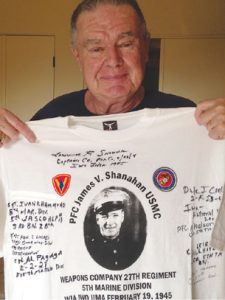 After Uncle Jimmy died, I received his Purple Heart medal. I knew nothing about Iwo Jima, because he never talked much about it, but I wanted to honor him by burying his award on that island. In 2008 and 2010 I was very fortunate to attend the Reunion of Honor on Iwo Jima with Iwo veterans and other family members.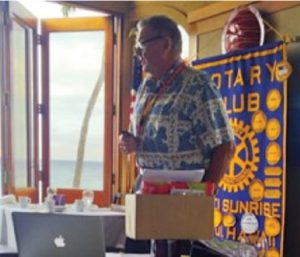
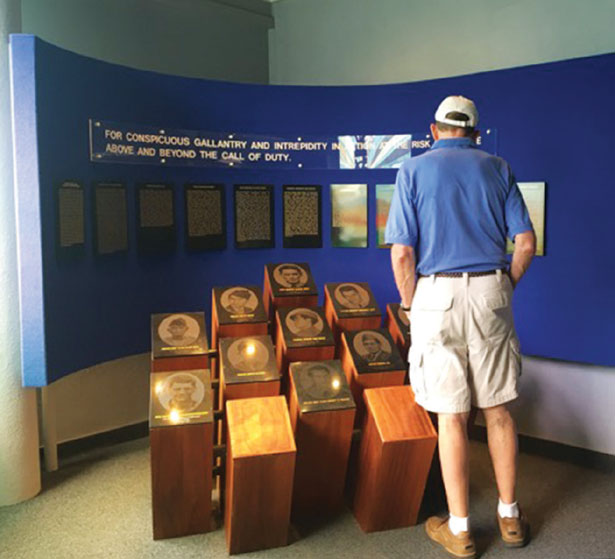 The U.S. Army Museum of Hawaii in Waikīkī was once a battery built to protect the state from invading forces. Today, it is home to stories of military past, including exhibits of the Vietnam War, Korean War, World War II and more. But more than that, the museum is a great place for senior veterans to volunteer — a majority of the volunteers are retired veterans.
 The museum is always looking for additional volunteers, and you don’t have to be a veteran to be considered.
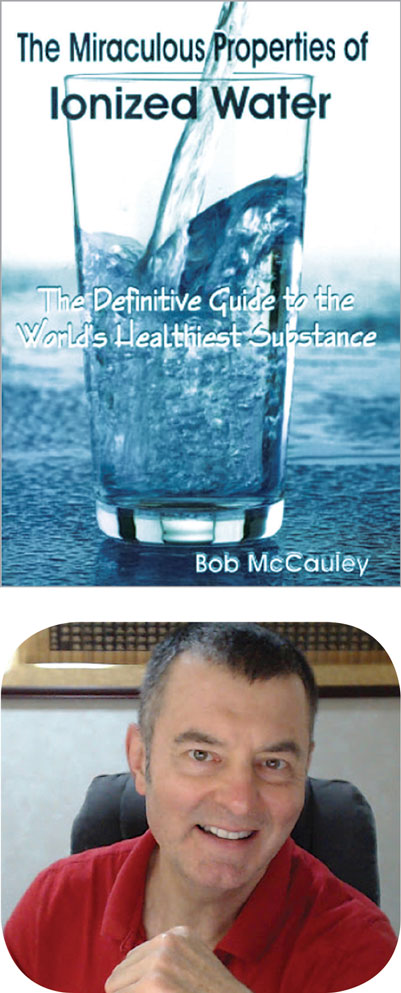 I want to share a helpful presentation by Dr. Bob McCauley, naturopathic doctor, master herbalist and certified nutritional consultant. His three books—Confessions of a Body Builder: Rejuvenating the Body with Spirillium, Chlorella, Raw Foods and Ionized Water (2000); Achieving Great Health (2005); and The Miraculous Properties of Ionized Water (2006) — show his passion for natural health.
 Avoid Tobacco
 Control Blood Sugar
 Reducing toxin exposure, eating clean and controlling blood sugar will enhance your body’s health, and reduce your body’s inflammation. By adopting healthy habits and implementing all eight health enhancements described in our longevity program, our veterans and all of us can live much longer, and preserve and share the wisdom of our years for the next generations.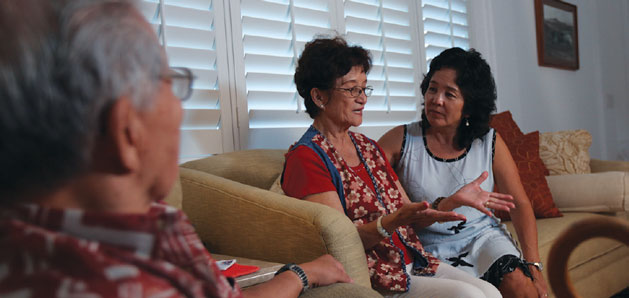
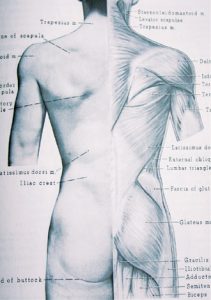 A donation serves future doctors as the best way to learn anatomy during their training. The knowledge imparted to JABSOM medical students through your donation helps provide quality healthcare for our entire community and for generations to come. Every donor is a “silent teacher,” also educating medical and allied medical professionals in Hawai‘i.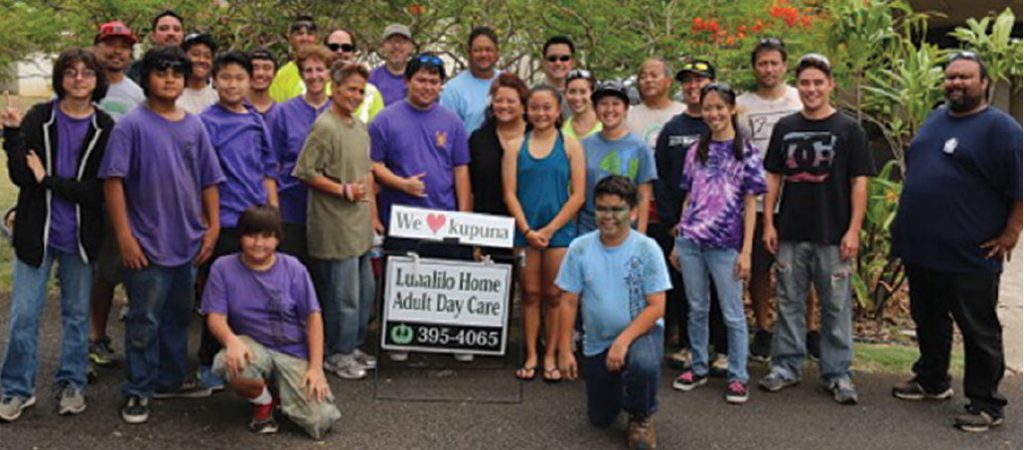
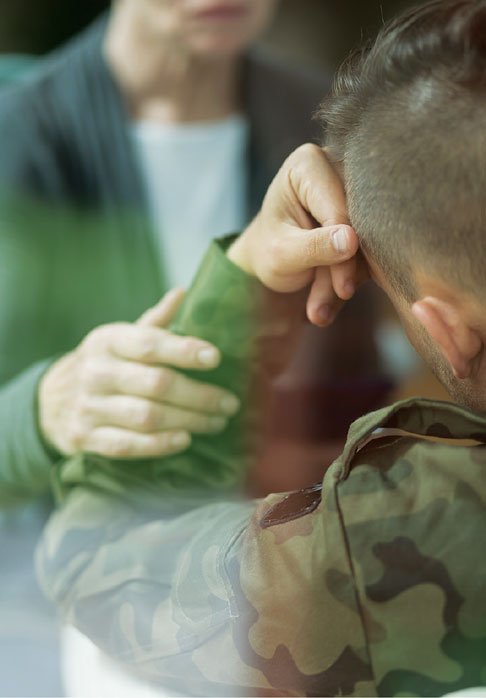 When veterans return from war, we offer them a handshake and a generic “thank you for your service.”