Two emotions are likely to strike those who are nearing retirement — excitement and fear. Leaving the world of alarm clocks and cubicles is liberating, but feelings of apprehension about entering a new life stage can easily creep in. The responsibility of pursuing your passions and filling each week in a satisfying way can be a challenge. Then, top that off with the ever-present concern about long-term financial security in retirement.
Feeling excitement and fear is ok, but what if life after work isn’t everything you envisioned it to be?
Try A Practice Run
If you’re nearing retirement, you’ve likely taken steps to prepare financially for the future. But there’s one important thing you might not have considered adding to your pre-retirement checklist — a practice run. How you choose to spend your time (and in many cases, your money) is not always an easy decision. As we age, our interests, hobbies and relationships change. What you may consider your “ideal” retirement when you’re 55 may not fit when you’re 65. This evolution can make it hard to plan accurately for retirement.
To the extent you’ve made a financial commitment to a certain lifestyle, changing your mind in 10 or 15 years could throw a wrench in your long-term financial plan.
For example, consider an individual who has lived his entire life in New York, but retires to Florida where taxes and cost-of-living are generally lower. Deciding after several years to relocate back to New York to be near family — where cost of living and tax rates differ — can mean the dollars he’s saved will have to be re-allocated and his savings may not go as far as he’d planned.
The idea of practicing retirement may also mean leaving the 40-hour work week for something that’s more part-time. Some people may want to take a part-time role with their current employer, or work as a consultant. This also can offer important financial benefits that help preserve their nest egg.
Financial Rehearsal
Practice can also be beneficial in another way — simulating how to manage your expenses in retirement. The idea that your cash flow no longer comes from a reliable paycheck, but from other sources like Social Security and personal savings can come as a shock … even to those who are well-prepared for this change.
One idea to accomplish this is to run two accounts for a certain period of time. Through one account, manage all of your household and lifestyle expenses that you expect during retirement. This includes the costs for necessities such as food, clothing, shelter, utilities, taxes and insurance as well as “nice-to-have” items like dining out, traveling, etc.
Through the second account, manage all of your expenses that are expected to end in retirement like principal and interest on a mortgage payment (if your home will be paid off), car payments (although car payments can certainly happen again in retirement), college costs for your kids and contributions to retirement plans.
Perfecting Life In Retirement
A little practice can go a long way toward easing emotional and financial concerns when it comes to making the jump into retirement. A retirement trial run may not answer all of your questions — and it doesn’t necessarily include the unexpected events that can often throw retirement off track — but doing it for six months or so can be very beneficial in determining whether your retirement budget is realistic. Consider working with a financial advisor who can help you reach your retirement dreams.
Michael W. K. Yee, CFP
1585 Kapiolani Blvd., Suite 1100, Honolulu
808-952-1222 ext. 1240 | michael.w.yee@ampf.com
Michael W K Yee, CFP®, CFS®, CRPC®, is a Financial Advisor CERTIFIED FINANCIAL PLANNER practitioner™ with Ameriprise Financial Services, Inc. in Honolulu, HI. He specializes in fee-based financial planning and asset management strategies and has been in practice for 26 years. Brokerage, investment and financial advisory services are made available through Ameriprise Financial Services, Inc. Member FINRA and SIPC. © 2014 Ameriprise Financial, Inc. All rights reserved. File # 783860
 More than ever, we have to take charge of our own health, including doing what we can to avoid health problems, such as preventing falls. According to the Centers for Disease Control, falls are the leading cause of accidental fatal and non-fatal injuries among Hawai‘i’s older adults. Every five hours a kupuna is injured so severely in a fall that he/she must be treated in a hospital.
 A growing portion of my practice involves fixing estate plans prepared over the Internet. The problem with computer-driven estate plans is that in the real world, more often than not, they don’t work. An effective estate plan involves far more than a set of documents, even very well drawn documents that would stand up in any court in the land. For one thing, wouldn’t it be better to have an estate plan that will help you and your family stay out of court altogether? Going to court is not the end of the world, but it can be a royal pain. Most lawyers and judges are good, decent people. But does that mean that your estate plan should provide them with profitable employment? A much better approach is getting your plan right the first time, and then making sure that it continues to work according to your wishes in light of changes in your health, your stuff, the law, and the list of people you trust. If you can accomplish these things without court supervision, you will have reached estate planning nirvana.
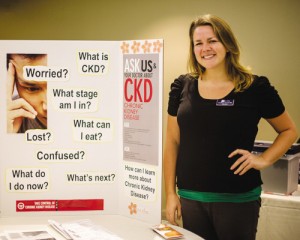 One in seven adults in Hawai‘i has kidney disease. An additional one in three people are at risk for getting it, and most don’t know it. Kidney disease can be found and treated early to prevent more serious kidney disease and other complications. Three simple tests can help.
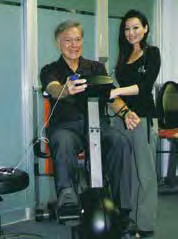 A physical therapist specializing in cardiac rehab will perform an evaluation and develop a plan consisting of patient education on diet, relaxation techniques, aerobic training and strengthening exercises. The therapist will closely monitor vital signs, such as blood pressure, heart rhythm and rate, and oxygen saturation levels. The therapist should also prescribe a safe exercise program, with appropriate duration, frequency and intensity. While everyone can exercise at a gym or at their home after a cardiac event, a rehab program offers a safe and effective en- vironment to improve your heart health with the supervision of a medical professional.
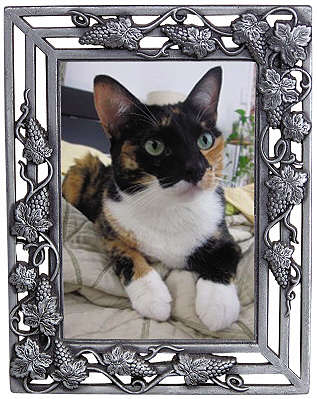 While I was growing up, we almost always had a dog (or two) in the house, and they always became treasured family members. You may have had the same experience, and you would not be alone if you have pets today that you consider to be your “children.” I know people who claim to prefer their kitties over their kiddies.
 Section 560:7-501 of the Hawai‘i Revised Statutes specifically allows you to create trusts “for the care of one or more domestic or pet animals.” You can even designate a human watchdog who will make sure that your intentions are carried out. In theory, there would be nothing to prevent your terrier’s trustee from making a quick stop at the local dog pound and then pocketing the trust assets that you had intended to be used for your poor pet. However, your
  watchdog could whisk the trustee in front of a judge and make sure the trustee is held accountable for failing to honor your wishes. Of course, if you choose the right caretaker in the first place, none of this will be an issue.
 But what if your two-legged children get jealous of your basset hound’s bequest? Is there a way for them to attack your trust? The short answer is “yes,” and if they can convince a judge that you have left “too much” for your toucan, the judge can reduce the amount in the trust to whatever amount is “enough” to provide adequately for the care, maintenance, health and appearance of the designated critter. In any event, if there is anything left when your pooch passes the pearly gates, you get to say where it goes.
 Some pets have very long lifespans, such as certain birds, reptiles and fish. Your pet trust will not be subject to the rules that limit the lifespans of conventional trusts, so you can be sure that, as long as the trust assets hold out, there will be provisions for your pet.