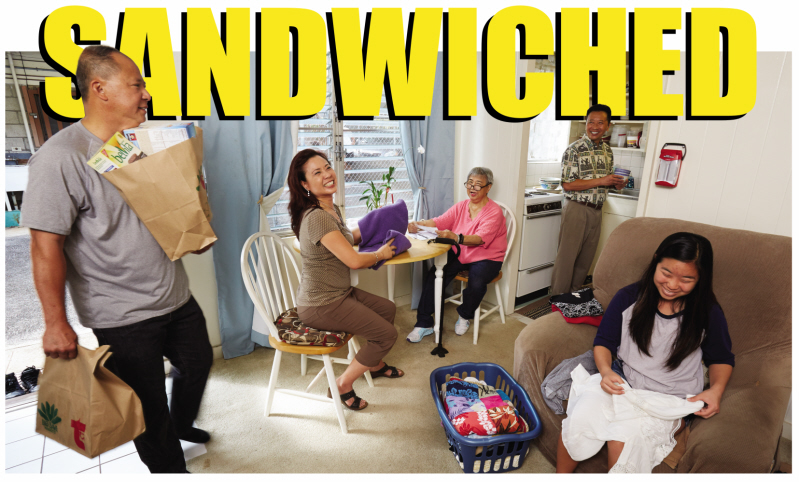
Baby boomers — from the Vietnam era of their youth to the technology boom of their midlife upward mobility — 76 million baby boomers made news as they faced every new cycle of life. Now, their retirement and aging put strain on our nation’s health care system, and baby boomers’ own families. Our cover feature, “Sandwiched,” (click here or in pgs. 18– 25 of the magazine)tells the story of three midlife professionals sandwiched between the needs of their children or siblings while they are care-giving for their aging parents. Financial Planner Michael Yee calls it a “Silent Tsunami” of families who don’t reach out for help, but try to handle their care-giving needs alone. Mike, Pamela and Lorri share their care-giving experiences publicly for the first time — with the hope that their stories will help other caregivers.
Our GM contributing authors continue this important theme with care-giving wisdom and financial planning strategies for baby boomers and their families.
We are very excited to have two boomers, the luminary team of Linda Coble and Kirk Matthews, kicking off a regular column as they enter and explore the joys of their own retirement years — up close and personal,(click here or on pg. 12 of the magazine).
Don’t miss our special feature (click here or on pg. 40 of the magazine) on prescription drug addiction among Hawai‘I seniors by Marc Cohen, author of the Edgy Lee documentary, Unprescribed—Prescription for Addiction. Claire Santos reported in Civil Beat in May, “Opioid [painkiller] overdose deaths now outnumber deaths from cocaine and heroin combined and exceed the number of deaths from motor vehicle accidents. That’s a pretty grim picture.”
Mark your calendars for Saturday, Aug. 15, for the ninth annual “Aging In Place Workshop” at Ala Moana Hotel Conference Center, sponsored by Generations Magazine and KHON2 (see schedule of events by clicking here or on pgs. 10–11 of the magazine). This will be our biggest event yet, promising a wealth of expert information and resources for seniors, caregivers, and baby boomers planning ahead for their retirement and elder years.
In June and July, we all look forward to family reunions, weddings and trips to Neighbor Islands or the Mainland. Home improvement projects, gardening and community festivals are so much fun. Please follow our contributors’ good advice to stay safe and healthy as you engage in outdoor activities. Whatever your summer plans, we wish you and your family calm seas, abundant fruits and vegetables, and many rainbows!
Every Day is Brand New!
Katherine Kama‘ema‘e Smith, Associate Editor
Correction: The conclusion of the “Do You Know IRMA” article by radio host and Medicare specialist Martha Khlopin, April/May 2015 issue, click here or on pg. 45 of the magazine, should have read “the adjustment was waived in full on appeal.”
Baby boomers — from the Vietnam era of their youth to the technology boom of their midlife upward mobility — 76 million baby boomers made news as they faced every new cycle of life. Now, their retirement and aging put strain on our nation’s health care system, and baby boomers’ own families. Our cover feature,…
The Yee family collaborate together in helping Mom. Lt–Rt: Milton (brother), Tammy (sister), Alice (mom), Taylor Ann (granddaughter) and Michael.
Baby Boomers who have built successful careers and investments for the future are now experiencing the physical, emotional and financial outcomes of caring for their aging parents, while they meet the expense of college or support for adult children who choose to live at home. Boomers who did not plan ahead or who lost their assets in the great recession are caring for their parents at home — households that sometimes include four generations under one roof. Every situation is different and supremely demanding. The total absorption of caregiving and sustaining a household strains family relationships, and leaves little time for rest and quiet. Transitioning parents to a long-term care facility may bankrupt the family, squash college plans, or even risk leaving boomers themselves dependent or destitute in their old age.
Multigenerational families with more than two children never went out of style in Hawai‘i, but young people are drawn away to the Mainland for job opportunities and affordable housing. They raise their families on the Mainland, where education standards are higher. When Grandpa’s and Grandma’s health fails, who takes care of them? Elders often are not able or willing to move, so children manage their care long-distance, or they move back to Hawai‘i as caregivers.
One of the deepest problems is that families who cannot afford professional home care or the cost of a nursing home often feel ashamed and never ask for assistance. Families in Hawai‘I use hospice services half as often as families on the Mainland. Suffering in silence and isolation, “making do,” makes caregiving harder than it has to be. An increasing number of public agencies and nonprofits are creating ways to help.
At every single milestone of life, baby boomers have forged new ways to survive and thrive. Overcoming the financial challenges of the “sandwich generation” will test their mettle, but some are meeting caregiving head-on and succeeding. In this issue, Generations Magazine looks at the unique problems and solutions of three caregivers in the sandwich generation. Their advice is more precious than gold — it comes from experience.
The public Michael W. Yee is a seasoned financial planner who gives advice to people every day about planning their finances for the future — futures that involve aging and long-term care. He’s not just telling his clients what he learned in school or in his years of practice, he and his family are living it every day. His three-generation family includes his wife’s 87-year-old mother, and Mike and his sister and brothers are a caregiving team for their own 78-year-old mom, who chooses to live independently.
“The principles of Ki aikido seek to unify mind, body and spirit. Through study and training, I learn to apply it to daily life, by responding to challenges from a base of love, rather than fear; I practice calmness, clarity and focus, which enables me to function through stress situations and prioritize problems so I can focus on solving them from a higher level. I train to find inner peace, my own quiet time. These exercises help me cope and embrace the challenges ahead — to thrive rather than survive.”
“I get up every morning at 5 am, before every one else in the house. Our son is a senior at Maryknoll, our daughter a sophomore at Sacred Hearts Academy. I make the whole family breakfast every day— fresh eggs, meat fruit, yogurt and an energy bar for my wife before she takes off to work as a nurse in endoscopy. The kids make their lunches, but breakfast is a family tradition. I clean the kitchen as I go, and by 6:30 am, the kids and grandma are in the car, ready to go school and adult daycare. By 8 am, I am entering my office, where I help clients achieve their financial goals. My wife taxis the family home when she gets through work in the afternoon. Two days a week I work until 9 pm for clients who can only meet in the evenings; the other days I pitch in to help the wife pick up the kids and Grandma. We play tag team because the kids have sports, cheerleading and scouts; Grandma has doctors’ appointments. On the weekends, it’s housekeeping, the yard and honey-do lists. On top of this I have to find time to do my mom’s laundry and practice aikido. That’s my schedule.
“Multigenerational family and family caregiving is normal in Hawai‘i; the huge costs of long-term care for Parkinson’s disease, Alzheimer’s disease and debilitating arthritis will cause more families to provide at-home care for their parents, like we do. My mom has suffered two heart attacks and a stroke. Even though her kids are not comfortable with the risks associated with her living on her own, it makes her happy. So my sister, Tammy, who used to be an RN, leads our family care team, to support Mom’s independence. My brothers, Milton and Malcolm, do her grocery shopping and housekeeping, I handle laundry and help her with her finances. Tammy oversees Mom’s medications, takes her to doctors’ appointments and assesses needs as they come up. For now, it’s working, but that could change at any moment and we would have to make a new care plan.
Finances
“I am blessed to have 33 years of learning and experience in financial planning. I do the same for myself as for my clients. We wanted our kids to go to private high schools and away for college, and started saving and investing early. I guess we always knew that we would care for our parents — but it was not as easy. You have to be flexible and adapt. Sometimes caring for an adult requires taking time off and loss of income. Our lives together had to evolve because our parents had a financial life or their own, more or less. Eventually, the finances all come together. That’s a challenge for many families.
“Most people plan for retirement, but don’t plan for the cost of old age. They never thought about paying for assisted living (about $4,200 per month) or skilled nursing care (about $9,000 per month). That’s why 70 percent of nursing home patients are destitute and must rely on Medicaid and the generosity of their relatives. Many of the children go beyond their limits to pay for care, bankrupting their own retirement and straining relationships with their spouse or siblings. Family members have differing opinions about finances and care — leading to conflict and strained relationships at the worst of times. It doesn’t have to be that way, if they would plan and prepare ahead properly. My job is to help families prepare and map their financial life’s journey — to maximize their financial resources and all the services available to them. Planning can protect family relations and give families the possibility to live a life of choice, rather than chance. I have learned through the years that it’s never too late to start; better something than nothing. However, the later you start, the fewer options you have.
“Another issue is what we call ‘The Silent Tsunami.’ Our culture teaches us not to discuss our affairs with others — to suffer in silence. A couple not asking for advice or not knowing whom to trust could be missing the chance to protect their retirement, their legacy and their families. Only about 15 percent of families carry long-term care insurance, but up to 70 percent will need to pay for long-term care.”
Caregiving
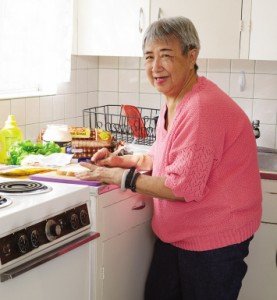
Mom, an independent spirit, insist on making lunch for the family.
“Someone has to be the leader of the care team. In my house, my wife is the care team leader for her mom and the kids. I’m the follower/supporter. My sister leads a team of her siblings to provide care for my mom. We all share the work, and my sister involves all of us in every decision. She assesses how Mom is doing and brings patience, flexibility, tolerance and creativity to the table when problems arise. Tammy’s nursing experience helps her manage not only the care, but also the family dynamics. She’s great at allowing Mom to live independently and keeping the siblings on the same page.”
Advice
“My son and daughter pitch in, too. When my son volunteered to help with caregiving, I asked him why he wanted to do it. He said, ‘I felt it was my responsibility.’ Never overlook the good heart that makes a person offer to help. It is a gift.
“We are going through difficult times as my son prepares to go to college. I am learning as I go. My family is growing from the challenge of caregiving. Growth comes when we are being tested. I have learned about priorities: a busy life comes down to what matters the most — for necessity, survival and love. It is just as important to find peace and time for yourself as it is to care for your parent — your sanity depends on it. Devote yourself to the ones you love and to yourself. And prepare and plan ahead for the financial journey — I can’t say that enough.”
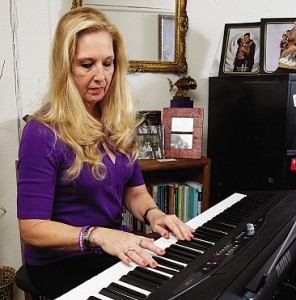
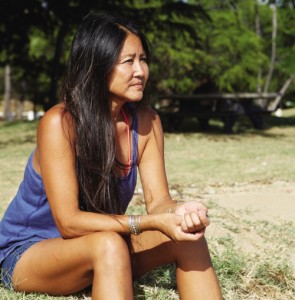
“Mom passed away in 2012. I was under so much pressure at that time. She gave me her love for music. She sang in church, and when she was severely debilitated by Alzheimer’s and dying from cancer, she could no longer speak, but when I sang her favorite hymns to her, she sang along — every word. I turn to my piano for comfort. Music reminds me of Mom, and helps me release the memories of her struggle with dementia, and how hard it was to be thousands of miles away.”
In 1966, Pamela Ah-Nee’s grandma adopted her and her brother. They were raised in a Christian home in West Virginia. In 2004, when her grandmother, who she fondly called “Mom,” first began slipping into Alzheimer’s, the distance between Hawai‘i and the East Coast became even greater. Her sister-in-law would call frequently to inform her about “forgetting,” “poor decision making” and increasingly odd behaviors. Her mom passed in 2012. Remembering and commemorating the wonderful Christian woman who loved her and taught her goodness and grace helps Pamela heal. “It helps me release the memories of her struggle with dementia and how hard it was to be thousands of miles away.”
Pamela now helps clients who are caring for their loved ones who suffer from Alzheimer’s. Her deep compassion and understanding stem from her own experience, losing the grandmother who she called “Mom.”
Loving From Afar
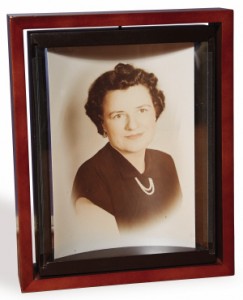
Grandma as a young woman.
“Mom was 92 and still living in our family home in White Sulfur Springs, not far from my brother, when she died in 2012. I was working and raising my five kids in Hawai‘i and could only afford to go back east for an extended visit once each December. My youngest daughter, Ka‘imi, would go to help me deep clean Mom’s home and assess how she was managing.
“Although she had Alzheimer’s, Mom died of colon cancer, which was already metastasized when doctors discovered it after she fell and broke her hip. She didn’t last long after that, but it was clear that we waited too long to get full-time in home care for her. She had been able to cover her failing memory and “fill in the gaps” for a long time before my brother and I knew that she was losing the ability to reason.
“My mom was a very religious woman who sang in the choir of the International Pentecostal Holiness Church. I was slow to begin speaking, and Mom would encourage me to sing — a hymn was my first words. Singing and music is deeply important to me, and when I want to find peace, I play my piano and sing. When Mom was dying and could no longer speak, I sang hymns to her, and she sang along — remembering every word.
“At age 70, Mom started going with the ladies of the church to a local nursing home once a week, to sing for the clients, comb their hair and take care of them. At 83 she was still volunteering at the nursing home.
“Mom was an independent and very social woman with a bright mind and a great sense of humor. She took care of Grandpa when he became ill. She was very social, but also very resourceful. My brother and I learned how to grow vegetables in her garden, we learned to hunt game and dress the meat before putting up in the freezer. She taught us Bible verses and demonstrated love, being truthful and how to help others in need. She said we should never allow others to be abused or hurt. At the end of her life, she asked my brother and me to promise we would tell people we meet that God loves them. She said there were too many people in this world who do not feel loved.
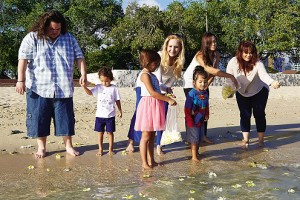
“In memory of Mom… remembering grandma and how she loved us, healed our memory of those days. We carry on the best of who she was and what she taught us.”
“When Mom became forgetful, my brother and his wife in West Virginia acted as caregiving point persons, calling and checking in on her regularly. Mom lived independently and lots of neighbors and long-standing friends visited her and checked in on her daily. If anything at all seemed wrong, they would call my brother or his wife and report it. As a counselor and an educator, I could offer advice from Hawai‘i and help assess changes on my trips to West Virginia.
“With dementia it is sometimes difficult to detect the changes in personality and behavior that are clear signs of deterioration. The family is sometimes in denial, or the loved one finds ways to cover up their forgetfulness. In Mom’s case, she was very good at “filling in the gaps” in her memory. If she were recounting a story and could not remember something, she would just make it up. As long as she had the ability to deduce — her active mind was never at a loss for an answer. At first my brother and I would correct Mom with the facts, and sit her down for a ‘reality check.’ Here we were correcting the person who taught us to be truthful at all times! We were shocked that our Mom would lie to us, and began to question if she had been lying to us all along. We missed recognizing that the behavior was a resultof the disease and reacted to her fabrications as if she were a whole person. This is a big pitfall that many family members fall into.
“‘Having a talk’ is how we might correct and train our children when they tell a lie, but the difference here is that Mom could not respond to training. She was losing her grip on reality, had a diminished ability to reason, and could not be held accountable for her actions. We reacted in frustration and anger — not realizing that the rational logic of the principled woman we loved and respected was slipping away.
“It took a long time to process the changes in Mom’s behavior, and now we can look back without negative emotions and even laugh at some of the weird stories she ‘dreamed up.’ One time my daughter and I went for an afternoon of skiing, and got caught in traffic on the way home. Grandma was in her chair weeping. ‘How did you make it through the fire?’ she asked. She was in a panic because she was watching a news report from San Diego about an arsonist, with pictures of homes on fire. She knew we were gone and thought we were the people in the fire on TV. For Mom, all sensory input became part of the ‘here and now.’
“When I was trying to get Mom to wear Poise for incontinence, we had a nice long talk about the advantages and how to use them. I told her I would buy her a large package of them at Costco.
“She replied, ‘Oh, don’t spend all that money, I will only wear them once a month — only for one or two days.” I ended up just throwing away all her scraps of cloth she was wadding up in her panties, so she had to use the Poise. That worked better than the training session.
“Another time she told people that a minister at our church had molested three girls in the church and everyone was trying to keep in under wraps. Soon, members of the congregation got up a posse to confront the minister, who was devastated. He asked, ‘Grandma, how could do this to me?” That is a question my brother and I often asked. It comes from a lack of understanding the disease of Alzheimer’s and failing to accept that your love one is not capable of rational thought. They are not making decisions based on reality or discriminating between fact and fiction.
Our Gained Wisdom…
“During the time of my long-distance caregiving, I was also educating the last of my five children, and following Mom’s passing, went through a divorce. It was a terribly painful time; full of difficulties. As far as advice for other caregivers, I think it is very important to get an early diagnosis for any kind of dementia. Educate yourself and prepare for the worst. Many caregivers take things to heart as my brother and I did. Take time to find out what others have already learned.
“If you live at a distance, you need a support team. And be sure to include anyone who knows that things are not right and wants to do part of the work. If people don’t want to help but just want to give advice, it’s best not to include them. The person with dementia needs others to accommodate their loss. At first, a person may need only prompting or a little help, but eventually, caregivers will become responsible for all personal care. Last of all … don’t forget … always remind your family member that they are loved!”
“Losing my dad, a jovial and loving man, to Alzheimer’s disease was so painful. His personality died well before his body, and while I was stressed with his care, I was also grieving — I felt very alone. I didn’t have any support systems in place. Nobody knew what I was going through. Going to my favorite beaches was the only way I could find some peace.”
Isolation is reality on Moloka‘i. Basic services are minimal: groceries, fuel, hardware, baked goods, sundries and a couple of local watering holes are about it for downtown Kaunakakai. In a small community, the coconut wireless can be a blessing and a curse, so families keep their “personal” trials secret, preferring to bear their burdens alone.
Lorri Misaki grew up on Moloka‘i helping at the family business, Misaki’s Grocery, as all her family did. In high school, she decided to follow her dreams to be a graphic artist on the Mainland, and when the time came, she returned to Moloka‘i to take care of her elderly parents.
On-the-Job Training
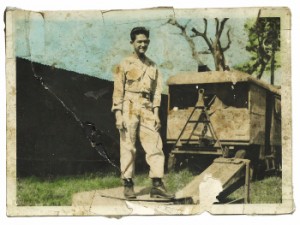
Dad during his military service.
“After 30 years in Oregon, I returned to care for my father and mother, who were getting very forgetful and hard to manage, and still working in their 80s. I really felt it was my destiny, but I didn’t know the daily struggles associated with dementia — repetitive questions and actions. Coping is even harder when the communication bridge is hampered by deafness. Dementia is different in every patient — my Dad was hyperactive and bent on running away. He could not be left alone for even a short while. It was like keeping track of a toddler who ran around all day — and then he got up at night and would go outside. “Mom suffers dementia, too, but she is not very mobile. She is very hard of hearing and just starting to get up at night.
“My mom still goes to the grocery store every day to ‘help out.’ It’s her social life and she enjoys talking to all the customers. They all make a fuss over her, too. She cannot always hear what they are saying, but the interaction brightens her spirit. When Dad was alive, I had to take him along on every errand. It was easier and safer to leave him in the car when I dropped off a bill or went into the store to get Mom. Once in a while, he would figure out how to open the car door and run away. Lucky that Moloka‘i is a small, caring place. Most everyone knew Dad, and they would call my brother at the store if they saw him out on his own. But there is a flip side. I was accused of not taking good enough care of him, too. That hurt.
“In the beginning, no other family members offered to help me and I felt too guilty to ask my brother, who is so overloaded with the store. Adult daycare is minimal on Moloka‘i, and services for dementia patients is nil, so I just managed everything on my own. After many months of sleep deprivation, I realized that my own health was in jeopardy. I did my best, but it was not working.
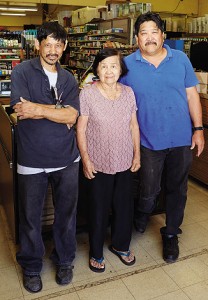
Mrs. Misaki enjoys still being able to help in the store with Lorri’s brothers, Gil and Kevin.
“Finally, my older brother, Kevin, woke up to my situation. It often takes a bad situation to create a better one. In the few hours he could spare from work, Kevin came by and cared for our dad’s needs: cook his meals and feed him. Later in the evening he returned to carry dad to bed, because I had developed back problems lifting dad on my own. Kevin did this almost every day, and he also found a day shift caregiver for five days a week.
“This caregiver was a gem! He was a great companion for Dad, and became a friend for me in those days when I had no social life. I was now able to clean the house more thoroughly, finish projects, care of my own needs and even go to the beach without worrying about my parents. But Dad got worse and became bedridden. He needed to be cleaned and turned every two hours and I became sleep deprived again.
“When our caregiver had to attend to his own family, I gave Dad 24/7-care for over a month — however, I did have help two nights a week. I continued to search for more night shift help through a service provider, but was unsuccessful. After further searching, I found a CNA through the ‘coconut wireless,’ who would work the night shift. Ahh … finally … sleep!
Slowly Passing Away
“Alzheimer’s disease hurts everyone. The person I cared for was not really my joyful Dad anymore. He spoke little and swore when he didn’t like something. He hallucinated things that were not there. Medications affect every patient differently. We finally found one that made him stop hallucinating. Over time, his kidneys began to shut down and he died in the hospital — but I had already lost my Dad long before.
Mike and Diana Misaki in their healthy years.
“Dad passed last July, and I totally miss him. Taking care of him was one of the hardest things I ever did because I loved him so much. I am very glad that I came home to care for him.
“Now it is easier just taking care of Mom. I have a caregiver one day a week so I have a full day to myself. I tell you that day is the greatest gift. I have learned a lot along the way. When I was in high school, I wanted my grandmother to live with us, but my mom didn’t want to do it. Now I understand why. My mom is 88 and her mother lived to be 101. I hate to say it, but I don’t think I can be a caregiver that long. Moloka‘i does not have a nursing home, so we are being creative and looking at care facilities on other islands.
Choosing a Caregiver
“Another concern is how my mom responds to my care. Growing up, my temperament was so different from my mom’s. She seems to relate better to my brothers. I chose to be her caregiver, but I think if it were up to her, she would want my oldest brother to care for her — she always listens to him. My mom is grateful for what I do, but in the old school, I am the youngest child and a girl. I love my mom, but really think caregiving works better if the patient chooses which caregiver they want. This person is your parent, but to accomplish what you must do and not react emotionally, you have to treat them as a patient. Sometimes what’s best for the patient is beyond your capabilities.
Lorri Recommends
“Actually being creative and finding your own solutions for your specific problems is such a big part of the caregiving job — because patients and situations are constantly changing. My advice to other caregivers is to balance your own health and the well being of your loved one. You don’t want to take your parent to a medical appointment and have the doctor admit you to the hospital! Above all, find a place where you can have time to unwind and get centered.”
THE SILVER TSUNAMI
The sandwich generation are the baby boomers who face the challenges of supporting their college-age children and elderly parents at the same time. Taking on family leadership in midlife is nothing new — Every generation takes its turn. What draws our attention to boomers are their enormous numbers — now 76.4 million in the U.S.
According to the latest U.S. Census Report, 76.4 million baby boomers born between 1946 and 1964 began turning 65 in 2011. As they continue to become seniors, the “65-and-older” segment of the U.S. population will slowly swell to 20 percent by 2029.
Census data also shows that 18 percent of America’s families are comprised of three to four generations. The number has doubled since 1980 because 24- to 35-year-old adult children are living with their parents. The greatest increase was during the great recession of 2007–08, but the upward trend continues.
Sandwiched baby boomers will face steep financial challenges twice in their lives: caregiving their family, and caring for themselves in old age:
The Cost of Long-term Care in Hawai‘i
Adult Daycare (5 days/week) $ 18K
Homemaker Services (5 days/week) $ 49K
Home Health Aids (5 days/week) $ 52K
Assisted Living $ 50K
Nursing Home: semi-private $ 128K
private $ 145K
Source: AARP 2011 Survey
The Cost of Higher Education
Private College Annual Tuition $ 31K
Public Universities Annual Tuition:
In-state students $ 9K
Out-of-state students $ 23K
Source: 2014 College Handbook
Baby Boomers who have built successful careers and investments for the future are now experiencing the physical, emotional and financial outcomes of caring for their aging parents, while they meet the expense of college or support for adult children who choose to live at home. Boomers who did not plan ahead or who lost…
With a growing older adult population and increasing number of prescriptions available, the potential for medication safety problems is expanding. As people age, they may be prescribed more than one medication. This increases the risk for drug interactions and side effects. Age-related changes in the kidneys, liver and central nervous system also put seniors at increased risk for medication side effects.
According to the Centers for Disease Control and Prevention (CDC), adverse drug events result in over 700,000 visits to hospital emergency rooms each year. Many adverse drug events can be prevented. All persons taking warfarin, blood thinners, insulin or oral diabetes medications are at high risk for hospitalizations.
The wise use of medications can greatly benefit older adults by reducing unnecessary hospitalizations, preventing premature death, as well as maintaining independence.
Are over-the-counter medications safe?
Nonprescription medications are convenient and many of these products can temporarily relieve minor conditions such as headaches, cold symptoms and indigestion. However; each year, seniors are hospitalized from problems related to nonprescription medications. Seniors need to check with their doctor first if it is OK to take a nonprescription medication.
What factors put seniors at high risk for medication problems?
Living alone
Taking three or more medications
Memory problems
Prescriptions from multiple doctors
Filling prescriptions at multiple pharmacies
What safety tips are recommended for good medication management?
Carry a list of medications at all times
Bring all medications in a bag to every doctor visit
Inform the doctor of over-the-counter medications
Ask questions about the side effects
Avoid alcohol
Do not share medications with friends or family
Read prescription labels and follow directions
Report problems to the doctor
Use a pillbox to hold medication for the week
Dispose of medications that are expired or unwanted
For more information on properly disposing your unwanted drugs, call the State Narcotics Enforcement Division at 808-837-8470 and ask about the Hawai‘i Medication Take-Back Program. This program takes place about four times a year in various communities. Check online at www.dea.govfor a list of take-back locations. Also, you may read about it more in Generations Magazine’s 2014 April/May issue.
With a growing older adult population and increasing number of prescriptions available, the potential for medication safety problems is expanding. As people age, they may be prescribed more than one medication. This increases the risk for drug interactions and side effects. Age-related changes in the kidneys, liver and central nervous system also put seniors at…
My patients often ask: “Doctor, what can I do to save or preserve vision for myself and my family?”
Prevention: Wear sunglasses! Over time, sunlight damages the lens of the eye, causing cataracts. More Medicare dollars are spent for lens replacements than for any other kind of surgery. The average age for cataract surgery is 72. Sunglasses slow the development of cataracts, and that goes for kids, too. Prevention and treatment of visual problems in childhood results in improved vision throughout life. Don’t smoke. Smoking makes you four times more likely to develop cataracts. Exercise and a healthy diet are important, too.
Early Detection: Get regular eye exams! We seniors may develop disorders like age-related macular degeneration (AMD) and loss of reading vision. Vitamins and minerals found in some foods and NIH-approved dietary supplements may help Dry (without bleeding) AMD to some degree.
“Wet”(bleeding) AMD occurs in 15 percent of patients. Treatment calls for injections into the eye every four to six weeks — probably for life.
People with diabetes suffer bleeding and swelling of the retina, inside the eye. Anyone may develop glaucoma, or “hard eyeball disease,” which is treated with eye drops and lasers. The earlier you seek treatment the better. Getting checkups can help save your vision.
My patients often ask: “Doctor, what can I do to save or preserve vision for myself and my family?” Prevention: Wear sunglasses! Over time, sunlight damages the lens of the eye, causing cataracts. More Medicare dollars are spent for lens replacements than for any other kind of surgery. The average age for cataract surgery is…
Alzheimer’s is a progressive illness that involves the destruction of brain cells. In its earliest stages, symptoms include a decrease in short-term memory and forgetfulness, often accompanied by a diminished ability to find words. Emotional and personality changes in the early stages maAlzheimer’s is a progressive illness that involves the destruction of brain cells. In its earliest stages, symptoms include a decrease in short-term memory and forgetfulness, often accompanied by a diminished ability to find words. Emotional and personality changes in the early stages may include depression, anger and paranoia. As the disease progresses, the memory loss becomes severe and may be accompanied by marked disturbances in behavior and emotion; the ability to reason is lost. In its final stages, a person is unable to perform most tasks and requires total assistance with feeding, bathing and basic hygiene.
Twenty-six-thousand people have been diagnosed with Alzheimer’s in the state of Hawai‘i as of the year 2015. Alzheimer’s ranks as the sixth leading cause of death nationwide. Of the top 10 causes of death in America, it is the only one that cannot be prevented, cured or slowed. Almost two-thirds of Americans with Alzheimer’s disease are women. One in three seniors die with Alzheimer’s or another dementia. Payments for health care are estimated to reach $226 billion in 2015. If medical researchers cannot find a solution to the disease, Alzheimer’s is estimated to be the number one disease which will bankrupt the health care system.
If you or a loved one has been diagnosed with Alzheimer’s or a related dementia, you are not alone. Go to www.alzheimernavigator.org to create a customized action plan and connect with local support services.
Alzheimer’s Association Aloha Chapter 24/7 Helpline: 1-800-272-3900 Informtion and Virtual Library: www.alz.org
Alzheimer’s is a progressive illness that involves the destruction of brain cells. In its earliest stages, symptoms include a decrease in short-term memory and forgetfulness, often accompanied by a diminished ability to find words. Emotional and personality changes in the early stages maAlzheimer’s is a progressive illness that involves the destruction of brain cells. In…
She works on her health and fitness every day with Diane Cadinha.
Our friend Joanie Packer says she doesn’t worry about things she can’t do anything about — so she lives in the present, works at being as healthy as possible and tries to show appreciation to those around her.
At 94, how is your life different than when you first retired?
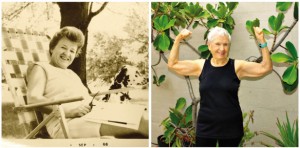
(left) Joan Packer at 49 yrs. and (right) at 94 yrs.
Joan:Back in Missouri, I used to rise at six a.m., spend my days teaching high school English and dream about a life of leisure when I could sleep late. But when I did retire, I was bored and depressed. In my 70s I moved from my farm to a condo in Waikiki. When I saw how physically fit and healthy everyone looked walking around Kapiolani park, I decided I wanted to be like that, too. Now, 28 years later, I exercise six days a week and I’m no longer bored and depressed.
Six days a week sounds like a lot. What kind of exercise classes are you taking?
Joan:It didn’t happen overnight. At age 77, I started an exercise plan. We began with tubing and light weights, and worked up to the stability ball and balance work to prevent falls. Strength training keeps my muscle mass and bone density, so I don’t get frail and weak. The better I feel, the more I want to try other classes like Pilates and Yoga. In class we all encourage each other.
Believe me, I am inherently lazy and do not really relish working out. So going to classes and having a trainer to ride herd on me and hold me accountable is important. I figure my health and independence are worth the effort.
What else you do to stay fit?
Joan:I think walking is really important. On the days I don’t walk to class, I walk around the park, the zoo and sometimes up Diamond Head Road. That 40- to 60-minute trek never fails to make me feel better than when I started out. Socializing is also healthy and fun. Two days a week, my group does tai chi in Kapiolani Park.
Besides exercise — do you have any other recommendations?
Joan:Food! I gave up my starchy Midwestern farm fare for fruits, vegetables, fish and poultry, soups and lentils. Now I crave healthy foods. I also recommend a positive mental outlook — that makes life fulfilling at any age.
Our friend Joanie Packer says she doesn’t worry about things she can’t do anything about — so she lives in the present, works at being as healthy as possible and tries to show appreciation to those around her. At 94, how is your life different than when you first retired? Joan: Back in Missouri, I…
If you handle the finances for a Social Security beneficiary or know someone who may need help managing benefits, you may consider applying to become a representative payee.
A representative payee is someone who receives Social Security or Supplemental Security Income (SSI) payments on behalf of a person not capable of managing the funds on his or her own. A representative payee meets the individual’s basic needs by using the money to provide food, clothing, and shelter for the person and saving any left-over money in an interest-bearing account or as savings bonds for the beneficiary’s future needs.
As a representative payee, you must:
know the person’s needs so you can decide how to meet those needs with the benefits provided.
be responsible for letting Social Security know about any changes that may affect the person’s eligibility for benefits or the payment amount.
complete a yearly report of how the funds were spent. (You can do this online.)
To help a friend who receives Social Security or SSI benefits and is not able to manage his or her own finances, help them contact us. Social Security will help determine if a payee is needed and who would be best suited to act in that capacity.
Thank you to all caregivers and represntative payees helping people in need.
_________________________________ Questions, online applications, or to make an appointment to visit a Social Security office, contact: 1-800-772-1213 (toll free) | 1-800-325-0778 (TTY) www.socialsecurity.gov
If you handle the finances for a Social Security beneficiary or know someone who may need help managing benefits, you may consider applying to become a representative payee. A representative payee is someone who receives Social Security or Supplemental Security Income (SSI) payments on behalf of a person not capable of managing the funds on…
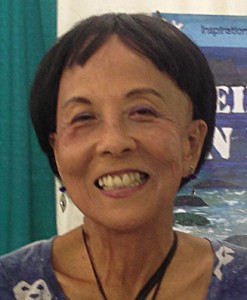
It is said that many people want to write a book, but few do. Keiko Higa did it, and rich memories about growing up in Hawai‘i will inspire you to get started on your own story — even if it’s only for your grandchildren.
Like so many “locals,” Higa comes from many cultural traditions. Her dad was Japanese, her mother Okinawan and her husband Filipino. Add to that her respect for Hawaiian culture and you have “chop suey” talk story — something for everyone. Woven through family history, descriptions of local places and times past, are Higa’s heartfelt concerns — social injustice of the Japanese internment era, low plantation wages and tracking by race when she was in school. Higa was educated at UH Manoa, Claremont School of Theology and UC Berkley, and was a city planner for the City of Las Vegas. Her stories are at once ethereal and mundane. She mixes the salt of her ideas on global oppression and colonization with the pepper of pidgin poetry, ethnic traditions and church potlucks. It is local, candid and engaging. Even if you do not agree with her views, you will understand exactly how she came to them — and respect her courage to put words into action, and follow her deep passion for justice and peace.
She also does talks for community groups. For information and details call,808-944-0317.
It is said that many people want to write a book, but few do. Keiko Higa did it, and rich memories about growing up in Hawai‘i will inspire you to get started on your own story — even if it’s only for your grandchildren. Like so many “locals,” Higa comes from many cultural traditions. Her…
Kirk:We hear a lot about the Sandwich Generation these days.
Linda:You know me … I love a sandwich.
Kirk:No, we’re talking about the generation that has to take care of their parents and their children; they’re in the middle.
Linda: Baloney!
Kirk:Not! Not that kind of sandwich. More than ever, there are three generations in one household. Sandwiches are stacking up.
Linda:But a sandwich needs condiments — mayonnaise, lettuce, mustard.
Kirk:Exactly. That’s where resources come in — resources that can help the sandwich generation cope. Generations Magazine includes a lot of assistance that way.
Linda:So instead of a club sandwich, it’s a… sandwich club!
Kirk:And the club is growing. One in eight Americans are in the sandwich generation and the number is likely higher here in Hawai‘i. The important thing to remember is you are not alone.
Linda:What happens if there’s a “next” generation added? Do you want small fries with that?
Kirk:Good question. It helps to think of that ahead of time. By the way, if you were a sandwich, what kind would you be?
Linda:I would be a sweet honey on nut bread.
Kirk:I’d go along with that. What kind would I be?
Linda:You would be a ham on wry!
Retired broadcast personalities and Journalists Kirk Matthews and Linda Coble speak from the heart on issues concerning boomers and seniors. Post comments for them on Generations808.com.
Kirk: We hear a lot about the Sandwich Generation these days. Linda: You know me … I love a sandwich. Kirk: No, we’re talking about the generation that has to take care of their parents and their children; they’re in the middle. Linda: Baloney! Kirk: Not! Not that kind of sandwich. More than ever, there…
Dental toxicity can occur when materials placed in a patient’s mouth cause that person’s immune system to react and “reject” the restoration. Serum compatibility testing provides dentists with one way to help determine which materials will react in a test tube with a patient’s serum proteins. Today’s dental patients have the opportunity to select:
Highly aesthetic, tooth-colored fillings — created and placed during a single dental appointment, with no temporary crown.
Metal-free, bio-compatible materials for restorations that will not cause an allergic reaction with the body.
CEREC Restoration
The CEREC procedure was developed at Zurich University 25 years ago. The CEREC system uses restorative material and the conservative removal of dental enamel to restore the diseased tooth.
In the past crowns were made for teeth requiring removal of a lot of tooth structure. With the new materials, the dentist can preserve precious tooth enamel and effectively restore the tooth. Enamel is the only tissue in the body that once removed, will not regenerate.
Hawaii Center for Cosmetic & Laser Dentistry 808-526-0670 | www.smilepower.net
Dental toxicity can occur when materials placed in a patient’s mouth cause that person’s immune system to react and “reject” the restoration. Serum compatibility testing provides dentists with one way to help determine which materials will react in a test tube with a patient’s serum proteins. Today’s dental patients have the opportunity to select: Highly…
According to an article published in the Wall Street Journal on May 14, 2012, if you are married and you and your spouse both reach the age of 65, there is a 70 percent probability that one of you is going to need long-term care. As if that is not troubling enough, a great many of us are completely unprepared to pay the cost of long-term care. Skilled nursing in Hawai‘I can easily top $8,000 per month. How do people handle that?
For those of us who are not incredibly wealthy, one approach is long-term care insurance. You should talk with an insurance agent who focuses on the complexities of long-term care insurance before you plunk any money down. The older we get, the odds of being insurable decrease, and the premiums get higher. The bottom line is that the sooner you look into long-term care insurance and get your policy in place, the more likely you will be able to afford the premiums.
An alternative to insurance is Medicaid. It goes by different names in different states (Hawai‘i’s version is called MedQUEST), but it is run jointly by our federal and state governments. The federal government sets the overarching rules and provides funding. States are allowed to adopt their own rules for qualification and enforcement. Think of it as government nursing home care insurance for those with limited financial resources.
Medicaid is “means-based.” Having too much income or too many assets will disqualify a Medicaid applicant. However, having “assets” is not the same as having the money to pay for care. Those undeveloped lots in Nevada that you own, are assets, but they may be impossible to sell.
For those with assets exceeding the Medicaid limits, giving assets away may disqualify them from Medicaid assistance too — if the transfers violate the “look-back” period designed to keep people from gaming the system. Of course, a kupuna might have had innocent intentions when making a disqualifying gift — before the need for long-term care arose. Regardless, any gift (even charitable) is a red flag on Medicaid applications.
Each state takes a different approach; it is easy to run afoul of the rules and be disqualified from benefits. The good news is that knowing the rules can help you plan for a worst-case scenario where you or a loved one might need assistance with long-term care costs.
Another critical consideration is that Medicaid may limit your options for care facilities or quality of care. So we should not all assume that Medicaid is the best option for us or our family.
Scott Makuakane, Counselor at Law Focusing exclusively on estate planning and trust law. Watch Scott’s TV show, Malama Kupuna Sundays at 8:30 p.m. on KWHE, Oceanic channel 11 www.est8planning.com O‘ahu: 808-587-8227 | maku@est8planning.com
According to an article published in the Wall Street Journal on May 14, 2012, if you are married and you and your spouse both reach the age of 65, there is a 70 percent probability that one of you is going to need long-term care. As if that is not troubling enough, a great many…
Wanda (not her real name) took out a home equity loan on her Waianae house. She intended to renovate her home so that her adult daughter could move in, care for Wanda and help repay the loan. Once the $290,000 was in their joint checking account, however, her daughter withdrew it and took her family on a first-class trip to Disney World. Wanda has not seen her daughter for two years and is now going through the foreclosure process.
Steve (not his real name) was the caregiver of his disabled sister and had established a sizable savings account for her care. When Steve’s daughter offered to help care for her aunt, Steve gladly accepted and gave her access to the bank account. After six months of being a caregiver, she withdrew all the money from the bank account (about $120,000) and moved in with her new boyfriend.
These are just two calls I got recently from victims who wanted to report what happened to them, but did not want the police to get involved. Their voices were full of despair and frustration. Each could not believe what had happened, and despite the fact that they were informed a crime had occurred, did not want the police or the court system to get involved — even if that was the only way to get their money back.
As a deputy prosecuting attorney in charge of the Elder Abuse Unit, I advocate that all cases of financial abuse be reported to the police, even if the person taking the money is an adult child or another relative of the victim. It is not blind faith in the criminal justice system that leads me to this school of thought. Twenty years of experience has proven to me repeatedly that showing “tough love” and calling the police on a loved one who has stolen money is actually helping that person stop a behavior, like drug usage, which will prove harmful to them in the long run.
More than once have I had parents call me up years after their child had been arrested to thank me for the work our office and the court system did to help their child get their life back on track. Drugs, alcohol, gambling or mental health issues have ruined the lives of many people and have caused family to victimize family. Oftentimes, those suffering from these afflictions will promise their kupuna they will get help, only to later on steal from them to feed their habit. Police intervention gives these people opportunities to either go to counseling or go to jail. Often they choose to get help and rehabilitation, with good results.
If you are in a situation where you have been the victim of a crime committed by someone you know, please call the police. There is no shame in reporting a loved one’s destructive actions to someone who can force them into a rehabilitation program or other help they may need. It’s hard to do, but that is why it’s called “tough love.”
Wanda (not her real name) took out a home equity loan on her Waianae house. She intended to renovate her home so that her adult daughter could move in, care for Wanda and help repay the loan. Once the $290,000 was in their joint checking account, however, her daughter withdrew it and took her family…



 With a growing older adult population and increasing number of prescriptions available, the potential for medication safety problems is expanding. As people age, they may be prescribed more than one medication. This increases the risk for drug interactions and side effects. Age-related changes in the kidneys, liver and central nervous system also put seniors at increased risk for medication side effects.
 Prevention: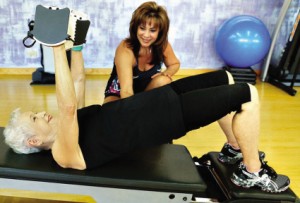
 It is said that many people want to write a book, but few do. Keiko Higa did it, and rich memories about growing up in Hawai‘i will inspire you to get started on your own story — even if it’s only for your grandchildren.
 of local places and times past, are Higa’s heartfelt concerns — social injustice of the Japanese internment era, low plantation wages and tracking by race when she was in school. Higa was educated at UH Manoa, Claremont School of Theology and UC Berkley, and was a city planner for the City of Las Vegas. Her stories are at once ethereal and mundane. She mixes the salt of her ideas on global oppression and colonization with the pepper of pidgin poetry, ethnic traditions and church potlucks. It is local, candid and engaging. Even if you do not agree with her views, you will understand exactly how she came to them — and respect her courage to put words into action, and follow her deep passion for justice and peace.