When Wendell Murakawa retired from the Hawai‘i Department of Public Safety, he planned to “you know, take it easy, relax, hang out with my friends, drink, eat and enjoy life.” Then his doctor told him he had type 2 diabetes. “I knew I was overweight and began to watch my diet,” said Wendell. “But I noticed if you don’t exercise, the sugar number doesn’t go down — no matter what you eat.”
I first met Wendell two years ago at my fitness seminar at the Generations Magazine/KHON2 Aging in Place Workshop. My 94-year-old client, who had never exercised until she was 77, inspired him. Wendell thought, “Okay, I’m 66 — there is hope for me.” He was in bad shape; on medications for high blood pressure, high cholesterol, gout, irregular heartbeat and now, diabetes.
He told me, “Diane I want to learn to live a healthy lifestyle, free from pain and medications. I don’t want to be dependent on my family.”
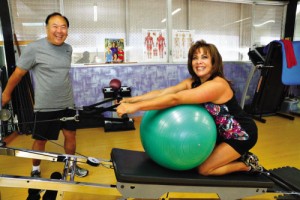
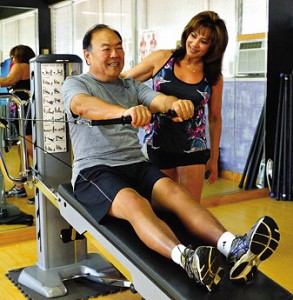
But Wendell had no idea what a healthy lifestyle was. Little by little, he adopted all new habits — drinking more water and less alcohol; eating more fruits and vegetables. When he wasn’t reporting to me for weight, balance and flexibility training, he walked and stretched for an hour.
Because Wendell had never exercised, learning proper form, and how to breathe and stretch properly were a challenge. There were times he wanted to quit and I would have to remind him why he came to me in the first place — to get healthy.
Wendell began to see results working out with me three days a week and continues to move forward on his journey towards a healthy lifestyle. I am so proud of him!
Last month, his doctor took him off his diabetes medicine. At this year’s Aging in Place Workshop, Wendell told his story in his own words: “Diane showed me the way back to health. She pushed me and gave me the confidence to succeed. I had no idea how sick I was or how healthy I could be. All my friends are amazed—including me! One of them thought I had a facelift!”
Now Wendell is the one inspiring others! This is why I love my job!
When Wendell Murakawa retired from the Hawai‘i Department of Public Safety, he planned to “you know, take it easy, relax, hang out with my friends, drink, eat and enjoy life.” Then his doctor told him he had type 2 diabetes. “I knew I was overweight and began to watch my diet,” said Wendell. “But I…
Did I hear right? “My brother threw a shoe at my mom.” “My sister cracked a dinner plate over my head.” “My brothers stopped giving me my inheritance.” “My mother hates me, favors my brother, even if I’m her primary caregiver.” “No one thanks me for what I do.”
These are true gripes from frustrated family members caring for their loved ones who are aging, ill or dying. Rather than relish these awesome “Golden Years” together, caregivers and elders experience an awful time, racked with screaming matches, tantrums, smear tactics and guilt. Some families waltz with each other, twirling around oncoming challenges in their path; while others fume and bicker in family feuds, dragging each other down with every encounter.
Best-selling author Atul Gawande writes, in his book, Being Mortal: “But once parents were living markedly longer lives, tension emerged. For young people, the traditional family system became less a source of security than a struggle for control — over property, finances and even the most basic decisions….”
It behooves caregivers to invest in professional coaching to resolve family fights, heal hurt and speak to each other in new ways. Proven formulas that improve family relationships can be learned and practiced. Your family can choose to forgive each other, increase harmony and work together to celebrate the transition of your loved ones.
For a schedule of free library workshops on how to heal and rebuild family relationships, visit my website listed below.
Life Coach Village, LLC 2383 Beckwith St., Honolulu | 808-372-3478 ap@annettepang.com | www.legendarywisdoms.com
Did I hear right? “My brother threw a shoe at my mom.” “My sister cracked a dinner plate over my head.” “My brothers stopped giving me my inheritance.” “My mother hates me, favors my brother, even if I’m her primary caregiver.” “No one thanks me for what I do.” These are true gripes from frustrated…
If diet can affect our chances of getting diabetes and heart disease, what about Alzheimer’s disease? Medical studies indicate that we may lower our risk of Alzheimer’s disease simply by getting better nutrition. During the course of this dementia, half of the brain cells may die off. Certain foods can be protective and help us keep our brain cells alive. Alzheimer’s may start years before diagnosis, so it is never too early to use risk-reduction methods.
How can we protect our brains?
A diet high in antioxidant fruits, beans, nuts and vegetables can protect our brain cells. In the “Nurses’ Health Study,” researchers found that dementia was delayed an average of two years with just a cup of berries daily. Nearly 93 percent Americans lack vitamin E in their diet. Just a handful of walnuts and sunflower seeds daily can supply enough vitamin E to keep brain cells alive. Enzymes that protect our brain cells from destruction depend on four minerals: copper, zinc, manganese and selenium. Since we may not eat these minerals every day, supplements are available to supply them. Vitamin C found in fruits and vegetables is necessary to protect our brain cells. Many Americans do not even get the daily minimum 75 milligrams of vitamin C. In our current Hawaii Dementia Prevention Trial, patients receive 800 milligrams of the ascorbated form of vitamin C every day.
Getting blood to the brain
Our brains need good blood circulation to keep memory sharp. Arteries in the brain can become clogged up like heart arteries. Tiny pieces of plaque may break off and block blood supply to a section of the brain, causing mini-strokes, and leading to eventual memory problems. Limiting intake of saturated fat can keep our brain arteries clean and reduce high cholesterol associated with formation of Alzheimer’s plaques in the brain. Animal fat is the chief dietary source of saturated fats. In our clinical trial on nutrition and dementia, patients get very small amounts of cheese, beef, pork and butter. By contrast, fish are low in saturated fat.
What to do?
Diet is a powerful tool in building good health. Please consider eating more whole, fresh fruits and vegetables, along with some nuts, beans and whole grains. For one-on-one nutritional counseling, memory evaluations or to participate in dementia clinical trials, please contact Hawaii Pacific Neuroscience Center.
Healthy food choices …
decrease the risk and progression of dementia.
Protecting your brain cells with diet can be
easy, cheap and delicious:
• A cup of berries daily
• A cup of cooked green vegetables daily
• A handful of nuts or seeds daily
• Less animal fats from cheese and meat
• Brain and body food supplements:
– Folate and vitamin B12 –
– Zinc, copper, manganese and selenium –
– Ascorbated vitamin C –
– Vitamin E –
(as gamma and alpha tocopherol)
Hawaii Center for Healthy Aging & Memory Hawaii Pacific Neuroscience Center — Honolulu & Windward 808-261-4476 | www.HawaiiNeuroscience.com
If diet can affect our chances of getting diabetes and heart disease, what about Alzheimer’s disease? Medical studies indicate that we may lower our risk of Alzheimer’s disease simply by getting better nutrition. During the course of this dementia, half of the brain cells may die off. Certain foods can be protective and help us…
If you have heard of the centuries-old myth of the mystical Fountain of Youth, you know it was rumored to be a spring that healed and restored the youth of anyone young or old, lame or sick, who would drink from it or bathe in its waters. Explorers spent their lives searching for such a spring, but… was it only a dream?
A short peek into the lives of three Hawai‘i residents, recently crowned Ms. Medicare™ 2015, reveals the curious nature of youthfulness — it flows from within…
The inaugural Ms. Medicare,™ “Age of Elegance” pageant, held last year in Hawai‘i, was the very first of it’s kind. The idea, which became the mission for the competition and celebration, was my notion that qualifying for Medicare at age 65, or at any age due to disability, does not diminish an individual’s vitality or relevance in life. In fact, it seemed to me that Medicare supports healthy aging. Ms. Medicare titleholders promote this mission, acting as role models for those newly eligible for Medicare or existing Medicare beneficiaries who remain healthy and continue to enjoy an active life, long after Medicare age. Crown holders want other Medicare beneficiaries to learn more about the value of government health programs like Medicare and Medicaid. By appearing at health fairs and events focused on aging and healthy living, the pageant winners share their own personal experiences as Medicare beneficiaries. The titleholders focus on Medicare program affordability, beneficiary rights and protections, quality of care, preventive screenings, and freedom to choose plan type and options. They also share how Medicare coverage allows them to continue to live life to its fullest without concern about increasing healthcare needs, which may arise as they age. Each Ms. Medicare is eager to share how Medicare works for them, regardless of the health plan they have chosen to provide their coverage. This year’s sponsors include KNDI radio, Ohana Health Plan, Get2insurance.com, and Southern Insurance Group.
“ Our bodies are our temples and God made us all wonderful. I nourish myself, my family,and friends with natural whole foods and nutrients, which allows energy and vitality to flow within us. This is how we enjoy and sustain healthy, productive lives.”
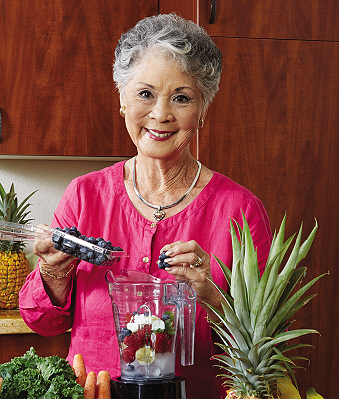
Lorraine Bachran making smoothies
Laurie Bachran, at age 86 years young, holds the title of Ms. Original Medicare. Original Medicare provides coverage for a portion of the costs for core benefits like in-patient hospital care under Part A and Part B doctor visits, lab work etc. Original Medicare beneficiaries can pair their coverage with a stand-alone Part D prescription drug plan, and/or a Medicare supplemental plan, to cover some or all of the costs not covered by Original Medicare.
Laurie is truly an “original.” In the 1970s, decades before the current trends of juicing, raw diets or “fasting” periodically to cleanse the system, Laurie owned and operated Living Foods health-food store in Kane‘ohe, the place to go for delicious freshly made smoothies, organic food and herbal supplements. If you catch up with Laurie at home, she will blend you a nutritious smoothie. You will certainly find restoration in her personal warmth and energy, in the brief minutes it takes her to whip up your drink. A cornucopia of healthy fruits and vegetables is a constant staple in her kitchen.
Laurie, was born in the late 1920s, and returned to Hawai‘i after college in 1949 with her husband, Bill Bachran, whom she met during a production of The Mikado. Bill worked as a media and public relations consultant for over 40 years. He managed the Hawaiian Open and Sony Open in Hawai‘i media room for decades and was fluent in Japanese. Bill’s work allowed Laurie and Bill to meet and enjoy the company of Frank Sinatra, Norman Rockwell, Gary Cooper, Arnold Palmer, Tiger Woods — all originals in their fields. Their marriage of 60-plus years produced three sons, three daughters, 10 grandchildren and 13 greatgrandchildren. Bill credited Laurie with keeping him vibrant and healthy as he continued to work long after he became an octogenarian.
Now in her eighties, in addition to appearances as Ms. Original Medicare 2015, Laurie continues to work as a beauty consultant for Better Health Unlimited and as a member of the Xyngular Corporation. Elite American Health trade association recently recognized her dedication, leadership and achievements in nutritional counseling. Laurie educates individuals interested in learning habits that produce healthy lifestyles and enhanced quality of life. In addition, she is a highly sought after public speaker and author of two cookbooks: Mrs. Hawai‘i’s Cookbook and Mrs. Hawai‘i’s New Cookbook. She also holds a master’s degree in theology, and volunteers at River of Life shelter. She used to teach Bible studies throughout the islands and served as a co-pastor for New Hope Christian Fellowship. She believes a joyful spirit and spiritual strength are the keys to a rich, satisfying life.
Tutu Laurie and her grandchildren are all “in the pink”— her favorite color — enjoying an outing at Kane‘ohe Bay.
The nature of Laurie’s youthfulness begins with healthy nutrition, regular exercise, and drinking healthy amounts of water. Once tapped, a mystical “Fountain of Youth” seems to spring from her in all directions. Just meeting her leaves you feeling refreshed and optimistic.
If wife, mother grandmother, great-grandmother, entrepreneur, pastor and author is not enough to convince you of her vitality, Ms. Original Medicare is not Laurie Bachran’s first pageant title — and even at the age of 86 — it’s not necessarily her last. Laurie competed in a national contest sponsored by AARP and was selected as one of AARP’s Fresh Faces of 2008. In 1963, two years before The Medicare Act was signed into law, Laurie was crowned Mrs. Hawai‘i.
Four generations of the Bachran clan now pursue active healthy lives in Hawai‘i. Laurie maintains a healthy lifetyle, mindful of her diet, exercise and water intake. She also models and teaches her family the tenets of her Christian faith, which offers strength and joy for a rich and satisfying life.
Original Medicare celebrated it’s 50th birthday in July — how fitting that Laurie be crowned Ms. Original Medicare 2015. She is a true original. Laurie will likely continue to be active and vibrant until age 100. Stay tuned — you may see her in a 2030 Ms. Original Centenarian Pageant!
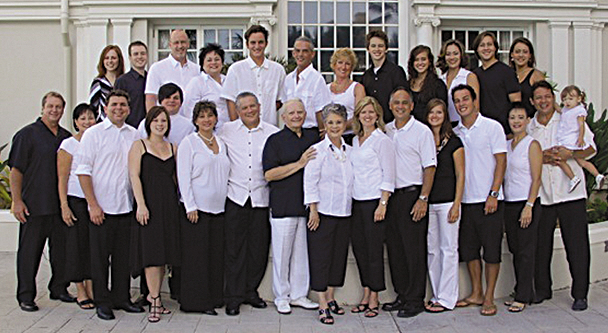
“There is great strength coming from connection with family and friends. Watching families develop common goals, encourage each other and grow spiritually fuels my life energy. It is important to show love and be surrounded by people you love. My family is my Center.”
Fay Rawles Schoch was crowned Ms. Medicare Advantage™ 2015, representing those beneficiaries who choose to get their Medicare coverage from a private insurance company. These plans are known as Medicare Advantage plans under the category of Medicare Part C programs. A government publication, Medicare & You 2015, lists AlohaCare, Kaiser, HMSA, Humana, Ohana Health Plan and UnitedHealth as health organizations that offer Medicare Advantage plans to Hawai‘i Medicare beneficiaries.
Fay has had long and diverse careers as an insurance executive, bank trust officer, offshore cruise-line human resources director, and certified Adlerian parent educator and writer. All her pursuits demonstrate a deep connection with the world around her, but her deepest passion is her work as a parenting educator and writer.
Fay continues to conduct parenting workshops and develops written materials for them. Now in her early 70s, she and Robert Schoch are married for more than 40 years. They met at an insurance conference and on their first date Fay learned that Robert was a single dad raising two girls and a boy. After a short courtship, they married.
At the young age of 25, Fay became the parent of three toddlers under the age of five. As a new wife and stepmom, Fay discovered the work of German psychologist Alfred W. Adler. It resonated with her as the perfect prescription for managing her instant family. Fay began absorbing Adler’s work and applying his concepts at home. She credits her ability to smile through tough times and challenges of rearing a family to her Adlerian training. It teaches that we cannot control events, but we can control how we respond to them. Adlerian theory of parenting takes a holistic approach to mutual respect and accepting responsibility for behaviors . Counselors teach, guide and encourage children with the ultimate goal to promote each individual’s sense of belonging, and to increase their social interests and societal contributions. Adlerian techniques focus on all family members valuing each other, staying connected and participating in “family meetings,” where everyone is encouraged to share their concerns, successes and challenges.
As the children reached their teenage years, Fay found she was expecting; soon she had a blended family, with the oldest in her 20s and the youngest in diapers. Adlerian parenting techniques again proved most valuable.
Each sibling accepted and doted over their little sister; they remained close even as college and relationships drew them away from home. Fay’s youngest became a great athlete, comfortable playing soccer and football. With her parent’s support, she successfully petitioned to compete on a Pop Warner football team. After graduating from Punahou School, she received a congressional appointment to attend the United States Merchant Marine Academy in New York, served on the high seas for six years and is now a Coast Guard reservist, USCG Third Assistant Engineer. Fay’s daughter also earned her masters degree at the Massachusetts Institute of Technology. She is currently an executive with Intel Corporation and lives in Silicon Valley with her husband and two children. As she raises her own toddlers, She uses Adlerian parenting concepts and frequently consults with mom for new tips.
Fay has been teaching Adlerian theory parenting classes for more than 25 years and is a founding director of the Family Education Training Center of Hawai‘i (FETCH). Many of her former students are grandparents now, who return to her classes to share their successes using techniques Fay taught them — and to keep learning Adlerian techniques that help them care for their grandchildren.
For Fay Rawles Schoch, the important connections to her husband and children radiate out to grandchildren, community and the world beyond. In her travels to the Vatican and Spain, she experiences the novelty, beauty and value of all people.
Fay maintains a busy schedule, traveling to Europe to see family and friends, visiting her adult children and grandchildren on the West coast, and teaching parenting classes. She loves attending a water aerobics class offered by the Windward YMCA. Fay smiles easily and has a sense of humor that brings a smile to everyone she meets. At age 72 years young, her skin is smooth and flawless and her shoulder length hair perfectly frames her lovely smile. Fay radiates a light and joy that are consistent with the benefits of the legendary “Fountain of Youth.” Her lifelong practice of Adlerian concepts has allowed all who partake of her wisdom to enjoy a sense of belonging, well-being and a connectedness to family, friends, community and society as a whole. A simple hug or “aloha” from Fay triggers a sense of well being — that all is okay in the world and your presence in it makes life better.
“As a child, my mother stressed the importance of correct posture… That coaching opened many opportunities and fortune; and led to the physical lifestyle I have today. I am forever grateful for her investing in me. Her care and wisdom continue to burn brightly within me.”
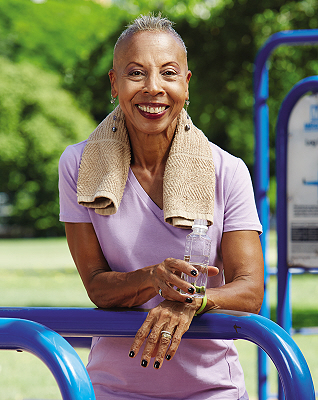
Terri Rainey represents our Ms. Medicare/Medicaid Dual Eligible pageant title. Medicare beneficiaries who qualify for both federally administered Medicare and full Medicaid benefits from their State health program are known as “duals.” If a Medicare beneficiary is dual eligible, they can join a Medicare Special Needs Plan or SNP. Health plans that offer Medicare SNP’s, provide a valuable service for duals by coordinating benefits between the Federal Medicare program and State Medicaid plan to ensure the beneficiary has a seamless experience accessing benefits from both programs.
Nubian Pageant winners.
Our youngest crownholder at the young age of 68, Terri Rainey is elegant and charming. As a personal trainer and life coach, Terri has the physique of a ballerina and the grace of a European princess. It will come as no surprise that as a young child, Terri was a music prodigy and child model. She also competed and was crowned Miss Fashionetta 1965 and Mrs. Ebony World Hawai‘I 1992. Terri is the co-owner of Nubian Pageant Systems® and has been a judge or consultant for many local pageants, including Miss Hawai‘i USA, Miss Cherry Blossom, Miss Filipino Hawai‘i and the National Miss United Way.
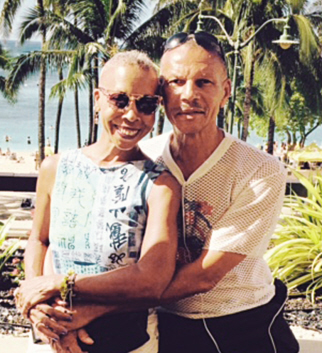
Pageant owner Terri Rainey and her husband George mentor African-American men and women through NubianPageant Systems.
Terri has been married to George Rainey for more than 35 years. In 2010, they co-founded and launched Nubian Pageant Systems on the island of Maui where they reside. Based out of Hawai‘i, the Rainey’s organization has an overarching mission to role model personal development in African American men, women and children as young as 4 years of age, “instilling a rich African cultural pride and teaching our ancestors’ contributions and achievements to the world.” They wish to create a stronger community of individuals who exercise strong character, wholesomeness and compassion.
Terri’s experience, as well as her personal commitment and dedication to the causes she believes in, enabled her to begin her reign as Ms. Medicare Dual Medicare-Medicaid immediately after the December 2014 crowning ceremony. She has been a sought-after educational speaker at senior clubs and events throughout Maui, and has dazzled audiences with both her oral presentations and also her appearance. Terri graces any stage with the eloquence of royalty. She is compassionate, with a heart of gold — but she may not let you eat cake. Trim and muscular, Rainey follows the workout regimen of an Olympic athlete, paying strict attention to what she eats and the dietary habits of those around her. She is a walking, talking “Wikipedia” of nutritional facts, but does not attempt to be heavy-handed or aggressive — or insist you adopt her dietary regimen. Her energy, strength, balance, flexibility and obvious low body fat tell her story — people look and ask her how to get there. The benefits of her healthy lifestyle are reflected from head to toe, challenging others to learn more from her and adopt her habits.
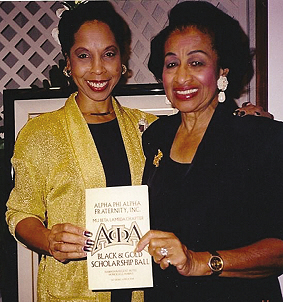
Terri with her mom, Gladys Lee, attending a fundraiser dinner dance in Honolulu.
There is no question that Terri has unlocked the secrets of the “Fountain of Youth,” and bathes daily in it’s restorative waters. Terri and her husband travel extensively, and have been around the world at least once — halfway around many times. Terri is so photogenic, that snapshots of her and George, touring, exercising, relaxing on the beach or shopping in foreign ports around the world look more like professional photo shoots, destined for commercial use. Terri definitely emits the image of someone decades younger than her 68 years. A fountain of youth within her continues to feed her passion to help others discover their own special vitality and personal strengths.
The three reigning titleholders of the 2015 Ms. Medicare Pageant all teach us an important lesson about the true nature of youth. They have found ways to nurture an uncommon youthfulness inside them and draw on it every day. Explorer Ponce de Leon, failed to locate a physical fountain. Perhaps that elusive fountain actually lies within all of us, just waiting to be drawn to the surface by proper nutrition, a sense of well-being, connectedness to the people and world around us, and robust, active movement throughout our day. This is the nature of youth.
As the reigning Ms. Medicare titleholders’ year of service concludes, their greatest contribution just might be guiding us to the notion that our “Fountain of Youth” lays dormant inside all of us. Its restorative powers may be unleashed at any age, if we emulate the lives of people who successfully bathe in its waters and drink from its springs. Let’s seek out health, strength and joy! The rest of our lives on Medicare begins today — let’s find that “Fountain of Youth!”
Summer vacations are perfect for hitting the road for adventure or staying close to home to simply recharge. The slower pace and rest a vacation offers are priceless, but you can still practice financial vigilance. Here’s how to get the most for your money as you travel this summer.
Consider Off-Season Tropical Destinations
During the winter months, tropical hot spots command top dollar. But you can find bargains south of the equator during the summer months. Land a package deal to a Caribbean or South American destination and enjoy less crowded beaches and hotels in paradise.
Dollars Go Further in Europe
For the first time in over a decade, the U.S. dollar is approaching a 1:1 ratio with the euro. American travelers can expect their vacation budgets to go further in all 19 countries operating on the euro currency. Airfare to Europe is also less expensive this summer. If you plan to visit several countries, consider purchasing a 30-day Eurail pass and travel by train between countries for one reasonable price.
Think Outside the Hotel Room
Check out websites that coordinate home sharing in hundreds of countries around the world, typically at prices far below standard hotel rates. Also consider family-run pensions (short-stay boarding houses in Europe) or bed and breakfasts (B&Bs) for cheaper and more intimate lodging. If you like making your own meals (also a moneysaver), look into short-term vacation home and apartment rentals.
Be Flexible
If you aren’t particular about where you travel or specifically when, you can often find last-minute package deals online to specific cities or attractions that include airfare, hotel, a rental car or some meals. Compare offers and determine which provides the best value. Also, when you’re booking airfare, be flexible with your travel dates to improve your odds of landing a better price. Consider a midweek departure and return to avoid higher weekend rates. Keep an eye out for airline promotions early each week, when their sales start.
Traveling costs money, but vacation memories are irreplaceable. If you need help planning your trip, ask a travel agent to provide information and tips for saving money on specific locales. Also, ask your financial advisor to help you budget and work toward your short- and long-term financial goals, including traveling, buying a home, saving for college and retiring.
Summer vacations are perfect for hitting the road for adventure or staying close to home to simply recharge. The slower pace and rest a vacation offers are priceless, but you can still practice financial vigilance. Here’s how to get the most for your money as you travel this summer. Consider Off-Season Tropical Destinations During the…
On May 27, 2015, Reuters reported that a Georgia judge had appointed a mediator to help the family of the late Dr. Martin Luther King Jr. decide whether to sell Dr. King’s Nobel Peace Prize and his personal Bible. Dr. King carried this Bible during the historic marches and rallies of the ’60’s, and President Obama took the oath of office on it at his second inauguration. According to the article, the “fight pits the slain civil rights leader’s sons, Martin Luther King III and Dexter King, who want to sell the medal and Bible, against King’s surviving daughter, Bernice King, who opposes the sale of items she calls ‘sacred’ to the family.”
This family drama illustrates two important principles. The first is that a well-thought-out and thoroughly implemented estate plan will give your family priceless guidance. The second principle is that there are better places than courtrooms to resolve conflicts.
The Benefits of Good Planning
Putting time and effort into devising a plan with enough details to make it work effectively will pay enormous dividends for your loved ones. Putting the right managers in place, and making your wishes very clear will help your family to focus on honoring your memory and moving on with their lives. In order to work, an estate plan needs to be reviewed and updated from time to time. Things change constantly and sometimes rapidly (the law, your finances, your family, your list of trusted advisors; failing to make necessary adjustments will cause your plan to fall short.
Mediate Rather Than Litigate
Mediation is a way of getting disagreeing parties together, helping to find their common ground, and then working toward solutions that may not make everybody happy, but satisfy their shared goals and values. If you know that your loved ones are at odds, you might engage a skilled mediator now, to assure that the eventual settling of your estate will be done peaceably later on. If you find yourself in conflict after a loved one or family member dies, propose that your differences be mediated privately rather than hashed out in open court. Mediation saves time and money; sometimes it opens the door to heal relationships.
Even if you don’t have a Nobel medal or a historic Bible, you can give your loved ones alternatives to shooting it out in court over “who gets what” or which heirloom gets sold. You may not be able to make everybody happy with your estate plan or with the assistance of mediation, but you can head off or minimize problems that may tear your family apart and tarnish your legacy.
Scott Makuakane, Counselor at Law
Focusing exclusively on estate planning and trust law.
Watch Scott’s TV show, Malama Kupuna
Sundays at 8:30 pm on KWHE, Oceanic channel 11
www.est8planning.com
808-587-8227| maku@est8planning.com
On May 27, 2015, Reuters reported that a Georgia judge had appointed a mediator to help the family of the late Dr. Martin Luther King Jr. decide whether to sell Dr. King’s Nobel Peace Prize and his personal Bible. Dr. King carried this Bible during the historic marches and rallies of the ’60’s, and President…
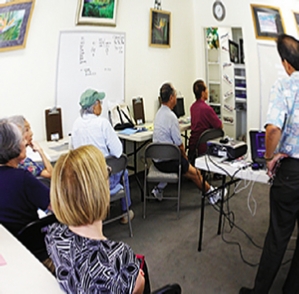
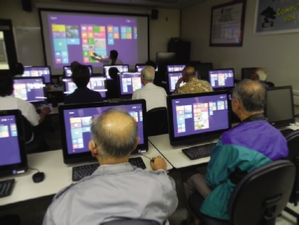
As I was thinking about how many seniors don’t use email or the web, it occurred to me that perhaps they don’t have children or grandchildren who “insist” on training them. So I checked out a couple of places that specialize in teaching seniors computer skills.
Bilingual System Links, LLC
Bilingual System Links, LLC
One is Bilingual System Links LLC, which has classes personalized for seniors 60 and over in both English and Japanese. Students may bring their personal laptop, iPhone, tablet or smartphone. The instructors are very patient, speak clearly and allow students to work at their own pace. Beginners may choose to learn the basics of keyboard typing, Microsoft Word formatting, and how to save and file documents for easy retrieval. They also offer instruction on safe use of Internet/email and computer basics for Mac or PC. Intermediate level students can learn Excel, Powerpoint, Facebook, YouTube and Skype, etc. Classes are small and students learn theories and practice hands-on. Call 808-952-0712 or visit www.BSL808.com.
The Emeritus College at HCC
Emeritus College at HCC
The Emeritus College at Honolulu Community College offers adults 55-plus a wide range of computer-related courses throughout the year taught by volunteer instructors. Tuition fees are used to cover the costs of the facilities, equipment and maintenance services for the program. Class offerings include the “basics”— Internet, email, Excel, Word, Windows, iPad and other fun workshops. Senior instructors know how to work with their senior students and enjoy the interactions. Joining the Emeritus Senior Club offers member discounts for classes and includes the Open Computer Laboratory. For a course schedule and full details, call 808-845-9296. General information is available online at www.honolulu.hawaii.edu/node/387 or pcatt.org/emeritus.
If you’re on the Neighbor Islands, check with your local senior center for classes — you might just find more things to be interested in.
Whichever classes you decide to take, you will be pleased with the knowledge and care of all instructors. Don’t be afraid of the computer, because it will probably bring you closer to your children, grandchildren and great-grandchildren. Be fearless as you join them in the “computer age!”
Stories for and about seniors and their caregivers are always worth sharing, like a 100 birthday announcement, send it to me, Sherry Goya, with a photo. 808-722-8487 |SGoyaLLC@aol.com
As I was thinking about how many seniors don’t use email or the web, it occurred to me that perhaps they don’t have children or grandchildren who “insist” on training them. So I checked out a couple of places that specialize in teaching seniors computer skills. Bilingual System Links, LLC One is Bilingual System Links…
Have you ever noticed a big gold seal on your hospital’s walls? It’s hard to miss. The emblem — The Joint Commission Gold Seal of Approval — stands out as a commitment to deliver safe, high-quality patient care under the most rigorous standards of performance. The Joint Commission is the largest and oldest standard-setting and accrediting body in health care, accrediting more than 20,500 organizations worldwide, including hospitals and home health care agencies. “People want to know The Joint Commission awards accreditation to home health care agencies, holding to the same processes as hospitals. But there’s more to it,” says Honolulu physician Dr. Stephen Lin, M.D.
“Through The Joint Commission accreditation process, health experts look for an organization to deliver continuous improvement on patient safety, high-quality care, treatment and services. There are literally thousands of ways to say you did these things, but you need to prove it. The process can be stressful and you need to always be prepared to showcase your procedures and outcomes,” says Lin.
It’s good news when a provider is awarded The Joint Commission Gold Seal of Approval. The distinction means that the organization submitted to the accreditation process and meets nationally recognized standards of excellence. Achieving the gold standard strengthens community confidence in the quality and safety of health care, holds caregivers participating within those systems accountable and shows that the provider is willing to deliver care at a higher standard. For our Kupuna, that’s worth its weight in gold.
Attention Plus Care 1580 Makaloa St., Ste. #1060, Honolulu, HI 96814 808-739-2811 | www.attentionplus.com
Have you ever noticed a big gold seal on your hospital’s walls? It’s hard to miss. The emblem — The Joint Commission Gold Seal of Approval — stands out as a commitment to deliver safe, high-quality patient care under the most rigorous standards of performance. The Joint Commission is the largest and oldest standard-setting and…
Being diagnosed with a “chronic” disease like arthritis or diabetes often comes as a shock. Changes sneak up on our bodies or slowly weaken our ability to do our chores or enjoy pastimes. We don’t want to hear that our “little problem” is the first sign of a terrible disease.
But doctors all agree that treatments work better when diseases are diagnosed early. So why do we put off going to the doctor? That’s easy. The body has the ability to heal on its own, and we rely on it. Home remedies often do the trick. Aches and pains often go away. But quirky things that don’t go away should be checked out by your doctor.
Chronic diseases like diabetes and arthritis are usually not life-threatening when they first appear, so we must live with them a long time. Early diagnosis helps reduce damage to internal organs. If you are diagnosed with diabetes, being a good patient is a much bigger job — controlling diet and exercise every day, so your blood and urine “numbers” come out good.
Arthritis is another chronic disease. Again, being a good patient is difficult. Overusing our joints and wearing down the cartilage between our joint bones causes osteoarthritis. Bones don’t like rubbing together and the resulting inflammation is very painful. Yet, to be a good patient, you must gently exercise the joint every day. It doesn’t make sense, but sitting around until the joint gets stiff just makes things worse. A little painful exercise in the morning decreases pain all day.
Rheumatoid arthritis asks even more of patients who just want relief from pain and fatigue. Doctors know that can only happen if they can get the disease into remission. So being a good patient requires patience, trust and doing exactly what the doctor prescribes, even though you are still tired and in pain.
One great way to be a good patient is to learn as much as you can. Ask your doctor or clinic for educational materials and beware of expensive “supplements” that claim to cure everything. Remember, informed patients are good patients.
Being diagnosed with a “chronic” disease like arthritis or diabetes often comes as a shock. Changes sneak up on our bodies or slowly weaken our ability to do our chores or enjoy pastimes. We don’t want to hear that our “little problem” is the first sign of a terrible disease. But doctors all agree that…
You knew one day you and your family would be taking care of Mom or Dad. Yet, your family feels pinched; nothing is coordinated. Blame and guilt bubble up because you don’t know how to work as a care team.
Lack of agreement, finances and rivalry causes stress. Your own family and career commitments, and worries about your own declining health and welfare blur your roles as devoted daughter or son, wife, husband, mother or worker. This allconsuming situation takes a toll on everyone.
You are not alone. Many children caring for their elders bicker with siblings and feel frustrated and flustered trying to meet the needs of their elderly parents, children and spouses.
The sad reality is that elders crave attention from peaceful, cooperative family members, even if they aren’t in leadership roles. Therefore, sincerely getting along, giving up rivalry and healing past hurts become the foundation of family caregiving. Your loved one’s deepest desire is for you and your extended family to get along, treating one another with open hearts and kindness.
Sylvia Booth Hubbard reported on a United Healthcare survey showing that a positive attitude, diet and exercise all influence longevity. “… family was very important to them[elders], with 97 percent calling family a top priority.”
Successful family peacekeeping can bring you together before the “final goodbye.” Active healing methods and processes can allow your family to come to peace and give your aging loved one their greatest wish. It is possible, and it can happen — with effort, skill and focus.
You knew one day you and your family would be taking care of Mom or Dad. Yet, your family feels pinched; nothing is coordinated. Blame and guilt bubble up because you don’t know how to work as a care team. Lack of agreement, finances and rivalry causes stress. Your own family and career commitments, and…
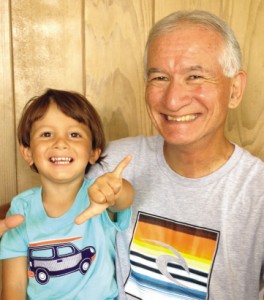
Generations Magazine asked me to share my thoughts about the first six months of my retirement. My feelings have definitely been surreal. I can expend all the time and energy I want to on hobbies and interests I rarely had time for over the past 42 years; more importantly I have time to spend with my grandson, family and friends. If there’s a downside to retirement, it’s the loss of contact with so many great people I encountered along life’s journey. It’s a good feeling when people call or write — they still have you in their thoughts. Keeping in contact with old friends creates a lot of comfort. I know I am very fortunate, having witnessed firsthand over my career, the plight of many of our island’s kupuna, who struggle just to survive.
In retrospect, I think I did a fairly good job preparing for retirement. But now that I am here, I must make adjustments. With so many choices, I have to prioritize what I want to accomplish, set goals and objectives and develop action steps and time frames to get things done. But I thought retirement means getting a break from my work! I want to say, “Hey, the planner retired!”
As I write, I realize that I still get to use my talents no matter what stage in life I am in, and a little bit of planning doesn’t hurt! Like it or not, planning is a part of life and the better planning results in better the outcomes! As I get my retirement goals down on paper, retirement gets even more enjoyable — maybe even less stressful…
Did I say stress? Yes, at times “enjoying myself” stressed me out. I set my pace as if I were at the office — trying to get things done immediately. Now I make a “habit” of relaxing. I have to keep reminding myself, “Why are you rushing? You don’t have to finish that today!”
So yes, retirement is great — an unbelievable blessing — now that I balance “going with the flow” with defined goals and objectives. I’m still in control — but my journey is more enjoyable.
Staying active is very important. Make exercise a priority and know your limits! Stretching is really important — muscles are resilient and react fairly well to exercise if you don’t overdo. However, your tendons aren’t as forgiving in old age. I tried to play softball without stretching. You know the old saying: “Your mind says, ‘I can,’ but your hamstring says, ‘Oh, no!’” If you want your body to go along, train for the sport you want to play.
Some great advice I got from a good friend: “Don’t start hiring someone to do the yard and other kinds of physical work. It’s good for the body. When you start sweating, just tell yourself it’s ‘therapy.’” I sing with a two-man band, so now lugging amps and equipment is my “weight training.” Retirement is a blessing — I hope to be rocking and rolling until I am at least 80!
Generations Magazine asked me to share my thoughts about the first six months of my retirement. My feelings have definitely been surreal. I can expend all the time and energy I want to on hobbies and interests I rarely had time for over the past 42 years; more importantly I have time to spend with…
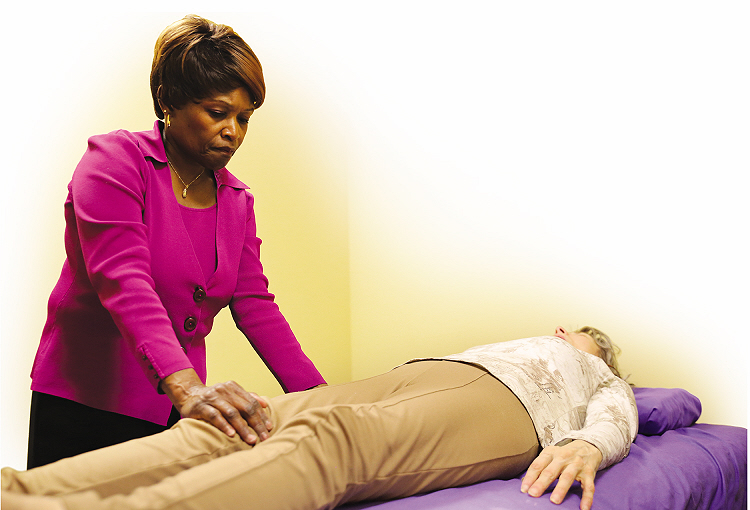
Denise Hollis, Healing Touch® Instructor and Practitioner treats a client
The trouble with traveling to the mainland for surgery is getting home. Negotiating planes, cars and vans on crutches or a walker was a problem my husband Harry faced after his total knee surgery. For seniors, decreased strength and flexibility is a distinct disadvantage in planes, airports, lavatories, security and baggage claim — all built based on military designs for 20-year-old soldiers.
After Mayo Clinic released Harry “into the community,” I drove us from Mayo to Minneapolis airport (about two hours). Harry did pretty well on his crutches, getting on and off the rental car shuttle at the airport. Then the fun began. At six feet, two inches tall and 240-pounds, he was not able to flex his operated knee enough to put his foot on the wheelchair footrest. He went through security on crutches. We figured a way he could ride and use one crutch to hold up the bad leg, so it didn’t hit the floor. Crowds of travelers, ignored our “excuse us,” as they defended their space.
Once on the plane, we discovered that bulkhead seats now have LESS leg room than regular seats. Fortunately, the stewardess said Harry could move his seat. After he was up and balanced on his crutches in the isle, she reappeared yelling, “What are you DOING?” I stammered, “You said my husband can change his seat.” She shot back, “Well. I can’t help you! We’re not allowed to assist disabled passengers.”
I was dumbfounded, but Harry was already hobbling down the isle, hoping to stretch out his leg and get some relief.
Then a sweet, calm voice said, “I’ll help you.” With three words, a very attractive woman in the row behind us taught a planeload of passengers a lesson in compassion. I thanked her for her kindness, but Harry was already flopping into his new seat, with a groan. The stark contrast between the flight attendant, the self-absorbed, now curious travelers, and this lady’s act of aloha— brought tears to my eyes. I was grateful that we were on our way home to Hawai‘i. We are so used to living aloha that we forget the mainland can be so hard and cold.
We began to chat. Her name was Denise Hollis, a Healing Touch practitioner from St Paul. She said, “Perhaps I can relieve the pain. Do you think he would be open to a treatment?” Neither Harry nor I knew what Healing Touch was, but we both said, “Yes!” For fifteen minutes Denise hovered her hands about two or three inches over Harry’s incision, to relieve the pain and encourage healing. Harry, a kidder, asked her, “Is this voo doo or woo woo?” She giggled. Harry relaxed and started to breathe normally for the first time in four hours. Soon he was asleep.
I found that Healing Touch focuses on restoring the natural energy fields that surround the body. Opening up normal energy flow that has been blocked by stress, anxiety, pain or trauma, allows the body to heal itself faster. Healing Touch schools, train practitioners to do this ancient practice of energy field therapy.
Denise’s compassion makes her well-suited to Healing Touch practice. She has never been to Hawai’i, but I told her that here, compassion is a way of life, and we call it “aloha.” She was amazed that our newspapers will often report a “random act of aloha,” a compassionate act extended to a stranger, in the moment of need.
So now I report to you, how Denise Hollis treated my husband‘s pain with Healing Touch. We found Healing Touch practitioners in Hawai‘i too. Mahalo Denise, for your aloha. You come visit Hawai‘i soon!
The trouble with traveling to the mainland for surgery is getting home. Negotiating planes, cars and vans on crutches or a walker was a problem my husband Harry faced after his total knee surgery. For seniors, decreased strength and flexibility is a distinct disadvantage in planes, airports, lavatories, security and baggage claim — all built…

 When Wendell Murakawa retired from the Hawai‘i Department of Public Safety, he planned to “you know, take it easy, relax, hang out with my friends, drink, eat and enjoy life.” Then his doctor told him he had type 2 diabetes. “I knew I was overweight and began to watch my diet,” said Wendell. “But I noticed if you don’t exercise, the sugar number doesn’t go down — no matter what you eat.”
 Because Wendell had never exercised, learning proper form, and how to breathe and stretch properly were a challenge. There were times he wanted to quit and I would have to remind him why he came to me in the first place — to get healthy.
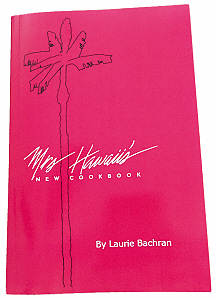 Now in her eighties, in addition to appearances as Ms. Original Medicare 2015, Laurie continues to work as a beauty consultant for Better Health Unlimited and as a member of the Xyngular Corporation. Elite American Health trade association recently recognized her dedication, leadership and achievements in nutritional counseling. Laurie educates individuals interested in learning habits that produce healthy lifestyles and enhanced quality of life. In addition, she is a highly sought after public speaker and author of two cookbooks: Mrs. Hawai‘i’s Cookbook and Mrs. Hawai‘i’s New Cookbook. She also holds a master’s degree in theology, and volunteers at River of Life shelter. She used to teach Bible studies throughout the islands and served as a co-pastor for New Hope Christian Fellowship. She believes a joyful spirit and spiritual strength are the keys to a rich, satisfying life.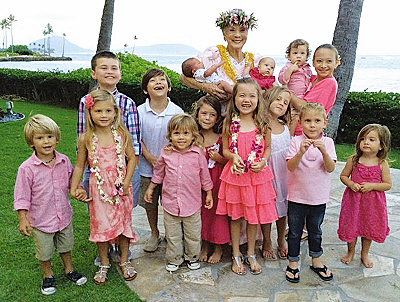
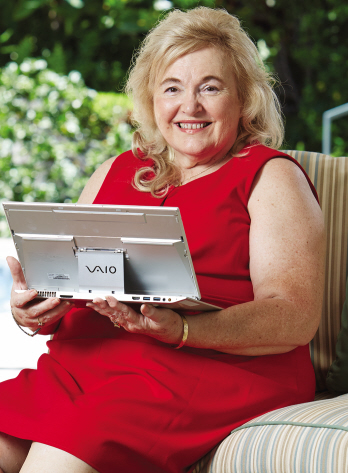 Fay Rawles Schoch was crowned Ms. Medicare Advantage™ 2015, representing those beneficiaries who choose to get their Medicare coverage from a private insurance company. These plans are known as Medicare Advantage plans under the category of Medicare Part C programs. A government publication, Medicare & You 2015, lists AlohaCare, Kaiser, HMSA, Humana, Ohana Health Plan and UnitedHealth as health organizations that offer Medicare Advantage plans to Hawai‘i Medicare beneficiaries.
 At the young age of 25, Fay became the parent of three toddlers under the age of five. As a new wife and stepmom, Fay discovered the work of German psychologist Alfred W. Adler. It resonated with her as the perfect prescription for managing her instant family. Fay began absorbing Adler’s work and applying his concepts at home. She credits her ability to smile through tough times and challenges of rearing a family to her Adlerian training. It teaches that we cannot control events, but we can control how we respond to them. Adlerian theory of parenting takes a holistic approach to mutual respect and accepting responsibility for behaviors . Counselors teach, guide and encourage children with the ultimate goal to promote each individual’s sense of belonging, and to increase their social interests and societal contributions. Adlerian techniques focus on all family members valuing each other, staying connected and participating in “family meetings,” where everyone is encouraged to share their concerns, successes and challenges.
 Each sibling accepted and doted over their little sister; they remained close even as college and relationships drew them away from home. Fay’s youngest became a great athlete, comfortable playing soccer and football. With her parent’s support, she successfully petitioned to compete on a Pop Warner football team. After graduating from Punahou School, she received a congressional appointment to attend the United States Merchant Marine Academy in New York, served on the high seas for six years and is now a Coast Guard reservist, USCG Third Assistant Engineer. Fay’s daughter also earned her masters degree at the Massachusetts Institute of Technology. She is currently an executive with Intel Corporation and lives in Silicon Valley with her husband and two children. As she raises her own toddlers, She uses Adlerian parenting concepts and frequently consults with mom for new tips.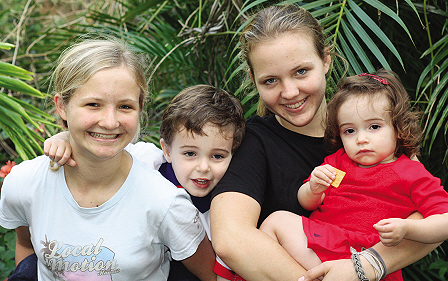
 Terri Rainey represents our Ms. Medicare/Medicaid Dual Eligible pageant title. Medicare beneficiaries who qualify for both federally administered Medicare and full Medicaid benefits from their State health program are known as “duals.” If a Medicare beneficiary is dual eligible, they can join a Medicare Special Needs Plan or SNP. Health plans that offer Medicare SNP’s, provide a valuable service for duals by coordinating benefits between the Federal Medicare program and State Medicaid plan to ensure the beneficiary has a seamless experience accessing benefits from both programs.
 Being diagnosed with a “chronic” disease like arthritis or diabetes often comes as a shock. Changes sneak up on our bodies or slowly weaken our ability to do our chores or enjoy pastimes. We don’t want to hear that our “little problem” is the first sign of a terrible disease.
 Generations Magazine asked me to share my thoughts about the first six months of my retirement. My feelings have definitely been surreal. I can expend all the time and energy I want to on hobbies and interests I rarely had time for over the past 42 years; more importantly I have time to spend with my grandson, family and friends. If there’s a downside to retirement, it’s the loss of contact with so many great people I encountered along life’s journey. It’s a good feeling when people call or write — they still have you in their thoughts. Keeping in contact with old friends creates a lot of comfort. I know I am very fortunate, having witnessed firsthand over my career, the plight of many of our island’s kupuna, who struggle just to survive.