To build a stronger community, younger generations need to understand demographic changes, think critically about the aging and take action. Honolulu’s Age-Friendly City Initiative embraces an intergenerational approach to implementing programs and other supports for an aging population. A key first step is to reduce “ageism,” or negative attitudes toward aging that children may develop.
A new intergenerational children’s book was authored by two ‘Iolani High School students, Eliah Takushi and Carly Tan, and Plaza Assisted Living Administrator Colby Takeda. They published the book as part of an ‘Iolani High School class called the “One Mile Project.” In this semester-long class, students learn about aging issues, and then develop and implement projects that benefit elders in their surrounding community. Takushi and Tan decided to write an intergenerational children’s book to teach young children about age-related changes and help them understand that these changes are normal — that kūpuna still are valuable members of our society.
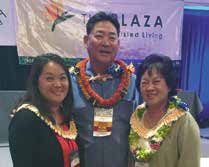
Colby Takeda, Carly Tan, Eliah Takushi and Dr. Christy Nishita celebrate the publication of It’s Just Aging.
It’s Just Aging: A Story About Growing Up is about a grandma and granddaughter who go to the grocery store and bake banana bread together. Along the way, they encounter older adults with different physical and sensory limitations. The grandma helps the daughter see that “it’s just aging” and people can still have a good quality of life. While writing and developing the book, the high school students read their draft stories to ‘Iolani kindergarten and first grade classes, collected feedback from the children and revised the story. Takeda, administrator at the Plaza Assisted Living in Waikīkī, provided valuable connections to illustrator Jamie Meckel Tablason and Mutual Publishing.
It’s just Aging is one step in a larger movement to make Honolulu an “age-friendly” city by improving people’s understanding and perceptions of aging and older adults. Our youth need to understand their stake in creating a better future for themselves. When our entire community embraces aging issues, quality of life improves for all generations. Efforts to become more “age-friendly” are timely because Hawai‘i is aging more rapidly than the rest of the United States, and leads the nation in healthy life expectancy. Honolulu’s Age-Friendly City initiative is supported by Honolulu’s Mayor, Kirk Caldwell and AARP Hawaii.
Find out more about Honolulu’s Age-Friendly City Movement at www.kupunatokeiki.com or www.hawaii.edu/aging, or contact Christy Nishita, Ph.D. at cnishita@hawaii.edu.
It’s Just Aging: A Story About Growing Up by Takushi, Tan and Takeda, ISBN 0984445868, Mutual Publishing Company, is available at local retailers and online outlets for $12.95. Publication was underwritten by Plaza Assisted Living Hawai‘i; book sales support Project Dana, a local Honolulu nonprofit that assists kūpuna.
It’s Just Aging Book Engages Youth by Christy Nishita, PhD, Center on Aging, University of Hawaii, Interim Director and Researcher from the August-September 2016 issue of Generations Magazine, Hawai‘i’s Resource for Life
In my three previous articles, I explained what ionized, restructured alkaline water is. I also shared the potential benefits of drinking this healthy water — which may be the best water to drink. I have dedicated this article to what experts in the medical field say about this particular kind of water:
“Alkaline antioxidant water changes everything physiologically. The alkaline antioxidant water solves two of the major problems that cause aging and disease: low pH and free radicals. It provides ready antioxidants to keep our bodies from rotting and rusting through the process of oxidation. Who should be drinking the alkaline antioxidant water? The answer is simply everyone from children to octogenarians.” — Ben Johnson, MD, Doctor of Osteopathy (DO), and Naturopathic Medical Doctor (NMD)
“Restructured alkaline water may well be the best element or supplement you can put in your body. Did you know the Japanese have researched this subject for over 40 years and have found that drinking restructured alkaline water can relieve or reduce three causes for sickness, disease and premature aging.” — David S. Dyer, NMD, PhD
“The most important feature of alkaline water produced by a water alkalizer is its oxidation reduction potential (ORP). Water with a high negative ORP is of particular value in its ability to neutralize oxygen free radicals. This is the key benefit of water produced by a water alkalinizer that is not available by simply drinking water than has had some bicarb or other compounds dissolved in it to make it alkaline.” — Ray Kurzwell, PhD, author and inventor, recipient of the National Medal of Technology in 1999, and inducted into the U.S. Patent Office’s Inventors National Hall of Fame in 2002
“I have administered over 5,000 gallons of this water for about every health situation imaginable… all [sicknesses] come from the same cause: too much tissue acid waste in the body.” — Theodore Baroody DC, ND, PhD, Dipl. Acu., author of the book Alkalize or Die
“We can heal ourselves by changing the environment inside our bodies. Potentially harmful invaders, then, will have nowhere to grow and will become harmless. High pH water, such as the water that comes from a good ionizer, neutralizes acids throughout the entire body. Since acids underlie all disease entities, nothing makes more sense than neutralizing these acids. One of my most often quoted statements goes like this: ‘When the fish is sick, change the water. We don’t feed the fish medicine. We give them clean water. When the cells of our body are sick, we must change the water and fluids in which all cells are bathed.’” — from The pH Miracle, written by Robert O. Young PhD, ND
As I have said before, all waters are not created equal. It may be time to give ionized water a sip.
Enagic USA INDEPENDENT DISTRIBUTOR Alan Matsushima, Health and Wellness Consultant | 808-384-7354 | trader_808@yahoo.com
Doctors Say So by Alan Matsushima, Health and Wellness Consultant from the August-September 2016 issue of Generations Magazine, Hawai‘i’s Resource for Life
Rona Adams and Sen. Mazie K. Hirono at an O‘ahu Veterans Center Thanksgiving dinner. With Rona is Bindi, one of her two therapy dogs who also help veterans.
I’ll be honest. When Percy Ihara asked me to write a column for veterans, it caught me off guard. “Writer” is not what I see in the mirror — U.S. Army nurse, college grad, civilian nurse manager, trainer and advocate for Vietnam Veterans are all in my kit. I’m good at paperwork: reports, manuals, a master’s thesis, letters home for injured soldiers who needed help writing and Hawai‘i State Legislature testimony.
But this is different — it’s just you and me having that first conversation. Pardon my butterflies. I can only talk about what I know — helping people — civilians, military and vets. I did two tours in Vietnam as a captain in the U.S. Army Nurse Corps, which covered the Tet Offensive. I am considered a Tet Offensive survivor. I worked in both operating and emergency rooms.
Two things I learned: War is hell (I wish I could use some other word) and no matter how crappy the situation was, we could always find something to laugh about. The majority of us come back changed (some more than others), and yes, I have PTSD and some Agent Orange issues. In future columns, we can talk about these things, too.
I came to Hawai‘i in 2001, retired from nursing in 2003, and joined the Veterans of Foreign Wars (VFW) and Vietnam Veterans Association (VVA). I represent the VVA at the O‘ahu Veterans Council. If you’re a veteran, have active military or veterans in your family, or just want to reach out to that veteran next door, this column is for you.
Patients at Third Army Field Hospital in Saigon awaiting evacuation to Japan in 1967: Gunner Charlie Matherson and Nurse Rona Adams with their friend John Grey, wounded Army medic.
You’ll be hearing a lot about plans for the State of Hawai‘i 50th Anniversary of the Vietnam Commemoration in 2017 to honor Vietnam and Vietnam-era veterans from 50 states, our territories and allies. They will be joining our activities here in Hawai‘i. In the next edition, you will be able to register and sign up online to volunteer.
Happy to meet you. If you want to say “hello,” visit www.generations808.com and post your comments at the bottom of my column.
Standing by. Over.
Rona Adams, State of Hawai‘i 50th Anniversary of the Vietnam War Commemoration, Planning Committee Member ronaadams@hawaii.rr.com
At Your Service by Rona Adams, Vietnam Veteran, U.S. Army Nurse Corps from the August-September 2016 issue of Generations Magazine, Hawai‘i’s Resource for Life
What’s new at The California Hotel and Casino — downtown Las Vegas’ largest iconic hotel? Its multi-million-dollar refurb designed to preserve “Aloha Spoken Here” bumps up the comfort experience to a new level for family members of all ages. Frequent visitors from Hawai‘i will experience hundreds of fresh and different updates, but at the heart, “The Cal” remains the friendly, safe and relaxing “home away from home” that Hawai‘i travelers desire. Take a look at some of the new digs and see what’s coming next!
The Cal is Open for Fun!
We decided to feature The Cal now, so that all our readers will know what to expect on their next visit to Las Vegas. After all, in Hawai‘i, we are used to hearing about hotels refreshing their décor and amenities. It’s commonplace in the hospitality industry for hotels to close down for renovations. But at The Cal, asking guests to reschedule their vacations and temporarily laying off staff are not in the playbook. Instead, they are upgrading the hard way, redoing one or two things at a time while they offer their treasured guests seamless service and uninterrupted “aloha.”
One look at the hotel lobby tells you that these renovations are not small or insignificant. The area is opened up with cool, bright travertine tile, glamorous artwork and upscale lighting. It is so stunning that I was relieved to see familiar faces at the desk — folks who know my name and welcome me with aloha. Our Generations Magazine staff was on the job with photo shoots, interviews and getting the June-July issue to the printer, but we sacrificed a little sleep to enjoy ourselves in the casino. Many of us need to work while we are on vacation and The Cal staff was eager to accommodate our specific needs.
The laughing Buddha in the lobby gets lots of attention. Some rub his tummy with one hand; others insist that two hands brings luck. The hotel collects all the coin “offerings” on the statue and donates the money to United Way Hawai’i — it’s another way The Cal extends true aloha.
First on my list was my mission find the famous Buddha — yes, he’s still here! Rubbing his tummy doesn’t guarantee that I will be a winner, but the tradition warms good memories of many happy days at my Las Vegas home.
Glory Connolley, Sanya Fujiwara and Lorraine Teixeira were sitting in the lobby, waiting to go back home to O‘ahu. That’s a curious thing about this place. Folks are smiling on their way in and on their way out. They were having a wonderful time and loved the clean, bright new décor.
The front desk is a very small part of the whole hotel and casino, but it leads to other renovations — some complete — others starting later this year and next spring. Already, new carpeting with red hibiscus flows throughout the whole casino floor. New ceiling lights open up the room and enhance the gaming experience (particularly noticeable at the craps tables). A powerful ventilation system keeps the air fresh, and new machines and games mix in with old favorites. The Redwood Bar & Grill is undergoing a makeover, and under design are a brand-new sports bar and a casino sports lounge with sports book. When these major casino up-grades are finished, a West Tower hotel room remodel will begin in the fall.
Asian Fusion Comfort Food
I understand Sam Boyd, who started The California over 45 years ago, lived in Hawai‘i and loved local-style food. Through the years, The Cal tradition for Asian-inspired dining options has grown up to the tastes of 21st century Hawaiian travelers. Now chic Honolulu-style has come to The Noodle House — light wood flooring, dark Oriental-style tables and chairs, an open kitchen and high, open ceilings. Minimal accents of Asian pottery and framed rice bags are set off by crisp red linens to finish the look of this fine family eatery. Last year, it opened with a superb cosmopolitan array of Asian stews and noodle tapas — seafood, pork, beef or vegetables. Since then, the menu has evolved to full entrée portions that lend well to sharing, but the prices are still very reasonable. Our eyes were bigger than stomachs. Four of us shared five dishes that compare to Honolulu’s Asian fusion restaurant fare. Without drinks, the bill (with tip) was under $140, and we took plenty of leftovers back to our rooms to snack on later. Yum!
In mid-August, authentic lū‘au foods, local stews and bento treats will again be served on the mezzanine at a renovated Aloha Specialties. Lappert’s Ice Cream, which offers hot coffee and doughnuts in the morning, will be renovated this winter. On the main floor, The Market Street Café serves a full menu: breakfast through dinner and on to midnight snacks, and their famous oxtail stew. Even though there is often a line, service is speedy and a full meal only grabs a half-hour out of your gaming schedule. Meat lovers will not be denied one meal while The Redwood Bar & Grill undergoes a facelift this summer. The chefs will be serving their Las Vegas steakhouse menu we love — at the Main Street Station Pullman Room — a hop, skip and a jump away. Hospitality with aloha continues at The Cal.
We ran into a group of friends who travel together to The Cal a few times a year. Elaine Terai started visiting in the late ’90s, but Hank and Jane Takara, and Ron and Marjie Malilay say they have been coming since the casino opened in the ’70s. “It became a second home,” said Jane. “It wasn’t so big then — the entrance was right by the Market Street Café.”
(L–R) 1994 Golden Arm Ron Malilay and Candace Kawakami from Honolulu; poker players Elaine Terai and Marjie Malilay; reunioneers and blackjack fans Hank and Jane Takata
Aloha Still Spoken Here
Ron is a Golden Arm winner (1994) who held the dice for one hour and 24 minutes. “I was at the same table with Stanley Fujitake the night he threw the dice for over three hours,” said Ron. That was the start of The Golden Arm Club that later led to The Annual Golden Arm Tournament played every April at The Cal.
On the wall next to the craps pit is a case with brass plaques engraved with the names of players who rolled the dice continuously for one hour or more at The Cal. The Golden Arm Club began in 1958, when Stanley Fujitake rolled for three hours and 12 minutes — a feat that has never been repeated. The odds of rolling for hour are the same as hitting a hole-in-one. Even so, there are 300 Golden Arm Club members and a “Platinum Wall” of repeat members on the mezzanine. Craps players love The Cal.
Ron grinned. “You know what? I left and went to bed right before Fujitake took the dice. In the morning, I heard everyone who bet on Stanley won big — the cage ran out of chips and had to issue script for players!” He explained that as hard as it is to escape rolling a seven for over an hour, on average, two lucky people do it every month. All their names (including Ron’s) are on the Golden Arm Wall of Fame.
Craps players love The Cal.
At home in Honolulu, Elaine and Marjie play regular poker with friends once a month, but here, they become video poker players. After hours of intense play, they relax at the blackjack tables. “The dealers are so friendly here,” said Marjie. “A serious blackjack or craps table is no fun — betting seems like work. Playing at The Cal is enjoyable. Everyone is so happy and helpful.”
Jane appreciates personal service. “Hank and I travel a lot and do a lot of community work. I think what impresses us most about The Cal is that they listen to us — and treat us like family, not strangers.” Her Waipahu High School reunion and Ron and Marjie’s Kahuku reunion were both held at The Cal this year.
A peek at The Cal’s updated casino floor.
Hank, a serious blackjack player, told me that when he stops to rub the belly of the laughing Buddha every evening, he puts all his pocket change on the statue. “Did you know that the hotel collects the coins off the Buddha and sends the money to United Way in Hawai‘i? That shows you the heart of the management here. They don’t just speak aloha, they live aloha.”
Comfort of Home in Friendly Surroundings
Lisa from Honolulu gives The Cal a thumbs up. “We love the new look! It’s clean and fresh — a very comfortable vibe. Food and staff are just awesome and make your stay heavenly.”
“There’s a lot going on in the background,” says Susan from Maui. She sees changes since her trip in January. “I saw a new logo sign outside with a big pink hibiscus, and the new carpeting in the casino has hibiscus, too. I love the ‘Game of Thrones’ and Brittany Spears games, and new 3D games are different and fun.” Susan is looking forward to a renovation of the West Tower, too. She said, “I hope they make the rooms as comfortable and luxurious as the new lobby restrooms. They are a ‘10’ in my book.”
Get used to the fresh clean look of home! Above is the comfortable lobby seating, and below, an elegantly appointed ADA-compliant lobby restroom.
When you put all the renovations together as we have done for this article, you get a vision of how comfortable and inviting The Cal will be when the whole property plan rolls out — during the rest of this year and into 2017.
Right now, when you drive into the valet area, your wheels squeal on the new surface. Your friendly valets still greet you by name, but now in a well-lit, sparkling entrance that leads to a bright, clean bell desk and upscale lobby. New directional signs point the way to all your favorite spots. And when you pick up your car, there are benches all the way to the street, so nobody has to stand. A big green neon “Mahalo” sign adds beauty and light to the back wall.
What to Expect in Your Next Trip
Holo Holo, “The Happy Bar,” replaces the San Francisco Bar. It caters to beer drinkers, with microbrewery specialties on draft and in bottles to savor while you enjoy bar-top play. Soon, sports enthusiasts can play in a casino sports lounge with sports book and stay in the game at a brand-new sports bar. The Redwood Bar & Grill returns to the main floor this fall with fresh interior décor that takes the tradition forward, and the whole casino floor will pop with color when all the chairbacks are upholstered in red, orange and purple.
West Tower hotel rooms and Aloha hospitality suites will be refurbished later this fall, 2016 — in the same quiet way, without disturbing the stay, play and dining of The Cal’s honored guests.
One word resounds with everyone we talked to at The Cal —“comfortable.” It refers to more than the soft, luxurious bedding, comfortable chairs in the casino, good food and friendly hospitality. It’s even bigger than an expert, friendly staff, where guests know all the bosses on the property. The Cal has achieved the status of “home” by delivering an affordable comfortable vacation to Hawai‘i travelers for over 40 years. Sheltered from the hustle and bustle of work, responsibilities or even the buzz of Fremont Street, once you set foot inside The Cal, you can sigh in relief, stop holding your pocketbook so tight and relax. Home is so friendly, familiar, safe and comfortable, that playing is easy and fun!
Aloha Remains at the ‘The Cal’ by Katherine Kama‘ema‘e Smith from the August-September 2016 issue of Generations Magazine, Hawai‘i’s Resource for Life
Over a half-million people who live outside the United States receive Social Security benefits, including retirees and people with disability, spouses, widows, widowers and children. “Outside the United States” means you’ve been outside one the 50 states, the District of Columbia, Puerto Rico, the U.S. Virgin Islands, Guam, the Northern Mariana Islands or American Samoa for at least 30 days in a row.
If you plan to travel outside the U.S. for an extended amount of time, it’s important to notify Social Security about the dates you plan to leave and return, no matter how long you expect your travel to last. Then we can determine if your Supplemental Security Income (SSI) will be affected.
Visit www.socialsecurity.gov/international/payments_outsideUS.html for an online tool to find out if you may continue to receive your Social Security benefits the entire time you are outside the U.S. Country-specific restrictions may apply. You may also find more information in our online publication, “Your Payments While You Are Outside the United States,” at www.socialsecurity.gov/pubs.
While you are outside the U.S., the Social Security Administration will periodically send you a questionnaire. Your answers will help us figure out if you still are eligible for benefits. Return the questionnaire promptly to keep payments flowing. In addition to responding, notify us about changes that could affect your payments. Social Security is with you through life’s journey, even when it takes you outside the country.
For questions, online applications or to make an appointment to visit a SSA office, call from 7am–7pm, Mon–Fri: 1-800-772-1213 (toll free) | 1-800-325-0778 (TTY) | www.socialsecurity.gov
Social Security Benefits Outside the U.S. by Jane Yamamoto-Burigsay, Social Security Public Affairs Specialist in Hawai‘i from the August-September 2016 issue of Generations Magazine, Hawai‘i’s Resource for Life
Two of the most common concerns of aging are dementia and chronic pain. Both problems increase with age and rob our energy, but otherwise seem unrelated. Advances in science suggest that there are new ways to improve both these problems without medication.
Preserving Nerve Function
Dementia and chronic pain are connected—memory and chronic pain both involve nerve cells. Your brain is a massive concentration of about 100 billion nerve cells. Pain sensors in your body connect to the brain through long nerve cells that course throughout the body. Nerve cells in the brain and body are some of the most energy-consuming cells in our bodies. Even an old brain and nerve cells need energy to work well.
Boosting Brain Energy Naturally
A natural way to help brain function and nerve pain is an approach that is broadly considered “energy medicine.” In the March issue of Scientific American, an article called “Electric Cures” suggests that energy medicine approaches could assist with many health conditions and even replace some medications. This is not a new concept; the ancient art of acupuncture is an “energy medicine” treatment.
Energy Field Effects
But there are promising new energy medicine approaches that are non-invasive and do not use drugs. One such approach is not a direct treatment at all. It is based on the concept of generally adding energy to the body with the use of a “scalar” energy field.
Adding energy to the whole body supposedly enhances the body’s ability to heal itself. In so doing, chronic pain may be reduced or eliminated. Adding energy may also help to awaken brain cells, giving them enough energy to function properly and improve memory.
Published Science
We have been using a scalar field generator to boost whole-body energy and we have seen some surprising results. In one case, seizures in an autistic child were reduced by 90 to 95 percent. This study appeared in the peer-reviewed Journal of Neurology Research (Vol 2, No. 4, August 2012, pg 172. Link: www.neurores.org/index.php/neurores/article/view/134/145).
Other studies suggest that scalar energy treatments may have antidepressive effects and anti-inflammatory effects.
For more information about our next free seminar on how to improve your health naturally, call 628-8784 or visit www.drshintani.com.
WELLNESS CENTER Complimentary & Alternative Medicine
600 Queen St., Ste. C2, Honolulu HI 96813 808-628-8784 | www.drshintani.com
Improve Memory & Reduce Pain by Terry Shintani, MD, JD, MPH from the August-September 2016 issue of Generations Magazine, Hawai‘i’s Resource for Life
2 large carrots, sliced on the diagonal
2 red bell peppers, halved, sliced
4 small eggplants, sliced thin on the diagonal
2 red onions, sliced thin
2 tomatoes, diced
2 cans low-sodium garbanzos, drained, rinsed
1/2 cup balsamic vinaigrette dressing
1 bunch fresh sweet basil
2 Tbsp. Italian parsley, chopped
1/2 cup feta cheese
extra virgin olive oil
cooking spray
Directions
Preheat oven to 425°. In a large bowl, toss cut veggies with a drizzle of olive oil. Lay the veggies on two baking sheets prepared with cooking spray. Bake for 20 minutes until veggies are cooked but still crunchy. Put back into the large bowl and toss gently with the garbanzos and dressing, then place onto a large platter. Stack basil leaves. Roll them and slice them into thin strips with a sharp knife. Sprinkle basil and parsley over the veggies and top with feta cheese.
Serves: 6 | Time: 1 hour to prep
CHEF MICHI’S COOKING FRESH cookingfreshforyou@gmail.com Queens POB III – 550 S. Beretania St. Honolulu Community College – 874 Dillingham Blvd.
Cooking FRESH Food Truck: Corner of Pahoakalani & Cartwright
Mediterranean Roasted Veggie and Garbanzo Salad by Chef Michi from the August-September 2016 issue of Generations Magazine, Hawai‘i’s Resource for Life
Wild fish is among the healthiest food in the world and wild Alaskan sockeye salmon is a nutrient-packed, very pure seafood alternative, according to the United States Food and Drug Administration (FDA). It is free from pesticides and contaminates, and rich in omega-3 fatty acids, vitamins A, D, B6, B, E and essential amino acids. Omega-3 fatty acids help to protect heart health, reduce the risk of strokes, promote healthy skin and hair, and improve the ability to burn stored fats. Omega-3 fatty acids are called essential fatty acids, yet our bodies are unable to produce them on our own, which makes it important to consume omega-3 rich foods or supplements. According to the American Heart Association, consuming foods rich in omega-3 fatty acids is preferable, but those who may not get enough through diet alone should consult their doctors about taking a supplement. The most convenient way to harness the cariovascular benefits of wild salmon oil is to consume it as a supplement; Consumer Review suggests that a supplement should contain at least 1,500 mg of omega-3 as a daily dose. When shopping for a supplement, look for one that is made with wild Alaskan sockeye salmon oil.
The Kyäni Triangle of Health offers the power of antioxidant-rich Wild Alaskan Blueberries, tocotrienols (the most potent form of Vitamin E), Omega-3s from Wild Alaskan Salmon, and Nitric Oxide-producing nitrates in one easy-to-use system.
Wild Alaskan Sockeye Salmon Oil by Tamilyn Masuda, Health Consultant from the August-September 2016 issue of Generations Magazine, Hawai‘i’s Resource for Life
Some of the most helpful nonprofits for seniors are small operations that cannot afford to advertise. We will be helping them by getting their message to you. Read below to learn how the volunteers and coordinators in these noteworthy organizations may help you and your family.
SPECIAL EDUCATION CENTER OF HAWAI‘I
Special Education Center of Hawai‘i (SECOH) is a nonprofit organization in the State of Hawai‘i. SECOH’s mission is to provide personalized services to people with disabilities.
SECOH offers adult day care for seniors with disabilities due to aging, with a specialty in supporting those with Alzheimer’s and dementia. This service is available Monday through Friday and some weekends only at its Diamond Head location. Seniors can participate in a number of recreational and therapeutic activities, such as arts and crafts, swimming, cooking and off-site activities, as well. They also offer family counseling, referrals and resources.
Crystal Hoapili, the adult day care coordinator, said that this year marks the 50th-anniversary celebration for SECOH, which was founded in 1965 by Sister Agnes Jerome Murphy. The organization’s vision is to see that “people are valued and treated with dignity and respect.”
The Hawai‘i Community Foundation provided a Persons-in-Need Grant for Senior Day Care to SECOH from the May Templeton Hopper fund. This grant is for tuition assistance to attend its adult day care program. To qualify, individuals must be 65 or over, demonstrate financial need and show that they will benefit from SECOH’s care. Crystal urges people to call to see if funding is available to assist them.
If you would like a tour or to learn about services, please call ahead at the Diamond Head location and talk to Crystal.
DIAMOND HEAD FOUNDER’S CENTER 708 Palekaua St., Honolulu, HI 96816
Crystal Hoapili, Adult Day Care Coordinator 808-734-0234 | choapili@secoh.org www.secoh.org
LEGAL AID SOCIETY OF HAWAI‘I: FREE LEGAL HELP FOR SENIORS
Legal Aid Society of Hawai‘i (LASH) is a nonprofit law firm dedicated to providing justice and fairness to the people of Hawai‘i through representation, advocacy, community partnerships, education and outreach. Established in 1950, LASH has 10 offices statewide with over 100 staff members. They provide services to over 20,000 individuals each year.
Seniors who are 60 and older receive free legal services, regardless of their income and assets. LASH primarily focuses on family, consumer, housing and public benefits law. Clients may have consumer issues, such as bankruptcy or debt collections; housing issues, such as Section 8 or repairs; or public benefits issues with agencies like the Social Security Administration (SSA) or Aid to Aged, Blind, Disabled (AABD).
LASH offers counseling and advice, one-on-one consultations, assistance in understanding the legal process, and limited or full representation of clients in court and administrative hearings.
To find out if LASH can assist you, call its dedicated senior hotline or visit the LawHelp Hawai‘i website, a cooperative project of LASH and Legal Service Corp.
A special event will be held on Kaua‘i:
Elder Law Fair on Kaua‘i
Friday, Sept. 30, 9:30 am – 3 pm
Kaua‘i War Memorial Convention Hall
4191 Hardy St., Lihue
RSVP by Sept. 27: call 808-245-4728, ext. 2210
LEGAL AID SOCIETY OF HAWAI‘I
Senior hotline: 808-536-0011 (Oahu) | 888-536-0011 (neighbor islands) www.Lawhelp.org/hi
Missions of Help and Hope by Stephanie Kim, Generations Magazine Intern from the August-September 2016 issue of Generations Magazine, Hawai‘i’s Resource for Life
Singing has always been a passion of mine — with my brothers, in choirs or in the shower. In choir, when the director handed out new music, I remember looking at the black notes on the white sheets of paper and thinking that the music made no sense, and it’s going to be really boring to sing.
As our choral group rehearsed and blended in harmony, the melody would always come to life and become a beautiful story in song—even more so as I connected more with the composer of the music, and the meaning and emotion the author intended to convey.
Everyone’s voice is unique, textured and lovely in its own way. When everyone sings in harmony, it makes the song exponentially more beautiful.
An estate plan has been regarded “as the sole, authentic voice of a man who is dead.” However, much like that sheet of paper with notes on it during the first day of choir practice, if left as a template legal document, without the maker breathing life (voice) and personal meaning into it, the legal document will remain sterile, sometines rendering it almost meaningless.
What is at risk in this case is family harmony.
Family members will apply their own song and lyrics to the document in the absence of the ma-kers’s voice, rather than being able to hear and honor the loved one’s story.
When you work with your attorney to establish or update your plan, to ensure harmony, please remember to make sure to incorporate your unique, textured and dynamic solo voice.
Put Your Voice Into Your Estate Plan by Stephen B. Yim, Attorney at Law from the August-September 2016 issue of Generations Magazine, Hawai‘i’s Resource for Life
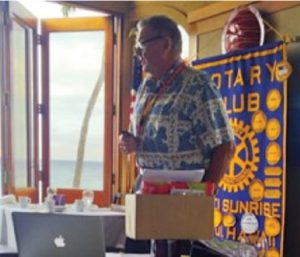
Rotary Club of Honolulu Sunset steering committee organizing Hawai‘i’s first Men’s Sheds (L– R): Jerome Taniyama, Jonathan Okabe, Doug Kam-Young, Glenn Sears, Win Schoneman and David Talbert
Men’s Sheds began in Australia 10 years ago. The nonprofit is a communal version of the old-fashioned backyard shed where a man could tinker with his tools. Thousands of Men’s Sheds in Australia, New Zealand, the UK, Ireland and Finland belong to the international association, but every group is unique. Its members decide what they want to do: woodwork, metalwork, gardening, bicycle repair, cooking or bookbinding. The thing that all sheds provide is a safe, comfortable place for older men to congregate, talk and work shoulder-to-shoulder.
It might appear that a shed is just a place to work, but it is much more. Older men tend not to socialize, are reluctant to do anything new and often ignore their health. When hearing and memory start to go, it is easy to just tune out. Friends from work are not as available; old buddies move away or pass on. The Men’s Sheds is a way to reverse the slide into isolation.
Mens Sheds Honolulu members (L– R): Jonathan Okabe, Jerry Tanyama, Doug Kam-Young, Glenn Sears, Jim Hoban and Leon Bower
We opened the first Men’s Sheds in Honolulu and are looking for a few good (old) men. We gather on Thursdays from 10am until 4pm. Hours and days will expand with membership. “If this sounds like something fun for you or for a friend, give Glenn a call for details. Come by, take a look, have a cup of coffee and talk story.
HAWAI‘I MEN’S SHEDS ASSOCIATION Glenn Sears | 808-373-6140
Men’s Sheds Movement Comes to Hawai‘i by Glenn Sears from the August-September 2016 issue of Generations Magazine, Hawai‘i’s Resource for Life
Recently, a longtime client of mine was looking more energetic and less arthritic than usual. I asked him what’s new and got the I-know-something grin. After checking his nasal cannula and portable oxygen concentrator, I smiled; his doctor had already given me the scoop on his Las Vegas plans. That was the reason why I was there to help him. He laughed, saying Vegas is his therapy.
As is often the case, seniors with special needs can benefit from travel assistance. Some need a little help, such as assistance with supplemental oxygen or mobility equipment. For others, it may be more involved, such as finding services for kidney dialysis, labs, or getting an MRI and other imaging done while traveling.
“Seniors want to stay active and travel longer,” said Client Service Supervisor Kari Wheeling, RN, at Attention Plus Care. More have chronic disease now and should see their doctors about risks and plans for safe travel.
The U.S. Travel Association recently held a campaign called “Travel Effect” to educate people on the positive impact traveling has on lives. “We encourage seniors to travel when they can, as there are many physical, cognitive and social benefits documented on travel,” added Wheeling. While travel may have its risks, most seniors can take precautions against health emergencies while out and about.
Consult Your Doctor
Seniors should consult their doctors before traveling. Getting advice regarding their conditions for safe travel within or outside of the country, and taking the proper steps before, during and after a trip, can help seniors stay active and healthy.
Bring Your Medication
Seniors on medication should bring enough for their entire trip and keep it safe. If they are traveling out of the country, their medications may be unavailable or not equivalent to what was prescribed. Seniors should also have all of their doctor’s contact information and a prescription copy.
Get Medication Certifications
Seniors using medications that are controlled substances should get a certification from their doctor before traveling. Find out before traveling if your medications are legal where you’re visiting. Your medications should be current, labeled and match your certifications.
Carry a Medical Alert
Seniors with medical problems or allergies should consider a medical alert bracelet or medical alert card, which will identify their particular condition. A medical alert can be a lifesaving reference for emergency responders.
Seniors needing travel assistance should call their airlines about special services for travelers. When buying your ticket, voice your special needs at least 48 hours in advance and get information about accommodations for your travel. Dr. Paul Nussbaum, a professor of neurological surgery at the University of Pittsburgh, said, “Travel is good medicine and promotes brain health and resilience across the life span.”
For our seniors, traveling to the “Ninth Island” is just what the doctor ordered.
Attention Plus Care Accredited by The Joint Commission 1580 Makaloa St., Ste. 1060, Honolulu HI 96814
808-739-2811 | www.attentionplus.com
Available monthly:
Aging in Hawaii Educational Outreach Program by Attention Plus Care — a program to provide resources for seniors and their families, instructed by a registered nurse, who covers a different aging topic each month. For more information on Travel Assistance and free community workshops on Aging in Hawai‘i hosted by Attention Plus Care, call 808-440-9356.
Senior Travel Assistance by Eileen Phillips, RN, Attention Plus Care from the August-September 2016 issue of Generations Magazine, Hawai‘i’s Resource for Life