Category: Living Life

  • Forever Young!

    Generations Magazine - Forever Young_image1
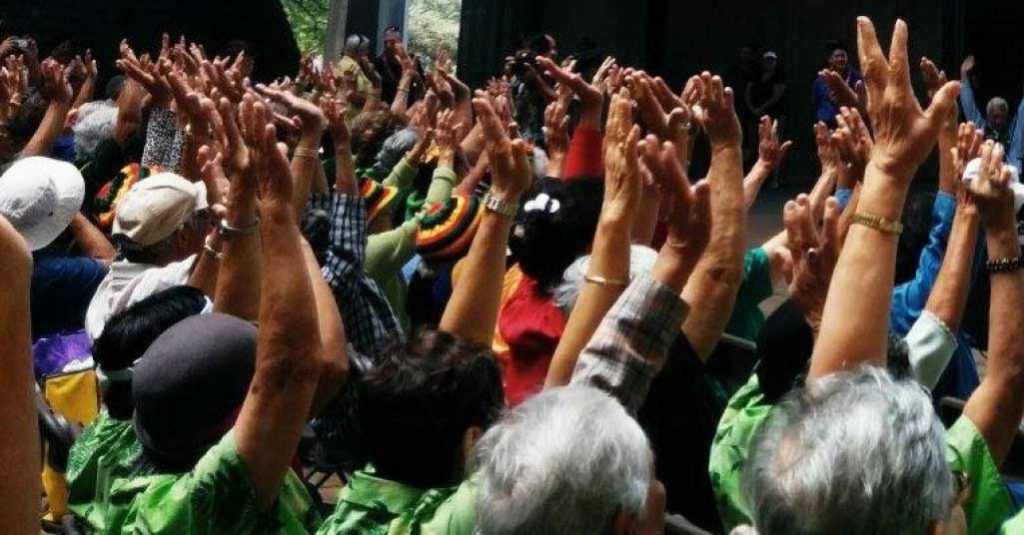
    Seniors stretching and exercising at Kokua Kalihi Valley.


    What image comes to mind when you think of an Elderly community center? An AARP sponsored YouTube is making the rounds “Millennials Show Us What ‘Old’ Looks Like.” Have you seen it? The video reveals an interesting perspective of what the 20-somethings think. Millennials are asked what age they consider to be “old” and to demonstrate what “old” looks like. The 20–28 year olds “act out” their images of the “old,” laughing and giggling as they imitate slow, uncoordinated individuals.

    Next, the host gives them a chance to meet and interact with older people (who were secretly watching how these young adults portrayed them). The Millennials quickly discover the “old,” are physically strong, active, vibrant — living rich, satisfying lives. The shock and surprise on their faces at how some older people truly function is absolutely priceless!

    As a frequent volunteer at the Kokua Kalihi Valley Elderly Center in Honolulu, I regularly witness how vibrant and active the participants are; all are 60 or older. During a recent visit, after some light, chair aerobics, about 75 participants used 5-pound dumbbells to do a couple of sets of overhead, triceps extensions. Believe me, it wasn’t easy! More evidence that active seniors are busy reshaping the image of older people. Like that old Bob Dylan song, the new “old” may become “Forever Young.”


    KOKUA KALIHI VALLEY Comprehensive Family Services
, 2239 North School St.,Honolulu, HI 96819
    808-791-9400  |  www.kkv.net/index.php/elder-care

    Forever Young! by Martha Khlopin for the June-July 2016 issue of Generations Magazine, Hawai‘i’s Resource For Life

  • Busy Doing Good

    Generations Magazine - Busy Doing Good_image1
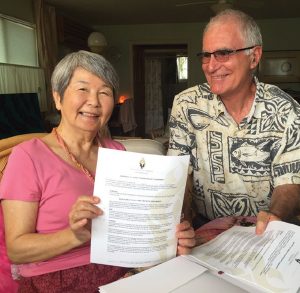
    Spenner and the UH Foundation are grateful for support from donors.

    Keeping busy is important in retirement. For me, doing something meaningful is key to an enjoyable life. Before I retired, I worked in philanthropy, helping to raise funds for a highly regarded private school. I felt good assisting the school with its mission, enabling donors to do “good” for the school and helping people “achieve their heart’s desire.” My specialty is estate and gift planning — working with donors as they ponder their own mortality and decide how they can make a difference with the wealth they have accumulated. If you don’t make plans for your estate, others (including the government) will make those decisions for you after you pass. I help empower people to make bequests that can help their heirs and charities they love.

    When I first retired, I lived an idyllic life. I walked along beaches, swam in the surf, trekked over mountain trails, cooked delicious meals, got a library card and read dozens of books, and napped in the afternoon. I even walked around the entire Island of O‘ahu. What’s not to love about this lifestyle? I had the money to be unemployed and self-indulgent, but I wanted to do more. I volunteered for local fundraising efforts and got quite involved with my faith community. Then one day, I received an unsolicited email from either LinkedIn or a search firm, saying, “Here’s a job that you might like.” It described exactly what I had been doing for the past 10 years. I can do this, I thought. I applied and was hired.

    The work environment at the University of Hawai‘i Foundation is very enjoyable and I’m thrilled to be a part of it. The UH System, with its 10 campuses, is the only public university in the state. The future of Hawai‘i depends on us offering greater educational opportunities for students at every academic level, career aspiration and economic strata.

    Now, a year later, my work has stopped being a hobby-job; it is a mission. I want to help young students pull themselves out of poverty through education, and help the brightest academic scholars continue their research and post-graduate studies at UH instead of going to the mainland. I want to show generous Hawai‘i residents that their current major gifts and planned estate gifts to the UH Foundation are living investments in the future of Hawai‘i. There is nothing more personally rewarding than when a grateful donor thanks me for helping make a profound difference in his or her life and the lives of students by crafting their legacy gift.

    This is why I chose to work after retirement at a job that has become a life’s work for me.


    UNIVERSITY OF HAWAI‘I FOUNDATION
, P.O. Box 11270, Honolulu, HI 96828-0270
    1-866-846-4262  |  www.uhfoundation.org

    Busy Doing Good by Dale Spenner, University of Hawai‘i Foundation for the June-July 2016 issue of Generations Magazine, Hawai‘i’s Resource For Life

  • A Hand Up for Humanity

    Honolulu Habitat for Humanity is great, but what do they do? Here’s what Executive Director Jim Murphy told us.

    “In over 70 countries, Habitat For Humanity’s mission is to ensure that everyone has a decent place to live­ — by building new homes or fixing existing ones. Land is so costly in Hawai‘i that our work here is largely repairs.

    Generations Magazine - April-May 2016 - A Hand Up for Humanity - image 01

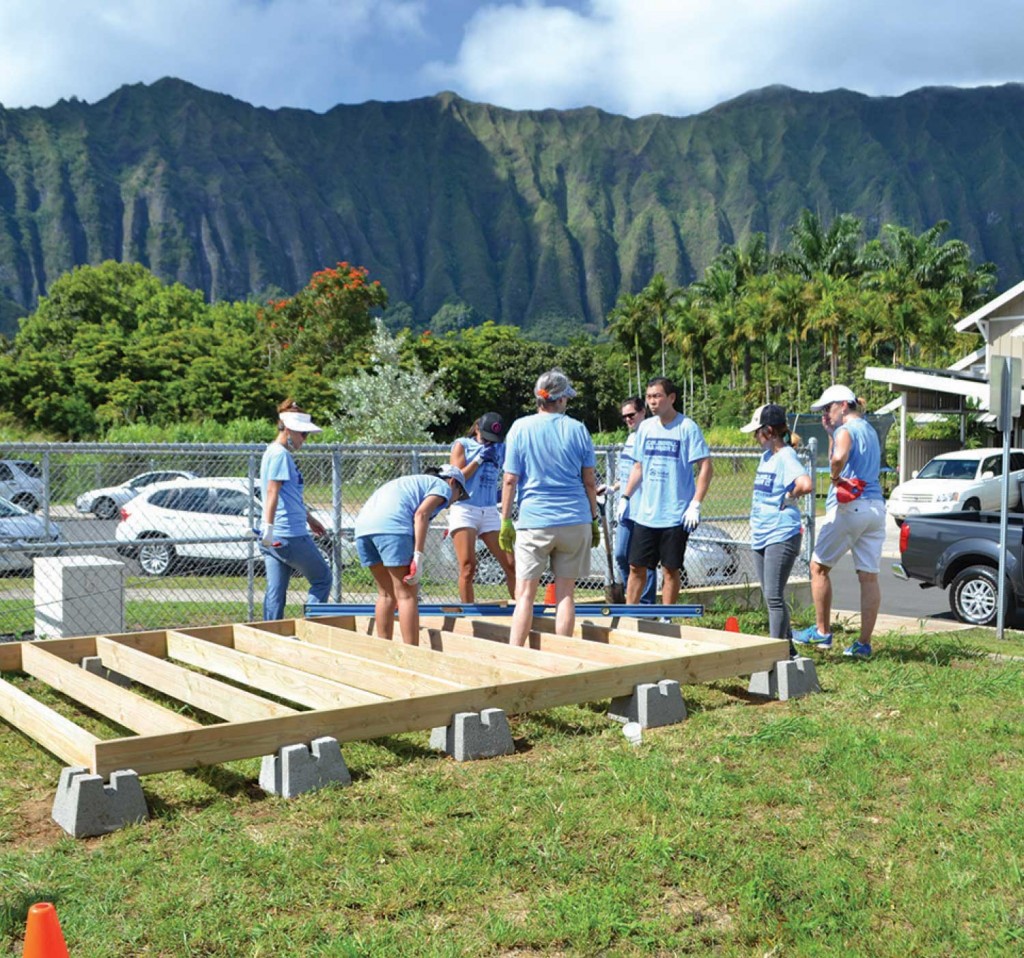
    “People often think that Habitat for Humanity gives houses away to families in need,” says Murphy. “In fact, we partner with the homeowner, who assists with the repair project and assumes a zero interest mortgage to cover the costs of materials and labor.” Murphy calls it a “pay-forward sustainable model,” a kind of “hand up.” When homeowners pay back the mortgage, Habitat loans the money to other families.

    Candidates for Habitat Honolulu’s Home Preservation Program may be covering their monthly expenses, but cannot afford to make repairs. Perhaps the home is unsafe, or the roof is leaking. Families may not be able to qualify for a bank loan. Others may be one illness or one job loss away from being homeless. Habitat steps in as an equity partner to help the homeowner get a new roof, ramps for wheelchair access, or repair termite damage. Small home preservation projects like installing new carpeting or bathroom grab bars to prevent falls can make a big difference in the safety, value and appearance of a home.

    Habitat for Humanity also pulls in community volunteers to do the construction at a very low cost. They provide professional financial counseling and usually homeowner partners are able pay back their loan within seven years.

    If you live on O‘ahu and need assistance or want to donate your skills, contact T.J. Joseph at 808-538-7575. You may also donate new and lightly used appliances, building materials and furniture to the Honolulu Habitat for Humanity ReStore on Austin Lane. It’s a great place to find bargains for your home improvement projects! All sales fund Honolulu Habitat’s mission. Neighbor islands may google search “Habitat for Humanity” for the location of your local Habitat for Humanity and nearest ReStore.


    HONOLULU HABITAT FOR HUMANITY
    922 Austin Lane, #C-1, Honolulu, HI 96817

    808-538-7575  |  tj@honluluhabitat.org

    Honolulu Habitat for Humanity is great, but what do they do? Here’s what Executive Director Jim Murphy told us. “In over 70 countries, Habitat For Humanity’s mission is to ensure that everyone has a decent place to live­ — by building new homes or fixing existing ones. Land is so costly in Hawai‘i that our work here…

  • Prepare to Care for a Loved One

    Do you use your lunch hour or leave work early to run errands for your parents? Spend more time tending to mom’s prescriptions than your own?

    As our parents age, it’s more a matter of when, not if, they will need our help. In a recent AARP survey of Hawai‘i registered voters age 45 or older, more than one in five residents said they are currently providing care for a loved one. Four in 10 residents believe it’s likely they will do so in the future.

    As Hawai‘i ages, we know that many families don’t have a plan in place to support their parents when the time comes. That’s a problem because one day you may get a call that mom or dad has slipped in the shower and has been admitted to the hospital. At that point, emotions take over. By taking some immediate steps today you can be better prepared for the future:

    Start the Conversation

    Many people wait until a crisis occurs before they ask their parents about their preferences, wishes for health care or the details of their finances. If you wait until a fall, accident or serious diagnosis, big decisions may be driven by inaccurate assumptions of what your parents want.

    Form your Team

    No one should approach the emotions and responsibilities of caregiving alone. While other family members are likely sources of support, don’t overlook friends, colleagues, clubs and faith-based organizations as resources too.

    Make a Plan

    Putting together a caregiving plan now will help you respond more quickly and effectively. It can also provide peace of mind. A plan helps everyone get on the same page and focus on what’s best for your parents.

    Find Caregiving Resources

    Look around your community for resources to help with medical needs, counseling, legal support, adult and senior services, caregiving support groups, in-home care services, veterans’ benefits, and health insurance information on Medicare, Medicaid and long-term care insurance.

    It’s also important to be an advocate for yourself and the person you care for. At the Hawai‘i state legislature this year, AARP Hawaii is part of a coalition of advocates working on a measure that will allow patients to designate a family caregiver when a loved one is admitted to the hospital. The proposed CARE Act would require hospitals to give all inpatients the opportunity to have the designated caregiver instructed, before discharge, in the tasks needed to keep them safe when they go home. The bill is meant to help caregivers with training and education on medical and nursing tasks at home, and prevent costly unscheduled hospital or doctor visits.


    AARP CAREGIVING RESOURCE CENTER
    1-877-333-5885  |  www.aarp.org/caregiving

    Do you use your lunch hour or leave work early to run errands for your parents? Spend more time tending to mom’s prescriptions than your own? As our parents age, it’s more a matter of when, not if, they will need our help. In a recent AARP survey of Hawai‘i registered voters age 45 or…

  • May is Older Americans Month

    Generations Magazine - May is Older Americans Month - Image 01
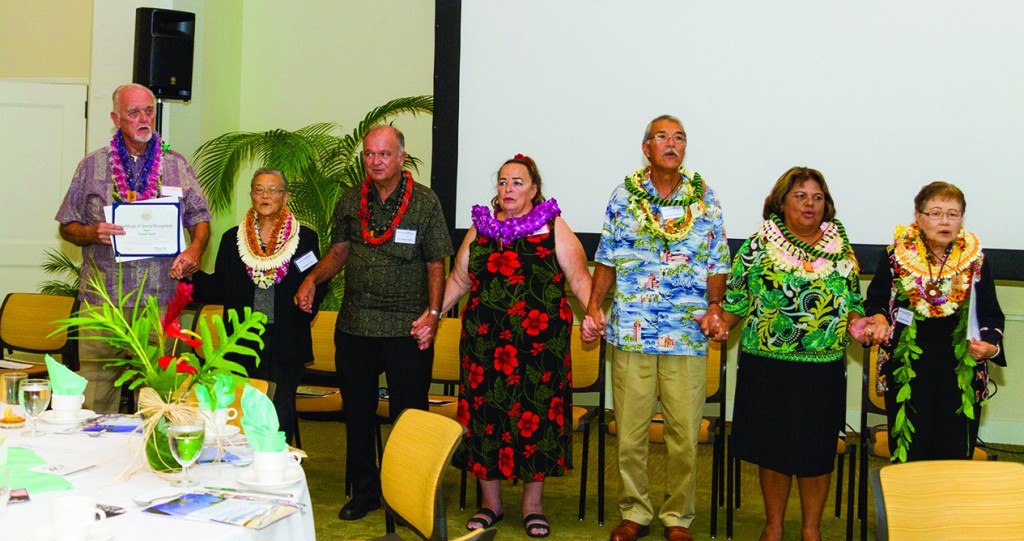
    2015 Outstanding Older American Honorees: (left to right) Maui: Donald Jensen & Katsuko Enoki, Kaua‘i: Roger Caires & Pat Simpson, Honolulu: Alan Kumalae & Yolanda Morreira, Hawai‘i: Janet Murakami

    We can’t overlook what our elder community (289,000 over 60 years) have contributed to the quality of life we share in Hawai‘i. In May, celebrations throughout the state recognize years of continued hard work and positive contributions that senior citizens make to their communities throughout Hawai‘i.

    In 1963, John F. Kennedy established May as Senior Citizens Month. Kennedy recognized community contributions made by his parents’ generation, who fought and won two world wars. From the Great Depression, they worked hard to create a quality of life envied the world over.

    In 1965, Lyndon Baines Johnson signed the Older Americans Act, addressing elder needs, and May became Older Americans Month.

    On May 6, Kaua‘i and Hawai‘i counties will celebrate older Americans, followed by Honolulu and Maui County later in the month. Each County Area Agency on Aging (AAA) receives dozens of nominations from which they select two awardees—just eight for the state. They come from various volunteer groups, community associations, churches and senior centers.

    Patricia Simpson, was completely surprised at her nomination by Kaua‘i’s Hospice group, Share the Care. “I‘ve always looked at volunteering as a way to give back. Getting this kind of recognition was a totally unexpected gift,” she said.

    The state recognizes these awardees and Older Americans Month on June 3, at a luncheon co- operatively hosted by state offices and agencies, and led by the Executive Office on Aging (EOA). The event is organized by the Policy Advisory Board for Elder Affairs (PABEA), a volunteer board appointed by the governor to identify and address issues on aging in Hawai‘i. They advocate for legislative action and elder services program development; they also evaluate current efforts to improve the quality of life for citizens 60 years of age and older. The theme for 2016 Older Americans Month is “Blaze a Trail,” urging seniors to take action and advocate for themselves.


    The 2016 State Recognition Luncheon event will be hosted by Kahala Nui Living Center. Seating is limited and by invitation only. To contribute to the support of this event or for further information, contact the Executive Office on Aging at 808-586-0100.

    We can’t overlook what our elder community (289,000 over 60 years) have contributed to the quality of life we share in Hawai‘i. In May, celebrations throughout the state recognize years of continued hard work and positive contributions that senior citizens make to their communities throughout Hawai‘i. In 1963, John F. Kennedy established May as Senior…

  • A Fair Ride in Honolulu

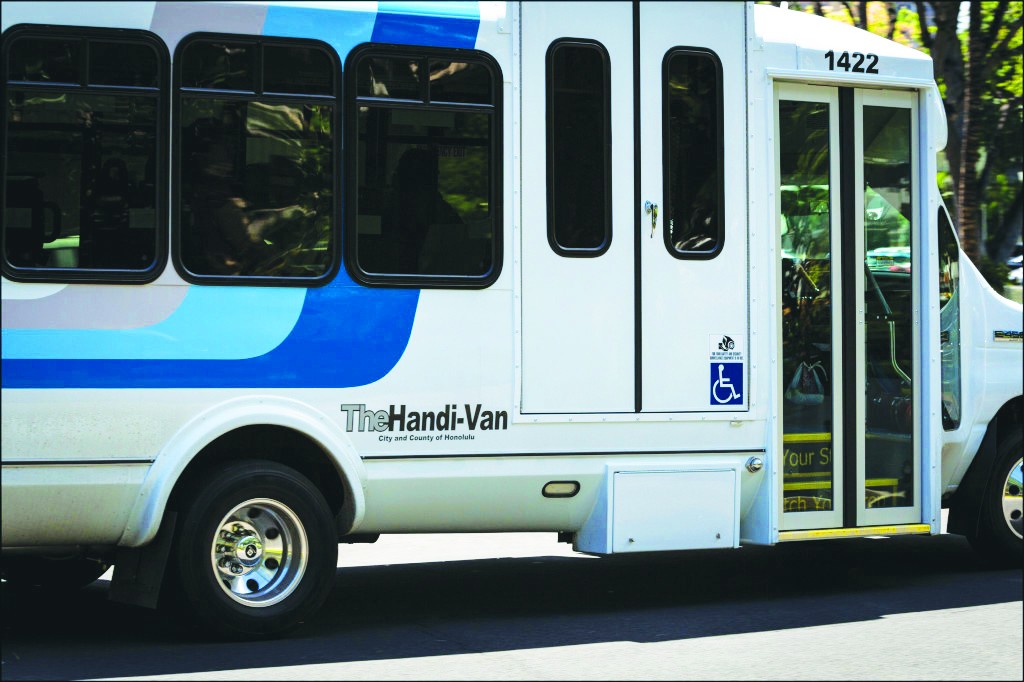
    Generations Magazine - A Fair Ride in Honolulu - Image 01Citizens for a Fair ADA Ride (CFADAR) is a volunteer organization that advocates and lobbies for seniors and disabled customers of paratransit transportation on the City of Honolulu’s TheBus or TheHandi-Van.
    At CFADAR quarterly public meetings, representatives from the Department of Transportation Services (DTS) and Oahu Transit Services (OTS) answer questions, address transit user concerns and find solutions. CFADAR is a completely volunteer organization of individuals from all backgrounds—concerned or interested persons need not be seniors or have a disability to join.

    The organization was established in 2000 by Morris Nakamura and named by Louise Horio. Since 2010, Donald Sakamoto, who is legally blind, has served as Chairman. He also served two years on the Statewide Independent Living Council of Hawai‘i and was recognized by Honolulu Star-Advertiser for his positive efforts in the senior community. DTS Director Mike Humby describes Sakamoto as “trustworthy and humble.”

    CFADAR seeks volunteers and donations of printers and toner cartridges, copy paper, digital recorders for dictation, and desktop or laptop computers with printers. Cash donations and donations of in-kind personal assistant services to directly support those who are disabled would also be appreciated. The next quarterly meeting will be at 9:45am on Tues., May 17 at the State Capitol Auditorium. The public is welcome.


    CITIZENS FOR A FAIR ADA RIDE
    808-291-0844 | cfadarhonoluluhi@aol.com

    Citizens for a Fair ADA Ride (CFADAR) is a volunteer organization that advocates and lobbies for seniors and disabled customers of paratransit transportation on the City of Honolulu’s TheBus or TheHandi-Van. At CFADAR quarterly public meetings, representatives from the Department of Transportation Services (DTS) and Oahu Transit Services (OTS) answer questions, address transit user concerns…

  • The Beauty of Hawaiian Quilting

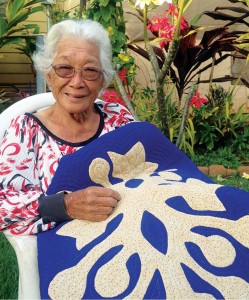
    Generations Magazine - April-May 2016 - The Beauty of Hawaiian Quilting - image 01Henrietta Mahuna learned Hawaiian quilting from another Hawaiian quilter. The handicraft has been passed down for two centuries — since the Hawaiians learned the echo style of quilting from New England missionaries. First, appliques are stitched to a plain field. Quilting follows the shape of the applique, first on the outside edge. The next row of quilting runs parallel but a short distance away, like a ripple in a pond. Soon the whole blanket is quilted. A style fashionable in the early 1800s was preserved and became a treasured tradition in Hawai‘i.
    “Mama” Mahuna sits on her shady deck and quilts every day. Neighbors, friends and mainland visitors who love to quilt come not only to learn, but also to “talk story.” In the old days, conversation was always accompanied by busy hands — sewing, preparing food or finishing a church project. Henrietta, who is Native Hawaiian, was raised in Hāna and moved to West Maui in 1942. She worked for Baldwin Packers as the only female field supervisor. Later she was promoted to work the Honolua Store at Kapalua Resort. She invented the “Honolua Burger.”

    Now 95, Henrietta still loves quilting and spending time with the ladies as they create beautiful “blankets” and pillow covers. “I like designing the patterns and cutting them out. I’ve made many different ones, but the Hawaiian trees and flower patterns are what people seem to like best,” she says.

    Henrietta Mahuna learned Hawaiian quilting from another Hawaiian quilter. The handicraft has been passed down for two centuries — since the Hawaiians learned the echo style of quilting from New England missionaries. First, appliques are stitched to a plain field. Quilting follows the shape of the applique, first on the outside edge. The next row of quilting…

  • Tune in to KITV4 Saturday Morning!

    Generations Magazine - April-May 2016 - Tune in to KITV4 Saturday Morning - image 01
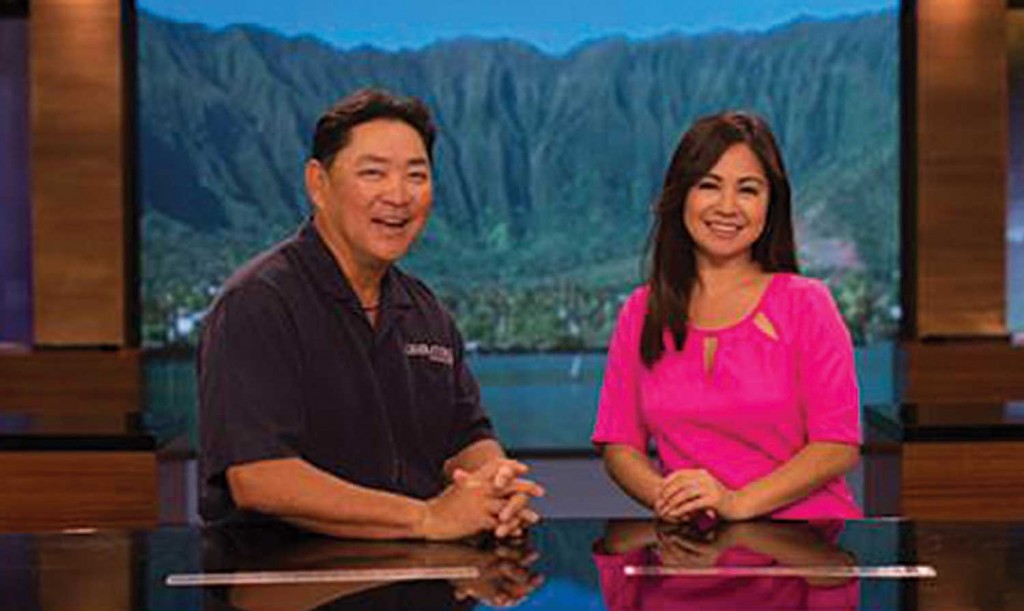
    KITV4 Morning News has a Saturday morning segment called “Aging Well,” hosted by News Anchor Moanike‘ala Nabarro, who opens conversations with experts on issues of importance to seniors. Generations Magazine® is partnering with KITV4, bringing to TV all the experts and resources our readers have come to trust. The segment runs between 6 and 8am on Saturdays — with health tips, information on finances, retirement, insurance, exercise, nutrition, etc.

    “Kūpuna play an important role here in Hawai‘i, and I am so humbled to be a part of the conversation when it comes to caring for them,” says Moanike‘ala. The partnership brings vital educational information to Baby Boomers and seniors through KITV Island News and kitv.com.

    Percy Ihara, Generations Magazine publisher and champion of senior issues, is pleased to be working with KITV4. “This is a commitment to getting more information to seniors, many of whom don’t get out as much as they would like. Now they can tune in to find out what’s going on with and for seniors,” says Ihara. “Watching 
“Aging Well” can improve their lives.”


    AGING WELL by KITV4 Morning News
    Saturdays, 6–8am hosted with Moanike‘ala Nabarro
    www.kitv.com (to watch segments, search: “Aging Well”)

    KITV4 Morning News has a Saturday morning segment called “Aging Well,” hosted by News Anchor Moanike‘ala Nabarro, who opens conversations with experts on issues of importance to seniors. Generations Magazine® is partnering with KITV4, bringing to TV all the experts and resources our readers have come to trust. The segment runs between 6 and 8am…

  • Making Our Souls Blossom

    Generations Magazine - April-May 2016 - Making Our Souls Blossom - image 01
    Ella Moncrief with Bella Campos and her grandmother on Kūpuna Day.

    Assets School makes a difference in the lives of gifted and dyslexic students through a strengths-based learning environment. We place a strong emphasis on the importance of family support to help to build confidence and resilience in each child.

    “Let us be grateful to people who make us happy; they are the charming gardeners who make our souls blossom.” — Marcel Proust

    I remembered this quote on Kūpuna Day, one of my favorite days on the school calendar. This year, we welcomed 150 guests to campus: grandparents, parents, grand aunts and uncles, as well as aunties, uncles and family friends. We are excited to meet the many different adults and elders who make a positive impact on our students’ lives. As we shared breakfast together, two classes greeted us with a song and dance. Then, we had fun making arts-and-crafts and moved to the classrooms where children and ku¯puna engaged in all kinds of fun activities. As I listened to ku¯puna sharing stories about their school-aged years, I couldn’t help but wonder who had more fun, the children or the adults?

    “I was thoroughly entertained and so glad I made the effort to attend on both days for both of my grandchildren,“ said Susan Lee, grandmother of Zak Campos, grade 3 and Bella Campos, grade 5. “Visiting Assets gives me a unique perspective on Zak and Bella’s world and brings us closer together.”


    ASSETS SCHOOL
    1 Ohana Nui Way, Honolulu, HI, 96818
    808-432-1356  |  www.assets-school.net

    Assets School makes a difference in the lives of gifted and dyslexic students through a strengths-based learning environment. We place a strong emphasis on the importance of family support to help to build confidence and resilience in each child. “Let us be grateful to people who make us happy; they are the charming gardeners who…

  • Kūpuna Can Grow Readers

    Generations Magazine -Kūpuna Can Grow Readers - Image 01
    Justin loves reading with his Tu¯ tu¯ Helen, as much as she does with him.

    Justin was in kindergarten when Kalihi Kai Elementary School began Golden Moment Hawai‘i, a collaboration between Kristy Yamaguchi’s Always Dream Foundation (ADF) and Hawai‘i P-20 to bring “Always Reading” into Hawai‘i public schools. It’s a very simple program: it offers kindergarten children a wide variety of books, which parents commit to read to their children — a little every day.

    Each week, Justin’s teacher handed out “little red bags” for students to take home — each bag contained three different books to take home so their parents could read them the stories.

    Like many retired seniors, Tu¯ tu¯ Helen De Castro helps raise her grandson, so she began reading to Justin, every day for 15 or 20 minutes, before dinner or bedtime. The children liked the little red bags more than the school library. The parents loved the quality time, and Justin looked forward to getting “my books” every week.

    “Reading is so important,” says Grandma Helen. “In math you have to read the problems. When something goes wrong with a computer, you have to read the directions to fix it. Reading opens the whole world to kids. ‘Always Reading’ opened up Justin’s world, too.”

    Kindergarteners sponge up everything that comes their way. “Justin listens to a story a couple of times, and by then he has it memorized. He counts to 10 in Spanish, and memorizes all the dialogue on his Leap Frog DVDs. I wish he would memorize Grandma’s shopping list!” says Helen.

    Now Justin is a first-grader and little red bags are only for kindergarten kids, but he and Helen still read together every day. “Finding new books to read to my grandson is always on my shopping list,” says Helen. She likes Walmart, the Library and Savers for books on all reading levels. She also gets bargains on used books at some branches of the Hawaii State Credit Union.

    “A funny thing happened,” adds Helen, “Justin has started writing his own stories. His classmate draws nice illustrations, and I get to staple the ‘book’ together. With just a pencil and a piece of scratch paper, he is happy to amuse himself. When we go to the grocery, he rides in the cart and reads his book.”

    Helen offers this advice: “Grandparents can do a lot to support the literacy of their grandchildren ; if you read to them every day, they take to it.”


    ALWAYS READING PROGRAM by Always Dream Foundation For inquiries, email: info@alwaysdream.org www.alwaysdream.org/programs HAWAII STATE PUBLIC LIBRARY SYSTEMS www.tinyurl.com/HSPLS-LibraryBranches

    Justin was in kindergarten when Kalihi Kai Elementary School began Golden Moment Hawai‘i, a collaboration between Kristy Yamaguchi’s Always Dream Foundation (ADF) and Hawai‘i P-20 to bring “Always Reading” into Hawai‘i public schools. It’s a very simple program: it offers kindergarten children a wide variety of books, which parents commit to read to their children…

  • Yes! A Memoir of Modern Hawai‘i

    Politicians must join ranks with leaders from business, labor and community groups to accomplish common goals. Crafting many of these alliances in modern Hawai‘i are public relations and marketing professionals like Walter A. Dods, Jr., former chairman of First Hawaiian Bank, Alexander & Baldwin and HawaiianTel, and a campaign organizer for governors and senators.

    Generations Magazine -Yes! A Memoir of Modern Hawai‘i - Image 01In Dodd’s new book, Yes! A Memoir of Modern Hawai‘i, he shows how dreams and schemes become a reality for corporations like First Hawaiian Bank, and state officials like governors Cayetano and Ariyoshi and U.S. Sen. Inouye. It’s a fascinating view of events we only know from the outside — the savings and loan disaster or Ariyoshi’s journey from, “who’s he?” to a household name. Dods’ candid account of the 2008 HawaiianTel bankruptcy and First Hawaiian’s debut venture in Japan define the high stakes he faced. Sober analysis and backing up his “Yes!” with results is an important lesson for all executives.

    Yes! is more than Dods’ personal account of his many accomplishments. Pull quotes reveal the deep relationships Dods forged with champions of Hawai‘i business, government and community service, proving again that all deals, are between people. Like his other achievements, this beautiful memoir is a collaboration with two Honolulu Advertiser journalists — Gerry Keir and Jeff Burris — who covered Hawai‘i politics and business for decades.


    Yes!, A Memoir of Modern Hawai‘i is available in local bookstores and directly from Watermark Publishing, 808-587 7766 or www.bookshawaii.com. The price is $19.95, and all proceeds go to Aloha United Way.

    Politicians must join ranks with leaders from business, labor and community groups to accomplish common goals. Crafting many of these alliances in modern Hawai‘i are public relations and marketing professionals like Walter A. Dods, Jr., former chairman of First Hawaiian Bank, Alexander & Baldwin and HawaiianTel, and a campaign organizer for governors and senators. In…

  • Each Other – A Book Club’s Greatest Benefit

    Each Other - A Book Club’s Greatest Benefit
    Photo courtesy of Honu Media, LLC

    We age like a book and advance, hopefully, toward maturity through the rise and fall of the turning pages of our lives. Consequently, when members of the West Maui Book Club come together to discuss a novel, we’ll often share\ relevant chapters of our personal stories. For us, this is the greatest benefit of all.

    Kelli Lundgren, a member since 2013, says, “Since joining, I’ve listened to stories of personal travel to South America and Malaysia. Members shared accounts of being stranded in politically tense areas of the world and in compelling cultural and political experiences.” It “stirs the soul.”

    Mihaela Stoops, a member since 2011, adds, “This book club satisfies my need to have an intelligent conversation. It stimulates and challenges me, makes me learn new things and gives me new perspectives.” It’s “awesome.”

    Victoria Caputo, a member since 2010, says that at any age, a book club provides brain wellness through conversation and critical thinking.

    And according to Diane Pure, an original member in 2005, the West Maui Book Club creates a sense of community and support for one another. She enjoys sharing social time with talented women from different life and work experiences.

    Yes, we love to read and discuss our book selections, but sharing relevant wisdom gained through the saga of our lives is the greatest benefit of any book club. So why not join one and experience how your gained insights can help others? In return, expect your life to be enhanced by other members in new and thought-provoking ways.

    “There are no faster or firmer friendships than those formed between people who love the same books.” — Irving Stone


    WEST MAUI BOOK CLUB
    www.westmauibookclub.com
    Info@westmauibookclub.com

    We age like a book and advance, hopefully, toward maturity through the rise and fall of the turning pages of our lives. Consequently, when members of the West Maui Book Club come together to discuss a novel, we’ll often share\ relevant chapters of our personal stories. For us, this is the greatest benefit of all.…