Category: Living Life

  • Sharing a Love of Books

    One of the pleasures of being a grandparent is spending time with the grandkids, and reading books together is a wonderful way to do just that — whether introducing a toddler to the alphabet or helping a sixth-grader research a project. Here are some ideas for locally published books to share with your special keiki.

    Young children will delight in the newly redesigned second edition of A is for Aloha, now with bold color photographs. First published in 1980, the original edition used black-and-white photos showing familiar island experiences as a way for Hawai‘i’s children to learn their ABCs. Early-education experts Stephanie Feeney and Eva Moravcik, and photographer Jeff Reese have made this classic freshly appealing with full-color images of everyday activities: eating noodle soup, dancing hula, and watching birds and geckos. Ages 2 to 6. (University of Hawai‘i Press, 2018)

    Written by columnist Lee Cataluna, Ordinary ‘Ohana assures readers that a diverse family is a normal family. The story unfolds through the experiences of a young boy named Kainoa, who introduces the various members of his ‘ohana. With playful illustrations by Cheyne Gallarde, the book shows that one’s family is who you choose and there’s always room for more at Sunday dinner, even if it’s on Saturday night, or Wednesday night, or whenever. Ages 4 to 8. (Bess Press, 2016)
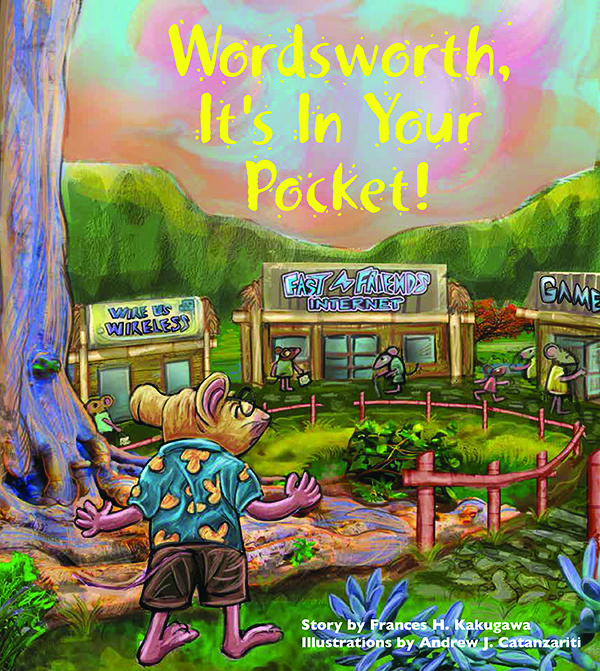
    By valuing creative play, imagination, and the fun of the outdoors over the allure of video games, computers, and cellular phones, Wordsworth, It’s In Your Pocket! by Frances Kakugawa is a gentle reminder that it’s important for young minds to unplug and enjoy real-world friends and activities. This entertaining, yet thought-provoking, Wordsworth adventure is the fourth book in the award-winning series featuring the poetry-loving mouse. Ages 8 to 12. (Watermark Publishing, 2015)

    Hawai‘i’s Animals Do the Most Amazing Things! by Marion Coste and illustrated by Rena Ekmanis is jam-packed with information about native species of our islands, including birds, insects, and sea creatures found nowhere else in the world. Older children — and adults as well — will enjoy the fascinating facts about the natural habitat and unusual animals of the Hawaiian Islands. The book would also be a useful resource for science reports. Ages 9 and up. (UH Press, 2015)

    Find these at your favorite bookstore or order directly from the publishers.


    University of Hawai‘i Press: www.uhpress.hawaii.edu

    Bess Press: www.besspress.com

    Watermark Publishing: www.bookshawaii.net

    One of the pleasures of being a grandparent is spending time with the grandkids, and reading books together is a wonderful way to do just that — whether introducing a toddler to the alphabet or helping a sixth-grader research a project. Here are some ideas for locally published books to share with your special keiki.

  • Molokai Arts Center

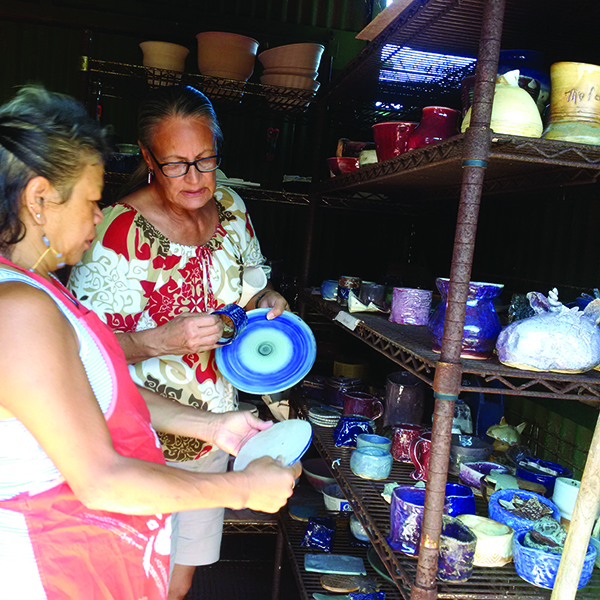
    The day I visit the Molokai Arts Center, Betty West is teaching a kūpuna ceramics class. Betty was one of the founders of the center, which grew from an idea discussed at the local pizza café by locals — mostly seniors — who felt the island needed a place to nurture the arts. Between 2010 and 2012, the group incorporated as a nonprofit, raised funds and applied for grants, and were offered a home on the property of Coffees of Hawaii in Kualapu‘u.

    The class in progress is one of the activities offered on Moloka‘i by Alu Like, a nonprofit whose mission is to help Hawaiian Natives achieve their full potential. One of the students, Darlene Johns, describes for me the process of taking the raw clay and fashioning it ready for the first firing to produce a bisque, which is then glazed and fired in the kiln again to create the finished item.

    Betty West
    Betty West
    L-R, Marshelle Castro and Darlene Johns
    L-R, Marshelle Castro and Darlene Johns
    2018 Member Art Show exhibits
    2018 Member Art Show exhibits

    Dan Bennett, also a co-founder, is quick to acknowledge the role volunteers play in the organization: “If we didn’t have volunteers, this place wouldn’t be here. Different people volunteer their different expertise and services.” The center is also very open to ideas for classes suggested by students or to anyone who would like to share their skills by teaching.

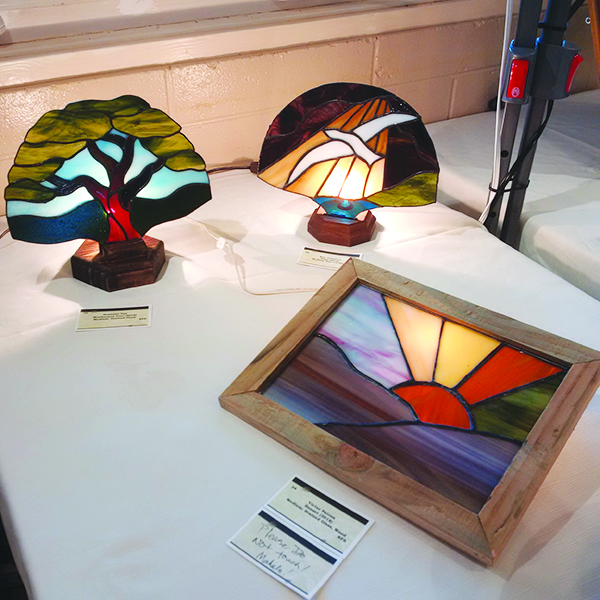
    A popular stained glass class came about in just that way — a student suggestion and the discovery that several people on the island had experience with that art form. Recently, the center was gifted a treasure trove of panes of colored glass. It’s the center’s connection to the community that enables it to flourish.

    Each year, a juried exhibition of members’ works is shown at a reception open to the local community. Of the 36 exhibits at the 2018 event, 22 were created by seniors, who can attend any of the center’s adult classes and its workshops.

    Board member Paula Scott feels that “retirement should not equal stagnant. Retirement should equal learning new things, seizing the opportunity.”

    “My philosophy is that people are infinitely creative,” Dan says. “It’s just a matter of jumping into it.”


    MOLOKAI ARTS CENTER

    808-567-9696  |  www.molokaiartscenter.com

    The day I visit the Molokai Arts Center, Betty West is teaching a kūpuna ceramics class. Betty was one of the founders of the center, which grew from an idea discussed at the local pizza café by locals — mostly seniors — who felt the island needed a place to nurture the arts. Between 2010 and 2012, the group…

  • Put Fine Art in Your Life

    Not all fine art is in museums or galleries. These two seniors found other ways to enjoy fine art up close. Both have a connection to the Maui Plein Air Painting Invitational art event on Maui — coming up Feb. 16–24, 2019.

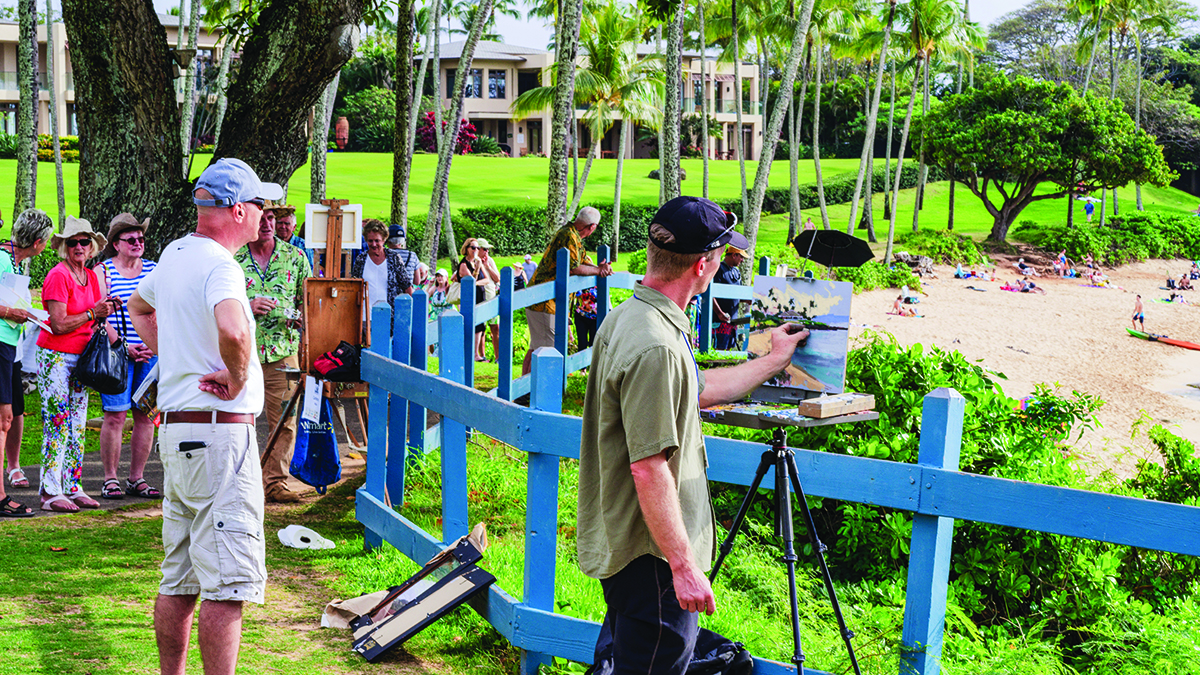
    Spectators gather to watch plein air artists create their magic.
    Spectators gather to watch plein air artists create their magic.

    Plein air is French for “outdoors.” Impressionist painters like Monet and Renoir attempted to capture the mood of a scene, including weather and time of day. Today, artists paint plein air landscapes in less than four hours, before the sun moves on. The paintings inspire  memories of breezes, sounds and fragrances. Every February, Maui Arts League assembles 25 award-winning plein air artists from Hawai‘i, the mainland and Australia to paint scenes of Maui and sell the fresh originals.

    Ann Ahlbrecht volunteering at one of the annual MPAPI gallery events.
    Ann Ahlbrecht volunteering at one of the annual MPAPI gallery events.

    Ann Ahlbrecht of Kā‘anapali volunteers at the art event. “I love watching people from our community enjoy the magnificent art created in their own backyard. Our events are outdoors, open and available
    to everyone,”  says Ann.

    Working the event allows her plenty of time to study and enjoy each painting and meet the artists. As an art lover, Ann wants every family to have the opportunity to experience fine art.

    Ed Bartholomew with one of his favorite paintings.
    Ed Bartholomew with one of his favorite paintings.

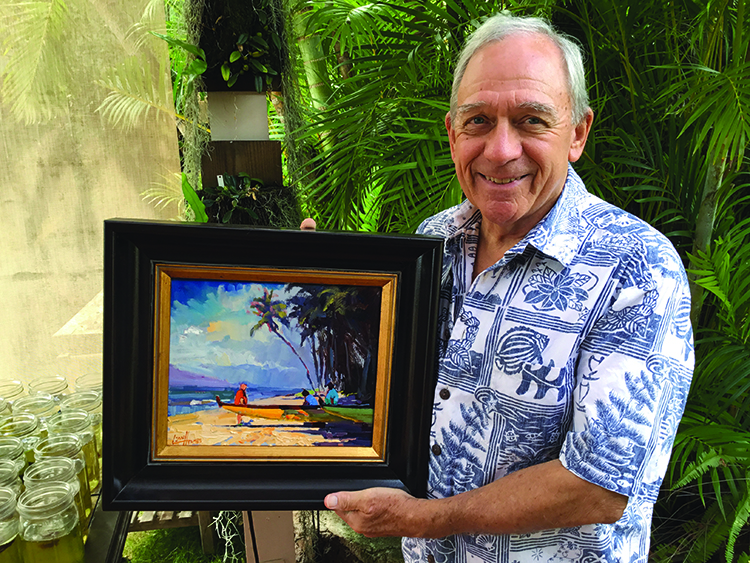
    Ed Bartholomew of Lahaina is a retired high school and UHMC biology teacher. These days he sells his own paintings at Lahaina Art Society Gallery and collects art. One of Ed’s favorites is “Man in the Boat” by Leon Holmes of Perth, Australia.

    “Wow!” says Ed as sunlight hits the canvas. “This painting still grabs me — that’s why I decided to buy it. It inspires me.

    I bought my first painting in the ’70s at the fence by the Waikiki Zoo. That picture of a sunset gave me pleasure every day. Now my eclectic art collection  brings me joy, and helps support artists raising their families. Good all around.”

    It’s Your Beach! by Ronaldo Macedo 2018
    It’s Your Beach! by Ronaldo Macedo 2018

    Ann and Ed discovered two ways to support their community through art, and enjoy the talent of our Hawai‘i artists. Visit an art museum, gallery or event — maybe invest in an original oil, watercolor or pastel that “grabs” you.


    MAUI PLEIN AIR PAINTING INVITATIONAL

    808-268-0787  |  katherine.pleinair@gmail.com
    www.CelebrateArtOnMaui.org

    Not all fine art is in museums or galleries. These two seniors found other ways to enjoy fine art up close. Both have a connection to the Maui Plein Air Painting Invitational art event on Maui — coming up Feb. 16–24, 2019.

  • An Innovative Way to Keep in Touch

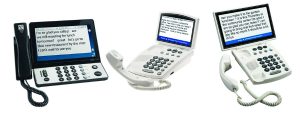
    As hearing loss progresses, it often becomes more difficult to understand what is being said over the telephone. While texting on a mobile phone is one solution, the loss of manual dexterity as we age can make that very frustrating. It’s disheartening not to be able to communicate easily with loved ones and friends.This challenge has led to the development of technology that brings together captioning and a telephone. This has become known as the “captioned telephone.”
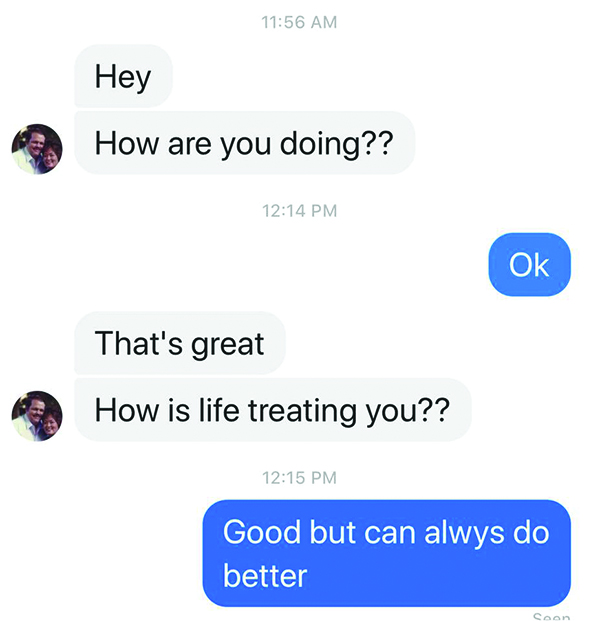
    A captioned telephone enables a conversation to be conducted using a built-in screen to display the written words as they are spoken. It can restore your confidence in communicating over the phone, so you can connect with the people you care about, just like you used to. The equipment is simple to use and is available for free in the State of Hawai‘i if the applicant meets certain eligibility requirements.

    If you have a friend or loved one who has hearing loss and has difficulty understanding on the telephone, encourage them to check out this innovative solution and help them reconnect!


    HAWAII CAPTEL®
    877-805-5845 (toll-free) | info@captel.com
    www.hawaiicaptel.com

    As hearing loss progresses, it often becomes more difficult to understand what is being said over the telephone. While texting on a mobile phone is one solution, the loss of manual dexterity as we age can make that very frustrating. It’s disheartening not to be able to communicate easily with loved ones and friends.

  • When a ‘Friend’ is Not a Friend

    One of the trending online fraud schemes involves being contacted by either friends or relatives via email or through social networking services like Facebook about receiving large amounts of money through investments, a class action lawsuit, or even a random contest drawing.

    However, these “friends” or “relatives” are NOT who they claim to be, but online fraudsters impersonating the subject’s real friends and relatives. They try to convince the subject that the scheme, whatever it may be, is legitimate and, once doing so, then introduce them to another party to assist the subject in obtaining the funds. Again, this person is just another fraudster in the scam and may even be the same person who claims to be the subject’s friend/relative!

    The best thing to do in these situations is not respond at all. If it becomes a nuisance, block the sender or unfriend that “friend.”


    THE DEPARTMENT OF THE PROSECUTING ATTORNEY
    1060 Richards St., Honolulu HI 96813
    808-768-7400  |  Office hrs: Mon – Fri, 7:45 am – 4:30 pm
    www.honoluluprosecutor.org/contact-us/

    One of the trending online fraud schemes involves being contacted by either friends or relatives via email or through social networking services like Facebook about receiving large amounts of money through investments, a class action lawsuit, or even a random contest drawing. However, these “friends” or “relatives” are NOT who they claim to be.

  • Tips for Buying Medications Online

    Purchasing medication and even filling prescriptions online can be a risky process, but the chances of being victimized can be greatly reduced by taking a few necessary precautions.

    Avoid email scams
    Try not to respond to email “spam.” But if you are inclined to do so, do your research to see how reputable the company is and make sure the email address is legitimate. Also check where the company is based and where the products are being shipped from. Steer clear of foreign-based companies.
    Save all email correspondence until you have received your product and are satisfied.

    Be website-wary
    If you are dealing with a vendor on a website, look closely at the URL to check that it’s not a slight misspelling of a trusted company, created to fool you. Also, check that it starts with “https:” and has a padlock icon on the left.
    It is also good practice to take a screencap of the webpage listing the product you’re buying. Press Help if you are unsure how to do this.

    Minimize credit card risk
    If you are using a credit card, use one with a low line of credit but enough to make the purchase.
    If a purchase was made by mistake, contact your credit card company’s fraud and security department immediately. They will flag any unauthorized billings from that company.

    And finally, review your credit card statements regularly to detect any inconsistencies.


    THE DEPARTMENT OF THE PROSECUTING ATTORNEY
    1060 Richards St., Honolulu HI 96813
    808-768-7400 | Office hrs: Mon – Fri, 7:45 am – 4:30 pm
    www.honoluluprosecutor.org/contact-us/

    Purchasing medication and even filling prescriptions online can be a risky process, but the chances of being victimized can be greatly reduced by taking a few necessary precautions. Avoid email scams Try not to respond to email “spam.” But if you are inclined to do so, do your research to see how reputable the company…

  • U.S. Army History in Waikīkī!

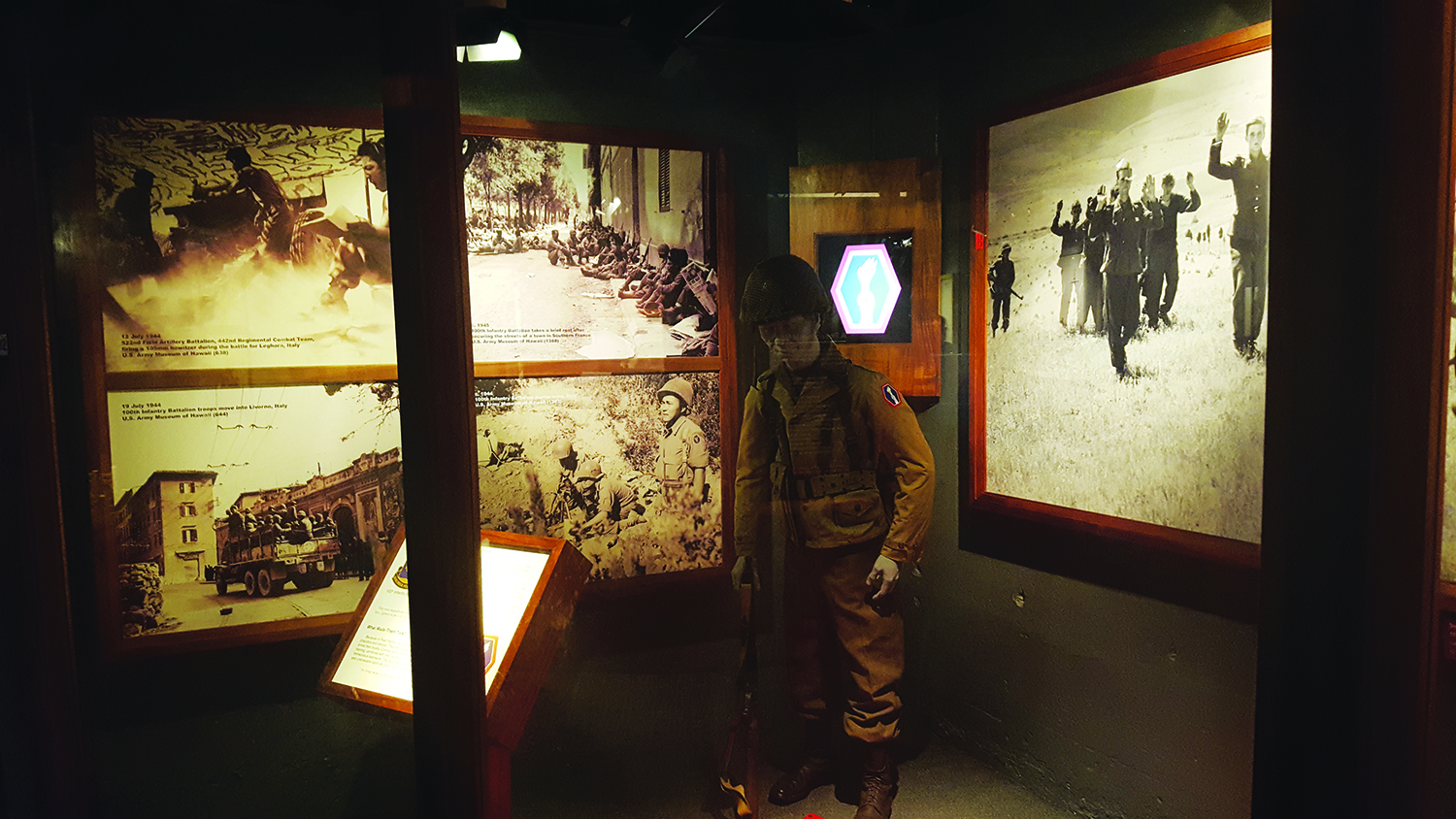
    Right here in Waikīkī there is more to learn about our famous nisei “Go For Broke” 442nd Infantry Regiment — at the U.S. Army Museum of Hawaii. It’s on the corner of Kalia and Saratoga Roads inside Fort DeRussy Military Reservation park.

    During World War II, U.S. Army Artillery “Battery Randolph” was located on the point. Coastal batteries were fortifications of cannon, tanks and ammunition, and bunkers strategically positioned for battle or defense. In modern warfare, batteries also facilitate battlefield communications, command operations and disbursement of artillery materials to gunnery crews.

    Courtesy of U.S. Army Museum of Hawaii
    Courtesy of U.S. Army Museum of Hawaii

    Battery Randolph’s main guns were removed before the museum began, but today, its holdings include choppers, tanks, cannon, and light weaponry as well as military photos from the Vietnam, Korea and WWII Pacific Theater eras. The exhibit represents the entire post-annexation military history of the U.S. Army in Hawai‘i, including key projects of U.S. Army Corps of Engineers throughout Hawai‘i.

    Of unique interest is the museum’s “Gallery of Heroes,” which displays commendations, Medals of Honor and Distinguished Service Crosses awarded to Hawai‘i veterans. It is a permanent tribute to our heroes, including the 442nd Infantry Regiment and nisei Military Intelligence Service during WWII.

    Leave plenty of time to see all the vintage U.S. Army photos and identify your family members who fought for freedom. The end of summer is a great time to take your grandchildren to the museum for a powerful educational adventure.
    Remember when you meet a veteran to thank them for their service.


    U.S. ARMY MUSEUM OF HAWAII
    2131 Kalia Road, (nr. Hale Koa Hotel) Honolulu HI 96815
    808-955-9552 | www.hiarmymuseumsoc.org
    Open 10 am – 5 pm, Tues.– Sat.
    Audio tours: $5.00 per person
    Parking: $3.50 for the first hour, $2.00 for additional hrs.
    Driving directions: see their website
    Bus routes to the museum: www.moovit.com

    Right here in Waikīkī there is more to learn about our famous nisei “Go For Broke” 442nd Infantry Regiment — at the U.S. Army Museum of Hawaii. It’s on the corner of Kalia and Saratoga Roads inside Fort DeRussy Military Reservation park.

  • Women on the WWII Home Front in Hawai‘i

    The measures that came into effect in wartime Hawai‘i were described by one man who helped create them, Maj. Gen. Thomas H. Green, as “a new experiment in government — a joint operation of the military, civilian business and the general public.”

    Bella Fernandez. Photo courtesy UH Archives
    Bella Fernandez. Photo courtesy UH Archives

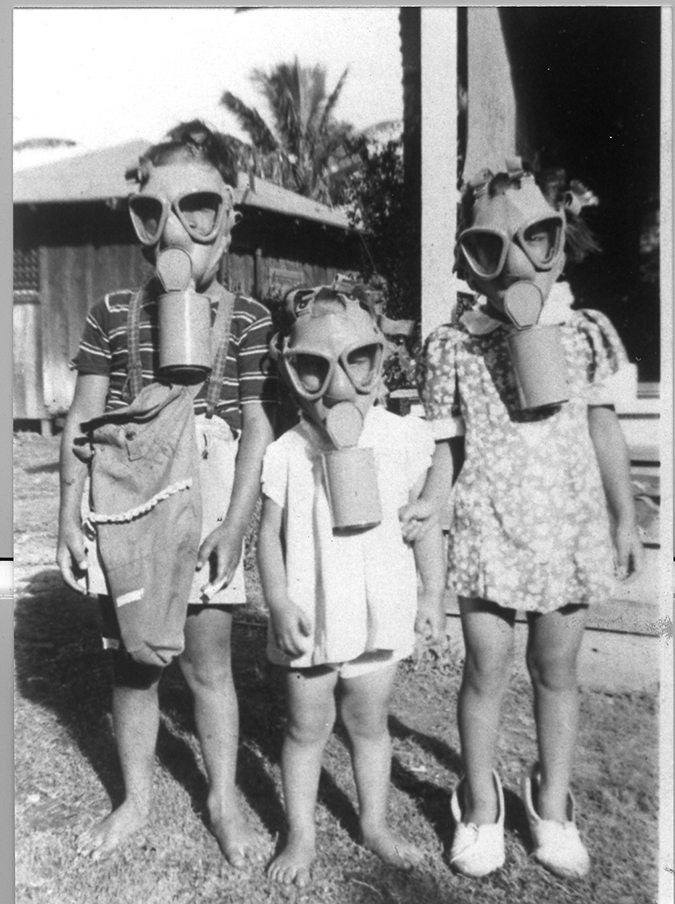
    A great number of the general public were, of course, women and they played many roles on the home front. Bella Fernandez is noted as a “rated woman boat builder at the Pearl Harbor Navy Yard” on the back of a U.S. Navy photograph in the University of Hawai‘i Archives. Others did piecework at home for the armed services, some creating the camouflage netting that was put over the helmets U.S. soldiers wore, as Rosaline Ventura did. Her oral history in the UH Center for Oral History’s project “An Era of Change” also tells of day-to-day life under martial law for this mother of three young children — including toting a heavy gas mask with her wherever she went and making sure the keiki had theirs.

    Many women already worked in professions that could immediately make a useful contribution to the war effort. In the immediate aftermath of the bombing, all schools were closed for a time, but teachers were reassigned to assist in registering the entire population for ID cards. For public health reasons, everyone had to be immunized against typhoid, and nurses played their part in getting that done. Office workers formed a Women’s Volunteer Army Corps, many of its members working long hours in the offices of military staff.

    Children in gas masks. Photo courtesy of the Japanese Cultural Center of Hawai‘i
    Children in gas masks. Photo courtesy of the Japanese Cultural Center of Hawai‘i

    “Society women,” whose household and family obligations were taken care of by paid staff, volunteered for a myriad of roles. The Red Cross Motor Corps, composed of a group of about 38 women, operated a 24-hour ambulance service as part of Civil Defense. Others volunteered their time on the many committees that gave support to agencies created to deal with specific wartime needs, including the Evacuee Assignment Office.

    In total, 13,000 women and children were evacuated to the mainland, most of them dependents of military personnel. Hawai‘i’s Military Governor, Lt. Gen. Delos C. Emmons, resisted any mass evacuation of civilians of Japanese ancestry believing it would be illegal and would adversely affect the war effort. The military did, however, force many families from their homes and land. In her oral history, Ruth Yamaguchi tells how their home at Pu‘uloa was commandeered to house soldiers. Her father found work at Pearl Harbor and she herself left school before graduation to work at the Hawaiian Army Exchange.


    Find out more:
    • Hawai‘i Goes to War, by DeSoto Brown
    Has many photographs and is in your public library.
    Hawaii War Records Depository Photos (UH Archives)
    “An Era of Change: Oral Histories of Civilians in World War II in Hawaii”
    Japanese Cultural Center of Hawai’i 
    Martial Law in Hawaii, by Maj. Gen. Thomas H. Green USA (Ret.)

    The measures that came into effect in wartime Hawai‘i were described by one man who helped create them, Maj. Gen. Thomas H. Green, as “a new experiment in government — a joint operation of the military, civilian business and the general public.” A great number of the general public were, of course, women and they played many…

  • Pride, Quality of Life and Independence

    The Americans with Disabilities Act (ADA) is for the physically challenged and disabled community. The elevator industry, with the help of the government and educators in civil law, has been addressing ADA issues over the years. Elevator and lift manufacturers have many solutions to meet and exceed the ADA requirements.

    Today, here in Hawai‘i, there is a continued effort to address the ADA conditions that affect our elderly and disabled community. The work to provide those communities with the freedom to live independently and safely, while making their lives easier, relies on multiple solutions.

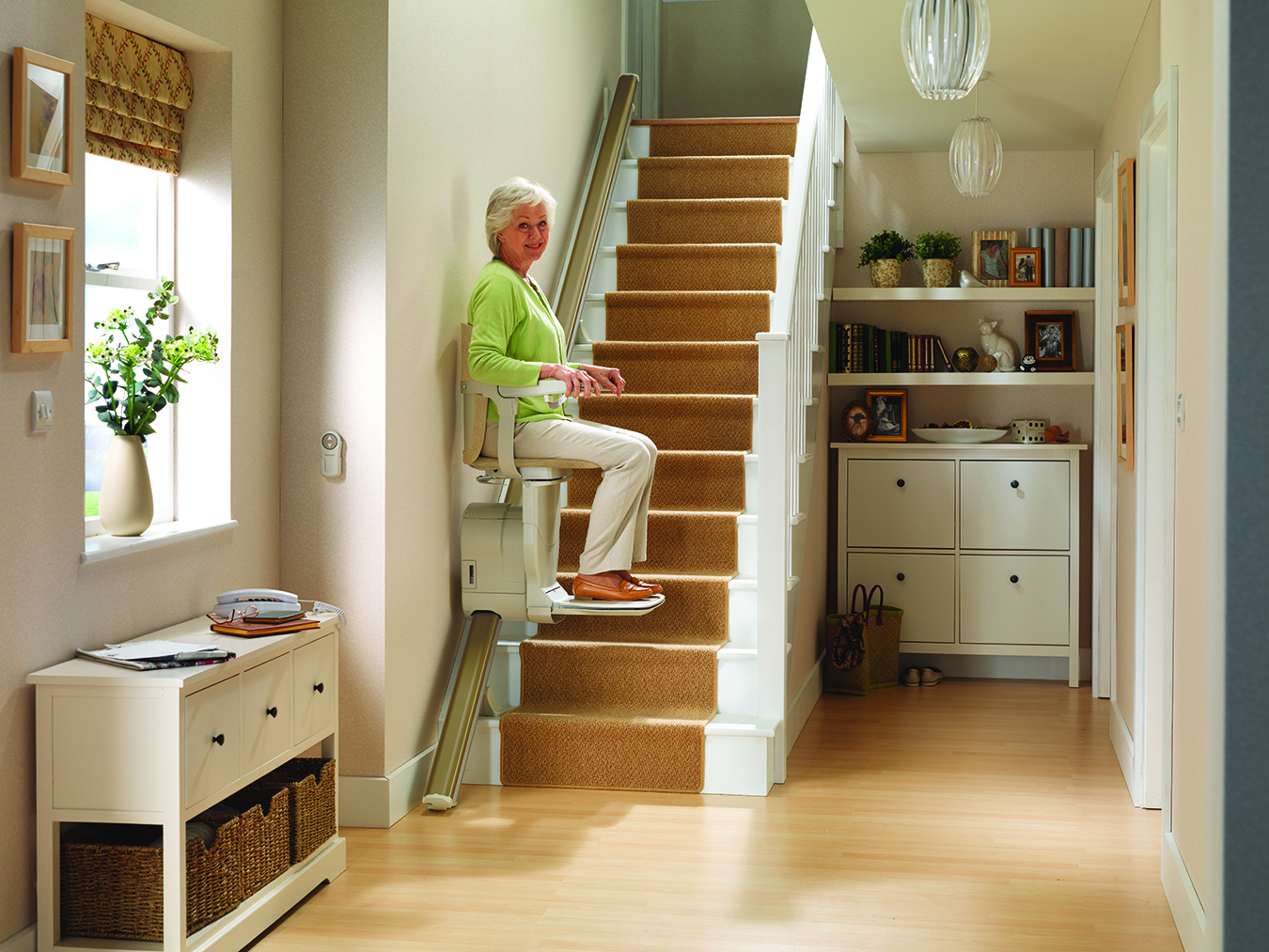
    One example of these different kinds of solutions is a residential chair lift. This provides the senior community, and those who are physically challenged, the ability to have the mobility and access to parts of their home they may not have seen in years, or the ability to leave their home safely and with ease. In some instances, a chair lift can also provide an extra pair of helping hands, such as carrying the laundry or even groceries up and down the stairs.

    This provides them with a higher quality of life while maintaining their pride and independence.


    ACCESS LIFTS HAWAII
    1525 Young St., Honolulu HI 96826

    808-955-4387 www.accessliftshawaii.com

    The Americans with Disabilities Act (ADA) is for the physically challenged and disabled community. The elevator industry, with the help of the government and educators in civil law, has been addressing ADA issues over the years. Elevator and lift manufacturers have many solutions to meet and exceed the ADA requirements.

  • Hurricane Prep for Seniors: A Step Further

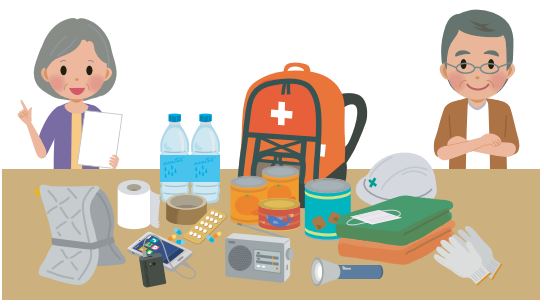
    Many seniors, especially those who live alone, might not realize that there are items they should have in their hurricane emergency kit other than Spam, baked beans and Vienna sausage. June marks the beginning of the six-month-long hurricane season and reminders about being prepared are all over the media.

    The messages always emphasize the need for the basics:

    ◆ drinking water

    ◆ non-perishable food

    ◆ toiletries, batteries

    ◆ your prescription medicines

    But those things may not be enough to meet seniors’ needs.

    Officials with the Federal Emergency Management Agency say to remember four things:

    1. How will you receive alerts and warnings?
    2. What is your shelter plan?
    3. What’s your evacuation route?
    4. And what is your family communication plan?

    These four FEMA questions bring to mind specific steps you might not have thought of:

    ▲ NOAA weather alerts. In addition to a portable AM/FM radio, consider getting one that picks up NOAA weather alerts.

    ▲ FEMA app. Install the FEMA app on your smartphone and acquaint yourself with its navigation. Additionally, make sure emergency alerts are enabled on your phone.

    ▲ Phone text. Know how to text on your phone. Even if the voice network goes out, texting may still be an option because it requires less bandwidth and transmits more easily. But that won’t matter if you don’t know how to text!

    ▲ Support network. Make a list of your support network — people who can help you out in the event of an emergency. Does someone have an extra key to your home?

    ▲ Hard copy list of contacts. Have your most important contact names and numbers written on real paper and stored in plastic zip-lock bags. Remember — when the power goes out, your phone won’t last long and when it dies, so does any chance of reaching your contacts.

    ▲ Medical alternatives. If you have medical issues that require regular doctor’s visits, find out what your doctor’s plan is should his office become inaccessible. Where’s the nearest alternative?

    ▲ Prescription drug supply. For required regular doses of prescription drugs like insulin shots, consult with your doctor for an extra supply.

    ▲ Pet emergency kit. Prepare an emergency kit just for your pet, including food, bedding and treats. But have you thought to include drinking water? Your pet will get thirsty, too.

    ▲ Inventory valuable possessions. Make sure you have a complete and up-to-date inventory of your home and your valuable possessions for insurance purposes. Photograph as much as you can for documentation and store the photos or digital output (for example, USB stick or DVD)  in your zip-lock bag.

    ▲ Automatic Deposit. If you aren’t doing it already, have your benefit checks–pensions, social security, etc.— deposited directly into your bank account. If you have to relocate, your monthly check may have no idea where you’ve gone.

    ▲ Cash. Got some cash and coins? There’s always a possibility ATMs won’t be working.

    Hawai‘i has had its share of disastrous hurricanes and evacuations, but it’s been over 15 years since the last one and it’s important to remember that the threat is always looming.

    One very useful website to help you plan for any emergency is www.ready.gov/make-a-plan There, you will find downloadable documents that will guide you each step of the way as you prepare a plan for your own particular situation.

    For further information, go to the websites of FEMA, the American Red Cross, NOAA, and Hawai‘i state and local Civil Defense. Links to these agencies and their respective emergency preparedness information are available below with additional ones on our website, www.Generations808.com. Click on Emergency Preparedness.

    Federal Emergency Management Agency
    800-621-3362  |  www.fema.gov

    American Red Cross of Hawaii
    808-734-2101  |  www.redcross.org/local/hawaii

    National Hurricane Center (NOAA)
    Hurricane Preparedness
    www.nhc.noaa.gov/prepare/ready.php

    Hawaii Emergency Management Agency
    808-733-4300 www.dod.hawaii.gov/hiema/

    County of Hawai‘i Civil Defense Agency
    808-935-0031 www.hawaiicounty.gov/civil-defense/

    Maui Emergency Management Agency
    808-270-7285  |  www.bit.ly/MauiCountyEmergency

    C&C of Honolulu Dept. of Emergency Management
    808-723-8960  |  www.honolulu.gov/dem

    County of Kaua‘i Emergency Management Agency
    808-241-1800 www.kauai.gov/KEMA

    National Weather Service Forecast HI (NOAA)
    808-973-5286  |  www.prh.noaa.gov/hnl/

    NOAA watches, warnings and advisories
    County of Hawai‘i: 808-935-8555
    County of Maui: 866-944-5025
    City and County of Honolulu: 808-973-4380
    County of Kaua‘i: 808-245-6001

    Many seniors, especially those who live alone, might not realize that there are items they should have in their hurricane emergency kit other than Spam, baked beans and Vienna sausage. June marks the beginning of the six-month-long hurricane season and reminders about being prepared are all over the media.

  • Beware of ‘Spoofing’

    Telephone scams have been around for years, even before the birth of the internet, and they are just as dangerous as their online counterparts. Because modern telephone networks use digital technology, it is easy for cybercriminals to manipulate what appears in the Caller ID to trick you into thinking you are receiving a call from a trusted source. This tactic is called “spoofing.”

    Listen for these red flags:

    ◆ A sense of urgency. The caller wants you to act immediately or something bad will happen.

    ◆ The caller advises payments be made using gift cards or prepaid debit card.

    ◆ You are asked to download and install programs onto your computer to fix the “problems” the caller claims your computer has.

    Some Safety tips:

    ◆ Do not provide any personal or bank information to the caller or confirm any information.

    ◆ Do not respond to any voice messages to contact a telephone number the caller provided without checking first by calling the customer service number on the company or government website.

    ◆ Do not download any programs the caller says you need, or confirm your computer’s type.

    You can find more tips on these websites:

    www.bit.ly/HawaiianElectric_FraudProtection

    www.bit.ly/Microsoft_AvoidPhoneScams

    www.bit.ly/IRS_SpamReporting


    THE DEPARTMENT OF THE PROSECUTING ATTORNEY
    1060 Richards St., Honolulu HI 96813

    808-768-7400  |  Office hrs: Mon – Fri, 7:45 am – 4:30 pm
    www.honoluluprosecutor.org/contact-us/

    Telephone scams have been around for years, even before the birth of the internet, and they are just as dangerous as their online counterparts. Because modern telephone networks use digital technology, it is easy for cybercriminals to manipulate what appears in the Caller ID to trick you into thinking you are receiving a call from…

  • Commonsense Election Modernizations

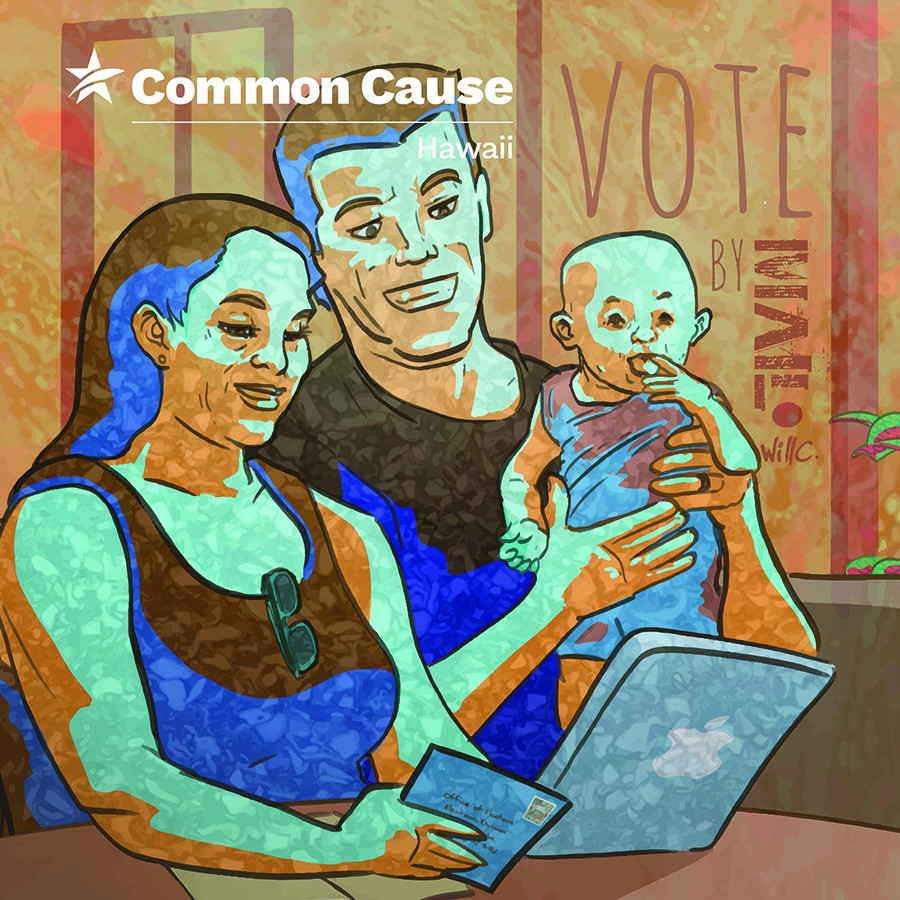
    At Common Cause Hawaii, we believe that the more people who participate in civic engagement, the more representative our democracy. Participation can come in the form of service, or testifying on an important issue, but the most important way to get involved is through voting. As the state with the lowest voter turnout, we need to make our elections more accessible, convenient, and secure so that specific needs are given more attention by public officials; needs like producing more affordable housing, securing better healthcare options for kūpuna, and investing in high quality education to benefit our keiki.

    Two commonsense election modernizations that could add such an element of convenience are Automatic Voter Registration and Vote by Mail. One is a small technical change to update our opt-in system to an opt-out one, and the other a logical expansion of absentee voting which allows people to vote in the privacy of their own home if they wish. Together these practices can cut out the cost of provisional ballots, sending ballots to the wrong addresses, and allow voters ample time to fully vet candidates and the issues by offering the ballot to voters in advance of Election Day. Both fit into voters’ routines without altering long-standing traditions like voting in person.

    Automatic Voter Registration registers eligible citizens to vote anytime they sign up for or renew their driver’s license or state ID unless they opt out. Under Vote by Mail, these same eligible voters receive a ballot at their current address.

    With Vote by Mail, Hawai‘i will take steps to increase turnout, improve voter education, and combat fraud. More than half of those who voted in the 2014 and 2016 elections in Hawai‘i did so via absentee ballot, with more votes cast before Election Day proving we are already familiar with both the efficiencies and required precautions of this method. In Oregon where they now vote entirely by mail, election officials have found no indication of increased fraud or undue influence.

    Hawai‘i deserves a balanced democracy and constituencies that represent our true demographics to include those who are home bound, voters from rural areas, as well as voters of varying incomes and diverse ethnic backgrounds. Hawai‘i has been a leader in voting reform with the implementation of online voter registration and more recently, same day voter registration. We should maintain this momentum and continue to reduce barriers to voting so we can engage all eligible citizens in the political process. Your vote is one of the most direct ways to build a better Hawai‘i for the generations to come.


    COMMON CAUSE HAWAII

    808-275-6275  |  hawaii@commoncause.org
    www.commoncause.org/states/hawaii/

    At Common Cause Hawaii, we believe that the more people who participate in civic engagement, the more representative our democracy. Participation can come in the form of service, or testifying on an important issue, but the most important way to get involved is through voting.