The World Health Organization (WHO) has identified mental wellness issues — stress, depression and anxiety — as the leading causes of a “global health burden.” Could it be that, for the past century, we’ve had the mistaken notion that these problems are all in our head, when in reality they are largely in our gut?
 Did you know that we have two brains? You undoubtedly know about the brain in your head. And while you might not know much about the “second brain” in your gut, you’ve probably “felt” it before. We feel “butterflies” in our stomach when we fall in love or when we’re nervous. We have a “gut feeling” about decisions that we’re wrestling with. Our stomach “growls” when we’re hungry, and we feel “sick to our stomach” when we’re stressed out. Many of us also know that when our gut feels off we simply don’t feel our best.
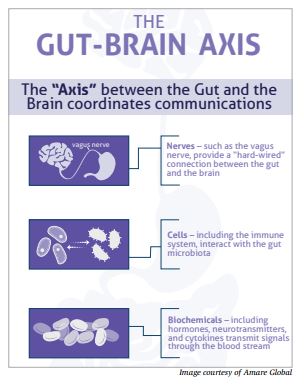
Our two brains also “talk” to each other through a complex network of nerves, cells and biochemicals. Only within the last few years have scientists and health experts begun learning the importance of microbiome balance in regulating not just our gastrointestinal functions, but also our mood, mental focus and emotional well-being.
The discovery of the gut-brain axis and the explosion of research around the microbiome — the 100 trillion bacteria that live in our gastrointestinal tract — is causing a fundamental shift in how we think about (and improve) both mental wellness and physical health. For example, some recent scientific research demonstrates that gut bacteria influence everything from neurotransmitters (depression/anxiety), gut integrity (regularity), immune function (colds/flu/allergies), inflammation (pain, heart health, dementia), and even gene expression (related to a variety of degenerative diseases, including Alzheimer’s and even cancer).
Unfortunately, so much of today’s modern lifestyle can disrupt the microbiome and lead to imbalances across the gut-brain axis, causing us to feel fatigued, depressed and stressed. Research has shown that the microbiome can become disrupted by the aging process, but it may also show that we can use nutrients (specific combinations of probiotics, prebiotics and phytobiotics) to rebalance the microbiome and optimize gut-brain axis function for improved mood, reduced depression, lessened anxiety, and enhanced stress resilience.
Many people have long known that gut health is important for overall wellness, and now modern science and innovative companies are backing up why feeding the gut with the right foods can help each of us feel happier and healthier.
AMARE GLOBALl
Lori Makiya, Wellness Partner
808-285-9620 | amaretogether@gmail.com
www.lovingyourgut.com
Visit online to learn more about how to optimize the mind-gut connection and for information on Amare Global’s FREE information sessions with Dr. Shawn Talbott in Honolulu on Saturday, February 9, 2019. Contact Lori Makiya (above) for registration and location details.
Editor’s note: Before trying any dietary supplements, we encourage you to
do research and consult your doctor before taking them.