Category: Giving Care

  • Essential Support for Family Caregivers

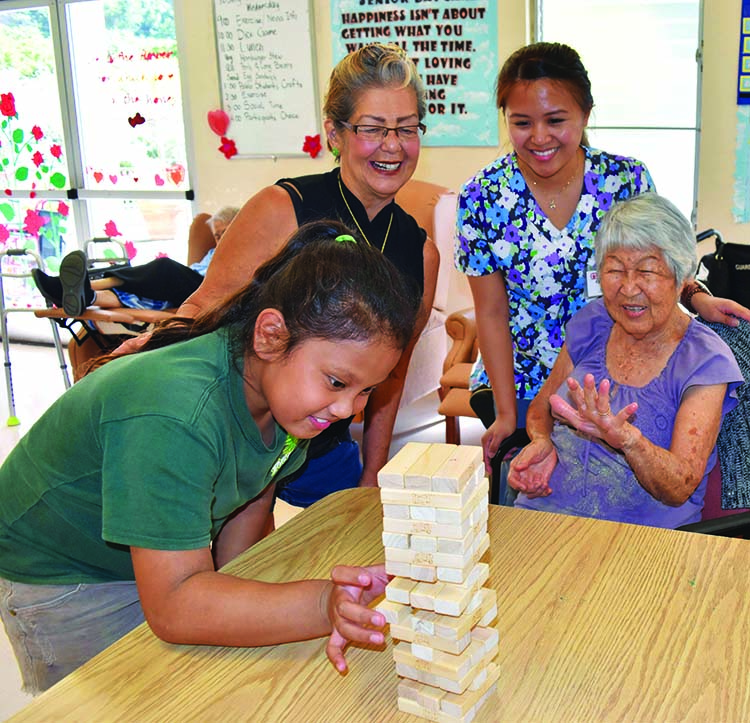
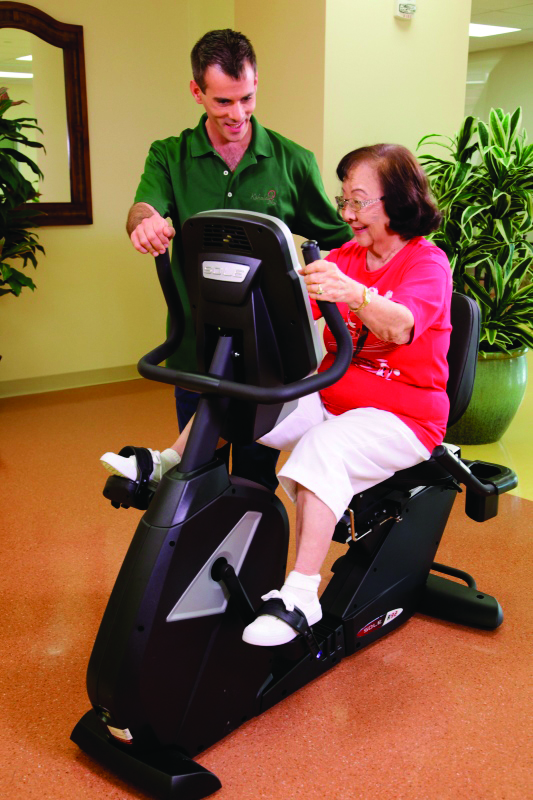
    Every morning, 85-year-old Thomas puts on his aloha shirt and heads to “work” at an adult day care center located near downtown Honolulu. Going there gives him a sense of purpose to get up every morning. His family needs to remind him each day where he is going since he has dementia, but once he is at the center, he is actively engaged in physical exercise, recreational activities and socializing with his friends.

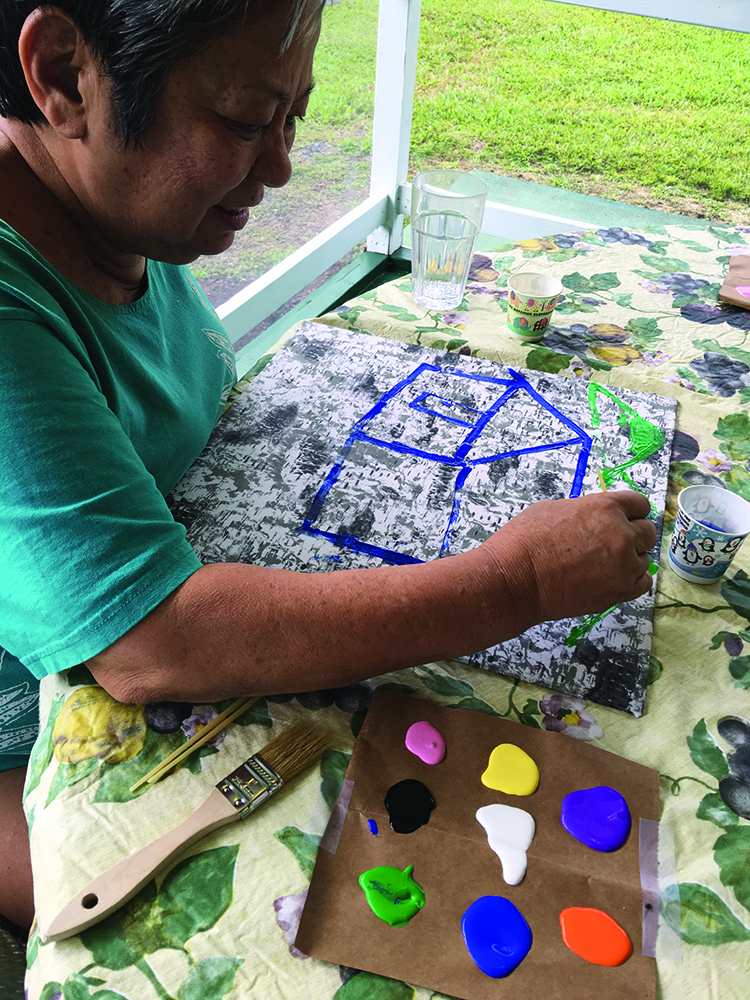
    Activities promote socialization and cognitive stimulation.  Photo courtesy Kāhala Nui
    Activities promote socialization and cognitive stimulation. Photo courtesy Kāhala Nui

    More importantly, Thomas’s daily routine gives his wife the several hours of respite that she needs from taking care of him, which is a 24/7 responsibility. It also provides his children peace of mind that dad is safe and happy so that they can continue to work and not worry about their mother burning out from the stress of caregiving. Thomas’s older brother recently joined the center, so now they get to see each other more often and both families feel reassured that the two siblings are in good hands.

    Attending an adult day care center has been a welcome solutio

    Photo courtesy Kāhala Nui
    Photo courtesy Kāhala Nui

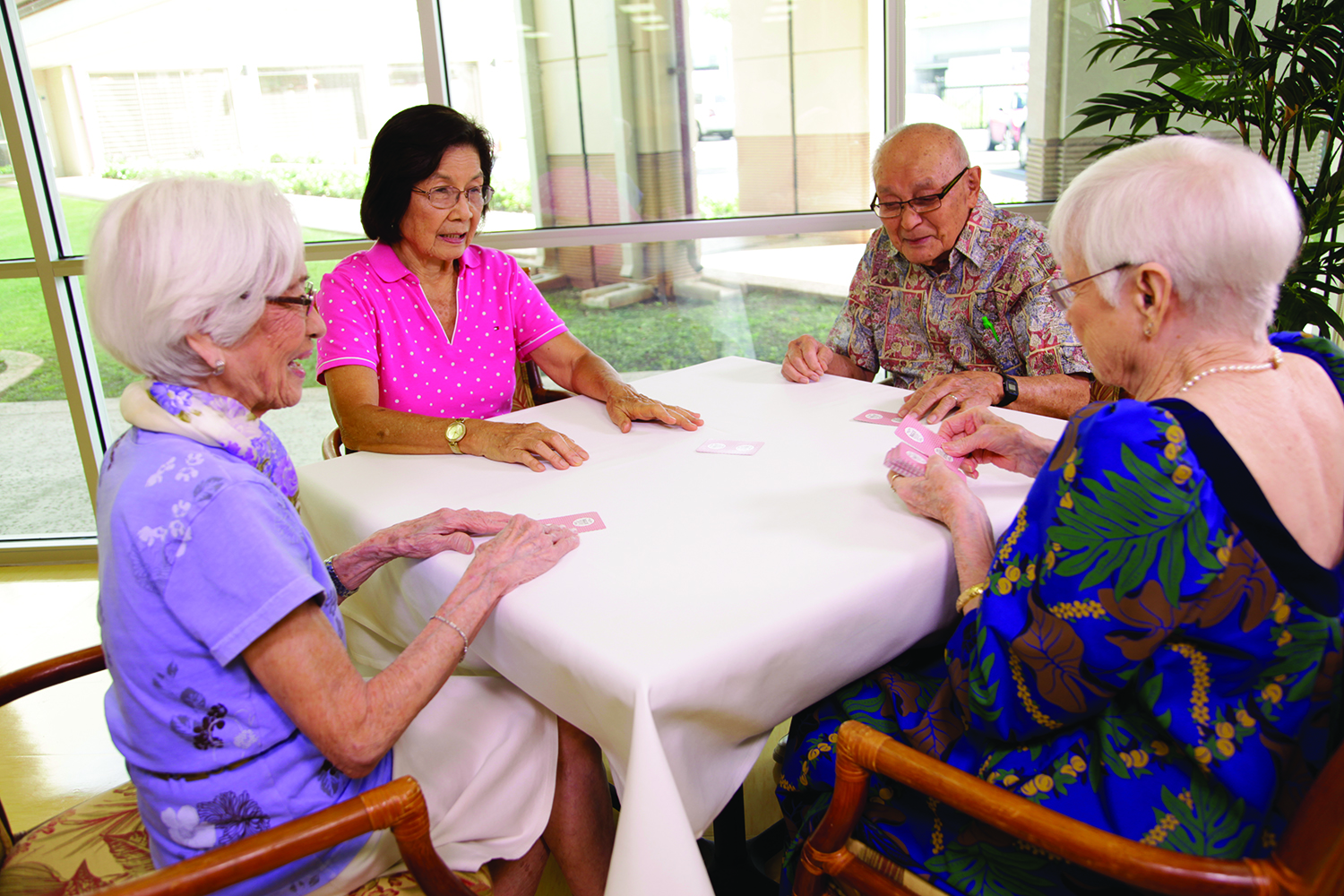
    n for Thomas and his family. Adult day care centers are licensed by the State Department of Health, and typically open from Mondays to Fridays (some open on weekends) with convenient hours to accommodate the working caregivers. They offer a full day of exercise, recreational activities, arts and crafts, music and socialization. At least one meal and snacks are provided, and center participants are carefully supervised by trained staff. Day care centers’ fees range from $60 to $100/day for a full 8 to 10 hours, making it one of the most cost-effective types of care.

    Attendees like Thomas enjoy day care, where they can mingle with their peers, exercise and participate in the variety of activities such as Xbox games, ping pong and karaoke singing. The center that Thomas attends provides a continental breakfast and hot lunch served on china, with tablecloths and linen napkins. The center’s director believes food tastes better and people enjoy each other’s company as they savor their coffee and dessert when they are served in this restaurant-style manner


    For more info about adult day care centers in your area, go to www.HawaiiADRC.org or call 643-2372, a statewide toll-free number.

    LIVE WELL AT IWILEI BY KĀHALA NUI
    888 Iwilei Road #105, Honolulu HI 96817
    808.218.7777 | www.livewellhi.org

    Live Well at Iwilei is operated by Kāhala Nui and is one of the awarded adult day care contractors for the new State Kupuna Caregiver Assistance Program providing up to $70/day for respite services to help working caregivers.

    Every morning, 85-year-old Thomas puts on his aloha shirt and heads to “work” at an adult day care center located near downtown Honolulu. Going there gives him a sense of purpose to get up every morning. His family needs to remind him each day where he is going since he has dementia, but once he…

  • Self-Care Tips for Caregivers on GTV

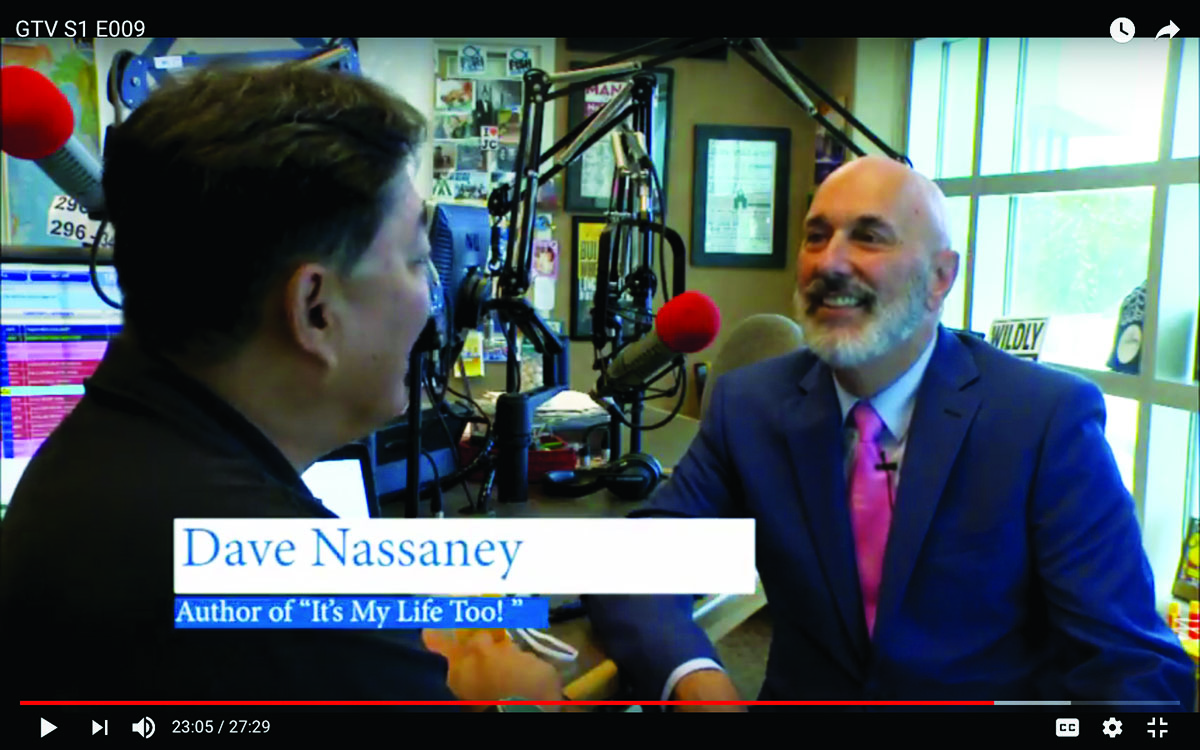
    Earlier this year, Generations Magazine publisher Percy Ihara interviewed a national speaker on caregiving, Dave Nassaney, for the Generations Radio Show. This is an edited transcript of the short Generations TV interview Percy did after the radio show aired.

    GTV: Can you briefly tell your story?

    DN: For the last 21 years, I’ve been a caregiver to my beautiful wife Charlene. She suffered a massive stroke that left her severely speech impaired and paralyzed on the right side. Now I travel all across the country sharing my message: How to prevent your loved one’s illness and disease from actually killing you.

    GTV: What are the three biggest mistakes that caregivers make?

    DN: The first biggest mistake that caregivers make is they don’t know how to put their needs first. The airlines tell us in the event of an emergency, to put your oxygen mask on first before you help your loved ones with their mask. What an amazing metaphor for all of life — take care of you first. Not out of selfishness, but out of survival.

    The second biggest mistake that caregivers make is that they don’t know how to ask for help. Call your brother, call your sister, call your wife’s ex-husband, call anybody. Just get over that silly notion that caregivers have to do it all themselves or they’re going to be a failure as a caregiver.

    The third biggest mistake is allowing undeserved guilt to affect your decision-making process. It’s kind of like being handcuffed to your loved one and feeling like you’re a prisoner. That kind of attitude, that kind of guilt, will kill you.

    GTV: So, what’s a caregiver to do?

    DN: CARE, right? Communicate with your friends. Don’t isolate yourself. Caregivers need to have a life outside of caregiving. Ask for help. Be specific. And when help is offered, don’t turn it down. Rest. Caregivers need eight hours of rest every single night. Eat healthy, nutritious foods. Don’t eat junk food. Junk food’s got chemicals and sugar and processed ingredients that’ll kill you.

    I like to say there’s three kinds of people in the world. There’s caregivers, those who are going to become caregivers, those who are going to need a caregiver. There’s no escaping it. Caregiving is going to touch you at one point or another. Now’s the time to learn how to be a caregiver — not after tragedy strikes and your loved one becomes disabled.


    For more information on Dave Nassaney, go to www.CaregiversCaregiver.com.

    Click here to watch the entire interview and episode featuring Dave Nassaney online

    Earlier this year, Generations Magazine publisher Percy Ihara interviewed a national speaker on caregiving, Dave Nassaney, for the Generations Radio Show. This is an edited transcript of the short Generations TV interview Percy did after the radio show aired. GTV: Can you briefly tell your story? DN: For the last 21 years, I’ve been a…

  • Aging and Muscle Loss

    Throughout our youth, most of us will experience muscle growth up until the age of 30. Thereafter, we begin to lose some muscle mass, strength and performance. This steady decline is called sarcopenia and is the “use it or lose” part of the natural aging process. It often goes unnoticed in our earlier years, as we have more muscle than needed to perform everyday tasks like standing or getting out of bed.

    Sarcopenia affects physically inactive adults more, and after age 30 individuals may lose somewhere of 3 to 5 percent of muscle mass or more with each passing decade. This decline in muscle mass and strength accelerates after the age of 60. While age-related sarcopenia occurs more in physically inactive adults, physically active adults may also experience it, which suggests there are multiple causes for sarcopenia.

    Having low muscle mass can also be a strong predictor of frailty, disability and injuries related to mobility problems. A report from the American Society for Bone and Mineral Research found that individuals with sarcopenia had more than twice the risk of incurring bone fractures and disability from a fall. Because of these risks, it is vital to maintain the muscles we have and be as active as we can. “It takes work, dedication, and a plan, but it is never too late to rebuild muscle and maintain it. Older adults can increase muscle mass lost as a consequence of aging,” says Dr. Thomas Storer, Director of the Laboratory of Exercise Physiology and Physical Function at Harvard-affiliated Brigham and Women’s Hospital.
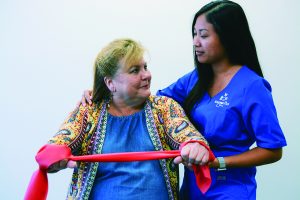
    So, what can we do to protect ourselves from sarcopenia? Older adults and caregivers can be encouraged to know muscle and strength building can be done the same way 70-year-old Arnold Schwarzenegger does it: through exercise and nutrition. The Centers for Disease Control and Prevention (CDC) recommend older adults participate in muscle-strengthening activities a minimum of three days a week. Strength training may involve using weights, resistance bands or exercise machines. Studies have also shown that individuals who started earlier and had exercise habits in their middle age had a lower occurrence of muscle loss later in life.

    Older adults who are physically inactive also tend to have inadequate nutritional intake, eat smaller meals and feel less thirsty, all of which can contribute to sarcopenia. Good nutrition and eating healthy sources of protein, including fish, nuts and lentils, combined with regular strength or resistance training, have shown to be more effective in managing sarcopenia. Studies have also shown that combining muscle-strengthening exercises with improved protein nutrition positively affects sarcopenia more than diet modification or exercise alone.

    So, start early, and ask your health professional about sarcopenia, nutrition, exercise and treatments specific to your needs. Everyone should be proactive and learn more about exercise and the right nutrition to manage sarcopenia. It sounds simple and it is: activity and nutrition go a long way to maintaining our muscles and strength. Getting older is just a number. It’s what we DO that matters.


    ATTENTION PLUS CARE HOME HEALTH CARE
    Accredited by The Joint Commission
    1580 Makaloa St., Ste. #1060, Honolulu, HI 96814
    808-739-2811 | www.attentionplus.com

    AGING IN HAWAII EDUCATIONAL OUTREACH PROGRAM by Attention Plus Care — a program providing resources for seniors and their families, covering different aging topics each month. For class information and upcoming topics, call 808-440-9356.

    Throughout our youth, most of us will experience muscle growth up until the age of 30. Thereafter, we begin to lose some muscle mass, strength and performance. This steady decline is called sarcopenia and is the “use it or lose” part of the natural aging process. It often goes unnoticed in our earlier years, as…

  • Caregiving Overseas

    Many family caregivers come home to Hawai‘i to assist aging parents. But how about caregiving overseas? When my mother died, Dad was 93 years old and was already slipping into dementia. His younger brother (in his late 80s), had retired to Luzon, Philippines, with his wife and insisted on providing care for his older brother, who had done so much for him and his family. He converted a part of his home to accommodate Dad and a live-in caregiver.

    Dad’s retirement income was enough to pay for his 24-hour care there. Luckily, the US dollar’s value made it possible to get the quality… and personal care needed. Plus, his health was good and he didn’t need heavy medical attention — whew!

    I had hoped Dad was good with this plan, but the reality of logistics took my brother and me by surprise. To make this move there was plenty to consider, like dual Philippine citizenship in case he needed to utilize the country’s social services and an international bank that offered online banking. My wife and her family there played a critical role lining up qualified caregivers fluent in Ilocano and English — communication was top on our list.

    We spent a couple of weeks in Luzon interviewing well-qualified candidates and hired the finalists for one full shift to be sure they were both compatible with and acceptable to Dad. We wanted a focused companion, who would take initiatives and look for changes in health and behavior as Dad’s condition progressed, but foremost one who cared. Uncle was our ears and eyes.

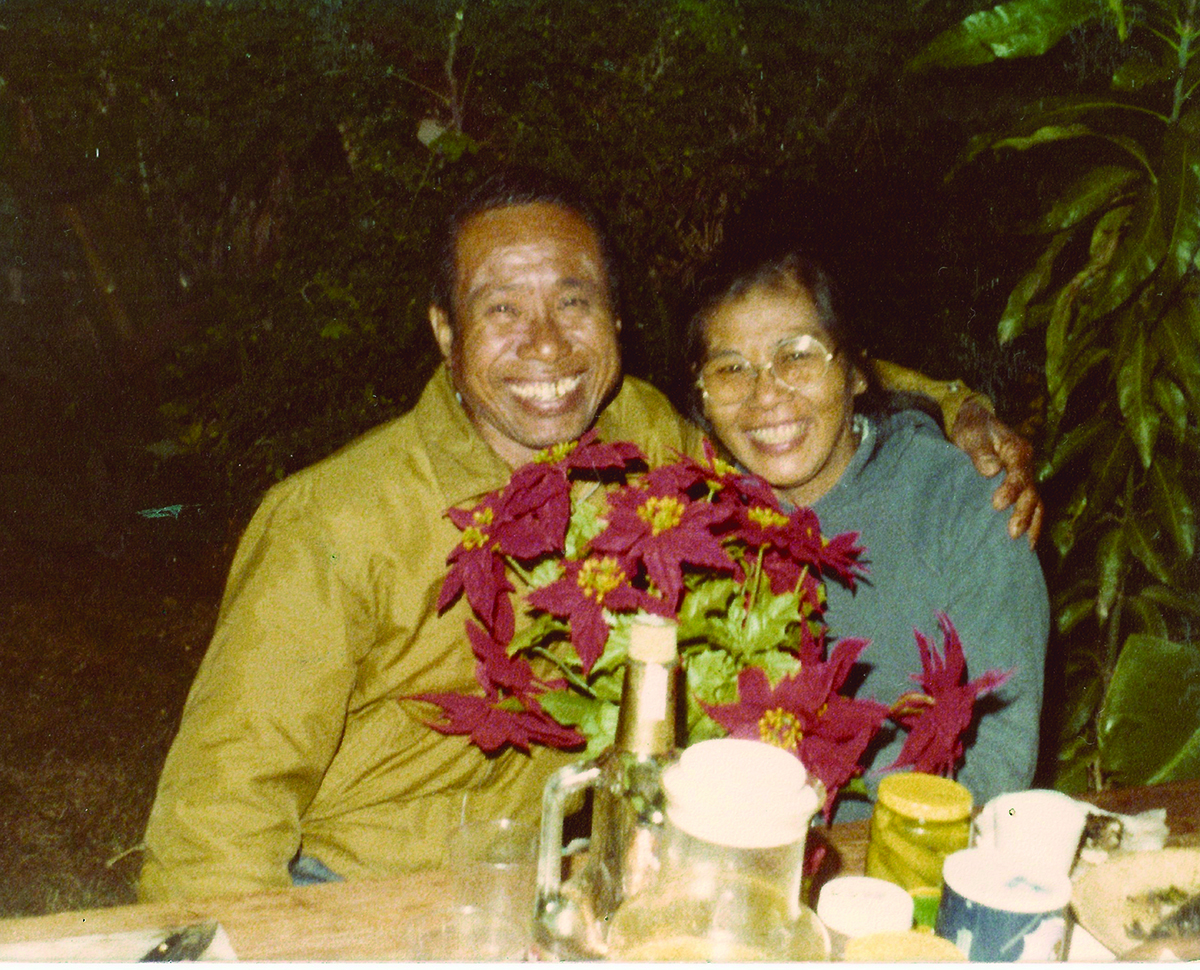
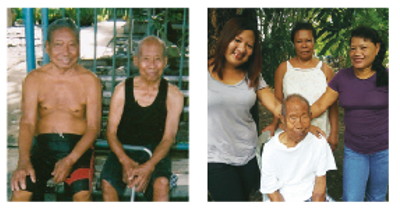
    Left: Mom and Dad in their earlier years just having fun. Center: Uncle Pilo is all smiles with his only living brother. Right: Dad and his caregivers. Jonalyn, left, was his primary caregiver and Sonya and Liza were her support help.
    Left: Mom and Dad in their earlier years just having fun. Right: Dad and his caregivers. Jonalyn, left, was his primary caregiver and Sonya and Liza were her support help.

    At times, I felt guilty skirting the experience of truly caring for my father personally. Unlike some of my friends who had given up their personal lives to do just that. The 12-hour Manila flight and six-hour bus ride to La Union province every six months was our only contact with Dad, who was too hard of hearing to converse by phone. I wondered if it was the right thing, taking him so far away. I promised to bury him next to Mom. Though the process of bringing his remains home was complicated, I did it. Uncle got to honor his older brother and in turn he relieved us from some of the financial burden required to set up the same personal care here in the States.

    All I can say is every family is unique. Caregiving from far away is a logistical maze with very careful planning… and soul searching, even when you have dedicated professionals that your loved one trusts, and a supportive family overseeing the care. Dad was happy and was cared for with love — that’s what mattered most.  (Publisher’s advice: Do your research. Speak with legal, financial and health professionals experienced in overseas care.)

    Many family caregivers come home to Hawai‘i to assist aging parents. But how about caregiving overseas? When my mother died, Dad was 93 and slipping into dementia. His younger brother had retired to the Philippines, with his wife and insisted on providing care for his older brother, who had done so much for his family.

  • FUN ’N GAMES: Think Outside The Box

    How does one keep the interest of the elderly? It can be challenging. Nature walks, painting, board games, puzzles, word and picture games are among the typical activities of the elderly.

    How does one maintain their interest level? This is where you have to be creative and think “outside the box.” Daily walks become nature walks and scavenger hunts. Giving ordinary activities “new” names to spice it up a bit is a good idea. It gives everyone something to look forward to and may excite them. Some examples: Dancing Tuesdays (exercise day), Bingo Wednesdays, Spa and Salon Thursdays, and Happy Hour Fridays. You can’t forget about Donut Saturdays and Spaghetti Sundays.

    Make a space in your home, or assisted living facility, where the residents can display their works of art. Painting is an all-time favorite, and having a “Hallway of Art” will be of interest to the painters as well as family, friends or visitors. There can also be “Gallery Night” to show off the paintings to see these masterpieces.

    It’s all about being creative, thinking outside the box and creating life-enriching activities that stimulate the whole person — the body, mind and soul of each individual.


    KINOLAU HOME MALAMA, LLC

    15-1735 19th St., Kea‘au, HI 96749
    808-982-5415  |  facebook.com/kinolauhomemalama

    How does one keep the interest of the elderly? It can be challenging. Nature walks, painting, board games, puzzles, word and picture games are among the typical activities of the elderly.

  • You Need Skilled Nursing … What?

    If you’re like most of us in Hawai‘i, you have no clue what “skilled nursing” means unless you have spent time in a Skilled Nursing and Rehab Facility (SNF). Some think it is the last stop, a depressing place where sick people go when they can no longer take care of themselves.

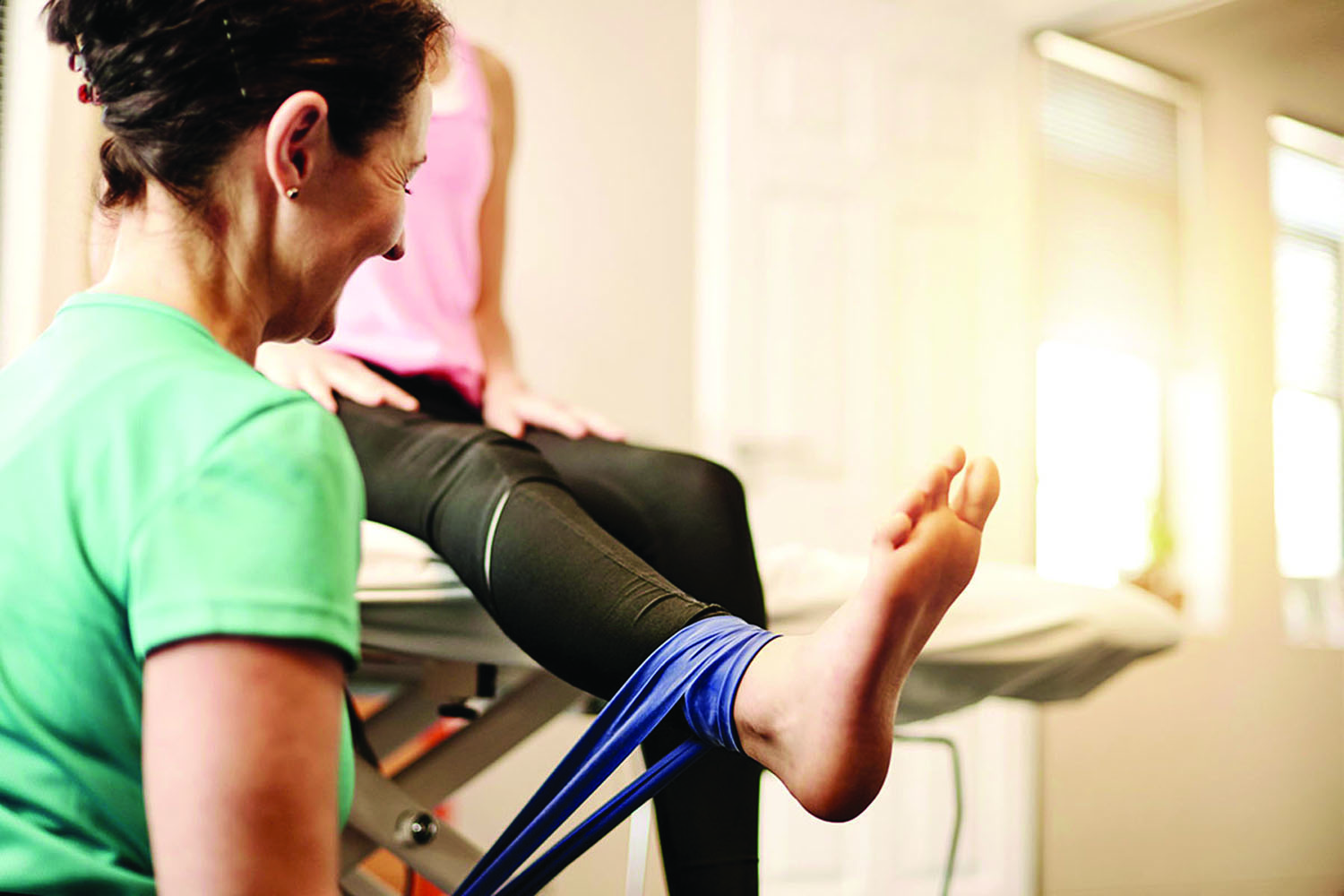
    Shot of a physiotherapist using a resistance band to treat a patient in her office
    A physiotherapist using a resistance band to treat a patient in her office

    It’s true that there are sick people in SNFs, but do you know that an SNF’s goal is to provide hands-on complex rehabilitation with one thing in mind? To get the patient as back to normal as possible so that they can live a normal life. That’s the GOAL!

    If you’ve broken a bone and need intensive rehab, or had a stroke and you aren’t quite ready for your home environment, your doctor will more than likely have you rehab at an SNF. You may learn how to walk again, strengthen muscles, and most likely practice normal skills like eye-and-hand coordination. SNFs specialize in complex care and rehab. Hundreds of folks get better and return home after spending time in an SNF. Don’t be afraid of an SNF. Keep your mind strong with one goal… to get well! You will be out of there in no time!


    CARE CENTER OF HONOLULU

    1900 Bachelot Street, Honolulu HI 96817
    808-531-5302  |  ccoh.us

    If you’re like most of us in Hawai‘i, you have no clue what “skilled nursing” means unless you have spent time in a Skilled Nursing and Rehab Facility (SNF). Some think it is the last stop, a depressing place where sick people go when they can no longer take care of themselves.

  • Kūpuna Travel Tips

    Last November, my mother’s side of the family flew to Las Vegas to see my cousin get married. Family trips usually include everyone, from newborns to our wise elders. So, of course, grandma came along for the trip!

    Throughout our weeklong stay, we ran into a few challenges. I’d like to share with you our experiences and triumphs.

    Here are three tips on traveling with kūpuna:

    1) Check the weather beforehand, and pack accordingly.

    Coming from Hawai‘i, where the weather is always tropical and warm, we weren’t prepared for the Las Vegas air to fluctuate and hit as low as 68 degrees! As a result, grandma endured the cold, dry air for an entire day until we headed to the shopping outlet and bought her the essentials — a thick, warm and cozy jacket paired with a black beanie cap to match.

    2) Kūpuna take great pride in feeling helpful.

    Grandma will always be who she used to be; she’s just a little different now. She was always the planner of the party — providing more than enough food and a plethora of games and activities. It’s obvious that she still enjoys holding a leadership position when it comes to family functions. Only now, she desperately needs our patience and guidance to successfully complete certain tasks. Grandma stayed over at the bride and groom’s house for the last three days leading up to the wedding. For those three days, she helped create centerpieces, went on car rides to pick up flowers and decorations, and helped set up the banquet room for the wedding reception.

    3) Share Grandma Duties.

    Assuming you have a team of caregivers, it is important to delegate duties according to strengths. Luckily, we have an executive team of four siblings, consisting of three daughters and one son. They each play an intricate role in the care of grandma.

    Grandma is a bonafide Diamond.* While we were on our trip, it was almost an instinct for each sibling to know when someone has reached his or her limit. The siblings would unconsciously tag team and swap places when one sibling’s temper was growing short due to Grandma’s bothersome behavior.

    Although the three tips mentioned were examples from my trip to Las Vegas, they can also be useful with travelling to doctors’ appointments, family parties, etc.


    Mapuana Taamu is a professional, family caregiver specializing in dementia. She owns and operates Memory Friends, a companionship, respite and consultation service for seniors. She also is a “Certified Positive Approach to Care” Trainer. Reach her at:

    808-469-5330 mfriends808@gmail.com

    *Diamond: Refers to one of six “gems” in Teepa Snow’s Positive Approach® To Care model. Each gem represents a classification system comparing the different stages of dementia.

    Last November, my mother’s side of the family flew to Las Vegas to see my cousin get married. Family trips usually include everyone, from newborns to our wise elders. So, of course, grandma came along for the trip!

  • Ruby: A True Gem

    We have a gem with us. In 2017, we introduced her as Ruby, our furry four-legged  caregiver and therapy dog. Since then, we’ve received much interest about her and pet therapy, aka, Animal Assisted Therapy.

    As a handpicked Labradoodle, Ruby is highly trained and recognized by the American Kennel Club (AKC) as a certified therapy dog. She loves her time visiting children and adults in hospitals or in their homes, and she enjoys the special relationships she has meeting and greeting everyone.

    “The more I do this, I can clearly see that Ruby truly loves being with her clients,” says her handler, Carol Samples, RN, and CEO of Attention Plus Care. “She can connect and help people in ways where other treatments cannot. There is something happening beyond words that is exchanged.” Her natural talent for boosting morale can be life-changing for some and is both a product of her breed and her special training.

    Pet therapy, or Animal Assisted Therapy, has a positive effect on seniors. A one-year study of roughly 1,300 adults aged 65 or more years, published in the Journal of the American Geriatrics Society, found that companion animals had a positive effect on the activities of daily living (ADLs) of older adults. The study also found older adults had a decline in ADLs when they did not have pets, compared to similar groups with pets.

    A study in the Journal of Gerontology also found that a therapy dog had a positive effect on residents at long-term care facilities. Residents engaged with a therapy dog had a decrease in loneliness after the end of the six-week study. The study also found that one 30-minute session a week with a therapy dog gave significant reduction in participant loneliness.

    “Studies aside, we just notice an increase in smiles when Ruby visits our medically fragile patients,” Samples says. “The effect is profound and brings joy to those who can’t have a pet in their life. The unconditional love and relationship a therapy dog experiences with people is also good medicine. We need more of it.”

    Animal Assisted Therapy for seniors also has been shown to help Sundowner’s Syndrome, and evening periods of agitation and confusion in those with Alzheimer’s disease and dementia. It’s often seen that touching and being touched by a therapy dog gives tactile and cognitive stimulation with patients, while improving their well-being. Dr. Michael McCulloch, a Portland, Oregon, psychiatrist, researches why pets are therapeutic. “Touch is one of our primary needs when we’re born and one of our last needs to go,” Dr. McCulloch states.

    These days, in a world of texting to “keep in touch,” therapy dogs know their companionship and furry touch are paws above a phone text. Just ask Ruby. She’ll high-five you!


    ATTENTION PLUS CARE
    Accredited by The Joint Commission

    1580 Makaloa St., Ste. #1060, Honolulu, HI 96814
    808-739-2811 | attentionplus.com

    Available monthly: AGING IN HAWAII EDUCATIONAL OUTREACH PROGRAM by Attention Plus Care — A program to provide resources for seniors and their families, instructed by a registered nurse, who covers a different aging topic each month. For more information on Animal Assisted Therapy and free community workshops on Aging in Hawai‘i hosted by Attention Plus Care, call 808-440-9372.

    As a handpicked Labradoodle, Ruby is highly trained and recognized by the American Kennel Club (AKC) as a certified therapy dog. She loves her time visiting children and adults in hospitals or in their homes, and she enjoys the special relationships she has meeting and greeting everyone.

  • WARNING: ‘Aging in Place’ Homes

    Many seniors are aware of the Long-Term Care Ombudsman Program and its role as their advocate if they have a problem or concern regarding a nursing home, adult residential care home, assisted living facility or community care foster family home.

    What they may not know, however, is that if they choose to live in what is called an “aging in place” facility, residents are very much on their own. The Long-Term Care Ombudsman Program does not have access to these facilities, and their “renters” are not protected by federal or state regulations that govern licensed settings.

    There is some debate as to whether or not these homes are actually “unlicensed” care homes taking advantage of loopholes in the current law. But there is no debate that AIG Homes have:

    • No annual inspection by the Department of Health.
    • No public posting of the inspection by the
      Department of Health.
    • No TB clearance requirements for the caregivers or staff.
    • No building or fire code requirements or plans regarding emergency evacuations.
    • No access to the Ombudsman or consumer protection.

    Since these homes are not licensed, and don’t want to be licensed, another significant concern is this: Why would a social worker, case manager, doctor, nurse or other professional make such a recommendation? Do they bear some liability if the person is abused, mistreated or neglected?  Would healthcare providers, such as Kaiser or HMSA, place a patient in an unregulated, unmonitored home?The Long-Term Care Ombudsman Program has already received complaints about loved ones being denied access. A man called complaining that his relative was in an “aging in place” home, and every time he visited, she would have new, mysterious bruises. He complained to the caregiver, but to no avail. Then he noticed the caregiver started covering up the bruises in various ways to hide them. He took pictures and sent them to the person with the placement responsibility over his relative who, unfortunately, didn’t live in Hawaii. That person forwarded the pictures to the caregiver, and she immediately banned the man from visiting. He called our Office to request help, as he is the only relative on the island and hasn’t been allowed to visit since April.

    He wanted to know if I could do anything to lift the ban. Sadly no. Our Office can’t do anything because the home is unlicensed. Representatives from our Office could be arrested for trespassing on private property.

    Most of us believe if you are taking care of someone in your home for a fee — and that person is not related to you — then you need to be licensed by the state, so we can try to ensure your safety. Licensed facilities are regulated by laws, which allow the state to do what is necessary to ensure the safety and security of our residents through compliance with building and safety codes, health inspections, emergency plans, care plans, medication management, and training and experience for caregivers.

    The “aging in place” model is not licensed and doesn’t allow for these safeguards. Until they do, they should be shut down.


    DO YOU HAVE COMPLAINTS AND QUESTIONS?

    Please call John G. McDermott, the State Long-Term Care Ombudsman, at 808-586-7268 or refer to the Department of Health’s website at www.health.hawaii.gov/ohca/state-licensing-section/.

    Many seniors are aware of the Long-Term Care Ombudsman Program and its role as their advocate if they have a problem or concern regarding a nursing home, adult residential care home, assisted living facility or community care foster family home. What they may not know, however, is that if they choose to live in what…

  • The Many Facets of Dementia

    Alzheimer’s Disease and dementia — isn’t that the same thing? The simple answer is no.

    Dementia is an umbrella term for the different types of diseases that affect the brain. Alzheimer’s Disease is only one form of dementia.
    Also on the list we have Lewy body dementia, alcohol-related dementia, frontal-temporal dementia, Parkinson’s-related dementia, and so on.

    Dementia is ultimately brain failure. Like other organ failures, you can expect the brain to gradually regress over time, and some diseases progress faster than others. This gradual decline of cognitive function is the main culprit behind the many, and sometimes violent, behavioral changes that accompany this disease.

    Teepa Snow (www.teepasnow.com), one of my mentors, has transformed the way we think about dementia with her Positive Approach® to Care philosophy. As a registered occupational therapist with over 30 years of hands-on experience, Teepa has reinvented the varying stages of dementia by introducing her GEMS® model (Sapphire, Diamond, Emerald, Amber, Ruby and Pearl). Each GEMS state reflects a different stage of dementia with an emphasis on what the person is still able to do rather than what cognitive functions are lost. Nevertheless, as a person living with dementia goes through the GEMS cycle, behaviors remain problematic.

    Dementia attacks the left side of the brain more aggressively than the right. The left hemisphere is where we hold language capabilities — comprehension, vocabulary and speech production. When we have limited language skills, we unconsciously rely on behaviors to communicate.

    Author Mapuana Taamu with her mentor Teepa Snow, founder of the Positive Approach® to Care philosophy.
    Author Mapuana Taamu with her mentor Teepa Snow, founder of the Positive Approach® to Care philosophy.

    Think about 3-year-olds. Do they tell you that they are tired and need a nap, or do they kick, scream and throw a tantrum? This is how people living with dementia communicate. With diminished language skills, they have difficulty verbalizing what they want or need, so they end up showing you through their behaviors.

    It takes a lot of detective work to understand these behaviors! Ultimately, it is the duty of their caregiver to adjust and adapt to the ever-changing brain. To give care successfully requires lots of patience paired with trials and numerous errors. But as time goes by, the “uh-oh’s” will eventually turn into “ah-ha’s!”


    Mapuana Taamu is a professional, family caregiver specializing in dementia. She owns and operates Memory Friends, a companionship, respite and consultation service for seniors. She also is a “Certified Positive Approach® to Care” Trainer. Reach her at:  808-469-5330  |  mfriends808@gmail.com

    Alzheimer’s Disease and dementia — isn’t that the same thing? The simple answer is no. Dementia is an umbrella term for the different types of diseases that affect the brain. Alzheimer’s Disease is only one form of dementia. Also on the list we have Lewy body dementia, alcohol-related dementia, frontal-temporal dementia, Parkinson’s-related dementia, and so on. Dementia is…

  • Coping with Holiday Sibling Strife

    Seek help when caring for aging parents, especially during the busy holiday season.
    Seek help when caring for aging parents, especially during the busy holiday season.

    The search for holiday perfection can set the bar high for caregivers. Starting as early as Thanksgiving, they’re flooded by images of families happily enjoying one another. And why not? As a home healthcare provider, we know family support goes a long way for parents aging in place. But when adult siblings are involved, they also can have their differences on parents’ needs. Left unchecked, these differences can bring out the best and worst in family relationships – especially during the holidays.

    The demands of caregiving can challenge sibling rivalries and shift the focus away from parent care. When this happens, family members sometimes find themselves arguing over past wounds. Siblings not on good speaking terms may dwell on negative pasts.

    “The holidays can bring back all of the pecking-order stuff that siblings thought they could forget,” says Wika Puuohau, RN, Client Service Supervisor at Attention Plus Care. “It can return adults back to small-kid time.”

    A sibling who is less active with caregiving also may seem distant and react with more anger or blame toward other siblings. Sometimes, this is an attempt to avoid facing the eventual passing and loss of a terminally ill parent. On the other hand, a more involved sibling may react differently and express more sadness or grief. When caregiving duties for a parent begin, one sibling also may take over as the primary caregiver and cause disagreements among siblings about who is in charge. The more involved, active caregiver is now at risk for burnout, while the other sibling takes a backseat to watch the show. “That’s when I put my coaching hat on,” Puuohau adds.

    These situations can add to the stress and resentment siblings already may have for one another, brought on by the holidays, interfering with the priorities of caring for parents. Siblings not talking with one another, or not wanting to keep others informed about their parents’ condition, also can hinder important information from getting to a healthcare provider. So how can family members and siblings work together to care for parents? Here are tips for siblings during the holidays:

    ♥ Make time for sibling communications.

    ♥ Share realistic expectations and goals.

    ♥ Keep lines of communication open.

    ♥ Seek to understand first instead of blame.

    ♥ Get input from those affected by decisions.

    ♥ Accept family as they are and not as you wish.

    ♥ Seek common ground during calmer times.

    ♥ Use an objective party to facilitate disputes.

    ♥ Be thankful and share gratitude with others.

    Adult siblings caring for parents can make the most of their time and efforts together. With preparation, the holidays can be a time for new traditions and positive experiences for siblings. It also can be a chance for rivals to be on better terms with one another for years to come. Now that’s a gift our parents really want!


    ATTENTION PLUS CARE HOME HEALTHCARE
    Accredited by The Joint Commission

    1580 Makaloa St., Ste. 1060, Honolulu HI 96814
    808-739-2811  |  www.attentionplus.com

    AGING IN HAWAII EDUCATIONAL OUTREACH PROGRAM by Attention Plus Care — a program providing resources for seniors and their families, covering different aging topics each month. For class information and upcoming topics, call 808-440-9356.
    The search for holiday perfection can set the bar high for caregivers. Starting as early as Thanksgiving, they’re flooded by images of families happily enjoying one another. And why not? As a home healthcare provider, we know family support goes a long way for parents aging in place. But when adult siblings are involved, they…

  • Unexpected Turn of Events

    In March, during a mainland trip to visit our college daughter, I started receiving phone calls from old family friends whom I haven’t heard from in years. What I thought were surprise hellos were concerned calls.

    Kimiko Suzuki, who lived at Kala¯kaua Gardens senior living community, passed away on July 29, 2017.
    Kimiko Suzuki, who lived at Kalākaua Gardens senior living community, passed away on July 29, 2017.

    My mother, Kimiko Suzuki, 88, had reached out to them due to a sudden onset of fluid buildup in her legs.

    Three years earlier, my dad, at age 84, had passed away from a heart attack. My mother, a year older than my dad, still was physically and mentally strong. She had continued with the family business, which kept her active and filled with a sense of purpose.

    But now, her ability to walk was greatly hindered due to fluid buildup in her legs, later diagnosed as edema from stage 3 kidney failure. The edema prevented her from getting around the house, and even preparing meals for herself.

    When my wife and I returned from our trip, I quickly transferred my mother to our home, intending to care for her for as long as we could. However, within a few days, I quickly found my mission had become impossible.

    Our home is a three-story townhouse. The nearest restroom was next to a flight of stairs. With her inability to walk, even with a walker, she grew fearful of going to the restroom. A simple bath took nearly an hour because the full bathroom is located on the third floor.

    When I went to work and left her alone during the day, I realized my action bordered on neglect.

    A little over a week after trying to adjust to this life, my mother suddenly said the most striking thing to me: “It would be all right if I went to a retirement home.” These words were significant because in the first days of her stay with us, she insisted on not being put in any sort of foster care.

    I must thank my mother for realizing her illness was beyond the limits of our family’s ability to care for her. I still feel guilty for sending my mother to Kalākaua Gardens. I
    visited her daily during lunch or dinner and spent two hours with her. After a short adjustment period, my mother found her way at Kalākaua Gardens.

    I didn’t have a concrete plan in place when my mother fell ill. I now realize the importance of learning in advance about aging.

    Every family’s decision will be different based on a variety of factors — the degree of illness, number of caregivers and money available for care. I do not feel there is one right way. I made the best decision for my family based on our situation. Others may second-guess my decision.

    If your parents live long enough, you will go through what I have. Please prepare. Be realistic about your role as a caregiver.

    I thought I could do more, but I admit that I reached the limits of my abilities.

    I want to thank everyone at Kalākaua Gardens for their assistance. They truly are angels.

    I also want to thank my wife for her understanding and patience, and for helping us to adjust to our family’s changes.


    HELPFUL RESOURCES

    In caregiving, gain as much knowledge as you can about elderly needs and care. Some helpful resources:

    AARP HAWAII
    1132 Bishop St., Ste. 1920, Honolulu HI 96813

    www.aarp.org/states/hi./
    (toll-free) 866-295-7282

    In March, during a mainland trip to visit our college daughter, I started receiving phone calls from old family friends whom I haven’t heard from in years. What I thought were surprise hellos were concerned calls. My mother, Kimiko Suzuki, 88, had reached out to them due to a sudden onset of fluid buildup in…