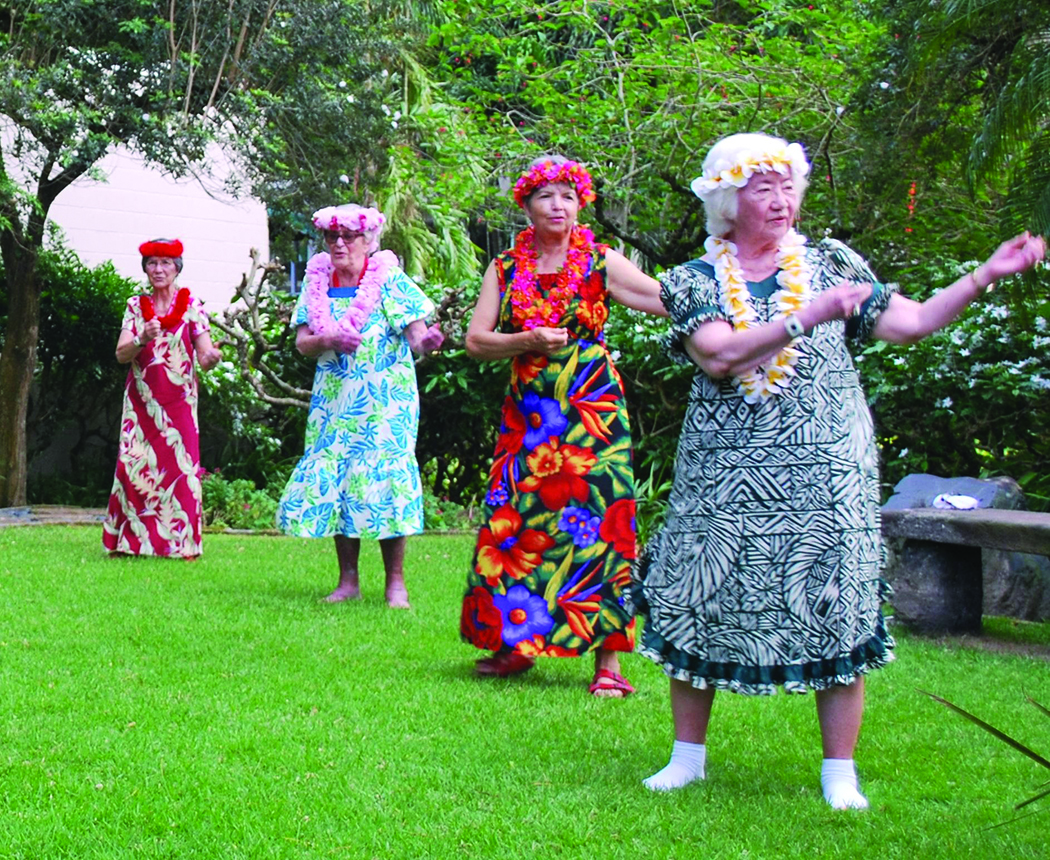
How does one keep the interest of the elderly? It can be challenging. Nature walks, painting, board games, puzzles, word and picture games are among the typical activities of the elderly.
How does one maintain their interest level? This is where you have to be creative and think “outside the box.” Daily walks become nature walks and scavenger hunts. Giving ordinary activities “new” names to spice it up a bit is a good idea. It gives everyone something to look forward to and may excite them. Some examples: Dancing Tuesdays (exercise day), Bingo Wednesdays, Spa and Salon Thursdays, and Happy Hour Fridays. You can’t forget about Donut Saturdays and Spaghetti Sundays.
Make a space in your home, or assisted living facility, where the residents can display their works of art. Painting is an all-time favorite, and having a “Hallway of Art” will be of interest to the painters as well as family, friends or visitors. There can also be “Gallery Night” to show off the paintings to see these masterpieces.
It’s all about being creative, thinking outside the box and creating life-enriching activities that stimulate the whole person — the body, mind and soul of each individual.
How does one keep the interest of the elderly? It can be challenging. Nature walks, painting, board games, puzzles, word and picture games are among the typical activities of the elderly.
If you’re like most of us in Hawai‘i, you have no clue what “skilled nursing” means unless you have spent time in a Skilled Nursing and Rehab Facility (SNF). Some think it is the last stop, a depressing place where sick people go when they can no longer take care of themselves.
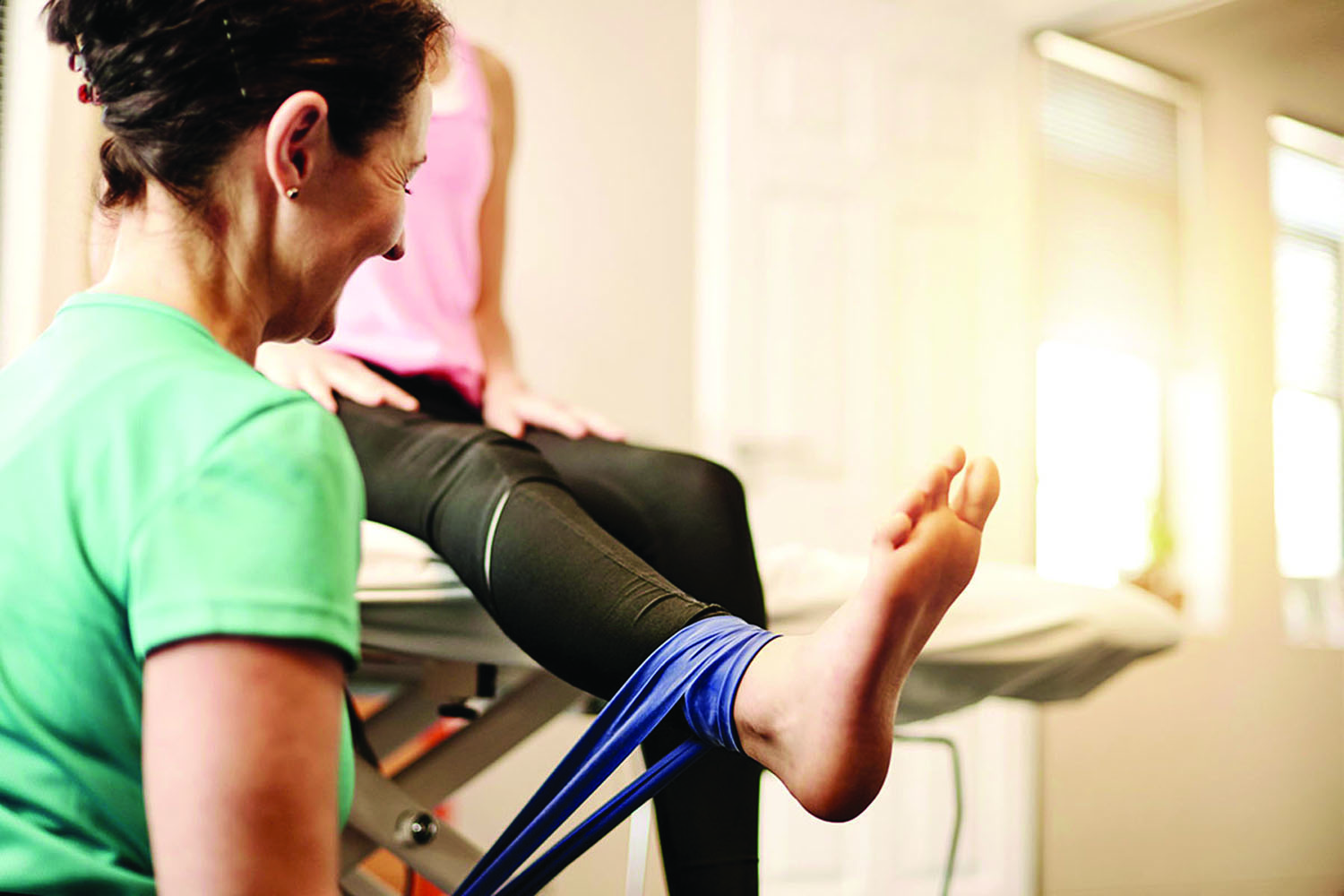
A physiotherapist using a resistance band to treat a patient in her office
It’s true that there are sick people in SNFs, but do you know that an SNF’s goal is to provide hands-on complex rehabilitation with one thing in mind? To get the patient as back to normal as possible so that they can live a normal life. That’s the GOAL!
If you’ve broken a bone and need intensive rehab, or had a stroke and you aren’t quite ready for your home environment, your doctor will more than likely have you rehab at an SNF. You may learn how to walk again, strengthen muscles, and most likely practice normal skills like eye-and-hand coordination. SNFs specialize in complex care and rehab. Hundreds of folks get better and return home after spending time in an SNF. Don’t be afraid of an SNF. Keep your mind strong with one goal… to get well! You will be out of there in no time!
If you’re like most of us in Hawai‘i, you have no clue what “skilled nursing” means unless you have spent time in a Skilled Nursing and Rehab Facility (SNF). Some think it is the last stop, a depressing place where sick people go when they can no longer take care of themselves.
Last November, my mother’s side of the family flew to Las Vegas to see my cousin get married. Family trips usually include everyone, from newborns to our wise elders. So, of course, grandma came along for the trip!
Throughout our weeklong stay, we ran into a few challenges. I’d like to share with you our experiences and triumphs.
Here are three tips on traveling with kūpuna:
1) Check the weather beforehand, and pack accordingly.
Coming from Hawai‘i, where the weather is always tropical and warm, we weren’t prepared for the Las Vegas air to fluctuate and hit as low as 68 degrees! As a result, grandma endured the cold, dry air for an entire day until we headed to the shopping outlet and bought her the essentials — a thick, warm and cozy jacket paired with a black beanie cap to match.
2) Kūpuna take great pride in feeling helpful.
Grandma will always be who she used to be; she’s just a little different now. She was always the planner of the party — providing more than enough food and a plethora of games and activities. It’s obvious that she still enjoys holding a leadership position when it comes to family functions. Only now, she desperately needs our patience and guidance to successfully complete certain tasks. Grandma stayed over at the bride and groom’s house for the last three days leading up to the wedding. For those three days, she helped create centerpieces, went on car rides to pick up flowers and decorations, and helped set up the banquet room for the wedding reception.
3) Share Grandma Duties.
Assuming you have a team of caregivers, it is important to delegate duties according to strengths. Luckily, we have an executive team of four siblings, consisting of three daughters and one son. They each play an intricate role in the care of grandma.
Grandma is a bonafide Diamond.* While we were on our trip, it was almost an instinct for each sibling to know when someone has reached his or her limit. The siblings would unconsciously tag team and swap places when one sibling’s temper was growing short due to Grandma’s bothersome behavior.
Although the three tips mentioned were examples from my trip to Las Vegas, they can also be useful with travelling to doctors’ appointments, family parties, etc.
Mapuana Taamu is a professional, family caregiver specializing in dementia. She owns and operates Memory Friends, a companionship, respite and consultation service for seniors. She also is a “Certified Positive Approach to Care” Trainer. Reach her at:
*Diamond: Refers to one of six “gems” in Teepa Snow’s Positive Approach® To Care model. Each gem represents a classification system comparing the different stages of dementia.
Last November, my mother’s side of the family flew to Las Vegas to see my cousin get married. Family trips usually include everyone, from newborns to our wise elders. So, of course, grandma came along for the trip!
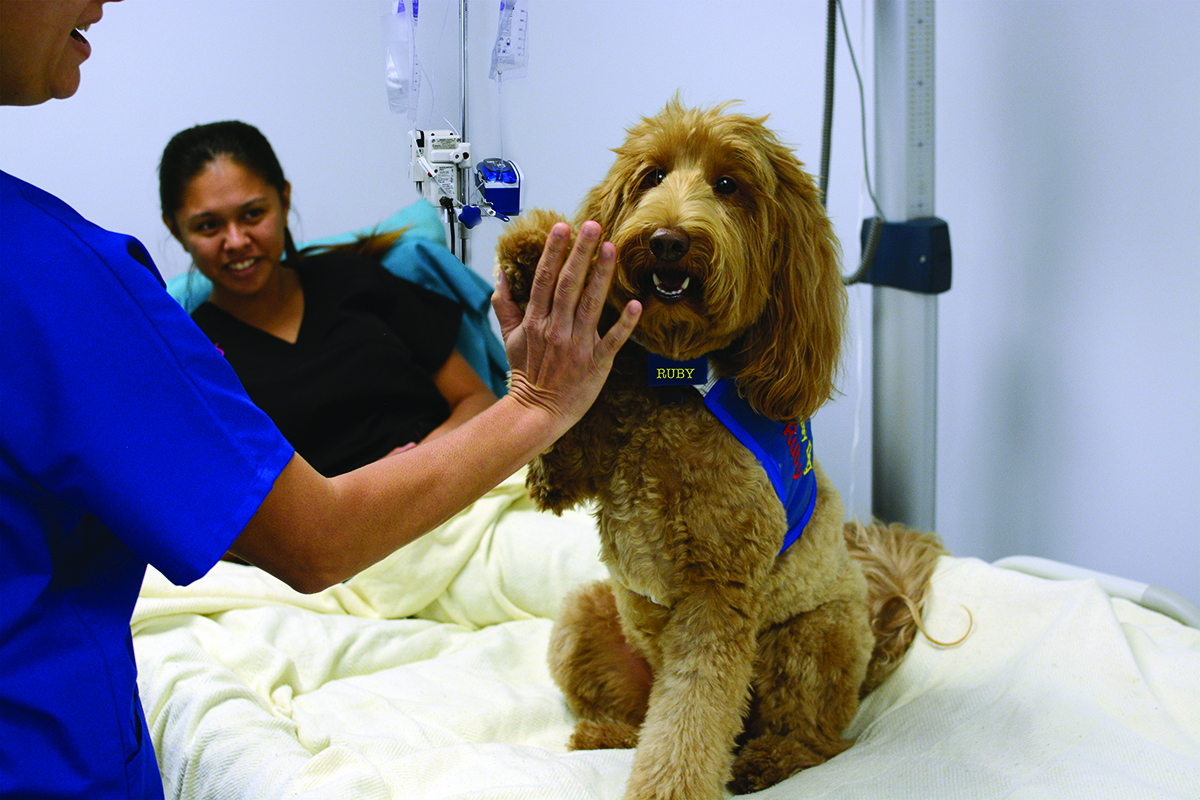
We have a gem with us. In 2017, we introduced her as Ruby, our furry four-legged caregiver and therapy dog. Since then, we’ve received much interest about her and pet therapy, aka, Animal Assisted Therapy.
As a handpicked Labradoodle, Ruby is highly trained and recognized by the American Kennel Club (AKC) as a certified therapy dog. She loves her time visiting children and adults in hospitals or in their homes, and she enjoys the special relationships she has meeting and greeting everyone.
“The more I do this, I can clearly see that Ruby truly loves being with her clients,” says her handler, Carol Samples, RN, and CEO of Attention Plus Care. “She can connect and help people in ways where other treatments cannot. There is something happening beyond words that is exchanged.” Her natural talent for boosting morale can be life-changing for some and is both a product of her breed and her special training.
Pet therapy, or Animal Assisted Therapy, has a positive effect on seniors. A one-year study of roughly 1,300 adults aged 65 or more years, published in the Journal of the American Geriatrics Society, found that companion animals had a positive effect on the activities of daily living (ADLs) of older adults. The study also found older adults had a decline in ADLs when they did not have pets, compared to similar groups with pets.
A study in the Journal of Gerontology also found that a therapy dog had a positive effect on residents at long-term care facilities. Residents engaged with a therapy dog had a decrease in loneliness after the end of the six-week study. The study also found that one 30-minute session a week with a therapy dog gave significant reduction in participant loneliness.
“Studies aside, we just notice an increase in smiles when Ruby visits our medically fragile patients,” Samples says. “The effect is profound and brings joy to those who can’t have a pet in their life. The unconditional love and relationship a therapy dog experiences with people is also good medicine. We need more of it.”
Animal Assisted Therapy for seniors also has been shown to help Sundowner’s Syndrome, and evening periods of agitation and confusion in those with Alzheimer’s disease and dementia. It’s often seen that touching and being touched by a therapy dog gives tactile and cognitive stimulation with patients, while improving their well-being. Dr. Michael McCulloch, a Portland, Oregon, psychiatrist, researches why pets are therapeutic. “Touch is one of our primary needs when we’re born and one of our last needs to go,” Dr. McCulloch states.
These days, in a world of texting to “keep in touch,” therapy dogs know their companionship and furry touch are paws above a phone text. Just ask Ruby. She’ll high-five you!
ATTENTION PLUS CARE
Accredited by The Joint Commission
Available monthly: AGING IN HAWAII EDUCATIONAL OUTREACH PROGRAM by Attention Plus Care — A program to provide resources for seniors and their families, instructed by a registered nurse, who covers a different aging topic each month. For more information on Animal Assisted Therapy and free community workshops on Aging in Hawai‘i hosted by Attention Plus Care, call 808-440-9372.
As a handpicked Labradoodle, Ruby is highly trained and recognized by the American Kennel Club (AKC) as a certified therapy dog. She loves her time visiting children and adults in hospitals or in their homes, and she enjoys the special relationships she has meeting and greeting everyone.
Many seniors are aware of the Long-Term Care Ombudsman Program and its role as their advocate if they have a problem or concern regarding a nursing home, adult residential care home, assisted living facility or community care foster family home.
What they may not know, however, is that if they choose to live in what is called an “aging in place” facility, residents are very much on their own. The Long-Term Care Ombudsman Program does not have access to these facilities, and their “renters” are not protected by federal or state regulations that govern licensed settings.
There is some debate as to whether or not these homes are actually “unlicensed” care homes taking advantage of loopholes in the current law. But there is no debate that AIG Homes have:
No annual inspection by the Department of Health.
No public posting of the inspection by the
Department of Health.
No TB clearance requirements for the caregivers or staff.
No building or fire code requirements or plans regarding emergency evacuations.
No access to the Ombudsman or consumer protection.
Since these homes are not licensed, and don’t want to be licensed, another significant concern is this: Why would a social worker, case manager, doctor, nurse or other professional make such a recommendation? Do they bear some liability if the person is abused, mistreated or neglected? Would healthcare providers, such as Kaiser or HMSA, place a patient in an unregulated, unmonitored home?The Long-Term Care Ombudsman Program has already received complaints about loved ones being denied access. A man called complaining that his relative was in an “aging in place” home, and every time he visited, she would have new, mysterious bruises. He complained to the caregiver, but to no avail. Then he noticed the caregiver started covering up the bruises in various ways to hide them. He took pictures and sent them to the person with the placement responsibility over his relative who, unfortunately, didn’t live in Hawaii. That person forwarded the pictures to the caregiver, and she immediately banned the man from visiting. He called our Office to request help, as he is the only relative on the island and hasn’t been allowed to visit since April.
He wanted to know if I could do anything to lift the ban. Sadly no. Our Office can’t do anything because the home is unlicensed. Representatives from our Office could be arrested for trespassing on private property.
Most of us believe if you are taking care of someone in your home for a fee — and that person is not related to you — then you need to be licensed by the state, so we can try to ensure your safety. Licensed facilities are regulated by laws, which allow the state to do what is necessary to ensure the safety and security of our residents through compliance with building and safety codes, health inspections, emergency plans, care plans, medication management, and training and experience for caregivers.
The “aging in place” model is not licensed and doesn’t allow for these safeguards. Until they do, they should be shut down.
Many seniors are aware of the Long-Term Care Ombudsman Program and its role as their advocate if they have a problem or concern regarding a nursing home, adult residential care home, assisted living facility or community care foster family home. What they may not know, however, is that if they choose to live in what…
Alzheimer’s Disease and dementia — isn’t that the same thing? The simple answer is no.
Dementia is an umbrella term for the different types of diseases that affect the brain. Alzheimer’s Disease is only one form of dementia.
Also on the list we have Lewy body dementia, alcohol-related dementia, frontal-temporal dementia, Parkinson’s-related dementia, and so on.
Dementia is ultimately brain failure. Like other organ failures, you can expect the brain to gradually regress over time, and some diseases progress faster than others. This gradual decline of cognitive function is the main culprit behind the many, and sometimes violent, behavioral changes that accompany this disease.
Teepa Snow (www.teepasnow.com), one of my mentors, has transformed the way we think about dementia with her Positive Approach® to Care philosophy. As a registered occupational therapist with over 30 years of hands-on experience, Teepa has reinvented the varying stages of dementia by introducing her GEMS® model (Sapphire, Diamond, Emerald, Amber, Ruby and Pearl). Each GEMS state reflects a different stage of dementia with an emphasis on what the person is still able to do rather than what cognitive functions are lost. Nevertheless, as a person living with dementia goes through the GEMS cycle, behaviors remain problematic.
Dementia attacks the left side of the brain more aggressively than the right. The left hemisphere is where we hold language capabilities — comprehension, vocabulary and speech production. When we have limited language skills, we unconsciously rely on behaviors to communicate.
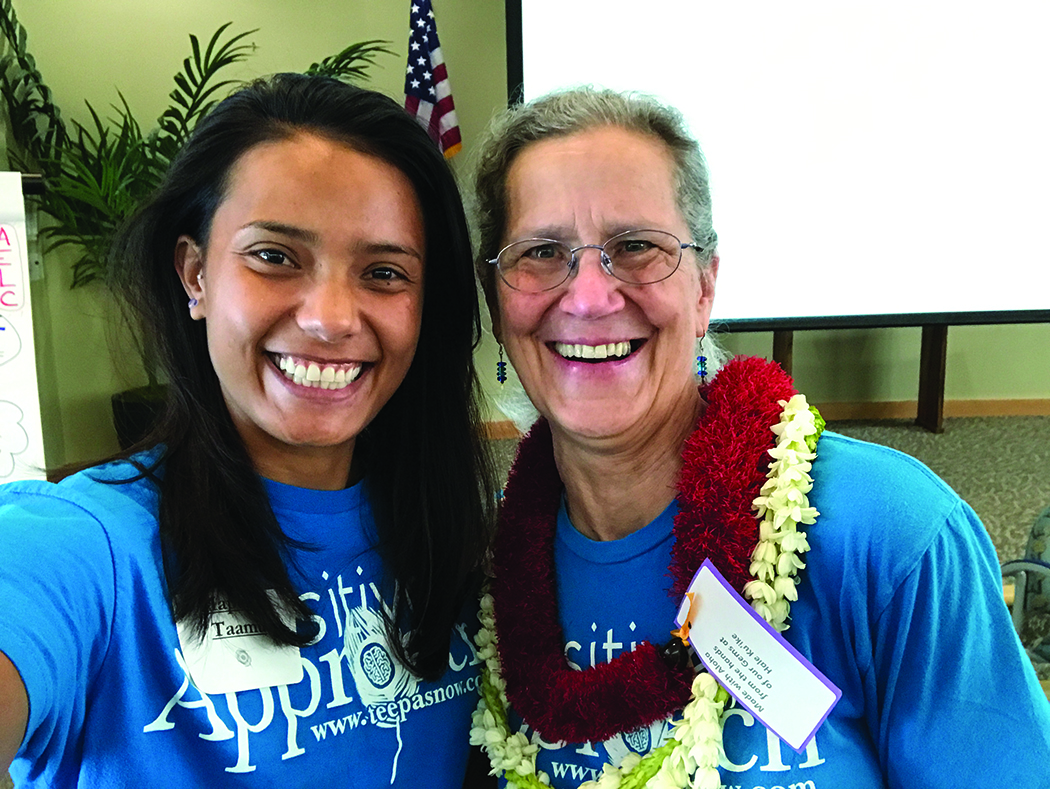
Author Mapuana Taamu with her mentor Teepa Snow, founder of the Positive Approach® to Care philosophy.
Think about 3-year-olds. Do they tell you that they are tired and need a nap, or do they kick, scream and throw a tantrum? This is how people living with dementia communicate. With diminished language skills, they have difficulty verbalizing what they want or need, so they end up showing you through their behaviors.
It takes a lot of detective work to understand these behaviors! Ultimately, it is the duty of their caregiver to adjust and adapt to the ever-changing brain. To give care successfully requires lots of patience paired with trials and numerous errors. But as time goes by, the “uh-oh’s” will eventually turn into “ah-ha’s!”
Mapuana Taamu is a professional, family caregiver specializing in dementia. She owns and operates Memory Friends, a companionship, respite and consultation service for seniors. She also is a “Certified Positive Approach® to Care” Trainer. Reach her at: 808-469-5330 | mfriends808@gmail.com
Alzheimer’s Disease and dementia — isn’t that the same thing? The simple answer is no. Dementia is an umbrella term for the different types of diseases that affect the brain. Alzheimer’s Disease is only one form of dementia. Also on the list we have Lewy body dementia, alcohol-related dementia, frontal-temporal dementia, Parkinson’s-related dementia, and so on. Dementia is…
Seek help when caring for aging parents, especially during the busy holiday season.
The search for holiday perfection can set the bar high for caregivers. Starting as early as Thanksgiving, they’re flooded by images of families happily enjoying one another. And why not? As a home healthcare provider, we know family support goes a long way for parents aging in place. But when adult siblings are involved, they also can have their differences on parents’ needs. Left unchecked, these differences can bring out the best and worst in family relationships – especially during the holidays.
The demands of caregiving can challenge sibling rivalries and shift the focus away from parent care. When this happens, family members sometimes find themselves arguing over past wounds. Siblings not on good speaking terms may dwell on negative pasts.
“The holidays can bring back all of the pecking-order stuff that siblings thought they could forget,” says Wika Puuohau, RN, Client Service Supervisor at Attention Plus Care. “It can return adults back to small-kid time.”
A sibling who is less active with caregiving also may seem distant and react with more anger or blame toward other siblings. Sometimes, this is an attempt to avoid facing the eventual passing and loss of a terminally ill parent. On the other hand, a more involved sibling may react differently and express more sadness or grief. When caregiving duties for a parent begin, one sibling also may take over as the primary caregiver and cause disagreements among siblings about who is in charge. The more involved, active caregiver is now at risk for burnout, while the other sibling takes a backseat to watch the show. “That’s when I put my coaching hat on,” Puuohau adds.
These situations can add to the stress and resentment siblings already may have for one another, brought on by the holidays, interfering with the priorities of caring for parents. Siblings not talking with one another, or not wanting to keep others informed about their parents’ condition, also can hinder important information from getting to a healthcare provider. So how can family members and siblings work together to care for parents? Here are tips for siblings during the holidays:
♥ Make time for sibling communications.
♥ Share realistic expectations and goals.
♥ Keep lines of communication open.
♥ Seek to understand first instead of blame.
♥ Get input from those affected by decisions.
♥ Accept family as they are and not as you wish.
♥ Seek common ground during calmer times.
♥ Use an objective party to facilitate disputes.
♥ Be thankful and share gratitude with others.
Adult siblings caring for parents can make the most of their time and efforts together. With preparation, the holidays can be a time for new traditions and positive experiences for siblings. It also can be a chance for rivals to be on better terms with one another for years to come. Now that’s a gift our parents really want!
ATTENTION PLUS CARE HOME HEALTHCARE
Accredited by The Joint Commission
AGING IN HAWAII EDUCATIONAL OUTREACH PROGRAM by Attention Plus Care — a program providing resources for seniors and their families, covering different aging topics each month. For class information and upcoming topics, call 808-440-9356.
The search for holiday perfection can set the bar high for caregivers. Starting as early as Thanksgiving, they’re flooded by images of families happily enjoying one another. And why not? As a home healthcare provider, we know family support goes a long way for parents aging in place. But when adult siblings are involved, they…
In March, during a mainland trip to visit our college daughter, I started receiving phone calls from old family friends whom I haven’t heard from in years. What I thought were surprise hellos were concerned calls.
Kimiko Suzuki, who lived at Kalākaua Gardens senior living community, passed away on July 29, 2017.
My mother, Kimiko Suzuki, 88, had reached out to them due to a sudden onset of fluid buildup in her legs.
Three years earlier, my dad, at age 84, had passed away from a heart attack. My mother, a year older than my dad, still was physically and mentally strong. She had continued with the family business, which kept her active and filled with a sense of purpose.
But now, her ability to walk was greatly hindered due to fluid buildup in her legs, later diagnosed as edema from stage 3 kidney failure. The edema prevented her from getting around the house, and even preparing meals for herself.
When my wife and I returned from our trip, I quickly transferred my mother to our home, intending to care for her for as long as we could. However, within a few days, I quickly found my mission had become impossible.
Our home is a three-story townhouse. The nearest restroom was next to a flight of stairs. With her inability to walk, even with a walker, she grew fearful of going to the restroom. A simple bath took nearly an hour because the full bathroom is located on the third floor.
When I went to work and left her alone during the day, I realized my action bordered on neglect.
A little over a week after trying to adjust to this life, my mother suddenly said the most striking thing to me: “It would be all right if I went to a retirement home.” These words were significant because in the first days of her stay with us, she insisted on not being put in any sort of foster care.
I must thank my mother for realizing her illness was beyond the limits of our family’s ability to care for her. I still feel guilty for sending my mother to Kalākaua Gardens. I
visited her daily during lunch or dinner and spent two hours with her. After a short adjustment period, my mother found her way at Kalākaua Gardens.
I didn’t have a concrete plan in place when my mother fell ill. I now realize the importance of learning in advance about aging.
Every family’s decision will be different based on a variety of factors — the degree of illness, number of caregivers and money available for care. I do not feel there is one right way. I made the best decision for my family based on our situation. Others may second-guess my decision.
If your parents live long enough, you will go through what I have. Please prepare. Be realistic about your role as a caregiver.
I thought I could do more, but I admit that I reached the limits of my abilities.
I want to thank everyone at Kalākaua Gardens for their assistance. They truly are angels.
I also want to thank my wife for her understanding and patience, and for helping us to adjust to our family’s changes.
HELPFUL RESOURCES
In caregiving, gain as much knowledge as you can about elderly needs and care. Some helpful resources:
AARP HAWAII
1132 Bishop St., Ste. 1920, Honolulu HI 96813
In March, during a mainland trip to visit our college daughter, I started receiving phone calls from old family friends whom I haven’t heard from in years. What I thought were surprise hellos were concerned calls. My mother, Kimiko Suzuki, 88, had reached out to them due to a sudden onset of fluid buildup in…
As home healthcare providers, we’re often asked if a senior can live alone at home. While each situation is different, seniors who are alone can have additional risks that affect their health and well-being.
In 2016, the Administration on Aging reported 29 percent, or 13.3 million older adults age 65 and over, lived alone at home. Many seniors living alone experienced loneliness, social isolation and declining health, requiring more care from other persons. Despite these outcomes, nearly 90 percent of older adults still preferred to maintain their independence for as long as possible.
At some point in time, caregivers for seniors may have to decide if leaving their loved ones alone is an option — even for short periods. This decision can be heartbreaking and difficult for both caregivers and seniors alike. Seniors should be involved in this decision-making process and include family members, friends and other care-providing professionals.
“Individuals who are fiercely independent and have declining health may need more time to accept care,” said Carol Samples, RN and CEO for Attention Plus Care. “It’s never an easy decision. Having a support system in addition to a team of caregivers can be a great help.”
A caregiver always should consider the safety risks of seniors when deciding if they can be alone or not. For those with health or sensory problems, new or developing symptoms may go undetected without proper assessment.
Caregivers should seek alternatives to solo living if seniors have medical conditions and receive care for cognitive impairment or memory loss; physical mobility; poor vision, hearing, eating, drinking and swallowing; personal hygiene or orientating to their environment.
Additional warning signs for seniors that being alone may not be safe include:
◆ Not recognizing common hazards
◆ Wandering or getting lost at home
◆ Ignoring sounds signaling danger
◆ Not recognizing family from strangers
◆ Needing assistance to prevent falls
◆ Inability to get help in an emergency
◆ Medical conditions needing monitoring
◆ Not complying with prescribed treatment
◆ Not caring for wounds or infections
◆ Negative changes in mood or routines
Much can be done for seniors alone at home. Studies show that while isolated seniors had a 59 percent greater risk of mental and physical decline, those having more meaningful relationships with others were less likely to experience declines. In other words, it’s not the quantity but the quality of relationships that counts.
“Experienced home healthcare providers know this and caregivers can really make a difference for our seniors in this way,” Samples said. “It’s finding that connection.”
ATTENTION PLUS CARE HOME HEALTHCARE
Accredited by The Joint Commission
AGING IN HAWAII EDUCATIONAL OUTREACH PROGRAM by Attention Plus Care — a program providing resources for seniors and their families, covering different aging topics each month. For class information and upcoming topics, call 808-440-9356.
As home healthcare providers, we’re often asked if a senior can live alone at home. While each situation is different, seniors who are alone can have additional risks that affect their health and well-being. In 2016, the Administration on Aging reported 29 percent, or 13.3 million older adults age 65 and over, lived alone at home.…
By Dan Ihara, RA, CAPS, CLHMS, Senior Real Estate Specialist, RS-65892
As we all age and watch those around us get older, concerns about the safety of our loved ones may increase. Whether it is memory loss, falls, a decrease in appetite and hygiene, or the absence of family or friends, everyone will need some kind of help sooner or later.
Some of the questions families may have are:
Should my mom be living alone since she’s fallen recently? What kind of services are available to help her in her home and how much do they cost?
For in-home care, there are home care and home healthcare options. The costs will vary based on the type and level of service needed.
Be aware that most of them will have a minimum charge per visit.
My parents are becoming more forgetful. Should they stay by themselves?
There are various options for your parents. Adult day care may be an option for companionship during the day and may accommodate even the busiest schedule. Bringing care into your home is also an option; however, its more costly than adult day care. Moving into a retirement community is also a viable option to provide a sense of community and companionship 24/7.
My uncle lives alone. Would it be safer for him to live in a retirement community? If so, what are the options?
A retirement community could be a great solution for your uncle. Retirement communities offer many services and have safety protocols in place so it is safer than living alone. There are different types of communities with various options, so it’s good to research or attend a seminar to find the one that best suits your uncle’s needs.
My neighbor has so much stuff that she could trip over! How can I get her help?
There are several declutter services that can be brought into your neighbor’s home to help remove unnecessary items. They can help sell, donate or dispose of them.
You may have other questions like those above concerning friends and family members, but rest assured that there are many resources that can provide answers and solutions to help them safely navigate this phase of life.
By Dan Ihara, RA, CAPS, CLHMS, Senior Real Estate Specialist, RS-65892 As we all age and watch those around us get older, concerns about the safety of our loved ones may increase. Whether it is memory loss, falls, a decrease in appetite and hygiene, or the absence of family or friends, everyone will need some…
Life is full of choices as a consumer. We try to make informed choices but sometimes getting there takes a bit of experience and know-how. Online product or service reviews are helpful at times but can mean different things to different people based on experience. The same can hold true when searching for home care for yourself or a loved one.
A study done by Northwestern University reveals that home care buyers should beware. Researchers who posed as consumers surveyed 108 home care agencies from around the country. Results showed they hired unqualified and possibly dangerous caregivers to work in the homes of vulnerable seniors. Not only did agencies exhibit poor hiring procedures but researchers also found that many agencies did not train, supervise, screen or test for skills competency of their caregivers. Families may not realize how unqualified a caregiver is, especially if the care is for an aging parent who has multiple chronic conditions. In the state of Hawai‘i, home care agencies are not required to obtain a license, certificate or accreditation. What’s frightening is that agencies can continue to operate without any regulating
or monitoring.
“People have a false sense of security when they hire a caregiver from an agency,” said Lee Lindquist, MD, geriatrician and author of the study. “There are good agencies out there but there are plenty of bad ones and consumers need to be aware that they may not be getting the safe, qualified caregiver they expect. It’s dangerous for the elderly patient who may be cognitively impaired. Some of the paid caregivers are so unqualified it’s scary and really puts the senior at risk. We found agencies sending caregivers out into the seniors’ home without checking,” she said. “Identifying the good agencies from the bad is difficult because many agencies have slick websites and marketing campaigns.”
The study was published in the Journal of American Geriatrics Society. From the agencies surveyed, slightly half (55 percent) conducted federal background checks. Even worse, only one-third did drug testing or checked for caregiver skills competency. More surprising, many agencies allowed caregivers to assess their own skills in a self-report and lacked consistent supervision of their caregivers. “The home care study is concerning, and families will want to seek more qualified caregivers from a reputable agency that is both accredited by The Joint Commission and licensed as a home health agency,” said Attention Plus Care Chief Administrative Officer Wesley Chang. “Home health agencies in Hawai‘i that provide skilled nursing services and other therapeutic services under a physician’s direction to home-bound patients must be licensed and monitored by the Hawai‘i State Department of Health.”
To maintain accreditation by The Joint Commission, agencies undergo a rigorous comprehensive evaluation to verify if the agency is following state and federal guidelines, as well as national health standards set by The Joint Commission. The commission’s goal is to address safety and quality care, leading to continually better patient care standards and outcomes.
Now that’s a good choice.
ATTENTION PLUS CARE
Accredited by The Joint Commission
1580 Makaloa St., Ste. 1060, Honolulu HI 96814
808-739-2811 | www.attentionplus.com
Available monthly: AGING IN HAWAII EDUCATIONAL OUTREACH PROGRAM by Attention Plus Care — A program to provide resources for seniors and their families, instructed by a registered nurse, who covers a different aging topic each month. For more information on upcoming topics, contact 808-440-9356.
By Eileen Phillips, RN, Attention Plus Care Life is full of choices as a consumer. We try to make informed choices but sometimes getting there takes a bit of experience and know-how. Online product or service reviews are helpful at times but can mean different things to different people based on experience. The same can…
by Kelika Ishol, Director of Sales and Marketing & Resource Development
Ever think about growing old? Even when we become caregivers for aging loved ones, or start to feel pain in our joints, or experience the “where did I leave my keys?” and “what was I gonna say?” moments, we may still not attribute them to aging.
But it’s inevitable. What we see our aging loved ones go through is a process that we all will eventually experience. When I think back about taking care of my grandmother who had Alzheimer’s disease, I reflect on one of the most challenging times in my life. My grandmother, a vibrant and beautiful woman who went beyond the call to care for everyone, now needed care. Her incontinence issues, assistance with bathing, meal prep, elopement situations and medication management were ongoing parts of my life 1998. While caring for my grandmother, I was also raising four young daughters. They called me “the sandwich generation.”
As a resident of a retirement community, you are a part of an ‘ohana, where together, you can discover the fun of aging, and feel safe and secure.
My beautiful and loving grandmother passed away in 2001 from a hemorrhagic stroke while she was living in an Alzheimer’s unit on the Leeward side of O’ahu. Placing her in that facility was at the same time the hardest and the easiest thing for me to do… Make sense? Of course it does. The guilt of placing my grandmother in an Alzheimer’s unit was hurtful and difficult, but the relief of placing her there surpassed the guilt. It truly was the best decision I made—for me, my family and most importantly, for her.
If I knew then, what I know about retirement communities now, I would have definitely educated my grandparents early enough so that they could have enjoyed their retirement years. And no one in our family would have to experience the guilt, pain or mixed emotions of placing a loved one in a care home or retirement community.
What You Can Expect
Retirement communities provide that peace of mind by providing meal options, socialization opportunities, 24-hour oversight, emergency call systems, transportation services and much more. It’s really a community where residents take the time to care for each other and share in the aging process.
So the next time you see a senior, think about your life. Do you want your children caring for you as I cared for my grandmother? Or do you want to enjoy your retirement years with others who share your interests, professionals that care for you, and having the opportunity for your family and friends to visit and enjoy your new life?
Retirement communities in Hawai‘i start at about $3,100 per month and include all your utilities, maintenance, housekeeping, landscaping, meals, transportation to medical appointments and shopping, social events, fitness centers and much more.
GOOD SAMARITAN SOCIETY POHAI NANI
45-090 Namoku St., Kaneohe HI 96744
Ever think about growing old? Even when we become caregivers for aging loved ones, or start to feel pain in our joints, or experience the “where did I leave my keys?” and “what was I gonna say?” moments, we may still not attribute them to aging.

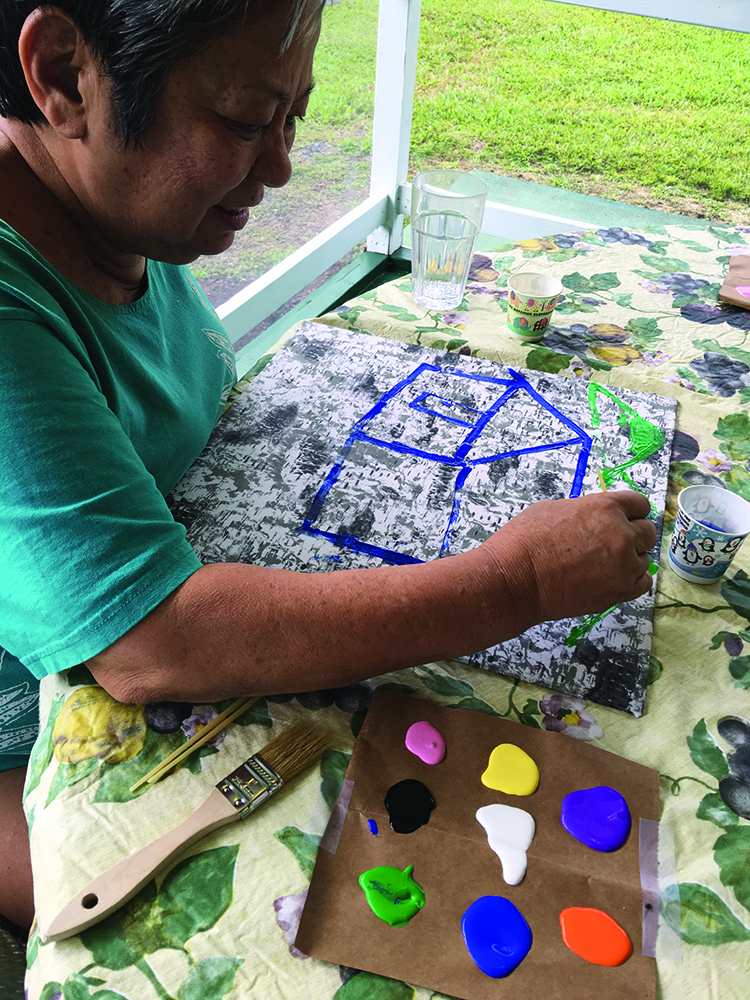 Make a space in your home, or assisted living facility, where the residents can display their works of art. Painting is an all-time favorite, and having a “Hallway of Art” will be of interest to the painters as well as family, friends or visitors. There can also be “Gallery Night” to show off the paintings to see these masterpieces.