Category: Column

  • Giving Your Voice to Charity: Inspiring Real Change With Advocacy

    Alzheimer’s Association Hawaii Chapter Community Advocates brought their cause to Capitol Hill in Washington, DC, this year: (L–R) Dr. Poki‘i Balaz, Kathy Wyatt, Amy Truong, Calvin Hara and Ron Shimabuku, the director of Public Policy and Advocacy for Alzheimer’s Association Hawaii Chapter. Courtesy photo.
    Alzheimer’s Association Hawaii Chapter Community Advocates brought their cause to Capitol Hill in Washington, DC, this year: (L–R) Dr. Poki‘i Balaz, Kathy Wyatt, Amy Truong, Calvin Hara and Ron Shimabuku, the director of Public Policy and Advocacy for Alzheimer’s Association Hawaii Chapter. Courtesy photo.

    Especially during this time of year, many of us shift our mindsets to consider how we can spread aloha and do good in the world. Giving back to our community  comes in many forms. There are ways that take no money — donating your voice and time. “Activist philanthropy” is a newer term, but it simply relates to people who embrace the role of public advocate to raise awareness and bring precedence to essential issues. These people are speaking up and sharing their stories to inspire real change.

    “When my mom was diagnosed with younger-onset Alzheimer’s disease, we felt helpless initially, not knowing what it was, feeling so lost and not knowing what to do,” recalls Amy Truong, community advocate for the Alzheimer’s Association Hawaii Chapter.

    “We started realizing that this disease is definitely in our communities, but no one is talking about it. Some people don’t even know what it is.”

    Over 200,000 families in the US face the unique challenges of younger-onset Alzheimer’s disease, which has no cure. This form of Alzheimer’s affects people younger than 65 years old. Research has examined the role genetics play, but it’s not fully understood why most cases of younger-onset Alzheimer’s appear at such a young age. First, many families and even doctors don’t expect someone so young to develop Alzheimer’s.

    “When she started showing symptoms of cognitive decline in her early fifties, we thought it was because my mom wasn’t working anymore, and like those on summer vacation, you’d lose track of the days,” shares Amy. “When her cognitive abilities declined even further, we knew we had to get her to the doctor. That took some time, and it wasn’t easy to convince her to go to the doctor. Then there was a sense of relief when she got diagnosed, but I didn’t walk out of the doctor’s office with a single brochure on how to receive support, or any idea of how we would move forward and what to expect next. It slowly started changing when we began reaching out to the Alzheimer’s Association and kupuna organizations for support.”

    Civic Engagement as a Centerpiece for Charity

    Amy’s mom was 59 years old when she was finally diagnosed with younger-onset Alzheimer’s. There was a huge barrier for her family to qualify for insurance through Medicare and additional financial support because her mom was under 65. At first, they were denied, because the government had to be careful of fraudulent applications. But Amy and her father were relentless. She obtained letters of support from the Alzheimer’s Association and Dr. Oanh Meyer from the UC Davis Alzheimer’s Disease Center, where her father was an active participant in Alzheimer’s caregiver research and studies. She went to court and her family kept fighting, but admits her father was close to giving up. He didn’t think they would get approved after being rejected the first time.

    “In Asian communities, and other communities of color such as Blacks, Hispanics, Native Hawaiian and Native Americans, there is a stigma in going to the doctor as well as certain levels of mistrust and fear of being mistreated or ignored when you do go,” Amy says. “Our family knew we had to share our experience, especially since we’re going through this disease so much earlier. I don’t want any other family like mine to feel helpless, lost, and confused while their loved one is declining in cognitive and physical abilities.”

    In 2018, Amy started volunteering and fundraising for Alzheimer’s disease in her community in full force. She raised the second highest amount of money for the Walk to End Alzheimer’s on O‘ahu and she served as the co-chair for The Longest Day to support the Alzheimer’s Association Hawaii Chapter. Soon, she transitioned her volunteer work over to advocacy and became the Advocacy State Champion. She also served as the Alzheimer’s Association State Ambassador to achieve federal and state policy priorities by engaging with Hawai‘i’s elected officials to increase support for people living with Alzheimer’s disease and their families, and continue research for effective treatment and ultimately, a cure.

    During her time as an ambassador, she gave her voice to the cause and saw a direct impact when Congress with the passing of the Supporting Older Americans Act of 2020 — which reauthorized the Older Americans Act (OAA) — and includes key provisions of the Younger-Onset Alzheimer’s Disease Act, which ensures  Americans living with Alzheimer’s disease and other dementia will have access to vital and affordable services regardless of age. The bill passed one year before Amy’s mom 65th birthday.

    Finding the Courage to Give Your Voice

    As it would be for most people, it was difficult for Amy’s dad to take on the caregiving role. Even though she was showing signs of decline at the time, they traveled and saw the world together. Together, they visited Hong Kong, Japan, Vietnam, Jamaica, Mexico and France. Amy’s father didn’t know at the time that those years of traveling were among the last she would be able to undertake. Over time, traveling got more complicated. She would have moments of confusion. But having that time together meant everything to them.

    When Amy’s father was feeding her mother at a restaurant, a stranger came up to him and just patted him on the shoulder for encouragement. We can all give the gift of support by acknowledging caregivers with simple words and actions.

    As the disease progressed and continues to progress to this day, everyday tasks got even more difficult. She wandered and needed help to get dressed, bathed and fed. Eventually, she became incontinent, and lost her ability to walk and speak.

    Amy encouraged her dad to reach out using the Alzheimer’s Helpline, as well as other local organizations that help the aging community and served as a lifeline for their family.

    By learning about the warning signs of Alzheimer’s disease (www.alz.org/alzheimers-dementia/10_signs), we can help recognize it and support families early in the game. Starting the conversations and sharing your experiences not only inspires others, but contributes to a pendulum shift to equality.

    “Since I joined the Alzheimer’s Association, it is great to see they are now expanding their focus on diversity and research in health disparities in Asian, Black, Hispanic and Native Hawaiian communities,” Amy shares, “Improvements in science must be made for these populations. Our representation rises when we share our voices and make them heard.”

    Every action and voice — big or small — will help. We may not all be public speakers, but we can certainly share resources and kind words with a caregiver. And this year, when you’re thinking about your holiday giving list, consider giving your voice to charity. Your voice and your story are precious gifts to those who must confront
    Alzheimer’s each and every day.


    If you know someone struggling with younger-onset or Alzheimer’s disease, or a related dementia — there is support:
    24/7 Helpline 800-272-3900
    alz.org/Hawaii
    alz.org/help-support/i-have-alz/younger-onset
    To join a support group or get more information: 808-591-2771
    Donate to the Walk to End Alzheimer’s in your community until Dec. 31, 2022: act.alz.org/aloha

     

    Especially during this time of year, many of us shift our mindsets to consider how we can spread aloha and do good in the world. Giving back to our community  comes in many forms. There are ways that take no money — donating your voice and time. “Activist philanthropy” is a newer term, but it…

  • Beware of ‘InstaScams’

    Ransomware Malware Attack. Business Computer Hacked. Files EncryptedThere are always two sides of the same coin. Social media has made it possible for everyone to stay more connected over the years and across the miles. It’s reconnected old friends and kept families close. Unfortunately, it’s also given scammers the ability to become more sophisticated and creative.

    From phishing emails to phone scams, there always seems to be a new tactic being used by people trying to get between you and your money. The latest hunting ground is Instagram. But the good news is that by staying alert, you can avoid many common social media scams, including those on Instagram.

    First, you must recognize a scam. Here are some common signs:

    • You receive messages from people or accounts asking you to claim a prize.
    • You receive a message from someone you don’t know requesting money.
    • You receive messages from unverified accounts of what seem like large companies or public figures. Verified accounts always have a blue badge with a checkmark near the name.
    • A direct message appears to come from a familiar account, but it asks you to click on a suspicious link.
    • You receive messages or posts that contain poor spelling and/or grammatical errors from users you don’t recognize.
    • Someone claiming to be from Instagram security asks for your private account information — usually under the guise of “securing your account.”
    • You receive a request to move your conversation off Instagram and continue it on a less public and less secure setting.

    If something feels suspicious, trust your gut. You should never give an unknown person or online account the benefit of the doubt.

    Here are a few easy ways to protect yourself:

    • Don’t click on suspicious links.
    • Make your account private.
    • Enable two-factor authentication.
    • Check your login activity.
    • Block suspicious accounts.
    • Research suspicious accounts.

    If you have any questions or think you may be a victim of fraud, contact your financial institution immediately.

    Most financial institutions have fraud prevention and protection measures in place that can help you minimize or eliminate the damage. Always stay informed, stay alert and remember that if it seems too good to be true, it is.


    GATHER FEDERAL CREDIT UNION
    (Kukui Grove, Līhu‘e, Kapa‘a, Kōloa, ‘Ele‘ele, Waimea)
    808-245-6791 | info@gatherfcu.org
    gatherfcu.org

    There are always two sides of the same coin. Social media has made it possible for everyone to stay more connected over the years and across the miles. It’s reconnected old friends and kept families close. Unfortunately, it’s also given scammers the ability to become more sophisticated and creative.

  • Facing Age Discrimination

    Concept of accusation guilty businessman person. Side profile upset old man looking down many fingers pointing at him isolated grey office wall background. Human face expression emotion feelingAs we get older, what at first seems to be respectful and benign behavior begins to morph into microaggressions. “He is way too old to be trying that!” “Look what she is wearing — at her age!” “Production will slow down if we hire him.”

    A microaggression is a comment or action that negatively targets a marginalized group of people, including seniors. Whether intentional or accidental, it’s a form of discrimination. People who use microaggressions may mean no harm to a person or group, but it can still hurt.

    If we are honest,  it is easy to pinpoint our own feelings about aging. Aging does frequently result in restrictions and it often does impact our abilities. But just as with other forms of discrimination, the differences we note shouldn’t be our primary impression.

    Aging is natural. So, before you discover that old man or lady in the mirror looking back at you, learn how to relate to older individuals as individuals — not a silver tsunami, not a societal burden, not an obligation — as a person.


    THE CAREGIVER FOUNDATION (501(c) 3 nonprofit)
    926 3rd St., Pearl City, HI 96782
    808-625-3782 | info@thecaregiverfoundation.org
    www.thecaregiverfoundation.org

    While we are taught to treat those of a different race or religion equitably, seniors often face age discrimination. It first appears as an attempt to be helpful. Someone holds a door open for us. The bus waits a little longer for us to climb aboard. The bank teller smiles more as he hones his…

  • Follow the Medicare Road

    Not too long ago, my extended family enjoyed getting all the cousins together to watch “The Wizard of Oz” every year. We loved watching Dorothy follow the yellow brick road to Oz. It was a great bonding activity. Now those same family members are calling to ask for help with Medicare. Where did the time go?

    Recently, a relative called about a letter from his Medicare plan. It explained that a medication he takes regularly was covered as a courtesy but would not be filled again. My cousin was as shocked and disappointed as Dorothy was when she pulled the curtain back and found that Oz the Great and Powerful was not what she expected. My cousin blamed Medicare, the insurance plan and the sales agent. Here are the steps I offered.

    Step One: Call the plan to determine if the drug requires prior authorization, is subject to quantity limits or step therapy rules.

    Step Two: Contact the prescribing doctor’s office and have them call the plan to provide additional documentation based on the drug coverage rules.

    Step Three: Contact your plan to file an appeal and if necessary, ask for an expedited review.

    My cousin learned his medication was subject to prior authorization rules. The doctor contacted the insurance company and it will be covered.

    With a little help along the way, everyone should be able to follow the Medicare road and resolve any bumps along the way.


    GET2INSURANCE.COM FAMILY OFFICE
    1003 Bishop St., Ste. 2700, Honolulu, HI 96813
    800-226-3660 | martha@get2insurance.com
    www.Get2insurance.com

    Not too long ago, my extended family enjoyed getting all the cousins together to watch “The Wizard of Oz” every year. We loved watching Dorothy follow the yellow brick road to Oz. It was a great bonding activity. Now those same family members are calling to ask for help with Medicare. Where did the time…

  • The Slap Heard Around the World

    an angry old woman with her finger up for admonition /warningLast March, many witnessed the slap that was heard round the world. The unrehearsed and unscripted incident played out in front of the planet’s best actors, with 17 million viewers watching from home. It occurred in supposedly one of most civilized and curated places in the land. But everyone saw that even “winners” are not immune from knee-jerk reactions when messages perceived as offensive produce hurt feelings.

    The incident will ultimately change the way we look at these shocking outbursts after words perceived as insults are spoken.

    It will also be life-changing for another group of people out of the glare of the lights and cameras — family members who routinely slap others in their own homes. Ranging from verbal to physical abuse, they push, bully and bruise mothers, fathers, siblings and children on a regular basis.

    How should they react to regain balance? They can yell, strike back, disarm the incident with a humor or simply leave the scene, while hoping that the behavior will cease. But millions suffer in silence. They may become enablers of further violence if they don’t know where or how to draw the line. There are words and ways to handle abuse so they can calmly take their rightful place as heroes, not merely survivors.


    ANNETTE PANG-LIFE COACH VILLAGE, LLC
    2383 Beckwith St., Honolulu, HI 96822
    808-372-3478 | ap@annettepang.com
    www.annettepang.com

    Last March, many witnessed the slap that was heard round the world. The unrehearsed and unscripted incident played out in front of the planet’s best actors, with 17 million viewers watching from home. It occurred in supposedly one of most civilized and curated places in the land. But everyone saw that even “winners” are not…

  • Zooming Into the Future

    Happy senior woman in graduate capThe US Census Bureau has reported that people aged 65 and older will outnumber those under 18 years old by 2034. Every year, millions of these senior citizens look at life after retirement as an opportunity to expand their horizons and learn more. It’s a time to take special-interest lessons or even earn a degree. For some, it may  even mean going back into the workforce and starting a new career.

    That’s what I did as a 71-year-old retired high school assistant principal. I went back to college, earned another degree and eventually entered the workforce. What I immediately discovered, however, was the “Wild West” of technology. Every mode of learning or working involved online programs.

    Colleges and universities were  offering curricular courses via online sessions or what are called distance learning venues. Instead of sitting in a classroom surrounded by fellow students with the instructor in front of the class, I sat at home at my laptop with a cup of coffee and simply clicked a link I received in an email to enter an online grad class via Zoom. Zoom Meetings is a proprietary videotelephony software program.

    Today, I have also become one of those people who work from home… better known as remote employment. Through Zoom, I partake in virtual meetings or have one-on-one conversations with clients. I also teach online, offering Power Point presentations via Zoom.

    There are other video conferencing platforms,  such as Microsoft Teams or Google Meet. However, Zoom right now is used the most in schools and the workplace. As long as you have a smartphone, tablet, laptop or computer — in other words, a camera, speakers and microphone — you have access to Zoom (once you download the program).

    How did I learn to use it? As with many things  in these rapidly changing times, I learned through trial and error. This, fortunately, has worked for me, but I’m not sure I’d recommend it. Instead, I’d suggest taking a class or going to www.youtube.com, where you can watch video demonstrations on how to use Zoom or just about any other application, for that matter.

    The year 2034 is just 12 years away. By then, distance learning or remote working will probably have advanced to three-dimensional holographic technology. Your teacher, boss or client will be visible before you in real-life form.

    Ah, technology! Embrace it, delight in the benefits of it, and like me, just enjoy the fun of it!


    KAPIOLANI COMMUNITY COLLEGE
    Office of Continuing Education
    University of Hawai‘i/Kapi‘olani Community College
    Teri Pinney | 808-342-7690 | tpinney@hawaii.edu
    https://continuinged.kapiolani.hawaii.edu

    The US Census Bureau has reported that people aged 65 and older will outnumber those under 18 years old by 2034. Every year, millions of these senior citizens look at life after retirement as an opportunity to expand their horizons and learn more. It’s a time to take special-interest lessons or even earn a degree.…

  • Jobs Then, Work Now

    Cheerful group of senior friends enjoying each others company while having tea party at lovely patio, they wearing knitted sweatersIt’s a new day and a new time in today’s world of work. A shifting economic landscape continues to drive significant changes in the American workplace. Nearly every aspect of the country’s workforce has changed in the last 50 years. The demographic makeup of who goes to work is radically different, along with the type of work individuals do, how they do it, where they do it and even how they save for retirement.

    JOBS THEN
    ♦ One full-time job occupied one physical space.
    ♦ Requirements for different jobs were similar.
    ♦ Decision-makers were impacted by long-standing prejudices: age, hiring choices, etc.
    ♦ Limited use of flexible/temporary contributors.
    ♦ Virtual work was virtually unknown.

    WORK NOW
    ♦ Workers may not be needed or hired on a fulltime basis. More than 40 percent of the workforce are not employed on a full-time basis in regular jobs at a physical office/factory.
    ♦ Changing demands equals shifting qualifications and skills. The workforce must learn, unlearn and relearn lessons and skills in this new world of work. Skills are more important than degrees. Eight out of 10 opportunities do not require a degree, but all require updated skills.
    ♦ The retirement age of 65 is a remnant. The average lifespan has increased by over 17 years since Social Security (SS) began.

    THINGS TO CONSIDER
    ♦ Without additional income, you are likely to outlive your money. Don’t count on SS benefits as your major source of income. In fact, the future of Social Security is a serious concern.
    ♦ An increasing number of us will be alone as we mature because of a spouse’s death or, even more likely, because of divorce. Will social isolation prompt you to seek some form of work?
    ♦ Research confirms that social engagement, working and learning throughout our lifetimes help reduce the risk of cognitive decline.

    SO LET’S
    ♦ Replace the word “jobs” with the word “work.”
    ♦ Reach out to the community to learn new skills and invigorate our social connections.
    ♦ Work part-time, some of the time or remotely.
    ♦ Continue to live a balanced life that matters.

    It’s time to explore alternatives that are suited to our time of life in this fast-changing world.


    CARLEEN MACKAY
    916-626-7222 | carleenmackayhi@gmail.com
    www.linkedin.com/in/carleenmackay

    It’s a new day and a new time in today’s world of work. A shifting economic landscape continues to drive significant changes in the American workplace. Nearly every aspect of the country’s workforce has changed in the last 50 years.

  • The Answer is: What is an HMO?

    Ever imagine you might need to become a contestant on “Jeopardy” to pay your healthcare costs? Your answer may be no, but it seems it pays to understand how a health maintenance organization (HMO) works, if you have one.

    Recently, a Medicare beneficiary’s daughter was distraught to learn her mom’s insurance rejected a skilled nursing facility (SNF) claim. Her mom suffered a stroke, and after a brief hospital stay, was transferred to a SNF. A few days later, the SNF requested payment for an anticipated stay of about 20 days. At $750 a day — that’s $15,000! The SNF then threatened to discharge the patient for non-payment.

    The daughter then later that her mom’s plan is an HMO, which (except for emergencies) requires pre-authorization for services and primary care physician (PCP) referrals to in-network providers only. The family was unaware of these HMO plan rules. The claim was denied because there was no referral by the PCP and the SNF was out-of-network.

    Learn how your insurance plan works, otherwise, you really may need to win a round of “Jeopardy” to cover unexpected costs. If asked, “What type of insurance requires pre-authorization and network referrals, answer, “What is an HMO?” Make sure anyone you rely upon in a health crisis also knows.


    GET2INSURANCE.COM FAMILY OFFICE
    1003 Bishop St., Ste. 2700, Honolulu, HI 96813
    800-226-3660 | martha@get2insurance.com
    www.Get2insurance.com

    Ever imagine you might need to become a contestant on “Jeopardy” to pay your healthcare costs? Your answer may be no, but it seems it pays to understand how a health maintenance organization (HMO) works, if you have one.

  • The Keys to Your Online Kingdom

    Golden key in keyholeWhen you open an online account of any kind (anything from Facebook to online banking), you generally want to set the minimum password length to at least eight characters. The longer the password, the harder it is to crack, so for even greater security, set the minimum password length to 14 characters.

    • It can be a word; I recommend using a non-English word.
    • Or it can be a a phrase, such “the cow jumped over the moon,” without spaces between the words in the phrase.
    • At least one character should be upper case.
    • One or more of the letters could be substituted for a number using leet, or leetspeak, a method of typing words using alternate characters. Letters are replaced with numbers or symbols that closely resemble them. For example, the letter “a” might be replaced with “@”, the symbol. The letter “E” might be replaced with the number 3 and the letter “i” can be  replaced with the number 1.
    • If permitted, include a control character such as an asterisk (*) or a caret or circumflex (^).

    The result will not be the final password, but what I call the “core password,” which is the base from which you create the password for the account you are using it for.

    For example, if your core password is “theC0wjumped^0verthem00n,” you can add an “F” at the beginning, and a “B” at the end and use it for your Facebook account. If want to use for your Gmail account, you can add “GM” to the end or the beginning of the core password.

    How to remember your passwords

    My recommendation is to write it down in a hard copy notebook. Make sure you note which account the password is for. Include the date when it was first created. Keep the notebook in a secured area, like a locked desk or file cabinet. Keeping password information on your cellphone, tablet and computer is not advised. Neither is keeping them in your wallet or handbag.

    If you may need password information when you’re not at home, write it on a piece of paper, keeping your notebook  secured at home. When you’re done using the password, make sure to destroy the paper and discard it. Ripping to little pieces will do the trick.

    Remember, passwords are the keys to your online kingdom. Beat the hackers by creating strong passwords and by keeping them secure.


    Contact me with questions about online security.
    Christopher Duque | aikea808@gmail.com

    When you open an online account of any kind (anything from Facebook to online banking), you generally want to set the minimum password length to at least eight characters. The longer the password, the harder it is to crack, so for even greater security, set the minimum password length to 14 characters. • It can…

  • It’s Time to Embrace Technology

    Some of us seniors may still cling to the belief that the old days were so much better. However, most of us have certainly developed an appetite for the latest cellphones, ultra-modern appliances and high-tech cars.

    Likely as a result from the pandemic, baby boomers (born between 1945 and 1965) who previously gathered to talk story, now chat on Facebook. They find themselves expressing opinions on an internet blog and sharing photos with family and friends through email.

    In-person visits in the doctor’s office are becoming a rarity. Today, using our cellphones, laptops or tablets, we simply connect with the physician via a virtual healthcare session. And afterwards, we can use our favorite search engine to find out more about diagnoses and medications that may have been prescribed.

    We are also shopping online and ordering meals to be delivered to our homes. We are watching downloaded movies on our smart TVs or searching for do-it-yourself videos on YouTube. Some of us are also enjoying games on our cellphones, laptops or tablets, while others have advanced to doing their banking and bill-paying through the internet.

    Yes, now more than ever, seniors are using digital technology in their daily lives, and a growing number of them are also taking classes to learn how to use these “newfangled” devices, programs and apps.

    As a retired educator, I used to dismiss the idea of distance learning in the classroom. No more! Today, I have become well aware of how online courses ultimately enhance student learning. Not only do my grandchildren learn at their own pace while receiving one-on-one screen time from their teachers, seniors can also take online classes in the comfort of their homes.

    As long as we exercise safety precautions (especially on a cell phone) and adhere to security practices on the internet, we can overcome our fear and embrace technology. If you aren’t already tech-savvy and online, now is the time.


    KAPI‘OLANI COMMUNITY COLLEGE
    Office of Continuing Education
    University of Hawai‘i/Kapi‘olani Community College
    Teri Pinney | 808-342-7690 | tpinney@hawaii.edu
    continuinged.kapiolani.hawaii.edu

    Some of us seniors may still cling to the belief that the old days were so much better. However, most of us have certainly developed an appetite for the latest cellphones, ultra-modern appliances and high-tech cars. Likely as a result from the pandemic, baby boomers who previously gathered to talk story, now chat on Facebook.

  • Improving Retirement Security in Hawai‘i

    Retirement insecurity is one of the most serious challenges facing the country today. Most at risk are private sector workers whose employers do not offer a workplace retirement savings plan. However, the Hawai‘i State Legislature has initiated action on this critical issue.

    In the regular session of 2021, the Senate adopted Senate Resolution 76 (SR76), Senate Draft 1. Introduced by Sen. Brian Taniguchi, SR76 requested the creation of a Retirement Savings Program Task Force to address the state’s  retirement savings crisis and explore options for helping workers save for their retirement.

    The task force comprised of business and nonprofit stakeholders, and public officials and legislators has been meeting since August 2021 to study the issue of retirement insecurity and to look at how the state can help our residents save more for their future.

    We received testimony and insights from local and national experts, as well as from small business owners and financial institutions in Hawai‘i. Our findings culmina {Play}ted and a formal Report and Recommendations document was submitted to the Legislature on Dec. 10, 2021. This is very exciting for all small business employees and employers who care about their employees and want to give them an opportunity for retirement security.


    HALE HAU‘OLI HAWAI‘I (501(c) 3 nonprofit)
    98-1247 Kaahumanu St., Ste. 207, Aiea, HI 96701
    808-292-4665 | Kwyatt01@aol.com
    www.halehauolihawaii.org

    Retirement insecurity is one of the most serious challenges facing the country today. Most at risk are private sector workers whose employers do not offer a workplace retirement savings plan. However, the Hawai‘i State Legislature has initiated action on this critical issue.

  • Spring Cleaning for Your Wallet

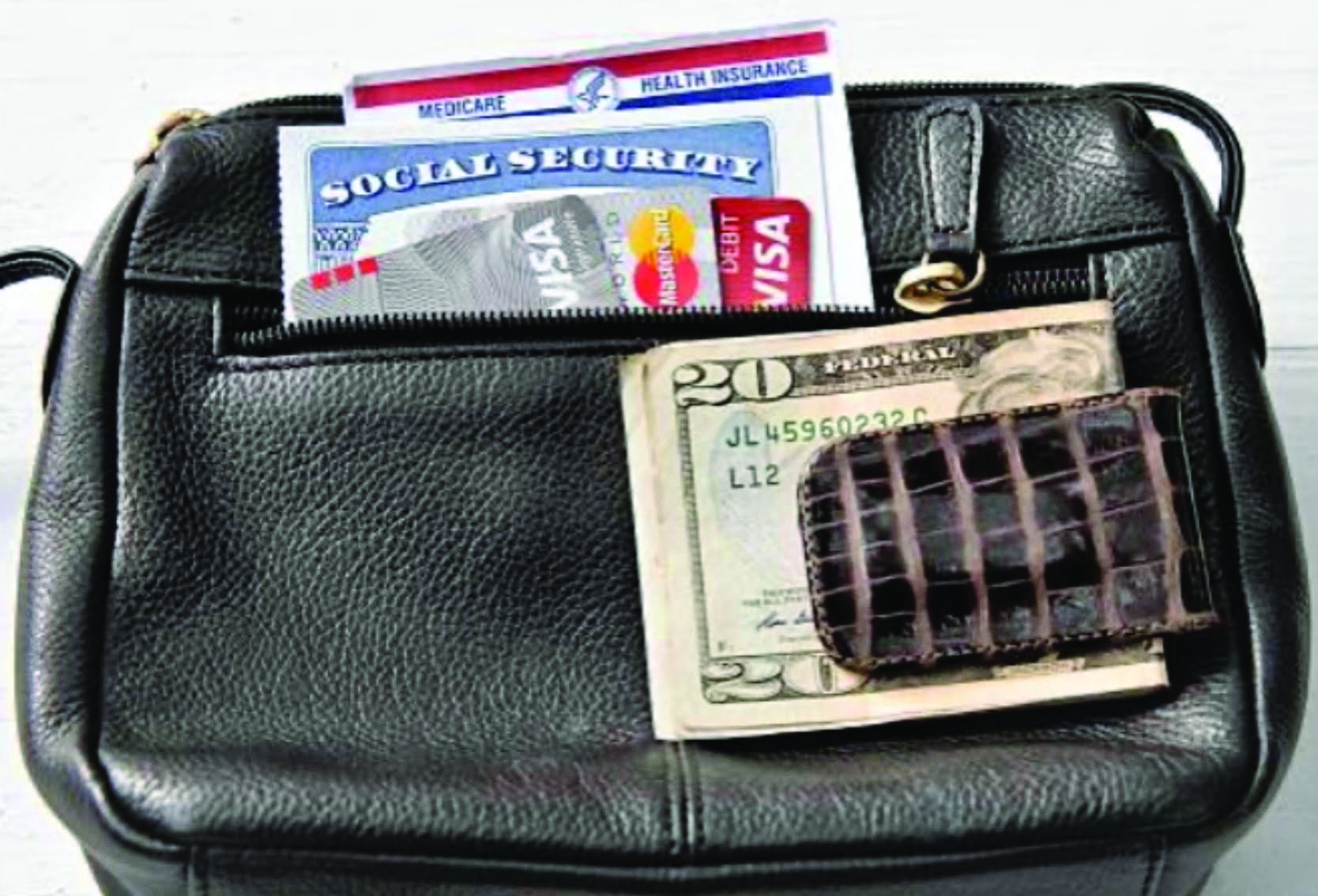
    It’s time to begin your spring cleaning! This year, don’t forget to include your wallet, the home of your critical medical and insurance cards.

    Do you know which cards you should carry or dispose of?

    If you are retired, you can begin by disposing of your work insurance card. Your coverage ended when you retired.

    Also, that Original Medicare card that displays your social security number is obsolete. Call the Social Security Administration at 1-800-772-1213 if you need a replacement Medicare card.

    If you recently qualified for Medicare or changed plans, put your new member identification card in your wallet or swap it for the old one.

    Providing the proper insurance card saves time, money and makes accessing healthcare services easier.

    Healthcare providers count on you to provide them with your current insurance card so you can receive healthcare and the provider can file a claim for their services.

    Having the correct card enables quicker processing and helps avoid billing errors, and treatment scheduling delays.

    Take a moment to get more organized and clean out your wallet today.


    GET2INSURANCE.COM FAMILY OFFICE
    1003 Bishop St., Ste. 2700, Honolulu, HI 96813
    (800) 226-3660 | martha@get2insurance.com
    www.Get2insurance.com

    It’s time to begin your spring cleaning! This year, don’t forget to include your wallet, the home of your critical medical and insurance cards. Do you know which cards you should carry or dispose of?