Category: Column

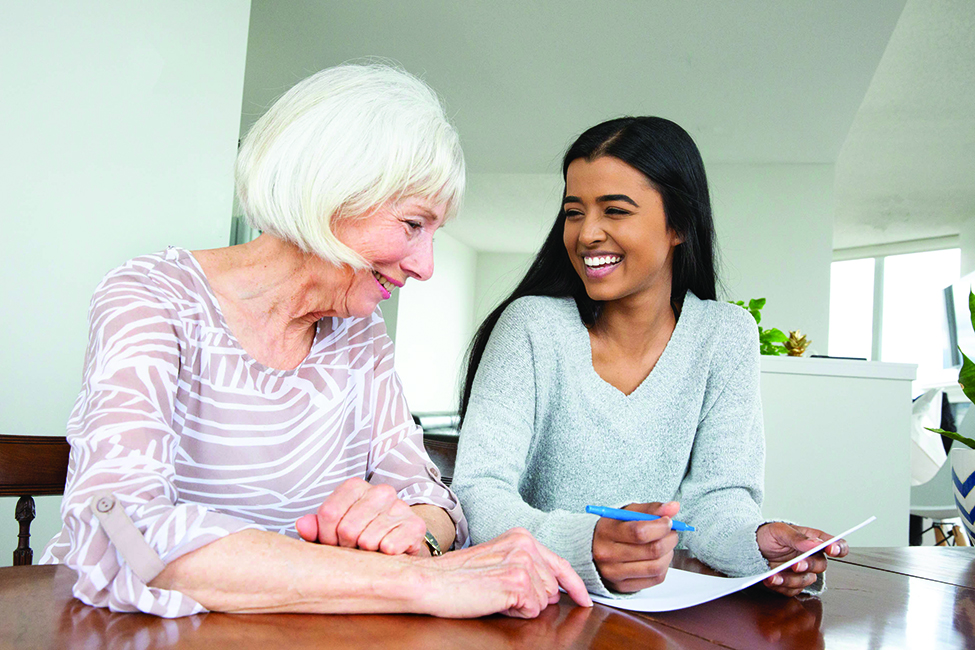
  • WORK: A New Proposition for Boomers

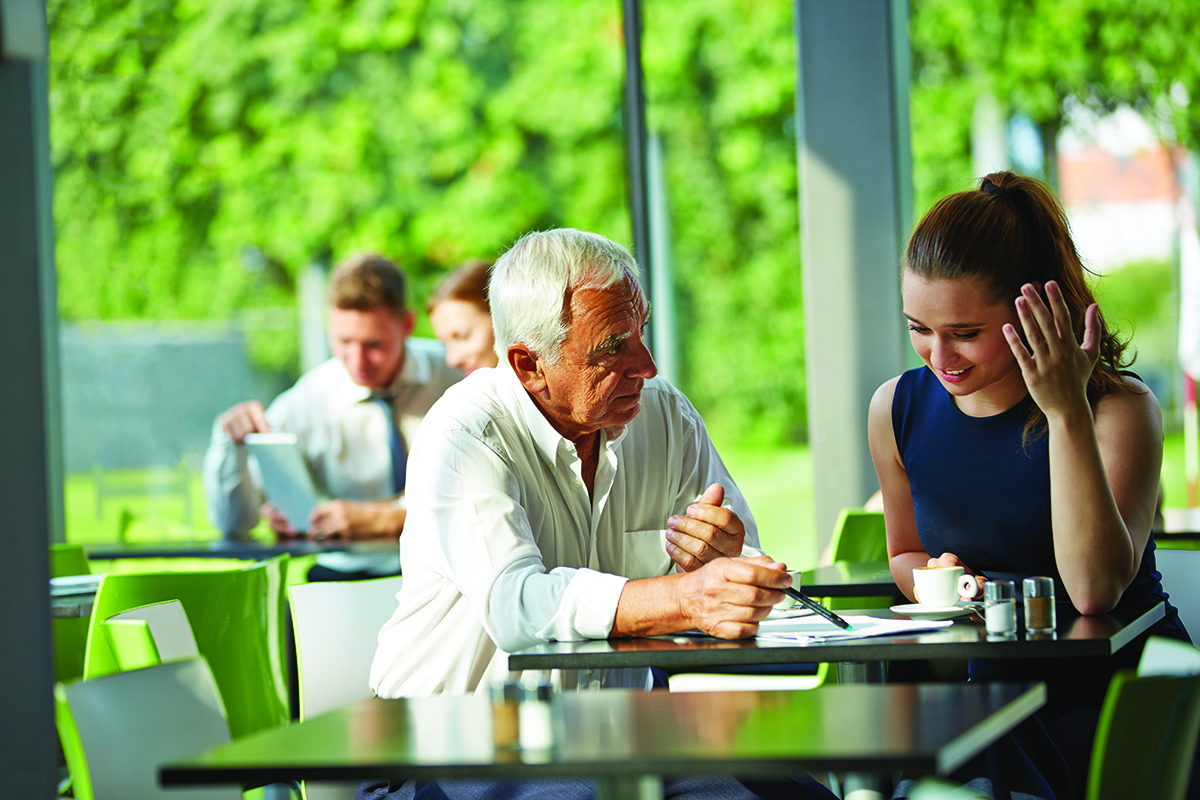
    For most mature employed people, work was considered having a job with one or two companies in a working lifetime. Now retired, many may still have debt; few have the savings to take them through their remaining years.

    Countless mature workers believe that just one more job, perhaps much like the one they just left, is all they need to secure their futures.

    Unfortunately, those jobs may no longer exist or they may have been completely re-framed so that they are no longer a possibility for most mature workers. However, key pieces of the job they once held are likely to be important to employers and/or clients as organizations struggle to do more with less in order to remain competitive and successful.

    The boomer dilemma is realizing that the previous slow march to the future is now a race to understand and adapt to meeting unprecedented problems with a new game plan. The boomer proposition: New strategies and new options — not old tactics and old jobs — that are the order of this new day. Adaptation is the key.

    Instead of thinking of work as your next job, think of work as your contribution to both your community and your wallet!

    Here are a few ways to reach for viable, near term income through work that matters.

    Work from home. Almost 2 million Americans (including many thousand in our beautiful islands) have embraced the idea of working from the comfort of their home office or couch. It is a strong recommendation for people seeking to increase their work-life balance. Google the term and be amazed at how many opportunities are presented.

    Consider freelancing. Up to 40 percent of new opportunities within today’s organizations will not be full-time. These flexible opportunities are often perfect for mature, independent workers who market and deliver their own unique services when and as needed at their own choice.

    Create a portfolio. Some have success by putting together short-term contract or part-time work in order to develop and ensure a balanced flow of income from multiple sources.

    Note that nowhere in our suggestions is the word “consultant”— an old word that has become synonymous with someone offering high-priced advice. Instead, refer to yourself according to what you do.

    And no matter what you end up doing, there are a lot of options for life after retirement. A great place to start is asking family and friends. There are a lot of jobs and opportunities, once you realize there’s a new way to work.


    NEW WORKFORCE HAWAII
    Carleen MacKay
    916-316-0143 | carleenmackayhi@gmail.com
    www.newworkforcehawaii.com
    Contact Carleen via her website and receive a free PDF book called New Ways to Work, co-written with Phyllis Horner.

    For most mature employed people, work was considered having a job with one or two companies in a working lifetime. Now retired, many may still have debt; few have the savings to take them through their remaining years. Countless mature workers believe that just one more job, perhaps much like the one they just left,…

  • Self-Care, Self-Healing the Natural Way

    Last school year I fell down half a flight of stairs, bruising my left hip. It was an accident where I was just happy I didn’t break anything. At age 63, I should have been more careful! X-rays indicated the need for a hip replacement but, since I’d been practicing self-care for the past fifteen years by using wellness products, I thought I already had everything needed for my body to heal itself.

    I first started seeking healthcare solutions when my daughter injured her neck during gymnastics training. We went to numerous specialty doctors who recommended a variety of treatments but we saw no sustained progress for her pain management. I quit teaching to find a solution and discovered natural healing products that help the body function as designed. My daughter went through a healing crisis where she felt worse before she felt better but then she had less pain and then no pain. When her brothers saw the value, they also wanted these products. They experienced better alertness in school, speedy recovery from sports injuries, less sickness and permanent allergy relief. Amazingly, however, sharing our story has not attracted followers because of the “ask your doctor” mentality in our culture.

    Part of my self-care includes hydrating with purified alkaline water, eating a plant-based diet, supplementing to build bones (prevent osteoporosis), getting deep sleep and exercising regularly. All this helped tremendously until I hit the floor again by horse playing students near the end of the school year. I could hardly walk due to the repeat impact to my hip. Chiropractic and massage worked wonders but were needed more often than insurance allowed.

    We can’t repeat the same actions expecting different results, so I went to see a naturopathic doctor for cannabis. With a medical cannabis card, I made my own tincture, teas and biscotti. After two weeks on cannabis I could lift my leg

    up to ride my bike when I couldn’t prior to the fall. I can’t recommend anyone make their own medicine due to the problems of pure sourcing, processing and dosing. I recommend using CBD transdermal patches because it has better bioavailability than when ingested. It also bypasses first pass metabolism in the liver, making it gentle for ages 2 and up according to the Natural Medicines

    Database. It’s like a Band-Aid that dispenses a sustained dosage for 24 hours with no bad taste!

    I love my retirement lifestyle of self-care. It provides daily motivation to be physically active and the mental challenge of choosing what to put into or expose my body to, as well as the “can do” spirit to help others do the same.

    Last school year I fell down half a flight of stairs, bruising my left hip. It was an accident where I was just happy I didn’t break anything. At age 63, I should have been more careful! X-rays indicated the need for a hip replacement but, since I’d been practicing self-care for the past fifteen…

  • Living a Full Life of PIE

    I have been a social worker, with a varied practice, for over 40 years. Suffice it to say that I am somewhat of an extrovert, with a love for meeting, relating and living with family, friends, colleagues and even casual acquaintances. As a social worker, I developed a skill set and method to connect with individuals and to help them connect with each other. My passion, which I try to live out daily, is to allow people to come up with solutions to problems that disallow them from living a what I call a “full life.”

    You know, the profession of social work’s claim to fame is the theory “Person-in-Environment” or PIE. Not only does the social worker relate and deal with the person but also the environment and relationships he or she lives with; those intimate realities of life that affect the “personhood.” Once, I was trying to explain this to a client when we were sitting next to a pond and talking story. So, I took a stone and threw it in the water. As it landed and made concentric circles in the water, I said, “This is what you and I do when we meet. We make these concentric circles.” He understood right away. We must have thrown at least 30 stones in the pond, between the two of us!

    Preaching my first sermon, 2016
    Preaching my first sermon, 2016

    So my passion, still, even after years of social work, is to “make and eat PIE” with folk. Three years ago, after a period of theological and faith formation, I was ordained a priest in the Episcopal Church. I found that my passion for God and Faith was combined and integrated with my passion for people and life. In my way of living a “full life,” I find that my priesthood allows me to practice a kind of “divine” social work, in that I am connecting people with each other and with God. The PIE I now “make and eat” becomes pastoral and sacramental with and for others.

    Not long ago, I was at a meeting of social workers, and a couple of colleagues asked for my opinion as a priest. Naturally, we started getting into the PIE of the issue and I focused on the stone thrown in the pond as a metaphor. Then I asked my colleagues to consider what would happen when the stone is thrown in the water vigorously — with verve and gusto! Ah, then our discussion took on dimensions that heard us talking about water “leaping up” and stones “coming out” and concentric circles becoming “irregular and converging.” There we were, professionals, discussing very secular things and mixing it up with somewhat theological and numinous realities.

    Yes, my “life is full.” It is full for the people, in relationship with each other, that I know and meet. Yes, I “make and eat PIE” whenever I can.

    The profession of social work’s claim to fame is the theory “Person-in-Environment” or PIE. Not only does the social worker relate and deal with the person but also the environment and relationships he or she lives with; those intimate realities of life that affect the “personhood.”

  • Since When is work Fun? Since Now!

    Welcome to CREATIVE new ways of working throughout our ever-lengthening lifetimes.

    Let go of the past. You are both the author and central character of your Third Act. Let your imagination wander as you read about new ways people over 50, 60, 70 and beyond are having fun, making money and devoting their creativity and energy to all the areas of their jam-packed lives.

    Cruise line opportunities  All types of workers fill short-term, fun positions that allow them to contribute their knowledge on board. Google “cruise line opportunities” and you will be surprised by the available options. Don’t Google? Ask your keiki or grandchildren to teach you.

    Ensemble collaborators  The single voice is a song. The collective voice is the Hallelujah Chorus. It is in “teaming” where fun and profit meet. Often labeled as “shared sourcing,” services are provided through the unique efforts of individual contributors from a co-committed group.

    In one local group, team collaborators help people optimize future health, well-being and financial security. Team members enjoy their work and refer opportunities to one another. The result? They are busy, productive and socially connected.

    Interim professionals  Interim professionals are the leaders of change during various periods of organizations’ life cycles. Increasingly, interims are hired during rapid expansion and not for their ability to handle past crises. Most are subject-matter experts whose knowledge is critical to effect desired results in this fast-evolving world of ours.

    Get-paid networks  Get paid for taking part in research studies, opinion surveys, clinical research, focus groups, passing out free samples in grocery stores… even standing in line for others. Google various areas of interest such as “Get paid to write” or “Get paid to…” (fill in the blank).

    Internet opportunities  Examples of internet based opportunities include affiliate marketing, where you get paid a commission for generating clicks on another company’s website from your own. You could sell your own stuff online, or help local businesses draw customers into their store or restaurant. The internet provides the perfect opportunity to start a side business that can be operated by working a few hours a week.

    Go ahead — explore!


    NEW WORKFORCE HAWAII
    Carleen MacKay
    916-316-0143 | carleenmackayhi@gmail.com
    www.newworkforcehawaii.com

    Contact Carleen via her website and receive a free pdf book called New Ways to Work, co-written with Phyllis Horner.

    Let go of the past. You are both the author and central character of your Third Act. Let your imagination wander as you read about new ways people over 50, 60, 70 and beyond are having fun, making money and devoting their creativity and energy to all the areas of their jam-packed lives.

  • Building a Fine Arts Museum on Maui

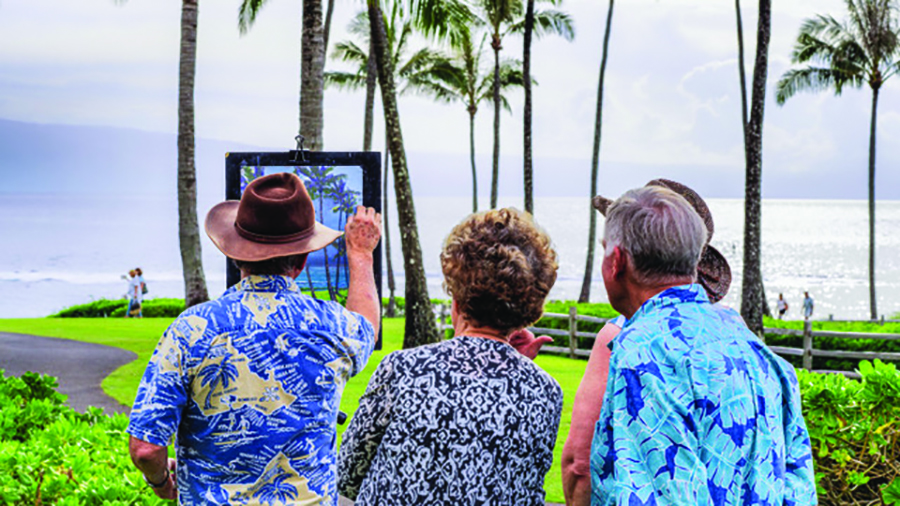
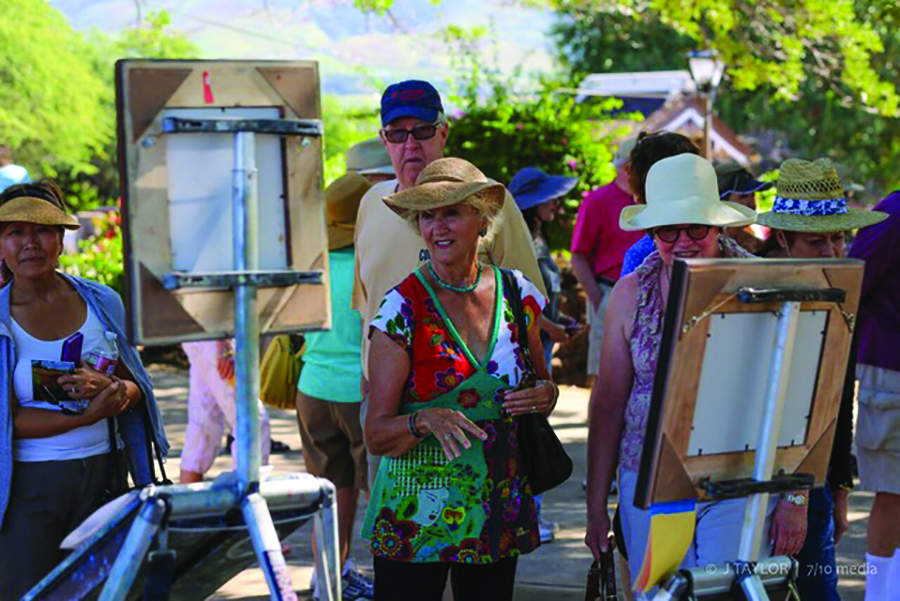
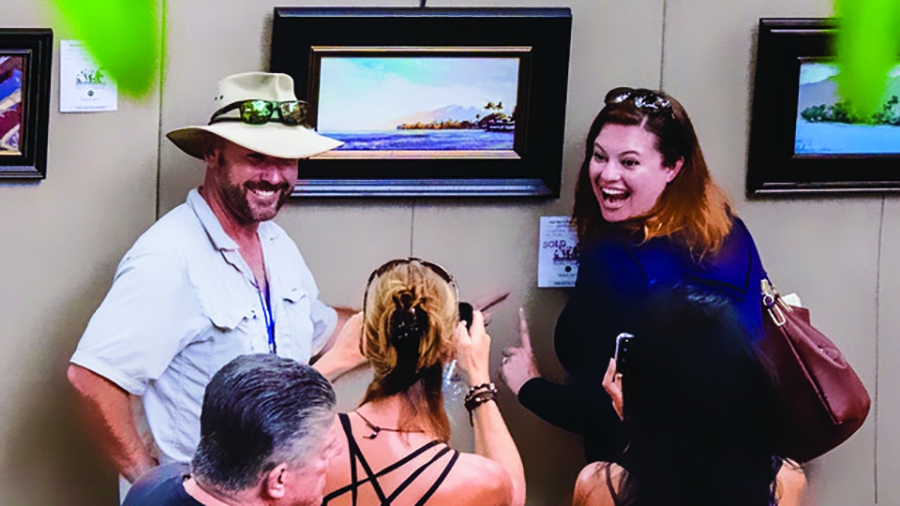
    My current goal is to help Maui Arts League build a Visual Fine Arts Museum on West Maui — for our children, residents and visitors. My husband and I have always valued art and were inspired by collecting fine art. I believe art makes people happy. What could be better than surrounding yourself with family, good friends, delicious healthy food and beautiful art?

    Working for my community keeps my mind active, takes me all over the island, and leaves little time to become a couch potato! I think this approach to life makes me look younger than I am. I may feel like a centenarian some days (backaches or joint stress), but at 73, I ordinarily wake up fresh and eager to accomplish something of value.

    If you want to keep enthusiastic about life, feeling vibrant, looking young and fit — just volunteer. My parents passed on to me their dedication to volunteerism and I am thankful for their wise insight and guidance on how to get the most out of life.

    I worked long hours during my career at IBM. In retirement, I still liked setting goals and keeping busy, so I donated my time and skills to art organizations first in Austin, Texas, and later on Maui when we relocated here. I work just as much volunteering as I did at IBM, but now my imaginary ‘paycheck’ is much bigger!

    You can give back to the community by donating time to your favorite nonprofit organization as a docent, a greeter, office helper or event staff. Pick groups that fit your passion: literary groups (especially children’s organizations like Book Trust), health groups (cancer, hospice, hospitals, care homes), or arts groups (Maui Arts & Cultural Center, Honolulu Museum of Art, Maui Academy of Performing Arts, Maui Arts League).

    My retirement goals focus on community work because I don’t have children. If your focus is on family, keeping busy and setting goals works well too! If you’d like to chat about growing old and art, send me an email. If you live on Maui, a cup of coffee may be in the cards.

    ———-

    MAUI ARTS LEAGUE
    Lois Reiswig  |  infomauiartsleague@yahoo.com
    www.celebrateartonMaui.org

    My current goal is to help Maui Arts League build a Visual Fine Arts Museum on West Maui — for our children, residents and visitors. My husband and I have always valued art and were inspired by collecting fine art. I believe art makes people happy. What could be better than surrounding yourself with family,…

  • Diving into Retirement

    The biggest surprise about retirement is that I am busier now than when I had a regular job. My to-do list seems to get longer every day, even though I know I am continually completing tasks. Keeping busy with meaningful work is good advice to anyone contemplating retirement.

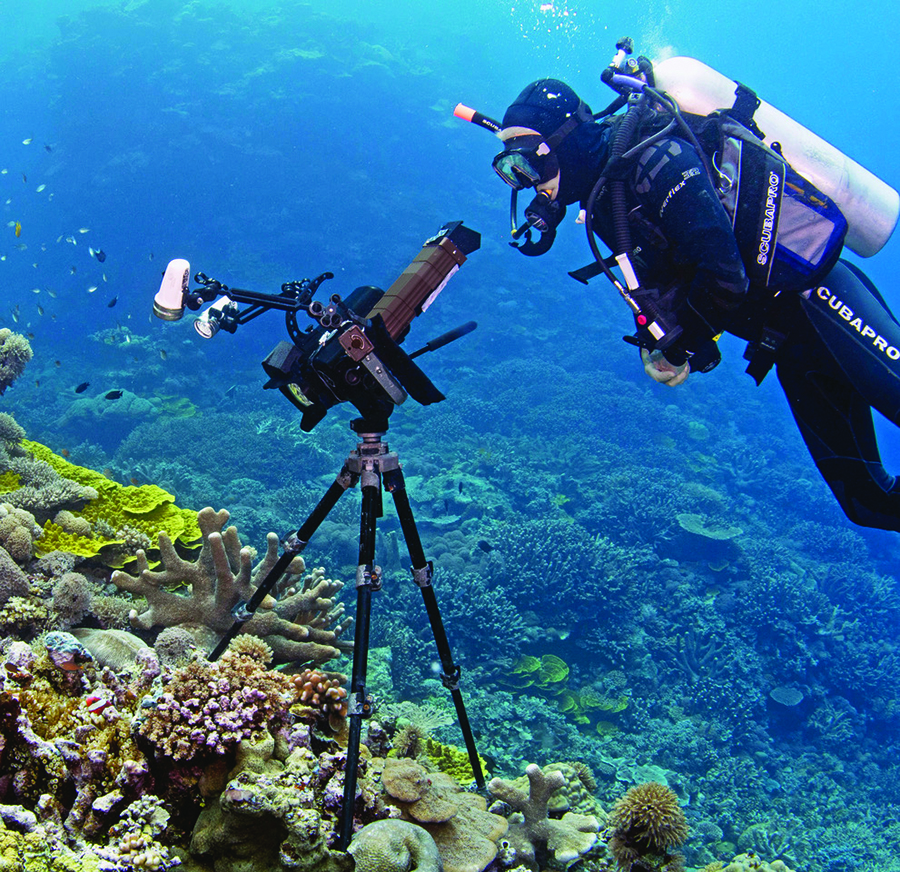
    During my professional career, I earned a Ph.D. in ichthyology (the study of fishes) and was employed at the Waikiki Aquarium for 27 years, and then at the Georgia Aquarium for another nine years before retiring in 2011. One fact about biologists is that we continue doing the same kind of work in retirement as we did in our careers, except there is no longer a pay-check. Biologists never really lose what Rachel Carson called a “sense of wonder” when it comes to nature. My wife, Marj, and I find that sense of wonder underwater. I have been scuba diving for 52 years, and I suspect I will continue doing so until I can no longer strap on a scuba tank.

    Photo by Marj Awai
    Photo by Marj Awai

    I don’t spend much time in regular volunteer service, but I have found other ways to give back to others. I am often asked to create video programs for friends or colleagues, which is a challenge because of the time this takes, but it is also rewarding to share what we see underwater because we know most people will never have this opportunity. I have a YouTube channel under my name where I post most of my videos. One of the most viewed underwater videos is this one filmed in the coral reefs around the Solomon Islands: https://youtu.be/JIzUKyc36Q4

    As a former aquarium director, I am often asked to testify at the Legislature on behalf of friends or colleagues on issues for which I have the expertise or have a passionate interest. Anyone involved in preparing testimony and sitting for endless hours waiting to testify will know how time-consuming this can be, and sometimes it can be endlessly frustrating too.

    The more mundane activities that keep me busy include all the usual tasks such as yard work (which I do enjoy!), keeping up on household repairs, exercise (daily walks and bicycling), writing magazine articles, and some scientific papers too. I have also found that my 70-year-old brain can no longer remember what I had for breakfast, let alone what I did a week ago. So I created an e-diary on my computer where I keep track of our daily activities and add a “picture of the day.” I have also found that tracking expenses is essential to understanding where all the money goes. At the end of every day, I pull all the receipts from my pocket and enter them on an Excel spreadsheet. With luck and continued tracking, our retirement funds will last well into our 90s.

    Never a dull moment with so much to do!

    The biggest surprise about retirement is that I am busier now than when I had a regular job. My to-do list seems to get longer every day, even though I know I am continually completing tasks. Keeping busy with meaningful work is good advice to anyone contemplating retirement.

  • Portfolio Workers: Who Are They?

    They are the “Jugglers” of multiple opportunities who know a diversified work portfolio increases the probability of realizing financial and personal success, improves their sense of control and boosts feelings of security.

    What you need to know about portfolio work.

    Smart portfolio (multiple) ways of working are usually balanced between high risk and reasonable certainty as well as between long- and short-term growth. Many people compare it to investing time and money in the stock market for both short- and long-term financial returns.

    Others think of portfolio work as simultaneously diversifying their work between multiple interests and different markets. In this way, it creates a balance of income, interests, time and energy.

    Earning, learning and doing good.

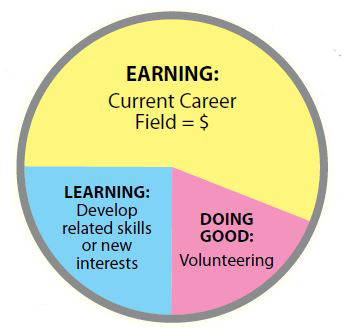
    In the following example, the first investment is doing project work in your established career field. This offers some income some of the time. Consider this aspect of your portfolio as work for current income.

    A second investment is the continued (formal) development of related skills or new interests to meet the demands of emerging market-driven trends. This aspect of a portfolio is working for learning and future financial return.

    A third investment is volunteering, which can be thought of as work done for personal satisfaction or for the benefit of others.

    A balanced diversified portfolio, with the relative amounts of time dedicated to earning, learning and doing good, is illustrated below.

    With the passage of time, the balance is likely to shift as different market-place needs, life goals and interests change.

    Advantages of managing a career portfolio

    You will…

    • Appreciate the opportunity to gain multiple income sources.
    • Expand your ability to shift emphasis as the marketplace continues to change.
    • Deepen your reputation as an expert.
    • Balance your energy between the various components of your portfolio.
    • Have some fun; give back to your community; gain more work/life balance.
    • Find new directions while doing meaningful work in your community.

    ———————

    NEW WORKFORCE HAWAII
    Carleen MacKay, Co-Founder
    916-316-0143  |  carleenmackayhi@gmail.com
    www.newworkforcehawaii.com

    Portfolio workers are the “Jugglers” of multiple opportunities who know a diversified work portfolio increases the probability of realizing financial and personal success, improves their sense of control and boosts feelings of security.

  • Language Matters: Avoiding Ageist Talk

    Ageism is discrimination and negative stereotyping on the basis of a person’s age. It permeates the media and everyday conversations to such an extent and in such subtle ways that people may accept negative stereotypes of older adults (“forgetful,” “grouchy,” “less competent”) as truth, unconscious of their bias. While not denying very real difficulties that may arise, later adulthood is a life stage that involves both opportunities and challenges, as do all stages of life.

    Language matters. The way we speak about or frame aging reflects and reinforces ageist attitudes.

    While trying to convey the significance of current demographic changes, it is easy to slip into an alarmist mode. The media and even  scholars often characterize population aging as  a natural disaster, a “silver tsunami,” threatening to overwhelm society. Re-framing the discussion of changing demographics in a more positive way avoids an ageist mindset: “As Americans live longer and healthier lives…”

    • Older adults are marginalized as outsiders, when referred to as “them” not “us.”
    • The medicalization of life experiences once regarded as non-pathological (e.g., childbirth, sadness, menopause) extends to the experience of aging, as well. Viewing the process of aging in a medical frame implies the older adult needs “care.” Old age may be labelled either a “problem” to be “fixed” or a fatalistic condition for which “nothing can be done.”

    In an attempt to counter ageist ways of speaking, the FrameWorks Institute developed the following evidence-based recommendations:

    • Redefine aging to include its positive aspects. Prevailing negative assumptions about “getting old” lead to fatalistic attitudes.
    • Avoid language like “senior citizens,” “aging dependents,” “the elderly.”

    A call for justice beats a plea for sympathy. Ac-knowledge that a just society strives to treat everyone as equal participants.

    • Acknowledge that social contexts and social policies shape the experience of old age, that health and financial security are not totally dependent on an individual’s planning and good decisions.
    • A new metaphor can shift perceptions of aging. Compare the process of aging to “building momentum,” the potential force of built-up experience and insight, and view older adults as sources of resources to be tapped.

    Remember, ageism is discrimination against your future self.

    ———-

    CENTER ON AGING — University of Hawai‘i at Mānoa
    2430 Campus Road, Gartley Hall, 201B, Honolulu HI 96822
    808-956-6124  |  map3@hawaii.edu

    www.hawaii.edu/aging/

    Learn more about ageism:

    • Ashton Applewhite (2016):

    This chair rocks: A manifesto against ageism

    • Applewhite TED talk on ageism:

    www.bit.ly/ApplewhiteTEDTalkAgeism

    Ageism is discrimination and negative stereotyping on the basis of a person’s age. It permeates the media and everyday conversations to such an extent and in such subtle ways that people may accept negative stereotypes of older adults (“forgetful,” “grouchy,” “less competent”) as truth, unconscious of their bias.

  • Are You Ready for 2019 and Beyond?

    January of 2018, I made a lifestyle change: I went vegan. In March, I added fish to my diet, so I am now pescatarian. I don’t eat meat, chicken, dairy, eggs and cheese. It’s been over a year now and I lost a few pounds. I’m still feeling great and I am also exercising.

    Seniors not only have to exercise and stay physically and mentally fit; they also need to make their money last longer. Social Security, regular investments (stocks, mutual funds) and retirement plans (401k, IRA) now have to account for an extended life span. We don’t want to spend our golden years in poverty and ill health.

    In the past, retirement money didn’t have to last very long. In 1965, men had a life expectancy of 68 years and women lived an average of 71 years. Men lived only three years past retirement age and women lived six years in retirement. Now that people are leading healthier lifestyles and taking advantage of advancements in science and medicine, retirees are living well into their 90s. Our money has to last for 20 to 30 years after we stop working.

    This month I made 70. Very fortunate my father is still alive; he’s 94 years old. My mother passed away two years ago at age 92. I have three children, nine grandchildren and twelve greats. I would like to spend many more years with them.

    Am I ready? Are you ready?


    Edward Motosue, his son Travis, and their team have provided the senior community with financial guidance and insurance expertise for 10 years.

    FINANCIAL BENEFITS INSURANCE 808-792-5194  |  www.fbihi.com

    Seniors not only have to exercise and stay physically and mentally fit; they also need to make their money last longer. Social Security, regular investments (stocks, mutual funds) and retirement plans (401k, IRA) now have to account for an extended life span.

  • Embracing Change

    Maggie threw her pen at the computer. “Oh no! I can’t find the email I just wrote to my grandson. I hate the computer! Why can’t we go back to the way things used to be before the technology monster took over, when we talked to each other in person or on the phone?” Remembering she has friends to call, she picked up the phone and dialed her 81-year-old friend Toni. Toni would understand.

    Maggie vented to Toni but heard only impassioned laughter. Finally, Toni gasped, “You know, Maggie, in the beginning I felt the same. I even thought to ignore my phone, let folks knock on my door like in the good old days. But then I saw a golden opportunity for us — brain exercises and memory boosters and unlimited learning we can do from home. Even better, the whole world is at our fingertips.”

    “But I don’t know how to…”

    Toni interrupted, “Hey, why don’t you come over this afternoon? My genius grandson taught me. He’d be happy to teach you, too.”

    Relieved, Maggie said, “Oh, what a divine offer! Having time with Jesse, who I adore, and learning to conquer this monster and train my brain all at the same time?”

    “Sure! Jesse loves you and feels so smart and important when he can help us!”

     “I’m in!” Maggie chimed in enthusiastically. “I’m so happy to have a private tutor to stretch my brain! Now I’ll be able to flow with the times. Can I bring my ‘smart’ phone and learn how to Instagram a photo to my grandson? I am looking forward to growing smarter and less confused.”

    “Sure.”

    Maggie hung up the phone before she remembered, “Now where is the message I was looking for? Where is the email I wrote? It disappeared.
    I’m so relieved I’m seeing Toni and Jesse this
    afternoon. I adore learning and new adventures. But it’s the personal touch that makes all the
    difference. Like talking to a neighbor or inviting
    a friend for tea.”

    “What if Toni and I created a new training for the young as a gratitude for Jesse’s generosity? We could teach them to slow down, greet the sun, and smell the roses. Maybe we can help change the whirlwind world stressing out the younger generations.”

    And so there you have it: my challenges of embracing change, which some wise person once said is the only constant. I wonder if the young will cross this bridge the same way.


    Pratibha Eastwood is a psychologist in private practice and a writer, currently preoccupied with the impact of aging. She loves taking life to the limit or beyond at any age.

    808-595-HOPE(4678)
    808-988-4JOY(569)

    Maggie threw her pen at the computer. “Oh no! I can’t find the email I just wrote to my grandson. I hate the computer! Why can’t we go back to the way things used to be before the technology monster took over, when we talked to each other in person or on the phone?” Remembering…

  • Ed Gayagas: ‘Don’t Give Up!’

    Find something you’re passionate about and stick with it! That’s the advice Ed Gayagas has followed for himself and the message he passes along to others.

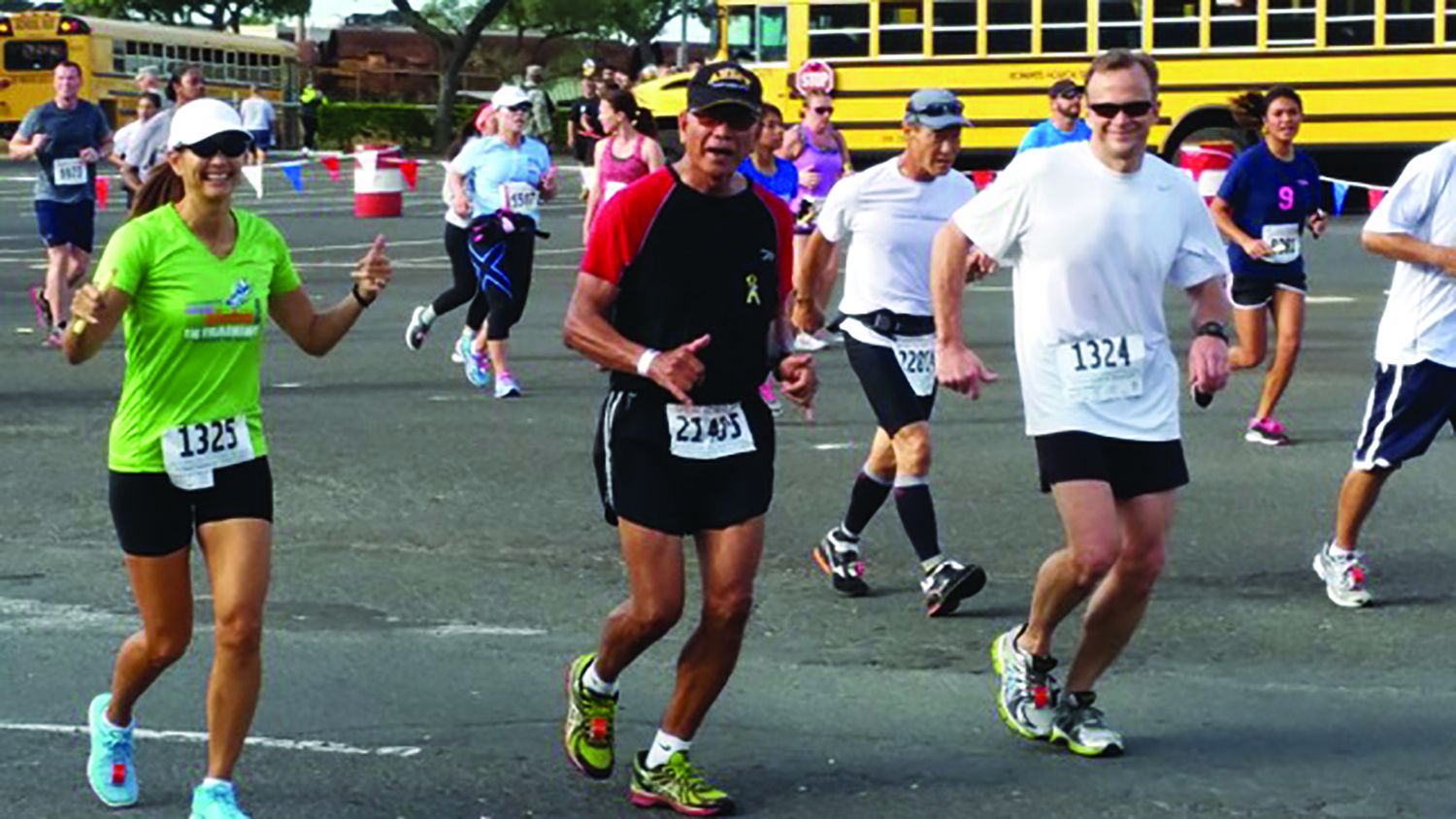
    Ed lives on O‘ahu with his wife Norma and for as long as he can remember his passion has been martial arts. Growing up on Kaua‘i, Ed was a scrawny kid who avoided fights but once, when confronted by a bully, Ed decided “enough is enough” and started turning his life around with judo, jujitsu and taekwondo and the meditation practices those disciplines offer.

    He also found a love for the military and began a 30-year career with the Army that lasted until he retired in 1989. Ed is now 79 and among his other accomplishments has participated in the Great Aloha Run every year since its inception in 1985. That perfect attendance record was nearly shattered last year, however, when Ed fell ill with a rare form of brain cancer, primary central nervous system lymphoma.

    Doctors at both Tripler and Queen’s confirmed the diagnosis and gave Ed only a four percent chance of survival if the inoperable tumor went untreated. So, Ed began months of chemotherapy that zapped him of his strength and energy.

    But with the help of an early morning routine of exercise, meditation and deep breathing, along with a strong desire to compete again, Ed was able to cope with the chemo treatments. When they were over, Ed’s strength returned, and he now plans to run again for real.

    In last year’s Great Aloha Run, Ed was unable to run the entire distance but ran as much as he could, then got in a wheelchair and was pushed along until he felt he had recovered enough to run some more. It took about three hours, but Ed was able to finish the race and chalk up another year.

    Ed is relentless in his pursuit to be healthy and fit but other aspects of his life are no different than any other man of his age. In matters of diet, Ed tries to eat lots of vegetables but says he’s no vegetarian. “Steak is my favorite, aside from sweets,” Ed admits.

    As for his meditation practices, Ed says he doesn’t subscribe to one specific type of meditation — but rather has cherry-picked aspects of different philosophies that work for him. He encourages others to develop their own “style” — not only of meditation but also of exercise.

    When asked if he ever thought that he would be diagnosed with a life-threatening disease, he replied emphatically, “No!” He always assumed he would be on a healthy path and always strove for optimum health.

    “Don’t give up!” Ed repeatedly advises. Advice that is certainly working for him.

    Find something you’re passionate about and stick with it! That’s the advice Ed Gayagas has followed for himself and the message he passes along to others.

  • How My Watch Helped Me Set Goals

    I have learned a lot about setting goals from interacting with my smartwatch! The S.M.A.R.T. approach to setting goals has been around far longer than smartwatches, but the watches demonstrate perfectly the basic S.M.A.R.T. concepts originally created in 1981 by George T. Doran as a management tool but relevant for any type of goal.

    You can use the S.M.A.R.T. approach just as well with lo-tech pen and paper, but here is how my computerized watch helps me to set goals specifically for physical activity:

    Specific: Clearly state the goal you want to achieve. Previous vague promises to myself to increase physical activity did not work. My watch defines specific goals for each day: 30 minutes of exercise, one minute per hour of standing, and 300 calories worth of movement. Plus it reports my number of steps for the day!

    Measurable: Each day my watch measures and tells me what I’ve achieved in each category of activity, e.g., number of minutes I’ve spent exercising and standing and number of calories burned in general movement, using three rings to show my progress. For example, if I’ve exercised for 30 minutes, the watch alerts me with slight pressure to my wrist, a faint chime, and the quick flash of a swirling green celebratory ring. It then provides a brief message, e.g., “You’ve reached your exercise goal, Peggy! Good work!” Personalized feedback and positive reinforcement help!

    Attainable: The watch was calibrated to set initial goals based on my size and age. At first, my movement goal was 230 calories/day. I consistently achieved that, so the watch upped it to 300 calories, attainable but with a bit more challenge.

    Realistic: I have to admit, I don’t always make my goals. However, my watch doesn’t berate me when I slip up. Next day, it encourages me by reminding me I completed a weekly goal, or that I still have time to meet today’s.

    Time-related: Everything stops at midnight, when all three progress rings in whatever stage of completion melt away, and I am back to square one. I can refer to my weekly or monthly log, which helps me see the patterns of my activity, providing more feedback to help me adjust my exercise habits.

    Before deciding on your own fitness goals, discuss them with your healthcare provider first. Happy goal-setting!


    CENTER ON AGING — University of Hawai‘i at Mānoa
    2430 Campus Road, Gartley Hall, 201B, Honolulu HI 96822

    808-956-6124  |  map3@hawaii.edu
    www.hawaii.edu/aging/

    I have learned a lot about setting goals from interacting with my smartwatch! The S.M.A.R.T. approach to setting goals has been around far longer than smartwatches, but the watches demonstrate perfectly the basic S.M.A.R.T. concepts originally created in 1981 by George T. Doran as a management tool but relevant for any type of goal.