

A common thread runs through a tapestry of three stories. Having experienced the caregiving role themselves, Savina Makalena, Gary Simon and Gary Powell all saw the need to support individual caregivers and the various entities involved in providing that support. And seeing that need, they all decided to help fulfill it, each in their own way.

Savina Makalena nurtured and protected her mother since childhood by helping her learn English and assisting with the many formal and informal interactions of daily life. So, when her mom began showing signs of dementia, Savy naturally stepped into the role of primary caregiver. Gary Simon and wife Akemi were just about to start their own family when his mother-in-law’s almost imperceptible transition into dementia meant learning what to expect, and how to achieve a workable living and caregiving environment. Gary Powell was thrust into his caregiving role helping to tend to his grandfather, who suffered a series of strokes when Gary was a teenager.
Chances are high that we all know someone in our circle of acquaintances, friends and family who have had a similar experience: the sibling who is empathetic, nurturing and blessed with patience who becomes the natural choice to be a parent’s caregiver — a friend who shares with you their struggle to prepare for their caregiving role as a loved one’s health deteriorates. And then there are those who suddenly find themselves caring for a family member following a serious medical event like a heart attack or stroke.
You may even be a family caregiver yourself, but feel unsure whether or not you have the compassion, empathy and courage to continue on what may be a very difficult journey.
Each of the people featured stresses that emotional wellness is a key coping strategy. For Gary Simon, that was achieved by accepting what couldn’t be changed and seeing caregiving as a final gift for his mother-in-law in acknowledgement of the gift she and her husband gave him — his beloved wife, Akemi. Gary Powell’s remembrance of the look in his grandfather’s eyes the first time he had to be helped with personal hygiene blossomed into the awareness that dignifying a care recipient parent by not treating them as a child helps maintain emotional balance. For Savy Makalena, the key to emotional wellness is being able to freely share what you’re going through with compassionate others who have had similar experiences and aren’t going to judge you.
 COMPONENTS OF CAREGIVING
Gary Powell spent his childhood surrounded by his extended family at Sunset Beach on the North Shore of O‘ahu, where he was born.
“My parents, my aunt, my grandparents — everyone lived here. When I was about 13, my grandfather had a pretty severe stroke. When he came home from hospital, he was having trouble walking. I was given the task of taking him down to the beach, which was close to their house, and walking in the sand to try to strengthen his legs, and get him more mobile and safer on his feet. So, I would come home from school, take Grandpa walking on the beach, bring Grandpa back; do anything my grandparents needed doing at their house. Sometimes I would eat with them; sometimes not, but after everyone was settled for the rest of the day, I would go home and do my 13-year-old things.
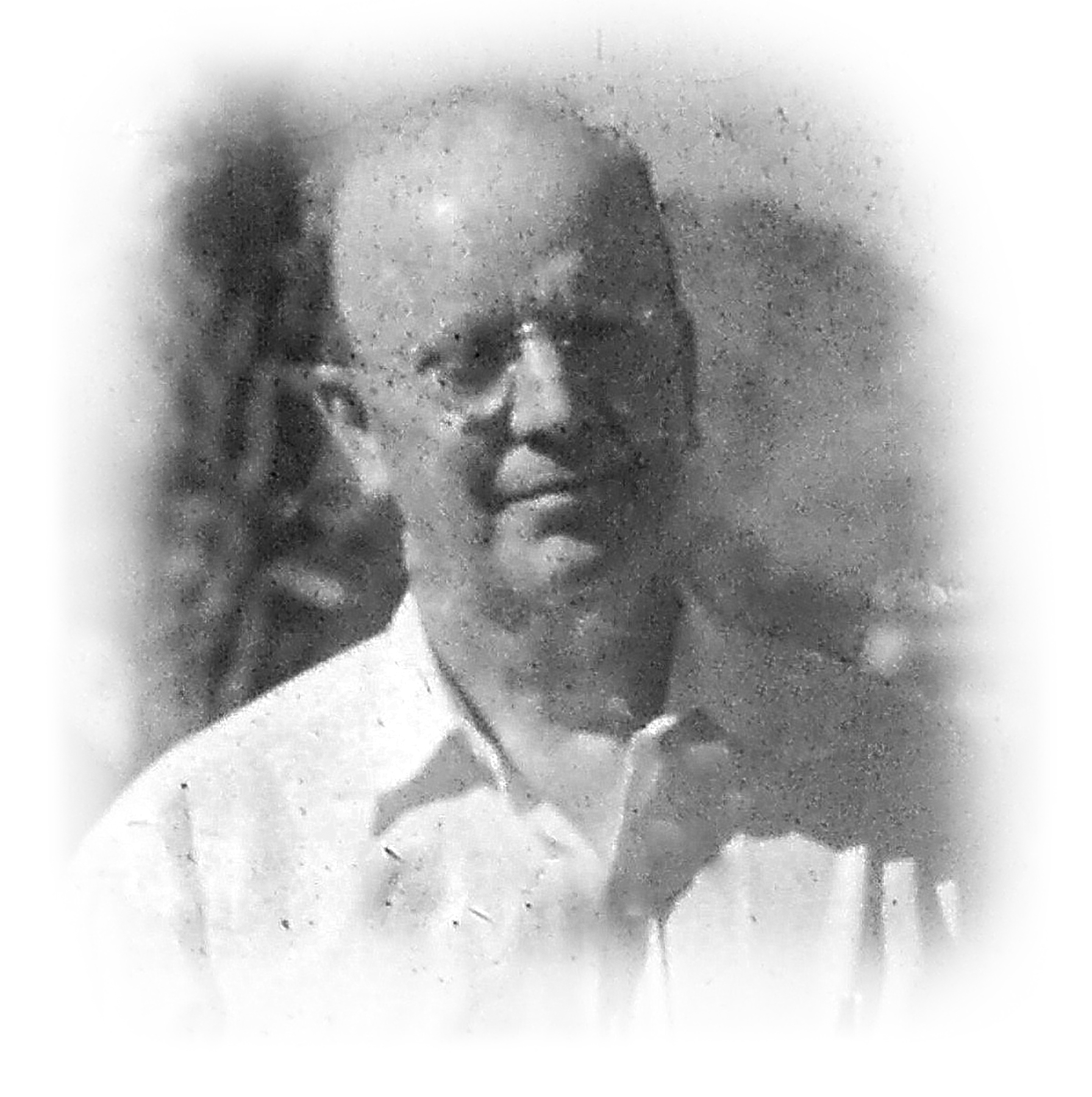 “I did this for quite a long time, but Grandpa did reach a point where walking was not something he could do. One day when I was at my aunt’s house, she said, ‘Your grandpa needs your help cleaning up in his bathroom.’ I was not prepared for that. However, I did it. It was OK. I helped him get a bath, but what I remember most is the expression in his eyes. It wasn’t embarrassment as much as it was ‘my grandson will never see me the same.’ That look in his eyes has kind of haunted me. Through the rest of my life, I’ve been involved in caregiving in some aspect in literally every position; every life incident that I’ve ever been in. There has always been a component of caregiving, either for an older individual or an individual with physical or mental disabilities.”
The Caregiver Foundation
Although he didn’t equate what he was doing with “caregiving” at the time, the jigsaw puzzle pieces of Gary’s many life experiences eventually assembled themselves into a clear vision of how he could use his professional skills to support family caregivers and their care recipients.
He established The Caregiver Foundation (TCF) in 2008, on a mission to provide practical and emotional support to seniors, disabled adults, and their caregivers. The services that TCF provides “preserve dignity, enable independence, and promote acceptance in all facets of life” and are designed to help caregivers, adults planning for or seeking caregiving, and the families of care recipients.
The foundation has clients on O‘ahu, Kaua‘i, Maui, Moloka‘i and the Big Island.
“We do not give legal advice. We do not give financial advice,” Gary explains. “Although we have the capacities in both of those areas, that’s not what we do. We partner with professionals in the community. We’re able to bridge between the individual and their attorney or their CPA to make sure that the client is really understanding what they’re doing.” TCF also partners with other caregiving organizations.
‘Let’s Help It Roll’
Gary was part of the group that established the Hawai‘i Family Caregivers Coalition (HFCC), which started when Hawai‘i participated in a project designed to create coalitions at the state and local level. Funding for the 2004 project was provided by the US Administration on Aging and it was conducted by the AARP Foundation. The coalition was created following a two-day training period, in which 27 organizations participated. Then followed a couple of years when, Gary says, the coalition was “casting about for exactly what do we do and how do we do it. Participating in the creation of the HFCC broadened my understanding of what other organizations were already doing.”
The big takeaway for Gary was that “we’re all trying to accomplish the same thing.” When he later founded TCF, Gary saw the best way to help clients was to partner with existing organizations. “If we find an organization that has the capacity to do something for our client, we’re going to try and tie into that. It saves the client money and it helps another organization fulfill its purpose. We don’t want to reinvent the wheel. If it’s rolling, let’s help it roll.” You don’t have to be a fee-for-service client to access the foundation’s educational resources, which also make full use of those partnerships.
On the third Tuesday evening of every month, TCF hosts free online webinars as a service to the community. The June webinar featured Catholic Charities Hawaii, which is celebrating its 75th anniversary this year. The “Learn More” webpage on TCF’s website provides links to information about topics such as aging, caregiving and how to finance care costs.
“Right now, we have 71 different workshops available to the community. Those are never charged for. We’re working on turning them into a Virtual College of Caregiving, but they’re also standalones on a wide, wide range of topics. We’re happy to send that list to anybody who wants to look at it.”
Meeting Practical Needs
For its fee-paying clients, TCF focuses on two major areas. “When we started the first caregiver support group, I noticed right away that the questions people had were more into my business background than into my caregiving background. The two areas they were not prepared for were the legal aspects and the other was their emotional health in caregiving. The practical areas are so essential and so neglected that caregivers who have waited too long end up having to go to court to address them, to get a legal rendering by a judge, because the individual receiving care is now incapacitated and cannot sign a power of attorney [POA], cannot sign anything, legally.”
Client services include, for example, daily money management, guardianship, trusteeship and power of attorney. Gary acts as the agent for medical POAs, sometimes having to make very difficult decisions regarding end-of-life issues.
He explains that “You have to have been able to communicate so you know what they would want. If that wasn’t possible, then you have to make decisions based on the best information you can find to determine what they would have decided. If nobody knows, then you’re doing what’s called ‘substituted judgment’ and you’re doing things in that person’s best interest.”
A Better Perspective
Gary addresses caregivers’ emotional health by suggesting they adopt a change in perspective. “When we’re caregivers for seniors, we’re in the process of saying goodbye to that person. They’re not going to get better. You can’t cure aging. If we understand that, the work is still going to be same but it’s a way of saying goodbye. I have seen that perspective change make a huge difference in the stress level of family caregivers. It makes it emotionally much easier.”
He is also adamant that family caregivers shouldn’t approach their role as if they’ve become their parent’s parent. “No you have not! You’ve become their caregiver, yes, you may have become their bookkeeper, you may have become their cook, their housecleaner and everything else, but never their parent. Even if they cannot understand you, they don’t know you and everything is absolutely nuts — you are still the child and they are the parent. Somewhere back in that damaged brain there’s a realization of what’s happening. If you make it where a person feels they have lost their position in your life, that’s a pretty painful path for them.” That is the pain he saw in his grandfather’s eyes all those years ago.
 THE ROCKY ROAD OF CAREGIVING
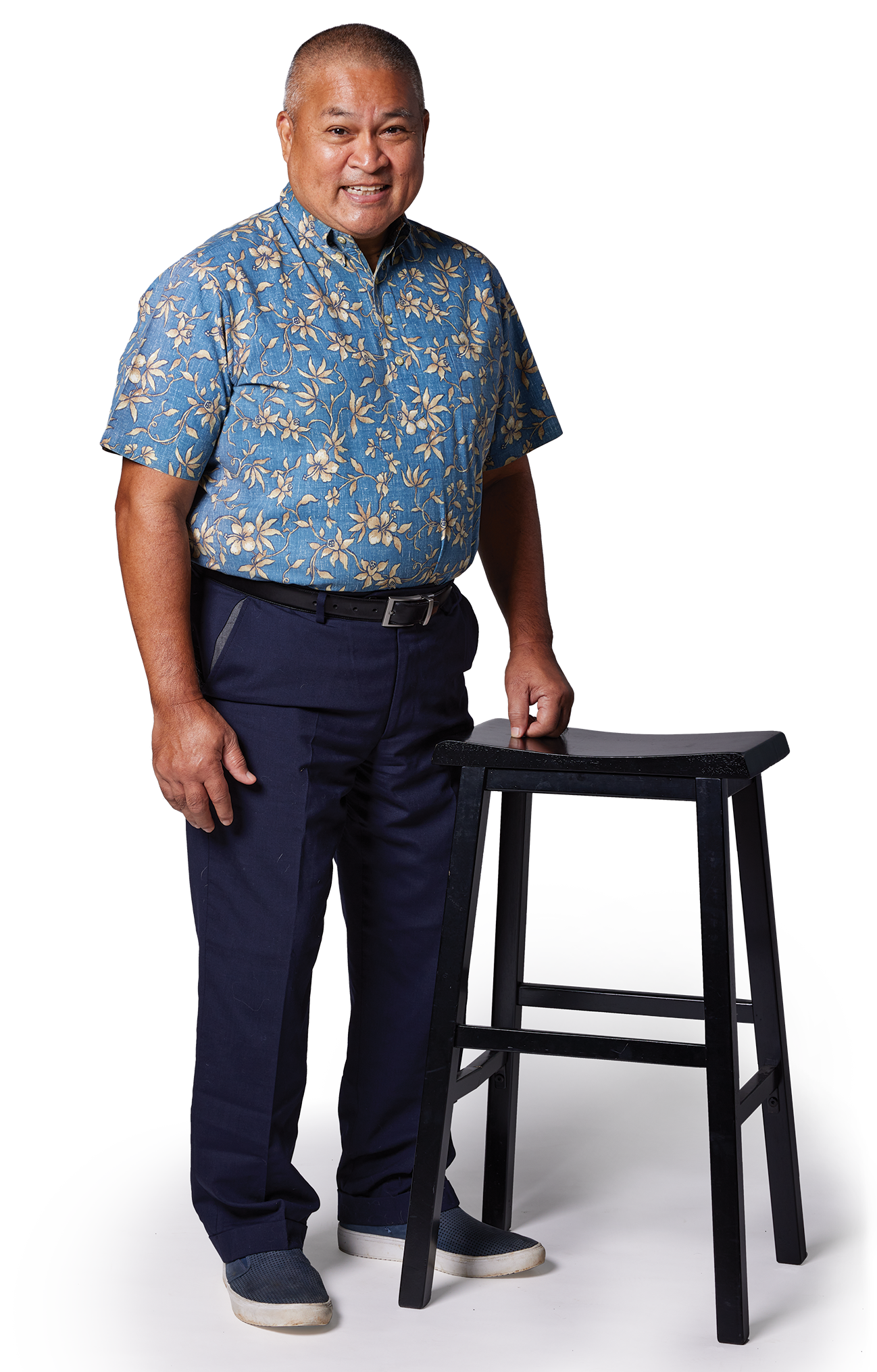
Gary Simon became closely acquainted with how courageous caregivers are when he was the executive director of St. Francis Hospice. He speaks of seeing “the sacrifices they made to give the best to their loved ones, to give their care recipients a last gift. And I’ve also seen the ugly side, where caregivers just didn’t have the resources to support their care recipient. They’ve said, ‘OK, I’ve got to choose between family and food, and being a caregiver.’ I saw that struggle, where there are multiple demands upon a caregiver.” A combination of his professional and personal experiences led to a lifetime of participating at a board level in Hawai‘i’s network of caregiving support agencies advocating for better resources for caregivers.
 The Long, Rough Patch
Gary and his wife, Akemi, were married in 1993 and built a house on Akemi’s mother’s property, ready to start married life and raise a family. Within their first year there, however, they began to see that all was not right with beloved Okaasan.
“She was a terrific cook — ‘ono, ‘ono food. But her dishes began to taste odd, like cardboard and paper.” Repeating questions, erratic sleeping and eating, and forgetfulness surfaced as other telltale signs of the onset of dementia.
“There were many things and they were beginning to become more frequent. The big one was constantly forgetting her purse somewhere. Once okay, twice okay, the third time, enough! It precipitated my wife being forced into retirement. I use that word ‘forced’ because if she hadn’t, the situation would have gone south really fast. My mother-in-law had become a mentally vulnerable adult.”
Step by step, the young couple transitioned into her house in order to provide round-the-clock watchfulness and care.
Speaking of his personal experiences at a caregivers symposium put on by the Alzheimer’s Association in June, Gary shared that “The mileage can be rough. Our mileage was rough, and it was a long road — 26 years. But the journey was worth it for what it did for me — to see how I want to be treated; therefore, how I should treat others. Wisdom, patience, tolerance — don’t judge. You don’t know what people are carrying. Do you go to Safeway and notice people just don’t look happy? Maybe they’re caregivers, too. They may be going through that long, rough patch.”
Shikata Ga Nai
Gary also shared how the deeply cultural Japanese phrase “shikata ga nai” (“it can’t be helped” or “nothing you can do about it”) helped him through the rough patches.
“For many years, I used to get upset, perturbed or resentful about the way life was turning out for all of us, especially my mother-in-law.” Some of her repetitive questions, such as, “When are you leaving?” would take on a life of their own. “I was thinking, ‘Mom, you’re ungrateful. I’m here helping you!’” It took him a lot of time to learn that he was making a problem out of something that was just a result of her illness. “That’s not the her that she was.” Shikata ga nai. Gary sees the rough patches as “part of making us better humans. The journey is rough, the mileage is rough, but in the end, it makes us all better.”
“Being a caregiver for my mother-in-law was one of the ways I could honor my wife and both her parents. Her father had passed away before we married. This is kind of flippant, but they did right by me. They gave me Akemi and I wanted to do all I could by giving her mother good love.”
Gary and Akemi’s beloved Okaasan passed away peacefully in the home they all shared in 2019.
Advocating for Kūpuna
Accepting the inevitable effects of a loved one’s illness, however, did not mean that Gary was willing to accept that difficulties arising from public policy — or a lack of it — could not be remedied. Along with the advocacy he was able to incorporate into his 30-year career with St. Francis Healthcare System, Gary contributed his time and skills to the advocacy efforts of many task forces and nonprofit groups. He is the past president of the Hawai‘i Family Caregiver Coalition, the
current AARP Hawai‘i volunteer state president, and was a member of the Statewide Task Force on Alzheimer’s Disease and Related Dementias. His term as member and chair of the State of Hawai‘i Policy Advisory Board for Elder Affairs (PABEA) ended in June. Gary is also a member of the boards of The Arc in Hawaii, Kokua Council and Palolo Chinese Home.
Thanks to the efforts of several advocacy groups, undertaken at both the legislative and departmental level, in 2017, a program aimed at keeping caregivers in the workforce was signed into law. “It was meant for people like my wife — for people to maintain employment so that they don’t compromise their day-to-day income or their retirement benefits,” Gary explains.
Enabling caregivers to remain in the workforce ensures that their work skills and experience are still available to benefit the community as a whole, Gary adds.
A Coalition of Care
Each year, a joint report on aging and disability issues is published by the Hawai‘i Family Caregiver Coalition (HFCC). The report is intended as a guide for legislators, organizations and citizens, and it calls attention to priority issues. It is a joint project of the HFCC, the Policy Advisory Board for Elder Affairs, the Executive Office on Aging, the Hawai‘i Pacific Gerontological Society, the Maui County Office on Aging and St. Francis Healthcare System of Hawaii. Gary describes his various roles with most of those organizations as “having my feet in multiple pools of water.”
He also explains that it is not difficult to find enthusiastic board members for the HFCC, of which he was president for seven years until 2021. “We’re fortunate to have both providers in there, and people who are experienced in advocacy and program development. The current president, Kathy Wyatt, operates adult day care centers. We’ve always had a seat at the table for Maui County Office on Aging. The board covers the breadth of government, private and nonprofit.”
Outreach and Education
Gary became volunteer state president for AARP Hawai‘i in 2019, just before he retired from St. Francis Healthcare. He sees outreach and education as an important part of that role. In June, he moderated four sessions about disaster preparedness for AARP members and made sure to include information specific to caregivers.
“The designated shelters in Hawai‘i are not caregiver/care-recipient friendly. In all likelihood, if there’s a disaster, you’re going to have to shelter at home with your care recipient. What if your loved one is on an oxygen concentrator? There are ways out, like getting a generator, but on the whole, education for caregivers about disaster preparedness is what we need to think about.”
The AARP website has links to the many local and national resources available for caregivers. As the website says, “Caregiving may be one of the most important and challenging roles you’ll ever take on. No matter where you are in your caregiving journey — starting to plan; taking care of a family member in your home, in a facility, or from a distance; or managing end-of-life caregiving responsibilities — having resources at your fingertips will make the process easier.”
 BORN INTO CAREGIVING
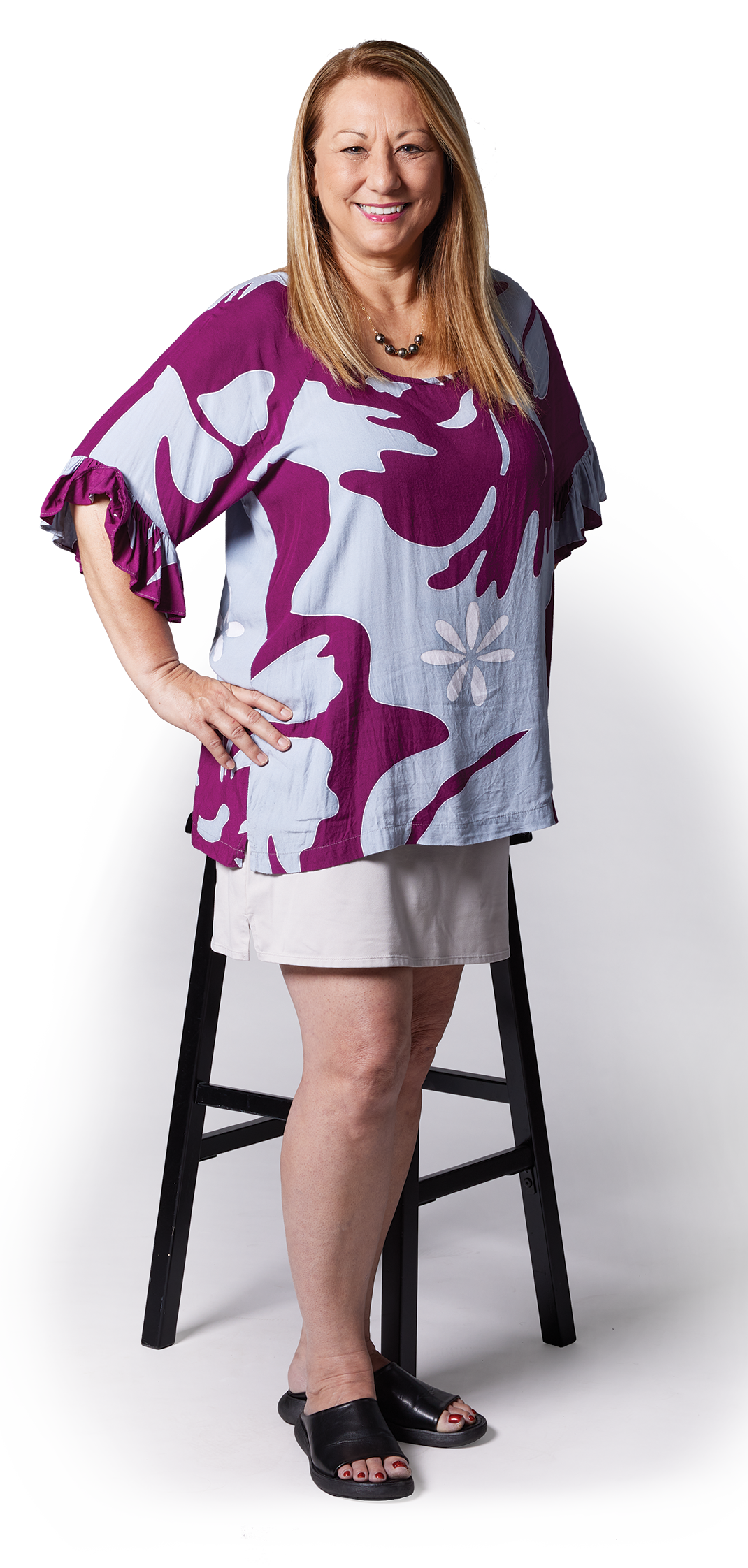
Savina (Savy) Makalena began caring for her mother as a small child.
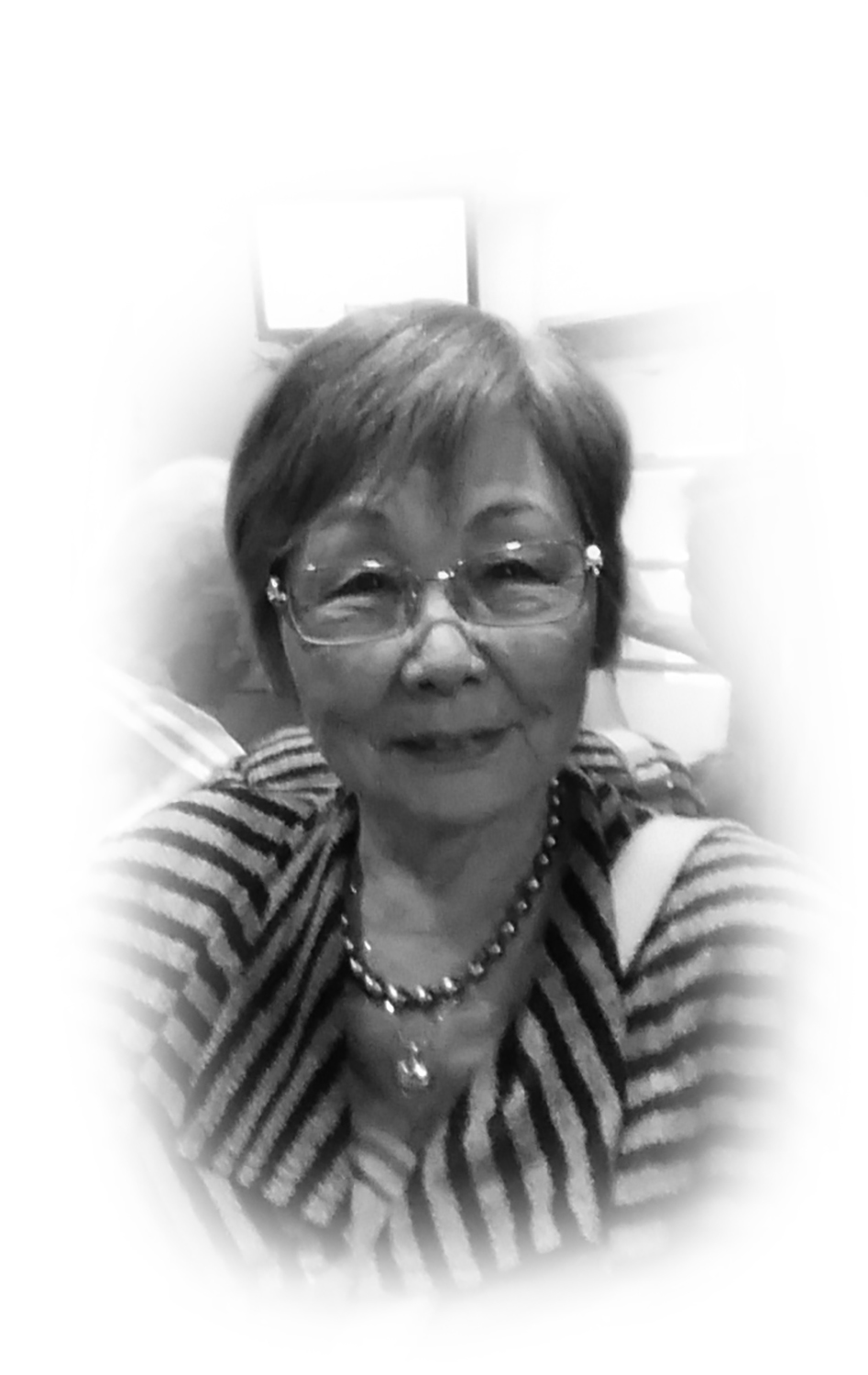
“I was the one who had to take care of her. She grew up very sheltered. Even as a young child, I was her caretaker and her protector. She was from Japan, so she didn’t speak English well, or read or write it. So I taught her what I learned in school. But she still wasn’t quite very good at it. I had to translate everything. I translated recipes. I read magazines and newspapers to her.
“Later, I became a mother and then a grandmother. I ended up going full circle, taking care of my mother again. Both my father and mother needed my care. I took care of my father for the last seven years, until he passed. Now my mother is in her final stages of dementia and in hospice care. I also help care for my mother-in-law. She’s actually very good on her own and lives with us. And now the love of my life is managing a rare blood cancer.”
 Keeper of the Lore
Born and raised in Hawai‘i, Savy cherishes how she grew up in a community.
“If I misbehaved, a slippah could come flying out of any direction from any aunty. They would correct me. I also grew up with the understanding that there was always one person who was selected to receive the honorific position to be the caregiver of the kupuna. It became an honor because the lore then was passed to you if you were the one selected. The entire family rallied behind that person to make sure they were given every support they needed in order to receive the lore and care for the kupuna.”
Although she is keenly aware that society has changed, Savy is adamant: “We still need to recognize that one person ends up becoming the one to care for that kupuna. So as a society, as a community, as a family, we have to support that person in some way or another.”
A Nonprofit is Born
Coping with the day-to-day tasks needed to care for their loved one often leaves the caregiver feeling exhausted, isolated and depressed. Having experienced all that herself, Savy decided to find a way to help caregivers overcome these problems.
“I realized how difficult it is to be a caregiver and to get resources and to get support, so I decided to start a nonprofit and brought in a few of my acquaintances — my business partner friends—who were going through the same thing. We started Gimme a Break. We decided that we were going to provide resources and support, and some sort of respite for caregivers when we could.” Their aim is to restore the joy of caregiving.
The mission of Gimme a Break, a nonprofit, is “to care for caregivers by giving an emotional and physical break as well as resources for continued well-being.” Its advisory board members range in age from their 30s to their 60s — all have experience as caregivers. Gimme a Break had barely started when the pandemic hit. But in 2021, it began a physical presence at ‘Ohana Hale Marketplace. This year, it moved to Windward Mall.
“We’re now discovering a whole new community on the Kane‘ohe side. There are a lot of caregivers who normally wouldn’t come into town, but we’re now able to reach them. We have people walk in all the time, every day. We’re there Tuesdays through Saturdays. They come in and we sit down with them. Lots of tears. A lot of hugs. But also, a lot of help and a lot of support.”
The resource center has a supply of community partners’ flyers and rack cards, and Gimme a Break holds regular mini resource fairs so that caregivers can learn directly from those partners.
Help Accessing Resources
Savy’s personal caregiving experience with the difficulty of accessing resources is one of the driving forces of Gimme a Break’s mission.
“I called so many places and no one answered me back,” she says. “No caregiver has time for that. No one does. Now I have people who will answer me back and we have resources that we can connect people to. That’s something big. We also have a community of support and we’ve seen the difference that makes to caregivers as we’ve grown. We see it in our caregivers when they come in with their shoulders down and they leave with their shoulders high again, with smiles on their faces and gratitude in their hearts.”
Face-to-face interaction was impossible when the pandemic hit, so “in that time, we were working online on social media, mostly Facebook. We’re now on every platform for every age group: Facebook, Instagram, LinkedIn and Tik-Tok — anywhere that we can reach caregivers.”
During National Family Caregivers Month in November, Gimme a Break will hold a Caregiver of the Year contest on Facebook to create awareness of of caregivers’ stories. Then, on Dec. 3 at the Elks Lodge in Waikīkī, it will hold its Caregiver of the Year Awards Gala to recognize all caregivers and the Caregiver of the Year.
Advocacy and Education
Savy is the vice president of the Hawai‘i Family Caregiver Coalition, seeing it as a way to advocate for caregivers and get very involved with what’s going on in the field of caregiving. Although advocacy is not the focus of Gimme a Break, she explains, “I personally focus on advocacy because it’s necessary and it goes hand-in-hand with our passion for what we do — passion for the mission of supporting caregivers.” Part of that mission is education, especially in terms of helping people anticipate what they will encounter on their caregiving journey.
Gimme a Break offers a series of support sessions that cover the steps that you need to take and the things you need to have in order.
“We have resources that help them discuss that. We do it with no agenda. It’s a user-friendly environment for a caregiver. We’re here to provide them with knowledge to help them bring back the joy of caregiving. We’ll do that through resources. We’ll do that through support. We’ll do that through community.”
All three of our featured caregivers use their particular skill set and personal experience regarding what was difficult in their caregiving journey to ease the way for others.
Gary Powell’s financial and legal skills enable him to run a nonprofit foundation that shoulders the weight of those burdens for both caregivers and care recipients. Gary Simon’s administrative background is a good fit with organizations like the AARP and the Hawai‘i Family Caregiver Coalition that focus on education and advocacy. Savy Makalena’s experience in social media marketing enables her to create a vibrant community of caregivers, and both an online and physical space in which to learn, share and care for each other.
All three are keenly aware that they cannot do this alone. By providing referrals to other organizations that specialize in particular fields of caregiving and links to online resources, they guide caregivers on their journey.
THE CAREGIVER FOUNDATION
thecaregiverfoundation.org
AARP
states.aarp.org/hawaii/caregiver-resources
GIMME A BREAK
gab808.org
Facebook: www.facebook.com/gab808
Instagram: @gimmeabreak808hi
ALZHEIMER’S ASSOCIATION
alz.org/help-support/caregiving
HAWAII FAMILY CAREGIVER COALITION
hfccoalition.org/index.php/education-resources
Leave a Reply