Tag: Exercise

  • The Cure for Retirement Disease

    Many of us have heard the paradox “all alone in a crowded room.” For many of our island seniors, it is a reality. Social isolation and loneliness are major enemies of the senior population. They are the common challenges of life after work.

    Imagine the situation: You have worked for over 50 years, many as supervisors in charge of others. And after all that time, you look forward to retiring. You see yourself as being free to do as you wish, when you wish and with whom you wish. But on that first day of retirement, you no longer have a place where you feel you belong. There are no “good morning” greetings—no afternoon lunch gossip.
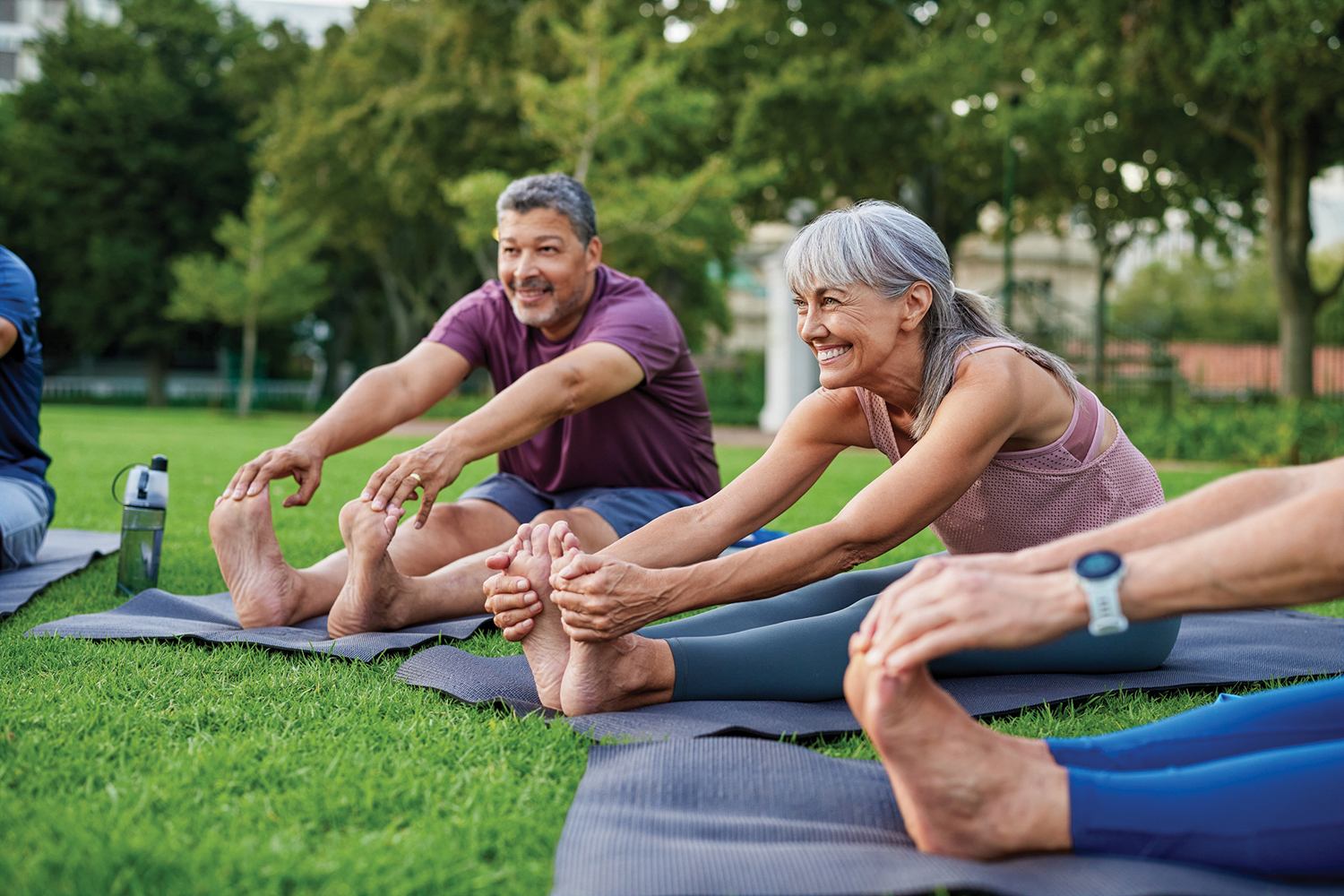
    This is a reality for many retirees. Of course, many are prepared. They had their travel group set up. They were all set to garden, babysit or meet their friends for kanikapila at a local McDonald’s. But not all are prepared. Many seniors retire without having long-term plans in place. After the first month, they stop looking forward. They wake up, watch TV, eat alone and fall asleep. This becomes their new pattern. So, what do you do to prevent this? Start again.

    Having worked for Parks and Recreation Senior Section for over 30 years, I met the people who gave in to “the disease of being retired.” Others I met formed new beginnings. They joined clubs, set up a schedule of activities and rediscovered life. They found new reasons to wake up every day. Whether it was a senior club or just a group they met at the mall, life started to form anew.

    Remember back when you started your career? Do it again and this time you are your own boss. Rekindle a former passion, challenge yourself with a new project, order yourself to join a club or start a club of your own. Create activities you have always wanted to do—travel, garden or work out at your local recreation center.

    Look at opportunities to help others. I just started retirement and began a new career doing just that! My hobbies now dictate my deadlines. I feel renewed; I am just waiting for people to start telling me I look younger!


    CITY & COUNTY OF HONOLULU DEPT. OF PARKS & RECREATION, RECREATION SUPPORT SERVICES
    1000 Uluohia St., Kapolei HI, 96707
    808-768-3045 | ssantiago@honolulu.gov
    honolulu.gov/dpr
    Many of us have heard the paradox “all alone in a crowded room.” For many of our island seniors, it is a reality. Social isolation and loneliness are major enemies of the senior population. They are the common challenges of life after work. Imagine the situation: You have worked for over 50 years, many as…

  • Senior Pickleball is Exploding!

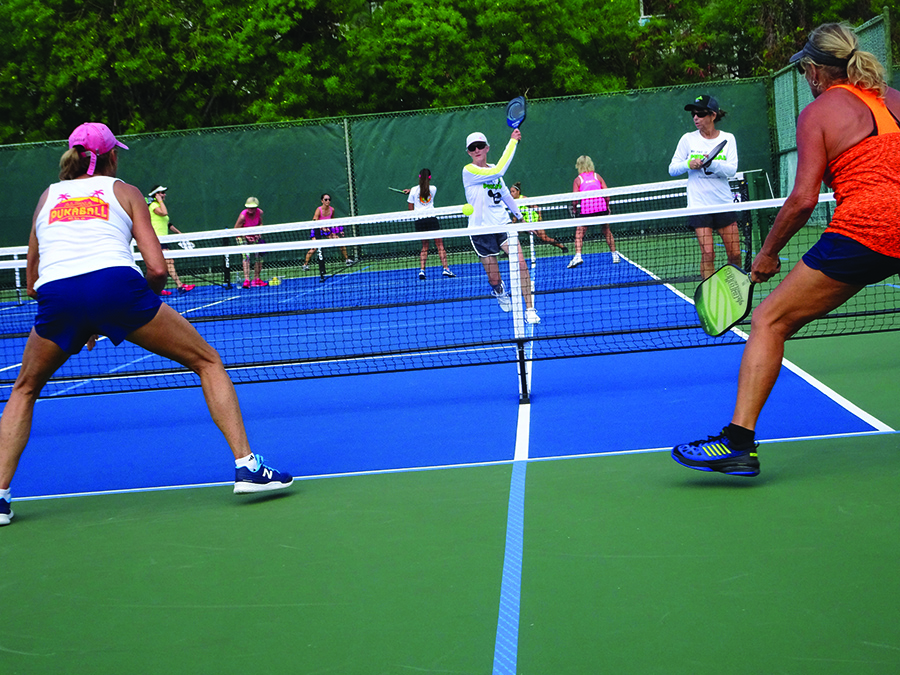
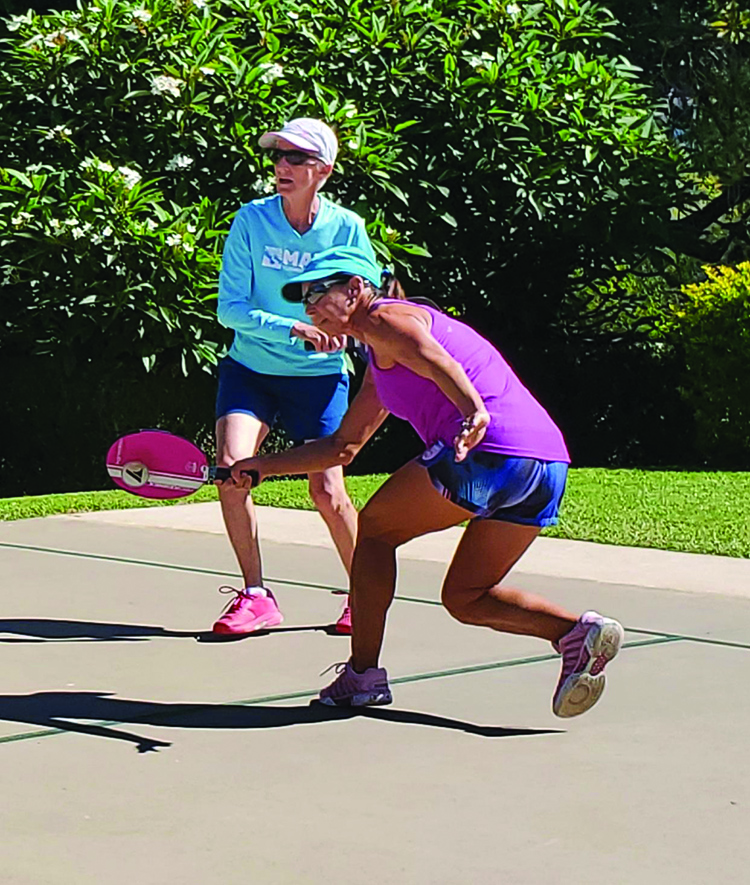
    Megan Crouse and Judy Teltscher LeLevier. PC: Laurie Loney
    Megan Crouse and Judy Teltscher LeLevier. PC: Laurie Loney

    Beginning players love the game immediately, because it is easy to learn, once you master the somewhat unconventional scorekeeping method. It’s fun at any skill level, providing exercise and social interaction, even during the pandemic.

    “I give lessons to local and visiting players; the majority are seniors,” says Laurie Loney, one of Maui’s four USA Pickleball ambassadors. “They have fun immediately! Most become hooked instantly and recruit their friends to join in.”

    Ambassadors like Laurie are volunteer representatives and unofficial spokespersons for USA Pickleball who promote goodwill and help grow the sport in their area.

    Laurie, a senior player, instructor and state gold medalist, estimates that about 80 percent of Maui’s 500-plus players are over 50, adding that the under-50 age group is also growing quickly.

    “The latest numbers show that Hawai‘i’s over- 50 players comprise about 70 percent of total players in the state,” says Jack Hodges of Kaua‘i, the state’s USA Pickleball ambassador. “We also have a very large group of under-50 players and a large group of players over age 70 on Kaua‘i, as well.”

    Megan teamed up with Laurie Loney for the 2019 Maui Pukaball Tournament. PC: Irene Bowering
    Megan teamed up with Laurie Loney for the 2019 Maui Pukaball Tournament. PC: Irene Bowering

    Laurie, who has had her own court for 18 years, says there were several private courts in South Maui back in the ’70s and ’80s. Since popularity of the game has increased at such a fast rate, players have commandeered existing tennis and basketball courts, awaiting designated, county -built pickleball courts. Private tennis clubs, such as Kapalua, Royal Lahaina, Wailea and the Maui Country Club, are accommodating pickleball play. There are also dedicated county courts at Waipuilani and Lahaina Civic. “But the current public facilities are becoming overwhelmed,” says Laurie. “The need for more courts is great.”

    Especially after COVID-19 restrictions were put in place, many pickleball fans are also playing in their driveways, neighborhood cul-de-sacs or condo parking lots. Some are even building their own 20-by-44-foot cement or asphalt courts on their private property.

    Looking for a game? Visit www.places2play.org or download the USA Pickleball Places2Play app.


    USA PICKLEBALL
    Hawai‘i Ambassador Jack Hodges
    808-634-4049 | jhodges26@mac.com
    Please adhere to your local COVID-19 safety regulations when playing or waiting to join a pickleball game.

    Pickleball is growing fast among fun-loving athletes and non-athletes alike. The paddle-and-ball game has become especially attractive to baby boomers and former tennis players. There is less acreage to cover for aging legs and the ball moves slower than in a typical tennis match.

  • A Woman on a Journey of Well-Being

    How did I get to be 65 and retired?  And what happens now? Those were two questions I was asking myself this past April as my birthday and retirement occurred without much fanfare due to the COVID-19 pandemic. But, I had been planning this for over five years. So, let’s go back a few years…

    Like most people, my life journey has had its ups and downs, but in my 30s and 40s, I started to take notice of how stress was impacting my health, and began my quest to find the resources and tools that could support my wellness. There were several signposts along the way that signaled I needed to stop and take a wellness inventory. And, there were two major life events that changed the course for me. They both involved the health of my youngest child, who at the age of 5 was hit by a car and was in a body cast for three months. When he was 19, he was diagnosed with a brain tumor. Jacob Michael passed away three years later.

    In both cases, while I took on an intense caregiver role, I was also made keenly aware of how I needed to find ways for self-care. I went on to work in a caregiving capacity through my role with the American Cancer Society.

    But I continued to see signs and impacts of stress in my life and those around me, so I extended my search for resources and tools that I could use and share with others. I found simple tools that I could easily deploy on a daily basis.

    A short, guided meditation. Breathing is an essential part of any meditation — slow and controlled at a natural pace.

    “Begin by sitting in a comfortable position with nothing in your lap. It can be in a chair or on a cushion on the floor or against a wall for support. Just don’t lie down. Close your eyes. Begin to breathe slowly and rhythmically. Relax your head and shoulders. Feel the tension drain from your face. Breathe. Relax your chest and arms. Feel the tension melt away. Breathe. Relax your belly, hips and buttocks. Let go completely. Breathe. Relax your legs and feet, letting all the tension just drip away. Breathe.

    Use of essential oils. The sense of smell can be very powerful. It can invigorate you or slow you down. It has the potential to place you in an emotional state — preferably, calm and happy.

    I like to do exercises that fit my abilities. I know I’m personally not aiming for any triathlon. Enjoyment aligned with abilities is key.

    Eating healthier — not dieting, was something I sought to  change entirely.

    When I turned 60, I decided to focus my energy toward sharing these ideas with various caregivers and others who may need my help — work I started before my son got sick. I focused on wellness and helping others through life’s transitions by connecting them to resources for health, wellness and self-care.

    The journey continues…


    ALAKAI‘I ASSOCIATES LLC, Kaneohe
    808-554-2081 | lani_almanza@alakaiassociates.com
    www.alakaiassociates.com

    How did I get to be 65 and retired?  And what happens now? Those were two questions I was asking myself this past April as my birthday and retirement occurred without much fanfare due to the COVID-19 pandemic. But, I had been planning this for over five years. So, let’s go back a few years…

  • Aging Gracefully With Your Body

    As we get older, more than a few seniors have seen their body change into a shape they had hoped it never would. I was hoping mine would actually shrink, but of course that didn’t happen. After working a high stress job, gaining 25 pounds and losing lots of sleep, I decided to get off that roller coaster. I’m now semi-retired.

    Fortunately for me, I am rarely sick and do not take any medication. So, I’m healthy despite weighing more than I should. I play pickleball every day, ride my bike to the beach and walk to get my daily 10,000 steps whenever possible. Did any of that weight come off? Down a few one day, up a few the next — an everyday cycle of hopefulness and disappointment. I then realized that I needed to change not only what I was eating but also my perspective about my body!

    If you are experiencing similar frustrations as I had, my advice to you is first to continue enjoying your favorite foods and beverages, but start out by making small changes. According to the USDA Choose My Plate website (www.choosemyplate.gov/browse-by-audience/view-all-audiences/adults), the following are things you can do to help retain (or get back to) the healthy weight you want and the shape you once had.

    • Add flavor to foods with spices and herbs instead of salt and look for low-sodium packaged foods.
    • Add sliced fruits and vegetable (pre-sliced, if slicing/chopping is a challenge) to your meals and snacks.
    • Ask your doctor for other options if your medications affect your appetite.
    • Drink three cups of fat-free or low-fat milk throughout the day. Or try small amounts of yogurt, buttermilk, hard cheese or lactose-free foods. Drink water instead of sugary drinks.
    • Consume foods fortified with vitamin B12, such as fortified cereals.

    According to the website, the second best thing you can do for yourself is to be active in whatever way you physically can. Just starting with baby steps will help your bones, your flexibility — and your mind. But please consult your doctor before beginning any kind of physical activity you are not used to… except the baby steps. Simply taking a walk outside while enjoying good weather or just around the house is a start.

    And, lastly, the world we grew up in (and still, somewhat, the same today) was all about your body image. You were either too thin, too fat, too big-boned or too muscular, etc. It’s been my experience that if you’ve had a good life and have friends and family who love you, it really doesn’t matter what shape you have now. Embrace your body; it got you where you are today. Make those small adjustments (food and baby steps) to extend the joyfulness in your life, because that is what is most important, not your shape!


    Here are some other pages at ChooseMyPlate.gov:
    https://www.choosemyplate.gov/eathealthy/budget
    https://www.choosemyplate.gov/coronavirus

    As we get older, more than a few seniors have seen their body change into a shape they had hoped it never would. I was hoping mine would actually shrink, but of course that didn’t happen. After working a high stress job, gaining 25 pounds and losing lots of sleep, I decided to get off…

  • Healthy Heart, Happy Brain

    According to the Journal of the American College of Cardiology, chronic heart disease factors like high cholesterol, high blood pressure, diabetes and obesity can quicken the pace of cognitive decline.

    High blood pressure and diabetes can accelerate shrinkage of the brain, especially affecting the brain’s memory center, the hippocampus. When combined with other cardio risk factors, the rate at which cognitive decline advances, leading to dementia and Alzheimer’s.

    Improve your brain’s processing, memory and overall health by making heart-healthy lifestyle changes. Think of your heart and brain as good buddies who are on this journey of life with you. Each of you supports one another, and you, as the leader, will be the one making decisions that are based on everyone’s best interests.

    Daily exercise and meditation have the biggest impacts on improving heart and brain conditions, thinking and verbal skills in older adults. Exercise helps the gut create serotonin, which helps manage stress, and melatonin, which helps to improve sleep. Meditation helps lower blood pressure and relax tension in the brain and body.

    Make healthy decisions to lower your risk for heart disease and improve your cognitive functions daily. Your good buddies — your heart and brain — are counting on you.


    KAIMUKI BODY & BRAIN
    3569 Harding Ave., #B, Honolulu, HI 96816
    808-738-5522 | www.bodynbrain.com/kaimuki

    According to the Journal of the American College of Cardiology, chronic heart disease factors like high cholesterol, high blood pressure, diabetes and obesity can quicken the pace of cognitive decline. High blood pressure and diabetes can accelerate shrinkage of the brain, especially affecting the brain’s memory center, the hippocampus. When combined with other cardio risk…

  • Body-Proofing II – Motion is Lotion

    Last month, we emphasized the importance of exercise to combat the natural aging process. Specifically, exercises like Pilates, Tai Chi and Yoga provide coordinated full body workouts with an emphasis on core muscle strengthening, balance and fluidness of movements. But what if you have pain in your knees or back making even simple movements like walking difficult? Thank your lucky stars because here in Hawai‘i, you are surrounded by the perfect modality—water.

    Physical therapists have been utilizing the unique properties of water to rehabilitate patients for decades. We call it Aquatic Therapy. By submerging the body partially in water, it creates weightlessness and takes the pressure off our knees, hips and spine. This is especially useful for patients with arthritis, healing fractured bones, or who are overweight. By decreasing the amount of joint stress it is easier and less painful to perform exercises.

    Once submerged, the viscosity of water provides resistance so you can build strength without using additional weights. Slow controlled movements like leg lifts and arm circles under water can be very effective for strengthening your legs, arms and back. Even simply walking in chest-height water can improve leg and back strength, balance and cardiovascular fitness.

    Another important feature of aquatic therapy is hydrostatic pressure, which is the evenly distributed pressure that is exerted on the body when it is submerged under water. This pressure provides joint positional awareness. As a result, your proprioception, the sense of where your body is in space, is improved. This is important as proprioception naturally declines with age, beginning at around 40, and is critical factor for balance reactions. Hydrostatic pressure also allows for pain free movements by decreasing swelling caused by injury or arthritic disorders.

    For rehabilitation purposes, Aquatic Therapy is often done in a heated pool, which helps to increase circulation and allow muscles to relax and stretch safely. However, if your goal is fitness and not rehabilitation from injury, any pool will do.

    Many facilities have “water aerobics” for a more structured program. Hawai‘i’s beaches are superb for aquatic fitness too. The calm waters at Magic Island are ideal. Simply walking in waist to chest-high water is an excellent workout and the gentle currents will help improve balance. As always, use good safety precautions at the beach.

    Physical therapists like to say, “Motion is lotion,” the more we move, the easier it will be to keep moving!


    Teresa Wong is a physical therapist, certified Pilates instructor and manager of the Rehab Hospital Of the Pacific Nu‘uanu Clinic. The clinic provides state-of-the-art rehabilitation programs for individuals recovering from injuries and illnesses. Visit online at www.rehabatnuuanu.org; email, twong@rehabhospital.org.

    Last month, we emphasized the importance of exercise to combat the natural aging process. Specifically, exercises like Pilates, Tai Chi and Yoga provide coordinated full body workouts with an emphasis on core muscle strengthening, balance and fluidness of movements. But what if you have pain in your knees or back making even simple movements like…

  • Body-Proofing Combats Aging

    Growing older is inevitable but the rapid physical deterioration we call “aging” does not have to be.  In fact, the aging process can be slowed down or in some cases reversed with a consistent exercise program. Numerous studies show adults who make regular exercise a part of their lifestyle are biologically younger by almost 10 years than those who do not exercise. In fact, lack of exercise is responsible for about half of the physical decline associated with aging!

    Each year, one in three adults age 65 and older experience a fall, which can lead to injuries such as hip fractures and head traumas. Many organizations stress “home proofing” to prevent the likelihood of falls by removing throw rugs, installing better lighting, etc., and while those are smart things to do, many falls actually occur outside the home. A better method is what we at REHAB Hospital call “Body-Proofing.”

    Body-Proofing utilizes exercises designed specifically to address issues of balance, muscle weakness and lack of “fluid” movements. Can you get up from a low chair without using your hands? Can you go up or down stairs without holding on to the handrail? Can you put a pair of pants on in a standing position? If you answered ‘no’ to any of the above, read on!

    The key to Body-Proofing is “core” strength. Your “core” often refers to the center of gravity, deep in the abdominal cavity. The actual muscles of the “core” are the deep muscles that make up the internal abdominal wall as well as your pelvic floor and spinal musculature. This group of muscles stabilizes the body during movements. Balance is all about maintaining stability while we are moving. The other key muscles are what I refer to as the “anti-gravity muscles,” those that hold us up against gravity—the hip, thigh and calf muscles that must remain not only strong but also limber in order to react quickly.

    Pilates is almost a perfect form of Body-Proofing exercise and that’s why we utilize it for rehabilitation programs. It focuses on core strength, with emphasis on stabilizing the body while you move against resistance. If done properly, it is an exercise program that conditions the body back to its optimal state of strength, flexibility and stability. Other methods include martial arts with its emphasis on stability, flexibility and strength. Or even something as gentle as Tai Chi can be powerful in emphasizing balance, fluid movements and strength through its controlled upright positions.

    One best-selling author and medical expert often uses the concept of “real age” as how well a person is maintaining their physical health based on lifestyle choices. Rapid physical deterioration as we grow older is not inevitable. You can choose to “grow younger” with the right exercise program, at any age.


    Teresa Wong is a physical therapist, certified Pilates instructor and manager of the Rehab Hospital Of the Pacific Nu‘uanu Clinic. The clinic provides state-of-the-art rehabilitation programs for individuals recovering from injuries and illnesses. Visit online at www.rehabatnuuanu.org; email, twong@rehabhospital.org

    Growing older is inevitable but the rapid physical deterioration we call “aging” does not have to be.  In fact, the aging process can be slowed down or in some cases reversed with a consistent exercise program. Numerous studies show adults who make regular exercise a part of their lifestyle are biologically younger by almost 10…

  • Come Zumba with Us!

    The greatest party has arrived here in Hawai‘i. The Zumba® Fitness craze is exploding in popularity across the Islands. The Zumba program fuses hypnotic Latin rhythms with easy-to-follow moves for all ages, shapes and sizes. This one-of-a-kind fitness program aims to get you hooked and make you want to workout.

    Zumba fanatics achieve long-term benefits from this one-hour, calorie-burning, body-energizing workout and conditioning.

    The routines feature interval training sessions, with movements designed to engage your body and mind. Fast and slow rhythms are combined with resistance training to burn fat and tone and sculpt your body. Add some Latin flavor and international zest into the mix and you’ve got a Zumba class!

    In only a few short years, Zumba has spread like wildfire, positioning itself as the single most influential movement in the fitness industry.

    Debbie Azama-Park and Genie Brown are just two of the approximately 300 instructors in Hawai‘i. You can find Zumba classes just about anywhere, including most fitness clubs.

    As a long time fitness member, Debbie continues to exercise in her adult life. She has practiced yoga for 18 years, yet she wanted to add a cardio portion to her physical regimen. Then Zumba came into her life. “The music is key to working out with Zumba,” she says. “You cannot sit still when the music is going. The Cumbia music is my favorite of the Latin rhythms.”

    Debbie knows that trying something new is always a little challenging, but she always says to never give up. She encourages, “If you love music, it will get easier and the music will keep you going.”

    Genie Brown from Mililani has been teaching since early 2009. As a long-time fitness instructor, she confesses that she did not care for Zumba at first. She was not a dancer and sometimes she felt a little awkward. “Shaking around at an older age was not easy at first,” she says, “but I wanted to teach Zumba because I felt that teaching a fun class would be more inspiring. Participants just let loose and put their own attitude into their moves.”

    Genie’s students benefit from class in a variety ways. For example, student Stephanie of Mililani lost 6 pounds in only a couple of months, and Jan found out that her blood pressure went down. Phil of Wahiawaˉ lost eight pounds, but the bigger benefit is that he can now fit into his pants again.

    According to Genie, everyone should walk a minimum of 10,000 steps per day. In a normal 45-minute Zumba class, students take more than 5,000 steps. This is half of the daily recommended steps in just 45 minutes. Zumba also helps with flexibility, strength and back pain … not to mention it almost guarantees a good night’s sleep!

    So if you want to enjoy a longer, healthier life, call Debbie Azama-Park at 625-1040 or Genie Brown at 531-3558 for a class. Active aging is here to stay and so are the Zumba parties.

    The greatest party has arrived here in Hawai‘i. The Zumba® Fitness craze is exploding in popularity across the Islands. The Zumba program fuses hypnotic Latin rhythms with easy-to-follow moves for all ages, shapes and sizes. This one-of-a-kind fitness program aims to get you hooked and make you want to workout.

  • Living Beyond…

    Aging is inevitable; it is a process of growing old. However, it should not influence an individual’s life expectancy. We are able to live long and healthy lives if we live a healthy lifestyle by exercising, eating right, and for some, taking medications as prescribed by a health care provider.

    “Healthy aging” helps us take control of a natural part of life. There is no one way to age healthy. It is about making good habits a part of our everyday living. Simple things like drinking more water can have a huge effect on how we age. Do you take the stairs when in a building, or do you ride the elevator? Do you walk to the mailbox, or use your vehicle? Do you limit snacking, or snack on healthier choices, such as fruits, vegetables and items made from whole grains? Making small adjustments to various bad habits benefit us immediately and in the long run.

    Being physically active can involve things like taking walks or outdoor sports. Staying active makes our joints and muscles move, reducing stiffness and further joint pain. Staying active also increases metabolism so that food is not stored as fat. Walter Breuning, the oldest known man in the world whom just celebrated his 114th birthday on September 21, 2010, said that hard work and eating right are both ways to age healthy.

    Another way to age healthy is to get a good night’s sleep. According to the National Institute on Aging, “getting enough sleep helps [us] stay healthy and alert” (Age Page). Sleep gives our body time to recharge and it also prevents us from being tired throughout the next day.

    Already have a chronic condition? You can still “put life back in your life.” Better Choices Better Health, or Chronic Disease Self Management Program (CDSMP) workshops, are being held throughout Hawai‘i. This is an evidence-based program developed through Stanford University. Its research shows that people can have an increased quality of life through self-management skill building.

    The Elderly Affairs Division of the Department of Community Services City & County of Honolulu is currently conducting Better Choices Better Health workshops island wide. These workshops are open to individuals 60 and older with any chronic condition, such asthma, diabetes, heart disease, stroke, arthritis, cancer, high blood pressure, obesity or fibromyalgia. The workshops are also available to caregivers and others who may live with a loved one who has a chronic condition. Support systems are welcomed to register. During these self-management workshops the focus is on staying active and enjoying life even with an ongoing health problem.


    For more information about Better Choices Better Health, or to sign-up for workshops, call the Senior Helpline at (808) 768-7700

    Aging is inevitable; it is a process of growing old. However, it should not influence an individual’s life expectancy. We are able to live long and healthy lives if we live a healthy lifestyle by exercising, eating right, and for some, taking medications as prescribed by a health care provider. “Healthy aging” helps us take…

  • Fit for Life

    The objective at Club 50 Fitness is simple and direct: to improve the lives of people who are 40 years of age and above with fitness training and overall good health. As many Club 50 members will tell you, exercise is medicine! Just ask Rose, who says that exercise has been the best thing for her mentally and physically. “The days I’m tired or stressed, I have learned to let it go with exercising. I feel so much better after I leave,” she says. “I have maintained my weight for four years by just exercising. Everyone here is friendly, including the staff.”

    Club 50 Fitness on King St. is just the place to get your blood moving again. Club 50’s low-impact, easy-to-follow, 30-minute workout program can help you achieve your health and fitness goals. Its Hydraulic Resistance Training equipment offers six levels of adjustability with the turn of a knob, offering more challenge as you gain strength.

    For a free tour of Club 50 Fitness give Chris a call at 593-9292. If you are a senior, check your insurance plan’s gym benefits (HMSA, Kaiser, HMAA and Medicare Advantage) to see how you can workout at Club 50 Fitness for free.

    Non-seniors can mention Generations Magazine and get 50% off of the initial membership fee. Plus, courtesy of the gym, the first month’s dues will be waived. For more information, visit www.club50fitnesshawaii.com.

    The objective at Club 50 Fitness is simple and direct: to improve the lives of people who are 40 years of age and above with fitness training and overall good health. As many Club 50 members will tell you, exercise is medicine! Just ask Rose, who says that exercise has been the best thing for…

  • Exercise: A Panacea for Heart Disease

    Exercise is the closest thing to a complete remedy — a panacea — for heart disease. The heart fuels the entire body. If the heart gets too weak, it cannot sufficiently provide nutrients to organs and the body slowly deteriorates. Unfortunately, this is quite common for people in hospice care. Thankfully, prevention is readily available.

    Note that effective exercise may be tiring and straining.* The harsh reality is that the body — especially the heart — will not get stronger if not pushed past its comfort zone. Use it or lose it is one of the most universal laws of the body. Therefore, finding at least one enjoyable aspect is key. If the pros outweigh the cons, continued performance is more likely.

    • Prevention of slowly starving the body and the variety of ailments/diseases that come with it is essential.
    • Make it enjoyable! Play with the grandkids, make it social or involve one of your passions.
    • Even the frail and elderly body is highly adaptable. It will respond to hard work and reach a point where strenuous exercise becomes the norm. It can and will become “a piece of cake” with no strain.


    PRIME PHYSICAL THERAPY
    600 Queen St., C-2, Honolulu, HI 96813
    808-286-0194 | www.primepthawaii.com
    * Please do not overdo any exercise. Exercise should be increased gradually, in moderation and not cause discomfort.

    Exercise is the closest thing to a complete remedy — a panacea — for heart disease. The heart fuels the entire body. If the heart gets too weak, it cannot sufficiently provide nutrients to organs and the body slowly deteriorates. Unfortunately, this is quite common for people in hospice care. Thankfully, prevention is readily available.

  • Walk and Run With Us!

    The Walk and Run Club, powered by Phiten Hawaii, a health and performance product retailer, is a co-sponsor of the nonprofit Hawaii Running Project, a new, free activity for seniors and their families. Walkers and joggers are encouraged to join the healthy fun that starts every Wednesday morning at 9 am. Fun, fitness and camaraderie are open to everyone!

    Gather your friends and family and join the club in front of the ‘Ohana Hale Marketplace Phiten Hawaii store at 333 Ward Ave. (the former Sports Authority location). Groups are created based on who shows up each week. There is plenty of free parking available.

    The walk and run start with a warm-up, a led workout and healthy stretching. Wear sunscreen and sunglasses, and carry your water bottle whenever you exercise. Come prepared for windy and rainy days. After the walk and run, club members have plenty of post-exercise drink and food choices in the marketplace, which opens at 10 am. There may be discounts on shop products or drawings for door prizes. The fun starts every  Wednesday morning and is even more fun with friends!

    For additional details regarding The Walk and Run Club, call Coach Kawika at 808-462-1313 or visit the Hawaii Running Project at www.hawaiirunningproject.com.


    PHITEN HAWAII / WAVES OF ALOHA LLC
    Ohana Hale Marketplace (former Sports Authority)
    333 Ward Ave., Stall 144, Honolulu, HI 96814
    Mon-Sat: 10 am–8 pm | Sun: 10 am–5 pm
    808-888-9639 | www.PhitenHawaii.com

    The Walk and Run Club, powered by Phiten Hawaii, a health and performance product retailer, is a co-sponsor of the nonprofit Hawaii Running Project, a new, free activity for seniors and their families. Walkers and joggers are encouraged to join the healthy fun that starts every Wednesday morning at 9 am. Fun, fitness and camaraderie…