“Two roads diverged in a wood and I — I took the one less traveled by, and that has made all the difference.” — Robert Frost
Maybe you’ve never thought of your life in those terms. But everyone, whether they are aware of it or not, has selected a particular pathway in life. The most popular road seems to be aligned with what the world tells us we need — a nice home, a fancy car, a good job, exciting sports events, live entertainment and travel to exotic places. We are told, at least subliminally, that focusing on and fulfilling our needs and wants will lead to a successful, happy life.
However, where does this road actually lead? {Play}
It may be beneficial to observe what has happened to others on this self-centered road. Stories abound of people who thought they had it made in life but ended up lost either due to their own mistakes or someone else’s.
Are we carefully assessing where we are headed or do we think there is plenty of time to make adjustments along the way? Before you know it, you may find yourself way past any side streets that could have taken you down another road — the one less traveled.
Earlier this year, the world began to find itself held hostage by the coronavirus. It hijacked our pursuit of a nice home, fancy car, entertainment, travel opportunities and any kind of job.
What is left? Thank God we have our families,friends and many folks coming to the aid of others. It is amazing what this world crisis has shown us through the goodness of people helping people. Maybe this road less traveled is the one more of us should embark upon. And we may have missed this unexpected detour if not for a world crisis that eliminated our distractions.
Have you heard this before? “We live by sight, not by faith.” If it sounds familiar, it may be because many of us live our lives this way. Living by sight, after all, is how the world expects us to live. That’s why there’s so much “stuff” out there
being advertised as the way to find happiness and fulfillment — and we oblige by over-consuming.
The only problem with this is real life does not support this. We see famous people who have attained more stuff than they will ever need with lives that do not have happy endings.
“We live by sight, not by faith” is incorrect.
The Bible says, “We walk by faith, not by sight,” not the other way around. The “walk” here is a metaphorical reference to the way a person conducts his or her life.
A fulfilling and meaningful life in which transitory material possessions are not the goal is the road less traveled. We must choose this road and decide to not build our lives around things that have no eternal significance.
It requires faith to live this way because we cannot see, hear or touch anything spiritual.
If we base our lives on giving to those in need rather than following the popular “material world” philosophy of our day, maybe we’ll be able to look back years from now and see that there were some positive moral changes made as a result of this worldwide pandemic.
I hope so.
Maybe you’ve never thought of your life in those terms. But everyone, whether they are aware of it or not, has selected a particular pathway in life. The most popular road seems to be aligned with what the world tells us we need — a nice home, a fancy car, a good job, exciting sports…
When under stay-at-home orders, online resources enable participation in the outside world. Visit the UH Center on Aging Facebook page for a continually updated list.
JOINING A ZOOM CALL FOR THE FIRST TIME
See and converse with relatives and friends online. Enjoy virtual happy hours, book discussion groups, music jam sessions, virtual retreats and online meetings. www.youtube.com/watch?v=hI32Xk2Va7M
#CARENOTCOVID
Send messages of support to nursing home and assisted living residents. www.carenotcovid.com
AARP COMMUNITY CONNECTIONS: NEIGHBORS HELPING NEIGHBORS
Organize informal volunteer groups to assist neighbors with simple tasks — getting groceries, walking pets. Especially relevant for condo residents looking for ways to help older neighbors. www.aarpcommunityconnections.org
ONLINE VOLUNTEER OPPORTUNITIES: CITIZEN SCIENCE
Join a scientific research project. SciStarter trains and links nonscientists to research projects that need their help. The site lists over 3,000 global citizen science projects. www.scistarter.org
FREE COURSES
Learn a new language with Duolingo. www.duolingo.com
Online classes are available on a variety of topics. www.coursera.org
When under stay-at-home orders, online resources enable participation in the outside world. Visit the UH Center on Aging Facebook page for a continually updated list.
Even in this time of uncertainty during the COVID-19 pandemic, two simple rules dominate the future of your life’s work and options that are available today:
1) Full-time, regular 8 to 5 jobs are off the radar as the singular source for employment. Sometimes we will work for others this way, but who needs long commutes if they can be easily avoided?
2) Even in the presence of the COVID-19 pandemic, it is likely that we will live longer than any previous generation. Do you wonder how you will handle your financial, mental, emotional and physical health? This is the time to consider multiple strategies.
Before you navigate a future that is totally unlike anything we have experienced in the past, consider these options:
Invest in your physical, mental and emotional health.A long walk on the beach, yoga, swimming and other activities help ensure balance, good quality of life and longevity. To avoid isolation and loneliness, reach out to others using social media and the latest technologies.
Limit the intake of news that is likely to cause you stress. Instead, spend 10 or 15 minutes a day discovering what you want to pursue in the future. For example, if you are interested in accounting and finance, search the internet for changes in this field. You’ll be amazed at how a daily peek will open your mind to new possibilities and expand your horizons.
Imagine. For today, envision some of the new ways to work from home and around the world:
• Adjuncts and Subject Matter Experts: People who teach, coach, support and use their qualified experience to fill in or augment specific needs as required.
• Barterers: People who trade goods or services for gainful exchange.
• Crowdsourcing and Shared Sourcing: People who provide services by soliciting multiple contributions
• Freelancers: Free agents, temps, piece workers and project workers are the fastest growing segment of the workforce, according to government statistics.
• Full-Time, Remote Workers: People who are members of the regular, full-time workforce, complete with benefits, but work from home.
• Global Pros: People who work from here to there and everywhere.
• Interim Professionals: People engaged contractually during critical stages of business lifecycles, such as during start-up, rapid expansion, turnaround or other transition.
• Network Marketers: Today’s digital answer to yesterday’s in-store retail sales and more!
• Portfolio Jugglers: Multitaskers who apply their talent in several areas to develop and ensure a balanced flow of income from multiple sources.
• Small Business Buccaneers: Those who seize new opportunities in the existing for-profit or not-for-profit marketplaces.
Even in this time of uncertainty during the COVID-19 pandemic, two simple rules dominate the future of your life’s work and options that are available today: 1) Full-time, regular 8 to 5 jobs are off the radar as the singular source for employment. Sometimes we will work for others this way, but who needs long…
The annual application filing period for the Real Property Tax Credit for Homeowners to help you reduce your real property taxes is just around the corner — July 1. You may receive a tax credit if you meet the following three requirements:
You have a home exemption on your property.
None of the titleholders owns other property anywhere.
The combined gross income of all titleholders does not exceed $60,000.
The amount of the credit you will receive, if you qualify, is based on your income along with your current property tax amount.
Those who applied for this credit last year and are receiving this credit for the 2020–21 tax year should receive an application in early July. New applicants should contact the Tax Relief Office. We will mail you an application or you can download the application from the city website (see below) beginning on July 1, 2020. Click on the “Tax Billing and Collections Forms & Information” tab to find a link to the application and information brochure.
TAX RELIEF OFFICE
For more information or questions, call 808-768-3205 www.honolulupropertytax.com Information furnished is subject to change without notice.
The annual application filing period for the Real Property Tax Credit for Homeowners to help you reduce your real property taxes is just around the corner — July 1.
Am I registered to vote? When will I receive my ballot? As the 2020 elections approach, more and more Hawai’i voters will prepare to cast their ballot on these dates:
Primary Election
Saturday, Aug. 8 General Election
Tuesday, Nov. 3
The 2020 elections will be the first time elections will be conducted entirely by mail, statewide, and no traditional polling places will be established. Instead, all registered voters will automatically receive a ballot in the mail.
Over the past year, election officials have sent out a series of election mailings to each registered voter. These mailings have served a dual purpose of announcing the transition to elections by mail and confirming every voter’s registration. If there is an issue delivering a voter’s election mailing, the voter must update his or her registration to be mailed a ballot to ensure the security and integrity of the elections.
To be sure you will receive your ballot in the mail, check your voter registration status by contacting the Office of Elections. By law, ballots cannot be forwarded through the mail to a new address. If you have moved to a new residence, changed your mailing address or your name, you must update your voter registration record by submitting an application to your County Elections Division or using the online voter registration system with a Hawai‘i driver license or state ID. Similarly, if you will be away from the islands for an upcoming election, you can request an absentee ballot be sent to an alternate address.
Mail Ballot Packet Send-Out Dates:
July 21: Primary Election
Oct. 16: General Election
This mail ballot packet will include a pre-addressed postage-paid return envelope, ballot secrecy sleeve and ballot. Voters mark their ballot, place it in the return envelope and sign the envelope. Voted ballots must be received by the County Elections Division by 7 pm on Election Day. For more details or information, contact the Office of Elections by phone or go online.
OFFICE OF ELECTIONS
802 Lehua Ave., Pearl City, HI 96782 808-453-VOTE (8683) | elections@hawaii.gov elections.hawaii.gov The Office of Elections’ mission is to provide secure, accessible, and convenient elections to all citizens statewide.
Am I registered to vote? When will I receive my ballot? As the 2020 elections approach, more and more Hawai’i voters will prepare to cast their ballot on these dates: Primary Election – Saturday, Aug. 8; General Election – Tuesday, Nov. 3.
An interview: Author Dan Ihara, Realtor Associate, The Ihara Team — Keller Williams Honolulu
With your experience in working with seniors, what have you discovered about their status in terms of being prepared to age in place?
There are many questions that families have as their parents age. Many adult children have never had to provide care for a senior. When they begin, they soon find it is not an easy task. Assisting your parents as they age in place seems like a good idea until we realize how much time it takes to provide meals, and clean and maintain an additional house, along with continuing our own career and meeting life’s demands. Also, some seniors need assistance with dressing, personal hygiene or even transferring from a bed to a chair or the dinner table. Fortunately, there are home care companies that can come into the home to provide those services. At some point, many seniors are choosing a retirement community, where all of their needs can be taken care of. Many parents today do not want to burden their children and are opting to learn more about retirement communities and care homes.
What concerns do you hear expressed at your real estate workshops and what solutions are available in Hawai‘i?
Some of the biggest questions we hear are “Where do I go if my home is not the best place for me? How much does it cost? What does life look like if I moved there?” There are many options for our kūpuna who are seeking living alternatives. Services in Hawai‘i are available to help families in transition. It starts with first identifying the next best residence. The next step is to aid them with planning and making the move. Once settled in their new home, they will need help with preparing their property for a successful sale by helping to remove personal belongings and cleaning, repairing items and staging the home. This is instrumental in their journey as the sale of their home is likely going to be used to pay for their care.
What are some options to enable parents to pass on their wealth, assets and knowledge on to their children?
Having a clear, written trust document and sharing your wishes with your children will help mitigate possible family disputes when you’re gone. If you have an investment property and would like to help create generational wealth while you’re living, there are specific strategies that can be utilized to reach those goals. This can be done with a strategic approach by executing a 1031 Exchange. A 1031 Exchange, also called a Starker Exchange or Like-Kind Exchange, is a powerful and effective tax-deferment strategy. This strategy allows an investor to “defer” paying capital gains taxes on an investment property when it is sold as long another “like-kind property” is purchased with the profit gained by the sale of the first property. To use this strategy effectively, you must exchange one property for another property of similar value. Using this process, capital gains will be avoided, at least temporarily. An investor will eventually pay taxes, but in the meantime, can trade properties without incurring a sudden tax obligation. (Due to the COVID pandemic, the IRS is allowing anyone with a 180-day exchange period deadline between April 1 and July 15 an automatic extension to July 15.)
Why is Generations Magazine so important to our kupuna community?
Generations Magazine is the only real resource for our kūpuna in Hawai‘i. Time and time again, we have heard from our seniors that learning how to adjust during this phase of life is valuable. The articles and lessons in the magazine have become a priceless resource for our community. Please keep it up!
There are many questions that families have as their parents age. Many adult children have never had to provide care for a senior. When they begin, they soon find it is not an easy task. Assisting your parents as they age in place seems like a good idea until we realize how much time it…
The April-May 2020 issue of Generations Magazine, Hawai‘i’s Resource for Life, features an in-depth look at Leslie Wilcox, President and CEO of PBS Hawaii, we look at lifework and planning amid Covid-19, the expansion of telehealth services and a look at solutions for loneliness and housng.
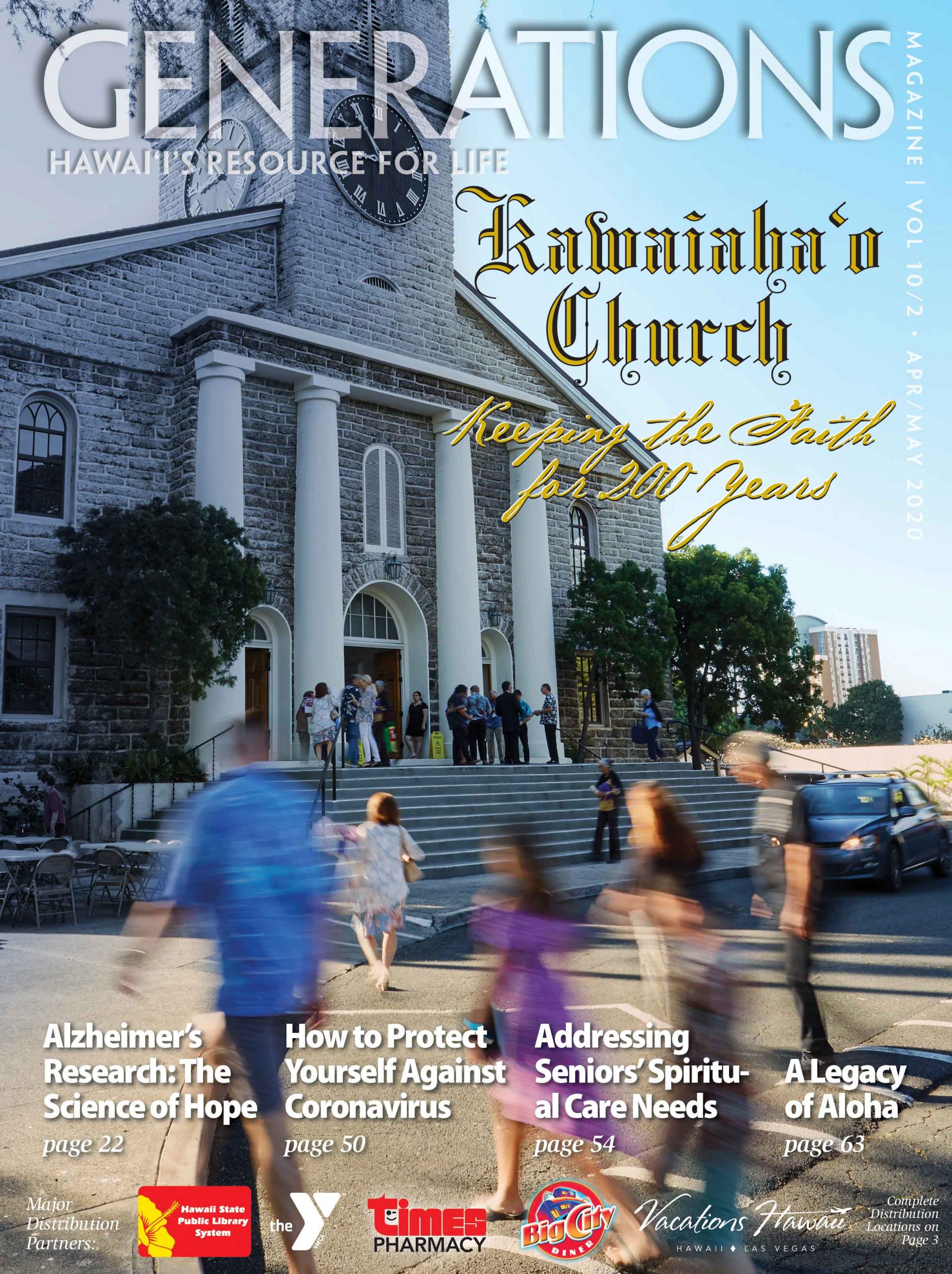
The April-May 2020 issue of Generations Magazine, Hawai‘i’s Resource for Life, features an in-depth look at Kawaiahaʻo Church, as well as tips on avoid Coronavirus and much more.
So was the faith of one Hawaiian youth who fled tragedy in 1810 and wound up in Connecticut, where he found consolation and forgiveness in the God of Jacob. His name was Henry ‘Ōpūkaha‘ia. The seed of his faith brought Christianity to Hawai‘i in 1820.
In his epic historical novel Hawai‘i, James A. Michener created fallible heroes and villains who have lived in our memories for over 60 years now. But when the missionaries are interpreted in the norms of their times, the tenets of their beliefs, we see their abiding faith to bring the gospel of peace to Henry Ōpūkaha‘ia’s people. The fruits of their labor persist, and in 2020, we celebrate 200 years of teaching God’s word and singing sacred hymns that inspire faith, hope and love.
Today, Kawaiaha‘o Church is pastored by Rev. Kenneth Makuakāne, who says, “God has worked in so many hearts and lives over the past 200 years and we are so proud that Kawaiaha‘o Church has been instrumental to the growth of the Christian faith here in Hawai‘i. The bicentennial is a good opportunity to reflect and better understand the relationships between the ali‘i, maka‘āina and missionaries.”
Carrying a Seed of Faith to Kawaiaha‘o
To understand what has been accomplished here, we go back to Kawaiaha‘o in King Kamehameha’s kingdom. It was an ‘ili land section of the Mānoa ahupua‘a and the name of a watering hole and spring on the dry plain above Waikīkī. Legend says a chieftess named Ha‘o liked to bathe here. In April of
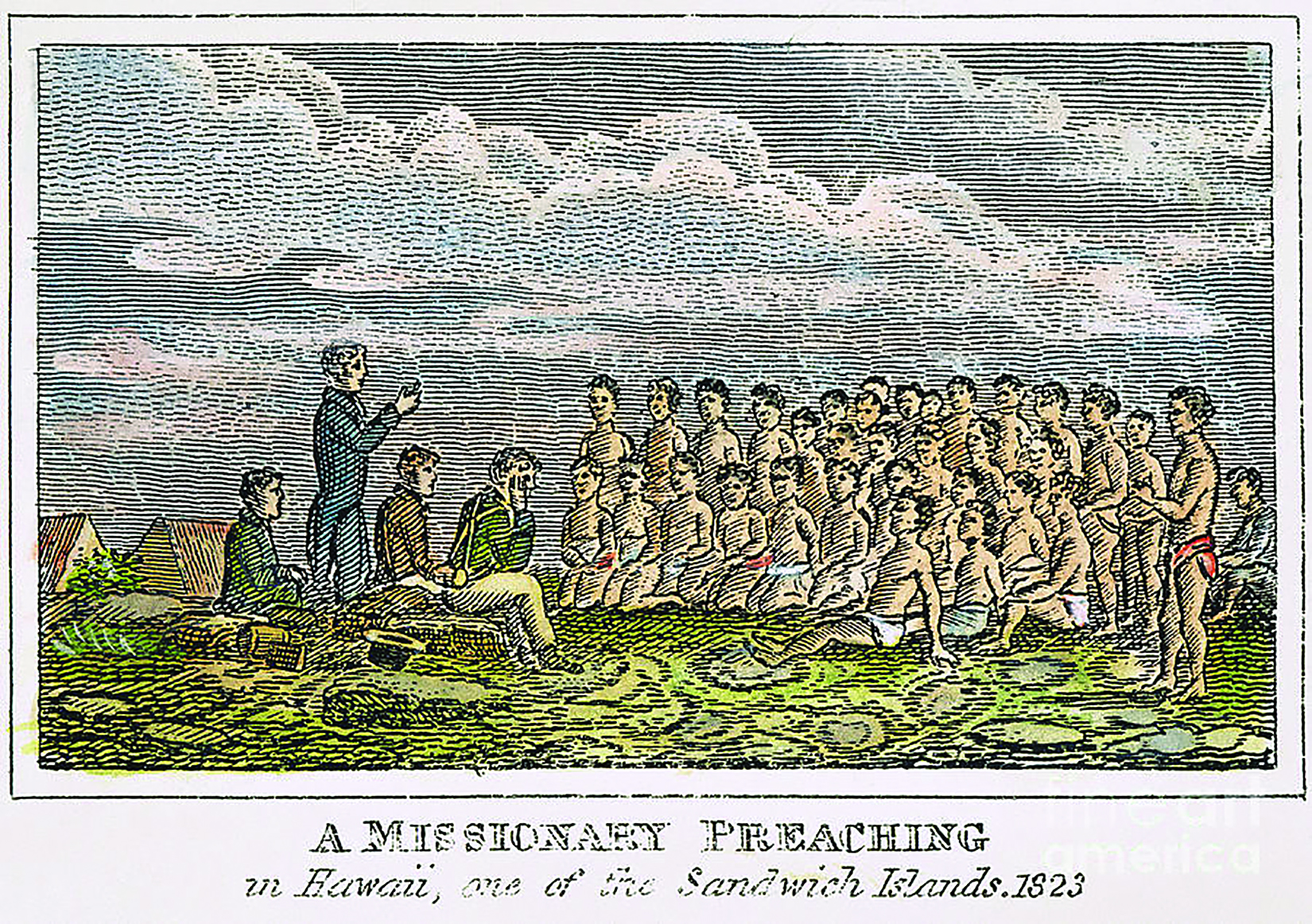
1820, when young newlyweds Hiram and Sybil Bingham arrived in Honolulu with the first company of missionaries from the American Board of Commission for Foreign Missions (ABCFM) on the brig Thaddeus, the ali‘i allowed them to stay and build a hale at Kawaiaha‘o spring.
They endured a five-month voyage that left Boston in October 1819, sailing down the Atlantic coast of the Americas to Cape Horn and then northwesterly across the open Pacific to the Sandwich Islands. Seven missionary couples included four ministers, a farmer, a doctor and a printer. Their four young Hawaiian companions were returning home from New England, where they ended up after working on trading ships: William Kanui, Thomas Hopu, John Honoli‘i and George Kaumuali‘i, a son of the King of Kaua‘i. Missing was Heneri (Henry) ‘Ōpūkaha‘ia, who died of typhus fever in 1818 at age 26, without seeing his beloved homeland again.
When Henry was 10, a raiding chief killed his parents. The chief threw a spear at Henry, who was fleeing with his 3-month-old brother on his back. The spear killed the baby and spared Henry. He was taken in by the man who killed his parents, but ran away to his uncle, the kahuna at Hiki‘au heiau in Kailua. There he began training to care take the temple, but his grief led to despair. Soon, he talked a ship’s captain into taking him away from Hawai‘i. The boy, who carried the name “gutted belly,” left for the sea at the age of 16 and ultimately landed New Haven, Conn., living in the home of the cousin of the head of the Yale Christian seminary.
Hea Iesū Ia Kākou La (Jesus Calls O’er the Tumult)
Until about 1816, Christians believed that underdeveloped peoples without written language were not able to receive the “Word of God” because they could not read the scriptures themselves. A tenet of “freedom of Christ” championed by Martin Luther during the Reformation was that God speaks directly to the individual through the Bible, prayer, circumstance and conscience. But Henry, and a few other Hawaiians and Native Americans, were learning to speak English! Henry’s academic aptitude became the flash point for the founding of the first Foreign Mission School in 1816.
His culture’s oral tradition taught Henry ‘Ōpūkaha‘ia to listen carefully and memorize large amounts of data. This avid learner read scripture and chose Jesus Christ as his savior. The seed of his faith grew and he passionately lobbied that the gospel should be preached to his people in Hawai‘i. After his untimely death, his memoir was published by Edwing Dwight and sold to support the Hawaiian mission.
Passengers on the Thaddeus expected to find the Hawai‘i Henry left: raiding warriors killing children and adults, chaos and depravity, human sacrifice to the gods. They came to face hell — to share the good news of peace with God at the expense of their very lives.
Instead, in March 1820, as they sailed along West Hawai‘i toward Kawaihae, High Chief Kalanimoku and his wives approached in their double-hull canoes. But it was not a raid; it was their custom to greet all arriving ships to determine where they hailed from and what their intention might be. As the welcoming party paddled off, surprised and thankful Revs. Bingham and Thurston climbed up the rigging and joyfully serenaded them with a hymn.
After uniting the islands, Kamehameha the Great reigned in peace, outlawed ambushing and murder of travelers, and refused human sacrifices when he was sick and dying. He passed away in May 1819. The kapu system was customarily suspended to mourn his passing. When the new king, Liholiho, Dowager Queen Keopuolani, Queen Regent Ka‘ahumanu and High Kahuna Hewahewa chose not to reinstate it, the old kapu religion of Pā‘ao and the Tahitians was gone. Before the Thaddeus arrived, the harsh kapu rules were lifted, large carved ki‘i of the old gods burned and heiau closed. Henry ‘Ōpūkaha‘ia would have been gratefully surprised to see Hawai‘i at peace.
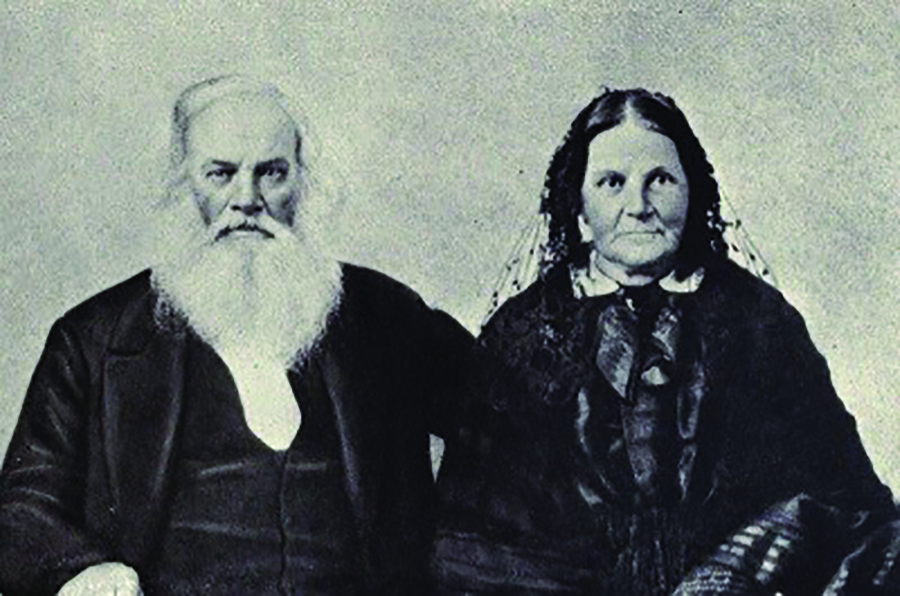
Reverend Asa & Lucy Thurston
The missionaries sought out King Liholiho for permission to live in Hawai‘i. After some days of consideration, the chiefs allowed Rev. Asa and Lucy Thurston to reside in a home in Kona. A few days later, Rev. Hiram and Sybil Bingham sailed on to O‘ahu, where they were permitted to build a thatched hale by a spring hole named Kawaiaha‘o. At the first Sunday worship services in their home, curious Hawaiians enjoyed curious foreign music and singing. Soon, Bingham was preaching God’s word three times a week in Hawaiian and once a week in English. Henry ‘Ōpūkaha‘ia’s Christian brothers and sisters were fulfilling his one dying wish.
Reverend Hiram & Sybil Bingham
When Kawaiaha‘o was growing and Ka‘ahumanu’s laws were enacted, Lāhainā was still the royal seat of government. The high chiefs all had residences in Honolulu, which had a protected port that Kamehameha I had developed for sandalwood trade with Canton and Macao. A small fort and canon protected the pier, storehouses and royal residences near the dock. Some whaling captains brought their ships and crews in for provisioning, but most preferred anchorage in Lāhainā Roads, where alcohol was prohibited.
An 1810 map shows footpaths along the Waikīkī plain connecting high chiefs with their lower chiefs and advisors. Behind the beach and dry plain, cooler farmlands reached up to the lush valleys of Mānoa and Nu‘uanu, where the nourishing waters of Kāne, the god of life and fresh water, flowed.
Pā Nahe Maila Kō Iesu Kāhea (Softly and Tenderly, Jesus is Calling)
Each of the missionaries had responded to the personal call of God. The curious young newlyweds, 5,000 miles and three climate zones away from home, prayed that God would speak directly to the hearts of Native Hawaiians. To this end, they worked diligently to convey the holy scriptures in Hawaiian. Christians can demonstrate the love of God by their pious lives, but knowledge of the living and invisible God comes from reading what God says about Himself in the holy scriptures.
First, they captured all the sounds of spoken Hawaiian in an alphabet that could be used to phonetically write Hawaiian words. Soon, classes were offered to teach Hawaiians to write their own words on chalkboards. Writing letters became all the rage in 1825. By 1837, The Hawaiian Kingdom was the most literate nation on Earth. Literacy estimates were 90 percent — higher than Scotland’s at that time. Missionary printing presses furiously stamped out spelling books, hymnals, dictionaries and newspapers. The Hawaiian’s thirst for learning was unquenchable.
The next giant task was to translate the Bible, so Hawaiians could read and interpret the scriptures themselves. The Hebrew, Latin and Greek training that the missionaries received in seminary helped, and the ali‘i designated Native Hawaiian poets and scholars to assist in the translation process. The New Testament was translated by 1832; the Old Testament by 1839. The translators were surprised to find similarities between Hebrew and Hawaiian languages, which made translating the Old Testament easier than the new.
With reading and hearing the soft and tender call of the Lord, some high ali‘i accepted Christ, beginning with Queen Keopuolani in 1823, Queen Regent Ka‘ahumanu in 1824 and many more in the later 1920s. But the “Great Awakening,” a massive move of the Holy Spirit, didn’t start until 1837. Most of the smaller congregational churches were built between 1840 and 1860.
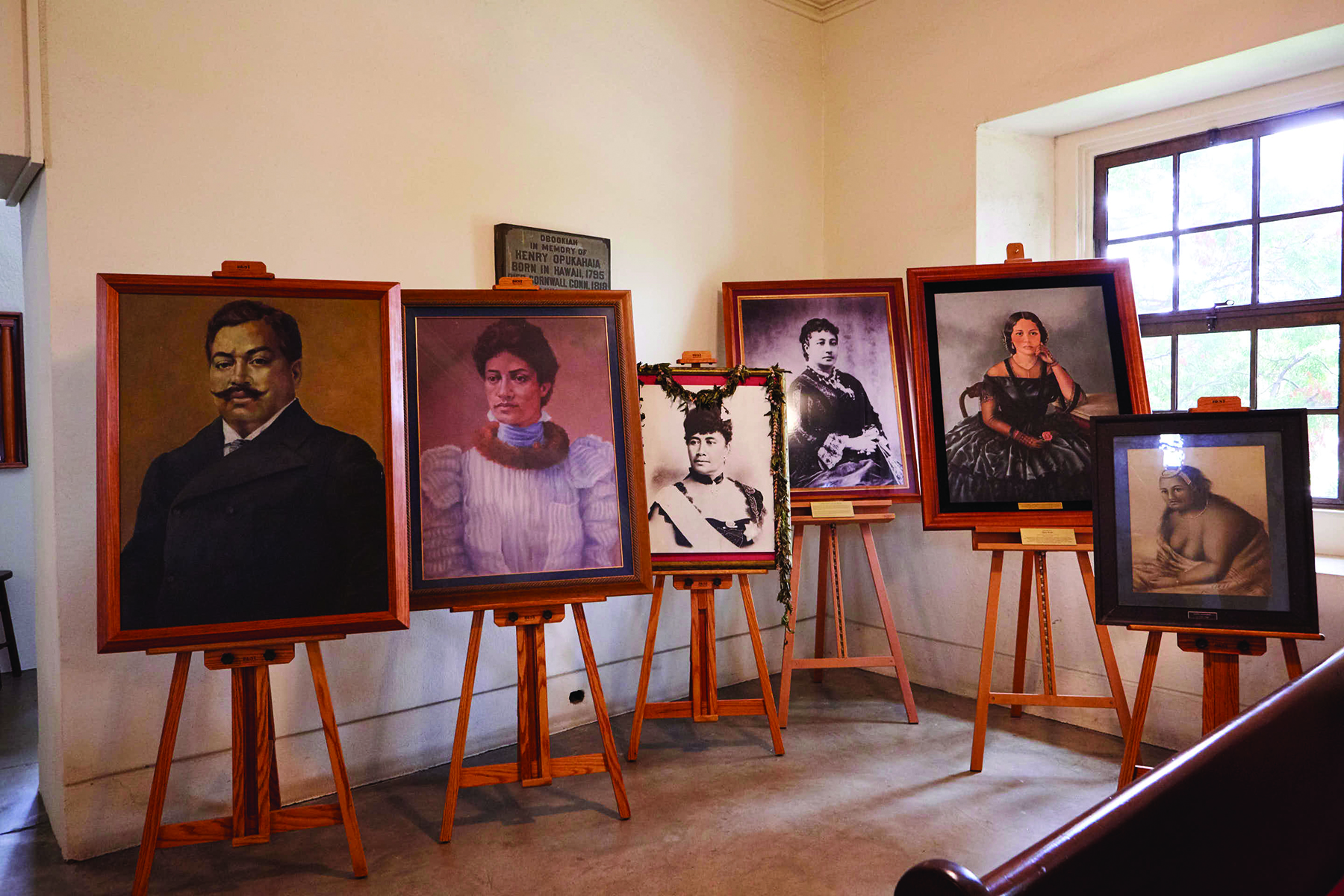
Portraits of Hawaiian royalty are honored and respectfully displayed in Kawaiaha‘o Church. (L–R) Prince Jonas Kūhiō Kalaniana‘ole, Princess Ka‘iulani, Queen Lili‘uokalani, Princess Bernice Pauahi Bishop,Princess Elizabeth Keka‘aniau and Queen Ka‘ahumanu.
Iesū Ke Kumu o Kōna Ekalesia (The Church’s One Foundation)
As an increasing number Native Hawaiians attended services, large thatch meeting houses were constructed at Kawaiaha‘o. The faithful walked miles to Sunday Sabbath meetings that lasted several hours and involved sharing hymns, lessons and meals.
Most of the missionaries kept detailed journals of their experiences. Titus Coan penned one of the earliest descriptions of a volcanic eruption and a flow that nearly reached Hilo. Hiram Bingham described services at Kawaiaha‘o Church, the translation work and the royal school for ali‘i children. Lucy Thurston wrote about her life in Kailua. When she found a lump in her breast, a physician operated to remove it as she lay on her kitchen table, comforted by God, whiskey and something hard to bite on. Her extreme faith and courage saved her life.
In 1827, Rev. Bingham reported to the ABCFM about a lovely garden tea party Mrs. William Richards from Waine‘e mission and her sister, Sybil Bingham, prepared for the ali‘i on the lawn at Kawaiaha‘o. King Liholiho and Ka‘ahumanu, with all the first- and second-rank high chiefs and several others connected to them through marriage, were on the guest list.
Rev. Bingham’ report read: “Twenty-one chiefs of the Sandwich Islands mingling in friendly, courteous and Christian conversation with seven of the mission family whom you have employed among them. Contemplate their former and their present hopes. They have laid aside their vices and excesses, their love of noise and war… the privileges they now enjoy, but you will hear these old warriors lamenting that their former kings, their fathers and their companions in arms had been slain in battle or carried off by the hand of time before the blessed Gospel of Christ had been proclaimed on these benighted shores.”
To celebrate the bicentennial, Kawaiaha‘o Church is holding another tea party on the church lawn — complete with cookies and cakes, fragrant tea and entertainment by the Puamana trio.
Hoe Amau! (Pull For Shore)
Sunday services at Kawaiaha‘o attracted thousands of people, a third of whom sang from their own copy of the hymn book, bound in hand-woven or cloth covers. Rev. Bingham admired their pleasing attention to scripture reading and preaching, “while angels wait to witness the effect of the word of God on their hearts.” His work to make the word of God available to Hawaiians was hard but very rewarding.
As the congregation grew, so did the church. The 1821 Kawaiaha‘o meeting hall was a thatched hale with glass windows, wooden doors and a pulpit, but the congregation sat on mats on the ground, as was the Hawaiian custom. Larger meeting halls were subsequently built to accommodate a Sabbath Day service for 3,000 or 4,000 attendees, and numerous reading and writing classes.
In 1838, Rev. Bingham planned and oversaw the beginning of construction for the novel “Stone Church,” as it came to be called, with a design based on the Goshen Congregational Church in Goshen, Conn., where he and Asa Thurston were ordained. The difference was that it was not built from any type of stone, brick or wood, but 14,000 slabs of inshore coral. Divers cut out each 1,000-pound slab with knives and teams of men hauled them onto canoes for transport to Kawaiaha‘o. It took great energy and over five years to build. King Kamehameha III commissioned the building with the support of Regent Kina‘u, Gov. Kekuanao‘a and other ali‘i. In 1839, the cornerstone was laid — rock from the Waianae estate of High Chief Abner Pākī.
Rev. Bingham never saw the church completed. The ABCFM reassigned him to New England in 1840 because the board thought that he had become too involved with political aspects of the Hawaiian Kingdom. The success of the mission and the rising costs of supporting over 200 missionaries in the Pacific led the board to limit support. Pastors were taking side jobs to support their families. By 1863, support ended and missionaries had to either find full employment in Hawai‘i or return to America. Many chose to stay.
Ka Haku Nō Ku‘u Pu‘uhonua (A Shelter in the Time of Storm)
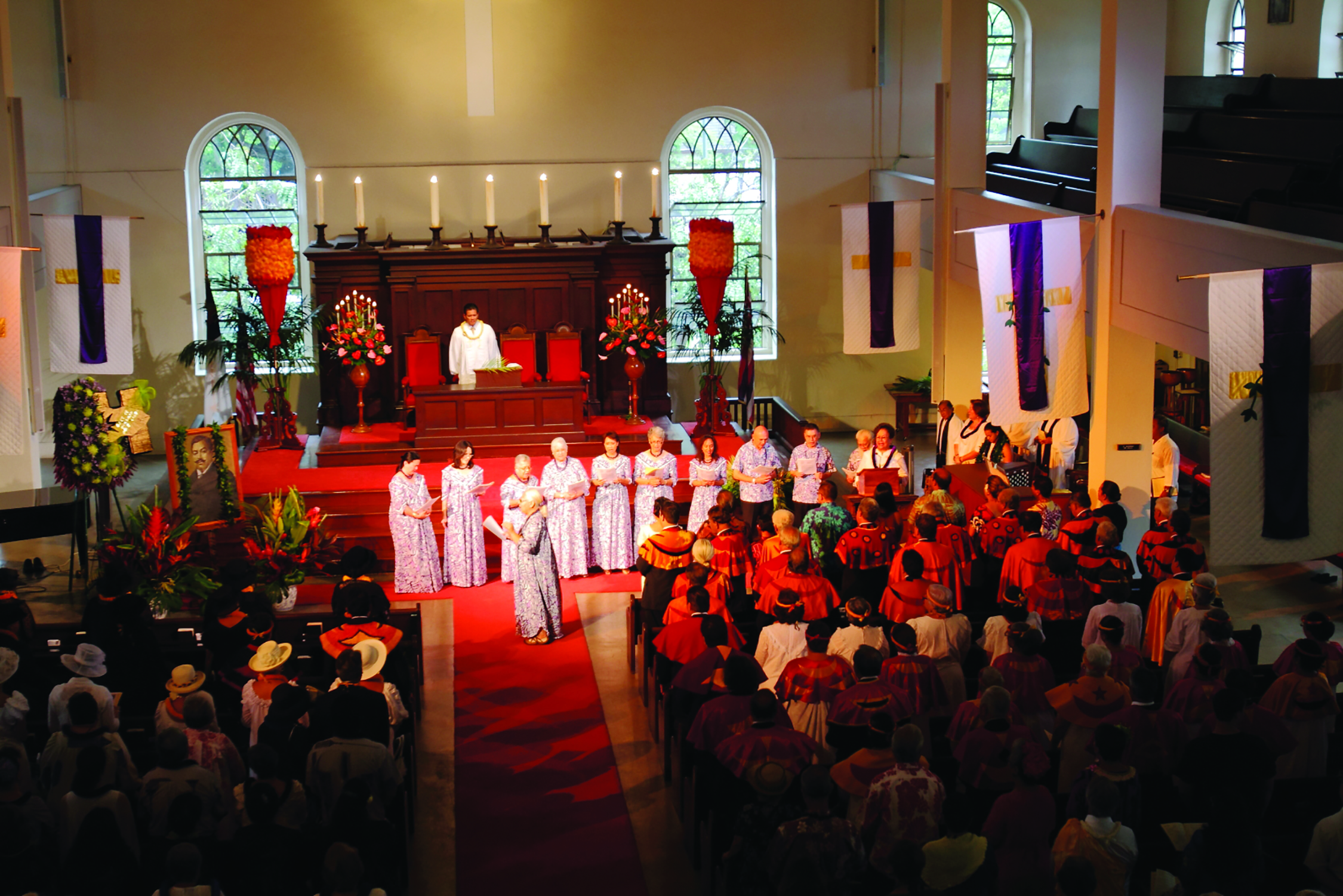
Christian churches have always been places of refuge since the apostles formed the first seven churches. Pre-contact Hawaiians set aside certain lands as sanctuaries for the oppressed and understood this concept very well. During the reign of Kauikeaouli Kamehameha III, Kawaiaha‘o became a place where kings and commoners gathered in the shelter of their God and fellowship of other Christians. This tradition continues today.
“‘Ōlelo Hawai‘i was the language of Kawaiaha‘o and it is still a significant part of worship. We have scripture readings in ‘ōlelo Hawai‘i, manaleao and fluent speaker communities in both languages, sermonettes in ‘ōlelo Hawai‘i, and two Sundays a month, “Ka Halawai” all-Hawaiian services,” says member Malia Ka‘ai-Barrett.
In 1843, when Kauikeaouli moved the royal seat of government to Honolulu. Kawaiaha‘o Church became the site of many milestone events of the Hawaiian Kingdom constitutional monarchy. In February 1843, when Lord Paulet and his men took control of the Hawaiian Islands for Britain under threat of force, Finance Secretary Dr. Geritt Judd secretly scribed the king’s letter of protest to Queen Victoria. Hiding in Queen Ka‘ahumanu’s crypt in the graveyard and writing by the light of a single candle, he asked Britain to return sovereignty to the Kingdom of Hawai‘i.
Seven months later, when sovereignty was restored by Admiral Thomas, it was from the steps of Kawaiaha‘o Church that King Kauikeaouli addressed the nation and spoke these famous words: “Ua ma au ke ‘ea o ka ‘āina i ka pono! The life of the land is perpetuated in righteousness!” In 1959, his words became our state motto.
Other beloved ali‘i nui of Hawai‘i were members of Kawaiaha‘o: Charles Lunalilo, David Kalākaua and Lydia Lili‘u Loioku Walania (Queen Lili‘uokalani) were all inaugurated as monarch at Kawaiaha‘o.
In the 20th century, King Kalākaua initiated the preservation of traditional culture. He is most remembered as “The Merry Monarch” for his love of hula, chant and music. But he also created a knowledge base of genealogies, mele, kaona and nā mea hūnā in the Hale Nāua. Over 25 Hawaiian language nū pepa (newspapers) memorialized Hawaiian syntax and grammar, so we can read the original language today.
Throughout the years of overthrow, annexation and statehood, Kawaiaha‘o was a “city of refuge,” where Hawaiians could meet, socialize freely, and pray in sing in their native tongue. In her darkest hours of house arrest, Queen Lili‘uokalani practiced the Christian faith and wrote in The Queens Prayer hymn, “Do not regard the treachery of men, but forgive and cleanse.” She encouraged her people not to revolt and risk bloodshed, but to rise to the power of aloha.
There is little doubt that the missionaries’ Hawaiian pīāpā alphabet, schools for reading and writing, and printing presses helped preserve not only the language — but a body of literature and knowledge.
Mele Au Ka Lono Lani (I will Sing the Wondrous Story)
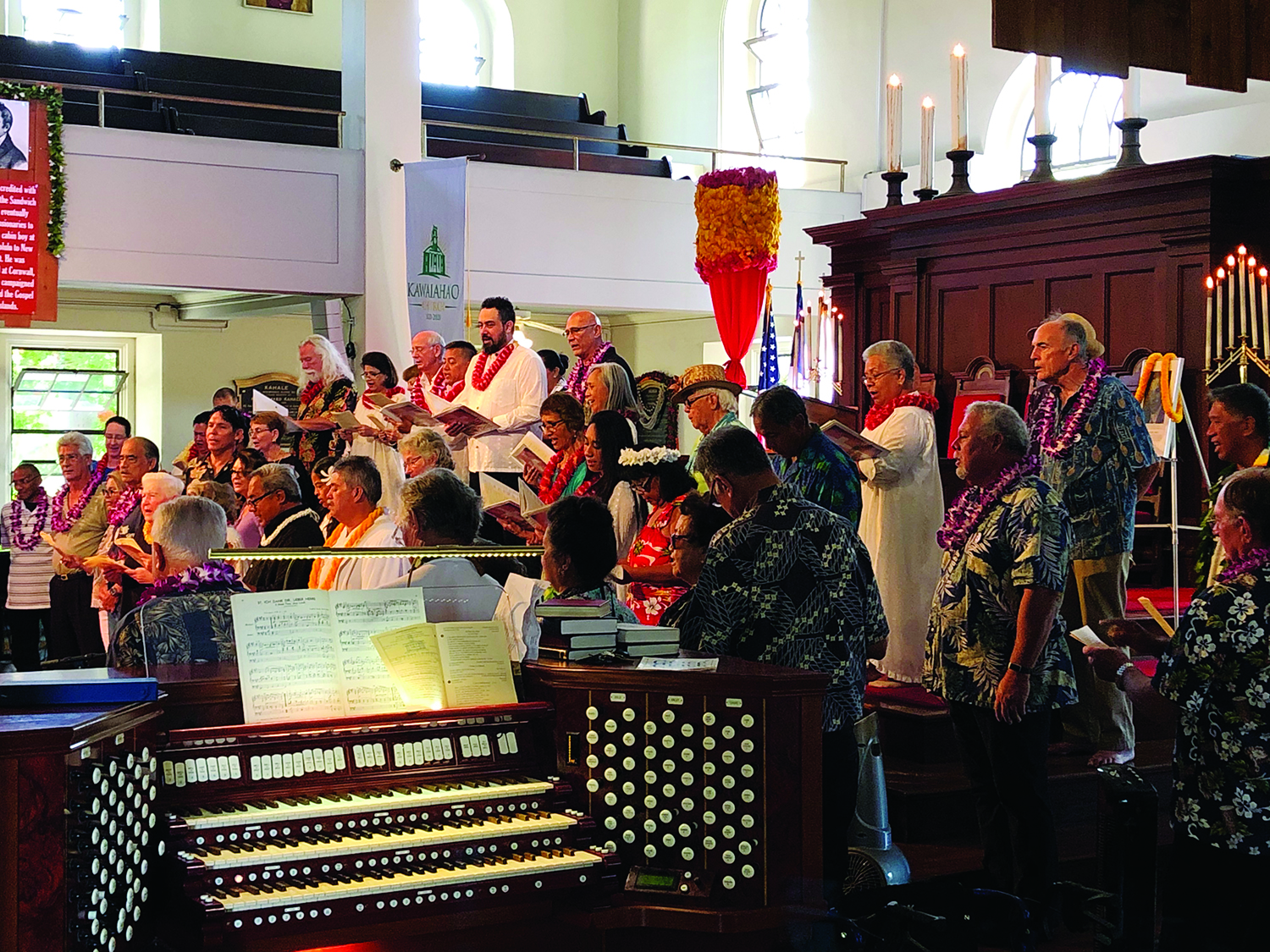
Music with scriptural lyrics is an important way the Kawaiahaʻo Church shared God’s word. Missionaries and their church members translated their hymns into Hawaiian; members taught the songs to their children. God spoke through the uplifting words and it was said that choirs were good in all the Hawaiian churches, but “congregational singing at Kawaiaha‘o thrilled the heart.”
Over two centuries, several famous Kawaiaha‘o musicians and singers found renown. Victoria Kamāmalu Ka‘ahumanu IV played the melodeon and led the choir. Later, Queen Lili‘uokalani, who composed The Queen’s Prayer and Aloha ‘Oe, played the organ and led the choir. The first leader of the Royal Hawaiian Band, Heinrich “Henri” Berger, who composed Hawai‘i Pono‘i, led the Kawaiaha‘o choir and delighted in the Hawaiian talent for singing. He said, “The Hawaiian had the one thing he needed, his voice… and the Hawaiians combined the old chant with the new hymn.”
Bernice Pauahi Bishop, the founder of Kamehameha Schools, sang in the Kawaiaha‘o choir like her mother before her, Laura Konia Pākī. Her beloved “song contest” concept comes from the church “Aha Hīmeni.” On each island, every church choir would prepare a hymn to perform for the others. The competition was hot, but most delightful was the fellowship and pā‘ina luncheon with all the vocalists and musicians.
Today, sacred music still brings stirs faith in the hearts of people attending services at Kawaiaha‘o. Principal Director of Music Nola A. Nahulu oversees programs for a large choir, a bell choir directed by Phyllis Haines and Hula Hālau o Kawaiaha‘o, directed by Kumu Hula Ardis Gomes. The church also supports the Hawaii Youth Opera Chorus (HYOC) managed by Kawaiaha‘o member Malia Ka‘ai-Barrett.
Kahu Makua Kenneth Makuakāne, a recognized vocalist and guitarist, pastors this big church with the help of a devoted team of church lay leaders.
“God is alive and well here through our ministries at Kawaiaha‘o Church School, youth ministries, outreach to the homeless and more. We want Kawaiaha‘o Church to continue to stand as a pillar of faith in our community, a church without walls, and a place where everyone feels welcome to worship,” says Pastor Makuakāne.
For 200 years, the congregation has been faithfully singing songs to the triune God, Ka Makua Mau, Ke Keiki a me Ka Uhane Hemolele (Father, Son and Holy Spirit) They read the same word of God that inspired Henry ‘Ōpūkaha‘ia. They preach and teach the same simple faith in God that brought the missionaries to his ancestors’ shores. It is the same faith that inspired Peter Galuteria to compose a new hymn for the 200th anniversary celebration — Ka Ekalesia O Kawaiaha‘o, which will be sung in all the United Churches of Christ throughout Hawai‘i during the month of April.
Lā Maika‘i! (O Happy Day!)
So was it the Americans who brought Christianity to Hawai‘i? Sort of. But were it not for the powerful encouragement and passionate faith of one young Hawaiian — and the amazing grace of God to grant his dying wishes, we would not be celebrating with Kawaiaha‘o this year. I believe that Henry is still praying for his people.
A few weeks ago, another 16-year-old reported his reflections about the story of Henry ‘Ōpūkaha‘ia to the Kawaiaha‘o congregation. His name is Noah Rasor.
“When I found out that Henry was just 16 years old when he jumped on board a ship looking for a new life, I was amazed. I’m 16 and can’t imagine the amount of courage it must have taken to get on a large boat with people you never met before and ask for refuge. Not only that, he sailed to the Americas and China. Knowing that ‘Ōpūkaha‘ia was able to overcome adversity and change Hawai‘i forever, despite being so young, encourages and inspires me to go out in the world and to not be afraid of challenging situations , but instead to face those scenarios head-first.”
Henry ‘Ōpūkaha‘ia is still encouraging and inspiring young Christians like he motivated the missionaries! This faith, which traces back over 2,000 years to the first disciples of Christ, still kindles kindness, joy and thankfulness at Kawaiaha‘o.
Please note: The Kawaiaha‘o Church community is suspending services and gatherings, and the Bicentennial Celebration during the pandemic. Visit www.kawaiahao.org for future schedules and advisories.
In his epic historical novel Hawai‘i, James A. Michener created fallible heroes and villains who have lived in our memories for over 60 years now. But when the missionaries are interpreted in the norms of their times, the tenets of their beliefs, we see their abiding faith to bring the gospel of peace to Henry…
How do you know that you are the target of a scam? Here are some red flags that you should be aware of:
♦ There is an air of urgency in the message. The scammer will claim that your reply and/or transaction must happen ASAP.
♦ They are adamant that you must send them your banking or identity details to get payment.
♦ They may instruct you to only use their escrow person for payment.
♦ They insist you must take a check and no other payment method will work.
♦ They offer to let you pay in gift cards.
♦ They want to send you a check for more than what is owed and have you remit the excess to someone else.
♦ They want you to send them money to enable them to send you even more money.
♦ You can’t find their company name, telephone number and/or email address on the internet.
♦ Their message contains very poor grammar and/or misspellings.
A very good rule of thumb is always be skeptical. Before returning calls or replying to emails, verify the telephone number, email address and/or URL to ensure they are legitimate. Go online and see if there are any complaints or reports that their telephone number has been linked to scams. Spending a few moments before responding may prevent some serious heartbreaks in the future.
My wife loves free things. When we go to any expo at the Hawaii Convention Center or the Blaisdell, she’ll be the one hoarding free pens and reusable bags. So, I should not have been surprised when she stopped at a table run by a hotel chain that was offering a free dinner, six hours of validated parking in Waikīkī and a two-night stay at a hotel. According to the salesman, all we had to do was review a hotel from pictures they would show us. The whole process would take only 120 minutes (not two hours?).
While my wife politely listened to this young man, I pulled out my smart phone and Googled the hotel chain, and its free dinner and hotel stay offer. Instantly, warning posts and You Tube videos popped up about the unscrupulous sales tactics and confusing contracts used by this company when selling timeshares. But as the salesman tried repeatedly to get my wife to sign up for this “hotel review,” he never even mentioned “timeshare” once.
When I asked him if this presentation involved any discussions about timeshares, he paused and said he didn’t actually do the presentation himself, so he couldn’t say for sure. When I asked if after the entire two-hour presentation we will get everything he promised, he corrected me: “It takes 120 minutes” — and there may actually be fees and taxes associated with the “free gifts.”
I walked away from the table with my wife in tow. I later showed her everything I found out about this scheme and how the fees and taxes they charge on the “free gifts” equal the full value of the items. I told her they say “120 minutes” because they don’t count the time they spend introducing themselves and bringing in other salesmen to work on you, and the time they take for breaks. (Some people claim they found themselves at the “120-minute presentation” for over six hours).
After this experience and phone calls I received at my office, I started paying more attention to how timeshares were being advertised. In the next few articles, I will explain exactly what a timeshare is, why there are so many commercials for them, and why there are so many companies advertising their ability to help people get out of timeshare contracts. I’ll also cover some common timeshare scams and what warning signs to look out for.
Please remember, there really is no such thing as a free lunch (or dinner and hotel stay).
If you suspect elder abuse, call these numbers:
– Police: 911
– Adult Protective Services: 808-832-5115
– Elder Abuse Unit: 808-768-7536
My wife loves free things. When we go to any expo at the Hawaii Convention Center or the Blaisdell, she’ll be the one hoarding free pens and reusable bags. So, I should not have been surprised when she stopped at a table run by a hotel chain that was offering a free dinner, six hours…
Siblingship is the state of being related or interrelated, or a state of affairs existing between one of two or more individuals having one common parent. The term describes the unique, dynamic relationship existing between siblings. Siblings begin their relationship at a very young age. They experience joys and setbacks together — laugh and cry together. And through fighting, they can learn conflict resolution together. No other relationship is like siblingship.
Sibling fights arise over property, so many parents aim to divide up their property fairly, in hopes that siblings will not fight. In my experience, this is not enough to avoid arguments.
The estate planning process, if done properly, can do much to minimize the risk of fighting when parents die. However, many plans do not speak clearly enough in this respect. Leaving a family home or a heirloom “equally to the children” does not go far enough to help avoid family squabbles. Deciding what to do with the family home during a time of grieving puts too much pressure on the sibling relationship.
Ultimately, the estate plan should mirror and reflect our lives and relationships. If your plan does not mirror and reflect your most important values, or does not speak clearly enough to ensure the preservation of the relationships am {Play}ong your children, I encourage you to review your plan with your estate planning attorney.
Siblingship is the state of being related or interrelated, or a state of affairs existing between one of two or more individuals having one common parent. The term describes the unique, dynamic relationship existing between siblings. Siblings begin their relationship at a very young age. They experience joys and setbacks together — laugh and cry…