Category: Date

  • Five Money Myths You Should Ignore

    When it comes to personal finance, what works for one person doesn’t necessarily work for another. That’s why money misconceptions can be so d dangerous. Here are four common money myths you may have heard — and perhaps even believe — that need to be put to rest once and for all.

    Myth #1: All Debt is Bad

    Reality: Few people could afford to buy a home if they didn’t have a mortgage. You might not have gone to college without taking out a student loan. Instead of avoiding all debt, make sure you have a plan to pay it off by addressing high-interest loans first.

    Myth #2: Avoid All Credit Cards

    Reality: Credit cards offer flexibility that cash and debit cards can’t. Most credit card companies offer zero liability for fraudulent transactions, while most debit cards have little protections if you find the fraud after a certain date.

    Plus, you can earn extras through your credit card rewards, such as airline miles for your retirement travel plans. Instead of nixing credit cards, plan to pay back the balance in full each month, avoiding the high interest charges.

    Myth #3: You Can Time the Market

    Reality: There are many factors that influence day-to-day stock moves — the unpredictable news cycle, the economy, business decisions, rates and regulation — just to name a few. This why timing the market is so challenging, even for professional traders. While someone might get it right once, in order to end up ahead, studies have found one would need to guess correctly more than 65 percent of the time.¹

    While only a handful of professional investors manage peak stock performance each year, the average investor’s chances are nearly microscopic. Meanwhile, you lose out on gains if your money sits on the sidelines while you seek the perfect moment to play. Stock markets are notoriously unpredictable in the short term and they should not drive investment strategy for most investors.

    Myth #4: Pay Off Your Debt Before Saving for Retirement

    Reality: If the interest on a loan is 3.5 percent, but the expected return in the market is 5 percent, then consider adding funds to your retirement account, since you’re making more than the loan costs. You could lose out on opportunities, like the benefits of compound interest, if you’re only focused on debt repayment.

    Myth #5: You Do Not Need a Financial Advisor

    Reality: Many believe that a financial advisor’s only job is to beat the market. And you’re doing just fine.

    To believe that would be to miss the main point of why it’s helpful to have a professional in your money corner. At its core, a financial advisor’s job is to keep you on track toward your financial goals. Whether it’s retirement planning, saving for college or meeting other goals, an advisor can help you determine how to approach some of life’s biggest financial decisions. With a trusted advisor, you can feel more confident regarding your financial future.


    MICHAEL W. K. YEE, CFP
    1585 Kapiolani Blvd., Ste. 1100, Honolulu, HI 96814
    808-952-1222, ext. 1240 | michael.w.yee@ampf.com
    Michael W. K. Yee, CFP®, CFS®, CLTC, CRPC ®, is a Private Wealth Advisor, Certified Financial Planner ™ practitioner with Ameriprise Financial Services Inc. in Honolulu, HI. He specializes in fee-based financial planning and asset management strategies and has been in practice for 35 years.
    Investment advisory products and services are made available through Ameriprise Financial Services, Inc., a registered investment adviser.

    ¹Morningstar Investment Workbook: “Waiting or Market Timing”

    Ameriprise Financial Services Inc. Member FINRA and SIPC.
    © 2020 Ameriprise Financial Inc. All rights reserved.

    When it comes to personal finance, what works for one person doesn’t necessarily work for another. That’s why money misconceptions can be so d dangerous. Here are four common money myths you may have heard — and perhaps even believe — that need to be put to rest once and for all…

  • Leadership is Fun at RYLA

    Participants and camp staff of the 2020 Rotary Youth Leadership Awards camp.
    Participants and camp staff of the 2020 Rotary Youth Leadership Awards camp.

    On Feb. 14, Hawai‘i District 5000 Rotary Clubs sponsored 42 island high school student (ages 14 to 17) for the Rotary Youth Leadership Awards camp (RYLA) at Salvation Army’s Camp Homelani in Waialua.

    RYLA activities encourage leadership, citizenship and personal growth. Evidence-based, fun-filled experiences promote community service above self and develop youth empowerment for students who demonstrate potential leadership skills.

    RYLA is a rewarding, foundational weekend experience. This year’s camper comments tell the story: “I learned how to be a better person, while making friends. I had a lot of fun. I hope I’m selected to attend camp RYLA again next year.”

    Participants go through orientation and lectures.
    Participants go through orientation and lectures.

    Parents remarks support the outcomes: “After graduating from Camp RYLA, our daughter gained self-confidence and a focus with positive skills that I think we parents should also learn — being proactive and being willing to face life’s challenges challenges with a can-do attitude.”

    “Thank you, RYLA!”

    Schools, parents and youth organizations are encouraged to identify and sponsor students for RYLA’s next weekend event, which will be held next spring. Registration will begin in July.


    ROTARY DISTRICT 5000
    P.O. Box 3325, Honolulu, HI 96801
    808-536-8778 | www.rotaryd5000.org
    For details, to nominate a youth or donate to the program,
    contact Rick Tabor: 808-285-5936, rtabor12@twc.com.
    Neighbor Island residents, contact your local Rotary Club.

    On Feb. 14, Hawai‘i District 5000 Rotary Clubs sponsored 42 island high school students for the Rotary Youth Leadership Awards camp at Salvation Army’s Camp Homelani in Waialua. Activities encourage leadership, citizenship and personal growth. Evidence-based, fun-filled experiences promote community service above self and develop youth empowerment for students who demonstrate potential leadership skills.

  • How to Get or Replace a SS Card

    Now that your Hawai‘i driver’s license does not have your Social Security number on it, you may need to get an original or replacement card to use as a separate piece of identification. Getting or replacing your Social Security card is a free service.

    You can use a my Social Security account to request a replacement Social Security card online if you:

    • Are a U.S. citizen age 18 years or older with a U.S. mailing address;
    • Are not requesting a name change or any other change to your card; and
    • Have a driver’s license or a state-issued ID card from one of the many participating states.

    If you cannot apply for a card online, you will need to present required documents at your local Social Security office. Documents vary based on your citizenship and the type of card you are requesting.

    Visit www.ssa.gov and click on Learn What Documents You Need. Also fill out and print an Application for a Social Security Card; then, deliver or mail your application and documents to your local Social Security office.


    For questions, online applications or to make an appointment to visit a SSA office, call 7am–5pm, Mon–Fri:
    800-772-1213 (toll free) | www.socialsecurity.gov

    Now that your Hawai‘i driver’s license does not have your Social Security number on it, you may need to get an original or replacement card to use as a separate piece of identification. Getting or replacing your Social Security card is a free service. You can use a my Social Security account to request a…

  • Your Hawai‘i State Office of Veterans Affairs

    The State Office of Veterans’ Services’ (OVS) motto is “proud to serve those who served their country.” We accomplish our mission by reaching out to eligible veterans and helping them file service-connected disability claims for benefits and entitlements they’ve earned through military service. We have offices on Kaua‘i, Maui, Kona, Hilo, Tripler Army Medical Center and Diamond Head. We travel to Moloka‘i monthly and Lāna‘i quarterly. OVS-accredited counselors work very hard to assist all veterans who are separating or retiring from active service.

    We help prepare appeal documents, if needed; we review prospects for progression upgrades and assist with end-of-life issues. We also partner with the respective counties to operate seven state veterans cemeteries on Kaua‘i, Maui, Moloka‘i, Lāna‘i and Hawai‘i island. The Hawai‘i State Veterans Cemetery on O‘ahu is fully operated by the state.

    OVS also provides support and assistance for week-long events like the 50th Anniversary of the Vietnam War Commemoration, the WWI Centennial Program, the 2019 State Veterans Summit and the upcoming 75th Commemoration of the End of World War II, set for Aug. 29 through Sept. 3. In addition to federal Veterans Affairs entitlements and benefits, the State of Hawai‘i has benefits for eligible veterans: specialty veterans’ license plates, real property tax exemption, state registration fee exemption for 100-percent disabled veterans and special adaptive housing for disabled veterans. Contact your local island office staff and counselor corps to see if you qualify.

    We understand that you have a unique deployment history and set of injuries or ailments. We respect you and the loved ones who accompany you to appointments. We seek to do more for our veterans and their families. But the first step is on you… open the door and allow OVS and other veteran partners to help. With so many federal, state, county veterans’ organizations and private groups supporting our warriors, there are many ways to help. Call our Central Line at Tripler OVS at 808-433-0420 for more information and begin the process.


    OFFICE OF VETERANS SERVICES
    Tripler Army Medical Center
    E Wing, Rm. 1-A103, Honolulu, HI 96819-1522
    808-433-0420 | ovs@ovs.hawaii.gov
    www.dod.hawaii.gov/ovs

    The State Office of Veterans’ Services’ (OVS) motto is “proud to serve those who served their country.” We accomplish our mission by reaching out to eligible veterans and helping them file service-connected disability claims for benefits and entitlements they’ve earned through military service. We have offices on Kaua‘i, Maui, Kona, Hilo, Tripler Army Medical Center…

  • Dementia: Compassionate Communication

    As a dementia educator, I am often asked why people living with dementia (PLWD) ask the same question over and over again. My reply is, “Because their brain is failing.”

    Every day, PLWDs are going through chemical and physical brain changes. Due to brain failure causing multiple problems with short-term memory, a PLWD can get themselves caught in a loop of asking the same questions.

    Here are some suggestions for the next time you recognize the start of another loop of questions.

    Listen to the important details as they speak. As dementia progresses, language will become increasingly vague. Therefore, objects or activities will be difficult for a PLWD to accurately describe. Instead of asking for the artificial sweetener Splenda, the PLWD might describe it as “the yellow stuff to put inside.” Take note of their descriptions and work like a detective to decipher the message using context clues in the environment.

    Validate their emotions. Oftentimes, PLWDs create fictional stories that make complete sense to them. As a care partner, we choose to overlook their confabulated stories and attempt to reorient them back to the “truth” in our reality. The key here is to remain patient and just listen to their story. The PLWD is expressing his or her anxiety, which translates into made-up stories. You don’t have to agree with them, but offering validation, such as “wow, that must be hard,” can help the PLWD feel that they are respected and heard.

    Redirect their attention toward an engaging task. Identify a highly preferred item or activity that you can provide in that moment. After validating the PLWD’s emotions, you can redirect the conversation toward the previously identified preferred item or activity. The reason we want to redirect their attention is so that their focus and attention will shift onto something productive or engaging. If we only validate their emotions without redirecting, then the PLWD is more likely to start the same behaviors again.

    Check in on them as needed. Let’s admit it; we all have good and bad days. One day a task might be easy for the PLWD and the next day it could be the most frustrating thing ever created! Checking in on your person every five minutes or so is a good way to ensure that they are still engaged in the task. If the task is too difficult, then consider switching to an easier task before their agitation escalates to an unmanageable state.


    HAWAII MEMORY FRIENDS LLC
    Caregiver Education & Consultation
    Mapuana Taamu, Certified PAC Trainer
    808-469-5330 | mfriends808@gmail.com
    Learn more about dementia at our upcoming 2020 workshops.
    Contact Hawaii Memory Friends LLC for details.

    As a dementia educator, I am often asked why people living with dementia (PLWD) ask the same question over and over again. My reply is, “Because their brain is failing.” Every day, PLWDs are going through chemical and physical brain changes. Due to brain failure causing multiple problems with short-term memory, a PLWD can get…

  • Addressing Seniors’ Spiritual Care Needs

    With advances in medical technology, including diagnostic testing, prescription ordering and even making appointments, we may struggle with how care is coordinated and delivered. The focus on current clinical treatment and replacement of a real person with a recording has moved us farther from the traditional approach of face-to-face care and compassion-oriented interactions. The Latin root for the word “compassion” is “pati,” which means to “suffer;”
    the prefix “com” means “with.” Therefore, to have compassion literally means to “suffer with.”

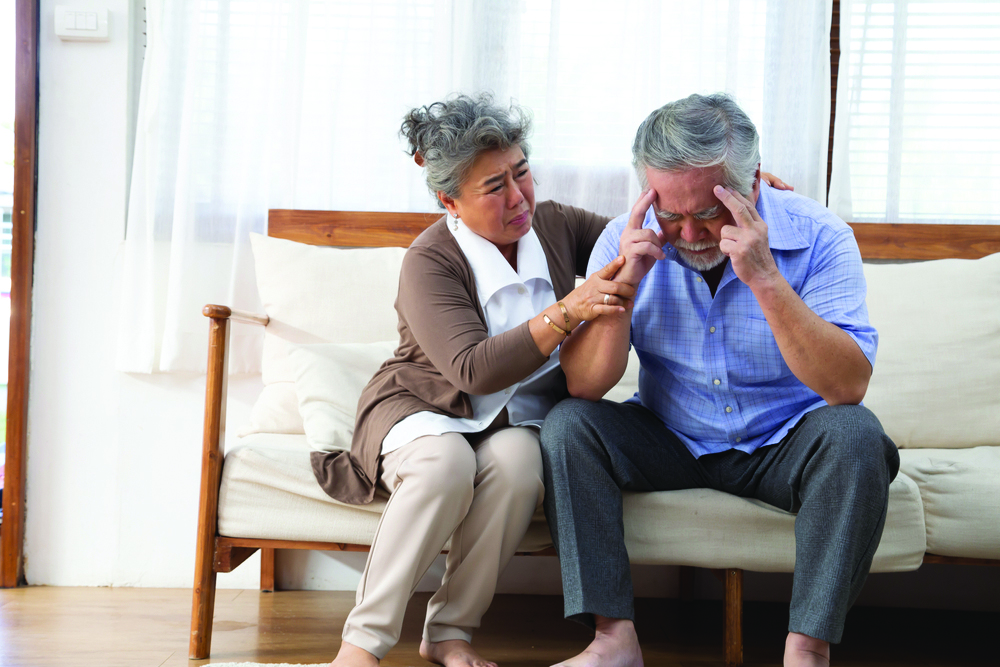
    Compassionate care involves addressing the needs of the individual as a whole — their physical, emotional, social and spiritual needs. While providers dedicate themselves to managing the physical symptoms of aging and disease, seniors may experience other pain as well, on a mental and spiritual level. Why is this happening to me? What will happen when I die? Will my family survive my loss? How will I make it through this? The time has come for us to find other avenues to help our family members cope. Here are some thoughts that may help find meaningful answers to these questions:

    Helping patients practice some form of religious or spiritual belief has been found to promote a happier disposition in individuals with advanced cancer diagnoses, who also, consequently, report having less pain. Common spiritual practices are performed by those who bring a faith-based system into their lives. The idea they would be in the loving presence of a higher power and that death was not an end, but a transition to another life, provides comfort.

    Promote daily routines that boost emotional well-being, such as bringing back cherished memories with a review of the family photo album. This will help to reduce worry, which leads to better health outcomes by allowing an individual to “let go” of concerns about their medical condition and live more in the present moment with loved ones who are eager to share these moments.

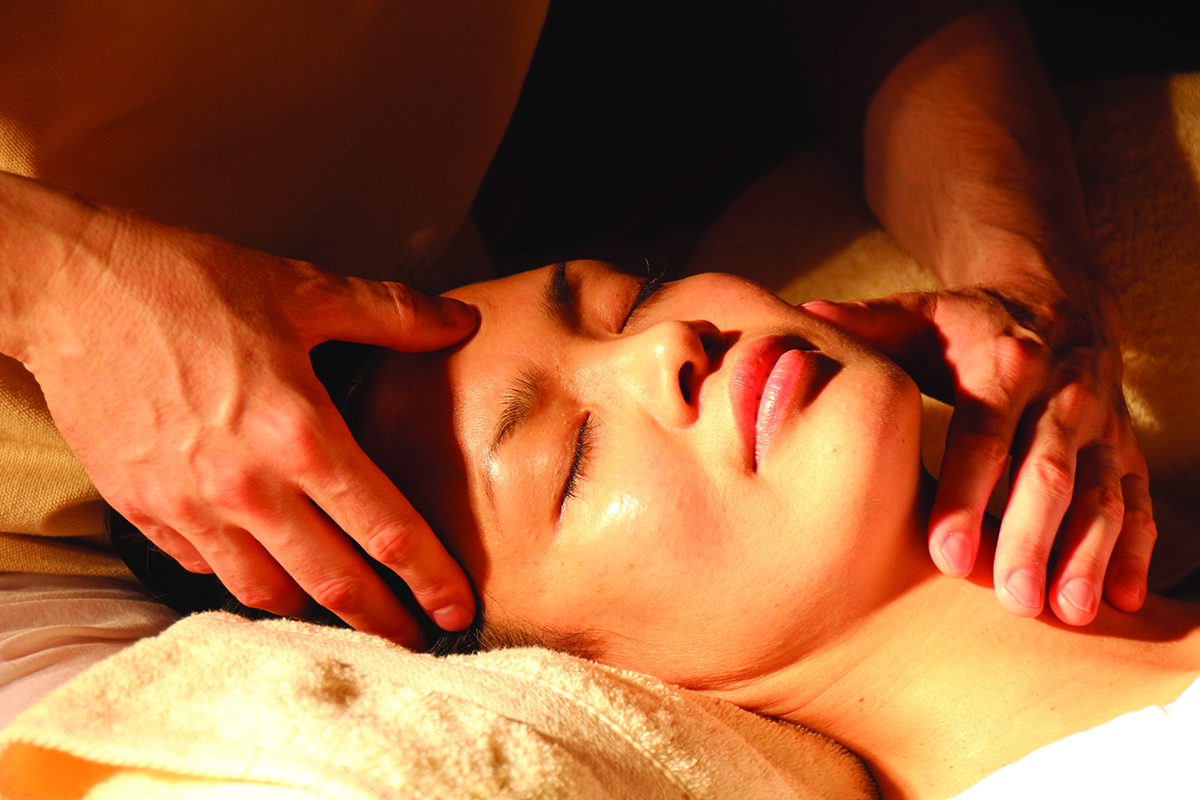
    Understand that the interpretation of “faith” can encompass many activities not directly related to traditional, religious beliefs. Meditation, massage, singing and following certain rituals all may have a spiritual component that is recognized by the individual, and thus defines what faith means to that person. The positive impact of a faith-based system, therefore, is not necessarily defined on society’s terms, but rather on its importance to the individual, in their own mind. Simple daily routines that promote joy and happiness can have a significant impact over time.

    Chaplains and local faith groups may be able to provide support in this respect, which in turn will have a positive impact the patient’s quality of life.  Whatever the practice is — praying, meditating, performing a ritual — the practice supports a meaningful personal existence, the fulfillment of life goals and a feeling that life as been worthwhile for the individual.

    Even the World Health Organization has recognized the meaning of “health” as “a state of complete physical, mental and social well-being, not merely the absence of disease.” It’s up to us to provide compassion and spiritual experiences for our loved ones when and where we can. This interaction is best accomplished face to face.


    ATTENTION PLUS CARE HOME HEALTHCARE
    Accredited by The Joint Commission
    1580 Makaloa St., Ste. 1060, Honolulu, HI 96814
    808-739-2811 | www.attentionplus.com
    AGING IN HAWAII EDUCATIONAL OUTREACH PROGRAM
    by Attention Plus Care — a program providing resources
    for seniors and their families, covering different aging
    topics each month. For class information and upcoming
    topics, call 808-440-9356.

    Compassionate care involves addressing the needs of the individual as a whole — their physical, emotional, social and spiritual needs. While providers dedicate themselves to managing the physical symptoms of aging and disease, seniors may experience other pain as well, on a mental and spiritual level. Why is this happening to me? What will happen…

  • Need a Hearing Aid? Buyer Beware!

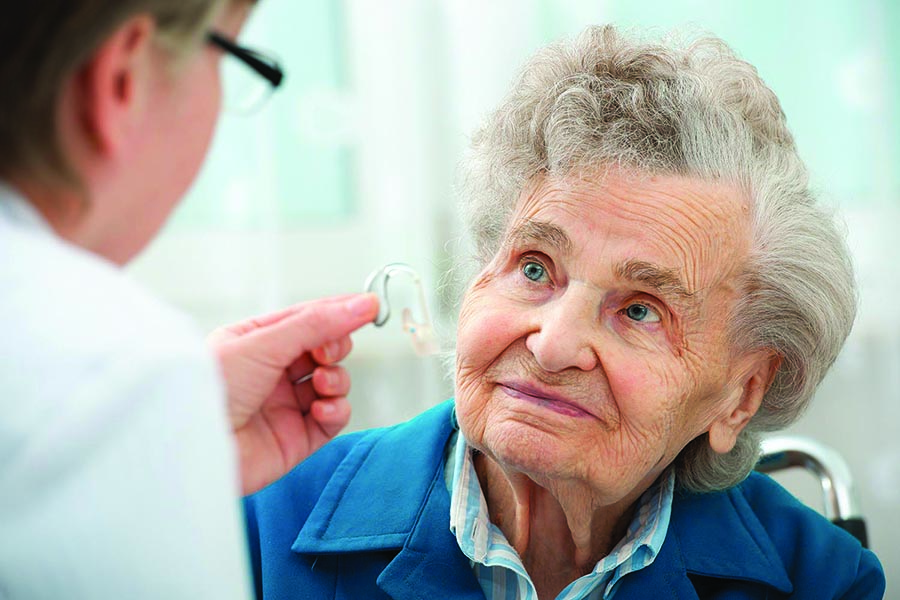
    Hearing loss is one of the most common health issues for seniors. The good news is that modern hearing aids are very effective in correcting hearing loss. Be aware that not all hearing aids are the same and not all providers are equal. Here are some tips that will ensure that you or a loved one get the best results when buying a hearing aid.

    Shop around: Don’t pay too much. By making a few phone calls, you will be surprised at the range of prices for the same make and model. Don’t rush: If you are told that a special price is only good if you buy “right now,” just walk away.

    Ask for a home trial: Make sure your provider offers a home trial period so you can see how the hearing aid performs where you live and work.

    Check out the provider’s service plan: Your hearing aid can give you years of quality hearing ability if you have reliable service plan.

    Feel good: Your audiologist and hearing aid specialist are important persons in your care team. Choose professionals who you feel comfortable with and who treat you well.

    Be sure to ask for a written, low-price guarantee on all major makes and models, and a risk-free home trial so you can be absolutely sure and satisfied with your purchase.


    OHANA HEARING CARE
    1296 S Beretania St., Ste. 102, Honolulu, HI 96814
    808-593-2137 | www.ohanahearingcare.com

    Hearing loss is one of the most common health issues for seniors. The good news is that modern hearing aids are very effective in correcting hearing loss. Be aware that not all hearing aids are the same and not all providers are equal. Here are some tips that will ensure that you or a loved…

  • Staying Healthy During Flu Season

    With so many different virus strains circulating, a flu shot is not the only defense for staying healthy. Preventative measures are the key to keeping illness at bay and avoiding giving the unwanted gift that keeps on giving. By being proactive and having a plan, you can raise the odds of staying flu-free.

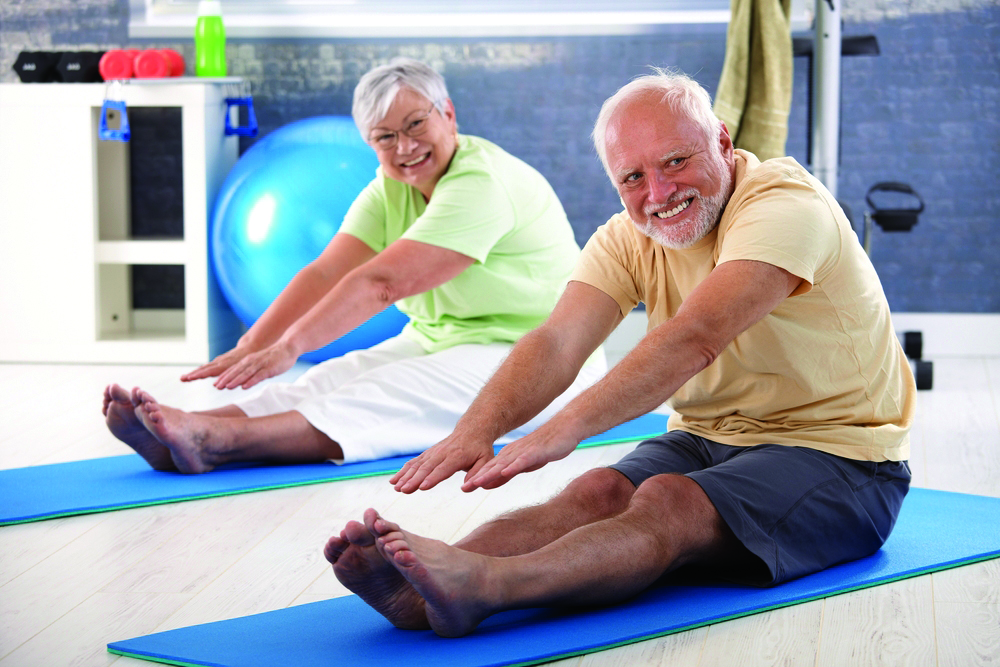
    Aside from sanitary best practices, such as washing your hands often, eating lots of fruits and vegetables, getting adequate rest and managing stress levels , exercise should be a part of your wellness plan. Among the obvious benefits of increased strength, energy and stamina, staying active on a regular basis helps with gut health, an important component of a robust immune system. Most people understand the concept, yet few will put it into action if exercise is not already part of their daily routine. Finding time throughout the day to stretch or do squats, even if it’s only in one-minute intervals, will boost your immunity.

    Beyond taking care of the physical body, emotional health is important, too. Fear can have adverse effects on the immune system. Be mindful of what information you are feeding your brain and how it makes you feel. Avoiding news and conversations that incite fear can be one of the most important things you can do. Positive emotions combined with self-care can help you thrive.


    BODY & BRAIN ENERGY HEALING CENTER MĀNOA
    2851 E Manoa Road #1-207, Honolulu, HI 96822
    808-691-9642 | www.bnbenergyhealing.com/manoa

    With so many different virus strains circulating, a flu shot is not the only defense for staying healthy. Preventative measures are the key to keeping illness at bay and avoiding giving the unwanted gift that keeps on giving. By being proactive and having a plan, you can raise the odds of staying flu-free.

  • How to Protect Yourself Against Coronavirus

    Persons over 55 with chronic diseases can die from the flu and COVID-19, the disease caused by the coronavirus. These diseases enter your lungs through your eyes, nose or mouth. Most people pick up viruses left on surfaces by infected persons. Flu bugs can live on surfaces, clothing and towels for up to two weeks! Since we touch our faces up to 90 times a day, breaking that habit will help keep us healthy.

    Stay clear of surfaces that other people have touched and their rubbish, as well as clothing sick people have worn. Wash your hands before putting on glasses, touching your hair, scratching your nose or mouth, or eating.

    Hand Washing

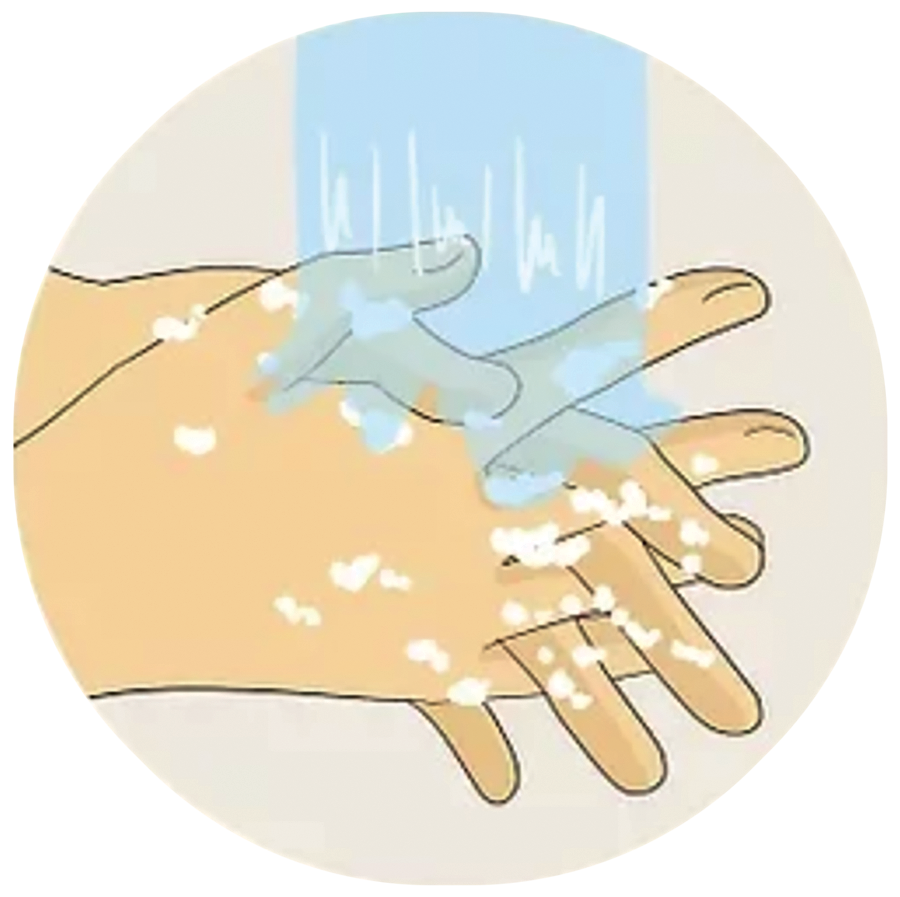
    Good hygiene is the best defense against viruses. Visit www.cdc.gov and read “When and How to Wash Your Hands.” Soap, water and friction cleanse your hands. Even hand sanitizer requires the friction of rubbing the hands together to lift off the oils that viruses stick to.

    Rub your wet, soapy hands together front and back — get under the nails. Continue 20 seconds — the time it takes to sing a full version of Happy Birthday. Rinse well and dry hands with a paper towel before turning off the faucet with the towel. Keep the towel to open the restroom door. Consider all faucets, doors and flush handles contaminated.

    Gloves

    Wearing gloves at the doctor’s office, and while shopping and running errands will protect your hands, but the greatest advantage may be that gloves remind you not to touch your face.

    Paper Masks

    Paper masks do not protect healthy people from viruses — in fact, they can carry them to their faces as they apply or adjust the mask. Masks are for symptomatic and sick people. Since droplets from an uncovered sneeze can travel up to 30 feet, always cover sneezes and coughs with the tight crook of your elbow. And of course, always wash your hands after blowing your nose!

    Symptoms

    COVID-19 causes a temperature and cough — not cold symptoms. If you have these symptoms, isolate yourself and call your doctor promptly.


    Get up-to-date information online:
    STATE OF HAWAI‘I DEPARTMENT OF HEATH WEBSITE
    www.health.hawaii.gov

    Persons over 55 with chronic diseases can die from the flu and COVID-19, the disease caused by the coronavirus. These diseases enter your lungs through your eyes, nose or mouth. Most people pick up viruses left on surfaces by infected persons. Flu bugs can live on surfaces, clothing and towels for up to two weeks!…

  • Hydrating Helps Prevent Falls

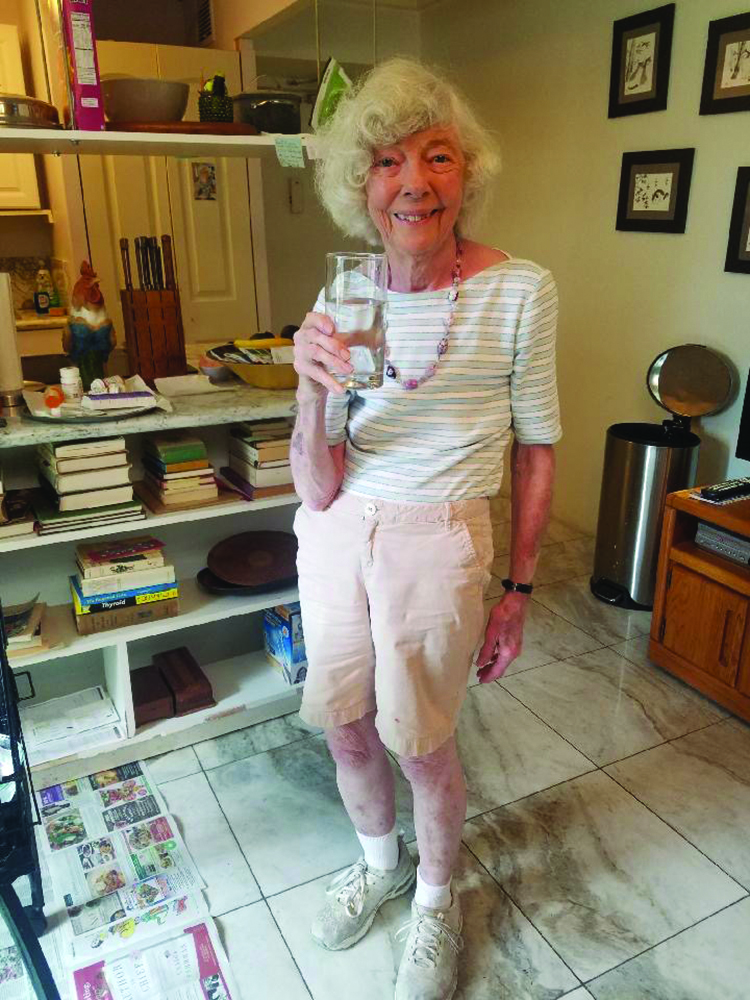
    It is part of our practice to ensure our patients drink ample water during a physical therapy session. The fact that water counts for 95 percent of the brain, 82 percent of blood and 73 percent of muscle tissue explains how important it is to be hydrated.  Dehydration can pose serious health problems for older adults, especially with Hawai‘i’s hot, humid weather. Dehydration  symptoms that increase fall risk are dizziness, weakness, fatigue, confusion and low blood pressure.

    Blood pressure can drop so low with dehydration that a condition called “orthostatic hypotension” can occur. As a person rises from lying down or sitting, blood rushes out of the brain, causing dizziness, faintness and weakness. This can result in a collapse or fall. Drinking more fluid would increase blood volume and help prevent a drop in blood pressure, thus reducing the risk of falling.

    If you feel dizzy or light-headed when changing positions from prone to sitting or standing, we recommend waiting roughly 20 seconds before moving to allow more blood circulation and for the dizziness to subside. If you still feel light-headed, lie back down immediately. If you commonly experience this type of dizziness, drinking more fluids may be your solution.

    Drinking plenty of fluids and eating foods with high water content every day is a great way to keep your body properly hydrated to prevent possible falls and injuries.


    MAKAI MOBILE REHAB LLC (In-Home Physical Therapy)
    Yunsim Suehisa, PT, DPT Physical Therapist
    808-277-4073 | ysuehisapt@gmail.com
    www.makaimobile.com

    It is part of our practice to ensure our patients drink ample water during a physical therapy session. The fact that water counts for 95 percent of the brain, 82 percent of blood and 73 percent of muscle tissue explains how important it is to be hydrated.  Dehydration can pose serious health problems for older…

  • Colon Cancer Testing

    More than 50,000 Americans die each year from colorectal cancer. The heartbreaking thing is that most of these deaths could have — and should have — been prevented.

    Screening is the No.1 way you can reduce your risk of colon cancer. If found early, colon cancer is one of the most treatable forms of the disease.

    Know Your Options

    From colonoscopies to at-home stool tests, there is an option for everyone to get screened. The only questions are what method to use, when to get screened and how often.

    There are several different ways to be screened for colon cancer, including laboratory tests on your stool, simple procedures and imaging tests. It’s important to discuss with your doctor which screening option is best for you given your medical condition and preferences.

    The U.S. Preventive Services Task Force (USPSTF) recommends colon cancer screenings starting at age 50 through age 74. According to the USPTSF, your stool should be tested every one to three years. You should also have a direct visualization of your colon through a simple procedure every three to 10 years.

    Advocate for your health! Do not put it off. Talk to your doctor about getting checked.


    MDX HAWAI‘I
    500 Ala Moana Blvd., Ste. 2200, Honolulu, HI 96813-4993
    808-522-7500 | www.mdxhawaii.com
    MDX Hawai‘i has over 34 years of experience serving the people of Hawai‘i. Our physician network represents over 630 primary care physicians, and 2,200 specialists, hospitals and ancillary providers. MDX Hawai‘i contracts with Humana HMO, Humana PPO, and AARP/UnitedHealthcare PPO Medicare Advantage Plans.

    More than 50,000 Americans die each year from colorectal cancer. The heartbreaking thing is that most of these deaths could have — and should have — been prevented. Screening is the No.1 way you can reduce your risk of colon cancer. If found early, colon cancer is one of the most treatable forms of the…

  • Proper Use of a Foam Roller

    The popularity of the foam roller has been growing so steadily in the world of fitness that it is often used as a cure-all for many different conditions. It is a great tool for increasing mobility of the spine and soft tissue if used correctly. If it’s not used the right way, you could be doing more harm than good.

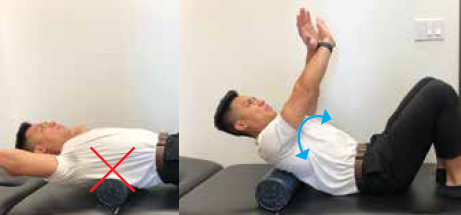
    If you are rolling your lumbar spine (lower back), stop! Although the thoracic spine (middle back) is supported by the strong rib cage, the lumbar spine is not, which makes it more unstable. Forcing the lower back into more extension may cause more issues, increasing pain and sometimes causing stress fractures. But targeting the thoracic area and the region between your shoulder blades will improve mobility and overall posture.

    You will block the thoracic spine with your shoulder blades if you clasp your hands behind your head, so expose the spine by reaching out, crossing your wrists and rounding the shoulders. Relax your abs, drop your butt and sink into the foam roller. Gently roll the tight spot, rocking side to side. Slowly bring your arms back over your head to get a great stretch.


    MOON PHYSICAL THERAPY, LLC
    320 Ward Ave., Ste. 107, Honolulu, HI 96814
    95-1057 Ainamakua Drive, F-11, Mililani, HI 96789
    808-597-1005 | www.moonpt.com

    The popularity of the foam roller has been growing so steadily in the world of fitness that it is often used as a cure-all for many different conditions. It is a great tool for increasing mobility of the spine and soft tissue if used correctly. If it’s not used the right way, you could be…