Category: Date

  • Part II: Beware of Pretty Packages

    by Scott Spallina, Senior Deputy Prosecuting Attorney

    In the last issue, I covered the lessons my mother-in-law, “Mary,” taught me through her encounters with various scam artists she has met over the years. Unfortunately, those incidents were only the tip of the iceberg.

    Shortly after Mary’s run-in with the Y2K hucksters, she met a charismatic man who advertised seminars that would “make money for attendees.” His scheme was simple — don’t pay your taxes. He claimed paying taxes was optional; nowhere in the tax code did it say you had to pay. Despite my advice, she supported this man, went to his criminal trial in federal court when he was indicted and was there when he was eventually sentenced to prison. Naturally, he claimed his conviction was the government’s attempt to stop him from “exposing the truth.” The only truth he did expose, however, was that people will believe anything — if its packaged well.

    After this man’s incarceration, my wife and I discovered that we were expecting a baby. Mary wanted to insure financial stability for my growing family. She did this by investing in a local company that was going to create a website bigger than Ebay or Amazon — according to the owner. She was encouraged to bring in more people wanting to invest thousands of dollars to get in on the ground floor of this no-lose, get-rich opportunity. The contract they had her sign obligated her to pay monthly fees for their “trainings.” Although nothing else was promised in writing, verbal promises made by the owner during his speeches were plentiful. Articulate, passionate and good looking, he had hotel ballrooms filled with people applauding his high-energy speeches. Then, the government came and closed him down for illegal business practices. I suspect this was all some sort of pyramid scheme disguised as an investment opportunity. It was probably around this time I first heard the phrase, “A pretty package can hide toxic contents.”

    Another time, my in-laws were fixing up a rental property and hired a cash-only repairman. They knew a friend of a friend who was unlicensed but known to do side jobs. They gave him money; he did not do the work (no contract was written up). When they hunted him down (literally) for the return of the money, he made excuses as to why he didn’t do the job but couldn’t return the cash. Because of his relationship with the family, tangential as it was, the breach of trust was more painful than that from the slick-talking con artists previously encountered.

    It was this experience that led me to join a working group with the state Department of Commerce and Consumer Affairs (DCCA) to write legislation making it a felony crime for an unlicensed contractor to accept money for work.

    In the next issue, I will conclude this series by sharing Mary’s encounter with a domestic terrorist group and how she invited a con artist into her home — literally.

    _______________

    To report suspected elder abuse, contact the Elder Abuse Unit at 808-768-7536  |  ElderAbuse@honolulu.gov

    In the last issue, I covered the lessons my mother-in-law, “Mary,” taught me through her encounters with various scam artists she has met over the years. Unfortunately, those incidents were only the tip of the iceberg.

  • Reflecting on What is Important

    by Stephen B. Yim, Attorney at Law

    I had been preparing to write about the importance of conversation in estate planning while watching a documentary on HBO called Cries From Syria. In the midst of this heart-wrenching story about the Syrian situation—a girl, who could not have been older than 8 or 9—facing death from starvation and preparing her will. It had nothing to do with money. Her will expressed the basic foundational needs each of us as human beings share — love and caring of family, food and shelter. This experience moved me to share her will with you.
    A girl living in a Syrian refugee camp.
    A girl living in a Syrian refugee camp.

    For me, as much as I felt a deep sadness over the plight of the Syrian people, I could not help but feel gratitude for all that I have, and guilt for ever feeling a “need” for more. I hope this will from a young Syrian girl moves you as it did me.

    “I felt that I was going to die. Because of that, I wrote my will. This is my will. I ask you, my mother, to remember me. Prepare my bed every night and remember my continuous smiles. And you, my sister, tell my friends that I died from starvation. And you, my brother, remember when you and I were hungry. Oh angel of death, go ahead and catch my soul so that I can eat in paradise. Don’t worry family, I will eat for you in paradise as much as I can.”  N

    Stephen B. Yim, Attorney at Law
    2054 S. Beretania St., Honolulu HI 96826

    808-524-0251  |  stephenyimestateplanning.com

    I had been preparing to write about the importance of conversation in estate planning while watching a documentary on HBO called Cries From Syria. In the midst of this heart-wrenching story about the Syrian situation—a girl, who could not have been older than 8 or 9—facing death from starvation and preparing her will. It had…

  • Essential Dialogue About Family Wealth

    by Michael W. K. Yee, Financial Advisor and Certified Financial Planner

    According to the Family Wealth Checkup study by Ameriprise Financial, there’s a correlation between financial confidence and communication. While many families are discussing financial issues, they tend to shy away from topics like inheritance and estate planning, leaving some with unrealistic expectations. But family conversations about finances lay the foundation for a more secure financial future for the people closest to you.

    Tips for Family Discussions About Finances

    Don’t wait for a tragedy to bring up the topic. Nine in 10 adult children say a life-altering event triggered a financial talk with their parents. It’s best to have these conversations when all the important players in your estate plan can participate and communicate. With time on your side, you can cover topics thoroughly and have leeway to get the proper documents in place.

    Families who have opened this dialogue report that it went much smoother than anticipated — conversations were straightforward and relaxed as opposed to awkward or difficult.

    Schedule the conversation; make it a priority. Rather than just hope a conversation will happen, let each family member know ahead of time that you want to talk. Complex estates may require multiple discussions, so schedule a date to continue as needed. After your initial discussion, keep family members up-to-date about changes.

    Share your agenda ahead of time. Consider starting the conversation by sharing your financial goals and values. Other topics on the agenda may include managing current finances, healthcare costs and legacy planning.

    Manage expectations. It’s important to disclose enough detail so that your family can set appropriate expectations. If part of your legacy plan includes leaving an inheritance, consider letting your family know whether it’s an amount large enough to help fund your grandchildren’s education or closer to a down payment on a car. Only 21 percent of parents have told their kids how much they can expect to receive.

    Create or update your estate plan. Pair your conversations with a comprehensive estate plan to prevent rifts that can happen when financial wishes are not clearly documented. Your estate encompasses anything you own. Creating a plan that determines what happens to these assets and accounts — no matter the size of your estate.

    If you already have a plan in place, update it to mirror the blueprint you’ve shared with your family and consider providing instructions in a healthcare directive in the event that you cannot act on your own behalf in the future.

    Disclose locations of important documents. Prevent headaches that can slow down the settlement of your estate by providing instructions —
    where you’ve stored the safety deposit key, bank accounts, stock certificates and digital assets, etc. Ensure that your family has contact information of the professionals (lawyer, estate planner, tax, financial advisor) who are helping you plan.

    Work with a financial professional. If you experience conflict in your family discussions or want some help navigating difficult topics, consider working with a neutral third party, such as a financial advisor. A financial professional can help family members understand your collective financial picture and can facilitate the transition of wealth from one generation to the next.

    Ongoing dialogue about estate topics with family members can bring you closer together and pave the way for a smooth transfer of wealth —
    when the day comes.

    According to the Family Wealth Checkup study by Ameriprise Financial, there’s a correlation between financial confidence and communication. While many families are discussing financial issues, they tend to shy away from topics like inheritance and estate planning, leaving some with unrealistic expectations.

  • The Aloha State: A Model for Kūpuna Care

    by Margaret A. Perkinson, Ph.D., Center on Aging Director – University of Hawai‘I 

    Never in the history of humankind have so many people lived so long. Anthropologists estimate that on average, Neanderthals lived little more than 20 years; only a small percent reached 40. In 15th century Europe, the average life expectancy reached a scant 35 years. Around the turn of the 20th century, however, advances in public health (clean water, waste disposal, vaccinations) decreased infectious diseases, greatly reducing infant and child mortality and increasing life expectancy. Since WWII, global average life expectancy increased from 45 to 69.6 years. By 2040, the number of people expected to reach age 65 is projected to reach 79.7 million. The number of seniors expected to reach age 80 is projected to increase 233 percent by 2040.

    As a species, we have made greater gains in average life expectancy in the past 100 years than in the previous 200,000 years! To put it another way, half of all humans who ever reached age 65 are still alive today!ever in the history of humankind have so many people lived so long. Anthropologists estimate that on average, Neanderthals lived little more than 20 years; only a small percent reached 40. In 15th century Europe, the average life expectancy reached a scant 35 years. Around the turn of the 20th century, however, advances in public health (clean water, waste disposal, vaccinations) decreased infectious diseases, greatly reducing infant and child mortality and increasing life expectancy. Since WWII, global average life expectancy increased from 45 to 69.6 years. By 2040, the number of people expected to reach age 65 is projected to reach 79.7 million. The number of seniors expected to reach age 80
    is projected to increase 233 percent by 2040.

    Recent global declines in birth rates contributed to populations’ increased percentages of old compared to young. In the near future, persons aged 65 and over will outnumber children under age 5 for the first time in history.

    These population changes will have a great impact on both individual life experiences and social institutions. As the average size and composition of families change, with multiple generations and fewer members in each succeeding generation, fewer caregivers will be tending to more older adults, in addition to raising their own children!

    Older populations confront long-term, sometimes incurable health challenges, such as cardiovascular disease, cancer and dementia. Chronic conditions demand reformulated forms of health-care — community-based long-term care, in-home care and support systems to enable continued independence and quality of life.

    With its aloha spirit and extensive network of ‘ohana dedicated to elder well-being, Hawai‘i is the perfect place to assume a leadership role in developing service models to address the health and social challenges of aging in the modern world by providing optimal kupuna care.

    CENTER ON AGING — University of Hawai‘i at Mānoa
    2430 Campus Rd., Gartley Hall, 201B, Honolulu HI 96822

    808-956-6124  |  map3@hawaii.edu
    www.hawaii.edu/aging/

    Never in the history of humankind have so many people lived so long. Anthropologists estimate that on average, Neanderthals lived little more than 20 years; only a small percent reached 40. In 15th century Europe, the average life expectancy reached a scant 35 years. Around the turn of the 20th century, however, advances in public…

  • Help Hawaii Meals on Wheels Keep Rolling

    by Shayna Fujimoto, Generations Magazine Intern

    It's a gift to give... a smile, an encouraging word, a moment of your time. And the reward? The satisfaction of knowing you helped a kupuna in need.
    It’s a gift to give… a smile, an encouraging word, a moment of your time. And the reward? The satisfaction of knowing you helped a kūpuna in need.

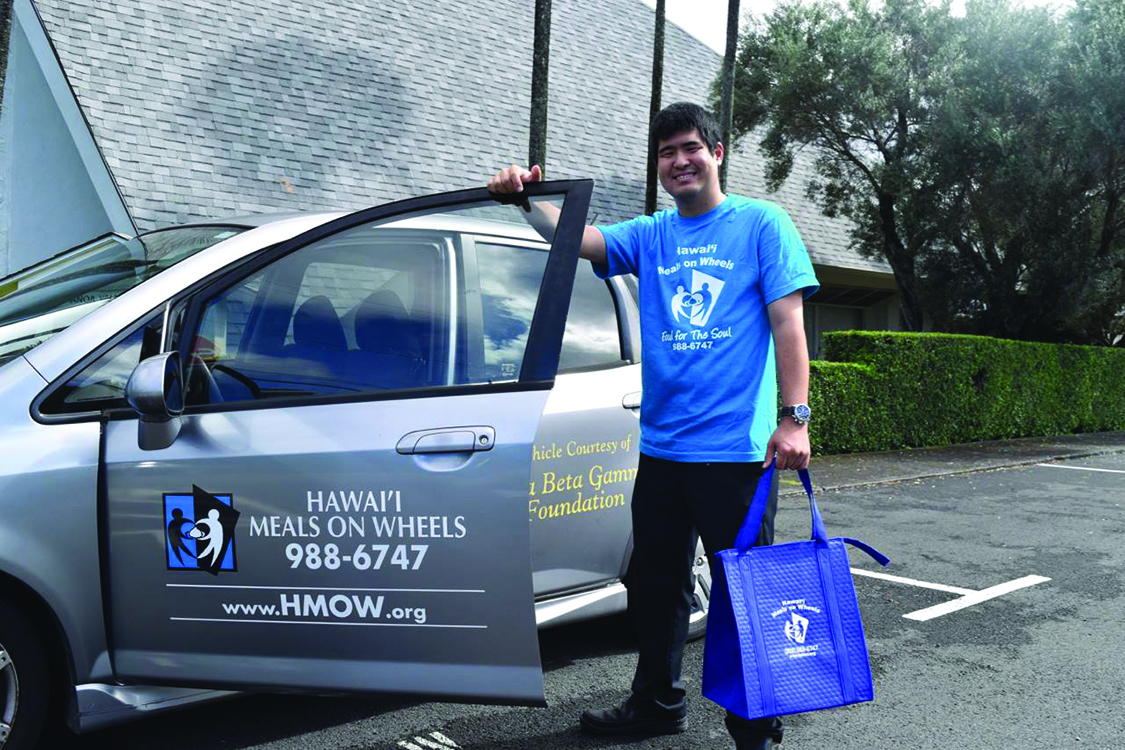
    Since 1979, Hawaii Meals on Wheels has been serving hot meals to the kūpuna in need in our communities. The program started as a small committee formed by former State of Hawai‘i librarian Irmgard Hörmann and the Social Ministries Committee of the Lutheran Church of Honolulu. Over time, the organization grew as it sought to provide basic nutritional and human support to seniors who are unable to fully care for themselves. What started as two routes manned by six volunteers is now a collaborative effort involving 450 volunteers and over 50 routes that served more than 97,000 meals in 2016.

    Hawaii Meals on Wheels provides hot, nutritious meals for seniors, delivering them to the homes of those who are unable to shop or cook for themselves and do not have someone currently caring for them.

    By the year 2020, it is estimated that 25 percent of Hawai‘i’s population will be 60 years of age or older. Compared to the nation as a whole, the Aloha State has a disproportionately large population of seniors, many of whom may be unable to sufficiently care for themselves. Organizations like Hawaii Meals on Wheels strive to help seniors maintain a comfortable standard of living. For some who depend on these services, this may be the only meal they eat per day and the only personal interaction they experience.

    Nonprofit programs such as this rely heavily on volunteer support. Not only do they help deliver meals, but they also monitor the welfare of these seniors, while providing them with interaction and companionship that many home-bound kūpuna would not otherwise receive. As the senior population in Hawai‘i continues to grow, so does the need for these services. Unfortunately, because the Meals on Wheels program relies on volunteer help, donations and government funding, not everyone who applies for the program can be accommodated.
    Not all seniors are fortunate enough to have family members who can care for them every day, nor are they able to afford senior care homes or in-home caregivers. Part of the issue is that those who lack the mobility, energy or capability to care for themselves are also unable to leave their homes — their struggle may go unnoticed. As a result, many people are unaware of the scope of their problems and do not reach out to help the kūpuna in their communities. However, almost anyone that wishes to lend a hand can do so in some way.

    Meals on Wheels is always in need of volunteer drivers. In addition, those who wish to assist in other ways can help with the September fundraiser gala or administrative projects, or serve on the advisory panel. Meals on Wheels not only helps feed and care for our seniors in need, but also provides those who are healthy and active an opportunity to give back to a generation who once fed and cared for them.

    HAWAII MEALS ON WHEELS
    P.O. Box 61194, Honolulu HI 96839

    808-988-6747  |  www.hmow.org

    Since 1979, Hawaii Meals on Wheels has been serving hot meals to the ku¯puna in need in our communities. The program started as a small committee formed by former State of Hawai‘i librarian Irmgard Hörmann and the Social Ministries Committee of the Lutheran Church of Honolulu. Over time, the organization grew as it sought to…

  • Caregivers Need Support, Too

    by Jerry Correa, President & CEO

    Many of these supporters dutifully provide care without complaint. Yet, demands may start to take a toll and their own health may be compromised.t’s estimated there are more than 150,000 unpaid family caregivers in Hawai‘i. These valuable helpers are typically women in their early 60s who are caring for their husbands or elderly parents while still working. And that doesn’t take into account those who may occasionally care for their grandchildren, as well.

    Professionals can provide solutions to a variety of situations. Local programs are available in Hawai‘i ensure everyone feels comfortable and confident about their caregiver role. One option is the AUW Active Aging Initiative, which strives to keep active seniors healthy and maintain strong family caregivers.

    There are also practical, hands-on caregiver training classes that covers bathing an elder, proper nutrition, wheelchair-bed transfers and more.

    Home care services also offer respite for caregivers who need a break or a helping hand, including light housekeeping, meal preparation, transportation…

    Find a local program that fits your needs.

    ST. FRANCIS HEALTHCARE SYSTEM
    PO Box 29700, Honolulu HI 96820

    808-547-6500  |  info@ stfrancishawaii.org
    www.stfrancishawaii.org


    Many of these supporters dutifully provide care without complaint. Yet, demands may start to take a toll and their own health may be compromised.t’s estimated there are more than 150,000 unpaid family caregivers in Hawai‘i. These valuable helpers are typically women in their early 60s who are caring for their husbands or elderly parents while…

  • Real Property Tax Credit For Homeowners

    by Fusao Nishibun, Tax Relief Supervisor, City and County of Honolulu Property Tax Office

    The City and County of Honolulu offers a real property tax credit to property owners who meet certain eligibility requirements. If you qualify, you are entitled to a tax credit equal to the amount of taxes owed for the current tax year that exceed 3 percent of the titleholders’ combined gross income.

    What are the eligibility requirements?

    • Homeowner must have a home exemption in
      effect at the time of application and for the subsequent tax year.
    • Any of the titleholders do not own any other property anywhere.
    • The combined income of all titleholders does not exceed $60,000.

    How do I apply for the tax credit program?

    Applications are available at the following locations beginning July 1, 2017, up to the deadline date of Oct. 2, 2017. And, importantly, you must file annually for this credit.

    • All Satellite City Hall locations
    • Treasury Division at 530 S. King St., Honolulu
    • Tax Relief Section at 715 S. Kings St., Honolulu
    • Online at www.honolulupropertytax.com

    When will the tax credit be applied to my real property taxes?

    If approved, the tax credit will be applied to the July 1, 2018, to June 30, 2019, tax year.

    TAX RELIEF OFFICE

    808-768-3205  |  www.honolulupropertytax.com

    *Information subject to change without notice.For more information or assistance, contact the Real Property Tax Relief Office.


    The City and County of Honolulu offers a real property tax credit to property owners who meet certain eligibility requirements. If you qualify, you are entitled to a tax credit equal to the amount of taxes owed for the current tax year that exceed 3 percent of the titleholders’ combined gross income.

  • It’s Never Too Late to Learn

    by Shayna Fujimoto, Generations Magazine Intern

    Henry Ford once said, “Anyone who stops learning is old, whether at 20 or 80; anyone who keeps learning stays young.”

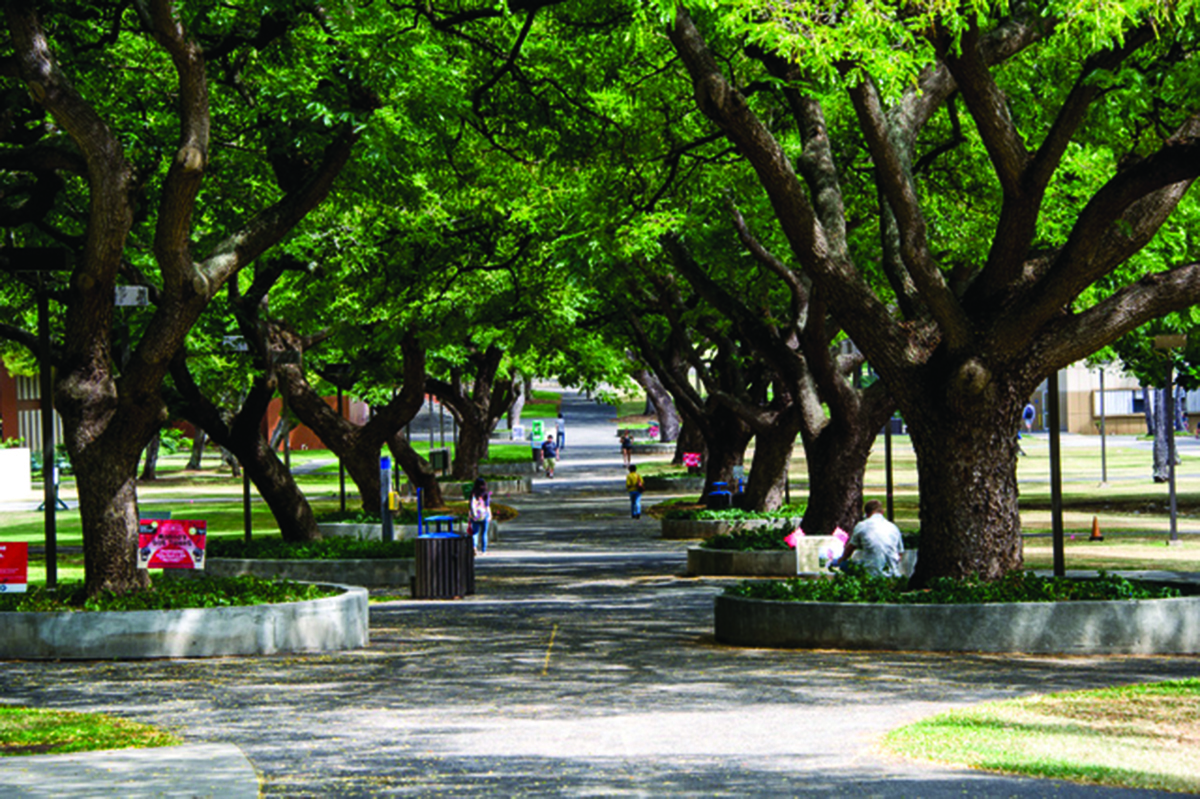
    Na Kupuna is a program that provides seniors an opportunity to do just that. As a part of the University of Hawaii’s Student Equity Excellence Diversity (SEED) initiative, Na Kupuna opens up college courses to seniors age 60 and older, which they can attend for free. About 650 senior citizens take advantage of this program every semester!

    Although no credit is awarded and no records are kept, seniors can learn more about subjects of their choice, discuss topics with their professors and ask them questions. Up to two courses can be chosen per semester.

    Both “regular” students as well as other seniors attend these classes, providing a way to meet, connect and network with students of all ages who share your interests.

    Because this program is free of charge, the only requirement is an email address, which the university will use to keep in contact with you throughout the semester.

    Check online for the class availability for the upcoming Fall 2017 semester (August through December), as well as the description of courses:

    www.tinyurl.com/UHclassesFall2017
    www.tinyurl.com/UHcourseDescription

    If you are interested in enrolling, contact
    Dr. Patricia Masters for deadline information or for more details on how to sign up.

    NA KUPUNA — SENIOR CITIZEN VISITOR PROGRAM
    Queen Lili‘uokalani Center for Student Services 413

    Dr. Patricia Masters
    808-956-4642  |  nakupuna@hawaii.edu

    www.tinyurl.com/NaKupuna-SCVP

    Henry Ford once said, “Anyone who stops learning is old, whether at 20 or 80; anyone who keeps learning stays young.” Na Kupuna is a program that provides seniors an opportunity to do just that. As a part of the University of Hawaii’s Student Equity Excellence Diversity (SEED) initiative, Na Kupuna opens up college courses…

  • Maximizing Mobility as We Age

    by Julie Moon, Physical Therapist HEALTH

    As we age, we lose flexibility, strength and balance, which affects our general health and mobility. The good news is therapeutic exercise can help improve mobility and function.

    Balance, flexibility and strength are essential to improve mobility and maintain independence.

    Poor balance increases the risk of falls and when combined with osteoporosis can lead to fractures, which affect mobility. Good balance comes from strengthening the muscles of your core, back and lower extremities.

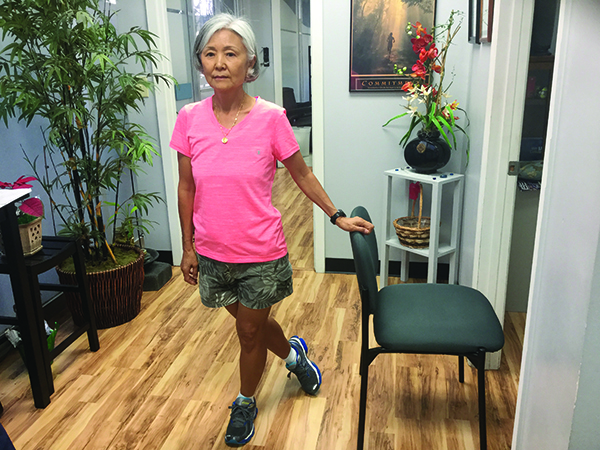
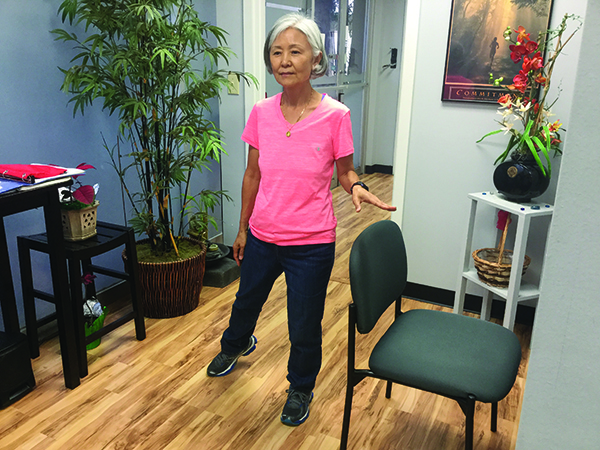
    Single Leg Balance With Clock Reach

    This easy exercise incorporates strengthening, stabilization and flexibility training.

    Imagine you are standing in the middle of a clock. Bend legs slightly, reach forward with one foot at 12 o’clock, then move it back to the starting position. Reach toward 3 o’clock, then back and continue toward 6 and 9 o’clock. Repeat 10 times. Keep your core tight and hips level when stepping. Hold onto a chair for balance as needed.

    It’s never too late to start increasing muscle strength and you don’t need fancy equipment to improve posture, mobility and function. Physical therapy can help increase mobility, return your independence and provide you with a renewed sense of confidence.

    Moon Physical Therapy, LLC
    320 Ward Ave., Ste. 107, Honolulu HI 96814

    Programs: Aquatic, Land-based & Manual Therapy, Cardiopulmonary Rehab

    808-597-1005 | www.moonpt.com
    Moon Physical Therapy, LLC

    by Julie Moon, Physical Therapist HEALTH As we age, we lose flexibility, strength and balance, which affects our general health and mobility. The good news is therapeutic exercise can help improve mobility and function. Balance, flexibility and strength are essential to improve mobility and maintain independence. Poor balance increases the risk of falls and when…

  • Pain Solutions with Acupuncture

    by James Carter, L.Ac. 

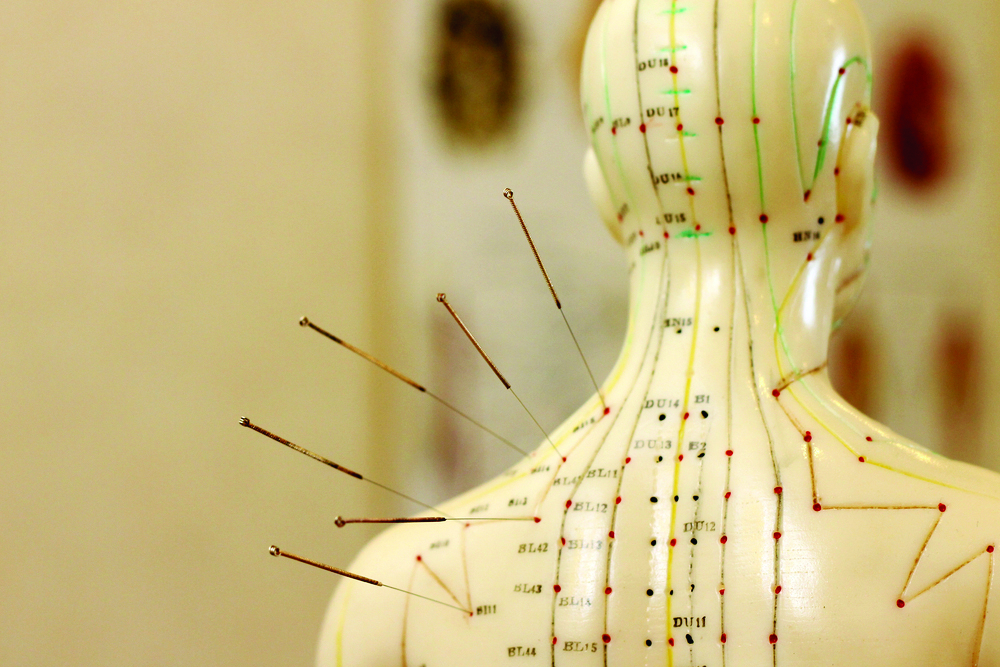
    More than one in four Americans suffer from a chronic pain condition. Pain is not only physically debilitating, but also affects our emotional and mental health. The primary causes of chronic pain are injuries, inflammation, poor circulation and age-related degeneration.

    The most common chronic pain afflictions occur in major joints and muscle groups. Left untreated, chronic pain can worsen over time, leading to immobility and loss of independence.ore than one in four Americans suffer from a chronic pain condition. Pain is not only physically debilitating, but also affects our emotional and mental health. The primary causes of chronic pain are injuries, inflammation, poor circulation and age-related degeneration.

    Fortunately, there are natural ways to alleviate these types of conditions that do not carry the side effects or risks associated with medications and surgery. Skillfully performed acupuncture and Chinese medicine treatments can alleviate chronic pain and treat a wide variety of pain conditions.

    From a Chinese medicine perspective, chronic pain is seen as the body’s inability to provide proper circulation of blood, oxygen and nutrients to these painful, affected areas. One of acupuncture’s most unique features is its ability to gently stimulate the body’s tiniest nerves and create a natural healing response in areas that are painful or not functioning well. Through a series of treatments, even some of the most chronic and painful conditions can be dramatically improved.

    LUNA ACUPUNCTURE & WELLNESS LLC

    503-853-2866 | James@LunaAcupunctureWellness.com
    www.LunaAcupunctureWellness.com

    by James Carter, L.Ac.  More than one in four Americans suffer from a chronic pain condition. Pain is not only physically debilitating, but also affects our emotional and mental health. The primary causes of chronic pain are injuries, inflammation, poor circulation and age-related degeneration. The most common chronic pain afflictions occur in major joints and…

  • Hospice Hawaii Lāna’i Hope House

    by Generations Magazine Staff

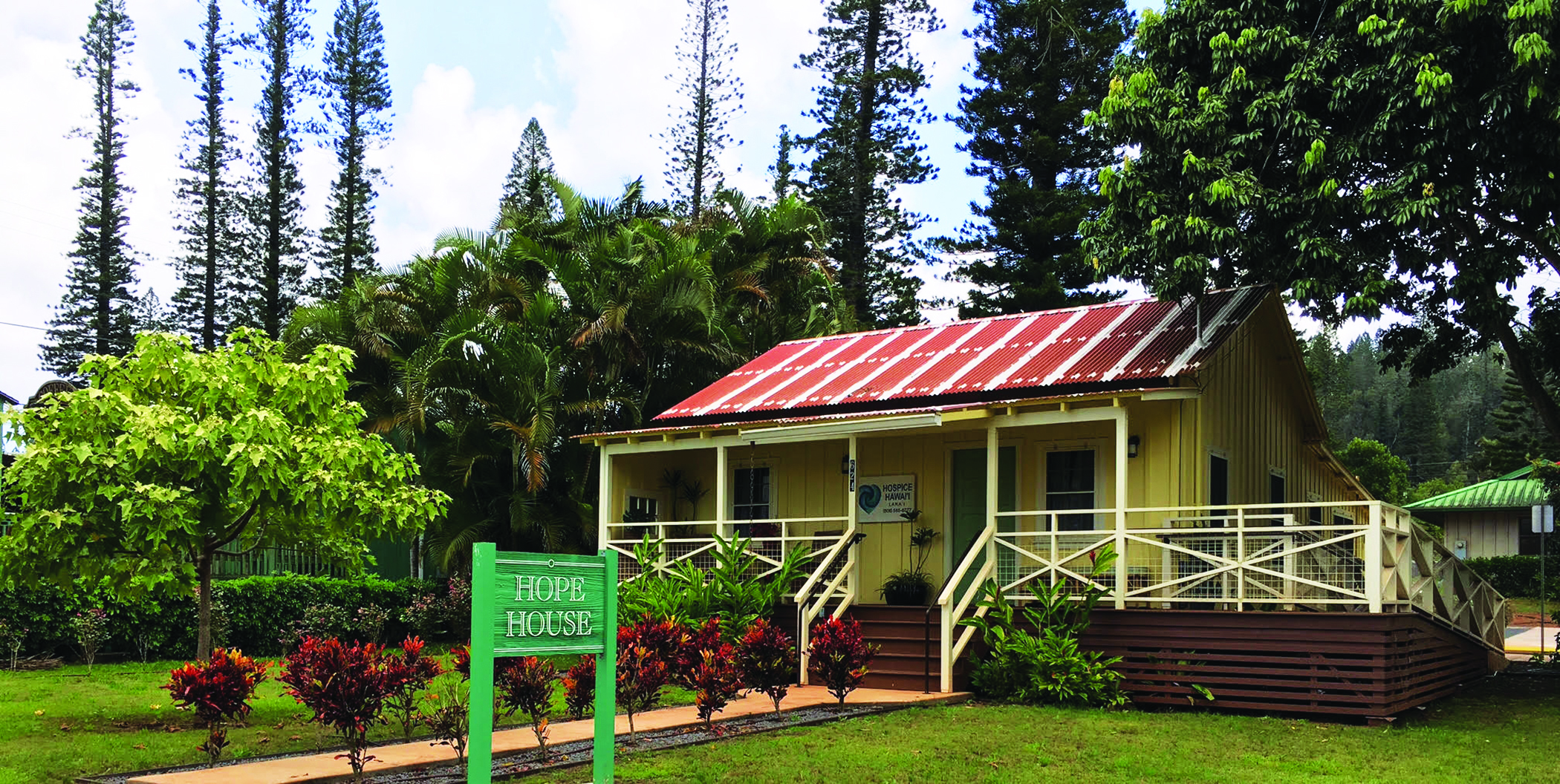
    Hospice Hawaii Lāna’i is celebrating the one-year anniversary of Hope House, a home-away-from-home for many patients and their families.
    “We’re so excited to celebrate this milestone with our friends at Hospice Hawaii Lānai,” said Kenneth L. Zeri, president and CPO of Hospice Hawaii. “Since opening its doors in April 2016, Hope House has served as a care center for patients and their families, and we look forward to supporting our patients on Lāna’i for many years to come.”

    The Hope House offers a peaceful and supportive environment for Hospice Hawaii patients and their loved ones. The renovated two-bedroom home features a charming design while maintaining its plantation-style look for a home-like feel. The space also boasts a handicap-accessible floor plan as well as administrative offices for the Hospice Hawaii Lāna’i staff.

    Patients who experience symptoms that are difficult to manage at home are encouraged to visit the Hope House and receive one-on-one care by certified professionals. The Hope House also serves as a respite for caregivers, ensuring that both families as well as patients are supported.
    Hospice Hawaii first fulfilled the critical need for hospice care on Lāna’i, serving its first patient in 2014. Since then, Hospice Hawaii has cared for 20 patients on the island.

    Hospice Hawaii was established in 1979 to help patients live as fully as possible, to provide com-fort and relief from pain, and to aid in symptom management. An interdisciplinary team of professionals and trained volunteers strive to meet the physical, emotional, psycho social, and spiritual needs of patients and families in the comfort of their own homes, its Kailua Home, nursing homes and other facilities.

    Hospice Hawaii Lāna’i

    624 Ilima St., Lāna’i City
    808-565-6777
    www.hospicehawaii.org

    by Generations Magazine Staff Hospice Hawaii Lāna’i is celebrating the one-year anniversary of Hope House, a home-away-from-home for many patients and their families. “We’re so excited to celebrate this milestone with our friends at Hospice Hawaii Lānai,” said Kenneth L. Zeri, president and CPO of Hospice Hawaii. “Since opening its doors in April 2016, Hope House has…

  • 11th Annual Aging In Place Workshop

    The 11th Annual Aging in Place Workshop takes place on Saturday, August 19

    8:30 am – 2:30 pm
    Ala Moana Hotel *No Reservations Required

    Click image to enlarge

    The 11th Annual Aging in Place Workshop takes place on Saturday, August 19 8:30 am – 2:30 pm Ala Moana Hotel *No Reservations Required Click image to enlarge