Category: Dec 2019 – Jan 2020

  • Where’s That Donation Going?

    If you want to make a donation, first go online and research the charity. Check the Better Business Bureau or the Federal Trade Commission for any scams or complaints connected to the organization. Scammers attempt to fool you into thinking they are a legitimate, so before donating, verify that the URL and email address are correct.

    Be very cautious if making donations via social media, even if a “friend” contacted you. Scammers often impersonate individuals and organizations, so contact your friend by phone or email, not by responding via the social media post, to verify that they contacted you about the charity.

    If you receive a solicitation via telephone, don’t let the caller pressure you into donating. Ask for the charity’s exact name, web address, email address and mailing address so you can confirm it later. Do not volunteer any personal information nor confirm any when the caller asks you to identify yourself. Do not trust Caller ID. Scammers can spoof the Caller ID to make it appear the call is from a legitimate organization or person.

    Donating using a credit card with a low line of credit or with a cashier’s check are the safest forms of payment. Do not pay with gift cards, wire transfers or Western Union.

    Always do your research before donating! If you feel that you’ve been scammed, report it immediately to law enforcement.


    THE DEPARTMENT OF THE PROSECUTING ATTORNEY
    1060 Richards St., Honolulu, HI 96813
    808-768-7400 | Office hrs: Mon – Fri, 7:45 am – 4:30 pm
    www.honoluluprosecutor.org/contact-us/

    If you want to make a donation, first go online and research the charity. Check the Better Business Bureau or the Federal Trade Commission for any scams or complaints connected to the organization. Scammers attempt to fool you into thinking they are a legitimate, so before donating, verify that the URL and email address are…

  • Recognizing Warning Signs of Abuse

    I was a guest on “Generations Radio,” AM 690, on Nov. 22, 2019 with Lt. John McCarthy of the Financial Crimes Unit of the Honolulu Police Department. The 39-year department veteran is nationally recognized as an expert in financial crimes and elder abuse.

    On the show, we discussed how scams go undetected because victims don’t recognize the warning signs of abuse. What follows are danger signals that should prompt further investigation.

    ISOLATING THE VICTIM: Abusers don’t want the victim to have a support system and will either try and physically remove the person from a loved one (like a caregiver not letting family members visit the elder) or deceive the victim into thinking that a concerned person is really trying to harm them (like one sibling telling the parent that another sibling wants everything).

    SECRECY: A lot of scams involve instructing the victim not to reveal that the transaction/event is occurring. For example, a letter indicating that a senior has won the lottery will instruct the “winner” not to tell anyone about the prize because “there are a lot of scams going on right now.”

    URGENCY: Scammers will try to rush victims into making poor decisions. Often, they be make tempting offers, such as, “I have extra building materials and can do some repairs really cheap if you hire me right now.”

    EMERGENCY/TRAGEDY: Scammers will also try to take advantage by forcing victims into making emotional decisions. A good example of this technique is the Grandparent Scam, in which victims receive a frantic call saying a loved one is in dire straits and needs money immediately.

    GREEN DOT/MONEYPAK CARDS: Asking victims to purchase a Green Dot/MoneyPak card is a common way criminals transfer money from accounts around the world. Any transaction where money is to be paid using one of these cards should be suspect, including the IRS calling and demanding payment for delinquent taxes.

    LONELINESS: The promise of companionship in exchange for money is another form of abuse. Online dating site users asking for a loan or a caregiver accepting generous gifts to stay longer attempt to take advantage of an elder’s loneliness.

    TOO GOOD TO BE TRUE: Remember, offers, promises, business deals and investments that sound too good to be true are just that.


    If you suspect elder abuse, call these numbers:
    – Police: 911
    – Adult Protective Services: 808-832-5115
    – Elder Abuse Unit: 808-768-7536
    If you have questions about elder abuse, call or email: 808-768-7536 | ElderAbuse@honolulu.gov

    I was a guest on “Generations Radio,” AM 690, on Nov. 22, 2019 with Lt. John McCarthy of the Financial Crimes Unit of the Honolulu Police Department. The 39-year department veteran is nationally recognized as an expert in financial crimes and elder abuse. On the show, we discussed how scams go undetected because victims don’t…

  • What to Do Before a Loved One Passes

    We have been receiving an increased number of phone calls from our clients’ children, notifying us about the imminent death of one of their parents. The children usually call in a panic, asking if anything needs to be done before their parent passes. We do our best to assist them; however, sometimes it is just too late.

    When a client’s child, who is usually the trustee, contacts the estate planner right after their parent passes, the trustee is usually advised to call back sometime after the funeral.

    When the trustee is ready to proceed, he or she is asked to identify and collect financial information and important documents (i.e. wills, trusts, partnership documents, etc.), and bring several certified copies of the death certificate and an inventory of the assets. How the decedent’s assets are to be distributed and handled is determined in the initial estate administration meeting.

    If no issues or problems arise, the entire estate administration process generally takes about six to eight months — up to several years.

    Estate planners strongly suggest conducting an estate plan review at least every three to five years so that important decisions don’t have to be made during the very stressful time of a loved one’s waning days.


    STEPHEN B. YIM, ATTORNEY AT LAW
    2054 S. Beretania St., Honolulu, HI 96826
    808-524-0251 | www.stephenyimestateplanning.com

    We have been receiving an increased number of phone calls from our clients’ children, notifying us about the imminent death of one of their parents. The children usually call in a panic, asking if anything needs to be done before their parent passes. We do our best to assist them; however, sometimes it is just…

  • Smart Charitable Giving

    The people of Hawai‘i are generous with public charities. On the other hand, most of us do not have money to burn. Here are some good ideas about choosing where and how to give.

    ♦ DO YOUR HOMEWORK. The good works that charities do often overlap and some charities are more effective than others. Websites like charitynavigator.org and charitywatch.org can help you compare established charities to find out, for example, how much of your gift will go to charitable work versus administrative and fundraising overhead. While it costs money to run a charity and it also costs money to raise money, if expenses exceed 25 percent of a charity’s revenue, you should ask why. If the charity cannot give you a good answer, you should consider giving elsewhere.

    ♦ DON’T SELL AN APPRECIATED ASSET TO MAKE A CASH GIFT. If you own Apple stock that you bought in 2000 for $2 per share, don’t sell it now at $200 per share to raise the cash to make a charitable gift. Although you will get a deduction for your cash gift, you will also be liable for capital gains tax on the difference between the $200 sale price of the stock and the $2 purchase price. You will have less after-tax cash to give the charity and your deduction will be limited to the amount of your gift. Instead, make a bigger gift and get a bigger deduction by giving the stock to the charity. The charity can then sell the stock without having to pay capital gains tax, and you will get a deduction for the full fair market value of the stock at the time of the gift.

    ♦ MAKE GIFTS FROM YOUR IRAS. If you make your loved ones the beneficiaries of your traditional IRAs after you die, they may have to pay income tax on most of what they receive. However, if you make charities your beneficiaries, there will be no income tax. So to the extent you can, name charities as beneficiaries of your retirement plans and use your non-taxable assets for making gifts to loved ones.
    If you have begun taking required minimum distributions (RMDs) from your traditional IRA, you can give up to $100,000 of your annual RMD to charity. These gifts are not deductible, but you will end up paying less tax because the gifted portion of your RMD is not taxable.

    As always, talk with your trusted advisors to find out how to make charitable giving a win-win for you and the charities you support.


    SCOTT MAKUAKANE, Counselor at Law
    Focusing exclusively on estate planning and trust law.
    www.est8planning.com
    808-587-8227 | maku@est8planning.com

    The people of Hawai‘i are generous with public charities. On the other hand, most of us do not have money to burn. Here are some good ideas about choosing where and how to give…

  • Better Pay Attention to ‘the Fed’

    We hear frequent references to the Federal Reserve (“the Fed”) in the news, but the way it affects our lives seems a bit cloudy. So, let’s clear the air.

    The Federal Reserve, our nation’s central bank, has a fair degree of independence, but it is directly accountable to Congress. Among its primary duties, is to oversee U.S. banking and financial services industries and establish U.S. monetary policy. Here are five ways the Fed impacts us.

    #1 – Sets interest rates for mortgages & loans
    One of the key monetary policy functions of the Federal Reserve’s Open Market Committee is to set the Federal Funds interest rate. This is a rate charged when banks borrow and lend funds from one another. That does not directly determine what banks and other institutions will charge for consumer loans like mortgages or auto financing, but it does have an indirect impact. If the Fed is lowering or raising interest rates, a similar trend is likely to follow for other types of borrowing.

    #2 – Changes in your cost of living
    One of the mandates of the Federal Reserve is to try to manage the inflation rate. The level of change in the cost of living from year to year can have a major impact on your bottom line. The Fed seeks to keep the annual inflation rate at 2 percent or less. It has generally succeeded in maintaining that level in recent years. But it structures monetary policy to respond to current economic conditions in order to keep the inflation rate in check.

    #3 – The employment environment
    Another of the Fed’s mandates is to maintain what is referred to as “full employment,” an environment where most who are seeking work can find it. The Fed tries to accomplish this by managing monetary policy to create favorable conditions so employers can hire more workers. This mandate has to be balanced with the desire to maintain a modest rate of inflation.

    #4 – Short-term investment performance
    Again, the Fed does not have any direct impact on investment markets, but its monetary policy stances, including interest rate policies, are closely watched, particularly by investment professionals. Stock and bond markets can fluctuate depending on expectations of Fed actions or specific policies it implements.

    #5 – Earnings on bank savings
    Banks will often adjust the rates they pay for Certificates of Deposit (CDs) or interest-bearing accounts based on the Fed’s interest rate policy. Yields will improve when the Fed is raising short-term interest rates, but decline if the Fed decides to cut rates.

    To determine your financial position in light of the current state of the Fed’s policies, it may make sense to sit down with a financial advisor and review your portfolio.


    MICHAEL W. K. YEE, CFP
    1585 Kapiolani Blvd., Ste. 1100, Honolulu, HI 96814
    808-952-1222, ext. 1240 | michael.w.yee@ampf.com
    Michael W. K. Yee, CFP®, CFS®, CLTC, CRPC ®, is a Private Wealth Advisor, Certified Financial Planner ™ practitioner with Ameriprise Financial Services, Inc. in Honolulu, HI. He specializes in fee-based financial planning and asset management strategies and has been in practice for 32 years. Investment advisory products and services are made available through Ameriprise Financial Services, Inc., a registered investment adviser. Ameriprise Financial Services, Inc. Member FINRA and SIPC. ©2019 Ameriprise Financial, Inc. All rights reserved.


    The Federal Reserve, our nation’s central bank, has a fair degree of independence, but it is directly accountable to Congress. Among its primary duties, is to oversee U.S. banking and financial services industries and establish U.S. monetary policy. Here are five ways the Fed impacts us…

  • Track Social Security Earnings Online

    Social Security is an earned benefit. SS keeps track of your earnings so you can be payed the benefits you’ve earned over your lifetime. This is why reviewing your SS earnings record is so important. You can do much of your business with SS online.

    If an employer didn’t properly report just one year of your work earnings to SS, your future benefit payments could be less than they should be. Over the course of your lifetime, that could cost you tens of thousands of dollars in retirement or other benefits to which you are entitled. It is important to report problems with your earnings record right away, because as time passes, you may not have access to old tax documents.

    While it’s the responsibility of your employers, both past and present, to provide accurate earnings information to SS, you are the only person who can look at your lifetime earnings record and verify that it’s complete and correct. The easiest way to validate your earnings record is to visit www.socialsecurity.gov/myaccount and set up or sign in to your My Social Security account. Carefully review each year of listed earnings and use your own W-2s and tax returns to confirm them. (Earnings from this year and last year may not be listed yet.) If you spot errors, call SS.

    Find more detailed instructions on how to correct your SS earnings record at www.socialsecurity.gov/pubs/EN-05-10081.pdf.


    For questions, online applications or to make an appointment to visit a SSA office, call from 7am–5pm, Mon–Fri: 1-800-772-1213 (toll free) | www.socialsecurity.gov

    Social Security is an earned benefit. SS keeps track of your earnings so you can be payed the benefits you’ve earned over your lifetime. This is why reviewing your SS earnings record is so important. You can do much of your business with SS online.

  • Affordable Adult Day Care

    Often, families don’t know where to turn when a loved one suddenly needs constant care. Insurance and Medicare plans may cover very few long-term care expenses — or none at all. In the past, nursing homes were the only option for care outside of the family home. However, now there are many home- and community-based services that help support aging in place.

    In Hawai‘i, adult day care services, home care and respite services are available. One of the most cost-effective options is adult day care. Programs provide eight to 10 hours of supervised care in a group setting facility licensed by the Hawai‘i Department of Health. Participants are engaged in exercises, music, arts and crafts, enabling them to socialize with their peers. This interaction reduces the clients’ loneliness and isolation, and also provides peace of mind and respite for families.

    Day care fees range from $65 to $100 per day and include snacks and a meal. Some centers accept long-term care insurance, Medicaid and/or may be contracted with the state Kūpuna Caregiver Assistance Program. To find an adult day care center near your home or work place, contact the Aging and Disability Resource Center (ADRC) at www.hawaiiadrc.org or 808-643-2372 toll-free.


    LIVE WELL AT IWILEI by Kahala Nui
    888 Iwilwi Road, Ste. 105, Honolulu, HI 96817
    808-218-7777 | www.livewellhi.com

    Often, families don’t know where to turn when a loved one suddenly needs constant care. Insurance and Medicare plans may cover very few long-term care expenses — or none at all. In the past, nursing homes were the only option for care outside of the family home. However, now there are many home- and community-based…

  • Dementia: Making Mealtime Easier

    Do you have trouble with your person living with dementia (PLWD) during mealtime?

    There are many types of dementia; Alzheimer’s disease is the most prevalent. Dementia is ultimately brain failure. As the brain changes, a person’s skills and abilities regress.

    The following are four changes you can expect as dementia progresses.

    ♠ Peripheral vision narrows with age. If you use your hands like a pair of binoculars, you can simulate the field of vision that a PLWD in the early stages may experience. PLWDs may not even be able to see the food on their plate due to this narrowed field of vision.

    Fine motor skills diminish over time. This is most prevalent in the middle stages of dementia. Fine motor skills in the hands, feet and mouth are gradually affected by this disease. That is why you may see PLWDs pick up food with their fingers instead of using a utensil. They may also have increased difficulty swallowing food or liquids. If your PLWD is coughing while eating or drinking, consider modifying the consistency of their food and beverages.

    ♠ Recognition of object linked to purpose diminishes. The PLWD may experience increased confusion and misuse common objects. For example, a PLWD might use a hairbrush to brush his or her teeth rather than their hair. As care partners, we can help our PLWD by using the hand-underhand technique to get them started on a task. Often, the PLWD is able to continue an action after having help starting it.

    ♠ Challenging behaviors will escalate. As a person goes through the various stages of dementia, he or she may become hypersensitive to touch. It is important to remember that with every interaction, the PLWD is reacting to the way that we approach them. Therefore, care partners need to always approach from the front and use more visual gestures to communicate. If PLWDs feel like you are threatening them, they may react with a fight, flight or fright reaction. If you notice one of these three behaviors, it will be beneficial to back off and rethink your approach.


    HAWAII MEMORY FRIENDS LLC
    Caregiver Education & Consultation
    Mapuana Taamu, Certified PAC Trainer
    808-469-5330 | mfriends808@gmail.com
    Learn more about dementia at our upcoming 2020 workshops. Contact Hawaii Memory Friends LLC for details.

    There are many types of dementia; Alzheimer’s disease is the most prevalent. Dementia is ultimately brain failure. As the brain changes, a person’s skills and abilities regress. The following are four changes you can expect as dementia progresses…

  • Make the Most of Your Doctor Visit

    Most people only visit the doctor a few times a year, so it’s important to make the most of your appointment. The more information you share with your physician, the better he or she can take care of you.

    1. Bring a list to your appointment
    Before you go to the doctor, make a list of questions and complaints. Put the important questions and complaints at the top of the list. Talking with your doctor can help identify and address any potential issues, allowing you to get better quickly.

    2. Write down the answers
    During the visit, take notes. Your doctor is experienced in discussing complex medical topics and explaining them to make them easy to understand. So, do not be shy! Be sure to ask questions if you do not understand something.

    3. Follow through
    Keep your notes from the doctor’s visit and follow through. Write down any changes you see. Bring your updates to your next appointment. This can help your doctor determine what is working the next time you talk.

    Your doctor’s goal is to provide you with the care you deserve at every visit. You are a key part of your health and wellness. It is important to work as a team to achieve your optimal health.


    MDX HAWAI‘I
    500 Ala Moana Blvd., Ste. 2200, Honolulu, HI 96813-4993
    808-522-7500 | www.mdxhawaii.com
    Care coordination for Medicare Advantage Plans: Humana HMO, Humana PPO, and UnitedHealthcare AARP Medicare Advantage PPO on O‘ahu, Maui and Kaua‘i.

    Most people only visit the doctor a few times a year, so it’s important to make the most of your appointment. The more information you share with your physician, the better he or she can take care of you.

  • Vaping: The New Lung Killer

    Everyone knows that secondhand cigarette smoke is a lung irritant. When the vaping craze started in 2015, I watched family members switch from tobacco cigarettes to a fancy little device called a MOD. It was thought then that vaping wouldn’t affect other people.

    But working in healthcare for over 20 years and having a grandmother who passed away from pneumonia, I thought about the patients in an ICU suffering from serious cases of pneumonia due to water in their lungs. It occured to me that if vaping is a water-based vapor and is inhaled directly into your lungs, how could it be safer?

    We now know that vaping kills. And it can kill faster than tobacco. These battery-powered MODs can also malfunction. To date, there have been about 316 MOD explosions, 219 of them resulting in death or personal injury. Exploding MODs are known to knock out teeth — in some cases, the entire jaw. Vaping has also caused serious lung problems. Teens have have been reported as needing ventilators to help them breathe. According to the CDC, at least 1,479 lung injury cases and 33 deaths have been attributed to vaping as of Oct. 15, 2019.

    The problem is serious. If you or someone you know vapes or smokes, share these statistics with them and help save a life.


    ISLANDS SKILLED NURSING & REHABILITATION
    205 Alexander St., Honolulu, HI 96826
    Kelika Ishtol, Director of Community Relations 808-284-0003
    kishol@islandsnr.com
    www.islandsnr.com

    We now know that vaping kills. And it can kill faster than tobacco.

  • How to Choose the Right Assistive Device

    If you have developed a fear of falling as you have aged, you may want to consider using an assistive device . A physical therapist can test and fit you with the proper type — or you may be able to decide what is best for you by reading these tips and recognizing signs:

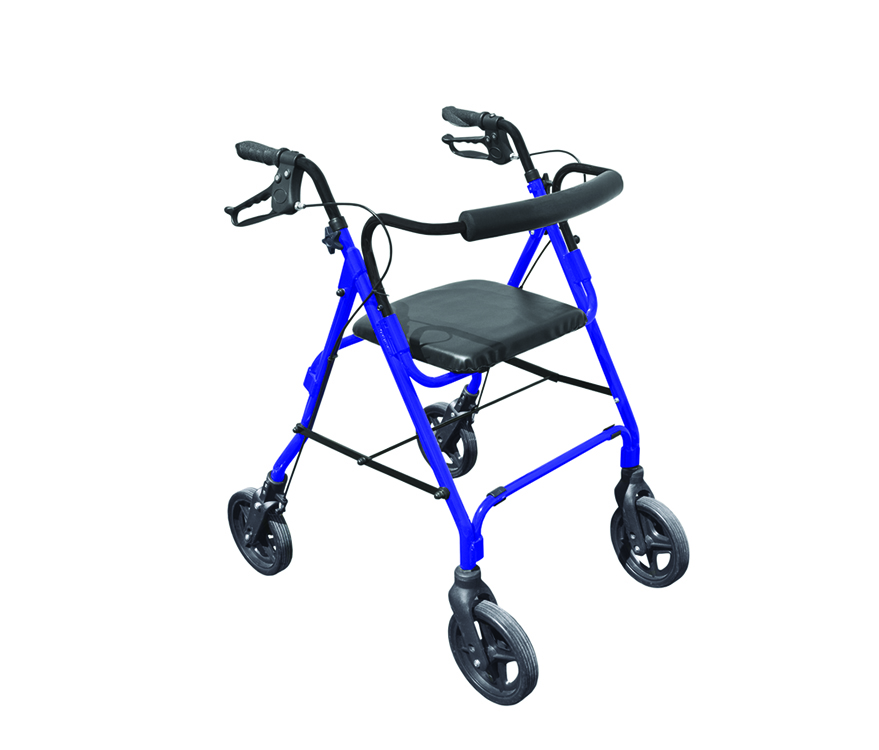
    You may need a cane if you grab walls, furniture and counters looking for more support as you walk. If you already use a cane and still reach for support, it may be time for a four-wheel walker.

    Four-wheel walkers provide more support and mobility. The seat allows for breaks from longer tasks, such as marketing. However, those who use increased arm pressure on the walker for support will experience difficulty controlling it.

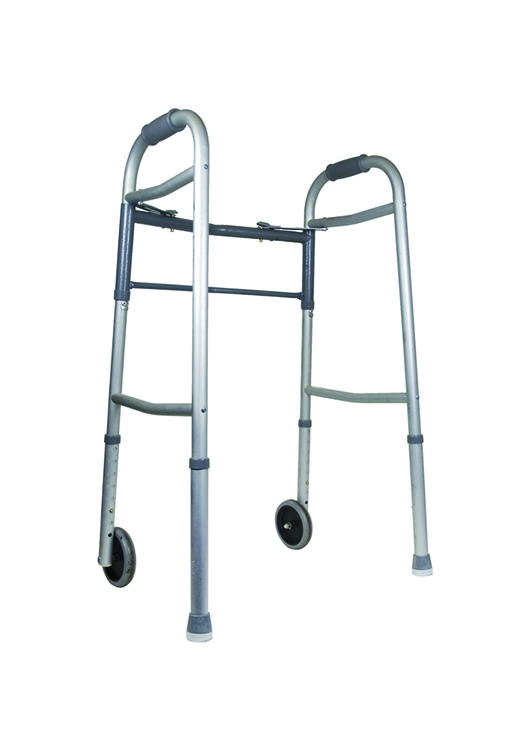
    If you are still feeling unstable and have a fear of falling, a front-wheel walker may be what you need. These walkers are lighter and have only two wheels, providing more control. Adding tennis balls, skis or sliders to the walker’s back legs can alter the speed and smoothness of the walker to accommodate various surfaces.


    MAKAI MOBILE REHAB LLC (In-Home Physical Therapy)
    Jason Dacumos PT, MPT President/Owner
    808-783-9320 | jason@makaimobile.com
    www.makaimobile.com

    If you have developed a fear of falling as you have aged, you may want to consider using an assistive device . A physical therapist can test and fit you with the proper type — or you may be able to decide what is best for you by reading these tips and recognizing signs:

  • Wellness Means Training Your Body & Brain

    Tai chi is a great way to incorporate strength, movement and breathing, aligning your mind, body and spirit while helping the body heal itself. Through a balanced mix of exercise and ancient Eastern medicinal philosophy, tai chi and qigong training can help seniors improve fitness and gain deeper insight to mastering the mind and emotions, which can help lower blood pressure and create meaningful longevity.

    Most pain is caused when energy gets blocked, creating inflammation. When energy flows again, pain decreases. Tai chi offers natural stretching and controlled slow movement to open meridian channels throughout the body, allowing energy to flow and improving blood circulation to the heart and brain.

    Qigong is another gentle healing practice very similar to tai chi that emphasizes meditation and energy accumulation for self-healing. It helps to move energy to the chakras (energy centers in the body) that release energy for the brain and organs. Both practices can improve mental and physical health.

    Check out group classes to enjoy the company of other health-conscious seniors.


    BODY & BRAIN YOGA/TAI CHI
    Honolulu 808-596-9642
    Aiea 808-486-9642
    Kaimuki 808-738-5522
    Manoa Energy Healing Center 808-691-9642
    www.bnbenergyhealing.com
    www.bodynbrain.com

    Tai chi is a great way to incorporate strength, movement and breathing, aligning your mind, body and spirit while helping the body heal itself.