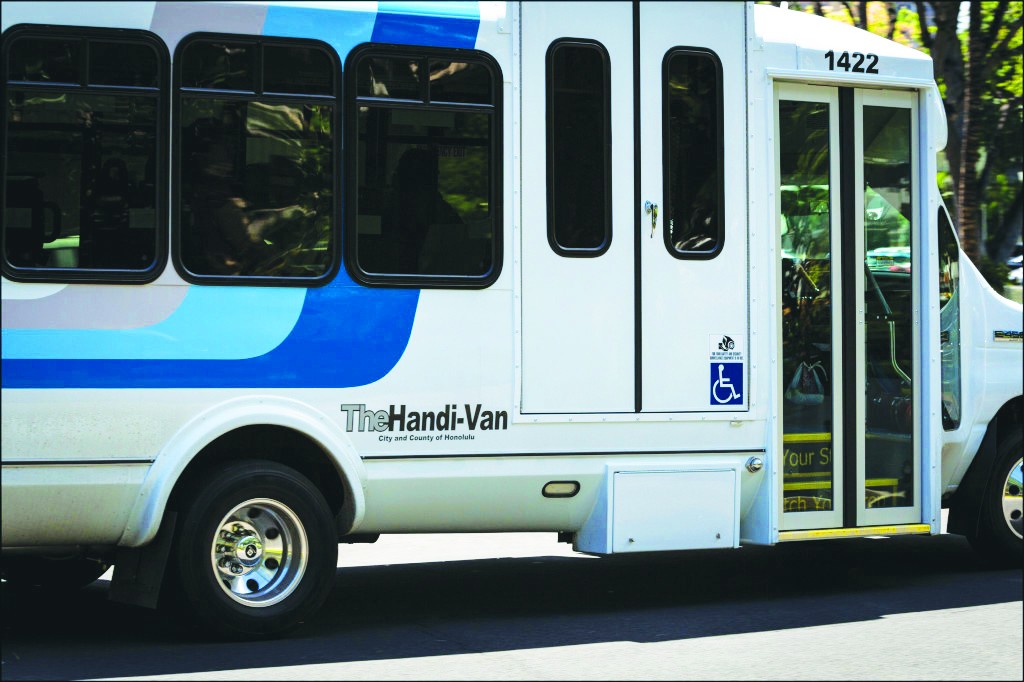
Citizens for a Fair ADA Ride (CFADAR) is a volunteer organization that advocates and lobbies for seniors and disabled customers of paratransit transportation on the City of Honolulu’s TheBus or TheHandi-Van.
At CFADAR quarterly public meetings, representatives from the Department of Transportation Services (DTS) and Oahu Transit Services (OTS) answer questions, address transit user concerns and find solutions. CFADAR is a completely volunteer organization of individuals from all backgrounds—concerned or interested persons need not be seniors or have a disability to join.
The organization was established in 2000 by Morris Nakamura and named by Louise Horio. Since 2010, Donald Sakamoto, who is legally blind, has served as Chairman. He also served two years on the Statewide Independent Living Council of Hawai‘i and was recognized by Honolulu Star-Advertiser for his positive efforts in the senior community. DTS Director Mike Humby describes Sakamoto as “trustworthy and humble.”
CFADAR seeks volunteers and donations of printers and toner cartridges, copy paper, digital recorders for dictation, and desktop or laptop computers with printers. Cash donations and donations of in-kind personal assistant services to directly support those who are disabled would also be appreciated. The next quarterly meeting will be at 9:45am on Tues., May 17 at the State Capitol Auditorium. The public is welcome.
Citizens for a Fair ADA Ride (CFADAR) is a volunteer organization that advocates and lobbies for seniors and disabled customers of paratransit transportation on the City of Honolulu’s TheBus or TheHandi-Van. At CFADAR quarterly public meetings, representatives from the Department of Transportation Services (DTS) and Oahu Transit Services (OTS) answer questions, address transit user concerns…
Pope Francis recently said, “Be careful! Beware of someone who is sly or sneaky who tells you that you need to pay. Salvation cannot be bought.” He was warning us that scam artists use faith as a source of income.
We must always be on guard against people that use emotion and desperation as tools to take our worldly possessions. Fear that the world is about to end can make the promise of a first class ticket to heaven very profitable.
Church Scams can range from pocketing a portion of the collection plate to creating a cult, but they all rely on building trust. A good scam artist knows that this emotional tie to a seemingly trustworthy person will overcome the victim’s doubts. And who seems more trustworthy than someone praising the Word of God or “ministering” to other parishioners who want to better themselves and their family by going to church?
The “Affinity Church Scam” is the most common con in places of worship. Con artists pretend to share the beliefs of the congregation but they prey on people’s desire for salvation. Sometimes an impassioned minister convinces the congregation to give their wealth to the church to ensure passage into heaven. He or she quotes the Bible, “It is harder for a rich man to enter heaven than for for a camel to pass through the eye of a needle.” Creating fear and guilt is a way to collect wealth far beyond what is needed to maintain and run a church. In Hawai‘i, some people have signed over their homes for the guarantee that they will enter the pearly gates.
The “Sob-Story Church Scam” is another ruse used to take money from soft-hearted people. This scam works on sympathy. A fellow churchgoer, usually new to the congregation, seems to fall on hard times and needs money. Their story will pull at the heartstrings (and purse strings) of merciful church members.
Avoid becoming a victim to church scams by using the same methods we advise to research charities. Make sure the money used is for aid. Church elders should verify that the financial need is real, and that donations will support a legitimate cause. Be careful! If you are giving money out of fear of damnation or in the hope of getting something in return (like salvation), your donation is not really a gift, but a bribe. Remember, there is no lay-a-way plan for heaven.
To report suspected elder abuse, contact the Elder Abuse Unit at:
808-768-7536 | ElderAbuse@honolulu.gov www.ElderJusticeHonolulu.com
Pope Francis recently said, “Be careful! Beware of someone who is sly or sneaky who tells you that you need to pay. Salvation cannot be bought.” He was warning us that scam artists use faith as a source of income. We must always be on guard against people that use emotion and desperation as tools…
Walter Chun with Sherry at the Emeritus Senior Club annual luncheon
When I was invited to the Emeritus Senior Club’s Annual Luncheon in January as their special guest, I was the one who was honored to be there. How great is it to have a senior club that supports Emeritus College at the Honolulu Community College (HCC) where senior students are learning new skills.
Generations Magazine® featured the college in the August/September 2015 issue because of HCC’s unique program that specializes in computer workshops for senior citizens. It offers many non credit courses to help seniors entering the technological era.
Those who sat at my table for lunch said they have taken beginner, intermediate and advanced classes on various subjects like virus protection, browser security, producing video presentations and booking online travel reservations. Sitting next to me at lunch was Walter Chun, the founder of the Emeritus Senior Club (previously Senior Net). He turns 90 years old this month and has been living at Pohai Nani in Kaneohe for over a year.
Walter retired as an administrator at the Honolulu Community College and volunteered as an instructor for many years. If you are 55 or older, whether retired or not, the Emeritus College offers discounts on workshops and an Open Computer Lab every Friday, where you can practice class assignments.
Stories for and about seniors and their caregivers are always worth sharing, like a 100 birthday announcement. send them to me, Sherry Goya, with a photo. 808-722-8487 | SGoyaLLC@aol.com
When I was invited to the Emeritus Senior Club’s Annual Luncheon in January as their special guest, I was the one who was honored to be there. How great is it to have a senior club that supports Emeritus College at the Honolulu Community College (HCC) where senior students are learning new skills. Generations Magazine® featured…
In the heat of the moment, worn-out family caregivers’ words can offend, bully or sting: “How come I am the only one at Mom’s when she trips and falls between one and five a.m.? “Why do you get to live rent-free at Mom’s home? “Dad just spits out your tough stew meat!”
Opinions and loose talk can trigger knee-jerk reactions that somersault into arguments and collapsed relationships. Wounded siblings can feel disrespected, isolated and unappreciated. If not mended quickly, misunderstandings can freeze friendships for days, months or a lifetime.
How do you avoid the casualties of friendly fire? How do you begin to heal wounds and disarm a family cold war?
Good News! It is possible to return to peace with a proven easy system of intentional coaching. Peacekeeping examines all points of views and then invites tougher but less threatening questions: “I notice something feels uncomfortable. Is there is something that is no longer working? What is happening that is surprising you?”
Peacekeeping skills empower forgiving families to clear the air that is choking them, erase blame and fumigate creepy bugaboos that often kill dialogue. Successful families victoriously draw mutual agreements that increase uplifting conversation and expand breathing room. Your loved ones’ only wish is to be at peace in their final moments — not in a family feud. Seek mentoring to repair broken family relationships; you and your family can live and die without regret.
LIFE COACH VILLAGE, LLC
Annette Pang, Relationship Life Coach & Founder Find out how to become a PeaceKeeper and Forgiving Family Fumigator. 808-372-3478 | www.annettepang.com
In the heat of the moment, worn-out family caregivers’ words can offend, bully or sting: “How come I am the only one at Mom’s when she trips and falls between one and five a.m.? “Why do you get to live rent-free at Mom’s home? “Dad just spits out your tough stew meat!” Opinions and loose…
Giving your kūpuna the opportunity to age at home is wonderful, but at some point, you will need to ask for help. Don’t let these four myths about home care hold you back.
Home care starts at four hours per day. Home care services generally offer flexible care plans to meet your needs — even if you’re looking for just a few hours of respite every week. If and when required, you may increase your caregiver’s hours.
Home care is inferior to institutionalized care. Aging in place or in a care home is a personal choice, but home care offers high quality, one-on-one care in a familiar place. Reputable providers ensure that their caregivers are fully screened, highly qualified, and have all necessary licenses and certifications, including CPR and First Aid.
Home care is for very ill seniors. Home care services can benefit anyone recovering from an illness or in need of extra help, including persons with disabilities and frail seniors. It can also provide family caregivers a break. Home care services can range from wound care and supervising medication intake to household chores and companionship.
I have no say about which caregiver I get. Ensuring that you are comfortable with your caregiver is very important. A good home care company will carefully match you with a compatible caregiver to fit your needs. Be sure they conduct a free, in-home consultation and assessment.
ALTRES Medical 967 Kapiolani Blvd., Honolulu, HI 96814
Kristina Wong, Care Manager 808-591-4930 | altresmedical.com
Giving your kūpuna the opportunity to age at home is wonderful, but at some point, you will need to ask for help. Don’t let these four myths about home care hold you back. Home care starts at four hours per day. Home care services generally offer flexible care plans to meet your needs — even if you’re…
Family members see taking care of elderly parents as both an honor and an obligation. It’s a never-ending journey, looking back in awe of the amazing lives our mothers and fathers lived. More so, reflecting on the legacies they have blazed through the ages. As the large Baby Boomer generation ages, more people than ever will find themselves caring for aging parents or family members. Here in Hawai‘i, there is great respect and admiration for our kūpuna.
The truth is, there are differences in generations. There always have been, and probably always will be. “When learning about the extraordinary lives our seniors have led, you realize how amazing they are,” said Janet Grace, sales and marketing director at Attention Plus Care.
Despite your loved ones’ strong level of independence, there are still challenges of growing older. Medical conditions are more likely to develop that make it more difficult for persons to care for themselves. It’s important to know when to step in and speak with your parents about the problems you’re observing. “Having lived with my 86-year-old Auntie who worked until her late 70s, drove well into her 80s, and spent countless days with her friends at the Mōili‘ili Senior Center, I was overwhelmed when she had her first fall,” said Grace.
Even when relationships are strong between adult children and their parents, the situation is very delicate. Getting an accurate assessment of a parent’s ability to remain safely independent at home is critical. It identifies risks and options to reduce them. Caring for an aging family member is multidimensional. Each illness or disease associated with aging has different mental and physical symptoms. The severity of symptoms is often gauged by the loved ones ability to perform everyday tasks. Activities of daily living (ADL’s) are basic self-care tasks, such as eating, dressing and bathing. Instrumental activities of daily living (IADL’s) are the most complex tasks of living, such as preparing meals, managing finances and taking medications.
It’s important to understand that home care is no longer just about talking to loved ones, giving baths and taking blood pressure. “Experienced aging and skilled home health providers know that home care is a key step toward achieving optimal health outcomes for many of our clients,” explains Cindy Baker, BSN, RN at Attention Plus Care. Studies have shown that home care interventions can improve quality of care and reduce hospitalizations due to chronic conditions or adverse events. We find that gaps occur when clients move from a hospital to home without proper information and or preparation. Good information and resources lead to fewer patient incidents and safety issues in the home setting.
“It has a lot to do with family members understanding how to handle these transitions,” added Baker. There are many resources, classes and supportive programs that provide valuable assistance for family caregivers and allow seniors access to higher and safer levels of quality care.
ATTENTION PLUS CARE Accredited by The Joint Commission 1580 Makaloa St., Ste. #1060, Honolulu, HI 96814 808-739-2811 | www.attentionplus.com
Available monthly: Aging in Hawaii Educational Outreach Program by Attention Plus Care
A program to provide resources for seniors and their families, instructed by a registered nurse, who covers a different aging topic each month. For class information on Parkinson’s disease and upcoming topics, contact 808-440-9372.
Family members see taking care of elderly parents as both an honor and an obligation. It’s a never-ending journey, looking back in awe of the amazing lives our mothers and fathers lived. More so, reflecting on the legacies they have blazed through the ages. As the large Baby Boomer generation ages, more people than ever…
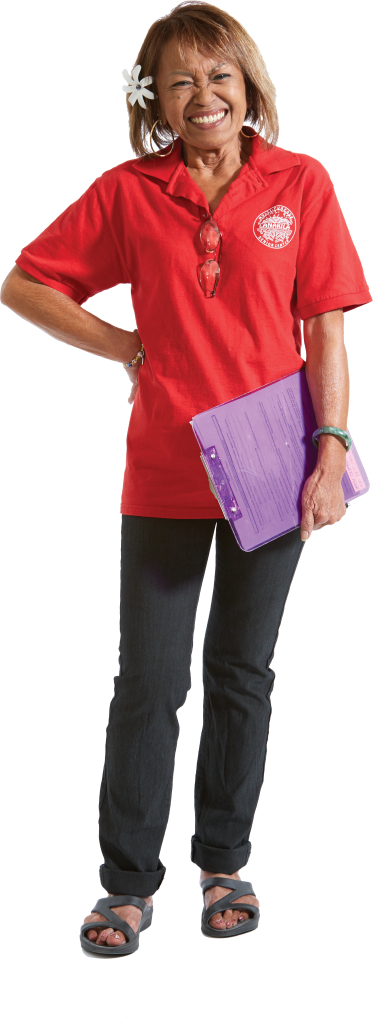
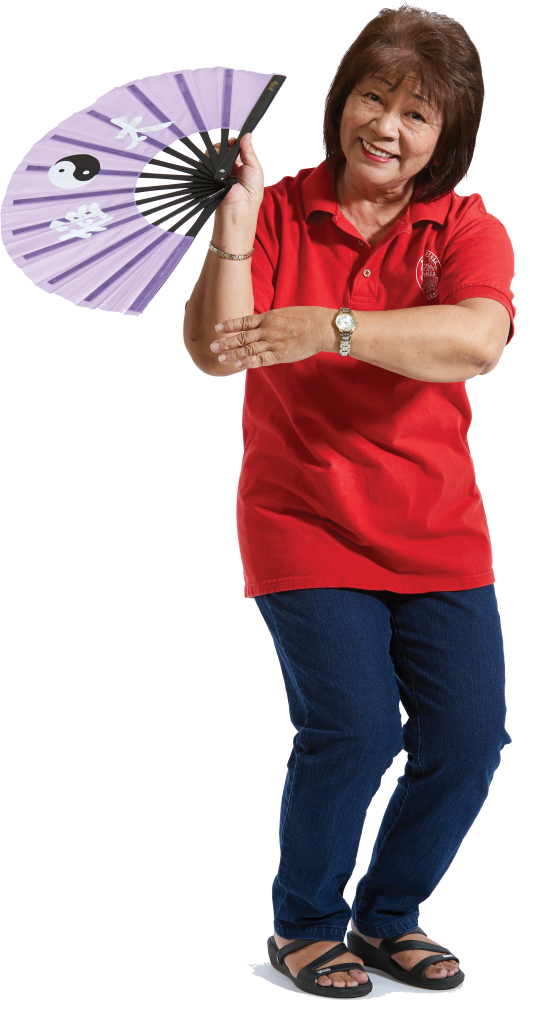
Weekday mornings, as the sun rises in Kalihi, seniors congregate at Lanakila Multi Purpose Senior Center to play, learn and serve their community. Dispel the idea of loneliness or aimless activities to pass the time away. Members of Lanakila Center engage in meaningful pursuits, through which they create strong friendships and develop new skills. It is no wonder that this senior center welcomes up to 200 members every day. Follow the schedule of three members:
We Play
8:00 am
Richard Tada parks his car at Catholic Charities Hawaii’s Lanakila Center in Kalihi. He is a volunteer “audio engineer/disc jockey” for the center’s special events. Today, he comes to help coordinate the Japanese Cultural Club’s New Year Celebration. He and his friends move the equipment to the stage area: mixer, speakers, CD and cassette players and microphones… Richard has fun putting them together. The performers arrive early, eager to dance. They hand Richard the tapes and CDs. Here they go, “Testing, one, two, three… testing …”
Richard retired from United Airlines and first visited the center as a caregiver, bring- ing his father-in-law who was a longtime member. Richard provided transportation and a watchful eye for his father-in-law, who was becoming more frail, but still wanted to be with his friends at Lanakila Center. After his father-in-law had passed, Richard kept coming to the center. He was able to focus on his interests.
Seven ethnic clubs gather regularly at Lanakila. All members of the center are welcome to join any or all clubs. The clubs help to perpetuate the culture and traditions of their respective ethnic group and create opportunities to celebrate birthdays, provide entertain- ment, and go out on excursions, etc. and started sitting in, but not participating in, the Enka (Japanese folk ballads) class.
Finally, Enka class sensei Marian Arakaki told him that he “might as well join” the class since he was there every week. Richard gets pleasure from singing for an audience; in the process, he learned to hold a microphone. Later, he learned to set up and operate an audio system. Now he also volunteers as an assistant treasurer for the Okinawan Nenchosha Club, chairs the center’s Program Committee and was recently recognized as one of 47 veterans in the center’s first Veterans Day Celebration. }}
First order of the day is always about being nimble. The clubs often start their meetings with exercise or dance. For other ways to stay strong and fit, the center offers a wide variety of activities, including Fusion exercise, Karate, Sahm Bo Dahn, and Stretch and Tone. Dance lovers can join hula, line dance, tap dance, Korean dance, or Okinawan dance. By doing enjoyable activities, members maintain their independence as they age.
9:00 am
The New Year Celebration starts right on time. Richard pays full attention to the program, cues from the master of ceremonies and signals from the performers. The club members enjoy the music, songs and performances. The grand finale of the New Year Celebration is when all the members demonstrate their traditional Japanese dance to Richard’s joyful and festive music — everyone gets into the fun.
11:00 am
After his morning gig, Richard can’t wait to see his mahjong friends. Every week he learns more, even after eight years playing at the center. Mahjong challenges memory, attention, calculation, strategy and decision-making. Richard loves the stakes, but most important of all is joyful fellowship with his peers. With his friends, he plays, jokes, laughs and shares yummy treats. Tracking the tiles keeps the mahjong players’ minds sharp. Friendly competition generates lots of laughter. The time passes so quickly, and nobody loses because the game continues next week! }}
We Learn
8:30 am
Helen Castillon walks from her apart- ment right across the street from Lanakila Center. She goes to the Activity Room and prepares to start the Filipino Cultural Club meeting. Helen never thought she’d ever be in this type of position—leading meetings or planning events for over 100 attendees! Now in her third term as president of the club, she has participated in the Lanakila Center’s annual Leadership Training to learn the roles of officers, communication skills, and how to run meetings and handle conflict. She also knows the importance of succession and encourages the club vice president to shadow her and learn the knowledge and management skills Helen has learned.
Helen initially came to the center as a senior worker via the Honolulu Community Action Program’s Senior Community Service Employment Program. In 2007, when she be-
came age 60, she was able to join Lanakila Center as an official member. In addition to providing clerical support as a SCSEP worker, Helen also received help from Lanakila’s social worker/case manager to apply for senior housing across the street. After a six-year wait, she was finally able to move into Kapuna I, which has become her “home away from home.”
Keep the mind active by learning new skills. Sensei Takeuchi (right) teaches taisho koto (a miniature form of koto) twice a week. Seniors learn to translate music notes to sounds, keep their fingers nimble, and practice their memory through a cultural form of music.
9:30 am
Catholic Charities Hawai‘i provides presentations on health and wellness for seniors, and Helen greets today’s scheduled speaker before the Filipino club. She has learned about lots of community resources as she is always looking for the best information and resources that can benefit her club members. Today, she has invited a health care provider to discuss diabetes and healthy diets with club members. After the presentation, she gets to enjoy some music, dance with the club members, and sample some ‘ono ethnic potluck dishes, like pancit and lumpia.
10:30 am
After saying goodbye to the speakers and club members, Helen goes to the library annex to join Tai Chi for Health, an evidence-based class for fall prevention. Since 2014, she has practiced the gentle, graceful moves, and learned the purpose of each move. The regular tai chi exercises keep her body balanced to prevent falls that can cause potentially serious injuries. At the end of the 10-week class session, she helps the instruc- tor conduct the outcome evaluation. Through this process, she gathers the data to show how much the Tai Chi for Health has benefited her and her classmates. The class reports fewer trips and falls!
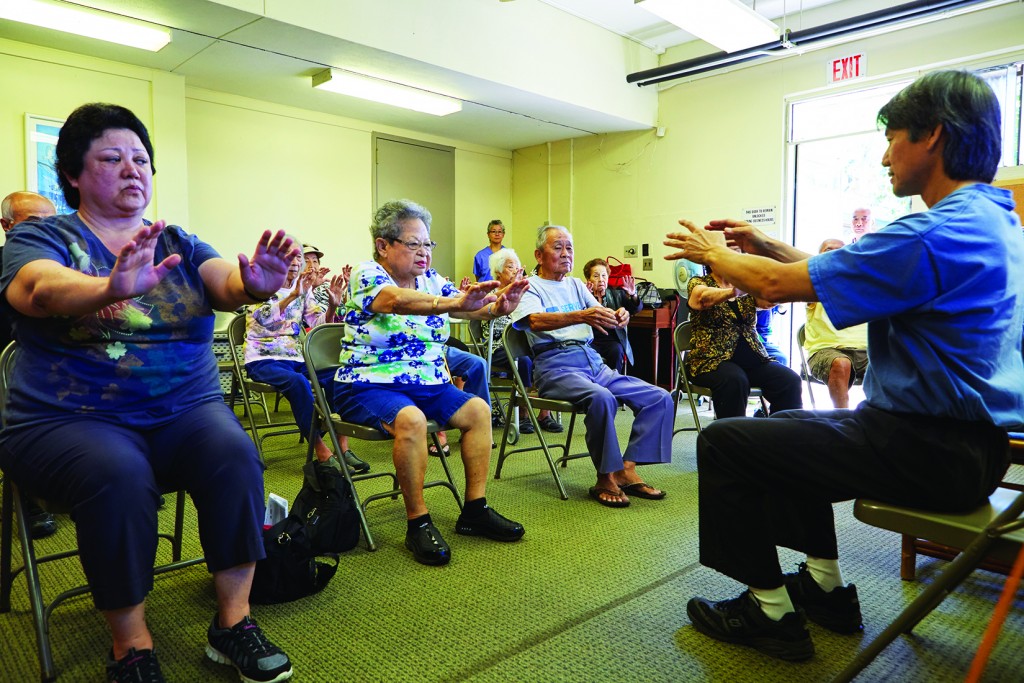
Health and wellness is a priority. Randy Lau (right) is a certified instructor who leads an evidence-based Tai Chi for Health/Fall Prevention class twice a week. By learning Tai Chi, Lanakila’s seniors, including Helen, gain significant benefits: relax mind and body, strengthen movement control, improve coordination, and reduce the risk of falling. Easing the fear of falling builds their confidence to stay active.
11:30 am
Helen waits at the front of the Lanakila Center for the Catholic Charities Hawai‘i shuttle van. Whenever she has a doctor appointment, she calls the Catholic Charities transportation dispatcher two weeks in advance to request a ride to and from her destination. During the trip, she gets to talk with the other küpuna passengers about what she learned and she listens to the highlights of their day too. Helen continues to look forward to learning, helping others and growing at the senior center. }}
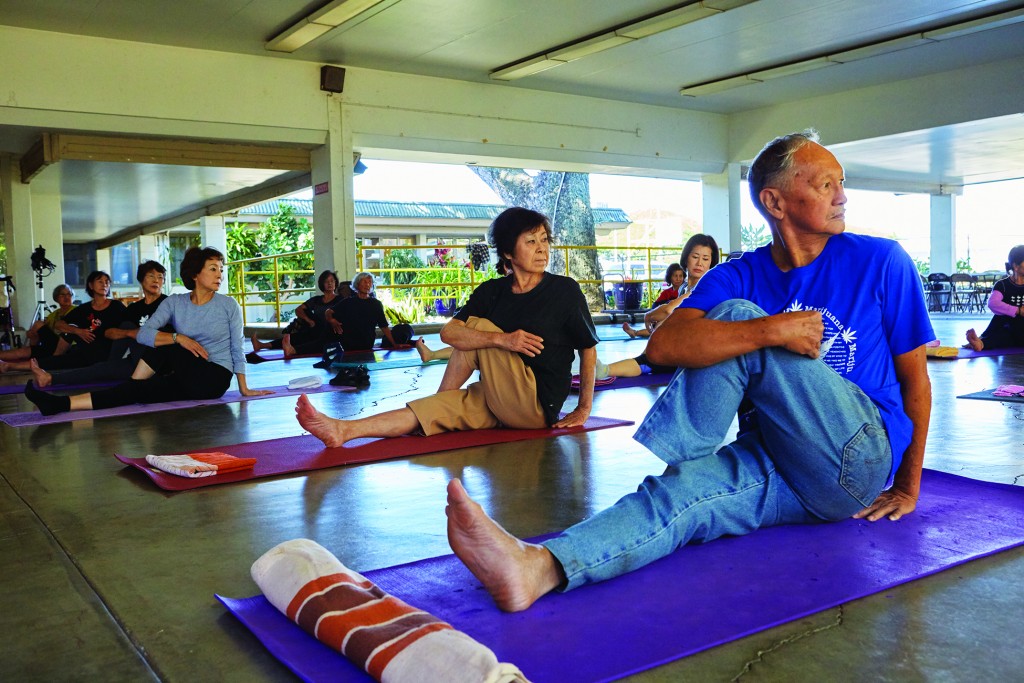
It is the mind and body that will support the spirit. Yoga is popular with seniors, too! Instructor Hasegawa’s yoga classes fills up quickly during registration. Through yoga, seniors are able to protect their joints, build strength, and improve balance, etc. Rain or shine, as long as the center is open, you will see them practicing twice a week!
We Serve
8:00 am
“Good Morning!” says Diane Kawakami as she greets each küpuna entering the center where she has volunteered as a receptionist for the last five years. She helps her fellow seniors sign up for various activities: Tai Chi, Line Dance, Basic English, ‘Ukulele and more. She listens carefully to their questions and patiently gives them the information they need. She also receives items from donors for Lanakila Center’s “thrift shop” and acts as the salesperson for “shoppers.” At the same time, she answers inquiries on the phone. She is truly a multitasker!
Diane, like Richard, first had contact with Lanakila because her mother and two aunties were longtime members. She would occasionally drop off her mother at the center and had an opportunity to meet some of her mother’s senior friends. After her mother had died, Diane reached retirement and needed to figure out a plan for the rest of her life. One activity she loved was Lanakila Center’s Line Dancing class. From there, a friend at the center recruited her to help out at the reception desk, putting her former telephone operator skills to good use. Now Diane also serves in leadership positions with the Okinawan club, as well as taking minutes for the Program Committee. When asked why she continues her membership at the center, Diane says, “because of the people—the seniors,” whose motivation and enthusiasm for life inspire her.
Volunteering benefits the volunteer AND the center. Every week, 97-year-old Mrs. Kakazu, a retired nurse, rides on the Catholic Charities Hawai`i van to the center. She has volunteered since 1980, doing blood pressure screening for the members. High blood pressure usually has no symptoms, and can’t be detected without being measured. Mrs. Kakazu makes it convenient for the members to find out their blood pressure readings. The volunteer work helps keep her mind active and her contribution helps keep her fellow seniors healthy, too. This is a true win-win situation.
9:00 am
It’s time for Diane to join her Enka singing class. They gather their songbooks and dance outfits for today’s rehearsal. About six times a year, this group performs songs and dances for frail seniors in nursing homes and care homes. They sing in English, Hawaiian and Japanese. They perform traditional Okinawan dance and hula. They are very talented, and their picture ap- peared in Generations Magazine.
10:00 am
Diane and the other Enka students leave for a nursing home down the road. They have performed here many times, and the patients love to have them return. After greeting the patients, they take turns singing as a group and doing solos. Some patients remember the melodies and get passed the microphone so they can do a solo, too. They all sing along as Diane interprets the lyrics with beautiful hula moves. Seated patients join in by following Diane’s hula moves with their hands.
12:00 pm
Back at the center, the Enka class eats lunch together and talks about their experience. Diane shares, “It makes me feel so good when the nursing home residents respond to us, smile back, and try to follow the motions. I can see happiness in their faces. It feels good to serve the community.”
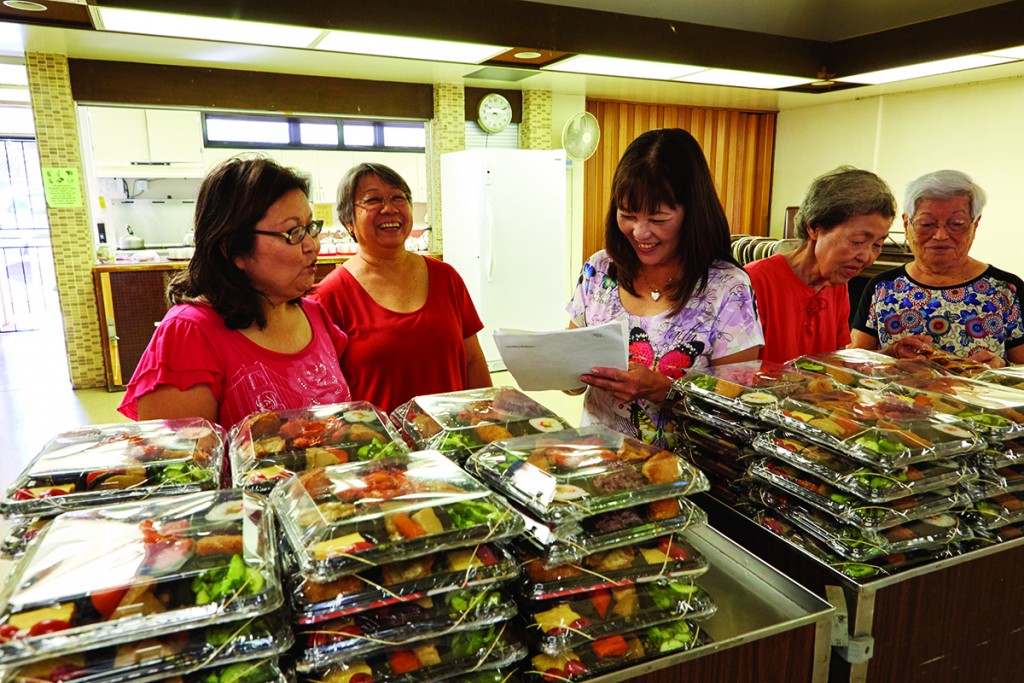
Being part of a larger purpose is what contribution is all about. While most of the members were enjoying the entertainment at the lanai, five other members help prepare the bentos for lunch. They don’t mind missing out the fun outside because they were having fun serving the others. In the center, you can see sharing, contributing, and giving—everywhere, all the time.
It certainly feels good to know that Catholic Charities Hawai‘i has created a blueprint for successful senior clubs in urban settings. With a small staff and trained volunteers, they provide hope, community and meaningful growth for persons over 60. The members develop lasting friendships with like-minded people who like to have fun, enjoy learning and want to spend their time serving their community. Perhaps it is an extension of “living aloha,” the heritage of plantation camps or school days when we cherished the chums with whom we passed every grade. In Hawai‘i, we are a community that likes to get together, have fun and tackle projects. At Lanakila Center, seniors of all ages are having fun and doing a lot of good work!
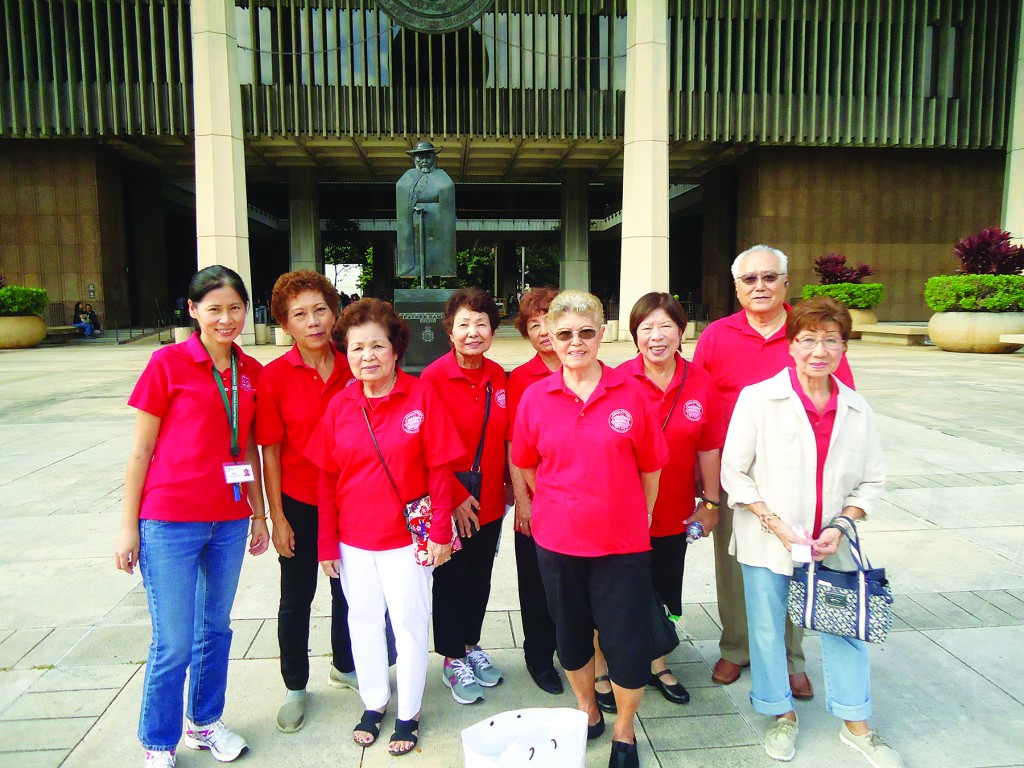
Serve to inspire life. Every year, members step up and advocate for Lanakila Multi Purpose Senior Center and other vital senior services. Here they are on the Legislature’s Opening Day, after meeting and talking with the senators and representatives to promote seniors’ rights and advocate on behalf of those in need.
Our motto at Lanakila Multi Purpose Senior Center, “We Play, We Learn, We Serve,” accurately reflects the intention of the center’s work—encouraging fun with a purpose. This helps seniors remain independent and active in the community and avoids costly and unwant- ed institutionalization for as long as possible.
A study published in the American Journal of Public Health found that interventions for loneli- ness may result in reduced doctor visits, which may also reduce health care cost.
Indicated in Hawai‘i’s 2013 Profile of Success- ful Aging, “Supportive relationships, interactions with the environment, engagement in social activities … all have positive correlations on the well-being of older adults.”
The Centers for Disease Control and Prevention also advises older adults that “regular physical activity is one of the most important things you can do for your health. It can prevent many of the health problems that seem to come with age.”
A study published in the Journal of the American Academy of Neurology indicates that engagement in leisure type activities may reduce the risk of dementia.
In 1969, the state of Hawai‘i established a model senior center in Kalihi. Originally called the Hawaii State Senior Center, the program changed its name to Lanakila Multi Purpose Senior Center in 1975, under the management of Catholic Charities Hawai‘i, a private, nonprofit 501(c)(3) organization.
Today, the center at 1640 Lanakila Avenue serves nearly 1,500 seniors age 60 and older. It offers seven ethnic clubs, provides over 30 classes and hosts many special events. Healthy activities for seniors involve exercise classes and health screen- ing. Scheduled seminars to keep our küpuna safe include topics ranging from pedestrian safety to securing personal finances.
Visit Lanakila Multi Purpose Senior Center any weekday. Check out our center’s newsletter at www.catholiccharitieshawaii.org. For more information, call 847-1322. Learn how you can live out the motto, “We Play, We Learn, We Serve.”
Weekday mornings, as the sun rises in Kalihi, seniors congregate at Lanakila Multi Purpose Senior Center to play, learn and serve their community. Dispel the idea of loneliness or aimless activities to pass the time away. Members of Lanakila Center engage in meaningful pursuits, through which they create strong friendships and develop new skills. It is…
Every health food store has products containing Noni, also called Indian mulberry. It grows throughout Southeast Asia, Australia and the Pacific Islands. Hawaiians used noni to heal a variety of health problems, like wrapping noni leaves around sore joints to relieve pain. The ancestors took it by mouth for colic, and urinary problems, digestive problems and also high blood pressure.
Recently, scientists have taken a close look at noni. The fruit contains potassium, like bananas and potatoes. However, scientists think noni heals us with abundant nitrates and nitrites, much more than found green leafy vegetables. How nitrates affect the body is the focus of ongoing clinical research, but it seems that when we ingest high concentrations of nitrates and nitrites, they activate our bodies to create nitric oxide (NO). NO and nitrogen salts may be beneficial for urinary tract infections, lowering blood pressure and fighting skin infections.
How our ancestors figured this out is hard to tell, but now science is rediscovering noni just the way Fleming found blue mold and penicillin.
The best way to tap the healing benefits of noni is to take dried noni powder in capsules. It’s a lot more pleasant than fresh noni fruit. Be sure to ask your doctor before taking supplements or over-the-counter drugs, in case they interact with your current medications or cause troublesome side effects. Be smart, and stay informed, and always look to nature for health.
Every health food store has products containing Noni, also called Indian mulberry. It grows throughout Southeast Asia, Australia and the Pacific Islands. Hawaiians used noni to heal a variety of health problems, like wrapping noni leaves around sore joints to relieve pain. The ancestors took it by mouth for colic, and urinary problems, digestive problems…
Sage is not just a spice — it also means a wise person. How do the Sages of the community keep that positive attitude and stay healthy?
One way is to keep healthy with preventive services available through original Medicare Part B and all the Medicare Health plans in Hawai‘i. As of January 2011, most vaccinations and screenings for diabetes, high cholesterol and cancer are free. The law also allows a free annual wellness visit. You and your doctor may use this wellness visit to develop a personalized prevention plan.
If you don’t want to spend your birthday at the doctor’s office, make your yearly appointment every May — Older American’s Month. Through health screenings, preventive services keep a baseline record of your health. As a Sage, you can find a list of over 25 different preventive screenings on pages 69-70 of the Medicare & You 2016 handbook. You may not need all of them because some screening tests are based on existing health conditions and history.
While you do not have to pay out of pocket for certain preventive services, you may have to pay for the office visit, other services received at the same visit, or preventive services not received in a doctor’s office, but in an ambulatory surgical center or hospital outpatient department. Again, if you need screenings more often than recommended, you may have to pay for them.
This SHIP project was supported, in part, by grant number 90SA0004-02-00 from the U.S. Administration for Community Living, Department of Health and Human Services, Washington, D.C., 20201. Grantees undertaking projects under government sponsorship are encouraged to express freely their findings and conclusions. Points of view or opinions do not, therefore, necessarily represent official Administration for Community Living policy.
Sage is not just a spice — it also means a wise person. How do the Sages of the community keep that positive attitude and stay healthy? One way is to keep healthy with preventive services available through original Medicare Part B and all the Medicare Health plans in Hawai‘i. As of January 2011, most vaccinations and…
Henrietta Mahuna learned Hawaiian quilting from another Hawaiian quilter. The handicraft has been passed down for two centuries — since the Hawaiians learned the echo style of quilting from New England missionaries. First, appliques are stitched to a plain field. Quilting follows the shape of the applique, first on the outside edge. The next row of quilting runs parallel but a short distance away, like a ripple in a pond. Soon the whole blanket is quilted. A style fashionable in the early 1800s was preserved and became a treasured tradition in Hawai‘i.
“Mama” Mahuna sits on her shady deck and quilts every day. Neighbors, friends and mainland visitors who love to quilt come not only to learn, but also to “talk story.” In the old days, conversation was always accompanied by busy hands — sewing, preparing food or finishing a church project. Henrietta, who is Native Hawaiian, was raised in Hāna and moved to West Maui in 1942. She worked for Baldwin Packers as the only female field supervisor. Later she was promoted to work the Honolua Store at Kapalua Resort. She invented the “Honolua Burger.”
Now 95, Henrietta still loves quilting and spending time with the ladies as they create beautiful “blankets” and pillow covers. “I like designing the patterns and cutting them out. I’ve made many different ones, but the Hawaiian trees and flower patterns are what people seem to like best,” she says.
Henrietta Mahuna learned Hawaiian quilting from another Hawaiian quilter. The handicraft has been passed down for two centuries — since the Hawaiians learned the echo style of quilting from New England missionaries. First, appliques are stitched to a plain field. Quilting follows the shape of the applique, first on the outside edge. The next row of quilting…
Need assistance with your groceries? Want to meet new people? Or go to a doctor’s appointment?
Catholic Charities Hawai‘i Transportation Services may be a perfect transportation solution for you. The program offers trips on Oahu for seniors age 60 and older who live independently. The program has a fleet of vans that run every week for seniors who need routinely scheduled trips or occasional trips. Catholic Charities also provides transportation for Lanakila Mult Purpose Senior Center members.
Individual seniors or senior groups may schedule rides in advance. Group outings can be arranged for excursions. Individual trips for medical appointments and trips to congregate meal sites take priority. And you can also request to use the Transportation Service for grocery shopping, beauty salon appointments, visits to family members in a care home, government agency appointments to receive/renew benefits — and more. The services are “door-to-door, which means the van will help seniors from the front door of their home or building entrance to the front door of their destination. If a senior needs an escort to help them get from the front of a building up to a specific floor or office, they can bring a friend or relative on the van with them to serve as their escort — or they can request a volunteer escort from Catholic Charities Hawaii.
Want to sign up?
Registration in advance is re-quired to use the service. And all riders must be age 60+ and live in the community.
When is a senior NOT eligible?
If you live in a care home, foster home, nursing home or any other long-term care facility, or if you live in a retirement facility that provides transportation service, you may not participate in Catholic Charities Hawai‘i Transportation Program. If you are on Medicaid, you should be able to receive transportation for medical trips through your Medicaid provider (but Catholic Charities Hawai‘i can provide you with nonmedical transportation).
Want to help?
Catholic Charities Hawai‘i is seeking volunteer drivers for trips that may be outside regular business hours, and drivers to provide escort service when needed.
Need assistance with your groceries? Want to meet new people? Or go to a doctor’s appointment? Catholic Charities Hawai‘i Transportation Services may be a perfect transportation solution for you. The program offers trips on Oahu for seniors age 60 and older who live independently. The program has…
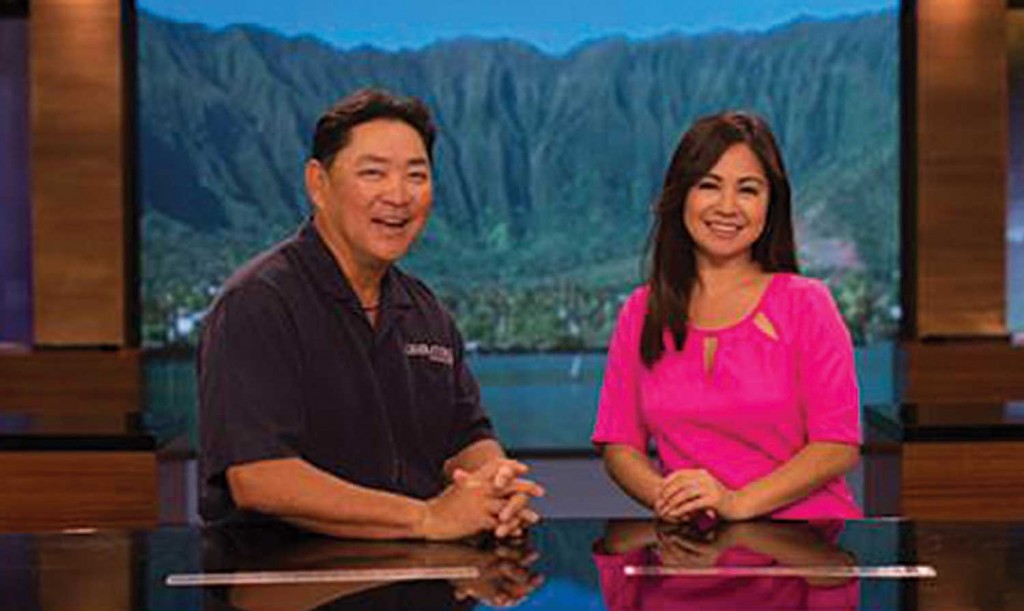
KITV4 Morning News has a Saturday morning segment called “Aging Well,” hosted by News Anchor Moanike‘ala Nabarro, who opens conversations with experts on issues of importance to seniors. Generations Magazine® is partnering with KITV4, bringing to TV all the experts and resources our readers have come to trust. The segment runs between 6 and 8am on Saturdays — with health tips, information on finances, retirement, insurance, exercise, nutrition, etc.
“Kūpuna play an important role here in Hawai‘i, and I am so humbled to be a part of the conversation when it comes to caring for them,” says Moanike‘ala. The partnership brings vital educational information to Baby Boomers and seniors through KITV Island News and kitv.com.
Percy Ihara, Generations Magazine publisher and champion of senior issues, is pleased to be working with KITV4. “This is a commitment to getting more information to seniors, many of whom don’t get out as much as they would like. Now they can tune in to find out what’s going on with and for seniors,” says Ihara. “Watching “Aging Well” can improve their lives.”
AGING WELL by KITV4 Morning News Saturdays, 6–8am hosted with Moanike‘ala Nabarro www.kitv.com (to watch segments, search: “Aging Well”)
KITV4 Morning News has a Saturday morning segment called “Aging Well,” hosted by News Anchor Moanike‘ala Nabarro, who opens conversations with experts on issues of importance to seniors. Generations Magazine® is partnering with KITV4, bringing to TV all the experts and resources our readers have come to trust. The segment runs between 6 and 8am…

 Citizens for a Fair ADA Ride (CFADAR) is a volunteer organization that advocates and lobbies for seniors and disabled customers of paratransit transportation on the City of Honolulu’s TheBus or TheHandi-Van.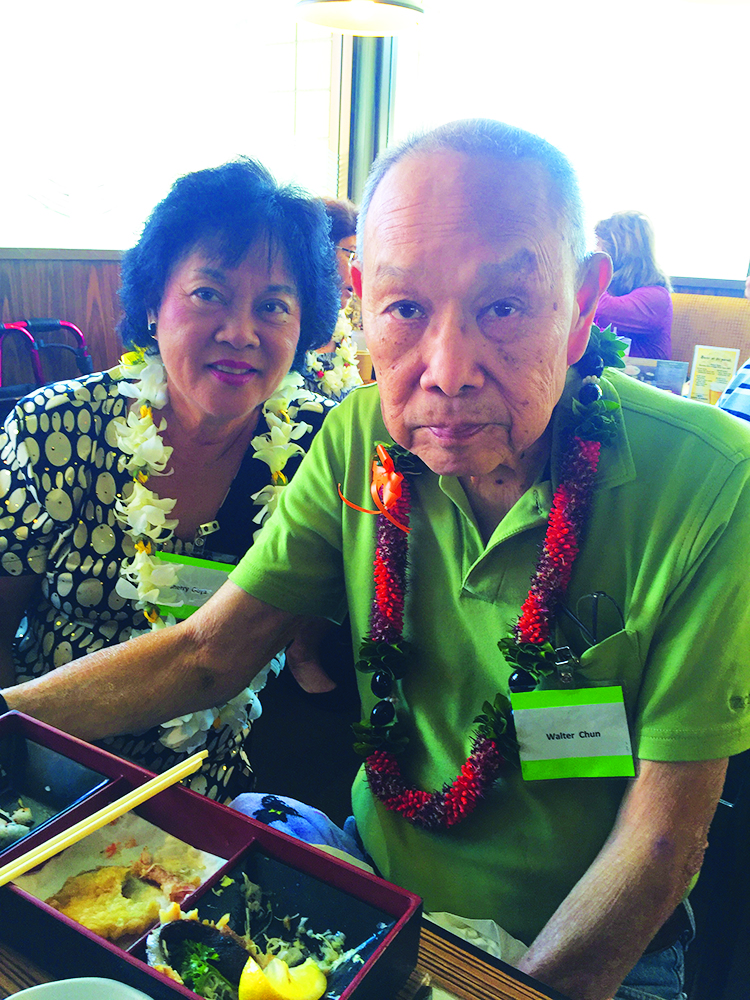
 Giving your kūpuna the opportunity to age at home is wonderful, but at some point, you will need to ask for help. Don’t let these four myths about home care hold you back.
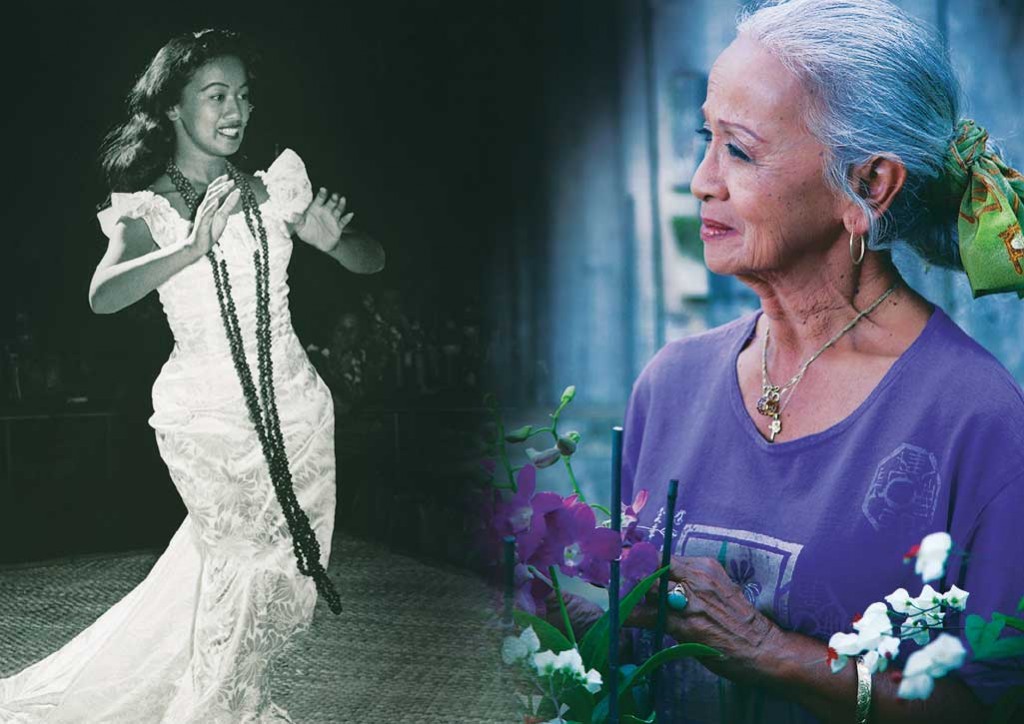 Family members see taking care of elderly parents as both an honor and an obligation. It’s a never-ending journey, looking back in awe of the amazing lives our mothers and fathers lived. More so, reflecting on the legacies they have blazed through the ages. As the large Baby Boomer generation ages, more people than ever will find themselves caring for aging parents or family members. Here in Hawai‘i, there is great respect and admiration for our kūpuna.
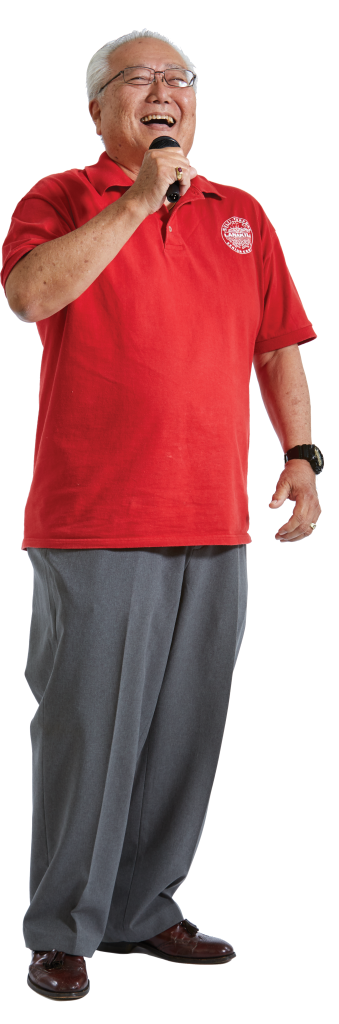 We Play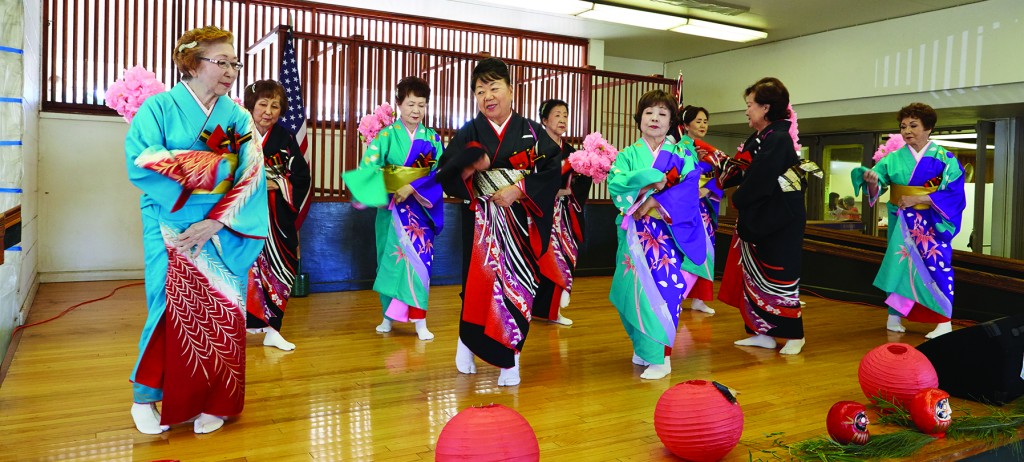
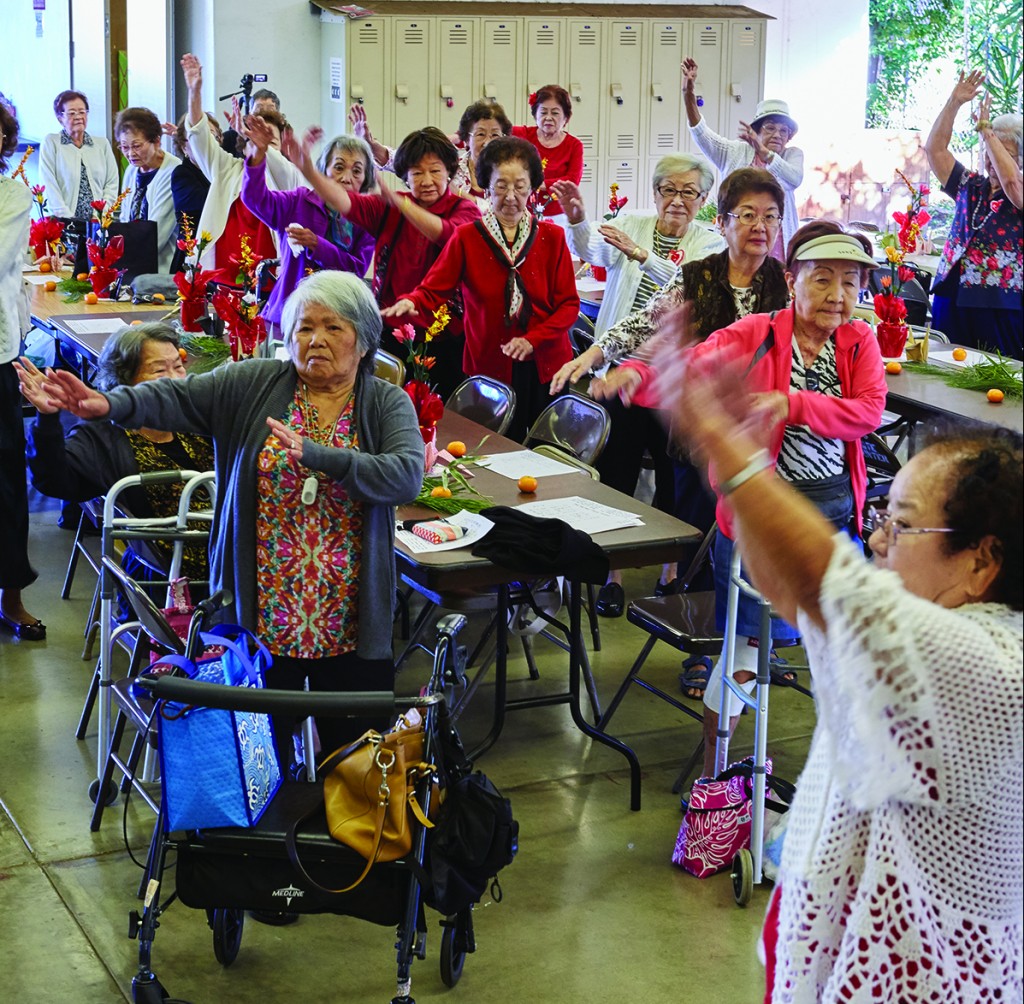
 We Learn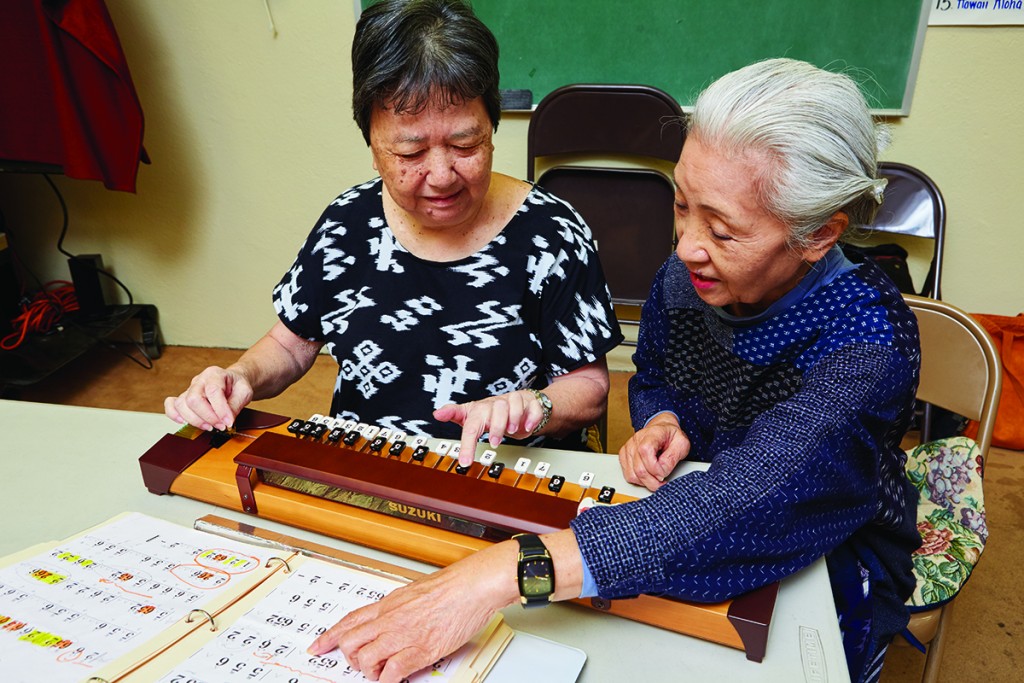
 We Serve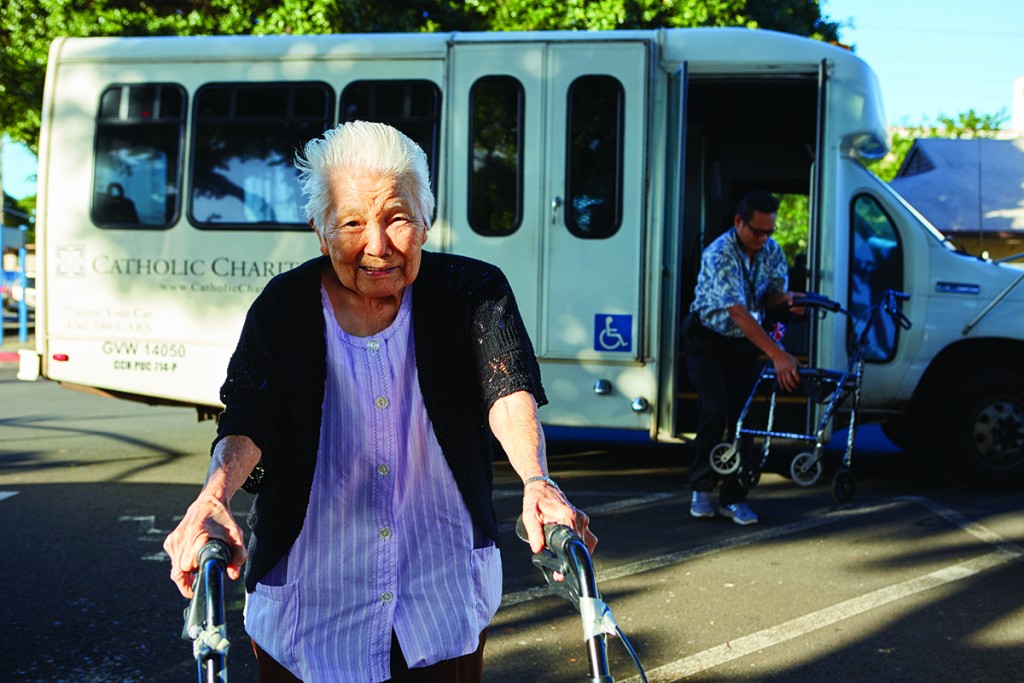
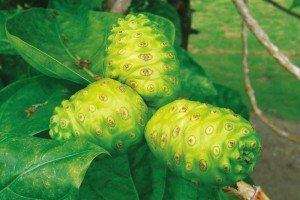 Every health food store has products containing Noni, also called Indian mulberry. It grows throughout Southeast Asia, Australia and the Pacific Islands. Hawaiians used noni to heal a variety of health problems, like wrapping noni leaves around sore joints to relieve pain. The ancestors took it by mouth for colic, and urinary problems, digestive problems and also high blood pressure.
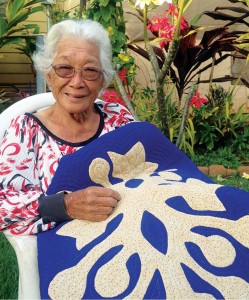 Henrietta Mahuna learned Hawaiian quilting from another Hawaiian quilter. The handicraft has been passed down for two centuries — since the Hawaiians learned the echo style of quilting from New England missionaries. First, appliques are stitched to a plain field. Quilting follows the shape of the applique, first on the outside edge. The next row of quilting runs parallel but a short distance away, like a ripple in a pond. Soon the whole blanket is quilted. A style fashionable in the early 1800s was preserved and became a treasured tradition in Hawai‘i.
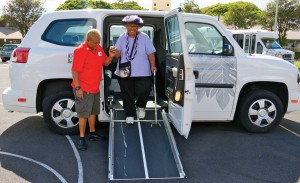 Need assistance with your groceries?