
Some people question whether Medicaid planning might be unpatriotic. After all, Medicaid is a “welfare” benefit funded by our tax dollars. Is it “wrong” to put yourself in the position to have the taxpayers pay for your long-term care? Let us begin by considering what it means to be a taxpayer.
Everyone knows that it is immoral and illegal (and unpatriotic) to cheat on your income taxes. But does that mean any of us has an obligation to pay more taxes than the law requires? Of course not. The Internal Revenue Code allows us to take various kinds of deductions when we file our annual income tax returns. As long as we deduct no more than the law allows, we are engaging in the noble practice of tax avoidance. However, if we knowingly take a tax deduction in an amount or of a kind that we are not entitled to take, the terminology changes to tax evasion. For tax avoidance, a person is praised, for tax evasion, a person goes to jail.
In the 1916 U.S. Supreme Court case of Bullen v. Wisconsin, Justice Oliver Wendell Holmes wrote “when the law draws a line, a case is on one side of it or the other, and if on the safe side is none the worse legally that a party has availed himself to the full of what the law permits. When an act is condemned as an evasion, what is meant is that it is on the wrong side of the line.” Taking economic advantage of what our law allows—staying on the “safe” side of the line—is both legal and patriotic.
Justice Louis Brandeis, whose tenure on the U.S. Supreme Court overlapped that of Justice Holmes, famously stated this same principle another way: I live in Alexandria, Virginia. Near the Supreme Court chambers is a toll bridge across the Potomac. When in a rush, I pay the dollar toll and get home early. However, I usually drive outside the downtown section of the city and cross the Potomac on a free bridge. If I went over the toll bridge and through the barrier without paying the toll, I would be committing tax evasion. If, I drive the extra mile and drive outside the city of Washington to the free bridge, I am using a legitimate, logical and suitable method of tax avoidance. For my tax evasion, I should be punished. For my tax avoidance, I should be commended.
Knowing the alternatives that are available to you is the essence of wise planning. You cannot make a choice that you do not know you have. So if paying for long-term care is an issue for your family, learn about Medicaid qualification so you can plan your and family’s financial future wisely. Availing yourself of a benefit that the law allows and intends cannot be unpatriotic.
Scott Makuakane, Counselor at Law
Focusing exclusively on estate planning and trust law.
Watch Scott’s TV show, Malama Kupuna
Sundays at 8:30 p.m. on KWHE, Oceanic channel 11
www.est8planning.com
O‘ahu: 808-587-8227
Email: maku@est8planning.com
 Encountering today’s scam artist is very similar to seeing a professional magician perform. He has spent countless hours practicing his act, invested in resources and props, and achieved a certain level of competence that earned him his own show. When the audience leaves the performance, they are often left wondering how the tricks were accomplished. They are not, however, embarrassed that they could not figure out how a particular illusion was accomplished. The same should be said about victims of today’s scams.
 A growing portion of my practice involves fixing estate plans prepared over the Internet. The problem with computer-driven estate plans is that in the real world, more often than not, they don’t work. An effective estate plan involves far more than a set of documents, even very well drawn documents that would stand up in any court in the land. For one thing, wouldn’t it be better to have an estate plan that will help you and your family stay out of court altogether? Going to court is not the end of the world, but it can be a royal pain. Most lawyers and judges are good, decent people. But does that mean that your estate plan should provide them with profitable employment? A much better approach is getting your plan right the first time, and then making sure that it continues to work according to your wishes in light of changes in your health, your stuff, the law, and the list of people you trust. If you can accomplish these things without court supervision, you will have reached estate planning nirvana.
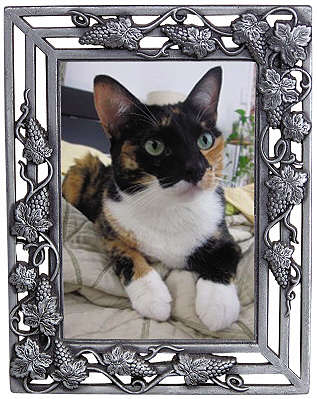 While I was growing up, we almost always had a dog (or two) in the house, and they always became treasured family members. You may have had the same experience, and you would not be alone if you have pets today that you consider to be your “children.” I know people who claim to prefer their kitties over their kiddies.
 Section 560:7-501 of the Hawai‘i Revised Statutes specifically allows you to create trusts “for the care of one or more domestic or pet animals.” You can even designate a human watchdog who will make sure that your intentions are carried out. In theory, there would be nothing to prevent your terrier’s trustee from making a quick stop at the local dog pound and then pocketing the trust assets that you had intended to be used for your poor pet. However, your
  watchdog could whisk the trustee in front of a judge and make sure the trustee is held accountable for failing to honor your wishes. Of course, if you choose the right caretaker in the first place, none of this will be an issue.
 But what if your two-legged children get jealous of your basset hound’s bequest? Is there a way for them to attack your trust? The short answer is “yes,” and if they can convince a judge that you have left “too much” for your toucan, the judge can reduce the amount in the trust to whatever amount is “enough” to provide adequately for the care, maintenance, health and appearance of the designated critter. In any event, if there is anything left when your pooch passes the pearly gates, you get to say where it goes.
 Some pets have very long lifespans, such as certain birds, reptiles and fish. Your pet trust will not be subject to the rules that limit the lifespans of conventional trusts, so you can be sure that, as long as the trust assets hold out, there will be provisions for your pet.
 When Betty Lau (victim’s name changed) of Kaimuki opened her mail, she could not believe how lucky she was to find out that she won the $3-million Australian Lottery. The official looking letter explained that an unnamed company bought her a ticket as a promotional program and the enclosed Gold Credit Card from VISA contained the prize money. With the plastic card in hand, Betty felt confident this lottery was legitimate. Betty then read that the card had to be activated with a payment in order for her to gain access to the funds she had won. She was told, however, that any funds she paid would be put right back on the credit card. However, after making payment after payment, she received yet another notice that there was one more fee she had to pay in order for her to get access to the money. She had the feeling of playing a slot machine that kept showing “bar” “bar” cherry”— one more spin (or, in this case, payment) and she would win big. For the next three months, Betty sent more than $150,000 in an attempt to activate the card. It was only when she went through her entire savings account that she was forced to stop pursuing this fantasy.