Category: Wisdoms

  • Everybody Should Have One

    The one estate planning document that everyone 18 and older should have is an advance health care directive.

    Karen Ann Quinlan and Nancy Cruzan were young women whose legacies are legal battles over medical care for individuals who cannot speak for themselves.

    Karen’s case determined that “medical treatment” includes life-sustaining measures, and that those measures can be declined by a patient or someone acting on the patient’s behalf.

    Nancy’s case was a battle between Nancy’s family, who believed that Nancy would not want to be sustained on a tube, and the State of Missouri, which asserted that only the patient can make that decision. Nancy’s family convinced the court that Nancy did not want to be kept alive artificially, and food and water were withdrawn.

    The bottom line?

    We have a right to say “enough is enough” when it comes to medical care, including the use of respirators and tube feeding. We also have the right to name who will speak for us when we cannot speak for ourselves. Having a clear and comprehensive advance health care directive is only way to be sure that your wishes will be known and carried out.

    ——————-

    SCOTT MAKUAKANE, Counselor at Law
    Focusing exclusively on estate planning and trust law.

    www.est8planning.com
    808-587-8227  |  maku@est8planning.com


    We have a right to say “enough is enough” when it comes to medical care, including the use of respirators and tube feeding. We also have the right to name who will speak for us when we cannot speak for ourselves. Having a clear and comprehensive advance health care directive is only way to be…

  • 5 Retirement Planning Mistakes to Avoid

    The most important goal for many of my clients is to retire on their terms – which often means planning a long, secure retirement that enables them to check off items on their ultimate bucket list. Retirement requires careful planning in addition to avoiding financial missteps along the way. Here are five common mistakes, and strategies to avoid them.

    Preparing for retirement can be overwhelming, so it’s easy to think, “I’ll tackle it next year.” Simply put, the earlier you start focusing on retirement, the earlier you can prepare a plan that accounts for your goals and concerns. And, focusing on saving today gives your investments the opportunity to snowball in value through the power of compound interest.

    Medical costs are rising, with no clear end in sight. Your best defense is to figure out what protection and sources of income you could ap-ply toward potential medical expenses. Common vehicles include Medicare and supplemental insurance premiums, long-term care policies, continuing health insurance through an employer and health savings accounts. Know which policies cover various expenses, and stay familiar with the amount of your deductibles, co-pays and out-of-pocket maximums.

    Predicting your tax bill in retirement can be complicated, but it’s worth the effort. Retirement income for many retirees comes from a variety of taxable and non-taxable sources. Your tax rate will be based only on your taxable income, so it’s important to know and manage the tax treatment of your retirement paycheck. When you turn age 70-½, you are required to take a minimum distribution from your traditional IRA. This money is generally taxable. If you don’t need the money and want to avoid the resulting tax bill, consider transferring your distribution (up to $100,000) directly from your IRA to a qualified charitable organization. A tax professional can help you determine the strategy that’s right for your situation.

    Before you tap your retirement savings early, think through the consequences. IRS rules allow investors to withdraw 401(k) savings for qualified expenses (non-qualified items trigger a 10 percent penalty). But just because you can, doesn’t mean you should. Removing money from an income-bearing account reduces the long-term growth potential you can earn through continued saving and compound interest.

    A well-rounded retirement plan includes documenting your wishes for how you want your affairs handled if you become incapacitated or when you pass away. Creating (or updating) your estate plan enables you to help minimize any estate or inheritance tax for your beneficiaries and add in other specifications that help your assets transfer smoothly to the next generation.

    Time is on your side when you start preparing early. Tackling one step at a time is a great way to make progress on your retirement plan and avoid potentially costly missteps. If you want a second opinion, engage a financial advisor who can review your situation in detail.

    ————–

    MICHAEL W. K. YEE, CFP
    1585 Kapiolani Blvd., Suite 1100 Honolulu, HI  96814
    808-952-1222, ext. 1240 | michael.w.yee@ampf.com

    Michael W. K. Yee, CFP®, CFS®, CLTC, CRPC ®, is a Private Wealth Advisor, Certified Financial Planner ™ practitioner with Ameriprise Financial Services, Inc. in Honolulu, HI. He specializes in fee-based financial planning and asset management strategies and has been in practice for 31 years.

    Investment advisory products and services are made available through Ameriprise Financial Services, Inc., a registered investment adviser.

    Ameriprise Financial Services, Inc. Member FINRA and SIPC.

    ©2018 Ameriprise Financial, Inc. All rights reserved. File #2248827

    The most important goal for many of my clients is to retire on their terms – which often means planning a long, secure retirement that enables them to check off items on their ultimate bucket list. Retirement requires careful planning in addition to avoiding financial missteps along the way. Here are five common mistakes, and…

  • How to Avoid ‘Donating’ to Scammers

    [et_pb_section][et_pb_row][et_pb_column type=”4_4″][et_pb_text]With all the natural disasters happening throughout the world, unscrupulous scammers are looking to take advantage of our empathy and generosity as we seek ways to help the victims of those disasters. These scammers will be soliciting donations using telephone messages, emails, and even social networking services like Facebook. They will be claiming to represent charity organizations which are completely fictitious or even claim to represent or be connected to legitimate charity organizations such as the Red Cross. If you decide to donate to any charity organization, you need to do your homework.
    • Verify if in fact the organization you are donating to is accepting donations for the specified charity.
    • If so, make sure the mailing address to send the donation is accurate.
    • Try not use a credit card or a debit card. Preferably send a cashier’s check from your bank and not from your personal checking account.
    • If donating via an online service like GoFundMe.com, again make sure the charity is legitimate and be cautious about giving personal financial information, like credit/debit card numbers, PIN numbers, etc.
    • Be very wary if they ask for donations ONLY using Western Union.
    • And finally, legitimate charity organizations do not solicit donations in the form of gift cards.

    THE DEPARTMENT OF THE PROSECUTING ATTORNEY 1060 Richards St., Honolulu HI 96813 808-768-7400  |  Office hrs: Mon – Fri, 7:45 am – 4:30 pm www.honoluluprosecutor.org/contact-us/[/et_pb_text][/et_pb_column][/et_pb_row][/et_pb_section]

    With all the natural disasters happening throughout the world, unscrupulous scammers are looking to take advantage of our empathy and generosity as we seek ways to help the victims of those disasters. These scammers will be soliciting donations using telephone messages, emails, and even social networking services like Facebook.

  • Please, Make the Time to Visit

    When my father-in-law “Gramps” had a stroke, he spent time at the hospital, rehab, and then a nursing home, before finally being able to return to his house. During those months of recovery away from home, my family made every effort to visit him daily. Between my wife, brother-in-law, mother-in-law and myself, we were pretty successful in making sure he would have the company of a loved one every day.

    We did this initially because we didn’t want Gramps to feel alone. Eventually, however, we discovered that he was getting better care and more attention from the staff because of our visits. When we walked into the facility, it would coincidentally seem to be at the exact time for the staff to check on Gramps. Once they saw one of us walking down the hall towards his room, they would leave their duty station and follow us inside, telling us all the details of his care as they fluffed his pillows and made sure he was comfortable.

    We could not help but notice, however, that his roommate and other patients did not get the same treatment. They were either lying in bed all day in
    silence or sitting in a wheelchair parked outside in the hall watching us come and go with lonely stares.

    Over the years, I have gotten many calls from people suspecting abuse or neglect of loved ones at care facilities. During these conversations, I would always ask them when was the last time they saw their loved one before the alleged abuse. I did this to get an idea how quickly the neglect occurred or see if there were signs of abuse witnessed.

    Despite my intentions, however, the callers would get defensive, relating various reasons why they were not more attentive nor visiting that often. Their reasoning was that if the place did their job correctly, they wouldn’t have to check on things themselves and visit that often. And while this is true in theory, the reality is that there are some care facilities that are understaffed or have employees under trained and a regular visit could detect such problems if they exist.

    While I am sure that the majority of residential facilities provide quality, attentive care, more and more instances of the opposite happening are coming to my attention. Recently, the Honolulu Medical Examiner’s Office called me, concerned with the number of bodies they were receiving from such places whose cause of death could only be attributed to “extreme neglect”. Additionally, the Long-Term Care Ombudsman has some concerns about oversight and care of seniors in facilities and has invited our office to join them in examining the problem.

    In the meantime, I urge family to always make the time to visit loved ones. No amount of money spent for care is a substitute for actually being there yourself. Your visits will not only be appreciated, but also noticed.


    To report suspected elder abuse, contact the Elder Abuse Unit at 808-768-7536  |  ElderAbuse@honolulu.gov

    When my father-in-law “Gramps” had a stroke, he spent time at the hospital, rehab, and then a nursing home, before finally being able to return to his house. During those months of recovery away from home, my family made every effort to visit him daily. Between my wife, brother-in-law, mother-in-law and myself, we were pretty…

  • Understanding Grieving Styles

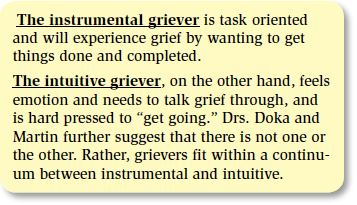
    There is no “good grief” or “bad grief”— there is only grief. Drs. Kenneth Doka and Terry Martin* suggest that there are two types of grievers: “instrumental” and “intuitive.” Neither type is deficient; only different. Understanding the difference can allow family members to empathize with, rather than attribute bad motives to, another family member.

    It is critical, at this moment when the loved one is gone and the estate administration starts, that we seek to understand each family member’s grieving style, as how we act at this highly sensitive moment can lead to family harmony or fracture for years to come.

    So, before you get mad at your sibling for wanting to “get it over with” or “not wanting to have anything to do with it,” try to understand your sibling’s grieving style, as it is this empathy for your sibling that can foster loving relationships in this difficult time.


    Stephen B. Yim, Attorney at Law
    2054 S. Beretania St., Honolulu HI 96826

    808-524-0251  |  www.stephenyimestateplanning.com

    *Drs. Kenneth Doka and Terry Martin, “Grieving styles: Gender and grief” Grief Matters Winter 2011, pp 42-45

    There is no “good grief” or “bad grief”— there is only grief. Drs. Kenneth Doka and Terry Martin* suggest that there are two types of grievers: “instrumental” and “intuitive.” Neither type is deficient; only different. Understanding the difference can allow family members to empathize with, rather than attribute bad motives to, another family member.

  • Setting Financial Goals You Can Keep

    Setting New Year’s resolutions is a tradition for millions of Americans who see January 1 as a fresh start. However, we all know how easy it is to have resolutions fall to the wayside as the year progresses.

    Fortunately, if the goal you have in mind is a financial one, there are ways you can break it down into steps that will keep you motivated and on track to achieve it. Here are some tips to help you set attainable goals:

    Setting aspirational goals, such as living the life you want in retirement or taking a coast-to-coast road trip, is exciting and can be a great place to start. Yet, broad goals can quickly become overwhelming, so tangible ones can help you keep the commitment. The best way to make your dreams a reality is to break each goal into small, specific tasks that are realistic to accomplish this year.

    You’re not alone if you have a myriad of financial goals. However, it can be hard to achieve them all without focus or unlimited resources. Pick one or two goals, tailoring your savings, time and resources accordingly. If you have competing priorities such as saving for your child’s education and retirement, create a plan that will help you make measurable progress toward both. Remember, incremental changes (or savings) made over time can make a big difference in the long run.

    Strengthen your resolve by anticipating events and triggers that might derail you from your goals such as overspending on dining out or purchasing that is outside of your budget. Be as specific as possible, and brainstorm strategies to overcome these potential obstacles. This mental exercise will help you
    be more aware and better equipped to resist
    temptations.

    Without target dates in mind, goals tend to drift. As you set deadlines for each task, consider adding a reminder on your calendar so you keep the goal a priority throughout the year. If you fall short of what you want to accomplish, don’t give up. Adjust your dates and get back on track.

    If you’re married or in a committed relationship, involve your spouse or partner in financial goal setting. If your goal is a family affair, consider including your children in the process. Your children can benefit from watching you make smart financial choices. With everyone on the same page, you can support one another and overcome obstacles together.

    Share your goals with your financial advisor, tax professional or estate planner, as appropriate. These specialists may be able to suggest additional strategies to help you reach your goals, while being mindful of your other financial priorities.


    MICHAEL W. K. YEE, CFP

    1585 Kapiolani Blvd., Suite 1100 Honolulu, HI  96814
    808-952-1222, ext. 1240 | michael.w.yee@ampf.com

    Michael W. K. Yee, CFP®, CFS®, CLTC, CRPC ®, is a Private Wealth Advisor, Certified Financial Planner ™ practitioner with Ameriprise Financial Services, Inc. in Honolulu, HI. He specializes in fee-based financial planning and asset management strategies and has been in practice for 31 years.

    Investment advisory products and services are made available through Ameriprise Financial Services, Inc., a registered investment adviser.

    Ameriprise Financial Services, Inc. Member FINRA and SIPC.

    ©2017 Ameriprise Financial, Inc. All rights reserved. File #1952908

    Setting New Year’s resolutions is a tradition for millions of Americans who see January 1 as a fresh start. However, we all know how easy it is to have resolutions fall to the wayside as the year progresses. Fortunately, if the goal you have in mind is a financial one, there are ways you can…

  • Who Gets my Stuff?

    Is estate planning really all about “who gets my stuff”? Your assets may be important, but when you sift through the reasons for doing estate planning, you may find that identifying who gets your stuff takes a distant back seat to far more important considerations.

    For one thing, no matter how important your stuff is to you, your health and well-being are far more important. There could come a time when you cannot make or communicate decisions about your person and your care. Having your hand-picked decision-maker designated in your advance health care directive could make all the difference between family harmony and a peaceful exit, on the one hand, or a complete nightmare at the end of your days.

    Fortify your interest

    When it comes to your stuff, part of staying in control involves protecting it from creditors, predators, and plain old bad luck. Think of your estate plan as a castle. Imagine a large stone enclosure surrounded by a moat. In the old days, the moat would be stocked with alligators to discourage anyone from approaching the walls. With your present-day estate plan, you can stock the moat with a different kind of gators: litigators — attorneys paid for with insurance — to protect you from people who would like your stuff to be their stuff. Having adequate liability insurance is a critical element of your estate plan.

    The walls of your castle represent various legal structures you can put in place to protect you, your home, your business, your rental properties, and your other assets. The legal structures for protecting your stuff might include trusts, limited liability companies, corporations, limited partnerships, or a combination of entities. You can also consider using a special kind of ownership with your spouse called tenancy by the entirety to protect your stuff from claims against one spouse, and to make it so that both spouses must agree to any mortgage, sale, or other transfer of the tenancy by the entirety property.

    Ultimately, you will want your estate plan to assure that your stuff goes to whom you want, when you want, the way you want, with the lowest overall cost, delay, and loss of privacy. You may want to put special restrictions on a gift to one beneficiary without imposing the same restrictions on your other beneficiaries. You might have special assets or special situations (including a special needs loved one) that require careful planning. The only way to navigate the alternatives is with the help of experienced counsel who can educate you as to the available options and help you pick the ones that are right for you and your loved ones. Good counsel can help you build the castle that is just right for your situation.

    Thinking of your estate plan as your castle helps you to zero in on your true values and objectives when it comes to making arrangements with your assets that will put you and your loved ones in the best possible position when something bad happens in the future.


    SCOTT MAKUAKANE, Counselor at Law
    Focusing exclusively on estate planning and trust law.

    www.est8planning.com
    808-587-8227  |  maku@est8planning.com

    Is estate planning really all about “who gets my stuff”? Your assets may be important, but when you sift through the reasons for doing estate planning, you may find that identifying who gets your stuff takes a distant back seat to far more important considerations.

  • Lottery/Sweepstakes: An Overview

    If I were to open a crime college, a place to learn the fine art of thievery, one class that would assuredly be on the curriculum would be Advance Fee Frauds, commonly known as sweepstakes and lottery frauds. This con involves the victim being told the lie that money is coming their way (usually from lottery winnings, insurance refunds or inheritance) but a fee/tax/processing charge has to be paid first to receive it. This one scheme is responsible for more money being stolen in Hawai‘i than any other crime.

    According to the Better Business Bureau, nearly 500,000 people have reported this fraud to various enforcement agencies in North America from 2015 to 2017. In that time, funds lost totaled $344,414,685. However, studies have shown only 1 in 25 cases are even reported to the police.

    These scams tend to originate outside of the U.S., mainly in countries such as Jamaica and Costa Rica. Losses to fraud in Jamaica in 2015 (those that had been discovered) amounted to over $38 million. Money that resulted from these scams has been used to buy guns and drugs within Jamaica. In fact, so much money is being made in Jamaica from this scam, that organized crime has dramatically increased, resulting in deadly gang wars between rival fraud groups spilling out onto the streets. As a result of these problems, a State of Emergency has been declared for Jamaica.

    Countries such as Jamaica and Costa Rica both have large English-speaking populations, which is effective when speaking to potential victims. They claim they are from somewhere within the U.S., giving a false sense of security to victims, and slowly convince them they are not being scammed.

    Costa Ricans tend to use Voice Over Internet Protocol (VOIP), also known as internet phones, which give them the ability to change their area code. They often claim to be from a government agency to give potential victims a false sense of security when providing payment for taxes, fees, transportation, and/or security, for their “winnings.”

    Operations in Canada, Israel, Spain, and the Philippines have been linked to these sweepstakes/lottery scams, too. They tend to “spoof” phone numbers, resulting in area codes that appear to come from within the U.S. — Las Vegas or Washington D.C. area codes are often used.

    The takeaway from all this is people need to realize that there is no “free lunch” and they are not lucky enough to get something for nothing. As I explained in the Oct/Nov 2017 and Dec/Jan 2018 issues (online at www.generations808.com under “Wisdoms”), a person in Hawai‘i has a ZERO percent chance of winning the lottery. Too many people have fallen victim to this scam and have fueled crime and violence all over the world.


    To report suspected elder abuse, contact the Elder Abuse Unit at 808-768-7536 | ElderAbuse@honolulu.gov

    If I were to open a crime college, a place to learn the fine art of thievery, one class that would assuredly be on the curriculum would be Advance Fee Frauds, commonly known as sweepstakes and lottery frauds. This con involves the victim being told the lie that money is coming their way (usually from…

  • Tension over Intention

    It is not just families who disagree about the interpretation of legal documents. There seems to be tension among estate planning attorneys in regard to recommending that clients write down their heartfelt intentions to accompany those documents. Many lawyers believe that it is the form that is most important — that the written legal language will communicate their client’s heartfelt wishes. Others believe that, no matter how carefully written, the form alone cannot transfer intention.

    This is particularly true of discretionary trusts. Although the Trust provides the legal power for the Trustee to act, it usually does not state the maker’s underlying reasoning or intention of how the client would like to see their assets spent.

    In his book Borrowed Narratives, Harold Smith tells us that making the personal statement in story form is better remembered and more persuasive than a sterile legal document. He further states that putting one’s thoughts in writing slows it down for the reader so that they can better understand the maker’s meaning.

    Please make sure, when you are working with your estate planning attorney, that your underlying intentions for making the trust are clearly defined. This can make all the difference.


    Stephen B. Yim, Attorney at Law
    2054 S. Beretania St., Honolulu HI 96826
    808-524-0251 | www.stephenyimestateplanning.com

    It is not just families who disagree about the interpretation of legal documents. There seems to be tension among estate planning attorneys in regard to recommending that clients write down their heartfelt intentions to accompany those documents. Many lawyers believe that it is the form that is most important — that the written legal language will communicate…

  • Educating Adult Children About Saving

    Many parents, in addition to planning for their own future, care deeply about helping their children find their financial footing as they enter adulthood. Having spent decades building up their nest eggs for retirement, they recognize the power of long-term financial planning and hope their children will capture the same benefits by starting to invest while they are young. Convincing someone just starting off in their careers to set aside money for retirement — which to them, may seem like light years away — can be a tough sell. But, initiating the conversation in a respectful and educated manner may eventually compel them to make it a priority. If you’re a parent looking for guidance in this area, consider the following discussion pointers.

    First, recognize the challenges young professionals may face

    Those starting their career often face two challenges in establishing their nest egg. The first is feeling that they have all the time in the world to save for retirement. The second challenge is that young adults are balancing numerous priorities with their newfound financial independence. Acknowledge and be realistic about these hurdles, even as you make the case for setting aside money for retirement.

    Then, outline the key reasons for making retirement savings a priority

    1. Retirement may come sooner and last longer than they may think. The average American can spend any time between a few years to over 40 years in retirement. And while some retirees choose to continue earning a paycheck, the majority are relying on their savings to cover expenses. This means the costs to live the way you want in your later years — traveling, pursuing your hobbies, engaging with family — can easily surpass one million dollars.
    2. They will likely balance financial priorities throughout their lives. Learning how to manage priorities and save for multiple goals at the same time is a valuable skill. Deciding to be thoughtful about saving, investing and spending money today can help young professionals set a strong financial foundation as their income grows.
    3. Young professionals have a huge advantage in saving: time. A modest amount saved over several decades has the potential to grow into a significant sum due to the power of compound interest. Consider sharing the following example: Imagine if you saved $100 per month beginning at age 25, which is the equivalent of a little more than $3 per day. If the money was invested, earning an average annual return of seven percent, the savings would amount to nearly $367,000 by age 70. Now, suppose you waited until age 35 to start your retirement fund. If you invested $200 a month, still earning seven percent per year, your savings would grow to about $355,000. That’s still impressive, but it required you saving twice as much money per month than if you began ten years earlier.
    4. They control their own destiny, but they can learn from your successes and mistakes with money. As adults, your children are ultimately responsible for saving for their retirement. But, chances are, they could stand to benefit from the wisdom you’ve gained from decades of saving and investing. Opening up about your experiences — both smart money moves and missteps you’ve made over the years — may help them capture opportunities and avoid mistakes as they work to build their nest eggs.

    If you or your child would like assistance crafting a retirement saving strategy, reach out to a financial advisor. Together you can find a way to balance the items most important to you.


    MICHAEL W. K. YEE, CFP
    1585 Kapiolani Blvd., Suite 1100 Honolulu, HI 96814
    808-952-1222, ext. 1240 | michael.w.yee@ampf.com
    Michael W. K. Yee, CFP®, CFS®, CLTC, CRPC ®, is a Private Wealth Advisor, Certified Financial Planner ™ practitioner with Ameriprise Financial Services, Inc. in Honolulu, HI. He specializes in fee-based financial planning and asset management strategies and has been in practice for 31 years.
    Investment advisory products and services are made available through Ameriprise Financial Services, Inc., a registered investment adviser.
    Ameriprise Financial Services, Inc. Member FINRA and SIPC.
    © 2018 Ameriprise Financial, Inc. All rights reserved. File # 2171757

    Many parents, in addition to planning for their own future, care deeply about helping their children find their financial footing as they enter adulthood. Having spent decades building up their nest eggs for retirement, they recognize the power of long-term financial planning and hope their children will capture the same benefits by starting to invest…

  • Hiring a Private Caregiver Can Be Tricky

    When hiring a caregiver, you may be tempted to try to make the process as simple as possible by treating the caregiver as a “private contractor.” You tell the person “I will pay you so much an hour, and you deal with the IRS and the State when it comes time to pay taxes.” After all, taking on the responsibilities of withholding taxes (and then paying the taxing authorities), buying Workers’ Compensation insurance, paying Social Security and Medicare tax, and all the rest, can be a real pain. However, the IRS and the State will take the position that the caregiver is an “employee,” that you are an “employer,” and that all the legal obligations that attach to those labels are applicable to your situation.

    IRS Publication 926 gives very helpful guidance to those hiring household employees, including caregivers. Go through that publication, which can be found at https://www.irs.gov/forms-pubs/about-publication-926, and consider all the questions it poses, several of which might surprise you. For example, can your prospective caregiver legally work in the U.S.? How do you verify that, and what records must you keep to prove that you satisfied your obligation to verify the caregiver’s status? You can find all the resources and forms you will need for that on the U.S. Citizenship and Immigration Services website www.uscis.gov/i-9-central or call 800-375-5283.

    Depending on your budget, it may make sense to look into local employment or caregiver agencies. This simplifies your job, because you can contract with the agency, and the agency will be the caregiver’s employer and will deal with all of the details of being an employer. You will pay a premium for this kind of service, but the agency’s experience and employment expertise may make the extra cost seem like a bargain.

    Another set of issues arises if you opt to be the employer of a caregiver, and then your employee is injured on the job. If you have made sure to carry the right kinds of insurance, you will be fine. However, the consequences of failing to do so can be financially disastrous. An agency will probably carry Workers’ Compensation insurance, but you should be sure to talk with your personal insurance professional to find out if there is anything else you should do to protect yourself through your homeowner’s and umbrella policies.

    The bottom line is that you should never hire a caregiver without carefully considering your legal responsibilities and potential liabilities, and making sure they are addressed. Ask your trusted advisors — your CPA, your lawyer, and your insurance professional — for guidance, and check out the resources cited above. You will be glad you did.


    SCOTT MAKUAKANE, Counselor at Law
    Focusing exclusively on estate planning and trust law.
    www.est8planning.com
    808-587-8227 | maku@est8planning.com

    When hiring a caregiver, you may be tempted to try to make the process as simple as possible by treating the caregiver as a “private contractor.” You tell the person “I will pay you so much an hour, and you deal with the IRS and the State when it comes time to pay taxes.” After…

  • Overcoming Securities Fraud

    Only one out of every 44 cases of financial abuse among the elderly ever gets reported and even fewer make it to trial. This is the true story of one of those cases.

    This story starts with the death of a woman’s son in Afghanistan. Following his tragic passing, the government paid her more than $500,000 in death benefits. So, she took the money to a broker and told him that it was everything she had for retirement and, in addition, she wanted to access about half of it to buy a home with her daughter. The broker, after listening to her story, placed the money in securities called Real Estate Investment Trusts (REITS) and Limited Partnerships.

    The securities paid a dividend for about two years. And then the dividends got smaller. And smaller. Finally, when she wanted to cash out half of her money, the investments that she was in prevented her from doing so.

    Sensing something was seriously wrong, she sought out legal representation. Her situation was identified as textbook securities fraud, and after a settlement she won back her finances.

    Before approaching an advisor to invest your money, you should check for any past disciplinary actions against them by calling the Department of Commerce and Consumer Affairs at 808-586-2744, or using the Financial Industry Regulatory Authority’s (FINRA) BrokerCheck website, http://brokercheck.finra.org/

    If you suspect you are a victim of securities fraud, seek out a legal firm that includes a practice specializing in that area.


    CLAY CHAPMAN IWAMURA PULICE & NERVELL
    info@paclawteam.com
    Scott Batterman: 535-8410 | Gerald Clay: 535-8405
    www.PacLawTeam.com/securities-fraud

    Only one out of every 44 cases of financial abuse among the elderly ever gets reported and even fewer make it to trial. This is the true story of one of those cases.