Category: Programs & Services

  • Do You Know A Medicare Hero?

    Hero: “a person of distinguished courage or ability, who has performed a heroic act, and is regarded as a model or ideal.”

    I think every longtime Medicare beneficiary fits this definition. Some deal with their own chronic illness, pain and health threats while they care for a sickly loved one. One couple had been on Medicare for more than a decade. A recent stroke paralyzed the husband’s left shoulder, arm and hand, making it difficult to care for his bedridden wife. This setback did not dim his healthy glow and sparkling eyes. Despite these health challenges, the couple invited me into their lovely home to review their Medicare plan options. They had done their homework and understood all the plans they might choose. They asked all the right questions to determine which plan would work best, and they chose wisely. The walls of their home were filled with family pictures and amateur sports trophies awarded in the 60s — evidence of a rewarding life that pales when compared to their heroic efforts to make the best of their lives in 2016. Their home is bright and cheery, even with dozens of medical supplies filling the tables and countertops. Still, I was offered a refreshing iced tea and a tasty frozen ice cream cone as we talked story for more than an hour.

    The lesson for Baby Boomers is to stay healthy and mobile as long as you can, but wisely choose your Medicare health plan — be the champion of your health and plan to be a hero for those that you love.


    808-230-3379  |  getmartha@aol.com
    Medicare Moment With Martha
    A radio program with Martha Khlopin on KHNR-690AM:
    Saturdays, 2 pm–2:30 pm, Sundays, 9:30 am–10 am
    Hero: “a person of distinguished courage or ability, who has performed a heroic act, and is regarded as a model or ideal.” I think every longtime Medicare beneficiary fits this definition. Some deal with their own chronic illness, pain and health threats while they care for a sickly loved one. One couple had been on…

  • Family Peacekeeping

    In the heat of the moment, worn-out family caregivers’ words can offend, bully or sting: “How come I am the only one at Mom’s when she trips and falls between one and five a.m.? “Why do you get to live rent-free at Mom’s home? “Dad just spits out your tough stew meat!”

    Opinions and loose talk can trigger knee-jerk reactions that somersault into arguments and collapsed relationships. Wounded siblings can feel disrespected, isolated and unappreciated. If not mended quickly, misunderstandings can freeze friendships for days, months or a lifetime.

    How do you avoid the casualties of friendly fire? How do you begin to heal wounds and disarm a family cold war?

    Good News! It is possible to return to peace with a proven easy system of intentional coaching. Peacekeeping examines all points of views and then invites tougher but less threatening questions: “I notice something feels uncomfortable. Is there is something that is no longer working? What is happening that is surprising you?”

    Peacekeeping skills empower forgiving families to clear the air that is choking them, erase blame and fumigate creepy bugaboos that often kill dialogue. Successful families victoriously draw mutual agreements that increase uplifting conversation and expand breathing room. Your loved ones’ only wish is to be at peace in their final moments — not in a family feud. Seek mentoring to repair broken family relationships; you and your family can live and die without regret.


    LIFE COACH VILLAGE, LLC
    Annette Pang, Relationship Life Coach & Founder

    Find out how to become a PeaceKeeper and Forgiving Family Fumigator.
    808-372-3478  |  www.annettepang.com

    In the heat of the moment, worn-out family caregivers’ words can offend, bully or sting: “How come I am the only one at Mom’s when she trips and falls between one and five a.m.? “Why do you get to live rent-free at Mom’s home? “Dad just spits out your tough stew meat!” Opinions and loose…

  • How to Celebrate the “Sage” in You

    Sage is not just a spice — it also means a wise person. How do the Sages of the community keep that positive attitude and stay healthy?

    One way is to keep healthy with preventive services available through original Medicare Part B and all the Medicare Health plans in Hawai‘i. As of January 2011, most vaccinations and screenings for diabetes, high cholesterol and cancer are free. The law also allows a free annual wellness visit. You and your doctor may use this wellness visit to develop a personalized prevention plan.

    If you don’t want to spend your birthday at the doctor’s office, make your yearly appointment every May — Older American’s Month. Through health screenings, preventive services keep a baseline record of your health. As a Sage, you can find a list of over 25 different preventive screenings on pages 69-70 of the Medicare & You 2016 handbook. You may not need all of them because 
some screening tests are based on existing health conditions and history.

    While you do not have to pay out of pocket for certain preventive services, you may have to pay for the office visit, other services received at the same visit, or preventive services not received in a doctor’s office, but in an ambulatory surgical center or hospital outpatient department. Again, if you need screenings more often than recommended, you may have to pay for them.


    HAWAI‘I SHIP (State Health Insurance Assistance Program)
    1-888-875-9229  | 808-586-7299  |  
help@hawaiiship.org
    www.hawaiiship.org  |  
facebook.com: Hawaii SHIP

    This SHIP project was supported, in part, by grant number 90SA0004-02-00 from the U.S. Administration for Community Living, Department of Health and Human Services, Washington, D.C., 20201. Grantees undertaking projects under government sponsorship are encouraged to express freely their findings and 
conclusions. Points of view or opinions do not, therefore, necessarily represent official Administration for Community Living policy.

    Sage is not just a spice — it also means a wise person. How do the Sages of the community keep that positive attitude and stay healthy? One way is to keep healthy with preventive services available through original Medicare Part B and all the Medicare Health plans in Hawai‘i. As of January 2011, most vaccinations and…

  • Catholic Charities Transportation Program

    Generations Magazine - April-May 2016 - Catholic Charities Transportation Program - image 01Need assistance with your groceries?
         Want to meet new people?
                Or go to a doctor’s appointment?

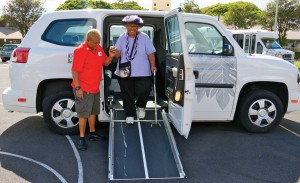
    Catholic Charities Hawai‘i Transportation Services may be a perfect transportation solution for you. The program offers trips on Oahu for seniors age 60 and older who live independently. The program has a fleet of vans that run every week for seniors who need routinely scheduled trips or occasional trips. Catholic Charities also provides transportation for Lanakila Mult Purpose Senior Center members.

    Individual seniors or senior groups may schedule rides in advance. Group outings can be arranged for excursions. Individual trips for medical appointments and trips to congregate meal sites take priority. And you can also request to use the Transportation Service for grocery shopping, beauty salon appointments, visits to family members in a care home, government agency appointments to receive/renew benefits — and more. The services are “door-to-door, which means the van will help seniors from the front door of their home or building entrance to the front door of their destination. If a senior needs an escort to help them get from the front of a building up to 
a specific floor or office, they can bring a friend or relative on the van with them to serve as their escort — or they can request a volunteer escort from Catholic Charities Hawaii.

    Want to sign up?

    Registration in advance is re-quired to use the service. And all riders must be age 60+ and live in the community.

    When is a senior NOT eligible?

    If you live in a care home, foster home, nursing home or any other long-term care facility, or if you live in a retirement facility that provides transportation service, you may not participate in Catholic Charities Hawai‘i Transportation Program. If you are on Medicaid, you should be able to receive transportation for medical trips through your Medicaid provider (but Catholic Charities Hawai‘i can provide you with nonmedical transportation).

    Want to help?

    Catholic Charities Hawai‘i is seeking volunteer drivers for trips that may be outside regular business hours, and drivers to provide escort service when needed.


    CATHOLIC CHARITIES HAWAI‘I TRANSPORTATION
    Senior Intake Help Line: 808-527-4777  |  
www.catholiccharitieshawaii.org

    Need assistance with your groceries?      Want to meet new people?             Or go to a doctor’s appointment? Catholic Charities Hawai‘i Transportation Services may be a perfect transportation solution for you. The program offers trips on Oahu for seniors age 60 and older who live independently. The program has…

  • Baby Boomer: New to Social Security?

    Generations Magazine - Social Security - LogoIf retirement is on your horizon, we can answer your questions about Social Security benefits. Here are some common questions:

    Q: What can Social Security do to help me plan for my retirement?

    A: We have two online financial planning tools you can use to make informed decisions about your retirement: Retirement Planner at www.socialsecurity.gov/retire2, and Retirement Estimator at www.socialsecurity.gov/estimator. They compute estimates of your future Social Security retirement benefits, including military service, household earnings and federal employment.

    Q: I applied for a replacement Social Security card. When should I receive my new card?

    A: You’ll usually receive your replacement card in about 10 days. We work hard to protect you, to prevent identity theft, and to ensure the integrity of your Social Security number. To do that, we have to verify documents you present as proof of identity. In some cases, documents must be certified before we can issue the card. For more information about your Social Security card and number, visit www.socialsecurity.gov/ssnumber.

    Q: How do I schedule, reschedule, or cancel an appointment with Social Security?

    A: Many transactions can be made online, like filing for Retirement, Medicare, Spouses’ and Disabiliy benefits. If you need to call us or apply for benefiuts in person, we are here to assist.


    For questions, online applications or to make an appointment to visit a Social Security office,
    contact us between 7am–5pm, Monday–Friday:
    1-800-772-1213 (toll free)  |  1-800-325-0778 (TTY)
  |  www.socialsecurity.gov

    If retirement is on your horizon, we can answer your questions about Social Security benefits. Here are some common questions: Q: What can Social Security do to help me plan for my retirement? A: We have two online financial planning tools you can use to make informed decisions about your retirement: Retirement Planner at www.socialsecurity.gov/retire2,…

  • New Ways to View Alzheimer’s Disease

    Candy Crowley, CNN chief political correspondent, once said about her mom, who had Alzheimer’s disease in 2012, “I want to tell you how much I miss my mother. I miss her most when I’m sitting across from her.”

    Crowley, her siblings and numerous families have similar reactions and remorse when they realize that their aging loved ones are not remembering or are asking the same things repeatedly.

    “Alzheimer’s creates a kind of friction that the family needs to be strong for,” she said, offering this advice: “You have to hold on to things and know what is true in life.”

    Caregiving is one of the toughest times for family caregivers and their relationships. Alzheimer’s disease forces a family to adapt and thrive as parents turn into strangers. Because the loved one still looks the same, it is hard to accept the change. Rather than feeling dread and drawing away from one antoher, caregivers need to huddle, grieve, hold each other’s hands and talk gently to find solutions and ways to cope with the “new normal.”

    As a life coach, I suggest a family powwow to air worries, fears and frustration. Saddened and distraught family members need skillful guidance and a proven sequential process. It is not a time to “wing it” and haphazardly connect to one another. Reach out to professionals like Pamela Ah Nee of the Alzheimer’s Association and Project Dana Caregiver Support Group. You are not alone on this road — even if it’s painful and filled with unknowns. It is possible to take pleasure in your aging loved ones and each other


    LIFE COACH VILLAGE, LLC 2383 Beckwith St., Honolulu | 808-372-3478 ap@annettepang.com | www.legendarywisdoms.com

    Candy Crowley, CNN chief political correspondent, once said about her mom, who had Alzheimer’s disease in 2012, “I want to tell you how much I miss my mother. I miss her most when I’m sitting across from her.” Crowley, her siblings and numerous families have similar reactions and remorse when they realize that their aging…

  • Disability: Facts and Faces

    Perhaps the most misunderstood Social Security program is disability insurance, SSDI. Some people mistakenly think that beneficiaries are “on the dole” and getting easy money for minor impairments. That’s not the case.

    The Social Security Act has a very strict definition of disability. To receive a disability benefit, a person must have an impairment expected to last at least one year or result in death, and so severe that it renders the person unable to perform any substantial work in the national job market, not just their previous work. SSDI does not include temporary or partial disability benefits. Therefore, Social Security disability beneficiaries are among the most severely impaired people in the country and tend to have high death rates.

    Also, Social Security conducts a periodic review of persons who receive disability benefits to ensure they remain eligible for disability. We work
    to prevent, detect and prosecute fraud, and often investigate suspicious disability claims before awarding benefits — stopping fraud before it happens. These steps help to ensure that only eligible persons have access to disability benefits.

    Americans place a high premium on self-sufficiency, but it is reassuring to know that Social Security disability insurance is there when needed.

    Meet a few people who have benefited from Social Security when they were most in need — at the new Faces and Facts of Disability website, www.socialsecurity.gov/disabilityfacts. They’re happy to share their personal stories with you.


    For questions, online applications or to make an appointment to visit a Social Security office, contact: 1-800-772-1213 (toll free) | 1-800-325-0778 (TTY) www.socialsecurity.gov

    Perhaps the most misunderstood Social Security program is disability insurance, SSDI. Some people mistakenly think that beneficiaries are “on the dole” and getting easy money for minor impairments. That’s not the case. The Social Security Act has a very strict definition of disability. To receive a disability benefit, a person must have an impairment expected…

  • Insurance For Grown-Ups

    Generations Magazine -Insurance For Grown-Ups - Image 01
    Martha Khlopin and Merlita Compton joined a double centenarian birthday, Perpetua Amian, 102, and Maria Amian, 100.

    If you remember the term “grown-ups,” it is time to make sure your insurance coverage is aging as gracefully as you are. I volunteer at Kokua Kalihi Valley elderly community center in Honolulu and each month we celebrate birthdays. In December, I celebrated the birthdays of two centenarians who turned 102 and 100 years old and my own mother’s 90th! As I spoke to their family and friends, I learned that the adult children were slowing down and finding it harder to assist their parents. An individual’s needs, both emotional and physical, can grow with age. Those living beyond their 80s may have outlived their spouse, siblings, close friends and the relatives they counted on to look after them in later years. In some cases, their adult children may need assistance. In reality, few ever imagined they would need help with daily living—activities like cooking, bathing or walking. The centenarian’s children in their mid-70s have Medicare insurance as their primary coverage, just like their parents. Health needs are met, but no one had looked into the type of insurance that covers non-medical care. If your grandparents, parents, aunties and uncles, are heading into their 70s, whether you are a Generation X, Millennial or Boomer, it is time to be the “grown-up” and look into insurance coverage for non-medical services that help us age gracefully


    808-230-3379 | getmartha@aol.com
    www.Get2insurance.com
    Morning Drive With Martha
    A radio program with Martha Khlopin
    KNDI-1270AM: Weekdays, 4:30 am–6 am

    If you remember the term “grown-ups,” it is time to make sure your insurance coverage is aging as gracefully as you are. I volunteer at Kokua Kalihi Valley elderly community center in Honolulu and each month we celebrate birthdays. In December, I celebrated the birthdays of two centenarians who turned 102 and 100 years old…

  • MEO is Rolling on Maui

    Maui Economic Opportunity, Inc. (MEO) is a hub for transportation throughout Maui County. It lives up to its motto: “Helping People… Changing Lives” by coordinating the services of over 20 different agencies and nonprofits, and providing low-cost specialized transportation with grant support from the county of Maui, Department of Transportation. These services are particularly important to seniors and persons with disabilities.

    The Maui County Department of Transportation contracts with Roberts Hawaii, Inc. to run the Maui Bus fixed route MEO starts the next sentence MEO runs the complementary paratransit service. Disabled riders must qualify for the paratransit service through Maui County Department of Transportation. Riders of the fixed route and paratransit may purchase daily or monthly bus passes on any Maui Bus or paratransit vehicle and at Maui Mall in Kahului at the County Business Resource Center or at the Wharf Cinema Center Management Office in Lahaina.

    MEO’s most recent collaboration with the Aging and Disability Resource Center (ADRC) created the One-Call, One-Click Transportation Resource Center to assist veterans and military families getting around Maui to take care of business. To use the service, veterans just have to register with the Maui County ADRC. For more information call 808-344-1703 (8am – 4pm) or visit www.Maui1Click.com anytime.

    MEO Human Service Transportation also offers rural shopping shuttles in Hana and on the islands of Molokai and Lanai. MEO is the only public transportation on these islands. Disabled riders living outside the 3/4-mile service area of paratransit may use the Ala Hou service.

    Ala Hou “On the Move Again” accessible vans serve persons with disabilities who have registered with MEO and live more than 3/4-mile from the fixed route. Reservations may be made 14 days in advance for scheduled service, daily from 8am to 4:30pm.

    Other human services transportation include Senior Services, Day Health, Nutrition, Leisure, Employment-to-Work for low-Income workers, Dialysis and after school Youth Transport. Upcountry Maui citizens may connect to local financial and medical offices on i-Shuttles. Through Maui County Department of Transportation, MEO offers fare discounts for individuals with verified disabilities who use the fixed-route Maui Bus Service. Low-income workers may also receive free rides to and from work.


    MAUI ECONOMIC OPPORTUNITY, INC
    99 Mahalani St., Wailuku, HI 96793 808.249.2990 | Transportation: 808-877-7651 www.meoinc.org
    FOR NEIGHBOR ISLAND SENIOR BUS TRANSPORTS:
    Kauai: www.tinyurl.com/KauaiCounty-SeniorBus 808-246-8110
    Hawaii: www.tinyurl.com/HawaiiCounty-SeniorBus East HI: 808-961-2681, West HI: 808-322-3429

    Maui Economic Opportunity, Inc. (MEO) is a hub for transportation throughout Maui County. It lives up to its motto: “Helping People… Changing Lives” by coordinating the services of over 20 different agencies and nonprofits, and providing low-cost specialized transportation with grant support from the county of Maui, Department of Transportation. These services are particularly important…

  • Hop On Da Bus!

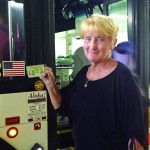
    I greeted few ku¯puna at the bus stop in front of Nordstrom at Ala Moana Shopping Center with one question: “Why do you like riding the bus?” All agreed on a few things — the bus is convenient, a pleasant experience, and a great place to meet new and interesting people.

    Generations Magazine -Hop On Da Bus! - Image 01This is Debbie Taylor, who takes the same bus to Kailua after 25 years and likes that there is “no worry about parking.” Others like Mirsada Dumisic have been taking the bus for five years, and she and her husband have even sold their cars.



    Generations Magazine -Hop On Da Bus!  - Image 03Here is information on the senior fares:

    • One-way fare=$1 with proof-of-purchase of a $10 senior card or a valid U.S. Medicare Card. To purchase a senior card, you must go to TheBus Pass Office (at Kalihi Transit Center) and it entitles you to the reduced senior fare for four years. Bring your state identification card, birth certificate, passport or driver’s license for proof of age. The monthly pass can be purchased either at the TheBus Pass Office or the Satellite City Hall. Note that the Satellite City Hall only accepts cash
    • Unlimited rides, monthly or annually, are offered for seniors by the C&C of Honolulu:
      – $5 per month. A monthly pass sticker is given to affix to your senior card.
      – $30 per year. This annual bus pass allows you unlimited rides during the calendar year on regular or express service buses. A two calendaryear pass for $60. You must purchase their initial
      annual pass at TheBus Pass Office. Once you purchase a pass, you may renew your pass by mail. The Pass By Mail Program will mail you an application to renew the month before your annual pass will expire. Once TheBus receives your application and payment, the office will mail you a new sticker to put on your current pass card. If seniors do not wish to do this by mail, they can always go to the TheBus Pass Office and renew in person. Either way, TheBus is a great bargain.

    Generations Magazine -Hop On Da Bus! - Image 02As I hurried to take her picture before May boarded the #17 for Makiki, she said, “Taking the bus is convenient because it stops right in front of my house and the bus drivers on #17 are friendly.” Dumisic chimed in, “The new buses are fantastic! The seats are clean and not too high.” You might enjoy getting out and around town without the hassels of driving, so get your senior card and pass today and hop on Da Bus!


    THEBUS — HONOLULU 808-848-5555 | www.thebus.org
    TheBus Pass Office: Kalihi Transit Center,Middle Street & Kamehameha Hwy. (808) 848-4444

    I greeted few ku¯puna at the bus stop in front of Nordstrom at Ala Moana Shopping Center with one question: “Why do you like riding the bus?” All agreed on a few things — the bus is convenient, a pleasant experience, and a great place to meet new and interesting people. This is Debbie Taylor,…

  • Patient Transport is News

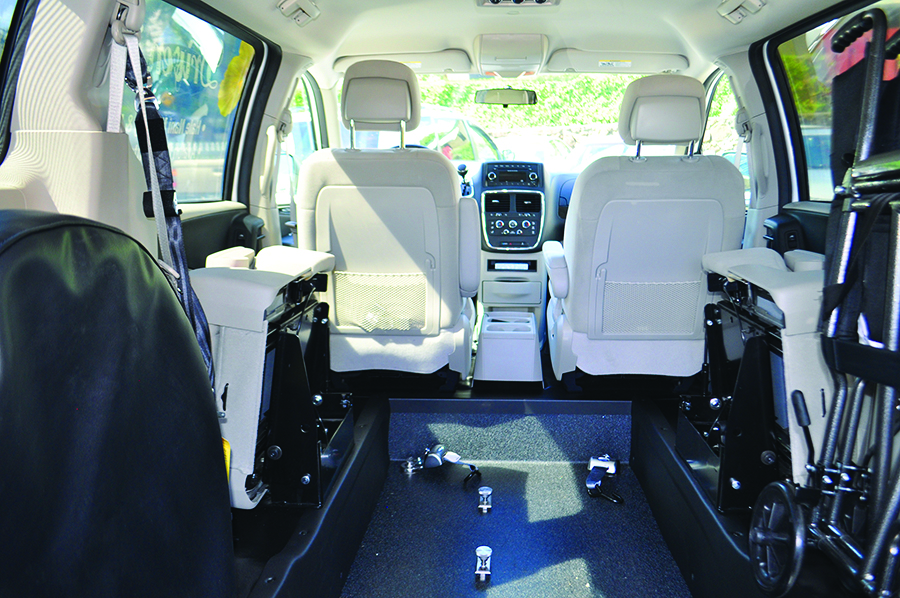
    For seniors who are frail or disabled, transportation in O‘ahu can be challenging. Doctor’s visits are not that simple — scheduling a care partner to ride along, long waits for pickup, and worrying if there will be a long line at the doctor’s office. Steps and elevators add to the fun, and sometimes one visit takes up the entire day! Don’t mention the cost.

    Senior living and extended care facilities are growing and expanding services. One service is transporting residents and clients to and from their medical appointments. The move to providing transportation has some serious benefits for patients and their families. If a loved one visits dentist, eye doctor, podiatrist, their heart specialist and internist just once a year, that spends five vacation days. Hiring an aid and a private, accessible van to provide transport sounds good, but having new helpers is stressful on your loved one, and it is difficult to assess whether your loved one is safe and comfortable during transport.

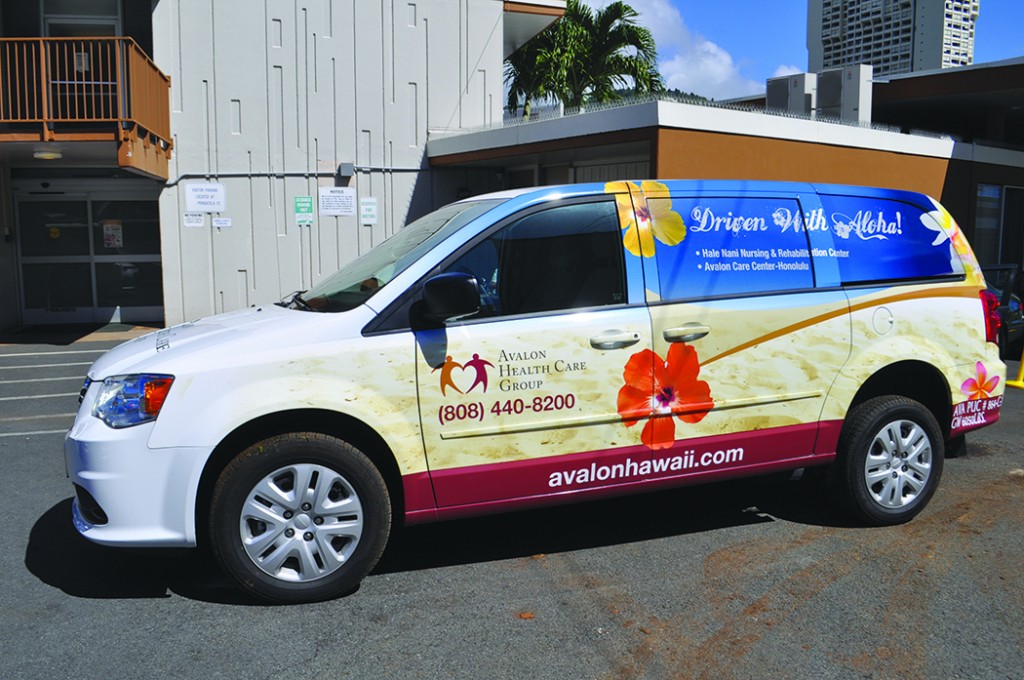
    In September, the first large care provider on O‘ahu announced that they were forming a separate transportation division to provide reliable and accountable in-house transportation for clients who have to visit hospitals and medical appointments. Patients, families and staff documented transport issues and the obvious answer was to serve the patients. For routine outside therapies like dialysis, which already takes a toll on the patient, reliable transportation is crucial.

    Now in operation for three months, the transportation division is getting a good report card from patients, and staff. As the numbers of longterm care patients and assisted living residents increase in Hawai‘i, accessible patient transportation will become a greater need, and health care facilities that want to provide a quality experience for long-term patients will be obliged to consider expanded transportation services just to compete for clients.

    This transportation innovation is another indicator that Hawai‘i care providers are gearing up for the future when a large portion of our population will be 85 years old and older.

    Generations Magazine -Patient Transport is News  - Image 01

    Generations Magazine -Patient Transport is News  - Image 02


    HALE NANI REHABILITATION AND NURSING CENTER 1677 Pensacola St., Honolulu, HI 96222 808-537-3371

    For seniors who are frail or disabled, transportation in O‘ahu can be challenging. Doctor’s visits are not that simple — scheduling a care partner to ride along, long waits for pickup, and worrying if there will be a long line at the doctor’s office. Steps and elevators add to the fun, and sometimes one visit…

  • Medicare and Alzheimer’s Disease

    The Hawaii SHIP is repeatedly asked this question, “Does Medicare cover Alzheimer’s Disease?” Medicare’s coverage is based on “medically necessary” procedures, not disease diagnosis. For example, if I go to my doctor and he orders blood to be drawn to see if my medication is at a therapeutic level, Medicare would pay for both the doctor’s visit and the visit to the lab. A doctor’s examination and laboratory tests are covered whether the patient has Alzheimer’s disease (AD), cancer, epilepsy or other diseases.

    Does Medicare cover…

    HOME HEALTHCARE? This benefit is based on a prescription from your physician for a medical reason and it is not for 24-hour care. If you just need someone to keep an eye on Mom while you are at work, it is not a medical need and it would not be covered by Medicare. If Mom fell and broke her leg and was in a non-weight bearing cast, she might need home care for a short time to assist with bathing or physical therapy in the home. These services would be covered whether Mom has AD or not.

    LONG-TERM CARE? Not covered by Medicare. Medicare has a “skilled nursing facility care” benefit, but it is again based on medical necessity. Eligible skilled care must follow a hopital stay of three or more days–that is admission to an inpatient hospital, and care must be at a skilled level. Your doctor must certify that you need the daily services that can only be provided by licensed nursing or therapy personnel.

    PRESCRIPTIONS? Medications that are needed to assist in the treatment of AD will be covered under Medicare Part D (or through your Medicare Health Plan if it includes Part D). We suggest that you always take your Part D plan formulary booklet with you to your physician visit to make sure that the drug that is prescribed is under your plan formulary. If the medication is not covered by the plan and your physician says that it is medically necessary, you and your physician can appeal to the plan and ask them to cover it for you. There are five levels of appeals (so “no” does not mean “no” until the fifth level).

    Medicare Health plans are required to cover all the Medicare A & B benefits, but may have different co-pays and added benefits. Be sure to study your “annual explanation of benefits” that you receive each fall from your plan.

    The answer is that Medicare covers medical needs and medication. Custodial care and longterm care sometimes required for AD and patients with other chronic diseases are not covered. Whenever you have questions on Medicare coverage, Hawaii SHIP has the answers


    HAWAI‘I SHIP (State Health Insurance Assistance Program) 1-888-875-9229 | 808-586-7299 help@hawaiiship.org | www.hawaiiship.org facebook.com: Hawaii SHIP

    This SHIP project was supported, in part, by grant number 90SA0004-02-00 from the U.S. Administration for Community Living, Department of Health and Human Services, Washington, D.C., 20201. Grantees undertaking projects under government sponsorship are encouraged to express freely their findings and conclusions. Points of view or opinions do not, therefore, necessarily represent official Administration for Community Living policy.

    The Hawaii SHIP is repeatedly asked this question, “Does Medicare cover Alzheimer’s Disease?” Medicare’s coverage is based on “medically necessary” procedures, not disease diagnosis. For example, if I go to my doctor and he orders blood to be drawn to see if my medication is at a therapeutic level, Medicare would pay for both the…