
Category: Programs & Services

  • Insurance For Grown-Ups

    Generations Magazine -Insurance For Grown-Ups - Image 01
    Martha Khlopin and Merlita Compton joined a double centenarian birthday, Perpetua Amian, 102, and Maria Amian, 100.

    If you remember the term “grown-ups,” it is time to make sure your insurance coverage is aging as gracefully as you are. I volunteer at Kokua Kalihi Valley elderly community center in Honolulu and each month we celebrate birthdays. In December, I celebrated the birthdays of two centenarians who turned 102 and 100 years old and my own mother’s 90th! As I spoke to their family and friends, I learned that the adult children were slowing down and finding it harder to assist their parents. An individual’s needs, both emotional and physical, can grow with age. Those living beyond their 80s may have outlived their spouse, siblings, close friends and the relatives they counted on to look after them in later years. In some cases, their adult children may need assistance. In reality, few ever imagined they would need help with daily living—activities like cooking, bathing or walking. The centenarian’s children in their mid-70s have Medicare insurance as their primary coverage, just like their parents. Health needs are met, but no one had looked into the type of insurance that covers non-medical care. If your grandparents, parents, aunties and uncles, are heading into their 70s, whether you are a Generation X, Millennial or Boomer, it is time to be the “grown-up” and look into insurance coverage for non-medical services that help us age gracefully


    808-230-3379 | getmartha@aol.com
    www.Get2insurance.com
    Morning Drive With Martha
    A radio program with Martha Khlopin
    KNDI-1270AM: Weekdays, 4:30 am–6 am
    If you remember the term “grown-ups,” it is time to make sure your insurance coverage is aging as gracefully as you are. I volunteer at Kokua Kalihi Valley elderly community center in Honolulu and each month we celebrate birthdays. In December, I celebrated the birthdays of two centenarians who turned 102 and 100 years old…

  • MEO is Rolling on Maui

    Maui Economic Opportunity, Inc. (MEO) is a hub for transportation throughout Maui County. It lives up to its motto: “Helping People… Changing Lives” by coordinating the services of over 20 different agencies and nonprofits, and providing low-cost specialized transportation with grant support from the county of Maui, Department of Transportation. These services are particularly important to seniors and persons with disabilities.

    The Maui County Department of Transportation contracts with Roberts Hawaii, Inc. to run the Maui Bus fixed route MEO starts the next sentence MEO runs the complementary paratransit service. Disabled riders must qualify for the paratransit service through Maui County Department of Transportation. Riders of the fixed route and paratransit may purchase daily or monthly bus passes on any Maui Bus or paratransit vehicle and at Maui Mall in Kahului at the County Business Resource Center or at the Wharf Cinema Center Management Office in Lahaina.

    MEO’s most recent collaboration with the Aging and Disability Resource Center (ADRC) created the One-Call, One-Click Transportation Resource Center to assist veterans and military families getting around Maui to take care of business. To use the service, veterans just have to register with the Maui County ADRC. For more information call 808-344-1703 (8am – 4pm) or visit www.Maui1Click.com anytime.

    MEO Human Service Transportation also offers rural shopping shuttles in Hana and on the islands of Molokai and Lanai. MEO is the only public transportation on these islands. Disabled riders living outside the 3/4-mile service area of paratransit may use the Ala Hou service.

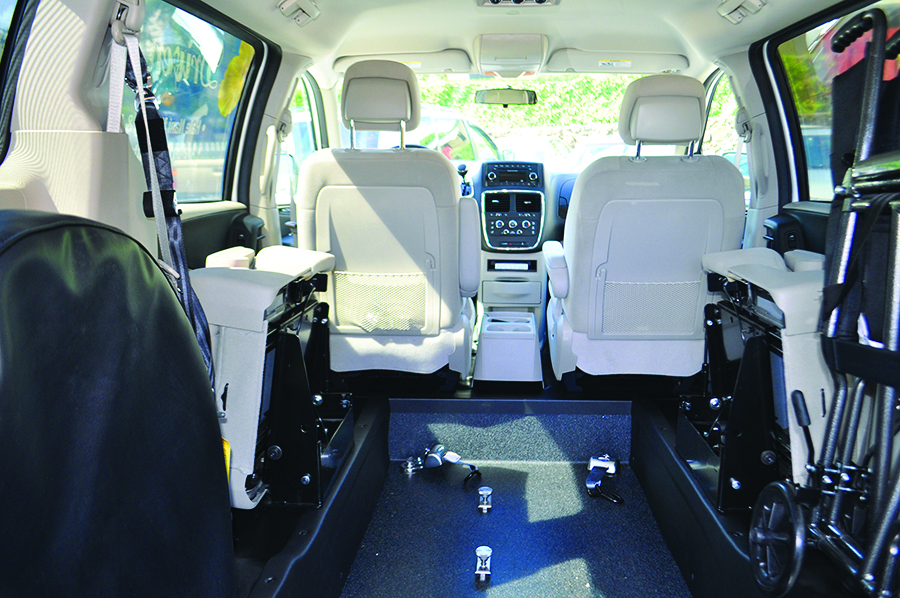
    Ala Hou “On the Move Again” accessible vans serve persons with disabilities who have registered with MEO and live more than 3/4-mile from the fixed route. Reservations may be made 14 days in advance for scheduled service, daily from 8am to 4:30pm.

    Other human services transportation include Senior Services, Day Health, Nutrition, Leisure, Employment-to-Work for low-Income workers, Dialysis and after school Youth Transport. Upcountry Maui citizens may connect to local financial and medical offices on i-Shuttles. Through Maui County Department of Transportation, MEO offers fare discounts for individuals with verified disabilities who use the fixed-route Maui Bus Service. Low-income workers may also receive free rides to and from work.


    MAUI ECONOMIC OPPORTUNITY, INC
    99 Mahalani St., Wailuku, HI 96793 808.249.2990 | Transportation: 808-877-7651 www.meoinc.org
    FOR NEIGHBOR ISLAND SENIOR BUS TRANSPORTS:
    Kauai: www.tinyurl.com/KauaiCounty-SeniorBus 808-246-8110
    Hawaii: www.tinyurl.com/HawaiiCounty-SeniorBus East HI: 808-961-2681, West HI: 808-322-3429

    Maui Economic Opportunity, Inc. (MEO) is a hub for transportation throughout Maui County. It lives up to its motto: “Helping People… Changing Lives” by coordinating the services of over 20 different agencies and nonprofits, and providing low-cost specialized transportation with grant support from the county of Maui, Department of Transportation. These services are particularly important…

  • Hop On Da Bus!

    I greeted few ku¯puna at the bus stop in front of Nordstrom at Ala Moana Shopping Center with one question: “Why do you like riding the bus?” All agreed on a few things — the bus is convenient, a pleasant experience, and a great place to meet new and interesting people.

    Generations Magazine -Hop On Da Bus! - Image 01This is Debbie Taylor, who takes the same bus to Kailua after 25 years and likes that there is “no worry about parking.” Others like Mirsada Dumisic have been taking the bus for five years, and she and her husband have even sold their cars.



    Generations Magazine -Hop On Da Bus!  - Image 03Here is information on the senior fares:

    • One-way fare=$1 with proof-of-purchase of a $10 senior card or a valid U.S. Medicare Card. To purchase a senior card, you must go to TheBus Pass Office (at Kalihi Transit Center) and it entitles you to the reduced senior fare for four years. Bring your state identification card, birth certificate, passport or driver’s license for proof of age. The monthly pass can be purchased either at the TheBus Pass Office or the Satellite City Hall. Note that the Satellite City Hall only accepts cash
    • Unlimited rides, monthly or annually, are offered for seniors by the C&C of Honolulu:
      – $5 per month. A monthly pass sticker is given to affix to your senior card.
      – $30 per year. This annual bus pass allows you unlimited rides during the calendar year on regular or express service buses. A two calendaryear pass for $60. You must purchase their initial
      annual pass at TheBus Pass Office. Once you purchase a pass, you may renew your pass by mail. The Pass By Mail Program will mail you an application to renew the month before your annual pass will expire. Once TheBus receives your application and payment, the office will mail you a new sticker to put on your current pass card. If seniors do not wish to do this by mail, they can always go to the TheBus Pass Office and renew in person. Either way, TheBus is a great bargain.

    Generations Magazine -Hop On Da Bus! - Image 02As I hurried to take her picture before May boarded the #17 for Makiki, she said, “Taking the bus is convenient because it stops right in front of my house and the bus drivers on #17 are friendly.” Dumisic chimed in, “The new buses are fantastic! The seats are clean and not too high.” You might enjoy getting out and around town without the hassels of driving, so get your senior card and pass today and hop on Da Bus!



    THEBUS — HONOLULU 808-848-5555 | www.thebus.org
    TheBus Pass Office: Kalihi Transit Center,Middle Street & Kamehameha Hwy. (808) 848-4444

    I greeted few ku¯puna at the bus stop in front of Nordstrom at Ala Moana Shopping Center with one question: “Why do you like riding the bus?” All agreed on a few things — the bus is convenient, a pleasant experience, and a great place to meet new and interesting people. This is Debbie Taylor,…

  • Patient Transport is News

    For seniors who are frail or disabled, transportation in O‘ahu can be challenging. Doctor’s visits are not that simple — scheduling a care partner to ride along, long waits for pickup, and worrying if there will be a long line at the doctor’s office. Steps and elevators add to the fun, and sometimes one visit takes up the entire day! Don’t mention the cost.

    Senior living and extended care facilities are growing and expanding services. One service is transporting residents and clients to and from their medical appointments. The move to providing transportation has some serious benefits for patients and their families. If a loved one visits dentist, eye doctor, podiatrist, their heart specialist and internist just once a year, that spends five vacation days. Hiring an aid and a private, accessible van to provide transport sounds good, but having new helpers is stressful on your loved one, and it is difficult to assess whether your loved one is safe and comfortable during transport.

    In September, the first large care provider on O‘ahu announced that they were forming a separate transportation division to provide reliable and accountable in-house transportation for clients who have to visit hospitals and medical appointments. Patients, families and staff documented transport issues and the obvious answer was to serve the patients. For routine outside therapies like dialysis, which already takes a toll on the patient, reliable transportation is crucial.

    Now in operation for three months, the transportation division is getting a good report card from patients, and staff. As the numbers of longterm care patients and assisted living residents increase in Hawai‘i, accessible patient transportation will become a greater need, and health care facilities that want to provide a quality experience for long-term patients will be obliged to consider expanded transportation services just to compete for clients.

    This transportation innovation is another indicator that Hawai‘i care providers are gearing up for the future when a large portion of our population will be 85 years old and older.

    Generations Magazine -Patient Transport is News  - Image 01

    Generations Magazine -Patient Transport is News  - Image 02


    HALE NANI REHABILITATION AND NURSING CENTER 1677 Pensacola St., Honolulu, HI 96222 808-537-3371

    For seniors who are frail or disabled, transportation in O‘ahu can be challenging. Doctor’s visits are not that simple — scheduling a care partner to ride along, long waits for pickup, and worrying if there will be a long line at the doctor’s office. Steps and elevators add to the fun, and sometimes one visit…

  • Medicare and Alzheimer’s Disease

    The Hawaii SHIP is repeatedly asked this question, “Does Medicare cover Alzheimer’s Disease?” Medicare’s coverage is based on “medically necessary” procedures, not disease diagnosis. For example, if I go to my doctor and he orders blood to be drawn to see if my medication is at a therapeutic level, Medicare would pay for both the doctor’s visit and the visit to the lab. A doctor’s examination and laboratory tests are covered whether the patient has Alzheimer’s disease (AD), cancer, epilepsy or other diseases.

    Does Medicare cover…

    HOME HEALTHCARE? This benefit is based on a prescription from your physician for a medical reason and it is not for 24-hour care. If you just need someone to keep an eye on Mom while you are at work, it is not a medical need and it would not be covered by Medicare. If Mom fell and broke her leg and was in a non-weight bearing cast, she might need home care for a short time to assist with bathing or physical therapy in the home. These services would be covered whether Mom has AD or not.

    LONG-TERM CARE? Not covered by Medicare. Medicare has a “skilled nursing facility care” benefit, but it is again based on medical necessity. Eligible skilled care must follow a hopital stay of three or more days–that is admission to an inpatient hospital, and care must be at a skilled level. Your doctor must certify that you need the daily services that can only be provided by licensed nursing or therapy personnel.

    PRESCRIPTIONS? Medications that are needed to assist in the treatment of AD will be covered under Medicare Part D (or through your Medicare Health Plan if it includes Part D). We suggest that you always take your Part D plan formulary booklet with you to your physician visit to make sure that the drug that is prescribed is under your plan formulary. If the medication is not covered by the plan and your physician says that it is medically necessary, you and your physician can appeal to the plan and ask them to cover it for you. There are five levels of appeals (so “no” does not mean “no” until the fifth level).

    Medicare Health plans are required to cover all the Medicare A & B benefits, but may have different co-pays and added benefits. Be sure to study your “annual explanation of benefits” that you receive each fall from your plan.

    The answer is that Medicare covers medical needs and medication. Custodial care and longterm care sometimes required for AD and patients with other chronic diseases are not covered. Whenever you have questions on Medicare coverage, Hawaii SHIP has the answers


    HAWAI‘I SHIP (State Health Insurance Assistance Program) 1-888-875-9229 | 808-586-7299 help@hawaiiship.org | www.hawaiiship.org facebook.com: Hawaii SHIP

    This SHIP project was supported, in part, by grant number 90SA0004-02-00 from the U.S. Administration for Community Living, Department of Health and Human Services, Washington, D.C., 20201. Grantees undertaking projects under government sponsorship are encouraged to express freely their findings and conclusions. Points of view or opinions do not, therefore, necessarily represent official Administration for Community Living policy.

    The Hawaii SHIP is repeatedly asked this question, “Does Medicare cover Alzheimer’s Disease?” Medicare’s coverage is based on “medically necessary” procedures, not disease diagnosis. For example, if I go to my doctor and he orders blood to be drawn to see if my medication is at a therapeutic level, Medicare would pay for both the…

  • Social Security: Figuring Out Retirement

    For almost every American worker, Social Security is “part of the plan” for a secure retirement. Here’s a primer on retirement coverage.

    When you work and pay Social Security taxes, you earn “credits” toward Social Security benefits. If you were born in 1929 or later, you need 40 credits or 10 years of work to qualify for retirement benefits. No retirement benefits can be paid until you have the required number of credits. If you stop working before you have enough credits to qualify for benefits, the credits will remain on your record. If you return to work later, you can add more credits so that you qualify.

    Your benefit amount is based on how much you earned during your working career. Higher lifetime earnings result in higher benefits. A worker with average earnings can expect a retirement benefit that replaces about 40 percent of his or her average lifetime earnings. Social Security was never intended to be your only source of income when you retire. You also will need other savings, investments, pensions or retirement accounts to make sure you have enough money to live comfortably when you retire.

    Your benefit payment also is affected by the age at which you decide to retire and begin receiving benefits. If you were born in 1942 or earlier, you’re already eligible for your full Social Security benefit. If you were born from 1943 to 1960, the age at which full retirement benefits are payable increases gradually to age 67.

    You can get Social Security retirement benefits as early as age 62, but if you retire before your full retirement age, your benefits will be reduced, based on your age. If you retire at age 62, your benefit would be about 25 percent lower than what it would be if you waited until you reach full retirement age. You may choose to keep working even beyond your full retirement age. If you do, you can increase your future Social Security benefits — up until age 70.

    Choosing when to retire is an important decision, but it’s also a personal choice and one you should carefully consider. When’s the best time? There is no one-size-fits-all answer. There are many factors to consider. Look into Social Security’s publication When to Start Receiving Retirement Benefits at www.socialsecurity.gov/pubs/10147.html.

    In addition, Social Security provides an online Retirement Estimator to get immediate and personalized retirement benefit estimates to help you plan for your retirement. The Retirement Estimator is a convenient and secure financial planning tool, allowing you to create “what if” scenarios. For instance, you can change your “stop work” dates or expected future earnings to create and compare different retirement options. Check it out at www.socialsecurity.gov/estimator.


    To apply online or make an appointment to visit Social Security office, contact:

    1-800-772-1213 (toll free) | 1-800-325-0778 (TTY)
    www.socialsecurity.gov

    For almost every American worker, Social Security is “part of the plan” for a secure retirement. Here’s a primer on retirement coverage. When you work and pay Social Security taxes, you earn “credits” toward Social Security benefits. If you were born in 1929 or later, you need 40 credits or 10 years of work to…

  • Medicare Frequently Asked Questions

    Here are some very common questions that people ask our SHIP staff and volunteers. If you have a question, visit our website, call us or schedule an appointment. We have the answers. If you want to help your community, become a SHIP Volunteer — it’s a very satisfying job.

    THREE COMMON QUESTIONS:

    Is Medicare only for people over 65 years old?

    Most Medicare beneficiaries are over 65, but people with certain disabilities or those who have received Social Security Disability Income for 25 months are eligible too. In Hawai‘i people with Medicare range from ages 18 to 100+ years old.

    Does Medicare pay for long-term care?

    Medicare does not pay the largest part of long-term “skilled nursing” care in a facility or in the home. Custodial and Interim care are also not covered. Some Medigap or advantage plans may cover very limited “skilled nursing” care after hospital stays. Private insurers offer long-term care policies.

    Does Medicare pay for dental?

    Original/Traditional Medicare does not pay for dental care. Some Medicare health plans have some coverage or a dental rider (additional insurance) that may be purchased.


    Hawai‘i SHIP (State Health Insurance Assistance Program)
    1-888-875-9229 | 808-586-7299
    help@hawaiiship.org | www.hawaiiship.org
    facebook.com: Hawaii SHIP

    This SHIP project was supported, in part, by grant number 90SA0004-02-00 from the U.S. Administration for Community Living, Department of Health and Human Services, Washington, D.C., 20201. Grantees undertaking projects under government sponsorship are encouraged to express freely their findings and conclusions. Points of view or opinions do not, therefore, necessarily represent official Administration for Community Living policy.

    Here are some very common questions that people ask our SHIP staff and volunteers. If you have a question, visit our website, call us or schedule an appointment. We have the answers. If you want to help your community, become a SHIP Volunteer — it’s a very satisfying job. THREE COMMON QUESTIONS: Is Medicare only…

  • Live and Die Without Regret

    No matter where we stand, when people close to us die, a moment of personal truth emerges based on our perspective.

    When we lose someone dear to us, we undergo a time of deep connection to those who are still living and to ourselves. We grieve. We rejoice. We replay special moments — laughing and crying together. We feel sadness and often regret. There is no right or wrong way to endure this transition.

    Thoughts from a Daughter of a Mom

    “When my mom died, it hit me… we sat going through jewelry and clothes in her closet… Each of us sisters shared bereavement, but each of us grieved differently. We expressed disappointment and sadness, summing up the personality of Mom in our own way, voicing incomplete messages like, “‘I wish I said,’ ‘I wish I did…”.

    To live and die without regret means to take this time to work backward — to reverse-engineer those memories step-by-step and fully express our thoughts; clear up any incomplete actions that we had hoped to carry out.

    We can’t put off tending to sadness or regret because each memory can become a constant replay: “I should have, could have, would have,” cluttering our minds. Feelings often plague a grieving survivor for many years — or for life.

    Take time today to reinvigorate your relationships and connect with your loved ones by being grateful and forgiving. Live rich and treasured lives together. You can do it with a little help.


    Life Coach Village, LLC
    2383 Beckwith St., Honolulu | 808-372-3478
    ap@annettepang.com | www.annettepang.com

    No matter where we stand, when people close to us die, a moment of personal truth emerges based on our perspective. When we lose someone dear to us, we undergo a time of deep connection to those who are still living and to ourselves. We grieve. We rejoice. We replay special moments — laughing and…

  • Honey, Will You Sign Me Up for Smart911?

    Register now for Smart911!™ Already, 1700 O‘ahu residents are signed up for this free program that saves lives, by filing important emergency information with Smart911.

    Honey, Will You Sign Me Up for Smart911?911 dispatchers need callers to give them vital information so they may dispatch EMTs and Firemen to emergencies. Many victims cannot give proper information: little children, victims of heart attacks and strokes, people who are choking, people who don’t speak English, or cannot hear what 911 is asking. Dispatchers lose precious minutes attempting to find out a callers’ exact location and information. With Smart911, they already know where you are and what medications you take. For elderly persons living alone, Smart911 is a very important breakthrough.

    However, sign-up for Smart911 is online and requires either a computer or a smartphone. So when your family asks you what you want for Christmas, tell them the best gift they can give is to help you sign up for Smart911.

    How It Works?

    You register critical information with 911: your disability, chronic disease or important medications. If your home is difficult to find or access, give 911 directions. Tell them if you have a dog. Tell them if you are not able to answer the door. In an emergency, 911 will be able to get to you without delay.

    If you are caregiving a loved one, helping them register for Smart911 is the most important holiday gift you can give.


    Register now at www.Smart911.com.
    For general assistance with the HPD: 808-529-3111.

    Register now for Smart911!™ Already, 1700 O‘ahu residents are signed up for this free program that saves lives, by filing important emergency information with Smart911. 911 dispatchers need callers to give them vital information so they may dispatch EMTs and Firemen to emergencies. Many victims cannot give proper information: little children, victims of heart attacks…

  • Class of ‘69 Begins the ‘Age of Medicare’

    Class of ‘69 Begins the ‘Age of Medicare’
    Roosevelt High School

    If you graduated from high school in 1969, chances are you’re turning 65 in 2016, or you are already there. Congratulations graduate and welcome to the world of Medicare! If you are 65 and eligible, you may choose to graduate from a commercial health insurance plan to Medicare. Just like moving from high school to college or entering the job market, you may need some wise counsel and common sense advice.

    In the Medicare space, your friendly guidance counselor may be a licensed Medicare sales agent, 1-800-Medicare representatives, volunteers at the State Health Insurance Program (SHIP) helpline, or the same old valedictorian “know it all.”

    A big mahalo to Dani Emoto, Andy Nomura and Vincent Yim of the 1969 graduating classes of Kaimuki and Roosevelt High School Reunion Committee for inviting me to hold a Medicare workshop for your classmates. It was a very enjoyable evening. As you and your classmates navigate into the “brave new world” of Medicare, remember that, 10,000 people are turning 65 years old everyday. You are in good company!


    808-543-2073 | getmedicare@aol.com
    www.Get2insurance.com
    Morning Drive With Martha
    A radio program with Martha Khlopin
    KNDI-1270AM: Weekdays, 4:30 am–6 am

    If you graduated from high school in 1969, chances are you’re turning 65 in 2016, or you are already there. Congratulations graduate and welcome to the world of Medicare! If you are 65 and eligible, you may choose to graduate from a commercial health insurance plan to Medicare. Just like moving from high school to…

  • Your Sweet Recipe for Retirement

    Steaming gravy, savory stuffing and sweet potatoes — four types of pie for dessert: pumpkin, apple, sweet potato, and pecan. Every family has its Thanksgiving dinner traditions and recipes to create a perfect holiday meal. If you fail to plan or measure your ingredients, your pie could be a real flop. Planning for your future is the same. Follow this perfect recipe, and you’ll be rewarded with a delightful retirement:

    Start your retirement pie by dropping in some simple information — on our online Retirement Estimator at www.socialsecurity.gov/retire/estimator.html. It uses your past earnings and estimated future earnings to project about how big your pie will be when you retire. Experiment with the recipe; drop in different future earnings and retirement dates until your financial security in retirement is just the way you want it. Next, top it with some savings. Social Security replaces about 40 percent of the average worker’s pre-retirement earnings. Most financial advisors say you will need 70 percent or more to live comfortably. To the Social Security pie, add your savings, investments, plus pensions or retirement accounts you will receive from your employer. Beautiful.

    You like to taste while you bake? It’s easy to set up a secure online my Social Security account at www.socialsecurity.gov/myaccount and check your reported earnings and projected benefit estimates any time you want. When your retirement pie is done, enjoy! You deserve a comfortable retirement. For more sweet retirement recipes, visit www.socialsecurity.gov.


    For questions, online applications and local SSA offices:
    1-800-772-1213 (toll free) | 1-800-325-0778 (TTY)
    www.socialsecurity.gov

    Steaming gravy, savory stuffing and sweet potatoes — four types of pie for dessert: pumpkin, apple, sweet potato, and pecan. Every family has its Thanksgiving dinner traditions and recipes to create a perfect holiday meal. If you fail to plan or measure your ingredients, your pie could be a real flop. Planning for your future…

  • Did You Claim Your Medicare Rewards?

    You read the title of this column correctly. Many Medicare plans are launching reward and incentive plans. Points earned can be redeemed for prizes or gift cards. Incentives are awarded for healthy activities that result in positive health outcomes. You could earn points for:

    • Completing an Annual Wellness Visit(AWV)
    • Tobacco cessation
    • Maintaining a certain Body Mass Index (BMI)
    • Diabetes screening tests
    • Cardiovascular disease screenings
    • Cholesterol level screenings
    • Other Screening tests and specified vaccinations

    Recent Center for Medicare and Medicaid (CMS) guidance to Medicare plan sponsors gives plans and your primary physician more control over when some health incentives may be earned. Now incentive or points may be awarded at the start of an activity or at other times during a required activity. Limits on monetary incentives also were lifted. The plans I reviewed offered points that you may redeem for items via a website. The guidance allows plans to offer gift cards as well. Reward and incentive plans are optional, so not every Medicare plan sponsor has or will offer them.

    So during the next Medicare open enrollment season, or if you become newly eligible for Medicare, you may want to inquire if the Medicare plans you are considering offer a rewards and incentive program.


    808-543-2073 | getmedicare@aol.com
    www.Get2insurance.com
    Morning Drive With Martha
    A radio program with Martha Khlopin
    KNDI-1270AM: Weekdays, 4:30 am–6 am

    You read the title of this column correctly. Many Medicare plans are launching reward and incentive plans. Points earned can be redeemed for prizes or gift cards. Incentives are awarded for healthy activities that result in positive health outcomes. You could earn points for: Completing an Annual Wellness Visit(AWV) Tobacco cessation Maintaining a certain Body…