The holiday season is a time of joy, but for many, it’s a challenging time as well. When the body holds too much tension and emotional energy, it can affect the immune system, making a person more prone to illness, as well as depression. And while we all want to enjoy this time, if we’re not proactive in taking care of ourselves, we may not feel like celebrating. So here is a word to practice to make this winter more wonderful: SEED, an acronym for stress, exercise, emotions and diet.
Stress: More than 80 percent of chronic diseases are caused by stress. Learn to manage and reduce stress through proper breathing and meditation.
Exercise: Deliberately move your body for one minute every hour at least 10 times a day to help make your body stronger and your brain smarter.
Emotions: Positive emotions are the most powerful vitamins for your mental health. Spend time each day to appreciate yourself, your life and your loved ones. Smiling goes a long way, too.
Diet: If overeating or making bad choices is challenging for you, stock your fridge with fruits and vegetables, and eat them before you indulge in holiday party food. You’ll eat less and your body will thank you.
Plant this SEED now and ring in the New Year in better health. Happy holidays!
The holiday season is a time of joy, but for many, it’s a challenging time as well. When the body holds too much tension and emotional energy, it can affect the immune system, making a person more prone to illness, as well as depression. And while we all want to enjoy this time, if we’re…
Some of our best inventions come out of the military: the walkie-talkie (1930s), duct tape (1942) and “Battlefield Acupuncture” (2001).
Chronic pain is a serious problem for many of us, including combat veterans and soldiers. Unfortunately, pain medications, including opioids, often have limited efficacy and may impose adverse effects.
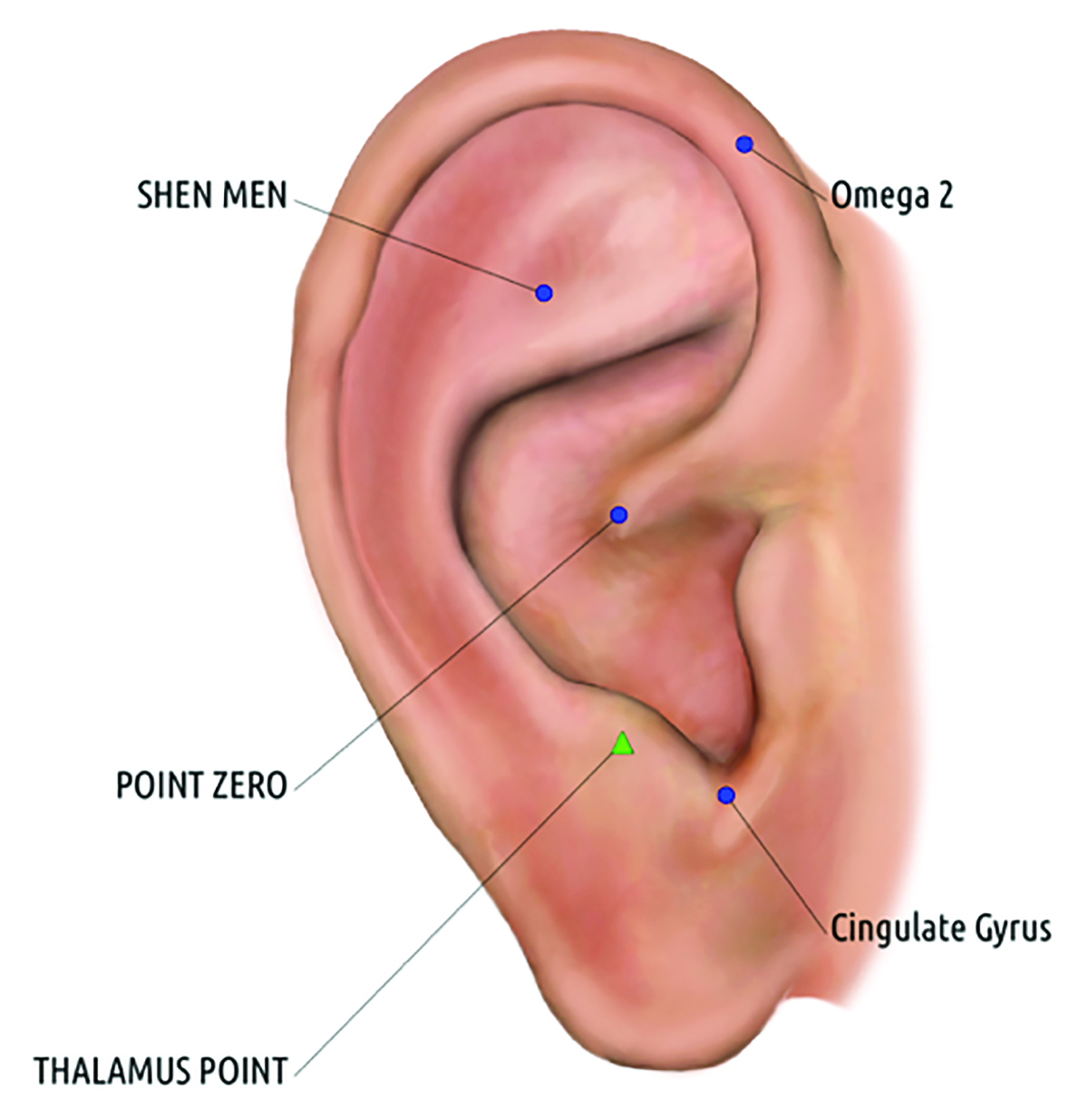
Acupuncture is known to provide immediate relief for acute and chronic pain without the risk of addiction. Dr. Richard Niemtzow, MD, has finetuned this idea by developing Battlefield Acupuncture (BFA), an acupuncture protocol in which needles are placed in the ear.
There are five points in this protocol: 1) Cingulate Gyrus, 2) Thalamus, 3) Omega 2, 4) Shen Men and 5) Point Zero. These points influence how the central nervous system processes pain. It has been suggested that they elicit short-term analgesia or anti- inflammatory cytokines for long-term effects. BFA has been proven effective for immediate pain reduction.
Little gold semi-permanent needles are left to fall out on their own in a few days. But conventional acupuncture needles can work, too. This protocol is a quick and effective way of managing pain.
Chronic pain is a serious problem for many of us, including combat veterans and soldiers. Unfortunately, pain medications, including opioids, often have limited efficacy and may impose adverse effects.
This has been a tough year. Our lives have been disrupted at the least and dramatically changed at the worst by COVID-19. The effects are far-reaching and life-changing for us all — especially for our kūpuna.
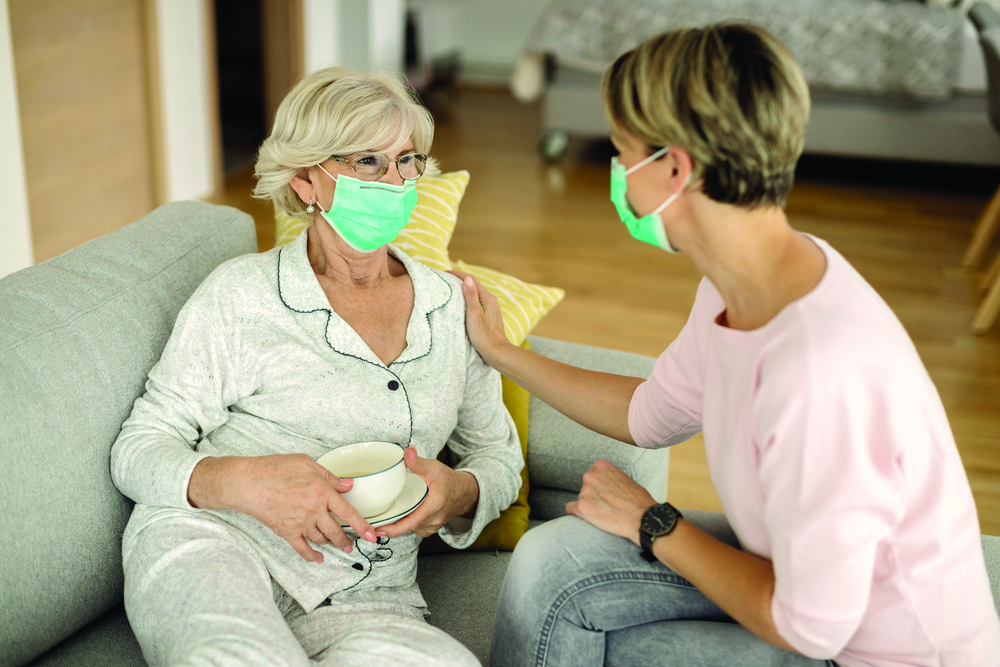
For those with hearing problems, it’s even more difficult to understand conversation when the speaker is wearing a mask. Voices become muffled and visual speech clues are hidden. Social distancing requires a separation of at least six feet, which makes it harder to communicate. The following are some tips for the kūpuna with hearing loss and their family and friends.
Tips for kūpuna with hearing loss:
• Let the speaker know you have problems hearing.
• Ask the speaker to talk slower and louder so you are more likely to understand him or her.
Tips for family and friends:
• Make sure you have the person’s attention before you begin to speak.
• Never speak from another room or over a long distance.
• Ask a simple question to determine if you are being heard and understood. “Tūtū, can you understand me now?”
• Do not start speaking and then turn away. Always face the person you are talking to.
This has been a tough year. Our lives have been disrupted at the least and dramatically changed at the worst by COVID-19. The effects are far-reaching and life-changing for us all — especially for our kūpuna. For those with hearing problems, it’s even more difficult to understand conversation when the speaker is wearing a mask.
{Play}The disruption can cause them greater confusion and increased stress, which may prompt abnormal behaviors, such as acting out.
The best thing family caregivers can do while keeping their loved one home during the pandemic is to establish new routines. Make a daily schedule that incorporates consistency in activities. This new routine will soon become the new norm.
One normal routine seniors with dementia and their families have grown to depend upon is adult day care, which provides respite for families and activities, exercise and an opportunity for socializing for the senior. All of these have been proven to help slow the progression of dementia. But because many centers closed during the pandemic, families have reported noticeable cognitive decline in their loved ones.
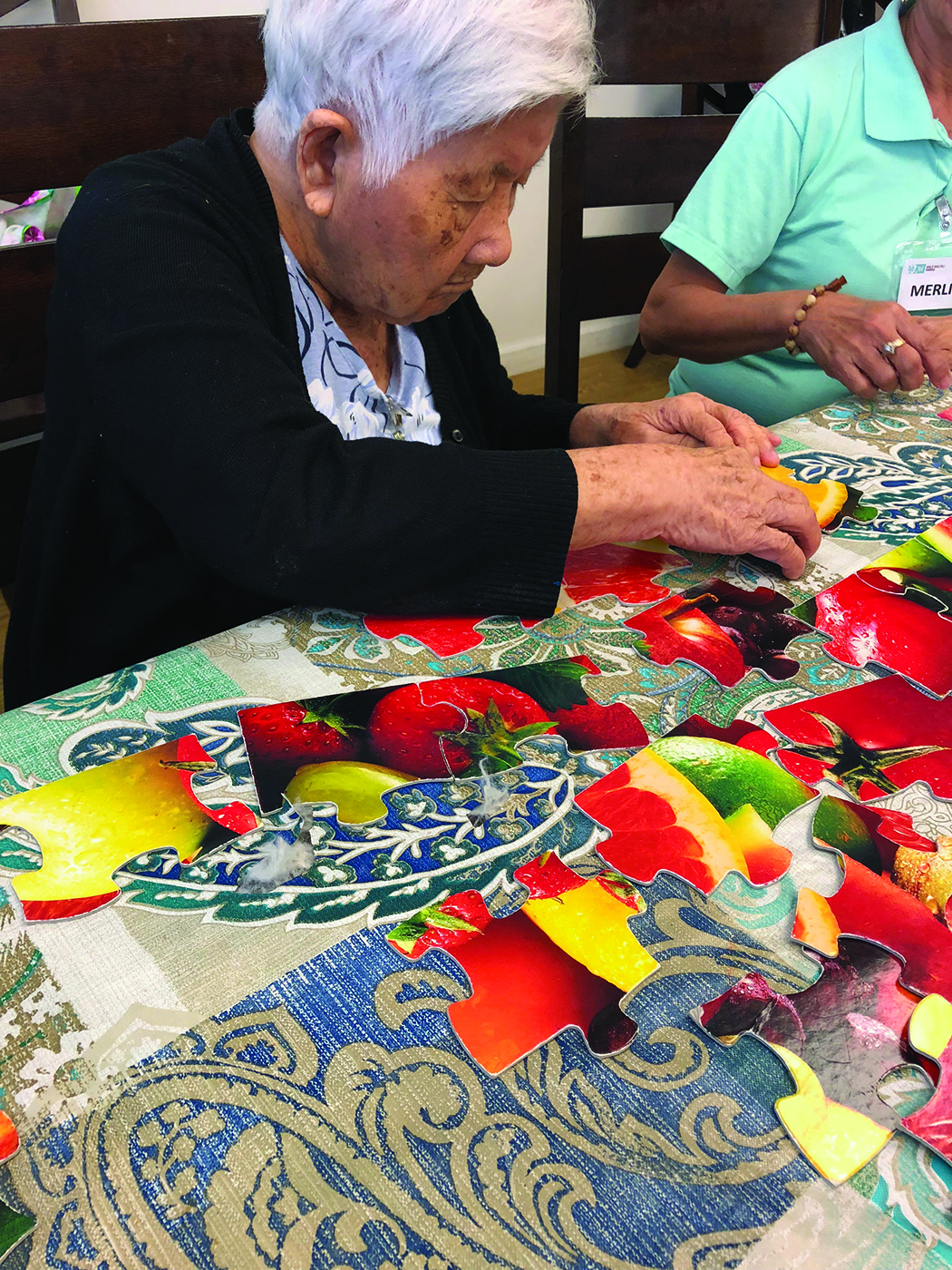
Family caregivers can help by scheduling simple daily exercises and engaging them in activities, such as puzzles, singing, or arts and crafts. To help them socialize, set up FaceTime or Zoom meetings with friends and family.
Other challenges and disruptions for seniors with dementia are the safety measures needed to prevent the spread of the virus. Seniors with dementia may not understand why they need to wear a mask and will refuse to do so willingly. They may not fathom the importance of thorough handwashing and must be assisted. They may not grasp the necessity of socially distancing from their loved ones.
And the general public may not understand these aspects of dementia when they see a senior without a mask and not social distancing. Signage that explains why some seniors aren’t wearing masks might be helpful. To increase the public’s awareness, more emphasis on how dementia patients are affected by the pandemic could be discussed in statewide town hall meetings and televised press conferences.
The state’s COVID-19 press conferences encourage everyone to wear masks to curtail the spread of the disease. Due to health problems, some people are not able to wear them — this includes some dementia patients.
Health and safety come first, but tolerance and understanding are more important than ever.
The COVID-19 pandemic has affected everyone in some way. But our most vulnerable population, our senior citizens — especially those with dementia — are being particularly challenged. Our normal routines have been altered during the pandemic. This can be devastating for dementia patients, who thrive on the consistency of a regular routine.
Healthcare systems are changing, with radical implications for family caregiving. Cost-saving reductions in hospital stays ensure that patients are discharged “quicker and sicker.” Management of complex chronic care thus moves to the home, and responsibility for that care shifts from medical professionals to family caregivers. US family members have always provided the bulk of long-term care for older adults (around 80 percent). Now, in addition to assistance with activities of daily living (ADL) (e.g., bathing, grooming) and instrumental activities of daily living (IADL) (e.g., cooking, housekeeping), caregiving involves complex medical/nursing (M/N) tasks. Approximately 60 percent of family caregivers provide M/N care, which includes assistance with complex medication regimens, mobility devices, special diets, wound care, medical equipment (such as ventilators, oxygen tanks, suctioning tubes), catheters, IV fluids or meds, injections, blood glucose monitoring, tube feedings, home dialysis and ostomy care. Of those providing M/N care, approximately 35 percent perform three to four M/N tasks; 26 percent perform five or more.
M/N caregivers are stressed. They worry they will make a mistake or hurt their care receiver. M/N tasks are emotionally difficult, especially pain management. Demands of providing special diets and incontinence care are constant and unending. Considerable skill is required to master complex procedures, recognize complications and side effects, and know when to seek additional help. Most claim they learned M/N tasks on their own. Peer support is rare. Although mandated in most states, caregiving instruction at hospital discharge is typically limited by time constraints to the most complicated tasks (tube feeding, suctioning, managing IVs), with less attention to more constant and anxiety-provoking demands, such as incontinence care or special diets.
Decisions regarding severity of need and allocation of services should consider M/N tasks, in addition to ADL and IADL.
A number of resources are available to reinforce initial M/N training:
Healthcare systems are changing, with radical implications for family caregiving. Cost-saving reductions in hospital stays ensure that patients are discharged “quicker and sicker.” Management of complex chronic care thus moves to the home, and responsibility for that care shifts from medical professionals to family caregivers.
As overwhelming as it may be, we have the responsibility to guide our loved ones through this difficult time. Here are a few tips to help our care partners continue to provide care, compassion and find time for self-restoration.
Ask your primary care physician for a telehealth appointment
Telehealth is a visit with your doctor or specialist powered by digital technologies. It allows us to experience the physician visit without the travel and unnecessary exposure. In today’s society, it is difficult and somewhat scary to book appointments in person and get a PLWD to and from the doctor’s office. As a resident care manager caring for six ku¯ puna, I’ve found that telehealth appointments are easily accessible while allowing our ku¯ puna to stay in the comfort of their home. We spoke directly to the doctor within 15 minutes and were able to have all our questions answered.
Learn how to use video call apps
FaceTime, Skype, Zoom, GoToMeeting and any video call app will suffice for video calls. At this time, care homes are following strict CDC guidelines by decreasing visitations. Our residents and families are very understanding of these changes but also find it frustrating to be distant from each other. In lieu of regular in-person visits, we transitioned to scheduling Zoom meetings. All you’d need is a smartphone or laptop computer to allow you to have interaction with your loved one. Video calls, letters and phone calls are crucial to keeping our residents happy and fulfilled.
Make time to care for yourself
Everyone knows that you need to put your mask on before a child’s in a distressed airplane. The same concept applies to caregiving. Burnout will happen if you don’t take precautions. Find a relief care partner for a few hours and take a break. Go somewhere that helps relieve your stress. Go for a drive, read a book, listen to music, enjoy a cardio workout or go for a walk. Taking breaks is vital in order to give sufficient quality care to our loved ones.
The COVID-19 pandemic has all of us dealing with additional stressors in life, and many of us may find that our abilities to deal with conflict and issues are short-fused. People living with dementia (PLWD) rely on their care partners to provide assistance with activities of daily living with kindness and compassion. PLWD also require…
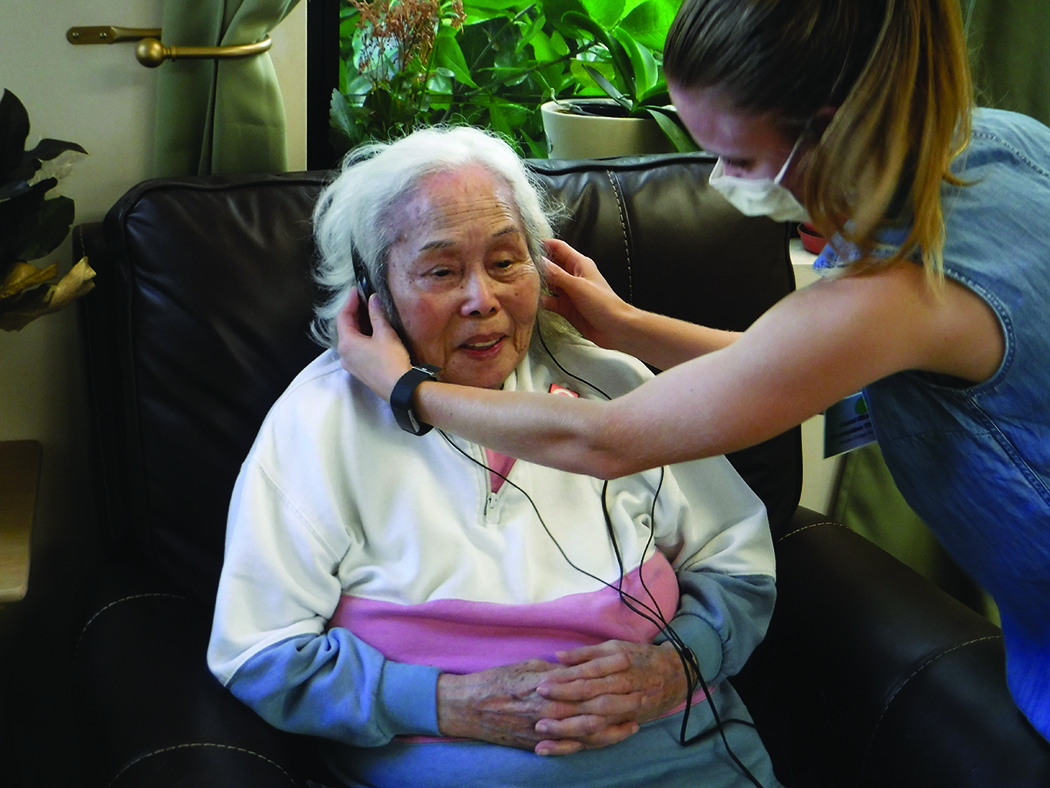
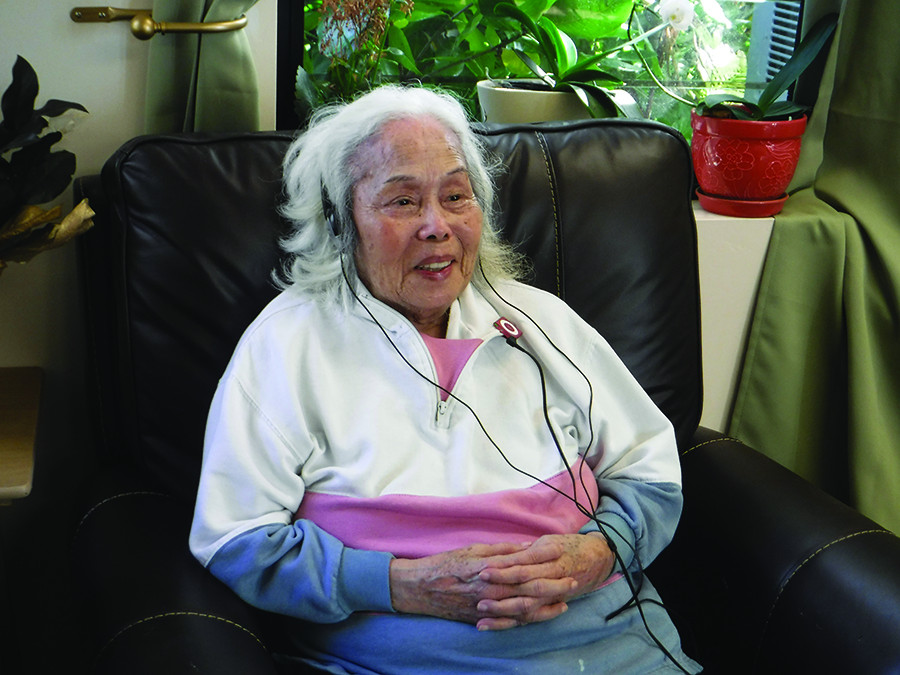
Music is often the background of many of our memories. We grow up hearing it on the radio, on TV and in concerts. We sang in school and at special events. We often associate certain songs with our relationships, happy memories, sad memories, growing up and different seasons of life. Because of its constant presence in our lives, music is deeply woven into our memories, and can offer hope and helpful tools to those whose memories are fading.
When a person has dementia, different parts of the brain deteriorate along with his or her ability to engage in daily life. Memories become more difficult to access, but according to a 2009 study by Petr Janata at UC Davis, memories attached to music are housed in the areas of the brain that deteriorate at a later stage in dementia. This offers hope to be able to connect with those living with dementia for a longer time. At some point, we may not be able to ask the person, “Do you remember when?” But by playing a favorite song, we might be able to elicit a response.
Those in later stages of Alzheimer’s may sing along with parts of their favorite song. Others may open their eyes and look around after the music is turned on. One man was brought to tears after singing God Bless America, saying, “It reminds me of my Navy days.” In another case, a woman spends most of the day waving her hands to the beat of the music and is often in a better mood.
Often, those with dementia can exhibit challenging behaviors. This is usually a response to something being “off” in their world. Listening to a familiar song that will evoke happy memories or emotions can reduce the fear that comes with confusion about where they are and what is happening. A 2017 study showed that facilities utilizing the Music and Memory program, which provides personalized music on iPod shuffles to nursing home residents, showed a decrease in antipsychotic and anti-anxiety medication use when compared with facilities that did not utilize Music and Memory.
So how do caregivers use music to enhance their loved one’s life? The first step is to determine what songs will be familiar and memorable. For the music to be effective, it must be something that person would enjoy listening to. Unknown tunes offer less benefit because they do not have memories and emotions tied to them. Singing, playing music during bathing, dancing along to a beloved song and tapping along to the beat are all great ways to engage someone with dementia.
Music can benefit both the caregiver and the individual with dementia by helping him or her to “remember” for longer, elevate mood, and provide familiarity and comfort in a world that is becoming more unfamiliar. Best of all, the caregiver can easily access all kinds of music.
Music is often the background of many of our memories. We grow up hearing it on the radio, on TV and in concerts. We sang in school and at special events. We often associate certain songs with our relationships, happy memories, sad memories, growing up and different seasons of life. Because of its constant presence…
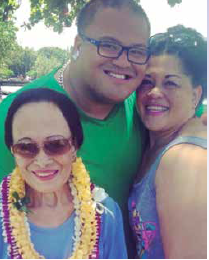
Caring for a loved one with Alzheimer’s disease requires patience, compassion, understanding and endless, unconditional love. In the following pages, Kalani Pe‘a and his mother, Pua, share the story of Lu Kahunani; Pua’s mother, Kalani’s grandmother. “I saw her slipping away. I knew I was going to lose her one day…”
She was a dynamo; a no-nonsense force of nature; a feisty fireball. She was a wise woman with a huge heart. But she did not mince words. She passed her pragmatic knowledge and deep-rooted values to her seven children. “Be good to people,” she would tell them. “And stop crying so much,” Lu Kahunani would tell her grandson, Kalani Pe‘a.
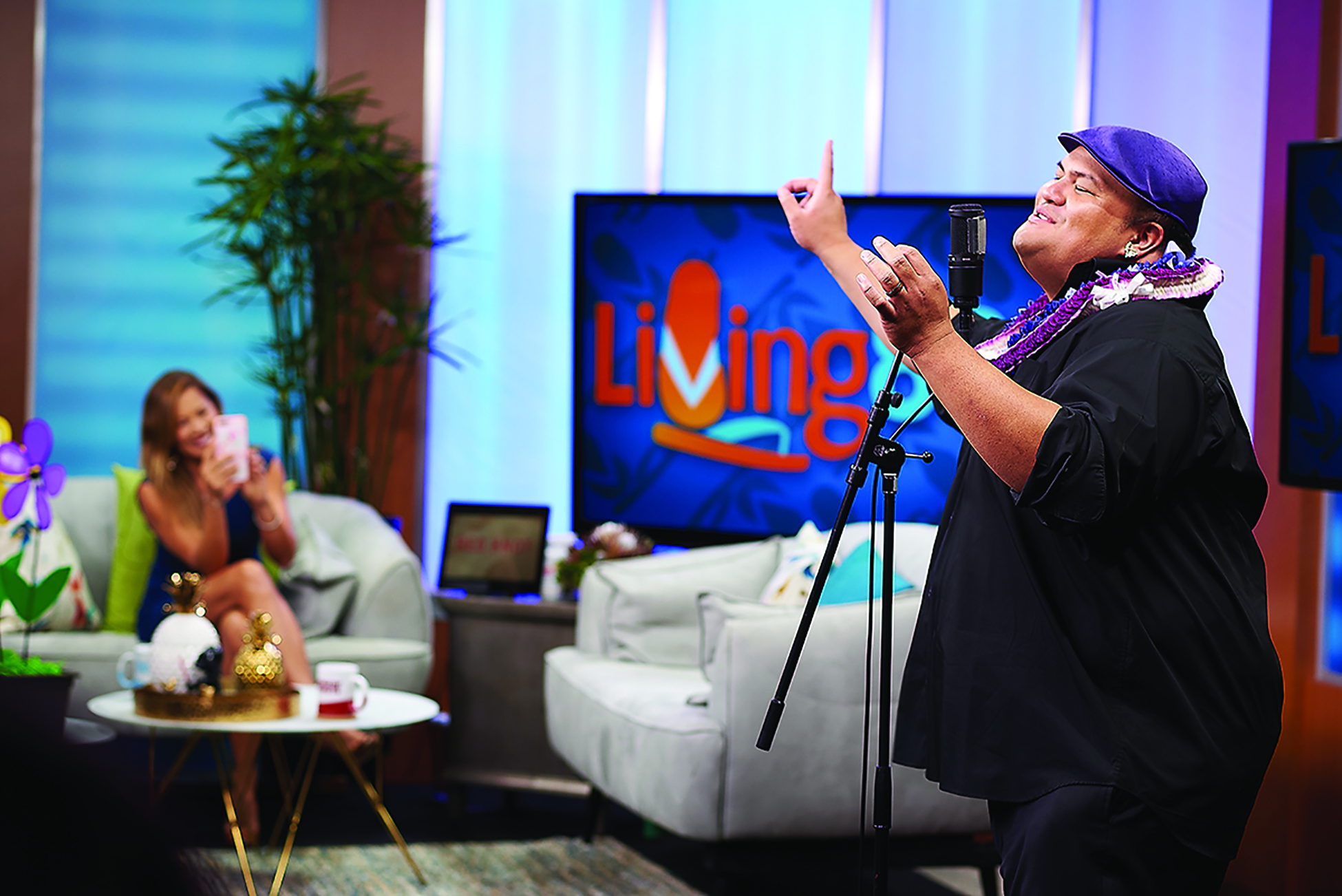
Music lovers in Hawai‘i and beyond know Kalani as a gifted, Nā Hōkū Hanohano and Grammy Award-winning singer and composer. It’s in his blood. He comes from a long line of musicians — his kūpuna. But he said he began to cry often when he saw his grandmother, who he calls “Mama.” “I love her so much and she is slipping away,” he said. He knew one day she’d be gone.
About 10 years ago, when her husband was still alive, Lu Kahunani began to lose her words. She started to misplace things. Sometimes she didn’t know where she was. Her husband noticed and asked their youngest daughter, Pua, to keep an eye on her.
Daughter Pua provided respite for her mother, caring for her father as he endured cancer and treatments. Before dying in his daughter’s arms later that year, he asked her to take care of his beloved wife. Pua then turned all of her attention to her mother, who was exhibiting signs of advancing Alzheimer’s disease.
Mama
Lu Kahunani will turn 90 in November. She was a model in her younger days, with the beauty of a queen. Later, she raised a family and worked at hotels, restaurants and at KTA Super Stores in Hilo. “My Mama never complained,” says Kalani. “She was the matriarch of the family. She was very steadfast and strong-willed; always vigilant and industrious. If ever we complained about a problem she would say, ‘Get over it. Figure it out.’” Kalani admits to being a crybaby when he visited Mama, even before Alzheimer’s started to steal her body, mind and memories.
She would ask, “Why are you such a crybaby?” Kalani replied, “‘Because I love you so much.’ But in my head, I knew time was flying. I knew time was precious. I knew I would not have her forever. I saw her small hands become more frail and thin. I cried not just because I was a crybaby; I cried because I knew I was going to lose her one day.”
However, Kalani seldom saw his stoic Mama shed a tear. The first time was when he was 18, when his mother and grandmother took him to get settled in college in Colorado. It was their first time leaving the islands. “She cried because she said she was going to miss me.” But through her tears, she said a prayer that her grandson would do well in his college endeavors.
The second time he saw Mama cry was after Kalani’s mom, Pua, became her caretaker. “She realized she was forgetting things,” says Kalani. “She became aware of the state that she was in and how her condition might affect her family.” Kalani shed more tears as he witnessed his Mama break down.
During the first stages of her dementia, Mama was asked to retire from her job at KTA. She did not want to retire, but she had to.
“It was in 2009 that she started wandering; forgetting her place; forgetting where she left things,” said Pua.
“She started to catch herself. She was aware of what was happening to her. She began to experience what is called sundowners… dementia, agitation, forgetting where she was,” says Pua. She was assessed for Alzheimer’s in 2010.
For those with dementia, sunset can be a time of increased confusion, frustration and agitation. Sundowning is a symptom of mid-stage to advanced Alzheimer’s.
Pua says, “She asked me to do three things: ‘When I forget to speak for myself, be my voice. When I forget to think for myself, will you think for me? Will you please be me?’ So I became her.” Pua learned to put herself in her mother’ place in order to understand her and her needs and mālama her. Social workers would frequently call on her for advice, because, they said, “You know your mother.”
Because of her mother’s Alzheimer’s assessment, Pua was able to educate herself about the disease in order to best understand what was happening to her mother and how she could help her most effectively.
“I had to understand this disease,” Pua said. “It’s not curable. It worsens as time goes by. And you see that. I saw all that. So you really have to understand this disease so you can help. This was my job now.”
Parent as Child, Child as Parent
“When you’re a child, your parents think for you, speak for you, guide you, teach you and protect you. So now, she was like my child,” says Pua. “She looked at me as her mother. There were times when she called me mama. They went through difficulties raising us. Now it is our turn to care for them.”
Pua is the youngest of seven. While trying to provide the best care and create the optimal treatment plan for her mother, family discord erupted at an already stressful time. Pua’s “perfect, no-brainer plan” to involve her six siblings in her mother’s care (seven siblings, each caretaking one day a week) did not come to fruition as she had hoped, leaving her as the sole caregiver for her ailing mother. Full-time caregiving takes an emotional toll, as she learned firsthand.
“My mother became the sole caretaker,” says Kalani. “She put her marriage on hold. She literally put her life on hold.” Caregiving tasks also took a physical toll. “My grandmother is a short, petite little lady, but the effects of Alzheimer’s took away her mobility. I watched her deteriorate. She cannot stand on her own or talk any longer.” She was dead weight as Pua tried to take care of her physical needs of daily living and support her mother in every way possible, as she promised her father she would.
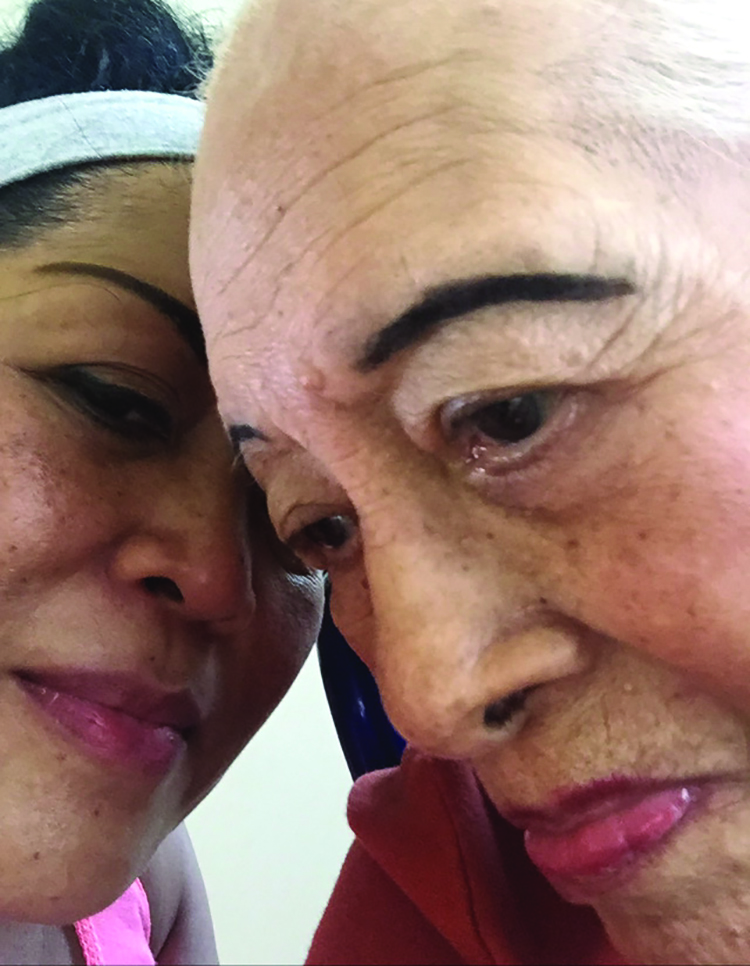
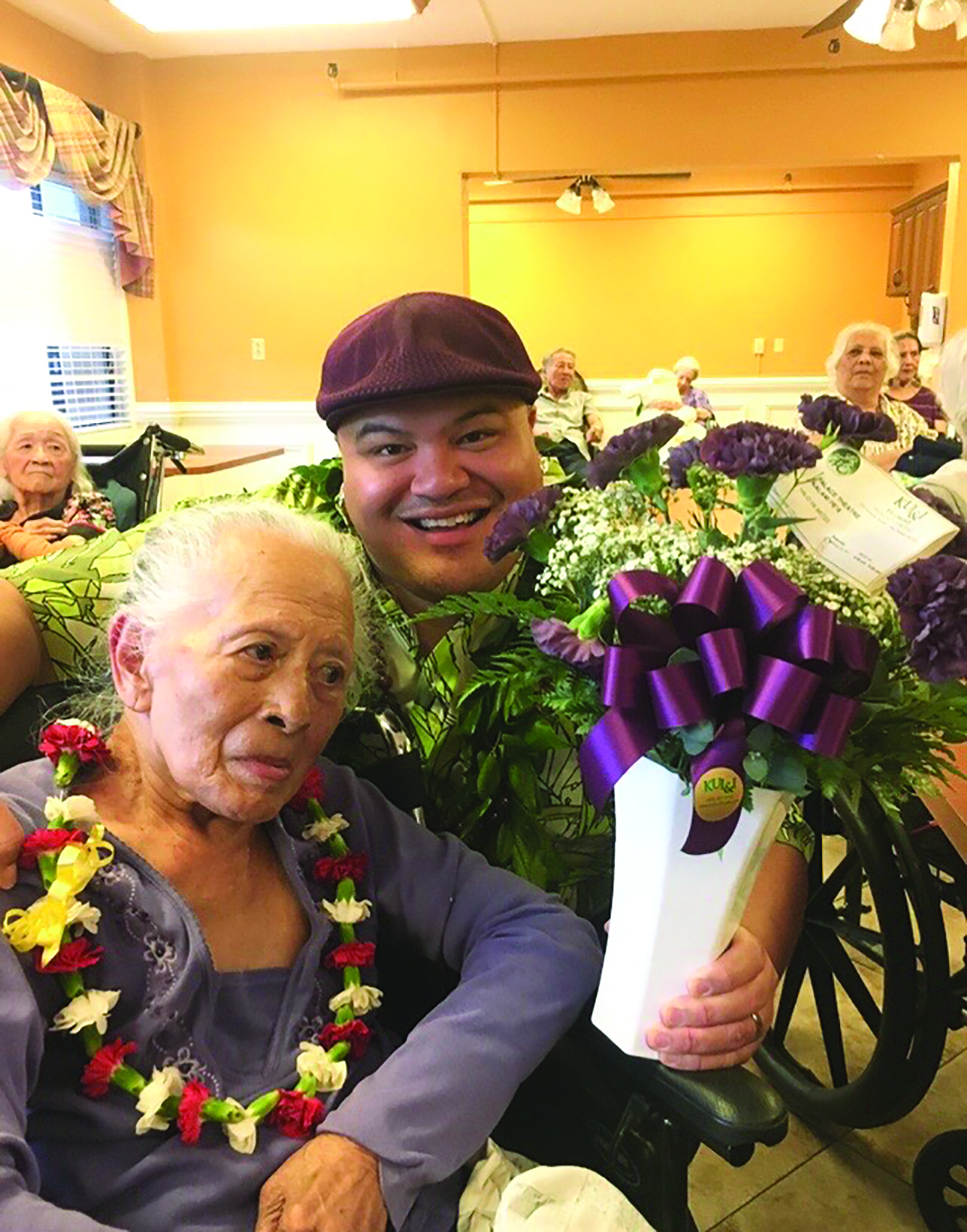
Pua and Kalani at one of their many visits with Mama. “She loves every minute of it, whether she remembers who we are… or not. She knows she is loved.”
Long-Distance Caregiving
Lu now lives at the Life Care Center in Hilo. Pua and Kalani visited her often in person before the COVID-19 pandemic exerted its overpowering grip on the world. Now, the families of those in long-term medical facilities must comply with health mandates for the safety of all concerned. Families now provide long-distance caregiving by communicating with their loved ones through internet meeting programs on tablets, computers and smartphones.
“We used to bring her flowers and candy and chocolate ice cream,” says Kalani. “Oh how that tiny Filipino- Hawaiian woman loves her sweets! My mom also dropped off my albums. Caregivers at the center play them for her and I could see in the videos they sent us that she would wander. Since she can not articulate, her eyes tell the story. As she connects with the music, her eyes tell me that she loves me and she is proud of me.”
In 2013, Kalani and his partner moved to Maui. Pua came to live with them years later. Kalani transferred from the Big Island as a teacher and Hawaiian resource coordinator at Kamehameha Schools. He left that position after 10 years to pursue his dreams full-time as a musician and educator. He conducts workshops on Hawaiian music composition and songwriting while he is touring. He donates a portion of his concert proceeds to the Alzheimer’s Association to honor his grandmother.
After years of solo caregiving, fighting feelings of failure and defeat, Pua moved to beautiful Maui to live with Kalani and his partner. Mama was moved to the Life Care Center.
“I want to emphasize that caregivers should take care of themselves,” says Kalani. “Mālama their piko — all of their temples — and spiritually heal. Ask for help for a good hour or two a day so you can take care of yourself and find time to heal so you can take care of others, as well. You can’t do it all.”
“Mom didn’t get that,” says Kalani. So he told his mother, “Come holomua in Maui. Come and heal. I will take care of you. If you are not going to take care of yourself, I’m going to lose you first before I lose my grandma.”
“It was a fight for me with my siblings,” Pua says. “But my mother taught me the meaning of the word forgiveness. With that, you allow reopening of a new chapter in your life. You allow acceptance because God is going to take care of you. My mother is a woman of faith. She is my light. She lights the way when I feel I am in darkness.”
“So I kissed Mama goodbye, telling her I have to leave,” says Pua. “And although she could not articulate her thoughts and feelings, the look in her eyes told me ‘All is well.’”
“Mama continues to shine even over this distance that separates us,” says Pua. They often connect through internet video. “As soon as she is able to tell where the voices are coming from, she looks right at the screen — right at us.” Pua also sends regular care packages. The social workers at the center are very helpful maintaining whatever connection is possible with her mother. “God is ensuring I connect with her no matter what.”
“I just came back from visiting her before the quarantine. Hurricane Douglas had just passed. I told myself I just had to go,” says Pua. “Mama is on the third floor of the facility. They sit her next to the window and I talk to her outside from the ground floor. She hears my voice and looks right at me. Our spirits connect.”
“I think Mama wants us to accept the fact that she is going to go,” says Kalani. “We are okay with her going to leave, but she is such a strong woman… to have this horrendous disease for 10 years when many last only five or six years before they succumb to the disease.”
“She is fighting it, but I think she wants our family to ho‘oponopono,” the Hawaiian practice of reconciliation and forgiveness, “and holomua” [improve],” says Kalani.
“Values play such an important role in our ‘ohana, …understanding the values of forgiveness and having the trait of being a good person who is good to people,” says Kalani.
The Alzheimer’s Stigma
Kalani spoke of friends who were very secretive and ashamed regarding their loved ones with dementia and Alzheimer’s. Kalani’s advice: “Don’t be ashamed to talk about it. People will talk about their loved ones with cancer or diabetes or whatever, but this particular disease — Alzheimer’s — is also something to talk about. It’s okay to talk about your mom forgetting things. It’s okay to talk about your mom forgetting your name. It’s okay to talk about her hitting you during sundowners because she can’t control her anger. Just don’t be hard on her or him… Love them, hold them, tell them it’s okay. Just understand that they can’t control their behavior. They can’t control their delusions.”
He reports that those friends who took his advice are very grateful that he shared his own experiences with them.
“There is a stigma,” says Kalani. “People are afraid and ashamed. So it is helpful for us to create and share this dialogue and diary with other people who are new to this. It’s okay to talk about the issues to help educate other caregivers and to let them know they are not alone.”
Music Sparks a Connection
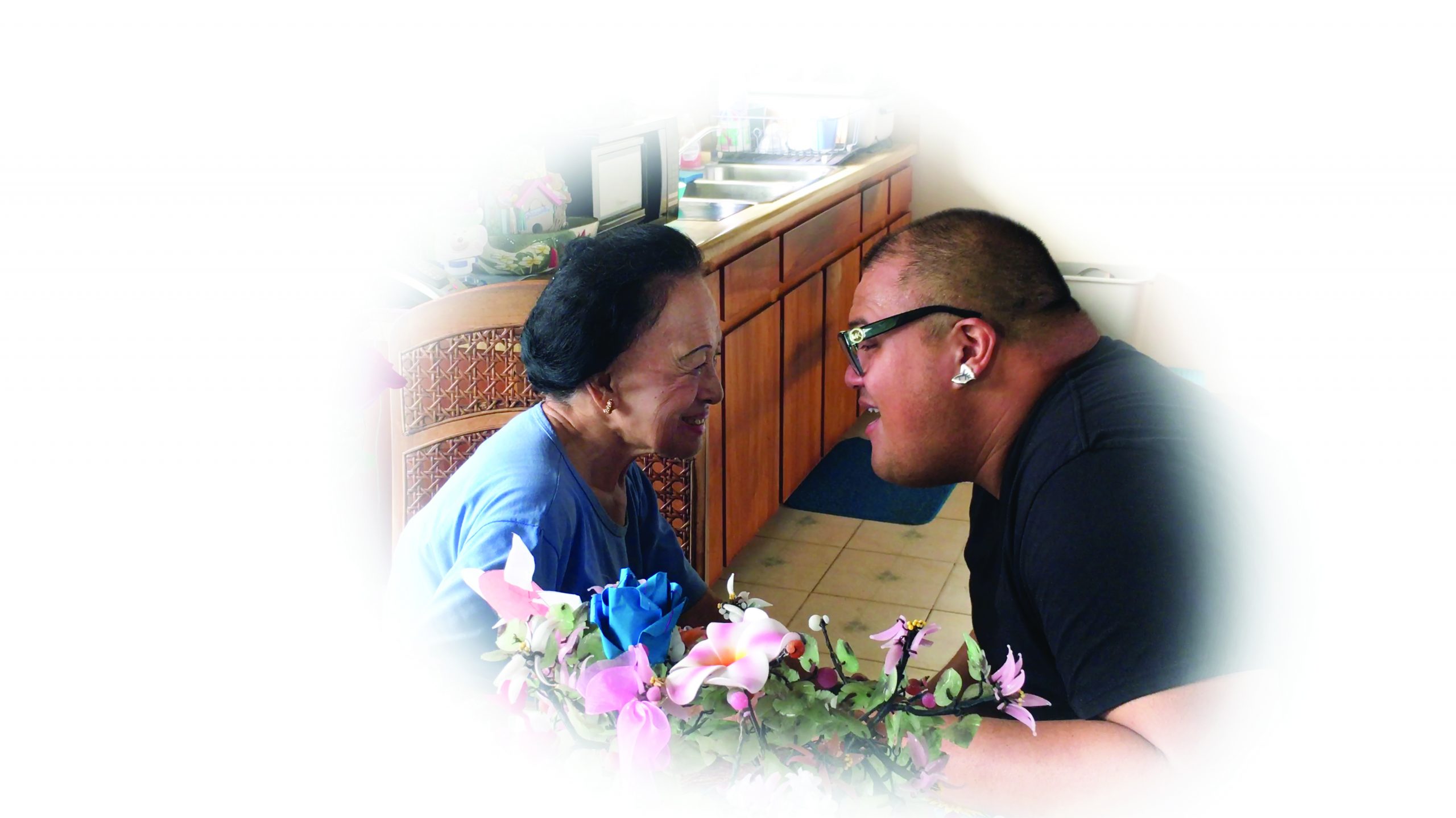
Before COVID, Kalani would whisper in his Mama’s ear, continually reminding her of how much he loves her. He would also sing to her. “I brought her flowers and chocolates on her birthday,” says Kalani. “She did not recognize me for a while until I sang to her and told her who I was. I was able to connect with her through my music for a split second. I sang her favorite song, Blue Darling. My grandfather would sing that song to her when they would argue. She sang along with me. And then she kissed me. ‘I love you, Ara,’” she said. “She calls me Ara for short.”
A video of this bittersweet exchange went viral last November.
“She always supported my educational endeavors,” says Kalani. “She was always in the front row watching me perform. She was at the forefront of all my performances.” Now she rarely recognizes Ara. “That breaks my heart,” he says.
“But that moment, at that time… I had her… for less that a minute, but I had her,” he said. “She knew exactly who I was. That was a moment I had her, vividly, looking at me in my eye. I could see in her eyes how much she loved me.” Kalani touched his heart and inhaled deeply at the recollection of that precious moment.
“I didn’t know she would totally remember a song and remember me through song,” says Kalani. “And I realized how music brings healing to the heart and the soul and to the mind. Music is so essential; it plays such an important role. I think music is among our antidotes and medicines for the elderly. Whether there are workshops through the Alzheimer’s Association or through caregivers out there, music and dance should be imbedded in a system for our kūpuna. Music allows you reflect on the past and allows our elderly to really connect with their loved ones.”
“I still cry every time I visit her because I know she is deteriorating,” says Kalani. “I know I am losing her verbally, mentally… all of that. But the music allows me to link with her spiritually. I knew that was the strongest medicine I could have given her. And at that specific time and place of deep connection, you can’t replace that moment.”
Kalani also said that despite her forgetfulness, Lu was able to recite her prayers without hesitation, underscoring her strong spiritual connection.
While there’s no cure for Alzheimer’s, music has been shown to have emotional and behavioral benefits for those living with the disease. Kalani and Mama continue to have rare instances of connection through his music, but the frequency has dissipated over time as the disease progresses.
A Musical Heritage
“My whole family sings,” says Kalani. “My paternal grandfather, John Pe‘a, who passed away from Alzheimer’s, was an opera singer. My dad plays the bass. My mom’s family were musicians, too. I come from a line of musicians but I was the first to record an actual album that talks about people I love, places I love in Hawai‘i, people who have affected me my whole life… and that is all through songwriting and personal experiences. I didn’t win accolades overnight… I prepared and trained. The accolades do not define who I am. It is my parents — my mom — who taught me to be proud of who I am as a kanaka and to be good to people. My grandmother always taught us that being good to people is the best trait you could have.
Kalani says he owes his musical career to his mother and his ancestors. He shared that he stuttered as a keiki and what helped him overcome the impediment was music. “My parents put me in choirs, music theory classes, ear training, and piano and guitar lessons.”
He said his mom put him in oversized suits and encouraged him to sing at weddings and charity events. “But I never thought I would do music full-time because full-time musicians don’t make any money at all,” Kalani says. “I’m not becoming a teacher either, flying chalk at kids. But I became a teacher, creating Hawaiian culture curriculum, and using my music skills and proficiencies, I have created STEM curricula.”
Music Curriculum for Kūpuna
“I have talked to Alzheimer’s Association Executive Director LJ Duenas and the team at the Aloha Chapter about building a curriculum for our kūpuna,” says Kalani. “I want to contribute that because I believe that music plays a role with our kūpuna. I believe that music should be implemented in their care programs and I am there to assist. The Alzheimer’s Association is my number one charity because of my kūpuna.”
Kalani’s late paternal grandparents also suffered from this disease. “This disease truly runs through he veins of my family.”
The Water of Life
Waiwai means value, wealth or knowledge. Wai means water; water is wealth. “Water is a medicine that keeps us alive and well,” says Kalani.
Na Wai Eha in West Maui — The Four Great Waters, a place of Nā Akua — is a system of fresh water streams that sustained thriving Hawaiian communities since time immemorial. Part of the system includes Wailuku Stream (‘Īao Stream).
(L–R) An Alzheimer’s Association volunteer, Kalani and Dr. Poki‘i Balaz, DNP. Follow Kalani’s musical journey and his work with the AAAC at kalanipeamusic.com and @kalanipeamusic
“The stream symbolizes the cycle of energy and life,” Kalani says. “Similarly, our kūpuna and those before them had this wealth of knowledge and wisdom that they bestowed upon us to continue their legacies and our heritage, whether we speak the language, dance hula, or learn our history and genealogy. They teach us to be comfortable with our identity and ourselves and remember who we are and where we come from.”
“That stream talks about the connectivity of life,” says Kalani. “If we are going through trials and tribulations, we are rejuvenating ourselves with water given by God so we grow and be strong and be good people. And we all need to be good people of compassion, especially now.”
It is one of the places we have a spiritual connection with our ancestors,” says Kalani. “The water of life flows through us from our kūpuna. The stream that flows consistently from mountain to ocean is symbolic and metaphoric of this human cycle. As water is our waiwai, our kūpuna are our waiwai.”
“I often wake up and wish this was just a terrible nightmare and I could just pick up my phone and call her and tell her how much I love her,” says Kalani. “I wish I could fly to the house she once owned and see her purple orchids… I wish I could just grab her and tell her how much I love her. It is really hard to understand this disease. I wish I could be in the shoes of a person with Alzheimer’s and feel what they feel… what is holding them back, what they are thinking.” Kalani sighs. “I miss her so much. I do.”
The Color Purple
When Kalani would perform Kahunani No ‘Ō la‘a, the song he wrote for his grandmother that was recorded on his Grammy Award-winning sophomore album, No ‘Ane‘i, some audience members would make the connection to their loved ones who have faced Alzheimer’s or who have passed away from the disease. Kalani and his mother, Pua, were honored to share their experiences. And ultimately after his performances, they would ask him about his signature purple clothing. He expresses his deep connection to his ancestors through symbolism in both song and color. Kalani means “the heavenly skies.” He is named after his father, Arthur Kalani Pe‘a. “The sky is blue. The koko, the blood of God, Jesus Christ, is red. When you combine both colors, you have purple! It is my connection to the spiritual world and reconnecting with my kūpuna. It is they who paved the path for me. They have nurtured me and raised me to be the man I am today.” Kalani Pe‘a embodies the understated confidence of one who knows he is much loved. He is very good to people.
Caring for a loved one with Alzheimer’s disease requires patience, compassion, understanding and endless, unconditional love. In the following pages, Kalani Pe‘a and his mother, Pua, share the story of Lu Kahunani; Pua’s mother, Kalani’s grandmother. “I saw her slipping away. I knew I was going to lose her one day…”
MoveMeHawai‘i is a joint effort of the Beta Beta Gamma Foundation and the Hawaii State Bar Foundation with the objectives of educating the public about social justice issues, promoting community unity, and supporting organizations that provide legal or social services to the underserved. This October, MoveMeHawai‘i is presenting a free, online community education program, Move US to Racial Justice, which will include an award-winning film and a lively panel discussion about racial discrimination during World War II and how we can move together to combat systemic racism that continues today.
A Documentary: ALTERNATIVE FACTS
Throughout October, participants can view Alternative Facts: The Lies of Executive Order 9066, a compelling documentary about the false information and political influences that led to the World War II incarceration of Japanese Americans. This film, an Honorable Mention for the 2020 American Bar Association’s Silver Gavel Award, sheds light on the people, prejudice, and politics behind the lies and deliberate withholding of critical information that influenced the signing of the infamous Executive Order 9066 and US Supreme Court reviews of that order.
Panel Discussion
On Oct. 25 at 2 p.m., MoveMeHawai‘i will present a live, online panel discussion of the film and how it relates to the ongoing social injustices faced by US minority groups. The Black Lives Matter movement, Hawai‘i’s own racial issues, and alliances of people of all ethnicities in support of racial equality will be discussed by Jon Ozaki, the filmmaker and visionary of Alternative Facts; Camille Nelson, the new dean of the William S. Richardson School of Law and a leading scholar on critical race theory; and Avi Soifer, the immediate past dean of the law school and a constitutional law expert.
Submit questions for the panelists in advance via the online registration form or use the online chatbox during the live panel. The discussion and the film will both be available through Oct. 31.
MOVE ME HAWAI‘I (501(c) 3 nonprofit)
For details, film and panel discussion registrations: MoveMeHawaii@gmail.com | www.MoveMeHawaii.org. Access links will be sent for the film, the live panel discussion and the recorded panel discussion.
This October, MoveMeHawai‘i is presenting a free, online community education program, Move US to Racial Justice, which will include an award-winning film and a lively panel discussion about racial discrimination during World War II and how we can move together to combat systemic racism that continues today.
As we age, staying organized and living in an uncluttered space can help reduce the stress of transitioning into different phases of life. Many seniors find themselves needing or wanting to downsize from a family home to a smaller space, such as an apartment, retirement community or multigenerational family space. Taking the time to sort through possessions accumulated over the years will make downsizing or aging in place less stressful and improve your overall health. Here are tips to help you create an organized living space:
• Keep only those belongings most precious to you. Share other items with family and friends who will treasure them or donate items to your favorite charity for someone else to enjoy.
• Create large, open areas for easy mobility and cleaning. Remove any unused furniture and keep steps and hallways clear of clutter.
• Make frequently used items accessible. Store items between waist- and upper thigh-level to prevent bending over or reaching overhead.
• Label drawers and cabinets to make it easier for you and/or caregivers to find items.
• Use clear or translucent boxes for storage.
• Store important documents in a secure location.
Living in a clean and organized home is beneficial at any phase of life. Just set aside a little time each day to declutter. Remember, don’t be afraid to ask family and friends for help!
As we age, staying organized and living in an uncluttered space can help reduce the stress of transitioning into different phases of life. Many seniors find themselves needing or wanting to downsize from a family home to a smaller space, such as an apartment, retirement community or multigenerational family space. Taking the time to sort…
To help relieve their families from stress at an already stressful time, an increasing number of people are planning their own funerals and designating their funeral preferences — sometimes paying for them in advance.
It does not have to be a complicated process. In fact, many funeral providers have created preplanning guides that allow clients to document important details and wishes. Some providers offer online webinars to inform viewers of the options they have to preplan arrangements from the comfort of their homes.
Preplanning will provide comfort to your loved ones and give them the confidence that comes from knowing they are honoring your wishes and following through with your plans exactly as you wanted.
Be sure to tell your family about the plans you’ve made, including if you have prepaid. Preplanning your cemetery and funeral needs will make a difficult time just a bit easier for your family. Do it for yourself; do it for your family.
We will all face the inevitable some day. No one likes to think about their eventual passing, but loved ones can be spared anxiety and uncertainty about your final wishes if you take time now to preplan your cemetery and funeral arrangements.
Currently, more than 29,000 people in Hawai‘i are living with Alzheimer’s disease, and over 65,000 family members and friends are providing their care, according the the Alzheimer’s Association website (www.alz.org/hawaii).
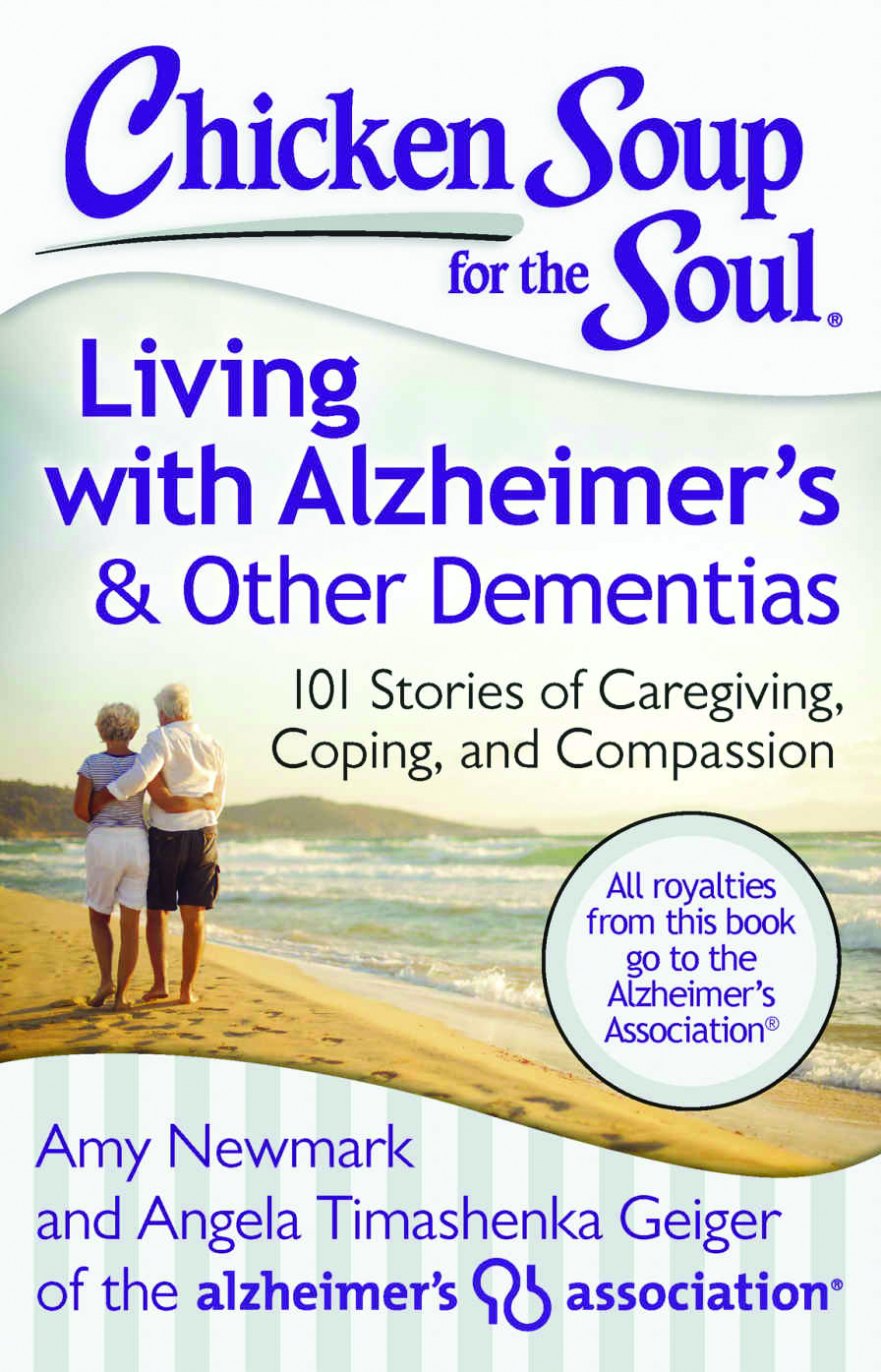
Chicken Soup for the Soul Publishing offers Living with Alzheimer’s & Other Dementias: 101 Stories of Caregiving, Coping, and Compassion, a collection of personal stories of love and lessons written by caregivers especially for caregivers. This joint project with the Alzheimer’s Association aims to provide support, advice, encouragement and comfort for caregivers, as well as those living with Alzheimer’s. Chapters includes stories that touch on topics such as, what it’s like to have Alzheimer’s, advice from other families, keeping marriages strong and loving, the role of laughter, and powerful music and art therapies. The book is full of heartfelt reflections and heart wrenching truths told by those who have endured seeing a loved one in the clutches of a cruel thief.
Chicken Soup for the Soul: Living with Alzheimer’s & Other Dementias: 101 Stories of Caregiving, Coping, and Compassion by Amy Newmark and Angela Geiger All royalties go to the Alzheimer’s Association. The book is available at most bookstores and online.
If you are caring for a loved one with Alzheimer’s or another form of dementia, know that you are not alone. Know that you are not the only one who has experienced the wrath of these diseases or felt the roller coaster of emotions that accompanies watching a loved one disappear.

 The holiday season is a time of joy, but for many, it’s a challenging time as well. When the body holds too much tension and emotional energy, it can affect the immune system, making a person more prone to illness, as well as depression. And while we all want to enjoy this time, if we’re not proactive in taking care of ourselves, we may not feel like celebrating. So here is a word to practice to make this winter more wonderful: SEED, an acronym for stress, exercise, emotions and diet.