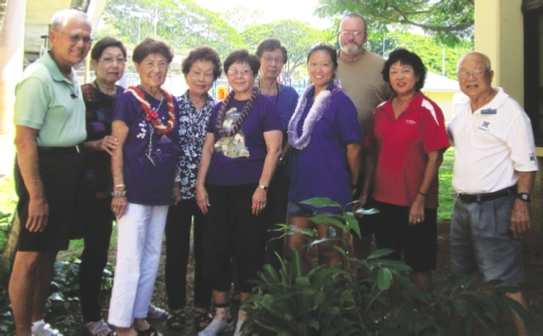
I was attending a legislative hearing some years ago dealing with senior issues. The hearing went on for some time as the committee members talked about significant health care problems affecting seniors in Honolulu. At some point, a respected senior advocate from Maui raised his hand and said, “Excuse me, this NOT the state of O‘ahu. It’s the state of Hawai‘i.”
Everyone laughed because what he said was exactly true. Half of the state’s population lives on the Neighbor Islands. And, Maui alone has nearly 32,000 seniors — a number that is expected to increase to approximately 54,000 by 2020.
On the Neighbor Islands, hospitals and senior care facilities are often few and far between. Family members may be miles — or islands — apart. There are higher costs for gas, groceries — virtually everything seniors count on for quality of life. We hope that policymakers and institutions keep that in mind when making decisions that could impact seniors across the state.
In this issue, Generations Magazine visits Maui as a starting point for this conversation about our Neighbor Island seniors and their families, but I feel certain other Neighbor Islands will soon be given more consideration, not just by the magazine but by those people helping seniors as they age.
The fact is, I’m thinking about some waterfront property on Moloka‘i. I might be able to afford it if I live in one of those little storage sheds from Sears. I’ll have to talk to Mrs. Matthews first.
The Elderhood Project airs on KHON2 Friday Morning news at 5:45a.m. and Thursday at 5p.m.
 According to the National Survey on Drug Use and Health conducted in 2012, nearly 41 percent of adults 65 years of age or older drink alcohol. Most of them don’t have a drinking problem, but some of them drink too much. Men are more likely than women to have problems with alcohol.
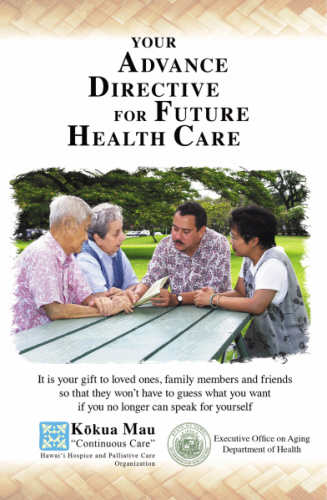 Auntie K was having trouble breathing at home and her son called 911. She is now in the Intensive Care Unit. The doctor asks the family, “What would your mother want us to do if she could speak for herself right now? She’s having more trouble breathing. Do you want us to “‘do everything?’”
 Kokua Mau has information for individuals, families and health professionals. Its website (
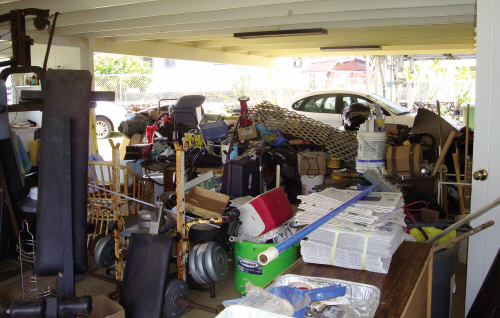 Most of us who have lived in the same home for decades have collected a good amount of personal treasures. And before you know it, you’re shocked by all the things you own. Some people may call these things clutter or trash, but to the owner these things could be a lifetime of memories. The difficulty comes when we have to think about downsizing or decluttering because it’s a safety concern (trip hazard), or we need more open space for a walker or wheelchair or move to a smaller home. Many say that they have “so much stuff” that it’s “just overwhelming.” Sometimes people even become trapped by their own personal belongings and can’t seem to break the “cycle.”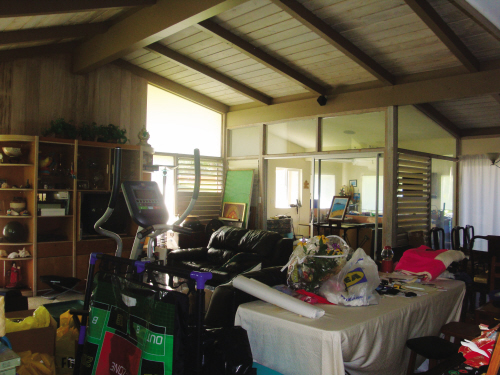
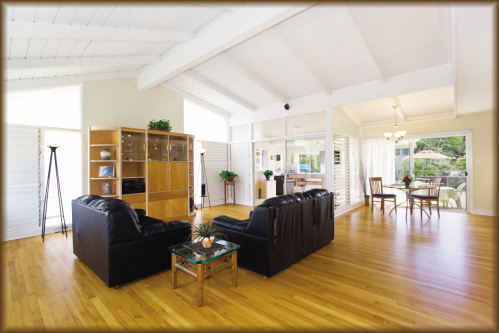


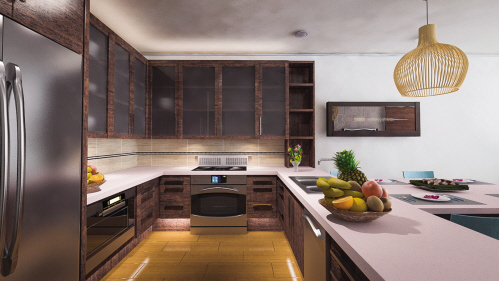 As we grow older, the need to renovate our home to meet evolving needs grows … but so can the headache from all of the labor involved.
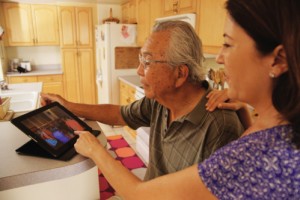 The pool of family and friends to care for Hawai‘i baby boomers as they age into their 80s will be less than half as deep as it is today, according to a new report from AARP. The report predicts the ratio of potential family caregivers to elders needing care will plummet from today’s six caregivers for each person over the age of 80 to fewer than three caregivers per elderly person in 2030.
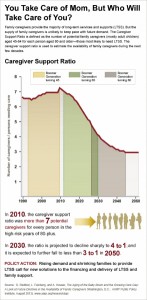 The new caregiver report calculates the availability of caregivers by dividing the number of people in the most common caregiving age range (those ages 45-64) by the number of older people most at risk of needing long-term services and\ supports (those ages 80+). The former group reflects the demographics of today’s average caregivers, the latter is the population likely to have some kind of disability and need help with daily activities.
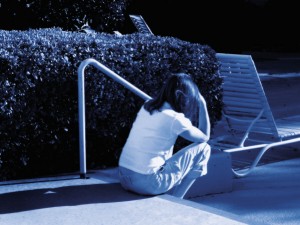 Caregivers often are so busy caring for others that they tend to neglect their own emotional, physical and spiritual health. Caregiver stress can be particularly damaging since it is a long-term challenge. Caregiving can be overwhelming at times and if this stress is left unchecked it can take a toll on a person’s health, relationships and state of mind. Caregiver burnout is a state of physical, emotional and mental exhaustion that may be accompanied by a change in attitude from positive and caring to negative and unconcerned. Burnout often occurs when caregivers don’t get the help they need or if they try to do more than they are able.