Category: Articles

  • Qualifying for Medicaid is Unpatriotic?

    Some people question whether Medicaid planning might be unpatriotic. After all, Medicaid is a “welfare” benefit funded by our tax dollars. Is it “wrong” to put yourself in the position to have the taxpayers pay for your long-term care? Let us begin by considering what it means to be a taxpayer.

    Everyone knows that it is immoral and illegal (and unpatriotic) to cheat on your income taxes. But does that mean any of us has an obligation to pay more taxes than the law requires? Of course not. The Internal Revenue Code allows us to take various kinds of deductions when we file our annual income tax returns. As long as we deduct no more than the law allows, we are engaging in the noble practice of tax avoidance. However, if we knowingly take a tax deduction in an amount or of a kind that we are not entitled to take, the terminology changes to tax evasion. For tax avoidance, a person is praised, for tax evasion, a person goes to jail.

    In the 1916 U.S. Supreme Court case of Bullen v. Wisconsin, Justice Oliver Wendell Holmes wrote “when the law draws a line, a case is on one side of it or the other, and if on the safe side is none the worse legally that a party has availed himself to the full of what the law permits. When an act is condemned as an evasion, what is meant is that it is on the wrong side of the line.” Taking economic advantage of what our law allows—staying on the “safe” side of the line—is both legal and patriotic.

    Justice Louis Brandeis, whose tenure on the U.S. Supreme Court overlapped that of Justice Holmes, famously stated this same principle another way: I live in Alexandria, Virginia. Near the Supreme Court chambers is a toll bridge across the Potomac. When in a rush, I pay the dollar toll and get home early. However, I usually drive outside the downtown section of the city and cross the Potomac on a free bridge. If I went over the toll bridge and through the barrier without paying the toll, I would be committing tax evasion. If, I drive the extra mile and drive outside the city of Washington to the free bridge, I am using a legitimate, logical and suitable method of tax avoidance. For my tax evasion, I should be punished. For my tax avoidance, I should be commended.

    Knowing the alternatives that are available to you is the essence of wise planning. You cannot make a choice that you do not know you have. So if paying for long-term care is an issue for your family, learn about Medicaid qualification so you can plan your and family’s financial future wisely. Availing yourself of a benefit that the law allows and intends cannot be unpatriotic.


    Scott Makuakane, Counselor at Law
    Focusing exclusively on estate planning and trust law.
    Watch Scott’s TV show, Malama Kupuna
    Sundays at 8:30 p.m. on KWHE, Oceanic channel 11
    www.est8planning.com
    O‘ahu: 808-587-8227
    Email: maku@est8planning.com
    Some people question whether Medicaid planning might be unpatriotic. After all, Medicaid is a “welfare” benefit funded by our tax dollars. Is it “wrong” to put yourself in the position to have the taxpayers pay for your long-term care? Let us begin by considering what it means to be a taxpayer. Everyone knows that it…

  • Don’t Stress Over Fraud

    Generations Magazine - Don’t Stress Over Fraud - Image 01

    April is Stress Awareness Month, but one thing that should never cause stress is doing business with Social Security.

    However, if you fall victim to fraud, it can really stress you out, not to mention damage your credit score and wallet. We encourage you to be cautious of suspicious email, letters, and phone calls or any time someone asks for your personal information.

    What Social Security Does Not Do

    Generally, Social Security will not call or email you and ask for your personal information, such as your Social Security number or banking information. If someone contacts you and asks for this kind of information and claims to be from Social Security, do not give out your personal information without first contacting us to verify the validity of the request. It could be an identity thief phishing for your personal information.

    When making a report, please include as many of the following details as possible of the alleged suspect(s) and victim(s):

    • Names, addresses, phone numbers, dates of birth, and Social Security numbers
    • Description & Location of the fraud
    • When & How the fraud was committed
    • Why the person committed the fraud (if known)
    • Who else has knowledge or witness of the potential violation.

    Stealing Your Identity

    Identity theft is one of the fastest-growing crimes in America. If you or anyone you know has been the victim of identity theft, you should contact the Federal Trade Commission at www.idtheft.gov, or call 1-877-IDTHEFT (1-877-438-4338); TTY 1-866-653-4261.

    False Advertising

    Misleading advertisers may victimize people who receive Social Security and Supplemental Security Income (SSI) benefits. Such companies offer Social Security services for a fee, even though the same services are available directly from us free of charge. Especially upsetting are ads that make it appear as though they came directly from us. By law, such advertisements must indicate that the company is not affiliated with Social Security.

    If you see, what you believe is misleading advertising for Social Security services from a company that fails to say it is not affiliated with Social Security, report it to us at:

    Office of the Inspector General
    Fraud Hotline
    Social Security Administration
    P.O. Box 17768
    Baltimore, MD 21235
    This goes for advertisements in print, online, or on television or radio. Also, advise your state’s attorney general or consumer affairs office and the Better Business Bureau. You can visit the Office of the Inspector General online at www.oig.ssa.gov and select the “Fraud, Waste or Abuse” link.

    Learn more about identity theft and misleading advertising by reading our publications on the subjects at www.socialsecurity.gov/pubs.

    You may have enough stress already. Don’t get stressed over fraud.


    Questions, online applications, or to make an appointment to visit a Social Security office, contact:
    1-800-772-1213 (toll free) | 1-800-325-0778 (TTY)
    www.socialsecurity.gov

    April is Stress Awareness Month, but one thing that should never cause stress is doing business with Social Security. However, if you fall victim to fraud, it can really stress you out, not to mention damage your credit score and wallet. We encourage you to be cautious of suspicious email, letters, and phone calls or…

  • We Live in the Greatest Country

    Has Patriotism become passé? Are people looking at me today when I stand and show respect for the flag, are they shaking their heads in disbelief thinking, I’m old fashioned? Am I out of step with the majority?

    Back in the days, we used to place our hand over our heart and recited the, “Pledge of Allegiance” every morning before school started, even during a parade, as our flag passed. We took our hats off and stood silent while our flag was being raised or the, “National Anthem” was being sung.

    My dad taught me to respect our flag and that it should never touch the ground. I even learned how to march as my dad used a broomstick in place of a rifle, placing it over his right shoulder marching in the living room … hup, hup, … at our Kapahulu house.

    I am a World War II baby born in 1947, lived through the Korean War, Bay of Pigs, Cuban Missile Crises, and the Vietnam Conflict. I joined the Army in 1966, which influenced my perspective on what it is to live and serve in a country dedicated to freedom and democracy.

    Today, I don’t see the same vigilance of patriotism from our younger generations. I don’t believe our places of learning are emphasizing the same patriotism and respect for our country that I was exposed.

    I felt, and will always feel; we live in the greatest country in the world, USA … Ten Hut!


    Tune in to The Baby Boomer Show with Frank B. Shaner, AM690, every Saturday, 4 pm – 5 pm. Experience his art online through Facebook and at www.frankbshaner.com.

    Generations Magazine - We Live in the Greatest Country - Image 01
    Home Boy – oil on canvas

    Frank B. Shaner

    Has Patriotism become passé? Are people looking at me today when I stand and show respect for the flag, are they shaking their heads in disbelief thinking, I’m old fashioned? Am I out of step with the majority? Back in the days, we used to place our hand over our heart and recited the, “Pledge…

  • Aquatic Therapy for Rotator Cuff Pain

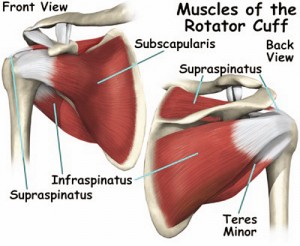
    Generations Magazine - Aquatic Therapy for Rotator Cuff Pain - Image 01We have all heard the term “rotator cuff.” What is a rotator cuff? A group of four muscles: supraspinatus, infraspinatus, subscapularis and teres minor that connects the shoulder blade (scapula) to the arm bone (humerus).
    The rotator cuff tendons are key to a healthy functioning shoulder. They are subject to wear and tear or degeneration, as we use our arms. Occasionally, the muscles or tendons of the rotator cuff become irritated or damaged because of injury or overuse.


    What are the risk factors?

    • Over the age 40
    • Impingement syndrome
    • Poor posture
    • Muscle/joint tightness
    • Repetitive overhead motions
    Generations Magazine - Aquatic Therapy for Rotator Cuff Pain - Image 02
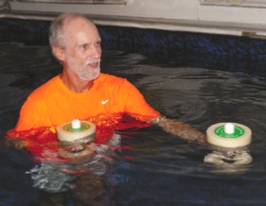
    Testimonial: Vernon G. Campbell Lcdr/NC/USN/Ret (Lieutenant Commander U.S. Navy Retired Nurse Corps) age 65, an exercise enthusiast stated, he suffered with chronic shoulder pain and while exercising in warm water, he’s noticed improved mobility and strength with significantly less pain. As a result, he has been able to resume a normal exercise regimen without pain or discomfort.

    What are the symptoms?

    • Shoulder pain
    • Upper arm pain
    • Pain/weakness lifting the arm
    • Pain/weakness reaching
    • Pain lying on the shoulder

    Performing rotator cuff exercises in warm water can help to strengthen the muscles and make it less painful during rehabilitation.

    The Journal of Orthopedic and Sports Physical Therapy published a study that compared the effects of land and water exercises on the rotator cuff. It was found that the water’s buoyancy minimizes the amount of stress on the shoulder and the resistance created by the water actually improved the effectiveness of the exercises. The study concluded, aquatic therapy allows for earlier rehabilitation after surgery or injury without compromising the patient’s safety.

    So when traditional therapy is too painful to endure, aquatic therapy can offer an early start to rehabilitating the rotator cuff and allow for a speedy recovery.


    Moon Physical Therapy, LLC
    320 Ward Avenue, Suite 107, Honolulu, HI 96814
    Aquatic Therapy, Land-based Therapy and
    Cardiopulmonary Rehab Programs
    808-597-1005 | www.moonpt.com

    We have all heard the term “rotator cuff.” What is a rotator cuff? A group of four muscles: supraspinatus, infraspinatus, subscapularis and teres minor that connects the shoulder blade (scapula) to the arm bone (humerus). The rotator cuff tendons are key to a healthy functioning shoulder. They are subject to wear and tear or degeneration,…

  • Emphysema

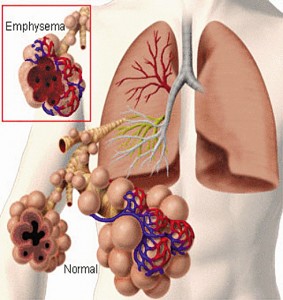
    Generations Magazine - Emphysema - Image 01Emphysema is a lung disease that makes it hard to breathe. Emphysema, along with chronic bronchitis are referred to as Chronic Obstructive Lung Disease (COPD). COPD is the fourth leading cause of death in the United States. Smoking is the leading cause of emphysema.
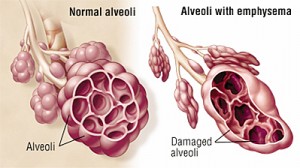
    Emphysema results when the delicate linings of the air sacs in the lungs become irreversibly damaged causing airflow limitation. As the fragile tissues between air sacs are destroyed, air pockets in the lungs develop. Air becomes trapped in these spaces of damaged lung tissue. The lungs slowly enlarge, and breathing requires more effort. The main symptom of emphysema is shortness of breath, which usually begins gradually.


    What causes emphysema?

    The main cause of emphysema is long-term exposure to airborne irritants such as:

    • Tobacco smoke
    • Marijuana smoke
    • Air pollution
    • Manufacturing fumes

    Generations Magazine - Emphysema - Image 02Rarely, emphysema is caused by an inherited deficiency of a protein that protects the elastic structures in the lungs called alpha-1-antitrypsin deficiency emphysema.


    How is emphysema diagnosed?

    Lung function tests or spirometry are noninvasive tests which measure how much air the lungs can hold and how well the air flows in and out of the lungs. It can also measure how well the lungs deliver oxygen to the bloodstream. A physician may order a chest X ray and blood tests.

    How is emphysema treated?

    Emphysema cannot be cured, but treatments can help relieve symptoms and slow the progression of the disease. Bronchodilators and inhaled steroids are the mainstay. Antibiotics may be prescribed during acute bronchitis or pneumonia. Pulmonary rehabilitation programs can teach persons on breathing exercises and techniques to reduce breathlessness and improve exercise capacity. As lung function deteriorates a person may need home oxygen. Surgery is the last resort and includes lung volume reduction surgery or lung transplant.

    What lifestyle changes are recommended?

    • Quit smoking
    • Avoid respiratory irritants and fumes
    • Exercise regularly
    • Get the recommended immunizations — influenza and pneumococcal vaccinations

    What help or support is available for anyone with emphysema?

    • Join a COPD support group
    • The American Lung Association has Better Breathers Clubs all across the country.
    • Call the Lung Helpline at 1-800-LUNGUSA

    Emphysema is a lung disease that makes it hard to breathe. Emphysema, along with chronic bronchitis are referred to as Chronic Obstructive Lung Disease (COPD). COPD is the fourth leading cause of death in the United States. Smoking is the leading cause of emphysema. Emphysema results when the delicate linings of the air sacs in…

  • Honoring Seniors

    The City & County of Honolulu’s Department of Parks & Recreation held their 3rd annual Outstanding Senior Recognition Program on Thursday, April 17th at the McCoy Pavilion. This event gives the City an opportunity to recognize outstanding senior club members and program volunteers.

    The District Council Executive Boards and Outstanding Seniors from all four districts on O‘ahu were introduced and awarded a Certificate of Recognition along with a commemorative bowl. There were seventy individuals representing twenty-six senior clubs, four senior councils and their senior softball program.

    The program was run by Roger Watanabe, Senior Section Coordinator, with the help from Steve Santiago and Randy Yasuhara, Senior Recreation Specialists. All three gentlemen were also applauded for their work with seniors.

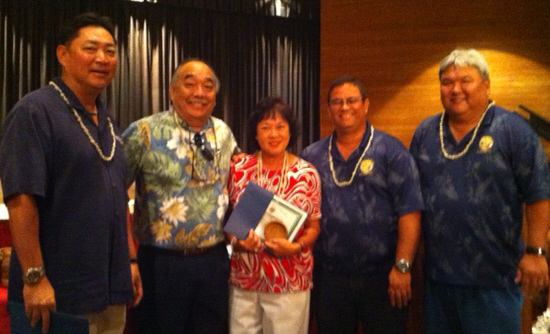
    The City also acknowledged those who contributed to making their program so successful. Generations Magazine’s Editor/Publisher, Percy Ihara, and I were given beautiful certificates and a commemorative bowl, which I put my car keys in every day!

    Anyone interested in joining a Senior Club on O‘ahu call 808-973-7258, or for listing of locations, check Generations Magazine’s 2014 April/May issue by clicking here.

    Generations Magazine - Honoring Seniors - Image 01
    At the awards, (lt.–rt.) Percy Ihara, Roger Watanabe, Sherry Goya, Steve Santiago and Randy Yasuhara.

    The City & County of Honolulu’s Department of Parks & Recreation held their 3rd annual Outstanding Senior Recognition Program on Thursday, April 17th at the McCoy Pavilion. This event gives the City an opportunity to recognize outstanding senior club members and program volunteers. The District Council Executive Boards and Outstanding Seniors from all four districts…

  • Independence Starts at Home!

    When we celebrate the 4th of july with family, friends, food and fireworks, it is a time to remember what it means to be free.

    With many of our aging, recuperating or ill ‘ohana, independence means being able to receive quality care in the privacy and comfort of their own homes. Home healthcare is not just about doctors, nurses, aides and companions providing safe, quality care in the home; it’s about the right to remain independent as long as possible, even to the end of life.

    Home is familiar. Home is comfortable. Home is where most of us want to be when ill. The ability to age and get well in the comfort of your own home surrounded by family and friends helps keep the spirit of independence alive.

    Fourth of July is also about patriotism. Being patriotic is not just about pledging allegiance to the flag and believing in American values, it is about being proactive in our community, and making things better for the young and the old.

    Nurses, home health aides and companions emulate patriotism by caring for their fellow citizens and providing quality health services rain or shine, most likely without glory or recognition. These caregivers give back by providing all our seniors access to quality home care.

    Let’s commend all the caregivers who are committed to our ‘ohana and by supporting the value and dignity of home healthcare, we are protecting our most vulnerable citizens, our fellow Americans!


    HiHomeCare, 745 Fort Street, Honolulu, HI 96813
    808-356-HELP (4357) | info@hihealthcarehawaii.com
    hihealthcarehawaii.com

    When we celebrate the 4th of july with family, friends, food and fireworks, it is a time to remember what it means to be free. With many of our aging, recuperating or ill ‘ohana, independence means being able to receive quality care in the privacy and comfort of their own homes. Home healthcare is not…

  • Two Days in the Summer

    The Fourth of July is the cornerstone of summer. It is a date where families will get together; BBQ’s will occur; and fireworks will be watched. Memories of our youth will resurface, and stories of our nation’s birth will be told.

    Independence Day being on Friday this year, will turn the weekend into a three-day break. In short, it will be celebrated as a holiday.

    Nineteen days prior to Independence Day, on Sunday June 15, World Elder Abuse Awareness Day (WEAAD) will happen. No parades, however, will be marking this day, nor will picnics be planned around it. If you don’t read the paper that day or watch the news carefully, it will go unnoticed.

    In 2006, WEAAD was created to bring awareness that elder abuse exist in our society. Judging from my experiences as supervisor of the Elder Abuse Unit at the Prosecutor’s Office, this goal has not been achieved. I get calls from victims and their families who are in shock that these crimes exist and they have fallen victims to them. Even within law enforcement, there is surprise at the rate these crimes occur and the ingenuity these criminals employ.

    Part of our collective ignorance comes from the fact that these offenses are rarely reported to the police or covered by the media. This lack in reporting leads to the belief that these crimes do not occur that often, gives potential victims a false sense of security that this could never happen to them.

    Another reason we don’t think about elder abuse is that, quite frankly, it’s depressing. Stories of elder abuse are reminders that this situation could be a possible future in our own lives. We don’t like to think that when we get older we might need assistance or become vulnerable. Just look at the small minority of us that have invested in long-term care insurance. We want to believe we are going to grow old — being healthy the entire time — and then, at the ripe age of 112, we will go to sleep and gently pass into the night. Events like WEAAD are not conducive to the “ignorance is bliss” mentality many of us share.

    This observance day, however, does serve a purpose. Once a year, we might stumble upon a mentioning of this day and take a moment to think about our parents or grandparents and give them a call to see how they are doing. OR perhaps take another look at that piece of mail we got and question the sincerity of its claim that it has made us rich.

    So, although WEAAD will most likely not become an event in the future where fireworks will be lit, it will for some remind us that although we won independence centuries ago, and we are not free from the crimes that target our seniors.


    To report suspected elder abuse, contact the Elder Abuse
    Unit at: 808-768-7536 | ElderAbuse@honolulu.gov
    www.ElderJusticeHonolulu.com

    The Fourth of July is the cornerstone of summer. It is a date where families will get together; BBQ’s will occur; and fireworks will be watched. Memories of our youth will resurface, and stories of our nation’s birth will be told. Independence Day being on Friday this year, will turn the weekend into a three-day…

  • Real Property Tax Credits for Homeowners

    The City and County of Honolulu offers a real property tax credit to property owners who meet certain eligibility requirements. If you qualify, the maximum real property tax owed would not exceed 3% or 4% of your income, depending on your age.

    What are the Eligibility Requirements?

    • You must have a home exemption in effect on the property at the time of application and during the tax year of July 1, 2015 – June 30, 2016
    • Any of the titleholders do not own any other property anywhere
    • Combined income of all titleholders for the 2013 calendar year does not exceed $50,000

    How Do I Apply for the Tax Credit Program?

    Application available at the following locations beginning July 1, 2014 to the deadline date of September 30, 2014:

    • All Satellite City Hall locations
    • Treasury Division in Honolulu Hale, Room 115
    • Tax Relief Section at the Standard Financial Building at 715 So. King St., Room 505
    • Online at www.honolulu.gov/budget/default.html

    When will the tax credit be applied to my real property taxes?

    If approved, the tax credit will be applied to the July 1, 2015 – June 30, 2016 tax year.

    You must file annually for this credit.

    For more information and assistance in applying for the Tax Credit Program, contact the Tax Relief Office at 808-768-3205. *Information subject to change without notice.

    The City and County of Honolulu offers a real property tax credit to property owners who meet certain eligibility requirements. If you qualify, the maximum real property tax owed would not exceed 3% or 4% of your income, depending on your age. What are the Eligibility Requirements? You must have a home exemption in effect…

  • Get Ready to BBQ

    Celebrate a patriotic Fourth of July with kidney-friendly food. Sometimes people think that the world of food might be ruined if a diagnosis of Chronic Kidney Disease (CKD) is made or dialysis is required. Nothing could be further from the truth. Care is needed to follow your doctor’s advice and nutrition requirements; there are plenty of foods good for your health and tasty too.

    As we celebrate Fourth of July, The National Kidney Foundation of Hawaii decided to offer a kidney-healthy recipe appropriate for CKD, Dialysis, and Diabetes patients — and the rest of us who just like good, healthy food.

    BBQ PINEAPPLE CHICKEN

    Ingredients:

    • 4 – 5 oz. skinless chicken breast
    • 20-oz. can pineapple rings
    • 2 tsp. chopped garlic
    • 1 tsp. Dijon mustard
    • 1/2 top wasabi paste

    Directions:

    Remove pineapple rings from can, save the drained pineapple juice. Mix pineapple juice with garlic, mustard and wasabi paste. Dice chicken breasts into 2-inch cubes. Combine pineapple juice mixture and chicken together, marinate overnight in the refrigerator. Place the chicken pieces on skewers. Barbecue chicken on a hot grill until the chicken is golden brown and cooked in the center (5 to 10 minutes depending upon the temperature of your grill). Serve over 4 pineapple rings. Serves 4. (Source: http://www.kidney.org/patients/kidneykitchen/recipes.cfm)

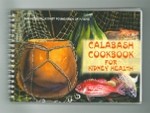
    Generations Magazine - Get Ready to BBQ - Welcome to the Generations808.com - Image 01Generations Magazine -  - Image 01The National Kidney Foundation of Hawaii has prepared a cookbook of kidney-healthy recipes available to the public. Go to www.kidneyhi.org/Calabash_Cookbook.php to order a copy.
    Have a happy Fourth of July!


    National Kidney Foundation of Hawai‘i
    808-589-5976 | jeff@kidneyhi.org
    www.kidneyhi.org | www.kidney.org

    Celebrate a patriotic Fourth of July with kidney-friendly food. Sometimes people think that the world of food might be ruined if a diagnosis of Chronic Kidney Disease (CKD) is made or dialysis is required. Nothing could be further from the truth. Care is needed to follow your doctor’s advice and nutrition requirements; there are plenty…

  • Voices of Aloha

    Generations Magazine -  Voices of Aloha - Image 01
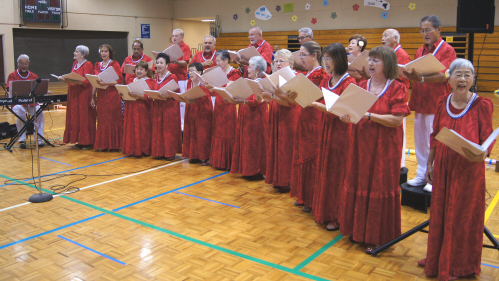
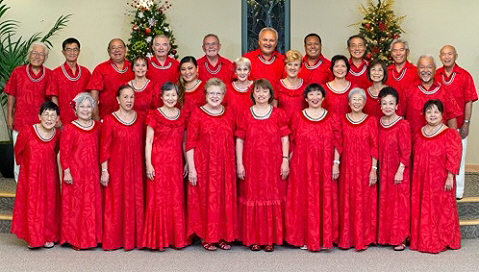
    Voices of Aloha, a multi-generational and cultural choir group, directed by Mark Yasuhara (center?)

    Voices of Aloha, formerly The GleemenPlus of Honolulu, traces its origins back to 1916 when the Gleemen of Honolulu, the oldest male chorus west of the Rockies, was established. In 1996, while under the direction of Shigeru Hotoke, the group was opened to women and the name was changed to The GleemenPlus of Honolulu. In 2013, the name was finally changed to Voices of Aloha. Mark Yasuhara has directed the group since 2007.

    Voices of Aloha is the quintessential community choir in that most are average singers representing a cross-section of the multi-generational, cultural, racial, and religious tapestry that is Hawai’i, singing songs the community loves. Their repertoire includes classical favorites as well as original arrangements by Mark Yasuhara of Broadway and popular tunes, patriotic anthems, and of course, the songs of the people of Hawai’i.

    Yasuhara says choral singing is one of the best low-impact activities for seniors. Full-voiced singing incorporates deep, core breathing, good posture and physical coordination. Learning and performing the music challenges and focuses the mind and creates natural and easy social interaction. Unlike karaoke, choral singing encourages cooperation, support and blending with other singers. Voices of Aloha members say rehearsals are stimulating, invigorating, happy affairs, a highlight of their week.

    The choir perform at civic and private functions, churches, retirement centers and nursing homes. Recently, they performed at the annual Senior Classic Games at Halawa Gym coordinated by Garrett Iwai for their 25th anniversary. The Games were created in 1989 by, then, recreational director, Herb Yasuhara, Mark’s uncle. Herb was recognized and Voices of Aloha opened the Games with a half-hour concert in his honor, concluding with the singing of “The Star Spangled Banner” and “Hawai’i Pono’i.”

    All ages are welcome. The group primarily consists of seniors, including a few octogenarians. They welcome, without audition, anyone who enjoys choral singing. Since many are not music readers, rehearsal CD’s are provided and director Mark Yasuhara offers a music-reading seminar in July. Most everyone who joined as a non-music reader can, at least now, follow the notes.

    Voices of Aloha meet every Tuesday at 7 pm in the Annex of the Community of Christ Church at 1666 Mott-Smith Dr. in Makiki, one block makai of Roosevelt High School, from September through May.

    Generations Magazine -  Voices of Aloha - Image 01
    Performance at the The City & County of Honolulu’s Parks and Recreations’ 25th Annual Senior Classic Games 2014.

    Voices of Aloha, formerly The GleemenPlus of Honolulu, traces its origins back to 1916 when the Gleemen of Honolulu, the oldest male chorus west of the Rockies, was established. In 1996, while under the direction of Shigeru Hotoke, the group was opened to women and the name was changed to The GleemenPlus of Honolulu. In…

  • What Do You Say to a Centenarian?

    Can you imagine being born a century ago? Life must have been simpler. But reaching this century-marker is certainly a privilege.

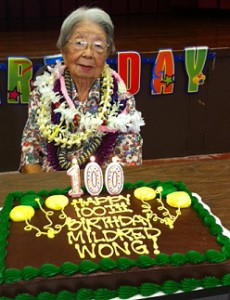
    Well, at the Ko’olau Senior Hui there is always a monthly celebration of birthdays for their seniors. And in April of this year, the Ko’olau Senior Hui had a very special celebration with a special cake. It read, “Happy 100th Birthday Mildred Wong” as she celebrated her brithday at the Kaneohe Senior Center with family and friends.

    Generations Magazine -  0   What Do You Say to a Centenarian? - Welcome to the Generations808.com - Image 01Generations Magazine -  - Image 01Mildred, born and raised in Kaneohe, must have seen a lot. She witnessed the world and the evolution of governments, like the Statehood of the Hawaiian Islands. Watched technology progress in leaps and bounds: AM/FM, watching black & white TV, then color. Computers were only used in large companies. Now every person owns one, small and large. The thought of organic food probably wasn’t the same as it does today. To Mildred, it was her own backyard garden. You may still see her pulling weeds in her yard at home.

    The point is that she’s taken care of herself and she continues to enjoy her life and her new status as a Centenarian. And there’s the secret.

    So, what do you say to a centenarian? Simply, “Happy 100th Birthday, Mildred Wong!” And Generations Magazine wishes you many more to come.


    If you know of any other centenarians, send us a photo and something about him/her. Contact Sherry Goya: 808-722-8487, SGoyaLLC@aol.com

    Can you imagine being born a century ago? Life must have been simpler. But reaching this century-marker is certainly a privilege. Well, at the Ko’olau Senior Hui there is always a monthly celebration of birthdays for their seniors. And in April of this year, the Ko’olau Senior Hui had a very special celebration with a…