The importance of independence is ever apparent especially as we age. The Senior Companion Program is a vital community-based support service that enables frail kupuna to remain independent and live in their homes. The Senior Companion Program is under the Department of Human Services and sponsored by the Corporation for National and Community Service. The Program recruits and trains senior volunteers to provide families and caregivers much needed time off. The companions also accompany kupuna to medical appointments and grocery shopping, provide light meal preparation and assist with other needs.
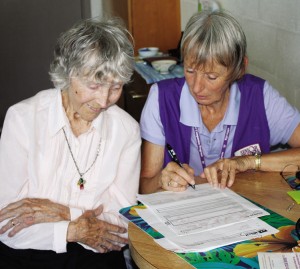
Ellen helps Gerrine look over papers.
The Senior Companion Program hopes to extend its reach on all islands by recruiting kupuna 55 years and older on limited income, who are interested in providing supportive services to lonely, isolated and/or homebound seniors in our communities. Recruits who meet the income eligibility guidelines and other requirements receive a nontaxable stipend, meal allowance and reimbursement for transportation costs. The program is also seeks to partner with nonprofit agencies that provide services to kupuna living in our communities. Be a part of helping our kupuna age in place.
The importance of independence is ever apparent especially as we age. The Senior Companion Program is a vital community-based support service that enables frail kupuna to remain independent and live in their homes. The Senior Companion Program is under the Department of Human Services and sponsored by the Corporation for National and Community Service. The…
As Realtors, Certified Aging in Place Specialists and Senior Real Estate Specialists, we help our clients connect with professionals who can help them downsize to a more manageable home. Often clients in large homes want to simplify their lifestyle. But one look at accumulated belongings in every closet, drawer and cubby hole makes it clear that they cannot make the move on their own. Left unattended, clutter continues to grow, and can become a fire hazard or home for pests.
You can learn do-it-yourself methods to systematically purge your clutter, at your own pace. Or, you can hire professionals to help you. Either way, decluttering your home gives you the freedom and ease to move to smaller, more manageable accommodations: a smaller house without stairs, a condominium where you don’t have yard work or perhaps a full-service retirement community.
To learn more about decluttering and other topics related to seniors and real estate, consider attending a free seminar hosted by LIST Sotheby’s Senior Concierge:
May 2, 2015 — Decluttering, Downsizing And Selling Your Current Home
Presenter:Christina & Yumi Laney
They will cover downsizing your home.
June 27, 2015 — Aging-In-Place, Caregivers & Fall Prevention
Preparing your home for Independent Living.
For more information, registration (seating is limited) and a 2015 schedule of free seminars, please call 808-282-1399.
As Realtors, Certified Aging in Place Specialists and Senior Real Estate Specialists, we help our clients connect with professionals who can help them downsize to a more manageable home. Often clients in large homes want to simplify their lifestyle. But one look at accumulated belongings in every closet, drawer and cubby hole makes it clear…
Hiking is a great activity for seniors! I’m 72 and really enjoy it. Several of my fellow hikers are in their upper 70’s and are still going strong. One, at 83, still hikes five miles on the beach several times a week.
Some people hike mainly for exercise and walk vigorously hoping to work up a good sweat. Others prefer a more leisurely pace and stop often to take pictures, enjoying their commune with nature. While you can see much from your car as you drive along the highways, you can only see the finer details of nature while walking. And there are many sights not available from your car, such as hidden waterfalls, moss covered trees, and the colorful hills in the center of Haleakala Crater.
You can choose from a wide variety of hikes ranging from easy to difficult. On the easy end of the scale are simple beach walks or strolls along scenic country roads. My favorite Maui hike, moderately strenuous, is the Pipiwai Trail within Haleakala National Park. It has a wonderful stretch of bamboo forest with three-inch thick stalks, 50 feet high. The 11 mile Haleakala Crater hike may be difficult, but well worth the effort. Scenery within the crater is wonderful and truly otherworldly. While 20-somethings may do this hike in four hours, I myself plan on at least eight hours.
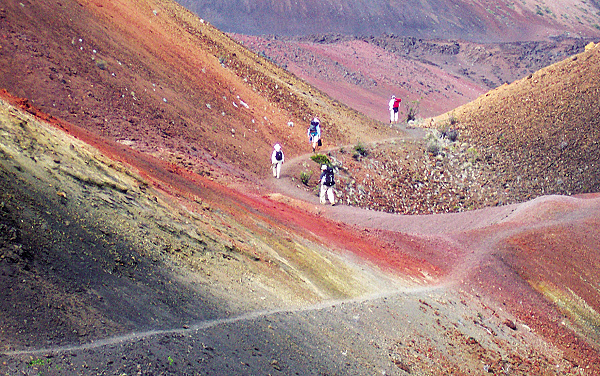
Bob Chang, Bev Brill, Ginny Kiick and Diana Douglas of Mauna Ala Hiking Club take a welcome rest in Haleakala Crater.
There are several books that list hikes in Hawai‘i, but it is even better to find local groups to hike with that can provide guidance and companionship.
You can join meetup.com on the internet to find hiking groups in your area. Sierra Club, www.sierraclubhawaii.com/groups.php, leads hikes on all four main islands. Contact the hike leader to make sure the hike is right for you.
Never hike alone on isolated trails; if you slip and injure yourself, you could be in serious trouble. Wear proper shoes and clothing, hat and sunscreen. Bring a snack and lots of water. While cell phones won’t work in some areas, they can help you out of trouble in others.
Hiking is a great activity for seniors! I’m 72 and really enjoy it. Several of my fellow hikers are in their upper 70’s and are still going strong. One, at 83, still hikes five miles on the beach several times a week. Some people hike mainly for exercise and walk vigorously hoping to work up…
Ahhh, summer is almost here! We all look forward to summer for time to relax, recharge, explore, spend more time with family and friends, or perhaps carve out more quality time to ourselves to do what we enjoy the most.
Join the Hawaii State Public Library System (HSPLS) this summer to do all of those things by signing up for our 2015 Summer Reading Programs. It’s not only for kids, we have a reading program for everyone including Adults (18 years and older), Teens (middle through high school) as well as Children (pre-Kindergarten through 6th Grade). Simply visit your local public library and register beginning May 31. By popular demand, this summer our reading programs will all run for seven weeks beginning May 3 –July 18.
Adults and kids alike enjoy a COOL summer in Hawaii State Public Libraries.
Our reading programs will celebrate heroes of all kinds. Participants in the Adult Summer Reading Program will be challenged to “Escape the Ordinary” in stories about heroes, superheroes, and extraordinary people, places and activities. By finishing at least one book a week, readers will be eligible to receive reading incentives and a chance to win a free lucky drawing for an eReader. Our libraries will also offer special programs featuring performance, musical artists and activities that will engage and delight the entire family. For more program information and all library schedules visit www.librarieshawaii.org. Our Summer Reading Program offers adults the opportunity to have fun, explore new interests, and be encouraged to try new literary genres for their own reading and learning enjoyment. If participating as a family, parents and grandparents can provide good reading models for children to follow and all can share in dedicated quality family time to bond and enjoy reading together without the distractions of electronic gadgets.
This summer of library fun is provided free of charge, courtesy of the Friends of the Library of Hawaii and other generous community partners who support and encourage reading and learning at our Hawaii public libraries on O‘ahu and all neighbor islands.
In addition, please visit www.librarieshawaii.org to see our latest electronic resources during our Summer Reading Program, including Wi-Fi (during public service hours), eBooks, audiobooks, eMagazines, learn foreign languages, website courses, hundreds of online courses ranging from health to computer basic training, and website access to create frequently used civil (family, consumer and housing law) legal forms. All you need is your valid HSPLS library card! We’ll see you at Summer Reading Program!
Ahhh, summer is almost here! We all look forward to summer for time to relax, recharge, explore, spend more time with family and friends, or perhaps carve out more quality time to ourselves to do what we enjoy the most. Join the Hawaii State Public Library System (HSPLS) this summer to do all of those…
What do you know about kidney disease? Are you sure that what you heard is correct? Here are 4 common errors:
Myth 1: Kidney disease is rare
One in seven adults in Hawai‘i has kidney disease and one in two are at risk for the disease. High blood pressure, diabetes, a family history of kidney failure, and being over 60 are major risk factors. So is being Asian, Pacific Islander, African-American, Hispanic, or American Indian.
Myth 2: You’ll know if you get kidney disease
Most people who have kidney disease don’t know it, because the early stages of kidney disease do not usually produce any symptoms. To learn if you have kidney disease, get tested. Once you are diagnosed there are many steps you can take to reduce the progression of the disease.
Myth 3: People at risk can’t do anything
Not everyone at risk will get kidney disease. You can help protect your kidneys. Eat healthy, get regular exercise, control blood pressure and blood sugar, keep a healthy weight, quit smoking, and don’t overuse pain medications like ibuprofen.
Myth 4: Dialysis is the only treatment
Early stage kidney disease is usually managed with medication, exercise, and diet. Some people diagnosed early can slow progression and enjoy a normal lifestyle. Dialysis or kidney transplant is only needed if kidney disease progresses to kidney failure.
What do you know about kidney disease? Are you sure that what you heard is correct? Here are 4 common errors: Myth 1: Kidney disease is rare One in seven adults in Hawai‘i has kidney disease and one in two are at risk for the disease. High blood pressure, diabetes, a family history of kidney…
Alex Haley, author of “Roots: The Saga of an American Family” once wrote:
“Nobody can do for little children what grandparents do. Grandparents sort of sprinkle stardust over the lives of little children.”
In Hawai‘i, kupuna play an active role in the family and raising our next generation. Schools are tapping into this senior resource with programs that bring grandparents to campus.
A 2011 study by BYU Department of Family Life showed that with grandparents involved in their daily lives, children are more social, more engaged in school and more likely to show care and compassion for people outside their immediate family and friends.
Assets School is dedicated to helping students with learning differences achieve their fullest potential in a student-centered, nurturing and accepting atmosphere, with an individualized, integrated learning environment that instills confidence and resilience in each student.
4th grader Zach Ihara enjoys his family at Kupuna Day — grandparents retired U.S.Army Colonel Les Ihara, Grandma Shirley, and Dad Percy Ihara.
Assets places a strong emphasis on the importance of family. We host Kupuna Day to honor the wisdom, respect and aloha that our kupuna embody and share with us. Our students’ eyes lit up with excitement and pride as they introduced their school, work, teachers and friends to their guests. The children’s glee reminded me that the “stardust” comes from a special relationship that began at home, in their formative years.
This day, students, kupuna, and school staff enjoyed breakfast together. Later they spent time creating art together. Students performed a hula to “E Ku‘u Tutu (My Grandmother),” a vintage song popularized by Genoa Keawe and her Hula Maids. Kupuna then visited classes for activities with students. We had an incredible morning together.
Mahalo to all the kupuna! We thank you for your guidance, unconditional love and brilliant, remarkable “stardust.”
Alex Haley, author of “Roots: The Saga of an American Family” once wrote: “Nobody can do for little children what grandparents do. Grandparents sort of sprinkle stardust over the lives of little children.” In Hawai‘i, kupuna play an active role in the family and raising our next generation. Schools are tapping into this senior resource…
Donna (front row, marked) with her Beta Beta Gamma sisters.
Beta Beta Gamma (BBG) is the only Greek sorority left at University of Hawai‘i. In the ‘50s and ‘60s, students from small rural high schools could find fellowship, mentors and community at big universities by joining a sorority or fraternity. Today, BBG still brings like-minded women together for important service work.
In celebration of the sorority’s 50th anniversary in 1998, over 300 alumnae sisters were inspired to create a lasting legacy through charitable giving. The BBG Foundation, incorporated in August 1999, allows BBG sisters and donors:
to serve the community by charitable giving.
an opportunity for establishing lasting legacy for BBG Sorority in perpetuity.
an opportunity for fellowship, mentoring and networking among alumnae and actives, community service and experience working on charitable projects & fundraising.
Since 1999, BBG holds a golf tournament every fall at Mid Pacific Country Club in Kailua. Many golfers are alumni of Phi Kappa Pi Fraternity at UH. The fraternity closed in 1982, but bonds formed in college are still strong. The essence of sisterhood and brotherhood between BBG and Phi Kappa Pi resonated in a tribute to brother Dennis Taira, who passed away. Foundation Director and First Board President Donna Hoshide said:
“Dennis Carson Makoto Taira was indeed BBG’s golf hero. Since 1999 BBG sister Susie Taira’s husband Dennis brought in foursomes of his Phi Kappa Pi brothers — often over 10 teams — to support BBG. The success that we have enjoyed these 15 years would not have been possible without Dennis and those many golfers. What a tribute to Dennis this year — to have 180 golfers and so many BBG sisters attend our 16th annual golf tournament. We feel his spirit with us, we miss him dearly and still mourn his very premature passing on May 11. We will remain forever grateful to Dennis.”
The BBG Foundation endowment fund grants scholarships to UH students. They also support over 25 charities, including American Cancer Society, Resolve of Hawaii, Hawaii Meals on Wheels, American Red Cross, and Hospice Hawai‘i. Says Donna, “A grand mahalo to all!”
Beta Beta Gamma (BBG) is the only Greek sorority left at University of Hawai‘i. In the ‘50s and ‘60s, students from small rural high schools could find fellowship, mentors and community at big universities by joining a sorority or fraternity. Today, BBG still brings like-minded women together for important service work. In celebration of the…
Webster says that “Volunteerism” is the act or practice of doing volunteer work in community service. Here in Hawai‘i, many seniors volunteer their services to our community every day — in a multitude of capacities.
Nancy Shimamoto and Sherry Goya
One such volunteer is Nancy Shimamoto, who spends every Tuesday from 8 am to noon on the “front-line” at Kuakini Medical Center information desk, answering the phone, greeting visitors, and offering directions. She is an “Ambassador” for Kuakini volunteer services.
At 64, Nancy retired as principal of Aina Haina Elementary, after 38 years in education. In her 12 years with Kuakini, Nancy was Auxilliary Council President from 2008 to 2013. Today, she is on the Board of the Kuakini Health System and serves as Chairperson of the Kuakini Foundation.
Volunteering is a long tradition at Kuakini. Every volunteer is greatly appreciated — from assisting in admissions, adult day care, gift shop sales, mail delivery, medical records, imaging services, to working in the snack shop. Nancy also escorts tours, attends workshops, and participated in the First Hawaiian Bank’s PrimeTime Wellness Fair on March 5th. It was a great event. Call 808-547-9184 if you want to volunteer at Kuakini. Mahalo to Nancy and all volunteers!
A touching story is always worth sharing. So, if you have a story, or a centenarian announcement, send it to me with a photo(s), we’d love to know about it.
Webster says that “Volunteerism” is the act or practice of doing volunteer work in community service. Here in Hawai‘i, many seniors volunteer their services to our community every day — in a multitude of capacities. One such volunteer is Nancy Shimamoto, who spends every Tuesday from 8 am to noon on the “front-line” at Kuakini…
Constipation affects approximately 2 percent of the population in the US; the elderly are more commonly affected. Constipation refers to bowel movements that are infrequent or hard to pass. According to the National Institutes of Health (NIH), constipation is defined as having a bowel movement less than 3 times a week.
Laxatives can help relieve constipation. Overuse of certain laxatives can lead to dependency and decreased bowel function. In general bulkforming laxatives, also referred to as fiber supplements, are the gentlest on the body and safest to use long term. However, seniors must remember to drink adequate amounts of water when taking fiber supplements like Metamucil.
Seniors need to call their physicians immediately if they have sudden constipation with abdominal cramps and are unable to pass gas. It is important to seek help if seniors have blood in the stools, constipation lasting more than 2 weeks, require use of laxatives for several weeks, experience rectal pain, unexplained weight loss, or severe abdominal pain–these may be signs of a serious underlying medical condition.
What causes constipation?
Not drinking enough liquids
Low-fiber diet
Lack of physical activity
Ignoring the urge to have a bowel movement
Stress
Travel
Medical conditions — affecting the gastrointestinal, endocrine, or nervous system
Medications — iron or calcium supplements, narcotics, antidepressants, anticonvulsants, and certain medications to lower blood pressure.
Which tests may help diagnose the cause of constipation?
Based on history and physical examination, a physician may order some of the following tests:
Blood tests including a complete blood count and basic metabolic profile
Colonoscopy
Proctosigmoidoscopy
Barium enema
Stool studies
X-rays of the abdomen
Anorectal manometry (pressure measurements of the anus and rectum)
What are the complications of chronic constipation?
Hemorrhoids
Anal fissures
Fecal impaction
Bowel obstruction
Rectal prolapse
How can seniors prevent constipation?
Drink at least 8 glasses of water each day
Eat lots of fiber
Exercise regularly
Do not ignore the urge to use the restroom
Eat foods that promote bowel movement: prunes, apples, papaya, banana and cabbage
Constipation affects approximately 2 percent of the population in the US; the elderly are more commonly affected. Constipation refers to bowel movements that are infrequent or hard to pass. According to the National Institutes of Health (NIH), constipation is defined as having a bowel movement less than 3 times a week. Laxatives can help relieve…
Millions of Medicare beneficiaries with Original Medicare or other Medicare health plans understand the costs associated with their Medicare Part B coverage. The premium for Medicare Part B is usually deducted from the beneficiary’s social security payment, or can be billed separately or paid by a third party. Medicare Part B coverage is provided to help with costs of physician visits, lab work, X-rays, etc. The Medicare Part B premium is released annually and can be increased, decreased or remain at the same level from a previous year. In 2015 the Medicare Part B premium remained at the same level as 2014. It is $104.90 per month for most beneficiaries, however it can be higher based on income levels.
Recently, a reader contacted us for an explanation of a Social Security letter he received shortly after he joined a Medicare Advantage plan. His monthly premiums seemed high. He believed that he would pay a Part B premium of $104.90 and a $0 premium for his Medicare Advantage Prescription Drug plan. However, a letter from Social Security alerted him that he would be subject to an Income Related Medicare Adjustment (IRMA) of $42.00 additional monthly cost for his Medicare Part B premium and another $12.30 adjustment to his Medicare Part D premium. Here is what we learned:
Most people don’t qualify to pay higher premiums, and never receive an IRMA notice.
IRMA is calculated by Medicare based on your modified adjusted gross income, as reported on your IRS tax return from two years ago.
If your adjusted gross income is above a certain amount your Medicare Part B and Part D premiums may be higher.
IRMA affects less than 5 percent of people with Medicare, so most people don’t pay a higher premium.
Part B Monthly Premium
Part B premiums are paid monthly. If your modified adjusted gross income as reported on your IRS tax return from 2 years ago is above a certain amount, you may pay more.
If your yearly income in 2013 was filed as (in thousands=k):
Individual
Joint
Married/Separate
2015 Payment
$85k or less
$170k or less
$85k or less
$104.90
$85k-$107k
$170k-$214k
N/A
$146.90
$107k-$160k
$214k-$320k
N/A
$209.80
$160k-$214k
$320k-$428k
$85k-$129k
$272.70
above $214k
above $428k
above $129k
$335.70
Part D Monthly Premium
The chart below shows your estimated prescription drug plan monthly adjustment based on your income. The adjustment is charged addition to your plan premium.
If your yearly income in 2013 was filed as (in thousands=k):
Individual
Joint
Married/Separate
2015 Payment
$85k or less
$170k or less
$85k or less
$104.90 + plan prem.
$85k-$107k
$170k-$214k
N/A
$146.90 + plan prem.
$107k-$160k
$214k-$320k
N/A
$209.80 + plan prem.
$160k-$214k
$320k-$428k
$85k-$129k
$272.70 + plan prem.
above $214k
above $428k
above $129k
$335.70 + plan prem.
We discovered the Medicare beneficiary who contacted us was subject to IRMA for only one year when his income was high. In later years his cost came down $500; he got to know IRMA.
LiveWell Resources Hawaii 808-543-2073 | getmedicare@aol.com Making Medicare Work For You A radio program with Martha Khlopin AM690: Saturdays, 11–11:30 am 99.5FM: Sundays,10 –10:30 am
Millions of Medicare beneficiaries with Original Medicare or other Medicare health plans understand the costs associated with their Medicare Part B coverage. The premium for Medicare Part B is usually deducted from the beneficiary’s social security payment, or can be billed separately or paid by a third party. Medicare Part B coverage is provided to…
Yumm!! George Yoshida and Derek Kurisu released their new cookbook–full of tasty, local-style recipes they demonstrate on their wildly popular Hawai‘i Island daily cable TV show, “Seniors Living in Paradise.” The recipes are easy. On air and in the cookbook, that translates to “any man can cook,” “one-minute cooking,” and even “slam-’em-together gourmet cooking.”
No Sweat Cooking offers old-fashioned, easy but delicious recipes featured on Seniors Living in Paradise. The funloving culinary authors, George Yoshida and Derek Kurisu, display some of their “slam-’em-together gourmet cooking.” Yumm!
George and Derek have been entertaining cablevision audiences since 1999 with their zany and lovable antics — and cooking fabulous dishes with the freshest ingredients from KTA Superstores. “No-Sweat Cooking!” is for career women, senior citizens, college students, bachelors and anyone who suddenly finds they must cook their own meals — even lazy husbands — just kidding. Good cooks who don’t have the time to make recipes with specialty ingredients or complex preparation steps will love this book.
Now everyone can cook old-fashioned dishes with no sweat! Cookbooks cost only $15.00 each, including tax and shipping! Order from George Yoshida, 2321 Nohona St., Hilo, HI 96720; email: ciyosh@hawaiiantel.net; telephone: 808-959-8677. Buy one for a friend and treat yourself too.
Living in Paradise: Oceanic Time Warner Cable channel 27 (Big Island)
Seniors Living in Paradise Mon. – Fri.: 6:00 am – 7:00 am | Daily: 6:30 pm – 7:30 pm
Primetime Living in Paradise Daily: 7:30 pm – 8:30 pm, 12:00 am–1:00 pm
Yumm!! George Yoshida and Derek Kurisu released their new cookbook–full of tasty, local-style recipes they demonstrate on their wildly popular Hawai‘i Island daily cable TV show, “Seniors Living in Paradise.” The recipes are easy. On air and in the cookbook, that translates to “any man can cook,” “one-minute cooking,” and even “slam-’em-together gourmet cooking.” George…
It takes creativity to stretch our dollars, save steps and get our chores done efficiently so we have time for family and community FUN!
Let’s share what we’ve learned. Our world is changing, but not everything. The younger generation teach us technology; we teach them wisdom. In our time, “fast” and “inexpensive” was the name of the game — how to cook fast meals that don’t cost $25 plus a leg…or an arm. By the end of the week, one can save plenty of cash! Other things that we can share are new tricks that make our lives easier. To get the ball rolling, here’s something from our staff:
Bathroom tips:
Always leave a light on at night, make sure the bath mat has a non-slip bottom, and be sure cold and hot faucets are clearly marked.
How about Kitchen tips:
To see if an egg is fresh, immerse it in a container of cool, salted water. If it sinks, it’s fresh — if it floats, throw it away.
Mash and freeze ripe bananas, in one-cup portions, for use in later baking, or peel and freeze whole in a baggie — no wasted bananas!
Coffee filters can be used more than just for making coffee. Use them to cover dishes when cooking in the microwave or to soak grease after frying bacon, French fries, chicken fingers, etc.
Help us share your wisdom by giving us your Helpful Tips. Call or email Sherry Goya. 808-722-8487 | sgoyallc@aol.com
It takes creativity to stretch our dollars, save steps and get our chores done efficiently so we have time for family and community FUN! Let’s share what we’ve learned. Our world is changing, but not everything. The younger generation teach us technology; we teach them wisdom. In our time, “fast” and “inexpensive” was the name…


 Join the Hawaii State Public Library System (HSPLS) this summer to do all of those things by signing up for our 2015 Summer Reading Programs. It’s not only for kids, we have a reading program for everyone including Adults (18 years and older), Teens (middle through high school) as well as Children (pre-Kindergarten through 6th Grade). Simply visit your local public library and register beginning May 31. By popular demand, this summer our reading programs will all run for seven weeks beginning May 3 –July 18.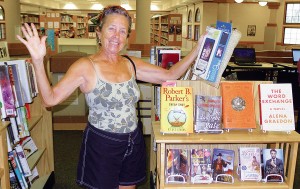
 This summer of library fun is provided free of charge, courtesy of the Friends of the Library of Hawaii and other generous community partners who support and encourage reading and learning at our Hawaii public libraries on O‘ahu and all neighbor islands.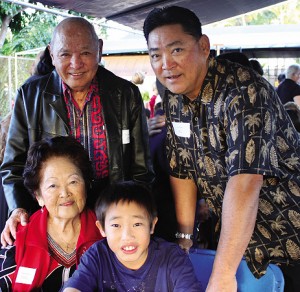

 “Dennis Carson Makoto Taira was indeed BBG’s golf hero. Since 1999 BBG sister Susie Taira’s husband Dennis brought in foursomes of his Phi Kappa Pi brothers — often over 10 teams — to support BBG. The success that we have enjoyed these 15 years would not have been possible without Dennis and those many golfers. What a tribute to Dennis this year — to have 180 golfers and so many BBG sisters attend our 16th annual golf tournament. We feel his spirit with us, we miss him dearly and still mourn his very premature passing on May 11. We will remain forever grateful to Dennis.”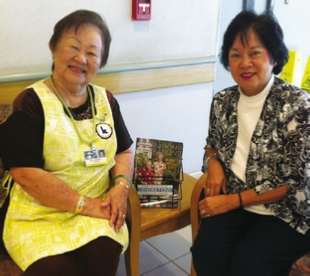
 Laxatives can help relieve constipation. Overuse of certain laxatives can lead to dependency and decreased bowel function. In general bulkforming laxatives, also referred to as fiber supplements, are the gentlest on the body and safest to use long term. However, seniors must remember to drink adequate amounts of water when taking fiber supplements like Metamucil.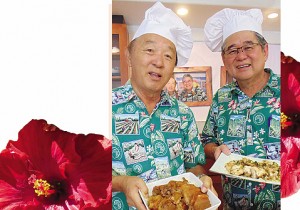
 It takes creativity to stretch our dollars, save steps and get our chores done efficiently so we have time for family and community FUN!