Back surgery is a serious procedure and often requires significant recovery time. Exercise is a critical part of healing, although during the post-operative stages, patients must be careful to avoid undue stress on the surgical site with certain activities, bending, lifting or twisting.
The gentle environment of water allows patients to perform movements that they are unable to perform on land. The warmth of the water allows patients to increase their range of motion without severe pain. Buoyancy supports weak muscles and reduces stress on the spine, while the water’s resistance improves muscle tone and increases cardiovascular function.
Janet Shaw, 75, underwent back surgery in January. Her goal was to swim in the Mermaids Hawaii Mother’s Day show in May. But her aquatic therapy program enabled her to participate in a swim show in March!
Too much activity after surgery may slow recovery or damage the surgical repair. But aquatic therapy can be a safe and effective tool during the early stages of spinal care, and facilitate an easier transition to land exercises. And just like Janet, it can help you reach your goals and return you to the activities you love as soon as possible.
MOON PHYSICAL THERAPY, LLC
320 Ward Ave., Ste. 107, Honolulu HI 96814
Aquatic, Land-based and Manual Therapy and
Cardiopulmonary Rehab Programs
808-597-1005 | www.moonpt.com
Like me on Facebook: Moon Physical Therapy, LLC
By Julie Moon, Physical Therapist Back surgery is a serious procedure and often requires significant recovery time. Exercise is a critical part of healing, although during the post-operative stages, patients must be careful to avoid undue stress on the surgical site with certain activities, bending, lifting or twisting. The gentle environment of water allows patients…
An estimated 30 million people in America have type 2 diabetes and that number is
increasing each year. Although type 2 diabetes affects many different systems and functions of the body, the most commonly known effect is its disruption of the body’s ability to regulate blood glucose levels either by a lack of production of insulin or the body’s resistance to insulin. Common causes of type 2 diabetes are poor nutrition, excess weight, lack of exercise, genetics and even certain medications. Current conventional treatments involve taking insulin and lifestyle changes. However, the consistent increase in the number of people diagnosed each year leads many to conclude that these treatments alone may not be enough. Acupuncture and Chinese medicine offer unique and integrative approaches to improving the health of those dealing with diabetes through modalities unheard of by most in the West. In a Chinese medicine approach, different treatment principles are aimed at restoring the body’s own functional physiology. Modalities are combined to help restore balance — acupuncture therapy, medicinal nutrition, auricular acupressure, herb teas, cupping therapy — as well as lifestyle changes.
These Chinese therapies, carefully combined with conventional medicine under the guidance of both practitioners, can facilitate diabetes management and create sustainable shifts in the root causes of the imbalance.
By James Carter, L.Ac An estimated 30 million people in America have type 2 diabetes and that number is increasing each year. Although type 2 diabetes affects many different systems and functions of the body, the most commonly known effect is its disruption of the body’s ability to regulate blood glucose levels either by a…
by Christopher Duque, Cybercrime Investigator. DPA
Computer users can get “victimized” online simply because they don’t spend enough time keeping their devices up to speed. Hackers are able to compromise our devices daily if we don’t update the software on our computers, tablets and cellphones.
So, do the following on a daily basis:
◆ Update your operating system (OS). Schedule automatic updates and update manually, as well.
◆ Update your security programs and apps —
especially those used for malware and virus detection. Malicious malware and viruses are created and released on the internet daily.
◆ Users should also scan their devices regularly to see if they have been infected. Do not just quarantine, but delete them completely.
◆ Also, read the instructions of the security programs and applications you use. Do not simply rely on their default settings, which may be not be enough for your devices and uses.
◆ Lastly, back up your data! Users can mistakenly delete photos, documents, messages and emails, which can’t be recovered without a backup. Save data to a USB drive, CD, DVD, The Cloud or another remote location.
Backing up your data on a regular basis is your only insurance policy when “bad things happen.” Backing up your data makes recovery much faster, easier and more successful.
THE DEPARTMENT OF THE PROSECUTING ATTORNEY
1060 Richards St., Honolulu HI 96813
by Christopher Duque, Cybercrime Investigator. DPA Computer users can get “victimized” online simply because they don’t spend enough time keeping their devices up to speed. Hackers are able to compromise our devices daily if we don’t update the software on our computers, tablets and cellphones. So, do the following on a daily basis: ◆ Update…
by Margaret A. Perkinson, PhD, Center on Aging Director, UH-Mānoa
Aging brings its own set of commonly experienced adversities: changes in health, declining ability to conduct everyday tasks, possible relocation to residential care, and illnesses and deaths of beloved family members and friends. Some people adapt to these changes, take things in stride and continue to flourish, while others do not. What enables some people to “bounce back” from difficult situations? What are their sources of strength? Can everyone develop this kind of resilience?
Resilience, the ability to adapt after experiencing stressful situations or negative life events, is possible at any age. A recent study of older adults from the Netherlands with serious health conditions identified important sources of strength that enabled them to adapt. The following are various characteristics, coping strategies, relationships and contexts that support their adaptations. They may help you develop resilience in the face of your own challenges.
Individual qualities: Believe in your own ability and competence. Recognize and value the qualities or characteristics that help you to adapt. Accept your limitations and be aware of your vulnerabilities.
Make an effort to control what you can. Actively prepare for possible losses and take action to influence their outcomes. Master your situation to the extent you can by practicing necessary skills, such as exercise. Be open to accepting help and support.
Set aside time to reflect upon current relationships, activities, goals and beliefs. Accept the positive and the negative. Avoid taking on the victim role by making illness or adversity the center of your identity. Focus on what you can do, not on what you cannot. Take one day at a time. Live in the present; don’t dwell on the past.
Interpersonal relationships: Develop empowering relationships. Interact and cooperate with family members and health professionals to achieve goals without being overly demanding. Consider the power of giving; engage in meaningful acts of mutual support and responsibility for others. Encourage positive relationships.
Broader social and political factors: Your community’s resources and characteristics can contribute to resilience. Advocate for accessible healthcare, social supports and age-friendly policies.
You may go through stages in developing resilience. You may doubt your ability to cope, but you can develop it. By actively cultivating resilience, you can influence the impact of stresses and enable your continued personal development and quality of life.
CENTER ON AGING — University of Hawai‘i at Mānoa
2430 Campus Road, Gartley Hall, 201B, Honolulu HI 96822
by Margaret A. Perkinson, PhD, Center on Aging Director, UH-Mānoa Aging brings its own set of commonly experienced adversities: changes in health, declining ability to conduct everyday tasks, possible relocation to residential care, and illnesses and deaths of beloved family members and friends. Some people adapt to these changes, take things in stride and continue to…
Judy and I were married way back in 1979. She was just 26 and I was 25. While we were dating, I had her on a pedestal. She was my princess and I would buy her gifts and treat her as the most special woman in my life. Soon after we got married, we moved to Portland, Oregon, so that I could finish my last three years of seminary school.Is it please? Thank you? Yes dear? Those are great words but a different script saved my marriage. Here’s my story.
Will you forgive me? Yes, I forgive you.
I clearly remember the first night in our new apartment. She started cooking dinner at about 8:30 pm. By 9:30, my stomach was growling and so was I. Perplexed, Judy looked at me and asked, “Why are you so grouchy?” I responded, “I’m so hungry. When are we going to eat?” She responded, “Oh, I didn’t know. I eat whenever I feel like it.” Looking back, that episode was a sign of more stress to come. I quickly realized that my wonderful wife was creative, spontaneous and free-flowing. I, on the other hand, liked everything in order, like eating at the same time and being on time. I hated being late for anything.
So, who do you think got irritated? Not Judy! I’d grumble, “We’re late again. Don’t you know I don’t want to be late?!” “Judy, why do you leave your stuff on the dinner table? The table is for food, not storage!” Marriage to a spontaneous woman was quite an adjustment for me. We had wonderful times together, but I was often impatient and irritated.
Seeking a solution, I began praying, “Lord, please change my wife. Help her to get organized!” My repeated prayer got no answer. Then one day I sensed Father God’s answer. “Russell, Judy doesn’t have to change. You have to! You must become more loving and patient!”
In spite of my protests, I knew my Father was right. It was then that I learned the words that saved my marriage. “Will you forgive me? Will you please forgive me for my impatience, for being demanding and for acting unloving?”
When Judy responded, “I forgive you,” our marriage was revitalized. We’ve been married 37 years now and from time to time we still need to say those precious words.
“Will you forgive me?” Yes, I forgive you.”
Even in your golden years, practice forgiving and asking for forgiveness. Those eight words may save a precious relationship.
STREAMS OF LIFE FELLOWSHIP
Manoa Elementary School Cafeteria
3155 Manoa Road, Honolulu HI 96822
808-554-4513 | www.streamsoflife.org
Services: Sundays, 10 am
Alternate site: Manoa District Park
2721 Ka‘aipu Ave., Honolulu HI 96822
by Pastor Russ Higa Judy and I were married way back in 1979. She was just 26 and I was 25. While we were dating, I had her on a pedestal. She was my princess and I would buy her gifts and treat her as the most special woman in my life. Soon after we…
by Hawaii Alliance for Retired Americans and Kokua Council
Beginning in 2008, the Hawaii Alliance for Retired Americans (HARA) and Kokua Council present their Shining Light Awards to individuals and organizations who have been strong advocates for seniors, demonstrating an understanding of the important issues.
This year, the groups honored two men who represent very different advocacy traditions.
John Radcliffe has been a long-time labor leader and lobbyist for a variety of clients and causes. Recently, his personal struggle with a life-threatening illness transformed him into a passionate and effective advocate for Death with Dignity legislation. His frequent public testimony about his personal challenge is authentic and poignant.
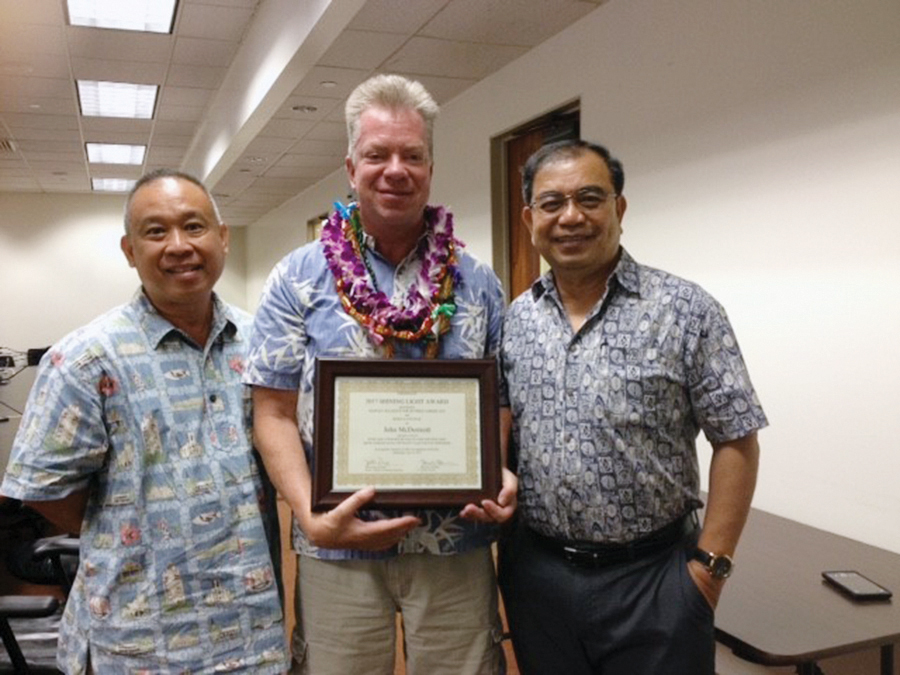
(L–R) Felipe Tan, former EOA accountant; John G. McDermott; Serafin “Jun” Colmenares, former EOA planner.
John McDermott has been Hawai‘i’s Long-Term Care Ombudsman since 1998, protecting the state’s most vulnerable adults. Some of his major accomplishments include legislation requiring criminal background checks for those having contact with vulnerable adults, legislation requiring that annual inspection and complaint results for care facilities be posted on the state Department of Health website, and legislation restoring a fulltime ombudsman for O‘ahu and approving part-time ombudsman positions for other islands.
HARA and Kokua Council present these awards annually at their annual post-legislative session review called “The Good, The Bad and The Ugly.”
HARA and Kokua Council are part of the growing number of community-driven senior advocacy groups that pay particular attention to public policy, following important pieces of legislation, meeting with legislators and staff, and providing testimony on a wide range of issues.
The review provides an opportunity for legislators to remind us of the good they have done — but also provides advocates a chance to remind elected officials what still needs to be accomplished.
This year’s meeting was a candid, open and respectful review. Concerns about the legislative process, community program oversight, quality-control systems and effectiveness were also aired.
Both organizations are always seeking more members and participants in their activities.
KOKUA COUNCIL at Harris United Methodist Church
20 South Vineyard Blvd., Honolulu HI 96813
Jim Shon, Kokua Council President | 808-540-1928 www.kokuacouncil.blogspot.com/
by Hawaii Alliance for Retired Americans and Kokua Council Beginning in 2008, the Hawaii Alliance for Retired Americans (HARA) and Kokua Council present their Shining Light Awards to individuals and organizations who have been strong advocates for seniors, demonstrating an understanding of the important issues. This year, the groups honored two men who represent very…
by Martha Khlopin, Radio Host of “A Medicare Moment with Martha”
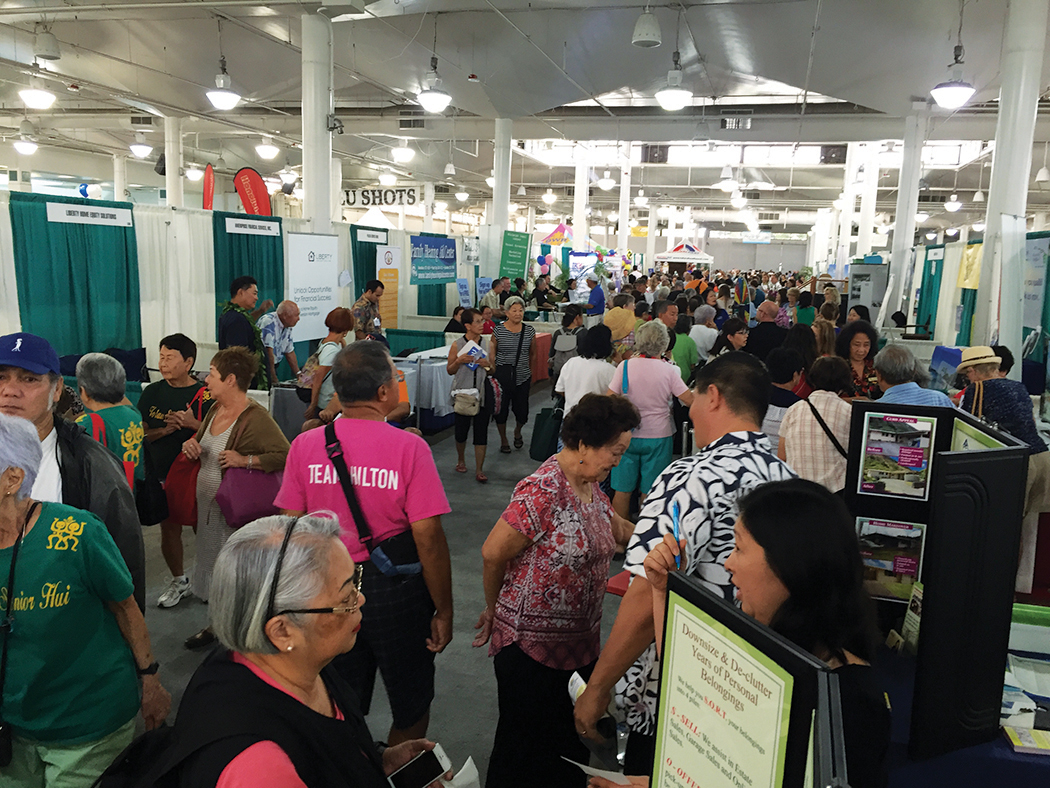
The 33rd Annual Good Life Expo is returning to your favorite spot, the Blaisdell Center, for first-class entertainment and fun. A few years ago, I had the pleasure of listening to 89-year-old Tony Bennett as he astounded the audience with his greatest hits, including his classic It’s the Good Life and another showstopper, his a capella performance of I Left My Heart in San Francisco. Diana Ross, who also appeared at the Blaisdell, sang beautifully and wowed the audience with six full costume changes consisting of floor length gowns complete with feathers and sequins—all at 70 years of age. At age 69, Carlos Santana also recently performed his hits, including my favorite, Maria, Maria, as a video of his appearances in Hawai‘i from the 1960s screened.
32nd Annual Hawaii Seniors’ Fair–The Good Life Expo
What do these great performers all have in common — besides headlining at the Blaisdell? They are over 65, still working and may qualify for Medicare. If you or someone you know is 65 or will be soon, don’t miss this year’s Good Life Expo, where you can talk to experts, ask questions, find useful resources and enjoy stellar entertainment. The event is scheduled for Sept. 22, 23 and 24. I will be at the Kaiser Permanente table this year, booths 330 and 331, so please stop by and let’s talk about “The Good Life!”
by Martha Khlopin, Radio Host of “A Medicare Moment with Martha” The 33rd Annual Good Life Expo is returning to your favorite spot, the Blaisdell Center, for first-class entertainment and fun. A few years ago, I had the pleasure of listening to 89-year-old Tony Bennett as he astounded the audience with his greatest hits, including…
by Jim Cisler, Recognition and Awards Committee Chair
On June 2, 2017, the State Executive Office on Aging Policy Advisory Board for Elder Affairs hosted the 54th annual Older Americans Month Awards Ceremony and Luncheon at 15 Craigside Place in Honolulu.
Each year, the Federal Administration for Community Living provides a national theme to celebrate the accomplishments of our older citizens. This year’s theme — AGE OUT LOUD! — was meant to spotlight many important issues and trends.
This event was intended to recognize and
celebrate what “getting older” looks like today.
Increasingly, our kūpuna engage in their communities, strive for wellness, focus on independence and advocate for themselves.
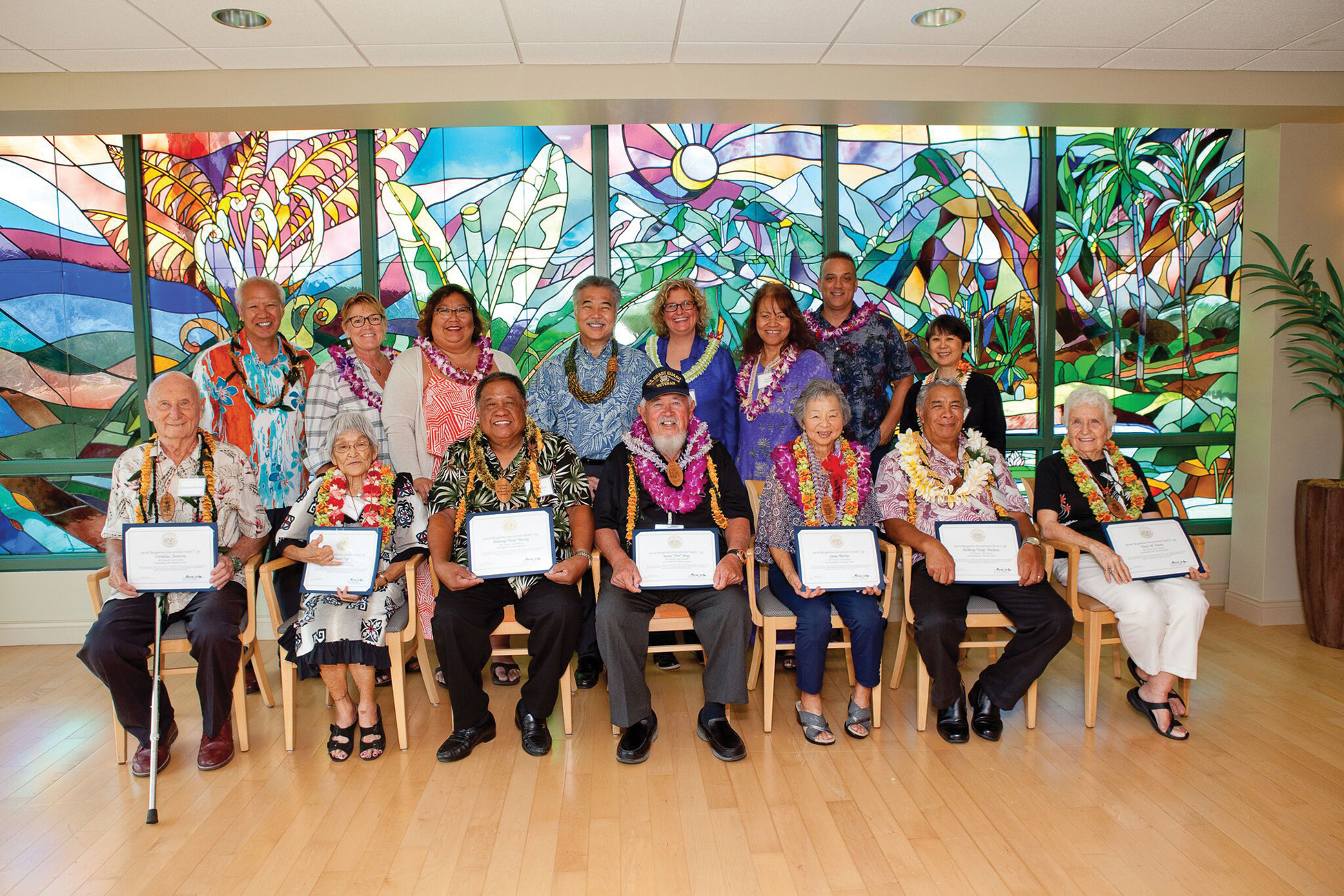
(L–R, back row) MC Rep. Gregg Takayama, MCOA Deborah Stone-Walls, EAD Nalani Aki, Gov. David Ige, EOA Terri Byers, KAEA Kealoha Takahashi, HCOA C. Kimo Alameda, PABEA Joy Miyasaki, (front row) Maui – Cornelius Feenstra & Yaemi Yogi, O‘ahu – Anthony Baccay, Kaua‘i – James Jung & Sanae Morita, Hawai‘i Island – Anthony Ancheta & Doris M. Davis.
Doris “DD” Davis and Anthony “Tony” Ancheta were Hawai‘i County’s honorees. DD, vice president of the Pahala Senior Club, serves meals at the club’s nutrition center, helps delivered meals, and assists with sewing and art classes. She’s active with the Baha’i Faith Spiritual Assembly in Ka‘ū, Friends of the Ka‘ū Libraries, and the Adopt-a-Highway program.
Tony is a volunteer van driver. He a board member and coordinator for “Da Guys,” the men’s group at the Waimea Senior Citizen’s Club. He served in the Hawai‘i Army National Guard for 30 years. He assisted Hamakua plantation employees in their transition to become landowners and farmers. He even learned their language so he could help them with tax and insurance issues.
Honorees also included Sanae Morita and James “Jim” Jung from Kaua‘i County. A retired elementary school teacher, Sanae has worked with the Kaua‘i Association for Family and Community Education for more than 50 years. She is a docent for the Grove Farm Museum, a greeter at the Kaua‘i Museum and a member of the Retired Senior Volunteer Program Advisory Council.
Jim is a retired public defender who volunteers at Kaua‘i Hospice and serves as an AARP driver safety instructor. The U.S. Coast Guard veteran is also an ocean safety educator with the Kaua‘i Lifeguard Association. He is a professional storyteller at the Kaua‘i Museum focusing on Polynesian migration and ocean voyaging.
Anthony “Tony” Baccay from the City and County of Honolulu was also honored. Tony is a 21-year U.S. Air Force veteran who spent another 21 years working with the county’s Elderly Affairs Division. He volunteers for Project Dana, shops for the home-bound, transports patients to doctor visits and teaches seniors how to manage medical challenges. He is also a USO volunteer at the Joint Base Peral Harbor Hickam.
Maui County residents Yaemi Yogi and Cornelius Feenstra were also honored. Yaemi, 91, has volunteered at Kaunoa Senior Services and the Maui Adult Day Care Centers for the past 17 years. She helps also helps with office tasks.
Holland native Cornelius is a concentration camp survivor. After the war, he participated in relief efforts, human rights campaigns, blood drives and fundraising for war victims. He now volunteers with the Maui Medical Center Aloha Committee, the Good Neighbors Club and the Kīhei Adult Community Center.
by Jim Cisler, Recognition and Awards Committee Chair On June 2, 2017, the State Executive Office on Aging Policy Advisory Board for Elder Affairs hosted the 54th annual Older Americans Month Awards Ceremony and Luncheon at 15 Craigside Place in Honolulu. Each year, the Federal Administration for Community Living provides a national theme to celebrate…
by Jane Yamamoto-Burigsay, Social Security Public Affairs Specialist in Hawai‘i
According to the U.S. Census Bureau, there are nearly 57 million people living with disabilities. Thirty percent of America’s adults help provide care for a sick or disabled family member. Providing physical and emotional support is a demanding job with stresses and rewards, but it can also be a labor of love.
The Social Security Administration (SSA) is committed to helping secure today and tomorrow for every American. This is especially true for people who need help managing their benefits. SSA works closely with caregivers through its representative payee program. A representative payee is someone who receives and oversees SS or Supplemental Security Income (SSI) benefits for anyone who cannot manage them on their own —child or adult.
A representative payee is usually a trusted family member or friend, but when they are not available, SSA looks for qualified individuals or organizations to represent the beneficiary. Learn more about becoming a representative payee by watching a new series of videos at www.socialsecurity.gov/payee.
The videos will enable you to help those who are unable to help themselves.
For questions, online applications or to make an appointment to visit a SSA office, call from 7am–7pm, Mon–Fri:
by Jane Yamamoto-Burigsay, Social Security Public Affairs Specialist in Hawai‘i According to the U.S. Census Bureau, there are nearly 57 million people living with disabilities. Thirty percent of America’s adults help provide care for a sick or disabled family member. Providing physical and emotional support is a demanding job with stresses and rewards, but it…
by Lenny Fabro, Project Director, RSVP Oahu Volunteer Program
The Retired & Senior Volunteer Program (RSVP), one of the largest senior volunteer networks in the U.S., is one of three Senior Corps programs funded by the Corporation for National and Community Service, a federal agency that supports service and volunteering.
The mission of the Oahu RSVP is to enhance the lives of older adults and help prevent senior homelessness by meeting the community’s needs through volunteerism, and partnerships with nonprofit organizations and public agencies — including schools.
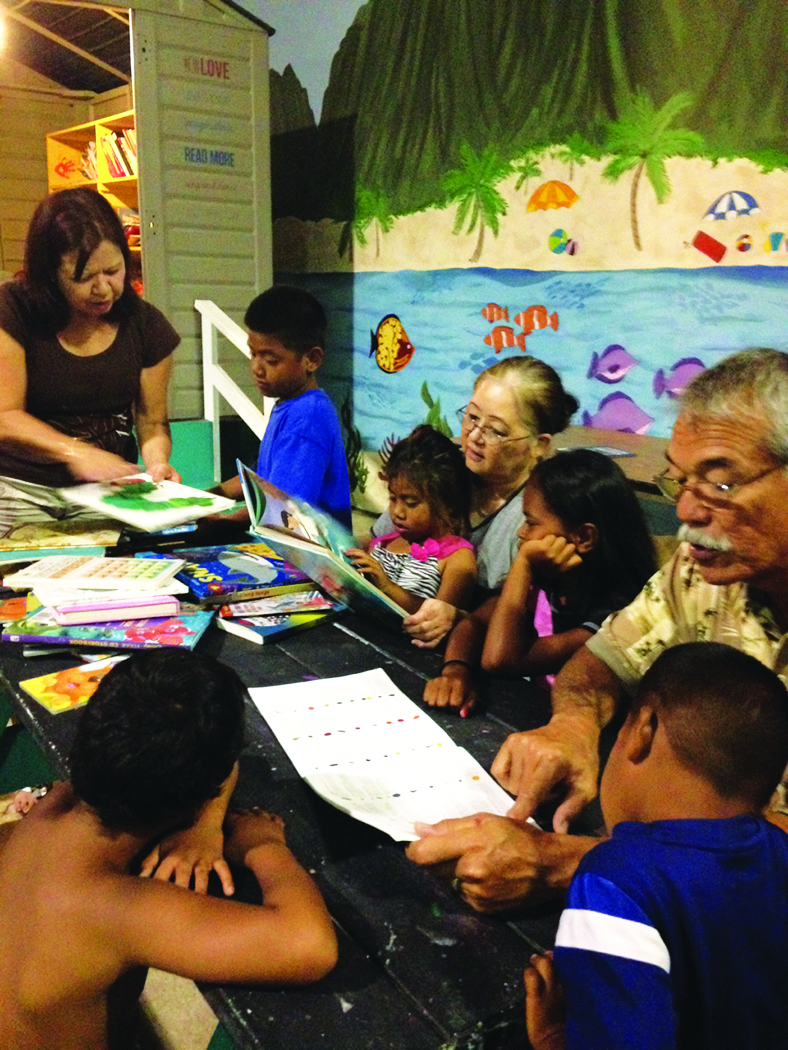
Volunteers encourage children by reading at the Next Step Shelter.
RSVP also addresses the mission of the Elderly Affairs Division of the City and County of Honolulu to strengthen the community by improving the quality of life for its citizens in need through delivery of essential, supportive services.
Program volunteers help provide health and nutrition services, and also provide tutoring for children and literacy programs for adults.
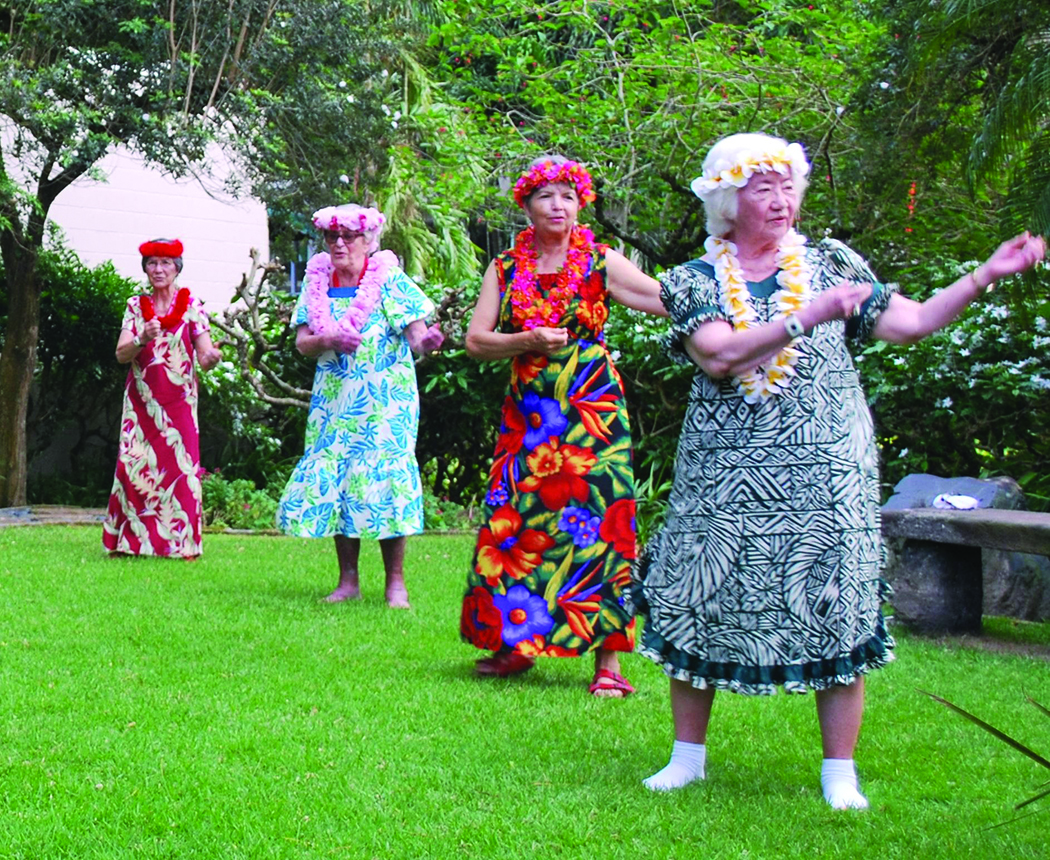
RSVP volunteers contribute to public safety and help provide advocacy for seniors. They also help promote and sustain local culture and assist with environmental restoration.
The benefits of RSVP are many. Isolated seniors feel less lonely as they develop close ties to volunteers; companionship is just a phone call away through RSVP. Many seniors are able to continue living in their own homes with the support they receive from RSVP volunteers. Seniors can receive nutritious meals through Meals on Wheels food delivery, or may even be able to do their own grocery shopping and errands with the help of RSVP volunteers. Transportation is also provided for trips to and from medical appointments.
More importantly, through RSVP, seniors have the opportunity to be linked with other services they may need.
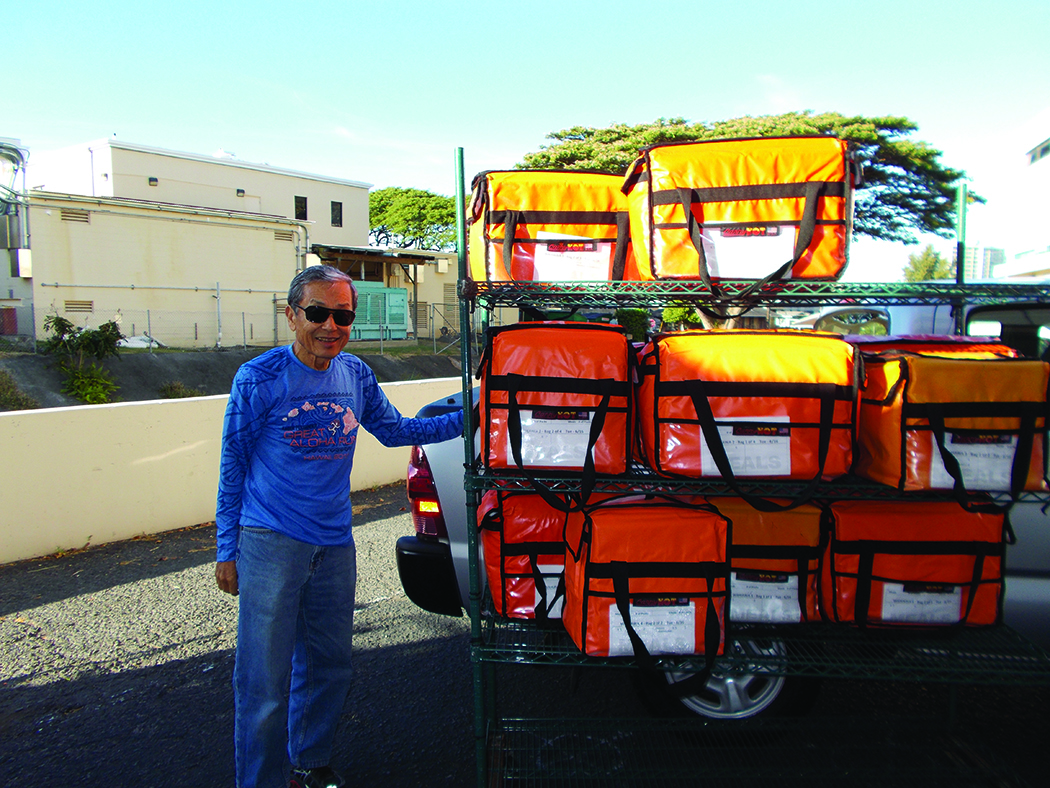
A Lanakila Meals on Wheels volunteer delivers food… and a smile.
RSVP provides services to other family members, including respite for caregivers.
The program also serves underprivileged children by providing them lunch, and serves veterans and their families, as well as young military families.
The Volunteer Experience
Oahu RSVP strives to provide a high-quality volunteer experience in order to facilitate the program’s expansion.
Volunteers 55 and older are assessed, recruited and linked with opportunities that match their interests, and make use of their wisdom, skills and life experience to help social service agencies meet needs.
Volunteers are placed in nonprofits and public agencies, also known as “Volunteer Stations,” throughout the community.
The program offers prospective volunteers a wide array of placement choices from 38 nonprofit organizations, public agencies, schools and support services.
The RSVP program can be accessed at City & County of Honolulu Customer Services Departments. Or contact the Oahu RSVP using the information below to either become a volunteer or to enlist some of its many valuable services for yourself or a loved one. n
RSVP OAHU VOLUNTEER PROGRAM
City & County of Honolulu DCS/Elderly Affairs Division
715 S. King St. Rm. 211, Honolulu HI 96813
The Retired & Senior Volunteer Program (RSVP), one of the largest senior volunteer networks in the U.S., is one of three Senior Corps programs funded by the Corporation for National and Community Service, a federal agency that supports service and volunteering.
by Kelika Ishol, Director of Sales and Marketing & Resource Development
Ever think about growing old? Even when we become caregivers for aging loved ones, or start to feel pain in our joints, or experience the “where did I leave my keys?” and “what was I gonna say?” moments, we may still not attribute them to aging.
But it’s inevitable. What we see our aging loved ones go through is a process that we all will eventually experience. When I think back about taking care of my grandmother who had Alzheimer’s disease, I reflect on one of the most challenging times in my life. My grandmother, a vibrant and beautiful woman who went beyond the call to care for everyone, now needed care. Her incontinence issues, assistance with bathing, meal prep, elopement situations and medication management were ongoing parts of my life 1998. While caring for my grandmother, I was also raising four young daughters. They called me “the sandwich generation.”
As a resident of a retirement community, you are a part of an ‘ohana, where together, you can discover the fun of aging, and feel safe and secure.
My beautiful and loving grandmother passed away in 2001 from a hemorrhagic stroke while she was living in an Alzheimer’s unit on the Leeward side of O’ahu. Placing her in that facility was at the same time the hardest and the easiest thing for me to do… Make sense? Of course it does. The guilt of placing my grandmother in an Alzheimer’s unit was hurtful and difficult, but the relief of placing her there surpassed the guilt. It truly was the best decision I made—for me, my family and most importantly, for her.
If I knew then, what I know about retirement communities now, I would have definitely educated my grandparents early enough so that they could have enjoyed their retirement years. And no one in our family would have to experience the guilt, pain or mixed emotions of placing a loved one in a care home or retirement community.
What You Can Expect
Retirement communities provide that peace of mind by providing meal options, socialization opportunities, 24-hour oversight, emergency call systems, transportation services and much more. It’s really a community where residents take the time to care for each other and share in the aging process.
So the next time you see a senior, think about your life. Do you want your children caring for you as I cared for my grandmother? Or do you want to enjoy your retirement years with others who share your interests, professionals that care for you, and having the opportunity for your family and friends to visit and enjoy your new life?
Retirement communities in Hawai‘i start at about $3,100 per month and include all your utilities, maintenance, housekeeping, landscaping, meals, transportation to medical appointments and shopping, social events, fitness centers and much more.
GOOD SAMARITAN SOCIETY POHAI NANI
45-090 Namoku St., Kaneohe HI 96744
Ever think about growing old? Even when we become caregivers for aging loved ones, or start to feel pain in our joints, or experience the “where did I leave my keys?” and “what was I gonna say?” moments, we may still not attribute them to aging.
by Eileen Phillips, RN, Attention Plus Care GIVING CARE
Most seniors I meet say they prefer to age in place and live at home for as long as they can. Who wouldn’t want that, right? But living out your life safely at home may require a bit of help and experience. Home healthcare is particularly suited here; clients can manage their care with medical professionals to help make safer and more informed decisions.
Nursing supervisors specializing in home healthcare partner with individuals and family members to ensure that safety and quality care are achieved in the home as a primary goal. “When families need care for an aging loved one, regardless of the level of care, the discussions usually involve getting individuals from here to there and everywhere in between safely. A nursing supervisor can review your medications and care management, fall risks and other factors impacting a client’s ability to safely do their daily activities,” said Marjorie Gentilella, a Honolulu home healthcare nurse.
“Families want to know their loved one is being cared for in their home with safety as a top priority, and that providers have a solid track record in mitigating safety risks and hazards,” added Marjorie.
An overarching goal in providing home healthcare is to help individuals regain or maintain independence, and be as self-sufficient as possible, and to slow the advance of health-related problems so individuals may continue to live at home safely.
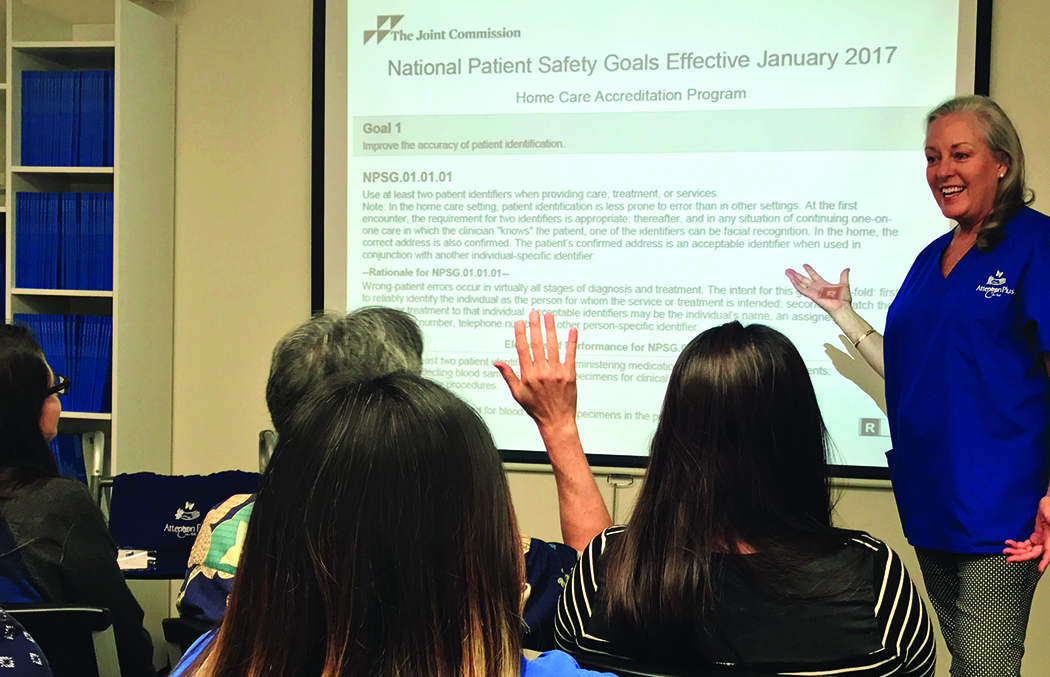
The Joint Commission, the standards-setting and accrediting body in healthcare, is considered the gold standard in accomplishing and evidencing these ideals. A home healthcare agency that is Joint Commission accredited uses National Patient Safety Goals set by the commission as a higher standard for safety and client care.
As with major hospitals in Hawai‘i, Joint Commission-accredited home healthcare agencies must establish and meet National Patient Safety Goals on an annual basis. To verify that these safety goals are established and met, trained medical professionals conduct on-site surveys of the agency on safety, including how well staff:
Provides a safe environment for your loved one
Educates you about the risks and options for your diagnosis and treatment
Protects your rights as a patient, including your privacy rights
Evaluates your condition, before, during and after diagnosis and treatment
Protects you against infections and ways to control infection
Plans for emergency situations
Individuals and families are almost always overwhelmed with the task of searching for and choosing a home healthcare agency for a loved one. But knowing an agency is Joint Commission accredited and committed to safety and quality can make the task easier. An agency held to National Patient Safety Goals is required to evidence, and continuously improve upon safety and quality care for all clients. And this means better care outcomes for our beloved kupuna.
ATTENTION PLUS CARE Accredited by The Joint Commission
AGING IN HAWAII EDUCATIONAL OUTREACH PROGRAM
by Attention Plus Care — a program to provide resources for seniors and their families, instructed by a registered nurse, who covers a different aging process each month. For class information on Parkinson’s disease and upcoming topics, call 808-440-9356.
Most seniors I meet say they prefer to age in place and live at home for as long as they can. Who wouldn’t want that, right? But living out your life safely at home may require a bit of help and experience. Home healthcare is particularly suited here; clients can manage their care with medical…